Ask ChatGPT
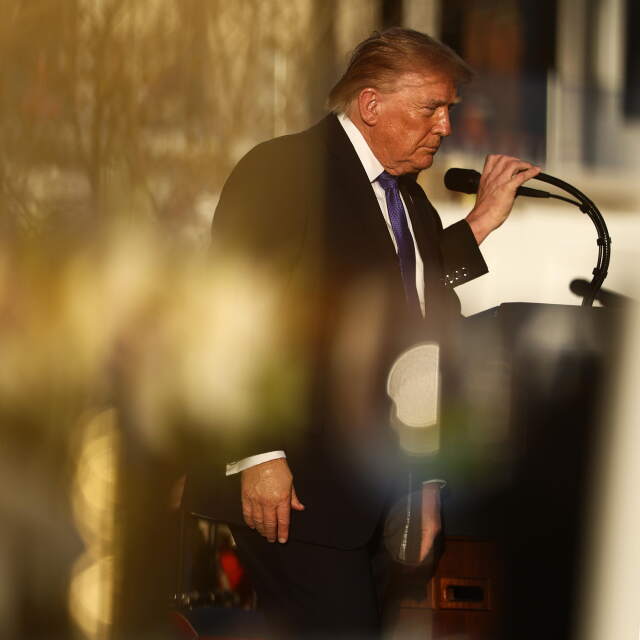


This 1A episode examines reports that NVIDIA CEO Jensen Huang is under investigation after admitting to an affair with Alice Huang, a Singapore-based cloud executive (Megaspeed) whom U.S. intelligence believes was recruited by China’s Ministry of State Security and used to spy on him. The episode argues the stakes go beyond scandal: NVIDIA’s GPUs (about 80–90% market share) are essential for training AI, so any compromise could affect U.S. national security and the global economy. Key claims include: a classified U.S. memo briefed to President Trump in May; questions about whether Huang shared sensitive information; and potential links to chip export-control legislation and China’s pushback.
Huang’s White House access and trip with Trump to Beijing; Megaspeed’s reported $4.8B in NVIDIA chip purchases and possible diversion; congressional calls for Huang’s resignation and tighter export rules.
John Ruich (NPR tech correspondent, Silicon Valley) and Dimitri Sevastopolou (U.S.-China correspondent, Financial Times).
Written by AI. May contain mistakes.
Discussion on the espionage case involving NVIDIA's CEO and its implications.
“The number one issue in America right now is the economy.”
Exploring NVIDIA's crucial role in AI development and its economic impact.
“Joining us from Silicon Valley is NPR tech correspondent John Ruich.”
Insights into the affair between Jensen Huang and Alice Wong and the investigation's context.
“And Jensen Huang helped found the company.”
Analyzing NVIDIA's board response and the implications for corporate governance.
“And this leaked memo basically outlined the U.S.'s concerns about Alice Wong and her relationship with Jensen Huang, correct?”
Discussing the potential geopolitical consequences of the NVIDIA scandal.
“Back now to the investigation into NVIDIA's CEO, Jensen Huang, what we know and don't know about this espionage case that has high stakes for the AI race between the U.S.”
A detailed discussion on the allegations surrounding Jensen Huang and Alice Huang's relationship.
“Did you have any idea that she was a spy?”
Analysis of China's reaction to the espionage allegations and their chip industry ambitions.
“The thing I was going to add just there was that Trump the other day just said he did not know about the allegations on that trip to China, if I'm not mistaken.”
Exploration of the national security questions arising from the NVIDIA scandal.
“government not taken action against Megaspeed?”
Discussing Trump's relationship with intelligence and its impact on national security.
“The flip side of that, though, is that it could very well lead to stricter chip export regime in the future, perhaps under the new Congress.”
Understanding the potential internal ramifications at NVIDIA following the scandal.
“Use of AI is highly unethical due to the environmental implications.”
Discussion on potential regulatory actions regarding the chip industry following the scandal.
“Multiple congressional committees are also demanding a closed door briefing with Mr.”
Exploration of the potential consequences of the NVIDIA scandal on its leadership and future.
“wanting to understand or things you're still trying to learn about this case and its long-term implications?”
Exploration of the potential consequences of the NVIDIA scandal on its leadership and future.

Get the gist, explore an idea or ask about something said.
 Claude
On 1A, what are the key points of this episode?
Searching your listeningAutomatic transcript. May contain errors.
0:00NPR Plus is a great way to support independent journalism. But did you know it also saves you time? Over a year of fresh air, NPR Plus listeners can save more than 17 hours with sponsor-free episodes. As a thank you for your support, get more NPR in less time, plus bonus content and dozens of other sponsor-free shows. Sign up today at plus.npr.org.
0:31Corporate intrigue, national security secrets, a suspected Chinese spy, AI and the rise and possible fall of a powerful man. There's turmoil this Monday at the AI giant NVIDIA. Lawmakers, investors and tech leaders around the world spent part of this day assessing the bombshell revelations about NVIDIA. This story is dominating the headlines here in Taipei where Jensen Huang was filmed with a woman now at the center of a suspected Chinese spy scandal. The NVIDIA espionage story has the makings of a great spy movie, but the implications are very real. NVIDIA CEO Jensen Huang faces an investigation and federal scrutiny after admitting to an affair with a business executive believed by U.S.
1:14intelligence to be a spy for Beijing. But this isn't just corporate gossip. NVIDIA's microchips fuel the AI race. Did tech secrets change hands? What does this mean for U.S. national security and the global economy? I'm Jen White. You're listening to the 1A Podcast. We'll tackle those questions and more after this short break. Stay with us.
1:38Stay tuned for the following announcements and messages from our sponsors. This message comes from Zatva. Big days require deep, restorative sleep the night before. The kind of sleep Sattva mattresses are designed for. And now save 15 % off purchases of$100 or more at sattva.com slash NPR. The number one issue in America right now is the economy. Whether it's the high price of gas, a potential AI bubble, or the unsteady job market. At NPR's The Indicator, we've got you covered. Understand the economy in 10 minutes or less each day. Listen to The Indicator from Planet Money on the NPR app or wherever you listen to podcasts.
2:22On NPR's Wildcard podcast, Busy Phillips, on the moment her doctor told her she had a brain tumor. And I was like, okay, can this wait till November? Like, I have to shoot this TV show, so I don't know if this is going to work for me. Watch or listen to that Wildcard conversation on the NPR app, YouTube, or wherever you get your podcasts. Let's jump into the latest on NVIDIA. Joining us from Silicon Valley is NPR tech correspondent John Ruich. John, welcome back to the program. Hi there. And also with us from Washington, D.C., is Dimitri Sevastopolou. He's the U.S.-China correspondent for the Financial Times.
3:03Dimitri, it's great to have you. Thank you. So Silicon Valley's giant NVIDIA has launched an investigation of its CEO, Jensen Huang. And this comes after reports that he had an affair with a suspected spy, Chinese business executive Alice Huang. Before we get into the details of the case, I just want us to take a quick step back, John. NVIDIA is one of the main players in the AI revolution and the AI race between the U.S. and China. It's valued at roughly$4 trillion. What makes this company and Jensen Huang specifically so important? Yeah, it's hard to overstate how important NVIDIA is. It's a linchpin to the global economy, to the U.S.
3:41economy. And that's because they make a key product for AI. These things are called GPUs, graphics processing units. It's a specialized type of chip that can do large amounts of simultaneous calculations, the kind that are crucial to training AI. So basically, there's no AI without GPUs. And NVIDIA's market share in GPUs is something like 80 % to 90%. So there's no AI without NVIDIA, no AI as we know it. But if you think of any AI product that you use or any AI company out there, right, OpenAI, Anthropic, Perplexity, Meta, Microsoft, they all use GPUs from NVIDIA. So this company is absolutely crucial.
4:18It's right at the heart of the AI boom that we're seeing. And Jensen Huang helped found the company. He was a co-founder over 30 years ago and has run the company. And the company is basically synonymous with him. He runs it famously in a very sort of flat fashion. There's not a whole lot of hierarchy. He has dozens of people who report directly to him. And as far as we know, there's no clear succession plan. So he is the company, sort of a Steve Jobs type figure, if you will, right? But Steve Jobs actually had somebody lined up to take over from him in the waning in his final days there at Apple.
4:56So that lays the foundation of this conversation for us. Demetri, you're one of the reporters who's been covering this story. In broad strokes, what do we know so far about what happened between Jensen Huang and Alice Huang? Well, I mean, so we broke the story on Friday night, which said that the U.S. government had compiled a highly classified memo, which said a couple of things. But the main thing was it said the U.S. government believed, based on intelligence it had received, that Jensen Wong was having an affair with Alice Wong, who was an executive at a company called Megaspeed, which is based in Singapore.
5:35It's a cloud provider. Alice Wong, the U.S. intelligence community believes, was recruited by the Chinese Ministry of State Security. That's essentially their equivalent of the CIA. She was recruited as an asset, and one of the things she was doing was spying on Jensen Huang for the Chinese government. What about the timing of these revelations, Dimitri? Why is this all coming out now? It's difficult to say why it's coming out. There are lots of theories, and it's a little bit difficult to answer because, you know, I know how we broke the story and who the sources are, so it's a little bit delicate.
6:15But I mean, some of the speculation is right now on Capitol Hill, there are a bunch of bills being debated that might end up in the annual defense spending bill. And those pieces of legislation would essentially tighten a whole range of export controls, make it difficult, not just for NVIDIA, but make it more difficult for a range of American companies and some European and Japanese companies to export chip related technology to China. Some people think the focus on Huang now is an attempt to give lawmakers more impetus to pass this legislation. But you have to step back. I mean, the memo that we reported on a Friday night was compiled in April, early May, and it was briefed to President Trump in early May before he made a trip to Beijing for a summit with Chinese President Xi Jinping.
7:08So to be able to do that in May, the U.S. intelligence community had to have been monitoring either Alice Wong or Jensen Huang or both for some time. So this has been in the background. It has been bubbling. It became more well-known within senior levels of the government in April, May, and it came out into the open last week. And this leaked memo basically outlined the U.S.'s concerns about Alice Wong and her relationship with Jensen Huang, correct? Yes, it said, I mean, it wasn't leaked in the sense that no one has actually seen the memo. We just, you know, the New York Times reported that there was a memo.
7:44So did we. We said that the memo said that she had a romantic relationship with Jensen Huang and it was believed that she was a Chinese spy. So the concern is, as John was saying, one of the most people, most important people in the AI revolution, extremely successful American business leader was, you know, in a sexual relationship with someone accused of being a Chinese spy. And that has a huge number of implications. I mean, one being Jensen Huang has a close relationship, as you mentioned earlier, with President Donald Trump. Did he either wittingly or inadvertently tell Alice Wong anything about his conversations with the American president?
8:23That in itself is a serious issue that I think is being investigated, including, as Donald Trump revealed a couple of days ago, by the FBI. Well, following the news reports, Jensen Huang apologized to his employees on Sunday, admitting to the affair. He has denied knowing Ms. Huang is a spy or is alleged to be a spy. NVIDIA's board said in a statement that it has, quote, no reason to believe that either national security or NVIDIA secrets were compromised. And it's reportedly hired a former senior Justice Department official to lead an investigation into Huang's behavior. We'll dig a little bit more into the internal dynamics of NVIDIA a little later.
9:00But But as you said, John, Jensen Huang founded this company. He plays an outsized role in its success. Do you think the board can appropriately weigh Huang's importance to the company against any potential damage that may have been done? That's a key question. We're going to find out, I think. I think it's important that this is an independent investigation that's happening. They're not conducting it from inside. My understanding is that several of the board members have been along for the ride since the early days of NVIDIA. and the board over the years has given Jensen Huang very wide leeway to run the company the way he wants to run the company.
9:37He's the face of the company. He makes many of the decisions that have made the company such a success. I mean, it is one of the biggest companies on the planet today, number two, I think, at about$4.3 trillion in valuation. So, the board, you know, it was interesting, their statement on Sunday, They – because this story had been boiling for a while. As we said, it popped sort of back up into the headlines in the past few days. I suspect they were in damage control mode perhaps. They have shareholders to answer to, and they perhaps want to get ahead of this. They say at this point they have no reason to believe that national security was compromised.
10:16But that's a fairly bold statement considering the investigation isn't underway yet. Well, here's Jensen Huang at a recent event in San Francisco talking about his approach to the AI arms race and regulation. The market forces are already there. We don't need any new laws. We don't need new regulations. We just need companies to decide. Run as fast as they can. I think innovation speed and safe products are not – it's a false choice. You could definitely have both at the same time. So run as fast as you can. But if you feel at any given point in time the company's out of control or the product's not going to be safe, you know, take a pause and make sure you get it right.
10:56Now, the Biden administration set restrictions on selling the most advanced AI chips to China to protect U.S. dominance in AI. The Trump administration has since loosened some of those restrictions. And Jensen Huang reportedly lobbied the Trump administration to loosen export controls during the period he was in this relationship with Alice Wong. Semaphore used AI to analyze his public rhetoric on China during this period and concluded that it, quote, became more admiring and his stance on expert controls more critical. John, how have U.S. intelligence agencies, if at all, presented any evidence that Huang was influenced by Ms.
11:34Huang? I haven't seen any evidence. They haven't come out and said anything publicly. Dimitri, do you know of anything there? I know that you've reported more directly on what the intelligence agencies have been saying. No, they haven't said anything publicly, but frankly, they wouldn't, because if it gets to a point where there is a legal investigation or potential prosecution of Ms. Huang, they have to be very careful in terms of what evidence they put out publicly now. Well, you have to take a quick break, but coming up, how NVIDIA's CEO Jensen Huang built his powerful empire, and what might come next for the tech giant that trains and runs AI globally.
12:12That's right after this.
12:18Stay tuned for the following announcements and messages from our sponsors. I'm Kevin Roos. And I'm Casey Newton. And together, we've been tech journalists for decades. Now, we're your hosts of Machine Gods, a new podcast from NPR that makes sense of what AI means for your work, your life, and all of our futures. Twice a week, we'll be exploring the biggest moves in tech and give you unmatched access to the real titans of industry. Listen to Machine Gods from NPR on the NPR app or wherever you get your podcasts. Why are we all obsessed with the same show? Why does something happen online suddenly feel like it says something about real life?
12:53And what do the things we can't stop talking about say about us? I'm Brittany Luce, and on It's Been a Minute, we look beyond what's happening in culture to get at what it means and why it might matter to you. Listen to It's Been a Minute on the NPR app or wherever you get your podcasts. This message comes from Mint Mobile. This holiday season, unwrap a new wireless plan from Mint Mobile. Keep your current phone and your number and go to mintmobile.com slash switch. Back now to the investigation into NVIDIA's CEO, Jensen Huang, what we know and don't know about this espionage case that has high stakes for the AI race between the U.S.
13:31and China. We got this from James, who says, why is it significant that Huang claims he didn't know she was a spy? Spies are undercover. They don't wear name tags. No one would expect he would know Alice was a spy. She's a honeypot. She suckered him into a relationship. What did he tell her, and what influence did she have on him, and thus Huang on Trump. I want to talk a little bit more about the president's relationship with Jensen Huang. Here's what President Trump said about this story on Monday from the White House. I asked him that question. Did you have any idea that she was a spy? He said, I had no idea that she was a spy, and I really believe him.
14:07Now, Huang has been a frequent visitor to the White House. In May, he accompanied the president on Air Force One for a summit with President Xi. Dimitri, what do we know about when the president was informed about Huang's relationship and what he was told? John, if I could just jump in with one other thing before that, just to point out, we don't know if Jensen Huang told Donald Trump that he didn't know she was a spy. Donald Trump said that. We have not heard that from Jensen Huang himself. And also, when he put out his mea culpa to employees over the weekend, he didn't say he had an affair with Alice Huang.
14:42All he said was he cheated on his wife. So we actually haven't heard him address the specific claims. And I think it's important to note that. In terms of when President Trump found out, the memo that was drafted that contained the allegation that Alice Wong had been recruited by Chinese intelligence and was a spy and that she was in a relationship with Jensen Huang, that was briefed to Trump shortly before he flew to Beijing in May to meet Xi Jinping. And so what do you make of the fact that the president took him to China despite this information being shared? Well, it's even more bizarre than just that very fact because, you know, Trump took a bunch of CEOs with him on Air Force One, including Elon Musk and others.
15:31They refueled in Alaska en route to Beijing. Jensen Huang was not on the plane from Washington, D.C. to Alaska. And when Trump realized he wasn't on the plane, he personally called Jensen Huang and talked to him, invited him to join. Huang flew on his private jet to Alaska with his famous black leather jacket and his rucksack over his shoulder. And he joined Air Force One in Alaska. So at this point, President Trump knew that there were these allegations. Jensen wasn't on the plane. He personally invited him to come and join the trip after he had already learned at least once, and some people have reported that it was twice, that Jensen Wong was in a relationship with an alleged Chinese spy.
16:14So I mean, that is a pretty dramatic set of events, I think. John, how is China reacting to the allegation that Alice Wong is an intelligence asset for that country? Sure. The thing I was going to add just there was that Trump the other day just said he did not know about the allegations on that trip to China, if I'm not mistaken. So there are conflicting reports about what's happening. China's reaction has been interesting. The big picture of China's reaction has been sort of consistent pushback against American chip controls. And they actually, when the U.S. lifted some of the controls to allow the chips in, they've been kind of lukewarm on buying the chips.
16:56But they've got this massive program underway to build a domestic chip industry. They're doubling down on it with money and resources. And on this specific espionage case, these accusations, they have vehemently denied it, saying that they are baseless accusations and part of a smear campaign against China. Well, Dimitri, tell us a little bit more about Alice Huang, because she's not an unknown entity or a low-profile operative in the shadow. She's a public figure. She appeared along Jensen Huang in photos and at public events. What can you tell us about her? So, you know, some of the things we know are definite.
17:35Some of the things we think we know, it's still unclear. It's a bit fuzzy, parts of her background and parts of her resume. So what we know is that she was an executive at a company in Singapore called Megaspeed, which was a cloud provider. and essentially they were renting out services to clients in Southeast Asia. So they would use the chips that Megaspeed had bought from NVIDIA to do all kinds of AI tasks and other things. She has been photographed in multiple places with Jensen Huang. There is a video circulating online where they both attended a reception in Taipei in Taiwan. and at the end of the reception, they look close in the video and at the end of the reception, they get into a car together and they drive off.
18:25And one kind of slightly surprising thing was when they're inside the reception, one of the people who's taking photographs of Jensen Huang and Alice Huang is actually Jensen Huang's daughter. She has allegedly worked as a journalist in China in the past, but there are several things that have been claimed about her, either by herself on resumes that have been circulated that she shared with people that have now been scrubbed by the Chinese internet. So there's certain things that are being removed. You have to ask the question, why is the Chinese government taking down some of these things? One thing my colleagues found out in the last couple of days was that she would boast to clients in China that she was able to get highly advanced American chips for them.
19:10So she's not been very cautious, excuse me, she's not been very careful in concealing her relationship with Jensen Huang or in terms of advertising what she says she's able to do because of her relationship with the company. And we should note that Megaspeed International, the company Alice Huang, ran, it bought over$4.8 billion worth of NVIDIA chips. And what do we know about where those chips landed? Well, we know the chips came from NVIDIA directly, and that part of the relationship was not smuggling. And at the time, and I haven't checked recently, to be honest, if you went to Megaspeed's website, because we were looking at this a year ago, they essentially advertised the fact that they were part of a special NVIDIA program.
19:58I forget what it was called. But that program gave companies who were part of it priority access to, again, advanced NVIDIA chips. The question is, after that, were they helping to smuggle some of those chips into China to Chinese companies that may potentially then have been used to help the Chinese military pursue military modernization? So a lot of questions. The Commerce Department in the U.S. has been looking into allegations of smuggling for almost two years now. So the company has been, you know, in a kind of a silent way, a focus of the U.S. government. But one of the strange things which we reported yesterday was the Commerce Department still has not put Megaspeed on a trade blacklist, which is called the Entity List.
20:45And essentially what that means is if you're put on that list, American companies require a license to export technology to that company, to Megaspeed in this case. That hasn't happened. And a lot of people in Washington who think the U.S. should be tougher on export controls are scratching their head and saying, if all this has been known about Megaspeed, if U.S. intel agencies thought that Alice Wong was a spy, was cultivating Jensen Wong as an asset herself, well, then why has the U.S. government not taken action against Megaspeed? It's a real mystery, and no one seems to be able to answer that question.
21:20Well, John, I want to talk about the national security aspect of this for a bit because we understand the impact NVIDIA has in the AI space, some of the implications for the economy if this company stops working, if it loses its CEO, there are implications there. But what about for national security? What are the big questions this story raises? this? Well, this story has a couple of implications for national security. I mean, one is, Dimitri has raised this before, that Jensen Huang is close to Trump, talks to Trump. He's a voice, he's been a voice in Trump's ear on AI policy, and a vocal opponent of these chip export controls.
22:06The second is just that, yeah, it's hard to understate NVIDIA's importance to the U.S., of the U.S. economy right now to the stock market. And so national security-wise, if Beijing was seeking information through a spy, they had a lot to gain. If they were seeking influence, which has also been something that is suspected, they had a lot to gain there as well. And at the end of the day, if NVIDIA gets hurt because of this, if Jensen Huang goes down, if the company has problems with its vision, producing chips, whatever it is, there's a lens through which Beijing might not hate that, actually. I mean, it leads to less chips and less power for US AI, right?
22:47The flip side of that, though, is that it could very well lead to stricter chip export regime in the future, perhaps under the new Congress. And if China was using data centers in Southeast Asia as kind of a workaround to the chip exports, it could put that in jeopardy. But from a US perspective, there are, yeah, there are big potential ramifications. Well, Demetri, I'm curious from your reporting what questions this story raises about President Trump's willingness to listen to the intelligence he's being given. Well, I mean, Donald Trump famously, particularly in his first term, has been very critical of U.S.
23:26intelligence. If you remember, and I forget which year it was now, he went to Helsinki and he had a summit with Vladimir Putin, the Russian president. I was in the room for that. And publicly, in front of all of us, Donald Trump basically said, I trust you more than I trust my own intelligence community. So he's had a very bad relationship with them. The current CIA director, John Ratcliffe, is very close to Trump. So I think that has improved the relationship dramatically. But Donald Trump believes what he wants to believe and doesn't believe what he doesn't want to believe. And often it doesn't have any bearing to the truth or the reality of what's happening.
24:02I think it's also worth pointing out that while a lot of people have an impression of Donald Trump as a hawk, it's true that he's a hawk. He's very aggressive in terms of trade policy. But actually, for most of his two years, with the exception of maybe one year during COVID, he's not a hawk on national security. He's never been a hawk on national security. And I think that's one reason there are very few export controls being implemented by the Trump administration. As I said earlier, the entity list, another kind of trade blacklist. No Chinese companies have been added to that list this year.
24:35So Donald Trump has a very permissive attitude towards national security when it comes to China. Chloe in Asheville, North Carolina, left us this message. Use of AI is highly unethical due to the environmental implications. and the fact that the scandal surrounding it is just kind of unchecked contributes to my personal moral opposition to AI. And the executives that are enabling the use of AI worldwide have just proven that they not only don't care about the environment, they don't care about other people either. We also got this from Mike in Maryland who says, personally, I do hope NVIDIA Intel got leaked to China so they can flood the market with their own GPUs at NVIDIA's quality and bring the price of GPUs as a whole down.
25:21The inflation of chips is wildly out of control because of AI, and the consumers suffer for it. We did a whole hour about the rise of prices for consumers for electronics. You can find that over at the1a.org. John, let's talk just for a moment about NVIDIA itself and what may be happening inside the company. Despite it being a tech giant and a public company, to a certain extent, it's also a family-run business. his son, his daughter, and son-in-law all hold roles at the company. What kind of repercussions might this have internally? We don't know, to be honest with you, what kind of repercussions this is going to have inside.
26:00I mean, you're right. He's got family members working there. He has a lot of loyal employees there. And I think there's a sense that, you know, what's the saying? Whatever direction, whatever happens to Jensen is potentially what happens to the company, right? That's not to say that if he gets fired or if he decides to walk away, the company is going to fold immediately. But he is, as we've said, this crucial player for the company. So I think it's a state of it's a period of massive flux for NVIDIA and for the future of the company. Indeed. Well, the NVIDIA board of directors, as we said, initiated an investigation.
26:35Multiple congressional committees are also demanding a closed door briefing with Mr. Huang. On Tuesday, North Dakota Senator Kevin Kramer, a senior Republican member of the Senate Banking Committee called for his resignation. Minority Leader Hakeem Jeffries is advocating for new restrictions on advanced chip exports to China. There are provisions currently in the Senate that will restrict chip access to China that I strongly support. So in January, a new Democratic majority Congress will be sworn in. John, what kind of action might we see to further regulate the chip industry? I think the election showed that there is a lot of, there's a lot of ill will towards AI in general in the United States.
27:19There were candidates who were elected who have spoken out against AI data centers as sort of a proxy for the industry. There were a lot of measures on AI data centers that passed. And the chip industry is a giant part of the AI industry. And so that's sort of the context. This case now is perhaps a catalyst. We'll see what Congress comes up with, but it does feel like the wind is sort of shifting. Whatever rules there have been in place, it'll be a question of either reinforcing them or trying to get them enforced somehow. And yeah, I think it's not, it wouldn't be unreasonable to expect stricter regulations going forward.
27:59Dimitri, what are some key missing pieces of the puzzle you're still wanting to understand or things you're still trying to learn about this case and its long-term implications? I think in the short term, we're trying to find out what exactly Jensen Huang knew about Alice Huang, notwithstanding what President Trump said. Did he have any suspicion that she might have been working for Chinese intelligence. Even if he didn't, and he was just frankly naive, what did Alice Wong get from Jensen Huang? I mean, the range of possibilities is actually very, very big. Just a simple one. Did he ever go to the bathroom and leave his electronics, leave his phone on the table and give the MSS access to his phone, the same phone that he would bring to the White House if he was going for a meeting with Donald Trump?
28:52That's just one example. There are many, many things that intelligence and security professionals are looking at. In the long term, I think, as John was saying a little bit earlier, the question really is what happens to NVIDIA? Can Jensen Huang survive this scandal? Will there be more things that come out that will put more pressure on him? And if he does have to leave the company, whether he resigns or he's fired, can the company do as well as it's done without his leadership? I mean, he is, people describe him as the kind of unchecked king with a very small court of advisors in this company that he's built up.
29:29So, you know, he's not a normal CEO. In some ways, he's even more important to NVIDIA than Steve Jobs was to Apple. And I think all of those questions will unfold. Answers will come in the next days and weeks ahead. That's Dimitri Sevastopolov. He's the U.S.-China correspondent for The Financial Times. Also with us, NPR tech correspondent John Rewich. John, Dimitri, thanks for joining us. Today's producer was Deanna Ferreiro. And this program comes to you from WAMU, part of American University in Washington, distributed by NPR. I'm Jen White. Thanks for listening. We'll talk again tomorrow. This is 1A.
30:27Stay tuned for the following announcements and messages from our sponsors. Happy fall! Yes, the days are getting shorter and colder, and the rain can be a drag. But this is also the perfect time of year to get cozy. LifeKid has lots of ideas so you can embrace the change of seasons. with episodes on everything from making soup to exercising outdoors. Listen to the Life Kit podcast in the NPR app or wherever you get your podcasts. This message comes from Capital One with the Venture X-Card. Earn unlimited double miles and a$300 annual Capital One travel credit. Capital One. What's in your wallet?
31:05Terms apply. Details at CapitalOne.com.