
 Ask ChatGPT

- Podcasts
- 60 Minutes
- Policing in America with Malcolm Gladwell
60 Minutes4 Nov 2026 · 39m · 13 chapters
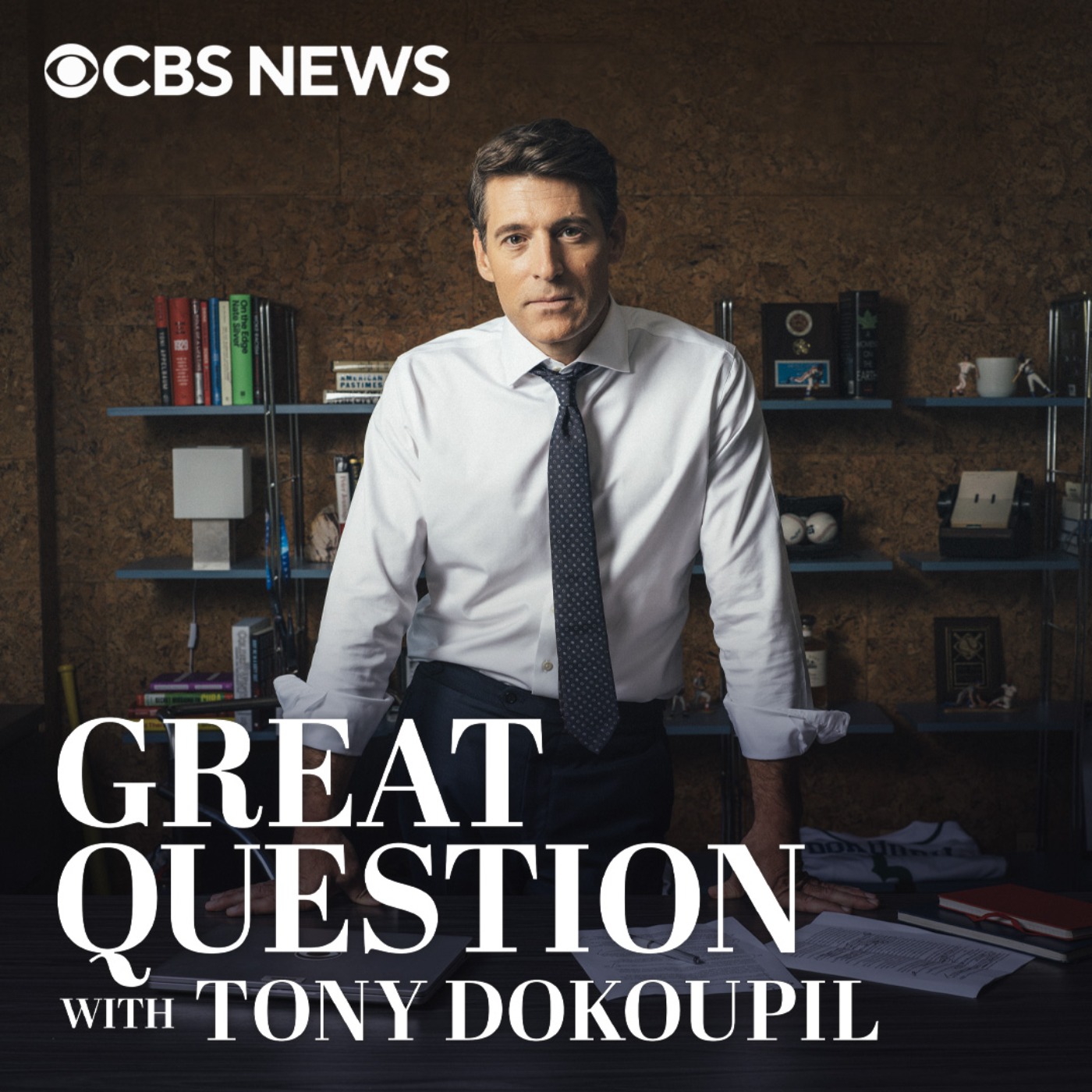
Policing in America with Malcolm Gladwell | Great Question with Tony Dokoupil
In short
Whether America needs more police to reduce gun violence, challenging both gun-control focus and “defund the police” framing.
Guest backgrounds
Malcolm Gladwell is the author of The American Way of Killing: The Invention of an Epidemic, arguing the gun-violence debate is “dishonest” and misframed.
Key claims
America’s violence is driven by gun availability and under-policing relative to Europe; adding police can reduce homicide if officers are reimagined as community-based violence interrupters rather than primarily arrest-focused. He argues assault-rifle bans are largely ineffective and that gun-policy debates ignore suicides (about 28,000 gun suicides vs ~12,000 gun homicides annually).
Notable examples
Bend, Oregon school shooting; Berlin vs Los Angeles police-per-capita comparison; Baltimore’s homicide drop (about 350 to under 100) alongside reduced arrests (100,000 to 17,000). Mentions Andrew Papachristos’ “A Small World of Murder” and violence-interruption programs.
Written by AI. May contain mistakes.
Chapters
1:40
The Context of Gun Violence in America
Discusses the tragedy of school shootings and the national debate on gun control.
“My question today is, does America need more police?”
4:28
Malcolm Gladwell's Perspective on Policing
Malcolm Gladwell shares insights from his book on gun violence and policing.
“So I've read The American Way of Killing, and it strikes me that in contrast to your work before this, it is closer to advocacy.”
9:10
Reimagining Policing and Community Safety
Explores alternative approaches to policing and crime prevention strategies.
“You know, we did two episodes of my podcast after the book on what's going on in Baltimore as a kind of case study in how you reduce homicide deaths.”
14:00
Addressing Gun Violence in America
Exploration of the high rates of gun violence and the challenges in addressing it.
“She was a trained family therapist and a highly empathetic woman.”
15:01
The Ineffectiveness of Assault Rifle Bans
Critique of legislative attempts to ban assault rifles and their real impacts.
“Like, for example, I have a chapter in the book on the futility of the assault rifle ban movement and how it's just stupid.”
18:50
Reframing the Gun Debate: From Homicide to Suicide
Discussion on the need to focus on suicides in the gun debate for effective change.
“And the point of that chapter is we had solid evidence that the New York State handgun bill, anti-handgun bill, had reduced not homicides in New York, because homicides are largely illegal handguns, but suicides.”
21:19
The Role of Police in Community Safety
Arguments for increasing police funding and training to improve community relations.
“I mean, I think if we just started there and just said we have to have a conversation in this country about the fact that 28 ,000 people took their own lives with a gun last year.”
24:26
Understanding Police-Community Relations
Analyzing the connection between police effectiveness and community trust.
“But I don't think that's the – that's part of – so explaining – Step one is simply explain to people the degree to which – so I did a – when I was writing the book, I did this little test.”
26:50
Comparing US and Canadian Violence Rates
Speculating on the potential for the US to reduce gun violence to Canadian levels.
“In America, your chances of being caught are less than 50%.”
28:00
Exploring the Impact of Policing on Gun Violence
Discussion on the relationship between police presence and gun-related deaths.
“I don't know the exact answer to this, but let's play with this.”
Show all 13 chapters
30:11
Redefining Police Roles to Save Lives
Debate on redefining the role of police to prevent violence effectively.
“The reason I am such a skeptic is just having covered politics for a couple of decades now and watched various worthy goals not be reached because of the way politics work.”
33:31
The Potential Impact of Gladwell's Book
Analyzing the implications of Malcolm Gladwell's insights on public policy and policing.
“It's kind of ghoulish to think about it, but this could be line one in your obituary.”
36:52
Political Wishful Thinking and Its Consequences
Exploring how political biases affect public perception of election outcomes.
“And it's a really actually big problem, which I'll get to.”

Ask about this episode
Get the gist, explore an idea or ask about something said.
 Claude
On 60 Minutes, what are the key points of this episode?
Searching your listeningTranscript
Automatic transcript. May contain errors.
0:00A beautifully designed Squarespace website is the difference between thinking about photography school and selling your portraits online. It's the difference between giving away those cookies you just made for free and running your cookie empire. A beautifully designed Squarespace website is the difference between having a movie reviewing hobby and a movie reviewing career. Squarespace. Because no matter what you're into, a website makes it real. Use offer code DIFFERENCE for 50 % off select plans. Terms and conditions apply. It's that magical time of year when Designer Shoe Warehouse becomes your Designer Shoe Wonderland and you become everyone's favorite gifter because you know that good things come in shoe boxes like cozy slippers, on-trend kicks, boots made for snow stomping, and party shoes that sparkle and shine.
0:47Plus, stocking stuffers that bring joy from head to mistletoe. Who doesn't love more joy? Find shoes for you and yours at your Designer Shoe Wonderland. Shop in-store or visit dsw.com. DSW, let us surprise you.
1:28That's not unreasonable. So that's a million dead then. It's a million. We could have had a million fewer, I think.
1:39I'm Tony DeCoppo, and this is Great Question. My question today is, does America need more police? Earlier this month in Bend, Oregon, a 16-year-old forced his way into an elementary school and killed three children and a teacher. Another unspeakable horror. We picture our own kids, we picture our own schools, and we wonder, are they next? How did this happen again? Why did this happen again? And then again, we get the national debate about gun control and mental illness, and we get nowhere. Meanwhile, we bemoan our status as a country where, as The Onion's satirical headline puts it every time, no way to prevent this, says only nation where this regularly happens.
2:24But what is this? It's a school shooting. It's a mass killing of strangers in public. These are the most shocking of killings. And although we don't feel this, it is also among the rarest. Shootings with long guns, as was the case in Bend, Oregon, account for only about 5 % of gun murders. Public mass shootings account for 1 % of all murders. Most murder is personal and private. it. It's a grudge, an argument, a score to settle, usually between young men who already know each other. But that's not where our efforts go. We fight over gun laws aimed at the rare shootings, like assault weapons bans, which by much of the evidence wouldn't stop the everyday killings that make up most of America's gun deaths and wouldn't have stopped Bend, Oregon either.
3:14The other place our energy has gone is into law enforcement. In fact, just a few years ago, many of us decided that police weren't just failing to solve the problem, they were the problem. For too long, the status quo thinking has been you get more safety by putting more cops on the street. Well, that's wrong. Defunding the police has to happen. We need to defund the police and put that money into social safety nets because we're trying to save lives. Crime is a symptom of a diseased society that neglects its most marginalized people. And we do not solve that problem with police. But what if everything we've been telling ourselves about gun violence for the last few years has been wrong?
3:57What if America doesn't need fewer police, but more? What if the very call for less police actually caused more murders? My guest today is Malcolm Gladwell, And that is one of the arguments he makes in his new book, The American Way of Killing, The Invention of an Epidemic. He says we haven't just been wrong about gun violence. We've been dishonest. And that dishonesty gets people killed.
4:27Malcolm, thank you very much for doing this. My pleasure. So I've read The American Way of Killing, and it strikes me that in contrast to your work before this, it is closer to advocacy. The idea here is not just to stock people's minds with dazzling new thoughts, but to maybe move us toward a new consensus and in an area of life or death importance. But I want to put the question to you. What is your goal with this book? Oh, wow. I'd like to get our conversation about gun violence back on track. I feel that what's happened is that it has gone off the rails, and people I don't think realize how, I use the word dishonest in the book, how dishonest the conversation about gun violence has become.
5:19We're talking about things, we're assuming things are important and they aren't. we're misunderstanding the nature of our disease. We're coming up with cures that aren't cures. I mean, there's an unreality to it that I wanted to address. I think this is the signature American public health problem. If you really want to understand what distinguishes us from other developed countries around the world, I mean, there's a number of kind of relatively small things you can point to. But I think the elephant in the room is the fact that we have a violent crime problem that is three to four times greater than our peers.
5:58It just isn't. I mean, even if you just cross the border to Canada, you wouldn't know you had crossed the border into Canada unless I told you. It looks the same. It's like it's the same climate. It's the same music, the same food, the same everything. But in Canada, the homicide rate is a fraction of what it is here. It's just a problem that I think requires some explanation. explanation. The problem is the guns themselves, right? We're not more violent as a society than other societies, but we have more guns. And so when people feel personal injury, offense, insult, they don't reach for a knife or just close their fist.
6:39They reach for a gun and then you get a death. So I guess the biggest solution, if you wanted to save lives, would be a reinterpretation of the Second Amendment to get it right this time. You have a convincing chapter about how we've interpreted it completely incorrectly. But you're not going to wait around for that because I take it you don't see that coming anytime soon. So we should go down the list of options to something else. Yeah. I worry a little that the overwhelming focus of a good part of the anti-violence movement, anti-gun violence movement on gun control has led us astray. It's just not going to happen anytime soon.
7:26And if you think that's the solution to gun violence, you're going to be waiting a long time to see any result. And I think that there are lots of other things that we could do now that we're not doing. So, you know, a simple example would be, I have a whole chapter on this in the book about how under-policed America is. the typical European city has twice as many cops per capita as an American city. I mean, it's an astonishing difference. Berlin, L.A. and Berlin are the same size. L.A. has 8 ,500 officers. Berlin is 18 ,000. You know, and that's true. Go down the list of every big city in America.
8:05Its counterparts overseas have way more cops. Police chiefs from overseas come here and they say, what are you guys doing? Like, why? Here you are with a problem that dwarfs ours, and you're trying to tackle it with a fraction of the resources. I mean, that would be a very, very simple place to start, which was spend as much time and attention on trying to prevent crime as you do on punishing it after the fact. Is policing then the second most consequential thing? If we added more cops to every city where there is gun violence, we would save the most lives? Do you think that's the most impactful thing?
8:43Well, it depends on what you have those police officers do and what you mean by homicide prevention. So if all you're doing is adding more armed police in squad cars, no, that's not second on the list. But if what you're doing is reimagining your entire approach to homicide prevention, of which police and more police are a part, but only a part, then I'm down. You know, we did two episodes of my podcast after the book on what's going on in Baltimore as a kind of case study in how you reduce homicide deaths. Baltimore's gone from 350 homicides a year a couple years ago, and they may well get under 100 this year.
9:28And that's been done by defining – by creating – by using a new paradigm of homicide prevention where it says, look, if what a homicide is is typically young men settling arguments and feuds and things with violence. It's not deaths in the cause of some kind of strategic, planned out, thought out criminal act. No, it's feuds. It's you shot my brother and so I come after you. That's what it is. If you understand that's what it is, then you can, if you have a way to intervene in that, and there are all kinds of strategies like this around the country, if you can interrupt those cycles of violence, then you can meaningfully reduce homicide deaths.
10:16That doesn't require gun control. It doesn't require an act of Congress. It doesn't require the Supreme Court to change its composition. It doesn't require any of the things that we're so obsessed with. It just requires local communities reimagining what they think the role of crime prevention is or role of law enforcement is. You mentioned Baltimore. I was in Baltimore recently, interviewed the mayor, talked about their crime reduction, or I should say their violence reduction. And I've also covered this 20 years prior, almost. In Chicago, there was a sociologist there, hometown boy. He did some criminology work.
10:57And I remember he had a paper with a very sexy title, sexy for the kind of op-ed page, called A Small World of Murder. Oh, was it Andrew Papachristos? Yes. Yes. Yes. Okay. All right. So it's a memorable concept. Yeah. And I actually went out there to Chicago and wrote along with the cops who were trying to take this theory and put it into practice. And they would do exactly what you describe. Somebody would get shot. They would know the neighborhood enough to know who that guy knew and therefore who was most likely to want to exact revenge. and they would try to break the cycle. My point, though, is there have been documentaries.
11:39I mean, every network correspondent at some point has gone and done a story about violence interruption. Boston had a program. There's a lot of them. If it's been around for so many years, why hasn't it been more effective in bending the curve nationwide? Or is the reality just that it's a very appealing concept and great to write about because the characters are wonderful and it kindles something in the imagination. But in fact, it doesn't work at scale. There isn't any issue, I think, with scaling this. In other words, what you're talking about in all these programs is using community resources and police who are familiar with a community to intervene on a personal level or a group level with those at risk for violence.
12:31You can do that anywhere because you can always muster community resources and police in any given area. And these people do know this, right? That's not the issue. The hard issue is persistence. So in Baltimore, for example, when Baltimore was the most dangerous city in the United States, they were arresting 100 ,000 people a year. This isn't a city of 600 ,000. Now that they're bringing their murder rates down to historic lows, they're arresting 17 ,000 people. The point is that this is just a small way in which this is a completely different way of doing policing. You're not sending your cops out to do the thing that they have been told they're supposed to do for 200 years, which is arrest people.
13:13Now you're saying, no, no, no, we don't want you to arrest. Arresting actually is the problem here because in arresting people in a kind of indiscriminate way, you are fraying the kind of relationship with the community that we need to do this kind of homicide prevention, right? It's counterproductive. The point I think is that the reason these strategies are hard to do is that they require everyone to completely relearn their jobs. And a cop's got to work side by side with a pastor and an outreach worker. And a lot of what policing becomes is with a group of people going and knocking on a door and trying to help somebody in a way that my mom, who was a family therapist, did for 30 years.
14:01That's hard. It's hard for my mom to do it. She was a trained family therapist and a highly empathetic woman. Now we're talking about trying to reorient in some of the most kind of troubled and disadvantaged communities in the country. So I'm not saying it's easy, but the alternative is that we're going to have 12 ,000 homicide gun deaths in this country this year. That's the alternative, which is pretty plainly unacceptable. It is unacceptable, but you're right. When you lay it out the way you just did, it almost sounds easier to launch a 50-year campaign to reinterpret the Second Amendment. No, I think we are seeing – I don't think it's impossible.
14:45But what I wish is that the kind of energy that's gone into these kinds of broader legislative or legal challenges, if that kind of same energy was put into things that are going on in the community level, I think we'd be better off. Like, for example, I have a chapter in the book on the futility of the assault rifle ban movement and how it's just stupid. It's like assault rifle bans, if you read them, don't ban assault rifles. So like they're like five pages long and you get to page three and you're like, oh, all they're doing is banning the number of cosmetic attachments you can bolt or slide onto an assault rifle.
15:28And then there's an appendix at the end, which is 50 pages of all the high-powered rifles not covered by the ban. I mean it's just – it's preposterous. like an enormous amount of energy has gone into this a piece of legislation that even if it were successful would not move the bar one iota let's go back to more policing because i think this is really interesting the way it will interact with the politics of it um if well first of all why don't you lay out for me and then and i'll dig into it a little bit more like why why is it that we are not Berlin? Why did we go down a different path, a side road?
16:05Why did we go off the rails or onto a different track while they stayed on the police work? Lots of police. They are gentler, more effective. Why did they get it right and we get it wrong? Well, the most important framing fact to understand is that the amount of money that, say, Germany and the United States or France and the United States spend on public safety is exactly the same. The share of GDP is the same in virtually every country in the developed world. The difference is that in a country like France or Germany or whatever, Belgium, the Netherlands, they spend an enormous amount of that amount on police and a very small amount on prisons.
16:50We do the opposite. So we just slice the pie differently. Is it because of like a Puritan love of punishment and severe justice? Is there like a biblical cultural reason why we are like that and they are not? I think it's probably all of the above. I would place the emphasis on the way in which Americans have chosen to frame criminality makes it feel like it's a permanent condition. So if you think about, on the left, people say crime is a function of big structural things, racism, unemployment, poverty, you know, and if you're going to, the only way to solve it is to solve those really, really, really big things.
17:31On the right, they say, crime is a problem of moral breakdown, family dysfunction, and the only way to solve it is to solve those really big things. Both of those positions make the problem insurmountable. It's like, oh, we got to do all this enormous heavy lifting to make a difference. So it's basically impossible. So all we can really do is just lock up everybody who's a problem. The politics reward that. You can run ads and campaign on these bad guys were on the street and now they're not. And now they're not. In fact, you don't have to solve major structural things in order to make a difference in gun violence.
18:14Gun violence, as we just pointed out, is about a very small group of people who are acting out personal antagonisms in very specific parts of the country. It doesn't mean you shouldn't fix family dysfunction and racism and unemployment, but it's not necessary to make a difference in gun violence. So I think the way that we framed the problem has made it seem impossible to solve. And I think the first step is saying actually it's not impossible. You can go from 350 to under 100 in three years like Baltimore teaches us and other cities are doing the same. But we could. I think there's no other way to read your book than to think that if we could get our local lawmakers to increase funding for police with training that led to more community policing and interventions, that we could save tens of thousands of lives a year.
19:12so yeah so how how does this go from your best-selling book to a thing that becomes a a consensus on the new york times op-ed page and an activist energetic slogan of some sort comparable to defund the police one answer i mean i talk i have a chapter in a book where i talk about the supreme court's ruling in the bruin case where it threw out a new york state anti-handgun bill that had been in the books for 100 years. And the point of that chapter is we had solid evidence that the New York State handgun bill, anti-handgun bill, had reduced not homicides in New York, because homicides are largely illegal handguns, but suicides.
19:58And suicides, most people, many people, in fact, I would say 95 % of Americans are unaware that suicides with guns are a massively bigger problem than homicides with guns. We're going to have 40 ,000 Americans killed by guns this year. Probably 13 ,000 or 12 ,000 of those will be homicides, and 28 ,000 will be suicides. Suicide is a huge, huge issue. And I think if we reframed, if we started by reframing the conversation and saying, let's just talk about suicide. people our suicide rates are unacceptable that handgun law in New York State had the effect of giving New York State a suicide rate that was half the national average.
20:48That was because there's just not a lot of handguns lying around in homes in New York State and that means that when someone is in that moment when they want to take their own life there's not the most lethal weapon available. If we started talking, suicides are distinguished from homicides in that they affect all of us They cross party lines. They cross class lines. They cross neighborhood lines. There's a clear link between gun availability, legal gun availability, and suicides. And they're a bigger problem, much bigger problem. I mean, I think if we just started there and just said we have to have a conversation in this country about the fact that 28 ,000 people took their own lives with a gun last year.
21:27That goes to the reducing the number of guns side of the equation, which I do think – I don't know how that happens. I think after Sandy Hook, I'm in that camp of thinking, well, if we couldn't change it after that unbelievably emotional event and tragedy, then there's not going to be – pointing people to a data point about suicide is not going to do it. But wait, there are alternatives along the way. So the Brady guys, the Brady Foundation, they have a push for better rules around gun storage. And there's a lot of evidence that that could reduce suicide, not just homicides, but also suicides.
22:08And that's a really good way of changing the conversation. So we're not talking about taking the gun away. I know. I've done that story too. And when you talk to gun rights people, they feel like the reason I have a gun is because if the intruder comes in at 3 a.m., I want to have the gun on him before his gun's on me. That's their way of thinking. And so even if you had a fingerprint unlocking system on a gun safe where you could get your weapon and only you could and it would be instantaneous, people feel like it's friction in their personal self-defense. And they're really opposed to it. So I think that's a political dead end, too, having done that story in my— Tony, you know, I actually love the fact that you're even more of a skeptic than I am.
22:52I'm trying hard to find some room for—I mean, look. Well, no, I'm not a skeptic around this policing thing. That's why I'm actually—I'm genuinely interested in— you know, if Malcolm Gladwell has parsed the data and is arguing that, that yes, American cops are more violent currently and they kill more people than other countries currently, but they wouldn't if you had more of them counterintuitively because they wouldn't feel the need to assert themselves in the same way because they would have more intimate relationships with the community. If you are convincing on that point. So how do you, and I am also bought in on the idea that if that happened, it could have the biggest net difference on the number of people dying.
23:38So let's root for it. So how do you get it from a thing in this book that's part of a podcast that's read all over the place to a thing that is not just your idea that you're defending, but just the default idea in the way that defund the police for a moment. It had that moment where it had so much political energy. Yeah, yeah. No, when we should have been saying refund the police. Yeah, the observation, the crucial observation is that American police are more violent than their counterparts around the world, but that is because there's too few of them. And that wherever in the world there are large numbers of police per capita, the behavior of the police changes.
24:21When they are numerous, they don't have to be aggressive and violent. But I don't think that's the – that's part of – so explaining – Step one is simply explain to people the degree to which – so I did a – when I was writing the book, I did this little test. I used the Berlin-LA example and I would say to people, LA and Berlin, same size. Berlin – LA has 8 ,500 cops. How many cops do you think Berlin has? I probably asked this question of 100 people. I got 98 thought of those 100 said that Berlin would have less than half of the cops of L.A. They were directionally wrong. Only two people were right.
25:06My cousin, who wants to be a police officer and has spent a lot of time in Berlin. I'm sorry, not my cousin, my nephew. And one of my closest friends, Terry, who's just insanely smart. That was it. But this is my point. We have – there is such a strong belief in our country, particularly on the center left and further to the left of that, that we have too many cops. Yeah, it's – I don't think that – I don't think liberals are doing themselves any favors on this issue. I think that what has happened as this issue has become politicized is that there's been this kind of pro-police, anti-police kind of framing of it.
25:45That if you're on the left, you're suspicious of them. On the right, you're enthusiastic about them. And I think that's just dumb. Another very useful thing is to go back and read, do you know what Peel's principles are? No. So Robert Peel is the 18th century English, the early 19th century English figure who invents the modern police force. And he has these famous set of principles that he calls Peel's principles, which to this day, every police chief in the country can quote you all 10 of them. They're incredibly beautiful and powerful. And one of them is the police are the people and the people are the police.
26:24And what he meant was there shouldn't be any distinction between the police force and the community being policed. They're one and the same. And we've created this political divide that makes it sound like the police are this kind of separate, you know, occupying army. And we need to get away from that. And both sides need to understand they are us and we are them, right? And when you have that, you know, another crucial part of this whole equation is if you commit a murder in Europe, your chances of being caught are probably 90%. In America, your chances of being caught are less than 50%. And in many communities in this country, they're less than – you're under 20%, right?
27:11That is because there is an antagonism between the communities where these crimes occur and the police forces in those communities. And people aren't talking to the police the way they should. That is part of the core of our problem. If you look around you and 85 % of your peers are not getting caught after they murder somebody, do you think that changes your mindset about how you choose to resolve some conflict? I think it does. Until the police are effective, you're not also going to address this crucial problem of gun violence. All right. So two more questions here and zeroing in I think on something key.
27:55and this is a little bit of an impolite um request but i i do think people respond to numbers and if we've got two million gun related deaths over the last 50 years what portion of those can be tied to us simply not having enough police and if you get that answer or even an estimate then you then you have a way of explaining to people that there is a cost to the defund or underfund police movement. Yeah. All right. So how about this? I don't know the exact answer to this, but let's play with this. Could America ever get to Canada levels? So Canada is sort of midway between Western Europe and the United States in terms of its homicide problem.
28:45Canada has a lot fewer guns, but that so that should mean it's hard to get exactly to Canada levels but I don't think it's unreasonable to think that we could get within shouting distance of Canada so let's say if Canada is 3x or US is between 2 and 3 times Canada could we have had a million as opposed to 2 million over the last 50 years homicides that's not unreasonable I would point out that over the last So that's a million dead then It's a million. We could have had a million fewer, I think. Is that not an unreasonable? I would point out that homicide rate in the last couple of years has been plunging in this country pretty much across the board.
29:28So it is – it's not – which is proof of the point here, which is this is not something that is a permanent feature of American society. It's highly volatile. It soars during COVID and is now plunging. And so we shouldn't have this position that this is an unmovable fact. It's not. It's like it responds to all kinds of social changes, policy changes, policing changes. so we could bring it down if we wanted to. Well, no, but it doesn't respond to all sorts of, it responds really effectively to the ones you've laid out. Yeah. In fact, so effectively that we potentially would have a million more people alive and walking around today.
30:09So there's the final point and then I'll let you go here. And I thank you for the time. The reason I am such a skeptic is just having covered politics for a couple of decades now and watched various worthy goals not be reached because of the way politics work. Even if you got everybody to buy in to the idea that more police would save lives, it would be short-circuited by our politics because all those additional police would, as you lay out in the book, have moments where they interrupt what would be a violent act and maybe a murder. That doesn't go down in any kind of book as a point of data, right?
30:56So no one feels that. You don't feel the absence of that violence necessarily. But if one of those cops, for whatever reason, blatant racism, had a bad day, has their own mental issues, kills somebody in the line of duty. If they kill somebody and that's caught on camera, that will be the thing that generates political heat. not the hundred additional cops that saved x number of lives by interrupting violence just one bad cop will re-up this whole political cycle where people will argue we need fewer because if there are fewer on the street they can't kill you in the first place and that's why i'm skeptical well i would say this that one of the things you have to do if you want to expand the number of police is you have to redefine what a police officer is.
31:52And also you have to redefine what sorts of people are working with the police to prevent violence. So to the first point, right now there's a police shortage in this country. It's really hard for police departments. Everyone wants to hire more cops and can't find them, right? And that's, I think, because there are lots of people who might be very, very good police officers who are defined out of the – never even would consider it. They don't think of themselves – they think what being a police officer is is rushing into burning buildings and shooting drug dealers. Yeah, yeah. What they see on the wire, yeah.
32:35Yeah. They're thinking about the wire. What we need is our people who are something closer to kind of social workers. And we need people, people in that job. So job number one is to redefine the profession. And I think if you redefine the profession, you would lessen the impact of those moments when policing goes wrong. Because you could say, look, we're trying to move away from the cop as urban warrior. And when you say – Baltimore has gone from 100 ,000 arrests a year to 17 ,000. when you say that's not who we are anymore. We're not people who go around arresting every young black man. We have a completely different strategy.
33:20If you are open about that and open about redefining who you want to serve with you, I think it would be possible to make the transition. Malcolm, thank you very much. It's kind of ghoulish to think about it, but this could be line one in your obituary. This is a, it's a, it's a, it's a hell of a good book and more so than, than anything else you've done. It could have the biggest effect on, on the way we live. You're very kind to say that, Tony. Thank you. So what do we now know? Well, we know that Gladwell is uncomfortable in the role of advocate, but he does see this book as a book that could save lives.
34:06and he knows that the one thing that could save the most lives would be correctly interpreting the second amendment he makes compelling case that we've misread it in order to and the result of that misreading has been this proliferation of guns that puts us as an outlier across the world more guns here than anywhere else but short of that happening which is a 50-year project closer to home, he says you can add more police and the principle of more police in a role that is not urban warrior, but just a person policing people, a member of the community, that will save lives. And he even put a rough estimate on how many lives would be saved over the last 50 years where he had 2 million gun-related deaths in America.
34:54We don't have to get to Europe levels of policing we could get to canadian levels of policing and he says it's not unreasonable to thank a million people so 50 reduction in gun related deaths over the last 50 years project that out that's another million lives at least saved in the next 50 years that's an incredible data point because if you're going to win an argument in a public policy forum over how many police we need and how to get there because the movement around defunding and reducing the number of police is so potent, that could turn heads.
35:37Time now for Good to Know. Good to Know is our name for things that caught my eye or that are the talk of the table, just to reference two previous CBS properties I've been involved in. It's basically an article I read that I want to tell you about. You don't have to know it, but it's good to know. Without further ado, everybody, and I mean everybody, thinks their candidate or party is about to win and win big in the midterms. There's a Politico poll on this finding that 90 % of Democrats, 88 % of Republicans think their party is going to win the House. On the Senate side, 82 % of Democrats and 85 % of Republicans think their party is going to win the Senate.
36:19If you jump back to 2024 at the presidential level, it was 90 % of Americans who thought their preferred candidate was going to win that presidential election. Both these insights are from a Gabe Fleischer essay that picks up on this University of Connecticut poli-sci paper by a guy named Seth Warner, who digs into this wishful thinking bias and finds that if you go all the way back to 1948, it really crests and then stays elevated post-2012. And it's a really actually big problem, which I'll get to. But first, theories on why it's happening. So Seth Warner, the poli sci professor, he's got a couple theories.
37:01He finds that the biggest predictor of whether you think your party is going to win or your candidate is going to win is how much you hate the other party, how negatively you feel about the other party. And then there's a kind of feedback loop. If you really don't like them and then you're surprised that they win, you dislike them even more for surprising you like that, and onward it goes. The other reason why it might be a 2012 and after thing is, obviously we've had polarization before that, but it has intensified, and he thinks people are in such extreme media bubbles that they genuinely don't realize how bad it is for their party at any given time.
37:41So, I mean, you look at the numbers right now with 88 % of Republicans think their party is going to maintain the House. Almost no one thinks that outside of the 88 % of Republicans who think that. And no independent forecaster is giving the Republicans an 88 % chance of winning the House. So how do they draw that conclusion? Either it's from they just really can't engage psychologically with the idea of this other group, the Democrats they hate taking power, or they're in a bubble. I said it was a big deal. I think it's a really big deal. And Seth Warner and Gabe in his essay talk about why. if you have such a huge number of people on either side of any political race believing that they're going to win, they are not primed to believe the results when they don't go their way.
38:37So, I mean, just to quote Gabe on this because I think it's a nice sentence, he says, the grumpiness could have large-scale democratic consequences, especially if it's fueling partisan polarization, And here's the key part, undermining trust in elections and perhaps even supercharging election denialism. So how do you avoid this wishful thinking bias? I don't know. I don't know if you can, but it's good to know it's out there.
39:07Great Question is produced by Samara Lipman and Candace Kahn with additional production help from Martin Finn and Julia Doyle. pat murphy edits the show technical production from alan peng justin sherman and kobe quenu the editorial directors of podcasts for cbs news are poppy damon and mike peska if you have a burning urgent or even quirky question you're not hearing properly asked and answered anywhere else email us at great question at cbsnews.com your question could be the next great question. I'll see you tonight on the CBS Evening News. Until then, that's another podcast in America.
39:53It's five o 'clock. Your employees are headed home, but you're still updating spreadsheets, switching between software and wondering where the day went. There's a better way. Odoo brings accounting, sales, inventory, CRM and more together in one fully integrated platform so you spend less time managing software and more time running your business because your workday should end eventually. Try Odoo free at odoo.com. That's O-D-O-O dot com.
40:24There are a lot of reasons Chicago homeowners have chosen four seasons since 1971. An A-plus rating with the Better Business Bureau. That's one. Two, BBB Torch Awards for Ethics. That's another. And service around the clock every day of the year. That's a big one. For all your heating, plumbing, and electrical needs, you know who to call. For all the right reasons, call 866-4-SEASONS.
From the publisher
Malcolm Gladwell explains why America has been dishonest about gun violence and why the answer to combating murder is more cops, not fewer.
If you'd like to share your own great question, email us at [email protected]. Enjoyed this episode of "Great Question?" Follow the series now - just search "Great Question with Tony Dokoupil" wherever you get your podcasts.
More from 60 Minutes
All episodesWe use cookies.They keep VO running smoothly and help us improve it. Privacy policy