
 Ask ChatGPT

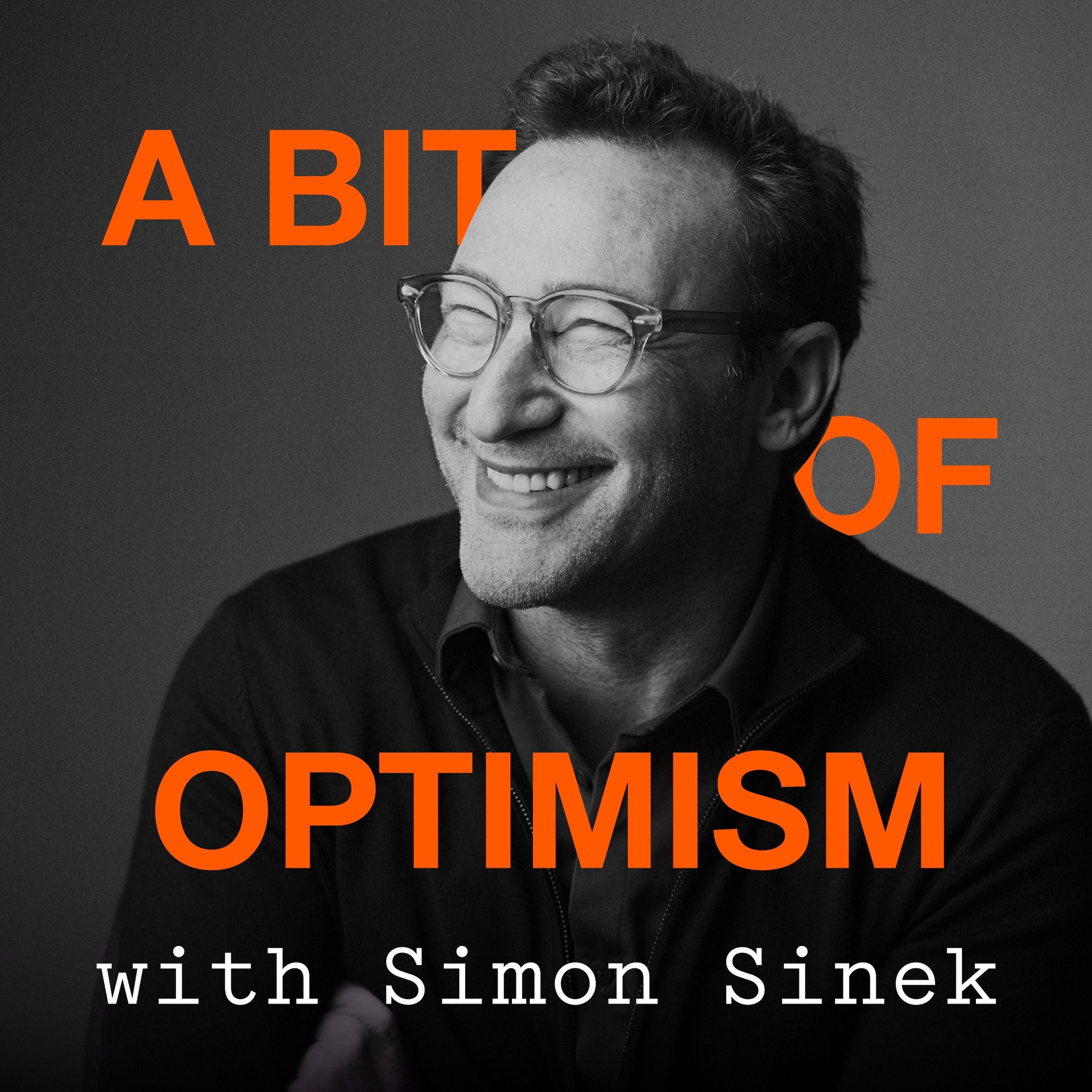
 A Bit of Optimism
27 Oct 2026 · 59m · 27 chapters

The episode critiques the longevity industry’s “competitive” anti-aging obsession (looking younger, selling supplements) and argues for a broader goal: JoySpan—enjoying life as you age. It connects aging mindset to mental health, social connection, purpose, and reduced suffering, including loneliness and older-adult suicide risk.
Dr. Kerry Burnight, a gerontologist who taught at UC Irvine and co-founded the nation’s first elder abuse forensic center. She spent decades working with older adults who were isolated and exploited, shaping her focus on preventing suffering rather than only treating it after harm occurs.
Longevity messaging often increases anxiety and disconnection; “worrying about getting older” can be worse than aging itself. JoySpan complements lifespan and healthspan. Purpose and emotional connection support better health (including lower inflammation). The happiest older adults give to others and maintain deep relationships.
Her mother (turning 98) shifted in her late 70s/early 80s after major hardships (husband’s death, bankruptcy, son’s leukemia), becoming more humble and joyful. A friend’s stroke led her to feel kinder, more patient, and liking herself more.
Written by AI. May contain mistakes.
Discussion on the importance of joy and fulfillment over merely extending life.
“And I know the whole longevity movement seems to be completely preoccupied with the length of time they're living.”
An exploration of how longevity has become a competitive industry and its implications.
“So there's lots of different angles we could take this.”
Dr. Kerry Burnight shares personal insights about aging and her mother's journey.
“You know, why have we taken the nutrients out of an apple and sold it back to people when we could give them the apple?”
A deep dive into the relationship between aging, happiness, and societal perceptions.
“That's I didn't I thought you were going to say 50s.”
Discussion on how beliefs about aging affect mental health and longevity.
“I didn't, like you think teenagers, but actually old people have very high suicide rates.”
Learn why enjoying life, even while aging, is crucial for happiness.
“So if you're going to eat chocolate cake, just enjoy it.”
Discover how humor can improve self-confidence as we age.
“older and you think, okay, I believe that to be true.”
Explore what truly matters in life through reflections at funerals.
“And that's why we're so lucky to be with older people and you have role models ahead of you and you go.”
Understand how to evaluate your aging process through meaningful questions.
“But to take our birthday and to ask these three questions.”
Learn how emotional connections play a vital role in our lives as we age.
“And then the second one that goes to G is give.”
Understand why focusing on the unmeasurable aspects of life is crucial.
“Less important because it doesn't have a number.”
Discuss the societal changes needed to improve the quality of life for older adults.
“of older adults and change how we as a society address this fact that every day 12 ,000 more of us are turning 65?”
Explore how having a sense of purpose impacts longevity and health.
“And your mother, who sounds incredible, I think what's so inspiring about your mom is literally she waited almost the last minute to change the way she lives her life.”
Learn about the importance of language in shaping our perceptions of aging.
“And think about the language that we use.”
Explore the perspective shift from growing older to growing with age.
“May I make an indulgence and ask that I change some of your language?”
Discover Dr. Burnight's journey into studying aging and gerontology.
“I don't think anybody wants to grow older.”
Discuss the importance of pain and hardship in personal growth.
“And I think it's really important to mention you went into it to help alleviate pain.”
Learn how to find wisdom and empathy in painful experiences.
“One that I just learned about on my way driving here from Laguna Beach.”
Understand how to effectively support others in their aging journey.
“I want to hear your response, but I will offer one as well.”
Explore how pain can lead to personal growth and understanding in life.
“I actually just heard this the other day.”
Discuss the importance of assessing the quality of friendships in life.
“It's the unexpected stuff that's the hardest to deal with.”
Learn about the proactive nature of maintaining and cultivating friendships.
“And after having that conversation with him, I took a hard look at some of my friendships.”
Understand how challenges in friendships can lead to deeper connections.
“If we could put it into a shot, we would all be running around doing that.”
Discover the relationship between social connections and quality of life.
“And I think you are the one to give us that.”
Explore the essential components that contribute to a fulfilling life.
“And high quality of life includes lifespan, healthspan, and joyspan.”
Learn about the four essential practices for a fulfilling life as we age.
“In the book, I divided them into four things and I really made them verbs because I wanted people to know that they take work.”
The importance of gratitude and sharing insights with friends.
“I just absolutely love the term growing with age.”

Get the gist, explore an idea or ask about something said.
 Claude
On A Bit of Optimism, what are the key points of this episode?
Searching your listeningAutomatic transcript. May contain errors.
0:00Simon Sinek: How old was she when she made this pivot? Probably in her late 70s, early 80s. Oh, wow. I thought you were going to say 50s. Wow. So as long as that, that she changed the course of her life, and it may have added years to her life. So there's lifespan, how many years you live, healthspan, how long you enjoy good health and good cognition. I'm all for both of those, of course. Yeah. But then this next piece of the quality of your long life, right? about like, why? Why do you want to live a long time? It's not so that in your casket you will look a certain way. Like, what? He looks so young. He looks so young.
0:41Simon Sinek: Yeah, yeah. From cold plunges to supplements to VO2 maxing, it seems that we are obsessed with living longer these days. And sure, some of it works. I guess we'll have to wait and find out. But for better or worse, longevity has turned into a full-on industry. and, for many, a competition. Who looks younger? Who lasts longer? But there's something missing. I've met some of these longevity maxers, and a lot of them didn't strike me as particularly happy people, which raises a question I don't hear many people asking, which is, if we're going to live all these extra years, what are they actually for?
1:21Simon Sinek: That's why I wanted to talk to Carrie Burnite. Carrie is a gerontologist. She studies how we age. She taught at UC Irvine and co-founded the nation's first elder abuse forensic center, where for decades she saw older people isolated and exploited, sometimes by their own families. All she saw was as people aged, their lives got worse. That's why she came up with the concept of JoySpan. If lifespan is how long we live, and healthspan is how our bodies hold up as we age, than JoySpan measures whether we're actually enjoying the life we have. So we sat down and talked about it. If we're going to do all that extra work to live a long time, how can we make sure that that longer life that we have is a good one?
2:09Simon Sinek: If you like this episode, please remember to subscribe. This is a bit of optimism.
2:20Simon Sinek: you and i have something in common which is uh we believe that a good life is not measured in how long you live it but rather how much joy and fulfillment and inspiration you get out of it and i know this has been central to your work you've written about it you've spoken about it that there is more to life than the number of years we can get out of it. And I know the whole longevity movement seems to be completely preoccupied with the length of time they're living. And I've met some of the leaders of that movement, and some of them did not strike me as happy people. I find it ironic. How did you start to think about the quality of our life rather than the quantity of our life?
3:10Simon Sinek: Where did that come from? Being a gerontologist has been such a great honor. And working with older people, and I came to thinking about quality of life and thinking about joy from the opposite of that. So for the first 20-something years of my career, I worked with adults who were suffering so much. And what I saw really burned my eyes. And I worked with people who had ended up slumped over in wheelchairs and alone, who had been financially exploited by family members. Just, I saw a lot. and in seeing all of that you think how can we prevent this suffering to begin with what i was doing is i would come in after the suffering had occurred and try to help and that's laudable but if we know what would prevent that profound suffering wouldn't that be where we'd want to get like it's like the top of the skateboard ramp whereas i had lived at the bottom of you were Treating the diabetes as opposed to helping people eat healthy before they ever got.
4:27I really was. Yeah. And so that's just been the guiding principle of saying, wow, we know a lot about how to fortify people for long lives. And the longevity movement seems to have really lost its way.
4:45Simon Sinek: So there's lots of different angles we could take this. I'm curious to your opinion as to why it lost its way because it seems perfectly legitimate as a a thing to want to do to live a long time I mean I think human beings have been trying to do that you know since since the dawn of of humankind where and why do you think it sort of got sidetracked I think in a word it's humility we've made longevity a competitive sport where we I'm going to beat you by somehow looking younger or stronger or somehow in the same way as a society I think we've lost our way where looks or fame or money or power as a currency has taken hold.
5:40And so if we were to shift from a competitive win, finite game, to like, actually, wait, what are we doing? Have we thought through this thing? Like what? Are you going to never die? Is that like where you're going for? No. Are you going to somehow never get sick, never grow old? No. I don't think people – why do you think we've lost our way?
6:11Simon Sinek: Well, I've never heard any – I didn't expect that answer, but I think it's really astute, which is this idea of competitive living longer, as if it's some sort of – like someone's going to get a medal if they outlive everybody else. It's very interesting, and I think it does drive weird behavior. I think it has become weirdly competitive, possibly because also money has entered the equation, which is almost everybody who's quote unquote leading the longevity movement has something to sell you, you know. And I don't mind if people write books about the theories, but, you know, because if you come up with something, you share your ideas.
6:50Simon Sinek: But it seems like there's always the sort of the ancillary, like, I'll sell you my diet. I'll sell you my workshop. I'll sell you my supplement. Oh, don't forget the other supplement. Oh, and the other supplement. And then I'll send you the energy drink and then I'll send you the energy bar. And then, and, you know, ironically, you should just be eating like fresh vegetables and like clean, clean protein and you'll be fine. Real thing. That's the irony, which is selling all of these things that are available for free inside food. And that's maybe drive some of this competitive stuff, which is I have to prove that my system works better than the other system.
7:23Simon Sinek: And the only way I can prove it is because I'm living longer. We don't know who's living longer, but I do love the fact that it's empirical. yes we'll find out in you know a couple decades who starts dying and getting cancer and everything that's it's great the looks part of it as well as a woman that you somehow are winning if you look like you're not growing old but again like to what end to what end and there is such incredible profound beauty in aging yeah and in you know in being with so many older adults all my life. It's so beautiful. So why have we gone toward this one? You know, why have we taken the nutrients out of an apple and sold it back to people when we could give them the apple?
8:10Why can't we step into this new longevity that celebrates growing older?
8:16Simon Sinek: Tell me a story of someone that you've worked with, who you when you look at them, and I want you to think of someone specifically and you look at them and say that's that's how i want to grow old i want to grow old like like this person yes tell me about this person well i have to say it's my mom and she will be 98 at her next birthday she was not always on this path and that's what i think is inspiring she was on a certain trajectory so newport beach um which means for people who are not from California, it means that there was getting caught up with how you look or how you come off to people or whatever.
9:02A lot of pressure.
9:03Simon Sinek: You could have a TV show of The Real Housewives of Newport Beach. It would play just perfectly. It really would. Yeah. And she'd be the first to say this. So I'm not talking out of school, but as life goes on, every life that I've ever known has hard things enter it. So as, you know, her husband passed away and she went through bankruptcy and her son got leukemia as life does, like to watch this intersection where there is a choice and that she like proactively made a choice to foster the inner self. And it's like she was going here and And then she went here. And so now I am so inspired by her about how she gives, how she connects with other humans, how she has greater humility and greater capacity to appreciate the ordinary.
9:55And so I had turned my camera on her and now I share her on Instagram. And there's zero money is made on it. It's just saying there are millions of examples of older adults who are role models for us. And that our hope is that we can be role models for the people who come behind us, because we need to, as a group, get back on course to what it really means to age well.
10:21Simon Sinek: How old was she when she made this pivot? I would say that it started and, you know, hopefully we don't have to wait this long, but I would say that it started probably in her late 70s, early 80s. Oh, wow. That's I didn't I thought you were going to say 50s. Wow. So as long as that, that she changed the course of her life, and it may have added years to her life, but more important, she's enjoying her life more. Yes. And so there's lifespan, how many years you live. Healthspan, we brought into the vernacular in the 1980s, how long you enjoy good health and good cognition. I'm all for both of those, of course.
11:02Simon Sinek: Yeah. But then this next piece of the quality of your long life, right? Yeah. About like, why? Why do you want to live a long time? It's not so that in your casket you will look a certain way. Like what? He looks so young. He looks so young.
11:23Simon Sinek: So it's lifespan. Of course, we want to live as long as we can. Healthspan, we want to keep our bodies healthy so that we can get around. We can walk. We're ambulatory. We can lift things and partake in life. Yes. Partake with our grandchildren. but then joy span which is and i'm actually enjoying the life that i have it's all three all three and they go in the same direction yeah and that's a that's a really great thing too it's that things like purpose and all the things that i have learned from you for all these years those are the things that propel us and are more powerful and salient than than the physical things like it is the why yeah yeah the why for all of this it's ironic right because you hear people say And you're right.
12:06Simon Sinek: They get the two things. They'll say things like, I want to live a long time, but not if I'm going to be, you know, stuck in a home and in a wheelchair and unable to partake and in pain from arthritis, then end it. Then pull the plug. You hear people make that compromise of my health span and my lifespan, that if I don't have the health, then I'd rather not have the life. Right. But we don't hear people say, you know what? I don't want to be living a long time and a healthy body and depressed and anxious and lonely. We don't hear people saying that. Yes. But that is something you witnessed when you're working with this geriatric population, which is people who their bodies may be fine.
12:46Simon Sinek: They were. They're living, the number of years they have, they're winning awards. But grumpy and angry and lonely. Yes. And not enjoying life. Exactly. One thing I learned recently was that actually older people actually have very, very high suicide rates. Yes. I didn't, like you think teenagers, but actually old people have very high suicide rates. Absolutely. And that's why it's so critical. And I'm so grateful that we're having this conversation, right? That adjustments that we can be making in our thinking and understanding about the truth about aging will impact suicide rates. There's incredible research out of Yale University showing that what you think about aging impacts how you age.
13:32So if we drink the Kool-Aid that old equals bad and don't grow old, we live on average 7.5 years less than people who understand that there are good things that come with growing older.
13:48Simon Sinek: This reminds me of dessert, which is when we stress about eating chocolate cake, the cortisol released about stressing about eating the chocolate cake is worse for our bodies than the sugar in the chocolate cake. Yes. So if you're going to eat chocolate cake, just enjoy it. You don't have to eat the whole thing, but just do it with joy. Do it with a smile and be like, damn, that was a good chocolate cake. On to the next. And it's very similar. Yes. Which is worrying about the thing is actually worse for you than the thing. Worrying about getting older is worse for you than getting older. Yes. Let me walk it through for you.
14:26So if I buy into this multi-billion dollar anti-aging messaging that old you, Simon, are going to get irrelevant, ugly, less funny, less charming as you grow older and you think, okay, I believe that to be true. It's not true. But if you believe that, then you stop connecting at deep levels. You stop trying new things. You stop recognizing that in addition to the hard things, and there will be hard things in every life, there is also great beauty to be had in the humility of going, okay, I have challenges with my body or with my vision. I have lost loved ones. And yet at a deeper level, there is so much to be gained by savoring the whole process and recognizing that it was never supposed to be just easy.
15:25Simon Sinek: I found the thing that has helped me and I definitely fit the mold of as I got older, I definitely got insecure about getting older. And, you know, pride of myself on the fact that I sort of have no gray hair for my age and look younger than I am. You know, my beard is getting quite gray now. And I always sort of got away with not being until aging started to show up, waking up in the morning and parts of my body hurt that didn't hurt when I went to bed. What's that? Yes, that's part of it. And the thing that I have found that has helped me actually build my self-confidence, and I still have my moments, of course, is sense of humor.
16:07Simon Sinek: I found that as I was getting older, I was trying to hide it. I was trying to hide that I was trying to get older. You know, pretend that I wasn't getting older. And I found that when I joke about it, I sort of, you know, I find that it just sort of makes me not as worried about it. Yeah. And I still have things that bother me, but they bother me less. Yes. I'm not consumed by them. They're just like, oh, yeah, that's happening, you know? like my hairline keeps going higher and higher and higher and higher. And, you know, I would get it fixed, but I don't want to look like I'm 30. And it's not the important thing.
16:46Simon Sinek: It's not the important thing. Yes. And that's why we're so lucky to be with older people and you have role models ahead of you and you go. And as a gerontologist, I go to a ton of funerals. That's part of the occupation. And every time I go, no one ever talks about their job titles. They never talk about their money or their car. Never talk about their hairline. They never talk about their jowls. But they talk about, he really saw me. He was there when no one else was. And there's so much beauty in that. I just feel like investing in that. And something that you and I share is I went to look up your age and I saw that we were both born on the same day.
17:34Simon Sinek: No kidding. Yes. October 9th. Exactly. Oh, look at that. We're twins. And so I was thinking about that, not to be too much of a stalker that I, but I was thinking about birthdays can be an opportunity to evaluate how we're doing this thing. Aging. And aging is another word for living. Yeah. So all of us are aging. And that's why sometimes when people say she's an expert in aging, I'm like, absolutely not. Nobody gets through it. And I don't even use the term aging gracefully because there's hard stuff. But to take our birthday and to ask these three questions. And I made an acronym for them that I didn't think of until after the book came out.
18:19Simon Sinek: Of course, of course. I know the feeling. Darn it. I know, he's like George Costanza. Yes. The jerk stole Coral, they're running out of you. Exactly. Yeah, yeah. So the three questions go with these commitments that we, in changing the narrative on how we think about aging, and it spells out age. And so asking ourselves how we are adapting, and that question would be simply, how am I living? How am I walking with, for example, my visual impairment? Or how am I walking with the thing that my best friend passed away and I don't have them anymore? Because to adapt is a big part of what will enable us to have a longer joy span is what I want for people.
19:05So how am I living? And then the second one that goes to G is give. So it is what's mine to give and what am I giving? because the happiest older people are people who recognize that they have things to give and then find ways to give it. But if you buy into the societal messaging that you're less than and that as you, as a 90-year-old Simon, have less to give, then you're not giving. So that's why we need to put our shoulders back and say like, no, I have more to give than I've ever given before. So the first question, how am I living? what am I giving and then the last one is the e for emotional connection and that who am I walking with and I've heard you talk about this that how important it is and that we're going to lose loved ones many of us won't be in partnerships because of death because of never marrying because of divorce, a million different reasons, you come in alone and enter and exit alone.
20:13And that's, that's a natural part of it too. And so our proactive emotional connections of who am I really showing up for? And who can I call with good news? Who could I call when I'm on the toilet with diarrhea, you know, like these like deep connections matter. So if we were to ask those three questions, I think it would put us on a different path.
20:39Simon Sinek: We're talking about have a healthy body, of course. Keep yourself in shape, of course. Do the things, of course. This whole conversation is how you're showing up in life. And I think one of the things that's going back to why the longevity movement sort of went sideways and people don't think about joy span, I think it's just harder to measure. You know, I can measure my calorie intake. I can measure how many reps I'm doing and how many sets I'm doing at the gym. I can measure, you know, what supplements I'm taking. I can count the number of pills, the number of grams that I'm supposed to be taking, milligrams supposed to be taking.
21:12Simon Sinek: All of that stuff is measurable. And I think for people who like process and who like action, I don't think it's a coincidence that the longevity movement skews male. It's that sort of aggressive metric sort of thing. It's just easy to measure. And I can measure the years that I live too. All easy metrics. Whereas how do I get happier? How do I find more joy? How do I feel like I'm giving? How do I create emotional connection? Those things are more amorphous. And I think because they're hard to measure, I think some people think they're hard to do or less important. Right. Less important because it doesn't have a number.
21:53Yes. And, you know.
21:55Simon Sinek: So that's kind of this whole conversation. What we're talking is the unmeasurable parts of life. The Marine Corps has a word for them. The Marine Corps calls them the intangibles. Yes. And they talk about what makes the Marine Corps great. Sure, all of the metrics and how good we do this and how good we do that, we handle that. But truly, the magic they talk about is the intangibles. Yes. And they include things like loyalty. Yes. They include things like honor. You know, they're the intangibles. And I think we don't pay enough attention in our lives to the intangibles. And at the end of life, it is people, they always talk about the intangibles.
22:30They bring that up. Who am I? What have I meant here? What has my time? It's all intangibles. So my question for you, and I'm so honored to ask it is, how do we decrease suffering of older adults and change how we as a society address this fact that every day 12 ,000 more of us are turning 65? to promote the intangibles in order that people would suffer less and enjoy greater quality of life? How do we do that?
23:03Simon Sinek: Well, I think asked and answered. I mean, here we are, right? I think we're doing it. I think it's important to have these conversations. I think it's important to
23:15Simon Sinek: use terminology. We're not shaming or guilting anybody into it, but inviting people. I think that we are also talking about the fact that this stuff does require work, like eating well, like exercising, that the intangibles require work. Like you have to put in effort to make friends and make people feel seen. You have to put in effort to adapt. It's not a one and done kind of thing. Something pushes you out of alignment, whether it's the death of a loved one or some of the examples that you offered, there's a process that you have to go through. And some of that work is actually quite hard. Yes.
23:54Simon Sinek: And so I think talking about and offering people tangible steps that they can take on this journey, even though it's intangible, there are tangible things we can do. And there are tangible skills we can learn to aid us on that journey. I think that's why your work is important. Why are you putting publishing your work and sharing your work is important? Because you have a point of view and a perspective that you've figured some of this stuff out. Plus, you've seen it firsthand by working with an elderly population. And your mother, who sounds incredible, I think what's so inspiring about your mom is literally she waited almost the last minute to change the way she lives her life.
24:32Simon Sinek: And not only has she lived longer, I mean, we won't know if she didn't live that long, that she wouldn't have lived that long without this stuff. But we can say she's definitely happier at 98 on this path than she would have been the other way. And interestingly, we can even say she lives longer because research consistently shows us that, for example, feeling like you have a sense of purpose, even holding all the variables constant, that would impact that people with a sense of purpose live longer and in better health because of lower inflammation. So it is physiologically. And that's what I mean.
25:08It goes in the same direction.
25:10Simon Sinek: On another episode where I did a blood test called glyconage, where they basically measure inflammation. I mean, that's basically what they're measuring. And that's what I learned about stress stacking. Yes. And they were telling me that there's three things that affect your glyconage, your inflammation. Your genetics is about a third. So some of us are dealt a good hand and some of us not. Yep. Lifestyle and stress. lifestyle we can control for and stress that we we can control for ironically a lot of the longevity movement is high lifestyle but bad stress yes and the ceo was telling me that that that a lot of the people in the in the longevity movement who take their test actually score very badly their their inflammation is actually makes them actually older than their chronological age because they've overstressed their bodies yes and they have worries and their insecurities are even more exaggerated because as you said, it's become a competition of how strong I am, how good I look, how many supplements I take.
26:11Simon Sinek: It's become, let me show you how I'm living longer than you. And the people who, they exercise, but not obsessively. They eat well, but not obsessively. But they sort of get the most out of life and purpose definitely ranked really high. Their glycan age, their inflammation, the health of their body is way lower. They're way younger than their chronological age. Exactly. That's exactly right. And think about the language that we use. Staying young. That's staying. That's gripping ourselves going backwards. Whereas if we could start to embrace growing older. What would you say? Because growing older is biology.
26:52Simon Sinek: Everybody grows older whether you like it or not. I think, ah, I'm hearing what you're saying. It's the emphasis on the grow. Yes. like getting old is maybe one way to say right right right but growing growing with age and the thing is we're swimming in a sea of ageism and internalized ageism so much so that we don't even know so people go you don't even look your age like actually if you dig into that we don't need to say that right we're stepping into i'm 80 this is what 80 looks like it's going to look different in different ways because this decline aging mindset that everything is downhill is simply not true it's not supported by the literature things get better as you get older for example you know who your people are you have greater problem solving abilities as a result of solving so many problems a greater appreciation of art and music and nature and spirituality and gray and less me, me, me.
27:53There's a lot of goodness to old, but we've got to push it aside and say, we're not doing it that way that we were doing it.
28:02Simon Sinek: May I make an indulgence and ask that I change some of your language? Please. Because growing older, the problem is it's an accepted phrase. And so by redefining something that I already understand, it's harder to, it's like redefining a tree. I'm like, I think I know what a tree is. I'm like, let me use my definition. So I like what you said a moment ago. I think it's growing with age, because that's not an accepted terminology. And what it does when you say I'm growing with age, that makes somebody lean in and say, what? And you get to define it. And the emphasis is on you doing the growing while you age, rather than the passage of time.
28:39Simon Sinek: So I think growing with age is more curiosity inducing and more accurate than growing older. Well, it's not as if you're Simon Sinek telling me this. This whole journey has been so incredibly rewarding for opportunities like this. And I feel like because it's a kind of movement whose time has come, just doors have opened and opened and opened. You're growing with age. I'm growing with age. And we can become the most authentic version of ourselves. And so the best version of us truly can lie ahead. Not because of this part. That part's probably not going to be the best version. But that best internal version of who we really are, it's so hopeful.
29:27And when I see people go from, I don't want to get old to I want to grow with age.
29:34Simon Sinek: Yeah, I don't think that's okay. I think it's okay. I don't think anybody wants to grow older. Right. I think that's okay to, you know, oh, I remember when I could just do something because I was young. I didn't have to warm up before I worked out or went for a run. You know, now when I go for a run, if I don't warm up, my knees hurt. I did that yesterday. You know, where I used to just go for a run. I used to be like nothing, just put on my sneakers and start running. You know, I don't enjoy that. And I would like that not to happen. But if it's going to happen, if it's going to happen, then I'd rather grow with age than recede with age or not grow with age, remain stagnant with age.
30:07Yes.
30:08Simon Sinek: I like that a lot. I'm going to start using that. And it is going to happen. You know, if we're lucky, we're going to be older adults. Yeah. So how did you even get into this? Like as a young sort of how old were you when you got into this profession? Like who says, you know what I'm going to do? I'm going to study old people. Yeah. No old person decides to study old people. Young people decide to study old people. I was born into it. So on October 9th, my mom and dad had teenagers and they lived in LA in Pacific Palisades. and my mom's like, you know, I'm in my forties having menopause, going into the doctor to talk about my menopausal symptoms.
30:44And the doctor said, Oh sister, it is not menopause. It is another child. And so my dad had entirely gray hair when I was born. And when people would talk smack about older people as they do, I would hear it because my dad was old. He was 40 something. So, but, But so I always had a heightened awareness. And then one day I was at UCLA and a woman came as a guest lecturer and she said she was a gerontologist. And I was like, what is that?
31:17Simon Sinek: How do you even spell that? Truly, truly. And so I got all excited and I applied to this program at USC and I didn't get in. And so then I tried again and I, you know, did the program. And then, as I said, I worked for a long time in the darkest, most suffering parts to it until I realized that we can together with taking all of us, we can have a better way. So you've literally been studying this since you were in school. I mean, this is your life's work, literally. I think about it constantly. Yeah. And I think it's really important to mention you went into it to help alleviate pain. And you said you spent a lot of time with people at the end, at the worst.
32:07Simon Sinek: And you recognize it doesn't have to be this way. Right. And you saw someone like your mom. And it really doesn't. And it doesn't just require that you're going to have perfect health and nothing hard is going to happen to you. Every single life has, by its very nature, a lot of painful things. Joy span is how you walk with the hard parts. I want to talk about this for a while. I want to go down this rabbit hole, which is for various reasons, and we can talk about the reasons if we want. We vilified the concept of pain. We have made struggle and hardship the enemy. There's an irony in it, right?
32:47Simon Sinek: Because I don't think you can grow with age without taking some punches. Right. You know, you don't become a better fighter when you win all your fights. You become a better fighter when you've taken some punches. I think we forget the value of hardship and the value of pain. I'll give you an extreme example. I believe that everything is about balance. Nature abhors a vacuum and seeks equilibrium at all times. And so if something good happens in our life, well, that came at a cost, right? You should know that cost. And for some people, those costs are worth it. And some people there aren't. But there's always a cost for the good that happens in our lives.
33:23Simon Sinek: And at the same time, when bad things happen, there's always something we get from it. There's a lesson or something to be learned or whatever it is. And so what I've found is that when I evaluate the costs of the good things that happen to me, it keeps me humble and make sure that I don't get too seduced by the good things because the costs go up. um and at the same time when bad things happen and i'm not talking about in the short term like when bad things happen you mourn you go through anger you go through sadness absolutely i'm not talking about find the good lesson the day it happens right you know that's not fair but at some point in a healthy amount of time being passed you can say okay what did i get from this a friend of mine who's in her early 40s uh had a stroke and uh she was blind for a short period of time.
34:13Simon Sinek: It's been over a year. And I saw her recently. And I asked her, I prepped the question. I said, I'm going to ask you a really uncomfortable question. And forgive me, but given what's going on, but I really, I really curious. I said, I know you don't like that you had a stroke, clearly. I know you never want to have another one. And you don't wish this upon anyone. I know that. but I'd like to know if you said to yourself I never want to go through this again and I wish it never happened dot dot dot but I'm glad it did I'd like to know what of this whole experience you're secretly glad because you got something from it and she was great she answered the question with vigor she didn't think very long she looked at me she said I'm a better person she says I like myself more.
35:06Simon Sinek: She goes, I used to be very judgmental. I'm not so judgmental anymore. She said, I was impatient. She goes, I got all the patience in the world now. And she said, I'm kinder. I'm kinder to myself and I'm kinder to others. She goes, I like myself better now. And though I don't want to go through that again, and I wish I never went through it, I'm a better person because of it. It's so beautiful. And that's my point, which is at some point after the hardship, the tragedy, the difficulty, I think it is right to ask myself the question, I wish this never happened, but I'm glad it did. Because, and it forces, it's a forcing mechanism to find goodness and joy and struggle.
35:47Simon Sinek: And I think we live in a world right now where discomfort is something to be actively avoided. Listening to what you're saying is making me emotional because you are putting words to what I have seen over and over again, which is really the impetus of the work. That life, it isn't a case of avoiding all pain. And I just don't know any life that have that. And so that recognition of that pain is part of it, and that in that pain, there is that equilibrium of what we've learned and what humans do with both the good things and the rougher things. And I too have a similar situation. One that I just learned about on my way driving here from Laguna Beach.
36:40And that is that my mom, who I was just talking about, they called and said that because she's in congestive heart failure, we need to make a decision about a surgery. And they said It was something that we would do on Monday. And at almost 98, it is to be expected, but it is like, yes, this is how life does. It isn't wrong because it's hard or confusing or has some indignity. And then similarly, our daughter, right before she was supposed to start for medical school, was diagnosed with a brain tumor. Again, not what anyone would wish for, not what we would ever expect. And yet when you ask those questions now, it's been two years.
37:26She wasn't able to go to that school. She needed to go to a different school next to her neurosurgeon. Way more empathy than she ever would have had. Way different trajectory. So it isn't toxic positivity because we recognize that I don't want this. This stinks. This is hard. This is painful. This is lonely. and yet in that lies the beauty of what it means to be human. And what matters in life is a lot more than your abs and your VO2 max.
38:04Simon Sinek: And I'm not asking people to be, it's not even a gratitude practice. It's not like, I'm glad it happened. That's not what we're talking about. It's a forcing mechanism to recognize the balance, to recognize the equation. That's all it is. Anybody who's listening to this, I hope, is sort of internalizing it and recognizing where we can make these tweaks in their lives and how we respond to hardship and difficulty. But here's the bigger question, which is how do we help another person grow with age? I want to hear your response, but I will offer one as well. So I think the first step is to recognize that being there for someone, to like be with, I am with you.
38:49I am listening to you. I love you. I see your value, right? You're not alone in it, right? That to me always feels like the first step when somebody comes to me, whether they're stuck or not stuck, is we want to start with humans. And then in terms of how I view aging is that we need to like put our mask on ourselves in the airplane. And so I have a lot of people you can imagine as a gerontologist, people will come to me because they want to fix someone else. Like you got to tell my spouse, you got to tell my mother-in-law, You got to tell my mom, my dad.
39:37Starting with your own aging journey about you feeling like I'm stepping into it. I'm putting in the work to make the choice about reinventing what it means to myself to grow with age. Like we can start there because it seems like a movement starts with each person making the commitment. And that maybe then, then the people that we're lucky enough to walk this life with will have some, instead of you, us diving in and commiserating, like, yeah, that sucks. My life sucks too.
40:18Simon Sinek: It sucks. It sucks. It sucks. It sucks. Aging is like that. You can go all day with the organ recital of what's not working, you know? But I'm also curious with your perspective, how might we do that? I think there's two parts to it. And I think part one is the part you talked about, which is sitting in mud with somebody. Just sitting there. I'm with you. You're not going to go through this alone. Yes. I know it sucks. And not feeding it. Yeah, screw him. You're like, yeah, it's like, yeah, you should. Like, it's not feeding it. It's just being like, boy, that really, boy, that sucks. I can only imagine.
40:54Simon Sinek: You're like, wow, you know? And I'm not going anywhere. Yeah. And I'm not going anywhere. I think that's part one. Absolutely. Okay. I think part two is at some point, and I always do it with permission, asking permission to then give some truth. Can I share my, you know, I wouldn't recommend doing it on day one. Right. But, you know, at some point say, can I say something? Can I make an observation? Can I make an observation that might be uncomfortable to hear? And if they say, you know what, I don't want it. I'm like, okay. But I always ask permission so that they're complicit in my observation.
41:29Simon Sinek: Because if they get mad at me in our observation, I'm like, hey, hey, hey, I asked and you said yes. So don't scream at me. Right? So the minute I make them complicit, they're actually on the journey with me, which is really their journey. But to ask permission to say, can I make an observation that might be uncomfortable to hear? Get over yourself. Like, I hear you. What you went through was rough. You're not the first person to go through this. You're definitely not going to be the last person. But I've seen people do this better than you. and I think you have a choice which is you can continue to live your life in the rear view mirror or you can start focusing forwards.
42:03Simon Sinek: I actually just heard this the other day. The best life advice ever. There's only two directions. Forward and forward. You know? And I think at some point slapping somebody around and being like you know, because that's what I want. Yeah, I would like you to give me that advice. Like I was a mad putting myself in the position of your friend who needed to hear that and yeah my first reaction might be pissed and my second reaction would be convicted like you're right yeah or and i told you my my my little trick i know you never want this to happen again and you don't want it to happen i got it i got it however deep down inside finish this sentence i wish this never happened but i'm secretly glad it did because you know and that's a for again it's just a forcing mechanism no matter how bad someone's situation at some point at some point they can see value and let's be honest most of the bad stuff that we go through is relatively small stuff a breakup a job loss a fight you know lots of work a plan not going according to plan you know loss of an of an aging loved one but you Yes.
43:20It's nature. Yeah, natural.
43:23Simon Sinek: As they say in England, they had a good innings. It's like we knew it was going to happen at some point. It's not like somebody being tragically struck down in their 20s. That stuff is sort of normal. It's the unexpected stuff that's the hardest to deal with. And most of us will only experiencing those things, hopefully a handful of times in a lifetime. Yes. One, two, three, four at most of these horrible things that will happen in an entire lifetime. And that pain is supposed to be part of it. Pain isn't like that's it's not a mistake that you have some pain, ironically. Right. I haven't ever met anyone who like there's been not one bit of pain.
44:04Like I don't know anybody like that. I know young people like that.
44:07Simon Sinek: It's one of the reasons I think, you know, I have younger friends and I think they're amazing and they're wonderful. but I could never be that guy that dates somebody you know half my age not because they're not wonderful and smart and fantastic and enjoy my company and I enjoy theirs I I yes yes yes yes yes and I that's why they're my friends you know I have people who are half my age who are my friends and I love them I love them and I love spending time with them but I I can't learn from them not in the way I'm ready to learn right I can learn stuff of course I can learn stuff they They teach me stuff all the time.
44:41But I need to be around people also who've been punched a couple times. Yes, exactly. It sounds like you really are leaning into diversifying your social portfolio. And there's so much. We talk about our financial portfolio. But that diversity of younger friends, yes. Older friends, yes. And the only way that you make it through a life with enough social capital is to be very proactive in cultivating.
45:14Simon Sinek: I have a friend who has an incredibly high standard for his friends. It's intimidating, but it's also quite inspiring. And after hearing him talk about it, he says, I don't want to spend any time with anyone who doesn't inspire me, lift me, or help me grow in some way, shape, or form. And when I go home, at the end, I want to be like, wow, that was really worth it. I don't completely agree with him because I think he's diminishing fun. Sometimes I grow zero, I'm inspired zero, but I had fun. But I know what he means. And after having that conversation with him, I took a hard look at some of my friendships.
45:59Simon Sinek: and I realized I had friendships in my life that were, they were friendships of convenience or laziness. It's a horrible thing to admit. Not that they're not, everybody's a good person in this, right? Otherwise I wouldn't spend time with them and they wouldn't spend time with me. But the reality is, and I'm not speaking for myself, there's no arrogance in this because I would say, they would say the same of me, which is we spent time together and very little of it involved growth. the conversations were fine there's a lot of lounging around you know um and i think we filled space for each other to not be by ourselves which has value but but if given the choice of how i spend time and when time is the greatest commodity that we can give to someone i found myself sort of re-evaluating some of my friendships.
46:55Simon Sinek: And the irony is those friendships are such loose bonds anyway, that by divesting a little bit of energy, you find out that they just kind of, and nobody's angry. It's just like, it's proof that it wasn't worth fighting for on either side, because neither person fought for it. And whether they disengaged from me or I disengaged from them, the other person didn't respond by doubling down on like, where have you been? I miss you. Yes. You know? Yes. It just didn't happen. What I'm learning now, I'll be 57, and it's that I need to step up and be a better friend, a more proactive friend. It's so much a verb of friending, of really going, I'm thinking about you.
47:43I'm choosing you. You're choosing me.
47:46Simon Sinek: It should feel special. And I, this is my new work. My work is the verb of friending to friend, you know, this is what the work. Yeah, that's literally the book I'm writing, which is, which is how to friend, you know, like, like we were crap at it. Yes. You know, and we don't know how to do friendship. Yes. We have therapists to help us have marriages and we have coaches to help us at work to be leaders. And we have nothing to help us do the act of friending. So I'm trying to write about it and learn about it. I think you're 100 % right. I can't wait for that book. And it's a book that will like all lifelong because the biggest predictor is these connections that we have.
48:23I mean, that's the big, like the Ozembeck of longevity is friendship, right? If we could put it into a shot, we would all be running around doing that. And to say, how do we do it? Am I putting enough into it?
48:38Simon Sinek: I think friendship is the third leg of the stool of your joy span. Yes. Right? Because if I say the first leg is my romantic partnership, and whether you call that lifespan, the point is there's lots of data, there's lots of work, there's lots of available help to help you make your romantic relationship successful as possible. Then the second one is professional. and that would be your health span. Again, lots of data, lots of stuff on how to build a career, find the job that fits you. And then you get to the third one, which is joy span and friendship. And there's so little information and so little data and so hard to measure.
49:21Simon Sinek: And we don't even know when it's good or when it's not. And yet you need all three legs of the stool to live a fulfilled and happy life. Yes. And I want you to be romantically successful. I want you to be professionally successful. I want you to be friendshiply successful, but we don't talk about the friendship part. Right. It is the exact equation of your joy span. Yes. And it is hard to measure. And we take it for granted. And it's usually the afterthought or something that happens by accident. We're clumsy about it. But we don't do work. Yeah. We don't work for it. I sometimes try to use that.
49:49Robin Dunbar was a scholar with the Dunbar circles. And it has the center and then consecutive rings outward. And then you write who is closest, who is out. And I do that exercise for myself. And I do it with other people. And I think, man, we have a long way to go because we don't know. We can't even think of the people, where they go, what we're doing. I mean, we are so hungry for it. Yeah. Okay, good.
50:16Simon Sinek: And let's combine now all these conversations, which is when we go through hardship in our romantic relationships, we work hard to fix it. When we go through hardship in our professional relationships, we work hard to fix them. When we go through hardship in our friendships, we abandon the friendship. Yes. And so there's the value of hardship in friendship as well. So I am not equating those friendships that maybe we should reevaluate with whether they have difficulty. I'm not talking about constantly difficult. That's different. But that friendships that run into violations of trust, you know, just like we have violations of trust in professional and romantic relationships, doesn't mean they're irreparable.
50:57Simon Sinek: It means that the foundation has been shaken, but there is such thing called repair. if you think it's worth it. But don't we need a vocabulary of which relationships, kind of the metrics of them, because which are the ones that you go, I will go to the mat, we will do this our whole 100-year lives, or ones where you go, no, this is better because I think I hardly have the vocabulary for it because we need it so bad. And I think you are the one to give us that. And this circles exactly back to what we were talking about with growing with age. Yeah. And the reason for that is that every funeral I go to is talking about the quality of their friendships.
51:45Really, when it comes down to it.
51:47Simon Sinek: Look at that. They are going, you know, family relationships, work relationships, chosen people, moments. We were on the river. We were laughing. We were. You're exactly right. Don't you want to be the person that the family chooses, that the family asks you to give a eulogy? Yes. Don't you want to have so much value in someone's life that the family asks you to give a eulogy? Yes. Yes. That's a good standard for a friendship, right? It really is. So let me change. Everybody who's 40 plus, 50 plus listening to this, they're tuned in. I've lost everybody who's 20 or 30 listening to this. We're talking about old people, right?
52:32Simon Sinek: We're talking about old people trying to get the most out of their lives before they croak. Right? That's what we're talking about. That is the subject. Oh, yeah. I was like, I mean, this is a subject that people who are approaching their mortality, who are closer to the age they're going to die than the age they were born. Like, we're having these conversations because that's our life, right? Somebody who's in their 30s, this is the most, I don't even know if they're still listening. It's like asking somebody, you know, to start saving money on their first, like nobody thinks about the future.
53:01Simon Sinek: Right. Right. Like, how do we how is this conversation? You've had these conversations, which is why I'm asking you, like, how do I frame this? How do we frame this topic so that someone in their 20s and 30s is actually thinking about the stuff that we're talking about seriously? This is what I think is changing. I think that we older people are stepping into it and we are putting our shoulders back and leaning into this and showing that we are dancing, we are making friends, we are laughing, we are learning new things. And you think about how isolated and lonely younger people feel. So these same principles, It isn't like a them and us young and old kind of thing.
53:50Investing in our quality of life and recognizing that it's an inside job that has a choice and that has work. And in the same way that investing in our weightlifting, if you do a little bit every day, you're going to have a different trajectory. The same thing is true in terms of quality of life. There are known things that you can do that the earlier you start, you're going to improve your quality of life.
54:13Simon Sinek: There we go. That's it. That's what it is. That's the thing that's the great unifier, that regardless of our age, we want a high quality of life. Yes. And high quality of life includes lifespan, healthspan, and joyspan. And all young people are already aware of lifespan and healthspan because we've had it from gym class. Yes. Everybody knows what eating healthy is, whether we do it or not. but joy span is the thing that improves the quality of life dramatically yes dramatically more it's the third it's the third leg of the stool yes and it'll give more there's this word again if you have the third leg of the stool then you have more balance yes in your life there's that word again exactly and it's like when people say what is it even it is love and meaning and purpose.
55:10And like you called it the intangibles, but they're harder to measure, but they really, and there is some MIT age lab has created a fulfillment index that they're starting to use in some doctor's office in like Humana's center well had as putting this forward. So we can just start to talk about these things that were more than just.
55:33Simon Sinek: And I think being tangible about it, Because though they are called the intangibles, if you can put some meat on the bone, if you can help people see the thing, I think that you're right. So what we mean by quality of life is living a life that includes love and purpose and meaning. Giving. And service and wanting and being wanted. Yes. In the book, I divided them into four things and I really made them verbs because I wanted people to know that they take work. And so the analogy is with your body, we also divide it into four things, which is physical strength, cardiovascular health, balance and equilibrium training.
56:20And so in the internal part, we talk about connecting with other humans, adapting to these changes that come that you didn't want or what we've talked about as the pain. Which happened at all ages. Absolutely. And then this incredible piece that giving, like recognizing that you have something to give and the corollary of giving, which is receiving, like that ability to receive that because we all have times and we're giving the gift of giving. And then that last one of growing. So all lifelong to grow and to ask yourself, in what way am I growing as a person? and that is something people who that i work with who enjoy their lives at 100 are doing those four things they say them again say them again okay so they and again i wish they had such a lovely acronym but it starts with a g and ends with a g so we got that going okay the middle two are ca we live in california okay it's not great so okay so the first g is growing and then connecting
57:26Simon Sinek: adapting and giving okay and no and there's no particular order just do all of them at some point it's like arms legs you know core but it doesn't matter the order just do them exactly same thing and that they're they are small that these practices are small little practices connecting adapting and growing yes this is like an utter dream come true to get people talking and thinking about it so that we can not just say, oh, we're so weird about aging. It's so bad how we treat people. And the tragedy isn't that we're growing older. It's that we've made it humiliating and less than and awful. When in fact, we can put the work in to redefine what it means to be old.
58:11Simon Sinek: Thanks so much for coming on. This is, I've learned so much. I just absolutely love the term growing with age. I'm fully embracing that. I am too. I'm so grateful. I already know there's a list of friends I'm going to call. I'll be like, you're going to love this, you know? This is great. Thank you so, so much. I really appreciate you coming on. What a joy. Thank you very much. A Bit of Optimism is a production of The Optimism Company. Lovingly produced by our team, Phoebe Bradford and Devin Johnson. Subscribe wherever you enjoy listening to podcasts. And if you want even more cool stuff, visit simonsynic.com.
58:49Simon Sinek: Thanks for listening. Take care of yourself. Take care of each other.
If you’ve ever dabbled in looking into how to extend your life, your social media feed might be inundated with the “hottest” longevity trends: from cold plunges to VO2 max tests to celebrity-endorsed supplements. As a society, we are obsessed with the idea of living longer.
And longevity has become a multi-billion dollar industry where everyone’s trying to sell you their secret to a longer life. But if you meet the people leading that movement, you start to ask yourself “are they even happy?” If we’re all trying to live all these extra years, we should also make sure we genuinely enjoy them.
That’s why I wanted to talk to Dr. Kerry Burnight about how we age. Known as “America’s Gerontologist”, she specializes in the mental, physical, and social aspects of aging. Kerry has spent two decades as a professor of geratric medicine, and co-founded the nation’s first elder abuse forensic center, where she saw older people isolated, exploited, and suffering. After years of arriving after the damage was done, she started asking a different question: what would prevent that suffering in the first place?
Kerry’s answer is a concept she calls “Joyspan,” which is also the title of her New York Times bestseller Joyspan: The Art and Science of Thriving in Life’s Second Half. Her work reframes how we think about our long lives: not as a problem to solve by suppressing the aging process, but as a chance to grow with age and build a life with intention and joy.
In this episode you’ll learn:
➡️ Why the longevity movement lost its way (in a word: humility)
➡️ How Kerry’s mom changed her outlook on life in her late 70s, and is thriving at nearly 98
➡️ Three questions you should ask yourself every birthday
➡️ Why we should stop “growing older” and start “growing with age”
➡️ The one sentence that helps you find something good even when things are hard
➡️ How to help someone who’s stuck, without just commiserating
➡️ Why friendship might be “the Ozempic of longevity”
➡️ The four practices of people who are still loving life at 100
This conversation isn’t about rejecting the gym or the green vegetables – you should take care of your body too! But the parts of life that make it worth living are often difficult to assign a metric. They take work too. And it’s never too early (or too late) to start.
This… is A Bit of Optimism.
+ + +
To get a copy of Kerry’s book, Joyspan: The Art and Science of Thriving in Life's Second Half, head to: https://www.drkerryburnight.com/#joyspan
+ + +
Chapters
Chapters
00:00:00 Dedicating Your Life to Helping Others Age
00:00:43 Beyond Lifespan and Healthspan: Introducing Joyspan
00:02:20 Why the Longevity Movement Lost Its Way
00:03:13 From Elder Abuse to Prevention: A Gerontologist's Journey
00:04:45 How the Longevity Movement Lost Its Way
00:10:40 Introducing JoySpan: The Missing Piece of Longevity
00:13:48 The Chocolate Cake Principle: When Worry Is Worse Than the Thing
00:16:59 What Funerals Teach Us About What Actually Matters
00:18:20 The AGE Framework: Three Questions to Ask Yourself Every Birthday
00:21:25 Why the Intangibles Matter More Than Metrics
00:26:42 Growing With Age, Not Growing Older
00:32:30 Pain Isn't a Mistake: Why We Need to Stop Vilifying Struggle
00:32:45 Finding the Gift in Every Hardship
00:47:20 The Third Leg of the Stool: Friendship as Longevity Medicine
00:52:30 How to Talk to Young People About Aging (And Why Quality of Life Is the Key)
00:57:08 Four Practices for a High-Quality Life at Any Age
00:57:56 Redefining What It Means to Be Old
+ + +
Simon is an unshakable optimist. He believes in a bright future and our ability to build it together.
Described as “a visionary thinker with a rare intellect,” Simon has devoted his professional life to help advance a vision of the world that does not yet exist; a world in which the vast majority of people wake up every single morning inspired, feel safe wherever they are and end the day fulfilled by the work that they do.
Simon is the author of multiple best-selling books including Start With Why, Leaders Eat Last, Together is Better, and The Infinite Game.
+ + +
Website: http://simonsinek.com/
Leaderful: https://simonsinek.com/leaderful
Podcast: http://apple.co/simonsinek
Instagram: https://instagram.com/simonsinek/
Linkedin: https://linkedin.com/in/simonsinek/
Twitter: https://twitter.com/simonsinek
Facebook: https://www.facebook.com/simonsinek
+ + +
#SimonSinek
+ + +


