In short
Podcast Episode Summary: Andrew Pettegree - The Book at War
Podcast Title
A Book with Legs Description: A series where Smead Capital Management discusses value investing through literature, inviting authors to share insights on literary works that influence investment decisions.
Episode Title
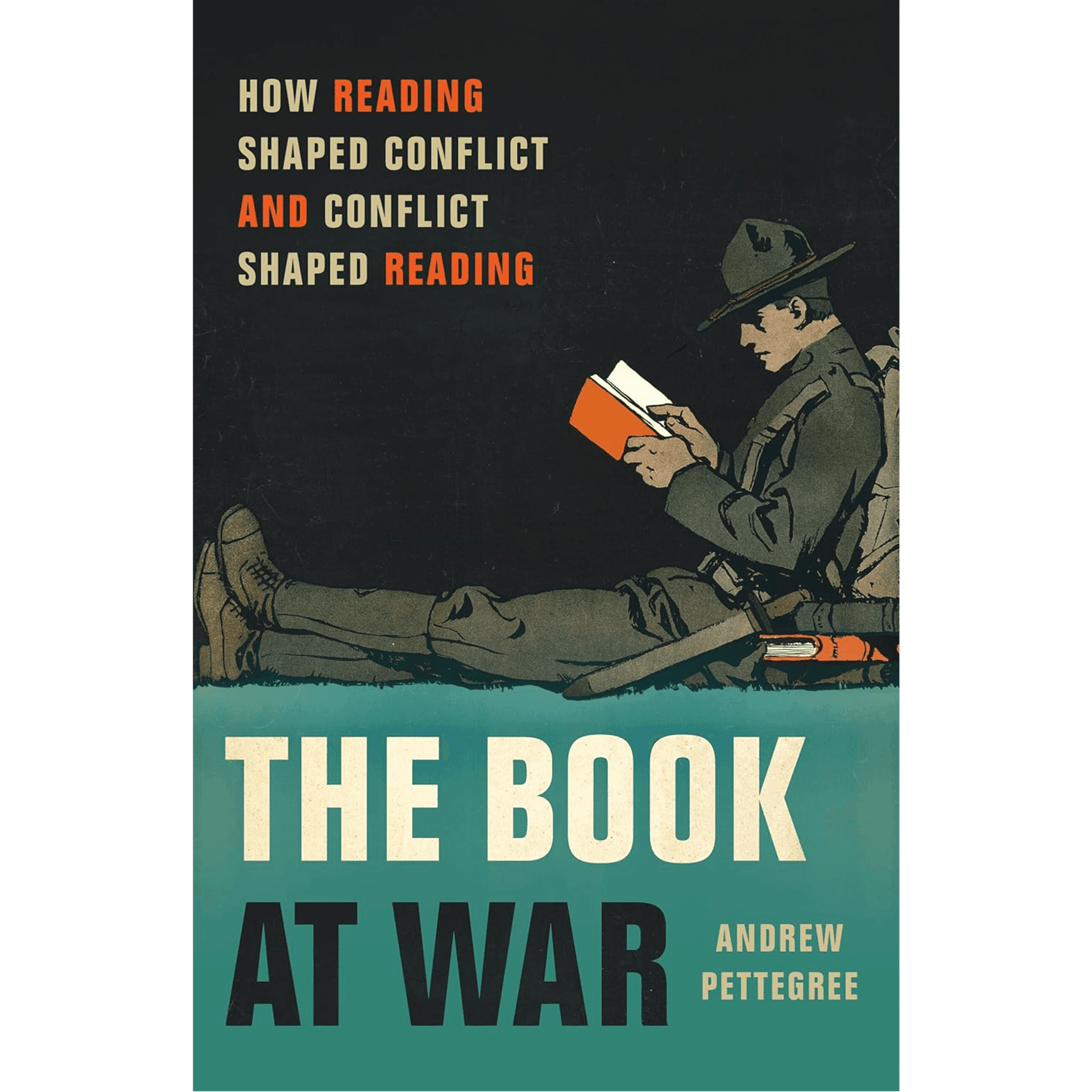
Andrew Pettegree - The Book at War Description: Professor Andrew Pettegree discusses his book "The Book at War," which explores the impact of print on society and warfare, emphasizing the paradox of how books can be both tools of civilization and instruments of conflict.
Key Themes and Discussions
- Inspiration Behind "The Book at War"
- Pettegree's interest in the relationship between books and war stems from his previous work on libraries during wartime.
- He highlights the dual role of books: as symbols of civilization and as vehicles for harmful ideologies.
- Books as Weapons in Warfare
- Quote: "Books are weapons in the war of ideas."
- This idea extends to modern discussions on the role of social media and digital communication in shaping public perception during conflicts.
- Historical Perspective on Reading and Warfare
- The evolution of reading practices from the manuscript era to the printing press era.
- How technological changes have historically not replaced existing forms of communication but rather added to them.
- Comparative Education in Military Contexts
- Differences in military education systems across countries (e.g., British, German, American).
- The impact of education on military effectiveness and strategy, referencing notable figures like Carl von Clausewitz.
- The Role of Libraries in Conflict
- Libraries as repositories of culture and knowledge during times of war.
- The dichotomy of libraries being destroyed and yet serving as sanctuaries for knowledge.
- Censorship and Access to Information
- Discussion on censorship practices during war and the tension between freedom of thought and the necessity of controlling narratives.
- Examples of how certain books, including Mein Kampf, were both read and banned, illustrating the complexities of information access.
- The Aftermath of War and Book Reconciliation
- Post-war struggles in reconciling the ownership and distribution of books acquired during conflicts.
- The challenges faced in cataloging and returning books to rightful owners after extensive looting and destruction.
- Literature’s Impact on Soldiers and Civilians
- The significance of reading for soldiers, including the distribution of books in wartime.
- The importance of mindfulness in reading for personal growth and coping during harrowing experiences.
Key Takeaways
- Books and Civilization: Books play a crucial role in shaping societies, serving as both weapons of propaganda and instruments of enlightenment.
- Cultural Retention: Historical examples illustrate the importance of cultural artifacts, such as books, in maintaining a society's identity amidst conflict.
- Censorship's Double-Edged Sword: While censorship seeks to protect societal values, it can also limit understanding and engagement with challenging ideas.
- Post-War Reconciliations: The process of reconciling book ownership after conflicts is complex and often fraught with ethical dilemmas.
Final Thoughts Andrew Pettegree emphasizes that understanding the power of books in war offers insight into both the human condition and the complexities of societal conflict. The episode concludes with an invitation for listeners to explore these themes through their reading and reflections on historical texts and their relevance today.
---
For more detailed discussions and insights, consider listening to the full episode of A Book with Legs with Andrew Pettegree.
Written by AI. May contain mistakes. Listen to the episode to check what was said.
Transcript
Automatic transcript. May contain errors.0:02You're listening to A Book With Legs, a podcast presented by Smeed Capital Management. At Smead Capital Management, we advise investors who fear stock market failure. You can learn more at SmeadCap.com or by calling your financial advisor.
0:20Welcome to a Book With Legs podcast. I'm Cole Smead, CEO and Portfolio Manager here at Smead Capital Management. At our firm, we're readers and we believe books provide us a huge power to shape informed investors. In this podcast, we speak to great authors about their writing, the late, great Charlie Munger, prescribed using multiple mental models and analysis. We analyze these works through the lens of business, markets, and people. Thank you to our listeners for joining us for this episode. We will talk about the power of books in society and conflicts. After reading this book, I think a phrase should be changed.
0:55It can now be stated that to the victors, go the books. Andrew Pedigree is joining us to discuss his newly released title, The Book at War, How Reading Shaped Conflict and Conflict Shaped Reading. Little background on Andrew. He is a professor of modern history at the University of St. Andrews. Mr. Pedigree is a leading expert on the history of book and media transformations. He has published numerous books, including his 2021 title that he co-authored, The Library of Fragile History. He joins us from his home in Scotland. Andrew, thank you for joining me today. Well, it's a real pleasure to be with you.
1:30So I kind of gave away part of the punchline to the next question I'll ask in your bio. But we always love asking authors what inspired them to write this book. And, you know, what role do you think that inspiration kind of played in these periods? Because you kind of have certain periods you cover particularly. Well, there's really two jumping off points here, I could say. One is the library book that I wrote with a younger colleague, Arthur de Vaderin. And we have one chapter in that, in libraries in wartime, in a section called Surviving the 20th Century, and the damage done to books during wartime.
2:10And I think that is how people think of the relationship between books and war. That is, books are almost sainted objects, a marker of civilization. And while that's true, it doesn't rule out an opposite effect. That is, some of the books which are most influential during the 20th century are evil books. You only have to think of Hitler's Mein Kampf for that point to be immediately clear. And it also comes out of the experience of writing the library book, where one of the first things we did is we interviewed people who were trying to save libraries and we interviewed the council officials who were forced in some cases to close branches or to reduce their opening hours.
3:01And you could see that the people who were campaigning for the libraries, many of whom were not themselves users of public libraries, just thought of books as a marker of civilization. civilization. So whereas I accept that over the long term, books have been an enormous force for good, they've also played a part which isn't really recognized in war making as much as they are victims of war. And it's that paradox that I wanted to put right at the heart of this book. And I think you did that really well, because I just think of how many times you walk away from a chapter where you think of both sides and it just shows the complexity of the world we live in.
3:45You discuss the world leaders in your book and their broad views of the power of books. I'm going to use a quote from your book here. Quote, books are weapons in the war of ideas, end quote, as you mentioned, which is a motto that's been referred to time and time again. Do you see the same role today? I don't normally ask this early in the podcast, But do you see that same role today with posts on X getting longer and the lack of reading going on across the Western world today? I was trying to kind of compare your writing and the people you covered with us sitting here in 2024, in 2023. Well, I suppose I'm informed here by a much earlier project.
4:29and that was a book called The Book in the Renaissance, which is really about the transition from handmade books, manuscripts, to the printing press. And what I learned from that book is that all forms of technological change in the history of communication are accompanied by a mass, a mass of false prophecy. And I think the same has been true of digital. because the principal mistake people make is they assume that a new technology inevitably pushes out the old, whereas the history of communication is one of accumulating means of communication rather than sequential. I mean, to make a banal but true point, human beings didn't stop talking just because they started writing.
5:25Sure. And the history of the book, the demise of the book has been predicted for now for over a century with each new form of technology, radio, cinema, television. The microfilm was meant to kill the book, the CD-ROM, and now, of course, digital. Whereas I can tell you that the book at war, my latest book, undoubtedly 90 % of the copies that sell will sell as printed books rather than audiobooks or e-readers because people still have such an affection for the book as a physical object. So whereas we make use of all technologies, and particularly in wartime these technologies are increasingly important, I don't think print has been shoved aside, and you can see this in the Ukraine conflict, where although the weapons of 21st century, the impact on books is still very much as it was in the Second World War, with libraries being bombed, with attempts to sow dislike between Russians and Ukrainians by publishing anti-Ukraine novels in Russia, The removal of Russian books from Ukrainian libraries as a sort of counter to this.
6:52Ukrainian citizens delivering thousands of their own Russian language books to be pulped for the war effort. You see all of that in the Second World War and we're seeing it again now. Agree. To your point on the power of a paperback, I consider the most valuable place in our company's offices is our library. And that's another theme that we also run into that we'll come back to. And I also point out to people that a book never gets overheated in the sun when you're on vacation. So there are structural advantages I feel the book still has. You know, we don't use paper like we used to. You think about the internet, email, all these forms of communication, APIs, digital feeds, et cetera.
7:37They don't require paper. but then again in this war of ideas to your point the book still dominates with paper and is that because it really is about the ideas versus just passing data yes um you know a lot of modern technologies are directed towards quick but shallow information one of the things that we do not yet know is how these new technologies sort of match up against print for deep reading and reflection. Of course, during the recent pandemic, we performed an extraordinary experiment with our children by obliging them to take their education online. And it will be a long time before we know what the full consequences of that are, and indeed the consequences of iPhones and the communication methods that young people use on iPhones and what impact that has on their mental health and their ability to remember.
8:44The great thing of a book is you don't have to read it consecutively. You can come back to read parts, you can return to favorite sections, and really I would say in the history of print, which is now over 500 years, that only about a tenth of the books printed during that time were made for consecutive reading. And yet the whole of the internet is based on the assumption of consecutive reading. I find this very, in a way, very paradoxical because one of the reasons why the book, in the origins of manuscript book, the codex replaced papyruses is because papyrus can only be read in one way, and that's consecutively.
9:33And it involves scrolling. And so we know the inconvenience of scrolling, because it demands one form of reading. And we got rid of it 2000 years ago. Now here it is back. Let's touch on this idea of antiquity, because you bring this up very early on. in Greek or Roman societies, the library still had the same importance during conflict as it did in World War I or World War II. Can you explain that to our listeners? Yes, indeed. I mean, that was because in those days, books were much rarer. To put together a collection of 30 texts was already something which defined you as one of the richest members of society.
10:20And that remained true. all through the manuscript age and into the 16th century. So what books were saying when you had these resources were A, that you were educated, and B, that you were rich. And if you set up a library, it was mostly to display your wealth rather than as a facility for ordinary people to come and use it. It would only be favored scholars who would ever get into your library. So that's a very different view of what we think of the library as an open and democratic resource. But when you think of it, even when the public libraries were being built in the 19th century, their initial building was often given by a leading citizen who wanted to associate themselves by a munificent gift to their local community with the education of the masses.
11:23Sure. So let's pivot to talking about Carl Van Klausowitz because what you don't know, Andrew, running into him early in your book, our last podcast episode, we talked with General David Petraeus on the book that he recently co-authored with Andrew Roberts titled Conflict, And he quoted Carl von Klausowitz numerous times in the book. I had never been familiar with Klausowitz until reading his book and now yours. So can you teach us who von Klausowitz was in terms of his importance in military strategy and what has been studied in military strategy since he was here on Earth? Well, I should listen to your other podcast.
12:05That does sound fascinating. He was, it's a strange story because he wrote on war at a time when his career was in retreat and he'd essentially been put out to pasture, been given the job of the head of the Prussian Military Academy. Now, that was a very interesting job, but for him very helpful because it had one of the great military libraries. in existence at the beginning of the 19th century. So he was able to see off his duties, which were light, and then retreat to his wife's sitting room with any books he liked from the library. And that's how he put together On War. Now, he died with it incomplete.
12:58And so the text as we know it, which is a difficult read, and in many ways rather incoherent, was actually put together by his widow after he was deceased. And initially it didn't make much of an impact at all because everyone was looking to Napoleon and Napoleon's strategists as the greatest battlefield general of the early 19th century. It's remarkable that you could not go to West Point as a cadet without having a decent command of French because so many of the books in the West Point Library in the 1830s and 40s were in French because it was Napoleon who they respected. It was only really were the three great victories over the Danes, the Austrians and the French in the middle of the century that the Prussians, that is the Germans, really came into the public debate as an incipient great power and as an enormous potentially military threat.
14:10And it's then that people started to read Clausewitz. And indeed, it was really the first time that it was turned into English. Yeah, he quoted him numerous times throughout chapters of his book to start the chapter. And And so you could see how ingrained he had become in military study and war colleges across the world. I think the other irony for understanding the books of military histories is in your writing, you point out how these works were saved. It wasn't held by governments. It wasn't held by military officers. It was sitting in pacifist monk settings in monasteries. How did that come to be?
14:52Well, at the collapse of the Roman Empire, it was only through Christian institutions like monasteries that the learning of ancient Greece and Rome was partially saved. When you think how many texts have come down to us through being carefully curated in these monastic libraries, you have to think just how many were also lost. and classicists could make quite a list of lost texts which have still not come to light anywhere. So it was not particularly that these monasteries were trying to collect these works. It was just that so much of the printed material coming down to them from past centuries was the wisdom of the ancients.
15:43And this rediscovery of the ancients was extraordinarily important for the first two centuries of print. But it's also the case that new genres emerged during this time. So, for instance, if you look at the entirety of the printed works published in the first two and a half centuries after printing was invented, that is 1450 to 1700, we can now trace something like 1.7 million different editions. And a fair number of those are military handbooks of one sort or another. Works on strategy, works on drill, works on fortifications, studies of the great conflicts, of the great military victories, of the most successful sieges.
16:34all of that was being bought and studied by you might say the sort of soldiers of the age of the gentleman and amateur. The officers who were interested in learning from the mistakes of the past. Of course, one of the most important works of military strategy right through into the 20th century, still being studied in English public schools in the 20th century, was Caesar's own account of his victories in the Gallic Wars, which is seen as a classic of military strategy. Let's jump into that because you explain very well and eloquently the differences in the military colleges of, say, Germany versus France and Britain versus, say, West Point in the United States.
17:25So can you teach our listeners, you know, if you're walking into the Royal Military College in 1812, You know, what were students required to know walking in and what would their education look like at that time? Well, if you were studying in Britain, the first thing you'd be required to know is Latin because this was how the educational system was still – it was still built around Latin learning and continued to be right up until the First World War. If you walked into the German military college, you would have a much more practical education based on topography, mapmaking, and learning to lead troops in the field.
18:14I think to some extent, the American tradition gets something of the best of both worlds. Most of those who were coming out of West Point and other institutions such as the Virginian Military Academy were intended to be engineers. And it's interesting how, in that respect, the technical aspects of military planning, like the Corps of Engineers, that develops much more rapidly than any sense that people leading ordinary cavalry or infantry regiments necessarily needed a military education. It was only towards the end of the 19th century that officers in Britain weren't buying their commissions.
19:05They were buying their roles. And that sort of looks back to a much earlier tradition where ennobled people, lords, gentry, held their lands in return for bringing their subjects and tenants to fight for the king, to fight for their lord when that was required. So to some extent, Germany had the great benefit. It wasn't sort of encumbered by those centuries of tradition that made lawmaking so difficult in a British context.
19:59have a proven track record of long-term outperformance. If you're an investor who fears stock market failure and want to invest in wonderful companies to build wealth, we invite you to visit smeadcap.com. Past performance is not indicative of future results. Investing involves risk, including loss of principle. Please refer to the prospectus for important information about the investment company, including objectives, risks, charges, and expenses. Read and consider it carefully before investing. Smead funds distributed by UMB Distribution Services, LLC, not affiliated. You also lay out in your book, I'll use Hitler as an example, Hitler copied how he educated his officers with the British academies in schooling.
20:39So it wasn't like the Germans were creating something super German. It was actually copying what they thought were good ideas from other places. But the other character that I thought was a very interesting, he would be like an interesting biography, probably all on his own. but Helmuth von Mulkey was not traditionally educated as an officer and was very much outside the box for the success he brought to the battlefield. Yes, yes. He had a very unconventional career, which involved both time spent in Denmark and in the Ottoman Empire and a great deal of time reading. He was a great reader in a sort of Prussian elite, which were not known to be bookworms.
21:27So he is a very important figure, and I would venture probably more important than Clausewitz. And I think that is important. I mean, you're quite right to say, one would say, you know, there's nothing new to say about Hitler after thousands and thousands of books. but actually very little has been written about the extent to which Hitler admired and tried to imitate a British way of ruling. The British Empire was something he envied very much. Sure. And until 1938, for the first years in power, the Nazis were involved in a sort of strange wooing of Britain. They had no wish to go to war with Britain.
22:18And as you say, one of the things that fascinated them most was their public school system. And that was very much in their mind when they set up their own specific schools. The other thing on von Mulkey, and you touch on a theme with him, I think you have two or three paragraphs on this, but his flexibility, that's something he brought to the battlefield in a way that really hadn't been seen before and practiced. And again, I'm kind of touching at General Petraeus's book, but he talks so much about the flexibility needed in battle. And so to your point, Klausowicz is talked about more, but von Mulkey has been more copied in military history, looking back the last, say, 70 to a hundred years versus, you know, We think back to a prior age, 200, 300 years ago, you had more traditional warfare where it was inflexible.
23:11You come up to the line and you battle, and there was nothing flexible about that. Let's pivot, because I think you bring up another interesting way of thinking about books. You explain that people don't read books because they agree with them. That is not why people sit down and read. You use Uncle Tom's Cabin and Mein Kampf as examples of this idea. Can you explain this idea more? Well, those are two very, very interesting books for rather different ways. Uncle Tom's Cabin was one of the most remarkably successful books of the mid-19th century, published in the years before the American Civil War, and is often credited for being one of the motivating factors behind the Union troops troops when they went into battle.
24:04That seems to have got it rather backwards. When sort of primitive opinion polls were made of Union troops, they gave us their reasons for fighting, sort of rather more amorphous concepts of fair play. You had to respect the results of elections. and if the United States failed as this prototype Republican form of government, then that might doom Republican government the world over and people would retreat to old-fashioned monarchies. There's lots there. And of course, once they get into the field, most troopers fight for their friends and their buddies and to stay alive. Sure. Where I think Uncle Tom's Cabin was most influential was probably in persuading people in the South, if they needed further persuading, was that they'd never get a fair rap from the North.
25:09And so it's probably more the sort of aversion to Uncle Tom's Cabin is probably more influential in bringing about the war in the sense that it encouraged secession. which was not a self-evident or automatic response to the election of Lincoln as president. When you come to Mein Kampf, Hitler's sort of program for Germany and the world, I think you've got a very different phenomenon which is that the allied governments positively encourage the reading of Mein Kampf. There wasn't a full translation until 1938, 1939. There was a sort of, I wouldn't say censored version, but an excerpted version published in 1933 when Hitler came to power.
26:05And Roosevelt, for one, thought it very much sort of left out the more pungent and extreme elements from it and made it sound a much more reasonable book than it was. So when they had this full version, this became required reading in military camps, for instance. They positively encouraged their populations to read this book. I think on the basis, which turned out to be true, that the more people who read it, the more convinced they would be that this was a force which had to be fought, which had to be removed from European politics. Sure. When I think it holds the old maxim holds true that if you don't know what a counterfeit is, you can't know what's real.
26:54And I thought about that a lot during your book, as you pointed this out, because if you don't know what bad ideas are, how can you prove what a good idea is? Beyond Germany being a highly militarized nation, as you talk about the culture they built up, even kind of post-the Prussian armies, you explained it to be a very intellectual, sophisticated, and bookish nation. I love that term, bookish. It's going to be like my new word that I want to describe myself. Can you explain how much more bookish it was compared to other European nations near it? Well, there's a lot of long-term forces which go behind this, which all somehow conspire to make this a bookish nation.
27:36One is Protestantism. Martin Luther was frequently asked by towns and cities and states around him, you know, how do you organize a new Protestant church? One of the things he would say is, you have to have schools. So any church order that he wrote for one of these states would include the provision for schools, and not just for boys' schools but for girls' schools as well. So the literacy gap between men and women was closed steadily by this. The other thing which is very relevant here is the fact that Germany was united from a sort of hodgepodge of big, medium and small size states, some as small as a city.
28:27The advantage that gave them in the long term was that this meant that there wasn't a single center of the publishing industry, there wasn't a single intellectual center. Up until late in the 19th century, England had only two universities, Oxford and Cambridge, whereas in Germany there was one in each of the major and middle-sized states so that they didn't have one intellectual center, but all of these smaller places with a lively publishing culture and a highly educated population, both of men and women. That was true, also, it must be said, of the United States, which was a sort of emerging publishing giant rather than an established one.
29:15Britain, of course, had the largest publishing industry in the world because they had their empire to which they supplied millions of books. And of course French culture was very long established. There was a time looking back to the 17th and 18th century when French became the second universal language alongside Latin. And then in the 19th century, there was a period, because Germany had not only major publishing centers, but all these universities, when German became a sort of foundational language for scholarship as well. Before English took over, I would say, with and after the Second World War, with the emergence of America as the global superpower.
30:04Since I continue to come back to certain spiritual themes throughout your book, I have to ask this question because we already talked about von Mulkey. I'm going to quote from a part on him. When the elder von Mulkey argued that, again, without war, the world would deteriorate into materialism, end of his quote, this struck a chord among many unsettled by the growing wealth generated by German industrial power, end quote from your book. Was von Mulkey a prophet foreshadowing Instagram? I asked the question, has the peace dividend caused him to be true, which is that without war, we're interested in the looks of things than maybe how things really are.
30:42The sentiments he expressed there were not particularly unusual. If you look at the run-up to the First World War, this takes place in the context of widespread sentiment throughout Europe. that societies have become rich, flabby, and decadent. And this is particularly true of their young people. That is too much contentment and fighting wars only against enemies who don't have their modern weapons in parts of the world outside, in Africa and Asia and so on. There hasn't been, by 1914, there hasn't been a European war since the Prussian-French War in the end of the 1860s and beginning of the 1870s.
31:39So people sort of think of this as a sort of war can be purgative. They don't, of course, anticipate just how many millions of people will die in the First World War, but they think that somehow the youths have to find their strengths. And the number of poems that are written in the run-up to the First World War and the first months of it expressing the sentiments all over Europe is quite astonishing. Interesting. Yeah, because I think we've discussed the idea a lot in our offices of, you know, what was a world like during conscription versus a world without? and it gets into those same sentiments as, are these societies worse off when we all haven't had a common denominator or a common rite of passage?
32:27And we've been talking about it. If you're in Israel, you get conscripted for two years. You all get conscripted. That is your rite of passage. But then again, in Israel, they know what they're fighting for. In America, we might not. I'm gonna enter into another paradox. You talked about the people that like books. So people in research and the universities and some of the great minds, scientists in Britain were an example of this. They didn't like war, but they didn't have an issue with doing research that extended what could be done in war. Is this an irony or is it just paradoxical? I think during the period between the two world wars in the 20th century, science became essentially pacifist in the United States and in Britain, because scientists thought of themselves as part of one world community, that you'd read everything which was written in Germany, in France, in Russia.
Read the full transcript
33:30You would probably cooperate with people in those countries. So the idea of that world community being torn asunder by war was extremely, extremely antipathetic to these scientists. But I think it was very much the naked aggression of Germany under Hitler and his lack of temperance, not least in expelling German Jewish scientists. I mean, if those scientists had been available to the German war effort, it would have been far more effective. But suddenly, from reading everybody's periodicals, You're not only finding it difficult to get hold of those periodicals in German or Italian, but you're trying to prevent your periodicals being read by them.
34:24So the whole idea of the scientific community being a sort of world community where everyone puts their brains together for the greater good of humanity, that is canceled in 1939. and I think I just had watched actually this last weekend I finally just watched Oppenheimer and you see that tension in the movie where it's like they know what they're doing and they're kind of uncomfortable with it but they go on and I think that that paradox you know you can be seen even through the lens of your book or that movie let's pivot because you know there's this great work being done and then militaries look and say but that's science we don't need that okay I think you tell a great story of, let's see, physicist J.D.
35:11Bernal, who tries to provide meteorological assistance to the military, and they rebuff him with that. Yes, he tries to say, you know, if you know more about the weather, you'll be better off. And the Navy say to him, we don't need that because our men fight in all weapons. I love that. And there is also a problem in military hierarchies in taking advice from civilians. They just don't quite know where to put civilian workers in a military context. Sure. But by 1944, that lesson has certainly been learned because Dwight D. Eisenhower, as the supreme commander of the Western forces for the push into Normandy, did, on meteorological advice, postpone the invasion for necessary days.
36:11And it's almost certain that had he not done so, it would have been a catastrophe with a major storm in the Channel. So they learned that lesson. I mean, in many respects, I think you'll see, having read my book, that the First World War seems like a bit of rehearsal for the Second in terms of the use of technology, the understanding of the capacities and limitations of technology, but also the understanding of the importance of scientific labs and also of libraries. The great thing about libraries and their role in the war is it gave people in the humanities a chance to have their particular specialisms recognized.
36:58the Americans put together an enormous and extremely impressive collection of academic advisors who were philosophers, historians, classicists in familiar disciplines, but then linguists and social scientists and economists. And they played a really important role in the war. I think if you're talking about intelligence, for instance, spying didn't seem to play that important a role in those two world wars compared to analysis of existing resources which were actually open access. Things like guidebooks, technical manuals, and newspapers, which could be used in the most innovative ways to work out what was really going on in your enemy's home country.
37:53And I think you do a wonderful job of pointing out the role of historians, classicists, linguists, and philosophers in the intelligence community, not necessarily in the direct battlefield. There was a couple other things. I loved your story about the Zimmerman telegram. I had never heard that, you know, Germany was going to give Mexico an alliance and give them back the Southwest where I sit here in Phoenix, Arizona. So that was a really interesting story. You know, just kind of interesting to think of the alternative paths of history, if you will. But then also you point out Henry Stimson, he downed the cartography program of the United States between the wars.
38:31And he argued it from a, I'll call it a gentlemanly perspective. I think he said, we don't open other people's mail. Yeah, I mean, cartography was such a shame because it had played a vitally important role in the global war in 1914 to 18, though not perhaps in the Trench War. That was part of the problem. The most visible part of the war was essentially static. So that meant that after Pearl Harbor, America found themselves engaged in a Pacific war, which involved literally thousands of islands and atolls, which were places they knew very, very little about. And so suddenly there had to be a topographical service developed who could make plans and make maps and make charts to enable warfare in these new places.
39:33And this is where libraries came into their own. The New York Public Library, for instance, had a magnificent collection of maps assembled for quite different reasons, but these were put to extremely good use in planning both the return to Africa and the European war, but also the Pacific war. And it also was very important for civilians. I want to give a big shout out to everyone who's listening to this show. You know, we recently hit the top 10 in investing podcasts on Apple Podcasts and even number one in the business category in several countries. As you may know, this show is brought to you by Smead Capital Management.
40:15Smead understands how frustrating and illogical the stock market can be. If you're searching for funds with a proven track record, give the Smead Funds a look. Or better yet, reach out at SmeadCap.com. And don't forget to mention you're a fan of the podcast. Past performance is not indicative of future results. Investing involves risk, including loss of principal. Please refer to the prospectus for important information about the investment company, including objectives, risks, charges, and expenses. Read and consider it carefully before investing. Smead Funds distributed by UMB Distribution Services, LLC, not affiliated.
40:48I love the story you talk about. So in full disclosure, I should say for podcast listeners, we're a shareholder of WH Smith, which is a UK listed company. And Andrew, in your book, you tell a very interesting story about the relationship of government publishers and then booksellers like WH Smith, you know, beginning in World War One. Can you teach our listeners, you know, what was the importance of, you know, WH Smith selling books in train stations and places like that at the time. Well, that's very interesting. One of the things that I think you can say of both the world wars is that all the professional professions, all the professional people, whether it was the clergy or lawyers or professors or publishers, all rallied to the flag.
41:41and that was true in the United States, it was true in Britain, it was true in France, it was true in Germany, it was certainly true in Russia. And so this combination of the biggest distributor, W.H. Smith, and the publishers meant that the sort of books that people wanted to read in wartime was often books about the war. John Buchan, for instance, the well-known thriller writer, author of the 39 Steps his major war work was writing a history of the war in parts which could then be distributed to people who wanted to read it and in the second world war everybody wanted to read books about the Finnish resistance to Russia to the fall of France how it has occurred and then of course as the tide turned to the victorious progress of the Russian armies and the American armies and the war in Africa.
42:43So W.H. Smith played an essential role in ensuring that all of this stuff got distributed throughout the country, throughout Britain, and that was because the railways were one of then the major ways of moving freight rather than along the roads, and they owned all the railway bookshops. They still do in many cases, yeah. Yeah, and so they were able to provide this instant service to people who were commuters or were changing trains and would pick up a book on their way. And of course, as you've already mentioned, the absolute crucial aspect then of the paperback revolution of the 1930s, which meant that books were available for 10 cents or sixpence in Britain, whereas the same text in hardback might be 15 times as expensive.
43:42So this empowered people to read a wide range of literature that was available for them in wartime and played a very important role in countries like United States and the UK where they had conscript citizen armies where people thought of themselves more as citizens in uniform than as professional military people. and they remain certainly the Americans every bit as opinionated as soldiers as they had as civilians. So coming back to one of the spiritual themes of your book, reconciliation comes up time and time again. So I have to ask you about this because you point out the messiness of this and I think just so good at contextualizing this.
44:30So Americans hated the book burning that Germany did. So they burned German books instead. They hated what the Nazis were doing with Jews. So they blacklisted German authors in their books instead. Explain this phenomena to our listeners because I mean, it's hypocritical, and I'm saying all Americans did that. For example, many people throughout your book, you explained that like the librarians particularly believed in open information, open reading. And there's even if a book is not right, you still should be able to learn it and study it for the purpose of understanding why it's not right. Back to our discussion on Mein Kampf as an example.
45:10Can you explain why there is this hypocritical stance by Americans like there is for Nazis? Well, I was telling someone this early in the day that one of the things I use in my teaching is a pre-revolutionary facsimiles of newspapers published in the state of Virginia. And on the front, you have denunciations of King George III for his attempt to reduce the Americans to slavery. And on the back page, there's advertisements for the recovery of runaway slaves. And there seems to be no cognizance that this has got it backwards. And you're quite right to say that you can point to this all through the modern era as well.
46:08In America, one of the most powerful figures in censoring reading is the postmaster general, because he can ban from being distributed in the posts anything that they think is unseemly or not to be read. In other respects, wartime brings a certain loosening of the sort of rather more prudish rules which govern, for instance, the contents of public libraries. Librarians are evangelicals. They want more people to read, but they also want them to read the right sort of stuff. They want them to read improving literature rather than the sort of recreational literature they might choose for themselves.
46:54But when they're talking about troops at the front, they think that they should really be allowed to read what they like. So every war brings a sort of loosening of morals, and after the war doesn't really go backwards, or at least it only goes partially backwards to what they've experienced before. I'm going to quote E.H. Anderson from your book, who was the director of the New York Public Library, who said, quote, if Satan should publish a pro-German book, we should certainly want it in our reference library, end quote. And I thought that was a very interesting way of thinking about it. You know, even if Satan published it, I think we'd be interested in having that for a reference library, because the idea is you want to gather a lot of information, what's good and what's bad, to your point, that's not what the librarian's interested in.
47:42They, you know, they have an opinion, but their job is to gather a lot of books and information. The other interesting part, you know, we talk about the German book bands and authors that went away, but they were also trying to cleanse from a pre-Nazi history. Can you explain what they were trying to do to the Weimar Republic and the Weimar Canon? Well, Nazi censorship is very interesting. And I came to the view that the censorship practiced during wartime in the dictatorships and the democracies is not so different as one might expect. For instance, most censorship is concentrated on newspapers, because newspapers are everyday things.
48:28They've got to report on the war. They want to report on the war. They get very excited when their own troops are doing very well. But at the same time, the military doesn't want them to be revealing strategic information or too precise an information on where the front has got to because, of course, their opponents and their enemies will be reading exactly the same texts. So that's always going to be a difficult relationship, but one that the newspapers understand is reasonable. What is of a different order is the Nazi approach to public libraries between 1933 and 1939, when the number of libraries grew enormously, it must be said, by something like 50 % because the Nazis wanted German people to be reading.
49:21They wanted them to have access to the literature, but they wanted them to read a certain sort of literature. And this was often a very traditional sort of tradition looking back to the virtues and great accomplishments of the Germanic peoples throughout the period, not the more cynical, sexualized literature of Weimar. And, of course, they sought to eliminate altogether the works held by libraries of those of Jewish heritage, which, of course, encompassed not only a large number of authors, but also a large number of publishers and the owners of bookshops. So that was a major shift. On the other hand, one of the things you note throughout the history of the Third Reich is a sort of deliberate chaos where Hitler is always setting his various lieutenants and people with responsibilities over this, that, or the other against each other because they have such overlapping jurisdictions.
50:35Sure. And the publishers and the librarians in 1933, very enthusiastic in general about Hitler, because librarianship was at that point a rather conservative profession, rather mostly led by elderly men, very, very different from the American profession of the time. they were sympathetic but they did get a bit weary by how many different authorities had some sort of censorship function these rules were incredibly difficult to follow because they were a very broad bush we can't have communist literature but that doesn't mean that all the Russian authors are banned it was quite difficult you had to be an expert to put these policies into effect And most librarians did not have the detailed knowledge of literature in order to, I mean, who knew which authors were of Jewish heritage and which were not?
51:36I mean, that was not straightforward. This extends later to these overlapping jurisdictions for the libraries and who can say what to them, then turn to now the stealing of books from other libraries. And is it going to be the SS library that gets it? Is it going to be Hitler's personal library that gets it? And there was, you have these overlapping agendas, you know, that, that followed the same overlap of the regulations. One other thing that I, you know, in some cases, I think it's brilliant because it shows you that bad prose is bad prose, but even the Nazis hated some Nazi books. Like you, I think you explained the myth of the 20th century as a book that was written.
52:13It was very pro-German, pro-Nazi and Hitler thought it was unreadable. Yes, this is the book by the Nazis' lead ideologue, Rosenberg. And it sold very well because it was a compulsory purchase for libraries. But I think Hitler wasn't able to get through it from one end to the other. And I think very few people were. This was a real debate in which Joseph Goebbels played a real role. and that was how far literature troops should be ideological and how far it should be recreational. And he came down very much on the side of recreational. In a way, he was more interested in making sure that cinema towed the line.
53:06And so a lot of the books which were produced specifically for the troops were of a very light comic nature just to give themselves some relief from that. And this is a battle he won against others who, like Rosenberg, thought that all literature should be ideologically tinged. Let me ask another question kind of on this same vein because, again, I think you bring up a way of thinking about reading during the war for soldiers and the context of how good or bad that could have been for them. So would you have rather have been a soldier reading a book in, say, the trenches or in conflict, or would you rather be a POW reading that same book?
53:55That's very interesting. Remember that a huge proportion of those who were in the armed forces were not in the front line, competent soldiers. Sure. Often they were very busy. They were repairing aircraft or driving trucks or any of the other multitude of services required to keep fighting men fighting. But it did mean that some, a considerable number, were stationed in places which never became active combat zones. So they had a great deal of time for reading and the extraordinary logistic strengths of the U.S. services in getting supplies to them included lots of books, including the wonderful Armed Service editions, which were a bespoke creation for their servicemen.
54:54They published something like 1 ,000 copies, 120 million, sorry, 1 ,000 editions, 120 million copies of which were distributed free of charge for reading. And he just shows that when a country as rich as America with such a strong industrial base turns its mind to war making over a sustained period, just how effective they could be in logistical terms. Now, would I like to be a prisoner of war? No, certainly not. But many of those who were prisoners of war would afterwards acknowledge that although in many respects their life was enormously diminished by being prisoners, the one respecting which it wasn't was in their reading.
55:43because the prisoner of war camps were allowed to accumulate very considerable libraries. Families also sent books to their own family members who were prisoners and they were treated also as a sort of common resource that you could read. They would lend books to other people, they would borrow them, they would swap. And so the amount of reading matter available in the prisoner of war camps was enormous, particularly when you take into account that by the end of the war, there were over 100 different professional qualifications or courses people could take, which would then be sent back to be marked by people in, say, the University of London, and also a bespoke service to send them the textbooks they needed for those courses.
56:34And those people who took these opportunities to take some form of systematic learning in prisoner of war camps tended to have better outcomes than those who just sat around not doing any of this. And one of the examples from your book, and I love this picture that you provided, I think it's in the second section of pictures in your book, is the Pelican book, Reading for Profit by Montgomery Belgian, who obviously, you know, published his lectures to his fellow officers while they were in prison in Germany. And if I was going to steal a title for my life biography, it might be called Reading for Profit, because to your point, the mind is allowed to wander in a way that the body cannot at times.
57:19or I would say generally always. And I think it's a very interesting concept to think about the context of books. Let's pivot a little bit because again, coming back to this idea of reconciliation, I think you very succinctly explain that reconciling the ownership of books is not only messy, but it's plausibly just impossible in aggregate, not uniquely, but in aggregate. I think the movie that people can go think about this idea of reconciliation, is the Ryan Reynolds movie, The Woman in Gold, and that was tied to art, but books were vastly different because obviously there's just far more of them.
57:58Can you teach our listeners post the war what it was like to even try to begin that process, let alone which jurisdiction and authority or government would decide that process? Yes, so during the course of the war, the Germans having conquered most of the land mass of Europe switch from a policy of destroying the books of their enemies as they did for instance in Poland to try and reduce the Polish people to a sort of agricultural rump so they had no intelligentsia at all they switch from a sense of well look if this is to be the thousand year Reich we have to have study collections so that when our enemies rise up again and we have to deal once again, let's say, with socialism or Freemasonry or the Jewish question, then we need books.
58:57So Hitler came up with this megalomaniac plan to create 10 libraries each of half a million books, which would be brought home from French libraries, from Dutch libraries, from Russian libraries, from Ukrainian libraries. And they went a long way towards collecting five million books from these various places, from private collections as well as public collections. Then there were other books which were confiscated from the property of Jewish families who had been taken off to the camps. They were made available to the German university libraries and the public libraries to restock the damage of the bombing.
59:44So there was an enormous number of other people's books in Germany at the end of the war. But it's one thing to steal all these books. It's quite another thing to catalogue them. So at the war's end, millions of books were still in their packing cases because in the last year of the war, when city centres were being absolutely pounded by allies and Russian bombers, all of the books were moved out of city centres and sent on a sort of crisscrossing Germany for a place of safety, mostly because the threat of bombing was coming mostly from the West, that is the British and the Americans, they were sent eastwards, which meant that come the end of the war and the new distribution of territory, many of these caches of books found themselves behind the Iron Curtain and still haven't returned to Germany now 70 years later.
1:00:48Whereas on the other side of Europe, the books that had come to the sort of distribution centers or collecting centers at Frankfurt, they could be repatriated much more easily because some of them, as I've said, were still in their original packing cases, so you could send whole cases of books back to libraries in France, Netherlands, and Belgium. The real difficulty came, if you're talking about the property of Jewish families who'd been entirely wiped out by the Holocaust, and there was a question, you cannot possibly send these back to Germany, to the perpetrators of these, so where are they to go?
1:01:34And this led to a really difficult conversations and some rather impractical solutions until in the end, about 50 % of the books went to Israel and another large contingent to the United States. We had this discussion a couple episodes ago with Daniel Shulman. What you just said there, the Zionist theme became, for parts of the 20th century, is the new Jerusalem in the US or is it actually Jerusalem itself? And I found it funny that he brought that up. And then you're literally explaining that conflict in the distribution of books. I mean, it was just my, the fact that that was rearing its head in books shows you how important and valuable and treasured books are.
1:02:24I did wanna ask you, can you teach our authors what the Cooperative Acquisitions Project at the Library of Congress is? Oh, my word. I mean, this is a reaction to a different problem, and that is the problem that they had been caught short at the beginning of the war without a sufficient understanding of their enemies and how they were going to carry the war back to these parts of the globe about which they had little collective knowledge. So they determined this would not happen again, And there was an important meeting between librarians which had got major libraries like Yale, Harvard, Columbia, Stanford to volunteer themselves as a repository of record for a particular part of the globe.
1:03:19So that one would be, and also for collecting in the languages of those countries. Sure. One would be collecting Arabic books, another might be collecting books from the Indian subcontinent and so on and so forth. And this was assisted in the case of Germany by a sort of book section of what's become known as the Monument Men who were trying to preserve art and sculptures. But now the bookish effort mostly came from the stock of publishers and so something like half a million of these books in multiple copies was taken back to the Library of Congress which then distributed them to interested parties so that the scholarly knowledge of the German experiment with Nazism would not be lost because who knows when those sort of forces would rear their heads again.
1:04:20And I think you point out at the Library of Congress, under that heading, under the Cooperative Acquisitions Project, there is a good part of Hitler's personal library. And I think you mentioned that half the books still have yet to be cataloged today. So the idea of not only, you know, who's going to hold the books, and then the question the librarian always going to ask is, has it been cataloged? Can we itemize it? Can we know what's there? and I think you mentioned the other part of his collection sits at Brown University and so there's also this like institutional want right what if we have it and you again see these like counterbalancing powers and forces one other one that I want to touch on that you point out troops were looting as they went through the cities right in other words they just fought this massive war you know if you're the commanding officer someone steals something that's the least of your worries small beers as they say but when you showed up back in the United States with stolen goods, there were US entities that cared.
1:05:20For example, the customs agent would want you to get taxed on what you brought back. They were a group that would be interested in penalizing you or holding you liable for that. Was the easiest work around for the troops who looted just to give it to a museum because then it sounded more benevolent and you didn't have any taxation problems? Yes, I think that most of the troops who were looting, first of all, they were looting easily consumed booty, such as wine and spirits and beer. Then they were sometimes looting cutlery and crockery for their mums and wives. And probably books came a little bit further down on the scale of things people wanted, because books are heavy.
1:06:08So they're going to, you don't get many books that you can actually physically carry. And so sending home whole libraries was never possible. But, you know, some more sort of attuned to the history of books, some of the troops did bring home very valuable objects, which they were able to conceal for their entire lifetime and only became rediscovered when their family tried to sell them after their death, including sort of enormously valuable, really of incalculable value, manuscripts, sometimes in jeweled bindings, which is probably why they attracted attention. And it was only when these came onto the market in as late as the 1980s and 90s that people became aware that they had survived.
1:07:06And we simply don't know how many of the millions of books that the Russians took after the war as reparations, how many of those still survive and where they actually are. Well, I think, you know, we think about incentive structures a lot. Maybe we should rebrand the war in Ukraine against Russia, and the fighting slogan should be do it for the books. Because to your point, there's vast treasures sitting in some cases at the Kremlin that the world will never see or know because of what transpired after World War II. Andrew, there's a lot we didn't get in our discussion today. I'll note a couple.
1:07:49I was going through my notes here. We didn't talk about your comic books. That was a nice little footnote in the book. on that. We didn't talk about the Dutch and their voracious writing in the resistance and how they kind of stood out as a sore thumb, you know, among other countries. I'm looking more through my notes. We didn't talk about the maps. I mean, you do such a great job of explaining how important maps are, how important was for an officer to walk into a bookstore and go buy a map of a local area that they had no knowledge of. So I think there's just incredible stories coming out of your book.
1:08:21But I I do want to ask you, is there anything that we didn't touch on in our discussion today that you do think people reading your book should be aware of and our listeners should be aware of? Well, thank you. I would think the only thing we didn't really get round to is discussing the Cold War and how in that period, it's really a peaceful period under the nuclear umbrella where nevertheless, books are still used as weapons. in the fight of ideological systems, the sort of Western model against the then the Russian model. And that turns up some very funny stories, really, how, for instance, the Russians don't have much respect for the American and British intelligence services because they've infiltrated them so completely, but they do have an enormous respect for the fictional spies like James Bond, for instance, who really gets under their skin somehow.
1:09:25You tell a great story about Ian Fleming wanting to use a negative review from, I think it was one of the Soviet officials, in the dust jacket of the book. And the publisher decided against it, but Fleming thought it would be perfect branding for one of his newer titles. And I thought the idea of Bond as a continued view of freedom and the allies, I think is just a wonderful way. And given I'm biased, I'm a massive James Bond fan. I'm like your prototypical American boy, thinking that a debonair Brit with an accent roaming the world with multiple passports is still an idealized view of a way to go through life.
1:10:10I was going to ask you, Andrew, where can our listeners follow you going forward? Obviously, this is your life work. You've written about libraries, books. Obviously, I know your work's not done. How can they follow your writing and your work going forward? Well, I'm on Twitter. I've also got a Wikipedia page, and I can be found through my university site if they want to see examples of other aspects of my writing. The name pedigree is quite unusual, so just putting it into a Google search, it will come up pretty easily. And what's your handle on Twitter? I think it's at a pedigree or something like that, but as I said, it comes up pretty easily.
1:10:57I think there's not many pedigrees in the world. Awesome. Well, Andrew, I really appreciate your time. I'm going to give a couple of my takeaways from the book. Two wrongs still don't make a right, even when you try to reconcile things. The book at war is a powerful story to understand the might that books, information and learning provide to all societies acutely at war. It also gives a deeper view into the human soul as past sins are hard to rectify apart from what I would argue would just be forgiveness. If you enjoyed this podcast, go to Apple, Spotify, YouTube or wherever you listen to a book with legs.
1:11:31Give us a review, tell others about the books and great authors like Andrew Pedigree that we have the opportunity to understand and study the world with and through. For our tribe, if you have a great book you'd like to recommend, email podcast at smeedcap.com. That's podcast at smeedcap.com. You can also send your suggestion to us on X. Our handle is at smeedcap. Thank you for joining us for A Book With Legs podcast. We look forward to the next episode. Thank you for listening to A Book With Legs, a podcast brought to you by Smeed Capital Management. The material provided in this podcast is for informational use only and should not be construed as investment advice.
1:12:07You can learn more about Smeet Capital Management and its products at SmeetCap.com or by calling your financial advisor.
From the publisher
In this episode, Professor Andrew Pettegree joins Cole to discuss his newly released title, "The Book at War." The book is a captivating analysis of the power of print in society and conflicts throughout history. At the heart of this literary work is the paradox of words during wartime. The notion that books are weapons in the war of ideas is tested in this account on how the written word leaves a lasting impact on the fabric of societies.


