
In short
A Book with Legs Podcast - Episode Summary: Anne Murphy - Virtuous Bankers
Podcast Overview The *A Book with Legs* podcast, hosted by Smead Capital Management, delves into the world of value investing through literature. Each episode features discussions with authors whose works shape investment philosophies and principles, aiming to enhance the curiosity of its audience.
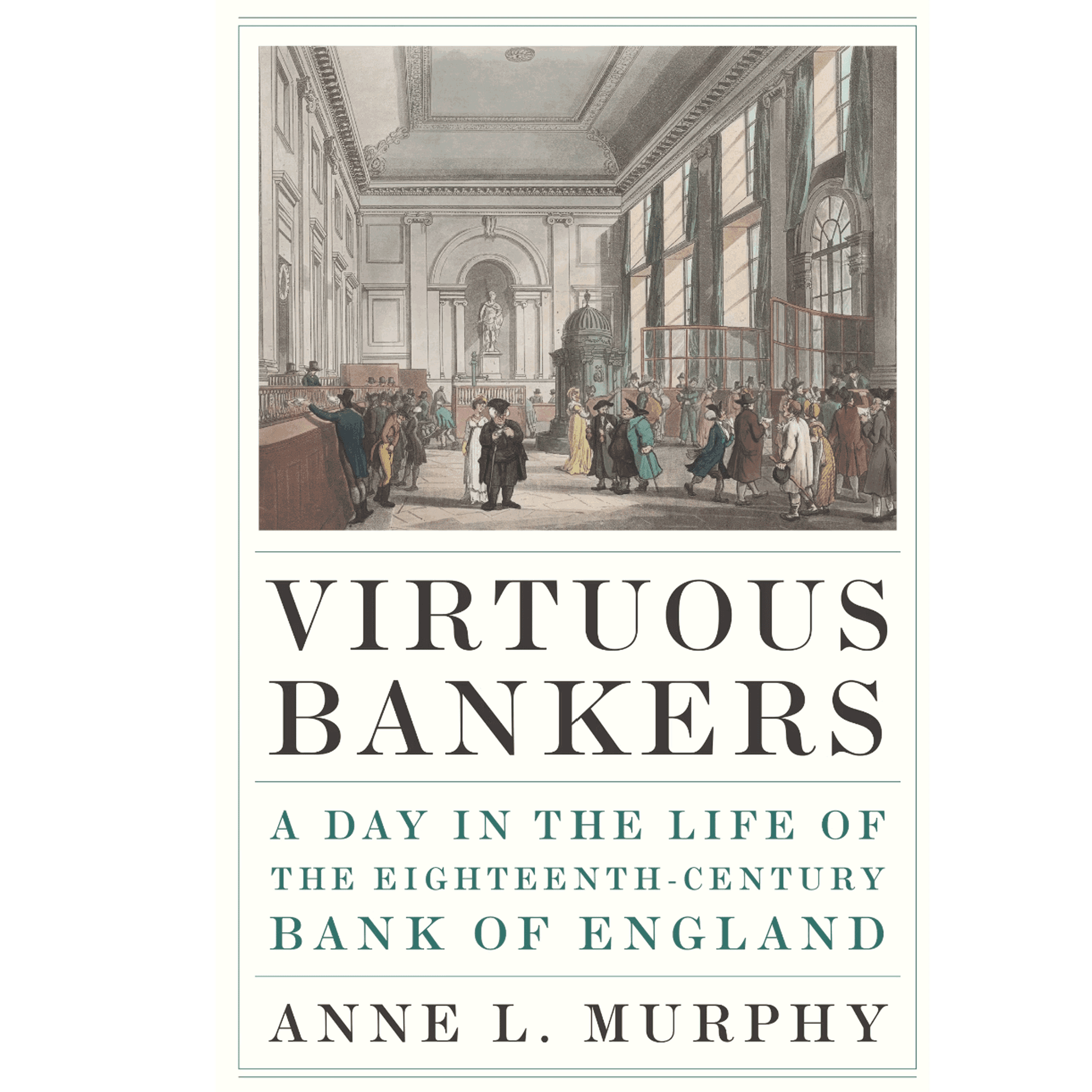
Episode Details Title: Anne Murphy - Virtuous Bankers Description: In this episode, Professor Anne Murphy discusses her book *Virtuous Bankers*, which examines the foundational role of morality and trust in the banking system of 18th century England, particularly focusing on the Bank of England.
Key Themes
- Moral Integrity in Banking: Murphy explores how early bankers emphasized moral integrity and reputation, essential for the stability of the financial system.
- Historical Context: The episode situates the importance of the Bank of England within the broader narrative of England's financial revolution post-Glorious Revolution.
- Comparative Analysis: Murphy addresses how the perception of bankers has changed from the 18th century to modern times.
Discussion Points
Anne Murphy's Background
- Professional History: Professor at the University of Portsmouth; former financial trader in London.
- Inspiration for the Book: A desire to uncover the operational intricacies of the Bank of England during the 18th century.
The Virtuous Bankers Concept
- Title Significance: Murphy initially doubted calling her book *Virtuous Bankers*, though it reflects the reverence of the Bank of England in the 18th century.
- Religious Veneration: The bank was seen as an institution worthy of protection, akin to a religious entity.
The Bank of England's Development
- Historical Foundation: Established in 1694, it was a groundbreaking institution for government finance and debt management.
- Contractor Role: The Bank served as a contractor for the state, managing public debt, especially during wartime.
Operational Insights
- Daily Functions: Descriptions of the daily operations at the bank, from opening procedures to the staff's responsibilities.
- Architectural Significance: Discussion of the physical layout and sensory experiences within the bank, including the Great Hall and its impact on customers.
Customers and Gender Roles
- Demographics: The bank served a broad range of clients, including women, many of whom were widows or wives managing finances.
- Social Dynamics: The interplay of different social classes within the banking system, with public debt trading involving both aristocrats and commoners.
Financial Practices
- Discounting Bills of Exchange: The bank's role in facilitating quick access to funds for merchants and businesses.
- Public Debt Management: Insights into how individuals interacted with the bank to manage government securities, leading to a more active secondary market.
Historical Comparisons
- Evolution of Banking Practices: Murphy draws parallels between the 18th-century banking system and contemporary practices, emphasizing the evolution of transparency and accountability.
Key Takeaways
- Moral Foundations: The success of early banking systems relied heavily on moral character and public trust.
- Operational Complexity: Managing a large financial institution in the 18th century involved multifaceted processes, emphasizing personal accountability among staff.
- Gender Dynamics: Women's presence in banking and finance was significant, challenging contemporary gender assumptions.
- Evolution of Banking: The historical context of the Bank of England provides insights into modern banking practices and the importance of maintaining public confidence.
Conclusion Anne Murphy's *Virtuous Bankers* presents a detailed examination of the Bank of England's historical role in shaping the modern financial system through a lens of morality, trust, and operational complexity. The discussion encourages listeners to reflect on the evolution of banking and its implications for today’s financial landscape.
---
For those interested in exploring the themes discussed in this episode further, *Virtuous Bankers* is available for purchase, offering a rich historical perspective on the foundations of modern finance.
Written by AI. May contain mistakes. Listen to the episode to check what was said.
Transcript
Automatic transcript. May contain errors.0:02You're listening to A Book With Legs, a podcast presented by Smead Capital Management. At Smead Capital Management, we advise investors who fear stock market failure. You can learn more at SmeadCap.com or by calling your financial advisor.
0:20Welcome to A Book With Legs podcast. I'm Cole Smead, CEO and Portfolio Manager here at Smead Capital Management. At our firm, we are readers and we believe in the power of books to help shaped informed investors. In this podcast, we speak to great authors about their writings. the late great Charlie Munger, prescribed using multiple mental models and analysis. We analyzed their work through the lens of business, markets, and people. Long before the world's most powerful central bank, the U.S. Federal Reserve, was created in 1913, there was already a venerable institution in the Bank of England, or BOE, modernizing the relationship between the government and the economy.
0:58One must wonder, how does a central bank function before they become a world-class central bank of the modern age? Joining us to discuss her 2023 book is Anne Murphy, the book titled Virtuous Bankers, A Day in the Life of the 18th Century Bank of England. A little bit of background on Anne. Ms. Murphy is a professor of history and executive dean of the Faculty of Humanities and Social Sciences at the University of Portsmouth. Before her career in academia, she worked for 12 years in the city of London trading interest rates and foreign exchange derivatives. She has also authored another title, The Origins of the English Financial Markets.
1:35Anne, I really appreciate you joining me. We'll have some fun talking about this old bank, if you will. But I have to ask you, coming from your background, what inspired you to tell this story of the Bank of England in predominantly the 18th century? Well, thank you for the invitation. It's really nice to be able to talk about the book. So I think what inspired me, I'd been an academic for quite a long time before I decided to write this book. And it was based on sources that I'd found while I was studying for my PhD and was really intrigued by. But what really inspired it was a desire to know how the 18th century Bank of England worked.
2:18I think you, like me, probably read a lot of books about banking. And they don't often get into the nitty gritty. So, you know, how does a bill of exchange work? Who does the filing? How do you print a bank note? All of those sorts of things. And I was really intrigued by the process, by how things worked on a day to day level. And having tracked down sources that could tell me, I was then really keen to share that with others. So I decided to write the book. So you call it virtuous bankers. And I have to ask, I think, what's the obvious question. You're calling the 18th century bankers virtuous.
2:58Are you saying something about banking today in comparison? So I keep telling this story, but I nearly chickened out of calling it virtuous bankers. So it was the working title all the way through. And the publishers liked it. And I have to say I had a little bit of crisis of conscience about it just before the book got published. And I went to the publishers and said, can we call it something else? And they said, no, you know, we're going with virtuous bankers. I think they sort of recognized the pull of that. But I have to say I can justify it. I don't think I am trying to say something about modern banking, although the inferences are there for people who care to find them.
3:49But what I think I was trying to get to was why the Bank of England's directors could characterize the bank as something that demanded almost religious veneration. And that's what they say in the report that they write, you know, that this is an entity and an institution that we should protect with everything within our power. So what convinced them to make that statement, to sort of create this idea of this is something that we can and should protect, that is worthy of the country's veneration? I can't see even modern day governors of the Bank of England being able to say that sort of thing and find themselves taken seriously.
4:40But in the 18th century, they could. So I think that forms part of the argument for this question of virtuousness amongst Bank of England clerks. So the bank was created in 1694 by Prince William III, obviously King of England. Who were the early on rivals? What other institutions were around at that time that could even compete in some of these banking-related or call it credit-related services? Yes. So when we talk about the development of the English financial revolution, which was really this period after the glorious revolution where the government needs money. So it's starting to set up more sophisticated state financial instruments.
5:23And the Bank of England is one of those. The parallels are often made with Amsterdam and the Dutch and particularly Dutch banking. banking. And I think that's a good comparison. I think that's something that we should pay attention to. But I think those projectors who were looking in the 1690s to build this new financial system, they weren't only looking to the Dutch, they were looking to other precedents as well. So, Sweden has interesting banking models and financial models. Italy, of course. And the French do as well. They don't have banking, but they have other forms of public debt and debt maintenance that were interesting to people at the time.
6:12But where the Bank of England is different is that it's a note issuing bank right from the start and that it is a joint stock company. So it's beholden to its shareholders and its shareholders are really very active right at the start. You say that the Bank of England was the most successful and longest lived contractor to the British government. It started in 1694, like I mentioned earlier. When did this contractor status end and why? And also, can you explain what you mean by contractor? Yeah, so contractor is a term that a lot of British historians of the fiscal military state use. And what they're generally describing is the contracting out of the business of war.
7:03So it's generally around things like Britain's naval capacity. So the contracting out of victorling, so supplies for the Navy, uniforms, that sort of thing. And these contractors are doing the work that the government can't do. And generally, you know, doing that much more efficiently than a government model could do. Sure, sure. I thought it was really interesting to try and apply that to the Bank of England. What the Bank of England is doing is not supplying goods or food, for example, but it's supplying a service. And it's supplying a service that the Treasury at this time or the exchequer at this time cannot provide for itself.
7:54So the government is contracting out the management of the public debt and asking the Bank of England to manage it for them. And of course, the Bank of England remains a private company at this time. So it is a true contractual arrangement here. That continues, I think, right up until the mid part of the 19th century when the central banking elements, if we could start to call it that, start to be put on a shore of footing. and the nature of supporting the public debt starts to change because the imperatives of war aren't necessarily there at that point. Sure. So let's just start with location because you talk, to your point, the nitty gritty of this.
8:45You talk a lot about locations. We'll talk about parts of that, but we talk about architecture, which I think you do a wonderful job of explaining. Now that I've read your book, I feel like I have to go visit the Bank of England if I'm even allowed in. So, you know, let's just start with location. It originally wasn't where it sits today in Bank District in London. Where was it in London at its origin? So it wasn't too far away. So it starts off in borrowed accommodation, sort of really just around the corner from where it is now in Grocers Hall. and the reason I suppose it ends up in borrowed accommodation is that it gets set up quite quickly.
9:31There isn't really a tradition of banking in London at the time. So there are no ready-made premises that it can go and operate out of. I think also it's not a customer-led bank. It's a bank that is really servicing government debt. So I don't think it wants to make itself overly visible early on in its career. It doesn't necessarily recognize the value of that visibility. And it doesn't want to attract too many people in because when you've got lots of customers, you have to manage them. And the business, the physical business of managing customers, as you see in the 18th century, is quite taxing.
10:18You need staff to sort of manage the flow of customers and make sure they're behaving properly and make sure you're not allowing pickpockets and other undesirables in. Sure. So obviously it ends up in the location it now sits. I mean, you have the board of directors sitting down and having to tackle this physical presence issue and they have to go out and find real estate at times to grow this institution's footprint. How did they do that? Because obviously, London is tight now. It was even tighter back in the 18th century. Yeah. So if you can imagine where the Bank of England is now, so it's in Threadneedle Street, and it occupies an entire block.
11:07So it's a huge building, and in fact, a sort of set of buildings within a curtain wall. it gets gifted by one of its first directors a house in the middle of thread needle streets right bang in the middle it's a relatively small house but they they get it as a gift they kind of keep it for around a decade not not really thinking to do anything with it and eventually they make their minds up that they're going to move the bank's premises onto Threadneedle Street, partly into this house, but also they need to start building in order to accommodate the expanding business. And that process of building carries on almost throughout its history.
11:56And I suppose the last bit of really serious building work that is done is post-Second World War, where they pull down the John Soane's 18th century bank and then rebuild it again. Sure. What type of businesses resided around the bank when it first moves on to Threadneedle? Because to your point, the structure in place today, I did some follow-up reading, Anne, because I wanted to nerd out over your book. And so to your point, post-World War II, they really changed what the bank building was and really the historical character of the building compared to the 18th century. But there were a lot more streets directly around it, and the tenants were kind of a wide swath.
12:38Yeah, they really were. So when the bank first moves into Threadneedle Street, the buildings and residents around it would have been fairly typical London residents. So you've got shops, you've got the Royal Exchange just opposite the bank, which is a really important center for trade. Surrounding that, you've got lots of taverns, places where people go to drink, they go to eat as well. You've got residents right next door to the bank. There's a church, St. Christopher Lestock's Church. So, you know, that occupies a significant part of the space that the Bank of England now occupies and creates problems for the bank as well.
13:30so it's really a you know a standard residential area and the bank of england buys up or takes over a lot of that land or surrounding it partly because they need more space for the business but also because they need protection they need protection from fire they need protection from rioters and moving out a residential population gives them that some of that protection That area then under the influence of the bank is created into the financial district that we know today with very few residents, mostly businesses, mostly banking type businesses and the businesses that serve that. Sure. And to follow on that, I mean, that continues to be, for example, I commonly will go to Bloomberg's new headquarters, which used to be Bloomsbury Square and is now right down there in Bank District.
14:28So that continues to be leveraged as the financial center. Let's talk about Britannia and let's talk about Lady Credit. it? Can you kind of introduce these two characters in the ethos or logos of, of the bank and what role do they play? And I guess the other question I would have is, are there times that they are similar people and other times when they're viewed very differently? Yeah. Um, so I think fascinatingly, um, and in fact, I think I, um, really reflected on this, uh, post 2008, 2009, after the financial crisis there, where I think there was a lot of speculation about if Lehman brothers had been Lehman sisters, they wouldn't have got themselves in so much trouble.
15:15And the 18th century historian, actually, I found that really fascinating because in the 18th century, all of the negative characteristics of finance were feminine, not masculine. And so we think of negative traits of finance and financiers as very masculine, kind of too much testosterone, very aggressive, not being able to control those sorts of emotions. In the 18th century, negative aspects of finance were being too sensitive, being too emotional, not being able to control your emotions in ways that allowed you to be business oriented. And all of those tropes were feminine, not masculine. So bad finance was female finance.
16:06And during the South Sea bubble, there's quite a lot of real anxiety about women stepping in and becoming speculators. What's interesting about the Bank of England is that it manages to rise above a lot of that negative feminine connection. And part of that is using its own logo. So, you know, its logo is Britannia. It's the Britannia of the 17th century, the Britannia that is introduced back into British discourse by Charles II because Britannia ends up on the Charles II penny and then is used on the penny for a very long time after that. And the Bank of England adopts Britannia right from the start, from 1694, as its logo.
17:00So she's on everything. So she's on the notes. She's on the ledgers. She's on the letterheads. Everywhere you go in the bank, you see Britannia. You've got statues of Britannia kind of appearing around the bank as well. She's always virtuous. She represents the Protestant nation. It's really important that she represents the Protestant nation as well. and she has a sort of warlike connection because she has a shield and a spear that she carries. She's often depicted as being relating to business because she either sits on a bag of money or she's got money next to her or she's got a cornucopia and sort of pouring out the fruits of commerce.
17:50And so all through the 18th century and beyond, the bank is being associated with Britannia and Britannia never falls. So lady credit, who is sometimes, so it's a lady credit is a depiction of borrowing and lending really. So, you know, it's lady credit who can gift you a loan if you need it, you know, and your relationship with lady credit is really important. and Lady Credit behaves very virtuously under some circumstances. But Lady Credit is also kind of, you know, as my granny would have said, no better than she ought to be. So, you know, she behaves very badly. She's very fickle. Sometimes she's there and she's available for you, but sometimes she'll turn her back on you.
18:44But that kind of taint is not something that is associated with Britannia. So where Britannia stays virtuous, Lady Credit falls. The other feminine trope I think that's really interesting is when after the South Sea Bubble, the South Sea Company starts to be associated with a feminine trope as well. And she's very much, you know, the South Sea Company has a whore. So the South Sea Company has disgraced herself so much that she is now a fallen woman and her reputation can't be rescued. Hi, I'm Cole Smead, CEO and Portfolio Manager here at Smead Capital Management and host of this podcast. If you enjoy this podcast, I'd like to invite you to check out smeadcap.com.
19:38At our firm, we are stock market investors. We advise investors who fear stock market failure with a discipline that has proven success over long periods of time. Learn more about our funds at smeadcap.com. Past performance is not indicative of future results. Investing involves risks, including loss of principle. Please refer to the prospectus for important information about the investment company, including objectives, risks, charges, and expenses. Read and consider it carefully before investing. Smead Funds Distributed by UMB Distribution Services, LLC, not affiliated. So much of your book is based on an inspection that was done, a bank examination, if you will.
20:18You know, this was not McKinsey. This was not Bain. This was a group of inspectors coming in on behalf of the board. Can you explain what year this was taking place and the reasons why for this inspection? Yeah. So it takes place in 1783, 1784. So the inspectors, who are three of the bank's directors, they start their work in March 1783. It takes them a year to complete. And they're empowered to inspect everything. So they can call any papers or any employees that they choose. And they do that. And they do that very thoroughly. And what they're doing is they're going around the bank, they observe, they talk to employees, and then they sort of double check.
21:10They have a process of then checking back with other employees about what the first employee said. So they're really sort of calibrating the way that the work is being presented to them. why do they do it then there is no smoking gun um but my best guess is that the reason they do it then is because the east india company at that point is coming under significant scrutiny the east india company uh as uh listeners might know uh was not you know was was um kind of quasi-government in India by this point with a private army that is expanding its territory, but also operating not as a particularly useful and definitely not as a benevolent governance entity.
22:13And the government has it under scrutiny because of that and because of its poor financial performance. There's strong speculation around this point that the government will take over the East India Company. And it's starting to make inroads into much more active management and active direct management of the East India Company's work and its interests. And I think the bank's directors at that point are looking and thinking, could this be us? And let's make sure it isn't us. Let's put our house in order so that they can then demonstrate we've been, you know, we've been through this process. We understand how we work.
23:00We've looked for corruption. We know where we don't work so well. We know where we are working perfectly. Well, we just got done doing Richard Blakemore's book, Enemies of All Witch, touches on the piracy involved with the East India Company. And obviously, there were some very unscrupulous points that they had to deal with throughout their history. So, let's set the tone. So, when I think of the bank opening in the 18th century, the bank's going to open at 9 o 'clock. What is going on at the bank up until those gates open at 9 o 'clock? I think of, I'm originally from Seattle in the Pacific Northwest of the United States.
23:39In the winter months, it's dark when you get up and you go to the office at early hours. And I think of that very much in England as these porters and the gatekeepers are getting ready for the people of the day to walk through those gates. Can you kind of teach who some of those players were and what the preparations were prior to the gates opening? Yeah. So the bank opened at six o 'clock in the summer, seven o 'clock in the winter. So just as it would be starting to get light in London in the winter, the night watchman would be heading off to other jobs, actually. So these poor guys would have been working pretty much 24 hours in order to keep themselves alive.
24:30So the night watchman who'd been there all night would head off to their other jobs. The gate porter lived at the bank, so it was his job to open the gates. Porters would turn up and they would finish off bits of cleaning and tidying that would have been left to them by the night porters. Night porters would do some of it and the day porters would do others. The first staff would arrive around about that time when the gates were opening so that they can set up the bank. One of the jobs is disgorging the safes. So there are various different safes and storehouses where the ledgers are kept and where the cash is kept.
25:18So the process of setting up for the day is about kind of getting all of those out and getting those ready for when the customers come in. There's lots of mundane things that need to be done, things like winding clocks, getting pens ready. So, you know, we sit there and wait for our laptop to, you know, to fire up and for us to log on. But for our 18th century clerks, it would have been making sure that your pen, which would be a quill pen, was sharp enough that you've got ink, that you've got all of the things that you need as well. It feels like there might have been some scrabbling around for keys.
26:03So often the last man out of the office would take the key to various things home in his pocket. So you can imagine that if he's not at his desk on time, there would be a little bit of, well, who's got the key for this drawer? Who's got the key for this cupboard? Yeah. And there are other things, I guess, about making sure that the bank is clean and tidy and ready and waiting for customers. They also clean up around the bank. They clean up the streets and yards around the bank as well. And that's another part of them displaying the kind of virtuousness or their good citizenship is that process of keeping their area tidy.
26:51Sure. And I think you mentioned that, you know, there's no modern plumbing in this building. So all the way out to that someone has to, you know, take care of the human waste on top of this is a normal function of the day to day of the bank. Yeah, there's some lovely in the bank's archives, there's some lovely plans of the bank, which I sort of poured over in the desperate hope that I would find the toilet somewhere. It's not marked on the bank. It was one of the things that kind of interested me was, if you're going to write an understanding of the day and how the day worked, well, where does one go when one needs to go?
27:37There would have been kind of latrines outside in the yard. My best speculation, given some very prominent customers and the fact that water closets, indoor water closets, were quite common by this point, is that there would have been an indoor water closet somewhere as well. But I can't find it on any of the plans. So when people showed up late, how was that dealt with? You know, how did they account for this? Because, you know, and you touch on this earlier. I'll mention this probably throughout our discussion today, but there's a lot of people here at the bank. And the reason what the inspectors are really doing is they're asking questions of people, but really of processes.
28:18How do those people and processes interact and play together? And so one of the initial processes would be, you know, what's the accountability of people showing up on time? Was there one person? Was that the chiefs? How did the timeliness of employees play into accountability? Yeah. So it's the doorkeeper who is keeping a check on that. And he keeps a book where he records when people come. And he draws a line in that book at 10 minutes after nine. And a note is then made of the people who come after that. So you've kind of got a 10 minute grace period to turn up to work. And then if you're more than 10 minutes late, then that will be reported to the directors who are managing what they call the Committee for House and Servants, which is basically the disciplinary body.
29:15There's a reasonable level of excuse, I think, for being late to work because some of these individuals are walking quite long distances through London in order to get there. So then, and by the way, I'm going to use that with my colleagues. I'll say you can be 10 minutes late because it was good for Britannia. It's good for me. So that'll be my new line. So I appreciate that a lot, Anne. Give us a sense, you know, the bank is not operating on the same kind of bank hours that you'd see today in London. What were bank days? And then how many bank holidays were used back then? Yeah. So they are working 9 to 5-ish from Monday through to Saturday.
29:57They're out on Saturdays as well. I was quite surprised, actually. The bank hours are not dissimilar, I suppose, to the sort of 1970s kind of bank hours. So 9 o 'clock start, a 3.30-ish finish for most of the business. Most of the senior men go home at around 3.30 in the afternoon. Most of the work that takes place after that is updating the record for the next day. What I found interesting was the sort of bleed into other parts of the day. So the people who come quite early in order to get set up. But the people who are updating the record at the end of the day are staying sometimes late into the evening.
30:45So when it's a particularly busy day and there are lots of accounts that need to be updated, the clerks who are doing that start at about four o 'clock in the afternoon and sometimes go on till seven, eight, nine, ten. And then the bank is locked down by 11. So they've got to be done by then. But there is a kind of late evening shift there. Bank holidays, very few. but you know things like christmas easter uh other uh religious festivals uh would be um that so the bank wouldn't have a full staff uh during those times uh but it would keep a skeleton staff on for most religious holidays because it was conscious that customers still needed to to do business then sure um i'm going to read a quote that comes from the statue of William III that was obviously in the bank for restoring the efficacy of the laws, authority to the courts of justice, dignity to the parliament, to all his subjects, their religion and liberties, and ascertaining them to posterity by the accession of the illustrious race of Hanover to the British empire, to the most excellent Prince William III, the royal founder of the bank.
Read the full transcript
32:04When I read that and got through the book, I really felt like that was the ethos that in some respects the bank took on. For example, they gave dignity to Parliament. Parliament had all kinds of crazy ideas, and yet the government borrowing to fulfill those plans were given dignity by the bank's processes and credibility. Is that a fair way of thinking about the statue of William III? Yeah, I think it is. I think when you go back to the 1690s, it's not clear how much William III really cared about the Bank of England as anything other than a way of raising money to prosecute his wars. Which some would argue is the only good reason for central banks across the ages, I would say, too.
32:56Yeah, but reasonable to do so, I think. And William was one of the first investors. But I think what that statue represents really is the purpose of the bank across most of its history. And it's really strong connection with the state as part of the apparatus of state finance, but also as distant from the state and as an entity that can hold the state to account for the way that it manages its finances. I've described it before as the servant of two masters. So it's the servant of the public and the public creditors who rely upon it to maintain their investments and maintain the value of their investments.
33:52But it is also the servant of the state who, if the state doesn't need money, it doesn't need the bank. So, had Britain been a less warlike nation in the 18th century, the Bank of England might have been wrapped up very early on in its history. And we might have had a completely different banking history in the UK. You talk a lot about the personal liability that clerks had to take upon themselves. I think you talk about how they had to bond, obviously, and how they did that. I was just thinking about of insurance today and those kinds of situations versus then. I think you talked about they raised the money from personal family to bond themselves for that.
34:35As you've studied markets in England and you've thought about this idea of personal liability, I mean, we think it's important for all of risk taking. We are your classic. We eat our own cooking. We have skin in the game with our investors. It's really all we believe in. But that hasn't always been true in every part of the financial world for various reasons, not criticizing any one of them. But obviously for the bank, that personal liability was paramount. And I think I could argue after reading your book that it is one of the devices that kept everything together with all these people and all these processes.
35:08Is that a fair assumption, I guess? Yes, I think it is. And I think you, there are lots of tentacles to this as well. So, you know, it really starts off with an interview process and the way that they scrutinize the financial means of the people that they employ. Everybody who is employed by the bank takes an oath to do their job well, to keep the bank secrets. As you were saying, everybody is expected to provide a bond against both losses, but also poor behavior, embezzlement, et cetera. So everything speaks to creating a sense of your personal connection to the corporate body and also your personal responsibility for ensuring that that works well and that you are doing your best to support it.
36:16And I think as in all of the best of these kinds of models, the bank doesn't pursue people unduly. So there are a number of instances where they acknowledge that there's been a real sort of rush in the banking hall or something else has gone on or there's been a crisis and a bank clerk might have lost money. But often they'll waive that obligation. But they will pursue the men who have been careless and are not doing their job properly. And they will definitely pursue the criminal. And they pursue the criminal to the ultimate punishment, which at this time is capital punishment. So the bank is responsible for personal prosecutions of clerks who've stolen money from them and always calls for the ultimate penalty.
37:15Sure. You share some of the numbers of the accounts the bank had. To your point, part of the facilities that the bank was providing to the public was really just transfer agent services for government securities. Right. They would be, you know, paying the dividends due and and holding customer assets that obviously were owning government debt and consoles that you talked about in the book. But it looked like, you know, again, this symbiotic relationship between government and the bank. You know, if the bank wanted to grow, they just needed the government issuing a lot of debt because it brought a lot of people to the bank.
37:47Is that a way of thinking about that interaction between borrowing and customers? Yes. And it really is government borrowing that spurs the growth of the bank. And you can kind of trail, you trace the growth in state debt across the 18th century is growth that absolutely aligns with periods of war. and the growth in the Bank of England, number of clerks, the footprint of its premises, absolutely the same. It's growing at the same time as the bank is extending its debt. It is doing other things. It's never very keen on just lending to the public. The discounting bills of exchange does a lot of that.
38:38And there's a real significant growth there. It's doing quite a bit around supporting a paper money economy within London, not necessarily in the provinces. But its main job is banker to the state. We hope you're enjoying the podcast. You know, we work hard putting together this show, but we work even harder for our investors at Smead Capital Management. At Smead, We believe in disciplined investing, which is why the Smead funds have a proven track record of long-term outperformance. If you're an investor who fears stock market failure like I do and want to invest in wonderful companies to build wealth, we invite you to visit SmeadCap.com.
39:20Past performance is not indicative of future results. Investing involves risks, including loss of principle. Please refer to the prospectus for important information about the investment company, including objectives, risks, charges, and expenses. Read and consider it carefully before investing. Smead funds distributed by UMB Distribution Services, LLC, not affiliated. On the discounting, were there other people in the markets that would discount? Because I think of, I mean, other books that come to mind is like Lombard Street and talking about the money market functions of London looking back the last 200 years.
39:56Were there other people in those discounting markets? And then we're kind of back to what does Britannia do for the public versus what does lady credit do in discounting, if you will? Yeah, so I think there's lots of interesting argument about this. So when does the Bank of England first start functioning as the lender of last resort through this process of discounting? So they're one of many discounters. and growing and shifting markets through the 18th century and then into the 19th century as well. But at points of crisis, so around the 1770s where you've got the air bank collapse and in other places, it seems like, and many historians would argue, that it's the Bank of England with the capacity there to become the lender of lost resort to try and stabilize the market through its discounting activities.
41:01So I suppose that's your difference between your lady credit, kind of people who are the sort of bigger and smaller banks or other discounting entities, and Britannia, its size, capacity, and willingness, and kind of the beginnings of a felt obligation to stabilize the London economy as well. Sure. And just so our listeners know, when I say Lombard Street, that was written by Walter Badgett. And then obviously James Grant has also written a book solely about Badgett and the construct of the modern Bank of England and what that was to Badgett. What was being discounted? In other words, you mentioned bills.
41:44What types of bills were these? So these were mostly bills of exchange. So these are generally merchants and other businessmen who essentially are being given IOUs, barry, counterparties. So the IOU will be, I owe you a hundred pounds and I will pay you in three months time. You could go to the Bank of England. You could say, I've got this IOU. I need my money now. and the bank of england would give you 95 pounds uh worth of that so we're kind of you know they take off a discount spread yeah yes yeah um and you know you you would have your cash immediately then at the end of the period you come back and you uh you settle um sure because you've got your hundred pounds from the person who originally owed it to you sure so let's say i'm gonna you own a console, call it a three or 4%, who cares what the yield is on it?
42:48How did I actually walk into the bank and clip that coupon, if you will, and go to get my govies income from the bank? So there were certain days when everybody would be doing this because it would be kind of dividend day. But you could go in at any time to do it. You had to come in after the market was closed. So it was a kind of early afternoon business. But you came in, you went to the clerks at the relevant desk. The books were separated by letters of the alphabet. So kind of A to C, T to Z. So you would go in, you would find, depending on the instrument that you held, you would find the desk that related to your name.
43:44You would present yourself. You didn't have anything that said that you owned this. Everything was recorded in the bank's ledgers. uh so you give your name uh they would know uh they would look up in the ledger uh what you owed then you could collect and you basically collected a chit um and then you went and got a note or a cash or cash for it uh from within the banking hall gotcha yeah because you mentioned the the book letters i was trying to sort out like are these special codes and now that you mentioned all the alphabetization of the names i just i realized that i completely missed that what What happened if you didn't collect your, you know, your payment?
44:27You know, we call this a achievement nowadays where, you know, you have something you're due that hasn't been collected. I think you note in the book that classically, you know, back to the William III comment to keep like Parliament at bay. I think Parliament tried to take a half a million pounds of effectively, you know, non-collected dividends from the bank as, you know, pretty much property estate. was that a big problem for people that had never collected this because they'd forgotten about it or whatever? Yeah, it's not clear necessarily why people aren't collecting, whether they're just, you know, whether they think, I don't need it at the moment, I'll just accumulate it, kind of, you know, it'll sit in my account.
45:11People die and the bank doesn't necessarily know about it. Sure. So, there's an accumulation there. As you say, people might forget about it. I'm not sure how you could, but it's possible that people forgot about it. So, there was an accumulation and the bank, by the late 18th century, had accumulated quite a significant level of unpaid dividends. And it was Pip the Younger who was desperately trying to pay down the debt. Sure. So it's late 1780s, early 1790s, before they have to give up because they go to war with France again and kind of all bets are off. But he's desperate at this point to try and pay down the debt as much as possible and reduce the government's outgoings.
45:55And so he hits on this kind of super idea, which is, well, they haven't come for it. So we'll have it back, please. And the bank's directors are horrified by this. They're absolutely adamant that, no, you can't have it back. That's not government money. That is money that is owed to the public creditors. The fact that they haven't collected it is neither here nor there. We are the custodian of that money. And, you know, they talk about the bank at that point as being the guardian of public credit. You know, the entity that must hold the government at bay. Now, they come to another accommodation.
46:40They say, okay, if you're so desperate for the money, we'll lend it to you. But you can't have the public creditors money. Yeah, because I was trying to think of the cost of capital, because I love banking when it's done right. Obviously, not everybody does it right. But I was sitting there thinking, wow, there's this quote-unquote money on deposit that I hold on my books. I'm definitely not accruing interest because they should have come and picked up their dividend. This is like free equity capital for a bank to lend on. If you lend to the government, you know, you're going to get paid back the questions in what kind of future currency.
47:10And it's just free leverage for the bank to lend on. I thought, you know, what a beautiful system for the Bank of England. I wish everybody didn't accrue interest on their dividends. Frankly, you also touch on the idea of a black book. You know, the bank had to keep records of people that it didn't want to associate with. Who was on that? Yeah. So they don't seem to have survived. So I can't tell you who, you know, for sure who was on that. But what this is associated with is discounting bills of exchange. And there's so historians are really quite interested in how the process of credit worked in the 18th century.
47:56and that there's a sort of sense of credit was very much a personal thing early on in the period. So late 17th century, early 18th century, it was about having a personal relationship with the people that you were lending to. So you knew who they were, you knew who their family was, you knew where they lived, you kind of judged them by their behavior because you knew their behavior. And the argument has always been you get to the end of the 18th century, that personal relationship is gone. So I was really interested in exploring how decisions were made in the Bank of England. And it does appear that there is a sort of depersonalization that's going on because they're looking at the customer's records within the ledgers and making a decision based entirely on their credit history.
48:55But there's also enough hints to say, oh, we know so-and-so, no need to check him. You know, anybody can lend to him. And there is this sort of, you know, this mysterious black book where you're writing down people who you're not going to lend to. Now, again, I don't know who's on it, but my speculation is that some of that comes from their credit history and their record and they've not paid back. But some of it must come from, oh, have you heard so-and-so is not doing too well? You know, there's a bit of speculation. His name goes in the black book. And it's worth remembering that there are 24 directors of the Bank of England.
49:43These are merchants. They're bankers. They are London businessmen. So they have their ears to the ground. They'll know when people are in trouble. and we'll be obliged to pass that information on. So we've talked about some of the activities, but one of the things that's in your book that I think is outstanding because you really are also giving an architectural history and a geographical history of the inner areas of the bank. So I want to put up actually a slide here where we're going to look at the map of the Great Hall. So pardon me, but I couldn't find this on the internet, so I had to literally take it right out of your book.
50:22But, you know, so just to use this as a picture, you know, if I'm going to walk into this room and I'm going to go pull out, let's say, money I have on deposit, where would be the places I would traffic in in this hall? Right. So you you kind of have this oriented the way it should be oriented. And you can see that marked there is the whole door. So you're walking through that door and you see this kind of big space open up in front of you. It's a really grand space as well. The number 11 in the middle there is the stove. So that's the kind of heating system. But you see various desks around. So directly in front, there is the cashier's desk.
51:10So if you've got notes that you want to change, you would go to the cashier's desk. You see tellers off to the right-hand side. So if you've got cash that you want either to deposit or you want to exchange your notes for cash, you're kind of operating there. So other elements around the bank. So again, off to the right-hand side, there are desks where you can take your money, your cash money, your precious metal coins. So there'd be gold and silver coins at this time. And there are scales there where you can weigh them so that you know that you're not getting short weight. And there are other desks around the hall where you can go and you can write out your notes.
52:00and you can kind of make, you can sort of check what notes you have or any forms that you need to fill in their space. So it's, you know, it's very much like the way a banking hall would have looked, I suppose, up until 20 odd years ago when everything started to go digital. Sure. I'm going to show another picture here because I don't think that map does justice what you explained to what this was for the person walking in. So here's a look at the great hall. obviously, you know, here's a picture of that. You called it a sensory experience. And while we're looking at this, what do you mean by sensory experience?
52:40Yes. So I think, so just to kind of orientate listeners, you can see the kind of the screens on the right hand side of that. So that's where the door is. The big ornate domed thing is the stove and the people on the left hand side of screen, they're talking to the cashiers and putting their notes through the railings there. But what I mean by a sensory experience is, and I think it was really important to me to try and think about this as a place, not just a flat representation of go here and go there and do this and do that. But an assault on your senses. So it would be noisy and people would be talking and you would see people that you know.
53:32So it would be a social space, a place where you might connect. If you're not coming to the bank on a regular basis, it would be intimidating. Sort of where do you go and what do you do when you get there? So one of the reasons that the map had been produced because it's part of a guidebook to what to do when you're at the bank. Remember also that you're in 18th century London, so it'd been quite smelly. You've got the stove in the middle, so that might be smoking. You might have smoke in your eyes. People around you might be clean. They might not be. They might be tracking all sorts in on their feet.
54:17and we know that pickpockets hang around this area as well so you'd be keeping your hand on your pocket book to make sure that your your pocket is not being picked and there's also lots of indications in the inspector's reports that people suffer from real irritation at being kept waiting in this space. So just like we do, if you're in a queue to get something done, these 18th century actors were irritated by that and could get quite cross with the clerks for not operating faster. There's also an indicator that they'd go off elsewhere, they'd go to other banks to get their notes exchanged if the bank wasn't operating fast enough.
55:10Hey, I want to give a big shout out to everyone who's been working so hard on the show. You know, we recently hit the top 10 investing podcasts on Apple Podcasts and even number one in the business category in several countries. As you may know, this show is brought to you by Smead Capital Management. Smead Capital Management understands how frustrating and illogical the stock market can be. If you're searching for funds with a proven track record, give the Smead funds a look or better yet, reach out at SmeadCap.com. And don't forget to mention that you're a fan of the podcast. Past performance is not indicative of future results.
55:45Investing involves risks, including loss of principle. Please refer to the prospectus for important information about the investment company, including objectives, risks, charges, and expenses. Read and consider it carefully before investing. Smead funds distributed by UMB Distribution Services, LLC, not affiliated. But I think another point you make, and you have some really good data that you put in your book, what were the customers that were interacting with the bank? What was the makeup of those? I think back to our discussion of gender roles, there were far more women than I would have thought would have been interacting with the bank.
56:21And now some of those, as you noted in your data, were as either widows or wives. But again, I think the other thing is you think about the socioeconomic rungs of London. this was just not wealthy people alone that were interacting with the bank. There were a lot of people, even it down to people that were assisting families with their finances coming into the bank to deal with day-to-day needs of the customer. So I guess, is this just commerce casting a wider angle than a lot of the social circles? I think it is. So a lot of my data actually comes from who's buying and selling in public debt.
56:57so there there might be you might think of that as kind of uh having a much wider customer base and then discounting bills of exchange for example sure okay so on bills of exchange i think with there you're looking at the london business people um not necessarily elites there'd be anybody from elite businessmen down to uh kind of jobbing carpenters those kinds of people who might be having their debts paid or their money for their services paid in that way. So they might be using the bank services. But the people who are going there to buy and sell public debt, they are everybody from the aristocracy to domestic servants.
57:44And some of the really interesting elements that I found within there or transactions that I found within there was you can see the master of a house and servants within that house coming to buy and sell public debt on the same day. So I think it's really interesting to speculate kind of what's happening there. Is the master advising, you know, that this is payday, this is kind of your annual payday. I advise you to go and put your money into 3 % consoles. I'm going to the bank today. Why don't you come with me and we will do that. As you said, lots more women than you would expect, but fairly typical for public debt and other transactions, again, throughout the 18th century, about 15 to 20 % of women in most of public debt instruments.
58:45And we know that women act as brokers, They act as financial agents as well, particularly for naval officers and for sailors. So they often commission their wives to manage their financial affairs while they're away. Sure. I'm going to show our next slide here because I want to mention the rotunda because back to the architectural significance. Here's a picture of the rotunda. And where would this have sat in relation to the Great Hall and what was the importance of this space in the bank? So this is a space that becomes co-opted in the bank for the market in the financial debt. So it's apart from the Great Hall.
59:33So you can't get from the Great Hall to this space. because the architects of the bank during this time, they try to create some physical separation between the business of banking and the business of managing public credit. So imagine this space, this kind of the rotunda is a round space and it's got the offices of the various different elements of the debt around it. So the biggest office is it's Rupes and Consul's office, but there would be other offices there as well. What's interesting in the depiction you have here is it looks like a really sort of nice, refined kind of space here. There are other images of it where it looks much more raucous.
1:00:24Very full. Yeah, very full. In the bank's reports, it's definitely reported as quite a raucous space, It's a space that needs careful management. And they have porters stationed in it to try and keep the peace as much as they can. But again, you do see women here, and that definitely is a kind of true depiction. And some women you see there with men. And there's a nice guide to the markets, which is produced in the mid-18th century, that suggests that a decent gentleman will go to the market for his wife, his kind of sisters, his daughters, and protect them from having to do this business themselves.
1:01:15But what we do see otherwise is, as you can see more towards the center of the screen, that there are clearly women who are there on their own account, single women who are acting for themselves. So to step back, I mean, because I think a lot about, you know, where the Bank of England sits today. I'm going to show another, I don't think our last slide here of the exterior. And this is, I think this is a picture in 1910. You can obviously see the Royal Exchange on the right side of the screen there. You know, obviously where the London Stock Exchange was. You know, now it's a beautiful high-end boutique shopping area for those that want to know.
1:01:53And then on the left there, down Threadneedle, obviously, you have the Bank of England or the BOE. You notice, I've always thought to myself, these buildings aren't standing next to each other looking out to the public. It's the Bank of England standing perpendicular to, quote unquote, the market, if you will, as though it almost has a parochial or patrol over its activities in kind of a big brotherish kind of way. I've always thought of the architecture as that even to today with how they are, you know, obviously, you know, put against each other. Is that a fair way of thinking about some of the relationships of this?
1:02:29Because as you we talked about earlier with, you know, you talk about in your book Exchange Alley, places like Jonathan's, which were very customary places for people to, you know, trade stocks. Or I love your term, which has always been the historical term jobbing or stock jobbing, which is just a super cool term. Is that really how the bank felt? They had to stand at times almost as brother or oversight to those functions. I think it is. They were always really uncomfortable or appeared to be really uncomfortable with the siting of the market within the bank's walls. They didn't quite know what to do with that.
1:03:11And it did put them in a somewhat compromising position as well. with that. And I think more as time progresses and more as you get into the 19th and then into the 20th century, where the stock market itself starts to regulate itself a little bit better, that the Bank of England's distance and its feeling of responsibility to the maintenance of a calm and orderly economy within London. And that becomes a much more prominent part of the way it's managing its business. So I think, as you quite rightly say, by the time you're looking at sort of this presentation with the Bank of England really kind of growing up to be a real dominant presence, that it is looking over to the Royal Exchange and the medal and then Exchange Alley is just off to the other side of the Royal Exchange.
1:04:15And it kind of, you know, it's, as you say, it's sort of looking over and it's keeping its eye on the city. When I worked in the city in the 80s and 90s, the Bank of England was definitely still there, kind of keeping its eye on. Yeah, you mentioned something in the book, Pelham's conversion. I always think of the annuity swap that the monarchy did to get rid of the government debt in the South Seas companies formation. That's talked a lot about, and I think it's been studied a lot, but I hadn't heard of Pelham's conversion. So I'd love for you to just kind of briefly explain what this idea was.
1:04:59Yeah. So this happens in the late 1740s, early 1750s. And by that time, the country has accumulated quite a significant level of debt, bidding a whole bunch of different instruments and expensive instruments as well. Now, right from the 1690s, there'd been various different expedients to try and control the costs of the public debt. So in fact, the Bank of England buys up various forms of debt and kind of converts into shares in various ways. You mentioned the South Sea bubble with the South Sea Company, attempting to do that on a grand scale, buy up lots of different elements of debt, convert them to shares, make it easier for the government to manage them, but also make it much cheaper as well.
1:05:55Sure. Pelham's conversion comes at a time where there's a sort of hiatus in conflict. And there's real thought about how we make that happen. And what they do is they force through a reduction in interest rates. so they take instruments that are you know yielding sort of four five six um a higher percent and they say right we are converting all of this and you will have a four percent interest rate um and they they you know they manage to control the public conversation uh in a way because there is quite a bit of resistance to this in order to make that conversion. And what's born out of that essentially is the console, so the consolidated debt.
1:06:49And I think, so if you look at the way that debt trades up until that point, I think this is the thing that creates a really active secondary market and really allows the government's debt to become much more transparent and much more credible because it's then so easily alienated. You've got an instrument that everybody wants. You can go to the market. You're not scrabbling around to try and find somebody else who's got the same instrument as you've got or that you want. Everybody's trading the same thing. The market really takes off. And Britain then is put in a position where it's got good debt control.
1:07:43It's got a really active secondary market. It then finds it much easier to continue raising debt through the wars that come, particularly the American war. What we call the American War of Independence, and then the later wars with revolutionary and Napoleonic France. Sure, which makes sense because you'd pay less interest on something that's more liquid because there's a benefit to obviously the owner. And as most people, I think, know on this podcast, but money travels in depth. So the deeper a market is, the quicker it moves. So I think all those principles hold true. Let's see. I have this kind of a bigger picture question because obviously at the time, the Bank of England did not have to disclose its financial position to the public.
1:08:30The directors would know what that was, obviously. But I guess, you know, watching where, you know, a bank like the Bank of England's come from to today, have we reached a kind of a paradigm where we've gone from being, you know, as dark and hidden in these banks, to now so transparent, that we're causing distrust on the other end where I'm going to tell you what I think is coming in the future. Now, whether that's of any value to you or not, we can debate, but that transparency, even my forward vision might actually hurt you more than it helps you. Do you feel in that pendulum of where, you know, we were in say, you know, six, you know, 1710 to where we were in 2010, that pendulum swung too far just as a, you know, a student of the markets and what you've seen with the bank of england i i think that's a really interesting perspective and i suppose i'd add another element to it it's not just the the provision perhaps of of way more information than necessarily that we need or you know make way more kind of speculation uh than we might need is also the speed at which that information travels.
1:09:44Sure. You know, that and the speed at which we can respond to it. Sure. So crisis in the 18th century, you can, I think you can see it travel around the city of London very quickly. But in order to, in order for that crisis to be exacerbated, it then has to travel out to the provinces, which, which takes a while. And then you've got to get back to the market, which you have to attend personally. You know, this is not on your laptop. Just press a button and you can buy and sell. And so all of that kind of slows down the response to these issues, which then I think allows a much more measured set of responses than we necessarily have now.
1:10:36Which is not to say that you don't see serial crises throughout the 18th and 19th century, but I think that they were more manageable at that time. I think that the Bank of England now, it does have an obligation to be transparent and to work and operate with the tools and instruments that we have. I think if it tried to slow down the flow of information, the backlash probably would be worse than disseminating the information in the first place. Sure. No, and I don't disagree with you in terms of when I think about the transparency, like hard concrete data that we can see on a trailing basis, no question whether that has to be.
1:11:25I think there's also the interest in transparency to the point of predicting, which we're not very good at. And what's the transparency of predicting might be the actual problem. I think the Bank of England or the Federal Reserve trying to tell us what they thought the future was going to be. And obviously, they were, frankly, completely wrong. And did that serve the public trust in the way that we would like? Because ultimately, we're all humans and we can't predict the future, which is kind of the butt of the joke, if you will. And so a couple of things. There's a lot I didn't get into. You mentioned FIRE quickly earlier.
1:12:01I think of FIRE as cybersecurity today. It's an existential risk. You have to plan accordingly and you have to do a lot of redundant processes to fight that issue back then. And as we do now. So I thought a lot about those as analogous situations. The other thing we didn't talk about was I thought a lot about the out tellers and swift messaging. Like those were just like, you know, the same thing in my head. It's, you know, the out tellers were your glorified swift message. And it was obviously on a very local, hyper local basis compared to, you know, what we do in our banking system now. You know, is there anything particularly to your storytelling that you think needs to be mentioned that we didn't touch on?
1:12:38And obviously noting there's obviously many things we didn't touch on from your storytelling. So I did. I went down huge rabbit holes on fire prevention. and for me it was one of the most fascinating elements of managing work within the bank. I think for me, if I may, the other thing that I found absolutely fascinating was locks and keys and that physical security, partly because in the 18th century, there was a real strong sense of the matriarch or the patriarch of a house would own the keys and would possess the keys. And then giving somebody else the key is a kind of exchange of powers. So the management of the keys is really about the expression of power and control within a household.
1:13:42At the Bank of England, there seemed to have been so many keys. so and even when you had control of a key you tended not to because you'd have control of a key or you'd be able to lock something up and then you put that key in a drawer and you would lock it and then you'd give that the the drawer key to somebody else uh who would you know they might put it in their pocket or they might take it home or they might just leave it in a desk or kind of leave it lying around. And I think for me that it sort of speaks to the fascination of how you manage something on such a scale as the bank had in the 18th century.
1:14:28I'm fairly convinced it would have been the largest white collar enterprise in the world at this point. Sure. And there are so many things that I think it just, it did wonderfully, but it was really difficult to manage because of 18th century technology. Sure. You had to work with treasure chests and looking drawers and cubments and that kind of thing. And none of that would work unless 15 people had a key to everybody. And you could never guarantee that Jack wasn't going to take the key home or just leave it lying around. And the other thing that you might be interested in is I spent a long time looking for bank heists and they never happened.
1:15:17I really wanted there to be a sort of hold up or something where, you know, somebody would have committed robbery against these clerks who are walking through the streets of London all of the time with lots and lots of money kind of in their pockets or the means to make money in their pockets. But I never found one. Well, I was going to say maybe they left that to some of the American Western banks. So really quickly, to your point about this being white collar, I took, again, I kind of nerd out on some of this stuff. So I took, you mentioned one of the higher paid people in the bank was making, I think, 250 pounds a year in service to the bank.
1:15:58And so I went to a calculator. I think I Googled it. I said, okay, what was$250 at that date and compounded it to today? And I think 250 pounds at that point would have became 47 ,000 pounds today, which in dollar terms would be about$65 ,000 or$60 ,000, something around there. And I thought to myself, wow, I'm so glad real incomes have grown over time because there's no way that someone would be doing that for 65 ,000 pounds or 60 ,000 pounds today. And so it also made me very hopeful for how much real incomes have grown, obviously since even the Bank of England was created, which I think is a marvelous way of thinking about the prosperity and commerce that have come with these large financial institutions.
1:16:42For our listeners, Anne, if they look and say, okay, I love this book of Anne's, I want to go read her prior book, where can they follow your writing or what you're doing in your work going forward? So I have a website with all of the publications on it, so that they can have a look there. As you mentioned, my previous book was about the 1690s, the origins of the financial markets. Virtuous Bankers is out in paperback soon. It will be much more reasonably priced. It's fairly reasonably priced, I have to say, at the moment. It is, yeah. I think it's very well priced. Yeah. Princeton, I have nothing but praise for Princeton University Press.
1:17:27They did a fabulous job with it. I, unfortunately though, I don't spend so much time researching anymore. So the job that I have now in universities is much more of a kind of management administrative role. And that takes up way too much of my time. So maybe come back to me and see eight or nine years time when I've retired. And I have a list of things that I want to do after I retire. Well, to your point with managing people, though, I think you have a pretty good, I'll call it textbook to study. in your writing here. And your book makes me think of the complexity of running a financial institution 300 years ago, compared to today.
1:18:08And I believe we have it so easy. Our listeners should go out and buy a copy of your book, Virtuous Bankers, to think about the simpler processes that we deal with today in finance and business to strike the delicate balance of trust and speed. Inspecting our processes for issues is a regular need for all. And I think this book is a great textbook to study that for organizations. If you enjoyed this podcast, go to Apple, Spotify, YouTube, or wherever you listen to a book with legs. Give us a review. Tell others about the books and great authors like Anne Murphy that we have the opportunity to understand and study the world with and through.
1:18:46For our tribe, if you have a great book that you'd like to recommend, email podcast at smeedcap.com. That's podcast at smeedcap.com. You can also send your suggestions to us on X, our handle is at SmeadCap. Thank you for joining us for A Book With Legs podcast. We look forward to the next episode. Thank you for listening to A Book With Legs, a podcast brought to you by Smead Capital Management. The material provided in this podcast is for informational use only and should not be construed as investment advice. You can learn more about Smead Capital Management and its products at SmeadCap.com or by calling your financial advisor.
1:19:26you
From the publisher
In this episode, Professor Anne Murphy joins Cole Smead to discuss her latest work, "Virtuous Bankers,” which explores the foundations of banking in 18th century England. Murphy tells the story of how early bankers leveraged moral integrity and trust, which were essential to the development and stability of the financial system at the time. The book argues that the success of the Bank of England and the banking industry at large relied heavily on a strong reputation for virtue.


