
In short
A Book with Legs: Episode Summary
Podcast Overview
- Title: A Book with Legs
- Host: Smead Capital Management
- Focus: Exploring value investing through discussions with authors whose works have influenced investment decisions.
Episode Details
- Episode Title: Benji Backer - The Conservative Environmentalist
- Guest: Benji Backer, president and founder of the American Conservative Coalition
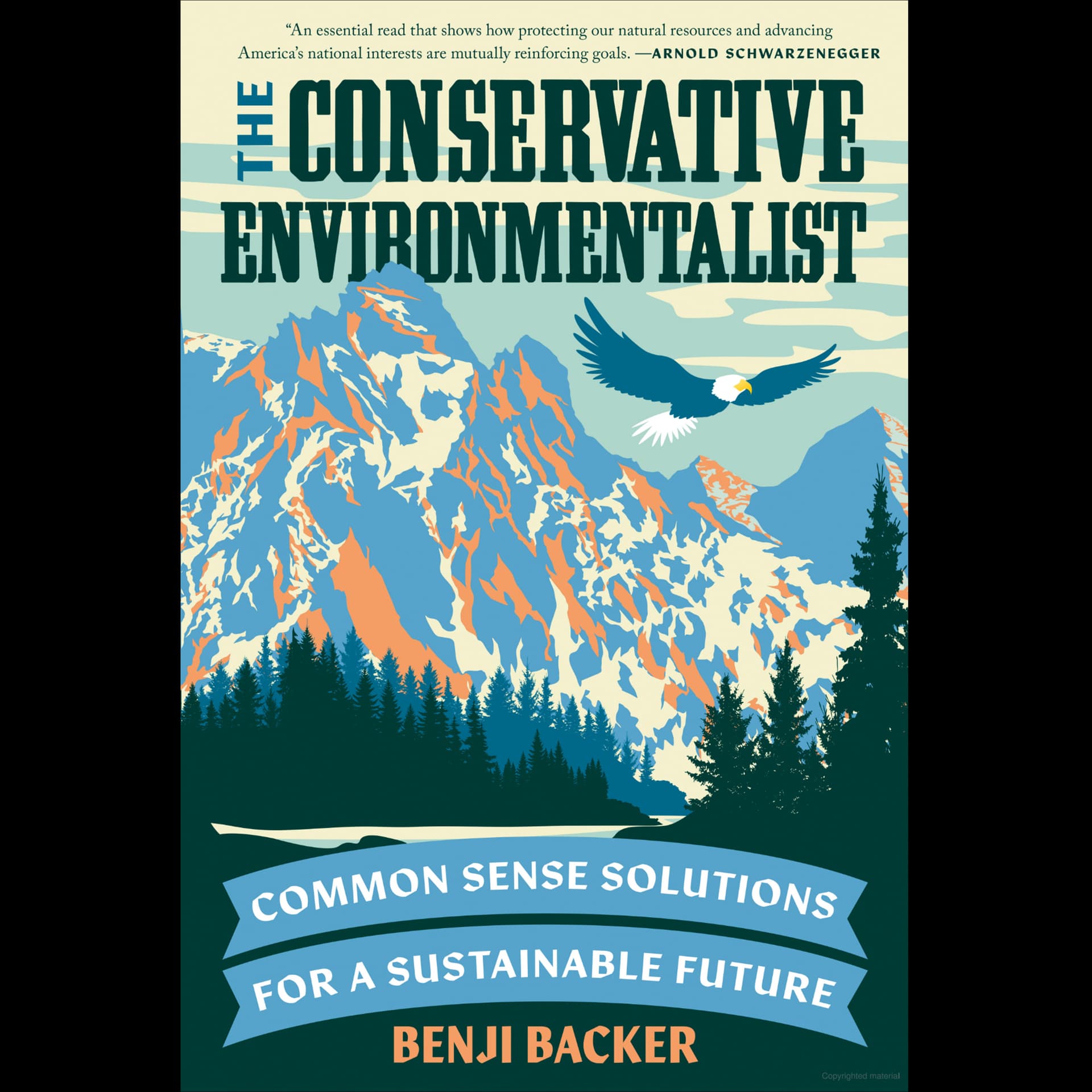
- Book Discussed: *The Conservative Environmentalist*
Key Points from the Episode
Introduction to Benji Backer
- Benji Backer is a prominent youth environmental activist advocating for a blend of conservative values and environmental sustainability.
- He emphasizes the importance of pragmatism in addressing climate change.
Major Themes Discussed
- Alarmism in Environmentalism
- Backer critiques the prevalent alarmist rhetoric surrounding environmental issues, attributing it to political motivations.
- He recalls a shift in the perception of environmentalism from the 1980s to today, illustrating how it has become polarizing.
- Ethanol and Policy Critique
- The discussion includes the history and inefficiency of corn ethanol as a fuel source, highlighting failures in government policy.
- Backer argues that governmental investments often continue despite being ineffective due to reluctance to admit mistakes.
- Urban vs. Rural Environmental Perspectives
- The divide between urban and rural attitudes toward environmental issues is explored.
- Backer stresses that urban policymakers often lack an understanding of the challenges faced by rural communities.
- Green New Deal Critique
- Backer expresses skepticism about the Green New Deal, particularly its focus on renewables and electric vehicles, arguing it neglects broader environmental solutions.
- Pragmatic Solutions for Environmental Issues
- Backer advocates for incremental, evolutionary solutions tailored to local contexts rather than a one-size-fits-all approach.
- He believes in the potential of hybrid technology and other practical solutions to lower emissions.
- Conservation and Economic Incentives
- The conversation touches on the effectiveness of economic incentives versus punitive measures in driving sustainable behavior.
- Backer shares his experiences with incentive models that encourage positive environmental actions.
- Role of Big Game Hunting
- Backer explains how regulated hunting can support conservation efforts, particularly in Africa, by funding animal protection initiatives.
- Challenges in National Parks and Public Lands
- He discusses the complexities of managing national parks and the balance between conservation and accessibility for all Americans.
Conclusion
- Backer emphasizes the need for a realistic and inclusive approach to environmentalism that considers economic implications and local community needs.
- He encourages listeners to engage with the nuanced aspects of environmental policy and to seek solutions that prioritize both ecological and human welfare.
Key Takeaways
- Pragmatism is Crucial: A pragmatic approach is essential in environmental policy, combining economic growth with sustainability.
- Diverse Perspectives Matter: Understanding the different perspectives of urban and rural populations is vital for effective environmental policymaking.
- Economic Incentives Work: Encouraging positive behaviors through economic incentives can lead to better environmental outcomes than punitive measures.
- Conservation Requires Economic Support: Sustainable practices and conservation efforts must be economically viable to be successful over the long term.
- The Future Lies in Inclusivity: Both environmentalism and economic growth can coexist when policies are crafted with an understanding of local conditions and needs.
Additional Resources
- Book: *The Conservative Environmentalist* by Benji Backer
- Website: [BenjiBacker.com](http://benjibacker.com)
- Social Media: Follow Benji Backer on various platforms for updates on environmental advocacy.
Closing Remarks
- Listeners are encouraged to reflect on the complex realities of environmentalism and the importance of informed, pragmatic discussions in shaping the future of sustainability.
--- This summary encapsulates the core discussions and insights shared during the podcast episode, highlighting the key themes and arguments presented by Benji Backer.
Written by AI. May contain mistakes. Listen to the episode to check what was said.
Transcript
Automatic transcript. May contain errors.0:02You're listening to A Book With Legs, a podcast presented by Smeed Capital Management. At Smead Capital Management, we advise investors who fear stock market failure. You can learn more at SmeadCap.com or by calling your financial advisor.
0:21Welcome to A Book With Legs podcast. I'm Cole Smead, CEO and Portfolio Manager here at Smead Capital Management. At our firm, we are readers, and we believe in the power of books to help shape informed investors. In this podcast, we speak to great authors about their writings. the late, great Charlie Munger prescribed using multiple mental models and analysis. We analyzed their work through the lens of business, markets, and people. We're going to talk about climate, the economy, and plausibly the most important topic, pragmatism. Benji Backer is joining us to talk about his newly released book, The Conservative Environmentalist.
0:55This is our first in studio, so I just did teach our listeners about Benji's background. Benji is president and founder of the American Conservative Coalition, the largest right-of-center environmental organization in the country. He serves as a board member for the Wisconsin Conservative Energy Forum and Mainstream Republicans of Washington. A frequent contributor to multiple national media outlets, Benji is one of the leading youth environmental voices in the country. Benji, thanks for joining me. Great to be here and great to break in the studio with you. Yeah, this is fun. So I want to touch on this really quickly because I think this is interesting.
1:28You know, I'm from the Seattle area originally, Washington State, obviously. You're from Wisconsin originally, as I'm sure you'll teach us. But you went to college in Washington, but you ended up here. So I just kind of want to ask the question, we did that or I did that four years ago. Why are you here in Arizona if you love the environment? Because some would say this is kind of a weird place for an environmentalist. Well, it's actually the best place for an environmentalist because there's so much beauty in Arizona that people don't realize. I mean, there are alpine lakes and pine trees. There are cacti and desert areas.
2:04There's just so much to offer here. There's the Grand Canyon. There's actually like four national parks here in the state of Arizona. So there's a lot of recreating to do. But the reason why I migrated from Seattle down here, well, I guess it probably is helpful to say why I migrated to Seattle in the first place. I went to high school in Wisconsin. Wisconsin does have a lot of beauty, but it doesn't have the same beauty that I was looking for. I wanted mountains. I wanted skiing. I wanted to go to the best business school in a place that I could hike and ski that also had good sports teams. It's a very, very small list.
2:37Very niche-y. Very niche-y, and UW was pretty much the only option. Sure. So that's how I ended up at UW, and then I got so frustrated with a whole host of things in Seattle. I didn't get frustrated with the environment. Love the environment there. I think it's one of the most beautiful places in the country, if not the world. But I got frustrated with the politics there. I believe that you need a competition of policy ideas and a competition of beliefs to actually get good results. Sure. In Seattle and Washington, it's a one-sided, complete monopoly on policy, and it's destroying the state. But I actually touch on that in the book a lot on the environment.
3:16So that's why I moved here. Purple state – probably shouldn't be purple, but it's a purple state that has a lot going for it, a lot of economic opportunity, a lot of business growth, and it's a place that is near and dear to my heart because my family's been here for a while. Gotcha. I miss the skiing, personally. Yep, me too. That's the one thing that I think of ripping up to Alpenthal on a late afternoon to get two or three hours on a powder day. Yeah, can't replace that. Cannot replace that. We're not skiing down Camelback Mountain anytime soon. Not yet. No. Not yet, but who knows? The rubber band might snap the other way.
3:47So, let me just talk. You address what I think is an issue, and I think you appropriately address this as an issue. When we talk about the environment, I think all we really hear is a lot of alarmism, and I think you do a good job of discussing the alarmism. Why do you think this is the case, and do you think this is a fair approach to the dialogue of the environment? Yeah, I mean we can look at the past, and we can see that environmentalism wasn't always about alarmism. And I was actually at an event in Washington a couple of years ago where I asked a crowd of mostly 65-plus-year-olds if they considered themselves an environmentalist in the 1980s.
4:27And every single person in that crowd raised their hand. And when I asked them if they considered themselves an environmentalist today, no one raised their hand. Sure. Because the term and the topic has become so polarizing and alarmist. And I attribute that to Al Gore mostly because in the early 2000s, he – You're talking about not the internet. You're talking about environmentalism. Yeah. I mean, Al Gore also did some stuff with the internet, I hear. I think he invented it. But the environment, he turned into a political issue that he wanted to win on. Sure. And so instead of equating the environment to the environment, people in America started equating the environment to the Democratic Party.
5:09and now you have this world where it's like alarmism and trying to win an election off of saying that basically the world's going to end and instilling this fear reaction and then the right saying well there's actually no problem at all and we don't need to do anything about it so you have this like horrible divide i have a dream that someday the environment could be about the environment again and that environmentalism is about finding ways to make people's lives better and the environment being protected at the same time. Sure. And that's the future that I think we can and should pursue. Sure.
5:44So I'm going to use this. You talked about this a couple spots in the book, but I just want to use this as a way of thinking about policy. You discuss corn. And I think this is an interesting way to think about the evolution of the politics and policy interacting with each other to get what may or may not be good outcomes. So as we think about ethanol in our gasoline, Can you teach our listeners how did this come about? In other words, to your point about in the 80s, we weren't using corn in gasoline. So how did this come about? And then what is really – has that helped the environment or not?
6:20Yeah, I think it's a great example of a broader problem, which is that a lot of times the government or the private sector, but the government is really bad at it, invests in something that they think is going to be part of the solution. And then eventually they find out that it's not going to be a good solution and they just keep sticking with it because they're too lazy or too afraid to admit that they're wrong. And I think ethanol is a perfect example. In the 80s, 90s and early 2000s, ethanol became an increasing part of the conversation because basically you were allowing farmers in the Midwest to grow more corn, to get extra income for their families, to support these communities.
6:59And oh, by the way, you're using a natural resource to partially fuel our vehicles. It sounds really good. It's kind of like, why not use the sun to power our homes with solar panels? Like, why not use corn to power our cars if it works? Sure. And so it sounds really good. But what ended up happening was we started overproducing corn for something that wasn't actually, it was kind of a thing where it was like, it's inefficient now, but it's going to get better. We're going to be able to use corn as the complete fuel. Just wait. The cost will come down. The efficiency will go up. Kind of like a back to the future.
7:35Throw your garbage in your car. Exactly. And we'll use the biodegradable form. Exactly. We'll figure it out. Right now it's expensive. Right now it's inefficient, but we're going to figure it out. Well, it was never figured out. It hasn't been cost effective. It hasn't been efficient. And the technology never really advanced. So then we're growing all this excess corn for something that's actually not working on its own from an economic standpoint. And we're draining the Midwest of its water supply in the process because growing corn for all of our vehicles is a lot of water. And in states like Nebraska, literally the elevation of the state is sinking because they've drained so much of the water supply below their feet.
8:16And so in a world of everything is a tradeoff. Every single solution environmentally and every single solution in our lives is a tradeoff. The tradeoff is just not working with ethanol, and we have been too afraid to admit it. Sure. And we're going to come back to this idea, but I think Newton's third law is for every action, there's an equal and an opposite reaction. And we think a lot about that as investors. He was a pretty smart guy. You have to think about that. And so we'll come back to that because you point out something else with physics that I like. So let's bring this back. You and I have lived in Washington.
8:49So I think a lot of this, like you did in your book, it's a good picture. Western Washington versus Eastern Washington. Okay. And this is a lot similar to, most people don't know this, but California, at one point prior to Pearl Harbor, they were thinking about dividing Northern California versus Southern California. Northern California was going to be called the State of Jefferson. I don't know if you know that. I didn't know that. That'd be a pretty sick name. You'll still see them up in like Wairica. It'll be like State of Jefferson bumper. That would have been canceled by now. That would have been.
9:15It was very un-American post Pearl Harbor. Yeah. Right. But I just say that because this is not unique to Washington. This is very common. you have the urban versus, in effect, the ex-urb or rural areas. So talk about the educational divide too, because there's this whole, there's like stereotypes that go with this. It's like, oh, the rednecks out in Eastern Washington that hate the environment and things like that. That's what you'd hear in Seattle. So can you talk about that divide? Yeah. I mean, I grew up in a city, small town, I guess, for most people's thought processes in Wisconsin, where my high school is cross the street from a dairy farm.
9:50So I grew up in rural America. And I thankfully was at kind of suburban rural crossroads, but I got to see it firsthand. And I had such respect for rural communities growing up because I knew that they were the ones putting the food on our tables. I knew that they were the ones providing the energy for our homes. And even though some days I woke up and I smelled cow manure outside my window, that there was a reason for that. And that somewhere, somehow those trade-offs are happening and they're benefiting us in some ways and they're hurting us in others, but that these communities are the lifeblood of a lot of our lives.
10:27So when I moved to Seattle and then I saw the urban elitism of people there and just the disrespect that they showed towards other Washingtonians who were, again, feeding their lives, powering their lives, and actually doing the quote-unquote dirty work for these people who are basically just poo-pooing everything that they do, I was really dismayed. And I started to realize when I saw that, that that's really what a lot of America's problems boil down to, to be honest. But specifically around the environment, rural areas don't understand what urban challenges are when it comes to environmental issues.
11:12But more importantly, I think urban areas don't understand what rural areas are dealing with. And so when you have, and my dad was one of the first people to read through the whole book because he got an early copy, but he was like, wow, you hammered on Jay Inslee, the Washington governor, more than almost anyone in the book. That was my favorite part of the book. And I'm like, well, it's true. He's a perfect example of what's wrong with this conversation. You have somebody who's never cared or even pretended to care about rural America, telling rural America what to do. And yet, those are the people who have the biggest stake in the environment's success.
11:50When you're living in a skyscraper in downtown Seattle, which no one's doing now because it's a total crapshoot down there, but if, hypothetically, someone wanted to live in a skyscraper in downtown Seattle in that hypothetical situation, they do not have a personal stake in the environment. Someone who is living off the land and literally creating a crop for us to survive as a species from. So to have someone like Jay Inslee, who's probably never spent time in a field in his life, telling people who spent all day in a field how to live their lives, it's very disingenuous. And I think that that's where a lot of the problems on environmentalism come from.
12:27If you look at the biggest leaders, it's AOC, Bernie Sanders, Greta Thunberg, Al Gore. They're some of the most urban people in the entire world. They've never been to nature. I'm not even sure if they've ever been to a national park. So they don't know how to take care of the land, and yet they're telling people how to live their lives. And it's very, very hard to grapple with. The irony of what you're saying is, I think Inslee is originally from Yakima, which is a very rural place. It's kind of, I think it's the Palm Springs of Washington. It's a fruit basket, in effect, which is the irony. So I want to show - And now he doesn't care about their priorities at all.
13:02Yeah, yeah. No, I want to show a chart here, because the next question is kind of, you're touching right on that. So here's a chart. This is looking at the Green New Deal investment allocation. And I think it's a great chart just because it simply breaks out what is going on. Fundamentally, what was being funded? And you point out that 25 % of it was just non-climate. Yep. Doesn't address anything tied to the climate. Not even remotely close. Okay. So someone could say this is just your classic pork barrel, you know, politics. Yes, but this is what we all deplore about government ultimately is this kind of stuff where it's like, why is it there?
13:34Oh, someone wrote it into the bill. do you think that's one of the bigger issues as you think about this divide where the urban person says well just to get this deal done we're going to do it and the urban person sitting there via you know i'll call it trump as their mouthpiece nowadays saying like why is this here he's my advocate you don't even have a clue because you've never been to my town right well i think that the green new deal and what's important about that chart is actually not i'll touch on the 25 being not climate-related in a second. I actually think the biggest problem is that well over half of the Green New Deal is only focused on renewables and EVs.
14:13If the Green New Deal was 100 % effective, so that's to say if we went 100 % renewable and we went 100 % EVs, global greenhouse gas emissions would drop by just over 4%. 4%. It's a$93 trillion plan. So you're going to spend$93 trillion to reduce emissions by 4 % across the world. That's the size of the world's GDP that you're spending to reduce emissions by 4%. Well, we're not talking about fighting a war for freedom. Right. We're talking about the efficiency of reducing emissions. Right. And you have such a sole focus on these three renewables and EVs, solar, wind, and EVs, those three things.
14:58and completely ignoring everything else. So if you live in rural America and you're told that we need to pass a Green New Deal, and by the way, a quarter of it has nothing to do with the environment, and well over half of it is only solar, wind, and EVs, which are not implementable into those people's lives right now at all, what do you think they're going to respond with? They're going to feel so left behind. So when Donald Trump goes and says to those communities, this radical climate agenda is taking away your livelihoods, of course it resonates. Of course it does. The people who are hauling crops and hay across towns miles and miles away in a big semi-truck being told that they need, like in California, they need to move to EVs 100 % by 2030, of course all those farmers are going to be pissed.
15:51So that divide is exemplified perfectly with the Green New Deal. So one of my colleagues, Devin Remingler, who's with our firm, he grew up in Stahomish. And so if you don't know this, if you're an urban person or if you're an urban elitist, let's just call it, you don't know that diesel gasoline in rural communities is actually cheaper than diesel number two at the gas station. Because they can buy a non-tax diesel. Now, it's highly illegal if you put that in your truck. You can get in a lot of trouble. But I only point that out because if you don't live in rural America, you don't know that there's two forms of diesel being sold.
16:26Now, why do we have another form of diesel? Because we want food at the lowest cost. So we don't tax what I'll call farm implement diesel. Right. OK. So I think that's a good picture. But yeah, let's talk about the rate of change, because I think what you're really advocating, you do this really good job in the book, is there's this one size fits all. Right. In other words, we're all American, so we all should just address these problems all the same. But I'm not a rural person. I do have a 2005 Ford Excursion twin turbo diesel. That's pretty sick. Which is what I have in common with the urban person, but that's about it.
17:04That pretty much makes you a rural person right there. Well, I'd like to think so. That car is exactly what makes you rural. No, we need solutions that work for different communities. Because urban communities are going to handle environmental issues differently. I think the cutting edge technology and efficiency of clean energy and a clean future should be implemented in cities. I absolutely believe that. But that's going to look different in rural communities. And to pretend that we should pass the same solution to both of those communities is just so backwards because they have different livelihoods and it's completely different.
17:39There's nothing really remotely similar about the way that lives are lived. And it's way easier to put a solar panel in a nearby park for an urban community than to try to put a transmission line across dozens and dozens of miles to go out to some farm. So there's just different scenarios. I even think what's more important is the geography of the solutions. Hydropower in Arizona is not going to work. There's not enough water here. and solar is not going to work in Seattle because it's always cloudy. And to have someone like AOC or Bernie Sanders saying that we need to go 100 % solar, it's like there's a lot of places where solar doesn't make sense even if it was efficient, even if you could store the energy.
18:27And so we have to be – instead of looking for revolutionary solutions, I'm pro-evolutionary solutions. Sure. Small steps. Small steps. But continual. Continual because just like a workout plan, that's the only way to actually get where you want to go. Sure. And you can try to overthrow everything, but it's not going to work. Hi, I'm Cole Smead, CEO and Portfolio Manager here at Smead Capital Management and host of this podcast. If you enjoy this podcast, I'd like to invite you to check out SmeadCap.com. At our firm, we are stock market investors. We advise investors who fear stock market failure with a discipline that has proven success over long periods of time.
19:06Learn more about our funds at smeedcap.com. Past performance is not indicative of future results. Investing involves risks, including loss of principal. Please refer to the prospectus for important information about the investment company, including objectives, risks, charges, and expenses. Read and consider it carefully before investing. Smeed funds distributed by UMB Distribution Services, LLC, not affiliated. I want you to teach our listeners about the Backer Vegetable Consumption Incentives Program. because I think this is an interesting story. I will debate you on a little bit on this, but I think it's just a good story to think about, to your point, how - Are you gonna debate me on whether I should eat vegetables or should I?
19:45If anybody else will do this. But go ahead, teach about your program. So when I was a kid, I didn't eat vegetables at all. And I literally would go to a Chinese restaurant and ask for Szechuan chicken, no vegetables. Like that's how, just chicken. All I want is chicken, okay? Not even rice. It was like meat only diet. It's very paleo. And I don't, yeah, before it was cool. ahead of my time. My parents are actually vegetarian and vegan and my whole family is too. So I was like, I don't know if I was like trying to go on the opposite side and like screw you guys but I thought vegetables were disgusting.
20:18And I still think they're not that great. But I was, I first was kind of like, my parents were trying to like punish me into eating vegetables. They were like, you gotta eat these things otherwise we're gonna be mad at you. And then eventually they're like, if you eat this carrot, we'll give you 25 cents. and I wanted to eat the carrot because I wanted the 25 cents, and I literally would go and use that for little Tootsie Rolls at this, which, of course, kind of offset the carrot in the first place. But it's Pavlov's dog. Right, exactly. And so if you are going to have the government get involved, I'd rather have that carrot approach, literally and figuratively in this scenario, where you're incentivizing people to do the right thing rather than punishing them.
21:02People do not respond well to punishments when you're trying to tell them to live their lives differently, especially when they're fearful of that. They're going to avoid it. They're going to find any way around it. They're going to fight back against it. But if you can take people who are skeptical of those solutions and give them a reason to do it that benefits them, you can actually find some solution. Now, that's not to say we should always just incentivize people and use tax dollars to incentivize everything. But if you're going to use the government, that's a better approach in my opinion.
21:34I call it the ice cream approach. It's what I tend to use with my kids. And I found that with adults, ice cream is money, to your point. So I think another story you bring up, and I want to ask about this, it's kind of off topic for, but teach our listeners about the history of the Prius. Because again, it wasn't some drastic change in the economy, to your point. Yeah, the United States, so the Prius is obviously seen as a very hippie liberal thing, and it still is. And what's really unique about it is that even though it's pointed to as kind of like an environmental symbol, the United States government was trying to require car manufacturers to come up with more fuel-efficient vehicles with a regulation.
22:15And every car manufacturer here was striking out. But in Japan, Toyota saw that there was a market opportunity to capitalize on. And basically, Toyota created the Prius out of an interest in selling more vehicles, creating more profit for their company, and having people see them as a leader in this space. And so, while the government was trying to mandate it, the Prius was simultaneously being created just from market mechanisms overseas. And now, even today, even with Teslas and even with electric vehicles, you see Priuses everywhere. I mean, even in Seattle, you're not allowed to be picked up at the airport without a Prius picking you up.
22:57And it did not come from the government. It came from the market. So, I would say Priuses, for a young man, are the best form of birth control in the history of the world. That's why I drive one. I'm just kidding. But here's the other thing, too. So, I think a lot about hybrids. I would actually advocate, and I'd love your thoughts on this. And I'll give you a good example that's kind of in the excursion ilk. Your excursion is not a hybrid. It's not a hybrid, but BMW made the XM, which is a super octane hybrid in effect. Now, so if I go out and say, what is the most efficient market solution today?
23:34It is not the combustion engine and it is not an EV. It is a hybrid where there's a small battery with a torque or traction motor, electric motor, with a combustion engine on it. Because two reasons. One, I can drive all the way to Las Vegas without refilling my gas tank. Also, the battery, if I ever need to speed up, the battery is always charged from the alternator. And then on the flip side, let's just say I woke up one day and my power was out at my home. Congratulations. I am not stuck in place. OK, so I look at a hybrid world is really the ultimate market solution for lowering emissions.
24:14And would you say that other people would agree with that or even think that's the solution? Well, I thought for a very long time that EVs were the solution. And in fact, I drove an EV across 36 states in 60 days in the 2020 COVID world during the election. And it actually wasn't as bad as I thought from a charging perspective. But it really opened up my eyes because while I was on that trip, I learned about where the battery comes from and where the energy comes from to power that electric vehicle. And started to realize that, to our point earlier, there's a huge tradeoff that comes with embracing electric vehicles from an energy grid perspective, from a mining perspective, and from a cost perspective as well.
Read the full transcript
25:00Well, I just recently started – I just purchased a hybrid SUV that gets 60 miles per gallon. And it is the most environmentally efficient way to be transported from one place to another at this point in time. Something could change in the next 10 or 15 years. Technology is ever-evolving. There's hydrogen vehicles being proposed. Maybe EVs can be done in a different way. Maybe there's some other solution that we haven't even thought up yet. But hybrid vehicles, and there's so many studies, and I incorporated a couple of these into the book, they are proven to be the most efficient for the environment.
25:40But yet, we still are focusing on EVs. And you're seeing, thankfully now, a lot of these car manufacturers back off of their pledges to be 100 % EV by 2030. Because, first of all, they never thought that that was possible in the first place. They just wanted the marketing. Well, they need to get approved for the California emissions standards. Exactly. And now everyone's rolling that back. It'll be interesting to see how California deals with that. But it is really backwards when people are anti-hybrid when that's the best solution we have right now. I agree. So are you familiar with the Jevons paradox by chance?
26:17No. Okay, so Stanley Jevons was a famous economist. And he came up with this paradox originally with the creation of coal use. And the whole idea is they're going to run out of coal. And the answer is no. With the use of coal, you always develop far more. Well, the Jevons paradox also applies to LED light bulbs, which we have these LEDs staring at us. They are the most efficient use of energy in the history of the world. Now, the irony is people assume that with efficiency, you use less electricity. And the answer is that hasn't happened. Because what you do is you put more lights in your home to have it better lit.
26:55Yeah. Okay. So I think a lot of this. That's a great point. To your point is the efficiency of the energy and the emissions, it's not whether you can reduce or completely zero out the emissions. There's going to be – because you also talk about the principle that energy is just transferred. Yes. Okay. It actually never goes away. No. Okay. And so I want to ask you one other thing because this is kind of a – it's a framework question, and I'll come back to one other on this. You mentioned the tragedy of the commons. Mm-hmm. I look at the tragedy of the commons, which was obviously coined by Garrett Hardin.
27:28Oddly enough, I think you were in a fraternity in college. I was. Why would you expose me like that? Garrett's nephew was in my fraternity house, which is bizarre. Whoa. Okay? Very close to him. It's either nephew or grandson. I can't remember which one. Whenever he wasn't doing his chores, did you say that it was a tragedy of the commons and just give him? I just say it because it's a very Malthusian view of the world. In other words, like it's kind of a Paul Ehrlich population bomb. The inevitability is going to ruin us. I would say it's alarmism. I would say it's very Al Gore-esque like you were touching on earlier.
28:01Is the tragedy of commons really how things have historically played out? And is that the view that you would agree with? So I would say that I do agree with the concept of the tragedy of the commons being a legitimate concern. And I think that you – from an environmental perspective. And I don't think it's – I don't think we need to use it in an alarming way. But isn't that the intention of it originally? It's like, oh, we're going to screw this up. Probably. But if you look back at history, everyone was kind of just concerned about conquering each other, colonizing everything. They weren't thinking about how their decisions impacted other people across the world.
28:39and that put us in an environmental mess. I mean, you look at like the wildlife populations in the United States and our bison population and all that stuff. Like we've started to change course, but China is a perfect example of the tragedy of the commons in real life today because they are destroying their environment at the expense of all of us to benefit themselves. Yeah. And that's where I think that it does come into play where everyone is kind of in it for themselves. And that's why I actually I would rather use the tragedy of the commons instead of instead of using it from an alarmist standpoint.
29:22I would say the only way to alleviate the tragedy of the commons thought process is to make being sustainable more appealing than to destroy the environment. To make it more cost effective, to make it more economically – to make it more of an economic opportunity. Because right now for China, it is more of an opportunity for them to destroy their environment than to protect it. And that won't change. And the Tracti Commons, I think it's like the free rider problem in economics. The free rider is China in effect. And we'll come back to that because I think I have another chart that will show looking at that.
29:58But I agree with you. Have you ever read any of Mark Mills by chance? Okay, Mark Mills has got a great book out there called The Bottomless Well. And he does like a lot of his physics ideas that we've talked about. I'm literally plagiarizing Mark's work. And we've had him on the podcast for a couple books. But he pointed out something to me. And I think we'll get to this optimism later too. But here's what I do know of humans, to your point just a second ago about the history of time. We solve the problems that we want to solve. Yes. So if I want to go and say there is no God, I will prove to everyone that there is no God.
30:27If I want to say there is a God, I'll prove it. We're good at solving the problems we want to solve. And so I say that because you talk about trees in the book, and I don't know, most people don't know this, but from like 1620 till 1920, we lost 30 % of our forest, just gone. Now, most of that was agriculture. It wasn't like us clear cutting for non-purposeful reasons. So think of Wisconsin, for example. Now, since 1920, but really post-1985, the forest of America has never been bigger. And no one says like, good job, capitalism and freedom and America. But I think it's important because to your point, we're not the free rider.
31:08No. And I mean in that instance, I mean you look at Brazil, which is clear-cutting the Amazon, and they're allowing it because of agriculture too. And what's really sad about that, just to diverge for a second, is because of how the rainy season is there, because there's so much rain, they can't do more than one or two crops on a piece of property before they ditch it. So, you're clear-cutting the Amazon just for one or two years of crops, and then you're ditching that. It's really backwards. But you know why they're doing that? Because countries like ours don't want to do farming in the United States because they don't want it in our backyards, and they say it's bad, and it's dirty, and it's cow farts or whatever, while other countries who don't care are destroying some of those beautiful natural landscapes that, by the way, in this instance, are the lungs of the earth.
31:58They're literally the things that... These trees in the Amazon are literally what sequesters most of the carbon more than anywhere else in the world. So, it's an example which you can point to on energy, manufacturing, mining, farming, forestry the united states does all of that better than anywhere else and that is true does that mean that we don't have an opportunity to get better no uh should we use that as an excuse to just destroy our environment no but the fact that we are exporting all of that overseas because we don't want to do it here is only ending up in a worse environment and it's also screwing over our country why don't disagree so let me go one more step on this because you brought up a little like interesting niche.
32:41So coming from the Seattle model, if you will, I think of urban farming. I think of people having a chicken in their backyard, which for the record is, you think about avian flu, it's a super dangerous thing, I would argue. You don't have chickens in your backyard. It's very unhealthy, I would say. But I think of like, okay, great. So someone says, oh, I'm going to do organic farming. And you point out that even as you break into farming, so you say, okay, it's not about just farming in general. Let's be very thoughtful about farming, organic farming versus big ag, you point out that there is no difference even if people think there is.
33:16Yes. Yeah. I mean, I've talked to so many of the food producers in the United States who are on behalf of the organic farmers and our standards for organic farming are pretty much the same standards that normal farmers have to use. And so the concept sounds really nice, but we tried to commercialize it to a scale of the entire U.S. population. And when you try to do that. You're diminishing what actually goes on behind the scenes and making everyone have lower standards for themselves. And that's basically what happened. But I talk about in the book that big ag is not the problem. Because I actually do want to see a world where we're more reliant on ourselves instead of relying on other people to take care of us.
33:57I do think that this trend of people buying ranches or doing homesteading and stuff, I don't think that that's bad. I actually think there's a lot of benefit there. But in a world where we have seven plus billion people, you need mass produced food. The cheapest produced food, the food that people can actually afford is mass produced food. So until you have some sort of scale or a way to replace that, you are screwing over the majority of the population. You can't feed seven billion people with rooftop farms. Like you just - Unfortunately not. Unfortunately, an entire skyscraper in New York that's hundreds of floors or whatever can't be fed by one little rooftop on the top.
34:41So that's the problem. Well, so yeah, you got so many thoughts running through my head when you said that. As an example to that, we'll pivot. But if you put solar panels on every rooftop and every surface area across New York, let's just say we theoretically do that. And you said, okay, can that power New York? the interesting answer is it can't. No. It cannot. No, it can't. So there's also, to your point, when we talk about scale and farming in energy, it's the concentration of energy, right? How much does the source bring? But I want to pivot to a couple other subjects. Thinking about regulation, because like you pointed out, we can't just go out and incentivize everything, but we can even find out where regulations create really bad incentives.
35:22So could you maybe use, like say the Endangered Species Act, which I think you do a good job explaining your book. And then also like the National Regulatory Commission – pardon me, the Nuclear Regulatory Commission as ways of thinking about where we try to do something good and we got really bad externalities out of that. Yes. And I think that it's important for people who are skeptical of government regulation to not like – I'm not a conspiracy theorist and it's like, oh, the Endangered Species Act was created to take over our land. It's like, no, it was created with really good intention. Sure.
35:50It just didn't work. And what I mean by that is basically the Endangered Species Act has a clause in it and it's been utilized way too many times that says if there's an endangered species on your property, we can basically take control of your property and make you do things that you don't want to do with it to protect that species. Sure. And of course, a farmer or a rancher or forester is going to say, well, I don't want the government to come take my property. So there's this crazy, sad scenario called shoot, shovel and shut up where you shoot the animal, you bury it and you don't tell the government that it's there.
36:25Very much like the TV show Yellowstone. Exactly. So you're killing the endangered species on purpose on behalf of the Endangered Species Act, basically, which is so sad. I mean, we're laughing, but it's like – That's not what it was made for. No, it's not what it was made for. So let's try to change it so we can do it right. And the same thing can be said with the Nuclear Regulatory Commission. I mean, there have been some serious nuclear disasters in history that we should try to protect against. But when it's actually proven to be the safest, cleanest, most reliable form of energy with the least amount of deaths in the United States of any energy source combined, any energy source.
37:06then why are we making it impossible to build a nuclear plant in the United States? And if it takes 12 years and billions of dollars, literally, to go through these processes to build a new plant, why would anyone want to build one? And so other countries are building nuclear power plants so quickly. France, as a great example, but also countries in the Middle East. They're building them so quickly. And China is building them even quicker. I'm not saying that there shouldn't be oversight and standards over something that is sketchy if you don't have any oversight or standards. But it's way too burdensome and it actually has inhibited our ability to do the right thing on nuclear.
37:50Sure. So you brought up something else to mind. One of the things I think I run into – and if this observation is wrong, you can call me on it. But again, what you're pointing out with endangered species, where do we tend to find endangered species? More remote areas. OK, so I think you go into like a really cool mountain town. Again, I'm a ski junkie, so I always get there. And then I think to myself, gosh, you know, the places that are here are really subpar homes. Yes. OK. And what's commonly happened that I've seen is where a national act comes to an area. Now, no one local decided that. No.
38:25But what it does is it causes a greater chasm in this idea of urban versus rural. Yes. Because it's like the government, federal government coming in. My parents are from Washougal. So I think of like the Columbia River Gorge Act would be a perfect example of this, where they come in and say, from this line here on, you can't develop. So you're that landowner. And you just watch your economic rights get stripped away without any, call it, you know, compensation. Yep. Through regulation. Yep. Okay. And would you agree that that causes a deeper chasm? Because, again, the urbanite is like, no, but I really like that gorge or I really like that mountain.
39:00And the person living there, working there, owning property, they're saying, but you don't own this. Right. No, there is a huge problem with the government stepping in and doing those things because the government doesn't have a stake in that community. Sure. The community has a stake in that community. And when you don't consult with them and you don't let them lead, everyone loses. and that's why I think environmental issues should start at the bottom and then go up. Right now, it's completely been a top-down approach. We can return to an era where it's a bottom-up approach because local communities know how to take care of their backyards best.
39:35And that doesn't mean that we just say, hey, you guys can do whatever you want, develop whatever you want, destroy whatever you want, and do whatever you want. But it also doesn't mean we should be going in there and telling them how and what to live their lives, how to live their lives in a very toxic way. And I think that your example is a perfect one. The Endangered Species Act is another example where it's like, the people who created that policy, I don't think talked to the people who, that they're trying, I mean, most of the land in the United States where these endangered species are on are going to be private lands.
40:08Sure. You know, private forests, private lands. We're dominated by private lands in this country. Right, exactly. So you should probably prioritize those people instead of prioritizing everything else. Sure, I agree. We hope you're enjoying the podcast. You know, we work hard putting together this show, but we work even harder for our investors at Smead Capital Management. At Smead, we believe in disciplined investing, which is why the Smead funds have a proven track record of long-term outperformance. If you're an investor who fears stock market failure, like I do, and want to invest in wonderful companies to build wealth, we invite you to visit SmeadCap.com.
40:43Past performance is not indicative of future results. Investing involves risks, including loss of principle. Please refer to the prospectus for important information about the investment company, including objectives, risks, charges, and expenses. Read and consider it carefully before investing. SME funds distributed by UMB Distribution Services, LLC, not affiliated. So let's talk about, I want to kind of jump to manage for us. I think you just, you know, we own, just so you're aware, we own some lumber companies. So we own West Fraser Timber and Interfor, which are obviously both Canadian and orientation, but they own a lot of, you know, assets and mills in the South.
41:26So I had my first ever experience, this is kind of fun, was over at the Pope Resources, which used to be a publicly traded company, was over on the peninsula, you know, over in Western Washington. and I remember going there and we did what they call a cruise. Have you ever done this by chance? They call it a timber cruise where you literally cruise through the stand as they call it. And they were teaching us all about how trees are farmed, what that process looks like. And you talk about forest thinning and you were talking about this from a managed forest perspective, but all the way out to like, how do you cause a tree to get big and healthy?
42:03And to your point earlier, sequester the most carbon or become the best carbon sink, if you will. And the model that forestry companies like that know is the unkept garden is a bad garden, the wild garden. So like the Amazon's wild, it's kind of a rarity, I would argue, because it's done a really good job with no management. Right. Okay? Well, it's pretty wet, so it's - It's very wet. But I also say it because good forests are not unmanaged forests. Explain that. Yeah, I mean, good forests would be unmanaged forests if humans didn't exist because the world would be doing its thing. But we live in a world where we have humans, 7 billion of us.
42:44And so when you have a forest that we've replanted where the trees are 5 or 10 times as close together as they were naturally because we wanted to plant more trees, and then you get a dry season and you have tons of dead brush below the surface of these already too close together trees, we've literally created, humans have created the tinderbox for a forest fire. So wouldn't Al Gore say we just need to get rid of more humans? Right. That's the problem is that that's the preservation mindset. Yeah. Is this like, but I believe in humanity and I think that that's a huge difference. Okay. Like I believe in active conservation to solve problems.
43:30You can mitigate most of the forest fires in this country and in this world through active management. Because humans know how to manage our environment in a way that nature can't do on its own when we're already having an impact. Like every decision we make, even recording this podcast, it's taking energy. Everything we do takes from the environment a little bit every single day. Sure. So if we're going to protect the environment, we have to manage that impact that we're having. And whether it's somebody throwing a bridal shower in the forest and setting off fireworks and setting up a flame or it's lightning striking a forest, we have a duty to manage those places so that we aren't allowing these massive forest fires to happen and destroying ecosystems in the process.
44:20That's not going to happen with a hands-off mindset. And oh, by the way, they're getting worse, not necessarily because of climate change, but because we have refused to manage our forests proactively and productively in a way that we used to. Natives have done it for centuries. We as a country used to do it in the early 20th century. Teddy Roosevelt was a big believer in active management of our forests. Now we're not doing it. We're seeing the repercussions. and it's contributing to climate change because we're emitting so many pollutants in the atmosphere every time there's a wildfire. Yeah, I think that's gonna be like my hit line is just like in investing, active management is better than passive management will be my new hit.
45:07But so let me go one step further because I kind of teased at the whole like Al Gore, we need less people. Because in the book, you mentioned you went to Ted Turner's ranch in Montana and Ted Turner believes that there should be fewer people in the world. Okay, he's very public in that. Versus, I'll use someone like an Elon Musk, Mr. EV himself, right? Or like, you know, I mentioned the late, great Charlie Munger in my opening. Charlie Munger said, listen, like Musk, they said, you know, I think the biggest risk is we don't have enough people in this world. Okay, so I guess as this person that says, listen, there are, you know, there's good and bad trade-offs everywhere.
45:44So you'd put yourself in the camp then of like, we could have a lot more people in this world if we manage it right. Yeah, I would say that Ted Turner is wrong on that. I think he's done a great job in private land conservation, which is what I highlighted in the book. And I think he's a perfect example of how it doesn't need to be the government that manages land well. It can also be private individuals who have a stake in loving the land. And he's helped restore tons of wildlife populations on his land. But he's wrong about the human population because I can't tell you how many people we should have on this earth.
46:21I can't. But we should never be telling people that they shouldn't grow their families. We should never be telling people that they shouldn't start a next generation of leaders. We should never be telling people that they should be fearful of their future. We should be inspiring people to have an entrepreneurial and ingenuitive drive for a cleaner, more sustainable future. That does not happen when you're telling people that they need to die. Or go back to only burning carbohydrates. Right, which I can't even burn carbohydrates myself. Well, it's illegal pretty much to do it openly here in the state, which makes sense.
46:56Unless you go on a run or go hiking or something like that. But it is a real problem to put humans at odds with the environment. Totally. I believe in humanity, and I believe that we can respect and appreciate our environment. There are ways to grow the population without destroying the environment. And we need more good people on this earth. And that's a very controversial statement that I'll make. But like we need more developed countries to have more people. And I would love to see the developing world continue to develop and get to where it needs to go. I think poverty needs to be eradicated as much as possible.
47:32And I'm totally for that. But when the impoverished areas are the only ones having kids and the education is so poor there and we're telling people in places where we have good education that they shouldn't even have kids in the first place, to me that's a really bad – It's crazy. By the way, to your point, if you look at the less educated parts of the world, that's where the population is growing. Right. Okay, so how do we think we're going to solve this if it's going to be happening, really, the growth of the world and its GDP is going to come out of these areas? Right, if we have 2 billion more people in the next 10 years, for example, and 1.7 of them or whatever are coming from impoverished areas where there's not education, and only the remainder are coming from educated areas, how are we going to create the next crop of Elon Musk's and innovators?
48:25We need people to solve these problems. People are going to solve the problems, not the government. People are going to solve problems not telling people to die. We are going to solve it, and equipping the next generation is the only way to do that. But you're not going to do that if no one in the United States and other countries are having kids. Totally. I agree. Let's talk about the other tradeoff, because I think that human tradeoff is, to your point, it's patently false, just to call it out. It's a lie, in my opinion. But let's think about other tradeoffs. If we could put up the next chart that we have.
49:01I love this chart. This chart here is methane emissions intensity by country from the oil and gas industry. So I just can't even imagine the world we're in where the president of the United States of America goes to a despotic, historically despotic place like Venezuela and says, hey, I'm having pressures on gasoline prices with the electorate. So I'm going to go debate whether we should get oil from you, a bad country for us to deal with. And while he's doing that, the antithetical part is the emissions that create that 1 % supply are far less efficient than coming to American producers and saying, hey, you're better with emissions.
49:46I want to pay you. I can trust you. Exactly right. I mean you see in the chart that Russia is almost two times more inefficient than we are and Venezuela is like – But India doesn't care. India doesn't care either. Yeah. India, Russia and Venezuela who we rely on, Iran, I mean they don't care. And so like yes we have – again it's kind of like farming or anything else where we can do better. We can work to make things better here. But when you're – so the demand for energy is the demand for energy. That demand has to be met somewhere. And if it's not being met here, it's going to be met somewhere else.
50:24And if we're handing the keys to even 1 % of that demand to a country like Venezuela, not only are we worse off, not only are humans worse off from a human rights perspective, not only is democracy worse off, but our environment is worse off by, as you see in the chart, almost 10 times. Sure. So that's where it's like, it's kind of back to the nimbyism. We don't want to be doing it here. We don't want to be doing it in our backyards because it's really not clean. But then we're going to give it to someone else who's 10 times worse than we are. Yeah. So I'm going to come back to that in just a second.
51:03But one of the things I want to ask you, you quote the International Energy Association, what's commonly known as IEA, often. And I have very particular thoughts about the IEA. To your point, what we found, I think we found time and time again, is like what we do as individuals, and that's what we do as a global population, tends to be fairly unpredictable. The IEA has made tons of forecasts on things. Like, so, for example, the first peak in coal demand was 13 years ago, supposedly. We just had all-time record coal demand in 2023. So, I kind of look at the IEA as an economist where they've predicted nine out of the last five recessions.
51:45Forecasting is very tough in this, wouldn't you say? It is, because technology is ever-changing. And I would say, but to that point, people can pick and choose what studies they want to look at. And the IEA is saying that fossil fuel demand is going to go up in the world. They also could be wrong about that. I happen to believe they're probably right. but they could be wrong. And I think there's no one who holds the keys to where technology is going to take us on energy or the environment. We have no idea. I mean, it could be tomorrow that we figure out small module nuclear reactors and every other energy source is pretty much not necessary.
52:23I mean, we have no idea. It could be something like, I mean, hydrogen and geothermal are pretty new ideas to be this prevalent in our world. I mean, there's stuff we probably haven't even dreamed up of yet. And it's going to take entrepreneurship to do that, but it could happen as quick as the end of this podcast recording that we figure it out, or it could be 50 years or more. So no one knows. No one knows. And so the best that we can do and the best thing that we can do for the sake of our people is to deal with the current realities that we have, the current energy demands that we have, the current environmental problems that we have, address that, meet that where it's at, not pretend that it's something that it's not, while also trying to build the solutions to the future at the same time.
53:08And trying to force people into the solutions of the future is not the right way. Yeah, I agree. So you come to, in this kind of nimbyism that you've been touching on, and I want to go actually to our next chart that I thought this was another really good chart for looking at CO2 emissions when you look at consumption versus production. Okay. And I think this is really important because like I'll, I was telling, I was telling Benji that I just got a brand new iPhone. I went from an XR to the iPhone 15 pro and that's like going from an excursion to a Hummer EV. Well, or like the excursion self-driving hybrid or something like that.
53:45I mean, I think it was bigger, which should come by the way. I'm calling forward on that. But I just say that because the reality is like my brand new iPhone is such a great piece of technology. And it does not cause me to consume any less energy. In fact, it causes me to consume more. It's like a smokestack out of my pocket, but I don't see it. And as we think about, I think about, if you go look at iPhones and you look and say, okay, where's the emissions coming from? Well, yeah, we're using all the time. We just don't see it. But then when you think of the making of that, it's not in my backyard.
54:21It's in Asia. So therefore, I look and say, oh, look at Apple. They're such a great company. And the reality is, no, it's not capitalized on their balance sheet. It's not sitting in their factory. It's someone else's factory they buy from. Right. They're 100 % clean energy in the United States, but they don't do any of their production in the United States. Correct. So it's a supply chain issue. Right. It's a supply chain issue. And I think that's, again, where the nimbyism comes into play is that everything that we use on a day-to-day basis, again, has a huge tradeoff. We're taking every time that we're getting.
54:55And if we are using an iPhone where all of the minerals in the mining are happening with slave labor in China or Africa, is that really better than doing it here? and also in countries like China and Africa, what are they using to power the mining materials? They're using coal. They're using other energy sources that we wouldn't even use. And wood burning, all sorts of stuff in Africa. So there's this reality that if humans are going to exist on this earth, which we've already talked about is something that we should want, then we have to realize that everything that we do is utilizing energy and everything that we do is taking from the environment.
55:40And the answer shouldn't be, how do we stop that from happening? It's how do we make it more and more and more and more efficient? That's the only way to solve the problem unless you want humanity to go away. Yeah. And also, I feel like we're all over this, so I haven't probably said this, but we own oil and gas companies, just so you know. We also own coal businesses in South Africa and Western Australia. And I point that out because if someone says, oh, are you trying to sell that back into the United States? The answer is no. No. If you look at coal use in the United States, and IEA will show this data.
56:15They do a really good job on the data of looking back, I would say. And they show that our coal usage has gone to the floor. Even if you look at companies like Peabody Energy, who we don't own, they're shipping that abroad. That's where coal broadly goes today, and we're going to see this lessening effect. But again, it hasn't caused electricity usage to go down. It's a more efficient, from an emissions perspective, form of natural gas that's really been the biggest grower or renewables in lieu of coal. Our shift from coal to natural gas in the United States was why we've reduced emissions more than any other country.
56:49And yet natural gas is still vilified too, which is a whole different problem. Well, correct. But here's, I think you make a really interesting point. You know, we're value investors. I like when I can buy something that has an alternative use that's more valuable than the current use. So you advocate this interesting idea of where, you know, you think of like the sausage making process of politics. Okay. So, you know, the nimbyism politician walks in and says, I think I have a better plan. Here's what we're going to go do. I'm going to bring it to my state. Well, that state might not have energy creation already.
57:22So you advocate a policy of going into the communities where there was coal production, coal-fired plants, and saying that's actually where we should go back in and be bringing what we want next. Because you point out something very intriguing, I thought, is that if we have to build the power generation and then we have to build the infrastructure, we're now creating more emissions. Exactly. Yeah, I mean, the best way to stand up for these communities that are having massive repercussions from the market shifting is to work with them on the solution. And a great example was in this Utah coal community that I visited.
57:59They were literally finding ways to use coal for non-burning purposes. They were figuring out ways to use it for all sorts of manufacturing and even clothes and all sorts of – some ways to use it for nuclear that I don't even understand from a chemistry standpoint. Just really cool ideas. But in states like West Virginia or Utah where there's a lot of coal, they're also not only looking at those cool – who knows what they're going to find out about how to use coal in another way. But they're also using these retrofitted plants for other energy sources. And like you said, they're saving so much energy in the process.
58:35They're saving so much money in the process. And people aren't having to relearn their entire ways of life. Joe Biden and John Kerry tell these people, oh, just learn how to code, you know, figure out how to. I remember when you mentioned that in the book. I thought that's crazy. It's crazy. I mean, they literally are talking to these people like just get a new education, change everything. I'm saying, no, let's let's equip them with what they are. They already have so much talent and so many resources at their disposal to help us. They have so much engineering prowess and so much expertise that we could utilize instead of asking them to change everything.
59:11I think that that retrofitting of coal plants to nuclear and renewables is a good example. Let's see. I want to pivot a little bit because I want to ask you some questions that I don't have answered. I would love to get your thoughts on it. We own Oxy. That's one of the companies we own. You mentioned Oxy in your book. You talk about what they're using for carbon sequestration. If people don't know this, they're using it for pressure pumping in a way to get oil out of their wells. And what that's doing is it's putting CO2 into the ground. I'll call it CO2 storage for lack of a better term. But they're also making a big bet on direct air capture.
59:48So I guess I come at this, we come at this from the perspective of an investor perspective of, hey, we're making great money producing oil and gas. do you see direct air capture as a solution that will solve this problem? Back to the idea, we want to solve the problems we want to solve. Do you see that as a viable route? Because if someone says, do we? I'd say, well, with enough subsidy, we think it'll work. But if there's not the subsidy, I don't know. Right. I think if the cost doesn't come down, no. I think the cost, but I also have faith that technology and new ideas can solve most problems.
1:00:27Sure. Or human ingenuity. Human ingenuity can solve most problems. So I'm not in this silo where I'm like, okay, just because it's too expensive now doesn't mean that it can't get better. It's kind of like what I talk about in the book, which is that the government or investors in the private market, a new technology has to get off the ground somehow. It needs to have early investment. It needs to have early support. But then eventually, there comes a time when, okay, if this can't stand on its own, we probably shouldn't keep propping this up. If technology can't advance, then this also can't advance either.
1:01:04I think direct air capture is a great example of something that has a lot of promise, has a lot of opportunity, could make a huge impact on the problem. But the cost has to make sense for people. otherwise we're gonna have to you know it's probably smarter for us to put our investment elsewhere but it's worth a shot all these things are worth a shot when I think about back to your your Utah community if someone says hey I think the best solution is gonna be to shove the carbon back in the ground pragmatically I would say well gosh you know the people that are probably pretty good at that are the ones that are good at pulling it out exactly that's just pragmatic It makes sense.
1:01:46So don't vilify those people. Work with them. Correct. So one other thing I want to mention, let's see, I had it here on my notes. Oh, this is great. I totally love this. So you're talking about Utah. We're obviously in Arizona. So if a state like California comes out and says, hey, we're going to be net zero, how do they do that? Can they do that in a vacuum? Just can California be net zero tomorrow? Or do they have to rely on places around them? California will not be net zero probably in my lifetime. And any claim that they are has a lot of asterisks next to it. Utah sends – this coal plant that I visited in Utah sends 80 % of its power at night to California.
1:02:27So the sun doesn't shine and the wind doesn't blow 24 hours a day. They're shutting down nuclear plants. They're shutting down natural gas plants. And, of course, they don't have coal that they want either. So instead of doing energy in their state with natural gas, nuclear, or coal, they're importing it from states like Utah. But even worse, they're importing it from overseas. They import more fossil fuels than entire countries import in a year. Because they're a big economy. Because they're a big economy, and they're not willing to do it in their backyard. So when someone claims their net zero, I'm very hesitant to ever think that there's anything realistic behind that statement.
1:03:06Sure. And there's usually some sort of asterisk that makes it worse. Like I would say that California's emissions profile is a good example of what you shouldn't do if you care about climate change. Yet they're the ones who are claiming that they care the most. So I just think there's a lot of nuance behind it that the people there don't even understand. Like people who are living there think that the solar panels on their roofs are actually powering their homes 24-7. But yet they're importing the dirtiest energy possible. Well, sure. And I mean, I'll use here, I'll use California, I'll use Nevada.
1:03:42When you put solar power on your house, whatever you use that moment, yeah, that's readily available power. Let's say you're overproducing solar power, theoretically speaking, relative to what you're using at that moment. So let's just say your lights are all off. It's nighttime and the sun comes up, you're still sleeping. So you're overproducing. I watch people get mad and they say, well, I should get paid for that power. And they want to get it based on the retail rate versus the power company isn't paying a retail rate when they buy electricity. They're paying a wholesale power rate, which is far lower than the retail rate.
1:04:20And so I point out to people, they cannot do something that's uneconomic for them, even if it benefits you. And I think to our discussion earlier, this diaspora or this chasm is also like what's good for me might not be good for the company or the area, but I want it because it's in my best interest. So I'll jokingly say this because I like making money from other people's foolishness. It's one of the things that is very fun because it happens more often than not. So I just think maybe that as soon as they come in and say, OK, great, no more combustion engines in any form. But what they'll probably say is, oh, but you can import it.
1:04:54Yep. is like putting an investor group together to have like a hybrid car dealer in Yuma, Arizona. Yep. The last stop before people go across the border. That's a very smart idea. Right, so maybe that will have to be the next ploy. So I want to add one other thing because you touched a really important thing and I didn't have this in my notes, but I've been thinking about it a lot. If you look at a mountain, again, we like skiing. I love the mountains. And I'll use like, you do this great descriptive story that again, it's not my notes, but John Muir versus Gifford. I think it's Pinchot. Pinchot.
1:05:30Yeah. And you talk about their different approaches. Those two men are pretty good picture of what we're dealing with. Yes. Okay. Could you explain that? But also as a person wanting to have a better environment and being really a conservationist, can you look at grassland and say, that's not worth as much as this beautiful Mount Rainier? Do you think that's a fair thing? Because I feel it happens a lot in politics when the truth is from a carbon perspective, they might be equal. Yeah, no, that's a really good point. And I think history is repeating itself for sure on this topic. I mean, 100 years ago, you had Teddy Roosevelt and John Muir and Gifford Pinchot battling it out on what you should do with public lands.
1:06:12Should you conserve them and actively manage them and use them for their resources but also protect them or should you just leave them alone? And I think that there is a little bit of truth in both, but I lean more towards the we should be managing them and utilizing them. Because, again, if we're going to have humanity surviving on this planet, we're going to use those resources, so we need to manage it. And I think you make a great point that grasslands sequester more carbon than pretty much any other natural landscape. Because of the density, assumably? Yeah, exactly. And also where they're located and also the geography of it really helps because it's close to a lot of where the populations were supposed to be.
1:07:01I think in the book I have the exact number, but it's like 70 % of the East Coast used to be grasslands. And so it sequesters more carbon than trees do. It has its own ecosystem. It has its own plants, its own animals that are only in grassland areas that they can survive. And we've destroyed almost all of that. But it's not as pretty as Mount Rainier. So we prioritize Mount Rainier every time. Because it's beautiful. Yes. And I love Mount Rainier. And you can see it from miles away. Yeah. I mean, I don't really think you could destroy Mount Rainier if you tried. I don't think it would. Well, it could destroy itself.
1:07:35We do know that. I think it would fight back. Yeah, yeah. Well, Mount St. Helix destroyed itself. Right. Maybe someone was trying to destroy it and it was like. Well, it's okay because I think a lot about that where it's like I think to myself like what if that pasture or that meadow, let's just call it, that meadow is we look and say, oh, there's nothing there. And the reality is. There's a lot there. There's a lot there. And I think you pointed out something really interesting where the grasslands of say like the Midwest didn't disappear because nature did it. Right. We farmed it. Right. We destroyed it.
1:08:03Right. Okay. Now, then we go on and say, great, now let's plant trees to fix it when the truth is it's not the best. That's not even where trees used to be. Correct. It's not the best place to reduce emissions. There's something more efficient that could go there. Right. I think there's this Lorax mentality, Sierra Club mentality where it's like, oh, we just – John Beer started Sierra Club, obviously. He did. Yeah. And they have deviated from any slice of reality over the last few decades. Your words, not mine. Yeah, well, it's pretty bad. But if you're trying to replace what used to be a grassland that was destroyed for farming, and then now you're trying to return it to nature, but you're going to put trees there instead that are not supposed to be there, that's not efficient or effective, and it's also not going to have the maximized impact.
1:08:52And in fact, it might not even work because the ecosystems can't just thrive in places you force it to. If you try to create a rainforest in Arizona, good luck, but it's not going to work. unless you use the whole water supply here. So we need to be smart about how we're doing this and not just emotional. And I think that that's really what it comes down to. You have one side that's saying that these issues don't matter and we don't need to solve them because they're so scared of the other side, which is this emotional reaction of everything is bad. We're all going to die and I want to feel good.
1:09:28So I'm going to plant a tree where it's wrong or I'm going to fence off this area because it needs to be protected. I mean, the perfect example of this is in cities where there's like a tree and there's this huge protest about cutting down the one tree in this neighborhood. Sure. Because, no, we've got to save the trees. But what was going to replace the tree is a skyscraper that is going to house way more people in a condensed place than if they were living miles away and driving their cars into the city every single day. There's a very backwards thought process because it's emotional. And because it sounds wrong to cut down the tree.
1:10:16It sounds wrong to not plant a tree in a place that a grassland used to be. But maybe it's not wrong. Well, so I didn't have this in my notes either. But again, I think it's like all of our lumber ownership. prior to us building skyscrapers, or what I'll really say is like rebar reinforced buildings, which are concrete. And you didn't really touch this in the book, but I'm sure you know this, that concrete is not good for the water table. It's like degradating, but we use it because we used to build things with wood and we had fires. So like the great Seattle fire, the great Chicago fire, all those kinds of things.
1:10:51And so like, you know, some of the most pragmatic things I've heard is like, hey, what if we go back to building big timber buildings? Yeah, they might have a concrete core, but we're having like big timber projects where you might have only be 12 stories high. Stored carbon is the main theme of that. And the cost to produce it, you build it quicker and it's cheaper. And so I think there's – to your point, that's a for-profit business we're talking about. And I think you use a lot of examples in your book of for-profit businesses trying to address this. One of the other things I want to ask you though on the national parks is I think they're way undercharging me.
1:11:26Yeah. The America the Beautiful Pass is something I buy every year. I love it. Okay. And it's too cheap. And what I get, I'm stealing for that price. Would you agree? Because I mean, I look at like Icon Passes for skiing and Epic Passes. And it's like there's a big spread. We're effectively underpricing our beauty or the parks that we consider beautiful. Is that a fair statement? I think it is. But I think the problem that we run into is that when Teddy Roosevelt really popularized the idea of national parks, it was supposed to be a place where all Americans could go regardless of income and background.
1:12:04And that's the problem that the national parks have. They are worth more than an icon pass is worth in my opinion. Yeah. From a – Well, you can go more places too. Exactly. Your freedom is greater. It is. And it's just the – yeah. It's an incredible resource that we have. But there are a lot of Americans who can't even afford the America the Beautiful Pass. And so how do you balance those trade-offs where somebody is already boxed out from going? The more you raise the price, the more people are boxed out. I'm fine with that, honestly, from a skiing perspective. Because a company has every right to charge whatever they want.
1:12:44And to say, oh, our mountains are too crowded, so we kind of have to box some people out. That's the tough reality of, I think, skiing. Well, actually, our national parks are a little bit too crowded now, too. And so I think unlike skiing, the answer probably isn't to raise the cost of visiting a national park, which, by the way, until recently, all of those fees went to the general government fund. It actually didn't go to the national parks. So now they are, thank God, because of a bill that we helped pass. But there is, I think, some really good ideas from an organization called PERC that I've worked with.
1:13:20And it basically – like one idea is to put a tax on outdoor gear that would go towards the national parks. Because that's where you're assumably going to use it. And the nicer gear you buy, it tends to fill with income. Exactly. And so with hunting and fishing, that's how it's done. You buy gear and it goes towards the fund for land and water conservation fund. And you buy all these fees for hunting and shooting. And those are the sorts of things that you could do on recreation. I think it was like the free rider problem. Like we're underpricing a really valuable good. Societally underpricing it.
1:14:01Not like saying, oh, lower incomes aren't paying enough or anything like that. But then I watch people that like, I mean, they're out in the sticks for four weeks on a federal piece of land like that. And I think, well, they're, I mean, they're stealing. And we're not even going out and saying, hey, here's the appropriate fee. and you're on a guided tour. I didn't know this, and I think it's a wonderful point. Explain how big game hunting actually helps the environment. Yeah. Because I was like, oh, this is awesome. Yeah, I mean, I used to be disgusted by big game hunting, and I would never do it myself personally, but I have so much respect for the people who are doing it the right way because in Africa, it is literally the reason why a lot of those animals are still there.
1:14:42And it sounds really backwards, but when you already have a struggling population of wildlife and you're able to allow a hunter to legally go in and kill off maybe a weaker, older type of animal that might be fighting a younger, more – it might be able to mate with a younger female and actually recreate the population. not only are you helping the population but there's these massive fees associated with it and all of them go back to the conservation of that place and the reproduction of these animals and i think you point out how much the funding of those places come from just that all of it in africa it's all of it all of the funding in africa and most of the funding in the united states uh it's something crazy like 70 to 80 percent come from hunting and fishing wow and And hunting and fishing in the United States, mostly hunting in Africa, it's remarkable how much – when it's done legally, of course, illegal poaching is a huge problem.
1:15:46But when it's done legally, you end up protecting species more than harming them. Yeah, and I think you touched on another really interesting species thing. Again, coming from the Northwest, I've been salmon fishing before. I think you tell a story where you're looking out the Pacific Ocean with your parents and you see some guys walking up with a club towards a seal. Yeah. Okay? And I think you kind of comment that you're like appalled at that. Yeah. You're like, what is going on here? Now, in reality, that is a problem. Yep. And when I say not the person with the club, it's actually the seals that are problems.
1:16:16Or the sea lion. Yep. Okay. Overpopulation. Why are they overpopulated, I think, is a good explanation you gave. And therefore, again, aren't we back to managing? Yes, exactly. So that's, again, like in a world where humans weren't here, nature would just do its thing. But if we need salmon and we need salmon to thrive, well, we screwed up by killing most of the orca in the Pacific Northwest. But it's like physics. For every action, there's an equal and an opposite. Exactly. And those orca were supposed to eat the seals and the sea lions. And now they can't. And so now we have – because there aren't any orcas left really.
1:16:51So we have this massive overpopulation of seals and sea lions in the Pacific Northwest. so every time a salmon comes out of a riverway it's like pretty much screwed you're like you're usually it's like a little bit of a battle right now it's like you you've got six seals waiting for you right when you get out of the yeah and so that's why these sam it's one of the one of many reasons why salmon are struggling in the pacific northwest and so the answer isn't to just let the sea lions go and it's just this like let them be and and this kind of emotional argument It's to say, unfortunately, we got an overpopulation problem.
1:17:28The only way to get an overpopulation problem fixed is to kill some of the seals. And again, I wouldn't want to go out there with a club and kill the seal, but we got to do it. Well, again, if you put – and we've done this before. If you go out and say, hey, for every seal you bring up or head or whatever you want to – however you want to tag it, here is your economic benefit. You know, you'd find out really quickly. A lot of fishermen are going to go out there. Very quickly, because high school kids like making money, doing stuff that is fun. That would be hilarious to see a bunch of high school kids going out to try.
1:17:58What are we doing? Look, we're helping the environment. We're helping the salmon. Exactly. That's a positive externality, I would argue. It's actually funny because my parents were the ones who were appalled. I knew it was going on because I helped pass that bill too. It's really funny. We did a campaign at UW and got petition signatures, like 1 ,500 petition signatures at UW called Save Our Salmon. That's how you marketed it. Everyone signed on, thought that it was this Save Our Salmon thing, but we passed it along on behalf of this bill. But it was. It was to save the salmon. And I think that that story is a perfect example of how these issues are not black and white, and a lot of times it's not going to sound good.
1:18:40Managing forests, allowing more development in certain areas, managing species. I mean, for a lot of people, the nuts and bolts of that sound really bad because it doesn't sound like it's pro-environment to kill a seal or it doesn't sound like it's pro-environment to cut down trees. But we've been led to believe that as this one-size-fits-all philosophy that just hasn't worked. When I think it was like the best dog is the one that's well-behaved because you've trained it and managed it. And I don't understand why that doesn't apply in many facets of the environment that we're in because our dog is in our home.
1:19:18That's our environment. Let me ask you, I think I have one more thing, and I want to show the last chart here. This looks at, you know, you showed here is the global direct primary energy consumption, and this is by time. So this is a chronological look at what we've used for energy sources. Okay, now, when I think of people saying we just need less people, or let's go back to the good old days. Okay, when you show biomass, I call those carbohydrates, right? Because wood is technically a burned carbohydrate. Okay. And so I look at it as the reason why you want less people is because you go back to predominantly carbohydrates.
1:19:53But the history of the world is that more is needed, not less. And as we can see there, carbohydrates never fit the bill. They could never maintain the growth of the economy. Hence, we went to other things. And ultimately, as I think we've addressed, I don't think using grass and wood as our energy source is a very good reason to do because it doesn't help us with carbon anyway. Yep. Right? So I guess my main question is that's the history of the world. Mm-hmm. Okay? But we sit in a different evolution. Right? So we sit in a certain stack in that energy consumption versus you go to third world countries and they sit more in the carbohydrate slash coal part of the world.
1:20:39Is that the evolutionary process versus, as you talked about earlier, the revolutionary process? Yeah. I mean we have to let these countries and these places develop and it's going to take time to give them energy sources that are more developed as well. But I think if it is more accessible and cheaper for developing countries to utilize solar, wind, nuclear, natural gas, any of it, they will do it. But for right now, it's not the best option for them for a whole variety of reasons. And so who are we to say what energy sources they can and can't use? Who are we to say that they have to shut that down?
1:21:17And I think our job as Americans, which simultaneously helps them, is to make cleaner energy solutions cheaper for people here. Because if it's driven down here, it can be driven down somewhere else. But if it's higher and it's more inaccessible and you have to build out all this infrastructure and all these things, that's never going to work in other countries that don't have the same mindset that we do, especially when they're developing. So I think what that chart shows is that energy consumption is not going anywhere. We are going to consume a lot more energy in the coming decades. You see a country like China, which doesn't have the political warfare that we do from the two-party system, investing in every single energy source because they know that they don't know the answer.
1:22:06We don't know the answer either. And so we might as well be trying to do every energy source in the United States cleaner and more efficient than the day prior. And when it breaks that chasm of being better for people, that's when it will take over as the primary energy source in countries like that. So because she's kind of the bell of the ball on the subject, I think the last thing I want to touch on in our discussion is you explained to your readers why it was so funny that Greta was out protesting a coal-fired plant in 2023. Can you explain the irony to the story? Yeah. I mean Greta, who I testified at Congress with in 2019, was protesting and basically sitting in a coal facility, not wanting them to keep developing it.
1:22:54Sure. When that coal facility was being brought back online because of the very things that she was pushing for, which were solar and wind only, it didn't work. Germany had skyrocketing energy prices. They were relying too much on Russian natural gas with the war that was happening, and they didn't want to be so reliant on a country so close to them with energy sources that they didn't even have in their own country because they had shut them all down. And so they were reopening this coal plant because of environmental activists who had forced them to shut it down. And it basically proved that this forced change from the energy of the past to solar and wind just can't happen.
1:23:38And Germany would have had natural gas or nuclear that they had as part of their energy portfolio. If they'd been more pragmatic. If they'd been more pragmatic. But instead they had to reopen a coal plant. Which is the worst. Which is the worst, and it was pretty much environmentalists' fault. That was an interesting story. Let's see. Where can our listeners follow you going forward? I assume you're publishing beyond your book or writing things. Where else can people find you? Yeah, so when you go online and you search the conservative environmentalists, the book will come up. And we'll appreciate any support there.
1:24:15BenjiBacker.com is where most of my information is about the book. And I'm on social media, on all the social medias at Benji Backer. My organization that I founded is ACC.ECO, the American Conservation Coalition. And I'm also going to be launching a new project soon around these ideas to try to rally people across the political spectrum on, which you'll see more of when you go to BenjiBacker.com as it comes out. Okay. That's awesome. Benji, this has been a really fun conversation. Super fun. I want to thank you for this. My mind's still kind of like – there's so much of my notes I cut out because it's like we get into this and it's just like we can kind of riff.
1:24:55There's so many places to go on this. Yeah, it was very fun. So our listeners should go out and buy a copy of Benji's book, The Conservative Environmentalist, to understand how complicated and I would argue delicate the climate issue is for our time. He advocates to think about the solutions from a global perspective, which I think is often lost, instead of our own backyards. he time and time again also reminds us and I will say this and these are my words not his but I believe this that America and not Europe or China is the leading cause in this they can be my words too yeah I'll give you credit for that but I was just reminded how great of a country this is and what we've done to this point we're really lucky I agree if you enjoyed this podcast go to Apple Spotify YouTube or wherever you listen to a book with legs podcast give us a review tell others about the books and authors like Benji Backer that we get to share the world with and tell stories with.
1:25:48For our tribe, if you have a great book that you'd like to recommend, email podcast at smeedcap.com. That's podcast at smeedcap.com. You can also find us on X, like Benji was mentioning, at smeedcap is our handle. Thank you for joining us for Book With Legs Podcast. We look forward to the next episode. Thank you for listening to A Book With Legs, a podcast brought to you by Smeed Capital Management. The material provided in this podcast is for informational use only and should not be construed as investment advice. You can learn more about Smeet Capital Management and its products at SmeetCap.com or by calling your financial advisor.
From the publisher
In this episode, activist Benji Backer joins Cole Smead to discuss his newly released book, "The Conservative Environmentalist," which makes the case for the economic benefits of the strategic merging of conservative values and environmental sustainability. Backer argues that environmentalism can align with American economic interests while offering a pragmatic approach to climate change.


