
In short
A Book with Legs - Episode Summary
Podcast Overview Title: A Book with Legs Host: Cole Smead, CEO and Portfolio Manager, Smead Capital Management Description: The podcast explores value investing through discussions with authors about books that have influenced investment decisions, particularly focusing on historical contexts and human experiences.
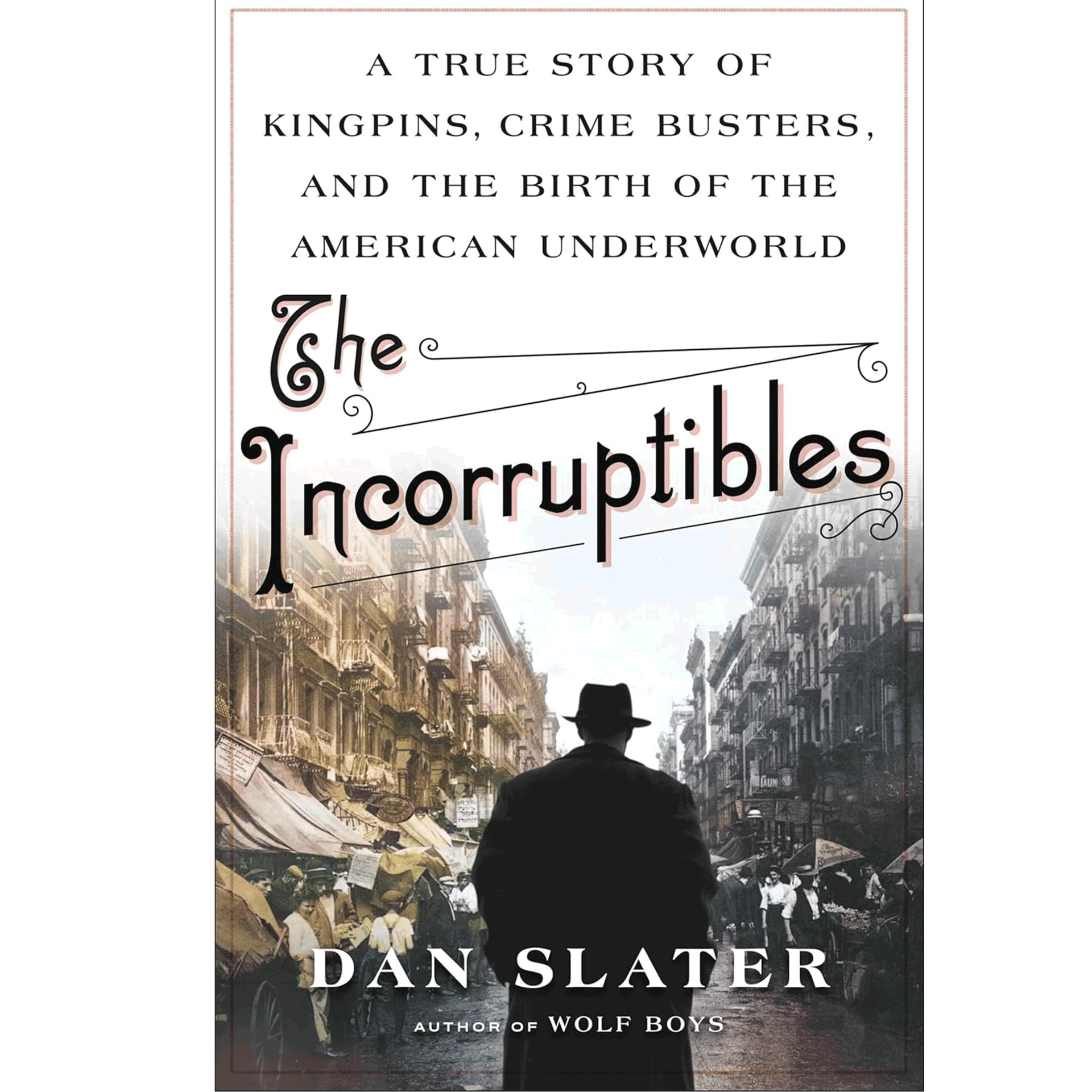
Episode Details Episode Title: Dan Slater - The Incorruptibles Guest: Dan Slater, author of "The Incorruptibles" Description: This episode delves into the role Jewish immigrant communities played in shaping organized crime and law enforcement in early 20th-century America. The conversation covers labor tensions, crime syndicates, and the development of modern policing strategies.
Key Themes and Discussions
Historical Context
- Jewish Immigration in New York: The episode focuses on Russian Jewish immigrants in the late 19th century, exploring their struggles and contributions to the garment industry.
- Gilded Age Dynamics: Discussion of the contradictions in the Gilded Age, highlighting the wealth of a few versus the impoverished conditions of many laborers.
Labor and Industry
- Garment Industry Conditions:
- Overcrowded labor markets led to exploitation.
- Workers faced brutal hours (often 80 hours a week) without regulation or safety standards.
- Strikes were common as workers sought better conditions.
Role of Tammany Hall
- Political Machine: Tammany Hall, representing the Democratic Party, was intertwined with organized crime and manipulated immigrant votes to maintain control.
- Impact of Corruption: Corruption in law enforcement mirrored the corruption in labor relations, complicating reform efforts.
Key Figures
- Meyer Schoenfeld: A reformer who transitioned from labor activism to vice reform, aiming to eliminate prostitution in the Lower East Side.
- Abe Schoenfeld: Son of Meyer, who becomes central in the fight against vice as he grapples with his father's legacy and the realities of policing.
- Arnold Rothstein: A pivotal character in organized crime, Rothstein’s background and influence in gambling make him a notable figure in both crime and the shaping of modern banking.
Prostitution and Exploitation
- Human Trafficking: The episode examines how many Jewish girls were drawn into prostitution, often through deceit and manipulation by pimps.
- Cultural Legacy: The influence of the Pale of Settlement on immigrant behaviors in America, showing how historical survival tactics carried over into new contexts.
Reform Efforts
- Neuberger and Magnus: The collaboration between police officer Neuberger and Rabbi Judah Magnus aimed to address vice and improve community conditions.
- The Incorruptibles: A police squad formed by Abe, consisting of officers with varied backgrounds, aimed at combating organized crime.
Modern Parallels
- Inequality and Crime: Discussion of how historical themes of inequality resonate with current societal issues.
- Vice Regulation: The challenges of regulating vice and the complexities of morality in politics and society.
Key Takeaways
- Complexity of Human Behavior: The episode highlights the intricacies of human motivations, showing that personal actions have broader implications for community and society.
- Legacy of Marginalization: Jewish immigrant experiences underline the overarching theme of survival amidst societal pressures.
- Contemporary Relevance: The themes discussed, including crime, labor issues, and morality, continue to resonate in modern societal dynamics.
Conclusion Dan Slater’s "The Incorruptibles" provides a nuanced exploration of the interconnectedness of crime, labor, and reform in early 20th-century America, revealing how these histories shape contemporary society. The episode underscores the importance of understanding historical legacies to navigate current challenges.
For more insights and discussions, listeners are encouraged to subscribe to "A Book with Legs" and explore further episodes on their journey through the relationship between literature and investment.
Written by AI. May contain mistakes. Listen to the episode to check what was said.
Transcript
Automatic transcript. May contain errors.0:02You're listening to A Book With Legs, a podcast presented by Smeed Capital Management. At Smead Capital Management, we advise investors who fear stock market failure. You can learn more at SmeadCap.com or by calling your financial advisor.
0:21Welcome to A Book With Legs podcast. I'm Cole Smead, CEO and Portfolio Manager here at Smead Capital Management. At our firm, we are readers and we believe in the power of books to help shaped informed investors. In this podcast, we speak to great authors about their writings. The late, great Charlie Munger prescribed using multiple mental models and analysis. We analyzed their work through the lens of business, markets, and people. A common theme for us this year has been to view the past through the eyes of the Jewish people. In this episode, we will look deep into the world of Jewish immigrants, particularly Russian Jews arriving on U.S.
0:56soil as they are persecuted home. Dan Slater is joining us to discuss his work, The Incorruptibles, which will teach us about the New York they arrived with, strived in, and sought to reform. A little bit about Dan, for those of you who don't know him. Dan has written one of their title, Wolf Boys, which was a Chicago Public Library Best Book of the Year. Dan has written for the Wall Street Journal, the Washington Post, the New York Times, the Boston Globe, the Atlantic, and many other publications. He is a graduate of Colgate University, New York Film Academy, and Brooklyn Law School. I would say, Dan, I don't know too many lawyers trained in film.
1:34I've written for so many publications. So I'm really glad you're joining us here today. Thank you for joining us. Thank you. This is such an awesome podcast. Thanks. So, you know, this is a very unique history. I really liked your writing. It's a very, it's a social history, very much so. But you're born in Minnesota, and you live in New England. So how did you go so far down the rabbit hole on this with that being your background? Yeah. So I did grow up in Minnesota, but I kind of wound up there randomly because my parents just happened to move there shortly before I was born. But they were both raised in New York.
2:10Okay. Not the city, but my mother just outside the city and my father up in Syracuse. And their heritage was all on the eastern seaboard, Boston, New York City, Baltimore. And then we had our original ancestors were in Pittsburgh, but that was kind of the furthest west. So after I got out of high school, I went to college in New York and I pretty much stayed out here ever since. So I lived in New York City for a long time and I love that city. That city has captured my imagination ever since I was a boy. I went out there a handful of times when I was a kid and I just loved the city. I loved everything about it and I loved its history.
2:57And I thought, hey, if I become a writer, someday I would like to write about the history. And I think that's where that's where this project really began was decades ago. And then as I get older, I start to learn more about my heritage. And I realized that I have some ancestors who lived in New York City during the time of the story and the story of the incorruptibles. And well, I can maybe we can touch on this later. But the further I got into writing the book, I actually realized that I had stumbled upon my ancestors who play as sort of a tangential role in the story of the book. Nice. So let's start ourselves out.
3:43You mentioned New York City. Let's talk about the garment industry in New York in the 1890s, really kind of the starting point of your book. What were the tensions at the time? Can you teach us? You know, there's obviously the people that own these garment companies. There's their workers. What was what was happening at that moment? What was happening then is you had the very beginning years of the Gilded Age people recognizing that things were going to have to change business-wise, labor-wise, if they wanted to sustain the system of this country that had made them so wealthy. These were the powerful folks of the Gilded Age starting to come out of the Gilded Age.
4:30There was a lot of employee upheaval, lots of violent strikes in the 1890s. And so the garment industry, which was centered in New York City, the capital of that industry being the Lower East Side where all these refugees lived, had its own strikes, had its own labor strikes. And that was the very beginning of that. At the same time, you had these manufacturers, the factory owners in the industry saying, well, labor should be free and cheap or should be cheap and easy per the laws of of of the market. We have a gigantic labor pool, thanks to all the immigration. And we're not going to pay them any more than we absolutely have to pay them.
5:17And we're not going to employ them for a day longer out of a year than we need them. So, the garment industry had a big slack season in the wintertime. So, the common thing was to lay up your workforce in December and start to hire again in May. um so a lot of people had to figure out how to get through the winter um there was no regulation regarding hours worked it was standard to work 80 hours a week there was no minimum wage there were no safety regulations factories nothing and the wealthy of the country were not taxed at this time either the the federal income tax did not exist until 1913 and even then it begins very, very low.
6:05I forget, but it's like 1 % to 3 % or something when it starts. At this time, the other thing that was interesting about the relationship between the wealthy and the poor is because there was no welfare net at all to speak of that was provided by the government,
6:25anything nice or helpful that was done for a poor person needed to be done at the behest and the benevolence of a wealthy person. Sure. And so that's how you have the beginning of all this philanthropy. I think you commented how big the garment district was. I think it was producing, I think you said like 80 % of what was being produced in all of America. So this was, I mean, this wasn't just, you know, big, big in the sense of New York. It was big in the sense of our whole country at that time. It, the Lower East Side literally supplied the country with its clothing. So then the other thing you do a really good discussion enough throughout the book but really teach us at the beginning is the power of tammany hall at this moment can you kind of teach us what tammany hall was and who the big player was to start your your story yeah so tammany hall was essentially the democratic party in new york state and based in new york city and um you know new york state being the most populous democratic state in the country at that time.
7:29And they were the political machine. There were political machines in most cities, and some of them were Democrat and some of them were Republican, but these were, it was generally thought of, this was the corrupt party. This is the party that had uh that that uh functioned as some kind of a graft machine you let the underworld do its thing sure you take payoffs you let that finance you and as a result you get the immigrant vote or the minority vote or the marginalized vote sure and um i think that republicans today or at least any of them that know any of their history at all would, you know, look back at this and see some evidence for corruption in the Democratic Party.
8:21It's interesting that the, you know, the liberal party did come out of this sort of Tammany Hall world. Yeah. When also, I think, for example, you know, to bring this right forward, you know, I think that the person from the Teamsters spoke at the Republican National Convention, which was a shock because to your point, the tie of labor and Democratic Party has been a pretty strong tie. And then you have like the UAW speaking at the Democratic Party's convention this year. So to your point, these are lines that are far from being out of date. These are very similar to what we saw at that time. Tammany, interestingly, did experience a big transformation with the arrival of the Eastern European Jews who started to come into the city or reside in the early 1880s.
9:12And they're streaming in, accelerates throughout the next 30 years. And as this gigantic refugee population flows in, it happens to be a population that is very good at organizing vice because it has done so in other parts of the world back through the centuries. And so the Jews were very good at generating profits in the underworld, which made them automatic friends of Tammany Hall. Plus, they were very populous people. And as long as Tammany could capture their vote or coerce their vote in many cases, Tammany would stay in control of things. So one of the objects of the reformers when they come into the scene is not just to wipe out vice and sort of an isolated thing, but also to figure out how to kind of overthrow Tammany Hall.
10:11Sure. And so early in the story, you talk about Meyer Schoenfeld. By the way, I love how you, you know, teach us the definition of Schoenfeld, you know, through, I think it's called Pretty Field, which is what it actually means through this story. But, you know, what is my, what kind of reform is Meyer looking for, for the workers at this time? Because obviously that's another dynamic that changes through the story. Yeah. So, Meyer Schoenfeld is the father of Abe Schoenfeld and Abe Schoenfeld is kind of the, I guess, the central figure of, of, of the incorruptibles of the book. But how did Abe become Abe?
10:50Well, part of it is because he was the son of this guy, Mayer. And Mayer was indeed one of the first really kind of popular, famous reformers on the Lower East Side of the 1890s. He was a Hungarian Jewish immigrant. The Hungarians were known for having very good tailors. And indeed, Mayor Schoenfeld was an excellent tailor. And he was kind of at a level in the garbage industry where he was going to get paid a decent amount of money just because of his talents and where he's coming from. He didn't necessarily need to strike. He was kind of at the, he was at the top of it, but he becomes a strike leader.
11:31He becomes a labor leader in the 1890s and he's trying to do everything he can to improve the situation of his neighborhood folks, of all the other folks that labor in the garbage industry under much more miserable terms. And he fights a mighty battle in the 1890s, but it's just a bit too early and nothing really ends up working out. So as the 1890s pass, we see mayors start to pivot it from advocating for better situation in labor to being a vice reformer and trying to eradicate vice of the neighborhood. And that begins with this battle against prostitution. Sure. And so meanwhile, Abe is a child when this is going on.
12:21So he's seen his father in 1900, 1901, 1902, try to stamp out the prostitution in the neighborhood. And eventually that's a mantle that Abe picks up himself later. Sure. Another group that's obviously present this whole time is, you know, you discuss what the upper class was doing or, you know, what you talk about a lot is, you know, the German Jews that had already seen a lot of prosperity themselves and were part of that upper class. What was their involvement with this, you know, with someone like Mayer, with the manufacturers versus the labor at that time. The uptowners were in a tricky position with that because they wanted to appeal both to factory owners and to the masses of labor.
13:07The sort of wealthiest uptowners that I'm writing about in the book, the German Jews who did live in these big mansions up on Fifth Avenue, they themselves tended not to be factory owners, although other folks in the German Jewish uptown world were. And there was an interesting, like within that upper level of the layer cake, there was still, you know, there's always the groups that think one is better than the other. And so, you know, all the industrialists and the Jacob shifts and the bankers live in fifth Avenue, they look across the park to the West side. That's where all the German Jewish factory owners lived.
13:39And they were kind of less, less than the big industrialists, but the big industrialists wanted to keep the community together. They wanted to, to build the, you know, a community that involved everyone. So they always had to walk the line. And oftentimes when the factory owners were fighting with the labor and the unions, it was one of the Fifth Avenue Jews who comes in and tries to mediate. And so Magnus, you know, the rabbi for the uptowners, serves that role at a certain point. So talk about the brothels at this time, because you mentioned prostitution, you know, how prevalent were they and how many immigrants, you know, you said a majority or if not most of these were Jewish girls that had been driven into prostitution, what we call human trafficking nowadays.
14:29You know, what, how big was this in a community like the Lower East Side? Big, big. There were, there were, as I, as I write the book, there were, and I'm, you know, quoting other people, there were brothels everywhere. There were brothels next to soup kitchens there were brothels above and below synagogues next to wedding halls um they were totally integrated into the neighborhood and of course allen street was the center of it all uh and at a certain point around 19 you know from about 1903 to 1908 or something every single address on allen street contained a prostitute if not a full-blown brothel which was a fact that really blew my mind when I came across it.
15:15And I mean, to your point, things were very organized around this. So you talk about, for example, that these were in many cases Jewish pimps because the girls were also Jewish. They formed like fraternal organizations to protect themselves. I think you called it mutual benefit societies that they would bond together in. And this was just accepted as fine and legal. Yeah. So it was interesting. I mean, you have to remember that things were becoming illegal at the time. So, for instance, in 1903, up to 1905, 06, 07 even, you could buy cocaine and pretty much every heroin and opiate derivative in a pharmacy.
16:00And then by 1910, 11, 12, 13, all of a sudden you couldn't. And there were many things like that. And even prostitution itself became more regulated as time moved on. So you had this old world phenomenon, which is where each of these sort of kind of underworld fiefdoms, the pimps and the prostitutes, the gamblers, etc. They each had a club, like a networking organization, a fraternal organization. In some instances, like with the pimps, they actually incorporated their organization under New York state law. I mean, someone went up to Albany and filed corporate bylaws and a constitution that spelled out their employee benefits and burial rights and unemployment and all this stuff.
16:53and these guys would meet these pimps would meet at a cafe on second avenue and they would discuss business and they would trade their stock as they as they uh referred to it and um and there was a bag man who was responsible for collecting the weekly or the monthly payoffs and if you were a dues paying member of of the iba which was the name of their organization you paid your monthly fee. And then all that money got paid to Timothy Hall. And that's how you kept up the relationship. And that's how you got, you know, you got your get out of jail free card. So, you explained also at the time, you know, what was a calling station?
17:36I guess my big question is like, I had certain things come to mind about 1am in the morning and you're not the nicest part of town and there's nefarious activities going on. Was this like the 7-Eleven of its day is that what you're saying this was imagine like a sort of a quentin tarantino movie at a seedy diver with like 1960s america with like the rubber plant outside and inside is some combination of like failing relationships um pimps at other tables you know getting there getting their breakfast or getting getting a bun and some coffee um yeah that was and they they they called them coaling stations of course whose coal was what people heated with and um and the coal industry at the time it made the city so much different i mean when we walk through the city today we we see all the you know the coal sellers that have been transformed into you know to kitchens and things like that but in the old days you'd have a wagon pull up and just dump it slow down the chute and that's you had someone at the bottom shoveling it in and so coal with coal was everywhere.
18:43So, you know, enter Arnold Rothstein, who is, again, one of the main characters of your writing. What was his background and lineage? Because again, this just speaks to kind of the Jewish soul, if you will, that Rothstein comes out of. Yeah, Rothstein was really interesting because he was actually Russian Jewish 100%. But he came from this weird circumstance where his Russian Jewish ancestors had come to America about a generation or two before what we think of as the Russian Jewish immigration that begins in the 1880s. So Rostein's grandfather came to New York, I think in the 1830s as a, as a young man, which is when the German Jews were showing And so Rothstein's grandfather lives on the Lower East Side, has a garment business, becomes successful, and is also very much a part of the religious community there.
19:45And so when the rest of the Russian genes begin to flow into the city, into the Lower East Side of the 1880s, is Rothstein's grandfather, who's now been in New York for several decades and made good. He finances the early synagogues and the religious education. And that was the world and the father that Rothstein's father was born into. Rothstein's father was raised in this sort of pious, orthodox household on the Lower East Side. and he inherits his dad's business. And then Arnold comes into this world and with this very kind of conservative, very community-minded, menchie kind of dad who really had a reputation as being a saint, gave away a lot of his income every year, financed Beth Israel Hospital, which is a free hospital for the poor.
20:37And this was the shadow that Rothstein lived in. He had an older brother who really did fit the bill. He was sort of the favored son. And, you know, Arnold resented his older brother. And then his older brother died of pneumonia when he was 16. And Rothstein briefly tries to step in and fill that role, fill that vacuum left by the brother. But, of course, he's not the brother and he can't do it. And he continues to feel the sense of rejection. and it's that sense of rejection, I believe, that starts to make Arnold Rothstein into the Rothstein that we come to know in the book. Hi, I'm Cole Smead, CEO and Portfolio Manager here at Smead Capital Management and host of this podcast.
21:27If you enjoy this podcast, I'd like to invite you to check out smeadcap.com. At our firm, we are stock market investors. We advise investors who fear stock market failure with a discipline that has proven success over long periods of time. Learn more about our funds at smeedcap.com. Past performance is not indicative of future results. Investing involves risks, including loss of principle. Please refer to the prospectus for important information about the investment company, including objectives, risks, charges, and expenses. Read and consider it carefully before investing. Smeed Funds Distributed by UMB Distribution Services, LLC, not affiliated.
22:04There's just a lot of parts of this book, like using Grostein as a picture of this idea. But I mean, there's daddy issues littered all over the community. Big time daddy issues. And we can relate to that today, I think. Correct. I totally agree with you. Those issues, all that dysfunction just rolls downhill like a fire in the woods, right? I agree. All the way out to it. I think one tree knocking down after the day. There's another point where you talk about like there's these vanishing dads. And part of it is because they're pretty much incentivized to disappear because then the family can show up at the bread line.
22:37And so that was a recurring theme I thought a lot about. But so obviously he comes from, I'll call it a learned Jewish background is what I took away for his family from a legacy perspective. And he's a very smart guy. He's a numbers person. He loves numbers. And obviously numbers take him into gambling. How interested was he in the phenomenon of gambling? He was fascinated by gambling from his earliest years. Um, he was, he was born in 1882 and he was born in his ancestral home on Henry Strait, the Lower East Side, but his family moved around constantly. And so by the time he was a teenager, he'd lived in most neighborhoods in, in the city and he would just roam the city looking for gambling games in the 1890s.
23:27As he's becoming, you know, a teenager, this is a time in the history of the city where gambling is wide open in the city. There was no regulation at all. So you have gambling games that are spilling out of every corner of the city. You walk by a bodega or whatever they call the bodega, then a delicatessen or whatever. There was some kind of a game in the doorway. I mean, it was just everywhere. And so he was constantly watching things, picking up odds. And it wasn't long before he was into it himself. He was, I think he started, he's probably 11 or 12 years old when he started to gamble. So that kind of touches.
24:06So we got the prostitution. We got the gambling side. You talked a little bit about the drugs. So how would, let's just go back to the prostitution real quick. How would a Jewish girl end up in prostitution? I think, and maybe use, you know, the example of Tony the Tough as a way of, I think you do a good job of using her story as a picture of how, you know, simple this was in some cases. Because, I mean, as we all know from the song, girls just want to have fun. Yeah. Tony's story was very emblematic of a common situation for lower side refugees, the girls, I mean, specifically. They would get employed in the garment factories at a very early age.
24:53and so the majority of the workers in the garment industry were like the typical profile was like a 17 year old russian jewish girl that was that was the common thing and so they worked and worked and worked they worked themselves to the bone and they wanted to have fun on their one night off on saturday night ever so there were these dance as you say they want to have a good time like we're doing all the work our brothers are going to off to american universities we're stuck here doing in the work. Sure. Um, being the mother's helpers living on our own sometimes. Cause our parents sent us over at 15 years old alone from the pale of settlement, uh, to work.
25:32They wanted to go to dances and, you know, have, have a, a fun time. So these dances were infested with pips fishing a barrel, you know, you have a bunch of poor girls showing up, one have fun and you're coming in a near stazzy suit and you could offer certain things and you can tell whatever story you want to tell oh i own a hotel and i need uh i need uh i need you know a manager or i in the movie business and i'm looking to cast my new film or you know anything you could and anything was said and that's how it that's how it began and then from there the story tended to be pretty universal So in Tony's case, she runs into this guy, Mochi, if I remember correctly.
26:22Mocky is actually how his name is pronounced. Mocky? Okay. So she runs into him and he tells her quite a story. What was the story he told her? Well, the person who introduces Tony to him says, I'm a photographer. I have a casting agency for films. Sure. which is what tony wanted to do that was her you know dream to become to become an actress and you know the movies which was what a lot of girls wanted to be uh at the dawn of this this new you know art art form um and uh so this photographer uh you know sees her sort of touching her mouth continuously and she explains that she has a toothache which was again very common amongst refugees because there was no health care there was no no dental care and people had really bad tooth issues so when you look at photographs with a little recide pretty much like most of photographs i have somewhere in the background there's a dentist sign because there were dentists everywhere sure people pretending to be dentists and so this particular pimp um had a had a dental office set up yeah and and so he that's that's that's the line that that that he used and of course it doesn't take uh tony too long to understand what's actually happening uh but by that it might it might be too late when also i think he used like marriage so he like proposes to her and then when it all falls apart for her she's he's back at the dance hall running into another girl putting a ring on her finger so this is to use a yiddish term this was his shtick for better for worse yes yes it was it was uh his shtick and there was even there was a law that you could use i forget the name of the statute but it was basically uh it was some sort of seduction law where you could say if the guy lied to you to get you to marry him so that they could just have sex with you there's a law that was supposed to protect against that and of course she tries to invoke this law, but it doesn't work so well for her.
28:39Sure. And then, and then you touched on this, but, but I want to kind of hit the nail on the head. The legacy of what was coming out of the Pale of Settlement was actually this. Prostitution was rampant at the Pale of Settlement and in Jewish, the Jewish people were a part of that integrally. So it wasn't just, oh, I left for America. There's all this opportunity. My legacy has changed. In many respects, the legacy of the people coming continued on through their children and grandchildren. Is that a fair way of thinking about the pale of settlement to America? Yeah. I mean, it wasn't just prostitution was rampant in the pale of settlement.
29:18The Jews, again, through a process of marginalization ended up providing a lot of that marketplace as they did liquor. Sure. Going back even longer. um you know back back before the pale of settlement existed when it was still sort of polish land the poles wanted to sell liquor to the peasant populations out on the border where the pale of settlement would eventually be and then ukraine or you know ukraine before it um they would they knew they could make a lot of money selling liquor to the russian peasants But they, as the government, the Polish nobles, didn't want to sell the liquor themselves because that would be seen as the government supplying the poison that these communities are ruining themselves with.
30:08So the solution, of course, was let the Jews handle the liquor trade because that'll be a nice buffer. And when the peasants, when the Russian peasants out in the countryside complain that we're flooding their communities with all this liquor, we can just say, well, the Jews are doing it. So it became this very convenient thing to pawn these vice markets off on the people that you were seeking to marginalize. And so you're absolutely right. When these folks arrive in New York, they're often bringing with them as part of their legacy of survival, a legacy of maybe stealing horses, a legacy of maybe poisoning horses for money, alcohol, prostitution, gambling.
30:53Sure. So let's talk about Lily and Tony, because we kind of talked about how Tony, you know, ends up in prostitution. And she's, you know, for our listeners, she's a central figure in the story. She's like, awesome. I like I cannot say enough how much you enjoy her throughout the story, and what she does. But Lily was different, in the respect that she didn't get pulled into the, you know, the, I'll call it the vice tied to the game to the dancing hall. But yet, it is, there's legacies going on in this community to where Lily still ends up getting pulled into some of the vice indirectly. Can you kind of teach our listeners, you know, what she gets drawn to and why?
Read the full transcript
31:32So Lillian and Antonia were these two Russian Jewish immigrant girls on the Lower East Side. Lillian was known as Lily and Antonia was known as Tony or Tony the Tough eventually in the underworld. And they were best friends. And early on in the book, they sort of get split up at a central event in the narrative. Tony takes one direction and Lily goes in another. Lily doesn't become a prostitute, but in a way, that's the thing she's trying to avoid. As many of the girls were, they were like, just as long as I don't become a prostitute, a lot of them were just trying to avoid that feat. Lily ends up falling, though, for a young kind of gambler gangster figure who, again, she's 17.
32:26He's probably 20, 21 at the time. These are young folks. And she was very pretty. He was very handsome. And they had quite a romance. But then that romance and the marriage and the honeymoon period become interrupted by by a murder, not of either of them, but a murder that they or at least her husband becomes attached to. And and so we follow them through that. And this would be Lefty Louie. Obviously, we're talking about Lefty Lefty Louie Rosendirk. Yeah. Yeah. Because I think he said that he was a pretty good baseball player is why they call them Lefty. And you obviously baseball comes up quite a bit because that was a popular sport.
33:12And as we know from our main character, Rothstein, it was easy to gamble on and also game, as we'll talk about later. Abe Schoenfeld, you know, he goes from his dad, Mayor. You know, he kind of grows up with his reform father and he kind of comes to the front of your story. He's got some daddy issues because reform doesn't really end up transforming the community is I think what is his young frustrations are. So he's excited. He finds that excitement doesn't do really anything. And so he's kind of this young man is what I took from your story that isn't really seeking to do anything. He's not really passionate about anything because that passion's died from what he saw his father work on.
33:53Is that a fair way of thinking about Abe as a younger man? I wouldn't say his passion had died. He'd become frustrated. Disillusioned, maybe? Disillusioned, frustrated, anger. When I hear passion die, I think it was someone giving up. He was never anyone. He would never give it up. That would have been a waste for him. He was always going to be in it, but he'd become very jaded. And of course, he was so young when this was happening, a 21-year-old can become very jaded with the world once they start to see how things really work. And of course, Abe had a very fast childhood because he was really thrown into it having the father that he had.
34:39So, he was privy to so much more of how the world worked because his father was who he was and they had all these well-known figures trotting through trying to do their home on the lower side. Well, so I, another idea that I kept pulling out of your story was incentives. Incentives cause weird things. I mean, you think of like the prostitution incentives, other people weren't making some of those markets, you know, per se. And therefore that's why this, this immigrant group would step into that. Also their legacy, like we talked about, but even the laws cause perverse incentives. You mentioned like the man act that comes about on its face.
35:17you'd look at the law and say, oh, that's a good thing. We're trying to correct a problem of the past. But then the criminals look and say, well, I know how to use this law. What was the Mann Act and what did it also cause that was, I'll call it perverse and unexpected? Yeah. So, the Mann Act is really interesting because today we don't hear about it too often. the last time i think i heard about it was like the elliot spitzer scandal um 15 years ago or so i'm sure it's come up since then but that's just last time i remember hearing about it but the mad act is interesting because it was the first time that a vice regulation that an anti-vice regulation hopped to the federal level it was the first federal anti-vice law passed in 1910 and it was aimed at trying to regulate prostitution.
36:11And what the law actually did was it made it a crime to transport a woman across state lines who is not your wife, I believe. So extremely broad, extremely broad. And what it did is it opened up space for this new kind of scam where you could sort of cohol a guy or into meeting a woman he liked. And she asked, oh, can we go across to Atlantic City and spend a night at a hotel on the boardwalk? And he says, oh, sure, baby. Then they're in the hotel and, you know, some guy who she works with, who's pretending to be her husband, busts through the door and says, what are you doing with my wife? And they go, oh, my God, I didn't know.
37:01Oh, I say, all right, well, we're going to we're going to get you for a violation of the man act if you don't pay up. And so that was called the Badger game. OK, and the Badger game was big for, I think, a while. So let's talk about the Uptowners really quickly, because the other character that comes in via the Uptowners, obviously, Temple Emmanuel was central in the Jewish community in New York at the time. Judah Magnus is the rabbi there, which for those of you that don't know it, rabbi just is a word for teacher. But so he's leading the congregation there at the synagogue and he's getting frustrated, you know, is what I gained from your book.
37:41He's frustrated because he can see what should be done in the community as the rabbi. And yet in his position, it doesn't seem like he can really go to the uptowners and push for change. Is that a fair way of thinking about Judah Magnus's frustration? Magnus was also frustrated. And I think that's it. It kind of made a lot of sense that the story I'm telling in the book really gets going when Magnus and Abe finally sit down again. Because they both have been trying to figure out how to crack the nut of the Lower East Side underworld. old Abe as a young reformer who was living down there, Matt as a rabbi who is serving various populations in the city.
38:27Matt has been trying for years to get the uptowners to pool their resources and their money to stamp out the underworld because he thought it was just an incredible shame that Jewish Sheenow girls who lived in the same city as them were prostituting themselves. How could we allow this to happen? How can we not stop this? So he was a real crusader and he was a real crusader. And when they meet each other, they figure out how to start to change the game a bit. We hope you're enjoying the podcast. You know, we work hard putting together this show, but we work even harder for our investors at Smead Capital Management.
39:05At Smead, we believe in disciplined investing, which is why the Smead funds have a proven track record of long-term outperformance. If you're an investor who fears stock market failure like I do and want to invest in wonderful companies to build wealth, we invite you to visit SmeadCap.com. Past performance is not indicative of future results. Investing involves risks, including loss of principle. Please refer to the prospectus for important information about the investment company, including objectives, risks, charges, and expenses. Read and consider it carefully before investing. Smead funds distributed by UMB Distribution Services, LLC, not affiliated.
39:41I love the, you know, you're telling where Magnus is getting together with Abe and they're effectively funding, almost like a seed business. And he cuts them, he gives them$2 ,500. By the way, you have to multiply that by about 25. Yeah, no, it's a massive amount of money. Modern day money, yeah. Yeah, so he's funding Abe to go out and do his investigative work. And it's a huge deal of money. And Magnus is giving him this money and there's no tracing. Like, hey, there's no receipts. Here's your money. Deal with it as you will. And so it's like this massive covert operation, to your point, to go against the underworld.
40:20Explain the graft, though, that was going on in the New York Police Department at the time. Because it's one of these things where Abe is kind of independent. He has Magnus' support. He has the money from the uptowners. But, I mean, not even the police were trustworthy at the time. Yeah. So, like I said, you had these sort of underworld fraternal organizations that handled the payoffs and they handled it in a very professional, rote kind of a way. The money would arrive every month or whenever they had to pay it. And that money would be taken in usually by the police department and funneled up to the top.
40:56So, yeah, that was what kept the crime aligned. You know, you need to have the cops agree to let you do business. And so it was very hard to when when Abe begins to get this vice crusade going, that is kind of the narrative spine of the story of the book. He has to figure out how to solve a lot of problems. But one of the problems is if the mayor wants to install us in the police department to continue our work, how do we make sure that we're working with people who have the same agenda as we do? Sure. So that he gets connected up with Neuberger eventually in your story. And this is, you know, Magnus Neuberger and Abe becomes this, I'll call it triumvirate.
41:45And then also they end up both Abe and Neuberger end up in the police department. But they're really kind of like this standalone unit fighting crime. And they get to pick 20 of their own men, if I remember correctly. it was an odd cast or what I'll call a motley crew based on what your book says yeah Abe Abe is 21 years old at this time and he's been given this incredible offer which is to conduct a vice crusade out of the NYPD and to basically control the entire thing himself And so he wants to be able to pick his own cops that he's going to work with. And, and the question is, well, how would it, how did a 21 year old know which cops to pick to work clean?
42:37Like, how do you have that intelligence at that age or at any age for that, for that matter? And of course, the answer is he grew up on the streets. I mean, he was raised amongst the underworld. He knew a lot of his friends, Lefty Louis Rosenberg, who ends up becoming a gangster in the story and plays an interesting role in the story. Louis was his best friend when they were younger. So he had friends on both sides of the law. He knew the Lower East Side block by block. He knew all the cops. He had all the information about about who was who. So he was able to put together a squad of 2020 NYPD who, you know, helped him.
43:21And that was they were kind of they were they were they were the incorruptibles, along with a cast of folks who were never mentioned in the book. Sure. All the people Abe was hiring and paying to feed him information. But he wasn't – this wasn't like – I think of like the untouchables, right? Like I think of that whole story coming out of Chicago where they go and pick these really young and unadulterated police officers to go out and fight Capone. That's not what Abe did. Abe in some cases picked former grafters that were taking payments for the mob. He picked a grafter who he had earlier in the story outed.
44:01Sure. Squealed, as you talk about in your story. Squealed on this guy. And so and then later he ends up picking this guy to be on his squad. It's an odd pick, but he inherits many ideologies from his father and sort of rules of life and sayings and things like this. And one of the ideas that he got from his dad is, if you want to get anywhere in this world, you need to be an ex. You need to have some other skill. You need to be coming from some other world in order to do well in a new field. And so, he was always conscious of people's background and what that background could bring to the war on vice.
44:45Sure. Something that really affected Abe's father was the death of Herman Leibowitz. This ends up being a central event to your story in the end, because it affects his father deeply. Nothing happens at that time. But then later, that becomes convicting evidence and really what puts people away. can you kind of teach our listeners about the interplay between, you know, obviously his father's pain for a dear friend and how that gets rectified through his son? Yeah. So what you're what you're asking about has a lot to do with the shifting nature of the Jewish labor unions on the Lower East Side.
45:26Back in Mayor Schoenfeld's day in the 1890s, there was not a lot of violence involved in the strikes. The manufacturers often accused the unions of using violence in their strikes, but there really wasn't much. That starts to change in the early 1900s when you have a new crowd of Eastern European Jewish refugees coming from the Pale of Settlement. because if you came to new york in 1903 or 405 or 606 that means you had stayed in the pale for a very long time and you had dealt with a lot of excuse my language but horrific shit sure and horrific oppression and you had witnessed people die and you'd been uh victims you know victimized by massacres you had you may have uh joined some kind of rev you know uh revolutionary organization You may have fought in the streets.
46:22It was a different breed of people who came at the end of the immigration phase. They're the folks who'd survived in that hell for the longest. And they had very different opinions about the role of violence in basically industrial life. It's that if you wanted to survive, you had to meet that you had to be uncompromising. And so there was a lot of violence at that point that started to creep into labor relations. And it's one of the reasons that Abe's father doesn't want to be part of the unions anymore at a time when Abe himself insists on standing by them regardless of what of what they do.
47:04So this labor issue, I mean, it's kind of funny because when I started to work on the story, I saw how divided Abe and his father were over this labor issue. And it was harder for me to grasp because even though, of course, it's still an issue today, it tends not to be the thing that really divides people. We argue over other stuff. Sure. But I had to keep reminding myself that during this time, that issue was the central issue at the dinner table. And and so Abe and his father end up fighting a lot over that. And indeed, the violence of the Jewish labor unions from about 1910 to 1914 or 15 was just crazy.
47:47The interesting part is Abe ended up coming around to his father's view because he realized that the labor unions weren't just fighting for what labor wanted. they were actually a shill for the crime that was going on because the, obviously the pimps or, you know, these criminals were part of the labor unions. They were integral to stirring up problems whenever needed as well. As Abe, you know, goes through all this and labors through what he's striving for. He continues to see that strong connection between labor and crime. I want to ask another thing because like, to your point, you know, It's what we debate and divides us.
48:27Okay, so let me throw out another one to you. I kind of have this a little bit in my notes, but it just comes to mind right now. You talk a lot about how big the corporate trust era was and really this idea of a corporation or what we know as a C-Corp today, how powerful that was at that time. To use the Sherman Antitrust Act, which is something that you mentioned Ida Tarbell in your story. Breaking Rockefeller is a wonderful book out there that accounts a lot of what Ida Tarbell did, for example. The Sherman Antitrust Act was written, to paraphrase it, it talks about power and vast combinations that disrupt the social order, is what it says.
49:04And I guess my question to you is, at that time, with the power in the hands of corporations, and you give some of the statistics of how much wealth and or power in the economy they had, do you look in your storytelling and think that that did have a direct tie to the disruption in the social order that we're seeing here in the lower east side or in new york at the time did that have an effect on the social order yeah yeah i think you had this uh you had a crazy wealth disparity there was a lot of reason to be angry if you labored in these industries like garments minds sure yeah i mean it was the employment circumstances were were just terrible i mean they were beyond anything we know today you know it wasn't slavery we can't compare those things sure it it was it and i'm not even i'm not even going to say it was a form of bondage i don't want to go that far either because no one had to work in any at any place but if you were an outsider if you were a newcomer if you lacked a certain level of education uh you were consigned to this world where there were pretty much no protections sure so i guess so here'd be my question to kind of flip that you know i think this is a gilded age in business when i say business i mean really big business you think of like stock market valuations the concentration of that things of that nature.
50:35But I wouldn't make the case that, you know, the to your point, the working structure of today is obviously vastly different, it's far better. Thank God, what a blessing. But do you still look at today's circumstance and say, some of the things we're seeing, as an example, like if you look at male unemployment, you know, working age men are not working like the past. Do you see symptoms of things like that? And say there are parts of the wealth that's been accrued in this country that are affecting i'll call it the soul of our country and thus our workforce possibly today yes yeah i mean i think here i think inequality absolutely rips us apart um you know as far as the the soul uh i i do think that the culture of of achievements the culture of busyness in this country um has has an enormous impact on our souls that i i think we're maybe just beginning to understand now sure because the other thing that i thought of a lot was you know you're talking about when drugs were criminalized in in their infancy um nowadays we're decriminalizing drugs and yet the social implications aren't changing I'll use fentanyl as illegal, but that's a rampant drug that's affected, to your point, the soul of our country, particularly young men.
52:06We're decriminalizing various drugs for various reasons in various states. And I guess the question is, are we going to get any different outcome than cocaine at an earlier time? Because this drug idea is floating around our labor markets, whether we like it or not, like it was back in the early 20th century. Yeah, I think maybe there's going to hopefully be some happy, not happy medium, but some regulatory medium that we find instead of going way to one way or way to the other. Sure. I do think that vice and human impulse, biological impulse are just that they are eternal. Sure. Or there's not, you cannot regulate that.
52:49I don't think there might not be an answer to it. I just tried to think a lot of the themes that your book touches, right? Yeah. Um, you know, like, you know, I think I mentioned this before, but like, is prostitution a lot different than 20 something and 30 something girls, uh, year old girls getting naked and in front of a, you know, a video camera on their computer for only fans. Is there a big dispersion in the, what kind of activity now, by the way, is it legal? It's completely legal. The question is it right? I think, and that's what the book talks a lot about. What's right for the community.
53:20It's one of those. I mean, what would you've read the book? what would mayor gainer say what would mayor william gainer the mayor of the city say because he to my mind gainer was kind of the moral backbone center of of the story and his whole point was you can't regulate this stuff and the people who try to usually are corrupted to begin with or get corrupted in the process there's going to be prostitution because there always has been there's going to be someone to pay for some version of it always sure and the question is how to kind of minimize minimize the fallout i think from when using using the incorruptibles i mean they kind of follow and i was going to see if you would agree with this they kind of follow a walk softly but carry a really big stick okay and sometimes don't always walk softly so i think you tell stories of, of, I mean, they're coming in.
54:18Uh, I think you tell a story of one of the drug dealers, his wife quickly like swallows a vial of cocaine and she literally is swallowing glass and to make sure that she doesn't die from this glass, they don't like rush her to the hospital. They pour oil down her throat to keep her alive. Yeah. It doesn't really, her life wasn't that important outside of just the testimony it got. So it was just like a means to an end, to your point, to do whatever's needed. They would come in and smash up places. And so it's suddenly like, you know, the vigilante was starting to get as tough as the criminals.
54:58Is that what? The Fourth Amendment, the Fourth Amendment, the constitutional law against unreasonable search and seizure took a huge hit when we had vice regulation come along. Sure. The number of Fourth Amendment violations and consequent Supreme Court precedent that eases the laws, they were eviscerated by vice prohibition because you can't have, say, a war on drugs without being able to um you know violent violent people's fourth amendment up and down sure um so yeah well and i also like you mentioned some of the great technology that was coming about at the time like wiretapping i i mean this was this was awesome i didn't know wiretapping i would assume wiretapping showed up in like the 40s or something like that well and and here they are talking about this new technology by one of the detectives i think in the police department where he's, you know, teaching these people how to tap into the phone lines in the basement and, you know, listening into the criminals conversations where not even the criminals know that they're just giving away all the information, something that unless you have a search warrant nowadays is highly illegal for a police department to do.
56:19But at that time, you know, until law had evolved to that, this was just, you know, par for the course with this new technology yeah yeah there wasn't i think the first um the first case i saw challenging kind of early wiretap technology didn't come along until about 1916 or 17 um so it took five six years for for the for for the laws to catch up on that so abe and his people and this anti-vice squad of is they did benefit from this sort of transitional period where vice went from being totally unregulated to being regulated hey i want to give a big shout out to everyone who's been working so hard on the show you know we recently hit the top 10 investing podcasts on apple podcasts and even number one in the business category in several countries as you may know this show is brought to you by Smead Capital Management.
57:19Smead Capital Management understands how frustrating and illogical the stock market can be. If you are searching for funds with a proven track record, give the Smead funds a look, or better yet, reach out at SmeadCap.com. And don't forget to mention that you're a fan of the podcast. Past performance is not indicative of future results. Investing involves risks, including loss of principle. Please refer to the prospectus for important information about the investment company, including objectives, risks, charges, and expenses. Read and consider it carefully before investing. Smead funds distributed by UMB Distribution Services, LLC, not affiliated.
57:57I'll use Magnus's quote. I think this is my favorite quote of your book. You mentioned his quote where he said, quote, shall the race be stained and blotted in reputation or shall its members rise to moral heights such as their history might lead America to expect them to do, end quote. You know, the other thing that comes out of this story, and I'll call it the story of the Jewish people, but I really think it's a story of America. Yes, I agree. Which is, if I do something wrong, let's say, I'll call that sin in the Jewish context, the word, if I do something, if I sin, your book proves it doesn't just affect you.
58:39It directly affects your family, your legacy, the community around you. And I would argue as an American, your country, the idea that it's just mine and it doesn't affect anyone else. I think your story through the Jewish people shows in so many ways, it affects a lot of people around you. And so while we're talking about these individuals and the vice they're doing, or the prostitution that's coming on these girls, that was all personal decisions that affected everywhere and everyone. Would you agree with that view? Because I know in today's world, it's like, oh, I have my anonymous, I can be so anonymous on the internet, I can say whatever I want on X and I can be mean or hurtful or whatever that is.
59:22And yet it doesn't affect anybody. But I don't think your story would lend us to believe that. It does. It's funny. And yeah, the way the way that we affect our world is through interpersonal communications with each other and the ways that we we affect each other on a personal level. So I would say that, yeah, you know, it's it's about personal responsibility when it comes to vice. It's also about personal responsibility when it comes to being a banker or an industrialist or a business owner who is dealing with employees and trying to think of fairness. We're making their own decisions about what is right.
1:00:05Um, so, and, and it's interesting because Abe's, Abe's father, when he started getting into sort of, you know, the, the, the, the, the anti-prostitution business, um, trying to eradicate prostitution, he would say that industrial slavery is white slavery. Meaning that if you are going to be a factory owner or a garment industry industrialist and pay your employees dirt and treat them like dirt, then you might as well be the pimp. Sure. Yourself. Sure. I'm going to pull another quote out here out of the book because I loved this. This was like so reaching into the COVID era. Quote, as a rule, politicians made a fuss about crime only when they sought to seat an incumbent.
1:00:51End quote. Right. I mean, we just went through COVID. We watched crime pick up massively in a lot of cities, particularly, let's just say, New York. Mayor Adams pretty much got voted in as a former police officer wanting to fix crime. Has anything changed in 100 years, 120 years? Yeah, I mean, it's always been this incredible political thing. And if you're trying to unseat somebody, call them weak on crime. if you're if you're the incumbent don't mention crime sure so yeah yeah and i think of like the presidential race it's like to just change crime with like border crossings and it's really the same discussion to your point that's another theater and it's related obviously the theater of order that's part that's what my last book was about yeah um let's see so uh the other thing too is the old saying is there's no atheist in a foxhole.
1:01:50Lefty Louie taught us that everyone knows who God is on the death chair. Can you explain, you know, Lefty Louie is obviously indicted. Lily, you know, who we talked about earlier, her and Tony, this was her, you know, boyfriend turned husband. And it's a, you know, very sad thing for her. But Louie has the rabbi there. Again, we're still in this greatly Jewish context. The rabbis, they're reading him his last rites and he is calling out to God. Would that be fair? You have to remember that Louis was a top Hebrew scholar, the son of an Orthodox man and a very brilliant kid. So, yeah, he was all that and a gangster.
1:02:38Yeah. And that was not a common end. And Lily was also reared in a somewhat of a kind of holy roller kind of context, too. I remember they had the book of Josephus. They passed back Josephus' histories back and forth. It was a book that they both liked. It was a book that she brought to him when he was in prison. And it was a book that he sent back to her after he's executed. Um, so it, it was always interesting to me and really intriguing to me to think that these, these folks, they also had these, this strong connection to the, to the past, um, maybe a much stronger connection than we tend to have today.
1:03:27Because remember, these were, these were ghetto kids. Yeah. You know, they were, they, they were, they were unique ghetto kids because it was a culture that valued education. Mm. Um, but they didn't have much education. They didn't have much formal education. They usually dropped out of school pretty much in junior high and they were reading Josephus. So that's, that's, that's, I think super interesting. And something I think I glossed over earlier as we get towards the later part of the book is obviously Abe, you know, Tony was a girl he was in love with, wanted a date, but, you know, she was a prostitute.
1:04:06So nothing ever came of their relationship. But obviously, Tony comes back into Abe's life as this person that really helps out, you know, the reform that they're trying to bring in the Lower East Side community. How high up did Tony get and what kind of information did she end up helping with with this vice squad? Tony became important to the Vice Squad. She's this interesting character who I discovered in the archives and whose life I pieced together. And her young life, as with a lot of characters in the book, her story goes back and forth across the legal fence. So sometimes she's operating in the underworld sometimes she's operating as a reformer and she's sort of following her own compass i guess whatever she thinks is right in the moment sure because she gets pretty close to mother hurts and ends up kind of being her downfall yeah let's see rothstein you know is kind of like you're the last kickoff you know in the book that you kind of finish with i think the most interesting part is not only just the story you tell of him really making it past much of you You know, as reformers, as Abe deals with this, he gets past a lot of that.
1:05:26A lot of other people go away, die off, go to jail, are dead in comparison. And here we have Rothstein. As you note, he fixed the 1919 World Series. What we now know is the Black Sox scandal. It was a jury trial. but then I think more importantly in the in pop culture where Rothstein ends up is in the writing of F. Scott Fitzgerald can you kind of touch away like touch on maybe what Carraway says in the book or or what we're led to believe based on what's what F. Scott Fitzgerald wrote what we're led to believe about Rothstein yeah yeah so Meyer Wolfsheim of course is the character in the Great Gatsby that was based on Arnold Rothstein, according to the author, F.
1:06:15Scott Fitzgerald himself said that. And it's, I think, importantly, he's not just a character in the book, but Fitzgerald himself later said that the Great Gatsby wouldn't have been written had Fitzgerald not met Arnold Rothstein. And Rothstein was, in a way, the figure that Fitzgerald began with when he was conceiving the novel. And Fitzgerald was known for using things in his life in his fiction. He was always self-conscious of that. He was always trying to invent more. His first novel, The Side of Paradise, was almost entirely autobiographical about his time at Princeton. and he wanted to be more of an inventor.
1:07:09But he had this amazing material that was right in front of him. And why invent when you have this amazing material in front of you? So what he was known for and what he did a lot in his career was he took a person he knew and turned him into a character, but he wanted to hide it a bit because he was a bit self-conscious about it. So his transformation of Arnold Rothstein into Meyer Wolfsheim is very classic Fitzgerald because he messes with all the details. He gives him nose hair and he gives him he makes him crack a joke about where he'd mole, you know, human molars for cufflinks. And he has him talk in this certain sort of downhill way.
1:07:50And those surface details, they really didn't have anything to do with the actual Arnold Rothstein. Sure. And but I but I do believe that Fitzgerald captured the essence of Rothstein through Meyer Wolfsheim. Sure. So then would that put would you put Lucky Luciano out as the great Gatsby then? Because that's who is helping him move the liquor. And based on what we know of the great Gatsby, that was the role Gatsby played was they moved. He moved the liquor for Wolfsheim. I wouldn't be surprised if if stop Fitzgerald and and his wife Zelda met Lucky. I'm they I I would bet on it that I don't know they did.
1:08:31Well, because I think you mentioned Lucky was very charming. I mean, even uptowners really were drawn to Lucky. Yeah. When they met him. He was an outlaw and prohibition. If you were wealthy and and you and you had money and you didn't have to worry about getting, you know, caught. this was the beginning of vice prohibition and prohibition turned the drinkers into sort of freedom fighters in a way and here was lucky who was supplying the booze and he could come to your party with the liquor out on long island and uh he could you know entertain all the women with his stories of boot bootlegging out on the high seas and shooting it out with the opposition and stuff and yeah, Lucky was very charming.
1:09:18And as far as Fitzgerald goes, Fitzgerald knew, I think, a lot of Lucky Bussianos. Might not have known Lucky per se, but he knew a lot of bootleggers. And one of them called him Old Sport, right? Which is the phrase famously that makes it into the novel. So Fitzgerald was very tuned into Rothstein's world. So I'm going through my notes. As I mentioned to you, I loved this book. I mean, there's so many notes that we didn't get to in our discussion. We didn't talk about bucket shops. We didn't talk about the candy stores and the heinous crimes that came out of that. We actually didn't touch much at Herman Rosenthal, even though that was a pivotal moment in the book and in Vice history, as you explained.
1:10:01So I would tell our listeners, there's just some incredible stories out of that. What do you think you would like to mention to our audience that we haven't talked about? I would like to point out one fact that I discovered in the course of writing this book that I hadn't known and that surprised me, but also makes a ton of sense. And I think it's an important fact to know today in our moment now. Now, prior to about 1945, if he would have said the word ghetto, no one would associate black or brown people with that word. The sole association would be Jewish. Going back centuries. Because the term was invented by Jews.
1:10:51Sure. Who lived in Venice and were put on an island to live in the 1500s. that's where the term arose from. And what is a ghetto? It's a place where you put the marginalized people. It's a place where you can't sweep without a dustpan. I mean, the people have to go somewhere. And the ghetto is where they will go eternally. But these are the people that inspired the idea, the notion that is so eternal in our life. And I just think that it's important to know the origins of that word. When we think about the place of Jews in the world, the place of Jews in the history of marginalized people who are forced to live in a place because of marginalization and they have to figure out how to survive despite that.
1:11:49The Jews know that story. Arguably better than anybody else on the planet. Sure. When you're talking about the history of like the role the Jewish community played in courts and prior, the blessing out of those roles. If someone said to me, Cole, economically speaking, what would you like for yourself? I'd want to do something that no one else wants to do, because I know I'm vital to the system around me. And so I say that because at times they had to be the bankers when lending was not legal or not practiced by, say, the Protestants around them, for example. I always think to myself, gosh, what a blessing that the Protestants were too stupid to not do that and therefore left this great role for the Jewish people to play in society.
1:12:34And that's a blessing because it was needed in society at that time. I'll teasingly say this, passive investing is massive. I'm a fool that supposedly stock picks because no one thinks it's possible to do. What a blessing. No one thinks it's good for society to do, so I get to do it. And so I think of a lot of it. It's almost like I think of that as providential. Like God had a place for them throughout time in society. And the question is, what should they be doing that society wasn't choosing to do? And, you know, is prostitution what God wanted or is banking what God wanted, for example? Like I thought a lot of those kind of parallels of jobs not done by other people because of the either the black market nature of it or because it was considered improper for the society around them is what kept running through my head reading your story.
1:13:24I got a question for you. Have you had any calls for this book for movie studios? Because this I mean, there's some cool stories in here. Yeah. Yeah, I have. I think it's very promising for television adaptation. um the uh the manuscript is currently floating around in those circles and uh and you know we'll see what comes in time but um you know it's always i've had several things optioned by hollywood and developed and uh nothing has been made as of yet but i'm i'm starting to get uh more and more experience in the development process and uh i i hope something is going to come through soon we may see wolf boys as television series before we see the incorruptibles as a television series and it's funny in in a way the incorruptibles is kind of a prequel to wolf boys they're they're both about uh vice wars yeah they're both about the ghetto so that's that's my pitch to read both books nice nice what i agree i mean i think there's multiple stories i i could see like uh multiple seasons coming out of this book or where someone could do a whole, you know, a whole show and then take other storylines and run off of it directly from, you know, a story that starts in The Incorruptible.
1:14:43So I, I, I, it's, and it's a very uplifting story. I think of Tony and Abe, like it's such an uplifting story of how they better their community in the end. And it's very messy and complex and uncomfortable. Abe sitting in front of friends that he knows he's going to put in jail or probably cause their life to be shortened. And yet he goes through all that very complex, sticky relationships. Where can people follow you going forward, Dan? Are you active on social media? Where are places for them to follow you? Yeah. So at the moment, Instagram, the handle is by Dan Slater. And going to try to get my website up and running here with the tour dates.
1:15:26I'm going to be, I have about probably 20 events lined up between September, between this month and May, probably be adding more to that. And I'll be mainly on the Eastern seaboard, but also in the Midwest and the West coast as well. So follow me on Instagram. I put a lot of photos up on Instagram. I did acquire a lot of original images of the Lower East Side while I was writing the book, which was another really lucky thing. And so, yeah, anyway, but thank you for this wonderful conversation. Thanks for taking the book so seriously. And, uh, it was a fun book to work on for seven years. And I'm glad that I'm glad that, uh, that you liked it.
1:16:08Well, and maybe I'm just, uh, you know, as well, people would probably stereotype as a classic wasp, but maybe I'm just trying to rectify a bad legacy of the past. As you point out a couple of times in your book. So I'm atoning and trying to build a new legacy, you might say. Dan, your book reminds me of the power of legacy more than anything else. Your book, The Incorruptibles, reminds me that decisions we individually make, like we talked about in our lives, our children's lives, our community, our society at large are very important. We do not live in a vacuum and we are haunted by the past wrongs that drive us forward nonetheless, whether we like it or not.
1:16:47If you enjoyed this podcast, go to Apple, Spotify, YouTube, or wherever you listen to a book with legs. Give us a review. Tell others about the books and great authors like Dan Slater that we have the opportunity to understand and study the world with and through. For our tribe, if you have a great book that you'd like to recommend, email us at podcast at smeedcap.com. That's podcast at smeedcap.com. You can also send your suggestions to us on X. Our handle is at smeedcap. Thank you for joining us for a book with legs podcast. We look forward to the next episode. Thank you for listening to A Book with Legs, a podcast brought to you by Smead Capital Management.
1:17:23The material provided in this podcast is for informational use only and should not be construed as investment advice. You can learn more about Smead Capital Management and its products at SmeadCap.com or by calling your financial advisor.
From the publisher
In this episode, author Dan Slater joins Cole Smead to discuss his recently published book, "The Incorruptibles", which explores how Jewish immigrant communities played a significant role in shaping early organized crime and law enforcement efforts in the 20th century. Slater delves into the tension between labor unions, emerging crime syndicates, and the federal agents determined to combat corruption, ultimately shaping modern policing strategies.


