
In short
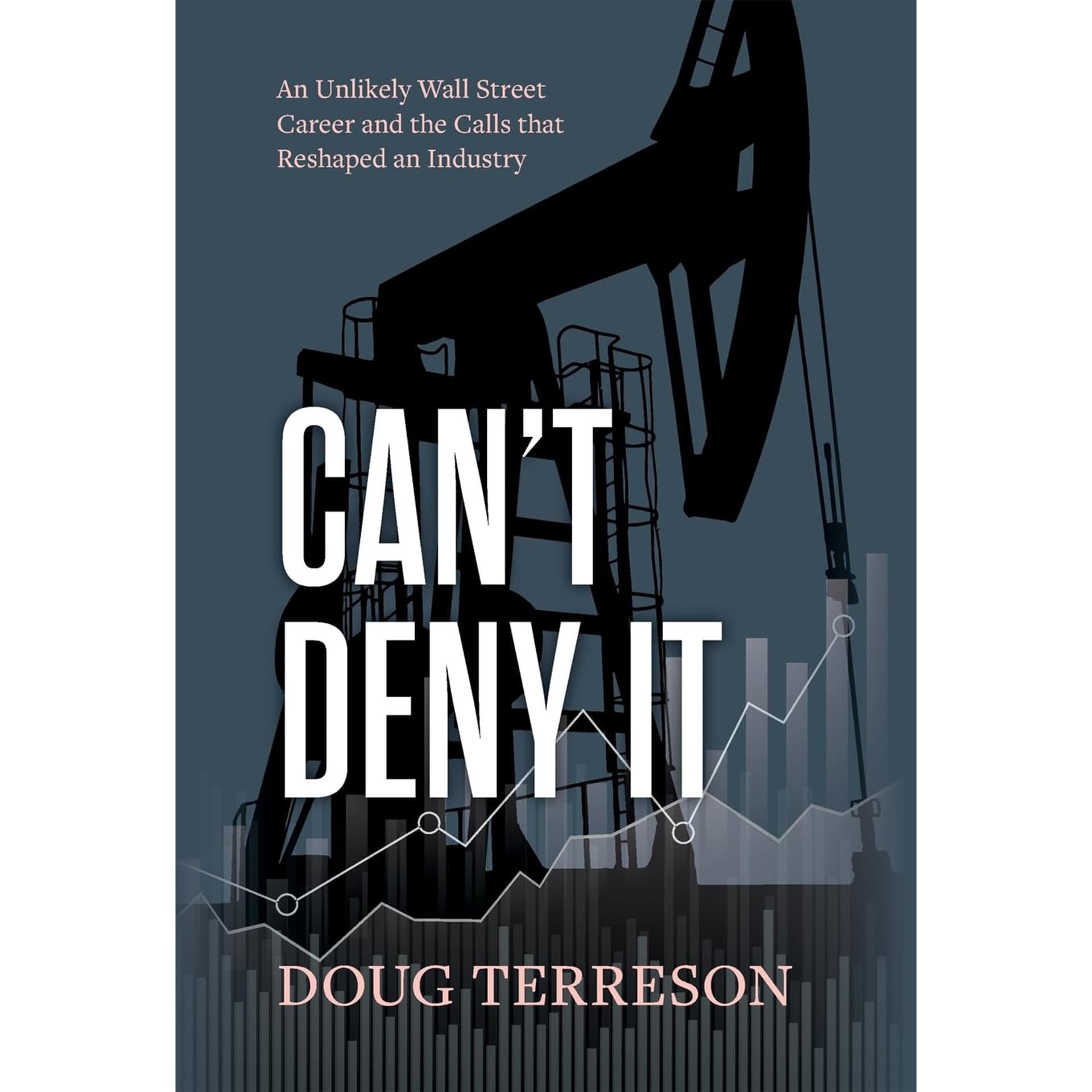
A Book with Legs Podcast - Episode Summary: "Doug Terreson - Can't Deny It"
Podcast Overview Podcast Title: A Book with Legs Host: Smead Capital Management Theme: Exploring value investing through discussions with authors whose works influence investment decisions.
Episode Details Episode Title: Doug Terreson - Can't Deny It Live Event: Recorded live at the 2025 Smead Investor Oasis Guests: Doug Terreson, Portfolio Managers Cole Smead and Bill Smead Description: The episode features insights from Doug Terreson on his book "Can't Deny It," discussing his market predictions, industry trends, and audience Q&A.
---
Key Themes and Discussions
Introduction
- Cole Smead introduces the podcast, emphasizing the importance of books in shaping investor perspectives.
- Bill Smead joins to discuss the episode's focus on the oil industry and Doug Terreson's contributions.
Doug Terreson's Background
- Career Highlights:
- Former head of energy research at Evercore ISI and Morgan Stanley.
- Managed one of the largest energy mutual funds at Putnam.
- Holds a degree in petroleum engineering and an MBA.
Book Insights
"Can't Deny It"
- Personal Story: Terreson shares how his upbringing in Mississippi and early interest in the oil industry shaped his career.
- Industry Evolution: Discussion on the significant changes in the oil industry over the last 30 years, including shifts in market dynamics and demand.
Key Concepts Discussed
- The Era of Super Majors:
- Terreson's influential report on how major oil companies needed to consolidate and focus on returns rather than growth.
- Historical context: In 1980, energy represented 28% of the S&P 500; by 1998, it dropped to 4%.
- Pledge for Greater Capital Discipline:
- A framework Terreson introduced to improve capital allocation in the industry post-2014, following a significant downturn.
- Emphasized maintaining low spending and returning capital to shareholders.
- Refining Sector Dynamics:
- Terreson's analysis of refining margins and how underinvestment in refining led to significant opportunities in the early 2000s.
- Comparison of refining dynamics to general market supply-demand scenarios.
Market Predictions
- Future Demand Growth:
- Terreson predicts that the next decade's oil demand growth will largely come from less developed countries, with geopolitical implications.
- Price of Oil:
- Forecasts oil prices stabilizing around $80 to $85 per barrel, with discussions on demand destruction thresholds.
---
Audience Engagement
- Q&A Session:
- Audience members asked about supply dynamics, refining challenges due to tariffs, and potential investment picks.
- Terreson emphasized the importance of understanding global refining dynamics and the need for capital discipline from energy companies.
Conclusion
- Terreson's Takeaway: The importance of adapting to market changes and maintaining focus on value propositions in the oil and gas sector.
- Call to Action: Encouragement to explore Terreson's book for deeper insights into the oil industry and investing strategies.
---
Key Takeaways
- The podcast offers a unique perspective on the oil industry through Terreson's extensive experience and analysis.
- Significant discussions on capital discipline, market dynamics, and historical trends provide valuable insights for investors.
- Terreson’s predictions and frameworks are applicable for understanding future opportunities in the energy sector.
---
For more insights, listeners can visit [Smead Capital Management](https://smeadcap.com) or follow the podcast on various platforms. Don't forget to check out Doug Terreson's book "Can't Deny It" for a more comprehensive view of the oil market and investment strategies.
Written by AI. May contain mistakes. Listen to the episode to check what was said.
Transcript
Automatic transcript. May contain errors.0:02You're listening to A Book With Legs, a podcast presented by Smead Capital Management. At Smead Capital Management, we advise investors who fear stock market failure. You can learn more at SmeadCap.com or by calling your financial advisor.
0:21Welcome to a Book With Legs podcast. I'm Cole Smead, CEO and Portfolio Manager here at Smead Capital Management. At our firm, we are readers and we believe in the power of books to help shaped and formed investors. In this podcast, we speak to great authors about their writings. the late, great Charlie Munger, prescribed using multiple mental models and analysis. We analyze their work through the lens of business, markets, and people. Hosting this alongside me is our chairman and chief investment officer, my dad, Bill Smead. Dad, thanks for joining me. We're going to have some fun. Looking forward to it.
0:55Great book. A little rock and roll. I will also say, for people that are listening, obviously, Xeante online, This is an exciting day for Bill and I in the episode for the podcast as we haven't yet mentioned the other people that are here with us. I'm very proud to be sitting here with the investors of Smead Capital Management and I'm proud to have them join us live from the Smead Investor Oasis. Thank you for all being here, everyone.
1:25So I'm going to give I'll give a shout out to my colleague, Will Keenan, who actually brought this book to us and our attention. In this episode, we will discuss much of the last 30 years of the oil business. We will talk about the structural changes that have happened, how the focus has changed over time, and how it continues to evolve. Joining us is Doug Terrason to talk about his recently published book, Can't Deny It. A big round of applause for Doug, and we want to thank you personally for joining us today, Doug. Thank you so much. So for those of you that aren't familiar with Doug's background, like Connor mentioned, he has kind of a very tenured and storied Wall Street career.
2:01He's the former head of energy research at Evercore ISI, and before that, Morgan Stanley, where he covered the integrated oil, E &P, and refining and marketing sectors. Prior to that, Doug managed Putnam's energy mutual fund in Boston, the buy side, part of your career, which was one of the largest energy funds globally. His career began as an engineer with Schlumberger, which some of your book gets into that, which is a lot of fun. Just to kind of connect it up since we talked about this last night at dinner, Doug holds a bachelor's degree in petroleum engineering from Mississippi State University, the Bulldogs, and an MBA from Rollins College in Winter Park, and is a CFA charter financial analyst.
2:40He currently serves as the director of Phillips 66, Third Gear Energy Fund, and the Mississippi State University Board. That's right. Yeah. Thanks for being here. Thank you for having me. So teach us about your upbringing, because much of this book is really about Doug Terrison, as it is about the oil business, because your life has been pretty integral to that discussion. Well, thank you, Colin. Thanks for having me. And so I'm a product of the public school system of the state of Mississippi. I'm a third generation engineer from Mississippi State. And, you know, my father and my grandfather were both engineers, Mississippi State.
3:18You know, when I grew up, I was probably like a lot of other people in the room. I didn't really know what I wanted to do besides, you know, play sports and fish and have fun. But I was always attracted to the oil industry. And one thing led to another. I had summer jobs in college in the oil industry. And it really piqued my interest, and I was hooked. I never knew or never thought that I would end up being the person that I ended up being on Wall Street. but it's been a fabulous ride and really enjoyed it and you know the oil industry is still near and dear to my heart my son works for ConocoPhillips like I said I'm on the board of Phillips 66 and it's still a very dynamic interesting industry and it's also a great place to make money periodically too which we really care about.
4:03So you said in your book you said in the oil patch quote, it doesn't rain, it doesn't get cold, there ain't any holidays, end quote. Why would you be drawn to a place like this? Well, because, so what Cole's referring to is, you know, one of my first jobs in the oil industry was working on a barge in South Louisiana. And I was the only person who spoke English, because everybody else spoke Cajun French. And so it pushed me out of my comfort zone a little bit. You know, eventually, I never became fluent. I became conversant to some degree. But, you know, when you're working in the oil industry, to Cole's point, it doesn't rain, doesn't get cold, there aren't any holidays.
4:43That means it doesn't matter how hot it is. It doesn't matter how thick the mosquitoes are. You're out there, you know, getting after it. And, but it drew me to it, Cole. I mean, it was just something that, you know, it was competitive. It was high profile. The oil industry touches the lives of everybody in the world every single day. And so in kind of an odd way, it just felt like a great fit for me. Yeah. We really did. An addictive legal drug, I like to call it. Yeah. You got out of college in 1984, four years after energy was the bomb. Our audience knows that we have a chart that shows the 10 largest stocks in 80, 90, 2000, 2010, 2020, and six of the eight largest cap companies in 1980 were oil and gas.
5:30So can we even contextualize how big that was, and have you had a new old Wall Street people talk about those days with folks? Oh, yeah. So to your surprise, maybe energy was 28 percent of S &P 500 in 1980. And so you think about it, it was a third of the market. And I think that, and Bill, correct me if I'm wrong, but there's only been two other groups that have been that big since today, which would be technology in 2000 and again in 2024, 2025. That's right. And so it was super important, but at the same time, following the Arab oil embargo and a few other things, oil prices had increased and increased significantly.
6:15And that caused demand destruction and demand started to decline and prices started to fall. So by the time we got to 1984, it wasn't a great market for petroleum engineers, but you know I went all over Louisiana and Texas looking for a job staying with with my friends along the way and ended up working with Slumberjay which is a great break for me because when you go to Wall Street what you find is that most people have you know finance degrees or economics degrees or math degrees or what have you but very few people actually have experience in the area that they're covering and so I was a person who worked in the deep water to Gulf of Mexico drilling oil wells so I knew the industry like the back of my hand.
6:55And it also showed me that there was so much opportunity for my companies to do better, which really led to some of the major calls that I made in my career. I just had experience that most of my peers on Wall Street didn't have. And it gave me a lot of credibility, not only with investors, but also the giant companies that I would be following in the future, which are some of the biggest companies in the world, Exxon Chevron, BP Shell, Total, et cetera. So you are the water man, not the land man. Yeah. I was both. I did what I was told. You started your career at Payne Weber, now part of UBS.
7:28I did. What did you learn that was so different on the buy side versus the sell side? So to Bill's point, so I worked for Schlumberger for three years and then I went and got an MBA from a place called Rollins College in Winter Park, Florida. I don't know if you've been to Winter Park, Florida, but it's a fabulous place. And then I spent about six years on the buy side. And, you know, when I started on the buy side, I started talking to the sell side, of course, and they realized that, oh, my gosh, Doug has an MBA and a CFA like everybody else. But he knows the industry really well because he's drilled hundreds of wells, you know, all over the place.
8:00And I never really planned on leaving the buy side. I mean, I was managing the fifth largest energy fund in the world in my early 30s at Putnam. But then Wall Street called. And the guy who called was the number one oil analyst on Wall Street. And he said, hey, I want you to come replace me. And I think you'd be perfect. And I didn't really want to leave the buy side, but one thing led to another. I went to New York, but within a year, Morgan Stanley called me. And at the time, Morgan Stanley and Goldman Sachs were really dominant on Wall Street, really hard to get a job there during that period.
8:31They were building out their energy investment banking and research teams, and I was really at the top of the list on the research side. And that's how I got to Wall Street. I was really fortunate to be there because Morgan Stanley was a fabulous place to be at the time. You can tell Doug did well because he made enough money that he doesn't have to put a CFA charter on his name anymore. Sorry, you still see mine there. So obviously, to your point, Morgan Stanley was a big opportunity. This was not just like, you know, two-bit broker-dealer that does an occasional IPO. This is one of the largest investment banks in the world.
9:09You know, how did you think about that transition? Because you were coming from the street already. Right. But this was a whole other platform, I would say, for you. It was a whole other platform. And, you know, at the time, there was so much going on in the world. You know, with globalization, there were so many countries around the world that were being connected, you know, via the Internet. And so the reason that was important was because a lot of these governments around the world had these gigantic oil companies internally that were sapping state resources. and these companies needed to be privatized.
9:44And so instead of drawing funds from the government, they would eventually pay dividends. And so the whole point about this is that within three years at Morgan Stanley, I wake up and I'm the number one oil analyst on Wall Street, and I'm a full 36 years old. And so at that point, I said, well, you know, I don't know if I'll ever be the number one oil analyst again on Wall Street, but I do know that there's a lot of people around the world that are reading my research. And so I have this platform to affect change. And the reason I think we needed to affect change was because with globalization, there were about to be a lot of gigantic new competitors in the market that didn't exist before.
10:22And that was going to change the competitive dynamic. And so it really required my companies to recognize the threat and address it. And so that was kind of the early years of Morgan Stanley as background. Sure. Yeah. So you joined there in 95, but within a couple of years, by the late 90s, oil is 3 % of the S &P 500. And it's like, bad trade, Doug. Yeah, pretty much. So now here's my question, though, because obviously that didn't end like that. Do you see any similarities to what went on then with its low exposure for most investors then, like we're seeing today? Because we're at 3 % to 4%. It's very similar.
11:04what's exciting is exciting again. Is there things that you ruminate on at times like these when you see that going on? In a way, the more things change, the more they stay the same. And one of the points that I make in the book was my first big call was entitled The Era of the Super Major. And The Era of the Super Major was an eight-page report that I worked on for a year after I became the number one oil analyst on Wall Street because I wanted to try and affect change. And you said, well, what needed to be changed? Well, in 1980, as I mentioned earlier, S &P Energy was 28 % of S &P 500. In 1990, it was 14 % of S &P 500.
11:42And by 1998, it had become 4 % of S &P 500. And so at that time, in my eight-page report, I basically suggested that this industry can go to 1 % to 2 % of S &P 500 if the companies don't change their capital management policies in a way that their value propositions can be more competitive with other parts of the market. So basically what we suggested was that companies combine, majors become super majors, which is just a phrase we created at Morgan Stanley in 1990. Coin the term, super major. We did coin the term. And so it's kind of a phrase now. And so if you think about it, I'm a 36-year-old who's basically coming out and saying every company in my industry's business model and value proposition is somewhere between dysfunctional and obsolete.
12:27So the research director called me into her office one day and she said, are you just trying to make everybody hate you? Because I basically was saying that not only do we need these guys to change and adopt the model that I prescribe in my report, the era of the super major, but if they don't, then energy is going to go to 1 % of S &P 500. So investors didn't love me either. But what we found out was that once I went around the world and highlighted my views to the giant biggest investors around the world, they kind of subscribed to it. And I think they told the big oil companies, they said, listen, we don't agree with everything that Doug says.
13:01We think he's right about some things, not so much about others. But we think he's on board with this. We also had pretty good relationships with The Economist, Wall Street Journal, Financial Times. And so the buy side and media started to do the work for me. Within six months, BP and Amoco merged. And because they adopted the value-based model that we prescribed in the report, energy goes from 4 % to 14 % of S &P 500 by 2008. It was the best-performing group in S &P 500 during that decade because the company's committed to the value-based model, and as returns rose, valuation rose, and share prices rose.
13:36And to Cole's point, it's a long-winded answer to an easy question. But we do pretty good on those in the buy side. Yeah. We did see a very similar phase during the most recent decade, and that energy goes from 14 % of S &P 500 in 2008 to 6 % by 2015. And we were basically of the view during our pledger phase, which was another important chapter in the book, that energy is going to 2 % of S &P 500 unless companies change their behavior. And that's a whole other story for the book, but it has very important investment implications. In those late 90s, people were driving seven passenger vehicles to pick up two kids at school because the price of oil is$11 a barrel.
14:17And I saw that, and I looked and I said, this is not going to last. You laid out your case for the era of the super major. Briefly give the reasons for that. Were there returns on capital primary reasons to those transactions? So, again, my industry had gone from 28 % of S &P 500 in 1980 to 4 % by 1998. 98. And we suggested that companies stop spending to grow production and instead focus on creating value. Meaning we wanted them to focus on higher value, also known as returns on capital, EVA, what have you, as opposed to growing production. And so when we came out with the call, we just said, we think that companies that gravitate towards superior scale and globalization are going to have the highest returns in valuation in the market.
15:09And so we advocated for companies to combine that have similar quality assets, similar corporate culture, and similar functional geographical scope, as we thought that those would be the optimal combination that would lead to the best returns and the best valuation. And so obviously between when I put out that report and when we had the first merger, which was around seven months later, which was BPM, because there was a lot of trepidation, because just think about this. If I'm out there saying that my whole industry needs to go in a particular direction, and then they do it, and their stocks go down, I'm toast.
15:41I'm out. Within six, seven months, BP and Amoco combined. BP pays a 25 % premium for Amoco, and guess what happened? Their stock went up by 20%. So if you're a board member or if you're a CEO and you see this, you go, oh, my gosh, he's right about this. If we combine, there's great value to be created, also known as returns on capital, which drive valuation in the stock market. And they felt like dominoes. Within three years, we had BP Amico, Exxon Mobil, Chevron Texaco, Conoco Phillips, Elf de Telfina. I'm probably leaving somebody out. It was the most significant transformation in the oil industry since the breakup of the Standard Oil Trust in 1911.
16:21So the Asian Tigers and the whole China thing was an unexpected source of demand. beginning in the late 90s. These demand pulls are never well predicted. Where could you see demand like that today that no one is currently predicting? Where can the next demand come from? So that's a really good question. And to Bill's point in the late 1990s, some of you guys may remember that the Asian Tigers were booming and GDP growth was really strong and they were 40 % of global oil demand growth. And that's part of the reason that oil prices were so strong during the period of course you know they overdid it and they had problems in the real estate and banking sectors and we had a you know complete collapse in those economies i think they declined by 32 percent in one year but but today the the situation is is very different um when we think about the oil market you know the last 10 years u.s oil production accommodated 100 of global oil demand growth which was about 10 million barrels per day and you may say well no big deal we'll just do that again during the next year.
17:25But I think when John Chrisman comes up, who's an excellent CEO at APA, he'll probably talk about how difficult it is in North America. So for the next 10 years, the way to think about it is, you know, North America, or demand may grow by 10 million barrels per day, but it's going to be really all around the world. The supply growth is going to have to come from somewhere else besides North America, because Shell, I think, is probably in about the seventh inning. We may have growth this year, we may not. And the implication there is that if global oil demand growth is 10 million barrels per day over the next decade, and we're having to source supply from other countries, it's going to change the geopolitical dynamics, meaning if the incremental oil supply that we have to accommodate demand during the next, you know, decade comes from, you know, Iran, Iraq, Saudi Arabia, Venezuela, you name it, it's going to raise the risk profile a little bit.
18:16So that's the key point on demand and supply during the next decade. I still think that oil will be around$80 to$85 per barrel when you pull everything together. But the demand growth is really going to be from around the world, the less developed countries, you know, the Middle East, Asia, China less so, really kind of the normal cast of characters. That's interesting because the guy I voted for said it was going to be really easy. So that's interesting. Actually, you remind me of one of my favorite jokes. I've got to tell it real quick. You guys ever heard about the oil and gas man, you know, goes to heaven, meets St.
18:48Peter at the pearly gates? St. Peter's like, listen, you guys are good folks. We got a lot of you up here. In fact, we are at max limit. And so the oil and gas person stands there for a second and gets an idea and he yells out, there's oil in hell. And next thing you know, they all go rushing straight to hell. And so St. Peter says, it looks like we have plenty of room now. We'd love to have you. And the oil and gas person says, you know what? I better go check it out. There might be some truth to that rumor. And so what you're saying is the board members, as they're watching the stock market accrue wealth to good capital allocation, the board members are saying, hey, there might be some truth to Doug's rumor, which I really like.
19:33Let's go abroad. You do a lot of really interesting private transactions. You know, here in the United States, it's, you know, we don't always think about this, but the privatization that took place over the last 30 years has been a big change. these used to be abroad state-owned oil companies. That was effectively the non-U.S. producers. Can you talk about some of the names and transactions you got to work on? Some of these you guys took public. Sometimes you guys were co-managing. Sometimes you provided advice, and then they just took all your information and went public. That's right. So again, going back to the earlier phase, globalization, most of these countries are trying to get these oil companies that were effectively government agencies that were sapping state resources off their balance sheets.
20:14And what we proposed was that if you give these companies the spotlight of the market in their own income statement, their own balance sheet, and transparency with management's actions, we would bet that those, and you incentivize them in the appropriate way, we believe that these companies can be really competitive. And so if you think about it, because we, Morgan Stanley authored slash I, the era of the super major, we were viewed as the strategic advisor of choice around the world. And so with the privatizations, the most lucrative ones in the world were Sinopec and PetroChina in China, Statoil in Norway, and then Petrovesa in Venezuela.
20:58And there were others. There was ENI, Italy, Repsol, Spain, YPF, Argentina, Petrobras, Brazil. It goes on and on. And so we were involved in advising all those different companies. And so I was a research analyst and an investment banker at the time when it was legal to do that. Back in the good old days. Not so much anymore. But, you know, our first major privatization was with Sinopec. And when we went to China, really the first time around, I looked at this company and said, oh my gosh, these guys have like an 80 or 90 % market share in the fastest growing petroleum market in the world. I can't wait.
21:33And then what we found was that they had 92 companies within Sinopec, none of which were connected by Western-style management information system. They had 1.2 million employees. They needed 400 ,000. They had$15 billion in debt they did need to have. And most importantly, they had a petroleum policy that needed to change, or otherwise we, Morgan Stanley, or any other company couldn't have taken it public. Biggest company in China, biggest company in Asia. My counterpart at CICC was a guy by the name of Levin Zhu. His father was Zhu Ranji. He was the premier of China. And so this is obviously very important to the government.
22:11So I still remember the day I was walking around Tiananmen Square before my last meeting with the government, trying to convince him that they needed to do seven things. I called it Seven Steps to Privatization Success. Or otherwise, we and no other company could take it public. And I was really surprised by how quickly they could change because they obviously have a different system they do in our country. But the most important thing was they had to change petroleum policy in China. It was very untransparent. And so we effectively gave them the formula that we thought that investors would like.
22:41They actually adopted it. So we gave them the formula that said prices for gasoline and diesel and jet fuel and kerosene. The other thing that we did that was really smart was we got Exxon, Chevron, and Shell to buy 20 percent of the IPO each. And so that made it easy for me to go around the world to investors and say, hey, I've got the three smartest investors in the world, oldest investors in the world that are buying 60 % of my offering. They're pretty astute investors. And so the Sinopec offering was very successful. The stock was a five-bagger, 500%, I think, in the first five years. And I'm happy to report that it's the fourth largest company in the world today.
23:19So after the success with Sinopec, we then took Statoil Public. Statoil is also known as Equinor today. That's Norway. What the Norwegians did was they used the funds from equity offerings from energy to build a sovereign wealth fund. That was not a complicated transaction. We had a good management team. We had modernized corporate governance. They were focused on returns on capital and creating value for shareholders. Would you believe their sovereign wealth fund's the largest in the world today? $1.4 trillion. Can you get us a meeting? and Equinor has been a compounder its stocks done really well despite all the woes of the oil industry looking back 20 years so um but I want to the Chinese called you the professor they did okay um that's quite an honor I guess you know kind of like I'll use it as like a footnote what was the weirdest business you saw trapped inside Sinapec before they cleaned it up to take it public?
24:14Easy. They had a CD pirating joint venture with the Red Army that had returns on capital of like 97%. So CD pirating like compact discs. Yes. And they said, Mr. Terrison, you're always telling us. So they called me the professor because I wanted them to focus on measures internally to connect it to intrinsic value in the stock market, i.e. what investors care about. And so we're going through the business mix and we say, okay, we have to make this look like Kexon Chevron BP shell, and there was firing ranges, and there were police stations, and bowling alley, and you name it. And then we got to the city pirating joint venture, and we said, this has to go.
24:56I said, I don't really care where you guys put it, but it's got to go somewhere. And they said, well, Mr. Terrison, it has 97 % returns on capital, and you always tell us how the higher our returns on capital are, the higher our... I said, I understand that, but this has to ago. Well, just as a last thought on that, in 2010, Petrobras was the largest cap company in the world for all those NVIDIA fans out there right now. So you talk about Conoco coming out of a conglomerate, DuPont. The arc of time argues for a specialization in the industry, doesn't it? In other words, more specialization of the assets upstream, midstream, and downstream.
25:34So John Crisman and I were talking about this last night. And so in the last chapter of the book, I don't want to have too much of a spoiler, but I talk about what I think the industry should do going forward. And again, I'm just, you know, one opinion, and some people will like my opinion, and some people will not. But what we learned over the last decade was that the companies that were formerly integrated, that separated into the upstream and the downstream, and then Phillips 66 and ConocoPhillips split up. Marathon Oil and Marathon Petroleum is split up. And what we found is that when you give companies, similar to Sinopec, their own income statement, their own balance sheet, their own set of management incentives, their own interface with the equity market analyst and with investors, they tend to perform pretty well.
Read the full transcript
26:16And the performance of the split up companies has doubled those of the companies that did not split up, Exxon Chevron, BP Shell, Total. Now, is it likely that those companies will split up? Probably not. Would it be best for their shareholders? as the evidence suggests it would. Yeah. This brings us to refining. Talk about the supply and demand that you've seen in your career, particularly in the 2000s. We've seen that Hawley Frontier has been a great company in that space. So for deep value investors, there's a chapter in the book called The Golden Age of Refining. And if you're an oil analyst and you basically come out with a call like that, especially for an industry that was probably the worst subsector in S &P 500 over the previous 20 years, and there were 85 subsectors in S &P 500, you had better be right about it.
27:04And not only did we come out with such a flashy title, but the Wall Street Journal quoted me saying, buy them all, it won't matter which ones you own. And that 2003 will be the best year, will be a good year in global refining, but 2004 through 2006 will be the best three years of the past couple of decades, in 06 will be the best year of all. Again, this was the worst business in the global economy. But because it was the worst business in the global economy, there was a lot of underinvestment. The sell side, I don't think was doing the work. They were just assuming that it would continue to be negative.
27:35And so in 2003, the refining margin was 350. Then it rose to six. Then the next year it rose to 10. Then next year it rose to$12.50. The earnings estimates rose by a factor were 50, 5-0, and the refining stocks, Valero, Sunoco, Holly Frontier, were a 17-bagger. 1 ,700 % they rose during a period in which the S &P 500 rose by 55%. So people will say, well, Doug, that was probably the call of the decade in energy. I'm going, no, no, no. That was the call of the decade on Wall Street that semester. I mean, that decade. I mean, maybe there was another one, but... And that was a tough time to make money in general outside of a space like that.
28:16Oh, yeah. It was difficult. And so what we did was we really did add up all the capacity coming in on the refining end of the market based on every single refinery plan or on construction worldwide four years out. So we really did think we knew exactly how supply and demand were going to change over the four-year period. And because the street was so negative, in fact, when I came out with a call, I had a couple of guys basically say, not only is he wrong, but I'm putting a$0 price target on the stocks he's recommending. I mean, those guys weren't employed two years later. But anyway, it turned out to be a fabulous time.
28:46But it just shows that even though commodities like crude oil and refined products, gasoline, diesel, kerosene, jet, are very complex, you can get to the right answer if you put enough horsepower and hard work behind it. And I actually think that the next four or five years are going to be very positive and refining for the same reason. And specifically, if you were to call your favorite sell-side analyst and say, hey, how much supply is coming into the market? There's not that much over the next four to five years. Why? Well, if you think about it, with all the movement towards EVs and what have you, I think the last place that people want to invest in some cases is refining.
29:24Sure. And so, therefore, let's take a look. Let's do a little work. So back to your kind of global point. I mean, here we have very topical news this morning. We are now tariffing Canadian oil, but this is a global commodity. It's a global market. Can you explain? You mentioned this in your book, and I'll tip your hand on this, but why is there so much correlation in the profit margins of, say, U.S. refineries correlating with non-U.S. refineries? Teach us about that. It's really pretty simple, Cole. So the way to think about it is that refineries that have a similar configuration or setup and have similar energy costs are going to have manufacturing costs that are pretty close together.
30:11And that's before you consider that Exxon has refineries in the United States and in Europe and in Asia. And so if there's a technological breakthrough in Baton Rouge at their refinery, they're going to want to transfer that to these other regions so they can benefit there as well. So the manufacturing cost for the gasoline that you bought this week, whether it's gasoline, diesel, kerosene, or jet, is really pretty similar for all these different refineries around the world, and the transportation costs are relatively low. So the simple way to think about it is that if there's a storm on the Gulf Coast this summer, let's hope not because I live there, and the refining capacity exits the market, then we'll have to get new supplies from a more distant market, which will cause the price to rise until the dislocation is solved.
31:00And so the reason that we looked at refining globally is because when manufacturing costs are similar, transportation costs are low, you're going to see a connection between refining margins around the world, and it's been about 90%. So what that tells you is that if you're not doing global refinery analysis, you know, supply and demand, you're not going to get the right answer for the right reason. And that's the reason I did it in the first place. Sure. Now, I do like when we run out of oil tankers because I like to get that market squeezed, too, just so you know, which plays into your refinery idea.
31:31But you mentioned in your book your straw hats and the winner strategy and the refiners. It's one of those things where until it gets arbed away, it's there for your taking. Can you explain that to us? So it's kind of crazy, but I think in 15 out of 18 years, this trade worked, and I called it straw hats in winter. And what that means is that you buy straw hats in the winter when folks, unless they live in Arizona, are not playing golf, not going to the beach, what have you. It's kind of cold in a lot of parts of the country, and you sell them in the summer when people are going to the beach and they are playing golf or what have you.
32:05And so the analogy with refining was that in kind of the fourth and first quarter of the year, supply-exceeds demand, inventories decline, margins, or supply-exceeds demand, inventories build, margins decline, and the street raises estimates. And typically, when they had that backwards, supply-exceeds demand, inventories build, margins decline, street lowers estimates. Okay. And so what happens in U.S. refined products markets is in the first three or four months of the year, earnings estimates are coming down. The street can't get more negative, trying to downgrade the stocks so they can try to differentiate themselves.
32:47But for the next couple of quarters, what happens is that demand and seed supply, inventories decline, margins rise, and then the street raises estimates. And so – Like a seasonality. It was just complete seasonality, completely predictable. But when estimates are declining, you know, folks are getting out of the stocks. When estimates are rising, you know, it seems like they want to buy more. But it's the exact opposite wrong thing to do. You're warping my five - to ten-year brain with that thought. Is the oil industry too jaded because we lived through 2008 and 2020? Are the wounds too fresh to think rationally at times?
33:25No, I don't think so. I mean, my industry, I'm sure John will talk about this later, takes a very long-term perspective on things. I mean, you know, we care about, you know, quarterly earnings just like everybody else, but these larger companies have to have kind of a medium-term time frame with their thinking because these projects, you know, take years to build, and they're huge and they're leaders in the market. And so, you know, with energy, really the most important thing is whether or not the companies are managing capital in a way that is competitive with that which you can get in other parts of the market.
34:05And the era of the super major was a phase in which they did that, and the pledge, which is still underway, is another phase in which the energy companies position themselves to succeed and prosper. And that makes them investable. You have to have the commodity work for you, but the commodity is probably going to work over the next several years because it's pretty clear to me that the Saudis and the others in OPEC that matter really kind of need 80 to 85 to keep the engine growing. You'd go to OPEC meetings. You're not just saying this as the guy sitting in Pensacola saying, here's what I think the Saudis are going to do.
34:39So I don't go to OPEC meetings anymore, but I don't really need to. During my career, I would visit with the people that mattered in Saudi Arabia at least once a year. And there's some stories in my book where they invited myself and my 10 largest institutional investor clients to meet with them and others. And after a while, just like a relationship with anybody, you kind of know what's on their mind and what matters. And so you don't need to go. I don't really need to go to the OPEC meetings anymore. I kind of know from the smoke signals what matters. And when particular people say certain things to pay attention, and when others say things, you say, well, that may or may not matter.
35:18So you see 80, 85. What price do you think would cause demand destruction? Where would we go to bring back Jimmy Carter's legacy? So typically, the price of oil is going to be set by the marginal cost to produce and OPEC's budgetary needs. Meaning if the price of oil goes to 40 and OPEC is running a deficit, they're going to figure out a way to remove supply from the market and have prices higher just because that's when politicians or rulers or dictators begin to lose their footing. So that's the lower end of the bound. And then the upper end of the bound is typically the consumer spends between 3 % and 9 % of his income on energy.
36:07And so when he's around 9%, we tend to see these petroleum-induced economic shocks. And then to Bill's question, the oil price would have to go to$130 per barrel, all things being equal, for us to start seeing meaningful demand destruction. The whole point here is that we're a long way away from the price that the consumer has to back off. Sure. We think about the fuel efficiency of vehicles today. If you look at wallet share, I mean, it's kind of uncanny how much more fuel efficient our vehicles are. So we agree. You touched on this earlier, but talk about the pledgers. Yeah. And, you know, I mentioned Munger in my opening.
36:41It's called A Book with Legs. You know, I'm kind of a Charlie Munger nut. Why was Munger right? He said, you know, when you hear EBITDA, you should just hear bullshit earnings. Okay. Earnings before everything that matters. Thank you. And I support that in my book. And so the pledge, so when we exit the era of the super major, energy is 14 % of S &P 500. We're feeling pretty good about our sales in the oil industry. Then the shale boom happens. And during the shale boom, the industry started to spend tons of money in relation to what they were distributing to shareholders. And any time you see that in any cyclical industry, whether it's materials, industrials, or technology, there's usually a train wreck in the stock market right around the corner.
37:26So between 2010 and 2014, the industry started spending tons of money. They were growing production, irrespective of whether or not they were creating value. And as they did that, it began to concern me. And so we get to 2014, the price of oil is$110 per barrel. As I mentioned earlier, I go to my annual visit in the Kingdom of Saudi Arabia. It was crystal clear in 2014 that they were unhappy with how much the U.S. was increasing supply. And they were kind of tired of losing market share. And there was an OPEC meeting that same month, which is part of the reason that I went over there. And Wall Street widely believed the comments from the head of OPEC that Saudi Arabia was going to reduce production.
38:12Everything that we heard when we were in the kingdom suggested they weren't. So we did this conference called all these clients and they said, buckle up. They're not going to increase production. Oil prices are going to go a lot lower. And they didn't. It was called the Thanksgiving Day massacre in 2014. Oil prices were low in 15. They were low in 16. They eventually touched$30 per barrel. We saw 450 bankruptcies in the United States oil and gas business. And in 2016, I'm the number one oil analyst on Wall Street. And I said, I need to use my platform to try and affect change. And so we introduced what was called the pledge for greater capital discipline and enhanced corporate governance.
38:48And the pledge had three steps and there were no exceptions for any company. Number one, we wanted companies to keep their spending low, even if the oil price increased. What happens if the oil price increased? Well, you can't go take the money and spend it again. You have to return it to shareholders. Number two, we asked companies to... These are crazy ideas. Yeah. By the way, at the time this is going on... Or for my industry. Remember, we were coming off of Chinese exceptionalism, if you folks would like to think in terms of what's going on now. Anytime they think a country is exceptional, you're in trouble.
39:24So I spoke in Tulsa to about 22 people and the CFO of Magellan Petroleum was in the audience and I was as bearish as you could be about oil. I was as bearish as you could be about China. And he comes up to me and he goes, you know what? There's not a single piece of land that we could buy right now that makes any economic sense in the oil business. And that That was in 2014. Okay, well, we're getting close. And so three points to the pledge, three steps. You've got to keep your spending low even if the price of oil rises. And if it does rise, you have to return capital to shareholders number two.
39:58Let's start using performance measures that connect to intrinsic value in the stock market, not to be confused with EBITDA. Yeah. ROCE and EVA were fine with me. And number three, let's connect these performance measures to CEO pay. Okay? Okay, so we were basically asking, so Energy had gone from 14 % of S &P 500 in 2008 to 6 % by 2016. And I said, it's going to 2 % by 2020. So I'm in the process of making everybody unhappy with me again, because I was basically saying that the business models were somewhere between dysfunctional and obsolete, and these stocks are going down a lot more unless there is change.
40:34And so I prosecuted this. Every single month, I put it in my research. and again I'm the most highly rated analyst on Wall Street and so it's going everywhere. It's not hard to understand what my position was and there was a lot of pushback but I knew I was right because in 2016 with the oil price at$75 per barrel the return on capital in my industry was three, three percent. Okay and so what we found starting in 2007 was companies, many of them were already doing it, subscribe to the pledge. Phillips 66, Valero, Marathon, ConocoPhillips, Chevron, there were eight of them. And so we get to the end of the year, and I said, you know what, this is a step forward.
41:22Eight of the 30 companies in S &P Energy have adopted the pledge. I said at the outset, the companies that adopt my Pledger model will have superior performance in the stock market. Guess what happened? At the end of 2017, the pledgers, again, we had eight out of 30 in S &P Energy, were 80 % of the top 10 performers in S &P Energy. And so everybody said, well, Terrence, you got lucky. Well, guess what happened after that? Happened again in 2018, then it happened again in 2019. So if I were to come to you guys in 2016 with the pledge and said, listen, I've got a call that's going to deliver 80 % of the top 10 stocks in any sector, in any market of the world, you'd have said, I'll take the other side of the trade.
42:11That's highly improbable that any call in any sector, any market's going to deliver 80 % of the top 10 stocks three years in a row. But that's exactly what it did. And so because the model was demonstrating, just like it did during the era of the super major, that companies that subscribe to the value-based model, it was really just the same model, but with a different name, different marketing campaign. Then boards and management teams said, you know what, we probably should adopt this model as well. There were holdouts. Exxon was one, Marathon Petroleum was one, Equitable was one, Oxy was one, but they all had activist campaigns in their stock.
42:45And so I said, you know what, the industry, this is 2020, the industry had declined to 2 % of S &P 500, unfortunately, like I predicted. but I said, they've adopted the model and we're going to turn positive on the sector. Meaning I had this caveat emptor negative view on the sector and I just said, they're doing exactly what I want them to do. They have value propositions in business models that are competitive with that which you can get in the other parts of the market and it's time to turn positive. You may remember that was probably the peak of the ESG fundraising model. And at that time, a lot of investors were convinced that non-financial factors were going to drive valuation in the stock market, disrupting centuries of valuation and return, the valuation and returns connection.
43:30From 2017 to 2021,$438 billion was invested in ESG ETFs and funds, and$2 billion was invested in the oil and gas. How'd that work out? Yeah. So in the oil and gas business today, though, so we— Call John Kerry on that. We talk about the pledgers. You can look at this from the company side. You can also look at it from the investor side. Sure. We were talking about this at dinner last night. I call it the energy vigilantes. Like if John walks in or either of the Johns that we have today walk in and say, I'm going to raise my CapEx, the investors will sell their stock and they'll be down 5 % to 8 % that day.
44:08Okay. So let me finish my point. I want to get to that. Okay. So we were dead negative from 2015 to late 2020. And I said, it's time to upgrade the group. So November 9 rolls around. And I published a 60-page research report that said you should double or triple weight energy. And you go, well, who wants to read that? But I wanted everybody to know that I was turning positive. S &P Energy goes up 14 % the day I upgraded the group, which was flattering to me. I mean, I said, oh, my gosh. Would you believe that the day that I upgraded S &P Energy was the lowest point in S &P Energy versus S &P 500 in my 35-year career?
44:48And as analysts, we try to get close to the bottom. We never expect we're going to get it right to the day. And then I get a call about two months later from the guys at Crude Chronicles who do excellent work. And they said, Doug, this is a little bit creepy, but we're going to tell you anyway. They said, not only was that the lowest point in S &P Energy versus S &P 500 in your 35-year careers, It was the lowest point in S &P Energy versus S &P 500 since they started keeping records in 1911. And I go, well, that is a little creepy. It's more likely to get struck by lightning a few times in your life than that happening.
45:19But what I cared about was less so that my industry was positioned for prosperity. And they were positioned to succeed. And sure enough, we tripled off the bottom. It was the best performing group in the market, et cetera. Cole asks a really good question. Cole's question is, okay, so you were saying companies, Exxon, Chevron, BP, Shell, every company in S &P Energy, you have to manage your capital in a more effective way. The pledge never said they could not increase spending. The pledge only said that if you increase your spending, you have to demonstrate to investors how and over what period of time they're going to be rewarded.
45:57John Chrisman's a great example. when John when Apache comes up to speak today they're going to talk about Suriname Suriname is a superior project, it has quality returns they're an effective capital manager you want companies to be investing in projects in which they can demonstrate to the market that we should be investing in this because we're going to have superior returns, it's going to lead to better valuation and last time I checked that's what causes stocks to go up so there's a little bit of a caveat there and so it's okay for companies to spend money, but they have to demonstrate to the market, to investors, how they're going to be rewarded.
46:36And not over eight years, it's got to be transparent. What we find interesting about it is the idea that investors don't want actual investment in a way, right? When they're doing that, they're saying, listen, we're not going to go between and look and say, is this maintenance or is this growth, which obviously you're saying that's growth, capex, but should drive incrementally higher returns. But we find it interesting where they're just saying like don't invest at all in some respects, which back to the supply side should be a good environment as we move forward. So remember, and the reason that investors, big institutions around the world have that viewpoint is that my industry did go from 28 to 4 % of S &P 500 because of misguided capital allocation between 1980 and 1998.
47:18My industry did go from 16 % of S &P 500 in 2008 to 2 % by 2020 before we turned positive and upgraded the group. And a large part of the reason why was because the competitive structure was unfavorable, but companies kept investing anyway, and that led to lower returns and lower valuation. And the best companies said, we're going to back away from this until we have a better industry structure. When the industry structure gets better, then there's a great opportunity to renew your assets and to reinvest all new. But it's hard, but you have to know where you are in the cycle to some degree, And you just have to be really disciplined because the market penetrates whether or not companies are really investing in projects that are likely to generate returns above the cost of capital.
48:02And if they do, they get rewarded. And if they don't, they're going to get punished. And it's not about EBITDA either. You pointed out something we observed. Oil prices in 2008 and 2014 were similar, but returns went from 22 % to zero. Most people think that oil price determines profitability. But that's not how life plays out. It can. So there are other periods whereby when companies are investing in projects that earn returns below the cost of capital, if you think about it, the more they spend, the more their returns, valuation, and share prices are going down, and it's just a matter of time.
48:39And that was the hardest thing for me. The buy side was on board with me during the pledge. but a lot of the companies just, I think they just felt we have to spend and become larger. And I think the Wall Street Journal quoted me saying that the market does not care whether you're larger or smaller, it wants you to be more valuable. And that, you may say, well, that's a little cliche or whatever the phrase is for that. But I think that was the hardest learned lesson in my industry during the past 30 years. like your stock can go up just as much if your production's down five percent as if it's it's up five percent it's it's all about returns on capital and you know to cole's point a minute ago there's been a lot of emphasis on on ebbet die and as long as ebbet die connects to returns on capital then that's fine but if it doesn't it's a yellow flag and investor psychology in other words when everybody hates the industry and something positive is happening they just ignore Right.
49:36Randomly out of the book. Bill and I are reading your book. Your framework is a lot, how we think about things. And we appreciate that because if you're wondering, if you're sitting side by side with us as investors, we do have to ask ourselves, are we just lost our mind? Are we just crazy? And so reading Doug's book is a great way of thinking about a framework. It's randomly like a footnote in the financials. You start to chirp in your last chapter, I think you mentioned coal stocks. I mean, first off, are you that bad of a person to like speak positively about the coal business of all places.
50:07But I just say that because you looked at some of the fundamental factors that you think are there in place, and they're not dissimilar in a lot of respects to the oil and gas business. Maybe kind of give your view of that. So everybody in this room is in business to make money. Last time I checked, notwithstanding the fact that they are coal stocks. But seriously, when you think about the refining stocks in 2003, again, arguably the worst business in the global economy during the previous years. But for deep value investors, it's time to take a look. Because again, when it's a poor business, there's a likelihood that there's a lack of investment capital.
50:43And we may wake up and see supply falling. And if demand rises, then it could turn out to be decent stocks. Well, Japan had 34 nuclear reactors before Fukushima. I think they have seven. And they've gone now to electricity produced by coal. and the Germans are also heavy in coal electricity. Well, a lot of the cars in China are driven by coal, right? Yeah. Powered by coal. EVs, I mean. And Animal House, was it all over when the Germans bombed Pearl Harbor? So with that, I actually do want to open it up to audience questions. You know, I think we have a couple of mics floating around. Can I get a wave of mics?
51:25I think we got one back here and up front. Do we have any questions from the audience for Doug? Could we give him a mic real quick? Might be rolling over. Sure. Back to the supply. Back to the supply. So a few minutes ago I said during the last decade North America accommodated 100 % of global oil demand, which required us to increase production by 10 million barrels per day or about a million barrels per day per year. There's a lot of credible sources out there. whether I'm one or not anymore, I'm not sure, that believe that they were going to probably go negative with North American supply growth this year.
52:03John will be up here in a little while. He's obviously an old hand in the Permian. His company's involved there. But I think we're probably in the seventh inning with U.S. shale. Now on oil, on the gas side, there's tons of opportunity for us to increase U.S. shale gas production and convert that to LNG. And that's just because it's getting gas here in the Permian? Well, not necessarily that. It's just there's so much gas in the Marcellus, but we can't get it to the coast because we can't get pipelines permitted. But his question, I think, was about oil. And I do think that – but you're correct, Cole, that the gas-to-oil ratios are increasing.
52:43But we may have flat production growth in North America this year. And you may say, well, help us, give us some comparisons. Well, it's probably grown at 17 % three or four years ago. per year. That's strange. That's not what the guy voted for said. That's strange. Isn't something like 70 % of the production in a fracked well come out the first three or four years that it's in existence? Probably. Yeah. Sounds about right. Other questions?
53:11My question was around refining in the Trump tariffs. As I understand it, our light crude has to be blended with heavy crude from, say, Mexico and Canada. And so do we have alternative sources of heavy crude that won't be tariffed, or are we going to see price increases come through on that as we import tariffed heavy crude to blend for our refineries? So that's a good question as well, and it's a good question for the Synova CEO because they're in the refining business as well. And so the answer is yes. You can build, you know, blend light and heavy and make medium. But the most important point about the tariffs is that these refineries are configured to process particular types of crude, meaning it's unlikely that a refinery that processes heavy crude oil will just say, no big deal, we're not going to receive as much crude from Canada, and we'll just run light sweet through it.
54:10The metal energy and what have you just doesn't work that way. And so the way that I think about this is that if the oil price is$70 and there's another$7 that has to be paid here, the E &P companies in Canada are receiving prices that are well above variable costs. So they will keep supplying as long as they can have purchasers, which are primarily in the Midwest and in the Gulf Coast in their markets. Valero last week, which had seasonally weak earnings, just like Phillips 66 did, and just like Marathon's going to in the refining industry, is basically suggesting that our margins are pretty low today.
54:51They're low seasonally. If the price of oil increases by$3 or$4 per barrel because of this, then we may have margins that are below variable costs, which means that we're going to run less crude. We're going to get tired of losing money. Shut down capacity. Well, temporarily. Yeah, temporarily. Which is what commodity markets always do to alleviate low prices. So what they'll do is they will reduce runs. And you say, well, what's the point? Well, the point is that inventories will then decline and margins will rise. And that's how you get to higher gasoline prices. So the way I simplistically think about it is that the Canadian producers of the$7 per barrel, they may end up eating$4.50 per barrel.
55:32And the refiners will end up$2.50. And I know that's very precise, but you all would ask me to be more precise, so I was precise ahead of time. That's kind of the way I think about it. Probably two-thirds, one-third E &P companies in Canada, U.S. refiners. It does make a difference. This is a good time to be doing it if you're going to do it because it's a seasonally weak period of demand for gasoline. I mean, you don't want to do it during the summer driving season because if you do that and then you have a storm in the Gulf of Mexico, then, you know, could prices go up 40 or 50 cents at the pump?
56:02Sure. Easily. Next question in the back there. If you put your sell side hat on for just a minute and notwithstanding the stocks in the E &P and the integrated space that Smead Capital owns, would you give us your top picks for 2025? I don't think – I mean, I hate to chicken out because that's what I did for 30 years is demand people own my stocks because I thought they were going to be the best ones to work. But, you know, I don't know as a board member of a company I'm allowed to do that anymore. So I probably shouldn't. But what I would say. But what the hell, let's do it anyway.
56:42But what matters to me is that, you know, during the era of the super major and the pledge, we went through these phases trying to affect change. And what I cared about was that my companies prospered and that they had valuations. I'm sorry, they had value propositions and business models that were competitive and that the value that they were creating would be reflected in the stock market. And that's really the first box you have to check, really for any sector. But we're in a good place right now. The light's green, and it was red between 1980 and 1998, and it was red between 2014 and 2017 when the pledge started.
57:18But the light's green today. There's just going to be a lot of moving parts. So if you're not positive on the market, like Bill, there's another important point. In 2008, between 1998 and 2008, S &P 500 was flat. And that's a period in which energy went from 4 % to 14 % of S &P 500. And so you may say, well, we care about absolute performance too. That's relative. I understand that. But energy is in a position to prosper, especially if you believe the MAG-7 are overdone, which some of the gurus believe. As the son of an avid fisherman, we want to hear about your boat. His boat is called Can't Deny It, if you can believe that.
58:01And so talk a little bit about your fishing in the Gulf there. The Gulf of America. Yeah, the Gulf of America. Sorry, guys. Sorry. So can't deny it is a dual-meaning title, if that's such a phrase. And because I was this person on Wall Street for 30 years that when I had an idea, it was in print and it was time-stamped, you can't really deny what I said and when. It's just the way that Wall Street research works. And then there's lots of commentary or quotes from, you know, the Financial Times and Wall Street Journal. So anyway, you can't deny that the stories in the book happened. But in 2018, I had a boat.
58:50It was a 48-foot Viking called Can't Deny It. And my son and my – or myself and my captain and my son and four of his high school friends fish these big blue water tournaments on the Gulf Coast. There's a big one in Mississippi called the Mississippi Gulf Coast Billfish Classic. There's one in Alabama with a similar name. The best one's called the Emerald Coast Billfish Classic in Destin, Florida. And these are competitive. 92 boats,$2 million in the pot. Some of these boats are, I don't know, 100 feet long,$10,$15 million. They bring in these ringers from Costa Rica and Panama. I mean, this is real competition.
59:26But even though it was myself and my captain and my son and four of his high school friends, we thought that we knew what we were doing. So between what my captain learned from the captain speak and some of the data science guys that I talked to, we decided to go 140 miles south of Destin, Florida. If you think about that, we're due west of Tampa. We're in the middle of the Gulf of Mexico. And so we get there, and we go, oh, my gosh, we picked a great spot. And we were looking at screenshots of the Gulf of Mexico and we're analyzing it in a way that you analyze stocks Kind of thing look at squiggly lines and you say this is a virus But anyway, so we go we're 140 miles out in the Gulf of Mexico And we get there and we go oh my gosh this place is live.
1:00:06This is a fantastic spot We caught blue marlin a couple of Mahi Mahi some white marlin the first day didn't catch the one that we wanted Now the next day we wake up we go back to the same place right around three o 'clock in the afternoon a gigantic blue marlin jumps jumps into our spread we get him in the boat get her in the boat we head back to Destin we get to Destin Friday night scales are closed it's 10 o 'clock so we have to let our fish sit out in the hot Florida sun for 18 hours which probably cost us 10 percent of our body weight so anyway the next day we We weighed the fish. She's 699.2 pounds.
1:00:46Usually to win one of those tournaments, and the fish probably would have been 750 had it not had to sit out in the sun, but that is what it is. We got a comforter out of the state room and wrapped it around her and kept her wet. And so the other two boats, one was from Biloxi, one was from the British Virgin Islands, came in second and third place. And so we were the champions of the Emerald Coast Billfish Classic. The next day at the award ceremony, this would have been Sunday morning, we go to the award ceremony and, you know, they gave us a standing ovation because these are high school kids.
1:01:14So we're in the Marlin Magazine. We're in USA Today. We're in all these radio and TV stations across the southeast. And, you know, some of the guys said, it's like an amateur winning the Masters. Well, we go, no, no, no. We're not amateurs. And if we come and fish the next tournament, we may win it too. And, you know, these are cocky, you know, high school kids, right? So then, because they're now living legends, they get these summer jobs on boats and the Gulf Coast and the Bahamas and the Bermudas. I'm going, guys, where are you going? And so they kind of vanished on me. And they were doing all the work, and I didn't want to do it.
1:01:50I didn't know how to do it. So I ended up having to sell camp tonight. But we'll always be bound by the experience. It was fabulous. They're legends. But it's a lot like investing. When you think about being in a tournament like that and competing against the best, you have to be prepared. you have to pick your spot and you have to be ready when your number's called and you have to believe in yourself and you know investing takes courage so doug where can our listeners and the folks here in the audience follow you well outside of your form four filings at philips 66 that is yeah so we so we put posts periodically on linkedin or on my website which is dougterrison.com The book is available on Amazon and Barnes & Noble.
1:02:36It's done really well. It's been the top oil and gas and the top commodities book on Amazon, which has obviously surprised me a little bit. But anyway, I hope people like it, and I also hope that you find shades of your journey in mine. I've had a fabulous career, but a lot of people in this room have had fabulous careers. They're just a little bit different. but this is just such a investing in the whole industry is such fun and always keeps on your toes yeah uh we we really appreciate you being here with us this is just a blast and and um our tribe in attendance today at the smita investor oasis all have a copy i received a copy of doug's book that i have here in my hand so there should be your tables uh i already stole doug's signature in the book if you haven't done that i highly recommend um can't deny it our listeners online I need to go out and get a copy today or shameless plug, they could sign up for the 2026 Smead Investor Oasis early to get a copy of our next live podcast with someone like Doug.
1:03:38If you'd like to understand where the oil and gas business has come from, Doug's story will teach you that. It will also leave you with a framework for understanding what drives this industry over time. It's not much different than other industries to be downright honest. It comes down to the returns on capital, but the oil and gas industry like Doug has taught us has had trouble with that idea for a lot of its history. If you enjoyed this podcast, go to Apple, Spotify, YouTube, or wherever you listen to A Book With Legs. Give us a review. Tell others about the great authors like Doug Terrison that we have the opportunity to understand and study the world with and through.
1:04:10For our tribe, if you have a book you'd like to recommend, email podcast at smeadcap.com. That's podcast at smeadcap.com. You can also send your suggestions to us on X. Our handle is at SmeadCap. Thank you for joining us for a Book with Legs podcast. We look forward to the next episode. Big round of applause for Doug, everyone.
1:04:33Thank you for listening to A Book with Legs, a podcast brought to you by Smead Capital Management. The material provided in this podcast is for informational use only and should not be construed as investment advice. You can learn more about Smead Capital Management and its products at SmeadCap.com or by calling your financial advisor.
From the publisher
In this special taping, live from the 2025 Smead Investor Oasis, legendary Wall Street analyst Doug Terreson joins Portfolio Managers Cole Smead and Bill Smead to explore his book "Can't Deny It". They will be discussing Terreson's successful market predictions in the past, what the demand and figure growth of the industry look like, and will also be taking questions live from the audience.


