
In short
Podcast Summary: A Book with Legs - Episode featuring Eric Metaxas on Bonhoeffer
Podcast Overview Title: A Book with Legs Host: Cole Smead, CEO and Portfolio Manager at Smead Capital Management Description: This podcast explores value investing through the lens of literature, featuring discussions with authors whose works have influenced investment decisions.
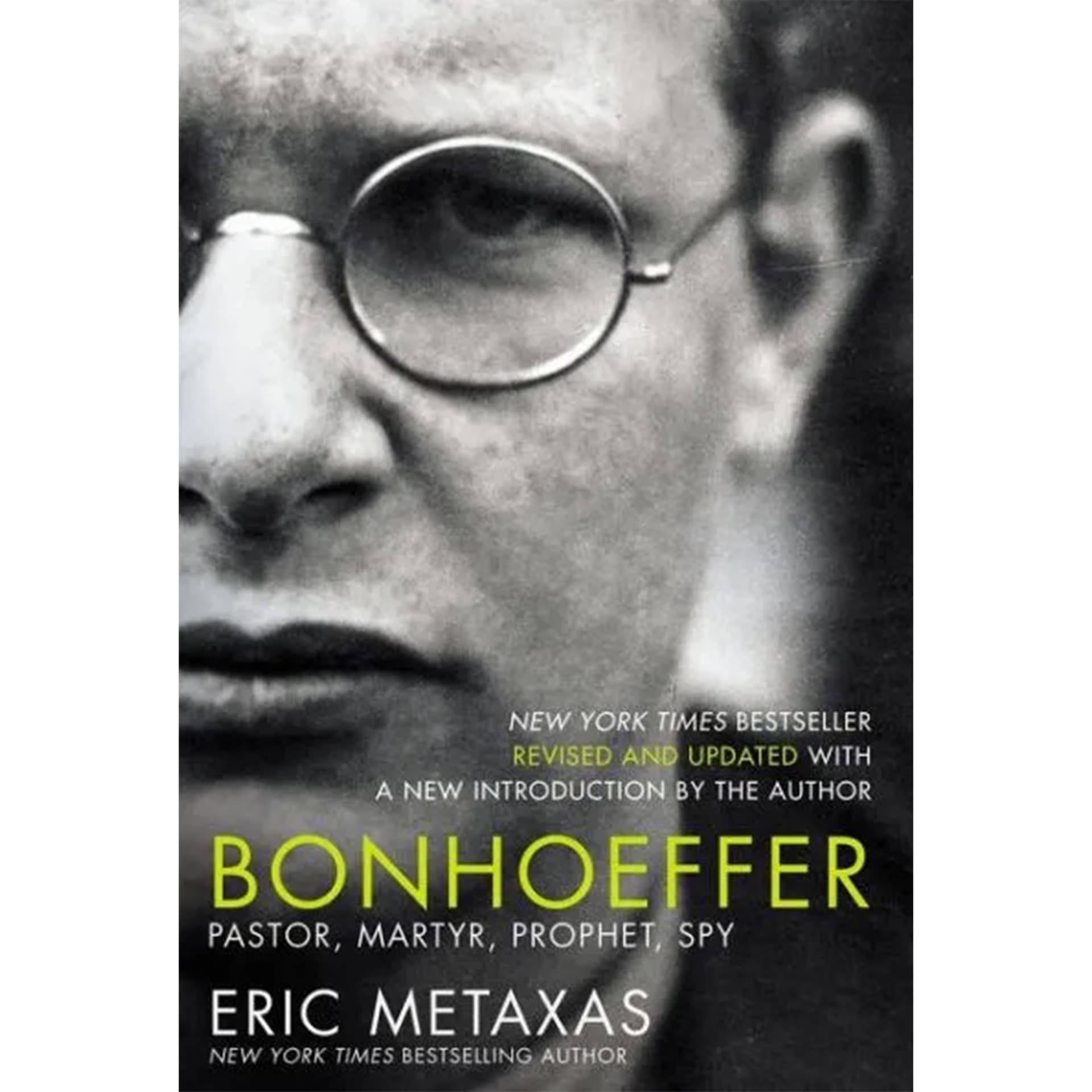
Episode Details Title: Eric Metaxas - Bonhoeffer Guest: Eric Metaxas, author and speaker Book Discussed: "Bonhoeffer: Pastor, Martyr, Prophet, Spy" (2011) Key Themes: The life of Dietrich Bonhoeffer and his moral stand against the Nazi regime.
Key Takeaways
Introduction to Bonhoeffer
- Background of Bonhoeffer: A German pastor who stood firm in his convictions during the rise of the Nazi regime. He played a role in a plot to assassinate Hitler and sought to protect the church from Nazi influence.
- Metaxas' Connection: Metaxas' personal background includes family ties to Germany during WWII, fueling his interest in Bonhoeffer’s story.
Motivation for Writing the Book
- Personal History: Eric Metaxas was inspired to write about Bonhoeffer due to his family's experiences during the Nazi era.
- Unique Perspective: He aimed to present Bonhoeffer’s life story in a way accessible to general readers, not just theologians or academics.
Bonhoeffer's Family and Early Life
- Influential Background: Bonhoeffer came from a well-educated, wealthy family with strong Christian values, but not necessarily regular churchgoers.
- Cultural Exposure: His family participated in intellectual and artistic activities that shaped his worldview and values.
Bonhoeffer's Theological Journey
- Academic Influence: Attended Berlin University, where he encountered liberal theology; maintained an open mind towards different Christian traditions, including Catholicism.
- Karl Barth’s Impact: Bonhoeffer was influenced by Barth’s theology, which emphasized the reality of God and the divine behind scripture.
Response to the Nazi Regime
- The Aryan Paragraph: Bonhoeffer opposed the Nazi ideology of racial purity, advocating for a church inclusive of all believers irrespective of ethnicity.
- Church's Role: He argued that the church should stand against the Nazis' attempts to infiltrate and corrupt Christian teachings.
The Moral Dilemma
- Patriotism vs. Evil: Bonhoeffer grappled with his love for Germany while opposing Hitler's brutal regime. He believed in the cultural and moral values of his country, distinct from the evil actions of its leaders.
- Call to Action: He emphasized the urgency of speaking out against injustice, warning of the severe consequences of inaction.
Relationships and Allies
- George Bell: A key ally in England who helped Bonhoeffer communicate the realities of the German church’s situation to the broader Christian community.
- African American Church Influence: Bonhoeffer was inspired by the faith he observed in Black churches in Harlem, recognizing their strength in adversity, which influenced his faith and activism.
Thematic Reflections
- Uncompromising Faith: Bonhoeffer exemplified a commitment to truth and justice, urging Christians to respond actively and courageously in the face of evil.
- Legacy of Bonhoeffer: His story serves as a poignant reminder of moral responsibility and the importance of standing firm in one’s beliefs, even at great personal cost.
Conclusion This episode of *A Book with Legs* offers profound insights into the life and legacy of Dietrich Bonhoeffer through the eyes of Eric Metaxas. The discussion reveals the critical interplay between faith, culture, and moral courage in times of societal crisis, emphasizing the timeless relevance of Bonhoeffer's story in today's context.
---
Further Engagement
- Follow-up Resources: Listeners are encouraged to read Metaxas' book on Bonhoeffer to deepen their understanding of the themes discussed.
- Podcast Interaction: Listeners can suggest books or topics for future episodes by contacting the podcast team.
For more insights and episodes, visit the [Smead Capital Management website](http://smeadcap.com).
Written by AI. May contain mistakes. Listen to the episode to check what was said.
Transcript
Automatic transcript. May contain errors.0:02You're listening to A Book With Legs, a podcast presented by Smeed Capital Management. At Smead Capital Management, we advise investors who fear stock market failure. You can learn more at SmeadCap.com or by calling your financial advisor.
0:22Welcome to A Book With Legs podcast. I'm Cole Smead, CEO and Portfolio Manager here at Smead Capital Management. At our firm, we are readers, and we believe in the power of books to help shape informed investors. In this podcast, we speak to great authors about their writings. The late, great Charlie Munger prescribed using multiple mental models and analysis. We analyze their work through the lens of business, markets, and people. In this episode, we will think about being a light in a dark world. We will also discuss what it's like to be on the inside of people being led by evil. We will also think about the incentives of an outside world that doesn't care to understand the good being spoken from pulpits and from private conversations among military officers.
1:03Eric Metaxas is joining us to discuss his 2011 book, Bonhoeffer, Pastor, Martyr, Prophet, Spy. Also, to note for our listeners, this is based on the recent movie that was also released here. To give us a little background on Eric, Eric's an author, speaker, and also hosts his own radio show. He has published other books, including Amazing Grace, William Wilberforce, and The Heroic Campaign to End Slavery, Martin Luther, The Man Who Rediscovered God and Changed the World, and many other titles, including numerous, might I add, children's books. Eric is the founder and host of a New York City series called Socrates in the City.
1:38He graduated from Yale with a BA in English. And I assume, Eric, you're joining us from New York City. Close. I'm in Danbury, Connecticut. This is the house that I grew up in, only about an hour and 15 minutes from where we live in New York City. So this is, yeah, this is where I grew up. This is where I grew up. So I got to tell you how I originally came across Bonhoeffer prior to you writing your book. I went to a small private Christian school, and one of my teachers, my Bible teacher, I think it was my sophomore year of high school, had talked a lot about Dietrich Bonhoeffer and just kind of commented on his courage and what he had done in his life, which there have been other people to write about Bonhoeffer.
2:19you know I don't think anybody as noteworthy as you but I say that because that was kind of my preference or my my my introduction to Bonhoeffer prior I I we've read we've been reading your book for about 16 months internally here at our company which I know that sounds weird but we've been using as a devotional where we're reading eight to ten pages at a time and pairing with Proverbs just so you know and the reason why we started doing that was because we thought you know we're at a time where Jewish people are being persecuted. As my pastors often said over the years, times change, demons don't.
2:57And therefore, I thought a lot about the paradigms of the past. And that's what we got into your book was kind of post-Gaza, is asking what can we understand from history and similar situations or issues? But I'd love to ask you, what caused you to write about Bonhoeffer? Well, I'll tell you, it's an amazing thing. You hear people say this, and you don't know what to make of it, and then it happens to you. I look back on my life, and it seems so obvious that God created me to write the Bonhoeffer book. I don't say this kind of stuff cavalierly. My mother, who is here, grew up in Nazi Germany. Her father was killed in the war.
3:40This is my history. These are my people. And when I had my conversion experience in 1988, the guy leading me to faith, my dear friend Ed Tuttle, says, have you ever heard about Dietrich Bonhoeffer? I said, no. You know, I went to Yale. They don't talk about Christian heroes at places like Yale University, right? So he starts telling me about this German pastor who, because of his radical faith in Jesus, speaks up for the Jews. He tells me about a German pastor who, because of his radical faith in Jesus, speaks against the Nazis and gets involved in a plot to kill Adolf Hitler. I said, that kind of Christian hero I could be interested in.
4:21I didn't know there was such a thing. And, of course, because this is my story, because my family lived through this hell, I want to know what happened to all those who didn't agree with Hitler. Literally this morning, Cole, this morning, my mom in the other room, she's 90, was going through some old letters. And she found, I can't even believe I'm telling you this, a 1943 sermon. The local village, her grandmother had just died. And she said, here is a sermon given by the pastor. He was, you could read how it's pro-Nazi propaganda in the sermon given at my great-grandmother's funeral in 1943.
5:03The pressure was so strong that in a little village, the pastor felt this obligation to toe the line, to say something pro-Nazi. The sermon is in the other room. It's typed up. Blows my mind. I've never seen it before. Every German had to deal with this. So the lie that all Germans were on board with Hitler, I knew in 1988 when I heard about Bonhoeffer, I said, I know that many Germans were not on board with Hitler. But then you hear about a man who used his influence, and Bonhoeffer was very influential. He came from a wealthy family, used his influence to try to wake up the church, to speak out, to try to get.
5:41I said, this is an unbelievable story. Somebody needs to tell the story. And whenever I write a book, you know, the first question is, are there other books like it? And the answer is no. There are tons of books written about Bonhoeffer, but none of them definitively tells the story for a regular reader, not for academics or people interested in theology, but for a reader who's interested in the story, this amazing story. And so I said, I've got to write a book about it. I, you know, I didn't, in some ways, I never thought I'd write a book about it, but I said, somebody's got to tell the story.
6:11And then in 2008, I sat down and I wrote the book. Yeah. Yeah. Nice. Well, so to your point about like you were made for this book, Dietrich was made for the story. I mean, as I was reading through your book, I thought, gosh, this guy is such an oddball. The circumstances of just his family background alone is very unique. So can you kind of teach our listeners like, you know, what was the mother's side? What was his father's side? Oh, yeah. No, it's so fascinating. And that's the thing. It's like when I write a book, I tend not to know that much going into it. You know, you start doing the research and you start thinking, this is amazing.
6:49I can't wait to put this on the page for people to discover. So his father, I mean, just to be clear, he came from what can only be described as an outrageously amazing family. His father was literally the most famous doctor in Germany for something like 50 years. He was a very big deal in the scientific world, in the medical world. That's Bonhoeffer's father. Everybody in his family was amazing. His mother was amazing. I won't even go into that. But what's really interesting is that the mother was particularly religious, strong Christian, came from a very strong Christian background. The father did not, but the father kind of let the mother catechize the kids and raise them in the way she thought.
7:37You know, he was very respectful of her. And, you know, and so Bonhoeffer is raised by a mother and by two governesses who are hardcore, you know, pietistic believers, the Hirnhooter, the Moravians. You know, some people know that story. And so Zinzendorf is, you know, the figure behind all that. And so Bonhoeffer gets all this, but in the context of a very brilliant academic, well-to-do environment, he's unlike anybody. You couldn't really make him up. He's a very, very interesting figure. And he's the only one of all of his brothers and sisters, because there were eight, who said, I want to go into the ministry.
8:18I want to go into theology. So he seemed to know from an early age that this was God's calling on his life. Well, yeah, and to your point, I mean, interesting family because I think you comment in the book that they weren't regular church goers. But to your point, they had immense amounts of faith and they knew their Bible for lack of a better term. But, I mean, this intellectualism flowed. But like I think you talked about the evening entertainment. They get done with dinner and it's not like we just ate. I mean these people would hang around together. They would have fun together. Could you kind of teach us like a typical post-dinner evening entertainment?
8:53Well, this is why I put this all in the book. I mean, the first part of the book is all about his family in his early years, because I thought people need to know what an extraordinary environment this is. And I put that in there to sort of whet people's appetite to think, could my life in my family be like this? Could I raise my kids so they have an appreciation for art and culture and music? They were all musical. They would have these musical evenings where various members of the family played instruments or sang or whatever. They had a tremendous respect and knowledge of classical music. They were an amazing family, culturally speaking, on every level, very educated, very broad-minded, very well-traveled.
9:36And they had this core of decency. So, you know, you get a lot of this, you get a lot of people that, you know, they're all into culture or this or that. But this family also had this deep core of decency about what's right and wrong, about standing up for the truth, that it was just part of the family culture. And you start realizing how important family culture is, how beautiful that is. And so that, to me, forms the basis, the foundation of Bonhoeffer's life. So you talk about this idea of their – it's like their conservative values with a liberalism that – I mean the balance between those two is just a very unique chord that their family strikes.
10:19They're conservative in the way I think you explain that war breaks out with Russia and they are your conservative pro-Germans. They're going to go fight in war. Cousins go fight in war and that was their conservative. But yet they didn't leave their brain checked in at the door. Or they'd walk in and think logically about what's going on in front of them. Well, that's the thing. I think we have this false choice in America today, for example, that you can either be like a sophisticated, culturally sophisticated liberal or a tobacco-chewing, NASCAR, rah-rah kind of love America conservative. And you think, wait a minute, wait a minute.
10:59No, that's a cliche. That's a cliche, by the way, of the left, that they act like they're sophisticated. They're the cultural elites. That's simply not right. Throughout history, you have had many people that were culturally sophisticated and had the values of patriots, of people who loved their country and are willing to die for what's right. And so in America, really, that's become very divided. And I think Bonhoeffer calls us to want to be sophisticated, but in the right way, not for its own sake, but to be rooted in the things that give us Western civilization. The Bonhoeffer family really understood that.
11:39So there's just a great – I mean beyond in the background of all the Bonhoeffer story, I mean if you want to just get a great history of what's going on in Germany in the buildup to World War II, your book just tells it. It's like looking at a person's life as a picture of that history, which I really enjoy. The Kaiser abdicates in 1918. They're living in Berlin. So they're up close and personal to what's going on. I think you used the story, for example, of Rathenau and his death as a picture to understand not only was – you mentioned how unique Bonhoeffer is. But yet at the same time, he is at the cultural center of Germany where the highest seats of government are changing hands daily.
12:22Well, that's – this is what makes him so fascinating and I'm glad you mentioned that because nobody has ever brought up Rathenau when I've talked about Bonhoeffer probably hundreds of times for sure. But I had to find out for myself as a German, right, as somebody whose mother has a German accent and grandmother's German accent and they grew up in Germany to find out what happened. What happened that Germany went down this demonic path? I had to understand it. So you look into the history and you realize it's kind of complicated. You know, they go into World War I. They lose horribly. and suddenly, and this is, you know, it's, this is true today, right?
13:05The allied powers force this kind of democracy on them. They never had had democracy. Now I wrote a book called, If You Can Keep It, about America and about, about how faith and freedom and virtue work together in America. We have a lot of conservatives. I mean, George Bush was utterly guilty of this, that you think, you know what? Once people are free, boom, they'll become just like our founding fathers. It doesn't work that way. So Germany did not have a history of self-government. They had the Kaiser. It was a monarchy. So suddenly the allies after World War I say, okay, now we're going to force you to have democracy, to govern yourself.
13:47They didn't know how to do it. So it created all kinds of chaos because again, the ham-fisted allies, It's really like the, you know, when you think about the European elites of today telling countries what they need to do, telling Ukraine, we're going to put you in NATO, telling, you know, just suddenly they have this power and they do very destructive things. So when you have the Allied powers crippling Germany with the Versailles Treaty, which was punitive and horrible, and then forcing them to have this Weimar Republic, they didn't know how to handle it. So it created all kinds of chaos. And into that chaos steps something 10 ,000 times worse than the Kaiser, Adolf Hitler, and the Nazis.
14:31And so that chaos, you see a lot of Germans in the Bonhoeffer family trying to process after 1918. 18. How do we, how do we do this? How do we do that? This is, it's confusing. It's difficult. And into that mess comes Adolf Hitler saying, I will be your savior. And anybody who's a serious Christian understands that we don't need a savior. We have a savior. Who are you? Well, they would soon find out. Yeah. And I think you also point out in the book that, I mean, you can back to the idea of they're just how pro-German they are. I mean, Bonhoeffer's family would say how terrible the Treaty of Versailles was.
15:07And that was a widespread German view. So the question was, why would we agree to something so bad? And not, well, let's, you know, the natural outcropping of Germany wasn't, we all agree on this, so let's cause problems. No, it was just they all agreed how terrible that was in the economy. It was terrible. I mean, we, many people that, you know, following the Versailles Treaty, Many, many people, including many famous Americans, said it was bad. It was punitive. There's some sometimes, you know, you do something that's so ungracious that you're going to you're going to cause more trouble. The way we handle things after World War Two was just the opposite.
15:49Right. We wanted to bless Japan. We wanted to rebuild Japan and rebuild Germany. That's the Christian way you deal with your defeated enemies. What they did after World War One backfired horribly and gave the world Adolf Hitler. So when you have a lot of, you know, I think of the European elites, I think of the neocons, the rhinos, the war party, the liberals in America, this is what they do. They throw their power around and it backfires horribly. People suffer. Regular people suffer. Wars break out. And it's amazing because, you know, that is really what leads to Adolf Hitler. Because in the book, I wanted to understand how did Hitler happen?
16:31How did the Nazis happen? I know that my family was not pro-Hitler. How did Germany get taken over by these satanic forces, which they were? And that's really, that's Bonhoeffer's story. Well, he was a traditionalist. So I remember it was kind of like a breadcrumb you left in the book where you talked about the Eagle fraternity that he joined, that his father was part of. So again, later in the book, you're watching this traditionalist life and very pro-German life with this very oddball, unique person. But it's not like it's someone to sit down there and say, you know what? This is going to be the guy that does something just incredibly insane compared to everybody else.
17:09You would have actually been like, well, he's just kind of your typical German kid because he's part of dad's fraternity. It's like you think in the American context, kid goes to college, joins his dad's fraternity. How is that any different? but that's not what we end up getting. The other thing too is you also talk about the paradigm of how the Nazi party used the church. But before that, you can also talk about where the church was. So he was very much part of the Lutheran church in the ilk of Martin Luther, but obviously the Catholic church was big at the time. He goes to Rome as a younger man.
17:46What does he see in Rome and what are his impressions of the Catholic church? Well, this is so fascinating. And this is what I think, this is an important lesson for Christians, as far as I'm concerned. What does it mean to be a Christian? It doesn't mean rah, rah, I'm for Jesus. What does it mean? It means I care about truth. Jesus is truth. Therefore, I care about whatever is true. It's not I'm part of some club, some religious club. I care about truth. and my faith should carry me toward truth in every sphere, which means that if I'm part of some church, my question is, is this church doing all the right things?
18:28What if I see in another church, they're getting something right? A lot of people would say, well, I don't care about that church. I'm part of this church. Bonhoeffer was trained by his family, by his upbringing to be open-minded in the best sense and to say, I'm simply interested in what's true. So here he comes from a Lutheran, German-Lutheran background. Now, your average German believed like, you know, the Lutheran church, that's it. Luther gave us Protestantism. I'm a Lutheran. I'm not interested in anything else. He was open-minded. So he goes to Rome, and he sees in Rome, he's 18 years old, what looks like the church universal, people of every color celebrating the mass at St.
19:07John's Lateran. And he starts thinking about the church as this is the body of believers who believe in Jesus throughout history, throughout the world, in the Catholic Church, outside the Catholic Church, in the German Lutheran Church, in the churches around the world. In other words, he wasn't all about, I'm a German Lutheran Christian. He was about, I'm a Christian. And true Christianity transcends national boundaries. It doesn't mean you're not patriotic. But as a Christian, your identity is deeper. But Bonhoeffer was not so naive as many progressive Christians are today to say, I only care about the kingdom of heaven.
19:47I don't care about my country. That's nonsense. If you care about the kingdom of heaven, you will also love your country. But you don't make an idol of patriotism. And so Bonhoeffer really was willing to learn from other traditions, from the Catholic tradition. He discovers natural law. They didn't really have that in the Lutheran church. He discovers that in the Catholics. But whatever is true, we're supposed to want. And so he was the best kind of ecumenical, open-minded Christian. So yeah, and to your point, I mean, if I use natural law, if you look at the U.S. Supreme Court, effectively the Catholic people in the court are natural law experts, to your point.
20:26Hi, I'm Cole Smead, CEO and Portfolio Manager here at Smead Capital Management and host of this podcast. If you enjoy this podcast, I'd like to invite you to check out smeedcap.com. At our firm, we are stock market investors. We advise investors who fear stock market failure with a discipline that has proven success over long periods of time. Learn more about our funds at smeedcap.com. Past performance is not indicative of future results. Investing involves risks, including loss of principle. Please refer to the prospectus for important information about the investment company, including objectives, risks, charges, and expenses.
21:01Read and consider it carefully before investing. Speed funds distributed by UMB Distribution Services, LLC, not affiliated. The Catholicism, it did affect him. It infected his own faith, and I think a lot about some of the later parts of the book. He obviously went to go study theology at Berlin University, and I was thinking about all the professors that he had. So let's just use Harnick real quick. Harnick, you come in, you're a young theology student, And I mean these people are big time at Berlin University and everyone is studying under them. But he comes in really with this view of like, okay, I have to prove to myself these things are true or not.
21:41I think you talked about Harnick, what his theory was on miracles I think for example. So could you kind of teach us that and then what Dietrich's view was that? Well, bottom line is that Berlin University was like the theological center of the world. but it was theologically pretty liberal for the time. And what does that mean? It means that they have kind of drifted into this, we're going to study the text. Well, they kind of forgot about the God behind the text. They forgot that there is a God, that the Bible is sacred scripture anointed by the Holy Spirit. It's God speaking. And so Bonhoeffer is in this realm.
22:23So he learns how to do this kind of, you know, liberal theological exegesis, but it doesn't mean he buys the whole thing. Sure. He just does it for the purpose of like class, professor, grade, et cetera. Well, I don't know that he did it just for great numbers. I think he was actually intellectually interested in everything and in learning different ways of seeing things, but that he didn't get pulled into it. He was so, I mean, we have to be clear. He was so brilliant that he had an extraordinary intellectual confidence. He was very self-assured. He'd been raised in a family where, you know, all his brothers and sisters are geniuses and they're arguing at the table when he was, you know, 10 and 11 and 12.
23:04And so he comes to Berlin University with a kind of self-assurance intellectually that nobody would typically have. That was just a rare thing for Bonhoeffer. So he was willing to learn from those on the more liberal side, not to say, oh, they have nothing to teach me. Sure, they can have something to teach me. But ultimately, he follows Karl Barth. He believes God is real. And he's just open to whatever is true. So he was a very rare figure. Well, yeah, and you talk about – the other thing I wanted to mention about Barth is you talk about the Barthian view of God and the Bible. Can you kind of just explain that?
23:39Because this – Barth is really – I'll call it from a theological perspective. He is really the mentor of Bonhoeffer in so many ways on that idea. Well, I've forgotten most of what I learned about Karl Barth. But the reason Karl Barth is such a dramatic figure is that he comes into an environment where people have drifted away from the traditional Christian view. It's basically liberal theology, historical, critical, pulling the text apart. They've drifted away from a simple, I believe in God or whatever. Barth comes in and says, no, God is other with a capital O. There is a God behind the text, and that's the point of it all.
24:29That was a very big deal to say when everything is trending in the other direction. And Barth's famous epistle to the Romans, I guess, comes out around, I don't know if it was 1918 or 19 or something, but it's like this monster book that just suddenly changes everything. And Bonhoeffer clearly was in that camp. Sure. So let's jump forward a little bit. The Jewish question comes up in the German church with like the Aryan paragraph. Okay. Can you kind of teach us what the Aryan paragraph was? And what was, you know, what was leading the church's view? And why couldn't Dietrich just punt? Because I mean, very cliche, but Dietrich could look into that and say, you know what, these people are just being racist.
25:13Okay. Why could he not just punt and be, you know, simple about it like that? Well, I think we forget. We think everybody thinks the way we do. You know, seeing things along racial lines was traditional throughout history, right? So we can say, well, we know it's wrong, but if you go to 1930, whether it's in the United States or in Germany, there were a lot of people that kind of bought this idea that, you know, well, the races should be separate or they're different or whatever. So when Hitler says, this is Germany and we want Germany to be full of only Germans, so we don't want there to be Jews in Germany, a lot of people would say, well, okay, that's not a crazy idea because they didn't have a tradition of what we have in America.
26:05I mean, what we have in America is essentially unique, that from our beginning, we have religious liberty. I mean, you have people like George Washington and Thomas Jefferson defending the rights of people with whom they disagree on theological issues and saying we can have a country where people agree to disagree, where you don't have to be part of a state church. Germany didn't have this history. So Bonhoeffer is suddenly confronted with this outworking of this thinking that Germans need to be German and you can't be, it's about ethnicity. And this idea that, you know, was part of the zeitgeist at the time, right?
Read the full transcript
26:46This, you know, blood and soil that we're from here. It's really a pagan idea. I mean, let's be clear. This is a pagan idea that, you know, it's almost like you worship the gods of your place or something. So this is this kind of paganism that's there and it's crept in. But you have a lot of Christians that aren't sophisticated enough to say, wait a minute, that's wrong. That's antithetical to my Christian faith. So Bonhoeffer, of course, has the ability to see through this. And so when the Nazis propose this idea, and this is as soon as the Nazis take power, that we're going to make everything in Germany is going to be German and we don't want Jews involved, right?
27:27So you can imagine a culture saying, okay, this is our country and we only want this kind of people. Now, we would say that's distasteful to us. But a lot of Germans thought, well, I guess that sounds reasonable. Bonhoeffer realizes the Nazis are going to try to do this to the church. And this is where he says, okay, now you have a real problem. Because the church, by definition, is anyone who believes by faith in Jesus. God doesn't look at our blood, right? He looks at our hearts, meaning he looks at our intentions and what we believe and what we care about. He doesn't say, you're this, you're that, you're Greek, you're German, whatever.
28:05So that's antithetical to the scriptural view, to God's view and the view of the church in history. So Bonhoeffer is confronted early in 1933 when Hitler takes power with this problem that the Nazis are trying to take over the church along these Nazified racial lines. And they're going to say, if you have Jewish blood, you can't be part of the German church. And Bonhoeffer says that's not going to fly. If you have Jewish blood, the question is not your blood. The question is not your parents' ethnicity. The question is, what do you believe? And if you believe in the scriptures and you've been baptized, it makes you a Christian.
28:43So then you're a Jewish Christian. But this is where Bonhoeffer has to assert himself. And there were a lot of German pastors that thought, well, maybe we don't love this, but that sounds reasonable that we'll have a German church and there could be a separate Jewish church and they can do their own thing. But, you know, so Bonhoeffer is forced to be the guy processing this and writing. He writes a famous essay, The Church and the Jewish Question, where he breaks this down, where he makes this clear about what is the biblical response to what the Nazis are trying to do to the church. I mean, it's amazing.
29:20Yeah, I'm going to use a quote from your book. It is rather the task of Christian preaching to say, here's the church where Jews and Germans stand together under the word of God. Here's the proof whether a church is still a church or not, end quote. To your point, he can see what's counterfeit, which tells you what's real because that's how you can always tell what's real is you can see what's counterfeit. You can see the counterfeit church in front of him. Let me pivot a little bit. Could you just touch on what were the kind of restrictions that Bonhoeffer seeing in his day among friends? You talked about some of his Jewish friends and what they were seeing in their work lives and in their personal lives day to day.
30:00Well, it was like any of these things. It takes over slowly. It's not all at once. And look, you've seen it in America, right? I mean, if you are in a psychiatric world and you say, oh, I believe marriage is between a man and a woman and I'm a Christian. I don't believe that men can marry men. Suddenly, in the profession of psychiatry, you will be ostracized. You can't have that Christian biblical point of view. You better change. That has happened like crazy in American life until very recently. That if you have a biblical view, you begin to be ostracized in business, whatever it is. Bonhoeffer saw this, of course, dramatically in Germany.
30:45And it starts, you know, in some ways slowly where if you were in a certain profession, they would say, well, we're not going to, if you're Jewish, we're not going to allow you to participate here. They start ostracizing the Jews from different professions. Obviously, they tried to do it with the church and say, we're going to have a German church, a Reichskirche, and no Jews are welcome in that church. So Bonhoeffer is also in this rare position. You mentioned it earlier. He grows up in this very sophisticated environment in Berlin where his family knows everybody. They're very connected, and they know tons of Jews.
31:21They are not some parochial German family living in a village. They, his sister, his twin sister, marries a man who's ethnically Jewish. Now, he was baptized. He identified as a believer in Jesus. But the point is, they were surrounded in this academic elite community with Jewish people. So they had a very different view. And so they saw up close the persecution of the Jews. And they simply knew it was wrong. I mean, they had the best kind of liberal values that any of us in America would have today. and say that that's wrong to discriminate along racial lines. We don't do that. Sure. When I'm going to use, you know, Christ says that the body of the church is like the bride, okay?
32:05And so Goebbels and Hitler understood that though because, you know, Hitler is like, hey, like stay in the church because that bride is a better vessel for our will, call it, you know, the Nazification of the church, than trying to go out and say the church is bad because so many people, they believe in the idea of the church at a minimum, whether or not they're following God's word. And I say that because I think a lot about that in terms of if people said, what's the problem with the body of Christ? We typically reflect the culture around us, right? So to your point, you're thinking about this in what's going on in the German church.
32:39And if the culture around it is saying, hey, this Hitler guy, he's got some interesting ideas. We're getting more excited about him. And maybe he's right. What do you see going on in the church? same thing as going on in the culture. Is that how you think about that too, you know, looking to today or do you think it was very different for how the body of Christ would be affected by the culture? Well, it cuts both ways. There's always the temptation for the church to conform to the world. There's always the temptation. And so if you're really, really persecuted, that temptation doesn't exist because you are already demonized, ostracized, persecuted.
33:17But if you, if the church has made enough inroads so that you're living in some kind of a culturally Christian culture, a culturally Christian culture is tempted to, because sort of everybody's a Christian. And so the distinction between what it means to be a Christian and what it means to be just a part of the culture is no longer so clear. So you begin to be pushed to accept the mores and the thinking of the surrounding culture. So in America today, you have it with whether it's gay marriage or whatever it is that like, you know, we don't want to take a sharp stand on that. We don't want to be unpopular.
33:56We just we want to be a big tent. So in Germany, Bonhoeffer realized that if you're a really devout Christian, you're going to see things fairly clearly. You're going to also have the guts to speak against evil or speak against something you think is wrong. But if you don't, if you're not such a strong Christian, just like in America today, and you're really looking for the approval of people, you're willing to bend. You're willing to keep your mouth shut when you should speak up. Everybody's talking about a critical race theory, BLM. You're going to go along with it. You don't want to be, wait a minute, that's not right.
34:33That's cultural Marxism. That's atheistic. We need to stand against that. So unless you really understand things, unless you're not only a serious Christian, but a serious theologically sophisticated biblical Christian, you don't know which way to turn when the pressure comes. And the Nazis, of course, and you see this with a lot of institutions in our own world, they thought, well, we're not stupid. We're not going to try to cancel the church. We'll just try to take it over. We'll try to infiltrate it with our values. That, of course, has happened in the American church. I mean, you see rainbow flags outside of all kinds of churches, whatever.
35:0920 years ago, that would have been unthinkable. But over time, these secular forces thought we can infiltrate the church. Why do we need to shut churches down? That's what the Nazis tried to do. And Bonhoeffer was a pretty lonely voice speaking against it. Sure. And I think the movie actually did a pretty good job of showing this. So like Niemöller starts kind of at odds with what the church should or shouldn't do versus, as you point out in your book, Bonhoeffer from the get-go was very much on the page of there is one right way to deal with this and we have to be quick and decisive and make a statement.
35:47Can you explain maybe Niemöller as a picture of someone who came back to what the church should be doing versus where he started on that discussion? Well, first of all, thanks for mentioning the movie. It is just a great movie and I hope everyone will see it. It's now available on Amazon Prime and available on Apple TV. So check out the Bonhoeffer film. It is a spectacular - But you got to buy the book first because I'm sure you make better money on the book. Of course I want people to buy the book. But sometimes if people see the film that whets their appetite and they say, okay, I want to know more - I agree.
36:18I'm going to ask you a question on that later, by the way. So I'll get one question from the film that I didn't like that I want to get your opinion on. Well, right. Right. Well, anyway, but so the story, I wrote a book very recently called Letter to the American Church and a sequel called Religionless Christianity. And in those books, I talk about how these things relate to today, what happened in Bonhoeffer's day. And Niemeyer is kind of the classic example of a good guy who was fooled. He's not a bad guy. He's not got his finger in the wind thinking, how can I be more popular? How can I get more people into my church by telling him not being political or whatever?
36:53He was a hero, but he was duped, a good man duped by the Nazis into thinking, you know what, maybe we don't agree, but we can trust them. Niemaler had a meeting with Hitler in 1932 before Hitler takes power. And he's a very powerful pastor, a patriot. He got the Iron Cross in World War I. So he's a respected leader in the church. Hitler meets with him and says to him, number one, if I come into power, I will not bother the church and I will not institute pogroms against the Jews. Niemöller takes him at his word. And so Hitler gets into power and suddenly starts doing all this stuff he said he wasn't going to do.
37:32And Niemöller thinks, I'm missing something. It must be the people around Hitler, these radicals around Hitler. I need to get a meeting with him. Well, it takes literally almost a year to get the meeting. and in the meeting, Hitler shows his true colors. There's a story in the book, in my Bonhoeffer book, I tell the story. And in my recent book, Religionless Christianity, I go into depth. Niemöller suddenly realizes he's been completely duped. Hitler is a monster. He pretended to be friendly and open. But as soon as he got into power, he's just going to crush the opposition. And so I won't get into that further, but that was a chilling moment for Niemöller.
38:15And also he realized, and we now realize, Niemöller woke up too late. And this is the key. There are a lot of Christians have this idea that, well, you know what? God's a gracious God. He'll give us a second chance, a third chance. Sometimes it's like the plane left. It doesn't matter if you're a minute late or an hour late, it's gone. You can't get on it. And that's what happened. Germany, the German church did not speak up in time. and about a year into Hitler, it was game over. If you woke up a year, a year and a half later, which is what Niemöller did, it was basically too late and Niemöller regretted that for the rest of his life.
38:49Well, and I mean, I could take your book and probably just dissect it as a game theory course. I mean, to your point, it's like you're reading about Bonhoeffer and what he's trying to do in the church and it's so obvious things are moving way too slow. I mean, all the way out to, like there's the Bethel confession. Okay. And it's like, they're writing a confession and it's like, by the time they get done, it's so watered down. It takes a stand on very little in comparison. And so that was the time and time again, now's the time to take a stand. That was Bonhoeffer's typical line. And when it was those moments of like, it's, it's now or never, um, you know, it was never in effect.
39:31And so, you know, by the time people were willing to die, um, it didn't matter. Is that a fair way of assessing a lot of this? Because again, you had to be, you had to be strong upfront. You couldn't try to be strong once you had no power. Well, that's really the issue is, and this is why we're supposed to have a living relationship with the God of the Bible. It's not just about a book. It's about, I have a living relationship. And the question is, what is God saying now? What is he saying right now? Whatever he says will not contradict the scriptures, but the point is what God says now may be different from what he says a year from now.
40:05And what is God urging us to do now? Bonhoeffer seemed to be attuned to the urgency of the moment, and many in the church were not. They had different ideas, and he understood that if you do not act now as one, it's going to be over. And by the time you get to 1935, it's over. And Bonhoeffer knew it was over. So everything he did after that was kind of like a changing response because he knew that our chance to save the country in the way we could have before, that's gone. Now, what do we do? What is God calling me to do now? And throughout my book on Bonhoeffer, you see him reacting to the more draconian laws, to the persecution.
40:47And then, of course, finally, he gets involved directly in the plot to kill Hitler, which was because that's where he found himself. And so it's so fascinating that he was always really asking God to lead him, which is what we're supposed to do. Yeah. And I also think it's interesting, you know, back to our discussion on what he saw from Catholicism, he asked God to lead him in many times in very quiet spaces on his own, which was not a typical, I'll call it a Lutheran practice, you know, that I took away from your book. We hope you're enjoying the podcast. You know, we work hard putting together this show, but we work even harder for our investors at Smead Capital Management.
41:28At Smead, we believe in disciplined investing, which is why the Smead funds have a proven track record of long-term outperformance. If you're an investor who fears stock market failure like I do and want to invest in wonderful companies to build wealth, we invite you to visit SmeadCap.com. Past performance is not indicative of future results. Investing involves risks, including loss of principle. Please refer to the prospectus for important information about the investment company, including objectives, risks, charges, and expenses. Read and consider it carefully before investing. Smead funds distributed by UMB Distribution Services, LLC, not affiliated.
42:04Let's talk about George Bell. George Bell enters, you know, he's in the UK. He becomes really a special relationship to Bonhoeffer. What was his role in this story and why was he so important all the way through the end? Well, Bonhoeffer spent a lot of time in England. At the end of 33, he was really disgusted with the church in Germany. So he kind of escapes to England, even though he was going back and forth. But he befriends a bishop, a famous bishop, George Bell, and begins to share with George Bell, who's of course in England, what is happening in the German church. Because if you weren't in Germany, you wouldn't really know.
42:43It's not like the world we live in today. And so Bonhoeffer finds an ally in George Bell, and George Bell realizes that Bonhoeffer is this heroic, brilliant, young Christian man. And so that was a very important relationship that they had, because there was still time to get word out outside Germany through church circles, through the ecumenical movement. Bonhoeffer had relationships with church figures in the United States, because he was here in 30 and 31. And then he has relationships with George Bell and others throughout Europe. So he's trying to get word to the church what is happening in Germany so that they will wake up because there were many, many people that were naive or slow to understand the threat of Hitler.
43:30And so Bonhoeffer's relationship with George Bell was very central in that. Yeah. The other thing, too, that was central to him was when he visited America. When you told the story that they, like, crossed the Mexican border, I just thought this guy is just a hoot. I mean, like, you just want to be his buddy along for the ride. but he talks a lot about the African-American churches, the black churches in Harlem and New York. Why was he so empowered by what he saw from those people and really their faith and their relationship to God? Well, this is what's so interesting is, I mean, first of all, the story of Bonhoeffer is such an epic story.
44:09I mean, you cannot believe where didn't he go? What didn't he see? He just goes everywhere. And I really want to make a series like The Crown because it's an epic, epic story. And getting into all this stuff, it's so fascinating. And you're talking about his relationship. I mean, he goes to New York in 1930, 31, doesn't have a clue what he's going to find. He finds theology so liberal that he's disgusted by it. At Union at the time. At Union Theological Seminary. He then goes up to Abyssinian Baptist Church, an African-American from Alabama who's one of his fellow students at Union says, well, you know, why don't you come with me up to this church in Harlem?
44:49And there he finds the kind of faith that he maybe had seen it once or twice in his life before. When he was like 15, he went to some kind of evangelical meeting that General Bramwell Booth, the son of the founder of the Salvation Army, held in Germany. And so Bonhoeffer, when he was 15, sees this, you know, really evangelical expression of the faith, of the love of Jesus, and it blows his mind at 15. Now he's 24 years old. He's in New York and he sees it in the black church in Harlem. And part of him just says, this is it. They're actually living their faith. This is not just like pious Lutheran.
45:30We do our thing and then we go back to our lives. Yeah. He was really attracted by that. And then he gets pulled into, you know, I mean, imagine America in 1930, the real racism. And then going into the Jim Crow South, he goes to Washington, D.C. and he sees real Jim Crow racism, it blows his mind. And he sees the church, the African-Americans standing against this. And that makes him realize, I need to really live out my faith when I go back to Germany. Of course, then he goes back to Germany. And what happens? The Nazis are taking over. They're persecuting the Jews. So suddenly he realizes how he needs to live out his faith.
46:08And that's the story of the rest of his life. Yeah, I agree. He joins the conspiracy. He does that through the Abwehr. which is just a – it's like you're somewhere in James Bond money laundering land, very fun. Again, just – the guy is a freak show. He just does pretty much everything you could ever dream of to do to be interesting, and yet it's like – in his mind, he's like this is just part of God's will. What a blessing. There's a paradox that comes up. This came up for Bonhoeffer, but I'm going to use Wiedemeyer as a picture of this. You said he dealt with a paradox in his own life, and I think it was very symbolic for the conflict that Bonhoeffer dealt with.
46:45quote, like so many of his era, he was caught between his hatred of Hitler and his love of country, end quote. Can you just kind of, we don't have a ton of time, but I just love you touch on that because these were Germans who loved their country, very in the Prussian sense of loving their country and their heritage, but yet they hated Hitler. Well, look, it's not complicated, right? You could be, you know, a couple of years ago, I loved America, and it was my firm conviction that the president of the United States was destroying America and that his values and the values of his party were destroying the country that I love.
47:26Bonhoeffer and his family loved Germany, and they saw that Hitler, who proclaimed himself to be the greatest champion of Germany, was in fact the enemy of Germany. So the question is, if I love America, what America do I love? Do I love God's idea of America? Or do I love, you know, the KKK's view of America? Do I love God's view of America? Or do I love the Marxist view of America, that they want America to, you know, become a globalist non-entity? Bonhoeffer loved God's view of Germany. There was a Germany of which he was proud, the Germany of Goethe and Schiller and Bach. Many people loved that Germany.
48:09Hitler hijacks Germany. He takes it over. He wants to turn it into a country that is fundamentally pagan, that destroys. I mean, Germany was very Christian. Obviously, Luther gives us Protestant Christianity. So it's a great Christian nation. So that's always the question, is what is God's view of the nation? Not do you love the nation, but what version of the nation do you love? So I just got to mention this because there's a lot that I've skipped over for my notes. you know the conference in Fano Finkiewald which is you know they show you know a portrayal of it in the movie that looks like it's right out of Middle Earth in the movie by the way it's like very J.R.
48:49Tolkien looking in my mind I really enjoyed that you know we don't talk other than the quote there we don't talk much about the Prussian officers which were very you know from a non-religious perspective they were conflicted as Germans like we just talked about he also you know the other quote I love from Bonhoeffer. He didn't romanticize the past, quote, but he explained that the idea one could ever go back to time before troubles and death was false to begin with, end quote, which is just like, so it's like just pours wisdom into the reader to think about, wait, we can't go back and romanticizing it.
49:24It's just as foolish as the time that we're in, which I really liked. Let me throw out one thing to you and I'll use the movie as the picture of this. So I think of Bonhoeffer as this highly intellectual, highly logical, very cerebral, but again, pragmatic. He's always learning. He's trying to ask, what am I seeing? How does that fit in the lens of what God's given me and his Bible? And how do I use that as a lens for understanding the world and the people that I'm meeting and running into? In the movie, they show him quite a few times getting really emotional, like in prison or other situations.
49:57Was that just dramatic? Because when I read your book, I was like, this guy's, I mean, he's like a rock. He's like the rock of Gibraltar. And when I saw him get really emotional at times, the movie, I was thinking, I don't know if that was the Dietrich that, that I read about. I would agree with you. Um, I love the movie. I think everybody has to see it. Tell your friends it's, it's astonishing movie. I just mentioned it's out on Amazon prime and Apple TV jump and tell everybody, you know, but I agree with you that there were things about it that I said, nah, that doesn't seem right to me. And that to me was your take on that, I think, is absolutely correct.
50:32Okay. Well, you make me feel like I'm being a good student. Let me just throw it back to you and just say, if there's one thing that we just didn't tap or touch on that you think has to be mentioned about his story or just a breadcrumb, if you will, what would that be? Well, I mean, you said that, you know, in your company there, you're kind of reading the book as a devotional, my Bonhoeffer book. And I have to say, when I was writing it, there's so much of Bonhoeffer in there and so much scripture. And I said, people are going to read this. Some people are going to read this as a devotional. And that makes me happy because there's just a lot that's there.
51:06Bonhoeffer offers so much that it's worth reading it that slowly and reading it as a devotional for your faith. On the other hand, I've met people that, you know, literally read it in two days and they said, I couldn't put it down, you know, and so there's that aspect of it as well. And I'm glad that it can be read in both ways. But I think that, you know, the Bonhoeffer story ultimately, you know, I mentioned, I said that I know that God created me to write this book. This is, you know, it's not me writing it. This is God giving us this story for such a time as this. I believe God called me to write this book when he did, because it really is a story that we need to know.
51:52And the story of Bonhoeffer, I mean, I remember thinking before I wrote it, why isn't there a book that tells the whole story? This is an insane life. This is amazing. Somebody needs to do him justice. That's why I wrote the book. And I think that, you know, you don't need to be a Christian to read it. I mean, I think it's a great book to give to somebody who's Jewish or who is just not somebody who goes to church, because it's a true story. It's not a Christian book. It's a book. You know, it's not a Christian life. It's a life. And so to me, there's something about Bonhoeffer that, again, I can take zero credit.
52:26I just happened to write the book. But he speaks to almost everyone. And it's something that, again, I tried hard to do it real justice in writing the book. And so I'm excited that it's getting to a wider audience. I just was, Jordan Peterson asked me to do an eight hour course for Peterson Academy. I finished filming that a couple of months ago and it just went online recently, but it's eight hours in depth on Bonhoeffer. There's just a lot there, you know? And so I'm, you know, when I talk to somebody like you, who's obviously read it so carefully, I really can't say how gratifying it is. It's very gratifying to me as a writer, you know, to see the way you've appreciated it.
53:07So let me say thank you. Oh, it's a wonderful book. I was going to ask you, I kind of taught people a little bit about your background. Where else can our listeners follow you going forward? Do you have another book in the works that you kind of have as your working project right now? Yeah. I'm writing a big book on the American Revolution. It'll be out next year. And I see it as similar to the Bonhoeffer book. I want it to be definitive, the whole story of how did the greatest nation in the history of the world come into being. So I've just started writing that. And I'm very excited about that.
53:44People can find me at my website. It's ericmetaxas.com. I hope people will sign up for my newsletter because there's so much stuff, so many people that I'm interviewing every week and so much stuff that's going on. And then I do a thing called Socrates in the City, which I recommend especially to thoughtful people. Socratesinthecity.com is the website. I've interviewed tons of people, you know, from Peter Thiel to RFK Jr., Malcolm Gladwell, tons and tons of people. That's Socratesinthecity.com. And, you know, I hope people will continue the journey of seeking truth. And that's just a big part of what I try to do.
54:25Well, I appreciate it. And our bias, I mean, if you didn't pick up on this, our podcast is really like a liberal arts education and wandering, if you will. I call it kind of like my intellectual walkabout. To your point, we're seeking truth and we're recognizing patterns. And the only way we do that is looking at other fields and studies. And so I just love this book for thinking about it, for the theological reality of it, for the physical, for the practical game theory part of this. There's just so many elements to this. Thank you for your time, Eric. This has been wonderful. Your book reminds me that we must all examine our own hearts and lives to ask what is right for our spiritual, political, and to our discussion, everyday lives.
55:03Dietrich Bonhoeffer had to rectify all that with his life. Go and buy a copy of Bonhoeffer to think about your difficult decision in each of our lives. If you enjoy this podcast, go to Apple, Spotify, YouTube, wherever you listen to a book with legs podcast. Give us a read and tell other people about this podcast and what you did or didn't like. For our tribe, if you have a great book that you'd like to recommend, you can email us at podcast at smeedcap.com. That's podcast at smeedcap.com. You can also send your suggestions to us on X. Our handle is at SmeadCap. Thank you for joining us for a Book With Legs podcast.
55:38We look forward to the next episode. Thank you for listening to A Book With Legs, a podcast brought to you by Smead Capital Management. The material provided in this podcast is for informational use only and should not be construed as investment advice. You can learn more about Smead Capital Management and its products at SmeadCap.com or by calling your financial advisor. Thank you.
From the publisher
In this episode, author, speaker, and radio host Eric Metaxas joins Cole Smead to discuss his book, “Bonhoeffer: Pastor, Martyr, Prophet, Spy.” Their discussion explores the remarkable life of Dietrich Bonhoeffer, a dedicated pastor, unwilling to waver in his convictions, even when facing the Nazi regime. Bonhoeffer’s story spans continents and finds him playing a role in a plot to kill Hitler, protecting the German Church from Nazi takeover, and more.


