
In short
A Book with Legs Podcast - Episode Summary
Episode Title
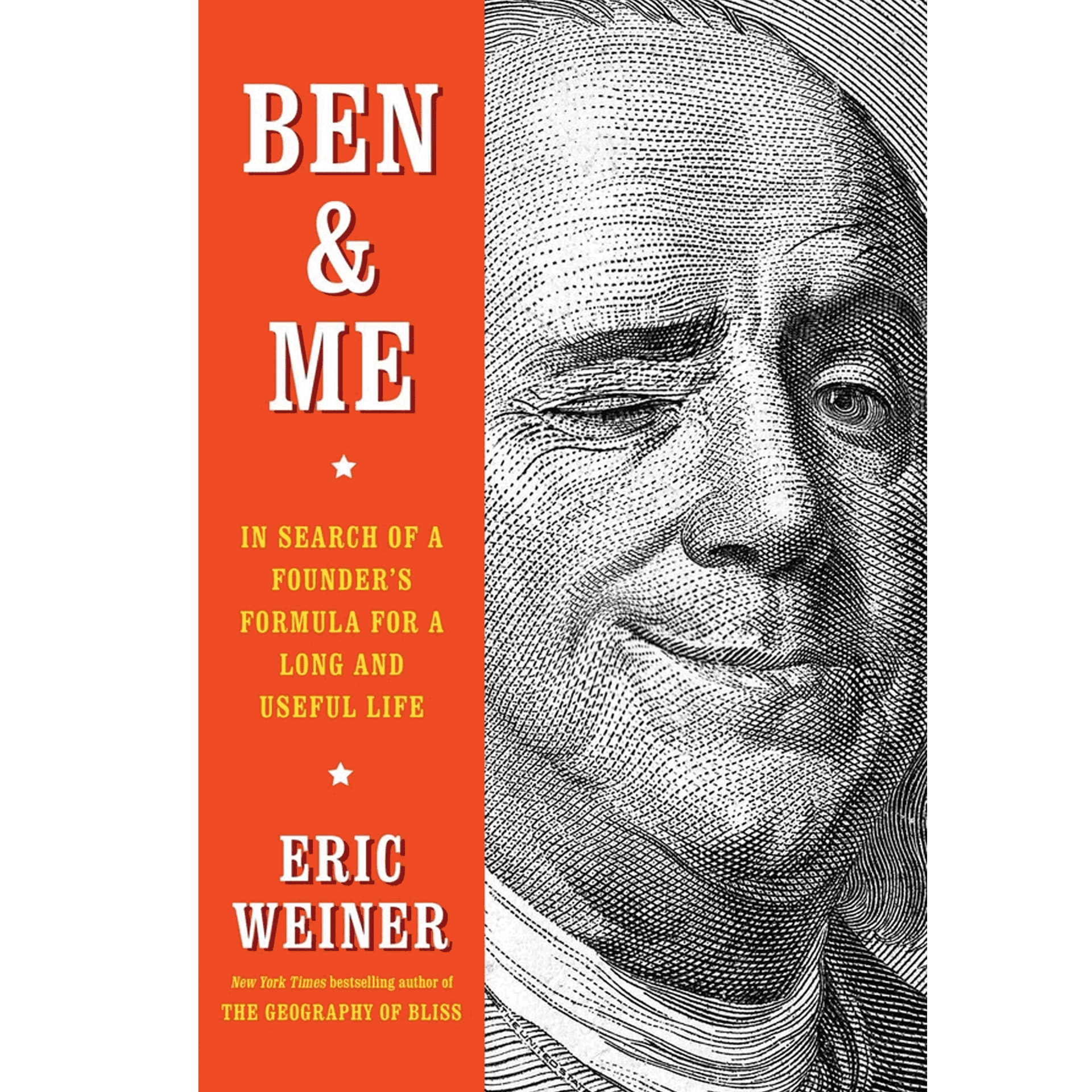
Eric Weiner - Ben & Me
Podcast Description The podcast "A Book with Legs," hosted by Smead Capital Management, explores value investing through the lens of literature. Each episode features discussions with authors whose works have influenced the investment strategies of the Smead team.
Episode Overview In this episode, author Eric Weiner engages with Cole Smead about his book, “Ben & Me,” which delves into the life and philosophies of Benjamin Franklin. Weiner shares personal anecdotes, historical insights, and the timeless lessons derived from Franklin’s experiences.
Key Themes and Discussions
- Inspiration and Background
- Weiner was initially drawn to Franklin during his time in Afghanistan when a local carpet dealer emphasized the global recognition of Franklin through the $100 bill.
- The pandemic prompted Weiner to reflect on his life and seek inspiration from Franklin as a role model, particularly regarding living meaningfully.
- Franklin's Early Life
- Education: Franklin had only two years of formal schooling but became a self-taught writer and thinker, primarily through his love for books.
- Influences: He grew up in a Puritan Boston, which, contrary to expectations, was intellectually vibrant.
- Character: His father, Josiah Franklin, had aspirations for him to become a clergyman, but Franklin's interests lay elsewhere, leading to a complex father-son relationship.
- Philosophies and Characteristics
- Usefulness: For Franklin, the concept of usefulness was paramount—serving others and contributing positively to society.
- Pragmatism: He valued empirical evidence and the application of knowledge, often learning through experience rather than theory.
- Virtue and Character: Franklin created a list of virtues that guided his behavior and encouraged character development through habit.
- Humor and Personality
- Franklin’s humor was a potent tool, often using it to critique societal norms and connect with others.
- He had a self-deprecating sense of humor and did not take himself too seriously, which contributed to his relatability.
- Political Engagement
- Loyalty and Rebellion: Initially loyal to Britain, Franklin's views shifted over time, especially after experiencing elitism from British officials.
- Diplomacy: He played a crucial role in negotiating treaties and building alliances during the American Revolution, emphasizing the importance of gratitude and humility.
- Legacy and Complexity
- Franklin's relationship with his son, William, highlights the complexities of familial loyalty amidst political divides.
- The episode underscores the idea that historical figures like Franklin are multidimensional and flawed, deserving of both critique and admiration.
Key Takeaways
- Franklin was a blend of pragmatism, intellect, and humor, making him a relatable figure even today.
- The importance of continuous learning, adaptation, and the application of knowledge in daily life are central to Franklin’s philosophy.
- Understanding historical figures requires recognizing both their achievements and shortcomings, allowing for nuanced appreciation.
Final Thoughts The interaction between Cole Smead and Eric Weiner in this episode offers profound insights into Franklin’s character and legacy, encouraging listeners to reflect on their values and the lessons history can provide for contemporary life.
Further Engagement
- Listeners are encouraged to explore Eric Weiner’s work, particularly “Ben & Me,” for a deeper understanding of Franklin's influence.
- The episode inspires curiosity about historical figures as sources of wisdom and guidance in modern life.
Conclusion This episode serves as a reminder that the wisdom of the past, embodied in figures like Benjamin Franklin, can guide present and future generations in building meaningful lives.
Written by AI. May contain mistakes. Listen to the episode to check what was said.
Transcript
Automatic transcript. May contain errors.0:02You're listening to A Book With Legs, a podcast presented by Smeed Capital Management. At Smead Capital Management, we advise investors who fear stock market failure. You can learn more at SmeadCap.com or by calling your financial advisor.
0:21Welcome to A Book With Legs podcast. I'm Cole Smead, CEO and Portfolio Manager here at Smead Capital Management. At our firm, we are readers and we believe in the power of books to help shape informed investors. In this podcast, we speak to great authors about their writings. The late, great Charlie Munger prescribed using multiple mental models and analysis. We analyzed their work through the lens of business, markets, and people. Charlie Munger's hero was Ben Franklin. We are going to look at the life, habits, and beliefs of Mr. Franklin. Joining us is Eric Weiner to discuss his recently released book, Ben and Me.
0:57Give our listeners a little background on Eric. Eric is an award-winning journalist. He has published other titles such as The Geography of Bliss, The Geography of Genius, Man Seeks God, and The Socrates Express. Eric is a former correspondent for NPR and reporter for The New York Times. He is a regular contributor to The Washington Post and BBC Travel. Eric, thanks for joining me today. Cole, it is great to be with you. Yeah, this will be a lot of fun. This is just a true American in so many respects. And so it's and I and I, as we were talking about before, you give it such a personal walk through your own life and teach people about who you are in the process.
1:33And so I think that's always been a good behavior for me to compare and contrast, like we were talking about, with the person you're learning about. But I guess, you know, what inspired you to write about Franklin through your experiences? And obviously you had some things in common with him that must have drawn you to him. Well, he was actually, to be honest, not an obvious choice of subjects for someone like myself. I was, as you said, a former foreign correspondent for NPR. I've traveled widely, lived overseas for a decade, and have always looked to foreign voices of wisdom. Gandhi, Confucius, Socrates.
2:12But actually, a number of years ago, I was actually in Kabul, Afghanistan, covering the war there for NPR. and I dipped into a carpet shop. And the carpet dealer there, you know, it's time to pay for my carpet. And they wanted U.S. dollars. I gave them some 10s and 20s. And he said, no, no, no, only Franklin's, only Franklin. So even a carpet dealer in Kabul, Afghanistan, knows Benjamin Franklin because he is the face on the$100 bill. And here's a fun fact, 70 % of$100 bills circulate outside the U.S. And I kind of tucked that away. And I thought, you know, I should know more about him. It wasn't until a few years ago, mid-pandemic, when I decided to dive deeply into Franklin and his life, a big birthday was approaching.
2:59I won't say what it was, but the number six featured prominently. And I was just feeling kind of unsatisfied with my life. Perhaps you've experienced that sometimes, like, you know, some outward success. Yes. But have you really have I really done what I want to do with my life? And what do I do with the last, I hate to put it this way, but the last act of my life? And Franklin seemed like a pretty good role model for that. In fact, an excellent one. We'll come back to that because I really like that part about him. I am. And I'm going to ask you a question about you partway through this, too, because I think he had a certain he has certain characteristics to him that are just to your point.
3:38They're uniquely Ben. They're uniquely Franklin in orientation. So just to kind of bring us to the start, teach our listeners about Ben, you know, his influences as a child. He obviously grew up in Puritan Boston, which when we hear that, you know, it was not long after the Salem witch trials, as you pointed out in your book. But that seems like kind of a static environment to be born into. But you pointed out it wasn't as static as people thought. Not as puritanical as you would think the Puritans are. I mean, let's face it. Okay. Puritan Boston in the early 1700s was not exactly Las Vegas. All right.
4:16Sure. But it was a very bookish community. In fact, the Puritans, before they sailed for Boston, they had already put together a library of some 50 books back in England. So there was a Boston library before there was a Boston. And Franklin was always very good at sort of juicing a place for everything it had to offer him. And what Puritan Boston had to offer him was books, really. We're talking before about our love of books. Franklin adored books. And it's a good thing because he only had two years of formal education. That's it. Before his father yanked him out of school at age 10. And so how did he become such a great writer and statesman?
5:01Well, he was self-taught. And how did he do that? Through books. He would get a hold of them any chance he got. He would beg, borrow them. While everyone else was in church on Sunday, he'd sneak into his brother's print shop where they had a small library and read. He just absolutely devoured books. So even in puritanical Boston, to your point, I think you point out that like the local whorehouse was called Prudence the Prude or something along those lines? The Prudish, what was it called? Prudish Madam of Boston, something like that. Yeah, it was something along the line. But to your point, they're puritanical, but these are also people that ventured far from home.
5:43And I think even point differences, like there was a difference between the North Church and the South Church. And I think you pointed out that the intellectuals floated at the North Church compared to the South Church. Other way around. Other way around, sorry. It was the South church where Franklin's father, Josiah, belonged. And it was the contrarian church. So you have to remember, Boston at this time, the population is only about 8 ,000 people, right? And life is hard. So think of it much more. Don't think of it as like Boston today. Think of it as a frontier town, almost like someplace in Alaska somewhere or wherever frontiers, whatever frontiers we have left today.
6:23It was out there. So, yes, you're a Puritan, but everyone just had to do whatever they could to get by. So, you know, I talk about the hyphenated career. You could be a barber physician. You can be, you know, an editor printer. Everybody had to do everything. And I'm convinced that had Josiah Franklin, Ben Franklin's father, not sailed over in the late 17th century from England to Boston, we would not know the name Ben Franklin. He was not going to flourish in old stuffy England. It was only in the U.S. where he could do that. Sure. And as you pointed out, he only had two years of formal education.
7:02What was his original planned course from his father? And why did his father not have him continue on that? Well, Ben had his own dreams. He wanted to be a sailor, actually. He would hang out in the harbor and talk to the sailors. And he loved the water. He was a great swimmer. and he wanted to go and see the world as a sailor. And his father was having none of it because he already lost another son to the sea, presumed dead. And so that was nixed. So his father said, well, we're going to offer you to the church. You're going to be a clergyman. And if you know anything about Ben Franklin, he was not a churchgoer.
7:41Sure. And he had no patience for stuffy clergy. I mean, I would not say he was an irreligious man or even an atheist. He just didn't like organized religion. And even at age 10, that came across. And I think his father realized since so much of education then was steering you toward a career in the church, he realized that wasn't going to work out and he needed help back at the candle and soap shop that his father ran. So he pulled him out of school. Well, and then I think he pointed out too that his normal course would have been going to the Latin school there in Boston and then followed on by going on to Harvard, like many of the clergy did at the time.
8:19And it's weird that we think about him as a learned man and intellectual. But to your point, he wasn't a quote unquote educated person in a traditional sense. He wasn't. He had the title doctor and we all still today, we might call him Dr. Franklin, but those were honorary degrees conferred by St. Andrews in Oxford. So, I mean, Cole, I think that his lack of formal education, I think actually turned out to be a blessing, Unlike Thomas Jefferson, George Washington, John Adams, other founders, very well educated in a traditional sense. Franklin was forced to improvise. And sometimes being a self-taught person makes you the best taught person.
9:01Because he's really, he's not being fed the information. He's eating it himself. And he's going out and getting it. He's hungry for knowledge. And that makes a difference. Also, I think it made him just more relatable to a wider spectrum of people. Once he became an adult, I mean, he could talk to anyone. He could talk to the fishmonger, the printer's apprentice, and he could talk to kings. In fact, he met four kings and dined with one of them, which is pretty amazing. Sure. So he could talk to anybody. Sure. You mentioned that one of his favorite books was Pilgrim's Progress, which was very interesting because, like you mentioned, he was not a religious person.
9:45And many would look at that book as fairly religious. But it was a very personal story of, you know, this man with a burden, if you will. With a burden and who goes on a journey, right? It's the pilgrim part. And I think that appealed to Franklin, that idea of going on a journey. And you're right. He was not religious, but yet he's absorbing wisdom from a religious book. So that's another brilliant thing about him. And I'm sorry I keep talking about him in the present tense, but he's still alive to me. Correct. A brilliant thing about him is he could put aside what he didn't like about a person and still learn from them.
10:26He once said, you know, you should be friends with your enemies because they show you, befriend your enemies because they show you your faults. Sort of kidding, sort of not. So he was able to put aside the religious content of the book and absorb the style, the journey, the moral lessons. Sure. Yeah, because I think you touch it. Plutarch's aim, for example, in your writing where you talk about, you know, Plutarch studying, you know, these these leaders or the or the wisdom of these of these people. And that was something to your point that Franklin, I mean, that's what he was trying to ascertain when he went about reading and learning.
11:04Right. He wasn't looking for facts, per se, although he absorbed plenty of those. Sure. He was looking for lessons in character and virtue. And we could talk probably for an hour about that word. I mean, today the word virtue has kind of a negative taint to it, I think. In some quarters, it's seen as sort of sanctimonious. Oh, you're so virtuous. Not in Franklin's time. Virtue was something people took seriously. And it was more synonymous, I would say, with character. To be a person who, a virtuous person was to be a person of character. And that's what Franklin was looking for in all these books and these biographies of Socrates and other people he read.
11:43He was looking for role models. You touched on a word that he liked and was very central to the idea you just talked about. What was usefulness to Franklin? I think you touched on it in the first couple of chapters, but that's the idea you're getting to is, you know, what's useful. And that could be to many things to him, depending on whether he was reading, learning, witnessing, et cetera. Yeah. So usefulness was a central theme of Franklin's life. It was his North Star. The word appears nearly 30 times in his autobiography. And I mean, contrast that with happiness. Like we think of the U.S. based on this concept of life, liberty and the pursuit of happiness.
12:28Sure. Although they saw happiness differently then. You could theoretically, I guess, be happy by yourself, you know, without much contact with other people, theoretically. But you can't really be useful only to yourself. It implies other people. And Franklin was very much a social animal. And he loved, if he were to come back today, I think he'd be a social entrepreneur. Because he really wanted to help people, but in a systematic way. He was against what today we'd call welfare, you know, against handouts. He thought you help someone learn. It's the old teach a man to fish. Don't give him a fish philosophy.
13:12That was very much Franklin. But it was very innovative in how he came up with these systems, like the library in Philadelphia or the first hospital in Pennsylvania. The first matching grant. Matching grant was invented by Franklin. So you're a business person, right? So you know, like, scaling is a big deal. Not in my world, but in some worlds, like, does this scale is apparently a question. It was a question to Franklin, too. Once he had a good idea, he wanted to scale it very much and help as many people as he could. So he was very anti-elitist, though, from a personality perspective. So as you were touching earlier, he thought your pedigree of what you come from was of very little value.
13:54It was really, to your point, your usefulness to those around you. But we, you know, we give someone like him this huge gravitas and status, which seems so odd for how he looked at the world himself. In other words, like he ended up getting all that aspects in his own life. But again, that's not how he came at it. No, you're right. And we and some, not all biographers treat him with this, this reference that he didn't treat himself with. Wonderful, self-deprecating sense of humor. He loved satire. He loved telling stories. He loved listening to music, a glass or five of Madeira, his favorite wine.
14:36You know, he wrote a whole essay about the joys and virtues of flatulence. So, I mean, this was not a man who took, he took life seriously. He didn't take himself that seriously. And you're right. He really bristled whenever he encountered an elitist person. And he was much more likely to encounter that kind of person in London, where he actually lived for some 17 years than he was in Philadelphia. And I think in the end, you know, he became a rebel at a quite older age. It's age 69, a good generation or two older than the other founders. I think it was this constant belittling at the hands of British officials that eventually caused him to flip sides, basically.
15:26Sure. And could you point out something really interesting about the society he grew up in Boston? Like we talked about, we're kind of touching on this idea that it was a religious community. But you also talked about how even there was pragmatism among some of the most religious. So I think you point out that the Royal Society, there were nine people from the colonies that were represented in the Royal Society, but eight of those were Puritan scientists. So the idea of being a thinker and a person of faith were not, there wasn't a duality. You could be both. Right. You didn't have the divorce that we have today where you're sort of a man of faith or a man of science, a person of faith or a person of science.
16:08And yes, there are a few examples of people who are both, but not many. Different story in Boston at the time. There was a man named Cotton Mather, who was sort of the big poobah in town at the biggest library, a few thousand books, and was quite interested in all kinds of science, but especially medical science. And I'll give you one example. There was an early inoculation, sort of a sort of primitive vaccine against smallpox, but an effective one that was developed about that time. And in most of the learned physicians, people who went to medical school or college, at least at the time, were against it.
16:47They thought it was too dangerous. It wasn't going to work. But Cotton Mather, the Puritan preacher, was in favor of it. To give you one example. So, yeah, the Puritans were curious about the world. It was always they wanted to reveal the secrets of nature to see God's divine plan. So there was a religious motive for the science, but they were early scientists nonetheless. the less. Yeah, because as we were, you're talking about this, I was like asking, well, what's the second level question off this, right? And I began to ask the question to your point. It was like in some point in the history of the last, I'll call it 1000 years, it was all faith with very little reason.
17:28Okay. Yeah, around Franklin's time, you're finding faith matching reason at a level it hadn't been seen. And I asked myself, are we now just reason without faith? And is it just a pendulum that swings? Oh boy, I've got some strong views on this, but I do feel the pendulum has swung too far. And Franklin, let's talk about Franklin in his time. He grew up entirely in the 18th century, lived his whole life in the 18th century, the age of enlightenment, which is also, of course, known as the age of reason. And he was a very rational guy. And he definitely believed in the power of reason and was against blind faith.
18:09But he also saw the limits of reason and writes about this quite often. One example, he was a vegetarian for a while growing up in Boston, so he could save money to buy more books. Then he goes off, runs away from home at age 17. He's on the boat heading towards New York and they run out of food. So they start fishing and they bring up some cod and the cook is frying it up. It smells so delicious. But Frank's like, no, no, no, no. I'm a vegetarian. Then he notices that the big fish has little fish inside of it. And he says to himself, well, if the fish can eat other fish, then why can't I eat it?
18:44And then he tucks into the food. And then he says, isn't it a wonderful thing being a rational creature? You can reason yourself to anything. And so he was aware of this, that our reason can just play tricks on us. Confirmation bias, for instance. And I think he always retained an aspect, an element of faith in his life. Hi, I'm Cole Smead, CEO and Portfolio Manager here at Smead Capital Management and host of this podcast. If you enjoy this podcast, I'd like to invite you to check out SmeadCap.com. At our firm, we are stock market investors. We advise investors who fear stock market failure with a discipline that has proven success over long periods of time.
19:28Learn more about our funds at smeedcap.com. Past performance is not indicative of future results. Investing involves risks, including loss of principle. Please refer to the prospectus for important information about the investment company, including objectives, risks, charges, and expenses. Read and consider it carefully before investing. Smeed funds distributed by UMB Distribution Services, LLC, not affiliated. I'm going to come back to a question on that because I also touch later in the book, you touch on some really interesting things to think about him. Comment on his empiricism. And maybe if you want to give an example of how he looked at his empirical studies in his life, I think would be one way of doing that.
20:12Well, one historian said Franklin had an empirical temper, and I really like that phrase because it, yes, it was focused on his science, on his electrical experiments, observing and basing your findings on what you experience, what you see. That's empiricism. But it extended to every aspect of his life. we talked about how he loved books, but he once said, oddly, read, read books, but not too many. I thought, well, geez, what does that mean? What's too many books? And I think what he meant is get out of the book at some point and experience. You know, he, I said he was a great swimmer. Well, how did he learn how to swim?
20:59Well, there was a late 17th century book called The Art of swimming by a French author. I managed to get a hold of a copy and it has these woodcut illustrations that show naked men in the water doing various things that may or may not have to do with swimming. I don't know how you can learn swimming from this book. And the fact is he did it. He got into Mill Pond in Boston and he, through trial and error, taught himself. That was his empirical method at work. But then it applied to larger issues like slavery. He was a slave owner for much of his life. But then when he saw evidence that it was a evil institution and that blacks were every bit as capable of learning and studying as whites, he, based on that new evidence, changed his mind and became an abolitionist, actually, by the end of his years.
21:50So it's just this idea that you are open to experience. I would say that phrase, He's open to experience. Well, and one of his open to experience is maybe his coolest invention. This has not got much press. You point out that he created like modern day windsurfing. Can you explain what he built? Because this is I've never heard this story. I thought, oh, yeah, Ben Franklin, your point. He trial and errored his way to interesting things. Yeah. So he loved kites and he loved swimming. And he combined the two on this pond that sadly doesn't exist anymore in Boston called Mill Pond. And, you know, one day he's just, I don't know if it was exactly windsurfing or windswimming.
22:32I'm not sure what you would call it, but he describes lying on his back and hoisting the kite into the air on a windy day and letting it just carry him across the pond. And he loved that. He also invented swim flippers or fins, at least for the hands. He tried it for the feet as well, but flexible rubber had not yet been invented. That was a problem. So, yeah, he had a lot of smaller inventions that people know the lightning rod. They know bifocals. But he also invented the flexible catheter and small things like the long arm, which he used to pick up books from the top shelf of his bookshelf.
23:14Sort of early version of our copy machines he invented. Sure. He used multiple masks in his lifetime for various reasons. And the line in your book that I loved, as you put it, he was a genuine fake. Okay. Yes. You know, maybe explain that through silence do good as an example of what you mean by that idea of being a genuine fake, which you're saying it in an honorable way. And I think it's a brilliant way of putting it. Yeah. So Franklin's 16 years old. Right. He's not in school. He's working in his brother's print shop and newspaper as an apprentice. And they don't always get along. Franklin wants to be a writer.
24:00He knows there's no way his older brother's going to, you know, let him write for the newspaper, the New England Current. So what does he do? He invents this character named Silence Duguid, who is supposedly a middle-aged widow and orphan living in Boston, a woman. And he disguises his handwriting, Franklin does, and writes these letters to the editor, essays almost. And one by one, he starts slipping them under the door of the newspaper. Joseph Franklin, Franklin's brother, loves them and publishes them on the front page of the New England Current. And they had no idea that it was 16-year-old Ben.
24:41In fact, some readers of the Current, men, wrote into the newspaper proposing marriage to Silas Do Good. That's how good he was. So it was a deception, but it was a useful deception, I think. And it was an honest deception. Boy, that sounds like a contradiction, but it's not. And that Silas Dugood had wise things to say about morality, about the clergy, about Boston politics, about freedom, you know, about freedom of the press. And Ben Franklin knew there was no way he was going to get those ideas out there as Ben Franklin. So he did this very convincing, wore this very convincing mask, and it began really a lifelong habit of masking.
25:22He wrote in dozens and dozens of pseudonyms. He wrote as an Algerian emir, as an enslaved black person, as a single mother of five. Yeah, he even wrote as his own gout, the disease he suffered from. So he had this very playful way of writing. Yeah, and this mask he wore obviously was found out eventually by his brother, and his brother got rid of him promptly from publishing with him. And this is really what takes him to Philadelphia. I just couldn't imagine what it's like for him at that age, his teens, to be trekking from Boston to Philadelphia. And it's not like he has some trust funds sitting in the background feeding him money on the way.
26:07he's really doing this on his own means from point A to point B. Absolutely. He was out there. He had essentially five pennies to his name and a book or two. And he runs away, talks his way onto this ship that was headed for New York, and it docks in New York. And I should say that New York at the time was not New York of today. It was much more of a backwater. certainly a cultural backwater, kind of a rough and wild place. And Franklin tries to find a job in a print shop. There's no work to be found. Someone says, go south, young man. Philadelphia is where you want to be. And I think, well, thank goodness, because had he found work in New York, I don't think that place would have nurtured him the way Philadelphia did.
26:59It was not his sole place, which is a term I use in the book. And obviously, you know, we talked about puritanical Boston. Philadelphia was a very different place. William Penn had obviously settled a debt with the king to acquire it, as you pointed out. But what was the culture of the city he was coming to compared to Boston? Much less uptight. Let's put it that way. Less stuffy. Less stuffy. The, you know, Penn was a Quaker. William Penn was a Quaker. And the Quakers were much more accepting of other Christian sects. whatever they may be. There was also at least one Jewish person in Philadelphia at the time.
Read the full transcript
27:44It was the kind of place where no one asked you what your name was, where you come from. They simply asked you, what can you do? And Franklin could do quite a lot. And it turned out to be the perfect place for him. I mean, he needed Philadelphia and Philadelphia needed Ben Franklin. Sure. because I think you even talked about in the book how he's portrayed in Boston versus Philadelphia. So I think you talk about like the statues in Boston. Right. And you won't find statues. In fact, where he lived in Philadelphia is now long gone. And you'll find Ben Franklin on the Billboard advertisement or in the TV commercial.
28:25Selling cheesesteaks. You see lots of Ben selling cheesesteaks or, you know, rooting for the 76ers in costume. They do have statues of Franklin, of course, in Philadelphia, many of them. My favorite is on the campus of the University of Pennsylvania, where he's on a bench reading a newspaper. It's a very laid back statue. It captures his spirit, I think. um so yeah i mean philadelphia was and to some extent still is a looser place than boston when i to quote your book um you say quote the business of philadelphia was business now why i love that is i i moved myself again i as i'm reading your book i'm thinking about my own life and experiences like you talked about your own uh we moved our company and i moved my family four years ago from Seattle to Phoenix.
29:21And the business of Phoenix is business. I mean, that's why people come here. They come here for either owning a business, running a business, finding a job. You know, it's, it's ultimately commercial. And so much of what you explained about the culture of Philadelphia just was ringing in my ears for what I've learned. I've learned and witnessed here in Phoenix. To your point, because no one's from here, right? There's not like a fourth generation in Arizona. And that's a, I technically know a couple, but they're freak shows. But I say that because when you get here, the number one question is, well, what do you do?
29:53Which that's exactly what the question in Philadelphia would be at the time. And I think you pointed out in contrast, you know, in the modern day we live in Philadelphia, it wasn't like a clean place. It's just people could go do commerce there. And I think you talked about what the actual streets were like at the time. Could you explain that? Well, William Penn has set out to create this sort of idyllic planned community, like set up on a grid. And the idea was everyone was going to live, you know, not too close to each other. So everyone had lots of space. Didn't work out that way. Turns out everyone wanted waterfront property.
30:27They wanted to be on the Schuylkill or Delaware Rivers, you know, and they just crowded together in the waterfront in what's now Old City Philadelphia. You can still see it. And it quickly became a kind of wild and woolly place. There was a tavern, I think, for every 10 adult men. There was even a tavern briefly at the local jail, which strikes me as odd, but there you go. So it was that kind of place. And you said they wanted to know what you could do. That's true. But they also wanted to know what you might be able to do in the future. It was filled with a sense of possibility. So when you think about the American dream, you're really thinking about Ben Franklin.
31:10He was the prototype for that. that had no money, self-educated, lands in Philadelphia, the promised land, and makes something of himself. I mean, it wasn't that smooth. It wasn't a straight line. Oh, yeah, yeah. There were lots of detours and bumps. We're glazing over a lot of tribulation and trials. So one of his next, he goes to Philly. He runs into a gentleman who says, I'll give you letters of credit if you go to London. Right. And so on pretty much, again, that wasn't, I would argue that's not reason. That's faith. He had faith in another person to put him in the right place. So he takes off to London.
31:51And what transpires for him initially when he gets there? Well, it turns out in this case, it was misplaced faith. So the lieutenant governor of Pennsylvania said, you should open a print shop. We don't have any equipment here, but go to London, like you said, and everyone will know me. And he gets there and turns out there are no letters of credit on board the ship when he lands in London, when they check the hold. And it turns out people do know William Keith, but they hate his guts because he owes them money. And Franklin realized he had been had, you know. And instead of either fuming about it or getting on the next ship somehow, some way back to Philadelphia, he decides to make the most of it and finds work at actually two print shops in London.
32:41And I call it his great year abroad. I mean, great in that it was momentous, but he didn't really become anything special there. He worked in the print shop. He made friends. Um, he had, this is a quote from his autobiography, intrigues with low women. Um, you can imagine what that means and spent a year and a half there before heading home to Philly. Sure. Uh, could you, could you just mention what the asbestos purse was and why it was valuable to him at that time? So he, he knew that the British loved curiosities from the colonies from all over the world, really. So the whole phenomenon of collectibles was really taking off in London.
33:25So Ben brings this purse or wallet made out of asbestos, and he contacts this nobleman who's very successful, very wealthy, and says, you know, I have this rare item from the colonies, and I'm only in town for a few days, so if you want it, let's meet. total lie. He was going to be there for a year and a half, but he meets with the man, sells him the purse for a tidy sum. And at that, you know, he's only 18, 19 years old, and you can tell already he's got a good business sense. Yeah. You mentioned that coffee shops that time were very social places. So that was one place he could meet people in London.
34:11I think you mentioned Ben didn't like talking in public, but he was really a social animal. he liked engaging in discussion and debate. He didn't like public speaking. He was not a good public speaker. I don't think he would do that well in the age of television, to be honest. And when he was with a group of people when he didn't really know them, he was quiet. He was very reticent. But one-on-one or in a small group, like at a pub where he knows everyone, very gregarious, lots of stories to tell. But he needed to know you. He didn't just open up to anyone. Sure. He would have been, I look at it as, let's say you could host like a once every two weeks supper club dinner party with friends.
34:54He'd be like the ultimate friend to have for a supper club where he tells you what he's either learning or where he's going to listen to hear what other people have learned or read or experienced recently, because he liked not only engaging, but he also liked listening and learning. Yes. And he was not one of those people that dominated the conversation. He had this great term of over-talking. He accused someone of much over-talking, which is great. And he didn't do that. He could tell stories, but he could listen as well. In fact, he was an excellent listener. So I'm going to ask, I touched on this earlier, but I want to ask this question, I think, now, because I think it's kind of a good picture since we've got to know quite a bit about Ben.
35:38So I'm going to quote from your book. You know, we talked about this idea of reason and faith, so I'll quote it. quote, at that time, reason and faith had not parted ways speaking of puritanical Boston. So I'm going to ask you a question that I think I know Franklin's answer to, because you also quote William James, who said, truth is what works. And then you have another quote from your book, quote, for Franklin, the ultimate test of a moral proposition was not its truth, but it's utility, which I love that. That's just such an awesome quote. I think that might be the most valuable quote for like, if someone's going to take one snippet out of your book and say, Hey, what's the value to you?
36:21So here's my question. I'm going to ask you because I'd love, I always, I always love thinking about people that are learned in their field. I've studied a lot on something. And I asked this question. Um, so I mentioned Charlie Munger earlier. So there's the Charlie Munger or what I'll call the Elon Musk camp of, we don't have enough people in the world. Okay. And then there's like the Paul Ehrlich camp, or I'll call it more of the scientific community. It says we have too many people in the world. And I love like, you know, in your eyes, how do you look at that? And how do you think Franklin would look at that debate?
36:59Well, he did write about population growth, actually. He wrote a famous essay where he, at the time, he's still very pro-British, and he's making the argument for the importance of the American colonies. And he projected quite accurately, it turns out, that the population in America was growing at such a rapid pace, it would, in the not-too-distant future, exceed that of the mother country, of Britain. So he did get that right. Which camp would he be? And I'm not sure. I think he would ask questions like, well, do we have enough food to feed everyone? Like, how can we make this work? So you talked about truth is what works.
37:46And he was very much a systems thinker in a lot of ways. And I think he would say, like, what system can we come up with that can feed and, you know, house, you know, not just 8 billion, but 18 or 80 billion people on the planet? Well, because I also I ask it because I think of Franklin as kind of a natural optimist. Like, why else would you take these risks and do this stuff and explore? Because he really explored and adventured mentally and physically. No, he absolutely was. He was what I, well, I borrowed the phrase from Dave Eagleman, the neuroscientist. Franklin was a possibilian. Correct.
38:22And I think of like in the possibility. And so, you know, to go back to your quote you use, because I think your quote fits him so well. So you said, but it's utility. Okay. So utility, if I think about like, let's graph, you know, utility curves like they would in economics. I think a lot about, well, what's the total utility, right? We want to produce the most utility possible in society, but also to produce the most possible utility, you've got to have the most people because that produces the most utility. And so I think in a possibility, I think about him is not a truth, but he says, how do we produce the most total human good, thus utility?
39:00I hadn't thought of it that way, but it's an interesting idea. I mean, the formula or formulation of utilitarianism, first articulated by Jeremy Bentham in Franklin's time, was the greatest happiness for the greatest number. So I guess if you increase the greatest number, you have to increase the greatest happiness. And that's the challenge. but you're right. Franklin was an optimist, a possibility and I don't think he would want to cap population on the planet but that's a guess. We hope you're enjoying the podcast. You know, we work hard putting together this show but we work even harder for our investors at Smead Capital Management.
39:45At Smead, we believe in disciplined investing which is why the Smead funds have a proven track record of long-term outperformance. If you're an investor who fears stock market failure like I do and want to invest in wonderful companies to build wealth, we invite you to visit smeadcap.com. Past performance is not indicative of future results. Investing involves risks, including loss of principle. Please refer to the prospectus for important information about the investment company, including objectives, risks, charges, and expenses. Read and consider it carefully before investing. Smead funds distributed by UMB Distribution Services, LLC, not affiliated.
40:22Almost every time we have an author on, I ask that question because it's interesting. And you made a wonderful point in your book. I just, I have to note something you pointed out that I just don't hear people say, but you're right. You point out that we often critique the author and not the writing, okay? Or the talking head on TV or whatever it is. Correct. We first see, you know, who's saying this or writing this. Sure. And then we decide whether it's true or not. And we're very good at fooling ourselves at this. We can think, you know, oh, no, I'm just listening to the message. I'm not considering the messenger.
41:00No. You know, the same statement, whether you're the left or the right, I see this all the time. Totally. Something that infuriates people on the left when they hear it from the right, but when they hear it from their side of the aisle, they make excuses for it. That's okay. I can't think of an example at the top of my head, but it happens all the time. And Franklin went to great pains to, you know, like to read John Bunyan's religious book and listen to the positive message and extract that. But not say, oh, Bunyan was a preacher. He was a religious man. I'm not going to read that. Franklin would watch Fox News.
41:41He'd watch MSNBC. He would go left and right and center and look for the wisdom where he could find it. And we'll come back to some of that, but I agree. To your point, I think our books are better masks for us than our own mouth is, to put it in that term. What do you mean by that? What I mean by that is what I've witnessed with authors is they're so much more pragmatic in their writing than what they might do conversationally separate from their writing, which is kind of a perplexing. In other words, like the book is a mask in a way for them to be very thoughtful and pragmatic. But then if you talk to them kind of like off the script about the book, you'll find more oddities, kind of like the humanness of us that you don't expect when you read the book.
42:24Yeah. My wife says I'm wiser on the page than in real life. But I think that's true for everyone. Maybe that's what you're talking about. And so if I'm acting neurotic, which happens several times a day, she'll say page 232 of Socrates Express or whatever. She's like, you said it there. And I'm like, I know I wrote it, but now I'm in it. So it's, I think the act of writing is a masking, but I don't use masking in a negative way. It's very useful, right? As Franklin would say, it has utility. And so I am wiser on the page, but I know what the target is. I just can't always hit it, if that makes sense.
43:03Since we're making fun of ourselves, first of all, I also loved your references about your wife correcting you in the book. I was like, oh, I have a kindred spirit. I appreciate this world that I know I'm completely fallible and my wife knows all my shortcomings. So I think that was a very humanizing, enjoyable part of your book. Much like Ben's errata, right, where he wrote down things he had done that weren't so smart that like a publisher could correct later, which I thought was an interesting way to use his profession as a way to think about his life as well. And it's a kinder way of treating yourself, actually, because, you know, too many of us, we make mistakes and we pull our hair out.
43:44We beat ourselves up. Terrible person. How could I do that? You know, treat the mistake, even small mistakes, almost like a sin. Sure. And Franklin didn't see it that way. He was a publisher by profession, and an errata is a mistake, a typo or something that appears in the book. And most books, even today, are published with at least one errata in them. What does the publisher do? They don't beat themselves up. They just publish a new and improved edition. And Ben said to himself, why can't I be like that? I make a mistake, I correct it, and I publish a new and improved edition of myself. He didn't always stick to it.
44:24you know, when it came to big things like his relationship with his son, a few other things in his life. But in general, I think it's a pretty good approach, you know, that you can always just start over and publish a new, improved version. Sure. To follow on the errata, he also believed in virtues. And I have to mention this because, again, after I read this book, I thought, I feel like I live in Philadelphia. OK, let me explain real quick. Um, my kids go to a public, uh, charter school that produces a classical education. Okay. Very, you know, UPenn Franklin-esque in, in, in that respect. But they, they teach, uh, uh, I want to say it's 12 virtues there at the school.
45:08I'm like, you know, beauty, truth, you know, knowledge, et cetera. And as I was reading what you're writing about Franklin, that was Franklin. He believed in virtues. And then he also believed that character wasn't God-given. It was produced, or I think you talked about it being imprinted like the Greeks believed to be. He was a big believer in virtue and character and habit. I know habits are kind of hot right now, but Franklin was on to them a few hundred years ago. He thought basically that everyone, most people, knew what the right thing to do was. Sure. like being charitable, being honest, all these things.
45:49They just needed a method to do it. He was a method guy. And so in his early 20s, he comes up with this list of 13 virtues. Probably a lot of them overlap with what your children are learning in school. You know, honesty and industry, frugality, fairness or justice, all these things. I mean, the virtues really haven't changed in the last few thousand years. There's just a few variations. And he comes up with this list, and then he comes up with this plan where he's going to take out a little notebook and draw a grid and go through one virtue per week, focus on one per week. And any time, carry the book around with him during the day.
46:32Any time he strays from, say, the virtue of honesty and he says something dishonest, he'll put a little checkmark there, a little mark. And he thought, oh, this is going to be easy. You know, pretty good guy. Finds out it was not. that he was more filled with flaws than he thought. In fact, the book was so filled with these black marks, he called it a holy book of a different kind. And yet he thinks it was a valuable exercise, compares himself to a young scribe who models themselves after the great calligraphy masters. And even if they fall short, they have improved their hand, their handwriting.
47:16and yeah I feel the same way I tried one of his virtues silence for a week and because as my wife and daughter will tell me I tend to over talk as frankly would say and I didn't know I could not I could not do it but I became aware of when I was talking too much usually when I was anxious or something like that and so it's not all or nothing it's not like either you achieve moral perfection, as frankly called it, or you don't. It's a process. So let's talk about humor, because you're kind of getting to one of my favorite subjects in the book. You talk about it in light of your daughter in the writing, but you talk about how his humor was, his levity.
47:58I think you even commented that if it was up to him, he probably would have slipped a joke into the Constitution. It was the Declaration of Independence. Oh, yeah, Declaration. The founders were casting about for someone to write it. And Franklin made sense. He was a writer, publisher, very respected. But the story goes, and it may be apocryphal, that they nixed the idea because they were afraid he would slip a joke into the document. I don't know if it's true or not, but it sounds like the kind of thing that Franklin would do. Sure. But he would do it with good prose. In other words, he wouldn't just throw a joke in.
48:34And he would use imagery to make fun of something or the king or parliament or something like that. And through a story. Yeah. Just one example is, you know, he's living in Philadelphia and the king and the British are sending their convicts, emptying their jails and sending their criminals here. And crime goes up in the colonies. And he writes a satire called Rattlesnakes for Britain, where he said, dear British people, would be happy to send you our rattlesnakes. They don't have them there, but we have them in the U.S. Lots of American rattlesnakes. We'll even deliver them to your gardens, you know, and your salons.
49:13It's the least we can do to show our appreciation for all the criminals you've sent us. So, rattlesnakes for felons, that's what it was called. That was just one example of his satire. And he would he use humor to make a point often and to to shine a light on truth that he couldn't do otherwise without getting into a lot of trouble. And again, because I think you commented that, you know, you'll often use that with your own daughter. I I have three daughters. Oldest one's 14. The other's 13. They are the toughest audience that I've ever witnessed with a humorous line in my life. Right. No, they're tough.
49:53But here's, I guess here's the point I try to make in the book about humor is I think humor can be used two ways, either to reveal a truth or to conceal it, either to reveal or to conceal. Franklin, for the most part, uses to reveal a truth. And I do sometimes, too, in my writing. But in my life, my everyday life, if I'm having a conversation with someone, they're talking about some feeling something close to me, and it's a little too close to the bone, I'll make a joke to deflect it. And my daughter, who does not appreciate my dad jokes, also says that basically she accuses me of overusing humor to avoid a serious, important conversation.
50:33And she's right about that. Yeah, I get that. So humor can work both ways. I get that. Let's see. On this idea of humor, just kind of levity and lightheartedness. he didn't mind talking about his weight or his gut or his, you know, what he called himself, Mr. Fat, Dr. Fat side. He also talked about, I mean, he was, you wrote about in his book, in your book that he would say, if we could put together a compound and turn our farts into, you know, something better, it would be perfume. Yeah, exactly. He was, he just didn't take things too seriously. And to your point, it wasn't a stuffed shirt thing.
51:12It was like, we're human, we might as well treat ourselves as human. He was fun. And I think that he was a bon vivant, which I think explains why the French adored him so much. I mean, they just loved him to pieces because they saw that he was able to enjoy life while still conducting business. This is when he's in France as the U.S. representative there during the Revolutionary War. And it was a perfect fit because Franklin enjoyed life and he also knew that the French conducted business not over the breakfast table as John Adams would have it, but over the dinner table or the salon or drinks after dinner.
51:52Sure. He goes back to London in 1757. You know, William Penn's no longer alive from what I took from your writing and he has to go back and deal with his two sons. You know, no one ever says Ben Franklin, that loyalist to the king, but maybe not a loyalist to parliament. Could you just explain what he was trying to do with the Penn brothers and why he really just despised parliament? So, yes, he goes in 1757. William Penn is dead and he's representing the colony of Pennsylvania because the Penn brothers are basically absentee landlords milking the colony from London for all it's worth, paying no taxes.
52:33So his mission is first to get them to cough up their share of taxes. The Penn brothers were having none of it. They dismissed this little electrician, as they called Franklin. And then the mission becomes, well, we really hate the Penn brothers. We want to become a royal colony, actually closer to the king. This is the ironic thing. Ben Franklin, founding father of the United States, is on a mission to London to bring Pennsylvania and some other colonies, perhaps closer to the king of England. Sure. because he thought the bad people were the parliamentarians. They were the corrupt ones. They were the problem, not the king.
53:11Eventually, he changed his mind about the king, but it took 15, 16, 17 years for that to happen. Sure. And would you say, because I think you touched on this earlier, but I want to kind of hit the nail on the head. In a way, are you saying that Ben, as a revolutionary, was ultimately sown with the seeds of his anti-elitism? In other words, after experiencing that in London with Parliament and other nobles, to your point, who belittled him, looked down on him, he looked and said, you know, that elitist crowd I want to be no part of, therefore, why not revolt? Is that a fair way of thinking about that?
53:48I think so. I mean, it's obviously more complex than that. And there was a lot going on with the Stamp Act and other actions. But I think if you were to look at it just from a human point of view, the British looked down at the colonists. They saw them as less than. Sure. Right. They were English, but not really. And they had nothing to teach us. And I think Franklin got that message not from his fellow scientists and writers. They respected him. But from the aristocrats, the ruling class of Britain, the message he got in so many words and maybe exactly these words is, who do you think you are?
54:32And this sort of came to a head in 1774 in an incident called the Cockpit Incident, which is a cockpit was this this room where the king's cabinet met. And they dragged Franklin before it. This is just after the Boston Tea Party. And basically used him as a punching bag, saying, you are the prime conductor of all the problems between Britain and its colonies. It's this man. He's not an honest man. And he just gets dressed down by this solicitor. And Franklin just stands there. He's poker-faced, doesn't reveal any emotion. But I'm convinced, and many historians are, that that was the moment for him.
55:11He walked into the cockpit, a loyal British subject, and walked out an American rebel. You commented on how he really didn't fight back in that. In other words, he took it in a way. Right. But that didn't mean the wheels weren't turning and the hamster wasn't running in his brain. It's almost like the person that I walk away thinking about Franklin through your book to be, is he's already thinking about his next steps based on what he's seeing now. You know, to your point, empirically, he's learning that there is no way to stay part of Britain or be a British. He was a chess player and he applied that to his diplomacy.
55:50Absolutely. And, you know, there's a line from from a Hemingway book. You know, how did you go broke two ways? First, very slowly, then very quickly. Yeah. Same thing with Franklin. How did you become an American rebel? Two ways. First, very slowly, then very quickly. And once he flipped, he flipped with the conviction of the converted. And he became even more radical than a lot of the radicals back home. Not quite Sam Adams style, but pretty close. And that's the way he was. I mean, he hated confrontation. So he really wanted to keep the British empire together, the colonies and the mother country.
56:29He just didn't like it when families fought, basically. and so he stuck to, he refused to believe that the British really did not have their Americans' best interest at heart and eventually he did and then when he flipped there was no turning back. So since you, I think you mentioned it twice in the book, you mentioned Hemingway just a second ago and then you also mentioned the sun also rises at one of the end of the chapters. Is that your biggest fiction author that you enjoy the most? No, I enjoy Hemingway, but there are others I enjoy more, I would say. Okay. But, you know, there would be no Hemingway and no F.
57:13Scott Fitzgerald or, it's slipping my mind, Grapes of Wrath. No Steinbeck and others without Franklin, I think. He really was, in many ways, the first American writer. Now, he never actually finished a book, per se. The autobiography is unfinished. But 44 volumes of writing, that's how much he put together in essays and satires and correspondence. And he sort of set the tone for this very honest way of writing that is American, this kind of humorous way of writing, and also a tautness that, of course, we see in Hemingway. I mean, Franklin valued brevity, valued humor. He valued honesty in writing.
58:00And I tried to, I hope this doesn't sound arrogant, but I tried to write the kind of book he would want to read. Sure. I asked him because whenever my mind goes away from nonfiction, I actually go to Hemingway. I'll pick up a Hemingway book. And so, for example, I also went through Hemingway. You can kind of do the adventure, right? So, for example, For Whom the Bell Tolls, he finished writing that in Sun Valley. And so when it snows late in the book, it's because Sun Valley got snow late that year. He was invited out by the Harriman family who owned Union Pacific Railroad. And so, like, I love the idea of, like, Hemingway is this person that you can read about.
58:37But then you could also kind of adventure, you know, like you go to his house in Key West, for example, and you could go to Cuba. And it makes a difference, I think. I mean, I'm a place person, unabashed place person. Yeah, I am too. Yeah. And I've always believed that, you know, where you are shapes who you are. And I've also believed that you can't just look at it online. You've got to go to the spot where these people walked, where they wrote, where they drank in the case of Hemingway and Franklin. And there's something about being there, even if hundreds of years have passed and and there are very few actual signs left.
59:11You know, as you mentioned earlier, I think, you know, Franklin lived in at least four or five houses during his life. Only one remains standing. It's his house in London on a little street called Craven Street. And it's a townhouse, nothing particularly ornate, but it's where he spent 17 years of his life. And they've turned it into a small museum and you can, and a very simple one, and you can go and walk where he walked. And they gave me free reign when I was there researching the book. and I just hung out in his study when no one else was in the house and that was pretty cool. Hey, I want to give a big shout out to everyone who's been working so hard on the show.
59:49You know, we recently hit the top 10 investing podcasts on Apple Podcasts and even number one in the business category in several countries. As you may know, this show is brought to you by Smead Capital Management. Smead Capital Management understands how frustrating and illogical the stock market can be. If you are searching for funds with a proven track record, Give the Smead funds a look, or better yet, reach out at SmeadCap.com. And don't forget to mention that you're a fan of the podcast. Past performance is not indicative of future results. Investing involves risks, including loss of principle.
1:00:22Please refer to the prospectus for important information about the investment company, including objectives, risks, charges, and expenses. Read and consider it carefully before investing. Smead funds distributed by UMB Distribution Services, LLC, not affiliated. I never heard this story, but I love this story you brought up, is the idea of Franklin as, you know, he's a capitalist. He loves creating and inventing and driving commerce and very Philadelphian of him. But he also didn't believe in vast wealth to an insane degree. So you tell the story of where he's hanging out with a well-to-do person and the person's got some massive house.
1:01:06And he says, why'd you build such a big house? And the gentleman says, well, because I can afford it. Right. And then he gets inside the house and he's like, why do you why'd you build such a big dining table? And he's like, well, because I can afford it. And then Franklin pops back. Well, why didn't you build a hat that big? You can afford it. OK. And it was like he was mocking the idea of just because you can afford something doesn't mean you should have something. That's true. And this I was surprised to find this side of Franklin because he is literally the face of capitalism. Right. On the hundred dollar bill.
1:01:38And look, he was in favor of free trade. He was a very successful businessman, printer, publisher, made a small fortune, not as wealthy as some of the other founders who owned land, but he was in favor of business. But he believed that you should not be able to own as much land as you want. There should be a limit on how much land you can own. I'll give you another example. So he had all these inventions, the bifocals, the lightning rod, et cetera, never applied for a single patent for any of them. And patents existed back then. And you said in so many words, well, since I benefit from the inventions of others, why shouldn't they benefit from my inventions?
1:02:20And so he had non-capitalist, almost socialist ideas as well. And back then you could be both. You could be liberal and conservative, what we call today liberal and conservative. You could be a man of religion, a man of faith. You could be a capitalist in some ways and a socialist in others. So you have a couple of things that came to mind when you're saying that. I would love, I mean, like to your point, we could pull out the Ouija board and we go to Franklin and say, Ben, you know, I think of the Sherman Antitrust Act, for example, a very Franklin approach to America, which is Sherman didn't want there to be too much power in vast combinations.
1:03:03that disrupted what he called the social order. In other words, there was a virtuous order to society in our country. And so I think of that as being very much bend. But we just did a book called Who Owns This Sentence by David Belos. And he points out, to your point on patents, much of the laws we have on copyright and patents, you think someone thought these out really well? No, we kind of fell upon them, and they've come over time in more random ways. And he argued that the social good of copyrights going back to society is exactly what you just said about Franklin, which is that it benefits the wider society rather than benefiting a narrow part of society, which I think is an interesting thing to think about in our day and age.
1:03:49The other thing that came to mind too is as you're talking about the British view of Americans, I think that's America's view of other people today. In other words, I'm American. Aren't I so great? American exceptionalism, if you will. Well, we've become like the people we fought against in some ways. Yeah. In some ways. I think we're still a more looser, freer, in every sense of the word, nation than Britain. But you're right. We've become the elitist compared to the rest of the world. And Franklin really guarded against that. But, you know, like give me the example when he's in France and he is representing the U.S.
1:04:34And and his fellow commissioners, John Adams, John Jay and others are like, you know, we don't we don't need to thank the French. You know, they should thank us for giving them this opportunity to invest in this new startup called the United States of America. And Ben's like, no, we should be grateful. It's in our interest to be grateful. So he was always guarding against that creeping arrogance that can slip into even well-intentioned people. Well, I think you pointed out, too, that when they signed the treaty with Britain in France, from a chess perspective, they didn't have France sign it, too.
1:05:12But he then went to the French foreign correspondent and apologized for – he asked for grace later when he knew it was out of form to do that, but he knew it was the right thing to do for America. He cut the French out of the negotiations, essentially. Yeah. Even though he was told by Congress not to do so, and he knew it would piss off the French, but he was doing what's best for America. And he did go to Versailles and meet with Vergan, the foreign minister, and he apologized. He groveled. He was pretty good at groveling, Ben was. And they had a good relationship by then, the foreign minister and Franklin.
1:05:50And the foreign minister forgave him. and even shortly after gave the U.S. another loan, you know, now that it's an independent country. So Franklin had built up a lot of good goodwill and what we would call today social capital. Yeah, because I think he pointed out earlier in his life, you know, when he borrowed a book from someone who he didn't like or didn't like him, I think it was. He had a stronger relationship with that person because, in fact, they blessed him and people like doing good things for other people. Today, it's known as the Ben Franklin effect. And it's been actually proven in several studies that, you know, if you want to endear yourself to someone, don't do a bunch of favors for them and fawn over them.
1:06:30Ask them to do a favor for you. And that's going to make your bond tighter. And it works. Yeah, no question. Let's see. Two last things. Again, this is like his pragmatism just flowing out. He goes up to Canada late in his life to try to negotiate an alliance with the Canadians. I think it was in Montreal, if I remember correctly. Yes, it was. Crazy mission. And his gout's going crazy. He's just old. And, you know, I just think of being old, getting on a plane, let alone trudging through the wilderness in the snow to get there. And he, looking back, again, I think this is what Franklin did so well, to your point about errata, like the mistakes made.
1:07:15You point out that he looked back and he said, you know what? We shouldn't have actually asked for an alliance. we should have just bought Canada. I've always thought that. If you look at the Canadian population, almost all of it sits within 30 miles of the U.S. border. They should have been acquired a long time ago in like an all-share merger. Oh, boy. Well, I'm a big Canadian fan. I don't know how they would feel about that. No, I love Canada. I trust you. Yeah, I do too. And I think what he was trying to express is, and he expressed it about other situations too, is settling disputes with money is a much better way than settling them with guns.
1:07:50Correct. And and he thought if you did the math about the cost of war, you would never go to war. And he said famously, there's never been a good war or a bad peace. Yeah. And I have a friend who's a sort of foreign policy guy. And he says, oh, that's ridiculous. You know, of course, there are necessary wars. Well, maybe a necessary war, but not a good war. Sure. Franklin would say, OK, the Revolutionary War was necessary, but it wasn't good. It wasn't a good war. And a bad peace, well, if he keeps the peace, it's not a bad peace by definition. So, yeah. Well, yeah, to your point, conflicts are things that can't be solved by money, which is why they cost so much.
1:08:29Right. And I always say to my wife, there are two kinds of problems in the world, the kind of problems that can be solved with money and the kind of problems that can't. You know, you need a new car, it's a problem you can solve with money. You've got stage four cancer, that's a problem that all the money in the world can't solve. Totally. I agree with that. Let's see. One last one, because this is really, you know, again, we think about this principled person, this habitual person, this fun person. I mean, you go through all the great qualities of Ben. And I didn't mention it earlier, but we talked about there was a line in there about forgiveness.
1:09:06And I want to make sure I pull it up. You know, he looked at forgiveness was the best revenge. Or as another person told me one time, they said, revenge is like swallowing poison and expecting the other person to die. Okay. That's how they termed, you know, revenge. That's pretty good. Wasn't, I mean, is that how you kind of look at what ended up happening with his son, William, who obviously was the royal governor of New Jersey, was a loyalist to the king, was on the wrong side of history from a revolution perspective. and we're all expecting Ben to be this virtuous person and he wasn't. So every great person has their blind spots.
1:09:49Mahatma Gandhi was not a great family man. Neither was Martin Luther King Jr. That doesn't mean we have some can't learn from them now. Sure. Franklin could forgive lots of people. He forgave that Governor Keith who sent him on the wild goose chase to London without the letters of credit. He forgave his brother for mistreating him in the print shop. He even forgives the British for fighting the war. But he could not, could not forgive his own son, William. Even though William extended an olive branch once the war was over, he said, basically, I did what I thought was right for my God and my king.
1:10:23I hope you understand. Franklin writes back to him, and of the 15 ,000 letters that he wrote or received, I think this is the most heartbreaking. And he said, basically, yes, OK, I understand that. But there are certain natural rights of a son to his father that are greater than that of a person, a subject to his king or even someone to their God. And he did not follow through on the attempt. He did not reciprocate the attempt to reconcile. And he gets back to Philadelphia as an old man now in his 80s. And what does he do? So he rewrites his will and writes his son, William, out of the will and says, and paraphrasing here, he says, I'm depriving him of the fortune that he attempted to deprive me of and deprive me of my own life.
1:11:10So now this is a sad chapter in Benjamin Franklin's life that as big hearted as he was, he could not see his way to forgive his son for siding against him in a war. It's almost Shakespearean in this tragedy, you know. Yeah, I agree. Because, you know, again, there's just so much, you know, he has, he's such a complex person. And that's what I really enjoyed about reading your book, the complexities of him. For example, like we talked earlier about he wasn't religious, but yet you explained later in the book that he believed that we were spiritual beings and our bodies were just, you know, our bodies are what are physically seen, but we're spiritual beings.
1:11:54So he had all these complex things. And most of the time, those things played off each other in a very pragmatic and what what could be useful, useful ways or paradoxical where they were both true at the same time. And this is the one situation where the paradox breaks down. And it's just Franklin, Ben Franklin, the human that is incomplete. Yeah, we're all incomplete that way. We're all flawed. I think when it comes to looking at historical figures, say the founders of this country, we seem to have either two approaches. One is we put them up on a pedestal and they can do no wrong or we cancel them.
1:12:33You know that we have nothing to learn from Thomas Jefferson. We have nothing to learn from Ben Franklin because he enslaved seven people during his life, which he did. And he freed them and become an abolitionist toward the end of his life. And I think that's a mistake. I think we should, even though cherry picking is a term with negative connotations, I think when it comes to history and historical figures like Franklin, that's exactly what we should be doing. Why would you want the rotten cherries? Why would you want to import the bad aspects of a Franklin or a Jefferson? But look at the good, you know, and learn from the bad, learn object lessons from the bad.
1:13:11So, I mean, I think Franklin is, as we said in the beginning of the conversation, the least dead of the founders. You know, I can picture him here today, and I think he'd have a lot of useful advice for us today. And that's the point of my book, not just to be this fun romp into Franklin land and, you know, easy to swallow history and biography of his life, But to tease out these actionable lessons that you can use today in the 21st century, because even though technology has advanced, the basic human struggles of trust and love and fear and greed and forgiveness, they're all the same. They don't change.
1:13:53I totally agree. what you're talking on about flaws of the past or the past in general, I just saw Inside Out 2 and there's a character in there called Nostalgia that you made me think of immediately that I actually got to watch with my daughters. And to your point, it's understanding the past for what it is, whether there's flaws or not. And it's useful. Again, to come back to Franklin's idea, this is all useful for us to understand and understand what was good and bad about it. Right. So there's a common saying, those who forget the past are doomed to repeat it. I would counter that with those who forget the good things from the past are doomed not to learn from them, you know?
1:14:31So it works both ways. So just to put some things out there that we didn't talk about, we didn't talk about the Albany plan, which was awesome. I'm really glad you brought that up. It shows you how wise and predictive he often was as a person. What else do you think should be mentioned that we didn't touch on? And, you know, because you explain so many different parts of Ben throughout his life. But is there any parts that we didn't touch on that you think should be mentioned? Well, we covered a lot of ground. And I do have another interview at the bottom of the hour. But, you know, this emotional side to him that we don't often hear about.
1:15:11We talked a bit about the limits of reason. So he loved music and he invented a musical instrument called the glass harmonica, no H. and you can still hear it today if you saw the movie Gravity it's the first sound of that movie if you've seen any of the Harry Potter films it's part of that soundtrack as well and it's this incredibly impractical instrument that involves lots of very fragile glasses and bowls and a moving spindle very expensive very impractical and it emits this very mournful emotive sound I describe it as like whale's mourning. And I thought, isn't it interesting that Franklin, this hard-nosed scientist, this businessman, invented an instrument that is so emotional and so full of pathos.
1:16:02And it shows that he was a man in full and much less narrow than we tend to be in our worlds where we have specialties. We live in a silo. Not Franklin. He hopped around different boxes and didn't even see boxes. Yeah. And by the way, to your point, he got to teach the harmonica to Maria Antoinette, which is just an interesting figure in history. Yes. She studied it. Others studied it. And it was used by Franz Mesmer during his controversial sessions in France. And it went out of fashion for a long time. It was considered dangerous. that you'd go crazy if you played it. And then in the early 20th century, it made a comeback.
1:16:49Well, Eric, I always ask people this. Where can our listeners follow you going forward, whether it be through your titles or do you do anything on social media that they can track down your thoughts on? I do, I'm all over social media, but the best place to find me and my work is ericweinerbooks, all one word, W-E-I-N-E-R, books.com. and yeah I think someone just asked me like who's this book for and I think it's for Franklin fans like yourself obviously but it's for people who would never pick up a book on Ben Franklin or 18th century America I'm trying to appeal to a broader audience you know and and that's my goal yeah next time I have a free time free time in London you actually also made me want to think about the adventure side.
1:17:39Anytime I can find a book where I'm intellectually stimulated and my body can travel, I'm terribly interested. You have to go to Craven Street. Tell them I sent you. They're great people there. There's a small staff that runs this, I say museum, but really you just like walking in his house. And look up Ben Franklin House, London. And they're only open a few hours each week, but try to find the time to go there. I will do. This has been very fun, Eric. Your book has reminded me of the pragmatist, the dreamer and the intellectual that Ben Franklin was. Also, I, as you explained about Ben in your book, believe that people should have fun with aging and never stop working at something to your point just a second ago.
1:18:19Our listeners should go buy a copy of Ben and me wherever you buy your books. If you enjoy this podcast, go to Apple, Spotify, YouTube, or wherever you listen to a book with legs. Give us a review. Tell others about great authors like Eric that we get to learn and experience life with and through. For our tribe, if you have a great book that you'd like to recommend, email podcast at smeedcap.com. That's podcast at smeedcap.com. You can also find us on X. Our handle is at smeedcap. Thank you for joining us for a Book With Legs podcast. We look forward to the next episode. Thank you for listening to A Book With Legs, a podcast brought to you by Smeed Capital Management.
1:18:57The material provided in this podcast is for informational use only and should not be construed as investment advice. You can learn more about Smeet Capital Management and its products at SmeetCap.com or by calling your financial advisor.
From the publisher
In this episode, author Eric Weiner joins Cole Smead to discuss his newly released work, “Ben & Me,” which explores the life of Benjamin Franklin through research and reflection. Weiner provides a blend of historical anecdotes and practical advice, highlighting Franklin’s experiences and philosophies to offer readers timeless lessons for living meaningful and impactful lives.


