
In short
Podcast Summary: "A Book with Legs" - Episode: James Romm - Plato and the Tyrant
Podcast Overview Title: A Book with Legs Host: Cole Smead, CEO and Portfolio Manager at Smead Capital Management Description: The podcast explores value investing through discussions with authors whose works have influenced investment decisions. It aims to provide worldly wisdom for all levels of investors.
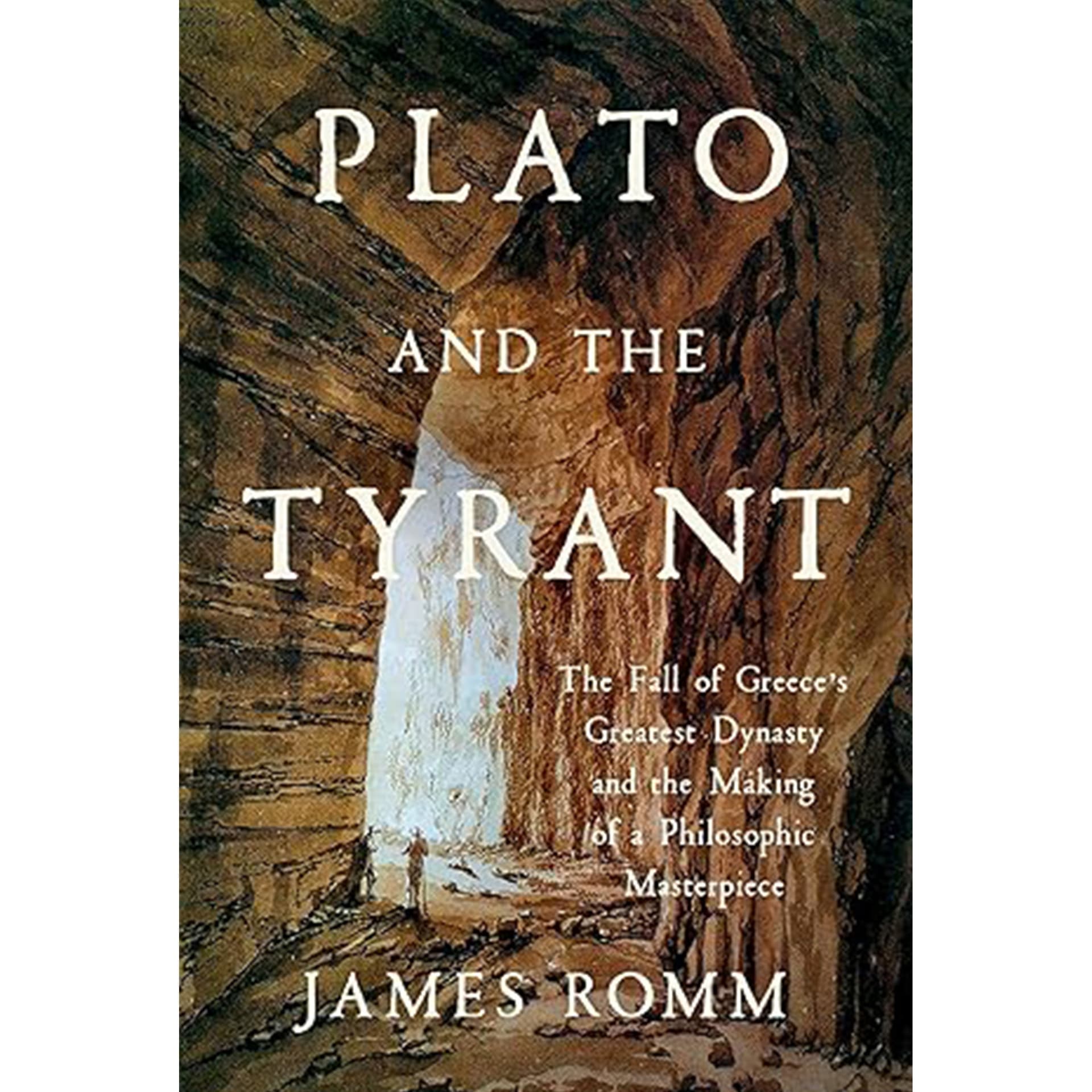
Episode Overview Guest: James Romm Book Discussed: *Plato and the Tyrant: The Fall of Greece's Greatest Dynasty and the Making of a Philosophic Masterpiece* Main Topics:
- Analysis of Plato's letters and his interactions with the tyrants of Syracuse, Dionysius the Elder and Dionysius the Younger.
- Examination of Plato’s philosophical ideas, particularly the concept of the philosopher king.
Key Takeaways
Introduction to James Romm
- Romm is a professor of Classics with extensive publications on Greek and Roman history.
- His work emphasizes the personal insights found in Plato’s letters, contrasting them with his more abstract dialogues.
Plato’s Context and Philosophy
- Plato, regarded as a foundational figure in Western philosophy, often gives little personal insight in his dialogues.
- Romm suggests that Plato's letters provide a deeper look into his life, particularly his misadventures in Sicily.
The Philosopher King
- Plato’s concept of the philosopher king emerges from his critique of Athenian democracy, which he viewed as flawed and in decline.
- A good ruler must be educated in philosophy, pursuing absolute concepts of justice rather than mere earthly justice.
Historical Context
- Dionysius the Elder: A tyrant in Syracuse who gained power after Athenian democracy's decline.
- Dionysius the Younger: His son, who initially sought Plato’s guidance but ultimately exhibited tyrannical behavior.
- Plato's interactions with both Dionysian rulers highlight the challenges of implementing philosophical ideals in governance.
Plato's Visits to Syracuse
- First Visit (388/387 BCE): Invited by Dion, the brother-in-law of Dionysius the Elder; ended poorly leading to Plato's temporary enslavement.
- Subsequent Visits: Aimed to influence the younger Dionysius toward a more philosophical governance, but faced challenges due to the ruler's immature and indulgent lifestyle.
The Role of Mercenaries
- Dionysius the Elder leveraged mercenaries, leading to an unprecedented form of power concentration in Syracuse.
- The role of hired soldiers in maintaining tyrannical regimes is a recurring theme in Romm’s analysis.
The Allegorical Elements
- Plato's works often include allegorical stories that illustrate his philosophical points, such as the allegory of the cave.
- The story of Damon and Pythias showcases themes of true friendship, virtue, and the contrast to the tyrannical lifestyle exemplified by Dionysius.
Dion’s Political Struggles
- After the fall of Dionysius the Elder, Dion attempts to establish a philosophy-informed rule but faces resistance from populist factions.
- His eventual downfall and murder reflect the difficulty of maintaining power and virtue in a politically turbulent environment.
Philosophical Implications
- Romm discusses how Plato’s ideas resonate today, especially regarding leadership, justice, and the responsibilities of power.
- The myth of Ur from *The Republic* encapsulates Plato’s views on morality, justice, and the afterlife, emphasizing philosophical education.
Final Thoughts
- The conversation emphasizes the tension between philosophical ideals and political realities.
- Romm advocates for the continued study of Plato’s works to understand their relevance to contemporary governance and personal ethics.
Conclusion The episode offers rich insights into the intersections of philosophy, history, and politics through the lens of Plato's experiences with the tyrants of Syracuse. It challenges listeners to think critically about the implications of Plato's thoughts on leadership and governance, urging a return to the study of classical sources for wisdom.
Written by AI. May contain mistakes. Listen to the episode to check what was said.
Transcript
Automatic transcript. May contain errors.0:02You're listening to A Book With Legs, a podcast presented by Smeed Capital Management. At Smead Capital Management, we advise investors who play the long game. You can learn more at SmeadCap.com or by calling your financial advisor.
0:20Welcome to A Book With Legs podcast. I'm Cole Smead, CEO and Portfolio Manager here at Smead Capital Management. At our firm, we are readers and we believe in the power of books to help shape informed investors. In this podcast, we speak to great authors about their writings. the late great Charlie Munger prescribed using multiple mental models and analysis. We analyze their work through the lens of business, markets, and people. In this episode, we are going to the classics and really ancient Greece. We will add to our knowledge of Plato as we welcome James Rahm to discuss his recently published book, Plato and the Tyrant, the Fall of Greece's Greatest Dynasty and the Making of a Philosophic Masterpiece.
1:02Mr. Rahm is the James H. Ottaway, Jr. Professor of Classics at Bard College and editor of the Ancient Lives Biography series from Yale University Press. He has published a voluminous number of books on Greek and Roman history and has written essays that are regular in the Wall Street Journal and the New York Review of Books. He has held the Guggenheim Fellowship, the Berkland Fellowship, and the Biography Fellowship at the Leon Levy Center of the City at University of New York. I might add he has a PhD from Princeton University and a BA from Yale University. Thank you for joining me today. Thank you for having me.
1:35It's a pleasure. This will be a lot of fun. So, you know, as I just mentioned just a second ago, you've written a lot of books about Greek and Roman history. What caused you to want to write about this particular history? I assume from your writing, you thought about this a long time of really kind of being a centerpiece for talking about Plato. Yes. Well, Plato, of course, is one of the headline names from Greek antiquity. He's often thought to be the founder of Western philosophy. It was said by Bertrand Russell that all subsequent philosophy are footnotes to Plato. Yep. Yet we know very little about him from his dialogues.
2:15He almost never makes any reference to his own times and never represents himself. so he gives us very little access to his persona, his inner life, yet we do have a set of letters that seem to be by him and I argue are by him that show us the inner person and especially his misdoings or his grave mistakes on the island of Sicily where he went three times during the course of his life. And I thought that story showed more about Plato than all the dialogues put together. And I thought it was a story that really had to be told. Sure. And both, like you're pointing out, there's these 13 letters that you, you know, discuss and reference a lot.
3:07And then the other, you know, obviously his major work that you reference a lot is, is the Republic, which obviously he's most well noted for. And you, effectively, if I was going to explain to our audience, you use the interaction between those 13 letters and the Republic to explain a lot of this story, correct? That's right. I only use five of the 13 letters. There are some in that batch that are certainly not genuine and others that are hard to say whether they're genuine because they're so short. But the five that I use are very long and to my mind, they are unmistakably Plato's own writings.
3:45Sure. And it's those that tell most of the story in my book. Okay. So let's start out with one of Plato's big ideas. And this is a theme throughout the book because this is kind of the lens that all should be judged in politics and ultimately leadership is his idea of a philosopher king. So can you, using the republic, can you explain this idea of the philosopher king that Plato comes back to time and time again and we'll discuss throughout our discussion today? So first, it's important to recognize something about Plato's times. We think of Athenian democracy as a flourishing institution. We talk about the golden age of Pericles and so on.
4:28That was all in the past by the time Plato came of age. The democracy of Athens had lost its war against Sparta, had executed Socrates, had made what Plato considered terrible mistakes and shown itself to be not only in decline, but non-viable as an institution. Also, other states, Sparta, had shown that their governments were not working out well. He was looking for a new model of governance to save Greece from decline. And so he looked to philosophy, his own field, and posited the idea that a good ruler, a good executive, would have to be educated in philosophy. He would have to be looking to concepts like justice, not earthly justice, not court cases and precedents, but absolute justice, the essence of that concept, in order to rule in a just manner.
5:36And so the only good ruler would have to be educated as a philosopher. Sure. Now, when you talk about philosophy, I'm going to ask you a question because I think a lot of philosophy is a framework, right? In other words, to your point, Plato had a framework of thinking about the world that was very unique and obviously has become very popular since then. Is that how you think about it as well? His framework was just more unique than how others were looking at the world. But at the same time, a lot of this came out of, as you discussed in your book, the Socratic method. He was asking the why and how.
6:09Yes, but he goes way beyond Socrates, who developed this question-and-answer method that we call the Socratic method. He advocates a system of education and he practiced it at his academy, the institution he founded, of training the mind to think only in abstract terms. Using geometry, mathematics, physics, fields of knowledge that don't involve concrete things or visibles but are only mental constructs. Sure. After decades, literally decades of that kind of training, a philosopher might be able to perceive what Plato called the forms. That is, these absolute essences, eternals, justice, courage, beauty, wisdom, moral qualities in their abstract form, in their essence.
7:09and those would guide a ruler, a governor in making decisions. Sure. And a lot of these have been really what shaped Western education. Just as an example, James, my kids go to a classical school and all those virtues you mentioned are staring them on the wall in their class all the time because to your point, they're coming straight from Plato in terms of the basis of Western thought, to your point about his footnotes. Let's talk about the 30 in Athens because to your point, he's creating these ideas really out of what is a bad political system in Athens. Can you talk about the mob that was in effect running Athens at the time?
7:47So it wasn't quite at the time, but it was in Plato's youth when he was about 20 years old. A junta, a board of 30 right-wing authoritarians, seized control after the defeat of Athens by Sparta. they were put in place basically as spartan puppets okay and because they were backed by spartan power they were able to do whatever they pleased and they ran roughshod over the city eliminating democratic opponents stealing the estates of wealthy citizens committing horrible abuses and plato witnessed all this from a very close range because the leader of this gang of 30 was a blood relative of his, a man named Critias, who conceivably could have tried to draft Plato into the junta.
8:45And Plato saw these abuses side by side with the abuses committed by the democracy and decided that neither the extreme right nor the extreme left, if you will, in modern terms, were viable forms of governance. Sure. So while this is going on from a Plato discussion, can you introduce our audience to Dionysius and also kind of what was he watching as this younger, I'll call it, aspiring ruler or leader with really, I think you talk a lot about the history of Syracuse and Gelon and Hyron and what he tried to mimic and copy from their leadership. Yes. So right about the same time that the 30 were in control of Athens and were quickly overthrown by the resurgent democracy, a ruler came to power in Syracuse, which had also been a democracy, but suddenly reverted or flipped around 404 BC and put a charismatic demagogue into sole power.
9:59a man named Dionysius. He was only about in his early 20s at the time, a total newcomer to the political scene, but he swiftly took control and created a autocratic machine that he intended would govern Syracuse forever, for generations. He handed power on to his son about 40 years later, who was also named Dionysius. So we have to talk about the elder and the younger Dionysius. And Plato established relations with both these men, visited both of them in Syracuse over the course of about 30 years in an effort to try to guide their regimes onto a philosophic path. And can you also explain what Dionysius tried to use from the prior leadership?
10:51I mentioned who kind of the heritage of leadership had been in Syracuse prior, but he was a fairly practical, pragmatic person. He wasn't coming from nobility. He wasn't coming from leadership. He was just watching everything that he saw, anything from in politics out to what had worked in Syracuse prior. Is that a fair assumption? That's right. Yes. About a century before his time, Syracuse had undergone an earlier autocratic regime. Gilan and Hiran, two brothers, one the elder and then the younger in turn, who had demonstrated some of the ways in which an autocracy could control the city by means of wealth primarily and the hiring of mercenaries, of foreign fighters that would be loyal only to the ruler and disarming the rest of the population so that the ruler would be protected by an invincible military force.
11:58So as he's coming to power, I think it was Lysias was the vocal critic of him in front of the politics of the time. you know everyone has their critic and this is a pretty common storytelling that you know throughout whether we're talking about Plutarch or anyone writing on these various subjects that there is this vocal critic that has to be met at the time how did how did he meet Lysias as his critic so Lysias was a Athenian but he came from a family that had been kicked out of Syracuse. He was an expat, if you like, or his father at least was an expat. Sure. He'd grown up in Athens in the liberal democracy of that time and came to fear and despise this new tyranny in Syracuse, that of Dionysius the Elder.
12:56He spoke out very stridently at the Olympics of 388, and that's the scene with which I opened my book. He accused the tyrant of Syracuse of becoming a threat to all of Greece, of behaving like the ruler of Persia on the other side of the Aegean, a man who represented a grave threat to Greek freedom, and urged those who were listening to him there at the Olympic Festival to rise up right then and there, tear down the pavilion tents that the Syracusans had erected, and trample the beautiful cloth and the gold furnishings underfoot to show their disdain for this tyrannical regime. And they did exactly that.
13:49They demonstrated against Dionysius by tearing apart these tents. Sure. Now, he's kind of striking at a moment where tensions are high, though. I think that's the other thing I took away from any of these leadership changes or the situations at the time. A lot of it had to do with what was the political pressure and typically what was the military pressure. So what – with Lysias being so critical, what allowed him to really become the autocrat as they refer to him? Well, as I say, he hired a crew of mercenaries, perhaps 100 ,000 men. So understand that this is a number, a fantastically high number for the Greek city-states of the day.
14:34using the wealth which he had built from the wealthy citizens of Syracuse and extorted and used all kinds of financial manipulations to hire not Greeks but peoples of southern Italy, Gauls, for instance, peoples from Iberia, from what is now Spain and Portugal, and from North Africa, peoples that were noted for their savagery in war and who could be counted on for loyalty to the ruler simply because he was paying their salaries. Sure. And that was another theme that I think came up is if a tyrant's a tyrant, it's partly because they're paying mercenaries. Wasn't that a common theme across the tyrants that you write about?
15:30That's correct. But Dionysius the Elder took this to unprecedented extremes. Because he had more wealth than anyone had controlled in the past, he was able to hire a larger force and pay them better. Sure. The other thing that it seemed from your writing that he was very astute to do was on the subject of adamantine bonds or tigia, if I'm pronouncing that right, was the island that he effectively causes to be his fortress. He builds, you argue, a very defendable wall there on the island, and that causes him to have effectively like an island fortress, if I understood your writing correctly. That's right.
16:15So if you look at a map of Syracuse, either the ancient city or modern Syracusa, there's an excrescence. There's a peninsula that sticks out into the sea, which is connected by only a very narrow isthmus. And that peninsula is called Ortygia, or the island. It was originally an island, and the Syracusans connected it with a causeway. This was a perfect place to establish a military base. It could be walled off by fortifying the isthmus. It had ports for ships, and it had a natural spring, the Fonte Ertuza, still a tourist attraction today, a gush of fresh water that could supply the needs of its inhabitants with fresh drinking water.
17:13So it couldn't be starved out in a siege, couldn't be attacked. In fact, it was the perfect power base for an autocrat like Dionysius. So Plato, I think, originally visits Syracuse as a younger man in 388 or 387, if I remember correctly from my notes. What brought him to Syracuse the first time? He had already been traveling in southern Italy. And this, as far as we know, is his first trip away from Athens or at least first trip of any magnitude. He had first visited a city called Tarentum in southern Italy, which was famous for a population of Pythagorean thinkers, another philosophic school that Plato was very interested in.
17:57While he was there, he received an invitation from a man named Dion, who is a principal character in my story, who was the brother-in-law of the ruler, of Dionysius the Elder, and had developed a deep interest in Plato's ideas and wanted to bring him to court. So a little more background on Syracuse. We talked a little bit about the geography, but I think the other thing, obviously, you know, the names obviously sound a lot like Dionysus, which is the god of wine. What does that kind of teach us about the people of Syracuse when it came to maybe the parties they threw? Yes. Well, Dionysus is derived from Dionysus.
18:42It's just an additional I that makes it an adjective of Dionysian. And the family, the ruling family was famously alcoholic. And the wines of Sicily were plentiful and famous. And the whole population seems to have enjoyed them very fully. Sure. And at a couple of crucial points in my story, the action turns on the fact that a lot of people were drunk. And this would be very different from, say, I think the term you used was the Doric Greeks, which would be kind of the traditional Peloponnese of Athens and Sparta. They viewed to be – that was not a good thing in their minds. That's right. The Syracusans were Dorian in stock, meaning that they came from the subset of the Greek peoples that had largely settled the Peloponnesian, especially Sparta.
19:40And the Dorians in mainland Greece, the Spartans, were famous for their abstemiousness, their temperate lifestyles. Sure. And their resistance to pleasures like food, drink, and sex. So the Syracusans, having transplanted themselves from mainland Greece to Sicily, which is abundant in food, wine, and the sexual activity that usually goes with those things in the Greek world, they just went whole hog in that direction. Sure. On the sexual activity, the other thing that I'll say Dionysius attempted, he obviously practiced polygamy, so he had two wives. Can you kind of teach us the reason why, from a dynasty perspective, he did that and kind of how he tried to use that to his advantage?
20:34Unsuccessfully, I might add, in many respects. But also, why would a guy like him be so interested in having multiple wives regardless? Great question. So polygamy was not native to the Greek world It was not practiced by Greeks It was associated with the Persian Empire in Asia That dynasty, the emperors of Persia Were famously polygamous And the advantage of polygamy for a ruler is You have more children to use as Well, you use the sons as potential heirs and also high officers in your military. You use the women as marital pawns to establish bonds of alliance with other rulers. So you have more staff, if you like, to choose from.
21:26Sure. Of course, there are huge downsides to this system as well because you create rivalries within the household between the two branches, or in the case of Syracuse, Two branches because Dionysius married two wives. One was a native Syracusan, though that gave him a legitimacy or power base among the noble families of Syracuse. The other was from Locri on the southern Italian, on the toe of Italy, the southern part of Italy. And that was important because Syracuse was extending its power, its empire to that part of the world. Hi, I'm Cole Smead, CEO and Portfolio Manager here at Smead Capital Management and host of this podcast.
22:15If you enjoy this podcast, I'd like to invite you to check out SmeadCap.com. At our firm, we are stock market investors. We advise investors who play the long game with a discipline that has proven success over long periods of time. Learn more about our funds at SmeadCap.com. Past performance is not indicative of future results. investing involves risks including loss of principle please refer to the prospectus for important information about the investment company including objectives risks charges and expenses read and consider it carefully before investing smeed funds distributed by smeed funds distributors llc not affiliated there was a lot of half brothers were pretty common in persia you put in your writing which caused its own problem because half brothers tended to like killing other half-brothers, I think, as you said.
23:04But he tried to fix this by effectively inbreeding the two lines. That's right. To unite the family, prevent rivalry between these two maternal lines, Dionysius arranged marriages across the divide. So half-siblings from one wife would marry half-siblings from the other wife. A legitimate kind of marriage in the Greek world, as long as the common parent is the father, not the mother, this is not regarded as incest. So he has a son that's his namesake. And, you know, on this kind of, I'll call it, lineal track that he's on, you know, how does, you know, passing the baton really work with his son?
23:52So his firstborn son came from the wife from Locri, not the native-born Syracusan. And he named this son Dionysius, giving it his own name, meaning that this was clearly the heir apparent to the throne. Sure. Later, he also had sons with the other wife, creating potential rivalry. And the man I mentioned before, Dion, the fan of Plato who invited Plato in, was the brother-in-law of the Syracusan wife. And that created huge rivalries because Dion, it turns out, was the most capable member of the royal house, the one who would be best able to rule, yet he was not in the bloodline, not in the line of succession.
24:44Sure. So Plato comes to Syracuse on this trip, to your point. He runs into Dionysius, and Dionysius is used to—I think you call it in your book, there's a Greek term for it, but the Dionysius flatterers is what he becomes accustomed to. That's not what he interacts with Plato. His interaction with Plato, that didn't fit the, I guess, the standard at the time. That's right. Plato was entirely too outspoken for the liking of this tyrant, and he got kicked out summarily, ignobly, and perhaps the best evidence we have suggests that he was sold into slavery at the behest of the tyrant. the ship that was conveying him back to Athens, put in at the port of Aegina, a city that was at war with Athens, and Plato was immediately taken into slavery and then ransomed once his friends realized what had happened.
25:50Sure. And I think the term that they used in their interaction was you referred to, I think Dionysius said that Plato was elderizing, kind of, I'll put it in another term, kind of pulling an old man on him. And I think Plato snapped back that he was, you know, something along the lines of, if this is a verb, tyrannizing. Is that correct? That's right. One of the stories we have from this meeting of sage and ruler is exactly as you say, that they both coined these words to insult the other, and Plato's word was tyrantize. So Plato then goes back to Athens and starts what we know as the academy.
26:35How does he get out of slavery? How does he start the academy? Because it seems like there needs to be some help from friends and influence from others. Yes. So the reports we have, and again, these can't be confirmed because they come from much later than Plato's time. Plato himself never refers to this episode in his letters. But we have legends that he was sold into slavery, ransomed by a friend for a sum of money. and when his kinsmen and friends tried to compensate this man, giving him back that same sum of money, he said, no, it's fine, let Plato have it and let him buy a piece of property to use for an educational institution.
27:29So this is all right after his departure from Syracuse. He receives money from a wealthy patron and uses it to buy property outside of Athens, and that became the foundation of the academy. It was in a grove of a god by the name of Akademe, and so it took on the name of that god. Okay. And you comment on how this was a different educational institution, if you will, than say what Socrates had, because Socrates was always enlightening the unenlightened versus this was people that were already educated continuing to want to learn. Is that a fair assessment? That's right. This was a case of higher education, of young men from all across the Greek world who had read something of Plato's work or knew something about him and were coming there to study with him and advance their own knowledge.
28:26And even though—I think in Socrates' case, you said that he always was just lecturing, kind of, I think, almost like a university-style lecturing. It wasn't written down. Even though Plato was written down, he still lectured in this format. Yes. Much of the work of the academy was non-written. It was oral conversations, which Plato calls dialectic, in which two philosophers, two trained minds would go back and forth with each other in a kind of give and take system. But we also have these dialogues that Plato wrote for a different audience, not the people of the academy, but the public generally.
29:11Sure. You made a comment in the book that I mentioned to you before, but you commented that Plato obviously was quickly adopted or quickly connected with early Christians. Can you explain why Plato was so interesting to these early Christians or what their connection was? So I talked about the forms, these essences that Plato thinks of as the source of true knowledge, the only thing that the mind can really use to learn or to gain insight. You can't gain insight from the world around you. You have to look to an astral world, an other world, a world in the sky, essentially, to perceive these forms.
29:57and the master form, the one that gives life or gives quality to all the others, he calls the form of the good and he compares it to the sun in that it gives off light that illuminates everything. Sure. The Republic has a transcendent passage describing what it's like to behold the form of the good. It brings sublime joy. So it's an easy step from that concept to the Christian idea of heaven and a supreme deity who inhabits this heavenly realm and radiates light and is a source of sublime joy. Sure. Also, Plato had a disdain for the visual versus the virtuous is how I think about it. He's spending a lot of the Republic writing in effect about Dionysius, according to what you say.
30:56And wouldn't that also separate him from Greek culture? I mean, here's Dionysius getting drunk, pretty much an alcoholic, having sex constantly. And that is about as far away from what Plato is teaching his students to be thinking about. Exactly so. Plato had to distinguish in the Republic between the king, a philosopher, a trained mind, a temperate lifestyle, and a tyrant who is the prisoner of his appetites, who is run by his nightmarish desires. and a lot of books eight and nine, the political books, if you like, of the Republic are concerned about making this distinction that there are good autocrats trained in philosophy, and there are bad autocrats who are all about desire and appetite.
31:58And that tyrant figure is very much modeled on Dionysius the Elder. Sure. And it kind of plays that, you know, there's been this idea of like a noble king in a way, and that comes off as a very Plato-esque idea. Can you just comment from the original sources how we know the difference in the writing between Dionysius the Older versus Dionysius the Younger? You kind of talk about the different attributes that are ascribed to each of them. So the ancient world didn't have Roman numerals for sequential rulers, they didn't have Dionysius 1 and Dionysius 2. They sometimes use the elder and the younger as a way to distinguish these father and son.
32:42In fact, sometimes we only have Dionysius and we don't know who is being referred to. We have to guess. Sure. And the way in which we can guess, in my view, is the quality of the stories that are being told. The stories about the elder focus on his role as the supreme leader, his paranoia, his efforts to protect himself from assassination, his fears about losing his rule. The episodes of the younger, the son, who seems to have been much more dissolute than his father, more addicted to drink and a greater sexual libertine. And the stories about him focus on those themes, his pursuit of pleasure.
Read the full transcript
33:34Sure. There's a story in your book where they're appealing to the Spartans who were mercenaries, fighting for, or I guess aligned with Dionysius. And they appealed to them because the Spartans were thought to be this guardian class, virtuous people, and really more chastened, I would argue, than the Syracusans. And yet, despite the fact that Sparta is against tyrants, they don't stand down from serving a tyrant. I mean, this just seems like the most odd situation from a philosophical perspective. The Spartans had given up a lot of their high ideals by the 4th century, by the time of Plato. They were doing dirty deals, for instance, with the Persians on the other side of the Aegean and trading away Greek freedom for the sake of advantage.
34:36the foreign policy had become much more of a pragmatic, much less ideological than it was in the previous century. And so the Spartans were perfectly happy to work hand in hand with the tyrant Dionysius if it benefited them, if it helped them boost their position in mainland Greece. Sure. So obviously Dion becomes a big, you know, he is very different than Dionysius the younger. He's a big fan of Plato. They bond a lot. And you talk about their relationship. Why did Plato come back after having such a brusque experience and really bizarre experience in the first case? So Plato's departure and presumably his enslavement came in 387.
35:2920 years later, Plato's now in his 60s or approaching 60. Dionysius the Elder dies and passes the baton to his son, who is then 30. So the younger was a curious fellow. Yes, he was a libertine, but he also had an interest in philosophy. He had grown up without an education, without much learning and felt that he really lacked that and wanted to improve himself. And Dion, who is on the scene now as the senior advisor to the throne, tells him, I've got the perfect tutor for you. If you bring Plato here, you can get instruction from him, and he will make you revered as not just a powerful ruler, but an enlightened one.
36:22And Dionysius went for that offer. Sure. But then not long after, Dion is shipped off. And so Plato's in this weird tension. What was the dichotomy for Plato after Dion is shipped off? Yes. So the circumstances of Dion's banishment have much to do with Plato's arrival. Plato came back to Syracuse, rebonded with Dion, who was his biggest fan in Syracuse, probably also his lover, but we can get into that if you want to. And this made the ruler terrifically jealous. He was insecure. He was just on the throne. He was much younger than Dion. And here was Dion hand in glove with the man who he wanted to get instruction from, who he thought of as his ally.
37:18That jealousy caused him to boot his uncle out, his father's brother-in-law, and banish him from Sicily altogether. That left Plato high and dry. He'd come there at Dion's behest. Now Dion was gone. Plato was in a very uncomfortable position, essentially under house arrest because the ruler refused to let him leave, even though he wanted to, until a war broke out that sort of forced his hand and allowed Plato to return to Athens. Sure. And the other thing I didn't mention earlier, but I just want to mention if you could comment on the Republic because the Republic was not written all at once. This was, I think you referred to it as a composite.
38:05So really Plato's taking all of his experiences in building the Republic with this. That's right. That's right. As far as we know, the Republic was written over the course of Plato's whole adult life, a period of perhaps 30 or 40 years. It was the only dialogue that he so much time on because he really wanted it to be his masterwork. And so he was working on it and revising it during the times when he was also visiting Syracuse. Yeah, in discussion, Plato's there, he's providing advice, and he's trying to teach the younger at the time. But then obviously he's got his own courtesans and court that's there with him as tyrant.
38:53And you talk about this idea of worldly wisdom, and it's funny because I open the podcast with the idea of worldly wisdom, but it's a little bit different in what you're talking about in terms of worldly wisdom. Plato is trying to talk about the eternal or the timeless, if you will, and that's not exactly the worldly wisdom that his court was speaking of to Dionysius the Younger. What kind of worldly wisdom were they using? So Plato's philosophy is designed for people who have committed their lives to study, have committed to a program of education that literally takes 40 years to achieve the full status of a wise man.
39:37A young man of 30 who was already a debauched alcoholic was never going to get there. Sure, sure. So Plato must have come to Syracuse knowing his potential was limited as a teacher. At best, he could make Dionysius the Younger a more controlled and more revered ruler by getting him off the wine, getting him to follow a more temperate lifestyle, and to develop alliances with reliable people, not with the drinking buddies that were his traditional allies. We hope you're enjoying the podcast. You know, we work hard putting together this show, but we work even harder for our investors at Smead Capital Management.
40:30At Smead, we believe in disciplined investing, which is why the Smead funds have a proven track record of long-term outperformance. If you're an investor who plays the long game and want to invest in wonderful companies to build wealth, we invite you to visit SmeadCap.com. Past performance is not indicative of future results. Investing involves risks, including loss of principle. Please refer to the prospectus for important information about the investment company, including objectives, risks, charges, and expenses. Read and consider it carefully before investing. Smead funds distributed by Smead funds distributors, LLC, not affiliated.
41:08Plato discusses what is referred to as the guard class, or he calls it the silver class. And this is kind of getting back to what we talked a little bit about with Sparta. What did he believe their role ultimately was, and how did that compare to the, I think he calls it the gold class, which would be, you know, I think what he referred to as the wealthy. He had this idea of how this would improve the entire state. Yes. So you're speaking of the ideal state that's constructed in the republic, a perfectly just city-state. So the question of the republic, for those that haven't yet encountered it.
41:44It's by far Plato's most ambitious and also most compelling dialogue. And the question is, what is justice? Would it make us happy? If we had a ring that would make us invisible, why would we do just things rather than unjust things? Sure. That's the challenge that Socrates has posed. And in order to meet the challenge, he builds an imaginary city that would represent perfect justice in a society. And that city, as you say, has a silver race or silver class of guardians trained in philosophy but also as military men. So it's a soldierly class but also a philosophic class, those two things combined.
42:35And they would have the absolute control over military and political matters. Most of the population would not be permitted to enter that class. They would be the producers, the consumers, the economic base of the society. And then at the top, you have the gold element, which is the ruler, the philosopher king, who was taken from the silver class, the best of the best, and empowered with absolute power. Okay. So then Plato, he ends up back in Syracuse a third time. After the second time, I think he goes back, if I remember correctly from my notes, and he kind of plays merchant buyer for Dionysius the Younger.
43:21He gets him his wine. He kind of helps do some things for his household at times and kind of plays what I'll consider friendly and helpful but very skeptical. He ends up in Syracuse again the third time later. by this time he just considers this all kind of a waste of time. And I think the other thing you touch on at that moment is you kind of hark back to his childhood in Athens. I mean, people like Plato were taught songs to mock the tyrant at that time. That's right. There was a dread of tyrants in Athens in Plato's day, and citizens had to swear an oath that they would assassinate anyone who attempted a tyranny, and that anyone who killed the tyrant would be forgiven, would not be considered a criminal.
44:19So for him to go a third time, as you say, back to Syracuse after having had interactions with Dionysius that clearly showed the tyrannical side of the regime. He went back a third time, and that really is explained by his relationship with Dion. Dion had been kicked out, had been stripped of his estate and his family, but Plato had tried to assure that the tyrant would recall him and restore him to favor. And so by going to Syracuse, Plato thought he could bring that about. He could get Dion restored. So then while Dion's away, he is kind of, I'll call it, you know, removed, but there's still tumult going on locally.
45:13So I think, and I'll probably butcher the name here, but Heraclids, he's pushed off. He has to flee. He has some relatives who try to go to the younger to seek out, effectively grace. It's kind of odd because in this, the whole discussion and every time you're storytelling through what's going on in Plato's writing and the other histories that have come out of this, is that I was kind of thinking of the old rule, keep your friends close and your enemies even closer to put it in godfather parlance. And Dionysius the Younger is very much putting his enemies as far away that they can in some ways plot without him having any knowledge of what they're up to.
46:01Yes, that's a very apt quote from the godfather. because when Dionysius sent Dion out of Sicily and he went back to mainland Greece, it was assumed that he would try to foment some kind of overthrow of the Syracusan regime. Dionysius made him promise not to do that and still had control over half his estate. Sure. as a way to ensure compliance. But nevertheless, Dion used what wealth he still had to hire mercenaries and to organize an invasion of Sicily as a way to overthrow the regime. Sure, and Dionysius the Younger obviously continued to make it as frustrating for Dion as possible. I think he took his wife from your writing and remarried her off as though he was gone, took half of his net worth and continued to move the estate around in the way that was most advantageous for him.
47:14The other thing that you wrote about that I found just terribly interesting is that ultimately, when Plato thought of this idea of the philosopher king or that gold class that we were just talking about, that he was never really thinking about anyone other than himself. Is that a fair assessment? Well, that's an idea that I present through the writings of a man named Karl Popper, who was a philosopher of the mid-20th century, who wrote a whole book called The Spell of Plato about how misguided we are when we revere Plato and we refuse to see his own autocratic ambitions. that when he talks about a philosopher king and someone trained in the kind of rigorous mathematical abstract thinking that Plato's Academy specialized in, he can only be talking about himself or at least his own class, the students of the Academy.
48:14Now, I don't support that, but I think it's at least a possibility. And it's one that we really have to wrestle with when we read the Republic. Sure. When I also think of other things from antiquity, so for example, to your point, I think of the Hebrew people saying to God, we want a king. They get ultimately a king, and then they're really unhappy with their king, right? In other words, the idea being that there is an ideal situation, it just is never seen, and that would kind of play at the idea that if Plato could be king, you might get the ideal, but obviously that's never going to come to pass because there's just a lot of humanly practical things that have to go along with that, and that's never going to happen.
48:58So to your point, the form is always present, and yet in humanity, it's never actually recognized, to your point. On that same thread, Atlantis was this kind of same idea of what I'll call purity in society. Can you explain the story of Atlantis and why that played at this idea of kind of Plato's view of class. Sure. So Atlantis is a myth invented by Plato. Many people don't realize that we think of it as a Greek myth that goes way back. But in fact, Plato is the only source we have for it. He spells it out in his dialogue Critias. Atlantis was a race, the Atlanteans were a semi-divine race, and their kings were fathered by the god Poseidon.
49:52And they built an empire, a naval empire, fantastically wealthy and successful. And the kings were able to rule well because they weren't seduced by wealth. They weren't consumed by greed. But their children were not fathered by a god, so they only had one quarter divine blood, and their children only had one eighth divine blood. So over the generations, the divine element got adulterated and humanity predominated, and that's when their greed got the better of them, such that the gods finally got sick of them and destroyed the island with an earthquake and flood and sank it to the bottom of the sea.
50:41Sure. So there was nothing ideal about it in the end. Dion builds an army, to your point earlier, through mercenaries. He's also communicating with other people that can help him to come back to Syracuse. Doesn't it, you know, in your writing, it seems like it's pretty long odds for him to take back Syracuse, and yet he finds an opening and kind of takes advantage of Dionysius the Younger not being available and present at the moment. Yes. He had the good fortune to land on Sicily at a time when Dionysius was off the scene supervising his Italian holdings, his southern Italian holdings. And the population was very much on the side of this revolution.
51:26So as Dion got closer to the walls of Syracuse, His army grew from volunteers and militiamen, and he was able to take control while the tyrant was away. Of all the mainland parts of the city, but not the island of Artigia. And of course, once Dionysius got back to Artigia, this impregnable base that he had built, he dug himself in and the civil war commenced. Sure. So Dian's in control of the city, and to your point, Dionysius, the younger, he controls the island. And he says, hey, he's going to leave, he's going to abdicate, and calls him into a truce. What happens with that supposed truce? Well, it was a fake offer, of course.
52:20He wasn't—no way was he about to give up the ghost right off the bat as soon as he was presented with his challenge. He made prisoners of the emissaries that came to arrange the terms. And while the population drank and celebrated, I mentioned before that the turning points that hinge on drunkenness, he sent his troops across the Isthmus Wall and attacked the city and showed he was not going anywhere. He was ready to kill in order to stay in power. And they're sending letters back and forth, and it almost seems like these are very pithy letters where they're pretty much using the letters to mock each other back and forth.
53:09Well, the letter that we have or that we know of is from Dionysius to Dion at a time when this civil war had already broken out. And Dion believed that the letter was from his son who was being held hostage on the island. So he had it read aloud in the assembly, in the popular assembly consisting of the citizens of Syracuse. That was a big mistake. The letter was not from his son. It was faked to look like it was from his son. But in fact, it was from Dionysius, the tyrant on the island, saying essentially, you and me, we're part of the same family and don't let the rule get away from us. Don't let the tyranny get away from us.
54:04We need to keep control here. And treated him like a member of an inner circle. Sure. And that alerted the rest of the population who are already suspicious of him because of his connections to the royal family that perhaps he was just looking to take power himself and become a new tyrant. Sure. Before this happens, you told an interesting story about two gentlemen that Dionysius the Younger had interacted with, which was Fintius and Damon. And this really fits into Plato's view of the ideal. Can you explain the story of these two gentlemen and what happens and why this is just so shocking to the court and also Dionysius?
54:55So we know them better as Daemon and Pythias. The real name is Fintias, but it's become corrupted and it now is generally known as Pythias. Okay. And it's a very widely known story of two friends, both of them members of the Pythagorean school. I mentioned earlier, this was a southern Italian school that focused on the simplicity of lifestyle and moral virtue. And Dionysius had a bet with some of the members of his court that the serenity practiced by these Pythagoreans was all a sham. And if they were presented with real hardship, they would fall apart just like anybody else. Sure. So they picked someone at random, Pythias I'm sorry, Damon And had him arrested And accused of plotting against the throne and sentenced to death Totally falsified charges Sure And instead of collapsing And weeping and asking for mercy The man simply said That's fine But I need to make some arrangements For after my death I'll have my friend come here and stand hostage for me while I go do what I need to do.
56:19Everyone laughed. No friend is going to do that and subject themselves to possible execution. But in fact, the friend did show up. And then at the end of the day, Damon came back and resumed his place as the guy on death row. No one could believe this. And Dionysius was overcome with longing, seeing how real friends treated one another. He didn't have friends like that. And he threw his arms around the two of them, asked to be a third friend and a part of their company, to which they said, no way. You're not one of us. And that was the end of that. Yeah. As soon as they saw virtue, they knew that it was something to be in awe of.
57:10But yet at the same time, they had trouble practicing it on their own. So, you know, Dion comes back to power in Syracuse, but, you know, he's not the only potential power, you know, that he is considered the autocrat. But there's obviously a naval power there, too. Can you explain, you know, how he's coming to power and he's trying to shape the politics? And I think he attempts to be the philosopher king, if you will, trying to allow the Paulists to have a certain ability to speak into the situation, but it's just not that clean. So you have to imagine the – and we've seen this in our own times, a society that has been under the thumb of an autocrat and is suddenly liberated.
57:54Sure. But the liberator in this case was a member of the tyrant's household, so deeply suspect. Sure. And also politically conservative and did not want to grant the people their old democracy back. He wanted a more conservative constitution. Sure. Something that would have checks and balances so the democracy would not run wild. Mm-hmm. The people were mistrustful of that too. So along comes a more populist leader, a man named Heraclides, who is in charge of the navy. And the navy is typically, in all Greek cities, made up of the poorer classes. And as the commander-in-chief of the Navy and also as a fiery orator, Heraclides raised up, instigated a kind of left-wing democratic second revolution against Dian.
59:01Working class too, I think you mentioned. I'm sorry? Working class too. He kind of represented more of the working class. More of the common people who felt that Dion was not much better than Dionysius. Sure. There was a joke going around at the time, you know, why would we swap out a drunken tyrant for a sober one? They're two of the same stripe. But Heraclides was truly a man of the people and also a fiery orator, and he managed to get a faction opposed to Dion to exert considerable pressure on the new regime. Hey, I want to give a big shout out to everyone who's been working so hard on this show.
59:51You know, we recently hit the top 10 in investing podcasts on Apple Podcasts and even number one in the business category in several countries. As you may know, this show is brought to you by Smead Capital Management. Smead Capital Management understands how frustrating and illogical the stock market can be. If you're searching for funds with a proven track record, give the Smead funds a look. Or better yet, reach out at SmeadCap.com. And don't forget to mention, you're a fan of the podcast. Past performance is not indicative of future results. investing involves risks including loss of principle please refer to the prospectus for important information about the investment company including objectives risks charges and expenses read and consider it carefully before investing smeed funds distributed by smeed funds distributors llc not affiliated and this kind of creates you know what i'll call dion's you know moment in the cave, if that's how I can put it.
1:00:48You know, Plato using the allegory of the cave, you know, you're enlightened, but you still have to go back to the cave and explain it to others. Do you think that's a fair assessment of the position that Dian was in at that moment and had to deal with the awkwardness of that situation? That's a good way to put it, that he had been trained at the academy, he'd learned from Plato, thought of himself as a philosopher, And here he was meeting very practical real-world problems of placating a democratic insurgency. And he did a very poor job of it and alienated some of his supporters. Yeah, because I always think of – there's an old saying that it says, you know, in academia, there is no difference between the real world and academia.
1:01:41In the real world, there is. And I think of that a lot as, to your point, Dion is educated. He's obviously been taught by Plato. And it's great to know all that, but then you still have to pragmatically and practically deal with that in the real world. And you quickly find out that that's just not so easy all the way out to, as you write about, obviously, he ends up murdering Heraclides, which wasn't his original intention. In some ways, they were helpful to each other. But when you get into this political class warfare and you need to get rid of your problems, that was the most practical way of doing it.
1:02:18This doesn't obviously stop what Syracuse's power structure is. Dion is eventually murdered as well. But in Plato's view, Dion dies this incredibly honorable death in Plato's mind. The account that we have of this phase of the story, the Syracuse and Civil War, comes to us largely from Plato's seventh letter, a very long document, even longer than some of the dialogues, written in the first person and describing all the events on Syracuse going back 30 years. And as you say, it tries to extol Dion as a model leader. By that time, he was dead. And to insist that he had only the most noble and high-minded goals for the government of Syracuse.
1:03:17I read that as Plato's attempt at spin. Sure. Because Dion was his protege. he had set some of these events in motion by his relationship with Dion, and he didn't want the Greek world to blame him for what was happening in Syracuse. He wanted to exonerate himself and also uphold Dion as a kind of beacon for those who would follow, for those who were still trying at that time to reform the government of Syracuse to put a decent regime in place. The other question I have, and this happens, you talk about this late in your book, but Plato talks about his death in the Republic. I find this so interesting because most people I meet, I consider it a very tough thing for them to talk about their own death and what they think will or will not come, I don't think people tend to want to look stupid or sound stupid or even talk about their own demise.
1:04:24Is that how you look at Plato? In other words, he was virtuous to the point that he had no problem talking about this and trying to write about it in the Republic, or do you have a different view of that? So you're referring to the final stretch of the Republic, which is called the myth of Ur. And it's not Plato's own afterlife specifically, It's just the afterlife generally. Sure. It's narrated by a character named Er, E.R., who had died and been brought back to life by the gods who essentially told him to be a messenger to humanity as to what to expect after death. and it's a kind of a purifying 1 ,000-year journey through the stars and planets in the outer reaches of the universe and then reincarnation into a new life.
1:05:26Plato believed in reincarnation and that the task of the philosopher is to recover the visions that he has had before birth of this astral realm, the realm of the forms, essentially, the purity of the world beyond our own. And the other thing I think we can draw from, to your point, the story of Ur, which is in many respects, I was referring to him kind of talking about his own self, is that he has this big eternal view. In other words, to your point, even though he came back a thousand years later, it's still an eternal story he's living in this dialogue on Ur. Is that fair? The point of the dialogue is to convince us that we will all face this choice at the end of the journey when we're about to be reincarnated.
1:06:25we will have the chance to choose what kind of life to inhabit in our next existence. And we'll either choose well, meaning we'll choose something akin to philosophy. Sure. Or if we haven't learned much, we'll choose the life of a tyrant. Because the uneducated, the unenlightened person thinks of that holding absolute power, gathering wealth, pursuing pleasure, thinks of those things as the best kind of life. Sure. I know there's a lot we didn't talk about, and I was kind of mentally racking through my notes, but what else, whether it be on your research into this discussion or the works themselves, do you think should also be mentioned to our audience that we haven't discussed?
1:07:19You know, the Republic is something everyone should be at least familiar with because it's one of the cornerstones of Western thought. It's a magnificent work, but it's not easy. It's composed of different parts. And sometimes we can't even really tell how much of it is serious or how much of it is a kind of carnival-like thought experiment, turning the world upside down to see what it looks like. So my book tries to give a basic introduction to the Republic along with this narrative that we've been sketching. and I hope it leads people to want to pick up the Republic and read the original text.
1:08:12I agree. I think your book is an excellent gateway drug to get people down the rabbit hole of asking, you know, what was the importance of Plato? Why is he, you know, really the bedrock of Western thought? And why do certain aspects of what he said ring true today in the ideas of virtue? Which even though I would say there are some virtues that aren't considered as civically important, I think a lot of people would regard it as important, much like Plato did. Where else, James, can people follow you going forward? Are you big on social media? Where are you typically writing outside your books today?
1:08:50I'm not big on social media. I do have a website, jamesrom.com, and I write reviews for the Wall Street Journal. You can Google my name on the Wall Street Journal website and see books that I've reviewed over the last few years. My next book coming out in October, it's a much shorter book than Plato and the Tyrant. It's about half the length. It's a biography of Demosthenes, a figure from 4th century Athens, a contemporary of Plato who tried to rescue Athens at a time when it was under great threat from Alexander the Great. and how that all played out. Yeah, because you mentioned in the very parting chapter, you mentioned Philip of Macedon at the very end of this book.
1:09:42And I was already ready to go down the whole rabbit trail, like I mentioned before, of one of my classes I took in college of Alexander the Great and the Hellenistic Kingdoms. And so you referencing that makes me want to go in whole hog over more of this. So I appreciate your time, James. Your book reminds me of an old saying that I believe Plato would agree with as he thinks about the philosopher in the cave. And I touched on this earlier, but I just want to say it again. In academia, there's no difference between academia and the real world. In the real world, there is. And Plato not only espoused ideals and forms, as he would say, but he also had to rectify that in the real world.
1:10:23Go out and buy a copy of Plato and the Tyrant where you buy your books. If you enjoy this podcast, go to Apple, Spotify, YouTube, or wherever you listen to a book with legs. Give us a review. Tell others about the great authors like James Rahm that we get the opportunity to study the world with and through. For our tribe, if you have a great book that you'd like to recommend, email podcast at smeedcap.com. That's podcast at smeedcap.com. You can also send your suggestions to us on X. Our handle is at smeedcap. Thank you for joining us for a book with legs podcast. We look forward to the next episode.
1:10:57Thank you for listening to A Book with Legs, a podcast brought to you by Smead Capital Management. The material provided in this podcast is for informational use only and should not be construed as investment advice. You can learn more about Smead Capital Management and its products at SmeadCap.com or by calling your financial advisor.
From the publisher
In this episode, Cole Smead sits down with professor and author James Romm to discuss his book, “Plato and the Tyrant: The Fall of Greece's Greatest Dynasty and the Making of a Philosophic Masterpiece.” They cover a series of letters that Romm believes to unmistakably be Plato’s writing. The two discuss Plato’s encounters with a tyrannical father and son, both named Dionysius, and the legendary philosopher’s impact on the opulent city of Syracuse.


