
In short
A Book with Legs - Episode Summary: Lori Garver - Escaping Gravity
Podcast Overview
- Podcast Title: A Book with Legs
- Hosted by: Smead Capital Management
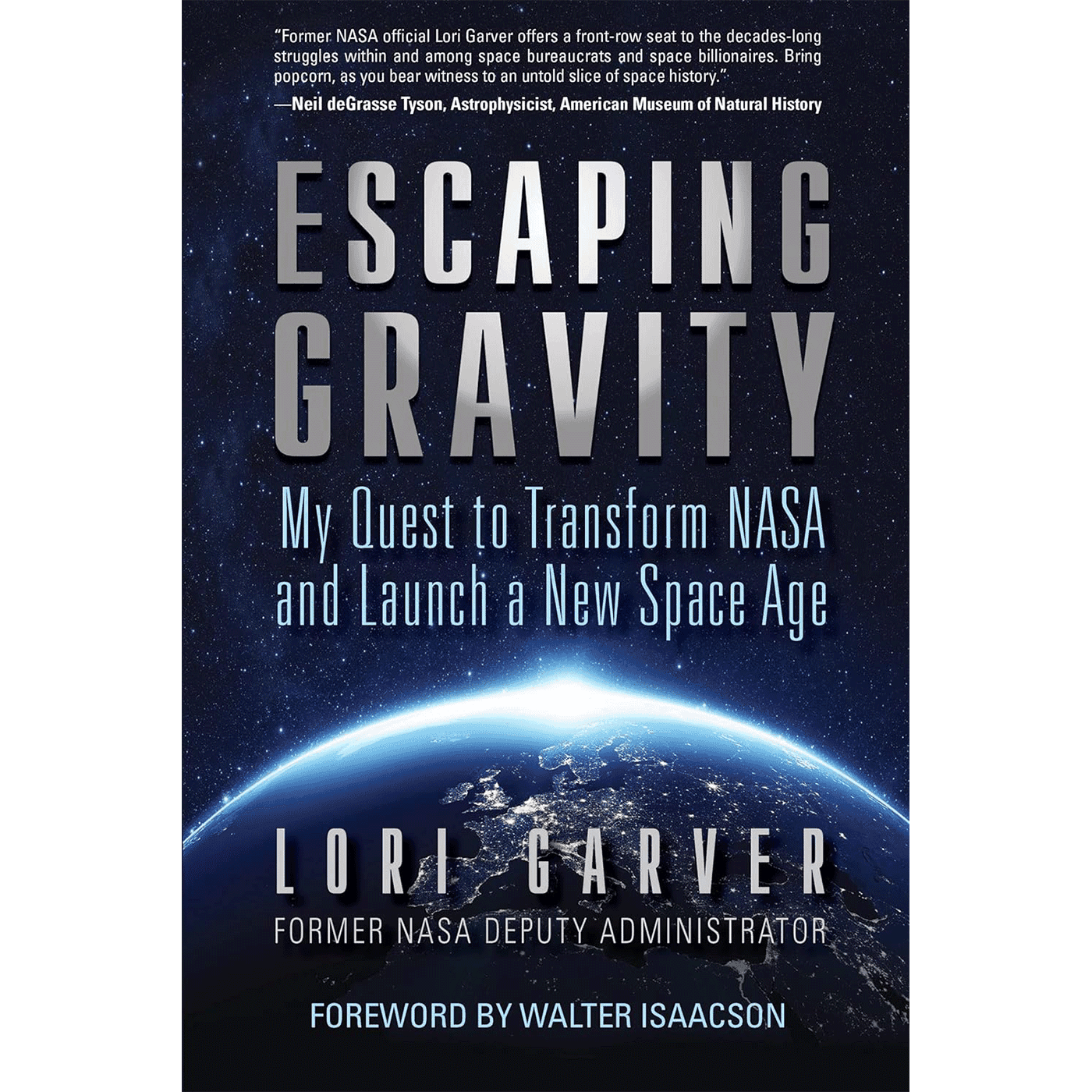
- Episode Title: Lori Garver - Escaping Gravity
- Episode Description: Lori Garver, former NASA Deputy Administrator, discusses her book, *Escaping Gravity: My Quest to Transform NASA and Launch a New Space Age*, sharing insights on her experiences at NASA and the importance of private sector involvement in space exploration.
Key Themes and Concepts
- Personal Journey and Background
- Lori Garver shares her unique upbringing in a politically active family with a father who was a stockbroker.
- Her career spans nearly 40 years in aerospace, including significant roles at NASA.
- Transforming NASA
- Garver discusses the challenges and transformations NASA underwent from the post-Apollo era to the present, particularly her push for increased private sector involvement in space.
- Incentive Structures
- A significant part of the conversation revolves around how misaligned incentives within government can lead to inefficiencies, particularly in large organizations like NASA.
- The importance of aligning government contracts with results to improve efficiency and outcomes in space exploration.
- The Role of Politics
- Garver emphasizes the importance of bipartisan support for NASA, noting that strong advocates can be found across the political spectrum.
- Public Perception and Heroism
- Discussion on how astronauts are viewed as heroes and the implications of this perception on public support for NASA initiatives.
- Garver mentions the romanticization of space exploration and the need for pragmatic approaches to advance human spaceflight.
- The Future of Space Exploration
- The potential for suborbital travel to change the landscape of commercial air travel.
- SpaceX's role as a low-cost producer of rocket launches and how competition may influence prices and innovation in the future.
Key Arguments
- Value of Free Market Capitalism: Garver argues that free market capitalism has the power to unleash human potential and drive innovation in the space sector.
- Lessons from History: Garver draws parallels between the Kelly Air Mail Act of 1925 and modern space commercialization, advocating for a service-oriented approach rather than a complete government-operated model.
- Importance of Pragmatism: She highlights the need for a pragmatic approach to policy and space exploration to ensure that efforts align with broader societal benefits.
Pivotal Moments
- Garver's insight into her experience with John Glenn's presidential campaign highlights the disconnect between public perception and political effectiveness.
- The discussion on the failures and successes of various private ventures into space, showcasing the unpredictability of pioneering new industries.
Conclusion
- Garver's book, *Escaping Gravity*, serves as a detailed account of her experiences and insights into the transformation of NASA and the future of space exploration.
- The episode encourages listeners to consider the implications of government policies, private sector involvement, and the romantic notions surrounding space travel on future endeavors.
Call to Action
- Listeners are encouraged to purchase *Escaping Gravity* and to explore further episodes of *A Book with Legs* for more insights into value investing and the intersection of literature and business.
---
This markdown summary provides an organized and comprehensive overview of the podcast episode, highlighting the key themes, arguments, and discussions presented by Lori Garver.
Written by AI. May contain mistakes. Listen to the episode to check what was said.
Transcript
Automatic transcript. May contain errors.0:02You're listening to A Book With Legs, a podcast presented by Smeed Capital Management. At Smead Capital Management, we advise investors who fear stock market failure. You can learn more at SmeadCap.com or by calling your financial advisor.
0:21Welcome to a Book with Legs podcast. I'm Cole Smead. I'm the CEO and a portfolio manager here at Smead Capital Management. At our firm, we are readers and book junkies. It can be said that leaders are readers, and we believe books provide us a great source of information for filtering what is and isn't important for us as investors. Investing is the last great liberal art and the best way to spend a lifetime of learning. This podcast is for readers, thinkers, business-minded people, and investors who want to grow their knowledge from great authors and their writing. Charlie Munger often talks about using multiple mental models and analysis.
0:54Our aim for this podcast is to help listeners test Munger's theory in business, markets, and people. Thank you for joining us for this episode. we're going to talk about incentive structures, creating change, and politics, luckily, all in one book. Lori Garver is joining us to talk about her 2022 book release, Escaping Gravity, My Quest to Transform NASA and Launch a New Space Age. A little background on Lori. Ms. Garver is the founder of Earthrise Alliance, an initiative to improve policy, technical solutions that utilize space data to address the climate crisis. She is a senior fellow at the Belfer Center for Science and International Affairs at Harvard's Kennedy School, an executive residence at Bessemer Venture Partners, a member of the board of Hydrosat, and an advisory board member at Worldview.
1:39Ms. Garver co-founded the Brooks-Owens Fellowship and serves on the selection committee of the Pritzker Environmental Genius Award. Lori, thank you for joining me today. Thank you for having me, Cole. It's great to be with you. So I'll just let our listeners know, since you and I know this, but I actually got to meet you and also, you know, learn about your writing, which I loved your book via Ridgeline, who is a, you know, we'll be as of December 1st, I think 2023 here, we will be live with them as a vendor. And so I got to kind of cheat ahead, you know, and, and I'll know some of what we'll talk about today, I got to hear a little bit.
2:16But I love this story, because, you know, here we are, like we're free market capitalist types. And a lot of what your book is pushing that idea forward, but into this realm of government and everything that we'll talk about with lobbying and things of that nature. But I'd love to just kind of ask you, you lived this. So when you've lived this, what inspired you to write about it? Sure. I mean, really, what you just said inspired me to write about it. We went through, are still going through a very unique time in our nation's space program. and I got to live it throughout my career now of nearly 40 years from a pretty unique perspective.
3:00And as someone who I was raised by a father who was a stockbroker at Merrill Lynch, my families were Republicans in Michigan, politically active. And yet I became this Obama appointee who was pushing for more private sector involvement in our space program. A lot along the way allowed me to be in that position. I had worked out of college for John Glenn, the senator at the time who was running for president. He helped introduce me to organizations and companies. And I had been within the aerospace industry in and out of government before this big transition. So I do think it's important to have sort of seeded what we ended up and are now doing at NASA by really decades of what has come before.
3:57You know, post Apollo, NASA was searching for a mission and a sort of value proposition because our goal had been to beat the Russians to the moon. And once you win a race, you usually don't keep doing it. And so lots of I'm sure what we'll end up talking about is the inefficiencies that follow that, and how to get our space program back on track, so that it could lead the world. And I went to NASA in the 1990s at a time when the space shuttle was recovering from its first accident. And I I left in 2001 right before the space shuttle's second accident, which meant George Bush, the second president, had told us we were going to have to retire the space shuttle.
4:46So when I came in, that was all in work the second time. And the majority of the book is talking about this transition, why we did it, and why it was so hard. Because so much of what we do in the government is spent on things that simply are not done efficiently because the incentives are not aligned with results. So when I met you, I didn't know your dad was a stockbroker. And I was going to ask you what firm he was with. So I appreciate you teaching our listeners that as well. I tend to find people that were around the investment business or the brokerage business, they tend to be pretty pragmatic people.
5:23Because you know, your dad, for example, as a stockbroker, he knew that if he didn't sell anything, he wasn't selling the right thing, which is a very pragmatic approach to things. But I say that because I grew up, my dad was a stockbroker with Drexel Burnham Lomber in 1980. So I kind of grew up with dad primarily being a stockbroker for most of his career. So I was going to ask you, is there anything from your childhood of your father that really reminds you of the fact that he was a stockbroker, an experience you had, or just kind of how he had to go about working with customers and clients?
5:54There's no question. So he was with Merrill Lynch for his career, the 1960s, 70s and 80s. And these were times I mean, he would, of course, come home with stacks of paper to read. And it was really interesting because he always focused on those things. Maybe it was just what he could sell. But the part he told his kids was doing something that was adding value. New pharmaceuticals that could lower blood pressure. I remember I'm getting really excited about these advances and really excited to be able to help people invest in those so that they could do a better job and get a healthier society.
6:32But things like RCA being in color, when he went to movies that were in color, he's like, well, we're going to want to watch these on our television. It was always customer driven. At one point, when we were really young, he asked us to pick stocks. My sister and I picked McDonald's and Holiday Inn. And he always told us, your kids know what people are going to like because people do often. Now I'm a parent of grown children now, but it was a good bellwether. And so I think that's really true. While a lot of my peers later in the senior ranks of NASA grew up fully seeped in engineering, I was seeped in capitalism and public service because my grandfather and uncle were both in the state legislature for about 40 years.
7:24And I grew up campaigning. And that also connects you to the customer to recognize that if you are paid by the government, that's who you work for is the public. And so marrying those two things is exactly what I think caused me to see a different path, but it's also what sort of caused it to not be very popular at first. So you've mentioned John Glenn's campaign. Okay. Just so you know, Laurie, I am, as of today, 39 years old. And I watched The Right Stuff about five or six years ago, because I would have been very young when that movie came out. But it's a wonderful movie, you know, starring Sam Shepard, Ed Harris, Scott Glenn, Fred Ward, and Dennis Quaid.
8:08And what I was going to ask you is, I mean, that had to kind of captivate people's idea of who John Glenn was. He was this incredible naval aviator that ended up obviously becoming involved with NASA. And yet that didn't translate for him in his political career to, you know, really be anything more than a senator. Why do you think that his, you know, kind of stardom that picked up with that movie didn't translate for him? Well, this was another really early lesson for me growing up with the name John Glenn becoming a household name. I was just a baby when he flew in space. But along with Neil Armstrong, one of the two most recognized astronaut names, I really joined the campaign because he was a moderate.
8:56And to me, he seemed like of the Democratic Party, somebody who would really be able to catch on. And I just couldn't have been more wrong. He's this hero, no question. But he did not relate to the American people. The movie, The Right Stuff came out during the campaign. And initially, he wanted to distance from it, because he never really was comfortable with the characterization of, of course, that was a book before it was a movie. Tom Wolfe made him out to be the goody-goody, right? And we all thought on the campaign, well, this is a good thing. Doesn't America want their leaders, you know, to have these strong morals?
9:41But he came across as more of a tattletale and not really one of the guys. And ultimately, we felt the movie hurt his campaign more than it helped. But the reality is, he was not well suited to the process of campaigning. He picked his friends in leadership positions instead of the tried and true political types. He changed course on that halfway, but it was too late. He had ended up spending more money than the other candidates. And in his primary, I remember after Super Tuesday, the day's cartoon was a picture of Gary Hart saying, I'm new. And Walter Mondale saying, I'm ready. And John Glenn saying, I'm history.
10:30So even back in the 80s, as not a very old man, he was not able to connect. with the American public. We think of astronauts in a positive way, but it wasn't helpful to him. So to your point, you have to invoke, you have to excite, you have to create passion, you know, you have to lead people ultimately. And as you're pointing out, you know, in that part of his career, that wasn't what John Glenn was going to do. But you also point out in your book that you have to have almost like a gumption. And I think you quoted, you quoted part of Moneyball, Michael Lewis's book in your book talking about kind of the feeling and spirit you had in some of the work that you were going to do and kind of the mentality you needed to have.
11:17Can you explain what it was for Moneyball that so intrigued you? Sure. I think ultimately, and I hadn't really connected it to John Glenn, people who are drawn to leadership ideally have a purpose for that, a real drive to do something new and different and they see something that others don't. Moneyball spoke to me in this way. And it is, in fact, when the manager or owner of the Red Sox talks to Billy Bean and says, Billy Bean wonders why he's getting hired. And he says, well, I'm the most hated man in baseball. Why would you even want me? And the response is the first one over the wall always gets bloody, Whether it's in business or government, you are fundamentally changing, trying to change.
12:08The way of life, the way of making money for people, they go batshit crazy. And I thought from my 35-year career before becoming deputy administrator of NASA, that this was a trajectory we were on. But people like John Glenn and all the NASA administrators who had come before had nearly wanted to just keep the status quo. When you've done something as great as Apollo, you rest on your laurels. And I think you have to have that drive and a willingness to get bloody by standing up for something greater than yourself. And throughout history, those are the people who really make dramatic change. So you went back at one point to George Washington University, and you did a master's program.
13:00And I'm trying to remember from recollection here, it was an international space master's that you did. Yes, focus being science, technology, policy, international relations, and using space as a way to advance policies that, again, benefit society. Well, in your book, you pointed out what you were actually studying, because I think the other thing I drew away from your writing is you were dealing with people that were, I would almost say, I'll call them wonks, is the political term people usually use, like a policy wonk, but they were wonks in things like rocket engineering. They were wonks in other things.
13:38And you actually had this much more diversified knowledge base. And I think in your master's program, you talked about you're studying history, politics. It was such a myriad of studies. And I thought that was interesting because, you know, like I said here in the opening of our podcast, you know, we're really trying to build worldly wisdom or we're liberal arts thinkers, right? We're trying to build this vast knowledge to try to ask ourselves pragmatically, what's the answer? And we have to always be learning. And I thought it was really interesting that your discipline wasn't purely around like studying space, studying science purely.
14:13Do you think that does give you a big advantage for thinking about these big applications. It is precisely the difference that led to me pushing for these changes, but it also led those people who really were only technically trained and motivated to fight against what I and others like me saw. So the bigger picture being the end state, I think of those of us lifelong learners who have liberal arts backgrounds. I look at issues different than someone who just wants to build a big rocket. You know, those people are very skilled. We give rocket scientists in this country, you know, huge props to the level of schooling and technical accomplishment that makes.
15:04But it is a tool. It is not the end state. And I could never really get over how many people were, of course, moved up within the leadership of the space agency, just like they are in other fields, because they are technically proficient when the leadership role that they were being promoted into had nothing to do with that. had everything to do with all the skills that you just said, you know, you and your listeners like to bring to this. I was responsible for working with the administration to set policies and budgets, trying to communicate to the public and Congress the value of what we were doing.
15:44You don't really need to know the thrust to weight ratio of a certain heavy rocket in order to do the job I did. But I was questioned, I think, more than others who'd come before me who could have told you the thrust to weight ratio, but maybe didn't have the big picture at the forefront. Well, to quote, I think Munger says, you know, it's the difference between knowing a little about a lot versus knowing a lot about very, very little. And that's kind of a different way of thinking about it. But you hear that knowing a lot about very, very little. It's like, oh, I don't want to do that. But when you put it like that, it's actually putting the question in the way it should.
16:24So also kind of playing on the John Glenn idea, we've talked about a little bit about, you have to captivate people's mind, you have to excite their passions. And you did that, you did try to captivate the mind of people for space. I think in your story, you talk about the help that Gene Roddenberry did to bring the cast of Star Trek, The Next Generation, back in 1991 One, two, at a get together that included our local Arizona resident today, Vice President Dan Quayle, at that time was involved in that. How important is it to kind of move those passions by just doing really practical things like that to help people know that, hey, are you a fan?
17:01I'm passionate too. You should be on board with this. You know, we shouldn't, I think, in government leadership be snobs about the public. But their Star Trek, Star Wars, science fiction in general is very popular publicly. And a lot of those people feel passionately about it, you know, because they want a space program that looks like it. But there's no reason to discount their views. Sure. I really felt like Dan Quayle, who looms fairly large in the early part of my book since he chaired the Space Council, tapped into this very well. I was at a nonprofit called the National Space Society at the time that was a public membership organization.
17:43And he was very interested in advancing a space program for all the right reasons and looked to groups like ours, involved us, brought in this Gene Roddenberry and the Star Trek cast to have public events, including with the astronauts who actually had gone to space like Alan Shepard and John Glenn. And we ended up marrying, I think, the science fiction and science fact aspects of the motivation to go to space well. But ultimately, the issue was, does it have to be led solely by the government? Sure. And again, Dan Quayle had a balanced view that said, let's let the private sector lead where they can.
18:31But he was not successful because of the typical military industrial complex came down on them. He has a chapter in his book called Rockets and Red Tape. And it's about NASA and how discouraged he was with their ability to be responsive to him. And the president at the time, President Bush, in trying to push NASA beyond the space shuttle and the space station to do more on the cutting edge. And so it is a story that transcends partisan politics, for sure. There's a lot of parochial politics in it. But in general, I feel like NASA is one of those institutions that's, it's not in the Constitution.
19:21So you have to find ways to connect what you're doing to help the welfare of citizens. and not everybody at NASA holds that at the forefront. You had to deal a lot in politics, you know, throughout your career. And it didn't seem to your point just a second ago that there was necessary a political hue, right? It wasn't necessarily all red. It wasn't necessarily all blue. It's almost like you had to kind of find your advocates in whatever political organization, right? I think you mentioned, for example, Newt Gingrich was very positive towards the work you wanted to do. And he was a general fan, but that didn't mean all other Republicans were going to be, for example.
20:04And so can you kind of teach us how hard was it to find those advocates if they weren't politically aligned? Sure. The NASA as an organization has strong bipartisan support. And really every president since Eisenhower, when we first launched something into space has been supportive. I like to remember that I have been on Crossfire, the show twice, where you're supposed to talk back and forth across the aisle. And both times they put me with the Republican, once with Tucker Carlson and once with Pat Buchanan. But the show has always devolved into each trying to say their party was more supportive of space.
20:46So this isn't a general space discussion. This is how do you go about it? What is the proper way for the government to have policy and invest in advancing these programs? And certainly there are more Republicans who naturally, like Newt Gingrich, believe that you advance faster when you give these opportunities to the private sector. So you can sometimes figure out who your best advocates are going to be. But when you had the Southern senators, whether they be Republican or Democratic, with jobs in their states, they were not going to be for SpaceX, Elon Musk, anything other than their big cost plus contracts.
21:36The lobbyists make sure of that. And that's really what we were fighting. So Daniel Golden, during what was the last year, the Bush administration comes in, And it seemed like he was really the one to kind of kickstart, you know, what we ended up doing today. But it's like he wanted to put a heightened sense that there were issues that we should begin tackling even then. Can you kind of explain what he did when he came into NASA? Yes, Dan Golden did come in at the last year of the first President Bush. He is still our longest serving NASA administrator. He was kept by Bill Clinton his whole eight years and the first year into George W.
22:15Bush. He came in from industry. He worked at TRW. Brilliant man who really did drive a lot of this progress, early progress, and a lot of my own thinking. I came in about halfway into his term. He hired me to help him with strategy and policy. But his goal was really to use that vantage of the atmosphere and beyond to reach for the unknown, to help our society fully embrace both economically and scientifically the realm beyond Earth. And that is truly the vision of NASA. So he went about that in a lot of ways. One of, I thought, his most important things was trying to break up the status quo. He didn't like the big contracts.
23:13We had lost the Mars Observer, which was a billion dollar spacecraft just over wrongly transposing from metric to English units. I mean, some embarrassing things, the Hubble Space Telescope blurriness. And he had to fundamentally reshuffle the NASA leadership, which was not popular, give contracts to new competitors, which was not popular. And he started really trying to take on the costs of space transportation. That is what he called the Gordian Knot. I describe it in the book, that thing that if you can get there, you have lowered the price to admission. And getting to and from space reliably and inexpensively has been that holy grail.
24:04And he worked to untie the knot. And ultimately, now that we went from launching maybe one commercial satellite 20 years ago, today, already this year, we've launched nearly 100. that transition I believe did start with Dan Golden so one of the great framework arguments that you had in your book was you talked about the Kelly-Mail Act of 1925 okay and I love this because it's all you were doing was stealing from precedence and saying well what has worked prior why did it work and can we replicate that so can you explain why the Kelly-Mail Act of 25 is important in your mind for having a framework for thinking about what we're doing in space?
24:53Sure. So we were looking at trying to tackle the problem of costs and efficiency related to going to and from space. The best analogy is aviation. And in early aviation, quite quickly, you created a robust industry. Of course, it's regulated, but it is led by the private sector. And the Kelly Air Mail Act of 1925 was critical to doing that because you had the government saying, we will pay you to deliver the mail. We're not going to pay you to build the airplane. They were buying it by the drink. And fundamentally, that was the switch we needed to make at NASA. We didn't need to build the rockets ourselves and operate them ourselves.
25:39But we needed to transport sandwiches, clothes, whatever the astronauts needed. And ultimately, once they were able to do that safely, also transport our astronauts to and from our space station. The analogy to the Kelly Air Mail Act was just that. You are buying a service instead of the whole ball of wax. So let's pivot because I want to ask kind of a strange question that probably no one's asked you. But the question I want to ask you is the space race, did it get started when Sputnik was launched? Or did the space race really begin when Vannevar Bush wrote his 1945 paper, Science, The Endless Frontier?
26:23Because I think about a lot of the technologies that were founded out of that paper in the 50s and 60s in places like Silicon Valley with radio technology and things of that nature. But those weren't a spaceship. So how do you look at that? Was it the chicken or the egg? It is a great question that I haven't gotten. And you can put the starting line for space in a lot of different places, going back even further to Jules Verne and the early dreamers who gave us that vision of being able to soar beyond our atmosphere. But clearly, Vannevar Bush was a critical point. I studied for my master's, the endless frontier is like the first thing on your syllabus, right?
27:11Sure. Everybody, and not just space, hinges on this. So it was not surprising that Walter Isaacson did that in my foreword as well, because really the key is what is government's most appropriate role in advancing science and technology? So Sputnik became the thing that the aerospace industry, again, the military industrial complex, drove home as being that thing that we needed to beat. Who benefits from that? They do. You know, this was a very self-motivated activity, just like the very same companies who had succeeded in aviation, and a lot of that being military aviation, saw that the next high ground was space.
28:02And they even created the term aerospace. space. They're really very different environments to operate in, but connecting them so that they would be the ones who could do it. Brilliant. And it worked well. We obviously managed to beat the Russians at this geopolitical goal that the Kennedy administration set, which seemed impossible at the time. So all props to those people who could help get that done. It just created an institution and an overhead that was really, really difficult to sustain once you no longer had the 5 % of the budget that NASA got in the mid-60s. Sure. And by the way, obviously, it didn't sustain at that level.
28:50So I'm going to touch on that because obviously politics was plugging into feelings, right? I think you pointed out that Sputnik, what they did is no one really cared about space, even though Sputnik goes off. So they looked and said, you know what? Let's scare the hell out of them. Let's play into their paranoia. And that actually drove people to kind of change their mind on space, as you pointed out. But, I mean, Kennedy was who put up the dream to go to space and go to the moon for Americans. But you also quoted him saying, quote, you said from your book, I'll quote your book, rarely acknowledge are the recordings of Kennedy telling NASA administrator James Webb in November 1962 that if we can't beat the Russians, quote, we ought to be clear otherwise we shouldn't be spending this amount of money because I'm not that interested in space, end quote, okay?
Read the full transcript
29:39So it's funny to me because reading that quote, I thought, oh, I never knew Kennedy said that. But he's actually being fairly, again, pragmatic where he's saying the cost and the benefits have to get close to each other. And what you're pointing out is that those things didn't really have anything to do with each other for quite a long time. What of course we know now is that time and time again, historians see things with their own lens, and they tell something in order to advance, whether knowingly or not, that agenda. So the people writing about the early space years sell books based on romanticizing the decisions and the period.
30:25And the aerospace industry, who sponsors all these things, only talk about what Kennedy said that is reinforcing of what it is they want to do. 50 years after many of these decisions were made, lots of these books were opened up. That's where I was able to see what Eisenhower and Kennedy actually were saying and doing beyond the snippets that have been marketed and promoted as myths. I mean, mythology is great. You know, you use these things to tell a story. But who's telling the story was always somebody who either personally just was excited by what we were doing in space, or was involved in a little self dealing.
31:14Wernher von Braun constructed much of this, a brilliant person, and he wanted to use his rockets for sending people to the moon rather than bombing people in London. But he was also a pragmatist and was willing to use any argument or tell any story in order to get more funding. And I really don't have trouble because we all recognize it's nothing, no one, purely good or bad. We have heard one side of the story on human spaceflight. Sputnik scared the nation. We came from behind and beat them to the moon. Shouldn't surprise anybody. It was a little more complicated than that. Sure. Well, so let's follow on that because, you know, I think we're going to come back to this idea of, you know, what's worked in other cases.
32:11So one side of the story would say, look how successful America has been. But then you actually pointed out an interesting fact that I had never thought about. Oh, by the way, beyond Warner being a Nazi, which I didn't know, okay, beyond him being a Nazi, you pointed out that commercial airlines, as an example, are way safer, historically speaking, than traveling with NASA. Which I immediately, as soon as you said it, I said, well, that makes sense because think how many people have died, you know, as a percentage of the total people that have ever flown with NASA. And it's way greater than what we've had on airlines looking back.
32:45So I guess, you know, most people would say, but those are for profit businesses, Lori. They're, you know, in the Milton Friedman way. They're really only beholden to their shareholders. So why would they care about the quality of the ride? And the answer is, well, they actually cared more than the government. So do you think that kind of teaches a far different story about incentives for one versus another? Well, yes. And again, I look to aviation, as you said, as the analogy, because yes, over time, commercial aviation has become more and more safe. And it's understandable that NASA's record in going to space for safety isn't as good as the tried and true commercial aviation.
33:31But what I was comparing it to was commercial aviation is so much safer than our continued government operated air travel. So if you just look at aviation accidents with our nation's military service people in training missions, especially is a very bad record by comparison. What I was trying to argue for NASA was we had lost 14 people, of course, in the two space shuttle accidents over just 10 years. Sorry about my dog there. Who were we to say the industry would be worse? We have a very capable industry. And in the government, when we lost people on the space shuttle, no one lost their job. whereas in a commercial entity it probably goes away the company if you're going to lose i mean i i think the last major aviation airlines went bankrupt after their last accidents okay so let's go back to this idea of incentive structures laurie so you were the deputy administrator at nasa during the obama administration you were as you said pointed by the president, you worked with Charlie Bolden, who was the administrator, and you had to get approval and purse strings ultimately from Congress and deal with the OMB, the budget office.
34:59So how hard is it to align all those groups under one idea? Well, every dollar we spend in this country has to go through this process. So the space people love to complain about it, but it is really a given. And it works in the sense of the administration works toward putting a budget together. Of course, dollars are tied to policy. And when it hits the hill, you aren't supposed to have even talked about it much. So it was really challenging to make a big change through the budget process when you didn't have the head of the agency, Charlie Bolden, really on board and able to explain it. And he was an astronaut and a Marine general and a heroic figure.
35:54So these were difficult things to overcome. but if you look at where we are today we ultimately made a compromise with congress so this was the obama administration which at the time did have both the house and the senate democrat leadership and that first year we wouldn't have gotten very far without that but even so very hard to make dramatic change because, of course, the relentless momentum of the status quo in Washington, given the incentives are to stay. You get there, you get your money from your lobbyists, and you deliver to them. And that allows you to get reelected. Tough cycle to break.
36:45Sure. Well, I mean, we call that pork barrel where I come from. And so you talked about some of the pork barrel that you had to witness. So you come in, you want to move a project forward, and you likened it to a game of Twister when you looked at the map of states. Explain what you meant by Twister. Yes, we were directed to build the next rocket literally according to the states where the contracts would be given. That's why I said, you know, right hand Louisiana for the engine tests, left-hand Utah for the solid rocket motors, et cetera. And these, ultimately, there wasn't thought to whether it could actually build a rocket that would be able to launch within the period of time and for the amount of money that was proposed and deliver the best value to the taxpayer.
37:42In fact, it did the opposite of that, no surprise. So you also caught my eye in your book. When you brought up, I just, I did not expect this because I'm sitting there thinking, okay, again, I didn't know you grew up in a Republican household, but I know you served in the Obama administration, but I also knew you liked Newt Gingrich. So it's kind of like, I don't know where you necessarily fall politically, but you said something on subpoenas that just terribly intrigued me because it just, it was funny to me. You said in your book, quote, my experience is a reminder that when subpoenas are served, they don't prove that those who've been served acted inappropriately.
38:14They may even prove the opposite. Explain what you meant when you said this. So when we were having this debate over which rocket should be developed, whether it should be this government directed twister game of having a piece of it in every state with no concern about its overall effectiveness as a rocket. versus putting out the competition for the private sector to bid on so they could lower the costs and get America innovating by doing new things. A couple of senators and their staffs subpoenaed my records, emails and so forth, because they thought I was trying to do things with the rocket program they wanted to advance that were in some way untoward.
39:06I never got an actual reason. They thought I was holding it up and they had, in fact, passed a law saying we had to do it. I wasn't doing that, but you have to turn over all your records. And to this day, people continue to say, oh, she did something wrong because she would subpoena it. Being subpoenaed is not the one thing that's doing something wrong. And the very people who had requested these records were, of course, the ones trying to advance a program that was self-dealing. And yet, when that came clear, there's no announcement. No one ever says, oh, by the way, we've looked at everything this woman has written for five years, all these emails, and didn't find she was doing anything wrong.
39:53I mean, I'm pretty sure if I'd looked at their emails, that wouldn't have been the case. Sure. Well, so I think the other thing too, and I think this says something a lot about you, but I think the other thing I took away from your book is don't expect a bunch of fanfare when you've done the right thing and had success either. Because I think you used President Obama's memoir as an example. Like he was a fan of what you did. Like you ultimately treated your role as deputy administrator as you were on his team, like we pointed out with your incentives. And yet you didn't get anywhere in the memoir.
40:27Sure. I was I would never have expected to gotten anywhere personally in the memoir. I always and when you work directly for the president like that, you do take on huge responsibility because, you know, everything is going to be hyper criticized, examined. And the program that we proposed, I felt I had convinced him to do. And he did the right thing. And I was so pleased that he was able to take this on. Most presidents have not been. But when he didn't really stand up for it and we lost a lot of ground, it hurt him politically. And I felt a little responsible. It, to me, led to the Obama administration not continuing to ask for larger budgets over the coming years.
41:23Our first budget request was a$5 billion plus up or$6 billion over the next five years. But he is known for cutting NASA's budget because that first year what he requested, the Congress didn't do. They didn't want to change their program. They wanted the same old stuff. And if you look at Dan Quayle and his memoir, he dedicated an entire chapter to NASA. Again, called it Rockets and Red Tape. But we, NASA, didn't rise to what we could have been in an Obama administration, in my view. And you did see later on, I believe, President Trump and more importantly, Vice President Pence take great leadership and care with their role at NASA.
42:08And that was something that we did not enjoy beyond the first year when we were doing things that could have made an even bigger difference. Sure. Something you pointed out that was really interesting, there were still good precedents of private businesses in operations around NASA. You point out the history of ComSat and IntelSat. Why were those treated differently than a lot of the other government work for the last 50 years? As with most government projects, you start out developing something new within the government and it transitions to the private sector. And that had happened, of course, for aviation and also in the early space years with commercial satellites.
42:55And so you wouldn't have thought it would be this dramatic shift. human spaceflight was more difficult to see NASA transitioning because I think we see it as sort of the heart and soul of NASA. It's special in some way. And by protecting it, I felt what we were doing was really hurting our future. Because while the space shuttle was a grand experiment to try to reduce the cost of getting astronauts to and from space, it was costing over a billion dollars per astronaut that we had flown. And I don't think if the public knew that, they would have wanted us to do that. But those within the aerospace community who were paid that money and didn't really see a reason to change could use that as, you know, our astronauts are just too precious for us to risk doing things differently.
43:56And especially from someone like me, who, as you mentioned, had this different background. They did not like the fact that it looked like a SpaceX was going to be first to do it. I think they were concerned about this for you know their own rational reasons but if you looked at that bigger picture it seems so obvious that just like the early non-human base so more of the the satellite market had gone to the private sector we should follow it so talking about early i'll call it for-profit or you know at least kind of dreamers if you will on you know these space ventures you mentioned your book andy beal you mentioned Robert Bigelow.
44:43And then you also mentioned Paul Allen and what Vulcan and really his sister, Jody, who oddly enough, my dad actually went to college with at Whitman College, tried to do in, you know, in trying to advance their vision and their dreams in space. How do you look at those earlier, you know, shots at this? Do you look at it as that had to be done? It was going to fail from the beginning? How do you personally look at those things? If you were going to try to make a graphic about how we eventually were able to succeed in this, you would have had those early Beal, Bigelow, Paul Allen investors for reasons, both of, I think, technical advancements as well as just seeding the workforce.
45:31So you needed people who had experience building and testing rockets outside of the government that I think a lot of those companies helped develop. Beal's test facility in Texas, McGregor, was purchased by SpaceX more than a decade ago to test their own rockets. Beal had shut down because he felt he could not compete with the government. I felt that was a big loss. I had worked with him. I believe that they could have succeeded technically. But we were in a cycle of the markets where we had a number of constellations of satellites planned, but the tech bubble, the internet bubble, 2001 crashed.
46:16He no longer had that market beyond NASA because those large constellations weren't going to need to be launched. So there's so many different things that go into this. You had the policy, but you also need the money. You need the technical ability. And that's what had to come together. So certainly those folks, and especially, I would say, Paul Allen and now Jody, played some very unique and important roles. Sure. And obviously, as you're pointing out, Elon's had the market in the way that you've needed it to go out and fund a lot of this, looking back over the last decade. So but he actually, you know, and I given, you know, I didn't know this, I'm sure, you know, the space pirates, as you call them, knew this very well.
47:01But he originally went to the Russians to launch into space. Can you tell a story of what happened to him when he went to go do that? Sure. Elon early on in 2002, he believed that he wanted to do experiments on Mars. And ultimately, Mars has been his vision for having humans become a multi planet species. He had an experiment he wanted to launch. He was shocked at how high launch prices were in the U.S. And he went to Russia to take advantage of their bargain basement prices. And he did not feel he was treated well. The opposite. At one point, this is told by others, a Russian spit on his shoe.
47:53On his flight back from this trip to Russia, he decided to start his own launch company because he saw that there really, while we needed to get to space more cheaply, was no way to do that. And he wanted to address that. Lots of people said he couldn't do it, shouldn't do it. All these people, like you mentioned, had tried and failed, which I think is funny. Like what? So no one's going to ever do it. But I joke that it was the spit that launched a thousand spaceships because he was so offended. Egos can play a role, as you've learned. So DARPA, which obviously, for those that don't know, is the Defense Advanced Research Projects Agency.
48:38That's who originally funded SpaceX, right? So I think you did a really good job of talking about NASA is a civilian organization. Now, there are a lot of former military people that are involved, whether it be from an astronaut perspective or in the agency, but as a civilian agency. So it's funny to me that it was actually a military agency that funded SpaceX originally, which wouldn't have been what I expected. Sure. But what you would expect is that it's always individuals, right? These agencies don't do anything on their own. And it wasn't the head of DARPA. A couple of guys, Jess Bonnable and Pete Worden, both who are, well, Pete's a general, senior in their own right, gave a handful of million of dollars to SpaceX in the 2003-2004 timeframe to prove what they called operationally responsive launch.
49:37Not only were these things expensive, they took months of planning. Well, a warfighter doesn't have months of planning. And they were these advanced thinkers who had a little money and put it on the project. And I don't think they're given enough credit. In the very beginning, those Falcon 1 flights, the first of which weren't successful, were largely funded for very, very little money. You know, that's one thing I want to make sure to say when, yes, these governments, we have given and awarded money to SpaceX and other commercial companies. It is pennies on the dollar compared to what we were given to the cost plus contractors.
50:21So they were leveraged dollars that returned so much, but probably the most leveraged were those first eight million from DARPA. So you make the case that SpaceX is the lowest cost producer of rocket launches in the world. You know, we often study companies and ask, you know, who's the low cost producer? Because the low cost producer can obviously deal with an unknown future for whatever happens a lot easier than their peers. Do you always see that they'll maintain that low cost producer? Or is it just they have the biggest advantage from the incumbents that obviously had the cost plus structures?
50:58these combined requirements technical money aligned with our policy at spacex we gave contracts awarded contracts to multiples of people and so far spacex has has out delivered on everything people always ask well what's the secret why do you keep giving the money They deliver. We gave them less money than their competitor on the cargo missions, which were in the hundreds of millions of dollars, to Orbital Sciences, which is now Northrop Grumman. We gave them less money. They did twice as many launches and also returned goods from space, whereas the Northrop Grumman rocket only goes to the station.
51:49It doesn't come back. On Boeing, Boeing got nearly twice as much money and has not yet launched people to space. They do have, I think, hopefully, because we want competition, competitors in the smaller rocket area. And hopefully Blue Origin will get their new Glenn rocket to launch in the next year or two and give them some competitive reason to keep their prices low. because i do fear that why would they you know these are markets um if they've if they've got the run why wouldn't they charge a little more what they're doing which is synonymous with successful companies that i'm sure you know a lot more about than i do is they keep replacing themselves so their falcon 9 rocket which is the workhorse for all satellites launched today in the US.
52:47There's, again, 80 launched by them, maybe a handful from anyone else. But they're developing a bigger rocket. Well, they developed the Falcon Heavy. And now they're developing the Starship that will put those potentially out of business, but they keep advancing. And so it's hard for others to keep up when others are trying to compete with some of those earlier variations, and they're getting leapfrogged. The ballot is still out. What I say in the book is, you know, the comparison between Bezos and Elon is the most stark because they were one in two as far as the richest individuals in the world.
53:28And they both had rocket companies. Sure. And I got to know them both. But it is not going to be possible for Jeff and Blue Origin, I say to catch up unless Elon and SpaceX trips. Now that could happen. But I think they're running the table right now. So I have, I this is kind of I've cheated because I kind of know your answer on this next question. But I would just say like, from your own personal opinion, what did you not like about Blue Origin's rocket design?
54:04i uh i didn't say i didn't like it that rockets are phallic symbols there's no question i don't know how much that has to do with more men being uh supportive of spending more money on space than women but time after time that is true um you couldn't help with that comparison of rockets because you also had Richard Branson. And Richard Branson's is more of an airplane. Yeah. But there's no question that the rockets, go back to the movie Airplane, everything can be seen as a phallic symbol. And Jeff seems to have done his best to make his rocket one. Yeah, because you mentioned that at the Ridgeline Conference.
54:51And I thought, wow, that's not what I expected Laurie to give her view of. but I was tickled because I just couldn't quit laughing. So let me go back to, so inertia is still a powerful force in all of physics, okay? Mike Coates, one of, as you categorized it, one of Charlie Bolden's cup boys, he still won't admit that what you advocated for has succeeded. John Maynard Keynes said, when the facts change, I change my mind, and that's what pragmatism gets at. But why for some people or in certain situations is pragmatism not very natural for humans? In other words, where they just continue to ingrain themselves in their right?
55:31Yeah, I really like fields where you can be more pragmatic. And I do believe that, again, being the daughter of a stockbroker, that is just how I grew up. And that is how I feel about the space program. But many people, and Mike Coates is an astronaut who, like many of the early astronauts, are not pragmatic about the space program. To them, it's romantic or more like a religion. And you don't convince people through facts on religion. And I should never really have tried, but my point is we are not a religion. There is a reason. And I think more people will be supportive of space, the more they see the value proposition.
56:23Obviously, we didn't really question it in the Cold War days. But today, and we don't spend enough that it's a large public policy debate. but one of the things that was argued against this privatization effort of for astronauts is that the public cares too much about its astronauts and their heroes and that would no longer be the case if they weren't flying with the government that's that's not a pragmatic argument. That's a hero argument. But you know what? There's something to it. And I should have been and would people always ask, what would you do differently? And I love to think about that.
57:11The hero astronaut is a great thing. This nation has very much tied up, I think, our superpower power-ness with being leaders in launching people to space. And I continue to be surprised by the amount of momentum that early space program gave us. Inertia is a big thing. And I don't know, firefighters, who else are the biggest, you know, we've lost so many of our heroes, that professions that we used to find so heroic, but astronaut still seems to be one. Yeah, well, and I think it's the difference also of like, you know, some people believe you learn to know, and you actually continue to learn to learn.
57:59That's what we're doing in life, right? We're adding it's a, it's a cumulative effect. It's not an endpoint, if you will. Because to follow on that, you talked a lot about how the military can ham things up. And you mentioned Mike Coates being from the military perspective. but you know I actually walked away thinking man as an American one of our super powers or like kind of our super abilities continues to be again what we do in capitalism to quote this is coming from your book quote in his confirmation hearing Secretary of Defense Lloyd Austin testified that the innovations of space entrepreneurs as a means of strengthening the military's hands was a uniquely American way of sharpening the military's edge end quote he's saying it was our capitalism, it was our ability to fail, our ability to dream, you know, a very American response, which is why SpaceX isn't in Russia.
58:51It's not in Europe. It's not in China. Don't you really think, I mean, at least I'm giving my bias away, but I think that's a uniquely American superhero trait. Would you agree? I would agree. And this is what was so frustrating to me was I was being chastised for being anti-American. for not wanting the government to keep doing things the old way. Neil Armstrong and Gene Cern and two hero lunar walking astronauts testified that what I was proposing and what the Obama administration had put forward this transition was going to end our leadership in human spaceflight. And I precisely felt we were doing the opposite for the reasons that you just outlined.
59:43How do we outcompete? How do we continue to lead this world? It didn't end in 1969. It's by out-innovating. And our capitalist forces do that the best. I don't think that's really a debate. So by being pragmatic instead of romantic, I was the one advancing something that truly has become more successful. that Lloyd Austin and subsequent statements by the military talking about how this innovative edge in space has allowed us to outcompete the rest of the world and remain a more secure country is very gratifying, given the years that I was named and directly told, you are ruining the future of this country.
1:00:32So, but you're also a very particular kind of person. And you talked about this in your book. So I appreciate you kind of looking at yourself. And I love your line on this. To quote your book, you said in your book, quote, as Jessica Rabbit says, I'm just not drawn that way, end quote. You talked about how that you knew you were right in what you were doing. And unlike, and I think you even said, and you can correct me if I misquote this, but I think you even said in your book that other women would tend to want to kind of be liked by people, but you didn't care. And I find that like kind of like a uniquely if someone says, well, that's a Lori Garver thing.
1:01:10I'd be like, that's a Lori Garver thing. Lori is very unique. It's like God bestowed you with that. He blessed you with that. How important is it at times in someone's career as an investor, whatever that may be, whatever context they live in, how important is it at times just to say, I don't care what other people think? You know, I do like to be liked. I think we all do. But I'm someone who believes in that broader purpose. And I think it's tied into being pragmatic. I couldn't get the big picture things achieved and also be liked. So the big picture things had to win out. Yeah, I'm not bad.
1:01:49I'm just drawn that way. Like, of course, not everyone wants to advance society in some way. And had I, you know, I believe that I am liked by my children and husband and friends like the people that matter. Yeah. I think there's just throughout history. This is so true. People say it a lot about Elon too, but I don't know if there is a gender attribute to this. My sister is always like, I wish I was more like you. I like to be liked too much. And you don't stand up for things you believe in when that's the case. I think, however, there is a way to do it that can be a little maybe more forgiving, more open.
1:02:42I was in this fight and all of us in this fight were geared up for the battle. And so I don't mind saying where I leaned in too far or saying how I would have handled things differently. I think that's part of your learn to learn, you know being able to take cumulative knowledge and one of the reasons I wrote the book was so that other people could learn from this and take those next steps. Sure so you got my mind going on something that I've never heard anybody talk about with space travel but I was like oh my gosh Lori is on to something and it actually it gets back to the Kelly Airmail Act it gets to what we're talking about with, you know, Virgin Galactic and SpaceX, but you talked about suborbital travel.
1:03:34Okay. I was never old enough to fly the Concorde. I'm super depressed about that, Lori, just so we're on the same page. I would love to fly, you know, beyond the speed, the speed of sound. And yet that I can't do that today. I can't go from, you know, Phoenix, Arizona to London very quickly. How do you see that progressing via consumers with what we have with SpaceX and Virgin Galactic today. Cole, I have no doubt that you will be able to go suborbitaly to a distant part of the planet in a very short amount of time within your life. That was supersonic transport. I also never got to go on it. Also, I'm not feeling great about that.
1:04:23But suborbital is a whole nother animal where, I mean, we orbit the Earth in 90 minutes. So just the travel time to Tokyo or Sydney would be 45 minutes. So that's way faster than the Concorde. Yeah, well, I agree. And it's like if you tell me, hey, Cole, you skipped the Concorde. Yeah, we skipped the Concorde. But there are companies still trying to do subsonic transit, like the company Boom. And as you try to make these advances, it's not clear to me that we won't overtake that with traveling through space to get somewhere. But there's a lot of logistics to it. Agree. And by the way, if you look at the post-pandemic world, go look at the other thing that I thought about because when I heard you say that in your book, I was like, oh my gosh, Lori's onto something.
1:05:20Go look at charter jet travel post-pandemic. It's off the charts, the value of the planes, the people using the services. So you can see that there's an inkling for that market out there. The question is how much of that market would love to say, I don't need a G6 because I can just go suborbital and be there in 40 minutes. I mean, what would they pay for that, Lori? That's what I thought about. Well, right now, the suborbital vehicle that is active, I think the next flight will be next Friday, is Virgin Galactic Spaceship One. And people pay$200 ,000 in the early days,$200 ,000. So very little money for those trips.
1:06:05and they go and come from the same place, but it is the exact same technology that could take you across the continent, over the oceans, and land within 90 minutes. I've always been a fan of Richard Branson and Virgin Galactic. It operationally is happening now once a month. They need to be doing that much more regularly and have more vehicles, whether it's that technology or whether it is Starship that can take 50 to 100 people at once, we'll see. Certainly, as we're seeing with suborbital travel, the wealthy people will go first. That happened with aviation. But once a market expands and we get those costs down.
1:06:57We never say we're going this far and no further. And people's time is ultimately the most valuable thing we have. Correct. Yeah. George Gilder calls it the information theory. And obviously, the more information we accrue as a society, all our time gets worth a lot more. And therefore, you can attain a lot greater things. I have this debate often, Lori, with my dad, where he's like, oh, you know, these millennials, they're not going to travel as much as they did, except that if you look at like in the average wage, the cost of traveling has never been cheaper in aerospace, you know, when I talk about commercial airplanes than ever.
1:07:34And so it's naturally that once it gets cheaper, it just gets used a lot more. So I totally I agree with you there. I think that will continue to propel. One thing that I want to ask you about, this is not in your book, I just I kind of wanted to dig this out of you because I I also get the sense you're a huge optimist, Laurie. And so Paul Ehrlich wrote Population Bomb in the 1970s, which became a very popular book, arguing that we had too many people, and we're ultimately going to kind of ruin the Earth's resources. Elon totally disagrees with that and says, ultimately, we don't have enough people today.
1:08:09And my thinking that you're kind of the ultimate optimist, where do you sit in that Elon versus Paul Ehrlich kind of discussion? Is the future so bright that it doesn't matter how many people? Or how do you look at a debate like that? I am an optimist, but an optimistic pragmatist. So I think I have tried to understand Elon's argument, but I think I am more with Paul. Although my concern today would be that, you know, it's more about what have we done and what are we doing to the environment that it's going to cause the population to have severe conflicts based on resource limitations and so forth.
1:08:57And really, if you look at Bezos and his ideas that were based on Dr. Gerard O 'Neill from Princeton back in the 70s, it is that we can take the, if there were overpopulation, we can take the heavy industries, those things that are hurting our planet off Earth and put those in space. Earth can be maintained as more of a park and the work and heavy industries will be done in space. And these are generational issues. There will, of course, be people on the moon and Mars and hopefully beyond, because ultimately you really do need to leave the planet to survive as a species over the very, very long term.
1:09:50And I do give, I think, the billionaires, namely Jeff and Elon, credit for keeping that perspective in mind. When they could just be spending their money on themselves and not doing any of this stuff. Sure. So in effect, kind of like the moon would become Australia, what Australia is today from a resources perspective. Sure. Not to mention there's science fiction that say it should be our first penal colony. I was going to say, it fits the model perfectly. Yes. But resources in space are really interesting, again, over the longer term. We live in a gravity well, so there isn't going to be a lot of efficiency to mining the Earth and throwing our stuff off the planet.
1:10:33So you look to asteroids, our moon, other moons for those kinds of things as you are going to develop if we survive long enough as a species. And our technology continues to advance as it has. starships. So I there's a lot of things we didn't talk about in the book, we didn't, we didn't get into as much of the inside baseball on the contracts part, we didn't get into the asteroid discussion and what the goals and objectives of, I'll call you know, what we're trying to learn about asteroids, how we're trying to land on them, destroy them if needed, etc. So there's a lot in your book we didn't cover.
1:11:12And also, I would say for listeners, Because Laurie's book is not some exhaustive book where you tie yourself out 100 pages in. It's a very great read at like, what, 250 pages, Laurie? So I just want to ask you, you know, is there anything else that you do think needs to be mentioned about your story, about your writing, about your experience? You know, I think the themes that we touched on were very much aligned, even as you listed what we haven't discussed. You know, the asteroid versus lunar destination example has a lot to do with do you do this for romantic purposes or pragmatic purposes?
1:11:51Asteroids, we need to study because they have hit our planet in the past and can cause great destruction. They also very well could include scientific information of different parts of the galaxy, as well as resources for future space development. landing on the moon, walking on the moon, that's a symbolic, very wave your flag experience. That's why we did it in the 60s. And politicians, one after another now, Trump and Biden have both said that's our next big goal for humans. There will undoubtedly be benefits that come from these things. But as with most things, I think those of us who really see the pragmatic side, look for the end state first.
1:12:45And how do you reach that goal best? And when you're working for the government, I think that's a pretty straightforward calculation. Yeah, deducing yourself backwards from your end goal is always a good way to start. Lori, this has been totally awesome. It's been an utter pleasure. I really appreciate you joining me. Your book taught a lot about, and me personally, about dealing with situations where there are many opinions, but very little agreement, how incentive structures can cause the most incredible things, and depending on how you shape them, the worst possible things, and also why free market capitalism can always unleash the human potential.
1:13:26I would argue that all of our listeners should go out and buy a book, a copy of Escaping Gravity today. If you enjoyed this podcast, go to Apple, Spotify, YouTube, or wherever you listen to a book with legs. Give us a review. Tell others about the books and great authors like Lori Garver that we have the opportunity to understand and study the world with. For our tribe, if you have a great book that you'd like to recommend, email podcast at smeedcap.com. That's podcast at smeedcap.com. You can also send your suggestions to us on Twitter. Our handle is at smeedcap. Thank you for joining us for A Book With Legs podcast.
1:13:58We look forward to the next episode. Thank you for listening to A Book With Legs, a podcast brought to you by Smead Capital Management. The material provided in this podcast is for informational use only and should not be construed as investment advice. You can learn more about Smead Capital Management and its products at SmeadCap.com or by calling your financial advisor.
1:14:27Thank you.
From the publisher
“You have to have a drive and a willingness to get bloody by standing up for something greater than yourself.”
Former NASA Deputy Administrator Lori Garver joins Cole to discuss her book, Escaping Gravity: My Quest to Transform NASA and Launch a New Space Age. Lori’s book is a firsthand account of her career at NASA, highlighted by her role in the private sector’s involvement in the nation’s space program. The conversation covers the hurdles she faced, how incentive structures can lead to good and bad, and how free market capitalism can deliver human potential.


