In short
Podcast Summary: A Book with Legs - Episode with Mary Flannery
Podcast Overview
- Title: A Book with Legs
- Host: Cole Smead, CEO and Portfolio Manager at Smead Capital Management
- Description: The podcast explores value investing through literature, inviting authors to discuss influential books relevant to investment decisions.
Episode Details
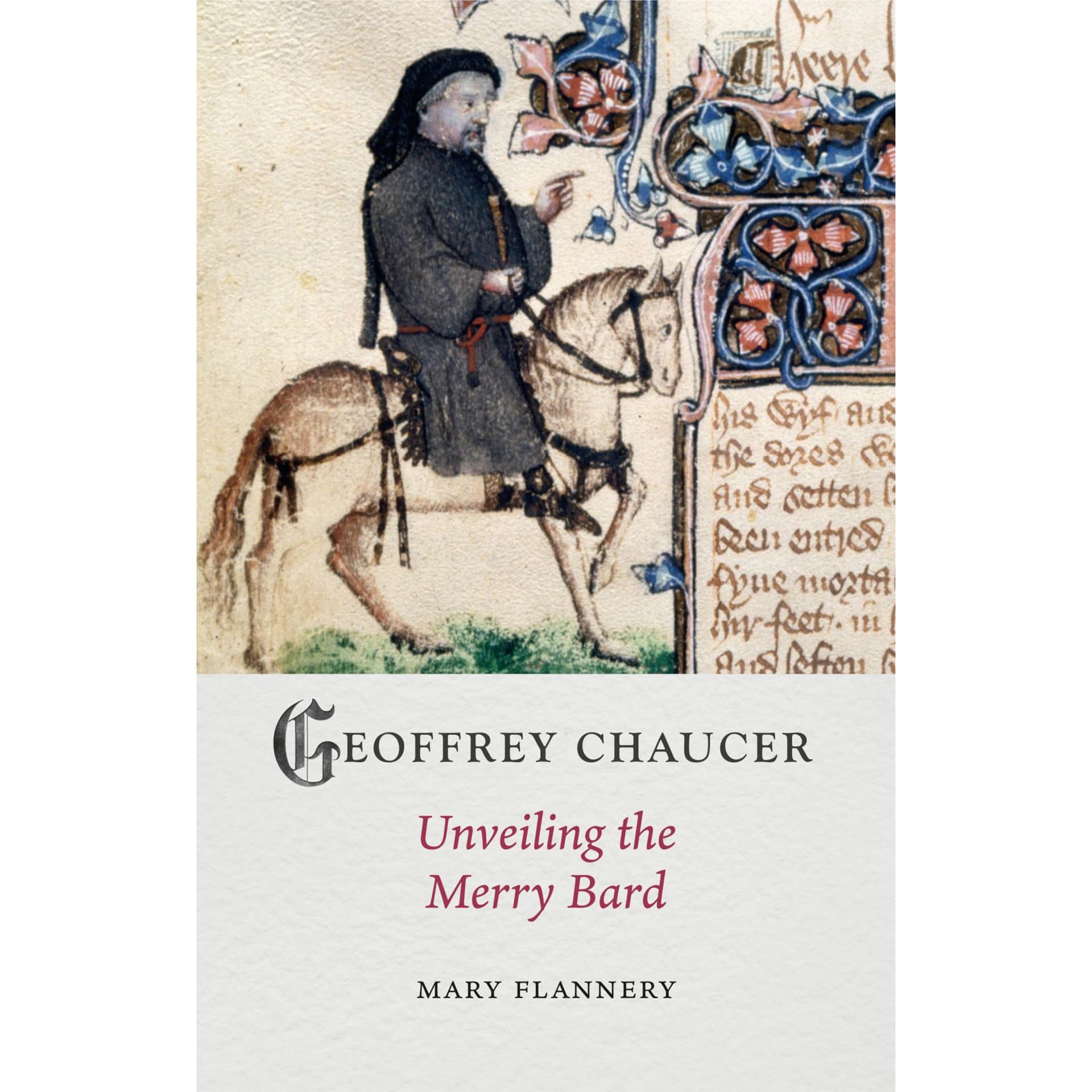
- Title: Mary Flannery - Geoffrey Chaucer: Unveiling the Merry Bard
- Guest: Mary Flannery, writer and medievalist
- Description: Discussion focuses on Flannery's book about Geoffrey Chaucer, examining his life, works, and impact on the English literary tradition.
---
Key Themes and Discussions
- Introduction to Geoffrey Chaucer
- Chaucer is considered the father of English literature.
- His works contributed significantly to the development of the English language.
- The episode explores his influence on subsequent English literature.
- Flannery's Journey to Chaucer
- Flannery initially found Chaucer uninteresting in her youth.
- Her academic journey through medieval literature led her back to Chaucer, highlighting his pivotal role in shaping English literary traditions.
- Chaucer's Life and Career
- Chaucer worked various jobs, including diplomatic and administrative roles, while writing poetry.
- He was a contemporary of significant historical events, including the Hundred Years’ War and the Peasants' Revolt.
- His position in society afforded him insights into the lives of both the noble and common classes.
- Language and Literary Influence
- England was trilingual during Chaucer's time, with English, Latin, and French coexisting.
- Chaucer's writing helped raise the status of the English language.
- He is noted for self-deprecating language, referring to himself as a "maker" rather than a poet.
- Chaucer's Themes
- Chaucer’s humor often highlighted the hypocrisy and incongruities within society, especially among the clergy.
- His works reflect the complexities of love, desire, and the often bawdy nature of human relationships.
- The episode discusses specific terms like "mirth" and "body" to illustrate Chaucer's linguistic creativity.
- The Wife of Bath
- The character serves as a focal point for discussions on gender roles and feminism in medieval literature.
- Her prologue showcases Chaucer's ability to blend anti-feminist tropes with a nuanced portrayal of a woman's agency.
- The Wife of Bath is interpreted as both a feminist figure and a reinforcement of misogynistic stereotypes.
- Cultural and Social Context
- The impact of the bubonic plague on society and labor dynamics is discussed, with an observation that Chaucer does not directly engage with the topic in his works.
- The episode comments on how Chaucer's connections allowed him to navigate the political upheavals of his time without apparent risk.
- Chaucer’s Retractation
- At the end of his life, Chaucer issued a retraction of his works, which sparked debates about his intentions and perspective on morality.
- Chaucer's Legacy
- Discussion of the lasting influence of Chaucer on literature, with his works remaining relevant despite the absence of original manuscripts.
- The episode emphasizes the importance of understanding Chaucer within the context of his time and the literary traditions he engaged with.
Conclusion Mary Flannery provides a compelling insight into Geoffrey Chaucer's life and works, presenting him as a complex figure who navigated the intricacies of medieval society. The discussion highlights how Chaucer's writings continue to provoke thought and serve as a mirror reflecting societal norms and values.
---
Key Takeaways
- Chaucer’s importance in English literature is pivotal, raising the status of the English language.
- His works reflect complex themes of love, morality, and social critique.
- The character of the Wife of Bath exemplifies the nuanced portrayal of women in Chaucer's works.
- Understanding Chaucer requires recognizing his societal context and the contradictions within his writings.
Further Reading
- Mary Flannery's book: "Geoffrey Chaucer: Unveiling the Merry Bard"
- Chaucer's works, particularly "The Canterbury Tales"
---
For more discussions on literature and investing, subscribe to A Book with Legs hosted by Cole Smead.
Written by AI. May contain mistakes. Listen to the episode to check what was said.
Transcript
Automatic transcript. May contain errors.0:02You're listening to A Book With Legs, a podcast presented by Smeed Capital Management. At Smead Capital Management, we advise investors who fear stock market failure. You can learn more at SmeadCap.com or by calling your financial advisor.
0:21Welcome to A Book With Legs podcast. I'm Cole Smead, CEO and Portfolio Manager here at Smead Capital Management. At our firm, we are readers and we believe in the power of books to help shape informed investors. In this podcast, we speak to great authors about their writings. The late, great Charlie Munger prescribed using multiple mental models and analysis. We analyze their work through the lens of business, markets, and people. In this episode, we are going to talk about adapting literature for the world you are in. The point may not be to change the world, but instead to make people laugh.
0:54Mary Flannery is joining us to discuss her work, Jeffrey Chaucer, Unveiling the Mary Bard. To introduce our listeners to Mary, she is a writer and a medievalist who works on literature and culture of late medieval England. She currently holds a Swiss National Science Foundation Excellenza Professional Fellowship at the University of Bern in Switzerland. Mary has held posts at the University of Oxford, University of Lausanne, Queen Mary University of London, and the J. Paul Getty Museum in Los Angeles. Mary, thanks for joining me today. Thanks so much for having me, Cole. Great to be here. Yeah, great to be here.
1:30And you're joining us from Switzerland, I assume? Yep. Right now I am sitting on the ground floor of an apartment in Geneva, not too far from the lake. Nice. Well, my ancestors are from Langenthal. Oh, really? You know, they're in the Canton of Bern. So when I was reading your fellowship, I thought, oh, this is fun. Get to connect with my homeland from many generations ago. Yeah, absolutely. Well, great. I'm glad to be able to help you do that. Yeah. So to start off, obviously your background's in medieval England. What brought you to Chaucer? This is what I consider a, it's not an elongated, exhaustive text that you wrote, but it's very, kind of punches to its weight, if that's fair.
2:13Thanks. Well, that's kind of you to say. So Chaucer is somebody that it took me a long time to get interested in. I'll be honest about that. You mentioned that a young member of your family is already reading the Canterbury Tales. I did not get around to it until college, and I got to say, I was not impressed. I really wondered, what's all the fuss about? But I was interested in that period of English history, and that's largely because I was interested in Shakespeare's history plays, you know, four of which very much focus on the late 14th century, early 15th century. And, you know, through a roundabout means, I really found myself coming back to Chaucer, largely because I worked my way through the poets who were writing about this period of time in the 15th century.
3:00And they kept talking about how much they were influenced by Chaucer. And of course, if you're a medievalist, you have to be reading and writing about Chaucer. Sure. To your point, in full disclosure to our listeners, my 14-year-old daughter, who goes to a – it's a charter school in Arizona, but it's a classical education charter school. So to end up in Chaucer is not anything shocking. She just got done reading parts of the Canterbury Tales. And so as we were going out to look at what we were going to do next in the podcast, obviously your book was top of mind. So when did Chaucer do his poetry as obviously like you couldn't be a poet for a day job in the 14th century?
3:42Yeah, no, absolutely. So Chaucer seems to have done it around the edges of his various day jobs, of which he had a lot. You know, these include sort of diplomatic positions, administrative positions, working in customs. I think he was a deputy forester at one point. And so these are jobs that would have kept him busy, not just within a kind of office environment or a mercantile environment, but also with a lot of travel. And so somehow he seems to have found the time in and around these periods of professional activity when he was engaged in reading and writing about poetry. This is something that actually he sort of hints at in one of his poems, The House of Fame, in which he describes what his life or, you know, he describes what someone named Jeffrey's life might be like coming home after a long day of sort of keeping track of the accounts and, you know, doing all the adding up of sums and coming home and still looking at books until his eyes are just completely dazed.
4:46So you also talk about what inspired Chaucer, which was vastly different. I think you talk about the classic or medieval poets would explain that it was like the gods that, you know, moved them to write poetry or there was something more divine. How does that compare to what inspired Chaucer? Yeah, Chaucer is definitely not somebody who paints himself in that kind of divinely inspired tradition. You know, he's, I think one of the reasons for that is that he is very conscious of the position of English language and literature in relation to the other medieval languages and literary traditions on the continent.
5:25And so at this time in the late 14th century, we really don't see a very strong and well-known English literary tradition. You know, if there was a case of influence flowing one way or the other, you know, influence kind of flowed from places like Italy and France towards England rather than the other way around. And so when we see Chaucer writing about himself as a poet, one thing that's notable is he never actually uses the word poet to describe himself. He actually uses words like maker. You know, these are much more kind of bland words. So what he's doing in the act of writing poetry in English is something that's ambitious, it's aspirational, but whenever he's referring to what he's doing or referring to himself, he's using much more self-deprecating language.
6:12Sure. How important was Chaucer to the English language? Because you talk about the influence of language in the poetry at the time. Can you teach our audience what language was most poetry? Where was it produced in for language at the time? Yeah, sure, absolutely. One thing that it's easy to forget about medieval England is that it was actually a trilingual country at this point in time. So this is a country in which English is being spoken and used, but also Latin and French. And if you're thinking about sort of status and prestige, Latin was definitely the sort of most high status, high prestige language that was in use both in England and on the continent.
6:55You know, this was the language of the church, the language in which the Bible was being translated. So this was a very sort of, you know, high class language, you might say. And it was spoken and used and written by, I'd say, the fewest number of people. But then you get to the vernacular languages. And even in England, we see that French is a bit more dominant at this point in time as a literary language. You know, it's the language of the courts. It's the language of the Norman invaders. And so English is really operating on, it's a more everyday use language, you might say. And so this is one of the reasons why Chaucer has come to occupy such an important place in English literary history.
7:36And I think for me, the most incredible thing about that is how quickly it happens. It's within 10 years of his death in 1400 that we see poets already referring to him as this kind of father figure in the English literary tradition. And the really the grounds for that, in their view, is what he does for the English language. You know, they talk about him really raising its status, improving its eloquence and basically paving the way for their own writing. So let's talk about English a little more because – so a little theory. I don't know if you've ever heard this theory, but I've heard quite a bit of writing on the fact that Americans speak more Middle English or traditional Shakespearean English than the British do.
8:21Because obviously we like to be proper and they're trying to speed up the language, which they're further along the curve of speeding it up. And so in this kind of paradigm in your book, you talk about various words that Chaucer uses, like the word mirth. Mirth, just in those six letters, there's a whole idea that comes out of it, which obviously back to the idea of speed. It gives you one word to speed up the language. What is its meaning today, and how did Chaucer make this word much bigger in the English vernacular? So mirth, I think, is, first of all, I don't think it's a word that we use as often today as it would have been used in the Middle Ages and Shakespeare's time even.
9:04But it's definitely a word that we would use as a very general term for kind of merriment, whether your own sort of reaction to something. You could express mirth by smiling or laughing or a general sense of a kind of atmosphere of a place. You know, you could go into a nice dinner party, everybody's having a good time, and you could describe the kind of conviviality as a kind of mirth. But in Chaucer's Middle English, which is the English that's spoken roughly from about 1100, you know, the Anglo-Norman invasion, up to about 1500 or so, mirth could really be used in a lot of different sort of playful senses.
9:42And so this is something that I think Chaucer is very interested in, particularly in his sort of bawdier stories. He's interested in, you know, okay, how can we describe the sort of illicit sexual activity of two characters who are really misbehaving, really sneaking around? And, you know, so for that kind of activity, he might use a term like mirth. You know, it's kind of a charming, pleasant word to describe something that's really quite naughty. Sure. The other word that you just mentioned that comes up often in your book to kind of typify Chaucerian sentiment or writing is that word body. Can you give us the background to that word and how that's really floated around Chaucer for much of his known posthumous life?
10:31Yeah, absolutely. So the word body is something that I think we use to describe a kind of dirty humor that's either a little bit antiquated or somehow thought of as socially acceptable. You know, you wouldn't necessarily find lots of crude swear words. It's not necessarily incredibly explicit, but it might deal a lot with the sort of sexual or scatological kind of language or content. And in fact, by the 1990s, we find that Chaucer's name has really become entirely synonymous with this word. There's one journalist who defines Chaucerian as, quote unquote, body in an acceptably old English way, which I find a wonderfully prim kind of definition.
11:19definition, but it's not a word that would have been used in that form in Middle English. They would have used something much more like baudry or ribaudry, and these were words that carried a lot more weight in medieval England. So if you're talking about something like that, you're talking about something much closer to what we, I think, would term obscenity. So something that really is completely taboo, something that transgresses all sorts of social norms, manners. And this is something that Chaucer has also been linked to over the centuries at various points in time. Sure. I'm going to quote from your book.
11:59You say, quote, Chaucer had an eye for hypocrisy and incongruity, end quote. Is his core humor really just mocking those around him? I think there are some who might say so, but I think that if he does mock people around him, it's not indiscriminate. I think that if you had to describe his mode of humor, it's pretty shrewd. It's canny. He has a very clear sense of where he lies in the sort of grand scheme of thing in relation to people who are of much higher status and he's surrounded by these people from a very early age, but also people who are claiming a lot of authority for themselves, a lot of, for example, members of the clergy, so these important figures in the church, who might be claiming a lot of authority and virtue for themselves, but not necessarily living that out in their own lives.
12:54Sure. And we'll come back to that. So let's, since we've kind of hit some high level topics with Chaucer, let's kind of go back to his origin, teach our listeners about his upbringing. What did his parents do and where was he raised? Yeah. So Chaucer was, he was probably born in and around London and he seems to have spent his childhood around Vintry Ward. So if you happen to go into modern day London, you're not going to necessarily find some kind of monument to his birthplace or anything like that. Maybe someday they'll put up one of those famous blue plaques. But this is very much now in the heart of what's now the city of London.
13:31So it's still kind of a very mercantile area actually now as it was then. And he was born into, in fact, a family of vintners. His father, John, was a vintner. And in fact, at one point, deputy butler to the king of England. So this is a family that's pretty well to do. It clearly has some good connections to places like, you know, the court of the king of England. and it's also very central in terms of geography and culture. You know, this is a place where he's going to be from a very early age encountering a lot of different people from different kind of parts of the world, coming in to travel to trade, different languages, different cultures, clashing and mixing up together.
14:16And this is where he would have spent the very earliest years of his life. Now, that changes when he then goes on to become a kind of member of these very grand households. And this is likely due to the connections that his father had. And so the earliest record that we have of Chaucer's life is actually from 1357. And this places him in the household of Elizabeth Countess of Ulster, who is the wife of Prince Lionel. So this is already an incredibly, you know, sort of privileged position for Chaucer to find himself in. And this is likely where he spent his earliest years kind of learning a little bit about how to behave in polite society.
15:01Sure. If you were, you know, you're growing up where he did, how much peace would there have been, you know, south of the Thames at that time? You know, was this a community of vintners that all got along? or since it was so commercial, there were going to be natural disputes and disagreements among different social castes, if you will. Yeah. Well, south of the Thames is one story, but where he would have grown up would have been just north of the Thames. And in this part of London, this was a place where partly because you had all these different kind of tradesmen, merchants, and people coming from different backgrounds in different countries, you would have seen people perhaps who were familiar with that kind of sense of difference, but also you would have seen clashes between these various people.
15:54So one group of people in particular that came under attack at various points in time were the Flemish who had settled in that part of London. And at one point, they attracted really such violence that during the 1381 peasants uprising, the Great Revolt, we find that a couple dozen of them were dragged out of a church where they were seeking refuge and beheaded and left in the street. So, you know, that was, I would say, a pretty extreme example of the kind of clash or hostility that Chaucer might have witnessed. And it's something that he may have witnessed, although it's unlikely. And it occurred really right down the street from where one of his houses was.
16:39Sure. So you just talked about his first job. So in a role like that, when he's working for, you know, ultimately, you know, noble household, what would his contact been with other, you know, people from other noble households or even people that work for, say, you know, royal households? So he definitely would have been in touch with a lot of young people who were working in his kind of position, but in these different households. And so this is one way in which you might think of him as kind of engaging in a kind of parallel networking, right? He's sort of really meeting people who are engaged in the same kind of work, have the same kind of social aspirations, probably.
17:20It does seem to be the place where he met his wife, Philippa, eventually. She was eventually working in the queen's household. And I think it was once he'd moved into the king's household that we see shortly thereafter a record of their marriage. So, you know, that's already kind of interesting to think about. All right. You know, you have a sort of kind of, you know, educational aspect to this position when you're thinking about the manners you're learning, those kind of social expectations of people in your class. But you're also meeting the people who are then maybe going to become a part of your family or your sort of inner circle.
17:56And then at the same time, he seems to have had opportunities to come into contact with some very important people indeed. And chief among those really would have been John of Gaunt, the Duke of Lancaster. So this is the grandfather of Richard II. And, oh, sorry, not grandfather, the uncle. But also the father of the man who would eventually become Henry IV of England. And so this is a man who, you know, historically he's very important, but frankly, in his own time, he was massively important as well. Incredibly wealthy, hoping to become a king in his own right, if not in England, then on the continent.
18:41And this is someone with whom Chaucer seems to have enjoyed a lifetime association. Was it really his role with King Edward III that probably set up most of his life, though? Because by getting into the king's household, didn't that kind of allow him to have the relationship eventually with John of Gaunt and many others? So it's unclear at what point exactly he would have come into contact with John of Gaunt. It could have been earlier since as a member of a household like the household of the Countess of Ulster, they would have been traveling around to other great households, which might indeed have included royal residences.
19:20resonances. So it's possible that he already came into contact with John at that point in time. But there is intriguing evidence that suggests that Edward might have been vaguely aware of Chaucer's existence since at one point during the military campaigns in France, there's evidence that he ransomed Chaucer when Chaucer was taken as a prisoner of war. Now, one point I do make in the book, is that the amount paid for him is not a sort of extravagant amount. So it's not the smallest amount that could have been paid. It's not the greatest. And it's not necessarily a reflection of a sort of close personal relationship between the king and Chaucer.
20:01But it does at least show us that Chaucer is very much in these circles, moving in these circles at that time. Hi, I'm Cole Smead, CEO and Portfolio Manager here at Smead Capital Management and host of this podcast. If you enjoy this podcast, I'd like to invite you to check out SmeadCap.com. At our firm, we are stock market investors. We advise investors who fear stock market failure with a discipline that has proven success over long periods of time. Learn more about our funds at SmeadCap.com. Past performance is not indicative of future results. Investing involves risks, including loss of principle.
20:37Please refer to the prospectus for important information about the investment company, including objectives, risks, charges, and expenses. Read and consider it carefully before investing. Speed funds distributed by UMB Distribution Services, LLC, not affiliated. So the Hundred Years War is raging really most of his life. This conflict is going on in the background. Can you kind of contextualize with this going on what this would shape the political environment between France and England? Well, I think that that's something that probably lies beyond the scope of my knowledge in the grand scheme of things.
21:15But I can tell you that despite the fact that war was raging, it's very clear that cultural and social exchange between these two warring nations was continuing at the same time. So just because England was at war with France, for example, wouldn't mean that they weren't interested in French fashions or French literature or in some of the great figures of France. And it's clear that at the same time, both nations would have been trying to look for a solution to this conflict. And so that might involve something like the negotiation of a marriage between the prince of one nation and the princess of another.
21:57and these are the kinds of negotiations that Chaucer himself may ultimately have been involved with in the case of Richard II. Sure. King Edward III believed and promoted chivalric ideals, you say in your book. Can you teach us about this and how you can see this in Chaucer's work? Yeah, absolutely. So Edward III, it has to be said, was a pretty spectacular king for certainly the first half of his reign. He was extremely successful at war, which is always of great use in the Middle Ages. But he was also someone who really tried to present himself as a very glamorous figure. And so one of the means by which he did that was by cultivating a kind of air of chivalric spectacle and also courtliness around him and in his household.
22:48And so he is, for instance, known as the founder of the Order of the Garter, which itself has the sort of, you know, the motto, the famous motto, shamed be he who thinks ill of it, on y soit qui mal y pense, which itself is rooted in what is probably an apocryphal story about how Edward III was dancing with a woman at court. Dorwin's garter fell off and everybody laughed, at which point the king picked it up, put it on his own leg, and said to everybody around him, shame it be he who thinks ill of this, and thus the order is founded. So what's interesting about Chaucer's work is that we don't see as much interest in his poetry in things like chivalric romance that we see perhaps elsewhere.
23:32I mean, there are a lot of surviving medieval romances from the period. He does, however, definitely at several points in the Canterbury Tales, for example, come back to these notions of things like noblesse or gentilesse. So gentility, nobility, these were, of course, chief among some of the chivalric values promoted during the Middle Ages. And so we do see different characters in tales, for instance, like the Wife of Bath's tale. Talk about these as much more important than, for instance, who your father was. Sure. You talk about, we just mentioned a short minute ago, John of Gaunt, who was Edward III's son.
24:14you comment on that the fact that he was just so wildly unpopular but you really you note that he was also very wealthy much wealthier than than other parts of that household what cost is unpopularity well i think uh there were a lot of reasons for this but chief among them was this kind of sense that people had that maybe he was aspiring to be the king of england himself even though you know we had Edward III then unfortunately Edward III's equally glamorous son Edward the Black Prince of Wales dies and it's at that point that Edward Black Prince of Wales's son Richard is in line for the throne and now when Richard comes to the throne he's a child he is really he is a small child this is not somebody who is capable of sort of wielding a great deal of power without advice.
25:08He's 10 at the time, I think, if I remember correctly. Yeah, he's 10, and he's really kind of the epitome of what countries in the Middle Ages, or in medieval Europe anyway, would have dreaded. There was a great famous proverb at this time, woe to the country where a child is king. The notion being that this really sets up a country for a lot of conflict. A child is obviously much more vulnerable than a full-grown man or woman, and therefore much more liable to be manipulated or even gotten rid of. And so I think it was really those kinds of circumstances in particular that contributed to John of Gaunt's popularity.
25:48When you look at someone like that alongside someone who's just a small child, and you think, wow, this person with all this money, all this power, they could be king if they really wanted to. But there is no sign that this is something that John of Gaunt aspired to. And in fact, at several points in his life, he made a point of demonstrating his loyalty to the king, to the crown, and to the succession. So this is something that he himself was aware of, that this was a rumor that was circulating about him. Sure. Gaunt, you point out, gives Chaucer some level of nobility via his wife and her sister.
26:27Can you teach our audience about this connection? Yeah. So this is a kind of interesting roundabout way that Chaucer will eventually become associated with the royal family. And this is something that actually later writers by the 16th century, the end of the 16th century, really want to kind of harp on. So Chaucer, I mentioned, seems to have met his wife, Philippa, while he was working in one of these great households. And Philippa's sister, a woman named Catherine Swinford, would eventually become John of Gaunt's mistress. Now, at this point in time, it should be noted that, you know, adultery was definitely frowned upon by the church.
27:10But at the same time, for a sort of a great figure or a powerful figure like John of Gaunt, to have a mistress would not have been considered completely shocking or horrifying. It would have been, in fact, a relatively privileged position to be in, one in which you could perhaps wield a bit of influence on behalf of yourself, on behalf of your family. And so it's really through his sister-in-law that Chaucer acquires this kind of familial relationship with John of Gaunt, because eventually, near the end of his life, John of Gaunt actually marries Catherine Swinford and legitimates their children.
27:48So the Book of the Duchess is a dreamer story, as you put it. Teach us about the story and why dreamer stories like this were popular form of the time. Yeah, so the Book of the Duchess is one of Chaucer's earlier poems, and it's a dream poem. Now, dream poetry was a really popular genre in the Middle Ages, and essentially most dream poems might begin with a narrator figure perhaps meditating on a few problems in his personal life or a few questions, philosophical questions he might have. And then at some point, that figure would fall asleep. And then most of the poem would be taken up with a description of the dream or vision that this narrator figure would have.
Read the full transcript
28:38And so the Book of the Duchess is very much in this tradition. It begins with a description of an unnamed narrator figure who is having trouble sleeping. And in order to solve this problem, he eventually decides to essentially promise Morpheus, the God of Sleep, that he will make him an incredibly fabulous feather bed. This is the detail that always charms and delights students whenever we're reading this poem. And so, you know, miraculously, as soon as he's made this promise, he happens to fall asleep. And it's at this point that we are plunged into what would have been very familiar conventional imagery in dream poetry for medieval readers.
29:21You're in this sort of beautiful bedroom, but it's clearly springtime. You go out into nature and everything is blossoming, blooming. He hears a hunt in the distance and eventually he happens upon a figure who seems to be experiencing a lot of grief. It's this man in black. And so most of the dream poem consists of a sort of dialogue between the narrator and this man in black, in which the narrator tries to ascertain the cause of the man in black's grief. And it seems very, very likely indeed that this is a poem that was written to commemorate the death of Gaunt's first wife, Blanche, which would have occurred around 1368.
30:05And so this may not have been written in direct response to her death, so immediately following it, but very likely for one of the commemorations that Gaunt seems to have held sort of year after year after her death. Sure. I was just at the Museum of the Bible where they show many codexes there. You mentioned MS Codex 902. Where is this located and what's its importance to Chaucer? Yeah, so MS Codex 902 is a manuscript that's held in the University of Pennsylvania's library. and it is a collection of French poems, French songs, some of which happen to have the letters CH written in the margin next to them.
30:54Now, one of the reasons that this is potentially significant is that it's very likely that Chaucer, at some point in his career, probably early on in his poetic career, would have written some poems in French. After all, as I've already mentioned, And this is very much kind of a key literary language, even in medieval England at this time. And so the fact that we have these letters next to these particular poems has really caught a lot of people's attention, partly because this is a manuscript that contains poems that would have been written by one of Chaucer's compatriots, or actually I would say companions, when he was over on the continent.
31:35And this is the Savoyard nobleman, Auton de Granson, who actually, I love the fact that I get to talk about him when I'm actually in Switzerland, since he was from around this region. You know, you can actually get a train to Granson not far from here. And so it's been posited that this is a manuscript that might even have been compiled by Auton de Granson or an associate. And so therefore, the fact that we have this kind of connection between this French manuscript and an associate of Chaucer's really has led people to wonder whether those poems that are accompanied by the little ch might have been written by Chaucer himself.
32:14Gotcha. Why was Chaucer's voice so quintessentially English? As you wrote in your book, quote, David Wallace has observed rather bluntly that his, quote, view from continental European perspectives, Chaucer's England and its poetry appear both eccentric and retarded, end quote. So I love that because, I mean, again, we're back to this idea of it's, you know, England is really on the edges of society. It's not the center point. Can you explain the cultural difference of, say, Paris or Florence, where obviously we're talking a little bit about where Chaucer went, compared to London? Yeah, absolutely.
32:59So, yeah, funnily enough, David Wallace, actually, who's long time been a professor at the University of Pennsylvania, we were just talking about. And he's someone that's done a lot of work on Chaucer in the broader context of the European Middle Ages. And so London, which I think many would agree today, is one of these great bastions of, you know, of civilization, Western civilization, certainly. Sure. And very much an important cultural center just wasn't at the time that we were that we're talking about right now in later 14th century England. Whereas by contrast, a city like Florence, which you've mentioned, really was, and for a long time already, for decades, had been a sort of leading light in what eventually would come to be called the Renaissance.
33:46You know, by the time we get into 16th century England, this is when we start to recognize the same kind of interest in classical roots and sort of classical style, classical modes of writing. and this is something that Florence and Florentine poets and writers had been engaged in for a long time already by the time that Chaucer was writing. And so I think that what we find throughout Chaucer's poetry is a kind of evidence of some sense on his part of the sort of comparative humility of his position, you might say, as a poet writing in English at this time. He is somebody who was very likely exposed to the work of poets like Dante and Boccaccio, Giovanni Boccaccio, who were really kind of, you know, the big literary celebrities in Florence at this time.
34:42And he makes use of their work. He alludes to their work. So he never mentions Boccaccio by name, which is interesting since it's Boccaccio that really seems to have inspired the structure, the format of the Canterbury Tales. but he really is never making the same kinds of claims to their prestige that we might find other poets making and we do find other poets making by the time we get to the 16th century even in English and so for example we do have one reference to Petrarch in I believe it's the prologue to the Clark's Tale, in which Chaucer describes him as this kind of laureate poet. This is, you know, an official, really an official status when we're talking about medieval, you know, medieval Italy, but such as it was, but it's not something that existed even as an idea in English, this notion of a poet who would have been a kind of martial cultural celebrity, if you like.
35:43And so I think that's one of the reasons why we find so much self-deprecation in Chaucer's writing, even when he's writing about his own work. Sure. When it makes me think, you know, to him, it might be interesting to a dinner party in aristocratic circles. It might be terribly interesting, but to most of the society, they don't even care nor know who that is, which is obviously, you know, we're, it's vastly different. We just, we know far more about the people that we look up to, or at least believe are above us, uh, than we ever have before, which creates, you know, its own host of problems.
36:21Um, speaking of social class is a big deal in Chaucer's England, as we've kind of discussed already. Um, you, you mentioned that the horse could tell you everything. Uh, what are examples of this in Chaucer's work? Yeah. So horses, funnily enough, quite a lot of work has been done on Chaucer's horses or depictions of Chaucer's horses in in works like the Canterbury Tales, for example. So very famously, at the beginning of the Canterbury Tales, we have this text that's come to be known as the general prologue. And this is almost always the text that's going to be assigned if you're in an undergraduate English class.
36:59My guess is that your daughter's read at least part of it. You know, this is essential reading, right? And one of the reasons for that is that it includes little sort of verse portraits of all the different pilgrims who are supposedly on the road to Canterbury together and about to sort of engage in a tale-telling competition to pass the time. And so these portraits, which in at least one surviving manuscript are accompanied by beautiful painted illuminated portraits of these different individuals include a lot of detail about their appearance, about the things that are important to them, but also, for example, about the kinds of horses that they are riding.
37:43And so we're told, for example, the monk seems to have a particularly impressive horse for someone whose calling supposedly obliges him to embrace the sort of value of poverty. You know, we're told that he has a wonderful sort of harness that's jingling all the time. And so this suggests that this is someone who is perhaps using a particular kind of horse that is really intended for specific purposes, something like hunting, for example. And it's certainly the kind of horse that would have been a sort of symbol of status, if you like. So I'm actually from originally from Los Angeles. And so if you're from Los Angeles, you're in car culture.
38:29This means that you look around you and you immediately take note of, okay, who's got the Mercedes? Oh my gosh, there's a Ferrari. And so you might think of the different horses in the general prologue of the Canterbury Tales as doing something very similar for the pilgrims who are riding them. Sure. Well, I live in Scottsdale, Arizona, so I can attest to the fact that people quickly connotate their cars with their status or their wealth. Or as I'll call it, I affectionately call it, we live in L.A. East. That's how I think about it. Um, so, you know, Chaucer goes to Florence in 1373. Uh, how do you get there?
39:06I mean, I was just thinking about going from London across to Calais to, you know, all the way down to Florence. You know, how do you actually get across the Alps at that time? Yeah. So at this point in time, you don't have a lot of options. You definitely don't have planes, uh, trains, anything, you know, mobile, uh, kind of mobilized like that. But you do have certain stations along the way. And so even though you might be making your way on foot, on horseback, potentially in a carriage, although interestingly enough, those carriage rides might not have been all that comfortable at the time.
39:41you don't have anything like suspension in those things you would have been able to count on along the way meeting or encountering various taverns or places where you might be able to seek a meal or spend the night at least if you were traveling along some of the sort of major either trade routes or indeed pilgrimage routes and so it seems likely that Chaucer might have you know after crossing the channel, might have even passed not too far from here in Switzerland, what's now Switzerland. And he might potentially have gone over the St. Bernard Pass. Now, this is something that would have been incredibly cold at the time of year that he was traveling.
40:24Really not an easy path to make. You know, if you've ever sort of climbed or gone walking in the Swiss mountains in wintertime, you know a lot about just how kind of how magnificent the views can be, but also how potentially treacherous the ground can be under your feet. And so if this is the crossing that Chaucer made, it wouldn't have been an easy one. Well, as someone who's skied in the Swiss Alps before, when the weather turns, the weather turns. So Chaucer takes a job in customs tied to the wing of wool. This was a real job for him. What was he typically doing in this kind of role versus his, you know, I'll call it his literary underlife?
41:11Yeah. So one thing that it's important to know about this job is that wool was a source of it was the most major source of England's wealth at this time. It was their major export. So to be in charge of something like this was really a pretty big responsibility. And in this role, he really would have been a kind of supervisor. He would have been someone who was confirming that boxes had been ticked, that measurements kind of added up properly, that tariffs had been paid, and that everything was generally going smoothly. and he would have had to sign off on pretty much everything to do with rule customs around the port of London at this time.
41:55So it would have been a really time-consuming job, a really busy job, and one that would have kept him very much based in that part of London at that time. So teach us about his home at Aldgate. Was there any significance to this home over time? There's a lot of times I think you note during the book that he's just not there. And then the other question I had is, you know, why do you think his wife never lived there? So, Aldgate is where he kind of moves into once he's taking up this position in customs in London. And it seems to have been some sort of lodgings that was over that gate. You know, there were several major sort of gates or entrances to London.
42:37This is one of them. and in fact it's during the the peasants revolt or the great uprising of 1381 that the peasants likely would have sort of burst into the city through this particular gate now there is no evidence that suggests he was present at that time you know working away in his study and then all of a sudden my gosh but you know it does mean that he would have already had a kind of sense of that space and what was going on in it at that time and during that uprising. Now, you mentioned, you know, you asked, why don't we have sort of a sense that his wife Philippa lived there? So there isn't any evidence that she lived there with him.
43:17And in fact, there is evidence that indicates that she was traveling around in England and perhaps attached to her sister's household. So if you remember that her, you know, her sister was at this time, the mistress of John of Gaunt, she would have been moving in some pretty glamorous circles at this time. And so the fact that she was absent from London, from Aldgate, has been taken by some scholars in the past as perhaps evidence that suggests that they didn't have a terribly happy marriage. You know, they weren't living together all the time, side by side. But at the same time, I think it's important to bear in mind just how important it would have been for Chaucer, especially during these incredibly turbulent times to have these kinds of important connections to powerful people.
44:05And so one could posit, for example, that Philippa's taking up residence alongside her sister or moving around in these great households was her way of really keeping a foot in that very glamorous world on behalf of the Chaucer family, while Chaucer is engaged in the much less sexy at that time, much less interesting work of all this kind of, you know, bureaucratic business down in London and Aldgate. You know, this is not where you would have found the really important and certainly not the culturally important people of medieval England around this part of London. You would have found them in those important households.
44:42Sure. And he did, you mentioned numerous times that he deputizes other people to fulfill his customs role while he plays, you know, what could be argued as a diplomatic role. And it seems to be that he played that role in both love and potential war. Is that fair? Yeah, I think that's fair to say. You know, among the life records that we have for Geoffrey Chaucer at this particular point in his life, so, you know, from the 13, in the 1370s and 1380s, there are quite a lot of them that are requests for time off or, as you say, requests for a deputy. And in fact, in 2023, one scholar claimed that he had found a document in the National Archives in the UK that might well have been written in Geoffrey Chaucer's hand.
45:30And it is, in fact, funnily enough, it is, in fact, a document in which Chaucer appears to be requesting time off of work. So I think it'd be kind of ironic if that was the only sample that we have today of Chaucer's handwriting was this kind of, you know, request for time off. But yeah, so he may well have been involved in negotiations, marriage negotiations on behalf of Richard II. There is evidence that suggests he might have been present in the courts of France. So for instance, the French-speaking chronicler Jean Froissart makes some mention of somebody with a name that sounds a bit like Chaucer, who would have been involved in these kinds of negotiations.
46:12But it's also likely that he was involved in negotiations pertaining to trade, for example. Now, this is something that one might imagine that his background would have really prepared him well for. You know, if he was negotiating with merchants from different cities around Italy, for example, to have certain kinds of ports built or access provided, this is something that Chaucer would have been well-placed to do. We hope you're enjoying the podcast. You know, we work hard putting together this show, but we work even harder for our investors at Smead Capital Management. At Smead, we believe in disciplined investing, which is why the Smead funds have a proven track record of long-term outperformance.
46:55If you're an investor who fears stock market failure like I do and want to invest in wonderful companies to build wealth, we invite you to visit SmeadCap.com. Past performance is not indicative of future results. Investing involves risks, including loss of principle. Please refer to the prospectus for important information about the investment company, including objectives, risks, charges, and expenses. Read and consider it carefully before investing. Smead funds distributed by UMB Distribution Services, LLC, not affiliated. How tough is it to date Chaucer's work? Because after all, we don't have any of the original works.
47:30Yeah, that's a great question. There is no known manuscript of Chaucer's works that can be dated to his lifetime with any certainty. As I've mentioned, nothing apart from this potentially this one request for time off that might be in his handwriting. So a lot of the time, what has been used to date these works is stuff like internal evidence within the poem. So, for example, the fact that the Book of the Duchess is, you know, is written in such a way as to be a kind of commemoration of the death of Blanche, the Duchess of Lancaster. That's one thing that might kind of give us a point in time.
48:13But I think another important thing that's been used is the sort of shifts that we see in Chaucer's poetry in terms of the style and the content that he's most interested in. So whereas his earlier poetry seems to be very French-inflected, French-inspired, you might say, we do see after the times when he was clearly traveling in Italy, this is when we start to see a bit more interest in Italian authors and Italian styles and Italian works. And so it's really suggested that we see that because it was during those trips that he would have been most thoroughly exposed to that kind of literature on the continent.
48:57When I also think, if I think of the, I'll call it the anthology of Western thought, the ultimate test to most writing is do we have the original work? And if not, does it stand the test of time? Which obviously, like you're pointing out, Chaucer, he's showing up in everyone else's work, which says something about his own. Therefore, we don't need the original work to know that it was important. Did Chaucer create Valentine's Day in the Parliament of Fowls? So he didn't create it in the sense of coming up, you know, making up a saint who was martyred on that particular day. But it does seem likely that the Parliament of Fowls is among the earliest sort of moments in history when we see Valentine's Day connected with the celebration of love.
49:49And in fact, there were actually three days during the year in which medieval people were most likely to exchange kind of love letters or tokens of their love. Valentine's Day was one of them, but then you also have New Year's Day. And then finally you have May Day, May the 1st. And so, yeah, the Parliament of Fowles is, again, another one of Chaucer's dream poems. It seems to be, again, probably in the sort of earlier kind of chunk of his work. and it's this really charming poem in which we see a dreamer fall asleep and come upon a garden in which different kinds of birds are all sort of arguing and negotiating about who they're going to take as their mates for the rest of the year and they mentioned that this is specifically to celebrate saint valentine's day and so yes this is one of the very earliest um pieces of textual evidence for the sort of romantic celebration of Valentine's Day.
50:47Well, and also under like the heading of like body from earlier, I just I totally love this because I'm thinking, gosh, I mean, Chaucer is so Valentine's Day that you even refer to the saying that, you know, that a couple can say they're going to read some Chaucer as like an innuendo to the fact that they're going to be intimate. And I thought like that's my kids are like, oh, we're going to go to dinner. We typically do our Valentine's Day with our kids. I'll be like, yeah, your mom and I are going to go to dinner with you guys and then we're going to read some Chaucer after. It's like, I just, I think of that being like, it's so Chaucer.
51:18It's so funny. It's so apropos. I just can't help but laugh as I think about that. So I want to pivot to the wife of Bath because this is like very controversial for Chaucer because it is very in the trope of its day, anti-feminist. At the same time, if someone just kind of steps back and looks at the story of the wife of Bath, Couldn't they say that this woman is really manipulating men and wielding power over them at the same time? Is that kind of the paradox of Chaucer in a nutshell? all? I think that's actually a very nice way of putting it, Cole. I think that the Wife of Bath's prologue is fascinating for precisely those reasons.
52:01So this is, of course, the massive prologue that precedes the tale she goes on to tell later, which is about a knight in King Arthur's court. But the prologue is actually much, much longer than the tale. And in fact, whenever people refer to the Wife of Bath or the Wife of Bath's tale, they're in fact referring to her prologue. And it's in her prologue when we see her talking about her own experience as a married woman. And she has, in fact, been married five times. And she is already welcoming the sixth, wherever you might be. And she really is, in many respects, the embodiment of everything that medieval misogynists would have hated about women.
52:43You know, every possible anti-feminist stereotype is in there. Women talk too much. Women are manipulative. Women try to squeeze everything that they can get out of their lovers. They lie to their husbands, and they're sexually voracious. You know, these are among the sort of really big anti-feminist stereotypes of the Middle Ages, and they had a long history. But at the same time, what Chaucer achieves in The Wife of Bass' prologue is really quite extraordinary, because he takes these kinds of bits and pieces from anti-feminist literary tradition, And he kind of patches them together into a quilt, the result of which is much more complex and engaging than any sort of one of these little anti-feminist stereotypes.
53:27So much so that she's actually been set up as a kind of proto-feminist figure by a lot of readers. She's somebody who is really claiming a lot of agency as a woman. You know, this is a period of time in which women were incredibly vulnerable unless they were able to get married to someone who could take care of them. And the wife really has an incredibly pragmatic attitude towards that. In one of the sort of, you know, great lines of her prologue, she says that she considers a mouse a fool if it doesn't have more than one hole to run to. And this is, in fact, her justification for why a woman, yes, she might get married, that might be one sort of safe haven, but perhaps she should already be cultivating some admirers on the side just in case something happens, because this was how precarious women's situations could be in the Middle Ages.
54:18But I think the moments when we really see something behind the curtain of all these stereotypes, those are the moments when the wife of Bath steps back and reflects on who is telling all of these horrible stories about women. And of course, traditionally, it's men who are responsible for telling these stories. You know, men are, you know, they're the ones who are most likely to be literate, to be able to write, compose poetry. Their voices have a great deal more of authority. And so there are several moments in her prologue when she steps back and she says, by God, you know, if women were able to write stories about men the way that, you know, men write about women in their oratories, as she puts it, we would be able to really tell you some hair curling stories about men.
55:07And so it's those moments when it's really difficult to see precisely what Chaucer's doing. You know, he's giving us this kind of, you know, mixture of this mosaic of misogynist stereotypes on the one hand. And at the same time, he's really prompting us to reflect on who's responsible for circulating those stereotypes in the first place. Sure. You quickly touch on this and it's not a big part, but it just ties to the atmosphere at the time. You explained that there was a big labor shortage tied to the bubonic plague. I think you said that half the people in England died from the bubonic plague.
55:45uh you know so for in job in chocer's time this also leads to the peasants revolt um i i always find it really interesting to see economic problems spill over into the wider public because ultimately there just weren't enough people and if you're a wealthy person paying someone more because there's fewer people becomes this very odd situation to be in did chocer you know reflect on that much in his writing so what i and a lot of other chocer scholars find quite striking is that he really doesn't. Yeah. I was going to say, cause I didn't see it in your, and I was just trying to ask myself the question, you know, I'm thinking about this economic paradigm and Chaucer, he just, none of your writing on Chaucer strikes me as like he necessarily cared or, or maybe, you know, again, we can sit back now and kind of Monday morning quarterback these situations, but you know, you know, the idea of using an economic theory like that was not a common thing at that time.
56:44Yeah, I think that, you know, I think that one could say that at no point is there evidence in Chaucer's poetry that Chaucer is deeply invested in, you know, social or economic justice, let's say. But what's striking about the fact that there's not a mention of something like the Peasants' Revolt, first of all, you know, major events in his own lifetime. Secondly, it's something that's really centered right around the spaces in which he lived and worked. You know, as I already mentioned, it's through the gate, you know, Altgate, where his lodgings are, that the, oh gosh, my gosh, my English is already going through, the rebels burst in into London.
57:29And then finally, it affects quite a few people who were very close to him. John of Gaunt is one of these. Gaunt seems to have been away at the time that the revolt took place, but in his absence, his magnificent palace, the Savoy Palace, which is in fact roundabout there where the wonderful Savoy Hotel is currently based, was burned to the ground. So, you know, despite all of this, we really get almost no reference to this in Chaucer's poetry. What we do get is a very, very brief reference to the rebels who are sort of pursuing Flemings in the East London at this time during the revolt. And this is just, you know, a little kind of one or two line reference in the nun's priest tale.
58:16It's a moment when he's comparing the sort of noise of a barnyard chase to the noise of the rebels. And that's really all we get. It's certainly not a reference that's terribly sympathetic to the rebels' position. But really, considering how Chaucer was situated geographically, socially, you know, the circles in which he was moving, the activity, the historic activity that he would have witnessed been a part of, it's extraordinary that we don't see more reference to this kind of event. Hey, I want to give a big shout out to everyone who's been working so hard on the show. You know, we recently hit the top 10 investing podcasts on Apple Podcasts and even number one in the business category in several countries.
59:01As you may know, this show is brought to you by Smeet Capital Management. Smeet Capital Management understands how frustrating and illogical the stock market can be. If you are searching for funds with a proven track record, give the Smeet funds a look. Or better yet, reach out at SmeetCap.com. And don't forget to mention that you're a fan of the podcast. Past performance is not indicative of future results. Investing involves risks, including loss of principal. Please refer to the prospectus for important information about the investment company, including objectives, risks, charges, and expenses.
59:34Read and consider it carefully before investing. Smead funds distributed by UMB Distribution Services, LLC, not affiliated. You talk about the estate satire was one of his really key successes as a poet. and you discuss how monks were really the perfect joke for all in society because of the idea of what virtue is or ideals are versus what's actually going on. I think the joke I've heard is that most people believe that, say, priests are supposed to take a vow of celibacy and poverty. Now, the poverty is actually not true. You can have wealthy priests. There's no vow tied to that. But the other joke is that, and, you know, they, they might take a vow of celibacy, but they don't hold that either.
1:00:21Um, that reminds me of what you talk about with monks in that, you know, there was the ideal of what they were supposed to be, but then you discuss how monks, I mean, they were just as likely to go out on a wealthy, uh, hunt as they were anything else. Absolutely. And they were also very likely to take on lovers. And sometimes those lovers were even themselves, people like nuns in different sort of nunneries. So what's interesting is that it's clear that this was considered inconsistent with the vows that they had taken, but it wasn't considered, you know, shockingly rare. You know, if people were going to complain about a local priest or a monk or a nun, the first complaint wasn't necessarily going to be, oh, and they're having affairs, you know, at the same time.
1:01:14And so, yeah, I would say that the clergy really are, that's one of the most popular satirical targets that you find in medieval literature. The big crowd pleasers, it's anti-clerical satire on the one hand, anti-feminist satire on the other. And so what I find striking about Chaucer's satire is that he really is most interested in these kinds of targets. These are very general targets. They're not targets that would have caused a great deal of offense, even though there are some points in his poetry where he suggests that perhaps some of his female readers were not happy with some of his anti-feminist writing.
1:01:56So there were kind of safe targets, you might say, as well as crowd pleasers. Sure. The other theme in Chaucer is the idea of love and or like we talked about before, lust. How much of this can you see as just directly tying to the people around him again? And, you know, there's I think of like the Parliament of Fowls where I think you tie it to the work he was doing to try to set up a royal marriage. And the idea being that, you know, the the wife to be ended up finding no one really that interesting. Hence the Parliament of Fowls saying, let's go for another year. You know, and then also there's, you know, there's there's Chaucer stories of, you know, a woman, you know, effectively having sex with another man and her husband being aware of this.
1:02:44And so there's this whole idea of cockaldry going on. I mean, this isn't like fanciful. This is just not like fantasy of his. He has to be seeing this fairly up close, whether it be in the households he's in or the households he's in contact with. Well, I mean, Cole, we've already been talking about the fact that his wife was the sister of John Agon's mistress. So, you know, he's already got that kind of familial tie, if you like, to this kind of illicit sexual activity. And it has been suggested that there are even moments in his verse where he kind of pokes fun at his sister-in-law for precisely this activity.
1:03:20And so an example of this is a passage in The Physician's Tale that kind of talks about how governesses are ideal guardians for young, you know, chaste women, because they themselves are so experienced, so sexually experienced, experienced in the dance of love, that they'll know, you know, what to warn their charges about. And it's been suggested that this was kind of his way of poking fun at his sister-in-law, who was not only John of God's mistress, but was in fact the kind of governess to his children. So if that's the case, I mean, it's first of all, it's striking that he felt comfortable and confident enough to make that kind of joke.
1:03:59But yeah, it's absolutely, again, it's evidence that he might have been really kind of witnessing this kind of activity firsthand. end. Well, then the other, the other idea that came to my mind as I was reading your work was, I mean, I, I, you know, obviously Trump's president here in the United States and, you know, what happened during his first political run, uh, and the video that came out and then I'm reading Chaucer and like Chaucer's writing very similar things as, you know, as our current president called at one point, male locker room talk. Um, is that, is that, you know, Because when we talk about body, body is not a feminine feeling to me.
1:04:41Body is a very male bravado, if you will. Do you think of that as like a male locker room talk, the kind of thing that when women are on their own, body is not a word that would fall into their ideas? Not because they can't, but because it's just not their typical way of life. Well, it probably depends on the woman, but I can say that there is a centuries-long tradition, you know, literary tradition, possibly historical tradition, that does frame bawdiness as very central to femininity and feminine gossip. So, for example, there is a Scottish poem, William Dunbar, a 15th century Scottish poem, very, very closely influenced by Chaucer's work.
1:05:26And one of his poems is called The Treatise of the Two Married Women and the Widow. And essentially, all it is, is the poet listening in through a garden hedge on three women who are sort of drinking and laughing together and talking about their sexual exploits in great detail. And so what's funny is that even though I think there are definitely circles in which bawdiness would not be considered natural to women, very frequently I'm sure it would not be considered appropriate to women, we do have centuries of evidence that suggests that this is something that women were believed to engage in and quite regularly.
1:06:08Sure. um retractions you touch on in your book for Chaucer uh it it reads more like a life disclaimer for Chaucer is how I took it you know I mean it's like hey by the way I know I've wrote all this stuff but um sorry but not sorry um it kind of like it's tied to the detachment he he used at times in his works where it's like he's present he's using these tropes and yet at the same time he's not part of the things going on around him. Is that a fair way of thinking about the retractions? Or really, I'll call it the paradox of Chaucer maybe is a better way, like I mentioned earlier. Yeah, I think that you're absolutely right in terms of thinking about the retractions as a kind of, you know, life retraction, right?
1:06:56I mean, he essentially, this is a short text, it's in prose, and it's appended to many manuscripts of the Canterbury Tales at the very end. So it follows what many would say is the longest and most boring of the Canterbury Tales, the Parsons' Tale, which is essentially a long penitential sort of treatise. And so this short prose text essentially seems to be Chaucer himself retracting everything that he's written that might be considered not spiritual or lecherous or a little too lighthearted. And so it's really been difficult to know how to read this. Is this something that we're supposed to take seriously?
1:07:41If so, does that mean it was potentially composed when Chaucer was on his deathbed, given that the Canterbury Tales were clearly still being worked on when he was nearing the end of his life? Is this kind of something that he was reflecting on then? It should be noted that it is also a very handy list of Chaucer's works. and even a kind of very handy way of categorizing them. So at the same time that we're seeing him, you know, ostensibly saying, oh, I apologize for these works. I reject them. I don't want to claim sort of ownership of them. He does seem to be providing readers with a list of, you know, perhaps those texts that might even contain some body material on the one hand.
1:08:24And then on the other hand, the texts that are a bit more elevated, more spiritually leaning and so um you know is that what chaucer's doing there too it's difficult to know sure because the the last thing that i think of with chaucer is that he's just tough to pin down right you you want to put him into the anti-feminist camp at times and then you look and say yeah but look how empowering he is to women um you know you just kind of go all over the board with chaucer and i just thought to myself as i finish your book is that just particular to his social position during his life. In other words, he was somewhere in between and therefore he had to be there even in terms of how he viewed the world and therefore how he wrote about the world.
1:09:06I think that's definitely one possibility. And I would say that, you know, what also would have made that a potential key factor in all this is the fact that he was in the middle at a time when there was a ton of upheaval. I mean, when you think about it, it's kind of remarkable that someone like Chaucer, who was so close in some ways to the people in power, managed to survive, you know, the rise and fall of several kings. You know, so he manages to survive Richard II's reign, and when Richard II is deposed in the final sort of months of Chaucer's life, there's no sign that he felt himself to be in any danger.
1:09:46I mean, he already had this, you know, almost familial tie to the new king, Henry IV, and clearly felt comfortable enough to compose a poem in which he sort of, you know, requests payment that is due to him from the new king. But I think that, you know, the fact that he was so close to those powerful figures, but the fact also that, you know, if you think about his work, his mercantile work, you know, his work with customs, his work as a diplomat, he is someone who's also very much in the middle of transactions that are being made, political kinds of situations in which there's a lot at stake.
1:10:29And so I think that that is also one potential reason for this sort of side of Chaucer that makes it very difficult to pin him down. But I would say that I think that if we attribute it just to those things, that we might be neglecting also Chaucer's perspective as an artist, as a writer. And I do think, as I was saying to you before we began recording, I do think that Chaucer is deeply interested in provocation and in what literature can do as a form of provocation. And so in some ways, I think that the way in which he situates himself kind of in the middle and makes it very difficult for us to pin him down is a part of the way that he's constantly sort of setting us up to force us to take a kind of position in relation to things that he himself perhaps only pretends to take a position on.
1:11:25Sure. I mentioned the MS Codex 902 as something that I'd really like to see up close. Can you give us kind of other landmarks for Chaucer? You mentioned where he's buried in the book. Are there other places that you visited that I always like experiencing history from a physical perspective. It's just kind of my, a little bit of my nuttiness. So, you know, where else can people go, uh, to really experience Chaucer in person? Well, for one thing, you'll want to go to Poets Corner in Westminster. Uh, you know, this is where Chaucer is believed to be buried. Uh, and then I would say that if you're someone who like me is obsessed with old books, then you absolutely have to go to the Huntington Library in San Marino, California, and see the Ellesmere Manuscript.
1:12:11This is the most famous manuscript of the Canterbury Tales. It's the one that I mentioned earlier, which has these beautiful little sort of painted portraits of the Canterbury Pilgrims alongside their sort of, you know, text portraits. And it's almost always on display. They sort of, because they want to make sure that they, you know, conserve the manuscript, they tend to sort of shift around which pages are displayed to the public. But if there's one manuscript that you want to see in relation to Chaucer's life and work, then that would be it. Awesome. Mary, this has been tons of fun. Where can people follow you going forward?
1:12:49Well, they can always look me up on my website, marycflannery.com. This is where I regularly post about my work, both academic and creative. I'm also easily found on social media. At the moment, I'm more active on Blue Sky, but that's partly just because I haven't been able to keep up with all the wonderful body memes that are on X at the moment. But that's definitely where you can find me. Nice. Well, thank you for your time. Your work on Chaucer reminds me that we all die, even Chaucer did, but we might as well have a good laugh. It may be someone's foolishness or as you point out, and I'll kind of leave a breadcrumb out there for our listeners, it might even be like my eight-year-old teaches me all the time a good fart that brings us to tears our listeners to go out and buy a copy of of Jeffrey Chaucer by Mary Flannery don't take yourself too seriously if you enjoyed this podcast go to Apple Spotify YouTube or wherever you listen to a book with legs give us a review and tell others about the books and great authors like Mary Flannery that we have the opportunity to understand and study the world with and through For our tribe, if you have a great book that you'd like to recommend, email podcast at smeedcap.com.
1:14:00That's podcast at smeedcap.com. You can also send your suggestions to us on X. Our handle is at smeedcap. Thank you for joining us for A Book With Legs podcast. We look forward to the next episode. Thank you for listening to A Book With Legs, a podcast brought to you by Smeed Capital Management. The material provided in this podcast is for informational use only and should not be construed as investment advice. You can learn more about Smeet Capital Management and its products at SmeetCap.com or by calling your financial advisor.
From the publisher
In this episode, writer and medievalist Mary Flannery joins Cole Smead to discuss her book, “Geoffrey Chaucer: Unveiling the Merry Bard.” Their discussion explores the life and work of English writer and poet Geoffrey Chaucer, a father figure in the English literary tradition, covering his most influential and controversial works, numerous titles and royal affiliations, impact on the modern English language, and more.


