In short
Podcast Summary: A Book with Legs - Episode Featuring Peter Stark
Podcast Details
- Podcast Title: A Book with Legs
- Host: Smead Capital Management
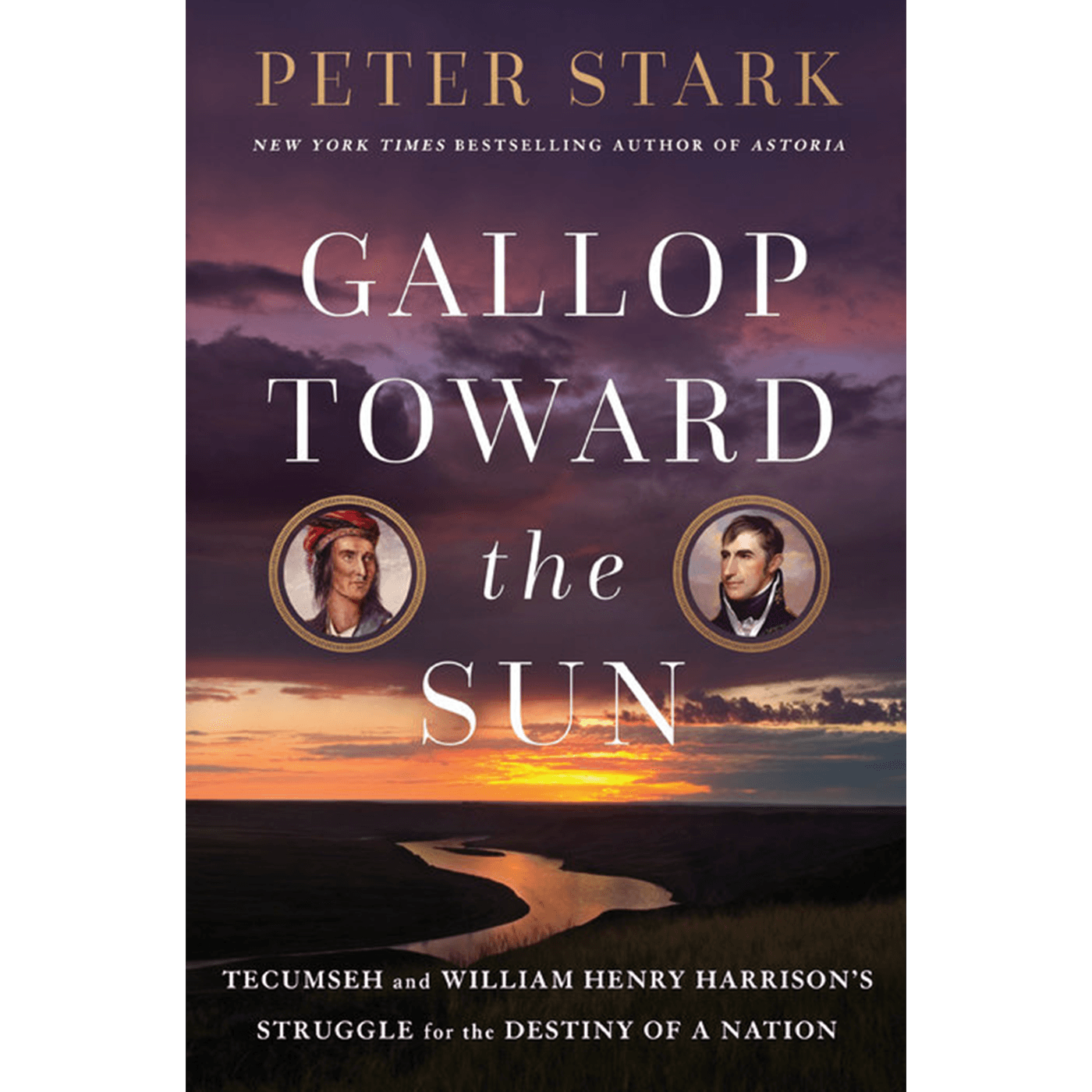
- Episode Title: Peter Stark - Gallop Toward the Sun
- Release Date: Not specified in the transcript.
- Description: The episode features New York Times Best Selling author Peter Stark discussing his book "Gallop Toward the Sun," which explores the conflict between Tecumseh and William Henry Harrison, significant leaders in American history, particularly in the context of westward expansion and indigenous rights.
---
Key Themes and Discussions
- The Importance of Historical Context
- Leaders as Readers: The host emphasizes the belief that reading is essential for investors and leaders, with Charlie Munger’s concept of utilizing multiple mental models being a central theme.
- Value of Historical Knowledge: Understanding past conflicts such as the one between Tecumseh and Harrison provides insight into contemporary issues.
- The Story of Tecumseh and Harrison
- Background:
- Tecumseh was a Shawnee leader who sought to unite various tribes to resist the encroachment of settlers.
- William Henry Harrison was the territorial governor of Indiana, known for his aggressive policies towards Native American land.
- Conflict Catalyst:
- The conversation highlights how local politics and a young federal government shaped westward expansion, with both characters representing different perspectives on leadership and governance.
- Stark discusses how misinformation and rumors, akin to modern social media, played a role in shaping public perception and action during the frontier era.
- Key Historical Events
- St. Clair's Defeat (1791):
- A significant early conflict that displayed the vulnerabilities of the U.S. military against Native American forces, leading to a rethinking of military strategies.
- Battle of Fallen Timbers (1794):
- Led by General Anthony Wayne, this battle resulted in a decisive victory for U.S. forces and set the stage for future treaties with Native American tribes.
- Treaty of Greenville (1795):
- Established a dividing line for American settlement and Native land, which was later violated, inciting further conflicts.
- The Role of Education and Knowledge
- Classical Education: Discussion of how Harrison brought classical texts into the wilderness as a way to guide his actions, leading to a comparison with modern educational practices.
- Wisdom and Knowledge: Stark argues that while there is an abundance of information today, true wisdom comes from understanding and applying historical lessons.
- Tecumseh's Leadership
- Charisma and Oratory: Tecumseh's ability to unite tribes and garner respect through his speeches and personal style is highlighted.
- The Prophet: Tecumseh’s brother, a religious fanatic who became a pivotal figure in rallying tribes, exemplifies how leaders can rise from difficult circumstances.
- The War of 1812
- Political Landscape: The war was influenced by international dynamics, including British interests in maintaining an Indian barrier state to hinder American expansion.
- Tecumseh's Downfall: Stark narrates how Tecumseh depended on British support during the War of 1812, leading to his eventual death in battle after the British withdrew their forces.
---
Key Takeaways
- Historical Ignorance: Much of American history, including the complexities of Native American interactions, is often overlooked in mainstream narratives.
- Value of Understanding Conflict: Analyzing the struggles between Tecumseh and Harrison provides insights into the cultural and political dynamics that shaped the United States.
- Lessons in Leadership: The contrasting leadership styles of Tecumseh and Harrison highlight the importance of unity, strategy, and understanding in leadership roles.
---
Additional Notes
- Closing Thoughts: The episode emphasizes how history is not just about past events but offers lessons that can inform present and future actions, particularly in business and governance.
- Recommended Action: Listeners are encouraged to engage with historical texts and consider how they shape current perspectives and decisions.
---
This summary encapsulates the rich discussions from the podcast and provides a structured overview of the key themes and takeaways from Peter Stark’s insights on "Gallop Toward the Sun."
Written by AI. May contain mistakes. Listen to the episode to check what was said.
Transcript
Automatic transcript. May contain errors.0:02You're listening to A Book With Legs, a podcast presented by Smeed Capital Management. At Smead Capital Management, we advise investors who fear stock market failure. You can learn more at SmeadCap.com or by calling your financial advisor.
0:21Welcome to a Book of the Legs podcast. I'm Cole Smead. I'm the CEO and a portfolio manager here at Smead Capital Management. At our firm, we are readers and book junkies. It can be said that leaders are readers, and we believe books provide us a great source of information for filtering what is and isn't important for us as investors. Investing is the last great liberal art and the best way to spend a lifetime of learning. This podcast is for readers, thinkers, business-minded people, and investors who want to grow their knowledge from great authors and their writing. Charlie Munger often talks about using multiple mental models and analysis.
0:55Our aim for this podcast is to help listeners test Munger's theory in business, markets, and people. Joining us for this episode is a returning guest who will cause your imagination and your trip itinerary to change as you seek out the vast history of the U.S. beyond the eastern seaboard. Peter Stark is joining us to talk about his recently published book, Gallop Toward the Sun, Tecumseh and William Henry Harrison's Struggle for the Destiny of a Nation. A little bit about Peter. First off, for our audience, Peter joined us in episode six last year to talk about his prior book, Astoria, John Jacob Astor, and the Lost Pacific Empire.
1:31Peter is an adventure and exploration writer and historian. He has also authored Young Washington, his 2018 book. A longtime correspondent for Outside Magazine, Stark's articles and essays have also appeared in Smithsonian, The New Yorker, The New York Times Magazine, Men's Journal, and many others. Mr. Stark is a New York Times bestselling author and a finalist for a Penn USA Literary Award. I'm also very personally proud to, as I said the first time we visited Peter, to welcome back you as our honorary cheesehead to this podcast. So thanks for joining us. Well, thanks so much, Cole, the honorary cheesehead.
2:06I wear that hat proudly, so to speak, but I'm really pleased to be here and really looking forward to chatting with you again. Yeah, so as we kind of talked about before we got started with the podcast, there's some kind of traces of where I could guess at how you ended up on this story, But can you teach our audience, you know, how did you come to the story? What drew you into Tecumseh and Harrison's story? Yeah. You know, it's funny as an author and, you know, I suppose the same thing can happen when you're an investor, how one idea grows out of another. And it's kind of a, you know, sort of a miraculous birth in a way that you come across things.
2:49And as you're doing the research for one, you know, one project, one essay, one book, and there's some little detail that grabs your attention. And that's what happened with this Tecumseh book. I was researching my previous book, Young Washington, which has to do with George Washington's younger years when he's in his 20s. And he's in, you know, no longer in the Virginia plantation country, but he's over the mountains in the Ohio Valley, which is then, you know, a vast wilderness. Of course, it's populated by many different Indian tribes. And in the course of researching that, I came across these references to Tecumseh.
3:34And, you know, growing up as a cheesehead in Wisconsin, and my father was way into frontier history. He was an amateur historian. And, you know, I'd heard a lot about the, you know, Indian lore in the Midwest. And I'd always heard that name Tecumseh, but I never knew what it meant. I never really knew who he was. And so I started doing a little research. Okay, who is this guy? And I learned that he was this great Shawnee leader who unified all these tribes from Lake Superior down to the Gulf of Mexico. to try to hold the land as one. So the federal government couldn't kind of keep chipping away and dividing and conquering the tribes of the different chiefs and subchiefs.
4:24And then what really grabbed my attention was when, in my research, I came across this incident where Tecumseh and Harrison, William Henry Harrison, who was then territorial governor of Indiana, this huge area in the Midwest, And they met face to face on the lawn of the territorial governor's mansion in what's now within to Vincennes, Illinois, way down in southern Illinois on the Wabash River. And they tried to work out their differences. And there were very detailed accounts of these speeches and descriptions of this encounter. And it was I found it riveting. And so that's what launched me into this Tecumseh and Harrison research.
5:11And it's been a long journey and a really satisfying, gratifying one. Well, I think it's a great piece of history that you wouldn't normally come across to your point. But yet I think what you're also adding to me, Peter, is, and we'll talk about this a little more later, is you're leaving me more places to travel and go see, which I always love. So I will come back to Grouseland, but I have already got it on my list. So what are the things that comes up early? And I find this interesting. Here we are in 2023 and, you know, we have like social media and there's this idea of kind of conspiracy theories and truth versus not truth.
5:44But those same things were going on in the frontier land back in, you know, the 18th century. Oh, yeah, definitely.
6:20with each other at long distances. Well, in fact, they were, there was a lot of long distance communication, but there was also a lot of long distance rumor and misinformation that would get transferred. And it was a lot harder to confirm those rumors or dispel those rumors. And so they, you know, the rumor that there were Indian attacks on the Illinois prairies by Potawatomi in, you know, 1807 may or may not have been true. But as that word spread east to the more settled areas in Ohio and just then it was just starting to get settled, what's now Indiana, that, you know, that could just trigger these waves of panic, concern, and armedness, you know, ready for battle.
7:14So the social media, it's an interesting parallel. And in a way, there's the same issue, long distance communications, but not easily confirmed. And so that's a really interesting parallel you bring up. Well, so the other thing early in the book, I can't remember if this is the introduction of the first chapter, and we'll come back to the man himself, but you comment on what Harrison took into the West with him. And I'm going to quote your book here. Quote, the young man headed in the wilds, carrying in his bags the tools with which he hoped to forge his path in the world. A work of Cicero's ancient philosophy, a book of rhetoric, and a deep familiarity with Julius Caesar's military victories, end quote.
8:05I found this intriguing because I think in today's world, I often ask myself the question, do we think we know too much? You know, he's taking what would be considered classical education tools with him into an unknown West that he really knew nothing about whatsoever. And yet we look at the new world today and say, oh, the old tools might not be that good. How do you look at like the even the education of people then to tackle unsolvable or unknown problems versus the unknown problems of today, I think, is another way of kind of comparison these two times where we live and then what Harrison had then?
8:42Well, I think in those days, the world was a much simpler place. And Harrison, that is such an interesting example, kind of template model that you just settled on. And quoting that line about the three books he brought in, or two books and a lot of knowledge, that he couldn't carry very much. You know, he was a young ensign, like 18 years old, and going over the Appalachian Mountains into the wilderness. And so it's not like he could haul trunks full of library books. So he whittled it down to those, you know, few volumes. And he did have a classical education for the time, you know, in the 1780s and early 90s.
9:33And it's interesting that he took up those particular books as they were, for him, I think they were almost guidebooks in a way to negotiate the world. And you're right. I mean, he had no idea what he was getting into. I mean, this is a lot of unknown territory, literally and metaphorically. And so he fell back on these things that he really knew. And the parallels today's classical, I mean, today's education and what role the classics fulfill and what they don't and how much they're used. I think that's a very interesting and good point for discussion that in a way there's so much more knowledge.
10:21I mean, information, let's put it that way, in the world today. Sure. But is there so much more knowledge? and it becomes really important to find your sources of knowledge, I think, and insight. And so the classics are one way to do that and a really solid pillar to do that. But, you know, another way is to, there are other ways to learn about places and people who are far away or much different from you or lived a long time ago that can also give you that baseline of understanding. And so I like to think this book, The Gallop Toward the Sun, about Tecumseh and Harrison and their struggle for the, as I say, destiny of the nation, as it says in the subtitle, that through historical example, that it teaches us important lessons by going back to these really significant events that don't get a lot of attention these days.
11:26And they've been kind of skipped over somewhat in our reading of American history because we tend to go with the high points. And this was a more conflicted, confusing, complicated, nuanced interaction that lasted over a number of years. So, yeah, I think that's really important. But how do you find your clarity in all that? Well, so to your point, because I think your book's a very pragmatic approach to this. Because you're actually like, and I think this is something really good that you did in your writing, is you didn't really call fouls. You just explained the details and the eccentricities to these situations.
12:14And there were a lot of them, to your point, that made it so complex. And also, there's information out there. There's knowledge. And then above that, there's wisdom. And so I often ask myself the question, if we all studied the classics, a.k.a. more timelessness, and then, to your point, could test the baseline as we go out and experience and test the theories, would we actually have a lot more wisdom? So let's jump. The early conflict that really kind of sets the stage for your story is the Battle of the Wabash, or as it also became known as was St. Clair's Defeat. Can you explain what happened in that conflict?
12:49Or it's also known as the battle with no name because it's hardly recognized in this history. I mean, it's really, I have a line in that book. I mean, it's kind of partly tongue in cheek, But, you know, it was such a humiliating defeat for the U.S. that has been swept under the rug of U.S. history. So what happened, this is 1791. George Washington has just become president and he's in Philadelphia. And the Constitution has just been passed. I mean, you know, some months earlier, ratified by the states. And the more and more settlers, white settlers are pouring over the Appalachian Mountains into the Ohio Valley.
13:33And some of the lands were supposedly treaty lands that there have been some treaties, mostly the lands in Kentucky, that there had been previous treaties where various tribes or chiefs ceded their rights to the land, to white settlers, to the federal government. There's a lot of unclarity about that and how fair those deals actually were. But there were these settlers pouring in and they'd settle on these lands that were under treaty. But then they'd also settle on these lands that were still, you know, formally designated Indian lands and like up in Ohio and things north of the Ohio River. And they kept pouring in, essentially settling illegally.
14:28And especially the Shawnee and Miami nations up there and their Shawnee and Miami warriors started to push back and resist these white settlers coming into territory that had not been ceded to the federal government. And so finally, what happened after these Shawnee attacks on parties of settlers or surveyors that George Washington sent in what was really kind of the progenitor to the U.S. Army. It wasn't even called the U.S. Army. There was no U.S. Army. It was sort of a cobbled together system of, you know, one leftover division from here and, you know, the Revolutionary War Division and then, you know, a few state militias and it's all cobbled together.
15:19But it's a big force of close to 2000 people. It goes marching into the Ohio Valley trying to find it's going to punish the Banditi in these Indian villages. and it gets way up in what would now be kind of northwest Ohio and northeast Indiana. And it's getting close to these sort of the epicenter of the Shawnee and Miami villages. And it's exhausted, running out of food. It's way late in the season. It's turning winter. Men are exhausted and they camp one night and they don't really bother to build the fortifications to hold them the night. And then at dawn the next morning, they hear this whistling sound coming from all around them.
16:06It sounded like bells. One of the survivors described it like a thousand horse bells ringing at once at dawn. And then they suddenly, they realized they were completely surrounded by Indian forces. And it was just not one, you know, tribes warriors. It was unified tribal warriors from many different tribes. And it ended up just being a slaughter of the U.S., you know, this progenitor of the U.S. Army. It was the largest loss of U.S. forces to Indian forces in the entire history of the United States. So, you know, people think of Custer's Last Stand, Battle of the Little Bighorn, as a huge defeat.
16:49Sure. Well, there were like 200 soldiers and officers died in the Battle of the Little Bighorn, every single one of them. In this St. Clair's defeat or battle of the Wabash or the battle with no name, not 200, but it was at least 600 and closer to 700 died. So at least three times more casualties than occurred with Custer. And the survivors, which actually included women who were part of the camp followers and any soldier or officer who survived, they managed to escape. But they had to run literally 100 miles back to the safety of Fort Washington, what's now Cincinnati. Incredible route. And it made a big difference.
17:37The U.S. Army officially kind of grew out of that route. When it left a stain, because it was to your point, no one ever forgot that, Washington brought in a former revolutionary hero to tame this new Western issue. Who was Matt Anthony and how did he suppress the issue? Well, so, yeah, as you say, Matt Anthony Wayne, Anthony Wayne, earned the nickname Matt Anthony for his kind of boldness, was a revolutionary hero. And after this incredible slaughter under Arthur St. Clair, the former general who was leading these soldiers up, Washington said, you know, I need somebody who's a real fighter. So eventually he hired Matt Anthony Wayne and Matt Anthony was way more systematic in training the troops.
18:37And and he he led Matt Anthony. I mean, you talk about the man for the job. Another interesting thing when you think about business, that he was the man for the job in the sense that he during the revolution, he was known for like, you know, leading charges against British forces at night, you know. and being at the front of the charge himself. And so he was this very out there, get in front of it all, the action leader. But he'd also been in these very intense combat situations. And so he put together a new army, basically, and put them through intense training up at an army camp that's near what's now Pittsburgh.
19:23and he traded them intensely in hand-to-hand combat because he said, you know, if we get into warfare with these Indian forces, you're not going to be, it's not going to be at long distance. It's going to be right up close. Yeah. And so he trained his guys for that and then he was very careful in his approach to these villages, you know, way up and, you know, across literally wilderness swamps and whatnot, and built very substantial forts in his path. So he was always – had lots of support behind him. And he ended up defeating the unified Indian forces in 1794. Which is assumably why we have Fort Wayne, Indiana in honor of him.
20:14Precisely. Precisely. And these Indian villages were located near where Fort Wayne is now today. So another common theme that comes up, because there's kind of like slight hints of unification early in the story. And then to your point, right on the back of this, there's just disorganization in terms of the tribes coming to an agreement. So I think you mentioned at this point the three fires couldn't agree with Blue Jacket and Little Turtle on how to attack. This discord comes up. There wasn't a unified leader, a unified general, and that was something that the Americans obviously could benefit from because, to your point, Matt Anthony decided how they were going to attack, how they were going to mortify, if they were going to run, et cetera.
21:01Did you see that kind of discord as a common theme up until Tecumseh as well? Well, that's a really interesting dynamic that you point out here. And it does run through the whole book, through the whole era, through the whole, you know, long interaction between, you know, tribes and whites on this continent. And it's rooted in really two very different systems of, you know, you can call it government. And when you think of Europe, you know, you had a top-down hierarchy. You know, typically a king or a prince or someone. There was one authority or queen out of whom all power grew. And the whole state or principality or whatever it was or fiefdom was organized around that one figurehead.
21:52But even in Europe, you know, in 1500, think of how many little fiefdoms and principalities and little nation states there were. And all sorts of complicated alliances between them. But each one was sort of, it was like a top-down hierarchy. In the case of Native Americans, it was, there was a very similar kind of geographical, if you, patchwork, if you want to call it that, that there were many, many tribes in many, many different areas, different territory. And yet the tribes didn't typically, not everyone, but they typically didn't have that top-down authority as a structure that a tribal leader typically, I mean, and, you know, when you say tribe, that's kind of a misnomer too, because a tribe, you know, it's, there can be many different segments of a tribe.
22:48There can be bands, you know, sub-tribes, if you want to put it that way. And that, but the leader of a band or a sub-triber or a leader who rose up within that tribal world, rose up by showing his leadership in battle and showing his wisdom. And so it was a very much an earned thing that you earn the respect of your peers. But there was a real, what do I want to say, deference shown to that tribal leader. Huge respect, huge respect. But there wasn't – it wasn't like a top-down authority. And if there were more than one leaders, which there often were, that it was a matter of achieving consensus between them.
23:39Yeah. And then that's just within even a band or a group of bands or tribe. And then that there was not any, at least for the most part, like regional organization of tribes into a unified governmental structure in any way. There's some exceptions to that. The Iroquois in upstate New York were an exception. There were six tribes under that leadership. And in the southeast, there were tribes organized that way. But for the most part, it was a much more dispersed kind of leadership. And so when it came time that so often that's what would happen is that first the British and then the U.S., when they went up against Indian forces, whether in negotiation or whether in battle, that the European, you know, the British or the U.S., they had this structure of organization and authority that made them able to speak with one voice.
24:44Whereas on the Indian side, it could be many voices or the voices could splinter sometimes. Well, and they could use them against each other as well. And they use them against each other, which the British and then the U.S. became masters of that technique. And Harrison in particular. And Harrison in particular, splitting tribes or leaders, you know, bands off from others and really, yes, literally playing them against each other. And just to go back to the original question, because it's very – it really illustrates what we're talking about. when Matt Anthony brought his forces up to punish the Indian villages way up in northwestern Ohio, that the Indian coalition of warriors, some were coming from like up near Lake Superior to fight this guy, to fight Matt Anthony.
25:38So, you know, the word had been out to unify, you know, we need a unified band of warriors. But some of these guys who had come from the warriors who had come from way up, like, great distances out in the plains or Lake Superior, they were expecting to fight Matt Anthony, you know, like when they arrived from their long travels. But that Matt Anthony was moving so slowly and deliberately, they got really impatient, waiting to have battle with them and all the spoils of battle. And, you know, they came for the combat and the spoils and it wasn't happening. And so they splintered in part because a number of these warriors and their leaders said, you know, we can't leave our families back in Lake Superior this long.
26:27And it's been months now. We're either we fight them now or we go home. And so the Unified Indian Command had this essentially dissension within its coalition that some people wanted to attack right away from the front. And some of the Indian leaders wanted to be more patient and go around slowly to the rear of this advancing column of Matt Anthony's. And as a result, because of the impatience, the Indian leadership just said, OK, well, take them straight on. And it didn't work out. And by that time, it was already splintering anyway. So it's a very, you know, really different dynamic between those two systems of leadership, which I think is really germane to how we operate in the modern world today.
27:22Exactly. When I think to your point, when I was reading this, I thought, you know, I was comparing, you know, the Native American system where to your point, they had relationships with all these, you know, disparate tribes, you know, all across the country. They all had contact. They all knew of each other. They in many cases had relatives, you know, that lived in other areas. And so had a I'll call it a patchwork of communication and relationships and et cetera, which was interesting. but the American way of life was really a John Locke view, like a, you know, a natural law, a private property system, which was something that to your point, the tribes didn't have.
27:59And we always try to think about alternative paths. Like what was another path that life could have gone down? What could, what was another path that history could have gone down? And I'll never forget when I was a junior in college, I had a, I had a, one of my history professors did all of his work in Mexican constitutional history. And in the Mexican Constitution, they attempted and did incorporate the indigenous people or natives into the Constitution because they recognized that they didn't look at land the same way as other parts of Mexico did. And so I use that as a way to ask the question, could have been done differently.
28:35And in Mexico's case, it's never really worked. When I say that, in other words, they tried to incorporate it, but it didn't really make a difference, if that makes sense. Did you ask that question at all as you were kind of thinking through that as well? Well, yeah, I mean, that's, again, that's one of these key points, how could it have gone a different way? And yes, I've always wondered, well, say that Tecumseh's coalition did hold against the onslaught of whites, what would that have looked like? And one of the things that's really striking is it's – I don't know how – and I don't know enough about systems of government around the world.
29:16But is there – I don't know how you merge those two different ways of thinking. I agree. I think there – maybe there are countries in Europe that have a more bigger social safety net, more towards socialism but still are capitalist. Sure. They might be a little bit in that kind of blended system. But, you know, I can see in the Mexican Constitution how that could be really hard to walk a line between those two different ways of looking at the world. And one of the big difference, a huge difference, I mean, maybe almost the central difference is just the way we were talking about dispersed authority in among the tribes, as opposed to a top down authority hierarchy among among the European system.
30:08that among the tribes, there was not a sense for the most part of ownership of personal property, certainly not of land, and also not of material accumulation. And that even in those tribes where there was material accumulation, like here in the Northwest, The tribes were really rich relatively in food resources and so many things. But it was considered a way to earn great honor is to give away things, give away your wealth to other people. And that's one way to earn huge respect. in the same way that the land was there for all to use. And so that the European system, I think, when I've really kind of pondered this, which I have quite a lot over the last four and a half years or five years I've been working on this, the European system is so much more based on unsettled agriculture.
Read the full transcript
31:25And that makes all the difference, I think, Because if you're farming, you've designated a plot of land and you're working as an individual or as a family or whatever. And whereas the tribes, and we're talking here the eastern woodlands, there are so many different cultures and tribes and ecological conditions around the continent. But here in the eastern woodlands, you know, hunting, of course, is a huge component of how they acquired food and protein. And so it was natural that hunters, when they went out, you know, sometimes one guy was lucky and brought back, you know, an elk or a deer or buffalo even, that there were buffalo in the east back then.
32:18And, you know, that his, you know, colleagues might not have been lucky, but he would share the meat with the other, with his colleagues. And, you know, another time they go out and a different guy scores and he shares the meat. So it was, the hunting system really kind of promoted that sharing. whereas the agricultural system it was more to find okay this is your production from this plot, you know more the European model but that's not to say that there was a lot of farming gardening, you know garden kind of farming growing corn in these eastern woodlands. So the women typically grew corn and the men hunted and by some accounts the women actually provided more of the calories over the course of a year for these in these cultures than the men did hunting.
33:12Well, so I think that was the one place that you could kind of see between the cultures that they kind of actually had something in common. I'm going to quote your book here. Generally, women were not involved in the death of animals since the shedding of blood negated their primary life-giving function, end quote. That seems to be the one place where the cultures did agree, right, is like women shouldn't be in kind of bloodshedding conflict. Ultimately, that was the one thing I took away from the book is they don't agree with the land, but they did at least agree with women not being in the fight, whether it be for animals to your point or to the true conflict of what was going on.
33:49Yeah, and that quote that you read, that women are so much about fertility and the earth is so much about fertility. And so, yeah, there's this direct correlation and both cultures, all cultures really honor that fertility. And yeah, it's kind of cool the way that comes across in so many very different cultures. Yeah. So let's see. To hit on it, because it's a very important part of your storytelling, can you explain the Greenville Treaty since it was really kind of the paramount treaty that set up a lot of this discussion and debate and issue? Yeah. So yeah, this is good because we're kind of stepping chronologically here.
34:34So, you know, we were just talking about St. Clair getting wiped out when he went up to try to punish the Shawnee villages. And then Matt Anthony managed to defeat the unified Indian forces. And as a result of Matt Anthony's victory, it was called the Battle of Fallen Timbers. You hear a little bit more about that one than you hear about St. Clair's defeat in the pages of history. So after Matt Anthony won the Battle of Fallen Timbers in 1794, he called for a huge gathering of tribes to work out a treaty. And, you know, I think there were over a thousand Indians, most of them, I think, tribal leaders at this gathering.
35:23It was Greenville, Ohio. It's a very small place still. And they worked out between Matt Anthony and the tribal leaders, essentially a dividing line that kind of, if you think of the state of Ohio, it didn't exist then. But if you think of what's now the state of Ohio, it would be a line that would kind of zigzag from the top of the state of Ohio down to the bottom, from Lake Erie down to the Ohio River. And so it was decided and signed by so many tribal leaders and by Matt Anthony and I think even William Henry Harrison signed it, that the white settlement was on the east side of that line and Indian lands were on the west side.
36:17And that's the way it was going to be. And that would bring peace. And that was supposed to be a permanent situation. And it was called the Greenville Treaty and it's called the Greenville Line. And it's, you know, it's a really important part of American history. And in some ways, I think a tragic part. That line was very well established. It was very solid. And however, over the years, it started being violated by first by white settlers illegally crossing and hunting on Indian lands and then by illegal settlers on Indian lands. And then this is where – this is kind of another phase of our discussion when young William Henry Harrison, he started engineering these treaties that took Indian lands on the west side of those lines.
37:13And he did it by, as we were saying, splitting them off one group setting. He was a true opportunist. He was a true opportunist. Yeah. In every sense of the word. And so that's what happened is that the Greenville line didn't hold, essentially. And it was in large part because of Parisman's aggression. And he was, you know, he had Thomas Jefferson, who's now become president, pushing him to go as, push west as far as you can, get as many lands as quickly as you can. So that line didn't hold. And that's finally what led Tecumseh starting about 1809 when Harrison was trying to take one more treaty and Tecumseh finally said no more.
38:01And by that time, he'd risen to leadership among a number of tribes and he unified those tribes to say we're holding the land as one. And so that was a central conflict. Yeah. So some nuances here that I think you do just such a good job explaining. one of the natural conflicts and it's not like anybody sat down one day and said we're going to make this the conflict but one of the natural conflicts was the united states best asset ultimately was its open land right or the amount of land that had available relative to other european societies for example and so i i took it away as like there was a gravity that had to be you know held in effect the tribes had to fight that gravity and that gravity was the best asset for the U.S.
38:47And I think you pointed out that, you know, Revolutionary War veterans were guaranteed Western lands in some cases. That continued to be the ultimate stimulus for the growth of the American economy was people acquiring land, improving it, and bettering themselves. The problem is that came directly at the cost of the tribes. That's exactly, you just hit it right on the head. You just distilled it. And that's so important, you know, that, that concept of there's this body of land. And I've tried to emphasize that in the book. And this, you know, because you, you're, you're in, in, in an investment business and this, you really understand this, you call that a business needs, needs capital to start.
39:34Correct. And these Europeans who came, who, who came across the, the, the Atlantic, You know, many of them were poor indentured servants. They had nothing in Europe. You know, they had, it was so hierarchical in Europe and the land had been, you know, sewn up centuries ago. And so they had nothing. You know, they were mostly landless or their families grew too big for the farm or whatever it was. But when they came across the ocean, the Atlantic, that in a way, the whole continent eventually became a huge pool of venture capital for these, the European immigrants. And it's a point I try to make and that there's this incredible American initiative and enterprise that we celebrate and we rightly do so.
40:29But when people say, oh, I did it all on my own, that's the place where I roll my eyes. Sure. That this, you know, American civilization, society, economy, whatever you want to call it, the U.S. as an entity, a national entity, every single person who came across the ocean from Europe virtually benefited by having this enormous pool of capital when they landed. You know, they had to earn it or eventually they had to earn it. But it was incredibly cheap. Cheap cap. I guess I should say cheap capital. And so there's, you know, this has been a big takeaway for me in terms of, you know, as we're talking about leadership here and opportunities, that these people who immigrated had so much initiative and a lot, so much self-drive, which is very much, you know, we celebrate that in our national character.
41:27but they also had this huge pool of cheap capital to help them. So people didn't, I just did it on my own. Nobody just did it on their own. Well, yeah, we still hear that today. Like we hear tech people say like, oh, I'm libertarian. The government's never helped me. And then you look at the history of technology and it's huge government spending. It's huge, you know, military spending ultimately drives that. Because I think another thing that I pulled away was even talking about the Louisiana Purchase. You discussed that when the French sold the land, how the French interacted with that land with the natives, it was totally different than how America wanted to interact with that land, which was the French kind of left the tribes to themselves.
42:09They wanted to have fur trapping and, you know, I'll call it commercial networks versus the United States wanted to settle it, which was different. Yes, exactly. And the French were – they almost melded with the tribes. I mean if you think of in Canada, the French voyageurs, a lot of them were mixed blood, both races, Indian and white. Whites would take an Indian wife. And the French would adopt Indian ways or there would be a blend of French and Indian ways. in the, you know, if you get to the South and the colonies, there wasn't that blending between the British and then the Americans. I mean, there were some of it, but not nearly to the degree that the French were engaged in that.
43:02And in the British and American way, it was so much about settling the land and cultivating it. And the French were much more sort of expansive. and there are reasons for that too. There were certainly French settlers and farmers in Canada, but France had a relatively small country of Europe with a huge landmass empire. And even if they wanted to, I don't think they couldn't have farmed the whole thing. Yeah. So let's jump to, let's talk a little bit about Harrison's background because also some of his, what I'll call his ultimate biases were really foreshadowed in where he was raised and the culture he knew.
43:44Yeah. This is besides the figure of Tecumseh drawing me into this story. It was the figure of Harrison who drew me into this story. So it's really kind of almost a dual biography. Yeah. And Harrison, you know, I kind of laugh because William Henry Harrison, you know, if any Americans today can name who he is, he's almost like a trivia question. Yeah. Like, you know, Bart. Who's the shortest president of all time, right? Yeah, exactly. Shortest term in office. Shortest term in office. And the answer is William Henry Harrison. And so his presidency is sort of a joke. I mean, it's like a barroom trivia question.
44:23He didn't have time to do anything as president. So he was president in 1840 and he was elected. And yet he made a huge impact. the biggest impact he made was way, way, way earlier as a young man in the late 1790s and early 1800s. He had come from one of the most prominent Virginia plantation families. So if you think of one of the principal founding fathers, in fact, the guy who was running the debate about the Declaration of Independence in the Continental Congress and getting it passed through the Congress was Benjamin Harrison V, who was William Henry's dad. So he was a huge founding father and there were fifth generation Virginians and they had this big plantation.
45:18Very, very Jeffersonian too. Very Jeffersonian. Very Jeffersonian. Yes, very Jeffersonian. Exactly. Very Jeffersonian. And yeah, all about agriculture and, and they, you know, and of course it was a big slaveholding economy. And what happened was that, that it's, it's such a, it's a wild story. I kind of love this story and I won't go into too much detail because it goes on and on that Benjamin Harrison, the fifth, you know, fifth generation, you know, at the top of Virginia society, big plantation. But he, He spent a lot of his time wrapped up in revolutionary politics. And, you know, it was kind of like he wasn't really tending to the farm back home, literally.
46:04And so the plantation sort of went into economic decline. But he had three sons. And as his sons were, you know, getting into their teens, he essentially told them, you know, this plantation is not going to support you guys. You know, it supported me and our ancestors, but it's not going to support all three of you. So each of you needs a profession. And he said to the oldest son, you become a merchant. And the middle son, you become a lawyer or vice versa. And the third son was William Henry. And he said, you become a doctor. And William Henry was this kind of gangly guy who was sort of a, you know, he had a sense he was kind of this wimpish figure.
46:43But he really liked the outdoors and he liked hunting and he was a good rider. And he was a good student. And eventually he went to, you know, he came out of this Virginia plantation culture and he was sent to medical school in Philadelphia, which I'm pretty sure was the only medical school in the U.S. and maybe in all of North America. And, but it was also one of the principal physicians at the school was Dr. Benjamin Rust, who has a place in early American history in many different ways. But he was a practitioner of what was called heroic medicine. And that all had to do with, you know, the measuring of bodily fluids.
47:31Yeah, vials and rumors. Yeah, yeah. Yeah. And William Henry Harrison got to medical school and it was like, you mean this is what I'm going to be doing for the rest of my life? Yeah. It's funny. More people didn't think that, though. I know. It's funny. They didn't. Well, and that form of medicine was starting to die out at that point. But he just, I mean, literally he bailed out. He just quit. And he, at that time, these, it was just at that moment was when St. Clair was marching towards the Shawnee villages, you know, on the first big strike at the Shawnee villages. And William Henry, you know, quickly ran, in a way, ran away from home and signed up for the army and went over the mountains.
48:19And by that time, his father had just recently died. I don't think his father would not have let him leave medical school and run over the mountains and become an Indian fighter. But he had a guardian in Philadelphia, Robert Morris, who is a big finance guy, financier for the revolution. And the guardian, so Robert Morris is supposed to be tracking young William in Philadelphia medical school. But young William bails out of medical school. He doesn't tell his guardian, William Morris. But he goes straight to George Washington, who happens to be president and isn't in Philadelphia and who happened to be the old man Harrison's, you know, Benjamin V, William's dad.
49:01Yeah. George Washington and Benjamin Harrison were roommates during the revolution, during the workup to the revolution, during the Continental Congresses. So Harrison bails out of medical school and he sneaks over to George Washington's office and has George Washington sign him an ensign's commission, even though he's underage, that Harrison's underage to get an officer's commission. And then he says he does this within 24 hours, Harrison reports. And then he joins the army and off he goes over the mountains to fight Indians on the other side. Yeah, so he obviously ends up beating out – I think it was Winchester to become the territorial governor.
49:41if I remember correctly from your story. And he takes on this role, which is a very strange role because he goes to Vincennes, as you mentioned. What was the important, like why did he choose Vincennes? Yeah, here again, I grew up in the Midwest, Wisconsin, honorary cheesehead. And so I know Midwestern geography pretty well, and especially upper Midwestern. I didn't know this geography at all until I started studying it. So did he just decide, like, he looked deep into, you know, what was considered Indian country at that time and said, you know, that looks like a beautiful place. I'll pick that because that's how the story kind of read.
50:19You know, like I picked the setting that I wanted. It didn't have a ton of, you know, military strategic importance. He just wanted everyone to know he was there. There's much more to the story than that. Sins on the Wabash River is in southern Indiana on the Indiana border. And even today it's a tiny town. The reason it existed was because it had been a ford for buffalo herds going across the Wabash. The Indians had sent up, you know, hunting stations there. And then when the French showed up way early in the colonization of North America, they built a fur post there. And that's why it was called Vincennes.
50:57It's a French name. And that was like the early 1700s. And so it was this kind of island of European settlement way out, way, way, way out in Indian country. And so when – I won't go into all the complicated details. But when the U.S. became a country, it passed the Constitution, it also passed the Northwest Ordinance, which essentially claimed all this territory in the Midwest and Upper Great Lakes. and that became the Northwest Territory. And then it was split off. Ohio was split off. It became Indiana Territory. And the capital of Indiana Territory, Congress chose it to be this tiny, tiny outpost way out in Indian country, Vincennes.
51:44And that's where Harrison built his incredible mansion, Grouseland. Yeah, which I do want to visit because it does, and by the way, it looks very Jeffersonian based on the pictures I can see online. line. So he, he, he stuck to the, he said to the family roots to comes, uh, um, you know, it takes him a while in your story to kind of come of age. Uh, and in so many respects to your point about consensus, he was just a young warrior. He was a young leader, but wasn't a leader of a, of the Indian confederacy early on. It took time to build into that role. But I think, I think you use the word at one point, um, to talk about his dress attire, you called it panache.
52:20When you look at his oratory, I think I have it in here somewhere in my notes where he comments that, you know, he's talking about William Harrison, you know, hearing gossip. And he says something along the lines of, oh, those are, you know, those are the birds you're listening to. almost mocking this idea that he's listening to these voices out there, but yet comes off plainly, simply interesting. Where did he get that master of command of the room? Because I walk away with either the interactions he had directly with Harrison at Grouseland or these others where people walked away thinking, I'm going to fully focus my attention on this person.
53:07On Tecumseh. Correct. Correct. Had incredible charisma as a leader, you know, panache, as you were saying in dress. And and this incredible oratory and, you know, his language is just beautiful in these speeches and powerful. And, you know, where did where did he come? You know, how did he how did he evolve into this leader? and I think part of it was that he came from a long line of Shawnee leaders and warriors including his father who died in one of the first battles against the British Virginians in the Kentucky country and his mother apparently was also from a line of leaders but his father was killed in this battle against the British Virginians when Tecumseh, I'm spacing out how old, he was like seven maybe.
54:03And then his mother finally left that region, what's now Ohio, and migrated across the Mississippi River because it was so violent. There were so many attacks by the Kentuckians on their villages that she just left. And so Tecumseh was left in the care primarily of his older sister, Tecumseh, and her husband. And Tecumseh seems to be a remarkable woman. And I just wish there was more documentation of her. There are just bits, but how she was so respected by the other women and how she and Tecumseh had a really good relationship and how Tecumseh respected her. And I just have this sense that she was a very stabilizing force in his life.
54:56And he had incredible talents. I mean, from the time he was a small boy, athletically, you know, training in warfare and war games as a boy. And had a kind of a natural knack for leadership. And I think that he, that Tecumseh, his older sister, helped him cultivate that and really grow into that role over the years. And so, you know, again, it's not one of these cases where someone does it alone. There's this whole support network that you don't see. And he was endowed with clearly natural talents, but he developed them to this amazing level. And whites and Indians alike would say, wow, this guy is incredible.
55:45Yeah, and that's why he also continued to resonate through the decades to follow that. I also had to ask myself the question, his brother who was kind of a drunk, kind of worthless relative to Tecumseh, and then suddenly becomes what I'll call a religious fanatic and people follow him, it makes me wonder how much of Tecumseh watching his brother garner people's passions also taught him something too. Because his brother obviously in your book became known as the prophet and he roused everything from tribes to come from far away to meet him all the way out to like Quakers. You tell the story of the white Quakers showing up and saying, I think it was like hey we want to do the same jumping jacks you do so I found that interesting to ask how much of that fed off so really where I kind of post 1809 is really where Harrison got far more aggressive and continued to plot to the point and I think this is a really interesting nuance you pointed out that Madison at that time as president didn't want trouble with the tribes with the natives.
57:01And yet Harrison didn't care, which also kind of creates this dynamic of regional slash local politics, in effect, you know, doing what even federal politics didn't want. Yeah. And Harrison, by that time, you know, he'd grown into his own role as governor. And, you know, he was a guy who knew what was going on in essentially an area is the size of France. That was the size of Indiana territory. Correct. Indiana, Illinois, Wisconsin, on and on and on. And so he was a guy who knew what was going on on the ground. James Madison was a high-powered intellectual, and he was not a wilderness guy by any means.
57:43He was almost the opposite. And so he, you know, he had very little sense, as far as I can tell, of what was going on on the ground way out in the Indiana territory. And so he was leaving it to Harrison, who had been territorial governor under the previous administration, under the Jefferson administration. And so Madison inherited this territorial governor, Harrison, who was very smooth, Harrison. and convinced Madison and Madison's Secretary of War, I've got it covered here, leave it to me. But they told him repeatedly, do not make, because Harrison kept trying to sneak through these treaty deals, these divide the Indians and try to slide through a treaty, get somebody to sign and then get it signed off by the federal government.
58:46And, you know, Madison and the Secretary of War, they, you know, these treaties are so complicated. You know, the land goes up this river branch and over to this branch. And Harrison would say, and this tribe really likes it and blah, blah, blah. And there's no way they could know what was going on on the ground. But they kept telling him, don't start trouble with the tribes. Do not do anything that would make them unhappy. Harrison essentially did just the opposite even though he was reassuring them yeah I got it covered no problem got it covered and exactly the opposite happened he was so aggressive against the tribes in taking their land that they became extremely upset and Tecumseh rose as a result of that and to your previous point about the prophet his brother that was a kind of a it had been quite a long tradition among these tribes that at certain difficult times, a prophet would arise among them and, you know, try to lead them in a new direction and, you know, unify in a sense around this figure.
59:55And so his brother, you know, who had been a kind of a drunk, a poor hunter, you know, one day arises, you know, kind of swears off all that and has a vision and becomes a prophet. But it attracts, you know, it's a time of great stress and he attracts followers from, as you were saying, from all over. But then at a certain point, Tecumseh, who was a secular leader, you know, a leader in war and diplomacy, he was already known for his oratory by this time. He essentially harnessed that energy that the prophet had gathered, you know, all these people coming to see the prophet and so many tribes kind of individuals, you know, taking allegiance with the prophet.
1:00:44And Tecumseh harnessed that sort of spiritual energy, and he made it into a secular movement as well. And that was part of his brilliance. And so that, I mean, I think, again, that's another one of these lessons that you can take into the world today, in the business world, whatever world, is that Tecumseh saw this source of energy and he, in a way, harnessed it into a different cause. In a way, you could say a greater cause. Totally. He didn't have to create it. He just used it for his purpose much better. I think the interesting tidbits I think readers can pull out, I mean, I think his brother, he actually predicts the solar eclipse, which which was like i read that i was like wow this guy is either friggin crazy or he's brilliant i don't know which one um and so when i read that i just like it's a great tidbit that people have got to read because you're just you begin to ask the questions i think you did this actually in the writing where you're like well i you can only wonder how he knew that was because of what the tribes already knew is it because he'd come in contact with someone else who had taught him about that, et cetera.
1:01:55But he pretty much caused people to go to their knees over predicting a solar eclipse, which I thought was incredibly brilliant. And there were other, I think, you mentioned the stress that was going on at the time. The question is, did he rise up because of the stress or did the stress cause him to rise up? I think, think of the fanaticism of the last couple of years over COVID, for example. Do some of these things rise up because things are weird or is it the inverse of that, right? Right, right. That's a good parallel, right? Right, because it's a stress that might cause the excitement in the beginning.
1:02:32Right, what comes first, the stress or the weird things that happen. Exactly. And I think you pointed out, yeah, Tecumseh ran across, you mentioned that there was a comet coming around the time, I think this is post-1809, we're about to roll into the War of 1812. he's traveling the country uniting the tribes he sees a comet in the sky that everyone would have saw and it was like okay that's a sign right and then there was the earthquake you pointed out in your book in the mississippi river which uh it moved the river i think you said miles uh from where been from prior so all these things were you know around a time of stress and therefore people were kind of in some cases looking for importance but i was going to say so the 1812 really set the kind of the finality of Tecumseh's story, though.
1:03:23I think that's what you kind of lay out as that was his ride or die moment as the leader of the Confederacy. Yes. And that, you know, the very complicated international politics involved in this, including the rise of Napoleon. Yeah. Which you did a good storytelling of that in the background, because that was a background story that I think you did a really good job of helping people understand the pressure that particularly Britain was under to be in the conflict or not. And right. And I love it just in terms of venture capitalism as a side note that Napoleon wanted a cash cow down there and taking over some of the sugar islands of the Caribbean.
1:04:01And that didn't work out for him. Yeah, it was truly a venture capital investment fail. But it didn't work out. And so he ended up saying, well, we don't need lands over in North America. So he sold it to Thomas Jefferson. So it was kind of almost that random. So the War of 1812, so much of this literally does grow out of Napoleon because he was this – I don't know if you call him crazy or what. I mean, but he just went sweeping through Europe with his armies. And the British were trying to fight Napoleon. And they had – they needed a lot of cannon fodder, so to speak, because these battles – you hear these battles are like hundreds of – 100 ,000 people in a battle.
1:04:46And so what Britain started doing in the early 1800s, you know, in the Jefferson administration and beyond into the Madison was the British Royal Navy would stop American ships. And there was virtually no American Navy. These were American merchant ships would stop American merchant ships and would go aboard and would haul off that American ship anybody they suspected of being a British citizen or a deserter or someone who they could use as cannon fodder, you know, who had some British connection. And the Americans were outraged, you know, you can imagine. And I think in the book, in the Gethsemane of the Sun book, I compare it to like, you know, here's this adolescent country, you know, so let's say this is 1805.
1:05:38So what the Declaration of Independence says. So it's like 40 years later, you know, this country's barely got off the ground. The Constitution, probably 20 years later, 25, Constitution's barely passed. And so there's adolescent country, you know, all kind of proud of what it's done, separated from the mother country. And then, you know, it's got the proud independent country as it ships to sea. And the parent country comes and just grabs those ships and beats down the doors and pulls out anybody they feel they want to have. And I compare it to like a, you know, a teenager adolescent and having his or her parents break into his or her room and, you know, bedroom and start rummaging through the drawers or whatever.
1:06:23Yeah, scolding them. Yeah. And scolding them. And it caused that kind of outrage in the U.S. and really angry. And so that was that kind of behavior on the part of the British was the main triggering mechanism for the War of 1812. And we, you know, I didn't, I couldn't have told you what the War of 1812 was about until I started doing the research for this book. And it was about a lot of things, but that was, you know, the main or one of the main causes was that the British, the, you know, essentially the British government was not respecting the U.S. rights in the way, in the, in the eyes of the U.S.
1:07:09and especially having to do with these press gangs and the ships. And so that, that, those tensions started building, but they started building early, you know, like the war wasn't declared until the, like June of 1812, but, you know, in 1808, these tensions were building. 1807, 1808, 1809, they were really simmering. And that at the same time, the British were, you know, they'd kept Canada after the revolution, obviously. They'd given all their lands up to the Mississippi, to the U.S., but they still had a big presence, the British did, in the Great Lakes. And they had forts throughout the Great Lakes.
1:07:53and they were, the Brits were wanting to kind of set up this thing, they called it the Indian Barrier State, in a way to have tribes hold the land kind of down what now would be the Mississippi River Valley, you know, across the center of the continent and tribes would hold the land and it would keep the U.S. contained to the east part of the continent and the rest of the continent, you know, free for whomever, whatever powers. And that, so the Brits from Canada were encouraging the tribes in that, in that region to, to join, to become their allies, to become British allies and, and, and help establish this, you know, this British, this Indian barrier state.
1:08:42And the, the Brits really wanted to contain the U.S. to the East coast. So they were essentially trying to recruit the Indians into that effort. And the Indians at the same time were trying to, I mean, you know, the, or the Tecumseh coalition was trying to, um, hold the settlers, you know, to the East coast or, or most, you know, to not farther than Ohio, um, not no farther west than Ohio. And so that it ended up being, they, they kind of courted each other for a while that Tecumseh forces and the British up in Canada. And then once the U.S. declared war on Great Britain in June of 1812, then the British and the tribes were no longer talking.
1:09:28That's the moment they became solid allies. And that was, as you say, the beginning of the end for the Tecumseh coalition. Yeah, because then as we talked about before, your prior book on Astoria, one of the central places was Mackinac Island. And that ended up becoming the flashpoint for the War of 1812 in that region. And to your point, the upper Midwest, you know, that was the original conflict where the British and the native tribes took that very handily in a surrender. And that the person there to really fight that resistance ultimately was General Hull in Fort Detroit, which it's interesting to think that Detroit to this day is still the border town with Canada.
1:10:11In other words, That line was a pretty well set line for history. Just briefly, could you explain if you were in Detroit for that conflict when the tribes and the British came, how gruesome that would have been to be General Hull, who obviously, as we all know now, he surrendered? Yeah, it's a really dramatic story. And I didn't – I'd only heard the name like Siege of Detroit or the Fall of Detroit. I didn't realize what a traumatic story it is until I really started doing the research. But yeah, I mean, interesting point you make about Detroit still the border between the two countries. And then it was the British Empire and the U.S., the British Empire up in Canada.
1:10:56And that once the War of 1812 was declared, that there were these groups in Congress or individuals in Congress in the U.S. Congress that are known as the Warhawks. And they were all about fighting the Brits. And, you know, they were very kind of aggressive. You know, let's take it to them. And the war hawks were really pushing for the U.S. to invade Canada and take all of Canada, you know, like throw the British right off the continent. I think Thomas Jefferson was very much of this frame of mind. We'll just push them off the continent. And the War of 18—you know, once the war was declared, this became the opportunity to push the British off the continent.
1:11:41So an army under General Hull, who was a 60-year-old former Revolutionary War general, actually started an invasion of Canada in that summer of 1812. And for various reasons, he was repulsed and he was turned away. And Tecumseh was part of the attacks going on to his rear. And so he fell back to Fort Detroit, which was this big fort above this small town village of Detroit itself. He withdrew his forces back to Detroit. And then at that time, a British commander, Brock, came down in boats from down the length of Lake Erie with his troops and reinforced the British at the British fort that's across the river from Detroit.
1:12:41And so now instead of the Americans invading Canada, now the British are suddenly swinging around and start attacking Detroit. And by shelling it from right across the river, right across the Detroit River. And General Hull is holed up in this fort and with all the women and children of the whole village, including his wife, his granddaughter, and his grandchildren. And, you know, that's only a small part of all these civilians and many soldiers. And these, you know, huge British shells start dropping into the fort. And meanwhile, the tribes under Tecumseh and other leaders come around the fort from the backside.
1:13:28And there are a thousand warriors back there. And then meanwhile, Brock launches his own British army land force across the river in boats and lands three miles from Fort Detroit and starts marching on it. So you have this holdout that's being crushed by three sides, this fort. and the cannonballs start just ripping through the fort and literally cutting people in half in the conference room where General Hull is trying to figure out what to do. And he finally says, okay, we got to surrender. And so he essentially wants to avoid huge bloodshed and surrenders the fort. Yeah, he was eventually mocked around Toronto, if I remember correctly.
1:14:17They walked him around the city and would make fun of him. So, I mean, there's a lot we didn't go over, Peter, and there's so much good in this book. I mean, I'm just going through my notes. I have, I think I have like 35 questions. The last thing I was going to ask you, and I'll give this up to you, is there anything else that you think should be mentioned or would you rather mention in this, you know, I'll call it anticlimactic moment, how did Tecumseh die? Would that be a better way of explaining, you know, kind of how he honorably went through life. Yeah, yeah. And it's really, it is a tragic moment.
1:14:51I'm glad that's a great point to bring up and maybe to end on, that Tecumseh relied on his allies, the British, to support him in this, you know, in this battle of 1812. And, you know, he was going against the Americans and he had the British on his side. And eventually what happened was the tide started turning. For a while, the British Indian forces were pushing towards the east. There was panic in the east that the country might fall, that the U.S. might fall. Then the tide shifted. And essentially the bottom line is the British decided they couldn't waste any more money, men, energy on defending.
1:15:41And Brock tragically died. Brock tragically died back east. Yeah, and they lost Brock. Their mean – their boldest general, they lost Brock. The guy, the replacement general was much more cautious. and so the replacement general did not make the attacks that Brock did. Instead, he kind of started almost withdrawing. And then eventually the British authorities said, we can't spend a lot of energy fighting this war in the interior of North America. We've got to bring our troops back to fight the U.S. on the East Coast and to fight Napoleon in Europe. And so they literally – the British literally abandoned Tecumseh and his forces and Tecumseh was died in the final battle after the British literally ran away.
1:16:31And it wasn't much of a heroic ending. It was kind of almost as Tecumseh would be as a warrior, which is he died in the glory of battle. Which he wanted to do. I mean he would have it no other way. And so but but it was a huge disappointment for him to have for a while. He had all this momentum. You know, he took, you know, Detroit fell. Mackinac Island fell. The Little Post of Chicago fell. These all fell to Indian and British forces and they were moving east. They were going for Fort Wayne. They were going farther east than that. They were, you know, I call it springing open the back door of the young nation.
1:17:11These combined Indian-British forces sweeping towards the east. And then it faltered and then it turned around and then it failed. And then Tecumseh died in a swamp on the Thames, whatever they call it, a river in Canada, retreating from the advancing Harrison army. Well, Peter, this has been absolutely wonderful. Gallop Toward the Sun is a not often talked about history, but incredibly interesting piece as you look at regional or local politics versus, as we talked about, a young federal government. It also tells the story of the pragmatism that Tecumseh and the tribes had in dealing with the dominant force while these American people dreamed for their hunger of land in the very Virginia context that we discussed.
1:18:00If you enjoyed our discussion about Gallop Toward the Sun and love the Book With Legs podcast. Go to Apple, Spotify, wherever you consume the show to give us a review to introduce our listeners and other listeners to, as Tecumseh would say, more about our tribe and who we are. I want to thank Peter so much for this. I've just had a ton of fun. For our listeners, if you have a good book you'd like to recommend, you can email us at podcast at smeedcap.com. That's podcast at smeedcap.com. You can also reach us on Twitter at smeedcap. thank you for joining us for a book with legs podcast we look forward to the next episode thank you for listening to a book with legs a podcast brought to you by smeed capital management the material provided in this podcast is for informational use only and should not be construed as investment advice you can learn more about smeed capital management and its products at smeedcap.com or by calling your financial advisor
1:18:59Thank you.
From the publisher
New York Times Best Selling author Peter Stark makes his second appearance on the podcast, this time to discuss his book Gallop Toward the Sun. Peter’s book highlights the widely unfamiliar conflict between Tecumseh and William Henry Harrison. The conversation covers how the two men became exceptional leaders, why a struggle between local politics and a young federal government shaped westward expansion, and Tecumseh’s eagerness to defend indigenous land and his people’s way of life.


