
In short
Podcast Summary: A Book with Legs - Episode with Russell Shorto
Overview
- Podcast Title: A Book with Legs
- Host: Cole Smead, CEO and Portfolio Manager at Smead Capital Management
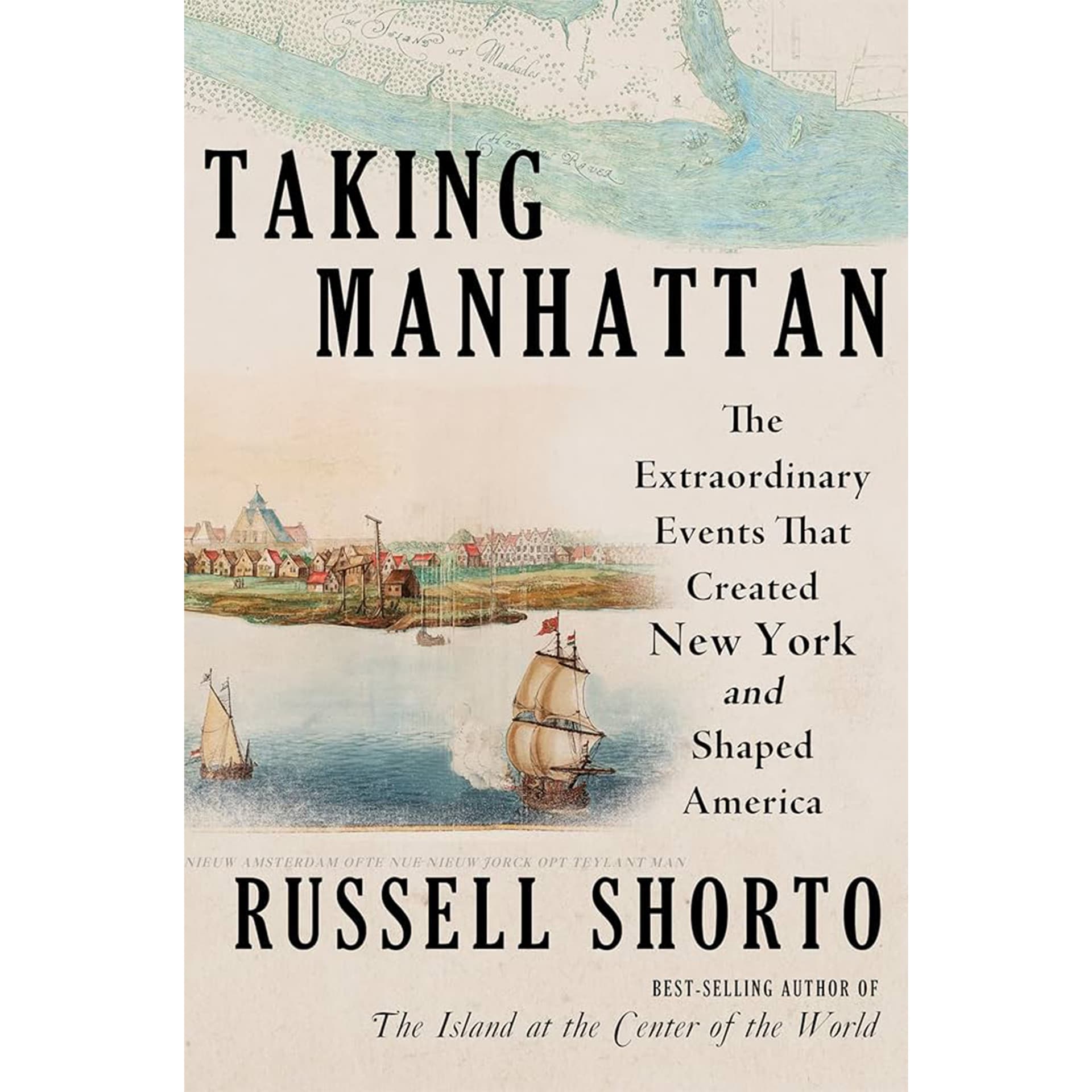
- Guest: Russell Shorto, author of *Taking Manhattan: The Extraordinary Events that Created New York and Shaped America*
- Focus: Discussion of New York City's origins as New Amsterdam, its transition to English control, and the socio-economic dynamics involved.
Episode Highlights
Introduction
- The podcast emphasizes the value of literature in shaping informed investors.
- Discussion revolves around historical contexts influencing modern investment principles.
About the Guest
- Russell Shorto:
- Director of the New Amsterdam Project at the New York Historical Society.
- Senior scholar at the New Netherland Institute.
- Knighted by the Dutch government for his contributions to Dutch-American history.
Key Themes of *Taking Manhattan*
- Historical Context:
- New York was originally a Dutch settlement known as New Amsterdam.
- The narrative explores key figures, such as Peter Stuyvesant, during the Dutch to English transition.
- Cultural and Economic Dynamics:
- Importance of trade and entrepreneurship in early New Amsterdam.
- The role of the Dutch East India Company and the establishment of stock exchanges.
- Religious Tolerance:
- Unique religious toleration policies in New Amsterdam compared to the rigid Puritan society of Boston.
- The contrast between the Dutch acceptance of multiple faiths and the Puritanical exclusivity.
- Conflict and Negotiation:
- The episode delves into the diplomatic tensions between the Dutch and English before New Amsterdam's surrender.
- The significance of character interactions, especially between Richard Nichols and Peter Stuyvesant.
Key Figures Discussed
- Peter Stuyvesant:
- Last director of New Netherland, initially struggled with governance but later adapted to the needs of the settlement.
- Richard Nichols:
- Chosen by the English to lead the takeover of New Amsterdam; aimed to convince the Dutch to peacefully transition to English rule.
- John Winthrop Jr.:
- Moderate Puritan who acted as a bridge between Nichols and Stuyvesant during negotiations.
Sociopolitical Implications
- The merging of Dutch and English cultures set a foundation for New York's future diversity and economic system.
- The episode highlights how these historical tensions and compromises continue to resonate in contemporary American society.
Cultural Annotations
- Cultural Conflicts:
- Discusses the complexity of interracial marriages and different interpretations of property rights between Native Americans and European settlers.
- Historical Myths:
- Debunks the notion that Native Americans had no concept of property rights, emphasizing their understanding of communal land agreements.
Conclusion
- The episode ends with reflections on the duality of American identity stemming from the contrasting ideologies of New York (pragmatism and tolerance) and Boston (Puritanical rigidity).
- Shorto invites listeners to explore the rich history of New York through his book, emphasizing its relevance in understanding modern American culture.
Key Takeaways
- Understanding the historical roots of New York City provides valuable insights into contemporary socio-economic structures and cultural dynamics.
- The discussion showcases how narratives of tolerance and commerce have shaped American identity through the lenses of history and literature.
- Shorto's exploration of these themes serves as a reminder of the ongoing complexities within American society.
Listening Experience
- Listeners are encouraged to engage with the content by exploring Shorto's book for a deeper understanding of these themes and historical contexts.
Written by AI. May contain mistakes. Listen to the episode to check what was said.
Transcript
Automatic transcript. May contain errors.0:02You're listening to A Book With Legs, a podcast presented by Smeed Capital Management. At Smead Capital Management, we advise investors who play the long game. You can learn more at SmeadCap.com or by calling your financial advisor.
0:21Welcome to A Book With Legs podcast. I'm Cole Smead, CEO and Portfolio Manager here at Smead Capital Management. At our firm, we are readers, and we believe in the power of books to help shape informed investors. In this podcast, we speak to great authors about their writings. The late, great Charlie Munger prescribed using multiple mental models and analysis. We analyze their work through the blends of business, markets, and people. In this episode, we will discuss the melding cultures and circumstances that created one of the greatest entrepreneurial and risk-taking centers really of the world.
0:54Russell Shorto is joining us to discuss his newest book, Taking Manhattan, the extraordinary events that created New York and shaped America. To teach our listeners a little bit about Russell, he is the director of the New Amsterdam Project at the New York Historical Society and also senior scholar at the New Netherland Institute. He has published numerous other titles. He was also knighted by the Dutch government for his work on Dutch American history. I would add he's also a member of the New York State Writers Hall of Fame. Russell, thank you for joining me today. Cole, I'm happy to be with you.
1:31Yeah, this is a fun work. Obviously, I work in the investment business. So the story of New York and things like the Buttonwood Agreement are really near and dear to my heart. And you have an extensive amount of work that you've done, obviously, in this area. You obviously have multiple other titles that I touched on. But what caused you to write this story with these individuals and really this particular history for this book? Well, first of all, thank you for having me on the show. I started this, my work with this material goes back probably 27 years or something like that. I was living in the East Village of New York, and my daughter was a toddler.
2:18She's now 30. And the nearest open space that I could take her to run around and play was the churchyard of St. Mark's and the Bowery, which is at 10th Street and 2nd Avenue. and Peter Stuyvesant's tomb is there. That was actually his family chapel in the 1600s. And that got me thinking. I knew New York had once been Dutch. I knew it was called New Amsterdam. I knew Stuyvesant was the leader and I knew basically nothing else. So I started exploring. I eventually got in touch, or I heard about what is now called the New Netherland Research Center in Albany, where since 1974, they have been translating and publishing the 12 ,000 pages of handwritten Dutch records that were the official records of this colony.
3:06So in 2004, I wrote the book, The Island at the Center of the World, which is really a history of this Dutch colony that preceded New York. So that covers essentially a 40-year time span. The current book, which you're asking about is me returning to that topic and specifically to that last moment in its life, to the moment when the English and Dutch are facing off over this island that the Dutch want to keep and the English want to take, the island of Manhattan. And to answer your question as to why I wrote this book, I've stayed connected to the translators and their project. And I realized over the last few years, that they have now moved through this 12 ,000 pages of material and are finally up to the period, the last couple of years in the life of the Dutch colony.
4:02And what's going on then is you see it at its height. You see this robust little capitalistic Wild West town at the tip of Manhattan Island, where everybody's a trader and they're trading with the islands in the Caribbean, with South America, with Europe. and I realized that, you know, we all assume, as with so many other historical events, we take it as inevitable, that of course it would become English and it would be called New York, but it didn't have to be that way. So that's when I decided to zoom in on this moment. It's really a two-week period in the late summer of 1664 when you have these forces kind of pointing their cannons at each other and what's going to happen.
4:48Sure. Well, yeah, we always look back with hindsight and or in an ex-ante way, as they say. You know, I often have this idea that, you know, here we sit today and we think, oh, we're so modern and we practice what C.S. Lewis argues is chronological snobbery. What I loved is you early in the book, you kind of touch on what was going on in the world at the time. So for example, you know, you mentioned some changes that were going on. This is not like just boats and, you know, pirates and, you know, really simpleton kind of world. I think at the time, insurance is already in place. Places like Amsterdam are already installing street lighting.
5:26This is an industrialized world as your story goes on, isn't it? Yeah, of 17th century industrializing and modernizing. I mean, it's the beginning of the modern world in so many ways. And as you say, insurance is part of that. The Dutch invented the building blocks of capitalism in this same era, the idea because they were business people, and the main risky business involved sending ships out to faraway places, which was incredibly hazardous. So they invented this concept of shares of stock as a way to spread around risk, to encourage investment in these, because you wouldn't be losing everything.
6:08You would be one of many people. So the concept of shares of stock, and then right on the heels of that came the idea of a stock exchange. And the first stock exchange originally was in the open air in Amsterdam, right on the street that ran along the harbor, because people were buying and selling, they were coming off ships and buying and selling stock in the Dutch East India Company. And they realized, OK, this is going to be a permanent enterprise. We need to have a purpose-built structure for it. So the first stock exchange, they plop down there. And in so many ways, we can look at that, even at the level of philosophy.
6:47In Amsterdam, in the 1600s, you have Descartes and Spinoza, the two fathers of modern philosophy, which is really, to me, the beginnings of the idea of the individual in the way we think of ourselves. Sure. Up until that point, people's identity was all bound up with the different groups they were part of. You were a mother or a father. You were a member of a guild. You were a member of your church, your parish, your community in different ways. In this era, for the first time, people started to say, yeah, all of that might be true, but I'm also this person, and I'm somehow kind of important, and I'm interested in myself.
7:28So that starts from that to equal education, to equal rights, to the development of psychology. I mean all these things that are part of the modern world trace back to that moment. Sure. You also point out that the period prior to English rule is considered historically so inconsequential. Is that just a romanticization of like what we want to believe or what I'll call maybe some vestiges of kind of Puritan Boston being the guiding light, the city on the hill idea, not the multicultural New York? Yeah, I think most of our history, America, Americans thought of themselves. They liked the idea of it that we had these kind of pure English roots.
8:12And, you know, the first, I mean, it goes back to very prosaic things like the first printing presses in the 1600s were in New England. And the first books were stories that they told about their parents' generation who came from England in New England. And they were these Puritan theologians. And this, you know, they succeeded because God gave them, God was granting them this continent to exploit. And, you know, and that's true. And then if you contrast that with New York was not just Dutch, but it was this, you know, melting pot of different cultures and religions. And that was something else.
8:53And it was also a messier story, you know, all through history. Then New York story, like when you think about New York in the period of the American Revolution or New York during the Civil War, it's it doesn't fit in neatly. You know, Virginia, Boston, you know, we get those, but New York is kind of confusing, and that is partly because it was confusing. It was a mixed place. So Peter Stuyvesant, you already mentioned him. Can you kind of teach us about how he ended up in New Amsterdam and what his mandate was from the government? And while you're starting to explain this, we're going to show a picture to the listeners of what Peter looked like, which is a picture that you used in your book, if we could tee that up.
9:35Yeah, he was the last of several directors of the colony. The colony was New Netherland, which was not just New York City. The colony encompassed a large chunk of the eastern seaboard, all or parts of New York, New Jersey, some of Connecticut, of Delaware, of Pennsylvania. and they had a director and he was the director general of New Netherland and he was the last one and he came in 1647. So the colony started in 1624. So it had been around for quite a while. And then, so he came in in the midst of turmoil. There was a lot of, his predecessor had been dismissed because he had started a war with the Lenape people, the native people in the area.
10:28The settlers of New Netherland, the citizens of New Amsterdam, did not like this, partly because they were there to do business with the native people. They came originally to trade with them for furs. And also because they knew the native people outnumbered them, and they knew this world, and the Europeans didn't. So they had all kinds of reasons for not wanting this war. So this war ultimately led to Kieft's ouster. It also led to these inhabitants of New Amsterdam, who were, you know, very strong-willed business people, asserting themselves and realizing, okay, we have a role to play here. We're not just going to sit back and be subjects.
11:14And so here comes Peter Stuyvesant on the scene. He had worked previously for the Dutch West India Company, which administered this colony. He had fought in the Caribbean against the Spanish. There was a war against Spain. He had lost his leg in that war. So he had a wooden leg. very fiery, very tenacious, the son of a Calvinist minister. And he comes into this position thinking, all right, the problem here with this wild settlement is order. They need a real leader to come in and take charge. Structure. He comes into this situation where you have all these strong business people who are asserting themselves and swaggering around.
12:00And he tries to like step on them and say, no, you're going to obey me. And they don't they're not having any of it. So he has a very rocky start because because this tension is in the air. However, after those first few years, he began to mature. He began to get his legs and to recognize something really crucial for the whole future history of New York, which is that the West India Company had directors in Europe, and they were the bosses, so-called, of this colony. but none of them were ever going to visit. They didn't know what the reality was like on the ground. On the other hand, you have all these traders in the city of New Amsterdam, and they do know what's going on on the ground, and they are doing this very interesting trade they're involved in with far-flung places.
12:57And he then slowly redefines his job description to make himself kind of a middleman between the powers that be in Europe and these people who are on the ground. And he realizes ultimately that if this place is going to succeed, it will only do so if these townspeople of his, these traitors succeed. I think you go into a really good discussion when you talk early about the native people and you talk about the idea of injustices and you point out what injustices did take place or happened, you know, tied to, say, European accursion. But you also don't, I guess you don't, you don't go too far. As you said in your book early, you said humans are humans.
13:45Can you kind of talk about the injustices? Because you point out there were also injustices between the natives themselves. Yeah, well, the Dutch had, they were pioneers in the development of religious toleration, which is allowing other religions. And the interesting thing about that is intolerance at the time was official policy everywhere in Europe. The Spanish, the French, the English, the thinking was, it's a dangerous world out there. If we are going to survive, we have to be on the same page. Religion is a hideously divisive force. So what we're going to do is we're going to have a state religion and we're not going to allow any others.
14:33We're going to push them out if they're from other faiths. The Dutch ended up doing something almost the opposite. They tolerated, they said, we're going to have an official policy of toleration of religions. This goes back to the year 1579, which made them very unusual. And from the perspective of other Europeans, it set them up for all kinds of internal weakness. However, the opposite happened. They became arguably the most powerful nation, this little country, the most powerful nation in the world for a time, partly on the back of this notion of religious toleration. And that relates to a number of things.
15:13One, they were business people who traded all over the world. They therefore learned other languages and other perspectives. They saw the value, they saw the practical value in being that way. So this is, I think, truly a watershed and an important thing. On the other hand, as you suggested, it had limitations. Essentially, Dutch toleration applied to other white European Christians, and everybody beyond that was something else. So they, which we'll probably talk about in a few minutes, they began the slave trade in what would later become New York. Obviously, they were this toleration, they did not view Africans in a way that would apply toleration to them.
16:04Likewise, with the native peoples, not just in this colony of New Netherland, but in other places where their empire was spread to, They were somehow other. They were in a different category. Another category, too, is Jews. You know, there's the situation of Jews in this colony is an interesting one. There was a small Jewish population. They had to continually fight for their rights. Peter Stuyvesant, like any Christian of the 17th century, was deeply anti-Semitic. He thought that the Jews had, you know, had killed Jesus Christ. They were the people who didn't recognize his divinity. And they wanted he didn't want Jews in the colony.
16:48But they the Jews wrote to the home country and appealed over his head. And he was overruled. They said, yes, they're right. There is this policy of toleration. You have to you have to put up with them. So, you know, I think you have to hold two things in your head at the same time here. One is, yes, toleration was seen as a value, and it spawned this pluralistic society that became New York's, you know, pluralism. At the same time, it was limited, and as you say, they were humans dealing with things in the way what they saw was common sense. Yeah, to your point on the anti-Semitism, I always tell people times change and demons don't and that seems to be a demon that reoccurs in human society pretty regularly.
17:37Hi, I'm Cole Smead, CEO and Portfolio Manager here at Smead Capital Management and host of this podcast. If you enjoy this podcast, I'd like to invite you to check out SmeadCap.com. At our firm, we are stock market investors. We advise investors who play the long game with a discipline that has proven success over long periods of time. Learn more about our funds at SmeadCap.com. Past performance is not indicative of future results. Investing involves risks, including loss of principle. Please refer to the prospectus for important information about the investment company, including objectives, risks, charges, and expenses.
18:12Read and consider it carefully before investing. Smead Funds Distributed by Smead Funds Distributors, LLC, not affiliated. You really kind of pose this idea of toleration up against New Amsterdam, what we now know as New York, against Puritan Boston. So can you kind of talk about Puritan Boston in comparison to what you just discussed? Because if someone says, well, they're not that tolerant in New Amsterdam, well, it's a relative game in the New America. Yeah. So we've mostly been talking about the Dutch side of the story. The English side of this piece of history is the 17th century in England, you had a society that was bitterly split into two camps, and each one thought the other was out of their minds.
19:06This may sound familiar to Americans today. The one hand, starting in the beginning of the 17th century, the Puritans become more and more powerful as the decades roll on. They wanted to purify the Church of England. They broke away, and they felt that the Church of England was wicked, and the king, the Stuart kings, the king was by definition the leader of the Church of England. So it's a corrupt church with a corrupt monarchy, and they were breaking away, purifying, and they wanted to rebuild English society along the lines that they thought were correct. The other side is called the royalists, but I think that's a little bit misleading because it doesn't just mean people who, you know, were crazy about the monarchy and wanted to follow them.
20:01It basically encompassed everyone who did not want the Puritans to take over and, as the Puritans would do, outlaw Christmas and outlaw dancing and theater and things like that. Kissing in public, anything fun. Sure. Yeah. Yeah. So this builds to civil war. When the Puritans take control, they capture Charles I, the king. They cut off his head. His two sons flee into exile. And eventually then they come back onto the throne in 1660 and take over again. Now, while all this is going on in America, starting early in the century, you have Puritans settling in New England. And Boston becomes their center, their power base.
20:52And they become quite strong and quite dominant with this very rigid ideology, which, I mean, to me, if you look back at 17th century English Puritanism, at that brand of it anyway, It is really a form of religious extremism. And that was what they imposed. That's how they structured the society. And so in terms of New Netherland and what was going on there, it's quite a different place from New England, especially from Boston. Sure. Well, and to your point, I mean, I think what I was born out of was Charles started really using what I'll call Catholic practices in the Church of England that really bothered the Puritans from a Protestant perspective.
21:43I think it was like he touched the Book of Prayers and certain traditions in the church, and they're looking and saying, well, this feels a lot like Catholicism, not like the church that they wanted. And they wanted tolerance, so they moved to America to be less tolerant. Yeah, I mean, that's the irony of what we all grew up with in terms of the Puritans coming to America. It was spun as they came here for religious freedom, and so they are our original advocates of religious freedom. Well, they only wanted religious freedom for themselves. They violently opposed and murdered people who came there who insisted on practicing a different form, even a different form of Christianity, let alone a completely different faith.
22:29When also you talk about Maverick, who is a royalist in the sense that he's in Puritan, Boston, but yet at the same time, he is not fervently on Team Boston, if you will. He's very loyal to the crown, and he's kind of fact-finding all along, ready to go back to the crown and say, hey, here's your problem in Boston. Yeah, Samuel Maverick is a really interesting figure who I spent time with in the book. he actually establishes a settlement in what's now Boston before the Puritans get there so there were some English who came before the Puritans did but then a few years later they came and started to remake this place and he did not join them he did not want to have anything to do with them so now when you move forward to the period that this book is really focused on when the English are deciding what they're going to do.
23:30Now the stewards are back on the English throne. Charles II, the son of the beheaded king, is the king now, and his brother James, the Duke of York, is at his side. And they are looking at the English colonies and trying to figure out what do we do about the English colonies and what do we do about this Dutch colony? um they there are a number of people from new england who do not see eye to eye with the puritans but who are english and have lived there for a long time and they're coming to london and they're um making petitions to the monarchy please airing their dirty laundry to what's going on i mean they're saying look they know perfectly well that the okay now we have a monarch on the throne who is not in favor of the Puritans and who needs to know what the Puritans are up to.
24:22The Puritans were doing things like melting down coins that had the monarch on them and making their own coins out of it. You know, they were like literally in every way going against the official government in England. So Samuel Maverick is one of those who goes there and makes his case. And he goes back decades of grievances he has. and he talks about the religious intolerance of the Puritans. And the Stuarts were also advocates of a certain form of toleration, partly because, as you, I think, touched on, their mother was a Catholic. So they had this sense that, you know, they didn't want to, at the time, being most English, were deeply opposed to Catholicism in the Catholic Church.
25:10So they had this, I guess, internal sense of that's not fair. We should tolerate other faiths. Sure. We've done another history, a book that came out a couple years ago called Easy Money by Dror Goldberg. And I don't know if you've ever come across the book. But you mentioned the conflict of coinage, which unless you had a charter to mint, you could not do that by English law. and obviously what we call a bill today was a creation of Puritan Boston, oddly enough. So it's like what I love out of some of these histories is like the creativity that comes about. In the case of New York, it's really this idea of like tolerance and commerce.
25:49And ironically, we end up getting our concept of money from the intolerant Bostonians. So let's talk about the non-New Amsterdam area of the Dutch settlement. you talk about Beaverwick, which is current day Albany, which is still obviously the capital of the state of New York. What was Dutch life up there? I think you used the term, I think you called it the big sky country, which obviously we think of being Montana. But at that time, that was kind of Montana, wasn't it? Yeah, it was. So the two bases of the colony, as I said earlier, it was a huge territory. You had New Amsterdam in New York Harbor, and 150 miles from there, straight up the Hudson River, you had the second city, Beaverweich, and they had a fort there called Fort Orange.
26:38And they would trade with the native people, the Mohawk, along the Mohawk River, who would trap animals, especially beavers, and bring them to Beaverweich. They would trade with them, pack the furs onto ships, send them south to New Amsterdam, to Manhattan. And then when they had enough of them, they would pack them up into ships and send them to Europe. And especially beavers, they were especially interested in the beaver trade because in Europe, beavers were highly prized. There was fur, but underneath, if you treat it, underneath it is the pelt, which can be turned into felt. and felt is very thin and very warm.
27:25So you can wear it as a vest against your chest. All the hats you see, 17th century hats, those big floppy Dutch hats and things, those are felt hats. So this was a huge market and that is what kind of connects, sets up these two cities that are the main points of the Dutch colony. Totally. Nichols is one of your main characters. Obviously, he's pivotal, like Stuyvesant is. We just did a history on Geoffrey Chaucer, and we talked a lot about how Chaucer floated around the royal house. That was really kind of what I took away from Nichols' upbringing. It's not like when he was born, his parents were like, you're going to hang out with the royals.
28:10But that's what he ended up doing over his early life, isn't it? Yeah, so this figure who I, as a writer of narrative history, what excites me is coming upon a historical figure who is almost completely unknown and who was incredibly consequential, because you get to unearth them and bring them back to life. Well, and it fits – there's always a debate of like a big man or big person history, and Nichols kind of fits that. Like he was in the right place at the right time. To your point – I mean you could put a whole movie together based on just Nichols' life. You know, so I found that really interesting because I'd like to – I write – as I say, I write narrative history, and I don't write just a textbook account.
28:56I want to find a vehicle for driving this narrative. And he was a great vehicle for bringing along this history that I just described of how England was split during the century. He came from a little village in Bedfordshire called Amptill. And what distinguished it was it was surrounded by forest, which for generations had been the Royal Hunting Preserve. So Charles I, when he was king, before he had his head cut off, would go there. He was a big hunter, and he would go regularly with his sons, his young sons, and they would stay in the finest house, which was the home of the keeper of the hunting grounds.
29:48Richard Nicol was the son of the keeper of the hunting grounds. So these two young princes and this boy, who's the son of the keeper, knew each other from very early age. They would see each other at different times of the year. They were different levels, different status. But they got to know each other well. Then, as they're growing up, the Civil War breaks out. They go into fight. Nichols sides with them. He fights with them. whenever their father is decapitated, they flee to the continent. He goes with them, and he's part of this group there that is scheming to get them back on the throne.
Read the full transcript
30:28So then, after this period of exile, finally, in 1660, the Stuarts are coming back. They cross the English Channel. Nichols comes with them. And now is when they look across the Atlantic. They've been all their lives, they've been envious of the Dutch. Why do they build such this, such a, you know, robust trading network? And there's the Dutch right in the middle of America, which is this land that they want to begin to exploit. So there's actually two parts to the mission they dream up. One is figure out a way to take the Dutch colony from them. to is figure out how to deal with the Puritans based in Boston.
31:16So it's a very complicated two part mission. Who are they going to get to? Because, you know, they know perfectly well, once you send them off, it's going to be months and they're going to have to think for themselves. Situation will change. So they pick this guy they've known all their lives, Richard Nichols, and he then is going to solve at least one of these two problems. And then he's going to become I'm the first governor of New York, and he's going to set a lot of the dynamics, not just of New York's development, but of American development. So the stewards are hiding out in Holland, as you mentioned.
31:50If I remember correctly, Charles and James' sister is married to one of the princes there. I think her name is Mary as well. And so she's living there. So it's like hanging out with your cousins or your relatives in a season where you're out of favor. was this I mean was this like taking court to Amsterdam and effectively hosting court with your relatives is that what they were doing how would Nichols have been treated relative to the royals there was he living a fine lifestyle because I was trying to think about the class of this where they're friends but they're also not royals yeah class is definitely a way to understand it the royal families of Europe were all interrelated And they would that's how they would forge alliances, you know, marry your sister to somebody else's son.
32:40So even though the English and the Dutch were often enemies, they this would kind of supersede that it was a structure they had that maintained itself, whatever, even if the two sides were warring against each other, the royals would be interacting. So they fled to Europe and they spent part of their time in The Hague. And also they traveled around. James spent part of his time in Paris and other parts of France. And strangely, James, for part of this time, becomes an officer in the French army during the French Civil War, which was going on at the same time. And Richard Nichols joined him there.
33:24So those two in particular, Richard Nichols and James, the younger of these two sons, you get the feeling that they are close from childhood and they remain that way. Nichols then becomes eventually becomes – he's given the title groom of the bedchamber of the Duke of York, which sounds like – I say in the book, it sounds like he goes around picking up socks or something. But it's actually a title, a position of some power within sort of the cabinet. Sure. What I also think for what you explained of Charles and James, it's also a way of saying if you're James, you're like, I don't mind that Nichols knows who I'm sleeping with, hence the title of bedchamber.
34:09Because I think you lay out both – James was very in love with his wife, but that didn't stop him from loving many other women either. Let's see. I just want to pivot a little bit here. So Nichols leaves – let me skip to this. You mentioned this earlier about the idea of building these companies and stock exchanges. The Dutch West India Trading Company was a copy of the Dutch East India Trading Company. These were these trading houses that were obviously novel by the Dutch, later adopted by other people later, like the Southeast Company in the case of England. Did you see any big differences between these two trading companies?
34:50Was Asia more successful or was what they did in what's now America or the Caribbean, did you kind of draw any big differences in those? Yes, you're right. The one was a copy of the other, but it didn't work out the same way. The Dutch East India Company, as I was saying before, the whole – the building blocks of capitalism as we would know it come about by means of the Dutch East India Company. So the Dutch had, in the 1590s, they hatched the idea of an expedition, sending an expedition to Asia, because that's where all these rich, this fine trade, as they called it, in spices and silks and things like that came.
35:35So find a short route to Asia, find a way, a route, a mechanism for bringing these goods, bartering and then bringing things back. The first expedition that they sent was incredibly hazardous. I can't remember a small percentage of the original soldiers came back. Most of them died in horrible ways, but it proved that it could happen. But what it also proved is you don't want to just put all your eggs in this one basket. So they came up with this notion of shares of stock in 1602, the first public offering. and that company was the Dutch East India Company. And one of the ways it distinguished itself from others is that it was from the beginning going to be a permanent company.
36:26Previously, they would do the same kind of thing. Several people would put their money in a pot and they'd send out ships and then the ships maybe would come back and you'd divide the spoils and the company dissolved. So with the East India Company, for the first time, you were buying a share of stock in something that was going to continue. And if you held on to it, ideally, the value was going to go up. And so that's why as soon as this proved itself with their first voyage, people started to realize, oh, we can have a market, a secondary business in buying and selling these shares of stock.
37:06So that was the East India company, and it was wildly successful. Then about 20, 18 years later, they said, let's do the same thing for the West Indies. The West Indies meant if you're in Europe and looking at a map, basically everything to your left. So coastal North America, the Caribbean, and the coast of South America. So it had a similar structure with the board and shareholders, and it was going to do trade with these regions, and it never made a profit. New Netherland was part of that, part of its domain. It never returned a profit for the directors of the West India Company for a variety of reasons.
37:52It just, excuse me, for a variety of reasons, it just didn't take off. So what did work was what I was talking about earlier, Stuyvesant, realizing that the West India Company, you know, giving orders from Europe, this isn't going to, this isn't a structure that's going to succeed. Rather, let's let these small freelance traders on the ground, let's let them run things in a way that'll make money for them. So this then leads to, as we come to this moment of this clash between the English and the Dutch, one of the reasons that the Dutch were open to negotiate was that they knew that the West India Company and the leaders in the home country were not supporting them.
38:37And the reason they weren't supporting them was because they themselves were not making money out of it. We hope you're enjoying the podcast. You know, we work hard putting together this show, but we work even harder for our investors at Smead Capital Management. At Smead, we believe in disciplined investing, which is why the Smead funds have a proven track record of long-term outperformance. If you're an investor who plays the long game and want to invest in wonderful companies to build wealth, we invite you to visit SmeadCap.com. Past performance is not indicative of future results. Investing involves risks, including loss of principle.
39:11Please refer to the prospectus for important information about the investment company, including objectives,
39:26You use another character, Catalina Tirico. You talk about her and her husband, eventually her husband, coming to New Amsterdam, and they came for the Dutch West India Company, the West Indies. That's why they ended up there in New Amsterdam, isn't it? Yeah. Yeah. In the book, I use several of the more marginal figures to tell the story. And Catalina and her husband are a really interesting story. They are French-speaking walloons from the part of Europe that is now Belgium and northern France. they like like probably a couple hundred thousand other people in europe knew that amsterdam was this boom town so they went there seeking the other way the way people emigrate to happening places they want they were hoping to make money and establish a life that's where the money's at yep yeah so but soon after they got there and her sister had lived there first um so presumably She went and lived with her sister.
40:33And shortly after going there, she meets her husband, who was also a balloon from a different village. And they both heard of this venture, the West India Company venture to North America. I don't know if they had posters on walls or how they were putting the word out. But they heard about this venture and decided to sign up for it, knowing surely that it was incredibly hazardous. I think she was 18 and he was 19 or 20. And so they got married in the Walloon Church in Amsterdam, which is still there. It's a lovely little church and became part of the initial voyage in 1624. Their first mission, the colonists were spread incredibly thinly because they only had a few dozen of these would-be Adams and Eves.
41:26And as I said, they had this huge territory. And rather than focus them all in one area and establish like a real little village, they spread them all out. Just a few here and a few there. And the reason they did that was they were thinking about European notions of claiming territory. And you had to like say, OK, we've got settlers here. We've got settlers over here. So all this territory we are settling, which wasn't really true. It was just very isolated. Then in 1626, some of them involved themselves in a dispute. So they were way upriver at what's now Albany. And there was a dispute between the Mohawk and Mohican peoples.
42:12Some of them got caught up in it and were killed. And that caused a regrouping of the colony. So there's a new leader then, and he recalls everyone to Manhattan, and that begins the beginning of New Amsterdam and of Manhattan, beginnings of New York, you would say. Yeah. I find a couple of these details really interesting in your writing. You point out the myth that has been peddled, I would say, that the native people had no conception of property rights. You point out that's not true. Can you explain their concept? Yeah. So the Dutch certainly did have a notion of property rights, and they were meticulous about getting things on paper.
42:58So they executed hundreds of deeds with Native people for land up and down the Hudson River. The first was for Manhattan Island and the most infamous. And the old story is that the Dutch bought Manhattan Island from the Native people for$24. That's the, you know, look, aren't they stupid, these Native people? I think you pointed out it wasn't even for actual money. It was, you know, obviously goods that were of that value. But I think you make the case that it was a token arrangement. Right. So the first thing, the Dutch knew perfectly well that the Native people did not have the same kind of notion of real estate that they did.
43:39Sure. They knew the way the native people looked at things, that what they would be entering into was a kind of alliance, a trading alliance where they would say, all right, you Europeans, you can come and live here. We're going to still use this island, too. But you can come and live here and we'll trade with each other. And if one of us is attacked, we'll help each other. And to seal this bargain, we'll exchange some tokens. So you'll give us some token gifts, probably kettles and knives and things like that, which in the 19th century, somebody translated as$24. So it wasn't a purchase price, and they knew that the Native people did not have the same notion of real estate that they did.
44:26Sure. The other thing, from a native perspective, it was not a legal agreement that they took part in. They took part in what you argue was oral agreements. And so I was thinking a lot about the idea of like, well, my word is my bond. Well, in any contract or legal agreement, your faith in that agreement is a main concept to any contractual obligation. And it's funny when we say that, we're saying that as, you know, like, if I shake with you on this, we're good. But that's not actually what we do. That is what the natives did, though. Yeah, well, they didn't have a writing system, but they did record things different.
45:08So treaties, they would exchange wampum or salam, as they called it. And you would have – and that was beads made of shell that were strung together. Yeah. That exchange, and they would know then, and people would keep it in their minds, this would be the same way as if you were reading it. It would signal to them this hand of, because they measured it in hands, width. So these three hands of Seywant or whatever mean that 22 years ago, we entered this deal with them. So they were constantly entering treaties, and that was how they recorded it. And they knew, of course, that the Europeans recorded it in writing.
45:51But as far, there were other distinguishing features. The Native people would look at this kind of arrangement as something that had to be renewed. We would have to come and meet every spring or something, and it would be a whole ceremony. There would be speeches, and every year at the annual anniversary of it, we would have to renew it. And otherwise, it's going to fall by the wayside. Sure. That's interesting. You mentioned one of the biggest problems in New Amsterdam was drunkenness. What did your work teach you about this, and could anyone recover from this problem? Yeah, well, there was a, you know, the Dutch at that time were a big drinking society.
46:37And it was for a long, for especially the first 15 years or so of the colony, until the West India Company gave up its monopoly. In the beginning, it was trying to maintain a monopoly and it wasn't working. So since it was trying to reinforce things from across the ocean, it drifted. It became this listless community, New Amsterdam, and all kinds of pirates and gamblers and prostitutes and things. It was this real kind of wild town. And sure, alcohol was part of that picture. And then, you know, certain things happen to change it. One is the breakdown of the monopoly that that that's when these the trading houses in Amsterdam would send one of their sons to open a branch office in New Amsterdam.
47:29And that begins, they then, as members of a community, want this to be a functioning community. So they start to assert authority and order as a community. And then when Stuyvesant comes in and he slowly gets a handle on things, he works with them to normalize the place. Yeah. Tolerance for New Amsterdam also fell on legal issues. I think you talk about – you talk about – I think it was – was it Levy where he goes to court and he says, well, if I'm not a citizen as a Jewish person, why would I be paying taxes? And so I found it really interesting that the Dutch, they used logic in their courts to really provide paths, which seems like it was pretty novel for that time.
48:22Well, you had, as I said earlier, you had an official policy of religious toleration, and you had regular violations of that. And then in a system, same in our system, someone might violate it, a leader might violate it, and then you had the option of going to court and saying you're not, the leader is not following the law. And then a higher court would rule. So in that case, you had Peter Stuyvesant, who, as I said, was very anti-Semitic, did not want Jews to settle, then was told there was an appeal made and they overruled him and said, you have to allow them to settle. But he still tried to make it life hard for them.
49:08So one of the things which you're referring to is the burger right was a big deal in the 17th century in Europe. And that a burgher was a citizen of a town. And with town citizenship, you had certain responsibilities like paying taxes and you had certain rights. You could do business in a certain way. And one of the privileges was to be in the civic guard. You would march around town and everybody was a pride, a status thing. So you were showing everyone that you're a burgher and you're marching around and protecting people. So in this case, Stuyvesant, as a way to try to force the Jews out, said, you're going to be taxed.
49:54You're going to pay a burger tax, but we don't want you in the civic guard. So Aser Levy was in this and other matters. The Jewish community appointed him as their leader, and he goes to court and argues. It's illogical. Either don't tax us as burghers or if we're being taxed as burghers, then we're entitled to the privileges of being burghers and let us march with the civic guard. So basically it's a civil rights story, and it plays out back and forth and back and forth. The other interesting kind of – I'll call it note from a social history perspective is you talk about the interracial marriages that were taking place in New Amsterdam at the time.
50:37which, you know, again, it's like I think of the America of today in the next 100 years, which is going to be dominated by that. But there wasn't a lot of this in, you know, call it America at this time, was there? No, there wasn't a lot of it. I wish we knew more about it. So there was a small African presence. We haven't talked a whole lot about slavery here, but there was a small African presence and the Africans who came to the colony were enslaved. They were captured on enemy vessels in the Caribbean, on Spanish or Portuguese ships and sort of unloaded in Manhattan. So initially it wasn't slavery was not part of the development.
51:19It wasn't consciously part of the development of the colony initially. But you had slaves in the colony. And there were several things about it that are unusual from our perspective. One was they had the right after a certain number of years to petition for their freedom, and many of them did, and they got freedom and they were given land, which speaks to the fact that it wasn't yet a hardened institution, which it would become very soon. And there are a couple of cases in the records of a white European marrying a black enslaved woman and the reverse. We don't know much. You know, you would love to know the details.
52:05What was up with that? How did people view that? What did that say about, you know, how people in general? Because an interesting point here is that they didn't necessarily look at, identify skin color and status of servitude. You know, black didn't necessarily, it seems, mean you were enslaved. That would come later in the New York period, in the colonial New York period, where they really made it difficult. They actually—white slave owners who wanted to free a slave had to pay an enormous tax. So they were telling them, no, we want to keep it so that anyone who was here who's black is a slave.
52:48So it really becomes identified with it. Your history in this, there was a lot more elements of New Amsterdam that made me think of indentured Europeans at times than it did of what came later, and to your point, in the hardened idea of a slave trade. Yeah. I think there were three models they had as they were thinking about slavery. One was ancient Rome, where there were slaves, and slavery was not based on race. It was whoever we captured in war. The Bible is another. And again, slavery was not based on race. And the third was indentured servitude. And indentured servitude, you were another white European and you were poor and you basically sold yourself into slavery, a form of slavery to someone else.
53:36But you did it for a set period of years. You had a contract. And at the end of that time, okay, I'd gotten... And some of the people came to the Dutch colony that way as indentured servants. And they worked at a farm for a wealthy farmer for seven years. And then they'd worked off their time. And now they're established in the new world. They've got some funds and they can start on their own. So those seem to be the models that they were building slavery out of. Sure. I'm going to pivot next to our next picture here because I just want to bring back up the Duke of York, James. James, he becomes this kind of really central person more than his brother Charles because of Nichols, their relationship together.
54:25And so I think we got his rock star picture here up on the screen for you. I think you talk about his flowing hair, and I think this picture does a pretty good job of kind of giving us a view of who the Duke of York was. Was that his personality too? I think, yeah, I think somewhat. But this is him posing as the god of war, the Roman god of war. And to me, yeah, he looks kind of like Robert Plant in the 1970s. Yeah, so they, Charles and James, both from, depending on who you're reading, were serious partiers. They were serious womanizers. And so you get this sense of them on the one hand of just this, you know, the wild.
55:08I mean, Charles was called the Merry Monarch. You know, it was like the Puritan rule is over and now it's just one great big party and they're the ones throwing it. On the other hand, they had worked tirelessly to get back and very dangerously to get back their throne. And once they did, they set up a structure that would be the basis on which the British Empire would be built. So you have to put both of those things in your head. They were serious partiers, I think, but they were also really serious about governing in their fashion and about building this structure, building an empire. Sure. The phrase work hard, play hard comes to mind when you talk about them.
55:54Then the Navigation Act is written. What did the Navigation Act say and why did it lead to this Anglo-Dutch war that was coming? They, the Europe, most other parts of Europe were bitterly envious of the Dutch and the Dutch, not just their far flung trade network, but within Europe, the Dutch would do things like they would, they would learn that there was a bumper grain crop one year in Poland, they would send ships there, they would buy up all the grain, and then they'd go to Italy and sell it to the Italians. You know, so they were really good at doing these kinds of things and it confounded other Europeans.
56:36And so the English, in order to try to build up their own industry and to thwart the Dutch, they issued these acts that said any goods that are coming into England have to come in on an English ship. And this was aimed at the Dutch and in particular, and it really hurt the Dutch. hey i want to give a big shout out to everyone who's been working so hard on this show you know we recently hit the top 10 in investing podcasts on apple podcasts and even number one in the business category in several countries as you may know the show is brought to you by smeed capital management smeed capital management understands how frustrating and illogical the stock market can be if you're searching for funds with a proven track record give the smeed funds a look or better yet reach out at smeadcap.com.
57:25And don't forget to mention your fan of the podcast. Past performance is not indicative of future results. Investing involves risks, including loss of principle. Please refer to the prospectus for important information about the investment company, including objectives, risks, charges, and expenses. Read and consider it carefully before investing. Smead funds distributed by Smead Funds Distributors, LLC, not affiliated. So this sets us up for kind of the climax of your story. You have Nichols who is by now, he has gone to Boston and then from Boston come down to New York Harbor. And he's sitting off of Sandy Hook kind of waiting.
58:06He's sitting there waiting to deliver what's new Amsterdam to England. Can you start off with what those circumstances are? Obviously, he has some ships meet up with him, but can you kind of walk us through the early part of this conflict? When he travels, you know, James and Charles send him off. He's got four ships, 450 soldiers. The ships are packed to the gills with gunpowder and weapons. There's this whole list of everything they brought with him, really intending to inflict damage. And the Dutch and English have fought. They just finished fighting a war not too long before. Sure. So they're used to going at it with each other.
58:47And initially, he gets his four ships. There's a storm at sea, and he and the other ships arrive. They both make it to the New England coast, and then he goes to Boston first to try to begin to deal with the Puritans. He is given a very chilly reception there. And then he basically says to the Puritan leaders, I'll be back. And then he goes down the coast to New York Harbor to try to deal with the Dutch. Again, gets separated from the other three ships. As you say, he sits at anchor off Sandy Hook. Eventually, they all regroup. They come together. And then he sails not directly for Manhattan, but he goes to Gravesend Bay next in Brooklyn at the tip of Long Island.
59:43The reason he goes there is there are a number of towns the Dutch have established in what's now New York City, in the outer boroughs of New York City, which have names that echo current names like Flissingen became Flushing, Broekelen became Brooklyn, Flackebos became Flatbush. But Gravesend was one of these towns, but it was different because it had been settled by English. There were English settlers, but they were within the Dutch territory because the Dutch territory encompassed a whole variety of different languages and ethnicities, one of which was English. So Nichols knew this. Nichols started doing his homework when he was still in London.
1:00:29He knew he had interviewed people, including Samuel Maverick, who had been to the Dutch colony, who had understood how it worked. And at some point, maybe when he was still in London, or more likely once he was in New York, anchored in Gravesend in this safe village, he formulates the idea that he doesn't want to just blast away at this enemy and take this island. He has come to recognize that what the Dutch are doing here is something special. This combination of toleration, these different ethnicities. I mean, this was very strange at the time. Yeah. And this mechanism for doing business, what we would call capitalism.
1:01:16And he doesn't maybe get it fully, but he wants that. He knows that New Amsterdam is beating Boston and any other place in the English colonies. So he wants to keep he wants to find a way to make them happy enough that they will give him their place and their their their energy, this force that they've brought there. So that's what he starts doing. And really what's at the heart of this book is a two-week period where he's sending boats with messengers to Manhattan. They go into the fort. Stuyvesant reads the letter. He writes the letter back. The messengers go back. Nichols opens up that, and it goes back and forth and back and forth.
1:02:03And this is real 17th century diplomatic protocol. I want to jump in because even in this, I think there's just really fun history. So I'm going to show a picture here of what lower Manhattan looked like. It'll be our last picture we use for our discussion. But here's a picture of what lower Manhattan looked like at the time that Nichols arrived. I think this is called the Castello Plan, if I remember correctly from your book. So as he arrives, there's no secret to the Dutch that he's there. They can see him. what are the thoughts and fears in new amsterdam while like you said nichols knows there's something special and yet the same time the dutch don't know who nichols is uh they um they have heard for a long time that english ships might be coming then they heard they were coming then they heard no well they're coming but really they're going to deal with the the the puritans in boston because they knew that the Dutch knew perfectly well all that backstory in England.
1:03:05They knew that the Puritans in New England to their north were very different from the people who were now in power in London, that they had fought a war against one another. And they were ready to believe that the reason these ships were coming was to make them bow down to the steward king. That was one reason, But the other one was to take the Dutch colony. Sure. So Stuyvesant starts with a letter first. So he knows they're there. He sends off a letter first, kind of a diplomatic, hey, we know you're here, but we're under Dutch rule. And isn't it kind of like you have no right? Yeah. Stuyvesant – I mean each of them back and forth.
1:03:48They try different tacks. And Stuyvesant's tack is, you know, he kind of lays out the history of the Dutch claim going all the way back to Catalina Trico and these people who had settled. And we established a basis. We worked with then the purchase for Manhattan Island. All that is part of it. You know, we traded with the native people. We got the territory. We got the title and all that. And Nichols comes back basically saying, the King of England has claimed all this. It's all his. I don't care about your arguments. So, you know, at several points during this two-week period, one side or the other, either Nichols or Stuyvesant is like, you know what?
1:04:29That's it. I'm fed up. We're opening fire. I'll give you 24 hours and we'll start, you know. And at one point, Nichols sends three ships right around the tip of Manhattan, Lyle Island, right around the fort, daring Stuyvesant to start shooting at him. But then each time tensions build like that, something happens to kind of lower the temperature, and they keep this up. And I think the reason ultimately is neither one of them wanted to fight because they thought that if they could reach some sort of accommodation, that would be in everybody's interest. Sure. And also you explain a very interesting character from – I'll call it a religious tone, a scientific tone, a business tone, which is John Winthrop Jr., and whose obviously father was the governor of the Massachusetts Bay Colony in Puritan, Boston.
1:05:21Just so you know, Russell, I have met heirs of the Winthrop family who are still living, you know, in their case, they live between, you know, in that case, you know, I'll call it the Eastern Seaboard for lack of more detail. But I say that because it's just so incredible to think about that lineage. But then also John Winthrop Jr., he knew Stuyvesant. He knew Nichols. He was not a Puritan. but then again, he was also religious. He was like this odd pragmatist somewhere between the two worlds at kind of the right moment for this discussion. Yeah, and he was what we would call a scientist. I mean, at that time, it was a little vague.
1:06:05An alchemist in your book, right? Yeah. And a medical doctor and the governor of Connecticut. So he was a Puritan, but he was of this sort of moderate Puritan party. Yeah. And like his father, he'd been a real, you know, hardcore. So, and Stuyvesant considered him a friend. Yeah. And Nichols, starting in London, he met Winthrop in London. And Nichols at that time, I think, decided, I'm going to try to use him. He may be useful for me. Because he was the governor of Connecticut at the time. Yeah, the Connecticut colony. Yeah. And and this was he was there because now that the the Stuart, the kings were back on the throne.
1:06:51He want they wanted to the Massachusetts Bay was the only New England colony that had a charter, a royal charter. So he wanted a royal charter for Connecticut. That's why he was there. So Nichols decides he's going to be useful to me. And then when Nichols is in America, he's writing letters to Winthrop and Winthrop is lighting back. And, you know, how exactly, you know, because Nichols is on the move, how these letters get around to people is a little bit above my pay grade in terms of understanding the history of how things worked in the 17th century. But they then decide to meet up in Gravesend.
1:07:29And when Nichols gets there, Winthrop is there waiting for him. And so then he uses at a crucial moment in these negotiations, Nichols uses Winthrop. And I think Stuyvesant is like, you know, if you were doing a movie out of it, Stuyvesant would be like frozen. Like, what? You're here? What are you doing? You know? Yeah. I thought you were my friend. Yeah. Yeah. Yeah. Yeah. And but, you know, Winthrop basically says, look, as a friend, listen, will you do me a favor and listen to this guy? And they all, you know, interestingly to me, a really interesting side note to all this is Nichols, Stuyvesant, Winthrop, several people in London at the time, a guy named Robert Murray, who was the first president of the Royal Society, which the stewards started for the advancement of science.
1:08:20they were all sort of gentlemen scientists too. And after this period we're talking about, into New York, they all are trading letters about scientific discoveries, about, oh, we found these minerals here in the new world, and maybe they're useful in this way. So they have these different layers on which they communicate. Sure. The other thing that you point out that was really good to think about is there's not only what's going on between these nations, but there's also what's going on for Stuyvesant himself, some of the back and forth you explain is not necessarily him trying to be problematic, but he has to save his own hide.
1:08:59On one hand, he has to be respectful to the English because they can be the captors. At the same time, he's still Dutch, and if it looks like he didn't attempt, he could have a lot of trouble for himself, couldn't he? Yeah, and he did have a lot of trouble. um the way i kind of you know a lot of what you do when you're writing history is you're interpreting you're trying to infer what was going on in someone's head and i think what was going on in his head during this two-week period was you know what happens if we fight and lose what happens if we we don't fight uh what are the implications and he i think had to wrestle with his various loyalties.
1:09:46He had a loyalty and obligation to the West India Company. He was a West India Company employee. He had an obligation to the Dutch government. But ultimately, what I think trumped those was his loyalty to this community, to this town, this people, this place that he believed that he had built. And I think with some justification, they knew by now they had been trying for years to get the West India Company to support them. And they were looking elsewhere. The Dutch were looking at the East, they were looking at the Caribbean and Brazil. And this was just, you know, the leaders, the directors of the companies were not making money here and they just weren't interested in supporting.
1:10:36So he knew they were on their own. So he then, I think, comes to conclude, if we can get concessions so that we can continue our life and continue what we've been doing, then we'll make this place English. And that is eventually what happens. That's the Articles of Transfer. It's basically a bill of rights that the Dutch had held out for. They'll keep their homes, they'll keep their businesses, their trade networks, Dutch ships will keep coming. And in exchange, it's going to become an English town. And then Nichols, as the first governor, names it New York. Sure. You explained this to be a merger, not a takeover.
1:11:23And I think maybe your better picture of this, your best picture of this, is like church services. How did they, in this merger, amend what they did at church? I don't follow that. In other words, I think you talked about how there was Dutch services, but then— Oh, I see what you mean. Yeah. Yeah. How did they amend that for the English, too? Yeah. So, yeah, how are we going to make these two worlds fit together? And one model they used was the church itself, the Dutch Reformed Church, said, okay, we'll set certain services aside for English preachers. So, I mean, it was, you know, very pragmatic in certain ways, the way they did this.
1:12:04Of course, it was not without difficulty. There, on Nichols' part, he signs these articles saying, okay, you'll keep everything the same. And then he starts to go trying to make changes. And then they come, so the leaders of New Amsterdam come waving the agreement saying, wait a second, we have an agreement. And then he's like, oh, yeah, right, we have an agreement. Yeah. So, you know, it's – as history moves into the next phase, the other complications come in. Yeah. Well, then – so it's like, OK, you get done with the story. New Amsterdam becomes New York, named after the Duke of York, King Charles' brother.
1:12:43And then Charles is dead. James becomes king. And James secretly, through his mother's legacy, converts to Catholicism. And that begats the third Anglo-Dutch war, which then I think, as you pointed out, that causes New Amsterdam to go back to being Dutch at another point before being saved. through the Dutch liberating England. Well, it's actually in 1688, his Catholicism, he becomes king. His brother eventually dies. Correct. And he becomes king. And by this point, people know that he's a Catholic. Yeah. And the English simply don't want to live with the fact. Well, I mean, maybe they'll put up with a Catholic king, but what really tips the scales is when his wife gives birth to a son, because that means, okay, we're going to have a Catholic monarchy well into the future.
1:13:45So then the next twist in the story is the way English history has spun it is it was an invitation to the Dutch, effectively royal family, the Dutch Stadthouder Willem, to come in and be king instead of our king. Like, we will invite you to be our king. In fact, it was a total all out Dutch invasion with soldiers, with tens of thousands of soldiers. They invaded England with the help of people in England who wanted this to happen. And so that then is this ultimate turn the other turn. What I want to say it's things. The tide turns the other direction where the English under the Duke of York, under James, take this Dutch colony in the island of Manhattan.
1:14:37And then in 1688, the Dutch take James's throne and the Dutch king, Willem, becomes King William. And I think you even point out that at the time it was thought that the English naval power was so great it would just overwhelm the Dutch. and unexpectedly as they went to go attack the Dutch, they were actually on the defensive and they were destroyed. I think it was off the coast of the Hague and that's what really caused ultimately New Amsterdam to be recaptured for the Dutch. Okay, so if you're talking about in 1673, there was a moment when they were at war again and uh new york is new york it's english yeah and but then the the weird thing about this little moment in history is it wasn't the dutch government that sent a fleet to retake new york it was one province the province of zealand in the south that said oh we're with english let's send some ships out and see what damage they can do and these ships sail across the atlantic and they sail into new york harbor and basically nobody's tending nobody's defending the harbor.
1:15:50So they just take over. So for a period of months, I think it's six months, seven months, they declare, okay, we're a Dutch city again. And, you know, everything for a moment becomes Dutch again. And then when the Dutch government hear about this, they're like, what? You did what? Because by this point, they've forgotten about that. They don't want it back. So then at the end of that war, they negotiate and they give it back. Yeah, it's like watching cousins fight over toys and say, now you need to give it back. And to your point with the third Anglo-Dutch war, when it was over, they ended up giving back the territories that were already, you know, that had already been handed out.
1:16:31We didn't, I was thinking through the things we didn't talk about. You have a great story about the Lenape boy who, you know, has his friends killed, runs into the guy in a bar in New Amsterdam later and kills the man that killed his friends, which I thought was an incredible story in history, something that like anybody could read and listen to and think that is insane that that was going on. And that if you were in that situation, you do the same thing. The other story is Dorothea Angola, which obviously her name came from, you know, Angola, what we now know as Angola. She came from Africa. I think I loved, you know, to your point that people were the vessel for storytelling and the records that you show.
1:17:10And I also like that you show a lot of the artifacts that we have to recognize where these people came from. Is there anything else from the story that we didn't talk about that you do think needs to be highlighted for the people that are going to go out and read this and buy the book and dig deeper into this? Yeah, I think that Nichols succeeds in taking the Dutch colony, but in a way that merges these two pragmatic strains of Dutch and English society. and he fails in his second mission with the Puritans in Boston and that makes the Puritans strong and they get even stronger. And that sets up these two competing ideological bases in the American colonies.
1:17:55The one that is based in New York is pragmatic, relatively tolerant, globally minded. and the other in Boston is Puritan, theocratic, becomes sort of a Christian nationalism, America first sensibility. And both of these go, continue throughout American history, right to where we are now. The geographies change, but we have these two competing ideologies at war with each other now down for centuries. And somehow, I think where we as a country have done best is where we have them in balance. And where we're really in trouble is when one tries to completely submerge the other. And I think that's what we're dealing with right now.
1:18:46It's funny you mention that, because I always think of it as court and country is the analogy I use, for example, if you think about court Republicans versus country Republicans, the court aspect of the Republican Party is really missing today. It's really what I'll call country or a more populous version versus on the Democratic side, the court part is still very much in power. So I hadn't thought about that when I got done with your book, thinking about what's really New York versus Boston when it comes to our country. I thought about that court versus country paradigm. time. But that's a very interesting take.
1:19:22Where can our listeners follow you going forward? Are you regularly on social media? Do you write often on the subject? How can they follow your writing? Yeah, well, I'm on social media. And I have in the past, I used to write a lot for the New York Times. I do less now. But I've written some pieces related to the book. I just wrote something on airmail. And I'm doing a lot of podcasts, which has been... And I've been on book tour for two months now and going. And I'll be New York Public Library on May 20th. I'll be in Chicago at the Chicago Council on Foreign Affairs in June. So I'm hitting the stops.
1:20:05Nice. Well, it's a great book. It's a ton of fun. Obviously, like I said, I'm going to be going to New York in the not-too-distant future, and I go there regularly. And I have, you point out in the book, the number one thing I want to go see in New York is go to the U.S. Customs House and go visit the Smithsonian Institution, which obviously has the Museum of Native American History there. And I'm really looking forward to that. Russell, thank you for joining me. Our listeners should go out and buy a copy of Taking Manhattan to understand commerce and tolerance flow, in many cases, I would argue freely.
1:20:36Capital may be one of the better democratizers, in my opinion. Also, your ally, like we saw with King James II, could become your next war. If you enjoyed this podcast, go to Apple, Spotify, YouTube, or wherever you listen to a book with legs. Give us a review and tell others about the books and great authors like Russell Shorto that we have the opportunity to understand and study the world with and through. For our tribe, if you have a great book you'd like to recommend, email podcast at smeedcap.com. That's podcast at SmeadCap.com You can also send your suggestions to us on X Our handle is at SmeadCap Thank you for joining us for A Book With Legs podcast We look forward to the next episode Thank you for listening to A Book With Legs A podcast brought to you by Smead Capital Management The material provided in this podcast is for informational use only And should not be construed as investment advice You can learn more about Smead Capital Management and its products at SmeetCap.com or by calling your financial advisor.
From the publisher
In this episode, Cole Smead speaks with author and historian Russell Shorto about his latest book, ”Taking Manhattan: The Extraordinary Events that Created New York and Shaped America,” discussing the birth of New York City, originally a Dutch-controlled settlement called New Amsterdam on Manhattan Island, until English takeover. Their conversation explores this pivotal transfer of power, and the key figures involved, explaining how it shaped the future of New York and the American identity.


