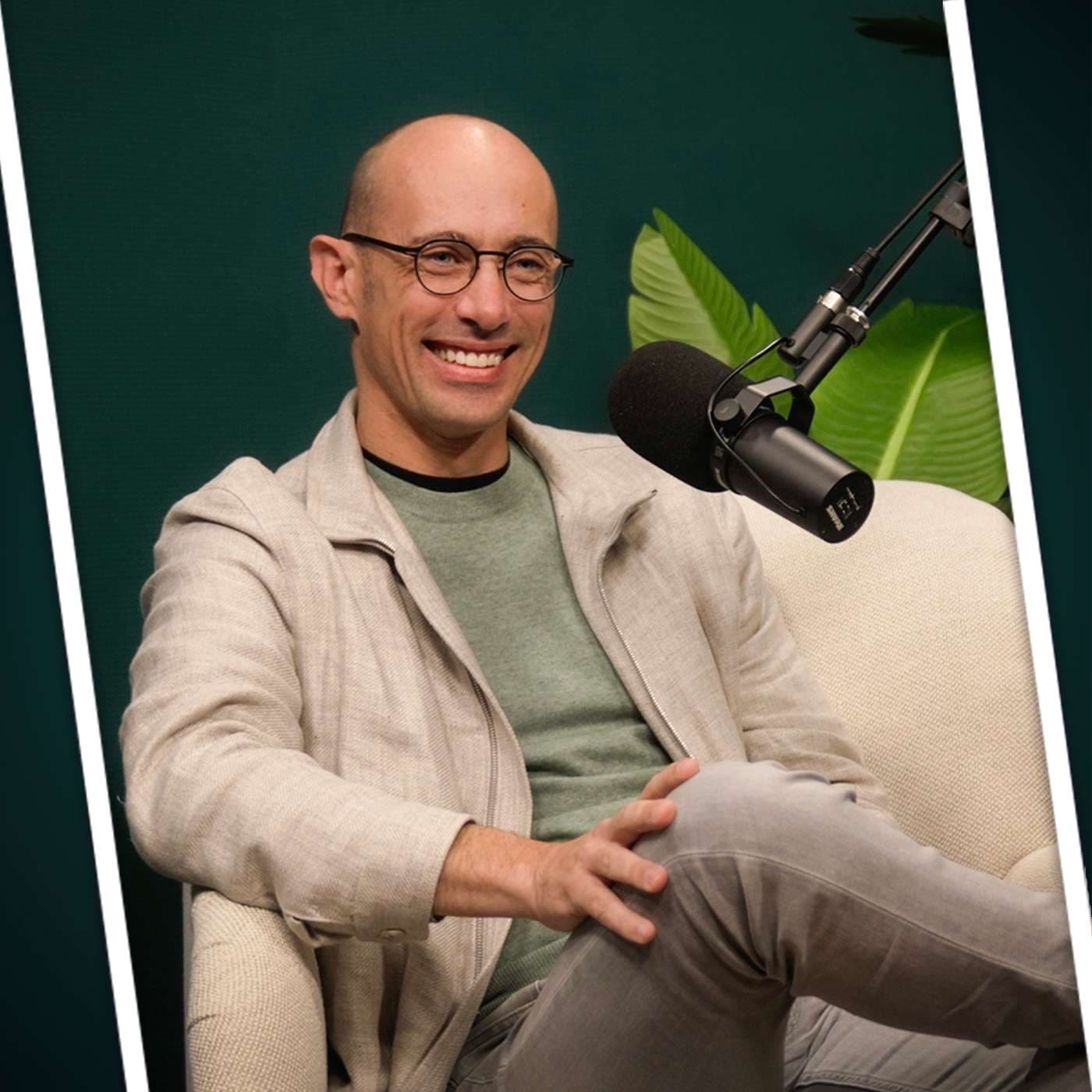

In short
Podcast Summary: ACQ2 by Acquired - Episode with Tobi Lütke
Overview
The episode features Tobi Lütke, CEO of Shopify, discussing his journey as a founder and his reflections on leadership, technology, and the changing landscape of business, particularly in the era of AI. Tobi emphasizes the importance of adaptability and continuous learning, especially in light of recent technological advancements.
Key Points
- Tobi's Background: Started as a programmer and has maintained a hands-on approach to leadership as Shopify approaches a $200 billion market cap.
- Adaptation in the AI Era:
- Tobi reflects on how AI has influenced his work and the broader tech landscape.
- He spends considerable time exploring AI's capabilities and implications.
- The conversation shifts from Shopify's recent developments to broader philosophical discussions about technology and its potential.
Detailed Discussion Breakdown
I. The Impact of AI on Leadership and Business
- AI's Role:
- Tobi discusses his daily engagement with AI technologies, indicating a shift in how software is developed and integrated into business.
- He emphasizes the need to constantly evaluate new AI models and their potential in improving business processes.
- Philosophical Reflections:
- Tobi shares thoughts on how AI handles tasks that were historically the domain of humans, questioning the implications for future work.
- He encourages a mindset of living in the future, suggesting that leaders should be proactive in adapting to change rather than reactive.
II. Shopify's Evolution and Financial Journey
- Stock Price Volatility:
- Discusses Shopify's stock price fluctuations during the pandemic and their effects on the company's and employees' mindset.
- Tobi expresses that during the stock's rise and fall, the company continued operating based on its actual performance rather than market perceptions.
- Leadership Principles:
- Emphasizes the importance of updating leadership styles in response to changing circumstances.
- Considers the role of a CEO to be dynamic, where adaptability and acceptance of new information are pivotal.
III. Reflections on Company Culture
- Constructive Consensus:
- Tobi contrasts consensus-driven decision-making with leadership-driven approaches.
- He advocates for clear decision-making structures where leadership takes responsibility while still valuing input from team members.
- Building a Resilient Organization:
- Outlines how Shopify aims to create a strong organizational structure that can withstand external challenges.
- Discusses the hiring process and the necessity for aligning leadership with the company’s core values.
Key Takeaways
- Adaptability is Crucial: Leaders must be open to change and willing to adjust past beliefs based on new data.
- Embrace AI as a Tool: Companies should use AI to enhance productivity and not shy away from its capabilities.
- Leadership vs. Consensus: Effective leadership requires a balance between making decisive choices and incorporating team feedback to build a strong culture.
- Long-Term Impact: Reflecting on the future and minimizing the gap between one's potential and reality is a valuable perspective for leaders.
Conclusion
The conversation with Tobi Lütke offers deep insights into the intersection of technology, leadership, and company culture. His reflections highlight the importance of adapting to the rapidly changing business environment, particularly with the emergence of AI technologies, and the need for leaders to be proactive in shaping their organizations for the future.
---
This summary encapsulates the main themes and discussions from the episode, providing a comprehensive overview of Tobi Lütke's insights and experiences.
Written by AI. May contain mistakes. Listen to the episode to check what was said.
Transcript
Automatic transcript. May contain errors.0:00Hello acquired listeners since we did our episode on Shopify six years ago They have turned into a giant public company. They went public in 2015 for less than 1 .5 billion dollars very cute by today's standards they're worth nearly two hundred billion dollars now and doing about ten billion dollars a year in revenue We've got an Otobee in the team pretty well since then and Toby is an incredibly unique thinker We were originally thinking let's do an ACQ -2 episode on Shopify's recent developments sort of everything that's happened since Which ended up turning more into a philosophical conversation about the state of computing how AI changes everything and what's possible to build in the future because of AI Yeah, we also got into some of the more insane moments for Toby as a CEO over the past few years like when the company almost became a meme stock going from trading around a 20X revenue multiple before COVID up to 70X, then crashing back down after COVID and SERP.
1:00Today though, they're nearly back at an all -time high, but this time because the business and the revenues are actually doing great, not because of a COVID and SERP -fueled bet on the future. Yes. So please enjoy our conversation with the founder and CEO of Shopify, Toby Lutke. Where have you spent a disproportionate amount of your mental cycles in the last month? It is a privilege of a lifetime to be part of another platform shift and man like it's just every single time I think I have my head wrapped around it. It's like it's remarkable how quickly one normalizes to completely futuristic new things, peering.
1:44We are all kind of like, yeah, I guess I can just paste this into chat GPT and like ask it questions about it. I'm still hung up on like, where software that Noon wrote and I have to interview it to figure out its capability. So my time is like really just interviewing, like these, like new models are coming out for their capabilities and trying to figure out how to make them idealize non -judgmental teachers for people. They keep getting better and how to create structure around judging new models for their capabilities. Thinking out wherever edges are of what they can do right now, but also make it so that I can very quickly retest any new model coming against those edges to figure out if we've crested another.
2:30Do you have your own personal test harnesses built to try to understand capabilities? That's exactly it. This is what I'm describing, but are you nailing it? Like I know, I have a, like a Toby Eval, they're like, it's like, it's like a little, you're a foie gras of prompts with expected and judged results. And I'm like, I run it against every model. Like at some point I'm like, yes, I have these chats and I have these standard questions. And then I sort of make decision based on this. I can write code that does this for me and run this against every model. And like it's just like, it's funny how you're thinking of what is while engaging.
3:05these tools. This is not how I would have approached this before, but speaking with a lot of machine learning experts, this is how they have been doing this. These ideas of building eValts, they are called. That's not a term to most people, and it's a niche product of the machine learning world, because it's essentially just batch jobs, which just drive the same thing over and over again and then judge the results. Yeah, I know that there's unit tests from my... Yeah, exactly. So, unit tests were around, like kind of a revolution in early 2000s, end of 90s. I remember when people proposed automated unit tests as a thing.
3:48And I talked a few before about my wonderful master, where I did my apprenticeship with at Siemens and he always said like you have two years to develop software after you start and afterwards it's like someone puts cement into it, right? Like you're never going to change it again. And that was like, that was true in the 90s. That's how people thought about software. Software engineering was like simple engineering. It's like you build the bridge, the bridge is done. Exactly. It was an end date to it. And then if you wanted to evolve it, you rewrote it, right? Like you know, like Windows was a rewrite every every every major version was actually start from I mean they took some with it But like it's mostly stuff and scratch software evolves forever.
4:32I mean, I still can't really explain why BitRot exists Like why does a great piece of software is really really bad like a decade later, right? Like it's like it doesn't change we have changed right? Oh expectation of change maybe you but like As soon as the new iOS is announced the old iOS feels like garbage right and it's not that your phone got slower and it's not that those UI paradigm sort of expired. That's right. And I see this really vividly. It's such a good example because I do always product reviews. And I'm also like, I mean, it's such a bad thing to do. But I just, I physically can't restrain myself from hitting that update to latest beta button when it appears anywhere.
5:13But it's just like, I cannot. It's like, there's a sirens call. There's no amount of... Do you run beta in software? First version. Like I just, I can't, I can't not. And I'm like, and I have a single phone. And I'm like, I'm just gonna, I find all the bugs that are waiting for me as interesting constraints that I can like, uh, play with. You know, just like, my apps don't crack better than you on speed dial. You're like selling them screens at. So no, no externalities. I'm just like, I own it. I own my own problems. I am going to the first developer beta. And if five of my apps that I need every day don't work, I use it as delightful opportunity to learn about new apps.
5:49So it's just like you're a public company CEO and sometimes your phone is just randomly crashing. This just doesn't work, but that actually is avoidable and but not for you. Yeah, it's whatever consequences and this is why Toby is special. So anyway, it's just like live in, you know, as much as, you know, I always just updating to a new UI paradigm called liquid Glass, which was very much maligned right off a bat by people and something so much rightfully so in some instances. But to be fair, Apple has an uncanny ability to figure, like, introduce things that afterwards seem that was clearly the right thing and actually haven't, like, it's not even clear that they're better.
6:27It's just very clear that they make everything else worse. It's induced bit -wrote on everyone else in a way. And it's like, just, so I've been living with this changed UI for a while and I'm in these product reviews with my own teams. and we're looking at designs which are clearly sort of good designs in the context of the world that we are now leaving in a way and it's incredible what it does because I'm like, hey designers, I know you need your own betas. You need to design for the device as it will be experience by people in the future, right? And so I find that is just like the biggest job that I personally can do for the company and then my company can do for my customers, which is like living everyone else's relative future.
7:20You don't even need to predict the future that well. If you just live in everyone else's future, but really it's just a couple of high conviction, high courage, update to beta clicks. It's not that hard to live in the future. It really isn't. Yeah, exactly. You just go experience, you know, develop taste for it, and figure out how to make your own decisions. And this is, of course, extraordinary to making a sidekick inside of Shopify, and like having the AI assistant, which is now like massive. Yeah, okay, so yeah, it tells about that. And like, back to BitRod, I mean, what I was going to ask before, a lot of code is now not written by humans.
7:57and it's trivial to just be like, yeah, update this, make this better. What's going on in Shopify? I mean, exactly. What an incredible change. Code used to be by far the most expensive thing and to produce, right? I think really, really good code for lot -bearing things is still exactly like this. But around the margins, there's a lot of a kind of code that glues together inspired infrastructure is can now just be treated as like a first draft for something. And I think that's actually extremely healthy. Like, this is a property of almost every great piece of software. There's a thing, there's a very clear split somewhere.
8:34There's a layer, like the Linux kernel needs to be developed in one way. And then the Linux operating system is like, just use the kernel's infrastructure and pretends like every computer is the same because you don't, you can, like it creates a pretend world that's easier to reason about so that then the software can be implemented. abstraction. It's a beautiful thing. Yeah, abstraction. But inspired abstraction, abstractions can also be bad because like abstraction is just another word for pretension. It's pretence, like everything that abstracts something just pretends it's different from how it actually is.
9:10And so abstractions can be incredibly powerful and there's some one could name which I have to like really stood for test of time. But a lot of abstractions are lossy abstractions. They actually pretend the system is something is a lot less powerful than what it actually is, which really, really matters if you evolve things on top. And then you end up on this tower of abstractions. You sit on top, you want something for which you actually have to go down here and connect. And then you have this spider web of cables left and right. And it's all spaghetti and in -bend. This was the world of to make it concrete for listeners.
9:49is the right ones run anywhere, mobile idea, where, oh, we'll just cross compile to all of the different phones back in 2012 or so. Phone, app or Samarins. Yeah, and the abstractions ended up being too lost where you didn't actually have access to the capabilities. It's the HTML5 debacle of like, okay, we'll just write for HTML5 and it'll run like a native app and you know, it's like, no. Yeah, and you know, very good software companies believe that to be the way, right? Like hybrid applications, since we have all the rage in the beginning, and remember the phones were really really slow back then.
10:21The phones are insanely quick, and even today hybrid apps are not that great. So, you know, Facebook or if I famously was all in on this idea and Xamarin is a good example. So there's a lot of these kind of picking the wrong abstractions early, really constraints the, what you can do on top. But in very often, when abstraction is wrong, it means you can't actually reach great software anyway, more, you actually pretend it the world is simpler, but like you don't actually allow all the most lot bearing pieces into this pretension, a pretended world that are at some point required to make a software just really, really good.
11:03And so again, I'm a tool maker, right? Let's keep beating on this summary and thing that no one's heard of, but like just I think we've described it enough so that people might have an idea for what it might be. Just imagine you'll use very bad software and the team that started the project decided early to use submarine and then they never had a chance of making this as good as all the other things you really appreciate on your phone due to this decision no matter how good they are. It's like building your house on top of your kitchen table instead of on the foundation of your house. That's a very good analogy.
11:31It's you can't be there early decisions that will constrain how good you can make something. In our parlance at Shopify that means certain ideas, certain abstraction, certain choices bring the ceiling down. As in, like, if you have a scale from one to 10 of how good something can be, 10 is the class masterpiece. And one is like horrible. What you hope to do is that you use abstractions to make it easier to which to to to reach a good number. It brings the floor up. It's at least this good, right? That's what most abstractions do. And from business value, there's a lot of businesses choose tools to make it at least this good because that is sort of a passing great, right?
12:14Like it clears the hurdle. Why would any customer use Shopify? It's like, well, okay, I could go build my own e -commerce checkout payment system. My store is going to be at least this good, even if I do zero customization. Right. Right. Well, if you set out to do your own, like from scratch, and this is not your core business, what you get back might actually be like completely underperforming what you wanted. Right? Like, so you can't even use it. Not maybe. We'll be. Yes. Very, very likely. And it becomes one of us ever like dev -march projects that you just poor resources in. It takes incredibly good people to rescue a bad project, which is like hard to even convince good people to do this.
12:55And this mister. Yeah. So you end up in this world where, you know, so bring the floor down is what people hope for. What a lot of people miss is very often the same systems bring the ceiling down. And so what you are like trying to do as a toolmaker, as an infrastructure builder, as a product maker, is you want to make a tool that brings the floor up significantly, but doesn't constrain the ceiling. And that is extremely hard. I think it takes, sometimes it takes, it might not take decades to build it, but it does take decades to build the mental picture to really understand all the aspects of a problem domain.
13:36In such a way that you know, you have to look out on five corners to know, am I going to restrict some of the potential with making this sort of choice that's here ahead of me. Modern operating systems are wonderful. They don't usually lower the ceiling. You can build any amazing piece of software on top of Windows, Linux, and OSX now. We figured out how to do this because we have been building operating systems for a very long time and they will clearly attempt that we're wrong. You know, there's many such spaces, e -commerce software being being being one of them, like we're just like, yes, we want we want to build something that works like this.
14:14However, it also matters how likely it is. Like what is the distribution inside of the users office system of who people who hit 10 out of 10 versus like, if your floor is 7 out of 10, which is really good. Is everyone clustered there and one or two people managed to take it to the story tides? That's also bad. And again, this is why I think AI is so exciting because I think it's principle ability is really to help massively shift the sort of scatter plot of where people end up as compared to their own vision. I want people, if they have like whatever their vision is, Unencumbered is a 10 of 10 on this scale.
14:54I want them to hate it And I just like if they don't there needs to be good reasons and ideally their own like Choices they made may may mistake maybe their products not good not that the platform can strain them into not being able to make something great Computers should never to constrain people. It's like this is not their computers So the computer is to get people to build things where they could not possibly imagine and having soft otherwise. It's like, this is like, this is for sorting, this is for ordering. Like computers are there to make humans better, never to constrain what humans can do.
15:24What does that look like from a product? I can imagine, but what sort of products are you building that take advantage of that? Usually when it is a 10 or 10, very often people are working with experts. Some people will really dedicate themselves to really, really understanding all the instant outs of a really complex piece of software. In many cases, that's the only way we could get where although I think the role of software is to minimize the need for this kind of thing. We want to make it approachable so that people can sort of, again, accomplish your initial goal, get online, have a checkout, be able to sell the product that they've spent a lot of time with.
15:56And if they have additional time to invest, be able to start because of his head climbing. So now, like, you have an AI you can ask. In fact, we are going to increasingly ask you what your goals are, or at least I would I would try to find ways to deduct that from what people are doing with a software or just straight up ours. My theory is that people are very happy to tell us what their goals are. And a lot of software just doesn't do it because it can't action in it, but maybe it has a, we could put a to -do list there and help you with a record keeping, but it can't be, we can't do anything about it to do this before AI.
16:37And now again, with these agentic flows, we increasingly can. So yeah, like in like I think the way to get to 10 of 10 is just like really sit on the same side of the table Have and like we have a intake we you very naturally tell us what you're trying to accomplish and then we can show you Here's what a prototype would look like of this idea that you have and just like Also implement just these obscure best practices, right? I've spoken with one of our customers. They're selling rocks and and rocks. Sorry, rocks. Oh, rocks. Okay. The woolly stuff on the floor. Yeah, yeah, yeah. Like beautiful carpets, really.
17:12I should use a word carpets because that books better with my accent. They were just not making progress in for Europe strategy and kind of about to pull out and then we used some tools that we wrote out not really knowing what it would be used for to just change the pictures. Like literally just update the images of all their products away from Mali Boobich houses to provision apartments. This was not a new photo shoot, this was actually just like, do this for me. Wow. And this is trippin' because four years ago, three years ago, this would actually technically not have been possible to do. Now, it's about the most boring thing you can imagine, right?
17:51Like, this is how much of a world has changed. I mean, in the minimum, it would have been like, okay, let's book a photo shoot in Paris, and let's like, you know, yeah. Like, I'll locate some capital organization, like, it's need someone attention, probably someone's product there, Exactly. And so now this is just done and like this has proven out and again I'm sure they don't run beasts. AI changed prior pictures now in production. I'm sure they did for shoot afterwards. But they also discovered something over their business which would have been entirely obscured to it. But this is a applicable lesson across the entire platform and something can absolutely help very small business that don't have the resources to go reshoot over pictures.
18:31And then shoot, the stuff is now so good that you probably don't need to do the shoot. Even if you are the biggest business in the world, difference is undecernable. Yeah. And you know, like, when you talk about the biggest business in the world, they operate like this. Like, Akira does not... That is... Akira Kellogg has no photos in it. It's all renders. They just like, they create really, really good versions of... car commercials are not videos of cars driving at the renders of the cars. Yeah. And you only know because the professional drives on on closed roads has disappeared, which was required before.
19:07Right? Like so that just doesn't they don't need to show this anymore because I hadn't noticed that. Like there's no one actually driving. It's the giveaway. Yeah. Yeah. So I think the way this really like hits for me the most is again, I grew up on like all the cipher books that everyone my generation really grew up on or many many did anyway. They're sort of like very optimistic but also far future like Azimov and so on. What's your favorite by the way? I'm my favorite. That's actually, I think snow crashes my favorite. And Neuromancer is a recently revered Neuromancer. It's a really, really good book.
19:44In so many cases, especially a high -end line in this, there's usually a catch -up chapter. Here's how we get to the starting point of a book. And one of the events is always in 2021, 10 V pass for touring tests. And like there are celebrations in the streets, and then something turns out usually right after, like to set the stage. And you know what, no sci -fi offer, dared to predict, is that the touring tests just pass us by. We just blow by it and nobody noticed. Yeah, it was on. There was no New York Times front page article that we passed the Turing test. There's no, it's not even like the tech community was exploding about it.
20:30We all were just like, oh yeah, we're in the gender of AI right now. Yeah, if you just can't tell. Clearly, GPT 3 .5, which is like, it's significantly worse than something you can run on your phone right now locally. Like pass a Turing test, a flying carless, and it's crazy. Like this is the craziest thing about the actual world. if you think about it. It's interesting that if I maybe I'll take back my previous comment, what was actually happening when we passed the Turing test and no one cared, was we were also focused on, oh, is this the path to AGI? I kind of wonder if AGI will be the same thing, where we do actually achieve AGI, but we'll all actually be talking about some other future milestone that we're wondering about.
21:10I think humans are incredibly good at moving a go post. It's like there's some kind of expectation -related version of hedonistic treadmill that we sometimes talk about, which is like just like it moves forward. It's where we are just, we are just to our circumstances incredibly quickly. And so, I mean, almost everyone listening lives their own dream life from many years ago, right? Like people are accomplished with goals and we kind of never stop to think about it. And I think this is like, it's really, really hard for us to judge our, our own environment and what's going on around us. So I think, you know, like on a societal level, this even seems to replicate.
21:51And again, the Turing test was one of the best takes we've had and people can, like now people criticize it because it's not good enough because I suppose it wasn't. But like it was still the best test that people generally refer to about figuring out if something is intelligent and deposit and there was no parades, no page news. No take a tape parades. It's like it's, you should have. It does seem though that there are a few CEOs of which you are one that noticed this and you're behaving, you started this whole conversation by saying you have the privilege now of living through another platform shift.
22:35I don't think the world is quite realized that it's platform shift. Yeah, but I wish people would. And I wish people would like sort of see in the remarkableness of it. Like it's just like I don't, like I don't know if you've ever done this. Like I mean, I love the VR Google Meta Quest and so on. I use it more than most because I use it for like racing simulator preparations and so on. It's an incredible device, which also like we are was another one of those things which we thought we would get at some point and then it came and like it's kind of like they are people use it sometimes for like their fitness workouts or whatever it's just like it's a like it just folded into the ambient world at least for some we take it wildly for granted that that technology is cheap and plentiful to it yeah exactly 299 dollars or whatever like for like a remarkable device right you know augmented reality like also something people talk about you can buy them next week like it's just like the event next week after we film this and then afterwards you can just purchase video.
23:40Yeah, yeah, yeah, yeah, the meta glasses. Yeah, yeah, yeah. That's amazing. And so that's all around us. And you know, one thing that really struck me is when you play with a meta quest and with the VR goggles, there's one game which I really highly recommend people. There's, it's called Job Simulator. Have you ever encountered Job Simulator? Okay, you have to try it out. The job simulator is a sort of satirical take of like a, it pretends to be in a far future in various museums where people go to figure out what the job was. Yes. And it starts you on a cubicle and you have to turn on the computer and you have to turn it on, you actually have to plug a power cable into the wall.
24:26And it's like otherwise it doesn't work and you just think it's broken. And it's so wonderful because it plays on the future historians and robots kind of getting details wrong. I actually think it's profound and actually brilliant commentary on the world. But I think what I did with this nail is that I think we will have VR simulations of these times. I think we do, I think this is go -nage of humanity right now. I think it's the end of the beginning. And so I think we will, I think people have a thousand years, will study these times the way we are studying Cicero's times of our end of a Roman Republic and as a significant part of history.
25:15And because it's kind of where we figured ourselves out in a lot of ways. And yes, there's a lot of people look at, you look at the news with lots of... There's a lot of current affairs and bends. I think they will fade out behind simplistic terms. Obviously, they will drive in any kind of time doing great change, but it's so unmitigatedly good. It's like there's so many things we have here, bringing to a world these gifts of incredible technology and progress that are coming rapidly, that are all kind of the types of things that are going to make individuals the vision so much more agency, which is like the thing that is always at the top of a funnel of anything that people truly care about.
26:03Like everything that people really love, all the products of experiences, other people that are things that people thought for. The results and the residue in a museum of, it's a museum of other people's passion projects as John Kroes and Portard. Such a good word. So it's such a good word. I think that is probably the best tweet on my entire X platform. It's like, it's so good. Well, we'll like to it for listeners who haven't seen it. The, I'm sitting here thinking, if I could kind of describe your life, you started a company in the previous technology era, the web era, and then, you know, took it into the mobile era.
26:41You have a family, you have hobbies, you've talked about racing, and the entire world is going through what I think you think is the most transformative change in the last hundreds of years? What should you do with your current life in reaction to that, knowing that you live at one of the most like crucible moments in history when we look back? And specifically, or is my advice? Maybe you specifically and then like generalize it. What should people do if they believe this? I tell you, it sounds like you're interviewing models every day. Yeah, like, once the floating points in them, just to be clear.
Read the full transcript
27:19Like, because, yeah. Oh, yay. You were interviewing a foundational model. Exactly. Yeah. So, a good distinction. So, yeah, like, I mean, he is what I'm doing. I am very much, this comes fairly natural to me. and I think it's a little bit a job for me to transmit some of the awe I feel about the times. Right? I think that what we think of history currently is wrong. And again, the people in a thousand years from now work also going to play 2020 simulator. I'm never going to get this image out of it. Yeah, I love it. They will think about these decades and this time differently, because what we will do in due time is reintegrate technology into our own history.
28:17Our own self -history is one of sometimes decline, right? Like it's we are talking about the Golden Gate Bridge being built in whatever two, three years. We are rightfully saying we can't do this anymore. We are looking at great works and infrastructure projects and our like a great generation of wars and these kind of things. And look at this and say, well, we can't experience a world right now where people build Bethlehem Steel or people build Henry Ford's factories or they are just like physical manifestations of the incredible power of human beings coming together and creating things is sort of manifest for us to see in front of our eyes.
29:05And so therefore, people at Judgefett, we no longer do this. However, we are actually absolutely doing this. It's just the great works are kernels of operating systems, the browser, lots of software platforms, the phones, the incredible advances in certain lithography and the the models that we create and train and the data centers that support that. Some of it is actually physical building, laying the energy infrastructure and the power generation, the power transmission, the building themselves, the heat management, the cooling. Yeah. Less than three years ago, chat GPD didn't exist. Yeah. But it is physically not as important.
29:46So like a data center, I love blinking lights down the aisle, but man, if you have been into a whatever, whatever a binary looks like or a natural gas liquidation plant. It just hits you on a level that is, it requires zero analogy to understand how incredible of an achievement each of these things is. Like the bridges we drive over are like, they're just like, man, this is humans being the best selves creating shaping things, not just like, very often not stopping at utility, but also going for just beauty by itself. Like the ornamentation is lot bearing because we're not just creating things.
30:38So like there's no ornamentation on the outside of it. Like of a data center that eventually will train super intelligence if that were to write. In fact, we hide it. We don't below those on it. We don't even, we try not to be have bond maps. Yes, exactly. It's going to be as obscure as you can make it. So I think this is one of those things in a word that makes sense people are straight. So back to what I want, I love to transmit this because I have cultivated, like every technologist has to, an appreciation for the abstract in the same way that people naturally come pre -loaded with an appreciation for the concrete.
31:18I can look at a piece of software and appreciate it in the same way how I can look at the pantheon. And unfortunately, that is not something that comes easy. In fact, that is, that requires, and it's also probably not the time that it takes. You really have to rewire your brain in a very significant way. People will be able to take a copy of this. Any human can look at the pantheon and be like, yes. But not any human can look at a piece of software Yeah, and say, well, exactly. And we can we even have the thousands of years of understanding about why the pantheon is like we can we can we can we can start with math to tell you why the ratios are correct.
31:58We know we're close in the in the abstract round. We like, we can't describe vice -office good truly. We like, it's taste. It's it's some people know it when they see it. It's something you cultivate. And so it's just abstract and top of abstract. If you build a tech company, you kind of have to do what I'm talking about to yourself. Because again, I see this with my customers. When they, the reason why my customers love building physical stores, retail stores, is because they can stand in them, they can see them, they can, they can judge every piece by like touching it. They can watch their customers come in and like look at things.
32:38They look at, they learn what the first thing is they look at. And how they handle it, do they pick it up? Is it clothing? Does it feel right? And do they put it down? Is that something for them? And they will rearrange the store every day. They hill climb inside of it because they can judge everything. It's concrete. With an online store, it's not. Like, we try really hard to tell you sort of life, how many people there are and tell you stats about it. It's always abstract. It's numbers. It's not real. It doesn't hit us. It even if you cultivate an appreciation for looking at the numbers and looking at stats and become data driven.
33:13If some, if you would do an analysis of how a day went in your mind, while being in an FMRi machine, it would be a very small, it would be neural frontal cortex only that would light up. If you would think about your day in the shop, talking with people, it's the entire brain lighting up. It's just, we don't, we are predisposed to appreciate the concrete, of course. We have this exact thing with acquired. We release an episode. Numbers instantly hit hundreds of thousands and then over the course of months hit millions. And like, I look at the dashboard and I feel nothing. Yes. And then David and I do one in person thing at Radies TV.
33:54Which is a tiny fraction of those people at its league. And it's like my whole - It blows up all right. Like emotions I've never experienced before. Memory is created, nostalgia is created, relationship is created, you're on cloud nine for weeks and you're like, that was nothing compared to what was in the dashboard. But yes, it is so true. And it's like, I don't know how to solve it. And I think it might mean not to solve it, because it kind of depends on, like, it might honestly depend on our hardware at some point. Like it's just like, we can convince our incredibly malleable frontal cortex of anything.
34:29And it can learn to appreciate the abstract. But the lizard brain is not convinced. is the age of VR, the answer, like is the next stage after charts and graphs and tables to like create full, like abstract experiences of people there. Yeah, like this is how many people, if you were standing in your store right now, this is what it would look like as people were shopping. Yeah, this year's Shopify store would be a bit like a... I actually think, I think it will be good better and then not nearly the same. I just don't think it's reachable. I don't know if you can replace it. And I think that's a real constraint and we just have to...
35:10But at the viewpoint that you were saying a minute ago about part of your job and part of the industry's job is to convey that and describe that to the world. Okay, so what do other people, what should other people do if they agree with you that this is this moment of great historical significance? The actual thing I do is I found myself a thing I really really care about and try to bridge from a future to people like a care board. It's like I build Shopify. I try to understand what the future looks like in any trade I in the book. And I want to help before it's going on. And having a task that you care about inside of the change is I think the best position anyone anyone can take.
36:00It doesn't have to be a software company. So much of music is going to change because we can generate quite extraordinary music from neurons directly. That's seen as a threat and similar to how words can be generated with AI in a even more obvious way. It's an integration. What like help everyone figure out, what is like the clearly human part? Because here's a funny thing. There's a couple of The world's where AI has already massively, obviously, math, like the calculator has been there for a long time and the best calculations and fastest calculation are clearly not done by humans and ever since the calculator came around, right?
36:41So chess is such a good example of this, like the best team of chess in every year of the last 20 years has been played by machine against machine. And no one gets a shit. No one, no one, no one, no one. What's your slowest matches? No one looks at, if you know what studies them, about everyone knows who Magnus Carson is, right? Like we actually care not about chess, we care about humans playing chess. And this is the one thing people really do get very wrong here. We need to figure out how to treat what the new capabilities as instruments that we can play. And then explore that space and teach others.
37:21And I think that's going to be the most fulfilling and fun position because it allows you to see yourself in the things that were previously impossible while they are still hard and figure them out, which is always one of the most fun things. And then teach others I can highly recommend it. It is incredibly fulfilling. All right listeners, now is a great time to thank a new friend of the show, Koifen, And it's funny, they're new, but actually I've been using their product for years. My research project for every single new acquired episode involves Coiffin. So when they reached out to sponsor the show, I thought, well, this is convenient.
38:08So Coiffin is a financial research tool loved by both individual investors and financial advisors. Individuals use it for stock research, graphing financials, and portfolio tracking, and financial advisors use it to build model portfolios and create client proposals. They have live market data and powerful analytics tools. So, it's kind of like a Bloomberg terminal, except without the huge price tag, right? Yes, essentially. It's a web app and it's totally self -serve. I've actually not talked to anyone at the company for the first few years that I used it. So, Coiffin is a product that the broader market, like all acquired listeners, would use, not just Wall Street investment bankers.
38:46It's where I pull things like growth rate or gross margins or the PE ratio or revenue multiples for every company We study and you can compare these things over time with historical graphs or against other companies It's often what I use when we're studying private companies too like Rolex or Mars or IKEA to look at the Comparables to estimate what these companies would be worth if they were public They also have a screener that lets you filter across thousands of stocks so you can quickly surface investment ideas Yeah, so the general idea is if you're someone who's used to living in data, you should have that at your fingertips as you think about investing.
39:20Exactly. It's got these great graphs for data visualization wrapped around institutional grade data. So if you want to understand what assumptions are baked into the stock price today, Coiffin is for you. I was about to say that acquired listeners have a great offer, but Coiffin's free product is actually already really robust. Which is what I was using for years. I know, I know. But indeed, for acquired listeners and also for you, Ben, if you go to coitthin .com slash acquired and you end up upgrading to paid, you'll get 20 % off your first year. Our thanks to coitthin. That's k -o -y -f -i -n .com slash acquired or click the link in the show notes.
40:00It's funny. We were talking to another CEO yesterday who is a huge football fan, American football fan. And last year, wrote an AI agent to do his fantasy draft for him. I'd like to scour the whole internet, take into account all the likelihoods to be injured. Yeah, incorporate stuff that people generally like, first he was like, what do people not incorporate in their fantasy drafts? Well first it was what do people incorporate, but they actually don't know all the information. Go great, go and just all that information. Yeah, yeah. Now what are the factors that I think people aren't thinking about?
40:33Yeah, yeah, yeah. And so like one of those was like propensity to be injured like Yeah, that does you're really important most people don't account for that great right an AI agent does that like or if they do They've incomplete information and you could go get more. Yep, so wrote it crushed it, you know like one the league you know all that like This year everybody in his league is using a AI age Yeah, yes I mean so then like you know Well, she shouldn't like NFL head coaches do that too like One thing on this, this like, well, now everybody's doing this thing I've been thinking about is when you really see the full capabilities of the latest thing in AI and you get a demo of something where you get to use something for the first time that you're like, this isn't how I was using it before and this is not how other people use AI.
41:23You think, whoa, I have an edge. I actually can do something that people didn't think was possible. It's become clear to me that even five years from now, people who are successful, it's not going to be people that are making things in an assisted way. Everything is going to be assisted. And so the best people in the world at anything necessarily will be the people who best know how to use these tools. Do you agree that like this is the new bar to be a human out in the world? is understand how to best be a user of AI tools. Yes, but I think for a bigger reason than just the AI tool. I think intensive stability, which even our industry had, like the things were just not changing that much.
42:102015 to 2021. Like, exactly. So that's the time, like I think that entire 2010's decade in tech was, I mean, obviously people will rattle over a couple of things that changed. But like we had the mobile phone, we had the platform, and we just sort of scaled the ideas that all come from the previous decade. There it's pretty obscure but then when things become change faster it becomes very obvious. And there's two groups of people are people who fundamentally have fallen into in love with problems and people who fundamentally are falling in love with solutions. And I think that sometimes like of course the people who really fall in love with solutions obviously then grief if our solutions and become an ideal.
42:53That makes perfect sense. I'm sure it sucks. It's happened to me too. I love computer programming, like low level stuff for just like for no reason. I will never implement most algorithms again because I can just like, when a type of the function name, there's great text already and I can hit top and then it's implemented. And sometimes better than probably my naive first implementation would have been anyway. So like there's some artistry lost and some skills that I no longer need. But again, the people who love to solve problems are the ones who are just so enabled right now. And I think everyone starts there.
43:31No one is fault in love for solutions at the beginning of their careers. It's that you can't. And so I think people need to remember how they got to where they are right now and realize that this is just a bit of a classification of who we were and we need to take a step back and realize probably life was more fun when I was walking around looking for how I will do my craft, right? Like how I will do my thing. Like this even gets so far, like even in a corporate world, like jobs, job descriptions, like job titles. But we've gotten incredibly, we are almost pushing people into this, like, into falling love solutions.
44:17Like, you know, you're a sales operations expert, right? Like, what is that? That's a title for a particular way how companies end up solving a particular operational problem ahead at some point. What you actually are, like, is like, you're an amazing human being that got hired into company and the company wants you to add as much of what you've got to the mission. Right? And like clearly you can zoom out. Everyone does this when going out with friends and venting. Right? Like it's just like you're talking about how the place could be better. Well, forget about the title. Like let's figure out like how can you contribute?
44:59Like and everyone who's like really immersing themselves in these tools, I send a memo to my company the, like, and we set the expectation that, like, we require that people reflexively reach for AI now. And we require it because it's unfair not to because the people who do, otherwise going to be with people with sequester, all the best careers to themselves, right? Like, and I think it's fair to tell everyone that that's what it takes. I'd be clear for everyone who didn't see or forgot the memo from, like, just a couple months ago, but it feels like a few years ago, you're now required in Shopify to use AI as your first pass at everything, right?
45:41Which was controversial when you sent it. Yeah. And now seems obvious. Exactly. I didn't think I was sending a therapy or a controversial message to begin with, but then someone told me that it's like being leaked in bad faith. I think so and then I just like posted it. So I think but quite well, at least there. I was surprised how many people cared about that. And because it says a couple of things, if you're beginning a project, you say I to prototype it. And then if AI is really bad at prototyping, it makes fun of AI. It's not about what you make with it. It's what you did it. Because it might surprise you.
46:20And also, very earlier in the conversation, we talked about evils. If AI is bad at the thing that you are said to do, Now you have an evil for the next AI that come on coming out. So you building your quiver of tests. What are some of your evils? Like you mentioned, you have this folder of instructions. What are some of your tests? A lot of this is like things where, you know, like from coding, for instance, they're just like misunderstand a certain prompt, which it had enough context. I like the term context engineering, because I think the fundamental skill of using AI well is to be able to state a problem with enough context in such a way that without any additional pieces of information, the task is plausibly solvable.
47:07That's actually a really tricky thing. And now with a lot of agents, the agents end up being pretty good at figuring out what's missing and go get it themselves. But I think that's a crazy thing about AI's like it can do with. is I think the skill people should build is trying to not require it to do it. Why is this a useful skill to build? First of all, it makes much cheaper to use AI, it makes much higher likelihood of success. But this is really funny. I think it makes you better in so many other ways that has nothing to do with AI. I write much better emails since I became a good context engineer.
47:44I just like, I now realize how much is unsaid in instructions. and why so many things, so much of what people describe in companies as politics is actually bad context engineering. It's really funny because I so often end up doing the, what is the root note of a problem here that we all have? And you realize, after digging one, two layers down, there's just a fundamental disagreement on an assumption about how to do it. What is good? What does good look like for this area? David and I have just finally started taking some things that we previously thought, oh, that's part of the secret sauce of acquired.
48:24And who knows why my neurons fire that way? It just comes out and it's part of the magic. We started actually writing down instructions so that AI can do things that we previously thought were like part of our magic. And it's less magical than you think. We've just never had to actually codify how we do the job before. And I think that's probably a lot of people. We are like, it's a failure of introspection of what actually makes the work that you make good. And once you actually write down your process and have an evaluation framework for what makes it good, it actually is quite executable by AI.
49:01100 % and I don't know how far you're down with Droney now, but there's an entire world that opens itself up to you once you start doing this. because I have this too and we have this at Shopify. We use UnTropix term for we call these things Constitutions, which is maybe a little bit too grand. But figuring out the document that is actually sort of all the things that are not platitudes, where like all the things where someone else, like some other company would plausibly take the other side of. But that's, but those are the real choices. If no one would take the other side, it's plighted. But Teamwork is clearly something that the company wants.
49:45Usually the company values end up being just plighted. It's very funny. So you end up creating a list of these things that you uniquely would pick a side on. The trade -offs that you're choosing. Yeah, exactly. What makes, basically, right on your uniqueness. And then you get in an absolutely fascinating world. Because first of all, you can use it. you can hold up to, you will come to say, okay, well, help me here, the first and the second things you need to know in your, again, context engineer window. But it gets way more interesting when you use, you know, your favorite episode transcripts, you add this and say, what's missing from a document?
50:24And you get suggestions. And you're like, could we have made Costco better in some way? Yeah, right, it's scary, right? Yeah. And so what you will realize is this sort of, this is another hit climbing exercise because this constitution will get much, much longer and you actually will collaborate with AI on it. Because these things are incredibly valuable, just like, you know, anyway, there's so many, it's got so much into the weeds, but like inside of Shopify, there's so many things that can be done, like this. We have product principles that are voted at some point and have since been hill climbing with all the in a loop like this.
51:08And any project in our internal systems now like when it goes into like to review time is like we can run against product principles and and also the principles specific principles against office area. And it's not like some control mechanism. It's in fact, it's honestly just like here is where interesting discussion should happen. It guides the conversation because they often would be fine as the proprincipants are wrong or imprecise or stated too broadly with not enough provisors. And because you want to write for a large audience in generalities, but like when you do work with AI, you can actually say, okay, well, actually, let's write all the statements next to the conviction.
51:49So it's like, Because it's interesting you need deterministic instructions for a non -deterministic machine. Right. Because, yeah, and they are, of course, non -deterministically interpreted in the end. But this is also the beauty of it because sometimes it's like, it tests you. Something that says, hey, this is contradictory and it isn't. And then you have to have a conversation with it about it. And like, you realize, you know what? But that mistake in the way you read that you made probably happens non -zero times of humans too. So finding a more precise version of stating the thing that you're trying to go for, or better examples is also really valuable.
52:30All of us to say, increasingly I find that, and this is why I'm saying you have to interview these things. Like one thing that I really noticed in the latest series of models, specifically GPT -5 thinking and pro is that, you know, I feel like I'm pretty quite asking questions and I can have like I can take these conversations with AI into very, very, very interesting places. I have started now asking the AI what my next question should be. And I get better ones very often. And that's pretty impressive. Because again, it is it wants to predict. And they have no memory very often with all your private conversations.
53:08So they are sort of like, you know, I I probably, when I'm at my absolute best, I ask better questions when I'm at my average. And so it can execute against my, like, against a idealized version of myself. And it's really, really fascinating and really valuable. I have run a keyboard logger and sort of what is the active window and take a screenshot of a window of my machine every 10 minutes, an archive for going on 15 years now. Like it's something I've always been running and just see my own purposes. You have the archive of your daily digital activity of the last 15 years. Yes, yes. Holy crap.
53:54Wow. What do you have to like? Yeah. Nobody has that. I would never have imagined this ends up being as valuable as it is. Yeah. And it's like how Toby became Toby. How Shopify became Shopify. It's basically that. And I know it's my weekend projects are actually just like, you know, running through all of this and putting it together because of course it's dispersed keyboards, lots of noise in it and different formats over time. Yeah, and like every once in a while I use VIM at which point there's a lot of a, like a lot of what's in the keyboard buffer is completely nonsense. Yeah, but like the nice thing is with enough AI tools, you can turn this into pretty clean timelines.
54:34Right. Without you having to write a script that's like, okay, every time I'm hitting you know, Q that disregard. Yeah. And of course, a format change a million times in a row. Missing bits and pieces. And then I have my calendar which I can, which I'm now adding to it over the times and a lot of emails like what I just had us of who I conversed with and so on. And stuff. Do you have that in a repository? And then you can just like, whenever you say like, whatever AI model you're using, like, hey, I need you to make something like Toby we just look at this. And that's what you do it like this.
55:05Yeah. This is exactly it. So I mean, the actual format was I just always turned it into text files with which are like the most lasting bits of artificial. It's the best format in the world because it lasts forever. And now I've been working on doing more and more work on just like analyzing it and cleaning it and adding more things because the value of this is getting incredibly high. I've also been like always doing my notes, I kept them and so like there's their time and so on. So I have a lot of digital artifacts about myself which, you know, again, I'm proud to do this. My initial thing was I just wanted to know what I'm meant to spend my time on in general.
55:47And there were some tools that came out. Like, you time kind of stuff. Exactly. There's like, I forgot the names of them. But there were some tools. But then I've always been like the things directly about me personally. I want to keep on my machine that has been sort of a bias, which probably comes from when I started using computers. So, and these are interesting challenges, right? So, anyway, so I have others. I don't even know what specifically got there. But what's the most useful thing that you found to input that into? I have a period of time where I went from full -time programming to fund raising to to see companies things more clearly.
56:27And just like charting it as a time span in different applications is interesting. It's also like, I mean, from seeing what I typed into what applications like text, a docs and stuff like this. I also like, I can track some of my beliefs changing, which is that's a really interesting experience because it's, I mean, the brain is fundamentally fought to be a backwards -facing narrative consistency optimization device rather than actually chronological data bank. I read a great book recently that described a key element of the brain as the press secretary when anybody asks you why you did something, the book's called the elephant in the brain.
57:08You have this like press secretary that comes up with the rational answer of why you probably did it, but that part of your brain was actually not present at the time of decision. Yeah, and I think that's the way they fund them. The brain optimizes for narrative consistency. And so having some of, you know, just like things I typed, you know, like I, on many issues that face a company, it's just like fascinating. I haven't come to real conclusion, but I have ability to do it. I might be a bit. Slow to really do this study well. It's like, you just have to kind of eat a bit of humbupi. Like it's like - At a minimum, what an amazing archive, right?
57:57Companies have archives, right? And it would be like board minutes. You have a moment - A true source of truth of how this happened. Can I ask, I'll ask you the question, and then I'll give you some context to try to lead the witness a little bit. But what are some of those things that you think you changed your mind on over time that you used to feel strongly on and you feel differently now? And maybe to give the context, everyone remembers 2021. Shopify is like the media darling, you know, crazy stock run out. Multiple goes, I think revenue multiple went from 20 x to 70 x something crazy like that.
58:35into narrative, human brains and narratives, COVID happens, people at home. Shopify. Yeah, right. Does this then does that? And you slowly, you know, you're within, I think you have an internal rule at Shopify, you don't talk about the stock price, what you talk about it here on air, spinning distance of all time highs again. Yeah. I just wanna throw that out as some context, if you choose to adopt it for the answer to the question of what is some things you used to believe that you no longer believe? Yeah, I am. So this is interesting because now I can do like I've been talked about of archive.
59:09I can now go and check this. But like here's what my brain potentially narratively lays out for me is that I was quite I have always seen the stock price extremely different form like I work on the fair market value of a company and which is an unknown thing. But the stock is essentially trying to the stock is a betting market on the fair market value. So it will also lay over the thing. And so I personally didn't, like I felt the company was like, I mean, obviously fits better in the times because now Ecommerce is more important. And I think that it's like actually increases the fair market value of a company.
59:48We basically, it was like we trained for this moment for us. Right? But you know, I even really, really high and I really, really low. And this This is the oscillations over. It's whiplashy inside of companies. But I don't know. I feel like through this I ended up having my convictions were pretty unchanged. The thing that will happen is where I got caught up is there was a bubble of belief that we just had to massively increase the size of a company, the headcount and so on. to deal with this and for that it would be okay to change the hiring standards. But I changed my mind on a lot of things.
1:00:37In fact, I think I changed my mind on every opinion I have if someone shows up with good data on it. I think that's actually really, really important. So can you remember something from the early founder type days before you became a manager or an executive and a leader that you've done 180 on? Like straight up, I didn't believe in leadership. I just didn't think leadership was important. I felt that if you get really good individuals and can point them in the same direction, or even without that, like all the right things would have. And I thought this partly because people really disliked leadership.
1:01:24So clearly the right people would show up. I believe those things are utterly incorrect now. I think people love leadership. Like they love complaining about it too, which they should. And it deserves all criticism and guts. But there's something absolutely wonderful being part of a group that's been let. And obviously I'm not obviously leader, especially outside of shop. I love just being part of a team. Nothing more fun than having someone who has a vision and building something and every hackathon I go, I'm just like, hey, I'm taking a vacation from the leading. I'm just like you tell me what to do.
1:01:56It's so good So you know, that's a that's a distance traveled. That's almost 100 % swing on on this particular issue And the first thing I've shopped if I ever make the same salary right like just like we kind of like Hey, let's not have difficult conversations, but just paying everyone exactly the same We'll figure this out. I mean how long would they go for well like not long But like first 10 people or so I guess I do the same
1:02:23So it's just like, and you know, I think that's, I actually really like this. I know how egalitarian socialists that's coded, but like, I love starting there, right? Because I think that would be cool if that would be a perfect way, a good way of doing it. But like actually rejecting these things one step at a time is actually perfect. Because now you don't have a derivative idea of something. You actually have some, you've ran the test for you. It strikes me that when you started the company, you knew nothing about building a company or a leadership or having anything of this scale. And you had to sort of from first principles go from doing it wrong to doing it right along the way.
1:03:02Where are some places where you found shortcuts where you didn't have to learn it yourself and you could look to some other leader or bring in someone great. And that person actually just had like a whole bundle of shortcut. But one of my most important realizations at some point, I found myself at some point only doing things I dislike doing. And I'd like to think that even the things I dislike doing, I can learn to, I think everyone can get sort of to 80 % of state of art pretty quickly on any topic. But I was just kind of miserable at doing this. And the reason why everything I like doing, I had no problem delegating to other people because I know it's fun.
1:03:45I didn't like doing, I did myself, because I didn't feel like I should ask people to do it. And luckily I overdid this to a degree that I had to edit broke. It's really good to over swing. I find that if something just sort of works, you don't have to counteract, but if something really breaks you, then you would just have to examine the entire picture. And I just ended up realizing everything. I don't like it, someone else's dream job. And that's like incredibly liberating. So since then, I've been creating lots of beautiful dream jobs of stuff that I don't want to do. So people ask me a lot about, hey, Toby, why do you actually still do programming?
1:04:27And why do you find it valuable? I have a mind. I can't find things that aren't valuable fun either. It ends up being the same to me. I do trust that if my mind wants me to go in a certain direction, that there's a premonition that it will be valuable in some odd way and even as analogy or so as like perspective or because I meet people that are just that's probably the successful founder archetype by the way if it's really comes down to one thing I think it's having that intuition where the overlap of things that are interesting and exciting to you and value creative just like happened to be perfectly overlapping.
1:05:06And so for instance the leadership thing a lot of this came from learning an instrument and I really like playing guitar and very bad at it. But like the funny thing then is I got fascinated with music theory and different jurors and I got so much more out of music and eventually it's got to spend some time with jazz musicians who are very high near the top of a pecking order in that world, especially guitar related. it. And so only after I understood how a jazz band works, did I realize what leadership actually is. Because this is where the business world is just incorrect. It's so chain of command.
1:05:49But a jazz band is, you have a clear leader. And sometimes the leadership changes and shifts around. But what the leader does is not, dictatorially, say, what is we are playing and how we're spending our time and what to eat. They just invite other people that have merit for what we want to do. In fact, it may be not even just invite any people and ask everyone to add what they've got to a very basic set of conden - conden - condenctions. So it's - it's gonna be in a key. It's gonna be a temple. It's emerging. It's like the piece of music is being created at the moment. And the next note is entirely dependent on the on the merit skill and taste of the people who are showing up And I think this is the best metaphor for a great team.
1:06:39It's like like a like they're got to be constraints It needs to be in a key. It needs to be at a temple But sometimes even the members of a group propose changes we go to a different core set of course We go to a different key we go from major to minor like people play dissonance to create tension, which is against the rules, to then cause like a merging back of a music, like bringing it back home feels incredibly powerful to everyone listening. And that's mastery, knowing the rules so that you know when you can break them and why. Well, this sounds to me like the definition of a technology company.
1:07:20Exactly. Like Henry Ford couldn't set up the assembly line like this because every worker needed to do the same thing and every card needed to come out the same way. And it had to be any color you want as long as it's black. But like, yeah, software doesn't work that way. Software doesn't work this way. People do try to build software this way and really, really give, like, try to turn it into something that actually resembles what car assembly line looks like after it's created. Like, that's really, really dulled in and like, everyone has like, does one widget. and you get like 2 % out of the individuals that you hired, right?
1:07:57Because they are incredible. They have a lot to give. They have a lot of priors. They give them the room to contribute, but then hold them to it. But you would be amazed how often this happens. I've learned so much from video games about business. Yeah, you talked about this a long time ago. Okay, when you started asking for personal research here, when did you start playing video games with your kids? How did you do it? Just basically as soon. I mean, I think we didn't do screens on Traveyor 2 years old, but she sort of picked, and I don't think that's necessarily even good advice. I think maybe it's fine.
1:08:33Like a 2 -year -old Kemplay video. Like, $1 .4 and it's like, she's just on the cost of a video. So the way we played, so just like the way we played video games was we used an iPad, we were lying on the couch together, and I start Minecraft and they tell me what to build. They point at things, I build them. So that's this us playing video games together. And some of my most font memories because even two -year -olds were just basically just no words. Like letting them choose what we build. Like I played Minecraft a lot before that in various instances. I never built such interesting things as a kids told me to do.
1:09:10like we built tree houses and like things on top of tree, like it's just I wouldn't have imagined this because there's so much creativity there. And so, you know, that's already a small team. Like I let them to be the jazz director of our play session. And I think I think video games like very maligned and like again, nothing is like some of it deserves criticism. But it always question what does it replace? Right? Like in those moments, Since it, I probably needed some downtime. Like, and there's some way for us to do this. Like, I have a tricky job and sometimes I need to shut off my brain too.
1:09:52I'd rather do it doing something together with a two -year -old, being creative, than being upstairs playing Minecraft or so. You know what I mean? Not exactly what I would be playing, but so I think this is a most important question. So we did this very early and then it became much more intensive doing COVID because I was really worried about how cool cool everyone was. I was really worried about the lockdowns and what we would do to kids, especially in that more my boys were in ages where failing softly was just really important for them. You just have to make mistakes. I've gotten aware to a BMM by just having failed more than others most of the time.
1:10:35I invited a like failing at things. I like being bad at things. So, there's just something I want to quote if I'm too, of it being very authentic and making lots of choices for you to stretch yourself. It's so fun. I was so prebiased this way anyway, but my daughter's just at this age she's about to turn four. And even just in the last week, we have a steam deck. I'm previewing my carve out for the next episode. This ongoing saga of David's carve out about. Will he or won't he be the steam deck? Yeah, yeah, yeah. And it's gone from me playing this thing to her being like, I want to move the character.
1:11:12And then watching her figure out how to use a joystick. And the first night is like, it's like watching a monkey try to use a joystick. And now she's like moving the character around. And it's like, whoa, you know. It's so cool. And it's so important to not jump in and do it for them. Obviously, you can do everything better. But there's such an important thing to let them actually...
1:11:35Like... point it somehow to do it better. And it takes a lot, it's so hard. And you wanna short -circuit it? Last night she was like, oh, I wanna talk to these people and I was like, okay, hit the A button. And she's like, you know, which is then to watch her figure out what the A button is. And of course she's just like spamming the A button. And I'm like, okay, no, no, no, no, no, no, no, no. You see her figure? In precise instructions. Hit the A button. Yeah, you see that. You need better context in between. Yeah, exactly. So just like a recent thing is, I'm just lexic to my kids, also dyslexic.
1:12:04And it's frustrating because it just sort of gets you. It makes something so quite harder. In the school, it's wonderful. I'm a middle kid, finally got frustrated with just not being able to type well. I'm like, okay, well, what are you gonna do about it? Let's build a habit, somehow to do it. And then, you know, he was doing a typing trainer, and he was very good at it, but with it, and did it for 10 minutes a day, but man is that boring. So then I went out and like, clearly someone has must have solved this. And so, we ended up finding on Steam a game called, I can't remember the name, but it's like a rogue light typing game.
1:12:44We're like, you're in the middle and like, votes come at you in enemies and you need to type them to shoot them and then you can choose upgrades and like, it's like, now all my kids are playing this type trainer. Even though the other ones don't need the alert at it, yeah. Yeah, like no, like the younger ones also get in good at typing now because they were all like doing 10 things of typing and getting to like, I think, I think he went from 16 words a minute when he started. He's now at like 70, like he types like average speed of most people. And that was like a month. And I'm like, man, how many people think like, I wish I would have learned to type that out?
1:13:19Well, let me tell you, there's a video game, you're gonna fall into this thing and you come out on the other side being an excellent type of. And just like, again, we have not integrated video games correctly into a society either. Like we are just like, we are treating them too frivolously. And as a family who solves problems with choosing video games as a thing that we've done periodically, this has been just one of us, I talk about it, parenting heck. It's like amazing, so it looks super fun. Okay, so I have a, to bring it back to Shopify, is that okay? So I have a company specific or company journey specific question for you.
1:13:52If you're an outside observer to the company, it seems like this mean stockification thing that happened in 2021 is a very consequential event to the company. Then you have this 80 % drawdown. You're in this public market valley of despair situation. What is it like living through that? If you could build a time machine, what would you go tell yourself?
1:14:21Yeah, so like look, this is, it is very hard for me to, I'm trying to like key an interesting answer to almost any question because that makes it sort of, that sort of a puzzle of a good conversation, right? Like how to, how to take this in the most interesting direction. I find this one is really kind of stamping me out there often because it just wasn't that interesting. And maybe, maybe the most interesting thing about what you're describing is that it wasn't interesting in a significant way. If I would have a time machine, I would make, I would tell, I mean, I guess the only thing I would tell, I mean, I surface that I should get like, quickly get the credit rating and the sort of facilities down to do a buy bag, like once it goes down, that would be good.
1:15:05But like, it just like, I would be offered to Nistik while I did. Like, I think that, I love that, spoke it like a true item. It's like, oh, and more of my company. Yeah, yeah, it's awesome. Love this company. That's investment I have in my future. So I don't think it was interesting. I think it was inside of a company, we worked fair market value of a company. It was something it actually didn't go down in this time that the stock went down. Right, like it did not change. So it was all other people. Yeah, everyone in a market are wonderful because people buy and sell and someone buys it with a high conviction, someone sells it with low conviction.
1:15:48If you have a lot more people with low conviction, then the price is going down because the clearing price shifts. And the low conviction is not due to the companies, what the company do very often, low conviction might be just because the vibe changed and because people's conviction that there will be buyers tomorrow changed and interest rates changed. Interest rates changed. Russia invaded Ukraine and every stock moved in the entire market. But none of our companies has shifted in fair market value outside of maybe military contractors. So it isn't that interesting and it doesn't affect, I think, the company a lot.
1:16:30But it sort of hangs over the company, it comes up a lot. And the group I'm sort of usually somewhat upset with is You know sales side analysts who gave buy ratings at these ratings, right? Like it's just like they are the only professionals whose job is to inform the public with good advice and like Telling people to continue buying if companies go to 70 something times revenue like feels I Mean I feel like an asset test for your quality of your predictions, right? But somehow ends up being entirely unproblematic for people doing that, where somehow the fact that they did that and made some people purchase at these valuations, which then lost a lot of money afterwards.
1:17:21on the sales side was probably, you know, Goldman Sachs because they do fundamental analysis and say and realize that this is probably overvalued and sell it to people who then lose their shirt. That feels bad. I want, you know, I love the fact that I've made a lot of money for a lot of people who had conviction in the company and, you know, who purchased Shopify early. I made sure I've the most different thing I've probably done to most companies of my cohort is there and public fairly, right? Like I've had it. It's like over 10 years ago. 2015, depending on how you count, it's like a really Shopify sort of 2006 launched the product Shopify, which really is beginning of like of that.
1:18:03We were public, I guess nine years later from from from there. But like, maybe in decade three, we'll go public. Yeah. Yeah. Yeah. We went public with every dollar that we ever raised still in the bank and Add a Billion and a half valuation right like so Public at a 1 .5 billion dollar valuation. Yeah, yeah, and I and I we did a Shopify episode now that is still not That's a crazy low number by the way Yeah, and I love it because it means like hey, I love the facility of public companies I think it's so, your public, you can participate in your growth. People can buy it on conviction and like I say, I like what this company is doing, I like its positioning and I'm going to put this into my, hopefully tax free savings account for a long time and I am very motivated by building something that becomes of more and more value to the people who have high conviction.
1:19:04And so I love it. I'm the person trying to convince everyone else to take their company's public, because I think it's just like the right thing to do. Again, it's also valuable for a company in many ways. And it's like, again, it's not difficult. It's just like sometimes it's annoying. That's true, but everything is... What do you point about for every jabby dislike there's somebody else who's dream -driven? Yeah, exactly. Yeah. And frankly, I thought we'd put data driven before we went public again, we really got data -driven process of technical company public. And I learned a lot. Again, 20 % of the process was like a fairly sorry for myself if having to do, but 8 % ended up being utterly valuable.
1:19:43And just like every chance you said you said. What are some other things in this 2021 period? Sort of as historians, David and I can't help but zoom in on these moments of a great tumult for companies and see how they changed. So I'm curious, one thing you've shared with us before is that even though everyone's issuing all these buy ratings, you actually felt like we're not a very well -run company, and you actually had to change a bunch of stuff, including people. Can you walk us through some of the things in that 2021 forward period where you look back and go, okay, we're a much more resilient company today because we took XYZ actions?
1:20:21Well, I mean, I'd change the way I work inside of a company because I just felt like I need to, I have special privileges in Shopify history, such as I've seen every version of it, and therefore I have an enormous amount of context. My own context engineering is easy because it's all pre -loaded with every important decision that I've been doing Shopify for 21 years. That's helpful. That helps a lot in product, and it helps a lot in strategy, and it helps a lot in these kind of things. So anyway, during this time, I mean, Harley, who I've been working with for 15, maybe 16 years now is, he's the president of Shopify.
1:21:08He's absolutely wonderful human being and incredible storyteller and, you know, just creates lots of capacity for me to be more internal focused. And I will, Harley, every other executive is more recent now. And it's, it's a combination of things like, it's not because anyone's bad people, but like, with everyone of a previous team, it became a really, really good optimization function to learn a particular way to make me look another way. Like to speak about your area in a way that I was, this sounds really rigorous and good. I probably, not deciding over my current biggest problem, which is the one I want to work on.
1:21:57Therefore, I'm going to look elsewhere. And the thing that COVID did is, there was just no possibility of me being and I'm just getting diverted in attention because I just went through everything. And through every project, it's to work with every team directly. Then something was really stuck in engineering. I talk with engineers and so on. This is how I used to run the company before I got into taking a little bit more of an abstract viewer for company. And so I did more of this and realized this is what I love doing. It's incredibly, It's tons of work, but I would probably do it if you wouldn't pay me for it.
1:22:38Now, it's a lot of work. It looks like this. I have a four weeks, I work for you, every project. We have internal ledger like this GSD thing where every project goes in AI analyzes it against all our product principles. It's really a caulking with gas now. And it's just like building a company that's just like fundamentally built around a certain conviction about how like a cohesive way of how great products are created. And getting to explore if you write about it and finding a figure in this artist is actually a good way to work together is cool. And it's something that is unique to I think founder run companies that are there which are enabled in such a way that like you can really build them differently.
1:23:19Yeah, that was the thing when you when you started the answer of like, well the thing about this period in history was it actually like wasn't that big a deal and it just smacked me in the face that like only a founder led company could save. Because if you weren't a founder, like company, you would have gotten fired. Yeah, exactly, exactly. 100%. That's the craziest thing. Again, I really make a massive distinction. Like founder and companies, ideally we find a different term in companies, even very vicious. They're just so different from more managerially run companies and that more tradition companies.
1:23:48They're just completely crap in so many ways. If you judge them basically just from the perspective of companies. The companies that all have their shit figured out and are operational and all the most valuable companies in the world are founder run or look kind of founder run. Yeah, because there's playbook for majorly run companies and they are better at adopting to the new things because they're fundamentally, again, no one carries the full legitimacy inside of a company, legitimacy is a currency in companies. No one carries a full legitimacy in a company, even the CEO. The CEO just has a lot of input on the plan.
1:24:25The plan carries the legitimacy. But in a minigurally run company, the plan for the next year or years, if you're in a good one, is the thing that everyone differs to, and the CEO is an avatar and advocate for the plan. And so changing anything requires enormous activation energy, where like again, if the legitimacy is invested in an individual, then you can pivot on a dime and the people who don't like this don't work on these companies. So you have like broad agreement on that's a way to work. That leads to bad outcomes often. But like, you know, if the individual was playing this role is very conscientious and it's very open to feedback and like changed mind, their mind, like strong opinions weekly held if better data shows up and so on.
1:25:22It can operate at a quite a good batting average, which makes there were highlights and their accomplishments will end up making up easily for the foreboding side. Maybe it was a done valentine thing or maybe a micmer it's thing. that's why we're, we're, we're, we're, we're recording in Sequoia's offices because my home is under construction. So, so here we are. Uh, uh, uh, but I think Sequoia had a rule or what are their, you know, playbooks of evaluating founders of, um, has to be right a lot. Like that, that's the, that's the judgment you need to make as a shareholder in a founder like company.
1:25:58Like, do I believe this founder is going to be right a lot? Right. That's the right. That's the great. Yeah. Yeah. Yeah. Exactly. That's, that's what you need to aspire to. It's actually, I guess that was borrowed from Bezos, right? That's a Bezosism. I think B. Wright a lot is an Amazon leadership. That's right. I think that's right. Yeah. It's a really good one. It's so to a point. What do you think? Let's draw a clearer distinction between managerial led companies and founder led companies. Because I would argue, you know, Satya is not Microsoft's founder, but it's starting to feel a lot like a founder led company.
1:26:32Or trying to cope with another good example. But this is a thing. So such as my go to example of someone with transcendent, Jamie Dimon. Yeah, right. Both of them have like a disk, maybe it's a bit being good with language, but here's the way I would frame it just to have some term to hang analysis on which can incorporate people in extraordinary individuals like this. I think both of them have given refounding events to their companies. I think they are actually, they have made such large changes with such clear breaks from the past that they are actually other autos of their companies, such as now.
1:27:06Certainly, certainly in JPMorgan's case. We would do the whole thing with the bank one. This is a game. I think also, I know lots of people from Microsoft, like, such I did too. These things aren't as significant as what Warren Buffett did to Berkshire Hathaway. It's completely unrecognized. The whole Microsoft still resembles the Microsoft of old. But it's it's it's it's it's transparently opposite on many convictions. It's like using webkit for its browser, not in explorer. It's it's like it's very propensors, it's more open source than. I mean, Apple is for sure. It's shocking that they've become a great business without owning the important platform of the era.
1:27:50Yeah. Like that was the entire thing that their success was predicated on in their heyday. they don't have that importance now, that relevance, and yet it's still a great business. Yeah, yeah. I mean, you could argue, Azure is actually more of a platform now. I don't know. I mean, this is not the episode about Microsoft. I appreciate Microsoft deeply. And that's full of incredible individuals. And it's like hard to find fault there. It's just such an incredible company and such a storied business. And again, I aspire to build a company that lasts for a long time. So Microsoft has been incredibly successful at this and managed to reinvent itself.
1:28:27It's like, as a second, most favorite company in the world, I think, for you. But it seems like there's, it's interesting to hear you like,
1:28:37include CEOs like that in the Cajun. There's a group. There's a group of, yeah, Frank's looking at better. Frank's recruitment goes to companies and turns them into like sufficiently most of them to be give them refounding events. So I think this is actually an employable strategy. It requires enormous intensity of 42 -bit, but probably not work often. And the existing shareholders handing over the control for someone to, like in a one -way door manner, take the company over. My sense is you will see a lot more of it. I like, you know, one of my executives, Cass, is like going to open door and like again, obviously that story will have to be written about how it goes, but I think that is a business that everyone agrees requires a refounding event to have a shot.
1:29:28And you see more recognition of that coming in, and I think, you know, compensation system even set up to facilitate this kind of thing. So it's $0 salary and it's all based on the stock does well. Yeah, which is, I mean, again, that's a founder type like a compensation, very similar to starting. Yeah, I was either with Jamie Domen of like, I'm going to put half my net worth into this company that I've just joined as CEO. Yeah, that's right. Yeah, like all in this, like people, people underestimate how expensive hedging is. But always to say, so we've come here to talk about of like a founder of the companies and managerial companies.
1:30:12Currently people don't understand how stratosphereically different they are. I think we think that we'll contribute to understanding this in the future. It's because we actually, I think, I'll determine that there is sort of a middle ground here that is sort of, you can get it from both sides. That is like super highly enabled individuals individuals and with an acceptance for things going wrong as long as the balance arcs towards great success is what you want right now the only people who are in a position to ever get their other founders of companies because the shareholders didn't traditionally let them right Yeah, and and so I think like jobs got back there, but wouldn't have if you would have come in as a new hire right like a double So I think they'll find new tools and then I think people will appreciate this now, in a way that they didn't before.
1:31:10I mean, hell, the playbook of VCs used to be step number one fire founder. It's like we've seen enough iterations of the simulation now where you can say, oh, actually, it is worth it to vest all of our trust into this one person. Yeah. And there's going to be plenty of individuals who are not both that trust. Right? So this is, again, it will fail and it's risky and people don't like taking risks, especially investors because again like if open door not isn't working the people who you know made this deal with cars are going to not look very smart. So it's high alpha upside downside which many people avoid but like I think again we will see this being de -risked and so anyway it'll be more common but we're also either we're operating the more and more companies are operating in the technology world, which is going through this ridiculous, crazy platform shift as we talked about the first half of this conversation.
1:32:09And this is the... You have to operate this way. You have to. Right. And this is super important, because we're not talking about a generic. There's no question of where in the spectrum you want to be. If your business is making, is a widget supplier to, you know, general motors or something. It's just operational effectiveness, sweat every detail, frithic tailor, stopwatch everywhere. Being found in the run bay doesn't do anything. It just adds chaos and adds hard to predict quality control. There might be someone hearing this, there might be an industry which is being reinvented right now. Maybe.
1:32:52But I think the default position should be, you want these to be actual companies. This is why I also feel like it's actually better to call the founder on even public companies kind of ventures or missions or something. It's like probably nonsense to try to make that change and make that mistake because they'll never stick. It's like a pretty year process of discovering that leadership is important for you and for Shopify. Yeah, yeah, absolutely. Because I feel like I felt very, very dumb the moment I made this realization. I feel like I've had everything basically through most of my life to make this realization very, very early and it took me way too long.
1:33:36But it's that leadership and consensus are two sides of same spectrum. Like they don't intersect at all. It's like every time consensus makes a decision, it's the absence of leadership. And so I also think I are not enough people know this, and I don't think I still feel like it is a bit of a secret because even in our language consensus is a positive term. It's maybe it's fine, but consensus is always the absence of leadership. No one, like everyone abticated their leadership responsibilities to cause a consensus, to emerge and prioritize the presence of a consensus to finding a best solution.
1:34:24Some people are so clever that they can manufacture consensus around what they would have chosen anyways and operate this way. But like that's sort of the only time these things combine and usually it's you decided one thing or another. So dear alarm bells go off if you start sensing consensus around something in Java even worse than that I actually use it when I don't want decisions to be made like if I if I If you want to put up that you're like, like, Kumbaya, we're all gonna get the room with like I think most companies play too much with Pricing all the time. It's like it's just like causes all these problems with data and like it makes it hard to predict and then suddenly You you you you test discounts and then you cheapen the product because now people are just gonna wait for the next discount and stuff like this I mean, obviously, obviously, things are valuable strategies.
1:35:09But I think people overdo it and make it like full -time positions, changing pricing and so on. And I basically like every five years, I say, okay, let's look at pricing. Let's from first principles, like get to a pricing. If that happens to be the same, we have today. We don't do anything. In other cases, we make changes. And then it goes back into the firmament and we are not looking at pricing again for five years. just because otherwise it's too distracting to accompany. And I used to just forbid it from doing pricing. No, I have a much better way. I create a pricing console. And the console can, if I come to a consensus that something is a better idea, they can then pitch me on it.
1:35:54And it's super easy to say, now I've at this point. And they don't get to a decision anyway. So you have two layers of protection. Yeah, exactly. You're not going to get to a decision and then you still have the beta. Yeah, once you see through Matrix, you can, there's moves become available to you, which is highly efficient. This is like whenever a company tells us that there's a V team forming to look into something, or some sort of like committee, or like what? So it's nobody's job. No, I think that V teams can supervoke. It just, you have to have a leader. Right, like that needs to be extremely clear who's responsible and who...
1:36:28This is the old Apple thing, the DRI, the directly responsible individual. And like it has to have someone's name next to you. is it? Yeah, Apple might be too, but like Amazon is definitely big on the DRI I think, yes. Exactly. So yeah, I'm a fan of making this quite fluid. I think it's like, like I said, I'm going to be a team member in a holiday project. I'm not a leader. I think very often it's It, like if not in commonly the person who is the leader of an area is different from the highest paid person, you're not actually making the choice of leadership sufficiently. It's my, it's one test I apply because default MO and every company is a high paid person is making decisions where this is actually why I take a $1 salary.
1:37:17Like, is that so? Just don't like see. Well, but that, I mean, you benefit by further most of the company as well. of course, and because it's like a can and like it's fun and anyway whatever. What's the term the hippo? The highest paid person in the organization is always the person that's right in right in a room. Yeah, I want to signal that I I've become opinions. I want everyone to give me better ones because that's fun. So anyway, so consensus decision making and leadership, I think a spectrum, if you see instance of leadership, you also saw a company that has the ability to avoid needing to make every one of its decisions via consensus.
1:37:58The problem with consensus decision is on that spectrum from 1 to 10 it's usually a 6 or 7. You just like you buy the way process of making it need for making the consensus you optimize for lack of downsides. So people are almost always better than five. Because they really, like, they don't get the middle, you get like some, the best version that everyone can agree on. It's like back to the floor in the ceiling thing. I'm like, get consensus. I'll get your floor but it'll cram that ceiling. That's exactly what it does. While in a presence leadership, you can hit any number one to 10. And if you're a company that wants to hit 8, 9, 10, What did I try?
1:38:47Then you kind of have to... Rule by Fiat, it's the only answer. Absolutely. More and more terribly.
1:38:55When we're looking at creating the best products and the biggest companies and the most successful organizations, what you are looking to do is create an extreme outlier. And extreme outliers can only be created, pick your term whether it's by an autor designer or rule by Fiat or leadership. Yeah, you know, rather than consensus, outliers come from like a single vision executed by a team of people not an agreed upon vision executed by a team of people. That is 100 % true and this is like very, very, very consistently demonstrated in every area where it's quantifiable how good things are, right?
1:39:36It's just like like I don't think a great book has been written and as a big collaboration between multiple people. It's like books are headed as good as they are because they're always single -author. There's a supportive agent in the editor clearly, but that is a supporting role. This is so interesting, because I completely agree, and I'm like obsessed with our tour -driven things. And yet, we operate a partnership. We're neither of us on the boss. us. Yeah, but we're the way it's a totally different thing. We're a two person partnership. We are one person. I suppose a two person committee, we're like a married couple of this.
1:40:16It's like a fused brain. I don't I doubt that you wrote by a committee. I think you like every single time I see a great partnership. It's when I see people who are actually learned to respect and trust whatever other person like like each other over in which areas they tend to have a bed high up betting average. That's actually true. That's not it. We don't operate by consensus at all. we operate by if one of us wants to do something we do it. We should search our message thread for different EU. Yeah, that's just like any time one of us wants to do so we're both we're both you know founders and so anytime one of us wants to do something we do it.
1:40:51That's just what it is. Exactly, exactly and I've worked very closely with lots of people that were just over were like were a gift for right to overrun me like my like co -founder of shop first Daniel Wainon was a brilliant design chief design officer eventually and he had vital rights over every feature you shipped. And like this was, I made a decision on what was what we were building and I wrote most of the code, even especially because I mean at some point was the two of us only. And he said no to features that I wrote and was wanted to ship because we couldn't figure out how to make the UX code for it.
1:41:26And that was important because shoppers killer feature in 2006 was we had brilliant UX. Like this was, you know, we were the linear of our time with Figma. and it's always been incredibly important. Giving the people who have a highest context and the greatest of all the other aspects of the companies, that's not consensus. That is actually straight -up leadership again. The leader on that aspect becomes that person. And so it's important that you need to be able to realize that. Yeah, I shouldn't listen to this and be like, like, oh, I need to be like Toby and I need to be the leader on every single thing.
1:42:06And it becomes like, that's not the most. I'm not. Yeah, yeah, yeah, I absolutely am not. What I don't believe in is pushing decision -making outwards, sort of, its grassroots or downed organization idea. I also don't believe in top -down decision -making. I believe in pulling decision -making inwards. I create the highest idea liquidity environments in which we can make very good decisions quickly, But we are very clear who's making decisions and who's consulting on it. And this is a thing and we review cycles I talk about are that. We are going to a thousand projects. It is a crazy thing to do.
1:42:42It's like text starts at 8 a .m. and usually runs to 10 at night, three days out of every month. And the follow -ups from this are probably for a weekend. I do follow -up reviews and stuff. It's just like I happen to like working, which is good. And you sound like it. It's like it's good. It's like this is what I want to do and like I think it's It's I I'm doing a thing that I didn't set out to do I'm trying to build at massive scale like a societally important piece of software Like it's like there's a lot of if we subtract Shopify out like like it disappears overnight There's a lot of Countries which would have no GDP growth Second order GDP because of Shopify is massive.
1:43:22Yes, that's the customers. Yeah, it's like it just like plain GMV like like gross profit dollars, like just sales across a platform is like, I think a third or more of a Canadian entire GDP. I mean, if you can... It's like 400 billion kind of things. Like it's just absolutely crazy. Again, I didn't hardly make it so I don't... I think that would make you either the second or third largest retailer in the world if all of that GMV was a green to one retailer instead of the distributed. Which obviously isn't. So this is a highly virtualized way to think about it. But in terms of the checkout that shopperships, it is in the top three busiest checkouts on Planet Earth and at a growth rate that it might end up being the biggest.
1:44:06And so that's a tremendous responsibility, which I, man, I don't operate too much on regret minimization. I actually like slightly different framework where Bezos famously talked about future a red emissation. What is the nuance? I'll get into that because of fun. But it's my biggest regret would just be like, hey, I didn't take it seriously and like responsibility seriously enough. I think it sucks when people use bad software. I think it sucks when anyone's underperforming their own potential due to tools. I can do so much here. So of course, I'm dedicating myself to this kind of thing. Very early, we talked about fund run companies versus managerial companies and how in management, like a CEO is being fired when results are bad, which I think is fundamentally, but that's multiple levels of wrong.
1:45:03But like the way to judge a CEO is like out of what opportunity did you carve what company? And maybe even for what reasons. And you know, like you look at something like you know eBay, which by rights should have all of commerce on internet, right? Like they were there first and had everything figured out on PayPal. Like, incredible business model asset like. Shopify does not own. Right. It's like they had the entire thing in the PayPal acquisition, like think about the stuff. It's like Peter Teal coming in, Elon Musk, you know, Max left Chen and like a million others besides David Kahn. They started YouTube.
1:45:45Yeah, exactly. So it's like think about a talent density. So from that moment, what's eBay now? So not that. And so, I mean, you can even play this is the craziest thing. You can even play that game with Microsoft, right? Like it's like, obviously the courts have now said that Apple can charge 30 % on all the economic activity on top of platform with, you know, some emerging providers and maybe We covered that means Microsoft could have done this with a PC. They got an antitrust over shipping of web browser, which is so insane. If you think about it, what they should have done is had an up store and charge 30 % of little of money on platform right now.
1:46:29What kind of trillion dollar company would that be? Obviously, I'm not advocating for this particular reality. They're glad this didn't happen. I think maybe entire all of the player's earth is off better because of this technology. Well, we have a bit, Ben, you have your theory that every great company has latent economic value within it. Yes. Chooses not to explore. So, potential energy. 100%. So, out of what opportunity did you have? What? It's actually the right question. Of course, much harder to judge, but at least for purposes of every CEO evaluating themselves on the job, that is a question they should ask themselves.
1:47:07So, it's certainly the question I asked myself. Okay, give us your version of the regret minimization framework. Okay, well, I mean, so I do agree with it. Like, in general, I think it's just lossy and I think it's much enhanced. So the way I, before I knew that was the way, Jeff talks about it, I always, somewhat, maybe more sort of philosophical. I just feel at the end of life you meet with people, the person you could have become. And so you, I think work in life is try to minimize the difference between that person and who you actually ended up being. So that's certainly what I do. I think one ingredient in this.
1:47:50So there one more time. Is it at the end of life? At the end of life you get the, essentially like the game over screen is like you get this, like you get to meet with person you could have become if you would have the best version you could have possibly been. been. And I think your goal on platter is to minimize the difference between that potential. So again, this is not, I don't think this is a truth of any kind, but it's a very, very valuable story to believe and sort of a thing that I get a lot of value out of. I think one of the most important ingredients is not just think about future self regret.
1:48:28Don't think about what you're at a deathbed you would have wanted to do. You need to consult you in a 16 year old too. This is so important. We live in such amazing times and we have accomplished so much. Many people, like everything we currently have is something that we dreamed of at some point. And it's important. That's the perfect place to end it, couldn't agree more. It feels like such a cheap way to make better decisions, but I wish more people would do it. Yeah. Well Toby, thanks for doing this with us. This was good fun. Love that. It was great conversation. Thank you very much. Thanks for your platform.
1:49:03I'll keep saying this, but I love your podcast. So great work. Thanks for letting us be a fly in the wall on your own discovery journeys on restored companies and people. Thank you. Next time we'll see you next time.
From the publisher
Tobi is one of the most thoughtful people in the technology industry. He's also one of the very few people who started as a programmer -- just trying to solve his own problem -- and still runs his company as CEO today even as it approaches a $200B market cap. Tobi has done this in two big ways: first, a willingness throw away his past beliefs in the face of new data, growing into the leader the company needed. And second, by remaining a close observer (and participant!) in how new technology emerges that changes what is possible.
Today we talk with him about both. The first half of the episode is about what has changed for him in the AI era. How he spends his time with AI throughout the day, how he thinks about what AI unlocks philosophically, and what he thinks the impact will be on all of us and what we build. The second half is more about Shopify. How he dealt mentally with the explosion in stock price in 2021 from a 20x revenue multiple to a 70x revenue multiple. And then, what he subsequently did when it all came crashing down. We also talk with him about the leadership and product principles that he's employed to steadily grow the company's revenues to an all-time high today.
Links:
Sponsors:
Koyfin: https://bit.ly/acquiredkoyfin
