
In short
Podcast Episode Summary: TSMC Founder Morris Chang
Episode Overview
- Podcast Title: Acquired
- Episode Title: TSMC Founder Morris Chang
- Release Date: Spring 2025
- Hosts: Ben Gilbert and David Rosenthal
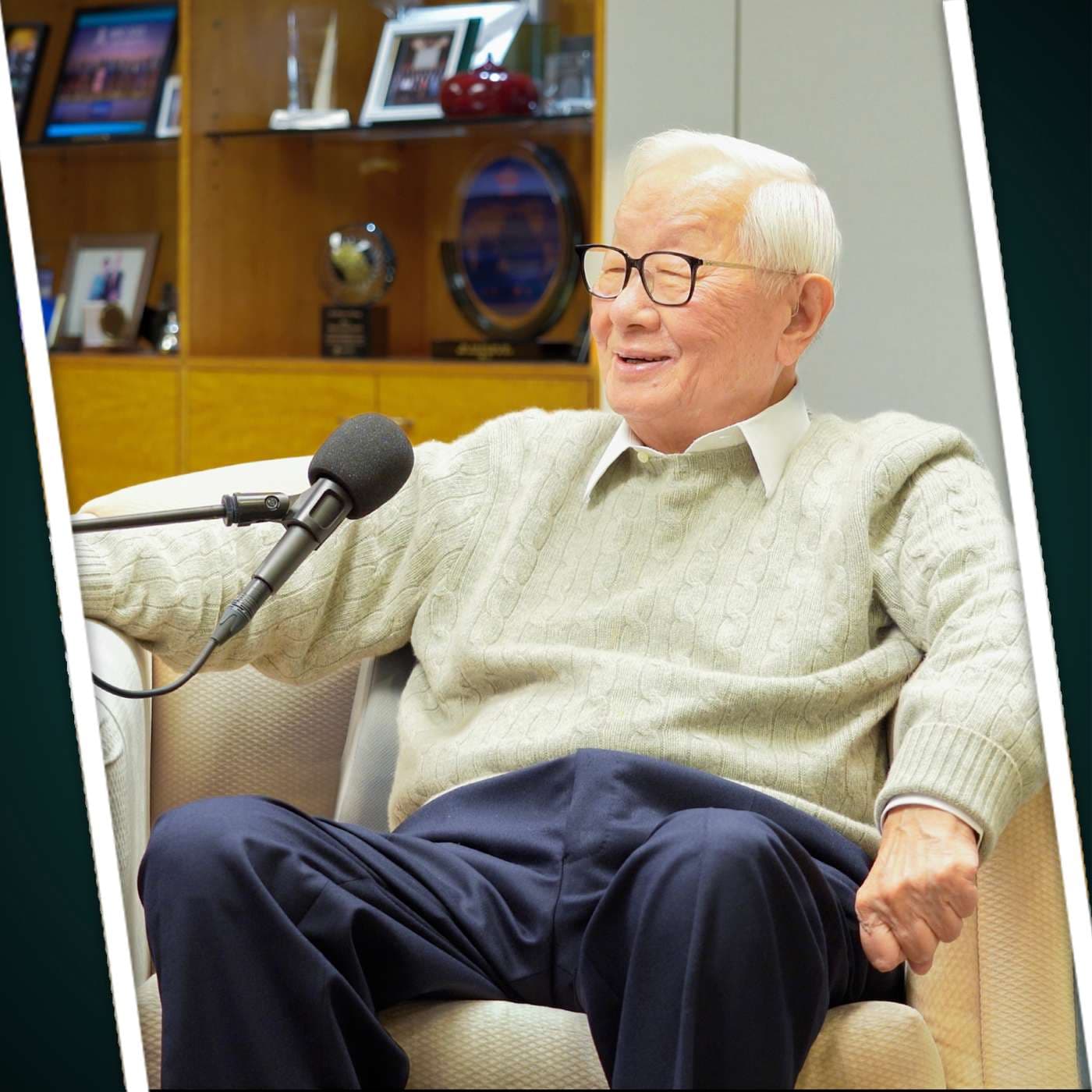
- Special Guest: Dr. Morris Chang, Founder of TSMC (Taiwan Semiconductor Manufacturing Company)
- Location: Taipei, Taiwan
This episode features a rare long-form interview with Dr. Morris Chang, the founder of TSMC, in which he shares invaluable insights into TSMC's history, significant events, and lessons learned from pivotal moments in the semiconductor industry.
Key Themes and Discussions
- Background and Motivation for Interview
- The hosts expressed a "regret minimization" approach to their podcast, leading them to prioritize interviewing Dr. Chang due to his significant impact on the semiconductor industry.
- The episode highlights Dr. Chang's recent memoir, which contains previously undocumented stories about TSMC's history.
- Founding and Evolution of TSMC
- Dr. Chang recounts the origins of TSMC, starting as a small foundry relying on integrated device manufacturers (IDMs) for revenue, essentially taking over their excess production.
- TSMC's strategic decision to be a pure-play foundry allowed it to avoid competing with its customers, allowing for closer partnerships.
- Key Partnerships and Challenges
- A significant portion of the conversation focused on TSMC’s relationship with major clients like Apple and NVIDIA.
- Dr. Chang shared experiences from the beginning of the partnership with NVIDIA, detailing how a letter from Jensen Huang in 1997 led to a successful manufacturing agreement, significantly bolstering TSMC's revenues.
- The 2009 NVIDIA Crisis
- A major crisis arose with NVIDIA over manufacturing delays in a new 40nm process. Dr. Chang took back the CEO role to resolve the situation, emphasizing the importance of maintaining strong relationships with key customers.
- The resolution of the conflict with NVIDIA involved a $100 million offer from TSMC, illustrating the value of personal relationships in business negotiations.
- The 28nm Node and TSMC's Leadership
- Dr. Chang discusses the transition to the 28nm node, which marked TSMC's ascent to a leadership role in the semiconductor industry.
- Investments in R&D and capital expenditures were ramped up significantly during this period, resulting in TSMC's advanced manufacturing capabilities.
- Market Dynamics and Competition
- The episode also touches upon the competitive landscape, where TSMC took calculated risks in forecasting market demands, especially regarding upcoming technologies like AI and mobile smartphones.
- Dr. Chang emphasizes that the industry's growth is driven by constant demand for greater computing power, a principle often associated with Moore's Law.
- Lessons on Management and Strategy
- Insights into effective leadership and management practices are shared, particularly in how to navigate crises, maintain employee morale, and manage customer relationships.
- Dr. Chang reflects on the importance of not laying off employees during tough times, citing the long-term value of retaining talent.
Key Takeaways
- Pure-Play Foundry Model: TSMC's success is attributed to its decision to be a dedicated semiconductor foundry, avoiding competition with customers.
- Strong Relationships: The significance of personal connections in business, particularly in high-stakes negotiations.
- Crisis Management: How effective leadership can turn challenges into opportunities for growth and partnership.
- Investment in Innovation: Continuous investment in R&D and capital infrastructure is essential for maintaining leadership in technology.
Sponsors
- Koyfin: A financial research tool for investors.
- Statsig: A platform for experimentation and product analytics.
- ServiceNow: An enterprise service management platform.
Additional Resources and Links
- [Worldly Partners’ Multi-Decade TSMC Study](https://worldlypartners.com/businesshistory)
- [Karina Bao’s writing](https://karinabao.substack.com)
- Carve Outs: Recommendations for travel, media, and entertainment.
Conclusion The interview with Dr. Morris Chang presents a thorough examination of TSMC’s remarkable history and the strategies that led to its current stature as a leader in the semiconductor industry. The insights shared serve as invaluable lessons for entrepreneurs and business leaders across various sectors.
Written by AI. May contain mistakes. Listen to the episode to check what was said.
Transcript
Automatic transcript. May contain errors.0:00The podcast about great technology companies and the stories and play. Oh, no, you said technology. Now we definitely have a cold opener. All right. I guess I really want us to be about technology companies again. Well, this is a technology company. It's a sign. All right, here we go. Who got the truth? Is it you? Is it you? Is it you? Who got the truth now? Is it you? Is it you? Is it you? Sit me down, say it straight. Another story on the way. We've got the truth. Welcome to the Spring 2025 season of Acquired, the podcast about great companies and the stories and playbooks behind them. I'm Ben Gilbert.
0:43I'm David Rosenthal. And we are your hosts. Today, we have something very special to share with you. After becoming obsessed with semiconductors from our TSMC episode four years ago, David and I wound our way through the rest of the industry, studying fabless companies like NVIDIA and Qualcomm, architecture companies like ARM, and chip design software companies like Synopsys. And as we were thinking, what's next in the world of chips unacquired? We threw the Hail Mary. We asked friend of the show, Jensen Huang, if he would ask Dr. Morris Chang, the 93 -year -old founder of TSMC, if he would be open to an interview with us.
1:22It is kind of insane and super cool that Jensen made time to help us with this. It's not like he doesn't have a lot of other things going on. Yes. Well, listeners, it happened. So today's episode is a conversation that we recorded in Taipei last week at Dr. Chang's office. We flew to Taiwan for a 48 -hour whirlwind where we spent some time at TSMC's headquarters in Hinshu Science Park, where many of TSMC's fabs are located. Super cool to see. Totally. So conveniently, Dr. Chang just published volume two of his autobiography a couple months ago after a 26 -year hiatus from volume one. But inconveniently, it is written in traditional Chinese and not published in the Western world.
2:04We managed to get our hands on an unpublished translation of the book to prepare, and what you are about to hear focuses on a few crucial stories from TSMC's history that Dr. Chang shares in his memoir about Apple, NVIDIA, and the birth of the fabless industry. Yes, and big thank you to Karina Bao, who we were lucky to connect with after we set this up, and who has been translating Morris' memoirs with funding from Tyler Cowen and Emergent Ventures. Right now, the memoirs are not published in English, and we will let you know if and when that happens. Yep. All right, listeners, you can join our email list at acquired .fm slash email.
2:38You'll get an email every time a new episode drops once a month. And this is also where we announce past episode corrections, plus a fun little game where we give hints at what the next episode will be. I always have fun writing those. You do. That's a clear David job. So with that, this show is not investment advice. David and I may have investments in the companies that we discuss, and this show is for informational and entertainment purposes only. Please enjoy this conversation with Dr. Morris Chang with some of David and my reflections following its conclusion. We thought as a fun way to start things off would actually be to talk about the man who introduced us.
3:14Could you tell us a little bit in your words about your relationship with Jensen and TSMC's special relationship with NVIDIA. Yeah. It started, my relationship with Jensen, started with a letter that he sent to me. I think it was 1997. And the letter was sent to the post office. And I received it in Xinjou. So, and the letter said that they were NVIDIA, the company that Jensen was the CEO of, was a small company, but they had developed some really promising chips. but they were looking for a foundry and they had approached TSMC's San Jose office, but they really got no answer from the San Jose office.
4:30Would I please contact Jensen? Because NVIDIA really wanted to do business with TSMC. So I was going to the U .S. in the next week anyway. So the letter, frankly, raised my curiosity and also irritated me a little bit because I had always told our salespeople that we should never be negligent in talking to future customers, even if the customer seems to be a very small one. And at this point, NVIDIA was four years old. They were facing bankruptcy, I think. And they had maybe 50 or 60 employees. So TSMC, I think at that time, already had a few thousand employees. We had exceeded, I remember we had exceeded the $1 billion U .S.
5:49dollars in revenue in 95, and this was 97. So we were, relatively speaking, we were a pretty big company. Which is very impressive. You were yourself only a 10 -year -old company doing over a billion dollars in revenue. Yeah, right. So the following week, I went to California, and I called him back without advance notice. I called Jensen. I looked up. I think there was a telephone number on the stationery that he sent me the letter on. Jensen himself picked up the phone, and there was a lot of background noise. He was arguing something with his people. But as soon as I introduced myself, I said, this is Morris Stern.
6:50He immediately shouted to those people that were making noises. He said, quiet. Morris Chang is calling me.
7:04So I then proceeded to make an appointment with him to visit him, to visit NVIDIA the next day or something like that. And that was our first visit, our first meeting. and he immediately impressed me with his articulateness and also impressed me with his optimism. He was also very frank. He told me that Nvidia was in financial difficulties, but the chip that he wanted now to have found would not only save the company, it would also make NVIDIA a major customer of TSMC. I mean, that was actually quite a bold statement. We were over a billion dollars. And to be a major customer of ours, he would have to produce revenue for us of at least $50 million a year.
8:29Was that chip the Reva 128? I forgot the number, but it was a very successful chip. I don't think it was Reva anything. It was a games chip, of course. it was successful. In fact, his prediction came true. Not only did it solve NVIDIA's financial problems, it prevented from being bankrupt, you know. Not only did it do that, it also started to make them a major customer of TSMG. Within two or three years, they did become one of the biggest five customers of TSMC. Yeah. Very successful chip, yeah. So there was a great partnership forged there. TSMC would fab the chips, would manufacture them. NVIDIA would design them.
9:28That is true all the way to today at immense scale. But it hasn't always been easy, and it hasn't always been perfect. And I want to go to this moment in 2009 on the 40 nanometer node where development was slower than TSMC had hoped. And it was costing customers like NVIDIA time and money. Can you share the story of how this came to be and how it was resolved? Well, I decided to give the CEO job to a potential successor of mine while I would still retain the chairmanship. In Taiwan, usually the chairman is the top man anyway, even though CEO is another person. So the problem you just mentioned happened during the period when someone else was the CEO.
10:36Apparently, it was a manufacturing problem. It was also a quality problem. and it was the quality problem that the CEO first reported to me. But the CEO insisted that our people, we had the director of quality, insisted that we were not TSMC, it was not a fault. And so on that basis, on the basis of our quality manager's arguments, he had not offered NVIDIA anything. Now, as far as the manufacturing problem was concerned, it was a yield problem, and everybody was suffering from it. And of course, NVIDIA at that time was perhaps the biggest customer of that node, the 40 nanometer node. And a yield problem in the context of this industry is when you are trying to make a bunch of very high -quality chips, but you just can't get the percentage that actually work up very high.
11:57Something like that, yes. But the problem apparently just continued. And I was, even though I was not the CEO, I was getting a little impatient. And then, of course, some other problems popped up, other problems then, this 40 nanometer NVIDIA problem. So I decided to take the CEO position back. So in 2009, I did that. And there were several priority problems that I had to deal with when I took the CEO job back. And one of them was this continuing problem, continuing argument, controversy with NVIDIA. Anyway, I remember in the first few days after I took back the CEO ship, I called all the major customers, including Jensen.
13:13And Qualcomm was, I believe, another one with that. But Qualcomm was also, yeah. And Qualcomm, the top customers didn't change very much since then, except for maybe one, yeah. Apple. Apple, yeah. Apple came later, yeah. And in my call with Jensen, he was still very friendly with me, But he also reminded me in a very serious tone that we had the quality delivery manufacturing problem on the 40 nanometer. All right, so I said I knew that. And it's one of my priority problems. Give me a couple weeks and I will get back with you. And as I said, I did have several problems aside from the 40 nanometer manufacturing problem and the problem with the argument that we were having with NVIDIA.
14:34Aside from that, we also had the problem of the pricing was dropping faster than the cost. I mean, you don't want to see that. The gross margin percentage kept dropping. Because you had committed to a schedule of price drops with customers, but you weren't able to drive down your manufacturing costs at the same rate. All right, so that was one problem. Another problem was the immediate one that triggered me to retake the CEO ship because the previous CEO had laid off, except he didn't use the term laid off. He used the bad performance review, the worst performance review people, There were about 600 or 700 of them, you know.
15:37And he laid them off on the basis of their poor performance review. Well, we never did that, you know. I mean, the worst we would do was to put them on, place them on probation for six months. and quite often, you know, at the end of the six months, everybody would go back to his or his or her old job. And some of them would get transferred because they were in the wrong jobs, you know. So some of them would get transferred. But we almost never really fired people even after the probation period. So under your watch, you never did a layoff and you never looked at performance reviews, which are meant to help coach people as the means to determine who to lay off.
16:44That's right, yeah. And I actually have told the managers that. And while in 2008, Of course, there was a financial crisis. And the semiconductor business, in fact, got affected. And our revenue dropped. Our business dropped pretty seriously. I was not a CEO. I was a chairman. But I just knew that anyone, any general manager, any CEO, general manager, without very much experience, what he or she would do in a situation like that. It's kind of a knee -jerk kind of reaction. Oh, he says, oh, this is my test. I got to save, you know, all the money possible. And I got to, you know, lay off people, you know.
17:56But this is the semiconductor industry. And Moore's Law means no matter what happens, you will always need people. Well, I know, I know. Well, semiconductor industry. But semiconductor industry, people actually think the same way as I described, you know what I mean? They are lay off. They are lay off people, too. I had a lot of experience at Texas Instruments. But at Texas Instruments, I was not a CEO. I was just one of the top managers under the CEO level. And when the company decided to have a layoff, the CEO conferred with the top managers who included me. and their first reaction was exactly the same, and I'm talking about the 70s, early 70s.
18:54Their first reaction on who to lay off was exactly the same as what our TSMC CEO did in late 2008, 2009, which was, you know, go by performance. I mean, well, now I was the only one at Texas Instruments in the early 70s that said, no, that would not be a credible way of doing it. People would not respect us if we lay off by performance ratings. And why is that? Because it's very subjective. Performance reviews, the performance ratings are done by everyone's own supervisor. So 700 worst performing people in the company. And who gave the 700 people the bad ratings? 700 supervisors, you know. Very subjective.
20:07It's not something that people will respect. If in a year you have to hire people back, you have to hire the laid -off people back, then you shouldn't lay off. Because the layoff, the separation expense, is usually half a year. about half a year. And it takes at least half a year to train a person. So if you need the people back within a year, you shouldn't lay off. So what did you do when you came back as CEO, both about the employment issue and about the customer issue? You mean customer issue being NVIDIA? Yeah. Well, to finish the employment issue, the laid -off employees. As I said, there were 700 of them, 600 or 700 of them, came to my home to demonstrate and protest.
21:09Now, the company, TSMC, was pre -warned that hundreds of people would appear in front of my home. So they notified the police department in my district. So the police department sent 50, 60 police officers to try to maintain the order. Now, more than 100 protesters appeared. And the neighbors, my neighbors, they had trouble getting in and out. That was only the first time. A month or so later, the problem was still not solved. I was still not the CEO. So they appeared again. Some were protesters. About 25 of them decided to spend the night, sleep over in the little park that's about a block away from my home.
22:16My wife literally didn't sleep that night. But she would wake up and went over to that window to take a look to see what was going on. But then very early the next morning, my wife, about 6 o 'clock the next morning, My wife, you know, got up and she took one of the bodyguards and went to a neighborhood market and got the Chinese -style breakfast. Chinese bread, you know, fried bread, you know. I don't know whether you ever had it or not. Probably not. Yeah, yeah. Buns, you know. Yeah, soybean milk, yeah. And take enough of the breakfast, enough for 25, 30 people, and back to the park, to the park, and distribute them to the protesters.
23:30And they were thankful, you know. Yeah. And they actually decided to not go to the president's palace, president's mansion. And they told my wife that they would not do that that day. And all this kind of precipitated my taking back the CEO job. Well, there's another thing, you know, I told the previous CEO before he laid off the 600, 700 people. I said, if, because I knew, as I said, I knew that it would be his knee -jerk reaction to confront a crisis such as the crisis we had. it would be his knee -jerk reaction to lay off. So I said to him, if you want to lay off, bring it to the board. I'll call a special board meeting.
24:47And I knew what I would ask the board to do, which was not to grant the permission. But he decided to circumvent that. the CO because what he did he did not consider it to be layoff it was just punishment for the poor performers well as far as the CO I did keep him I had more than one nice talk with him I intended to and I told him that he was still a potential successor to me. So I kept him at the same job weight, we have job weights, and the same salary and bonus. But he was now the president of new businesses. And back then, you know, we had high hopes for the so -called new businesses, which was solar cells and LED.
26:14It's the great irony that your core business of manufacturing integrated circuits ended up becoming the largest market opportunity of all. You didn't need any new businesses. Ended up the biggest marketing, biggest market opportunity. Why is that so ironic? Well, it's always interesting to me when companies think, oh, we should look at other new businesses. when in reality, semiconductors became a $600 billion a year market. And, you know, solar is a small fraction of that. LEDs are a small fraction of that. You were already in the best market. I know. And I knew that. I did not really mean, I did not really think that solar or LED would really replace our integrated circuits business.
27:06But I knew the integrated circuits business was going to be great, you know. But at that time, which was 2009, at that time, we also thought that solar and LED was going to be very promising. But it didn't work out, of course. The solar business could have been pretty good. However, China ruined it. They subsidized the hell out of it. And they now control that business, solar cells. The prices were extremely low. It's still low. It's still low. So it didn't take off. TSMC service didn't take off. and LED did not take off either because LED, it's not, the market is not as big as solar. However, it's controlled.
28:11The patents are controlled by just a few companies and they wouldn't let the few companies that control the patents of LED will not let up at all. So a few years later, the CEO that was put on the new businesses decided that his new assignment wasn't working out either. So he quit. And he's now running MediaTek, is that correct? He is now the vice chairman and the CEO of MediaTek. Yeah. So coming back to this moment in 2009, you offered to rehire anyone who was laid off that was interested in coming back. And you're setting the new sort of vision and strategy as CEO, or in many ways, returning to the old one.
29:10How did you resolve the NVIDIA dispute? Yeah. In the first four or five weeks after I retook the CEO job, I probably spent almost half of the time on how to resolve the problem with NVIDIA. As far as youths were concerned, we were doing our best because, you know, we had to do it anyway, you know. NVIDIA was just one of the customers. Yeah, not just NVIDIA, but Qualcomm and Intel. Yeah, and it was a very important note. 40 nanometer was a very important note in the progression of Moore's Law. Only after 40, if we do the 40 well, can we do the 28. 28 was the next one. And I called the salespeople that were in direct, that had been in direct contact with NVIDIA.
30:21And of course, I called everybody that was somehow involved, somewhat involved in the problem. So it was a matter of money. As far as the progress on the manufacturing lines, we were already doing what we could. I mean, as I just said, it wasn't just for NVIDIA. It's for TSMC. But NVIDIA, because they had borne the brunt of the problem, the damage. It's a matter of money. I worked out in number. I familiarized myself with all aspects of the problem, and then I worked out in number. And I also knew that NVIDIA's customers were after them. They had demands on NVIDIA, too. So I used all the intelligence I could get, And I think it turned out that it was good.
31:38So about a month after I retook the CEO job, I sent an email to Jensen. I said, I'm coming to Silicon Valley next week on this date. I will be at your home at 6 o 'clock. Let's have just salad and pizza, which was something that we have had many times in the past. Now, immediately, he sent back an email. He said, when do we discuss business then? Did he ask who was going to pay for the pizza and salad? He didn't ask that. So I anticipated that. So I said, 6 .30, we'll start having pizza and salad. 8 o 'clock shop will go to your office at your home. and would discuss business. So on the point of the day, I showed up, and we followed the schedule.
33:06Exactly, you know. 6 .30, I showed up. We had a very pleasant pizza and the salad. The thing is that, you know, his wife, Lori, would make the salad. And the pizza was delivered from outside. Maybe they made their own pizza, too. I forgot. Would not surprise me. Yeah. Anyway, I had had it many times at his home. All right. So at EvoCast shop, it was I who looked at the watch and said, Jensen, why don't we go to your study? And I gave him the offer. It was on the order of $100 million, right? Yes, more than 100 million, yeah. And I also said our offer is effective 48 hours. If you do not, there is not going to be, we are not going to argue, we are not going to bargain.
34:15If you don't accept the offer within 48 hours, we will have to go to an arbitrator. which was what he had suggested to the previous CEO anyway, that we go to the arbitrator. But the previous CEO did not even give him a number. The previous CEO gave him zero. You probably don't want to go to arbitration with your best customer. No, I didn't want to. But I had to say that. because, I mean, that number, the number we offered him, was arrived at after, as I said, weeks of work on my part. And I thought it was fair to both sides. And did Jensen accept the offer? Yeah, he did within two days. I think it's an amazing example of a situation where you had strong partnership together for many years.
35:21You built this close personal relationship such that you could have an hour and a half family dinner and not talk business. You were able to then come up with a large sum of money, over $100 million, settle. And then since then, there have been many, many, many billions of dollars of business done together. It's a great success of working out your differences. I know. I liked it, too. That's why I included the story in my autobiography. All right, listeners. Now is a great time to thank a new friend of the show, Coifin. And it's funny, they're new, but actually I've been using their product for years.
36:03My research project for every single new Acquired episode involves Coifin. So when they reached out to sponsor the show, I thought, well, this is convenient. Indeed. So Coifin is a financial research tool loved by both individual investors and financial advisors. Individuals use it for stock research, graphing financials, and portfolio tracking, and financial advisors use it to build model portfolios and create client proposals. They have live market data and powerful analytics tools. So it's kind of like a Bloomberg terminal, except without the huge price tag, right? Yes, essentially. It's a web app and it's totally self -serve.
36:41I've actually not talked to anyone at the company for the first few years that I used it. So Koyfin is a product that the broader market, like all acquired listeners, would use, not just Wall Street investment bankers. It's where I pull things like growth rate or gross margins or the P .E. ratio or revenue multiples for every company we study. And you can compare these things over time with historical graphs or against other companies. It's often what I use when we're studying private companies too, like Rolex or Mars or Ikea, to look at the comparables to estimate what these companies would be worth if they were public.
37:12They also have a screener that lets you filter across thousands of stocks so you can quickly surface investment ideas. Yep. So the general idea is if you're someone who's used to living in data, you should have that at your fingertips as you think about investing. Exactly. It's got these great graphs for data visualization wrapped around institutional -grade data. So if you want to understand what assumptions are baked into the stock price today, Koyfin is for you. I was about to say that acquired listeners have a great offer, but Koyfin's free product is actually already really robust. Which is what I was using for years.
37:45I know, I know. But indeed, for acquired listeners and also for you, Ben, if you go to Koyfin .com slash acquired and you end up upgrading to paid, you'll get 20 % off your first year. Our thanks to Koyfin. That's K -O -Y -F -I -N dot com slash acquired or click the link in the show notes. After the 40 nanometer node, after you fix these problems, as you said, the next node was 28 nanometers. And as we understand your story and the company's story, 28 nanometers is when TSMC really started to take the leadership role at the leading edge in the industry. How did you decide to go commit so hard to 28 nanometers after having had all the problems at 40 nanometers?
38:37Well, I had a lot of trouble at TI. My peak job at TI was the head of worldwide semiconductors. The TI, of course, had many businesses, defense business, materials and controls, and also their origin, which was geophysical and so on. But TI's semiconductor business was their biggest, and I was the head of that. Worldwide semiconductor business. I wanted, at that time, when I was the head of Worldwide Semiconductors, our R &D budget was 4 .8 % of our revenue. And I thought it was not enough. I just wanted to raise it to 5 .5 % of the revenue. but my request was denied every time I raised it. Now, coming back to TSMC, I wanted to set a number, a percentage of revenue number so we don't have to argue every year how much R &D we should spend.
40:13So at that time, About the time, 2008, 2009, when I came back, I just almost like, at that time we were running, I think, 6 % or 7 % a year. But it was negotiated every year between the R &D director and the CEO. So I wanted to stop that. I wanted to make him at ease. You don't have to argue. You don't have to request every year. So I almost just literally picked a number I already had. We've been running 6 % or 7 % already. So I said, oh, let's pick 8%. 8 % regardless of whether there's a recession or not. and that's just 8 % of revenue. And that was the best news, if you ask our R &D director, who was back then, I think, in the second place of R &D.
Read the full transcript
41:33He would tell you, I mean, he has told me many times in the last 10, 15 years, that this was really the best thing that we did for R &D. So they were not concerned. The R &D director was not concerned at all about having his planned budget cut back, his planned resource, people, allocation cut back, none of that. So he has been working 8%. So it has been like that. And that is what propelled our R &D effort. This period in 2010, it wasn't just ramping the R &D budget. It was also the capital expenditures. You had had almost a decade of $2 to $2 .5 billion spent building the fabs every year. And in 2010, you ramped that to almost $6 billion.
42:40What was it about the competitive environment, the 28 -nanometer node that caused you to push all your chips in on that? Yeah, I think it was kind of a mutual feeding thing. As I settled the R &D budget at 8 % of revenue, I mean, to the satisfaction of the R &D people, they began to have big ideas. They began to be telling me how 28 is going to be the term they use. And they have used it several times. But the first time I heard them using it is the 28. 28 is going to be the sweet spot. It's just like tennis racket, you know. You hit the ball with a sweet spot of your racket. Yeah. Yeah. Do you play tennis?
43:56I have played tennis. Not well. Good. I was like you, you know. Like 40 years ago, I was like you. I don't play anymore. But, you know, so I know the feeling of hitting a ball in the sweet spot. 28 down here is in the sweet spot. And so I said, why? He gave me a lot of technical reasons.
44:24So I decided I would believe him. And he now had the resources to push it, to do it as fast as he could. So, you know, now the capital spending. Now, of course, back then we had already built up pretty good infrastructure, organizational infrastructure. We had a pretty good market forecasting group. And I had set up the business development department, which was like a marketing department. You know, we always had a pretty strong sales effort. But to me, sales effort is just the tactical side with the customers. Marketing is the strategic side to the outside world now. Now, from all these inputs, the marketing, the business development department, which, as I said, was our strategic marketing group, and from the technical, from the R &D side, that 28 was going to be a sweet spot.
46:00I decided that, and I quoted Shakespeare in my autobiography, that there's a tide in the affairs of man, which taken at its flood leads on to fortune. I decided that this was 28 nanometer was going to be our tide. Yeah. Our next tide, anyway. There will be others. Seven kilometers. It was another, was the next sweet spot, the R &D people told me. And again, you know, reminded myself of Shakespeare, you know. Taking it the flood. Taking it the flood, yeah. So, I mean, that took, however, you know. I'm setting the R &D at 8 % of, did not invite any opposition from the board. But suddenly, increasing capital spending, threefold I think, did invite a lot of questions from the board.
47:18Our practice in the board meetings, because back then, or even now, most of the directors are from overseas, U .S. and England. And we would email the agenda to them two weeks before the board meeting. Then the night before the board meeting, I would invite the independent directors to dinner. And that dinner, the conversation at that dinner was not on record. So the independent directors, actually three -quarters of our directors were independent, are independent directors. Anyway, so in the night before and the evening before the meeting, they had the opportunity to ask me questions if they had any.
48:36But on this matter of vastly increased capital spending, they didn't even wait until they got to that dinner. Because this was effectively betting a huge amount of the company's cash on this node, this process, this generation. Yeah. And so they called the chief, the general counsel. The general counsel is also the secretary to the board. They called him. At that time, it was an American. The general counsel was an American. And said, we want to talk to the chairman. We don't like this idea at all. Anyway, so I talked to them on the phone about a week or so before the board meeting. And, all right, you know, this is something that, of course, I told them what I have now just told you.
49:52inputs from market forecast inputs from our R &D inputs from our business development, the new business development department and of course they didn't believe it you really can't convince anybody on something like this so at the end I had to say well look I heard you but I am still the guy that's responsible for the operation of the company. So you need to let me go ahead with this one. So they were satisfied with that. And what was the result? What happened around this era of 28 nanometer that created so much demand? I think you know the result. That was good. And that was the smartphone era coincided with 28 nanometer.
50:49Yeah, yeah. When the business development group was looking at this, and you were looking at this, did you see how big smartphones were going to become and the immense opportunity that that would unlock for you? No, I didn't. Maybe the business development guy, that was another interesting story. Yeah, maybe he knew. Maybe he, or at least I now hope, and I, of course, hoped at that time too, that he had a more detailed visibility than I did. But I mean, of course, this was not the only input. I had a few other advisors too. So that takes us to Apple. Could you share with us how you end up meeting Apple?
51:50Yeah, but before we do that, let me offer how we made CC, actually, the business development director. Ah, the current CEO. The current CEO, the current chairman and CEO. When Rick was the CEO between 2005 and 2009, he had split operations into two groups, advanced technology and mainstream technology. And CC was the head of the mainstream. Actually, really, I should say, the lesser one. Mark Liu was the head of the advanced technology. And each group had a small business development section, maybe 30 or 40 people each. All right, so I came back to be the CEO, and I never thought the split up of two groups was a good idea anyway.
53:28In fact, back in 1996, the president, he was not a CEO, but he was a president. We didn't have the CEO title back in 1996. But the president, who was American. Don Brooks? Yeah, right. He wanted to split. I think he got a little tired of running this company. He was going to be here for only a year at first, but he ended up spending six, seven years in Taiwan. Towards the end, he was getting a little tired of running this thing. And he thought that he would do it like TI, for instance. When TI had a germanium transistor department, silicon transistor department, an integrated circuit, bipolar integrated circuit, MOS integrated circuit.
54:39It's the divisional org structure instead of a functional org structure. Right, right, yeah. But I really did not think that the foundry business, TSMC's business, was suitable for the divisional structure. Because, you know, we have almost the same group of customers. How do you divide up the company if you want the so -called divisional structure? Well, you know, Don Brooks was going to be divided by fab. My goodness, you know. The customers moved from one fab to another. The same customers, you know. Not to mention TSMC has 21, 22 fabs now. And so what, are you going to have 22 divisions? Back then, of course, he only had three or four fabs, you know.
55:38Back then, yeah. But he was not convinced. He kept arguing. And I said, look, why don't we get a consultant? McKinsey. McKinsey. Why don't we get McKinsey? Okay. So we got McKinsey in. And McKinsey, after a month or two, two months actually, and a couple million dollars, I guess, told us the same answer, you know, that functional is best. And then Don Brooks said, well, tell me one company, one big company that's functionalized. And McKinsey immediately answered, Boeing, which is a good answer, you know. Yeah. Yeah. Except it's not true. Boeing has commercial and government. Well, they probably have commercial government, but they don't have 707, 747, 757.
56:50You know, they don't have, they don't divide. And if we divide up by fab, it would be like dividing up 707 from 757, 737, you know. Well, anyway, Don Brooks' attempt was in 1996. And, well, by 2005, Rick Tsai, you know, decided to check the same ground. And he did. This time, you know, I didn't stop him. My idea, my principle when I was the chairman and not the CEO was, well, sometimes you have to let the CEO make his own mistakes and learn from them, you know.
57:49Of course, not if the whole company is going down the drain. so you didn't interfere then but only then well anyway so that was the background two groups when I came back to be the CEO the advanced group and mainstream group and each group had a small business development section 30 or 40 people. I think advanced has had more, a bigger group than mainstream. All right. So I wanted to combine the two operation groups. And I also wanted a real marketing. And I didn't call it marketing because I decided to use business development in English because it has a good translation in Chinese. All right.
58:57Now, I've decided to combine the two groups, operation groups. Now, back in 2009, when I decided to combine the two groups, I think the advanced group had something like 10 ,000 employees. And the mainstream group had a little less, but also 7 ,000 or 8 ,000 employees. And the mainstream group, just because we haven't explained this concept yet, is taking those older fabs that have the higher nanometer nodes, and they're finding customers that don't necessarily need the leading edge to automotive parts or its CMOS sensors for cameras, and finding customers to keep the utilization high on those older fabs from previous generations.
59:58Yeah, right. But also, quite often, the same customers use both mainstream and advanced technologies. Take Qualcomm. I'm quite sure that they use the most advanced. Or even Apple, I think they use. Yeah, if you think about all the chips in an iPhone, the A16 Pro is built on the leading edge. But there are many, many other chips in there. Yeah, right. So you combined to one business development organization, 80 -ish people. Yeah. We had Mark Liu in charge of the advance and C .C. Way in charge of the gas. The question is, you know, who's in charge of what, you know? They combined. Or you need only one for the combined operations.
1:00:52You need only one person. The truth is that we had a lot of operational talents, you know. Operations meaning manufacturing and taking the developed technology from R &D, you know, and converting it into mass production. We had a lot of talents there. But business development or marketing there. And neither Mark nor CC had any real previous experience in marketing business development. So that was my main worry. We combine the two groups. we needed a combined operations manager. But even more importantly, in my mind, we needed a combined market business development manager. So I first offered the marketing business development job to the guy who was in the bigger job, advanced technology, Mark.
1:02:28And I explained to him that I did not think he had had any significant marketing experience in the past. And this new job, if he takes it, would give him the opportunity of being professioned in that area. But he declined it. He said, my goodness, I have 10 ,000 people reporting to me now. you want me to take a job that has only 60 or 70 people in it? That was the end of that conversation. And your goal was for him to become a well -rounded executive in hopes of leading the company after he sort of did that tour of duty. And I explained to him that, yeah. Not to mention it's a very important 60 or 70 people.
1:03:33They're responsible for finding all the next business. I know, I know. Actually, back in my mind, I was thinking of the time when Kissinger was Nixon's national security advisor. And somebody else whose name I have even forgotten was the Secretary of State. And Kissinger probably had a couple hundred people reporting to him, whereas the Secretary of State had thousands of people. all over the world reporting to him. And who had more power? You know, Kissinger. Certainly not the name who you've forgotten. Yeah. And before this period, you were doing the business development and marketing for the company, right?
1:04:24You were the one finding the NVIDIAs, the Jensen's, the Broadcoms, the next great customers and great markets for you. That's right. That's right. I was. You were always on a plane meeting with the current top 15 customers and trying to find the next top 15. Yeah, except for those four years when I was not the CEO. Yeah, but you were right. I was on the plane most of the time visiting customers. That was my pleasure. Yeah, I really liked it. well anyway so I then of course offered the business development job to CC and he accepted I mean I thought he accepted it even delightfully you know yeah so he's now the chairman and CEO of TSMC so this had just happened and you came home from a board meeting, we understand, one evening.
1:05:34That's right. The board meeting had ended and it was six o 'clock or later. And I went home.
1:05:49This was Taipei. We had our board meetings back at that time. in in fact here in the you have you have seen you have seen my conference yes right across the hall yeah yeah right yeah we we had all our board meetings in Taipei in that conference room anyway it was 6 .30 or so when I got home and I think my wife knew that that I would not be home until around 6 .30 because as soon as I, actually she met me at the door, which wasn't very often, but this time she had something to tell me. That's why she met me at the door. She said, Terry Gow called in the afternoon and said he was coming to dinner.
1:06:56And who is Terry Gao for listeners? Terry Gao is a relative, is actually a second cousin of Sophie's. Sophie is my wife.
1:07:14And they share the same grandparents. that's what makes them second cousins I think yeah and for our western listeners who this won't be obvious to Terry Gao is the founder and CEO of Foxconn right Terry Gao is a second cousin of Sophie's and he's also he was also at that time the chairman of Honghai Foxconn to American listeners The name slipped my mind for a second. Hong Hai, which is a very important supplier to Apple. And a pretty big company. In fact, Terry Gao is reputed to be one of the richest men in Taiwan. And she said, Sophie is lovely. But she doesn't know too much of my business. I don't think she understood the significance of Terry Gao coming to dinner, bringing a vice president from Apple.
1:08:43So I don't think she quite understood, quite very, she didn't really, she wasn't very interested either in the significance of that. And you had been trying for months strategizing with the business development team, how do we go win Apple's business? The smartphone seems to be working. Yeah, I mean, strategizing is probably too strong a word. I mean, just thinking. Also knowing that we just can't do anything about it. Apple is a very close -mouthed company. If you try to offer your service, they will just tell you to go away. They will come to see you when they are ready. that's what I knew about Apple even then and I knew I know the same thing now yeah alright so 8 o 'clock Sophie did know that I would not be home until after 6 o 'clock so she had told told Terry that, and Terry had set the time of arrival, of their arrival, at 8 o 'clock.
1:10:19So 8 o 'clock was a bit late for my dinner, but I said, what the heck, we'll wait. All right, so they showed up. I didn't ask her. Sophie just said, a vice president. And I just thought to myself, it wouldn't be just an ordinary vice president. Yeah, so, because, you know, there was no reason for Terry to just bring any Apple vice president to my home. It must be something special. There must be someone special for TSMC. All right, so Jeff Williams came. He was not just a vice president. He was the chief operating officer of Apple. And Jeff was a pretty straightforward person. He didn't spend much time in ordinary chit -chats.
1:11:39There wasn't the same pizza and salad period before? It wasn't formal either. My wife, Sophie, just added, we have a cook. We had a cook, and a pretty good cook.
1:11:59So Sophie just told the cook to add a few dishes. She's a Chinese cook. She doesn't do any Western food. And, you know, Terry obviously, she grew up on Chinese food. And I would imagine that the apple guy that he brought would also like Chinese food. Anyway, so she just asked the cook to cook a few more dishes. But, you know, it wasn't important. The food was not important. Either the quantity or the quality was not important. because almost Jeff almost immediately started his pitch, you know, almost as soon as he sat down to dinner. And what is the pitch from someone like Jeff Williams like? We would like you to foundry our waivers, something like that.
1:13:11Pretty straightforward. I mean, so I listened. That night, I think, Jeff talked maybe 80%, and I talked 20%. If you don't count the relative -to -relative talk between Sophie and Terry, you know, which was not very much either. And Jeff had proposed economic terms at this first dinner, right? No, nothing so concrete. Okay. He did say that we would let you have 40 % gross margin. And I think, well, I didn't say anything. I didn't answer him. I didn't respond to that. But our margin at that time was already 45%. And I was trying to put it up to 50%. It was an announced effort in the company to push the growth margin.
1:14:29and I had that effort for many years after I came back to be the CEO and I really didn't even succeed even at my retirement now of course what happened later was that there was COVID and also So we began to have leadership, technology leadership. So our margin jumped up to over 50%. But when I retired, I was still short of 50%, slightly short of 50%. I was almost there when I retired. In technology leadership, you're saying that around this time, the 28 nanometer node, you were… You were talking about 2010? Yes. You were still among a select few at the leading edge, but there was fierce competition.
1:15:35Whereas once you got to 7 nanometers or so, that's when you really... You are neglecting. I think when you said that, you were neglecting Intel. Yeah. At 28 nanometers, we were very definitely the leader among foundries. And maybe among a few other companies, such as Texas Instruments and so on. But not Intel. And Apple was considering Intel? No, Apple was not actively considering Intel. That came later. Later. Yeah. But I'm quite sure we'll have time to cover that. Well, take us there now. So after November of 2010, you had the initial conversation with Jeff Williams. Yeah. He said that he would let us at 40%.
1:16:38And my thought was, my goodness, we're already at 45%. But I also thought that he was trying to be generous when he said that he would let us have 40%. And I also thought to myself, well, now this dinner is not the time to go into a pricing discussion. We have a lot of other things to discuss. Anyway, so I said, no, we were about to go into production. We were almost in production with 28 nanometers at that time. The initial stage, anyway. 28. So I said, I thought it was going to be 28. 28? Nope. what node do you want plenty he said now that was a surprise to me and frankly it was also a disappointment because the most low progression after 28 was going to be 16 now Apple Jeff Williams wanted the 20 a half step a half step but half step a half step is a detour you know you we had to we would have to my thought at the dinner there was that we would have to spend effort on the 20 which of course would help us on the natural next note, which was 16.
1:18:35But still, it was a detour from 28, you know. From 28, if we could go directly to, if R .D. would go to 16, it would be less time than, you know, first do 20 and then. No. The point is that back then, R &D did not have enough resources to do two nodes at the same time. Later, we did. Later, we did. So you have this conundrum where this is right after you had just spent $6 billion in CapEx the previous year going all in on 28 nanometers. You're asking Apple, which could be your biggest customer ever, this is for 28, right? And you hear back, no, we want you to go do something that you're not planning on spending any money on and have this huge distraction.
1:19:35And you're, of course, left with this question, is it worth it to land Apple as a customer? It wasn't that serious. It wasn't that serious. Because when we figured a very big market for 28, and therefore when we planned to increase vastly our capital spending we didn't have Apple in mind we didn't include Apple Apple came strictly as a present surprise anyway for the company in total but not for 28 we didn't have we didn't include Apple in our 28 planning. But it's still the question of are you willing to go do this huge distraction and spend on the order of $10 billion over the next few years doing 20 nanometer for Apple when you weren't planning on doing 20 nanometer at all?
1:20:36That's right. That is where our connection with Goldman Sachs came in. Remember, I planted a lot of seeds. when I ran TSMC. I knew that one of these days we would probably need top -level investment bank advice. So we established a good relationship with Goldman Sachs very early in our existence. I was, in fact, a board director of Goldman Sachs. Did you know that? Yes. We did the ADR with Goldman Sachs which opened up a good relationship with Goldman Sachs. It was your New York public listing of the stock. Yeah. ADR is American Deposit Receipts. It's New York. It's a separate market. In fact, right now the TSMC price, ADR price, has a 20 % premium over.
1:22:05Really? Yeah. However, you need TSMC board permission to convert your shares to ADR. Otherwise, you'd be able to arbitrage? Yeah, we don't want that. So, as I said, as I was saying, the board has to approve any conversion of ordinary Taiwan TSME stock to ADRs. And the board does not give such permission. Easily, anyway. Okay, yeah. So you had planted this seed with Goldman Sachs when you knew you would need them. Right. This was very early in our history. Now, we need funds. I mean, this Apple thing came after we had already decided to increase capital spending. and now, you know, Apple requires even more capital spending and we have to figure out where the cash is going to come from.
1:23:31So, you know, there were several possibilities, of course. We're paying a dividend, not a very big dividend back then, but a modest dividend. We could cut that dividend. And then we also could sell stock, new stock offering either in Taiwan or in the US. We have the ADRs. Or we can borrow money. corporate bonds. Or you could only fill part of Apple's order. Right. And in fact, we did that. We first did our financial planning. And we decided not to cut dividends. We decided not to sell new stock. we decided to just borrow.
1:24:43And this was also with consultation with Goldman Sachs. We chose borrowing. How much? I looked at the numbers and just as you said, I decided to take half of what Apple said. What Apple said they needed. Is this common, by the way? It seems like it would be in a customer's interest to come to you and say, I need to buy zillions of chips from you. I need all your wafers because they have no skin in the game of you spending all the money. I know. I know. Well, back in the 90s, in the first, let's say, 15 years, first 10, 12, 15 years of our existence, we were short of capacity almost all the time.
1:25:42And what you just said happened all the time, you know. And so we figured out that we'll require a deposit from the customer. And we'll even confiscate the deposit if the time comes for him to take the wafers, and he doesn't, you know. And everybody delights in the word confiscate. It was first used by me. I told the salespeople in San Jose, I said, tell the customer that we need a deposit from them because, you know, just as you said, it's our money and it's only their words, you know. They may not want the wafers when the time comes. and I told the salesman, tell the customer they will confiscate the deposit.
1:26:45And the salesman never heard anything like that before. And so they were in uproar, in happiness. Now they could actually stand up and tell the customer that we might even confiscate your money. But of course, really, we never confiscated any money. Now, it did happen quite often, particularly in the 2000s. We had, I think it was called an internet recession, I think. Because internet was, you know, people were starting companies called pets .com or something, you know. Yeah. Anyway, so we had the recession. Which trickled all the way back to semiconductors. TSMC's revenues, it was four years after the dot -com bubble before they were back at the…
1:28:03Dot -com, yeah, dot -com. At those rates. Yeah. Yeah. It was almost four years, yeah. I remember it recovered only in 2003. It started in 2001, the first quarter of 2001, and recovered in the third quarter of 2003. So it was three years. Three years. 2001, 2002, the third, fourth quarter of 2003. Three years. anyway the customer quite a few customers had placed deposits to anticipate normal good times during those years and we did build the plant in fact we bought we purchased or I should say yeah we bought a couple of other companies. And so their plants, their fabs became ours. And the customer didn't need the wafers anymore.
1:29:22Didn't need the outputs of those fabs anymore. And we didn't confiscate their deposit. But we let them delay demand. And eventually every one of them, they all used up their deposits. But that would come, you know. And so then back to, at this point, early 2011 with Apple, you go to them and say, we are prepared to serve half the number that you told us. Well, first, of course, the new, or rather to renew business development director, CC. He had the privilege of first telling the lower level purchasing people at Apple. And he got a response back, you must be crazy, you know. So CeCe did not comment on that.
1:30:36At least he said he didn't comment on that. He brought it back to me. And then I went to Apple myself and talked to Jeff Williams. So I said to him, we have to issue corporate bonds. I think I used the word prudent. After all, the prudent financial planning, we decided we would take half of what you asked for. He was very quiet about it. He only made one suggestion. He said, well, I think you can eliminate your dividend. You know, your shareholders will understand that. I said, well, no, I don't think I'll. Well, the fact is, I have looked into that. I mean, that's also a reason for, you know, having high -level consulting advice.
1:31:45About one -third of our investors, shareholders, are very seriously interested in the dividends. So if we do what Jeff Williams said, our stock is going to drop like hell, you know. Trigger a sell -off. Right. Anyway, but when I talked to Jeff Williams, and I went to see him in, what's the place? Cupertino. Yeah, Cupertino. I mean, he took it fairly willingly, you know. No big problem at all. The only suggestion that he made was the elimination of dividend, you know. And I said, no. And he then let it just lie there, you know. Okay. But then the issue was settled. I mean, how much demand we would take and how we would get it.
1:33:04We still had to borrow billions of dollars even with half of the demand. All right, listeners. It's time to talk about another one of our favorite companies, Statsig. Since you last heard from us about Statsig, they have a very exciting update. They raised their Series C, valuing them at $1 .1 billion. Yeah, huge milestone. Congrats to the team. And timing is interesting because the experimentation space is really heating up. Yes. So why do investors value Statsig at over a billion dollars? It's because experimentation has become a critical part of the product stack for the world's best product teams.
1:33:46Yep. This trend started with Web 2 .0 companies like Facebook and Netflix and Airbnb. Those companies faced a problem. How do you maintain a fast, decentralized product and engineering culture while also scaling up to thousands of employees? Experimentation systems were a huge part of that answer. These systems gave everyone at those companies access to a global set of product metrics, from page views to watch time to performance. And then every time a team released a new feature or product, they could measure the impact of that feature on those metrics. So Facebook could set a company -wide goal like increasing time in app and let individual teams go and figure out how to achieve it.
1:34:25Multiply this across thousands of engineers and PMs and boom, you get exponential growth. It's no wonder that experimentation is now seen as essential infrastructure. Yep, today's best product teams like Notion, OpenAI, Rippling, and Figma are equally reliant on experimentation. But instead of building it in -house, they just use Statsig. And they don't just use Statsig for experimentation. Over the last few years, Statsig has added all the tools that fast product teams need, like feature flags, product analytics, session replays, and more. So if you would like to help your team's engineers and PMs figure out how to build faster and make smarter decisions, go to statsig .com slash acquired, or click the link in the show notes.
1:35:07They have a super generous free tier, a $50 ,000 startup program, and affordable enterprise contracts for large companies. Just tell them that Ben and David sent you. So this really was, especially after the investment in 28 nanometers that depleted your reserves, this is a bet -the -company move. You're taking on a bunch of debt to go build the fabs to make this happen. But yeah, I don't know, better company, but I didn't think I would lose, you know. You sound like Jensen. We sound like that's exactly what Jensen said.
1:35:44So, all right, but I think that the financial discussion with Apple had already happened when Apple, when Jeff Williams called me in February of 2011. It was a very short conversation. He said, we need to
1:36:26pause our discussions for two months because the highest level of intel has approached Tim Cook and has asked Tim Cook to consider Intel. And at this time, Intel was the major supplier for all Macs. Apple's Mac line was all Intel. Yeah, yeah. Yeah, that wasn't an issue, of course. I mean, in February of 2011, Jeff Williams was talking about the iPhone, yeah. But they had a close existing relationship. Yeah. I don't know what relationship they really have. Well, anyway, it must be close. So that was all he said. And I wasn't all that worried. Because in 2011,
1:37:44Intel was no longer a name that you would, when you hear it, you would stand up and bow, you know. Interesting. I mean, heck, you know, in the 90s, in the late 20th century, I mean, they were a name in semiconductors. When you hear it, of course, I'm exaggerating the situation. Moore's Law. I mean, it's their Intel. Yeah, Intel. If you hear their name, if you hear that they're in competition with you, my goodness, you'll be trembling with fear. I mean, this is why you started TSMC as a pure play foundry business, because you didn't want to compete head to head. You said we should not be an integrated design manufacturer of the design of the chips and the manufacturing.
1:38:44We have to compete on a different vector because we'll never catch Intel. I didn't probably say that we never catch you. Because, fair enough. Look where we are in 2025. Okay, yeah. Anyway, so I, of course, had to accept Jeff Williams' request. All right. But again, as I just told you, I wasn't all that worried because my reviewed in my mind all the characteristics that Apple is looking for in a supplier. Technology, at that time, we thought we were almost at par with Intel. Almost. In fact, I thought we were, I think I thought we were at par with Intel at that time. Manufacturing, I thought we were better than Intel.
1:39:55And customer trust. We thought that our customers trusted us more than Intel's customers trusted Intel. So... I wasn't too worried. But then, indeed, and I also thought that when Jeff Williams told me the highest level of Intel, I thought he was talking about somebody like Andy Grove, who was retired, of course. But it turned out that he was only talking about the CEO of Intel at that time.
1:40:42Yeah. But I knew that only later. Would that have been Bob Swan or Paul Ottolini? No, it was the Italian guy. Ottolini. Paul Ottolini. Ottolini. Got it. Yeah. So today, Intel doesn't make the chips in the iPhone. What happened? And in fact, TSMC makes all of Apple's chips. Yeah. All right. I wasn't too worried, but, you know, it still was in my mind. So a month passed. I think it was about the middle of February when Jeff called to tell me to pause for two months. So almost exactly a month later, March, middle of March sometime, I decided I would pay them a visit and ask them what's going on, you know, any progress.
1:41:45So I emailed Jeff and asked for an appointment. I said I was coming to the Silicon Valley anyway, which was pretty normal. and stop in at your place on such and such a day. Is that okay? And Jeff replied by saying that, yeah, come here, but I won't be here. I have asked Tim Cook to see you. I mean, this freedom, Jeff's freedom of delegating his boss to see a visitor. It was a privilege that I seldom had in my career, you know. Yeah, normally someone says, someone on my team will see you, not my boss will see you. I know, I know. It was usually that way. It was usually the other way. But in this case, it was Jeff S.
1:42:46Well, anyway, so I showed up and Tim was very nice to me and took me to lunch. to the cafeteria, I guess, where there was a lot of food. We each picked our food and carried our tray back to his office. And anyway, he told me, there's nothing to worry about because Intel just does not know how to be a foundry. that's a very short but a very satisfactory answer to me what is your interpretation of the meaning behind that statement I was explaining to you on technology, on manufacturing subconsciously I think I interpreted Jeff's explanation to me to be the third one, customer trust, you know. I mean, they were always very superior, you know, Intel.
1:43:56Before this Apple thing, Apple and we, before Apple became our customer, I knew a lot of Intel's customers in Taiwan. You know, all the PC makers are Intel's customers. None of them liked Intel. None of them. Intel always acted like they were the only guy. They were the only guy, you know, for the microprocessors. And that's for their microprocessor business. But here we're talking about the foundry business where TSMC at their extreme core does not compete with customers. And even if Intel is trying to do business in good faith, they do have the conflict where they also design chips, which is competing with Apple's chip designers or NVIDIA's chip designers or any other.
1:45:02Yeah, but I really don't think Tim meant that. I think he meant that the customer asked a lot of things. We have learned to respond to every request. Some of them were crazy. Some of them were irrational. We had to respond to each request courteously, which we do. Intel has never done that. Intel, I mean, I said that I knew a lot of customers of Intel's here in Taiwan. And none of them, they all wished that there were another supplier. None of them either trusted Intel or liked Intel. So to finish the Apple story, the short answer is it worked on 20 nanometer. Were there any trade -offs? Did pursuing 20 nanometer and spending the billions of dollars cost TSMC in any way?
1:46:19Well, it might have cost, but yeah, the story certainly does not end here. All right, so there was pricing. everything was not easy. Pricing and Jeff came himself and we talked about pricing and we of course, we had done our homework also on the cost and what kind of price we would accept. But Jeff came and he told us just a number, you know. Well, he gave us his reasoning. He had to make his component costs meet a certain goal also, you know. But anyway, that was settled, and Jeff said, ah. And when the pricing was settled, I said, let's go out to dinner. We go to a Taipei three -star restaurant for dinner.
1:47:36And Jeff jokingly said, ah, if you didn't like the pricing, we will probably be going to a McDonald's. Which was never in my mind, but he said that. Could you tell us a little more about what goes into considerations around pricing? I imagine things like the yields you think you'll be able to get hugely impact that. Sure. The cost, yeah. But the main thing that goes into pricing, of course, is the cost. And then the second thing is, of course, whether your desired price will be accepted by the customer. One thing that has occurred to me is TSMC now gets mid -50 % gross margins, call it 55%, 57%, higher than your time.
1:48:34But many of your customers have 70%, 80 % gross margins. TSMC is creating a lot of value. The designer is creating a lot of value. How do you sort of sort out who gets to capture the value? Well, I don't get the privilege of sorting it out now. You know, CC, CC way, I think, has the pressure and the duty of sorting that out. Yeah. Well, I mean, as a general principle, you know, you try to find a kind of a middle ground, which is different for every CEO. even though every CEO who wants to protect his reputation every CEO says ah I worry about the long range but in truth not everyone does so it's a very personal how to sort these things out I think it's a very personal issue for a lot of CEOs there's really no choice.
1:49:42You have to, as a supplier, you have to accept a certain price. If it's a commodity, particularly. We have not finished with Apple yet. Please. Let's finish Apple. Now, I think you were asking whether there was any… Trade -offs. Trade -offs. Well, the trade -off, there was a pretty significant, serious trade -off, and that was a detour that I said we took. At that time, back in the 2011, 2012 time, our R &D was not strong enough to do two notes at the same time. Now we are. But back then, we weren't. So the trade -off of accepting the 20 -node technology was that we delayed our 16 -node development.
1:50:52And then Samsung came up with the 16. They had lost the 20 business, you know. So they were ahead of us in the 16 nanometer development. Because they got to skip 20. Yeah, because they didn't get 20, okay? They need to develop 20. So I got a shock. I mean, it was a real shock when I heard that Apple had placed their first orders of 16 with Samsung. Now, that was a real shock. We invested so much, even though we took only half of their original demand. It was still tens of billions of dollars, I think. And we were counting on it being at least 80, 90 % of the equipment being converted to 16. And now, if Apple went to Samsung for the 16, where did that leave us?
1:52:07Do you understand what I'm saying? Oh, yes. It sounds horrible. I would feel like I got tricked. Well, I wouldn't say that, okay? But I was really shocked. So I emailed Jeff Williams right away. And I said, you know, we invested in all these equipment and we were counting on you to take the 16 from us. But now, you know, we found out you were buying 16, the first six years anyway from September. So Jeff replied immediately, don't worry, I'll be here, I'll be there, I'll be in Sinjou next week and explain to you. So that relieved me a little, but certainly not completely. But next week, he did show up, and he explained to us, he said, well, as soon as you are ready, when you are 16, we'll buy from you, we'll buy all the needs from you when you're ready.
1:53:42Now, of course, that completely, relieves me, you know, because that's what we're supposed to do anyway, you know. So, indeed, what he said was true. We developed, we had our own 16 about half a year later, and most of Apple's 16 nanometer requirements still belonged to us. most I can imagine the shock that you must have had at the same time this also again just illustrates the brilliance of TSMC and the pure play foundry business model Samsung is Apple's chief competitor yeah I know I know it was I said in the autobiography you know I mean, sitting in Sinshu, being in the foundry business, I actually see a lot of things before they actually happen.
1:55:00So let me tell you the IBM Qualcomm story. Please. Now, Qualcomm, we consider Qualcomm to be a prime candidate to be our customer. We really wanted Qualcomm because we knew they were a technology house. What year was this? This was way back when we started in the 90s anyway. And they were part of that initial wave of fabless companies. Yes. They started, Irwin Jacobs started Qualcomm actually before I started TSMC. TSMC started in 87. Qualcomm, I think, was a few years before that. Yeah. So we, in the 90s, early 90s, all the way up to 97, maybe, 96, 97, all the way up to the latter part of the 90s.
1:56:22We wanted Qualcomm to be a customer. and now I saw their operations VP. That's what they call, that's what our customers call their purchasing people, operations VP, operations senior VP. And I saw him often and he was always pretty polite. He gave us very little business. And I also knew that his main foundry was IBM. Now, sometime in the later 90s, I forgot whether it was 97 or 98, suddenly he started first he started to tell me that he would use us now he didn't even tell me who our competitor was, who our competitor had been but I kind of knew that it was IBM from other sources of intelligence And our business with Qualcomm, the business that Qualcomm gave us, pretty rapidly increased after that, after the 97, 98 period.
1:58:00So I immediately knew that IBM Semiconductor was in trouble. because, I mean, they had their own fabs and so on. But their main business was really supplying to Qualcomm and a few other very small companies, very small, fabulous companies. So I immediately knew IBM was in trouble because they were losing Qualcomm. All right. So the next step that IBM took was not a surprise to me. The next step they took was to ask us, TSMC, to co -develop the next generation of technology, which is 0 .13 micron, 130 nanometer, in 1999. 99. And since I anticipated that, it was no problem at all for us to refuse.
1:59:26And in fact, even if I didn't anticipate that, we would never, never have accepted that kind of co -development. I mean, IBM was still, you know, they still consider themselves to be the senior partner in any partnership they established. A senior partner. So we were, the company that co -developed something with them would send its engineers to IBM, you know. And when we do that, we lose our ability to develop our own process. We'll have to depend on this co -development thing. And the code development thing is going to have a lot of difficulties, you know. Heck, you know. Our people, you know, we're being a different culture.
2:00:25So we declined without having to think about it at all. We declined the IBM office. And IBM, in fact, was quite angry, you know. I mean, they thought we're still a small Taiwan backward place, you know, Taiwan company, and they are a big type of jay. So they immediately went to UMC. And UMC accepted. only to regret seriously their acceptance a few years later. And UMC, at that point in time, was it fair to call it a peer of TSMC here in Taiwan in terms of volume and size? Not by 1999. They were already smaller? Smaller. They were smaller already, yeah. That's what I meant when I said that sitting here at the boundary, I mean, I can see something.
2:01:33like this IBM thing. This might be a good time to go back to the learning curve. Speaking about the importance of owning your own technology and process at the leading edge and controlling your own destiny, you developed the learning curve. I really did not develop. I certainly did not initiate it. I think I had a role at TI. I had a role in refining it to the point where a semiconductor company can use it effectively. That's my role. So how would you explain it to a novice? Well, explaining the learning curve theory is simple. But one would be foolish if one just takes the simple explanation and thinks that that's all it is.
2:02:29The simple explanation of Learning Curve is that as you make more of one thing, anything, actually it started with refrigerators and cars. If a company makes more cars, then its cost per car, unit cost, goes down. That's why it's also called experience curve. You gain more experience, you become more efficient. That's a simple explanation. But if one just takes that simple explanation and thinks that's all it is about, then you really haven't learned anything at all. All right. Anyway, the learning curve. Well, Bruce Henderson, who is now considered the father of strategies, He founded Boston Consulting Group.
2:03:47Yeah, he was the founder of Boston Consulting Group. And now, you know, I mean, there's a branch in business economics
2:04:05that's called competitive strategy or something. Competitive strategy, I guess. And Michael Porter was at one time considered a big figure in this competitive strategy. I mean, he wrote three or four books, you know, big books, you know, 700 pages each, you know. I have all of them. His original competitive strategy memo, I think it's like 20 pages, is still some of the best business writing ever. Whose? Michael Porter. who was a director of TSLC at one point, right? Yeah. And I had a story about him in my autobiography, too, which because of time we probably won't go into, not Michael Porter.
2:04:58But Bruce Henderson, we will talk about him. He is now considered to be father of the competitive strategy. He came to Texas Instruments one day in, I think, around 1970. Or I should say he first called the TI CEO Mark Shepard and told him that Boston Consulting Group, he had founded the Boston Consulting Group, And we have BCG has an experienced curve theory that would benefit semiconductor industry. And TI was the largest company in the semiconductor industry then. and would Mark Shepard like a presentation of this theory. Mark Shepard said yes. So Bruce Henderson brought Bill Bain, you probably know that name, with him and came to Dallas and made a presentation.
2:06:28And Mark Shepard invited the COO and me to attend the presentation. And it was a very eloquent presentation because, you know, Bruce Henderson was a very eloquent man. And Bill Bain was on the side, apparently Bruce Henderson's potager. Anyway, Mark Shepard was impressed and he decided that TI would work with BCG on this learning curve theory. And Bruce Henderson then assigned Bill Bain to work most of the time at TI, you know, most of my, like, three days a week. and Mark Hibbert assigned me as TI's guy. So Bill Bain and I became partners. And I assigned Bill Bain a small office very close to my office at TI in the same building.
2:08:01and a small office because he needed a lot of things from me. He needed permission to get our costs, our prices. We had a lot of families of integrated circuits and transistors. I mean, he had a lot of requests. So it was easier if he was nearby. and every time when he arrived at some interesting, useful conclusions, she would also discuss them with me. So we had a very present association for, I would think, two years, maybe even more. and he would, you know, fly to Dallas every Monday and go back to Boston either Wednesday night or Thursday night. And, of course, every time he went back to Boston, it would be to tell Bruce Henderson what he had done that week.
2:09:20So this happened. This went on for, I think, two years. And then finally, Bill Bang came to see me one day. And it was in those two years that I absorbed a lot of learning curve stuff. which I used up to now. I found it highly fruitful, just as a thinking tool. Yeah. Yeah. It seems so fundamental to the industry that you want to get through the low -volume period as fast as you can. Ideally, you spend no time in the low volume period. And it seems like over time, all the returns in the industry, the winner is the one with all the volume because they'll just have the lowest prices. And there's a flywheel where once you have the lowest prices, you get all the business, then you can reinvest that in the next node.
2:10:29I couldn't have told you that TSMC was going to be the winner, but once you internalize the learning curve and globalization, you can sort of into it. then in the future there will be one winner in semiconductor manufacturing. But one day after a couple of years, Bill Bain came to me in Dallas and said, you are the first one I tell this to outside the Boston Consulting Group. I am leaving Boston Consulting Group to start my own consulting company. So I said, why? I said, you know, obviously Bruce Henderson thinks very highly of you. And Bill Bain said, yes, but there is the growth imperative. That's the first time I heard that term, you know, Well, it's imperative.
2:11:33He meant for him personally. Yeah. For him personally. Well, anyway, that was that. Now is a great time to thank good friend of the show, ServiceNow. We have talked to listeners about ServiceNow's amazing origin story and how they've been one of the best performing companies the last decade. But we've gotten some questions from listeners about what ServiceNow actually does. So today, we are going to answer that question. Well, to start, a phrase that has been used often here recently in the press is that ServiceNow is the quote -unquote AI operating system for the enterprise. But to make that more concrete, ServiceNow started 22 years ago focused simply on automation.
2:12:19They turned physical paperwork into software workflows, initially for the IT department within enterprises. That was it. And over time, they built on this platform going to more powerful and complex tasks. They were expanding from serving just IT to other departments like HR, finance, customer service, field operations, and more. And in the process over the last two decades, ServiceNow has laid all the tedious groundwork necessary to connect every corner of the enterprise and enable automation to happen. So when AI arrived, well, AI kind of just by definition is massively sophisticated task automation.
2:12:58And who had already built the platform and the connective tissue within enterprises to enable that automation? ServiceNow. So to answer the question, what does ServiceNow do today? We mean it when they say they connect and power every department. IT and HR use it to manage people, devices, software licenses across the company. Customer service uses ServiceNow for things like detecting payment failures and routing to the right team or process internally to solve it. Or the supply chain org uses it for capacity planning, integrating with data and plans from other departments to ensure that everybody's on the same page.
2:13:31No more swivel chairing between apps to enter the same data multiple times in different places. And just recently, ServiceNow launched AI agents so that anyone working in any job can spin up an AI agent to handle the tedious stuff freeing up humans for bigger picture work. ServiceNow was named to Fortune's World's Most Admired Companies list last year and Fast Company's Best Workplace for Innovators last year. And it's because of this vision. If you want to take advantage of the scale and speed of ServiceNow in every corner of your business, go to servicenow .com slash acquired and just tell them that Ben and David sent you.
2:14:04Thanks, ServiceNow. As our time comes toward a close, one question David and I wanted to ask you is, TSMC is essentially the only trillion -dollar company in the world not on the west coast of the United States. It is this incredibly important thing in the world. It's this unlikely success of grand scale. Unlikely, in your opinion? I mean, you started it when you were 56. Yeah. There are many things. Well, I'm not going to argue with you, okay? I merely asked as a point of curiosity. I didn't realize. I didn't think it was that unlikely. Yeah. Well, it did exceed my expectations. TSMC's size and importance exceeded my expectations, but not by an order of magnitude.
2:15:05But wasn't the original plan to stop building after Fab 2? No, that was never. That was only the very initial plan. Okay. Yeah. We were never going to stop there. I mean, we were just talking about learning curve. You know that. How could we plan to, if I didn't know anything about learning curve, I would say, yeah, maybe we'll stop after two perhaps and all. But I was a serious student of learning curve. And I would never stop at just two perhaps. Here's why I say unlikely success. There were so many reasons why the original incarnation of TSMC was kind of a bad business. Fabless was not a thing yet.
2:15:54And so all of your initial customers were the integrated device manufacturers, the intels of the world, and you were taking their worst excess. You were their second source supplier for manufacturing on the stuff that they didn't want to make on their own. Did you see Fabless coming, or was that a very lucky thing? No, I saw it coming. And in fact, I just had dinner two months ago at dinner with the first guy. Gordon Campbell Gordy Campbell have you heard his name anyway Gordy Campbell came to see me in General Instruments in my final months at General Instruments he came to see me he did not know that I was leaving frankly I did not know when I saw him that I was leaving yet But the reason he came to see me at General Instrument was that he wanted funding.
2:17:02He wanted investment from General Instrument. $50 million, he said. He wanted to start a new company. $50 million. So I said, do you have a business plan? No. It's all in my head. So I said, well, I need at least a business plan. I mean, I have to go to the board of General Institute. So he said, all right, I'll send it to you within three weeks. Three weeks later, there was no business plan, and I was interested because I knew that he had a good reputation of starting companies. So I called him, and he said, ah, Morris, I'm sorry I didn't send you anything because I don't need you anymore. I said, how come?
2:17:59He said, I don't need $50 million anymore. I need only $5 million. And $5 million, I can gather up very easily. I said, why do you need only $5 million? He said, I'm not going to build a fab. See? That was the start for me that they would be fabulous companies. Another guy came to General Instruments and said he had already started a company which was called Atmel, A -T -M -E -L. and they did not have any fabs. And this guy wanted the General Instrument to make the wafers for them. And back then, General Instrument, you know, had empty fabs. So I said, I told the semiconductor manager of General Instrument, I said, well, go ahead and work with him.
2:19:13Don Valentine? Yeah. Who I'm sure you knew. Yeah, I knew him, yeah. He had a great, great quote when asked about starting Sequoia. And he said, well, I had an advantage. I knew the future. And it sounds like you knew the future, too. Well, at least I had a glimpse of it, you know. So, Etmel, you know, and they were still fighting. I mean, he wanted the fab to be run his way. Now, of course, the General Ingram and Semiconductor Manager wanted to run the fab his way. General Ingram owned the fab anyway, for heaven's sake. So that was just a very early situation in which the difficulty and the advantage of running a foundry business already appeared.
2:20:15The difficulty was, you know, you have to satisfy a lot of customers, you know. And everyone, you know, wanted the factory to run his way, you know. But you can only run FAP one way, you know, which will satisfy more or less all the customers. And the advantage, of course, is you have a lot of customers. Well, we can't thank you enough, Dr. Chang. Dr. Chang, thank you. All right. Very good. It was my pleasure. Even though it's the first time in a long, long time that I have talked so long. We appreciate it. Thank you for doing it with us. All right, listeners. Well, David and I are coming at you now from our home studios back in Seattle and San Francisco.
2:21:04And we wanted to do a little postgame on that interview, a little bit of analysis, kind of our conclusions, the things that are still sitting with us a few days later after we've crossed the ocean. And, David, this felt essential to me because it felt like we were just recording history there with Morris. I didn't want to interrupt him to try to, like, make a business model point. Or it just kind of felt like we should let him talk and then we could do our part after. Yeah, totally. And fortunately, we have a model for doing analysis at the end of story, which is our playbook. So let's do it. Okay, so the first thing that I can't shake that just keeps sitting with me is this idea that is genius in hindsight of not competing with your customers, being the dedicated pure play foundry, which we actually saw in the TSMC Museum of Innovation.
2:22:01They have Morris's original pitch, like his original slide deck. His original business plan that he pitched to the Taiwanese government. The government and then to investors, there's like two different versions of this extremely simple pitch deck. And one of the bullet points, it's right in there of be a dedicated pure play foundry. At the time, I get the sense it was actually much more about what can we win at versus what will be the most important and valuable semiconductor company in the world in the future. Right. At the time, they didn't have the capabilities, certainly not TSMC, and it didn't exist in Taiwan to be able to design chips and products.
2:22:43So, like, it was impossible for them to compete with customers. This was all they could do. Right. It crossed Morris's mind for sure. Hey, we could compete with Intel. But then he scrapped that. I get the sense because the thing that they were good at was this manufacturing angle. And it's almost like an accident of history that the pure play foundry ended up being the best way to do this. I guess best as evaluated on market cap versus other foundries and integrated device manufacturers such as Intel. Well, and best that like this is the path that has led them to being essentially alone operating at the leading edge.
2:23:17Like they have surpassed technology wise all of the other integrated, you know, integrated and quasi integrated chip foundries out there. Yeah, I guess that's my first thing is this, you can connect the dots looking backwards, as Steve Jobs said, and that famous quote, but forwards is difficult. This primarily, I think, was the main reason why TSMC has worked so well. That they don't compete with customers. They are truly the only foundry at the leading edge that does not in any way compete with their customers. They don't have their own end product division. They don't design their own chips.
2:23:55It is truly they only serve their customers and they do not compete at any other part of the value chain with them. Right. Okay. So if you're asking yourself, how did the world arrange itself in this way such that you could have a trillion dollar company that doesn't do any design, that doesn't do any architecture, that doesn't do any EDA tools like Cadence or Synopsys. um so they're you know they're not nvidia they're not arm they're not cadence synopsis they're not asml like they're not their own equipment vendor so what what enabled this one of the things that i think is under appreciated and i i we didn't talk that much about with with morris but the rise of arm if if you try to play forward a world where intel and the x86 architecture had maintained its dominance, you wouldn't have had this window, this opportunity for the value chain to sort of rearrange itself.
2:24:53But the fact that there was an architecture, as we talked about on our ACQ2 episode with Renee from ARM, this architecture that became dominant in phones and then computers and then servers and now is coupled with all these AI chips, you open the door to have a dedicated foundry for ARM chips in a way where if it had stayed x86, it's not like you could start a new foundry for all the fabulous x86 companies. For the longest time, Intel was the only x86 company. And then AMD, of course, is the second source that AMD is a TSMC customer. So that's sort of the one edge case is like, well, there is AMD that designs x86 chips that TSMC manufacturers, but that's not like the common case of the way it would have gone for, in an x86 -dominated world, it would have been fully integrated Intel.
2:25:45Yeah, I mean, one super straightforward and enormous example of this just is Apple. Like, if ARM hadn't become such a viable CPU architecture platform, and Apple hadn't standardized, you know, their Apple Silicon on ARM, probably Intel would be making all of the chips that go into your iPhone, all the leading -edge chips that go into your iPhone. They already had the Intel relationship. Macs were running on x86 Intel chips. Yeah, you have to keep peeling the onion because this, of course, supposes that Intel actually could have gotten their act together and made a chip for mobile phones that was performant.
2:26:28But maybe all the baggage from x86 actually prevented them from structurally doing that. It wasn't like a competency thing. it was like a, it never could have happened that x86 could run on phones. Yeah. I think all this is true. But if ARM hadn't existed, like there would have been nowhere else for this vector of innovation to go. Right. The point that we're driving at here is this world where there's a standalone architecture company, there's a standalone big manufacturing company, there are standalone EDA companies, there are standalone designers, you know, Apple, NVIDIA. In a large part, that's due to ARM.
2:27:05Yes, and ARM and TSMC are sort of like coupled at the hip of history of how this came to be. In fact, didn't you find that a bunch of these were started within 12 months of each other? Yes, totally. The mid to late 80s were like an absolute golden period for all these companies getting started. Not only TSMC, ARM, Synopsys, Cadence, and ASML all founded right within a couple years of each other. Which brings us to Hinshu Science Park. Going there in person. We talked about this on our original TSMC episode that, you know, even if you wanted to, you couldn't airlift TSMC and this capability out of Taiwan and recreate it somewhere else.
2:27:46Yeah, we talked about that as if we knew it in sort of an abstract way. This was very different driving around the science park feeling it in a physical way. The entire ecosystem. It's like if Silicon Valley were all in one, you know, kind of government -sponsored, you know, industrial park, which it sort of was. It was Silicon Valley, you know, as we talked about in our Lockheed Martin episode. Oh, the early Lockheed, yeah. Yeah, the early Lockheed years. But that's what it's like today. It's all right there. It's not just TSMC that's there. It's all of their partners. It's all of their customers.
2:28:18You know, we're driving by and this is a Cadence building there and that's a Synopsys building there and that's an Arm building there. There's Qualcomm. There's MediaTek right there, headquartered right there. Right across the street, the craziest thing to me, we saw there are two universities that are just like there. In the science park. Yes, like that are cranking out PhDs every year that are just getting absorbed right there in the ecosystem. I mean, this would be like if there were two universities on the NVIDIA campus. The thing that really jumped out to me is you always hear people talk about how integrated this ecosystem is with each other, that Synopsys has to be closely tied with TSMC to understand what the next node will look like so that they can make it easy for people who are using Synopsys' tools to design ships to actually manufacture.
2:29:18using TSMC's process, you kind of get the sense of, oh, I see, because they all are walking across the street to each other and having this extremely close communication. Not to mention, David, both of our flight experiences kind of felt like, oh, these are a bunch of chip design fabulous companies that are making the pilgrimage over to Taiwan to meet with people in this ecosystem. My plane felt like the semiconductor version of the tech buses that go from San Francisco go down to Silicon Valley every day. I mean, the backpacks that I saw on the plane, like there's a Google backpack, there's an Amazon backpack, there's an Arm backpack, there's a Marvell backpack.
2:29:54Yeah, which does raise the point of this Arizona fab and the sort of outside of Taiwan fabs. You know, why is TSMC doing it? Because it's not their leading edge. It's not big volumes. It's not leveraging this really close geographic ecosystem that they have in, I believe there's three science parks in Taiwan. We saw the original, but there's one that's even bigger. I think it's the Tainan one in the South. But it just kind of becomes clear that there are customers and government reasons to build fabs in other countries, but... You're not going to be able to recreate the magic of that ecosystem physically instantiated right there.
2:30:42Yeah. It would take decades to recreate the ecosystem that they have in the science parks. Which is, you know, funny on that front, you and I were saying as we were driving around there, this has got to be the single most successful government -funded industry initiative of all time, like anywhere in the world. At least to spur innovation with this particular of a mandate. Right. Totally. The land -grant universities here in America. But this was like a rifle shot. We are going to spur semiconductor industry innovation in this industrial park in this location. And it worked. And there you have one of the 10 most valuable companies in the world and the only, I guess, one of two trillion dollar companies that are not on the West Coast of the United States.
2:31:31I would say it worked. Yeah, it worked. It worked. And the scale too, we drove by a construction site where it looked like a quarter of the building was done. This is where they're making the two nanometer process, which presumably will be in the next iPhone. It's not like anyone said anything about that, but geez, I wonder after five nanometer and then three N3E and N3P, when they have this two nanometer process, I wonder what they're going to make on that. lots of nvidia gpus and lots of iphone chips massive building phase one was open which i think is a quarter of the building but then there's three other phases for this uh two nanometer facility that are not even you know ready for prime time yet but i think they're actually doing the small production runs getting ready to ramp in the second half of this year on the two nanometer process.
2:32:23Like you said, the scale of the physical buildings of these fabs smacked me in the face. I felt like I was looking at a sphinx in Egypt. I mean, like, it's huge. It's like many football fields of size, like, you know, just per phase of the fab. These are enormous buildings. Yep. Okay. So back to things I've been noodling on since the conversation with Dr. Chang. I felt a little bit bad for saying, hey, your original business plan was kind of a bad one, that basically taking the excess capacity from Intel and other IDMs and giving them a place to manufacture their least critical, least leading edge, least interesting chips.
2:33:09But that is true. I mean, he believed that Fabless was going to be a thing, but for the first, I don't know, at least five years, the only real business that they had was IDMs who were willing to say, how cheap can you give me some of your manufacturing capacity? And it's not strategic at all, but here you go. Here's some revenue. This is a major difference in Intel's fab strategy versus TSMC. SMC, Intel is constantly taking their existing fab footprint and repurposing it and upgrading it for the leading edge, which, you know, on the one hand is great. It's utilizing their assets, you know, for the most valuable, highest valuable products.
2:33:52On the other hand, though, they then lose the manufacturing capabilities for older process node generations. And it's not like demand goes away for those chips and those products. It does. It just does slowly. It does slowly. Yeah, and I mean, like, replacement parts is a great example. Like, you know, there are technology systems and products, you know, manufacturing things, even automobiles built 10, 20, 30 years ago that have specific chips that were made with old process technology that when they break and they need replacing, like, you need those exact same chips. So this is the business that TSMC started in.
2:34:27Right. So that is the fundamental philosophical difference is I think fab. So fab one belonged to ITRI, the government where Morris was president of that organization before taking the helmet TSMC. fabs 2 and 3 were the first TSMC specific fabs that they built and they're still running from the late 80s and in addition to the old replacement parts there are still applications for older nodes if you're in this this world of you know 40 nanometers and up and you know one micron and i don't know all the names of the previous generations but the the less high resolution etching on silicon. CMOS sensors are great examples of that.
2:35:15The cameras that we're talking into right now that have these great Sony sensors, those don't require a two nanometer process, but they do require etching the same way that you would etch a chip. And so that's a specialty use case of TSMC's older fabs, which, by the way, on an accounting basis, are fully depreciated. So they're almost like free to run. Right, right. Right. All the capital expenditure. Now there's maintenance CapEx that needs to go into it, of course. But like the initial CapEx, yes, fully depreciated. You're just getting like essentially very, very high margin dollars out of those old fabs.
2:35:53Right. And it's not that it's a better or worse decision than what Intel has historically decided to do, but it is a different one. Intel is going to keep closing the old stuff so they can own a smaller footprint and keep all the equipment and everything focused on making the latest and greatest, just not what TSMC does. Totally. Totally. But that point of, I'm obsessed with this idea that, uh, it was funny that Morris went on the record and said, no, I knew, I knew fabulous was coming. And he had a couple of great anecdotes about that, which is funny because in older interviews, sometimes he goes, well, the timing was a little lucky on when fabulous happened.
2:36:28But, uh, I think he even said to Jensen, uh, in the first few years of TSMC growth wasn't very high because we were waiting for the customers to emerge. But it really is this idea that he saw the future, he made a bet, and he did kind of a crappy business to build up competency, capability, volume. Capacity. Yeah, exactly. To build up literal fabs. Right. To be there when the fabless revolution happened. And I don't know, you know, I think he, yeah, I think he was within 12 months of when he thought it would happen. But it is crazy that when, especially in his memoir, you're reading the story about the early customers, year five, year six, year seven, the majority of the business is still not fabulous.
2:37:14It's someone else's, you know, worst orders. Which that actually gets to the heart of learning curve pricing that we spoke about with Morris. We brought it up sort of like tangentially with him, but it's probably worth dwelling on what is the learning curve. Yeah, the core insight of the learning curve from BCG, Bill Bain and Morris that they all developed together. Which, by the way, how crazy is it? The founders of BCG and Bain are the ones who sort of co -developed this or at least named it and formalized it with Morris when he was at TI. Totally. The insight is that like the goal that you are playing for is to be the largest volume player kind of at the end of the game.
2:37:59So if you take that as a given of like, if we get to be the largest volume player, this is a fixed cost business. This is a scale economies business. We can spread that fixed cost over the maximum number of customers. How do we get to the maximum number of customers in the early stages of the game where it's more competitive? we accelerate the pricing to where we think it will get to at the end of the game so that's why doing these price cuts and also starting low with your prices like you can even start unprofitable with your prices in the early days in a given node generation because the goal is crowd out the competition become the industry dominant number one player get all the customers once you aggregate that demand yeah then you get the scale and then you can get the economies of scale pricing but just like get to that as fast as possible is the name of the game yeah it works backwards from it actually involves a lot of market sizing at maturity on this node what do we think demand will be for you know call it 40 nanometer how many orders of individual chips will there be in 40 nanometer okay well to have the cheapest price for customers we need to do the biggest ordering.
2:39:18And so then it's just a matter of like, how fast can we get into volume production? Everyone sort of intuitively grasps this, oh, economies of scale. But the implications across your whole business, your pricing strategy, the way like strategic finance, how do you, when do you decide to take on debt? When do you not? When do you decide to take on more shareholders? It's this incredible orchestration to make it happen. You know, it's almost Costco like in the ballet that has to go into this. Right. I mean, the example from Apple, we are about to go get the absolute whale customer and we have to balance taking on all of their order, which the learning curve would tell you, you want to get the deepest down the learning curve possible.
2:40:01We should go take all their order. But that kind of exposes you to existential risk in your business when you're not within spitting distance of doing that volume on your own. So is it really worth betting the entire company? You got to be so precise and accurate in your forecasting of the ultimate market demand, which means the ultimate demand for your customers' products, which in the Apple case means ultimately forecasting accurately how many customers are going to buy the next generation iPhone in order to run your business. Right. Or in NVIDIA's case, how big is AI going to be? You know, these are, this is kind of a crazy thing for a manufacturer to have to do to have that crystal ball into the end market markets, you know, the end, their customers markets, but they really do need to make bets on how big those markets are going to be.
2:40:56Yep. Because if you're off by five, 10%, that's going to tank your entire profitability for that node generation, which is going to tank your free cash flow, which is going to mean you can't play the game in the next turn. To this point, though, if you actually are good at all of this and you are good at forecasting and the execution is flawless, once you internalize the learning curve, the story of TSMC goes from one where it's surprising and unlikely and it becomes an inevitability. Of course, the company that is taking on all the orders to have the lowest prices. Right. Of course, this will be the end state of this industry, is to have a dominant player.
2:41:43Like right now, it costs, I don't know, on the order of $20 billion to build a new fab. Eventually, it will cost $40 billion, $80 billion, $100 billion. How many players are really going to be left standing with the ability to deploy $100 billion to build a building with some machines in it? This market has natural monopoly characteristics. Yep, yep. And that's just the CapEx side of the equation. As we talked about with Dr. Chang, like, there's also the R &D side of the equation that needs to go into creating the next process node that can, you know, be built on that CapEx. Yeah, it is crazy that if you just look at every year, the CapEx versus the net income of this company, they basically spend all the money, not all the money, but their CapEx grows in a very similar way if you look at the bar graph to their net income from the year.
2:42:36And so that is even before R &D. David, to your point, if they're looking around at competitors at other foundries and saying, OK, how much can we invest? They can invest more than anyone else because they have the most volume. And then on top of that, they are also spending in a separate bucket of R &D on the technology for their manufacturing processes. And that's how you get COOS, which is the technology that they use for packaging for AI chips. That's their proprietary thing, which, by the way, once you have proprietary packaging, then it's even harder for customers to go and double source, double manufacture elsewhere.
2:43:15where they have a similar technology for packaging of mobile chips that doesn't use co -ops. But it seems like this is a market where those in the lead are only going to get further in the lead over time, absent some big strategic mishaps or some big execution mistakes. Yeah, totally. And then I think the last playbook theme here for me and for us is just that Moore's Law is undefeated. I mean, at the end of the day, back from starting all the way back, Morris's career at TI and being a contemporary of Jack Kilby and Bob Noyce, the invention of the integrated circuit. Once the integrated circuit was invented, the compounding growth of that industry is all that mattered.
2:44:05Everything else is just downstream of the fact that the world is going to demand more computing at this level. monotonic, exponentially increasing pace every 18 to 24 months. And of course, the technical definition of Moore's Law expired a long time ago, but spiritually, the world demands roughly 2x the computing power that it had two years ago every two years. And that has continued for 50, 60 years at this point and shows no signs of slowing down. And as a result, Well, no signs of slowing down, except that they keep hitting theoretical physics limits. Well, I said the demand side of the equation shows no signs of slowing down.
2:44:52Well, sure, but the demand side is far more than 2x. Moore's Law has always been about how much can happen on the innovation side of getting better at design and manufacturing. And that is getting harder than ever, because we're having to call more things Moore's Law. You know, packaging was never a part of the original Moore's Law and software improvements and proprietary interconnects. My point is that it's a self -reinforcing system. As long as the demand is there that the world wants twice as much compute as it had yesterday, there are going to be, you know, market incentives to drive the supply side.
2:45:31And that is why people work so hard to make it happen. All right, here's the stat. That since TSMC was founded in 1987, the world's semiconductor market has grown from $26 billion to $527 billion last year. So they rode a ridiculous tailwind. Ridiculous tailwind. Yep. A ridiculous tailwind where as the industry reorganized away from the vertical integration of the Intel world, you could build a trillion dollar value foundry. Yep. The scale of the numbers are so staggering. I keep thinking about the fact that they can go spend $20 billion to build a building, and the stuff that they spit out is so valuable that that $20 billion was a profitable investment in a matter of, I don't know how many years, if it's three, five, seven, whatever the payback period is.
2:46:23Like, they know for sure that it's a worthwhile investment to do that. The whole thing comes down to, oh my God, silicon has become really valuable. Like, integrated circuits are the fabric of our world today. Ah, well, Ben, what an amazing experience. So glad we did this. Went to Taiwan, got to see this in person, got to spend this special time with Dr. Chang. What a great way to start the year. should do carve outs carve outs all right i have two one is a uh kind of a hilarious i can't believe it's 2025 and this is my recommendation for anyone who's not a triple a member i highly recommend it oh i had a spectacular triple a experience where i went to fill up the air in my tires before a road and I went to the gas station and there was something wrong at my local gas station with their pump.
2:47:24And I ended up draining the air in my tires to an unsafe level. And so the car was actually not drivable away from this gas station. I was like, crap, I can't even go get the other car. And I had my baby in the backseat and my wife and I were trying to figure out what to do. And we're like, do we have to call a tow truck to like tow us to? And so I signed up for AAA while I'm just sitting there in the gas station parking lot. And within, I think, an hour, hour and a half, they had a mobile tire inflator on a long weekend, like a holiday weekend when other people aren't working, drive out and fill up the air in my tire so we could be quickly on our way, not ruin the weekend.
2:48:10And it was like $100 or something. It's really not a bad price. and you get, this was, so 100 bucks to become a member or whatever it is, 150. And then the service is actually free for something as trivial as this. And you get three of them a year. So I'll take it. It was a phenomenal experience. All right, AAA, here we go. My second one is a YouTube channel called Defunctland. You and I were talking about this. Oh yes, this is so good. You turned me onto this. Yeah, it is an entire YouTube channel that I actually haven't watched in a while, but I only remembered it from our conversation. And now I need to go back and watch older ones that talks about defunct theme parks.
2:48:48So if you like acquired and you wish you had something, you know, acquired like that's kind of visual, that's about history and intellectual property and people trying crazy stuff, some of the most crazy entrepreneurs and executives within companies decided to build theme parks. And it is very fun to see the weird old Nickelodeon hotels or Action Park in, I think it's New Jersey, the like wildly unsafe park from the 60s, 70s and 80s. Oh, man, those were the days. Yes. You could get lost for hours and hours and hours watching Defunctland. So I highly recommend the YouTube channel. I'm really glad that you and I grew up as kids in the era where we could still take unreasonable amounts of risk and nobody thought that there was anything wrong with that.
2:49:35Yes. Oh, crap. um my carve out uh speaking of you know it being 2025 how are we talking about this on the plane on the way over to taipei um i finally watched everything everywhere all at once for the first time so i can't believe i hadn't seen it before but you know two kids under three and a half not a lot of time for movies it's so good it's so good i think this was your carve out when it came out a couple years ago. Just so, so, so good. Truly enjoyed it. Lived up to the hype. Deserves every award that it won. All right. Well, we've got some thank yous to folks who helped us prepare for this episode.
2:50:15So first to Art DeGias, the co -founder and executive chair of Synopsys, had a great conversation with us. Well, first publicly with Sasin Ghazi, the current CEO of Synopsys, on an ACQ2 episode a little while back. and then we chatted to prep for this episode and basically asked the question, what should we be asking Dr. Chang about? We got some similar notes from Renee Haas, who is the CEO of Arm. Great conversation with Sir Peter Bonfield, a current TSMC board member and former CEO of British Telecom. David, I know you've got a few also. Also to Wally Rines, the former CEO of Mentor Graphics.
2:50:55Wally is a legend in the semiconductor industry, almost on par with Dr. Cheng. They were contemporaries at TI back in the day. And to John Bathgate and Britton Johns from NZS Capital, our go -to folks on anything semiconductors. I think they were more excited, even more excited than we were, that we were doing this. We got to talk to them about it. Yes. Also past acquired guests. I think that episode holds up really well where we did semiconductor and complexity theory with them. Totally. And actually, John is the one originally who explained to me how EUV lasers work, which is still one of the most impressive accomplishments in human history.
2:51:36To John from the Asianometry YouTube channel, this is just an incredible channel all about semiconductors and about how all of this stuff works. I mean, I learned so much about CMOS sensors, about how they make the actual silicon wafers themselves. That's a sophisticated process before the etching even starts. He's just got some awesome, awesome videos on the Asianometry YouTube channel. And very kindly bought David and I dinner and hung out with us the night before the interview, which was very fun to do in Taipei. Very fun. Also to Tim Culpin, a former Bloomberg journalist who now has a substack called Culpium, also gave us some great topics to chat about.
2:52:18And lastly, as always, to Arvind Navaratnam at Worldly Partners. He did a great, great write -up on TSMC that he'll be posting publicly right before we post this episode so you all can see it. It was great last minute prep for me after reading the memoir to get someone else's take on what makes this company so special. And actually some of the stats that we threw out in our playbook came straight out of his write -up. So if you want more and kind of a more analytical view of how did TSMC become TSMC, he's got a great study on that that we'll link to in the show notes. So if you like this episode, go check out other Semiconductor episodes.
2:52:57NVIDIA, we've got four of them at this point. One of them is an interview with Jensen. And then we've got the whole history of the company across three different episodes. We did a great live episode several years ago on Qualcomm, which I think is a sleeper pick. That's right. That's right. Total sleeper pick. Amazing story. Erwin Jacobs, one of the greatest entrepreneurs in American history. Yes. And our diving into how CDMA works was one of the most fun technical explanations I've ever done on an acquired episode. So if you want to understand how all of our cell phones work, go check out the Qualcomm episode.
2:53:30Or of course, if you did not last week, listen to the TSMC remastered episode. I don't know how you got this far without listening to that, but you should go listen to that. After this episode, check out ACQ2. We've been talking about this episode with Synopsys. There's one with Rene Haas from Arm Holdings that we did. It's our most recent episode, so it's spectacular. And if you're interested in semis, go check that out. come talk about this episode with us in the Slack, Acquire .fm slash Slack. And if you want to know when a future episode drops, you can find out, sign up at Acquire .fm slash email, and you'll also get episode corrections and hints at what the next episode will be.
2:54:10So with that, listeners, we'll see you next time. We'll see you next time. Who got the truth? Is it you? Is it you? Is it you? Who got the truth now?
2:54:26Thank you.
From the publisher
We flew to Taiwan to interview TSMC Founder Morris Chang in a rare English interview. In fact, the last long-form video interview we could find was 17 years ago at the Computer History Museum… conducted by the one-and-only Jensen Huang! This episode came about after asking ourselves a version of the Jeff Bezos “regret minimization” question: what conversations would we most regret not having if the chance passed Acquired by? Dr. Chang was number one on our list, and thanks to a little help from Jensen himself, we’re so happy to make it happen.
Dr. Chang shares the stories of a few crucial moments from TSMC’s history which have only been written about in his (currently Chinese-only) memoirs, including how TSMC won Apple’s iPhone and Mac chip business and a 2009 discrepancy with NVIDIA that almost jeopardized their relationship, and the lessons he took from them. We can’t think of a better way to kick off 2025. Please enjoy!
Sponsors:
Koyfin: https://bit.ly/acquiredkoyfin
Statsig: https://bit.ly/acquiredstatsig25
ServiceNow: https://bit.ly/acquiredsn
Links:
Carve Outs:
More Acquired!:
- Get email updates with hints on next episode and follow-ups from recent episodes
- Join the Slack
- Subscribe to ACQ2
- Merch Store!
© Copyright 2015-2025 ACQ, LLC
Acquired hosts and guests may hold assets discussed in this episode. This podcast is not investment advice, and is intended for informational and entertainment purposes only. You should do your own research and make your own independent decisions when considering any financial transactions.


