
In short
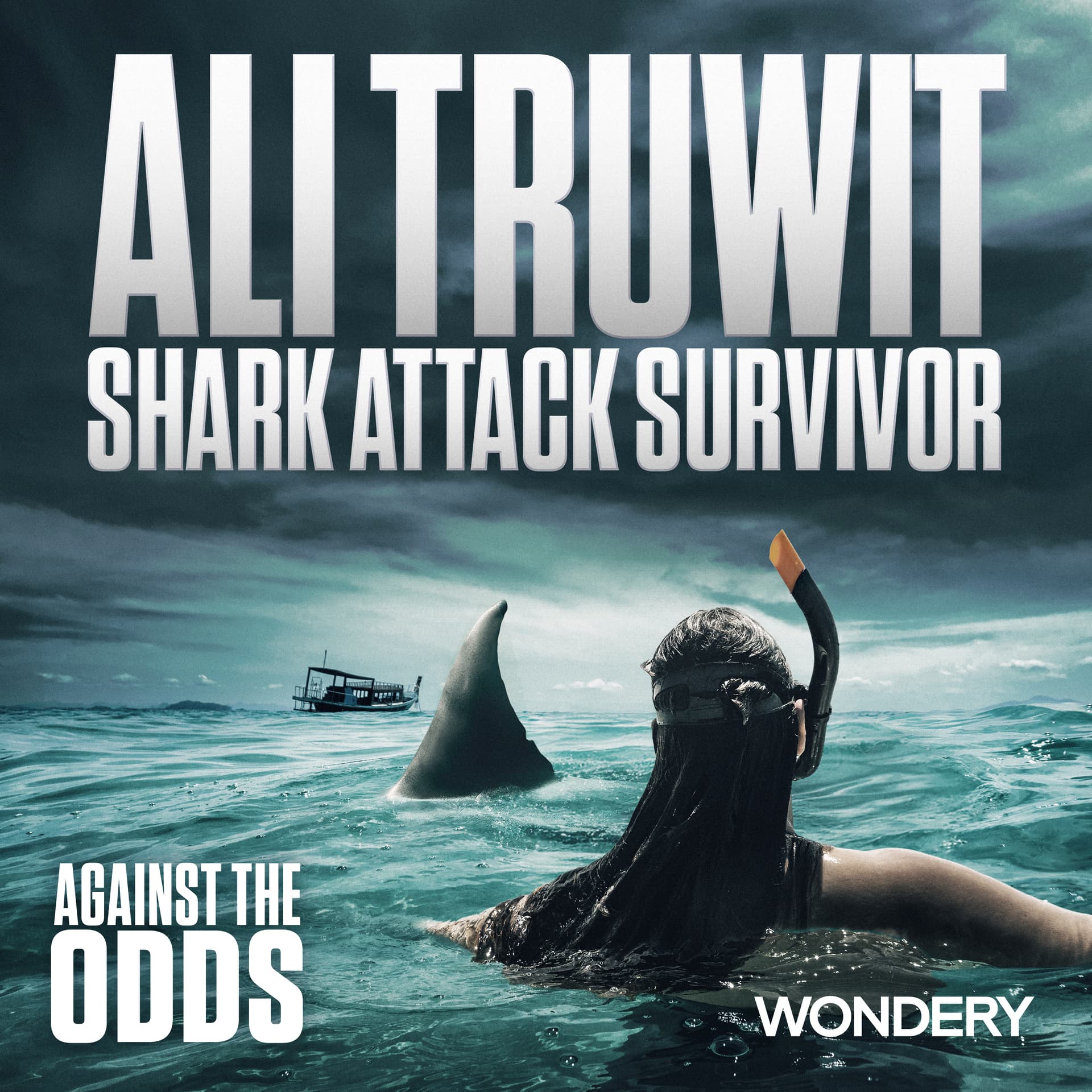
Allie Truitt’s May 2023 shark attack survival off Turks and Caicos, followed by her recovery, return to swimming, and rise to the 2024 Paris Paralympics, where she won two silver medals and set American records.
Guest background
Allie is a 22-year-old Yale graduate and former Division I swimmer (distance events). She was diagnosed with Hashimoto’s disease and retired from competitive swimming before the trip. Her friend Sophie Pilkington is a Yale swim teammate and medical school graduate.
Key claims
The attack severed her left foot; she survived by swimming ~75 yards back to the boat while bleeding profusely. She credits mantras (“I can and I will”) and her mother’s cognitive behavioral therapy coaching for staying conscious. She chose a transtibial amputation to save her life and later reclaimed swimming, including training with visible vulnerability.
Notable examples
tourniquet pain; surgeons rejecting reattachment; relearning touch with fuzzy blanket/towel; flashbacks triggered by water and a moving camera in Paris; winning Hunter Backstroke (American record) and qualifying for Team USA; StrongerThanYouThink.org foundation.
Written by AI. May contain mistakes. Listen to the episode to check what was said.
Chapters
Tap a time to open that second in VOAllie's Background and Competitive Spirit
0:48 to 1:54
Discover Allie Truitt's journey leading up to her shark attack.
“We've heard from people who've been bitten by rattlesnakes, fallen off cliffs, or been stranded in the desert.”
A Love for Water and Swimming
2:54 to 6:02
Allie describes her deep connection with water and her swimming career.
“My earliest memories of swimming start when I was really, really young.”
The Transition from Swimming to Running
6:02 to 6:34
Explore Allie's journey from competitive swimming to running a marathon.
“And so by the end of my senior year, I had actually set a goal with my mom to run a marathon.”
The Shark Attack Incident
6:34 to 9:28
Experience the harrowing moment when Allie is attacked by a shark.
“The next day, Allie and her friend Sophie Pilkington boarded a plane to Turks and Caicos, a small island chain near the Bahamas.”
Aftermath and Emergency Response
12:18 to 14:00
Follow Allie's medical emergency response and her fight to stay conscious.
“Thanks to her years of competitive swimming, Allie made it back to the boat, despite losing her left foot in the attack.”
The Pain of Recovery: Allie's Experience
14:00 to 18:02
Allie shares her excruciating recovery details post-shark attack, including pain management techniques.
“And then there was the pain of the tourniquet.”
Decisions About Amputation
18:02 to 22:28
Allie discusses the difficult decision to undergo amputation and the implications for her future.
“and so concerned and so unclear about what my future looked like in that moment.”
Reclaiming Independence Through Rehab
22:28 to 23:21
Allie describes her challenging rehabilitation journey and the emotional hurdles she faced.
“And for me, that was really hard because I was like, have I lost my love of the water?”
The Road to the Paralympics
23:21 to 28:00
Allie shares her journey towards training for the Paralympics after her attack.
“Allie Truitt still had a long way to go to recover from the shark attack that took her left foot and part of her left leg.”
Allie's Journey to Nationals
28:00 to 29:08
Learn about Allie's determination to qualify for Nationals after her shark attack and amputation.
“And in order to swim at Nationals, she'd first need to qualify.”
Show all 16 chapters
Trials and Triumphs
29:08 to 30:29
Allie discusses her experience at the Paralympic trials and her unexpected success.
“And I was always in awe of the strength and the courage and the mental fortitude that Paralympians have.”
Overcoming Challenges in Competition
30:29 to 31:53
Allie details the physical and mental challenges she faced while competing.
“So that was a really cool moment for me to think that I just did something with one foot that I didn't even do with two.”
The Emotional Rollercoaster of Paris
31:53 to 35:08
Allie recounts her emotional experience during the Paralympic Games in Paris.
“And I think to look at my journey and reflect on how far I had come, I felt really proud of myself for the fight that I had put up and for all that I had worked to show myself I could still do.”
From Trauma to Empowerment
35:08 to 37:06
Allie reflects on her journey from coping with trauma to becoming a role model.
“Allie faced her fears, put her head down, and went for it.”
Stronger Than You Think Foundation
37:06 to 37:46
Learn about Allie's foundation and its mission to help others.
“You know, when I started this journey, I searched online to see, like, what could my new normal look like?”
You're Stronger Than You Think
37:46 to 38:12
Allie's inspiring message to those facing their own challenges.
“Coming through this year and thinking back to all the I can't and I'll never do that and there's no way I'll ever do this again to where I am now.”
Transcript
Automatic transcript. May contain errors.0:00Audible subscribers can binge new seasons of Against the Odds early and ad-free right now. Join Audible in the Audible app or by subscribing on Apple Podcasts.
0:19From Wondery, I'm Mike Corey, and this is Against the Odds.
0:28on this show we tell the true stories of people who sometimes out of nowhere are confronted with life or death situations people who in the face of incredible obstacles must find a way to dig deep to survive and sometimes we get to hear from these survivors themselves in their own words We've heard from people who've been bitten by rattlesnakes, fallen off cliffs, or been stranded in the desert. And in this episode, we'll hear from someone who found herself fighting for her life after being attacked by a shark. In May of 2023, 22-year-old Allie Truitt was riding the high of a competitive college swimming career.
1:12She'd just graduated from Yale, completed her first marathon, and had a job lined up in New York City for the fall. I just think back to that time, this time where I felt like I was on top of the world. But just a few days after graduation, Allie was snorkeling with a friend off Turks and Caicos in the Caribbean, when all that changed. We had been snorkeling for about three minutes when, seemingly out of nowhere, this shark appeared. Pretty quickly after that, it had my leg in its mouth. Today, Allie Truitt is here to share her story, her fight for survival, and how the journey to reclaim her love of the water pushed her further than she could have ever imagined.
1:53I would be in these massive bouts of pain, and I would just repeat, I can and I will, I can and I will. This is Allie Truitt, shark attack survivor.
2:09With the Spark Cash Plus card from Capital One, you earn unlimited 2 % cash back on every purchase. And you get big purchasing power, so your business can spend more and earn more. With the Spark Cash Plus card from Capital One, you earn unlimited 2 % cash back on every purchase. And you get big purchasing power, so your business can spend more and earn more. Stephen, Brandon, and Bruno, the business owners of SandCloud, reinvested their 2 % cash back to help build the company's retail presence. Capital One. What's in your wallet? Find out more at CapitalOne.com slash SparkCashPlus. Terms apply.
2:53The love of water runs deep in Allie Truitt's family. My earliest memories of swimming start when I was really, really young. I grew up on the water on the Long Island Sound, and I am one of four. I have three brothers. From a really early age, my mom stressed the importance of being water safe. So we were put in swim lessons. And when I think back to those days, I remember just immediately falling in love with the water. I loved baths and pools and oceans and showers, and I just never wanted to get out. The water just kind of felt like this place that I was always happy and I was joyful in. And I felt free and light and unburdened by anything else that I had going on or was worried about in my life.
3:38Pretty soon, Allie's love for swimming grew into a drive to compete. As the only girl with three brothers, it's kind of survival of the fittest. You have to be competitive to kind of get your word in there. And so I've always had that mindset of loving competing and wanting to win and push myself. I grew up playing a ton of sports. I tried everything, ballet, field hockey, lacrosse, soccer, basketball. And for me, swimming kind of remained as that true love. In high school, Allie dedicated herself to training 15 to 20 hours a week with the goal of getting into a Division I college swimming program.
4:13I loved the grind and the journey to my goals and the way that I had shown myself that I had way more in me than I thought. The hard work paid off. Allie got into Yale, where her mom had been captain of the women's varsity team. She quickly found her groove in the pool. I gravitated naturally towards distance swimming and clicking into a consistent pace and hitting it over and over and over again. I swam the mile, I swam the 1 ,000 freestyle, the 500 freestyle. It's like a joke because people say I'm super sweet on deck and then when I dive in, it's go time and I'm competing and I want to get my hand on the wall first.
4:48One of my least favorite things is finishing a race and thinking I had more to give. That's your time to throw everything you have at what you're competing at. You've trained for it, you've put in that work, you've woken up at 5 a.m., you've done lifts, you've gone to practice, you've sacrificed hanging out with friends and whatever it is. And so I just want to give everything I have, whatever race it is.
5:12But after two successful seasons with the team, Allie was diagnosed with Hashimoto's disease, an autoimmune condition that causes extreme fatigue and muscle weakness. It was a really, really hard time for me that took way more out of me than I ever expected mentally and physically. At the end of her junior year, Allie made the decision to retire from competitive swimming. That was an incredibly hard decision that took a lot of time and honestly led to a lot of tears. But I'm a big mantra person. And one of the quotes that I love is, you can't control the cards you're dealt. You can just control how you play them.
5:56So Allie focused on her health and cheered her teammates on from the sidelines. In her spare time, she started running. And I loved running. And so by the end of my senior year, I had actually set a goal with my mom to run a marathon. A week before her college graduation, Allie achieved that goal. My mom and I ran a marathon together on Mother's Day, which was so special. And so I just felt like I was on this high of just like the most fun wrap-up to an incredible college experience.
6:30On May 22nd, 2023, Allie graduated from Yale. The next day, Allie and her friend Sophie Pilkington boarded a plane to Turks and Caicos, a small island chain near the Bahamas. Sophie was actually the captain of the Yale swim team my freshman year, and we had become incredibly close friends. We were taking the celebratory trip for my graduation from Yale and her graduation from medical school. We had worked so hard that it was like this kind of break and release to just breathe and have fun and relax and tan in the sun. On the morning of May 24th, 2023, the two friends awoke in paradise. They worked out and then planned to go snorkeling in the afternoon.
7:13So the boat ride out there, I feel like both of us were in a state of just like pure joy. Like Sophie and I were so happy to be there and in the sunshine and staring at clear blue waters and enjoying each other and our friendship and cherishing that. We put on our snorkeling gear and jumped in the water. Allie and Sophie explored the water for about 30 minutes. They saw a few fish, but not much else. So they decided to head back to the boat. We were leisurely floating around as we were deciding to go back because both of us love the water and it's fun to float in saltwater and feel so light and free.
7:48And that is when, seemingly out of nowhere, this shark appeared. Sophie saw it first and she screamed my name and it took me a moment to realize what she was pointing at or screaming. You know, that's never where your mind goes immediately. So at first I thought she was like pointing out a cool fish. But then she quickly realized it was a shark. The next thing I knew, it was underneath us. It was bumping us. It was ramming us. And we were doing our best to like kick and shove back and fight. And you could feel its aggression, like it wanted to fight. And we were doing everything we could to survive.
8:22And in that moment, that was fighting back. Pretty quickly after that, it had my leg in its mouth. and then the next thing I knew my leg had been bitten off.
8:35One of the hardest images that stuck in my mind was that I paused because I realized I didn't have a foot. Like I was like am I crazy or do I not have a foot right now? And I turned around to check and I have this image of crystal clear blue water and then my leg with just flesh at the end and a cloud of red around it. Just such a harrowing image to think about a foot that you've seen for 22 years of your life and to see your leg with nothing there. We screamed for help, but no help came. So we made the split-second decision to swim for our lives back to the boat, which was roughly 75 yards away in the open ocean water.
9:18and I was bleeding profusely and footless and Sophie and I both knew that a shark was still circling us. Sophie is such an incredible and selfless friend that she's staying with me. And so if I don't get back to the boat, Sophie's not getting back either. We needed to save ourselves. We knew that I was at risk of bleeding out and dying. We knew that I was at risk of passing out in the water and we threw our snorkels and we sprinted towards the boat. All I repeated to myself over and over was just get to the boat, just get to the boat. While Ali and Sophie raced to get out of the water, the shark again swam toward them.
9:53Thankfully, this time, it didn't attack. When they finally pulled themselves aboard, Sophie's medical school training kicked in. Immediately when we were on the boat, the first thing Sophie said was like, do we have a tourniquet? We need the tourniquet. And to tie a tourniquet on your footless, bleeding friend's leg, I just can't even comprehend what she did in that moment. In addition to Sophie, a first responder from a nearby boat came to help. He had been a snorkeling guide on another boat and had seen us screaming for help. And he actually tried to swim to us, but we got to the boat first because we're D1 swimmers, I guess.
10:29And he was so critical. So Sophie was holding my leg and keeping compression and elevating it. And the first responder, Matthew, was keeping me calm and conscious. and he was asking me questions about my thesis and about the marathon. And I knew that I needed to stay calm. Like, I knew that if I cry and panic and scream, all that was going to do was put me at more risk. And so I worked really hard to calm myself and to stay conscious during that boat ride back to the dock. I think I knew that I was in danger of dying.
11:13You stepped out for your morning jog. Except it's not your usual morning jog. You started listening to an epic sci-fi book on Audible. Thirty chapters later, you've accidentally run a half marathon. You lost track of how far you've run somewhere just past the city limits. You can't stop. You have to find out what happens next. Then it's over. The universe seems bigger. You feel different. You feel like you have no idea where you are. Audible. Stories that speak to you.
11:44Ali Truwit:What if AI could recreate the voice of somebody you loved who died? What if it destroyed your reputation with words you never said? And what if you fell in love with something that was never human? I'm Mark Fennell, and in my brand new Audible original podcast, I'm travelling the globe to investigate the very personal ways AI is already changing our relationships, our memories, and our sense of what is real. Unreal. Listen now on Audible.
12:17On May 24th, 2023, in the waters off Turks and Caicos, 22-year-old Allie Truitt was attacked by a large shark. Thanks to her years of competitive swimming, Allie made it back to the boat, despite losing her left foot in the attack. But she was still in critical condition. When Allie and her friend Sophie arrived at the dock, an ambulance met them. Sophie got in the ambulance with me, and she rode the entire bumpy ride back with me to the hospital. Once they got to the hospital, Allie called her parents to tell them what happened. So I got on the phone and I said, Mom, I, I, and I kept repeating I.
12:56I tried to tell her what had happened, but I knew that if I said the words, I've been attacked by a shark, that I was going to pass out. I knew that I couldn't say it. And so Sophie took the phone and told my mom what had happened. And my mom started crying on the phone with me, saying, I'm so sorry this has happened. And I said back to her, don't cry. Like, we're not crying yet. We can't yet. Like, we're trying to stay conscious and alert and calm. And we just need to make a plan. Allie's family and friends immediately began working to get her off the island to a hospital that could treat her back in the U.S.
13:32But it was going to take time. They'd need to find a plane and a crew and get her passport from the hotel. In the meantime, Allie's pain was becoming unbearable. I was in massive amounts of pain. Pain that I have never known before. I had asked to not have too much initial medication just because I knew that my family wasn't with me. And so I needed to be alert for those medical decisions. And so the pain was so, so great. There was the pain of where the shark had bit and my open leg. And then there was the pain of the tourniquet. They had tied a tourniquet on me so tight to stop the bleeding, which of course was needed, but was so painful because it was cutting off all blood flow and circulation beneath where they had tied it.
14:15At times I was like, I don't know if the tourniquet is more painful or if the actual bite is more painful. And I remember being on the phone with my mom and being like, I can't do this. Allie's mom is a cognitive behavioral therapist. She stayed on the phone with Allie for hours, coaching her daughter through the waves of pain. I did box breathing a lot, where you'd breathe in for three, hold for three, and breathe out, and that really helped me. And then we also did tons of mantras. So I can and I will was a really, really big one for me. And I would just repeat, I can and I will, I can and I will.
14:47Every time that I would be in these massive bouts of pain and it would ramp up again, we would say, this too shall pass, this too shall pass. And my mom would say, let it wash over you. It will pass. It will pass. After six grueling hours in the island hospital, the plane was ready to medevac Allie to Miami. Sophie wasn't allowed on board, so Allie would have to take the three-and-a-half-hour flight alone. And so my mom left a voicemail with the mantras with, I can and I will, I can and I will. And so that whole flight where I wasn't sure if I was going to survive, I wasn't sure what was going to happen to me, I was not with any friends or family, I was able to repeat those mantras to myself.
15:28Allie arrived at Ryder Trauma Center in Miami around midnight. She was finally able to see her parents and could finally let her guard down. When I was able to be around my parents was the first time I cried since the shark attack because at that moment I was surrounded by people who loved me, who were family, who were going to take care of me, and I knew that I could cry in that moment. But Allie wasn't out of the woods yet by any stretch. Experts can't say for sure what type of shark attacked her, but some think it could have been a bull shark. While shark attacks are incredibly rare, bulls have a reputation for being one of the more aggressive and dangerous species to humans, and are known for their bump and bite behavior.
16:12The shark that attacked Allie severed her foot and part of her lower leg. Miraculously, her foot had been found, still in its flipper, and Allie was hanging on to the hope that it could be reattached. The doctor quickly reoriented us to say that was not a possibility and that, first of all, before we even think about saving your leg, we need to save your life. And that is where everyone's mind needs to be. There is infection risk from the ocean, from shark bacteria. And if that travels up, that has the potential to kill. And hearing that puts things in perspective quickly. Allie needed emergency surgery.
16:48He told me on top of that, there's a 50 % the chance you wake up and your entire leg is gone. Because we don't know what we're going to find when we go into surgery. I think about those moments as just like, in addition to worrying if I was going to survive, there were fears of, is my leg still going to be there when I wake up from surgery? Allie had blood transfusions and two life-saving surgeries in Miami to stabilize her. But doctors recommended a third surgery, a transtibial amputation. It would mean Allie would lose more of her leg, everything halfway below her knee but it would also mean a life of less pain and more mobility with a prosthesis.
17:28Those first two surgeries when I wasn't sure how much of my leg I was going to keep I was so focused on keeping as much as I could. Like I was just like please keep as much as you can I want as much of my leg as I can have and now the decision is actually take another part away to improve my life. It was such a hard decision to be like take more of my leg away when I've already feel like I've lost so much. In the end, Allie decided to have the surgery. On May 31st, seven days after the attack, doctors in New York performed the amputation. It was her 23rd birthday. I think back to those days, and I was so fearful and so worried and so concerned and so unclear about what my future looked like in that moment.
18:10Like, I truthfully didn't even know how I was taking my next step. I thought about all of the big, heavy questions immediately. So was I going to be able to run again? I had just run a marathon. I don't have a foot anymore. Was I going to be able to walk? How was I going to walk? Was it going to be a lifetime of pain? When I had children and I was older, could I run after my children on a prosthetic? Could I carry my baby down the stairs if I can't do stairs well on a prosthetic? A million questions about being an athlete, about being a mother, about my own body image. Sitting in that hospital bed, wondering about what this future was going to look like, Like, it was really hard to envision a happy and bright future for myself at that time.
18:52Like, I had no answers to any of these questions. After the surgery, Allie returned to her parents' house in Connecticut to begin her rehab. I got home, and pulling up the driveway, my driveway was lined with posters from friends and family and balloons and flowers all inside. and I just remember that like in this experience where I was so overwhelmed and over my head of what my life was going to look like, it was this just like huge reminder of the incredible support system that I had with me. I am not a naturally vulnerable person and so learning to let people be there for me through my tears and my hard times and sad times and pain was something I had to learn to do but something that I'm so grateful that I did because it made a world of difference to have all that support.
19:41Still, Allie faced a tough road to recovery. Those early weeks, I was in massive pain. I was incredibly sad and grieving the loss of my leg. And because of night terrors and flashbacks to the attack, I was not sleeping really at all at night, and that was really, really hard. And the pain would get worse at night, and that was really hard. There were days where I spent the entire day crying on a couch. But the competitor in Allie began to surface. I think probably driven by life as an athlete and in the sport, I knew that I had it in me to continue to physically fight to stay strong. And so I was doing three physical therapy sessions a week.
20:22In those early days, I had to relearn everything. We would spend like an hour of physical therapy literally laying on a bed and trying to extend my leg straight as far as I could. Relearning how to do the simplest of movements with new nerve endings and new muscle attachments took hours. Anything that touched my leg, like a gust of wind, would send what felt like electric shocks throughout my leg and would create all this pain. And so I had to start by rubbing a fuzzy blanket on my leg for like 10 minutes of physical therapy to get the nerves adjusted. And then we graduated to a towel. We slowly built up so that my leg could be touched by different textures and be okay.
20:59In addition to her physical recovery, Allie was still struggling with the loss of her limb. As a 23-year-old girl, just the body image, pain in those early weeks, like I would stare at myself in the mirror and be like, I'm so ugly now. No one will ever find me attractive like this, and no one's ever going to want to date me. I gave my parents all my short skirts and short dresses, and I was like, take them to Goodwill, take them to the basement. I'm never wearing them again because no one's going to see my prosthetic leg. Like, I can't do that. Just looking at her amputated leg was incredibly difficult for Allie.
21:34Across the three hospitals, not once until the day I left, did I look at my amputated leg. I would wear a sleeping eye mask in the hospital when the doctors would come in so that I didn't have to look. So I started in that place of like, I won't even look at it. And then I had to grow. I literally would practice just looking at my leg for 30 seconds. And then when I would sit on a couch, if my leg hung straight down, the blood rush was so painful. And so we would time like 14 seconds of me hanging my leg off the couch. To think back now and think that we were celebrating me hanging my leg for 12 seconds is crazy.
22:10But we celebrated every small win in those early days just to help me kind of get to a place where I could grow from there. Allie was making strides in her rehab. But even so, the trauma of the shark attack was never far away. The sound of water even taking a shower would trigger flashbacks. And for me, that was really hard because I was like, have I lost my love of the water? Is that gone with this too? Like I've lost my foot and now I've lost something that I've loved my entire life. And this safe space and happy place and free place for me is now gone too.
22:52Imagine you're reading Pride and Prejudice, except you're not reading it. Harris Dickinson and Marissa Abella are reading it to you on Audible. Her barbs sting you. His coldness sends a shiver up your spine. Your heart aches. Your ears burn. You yearn for Elizabeth and Mr. Darcy to profess their undying love for one another. You can't bear it any longer. Well, maybe a chapter longer. Performance is so good, you'll give love a second chance. Audible. Stories that speak to you.
23:30Allie Truitt still had a long way to go to recover from the shark attack that took her left foot and part of her left leg. She had gone from being excited about living the life of a 20-something in New York City to needing crutches and a walker just to get around her parents' house. She looked forward to getting a prosthetic leg because she knew it could help her regain some independence. She also wanted to swim again. I felt like I had lost a lot in the attack and things that I was never going to get back. So my foot. I'm never getting my foot back. But there were also things that I had lost that I knew I could fight to reclaim.
Read the full transcript
24:05And my love of the water stuck out to me as a big one. That was going to take work and take pain and tears and flashbacks and all of it, but that I could fight to reclaim, or at the very least try. So, six weeks after the attack, Allie got back into the water for the first time, in her family's backyard swimming pool. We put a floaty around me because we were unsure physically what was going to happen, like the temperature of water and all of that would make my leg super painful and get all these like shocks. And then emotionally was the sound of water going to trigger like just total flashbacks to the attack.
24:40I started slowly, like just put my foot in and slowly got myself in. And there were moments where it was really hard and I had flashbacks and I had panic and terror. And there were also what I call glimmers of hope. where I had the joy and the peace in the water again. It was what kept me getting back in and saying, hey, maybe I can get this back. Like, there are those tiny moments where this feels good, and maybe I can fight to keep going. After getting comfortable in her parents' pool, Allie wanted a bigger challenge. She wanted to train, for real. But that meant going to a bigger pool. Which, of course, was really hard because the pool is a place where you're completely exposed.
25:21You don't wear your prosthetic in the pool. so I had to make the decision that I was going to go and let people see my amputated leg. In reality what that looked like at the start is that I would crutch over to the pool in sweatpants and I would wait until I literally sat on the ledge of the pool and like scramble to take my sweatpants off and give them to my mom and get right in the pool and then right when I got out she'd stand poolside and hand me the sweatpants. So it was a process there too. It wasn't like I just decided everyone was going to see it and that was great but it was something where I said I want to work out and this is what I'm going to have to sacrifice to get in the water and run some sets.
25:54Allie called up her old high school coach to see if he would help her train. I truthfully was really nervous about it. I called him and I was like, is this something you'd be okay coming back to coach me and run me through some sets just for a workout, just to let me feel strong and get some exercise in? And he said, absolutely. I am so thankful that he said yes. Around the same time, Allie started to connect with Paralympians. Noelle Lambert is a Paralympian in track and field. And she basically ended up having a phone call with me. And she said, when I lost my leg in the hospital, I decided I was going to the Paralympics.
26:33And she's like, it has been such a strength giver to me and such an incredible community to come into. And I don't know if this is too early to be telling you, because it was like a month in at that point. But think about it. Like, you are a college athlete. Just think about this. I was like, there are so many questions in my mind right now that, like, that is not on the table for me at this moment. So Allie put the idea aside. She was progressing with her rehab and looking forward to starting the post-college consulting job she had lined up for October. But then she got an infection in her leg that forced her to take a break from her prosthetic.
27:09Once I got that infection, I was like, I don't want to go into work on crutches on one leg. And so I'm going to delay my start date to let myself heal. And in that period of time, I had this moment where I had a happy what if. Allie thought maybe the extra time off would give her more time to train. And that maybe the idea of going to the Paralympics next summer wasn't so far-fetched after all. I always have what ifs that end negatively. Like, what if I do bad? What if I fail? What if I can't do it? But I never have like those really exciting, like, hey, what if I could make the Paralympics in less than a year and go swim and compete?
27:46Like, so the thought that it was this exciting what if, this hopeful what if, was exciting in itself to me. Allie knew to even have a chance of making Team USA for the 2024 Paris Paralympics, she'd need to compete in U.S. Nationals that December. And in order to swim at Nationals, she'd first need to qualify. Where that landed me was that three and a half months out from the attack and amputation, I needed to be at this swim meet in Georgia to get my nationals cuts. At that point, I just kind of decided that if I want to leave the door open for myself, I need to just try. I went to that meet and I had no clue how to get on the starting blocks on one foot and one leg.
28:26And I had to change my breathing pattern because I no longer had the stability from a left foot to kick down. And so something I'd done for, I don't know, 17 years of my life in competitive swimming, I now had to completely change. But Allie pushed through, and her times were good enough to make nationals. My whole life at that point was a head spin of where am I, and now I'm at a meet, and what's going on? But I also left feeling so hopeful in the community there, showing me what was still possible, and what I still had, and what I could still do, and the strength I could gain from them felt really encouraging.
29:00and like a space I wanted to try to return to. And so I decided that in those months where I was recovering from infection, I was going to train and I was going to see where I landed at nationals. And I was always in awe of the strength and the courage and the mental fortitude that Paralympians have. I don't think I ever truly realized how incredibly fast they are. To qualify for the Paralympics, I had to swim times that were close to my division one times that I was recruited to Yale to swim with. And I did those with two legs, and now I needed to do them with one. Allie placed surprisingly well at nationals.
29:39The final hurdle would be the Paralympic trials in Minneapolis that June. I walked into trials, of course, with the goal of making it, but also with the knowledge that I was a completely different person than the girl who started crying on her couch, hiding her leg, not seeing a future forward, to this girl fighting for a spot to represent her country at the Paralympic Games. My main events that I was focused on were the Hunter Backstroke, the 400 freestyle, and the 100 freestyle. And the first day was the Hunter Backstroke. And I ended up getting first place in that and breaking an American record in the morning and then again in finals at night.
30:18The coolest thing about that race actually for me is that that time that I swam was faster than I had ever swum that race with two feet. So that was a really cool moment for me to think that I just did something with one foot that I didn't even do with two. But winning races wasn't necessarily enough for Ellie to qualify for the Paralympics. Her times needed to be close to third in the world to make Team USA. So on the second day of competition, Allie had to keep pushing. Her final race was the 100 freestyle. I lose significant time off of starts and turns. And I also, in sprint races where a big, powerful kick is really important, I was at a deficit because I don't have a left foot.
31:06And so that was one of those races where I was racing someone who did. I was really tired from the 400 free that I had raced less than an hour before. but I dove in and I flipped at the halfway mark and she was ahead of me but I knew I was within reach and I wanted to give it everything I had so I put my head down and I just dug deep and I encouraged myself with positive self-talk telling myself that like there was more in there for me to give and that was a fun comeback race. Allie won the 100 freestyle. Then came the announcement of the 2024 Paralympic swim team roster. The way they announced the team was they went men first, then women, and in alphabetical order, Truett Falls kind of near the end there.
31:48So I sat in anticipation for quite some time waiting to hear my name be called. But once it was, I was so excited and I just felt this mix of pride and overwhelming gratitude. And I think to look at my journey and reflect on how far I had come, I felt really proud of myself for the fight that I had put up and for all that I had worked to show myself I could still do. Everything I achieved at that meet is on the shoulders of so, so much support. Big things, small things, little messages, positive DMs or comments on an Instagram, a letter, like it all moves the person forward. And so in that moment when I heard my name being called, it was just like a movie screen of just all the people who had been there for me and all the support that had taken me to that point where I was getting to sit there and hear my name be called for the 2024 Paris Games.
32:40In August, Ali arrived at the Olympic Village in Paris for the opening ceremony. Opening ceremonies was an incredible moment for me to think that like a year prior at that time, I was learning how to walk in a prosthetic and now I was getting to walk down the Champs -Élysées to the Paralympian. So just so much joy and excitement, coupled with obviously nerves. I had been selected to represent my country. I wanted to perform. I wanted to do well. I wanted to be in a position where I was ready to show what I had worked for. Allie had competed in some big meets in college, but nothing could have prepared her for Paris.
33:13We had 20 ,000 fans and sold-out crowds. The lights, the music, the energy, the support, it was so different than college. And the pressure that comes with 20 ,000 fans and the mental load that Paralympic athletes take on. And so for me, like, I get nervous because I have to walk out on deck and take my leg off and take my liner off and then turn around and get on the blocks all in time for them to say, take your marks. And sometimes for amputees, you go to click your prosthetic off and it just like doesn't come off. My whole fear every time was like, I'm going to get behind the blocks. My leg's not going to come off.
33:45But Allie's biggest challenge wasn't her prosthetic. The pool in Paris was beautiful. It also essentially was a shallow body of clear blue water with this large black TV camera that moves underneath the swimmers and chases them as they're competing. Even just watching the races the first night, I kind of had this moment where I was like, that is emulating a shark for me. Like this huge big black thing moving underneath me as I race as hard as I can in shallow clear blue water is reminiscent of the attack. So I had a traumatic response to that. My chest tightened. I cried. I kind of froze. It was a really, really hard time for me because I feel like I had worked so hard to get to this space to then encounter another obstacle like that where I was going through more trauma of recalling the attack and re-experiencing those emotions.
34:36I've used therapeutic skills throughout this year to get through flashbacks of grounding myself and saying, like, I can see a black line or I can see my coach on the side of the pool or whatever it is. And even when I was doing that, it wasn't working. Even though my mind knew it was a camera and I was in a pool, my body was kind of disconnected and instead just experiencing the trauma. And so I talked with my mom for a long time and with my coach for a long time. And my cousins sent cute videos of their babies to make me smile. Like, I just used sources of joy and support to help me get through that time to know that I could still do it.
35:12Allie faced her fears, put her head down, and went for it. I was so excited and proud to be there and honored to represent my country. And so the way that I thought of it was getting a race with an American flag on my cap was a way to thank the everyday American heroes who saved my life and helped me rebuild it. So my prosthetists, my nurses, my doctors, my family, my surgeons, my friends, my list goes on. So in my races, when things got hard and tiring, I reminded myself that I had more, That I was not at my limit and that mentally I might be telling myself that, but physically I had more to give.
35:47Allie won the silver medal and set a new American record in the 400 freestyle. 24 hours later, she earned another silver medal and another American record for the 100 backstroke. And so to end that meet with two silver medals, two American records in 24 hours was a really, really special and cool moment. and one that I feel grateful to have had and contributed to Team USA's medal count. And also, I actually had 60 friends and family in Paris cheering and supporting. They had flown to Paris and taken time off, including some of my Yale teammates. So to get to walk out and hug them after, just put the exclamation point on the most special moment.
36:28Thinking back on the attack, Ali credits swimming with saving her life and helping her find the resilience to keep on fighting. I think about my gratitude for the sport. And I would have never imagined that swimming would save me in a life-or-death situation. Allie's come a long way since those days of crying on her parents' couch and worrying how people would see her as an amputee. She even posed for Sports Illustrated. A year ago today, I had my short skirts and my short dresses in a bin, ready to give away to goodwill, saying no one will ever see my prosthetic leg. And now fast forward a year, and I am posing for Sports Illustrated's swimsuit in a bikini, showing my prosthetic.
37:13You know, when I started this journey, I searched online to see, like, what could my new normal look like? Where are young female amputees showing off their prosthetic or feeling confident or feeling beautiful or hopeful in their life? And to think that now I get to maybe be that for someone else feels really, really special. Allie started a foundation called Stronger Than You Think. It helps women and girls afford prosthetics and supports the Paralympics. The idea that I could turn this terrible thing that happened to me into something that could be used for good for other people is deeply healing to me.
37:46Coming through this year and thinking back to all the I can't and I'll never do that and there's no way I'll ever do this again to where I am now. And obviously there's still more I'm working to achieve. But I think we have so much more in us than we think we do. So what I would tell anyone going through trauma or hardship or challenge or whatever obstacles life throws their way, you're stronger than you think. Thanks to Ali Truitt for sharing her story with us.
38:41This was Ali Truitt, Shark Attack Survivor. To learn more about Ali Truitt's story and her foundation, visit StrongerThanYouThink.org. Ali has a documentary film and book project in the works, and her latest Sports Illustrated photo spread dropped in June. To hear more stories from survivors in their own words, check out our series Fallen on Mount Whitney, Stranded in Joshua Tree, and Bitten by a Rattlesnake. I'm your host, Mike Corey. This episode was produced and written by Peter Arkuni and Polly Stryker. Original theme music by Scott Velasquez and 2K for Fries on Sync. Series produced by Emily Frost.
39:24Managing producer is Desi Blaylock. Senior managing producer is Callum Plews. Senior producer is Andy Herman. Executive producers are Jenny Lauer-Beckman, Stephanie Jens, Marshall Louis, and Aaron O 'Flaherty for Wondery.
39:42Thank you.
From the publisher
In May of 2023, competitive swimmer Ali Truwit had just graduated from Yale, completed her first marathon, and had a job lined up in New York City. But a few days after graduation, Ali was snorkeling with a friend in the Caribbean when, out of nowhere, she was attacked by a shark. Today, Ali Truwit https://strongerthanyouthink.org/ shares her fight for survival, and how her journey to reclaim her love of the water pushed her further than she could have ever imagined...all the way to the podium of the 2024 Paris Paralympics.
Order your copy of the new Against the Odds book, How to Survive Against the Odds: Tales & Tips for Animal Attacks and Natural Disasters, for stories of everyday people confronted by life-or-death situations, showing you how they survived—and how you can too. Learn more at SurvivalGuidebook.com.
Be the first to know about Wondery’s newest podcasts, curated recommendations, and more! Sign up now at https://wondery.fm/wonderynewsletter
Listen to Against The Odds on the Wondery App or wherever you get your podcasts. Experience all episodes ad-free and be the first to binge the newest season. Unlock exclusive early access by joining Wondery+ in the Wondery App, Apple Podcasts or Spotify. Start your free trial today by visiting http://wondery.com/links/against-the-odds/ now.
See Privacy Policy at https://art19.com/privacy and California Privacy Notice at https://art19.com/privacy#do-not-sell-my-info.
