Ask ChatGPT

 Against The Odds
1 Jul 2025 · 38m · 18 chapters
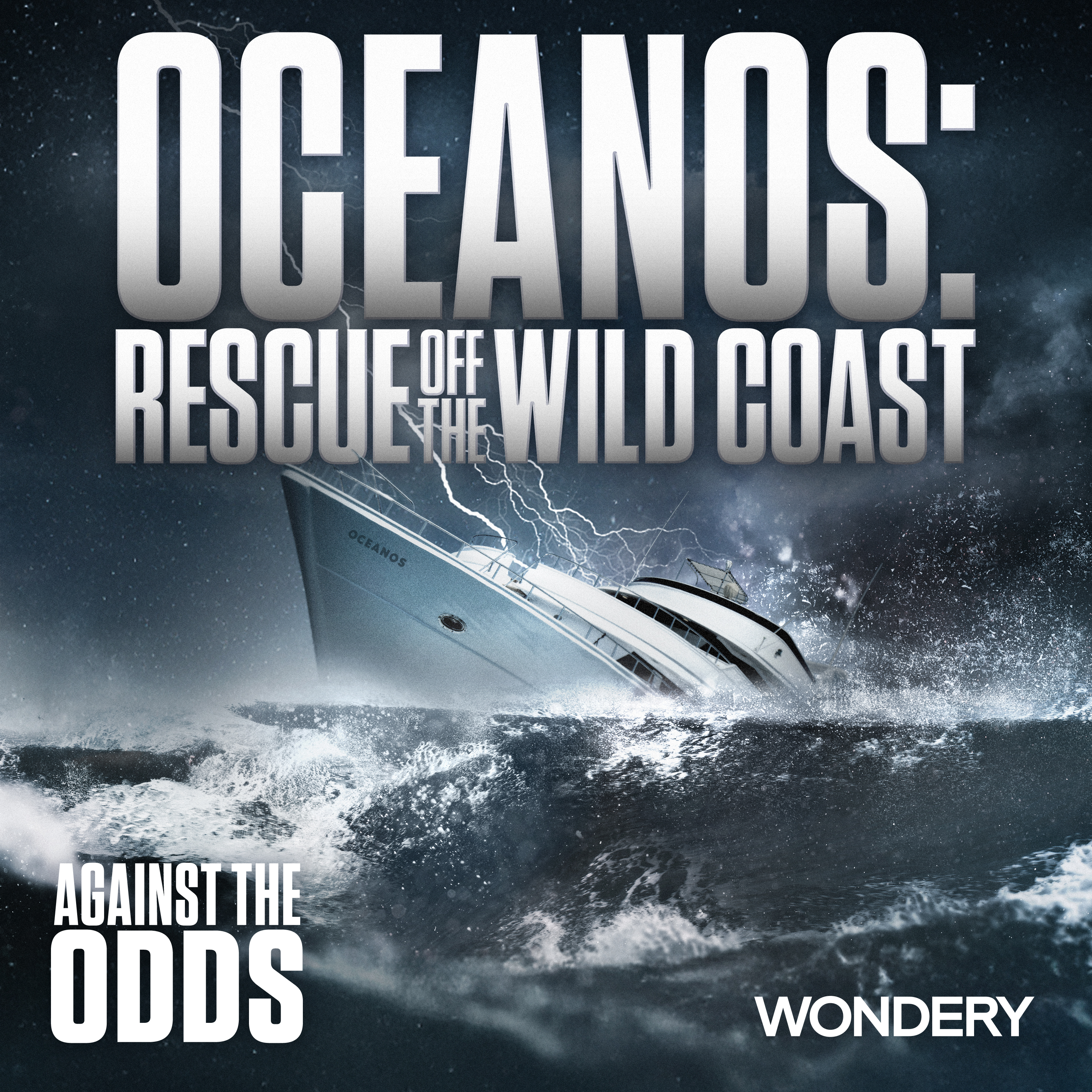
The 1991 Oceanos cruise ship disaster off South Africa’s wild coast, focusing on how cruise director Lorraine Betts and her entertainers/limited crew organized an evacuation after power loss and slow flooding, despite senior officers abandoning ship; includes survival/psychology discussion from author Sean Evans’ book.
Lorraine Betts, 35-year-old cruise director in 1991; later owns Ship to Shore, a global expedition cruise outfitting company. Sean Evans, author of How to Survive Against the Odds and related survival/animal-attack/natural-disaster titles; discusses survival science and expert consultation.
The “Birkenhead Drill” was upheld by Betts’ team, not the captain/officers. Ship condition was poor (pier impact hole; sewage smell; rotten sea chest/collapsed intake). Lifeboats were not filled to capacity; most officers took the only two engine lifeboats. Betts used foghorn updates and kept passengers calm.
lifeboat hitting Betts’ grandmother; lifeboat lowered too early due to listing; helicopter rescues with Navy SEAL/diver; Betts jumping into shark-infested water; captain later lifted in harness and released. Evans’ examples include avalanche chapter resonance, Ada Blackjack surviving with a cat, and “box breathing” plus advice like not zigzagging from crocodiles and not sucking snake venom.
Written by AI. May contain mistakes.
A look into the Oceanos cruise ship and its ill-fated journey.
“From Wondery, I'm Cassie DePeckel, and this is Against the Odds.”
Interview with cruise director Lorraine Betts about her experiences.
“You were 35 at the time and already an experienced cruise director.”
Discussion about the conditions on the Oceanos before departure.
“And the people that you get to meet as well, right?”
The moment the ship's power goes out and chaos ensues.
“The sky was this weird, weird orangey red and it seemed almost sinister.”
Concerns about the ship's maintenance and the atmosphere on board.
“scout around the ship to introduce ourselves to the different decks etc and when we went down to where my office was going to be I looked at the staff and I said you know this thing's rotten It stinks.”
Lorraine's interactions with the ship's captain and crew during the crisis.
“and the ship was sitting in the water, dead in the water, and the waves started slapping against the side of the vessel and my office was right on the side of the ship.”
Lorraine's growing understanding of the ship's dire situation.
“I did a sweeping bow very dramatically and said again, well, good morning, God.”
The abandonment of the ship by the senior crew and its implications.
“Yes, I had sent Moss Hills and Julian Butler down because Moss had a video camera, which turned out to be great because he did a lot of footage with that camera that was usable in the investigation afterwards.”
Learn about the crew's decisions and the captain's actions during the crisis.
“Soon after word of flooding reached the bridge, most of the senior crew quickly abandoned ship.”
Explore how the remaining crew managed the evacuation in a chaotic situation.
“James Arthur Ray was a charismatic self-help guru who promised his followers a path to wealth and enlightenment by becoming the best versions of themselves.”
Understand the difficulties faced while getting passengers onto lifeboats.
“especially in the middle of such a brutal storm?”
Learn about the helicopter rescue operations and how decisions were made under pressure.
“What were the biggest challenges getting the hundreds of remaining passengers off the ship?”
Hear about the survivor's reflections on the experience and its impact on their life.
“Toward the end of the rescue, as the ship was about to go down, you had to jump into the sea, into shark-infested waters, to get to a rubber lifeboat.”
Exploration of emotional impacts after a traumatic maritime experience.
“And Olympic Airlines arrived with 12 maritime lawyers from Greece and it was deemed an accident.”
Introduction of Sean and discussion on his survival experiences.
Sean shares personal survival stories and advice on facing extreme situations.
“experts to show you how they survived nature's most extreme scenarios and how you can too.”
Discussion of survival strategies and key takeaways from Sean's book.
“One, if I'm going into kind of like a really backwoods, kind of far-flung area, let people know where you're going.”
Discover how FanDuel and DraftKings transformed the gambling industry.
“One man on a transatlantic flight read through a gambling law and found a crack just wide enough to build an empire.”

Get the gist, explore an idea or ask about something said.
 Claude
On Against The Odds, what are the key points of this episode?
Searching your listeningAutomatic transcript. May contain errors.
0:00Audible subscribers can binge new seasons of Against the Odds early and ad-free right now. Join Audible in the Audible app or by subscribing on Apple Podcasts. A note to listeners. Stay tuned at the end of this episode to hear my conversation with Sean Evans, the author of How to Survive Against the Odds, Tales and Tips for Animal Attacks and Natural Disasters, a new book inspired by our podcast.
0:33From Wondery, I'm Cassie DePeckel, and this is Against the Odds.
1:02The Maritime Code, Women and Children First, was established in 1852, after the HMS Birkenhead sank off South Africa's wild coast. Since then, the Birkenhead Drill, as it became known, has been a time-honored tradition in disasters at sea. But nearly 140 years later, on that very same stretch of coastline, the cruise ship Oceanos set sail into a brutal storm with 571 people aboard, and soon it began taking on water. When it became clear the ship was going down, it wasn't the captain or his senior officers who upheld the code. Instead, it was the ship's 35-year-old cruise director, Lorraine Betts, and her team of entertainers who rose to the challenge, organizing the evacuation, launching lifeboats, and ultimately helping to ensure that every passenger survived.
1:55Hi, Lorraine. Thanks so much for joining me today. Hi, Cassie. Thank you so much for having me. So take us back to August 1991. You were 35 at the time and already an experienced cruise director. What was life like working on cruise ships then? And what exactly did your job involve? Well, gosh, 35 plus years ago, working on a cruise ship was a dream. I mean, we used to cruise around the world. I worked for an expedition company, a Seattle-based company, and part-timed with this South African company. My job involved organizing the entertainment the passengers would be receiving, the embarkation, the disembarkation, the type of shore excursions that they would be going on, and coordinating all of that with the ship's personnel, like the hotel department, the bridge, etc.
2:48I was keen to do these trips because I got to invent from scratch the itineraries that would take people out to the incredible Indian Ocean and visit unique places with unique fauna, flora and opportunities to learn about and take it all in. That sounds like so much fun. And the people that you get to meet as well, right? Oh, definitely, yes. It was a fantastic life to spend so much time visiting so many places. how would you describe yourself as a cruise director? Well, if people ask me what kind of a cruise director was I, I have to go to what I've heard people say about me, that I'm quite bossy.
3:29I do have a natural ability to make people listen, and I think people like to follow, they like to have instruction, and so that worked well for me. So on August 3rd, 1991, the Oceanos was preparing to set sail on an overnight voyage up the eastern coast of South Africa, and a massive storm had already descended. Were you concerned at all about setting off in such extreme weather? You know, Cassie, I actually spent 10 years at sea, and I spent most of that on much smaller ships, expedition ships. And the Oceanus was quite a bit bigger than that. So no, I thought, you know, I think it was something like a Force 9.
4:13So that didn't seem that scary to me. I was psyched and ready to go. But when I went up on the bridge and saw the port captain talking to our captain, Avranas, I could see there was some tension going on and I wasn't quite sure why, but I had a sixth sense that something was going on. The sky was this weird, weird orangey red and it seemed almost sinister. I know it sounds, you know, like, why do you think that? But it did feel very strange. The weather felt odd.
5:14We'll see you next time. Life, the power of a promise. Pacific Life Insurance Company, Omaha, Nebraska. And in New York, Pacific Life and Annuity, Phoenix, Arizona. Show button here. Football is finally back and PrizePix is going crazy with the deals to start the season, giving out promos every day in September. On PrizePix, you can make all the picks you want, all in the same app. And now, PrizePix is available nationwide. So what are you waiting for? Lock in for kickoff because everyone and everything is on PrizePix. What you on? Download the app today and use code WONDERY to get$150 instantly in lineups if you win your first$5 lineup.
5:53Prize picks. Run your game.
6:00The Oceanos had a history of maintenance issues. Did you have any concerns about the condition of the ship? Funny you should ask. My staff and I joined the ship in the Seychelles, a group of islands in the Indian Ocean. and when the ship was coming into the port she actually hit the pier which was a cement pier and made a big hole in the front of the bow oh my gosh I boarded with my team and we did a scout around the ship to introduce ourselves to the different decks etc and when we went down to where my office was going to be I looked at the staff and I said you know this thing's rotten It stinks.
6:42We were joking and laughing, but no, I didn't think she was in great condition. Early in the trip, passengers began complaining about a sewage smell in the lower cabins. Was that a red flag to you? When you say a red flag, it was really quite bad. And, you know, I don't know how long these people have saved to go on a trip. And it stunk down there of sewage. So I had a meeting with the engineering department and said, you know, you need to fix this. Otherwise, I'm going to close off those lower decks and we'll have to readjust the charter agreement because we won't be able to sell those cabins.
7:18So I think with that, the engineer felt he was under pressure and he had to actually do something. I can't even imagine what it down. Right. Yeah. Despite the storm, Captain Avronis made the call to depart. Then just after 9 p.m., the ship's power went out. I mean, what was going through your mind at that moment? Well, at that moment, there was a kind of a muffled bang. I was in my office with Julian Butler, one of the magicians, and he was helping me produce the daily program for distribution that evening. And I looked at him, the lights went out, and you'd expect them to come back on immediately, but they didn't.
7:59Just emergency lights came on. and the ship was sitting in the water, dead in the water, and the waves started slapping against the side of the vessel and my office was right on the side of the ship. And I looked at him and went, this is really weird. I'm going to run up to the bridge and see what's going on. Get all the staff and keep the passengers in the main lounge and I'll meet you there because that was kind of halfway up to the bridge from the office. I ran up five flights to the bridge to find out what was going on. In our series, we dramatize your multiple trips to the bridge to speak with the captain.
8:36But what do you remember about those moments? When I got up to the bridge, I saw all the emergency radio equipment strewn across the bridge wing in a mess. The wires were tangled. It was just chaotic. and the chief engineer, who was a rather large man, was shouting hysterically into the emergency radio, Mayday, Mayday, Mayday, this is the Ocheanos, Mayday, Mayday. And I looked to my right where the captain was just standing there in front of the radar. He was just standing doing nothing. And I went up to him and said, Captain, what's going on? What would you like us to do? Is there anything we can do?
9:21You know, instructions for the passengers or anything. So that's when I realized that it was actually not going very well. So the captain tells you there's just some engine trouble, but it's nothing serious. Though as a precaution, you should tell passengers to put on life jackets. It sounds like he didn't feel the need to tell you the truth, which perhaps wasn't out of character for him. What do you remember about your first meeting with Captain Avranas? Oh, that was quite funny, actually. I walked onto the bridge when I joined the vessel in Seychelles and introduced myself to him and said, Morning, Captain.
9:56I'm Lorraine Betts. I'm the charter's representative and your cruise director. He didn't even look at me. And so I repeated it. And he said, If you want to talk to me, you call me God. So I thought it was quite funny. I did a sweeping bow very dramatically and said again, well, good morning, God. I'm Lorraine Betts, the charter's representative. I'd like to introduce myself to you. You must have loved that. I don't know. It was beyond belief, really, when you think about it afterwards. Yeah. Well, do you think the captain was dismissive of you partly because you were a woman? I think yes, yes, definitely.
10:44The crew was mainly all males with a few receptionists here and there and an assistant person that was female. Yeah, no, and it's not just women. They treated the Portuguese and Filipino crew dreadfully. So the lights are out, the ship is dead in the water, and the captain told you the ship was not sinking. Was there a specific moment when you realized this just isn't a power issue or a little engine trouble? This ship is going to sink? Yes. I left the bridge and I said to the staff who had assembled outside the main lounge, I said, go to your cabins, get really comfortable, warm clothes on, non-slip shoes and meet me back here.
11:28And Julian and I ran down together. We went to my office. I had brought with me about 10 ICOM radios. I said, we'll take these back up with us. I'll meet you at the lounge in a minute. I went to my cabin and I shut the door and I stood there for a second and my knees started shaking visibly and I just stood there shaking and I thought to myself, whoa, this is real. This is not good. I was just shaking and the door opened and my school friend, who I had brought with me to work on board the ship, stood at my door and said, Lorraine, what are we supposed to do? I don't know what I'm supposed to do.
12:11And with her panic, I felt a sense of calm come over me and And I helped her get some warm gear on, grabbed the radios and said, meet me upstairs when you're ready. I knew then in my cabin that this was not going to have a good ending. And was anyone telling you about the state of the water in the ship that was filling with water? Yes, I had sent Moss Hills and Julian Butler down because Moss had a video camera, which turned out to be great because he did a lot of footage with that camera that was usable in the investigation afterwards. The two of them came back up in shock and said, there's water filling up downstairs.
12:53And they told me what level it was on. It wasn't up to my cabin yet, but it was certainly two decks below. Actually, what was happening is that because of the work they had been doing, they hadn't closed off some one-way valves properly. the sea chest was rotten and collapsed and water was coming in slowly but surely through the areas that use seawater for example cooling the engine flushing toilets that kind of thing so we were basically slowly sinking through the toilets filling up with seawater wait so the sea chest can you give a little bit of a definition of what that is for people who aren't aware that is a sort of a rectangular piece of equipment, if you like, on the side of a ship that takes in seawater and then feeds it to the areas like the toilets and cooling the engine, etc.
13:50And that's usually the first place I would think that an inspection of a vessel before it goes to sea with the insurance company like Lloyd's of London would look at. Soon after word of flooding reached the bridge, most of the senior crew quickly abandoned ship. What was going through your mind when you saw this happen? To this day, I am still flabbergasted. We had only two lifeboats that actually had engines. All the others were these old lifeboats with what they called Fleming gear, basically a couple of little handles that you're supposed to turn to make a propeller work, and in flat calm sea that might get it moving at less than a knot.
14:36It's absolutely useless in rough seas. Yes, all the officers, bar none, were getting into the only two boats with engines, with luggage, and leaving all their crew members and the passengers behind. The captain actually tried to get in the lifeboat himself and my wonderful assistant, Geraldine Massain, held him back by the straps of his life jacket, held him back twice trying to get into that one lifeboat. He had his dog on board and he passed the dog, I think to his wife and daughter who were already in the lifeboat. But we managed to hold him back. Did the captain seem ashamed at all? Like, did he look at you in any weird way or?
15:23No, no. He just stood like a blank face. He didn't look left. He didn't look right. He just looked blank, like the lights were on, but nobody was home.
15:41You stepped out for your morning jog. Except it's not your usual morning jog. You started listening to an epic sci-fi book on Audible. Thirty chapters later, you've accidentally run a half marathon. You lost track of how far you've run, somewhere just past the city limits. You can't stop. You have to find out what happens next. Then it's over. The universe seems bigger. You feel different. You feel like you have no idea where you are. Audible. Stories that speak to you. James Arthur Ray was a charismatic self-help guru who promised his followers a path to wealth and enlightenment by becoming the best versions of themselves.
16:21But not all who followed him finished their journey. After Ray appeared on Oprah, thousands flocked to his events. But what many people didn't know about were his more extreme methods. Methods that push his followers to their limits, giving some the transformative experience they envisioned and killing others. For the best bingeable series, like the one I just told you about, listen to the Audible True Crime Podcast wherever you get your podcasts. Audible subscribers can get all episodes early and ad-free right now. Join Audible in the Audible app or by subscribing on Apple Podcasts.
17:04So your team included musicians, dancers, magicians. We feature several of them in our series, like Moss and Tracy Hills, Robin Bultman and Julian Butler. How did your group come together to start organizing the evacuation despite not being prepared for such a monumental task? Well, when we were assembled outside the main lounge and we had gathered the passengers and put them in the main lounge and kept them there all night with Moss and Robin in charge of entertaining them, I had help from some of the crew. I have to say that there were some Greeks that helped us, but it was mainly the Filipino crew who were the ship's personnel that stayed behind because they were left behind.
17:51And we came to start filling up the lifeboats and lowering them. And there was a third engineer, a Greek third engineer, who stayed on board and helped us, and a couple of Filipino crew. There was nobody else left to do the essential emergency evacuation procedures. Our lifeboats were not filled to capacity, which was a big mistake. That's why we had so many people left at the end. And you've got myself and untrained crew members. I said, you know, don't you know how to do these things? They said, no, we haven't even had a lifeboat drill. What were some of the biggest challenges getting passengers onto the lifeboats, especially in the middle of such a brutal storm?
18:35Well, the ship was listing. It was dark. It was very windy. I'll use an example of the first lifeboat that we filled up. I actually had one of my wonderful staff, Lynn Gregg, in charge of that boat. and I actually put my grandmother in that boat with her, lowered the boat, and when they released the davits, which are these ropes that hang from a crane on either end of the lifeboat with a metal hook on the end, one of those hit my grandmother in the head and I got a radio call from Lynn saying, Lorraine, Lorraine, this is terrible. Bring us back up. The lifeboat is hitting against the side of the ship.
19:16It's going to break. and your grandmother's been hit on the head. So that was the first boat. And the second last one, we filled it up with passengers and lowered it, but it didn't even reach the water because the ship was listing so much. And we did a serious no-no. We actually brought it back up again and made the passengers disembark back on the ship. That is so dangerous. Oh, my gosh. You and your staff tried to keep passengers and people calm. At what point did they start to realize that something was seriously wrong? And how did you keep panic from spreading? Well, I'll answer the panic bit first.
19:57So what we did through the night, I kept going down to the lounge. And since there was no electricity, there was no announcement system on the ship. So I used a foghorn to keep the passengers updated. Initially, I said it was a lifeboat drill. That's a joke. The engineer told me that we had burst a gasket and they were going to fix it. And I don't even know what a gasket is between you and me. To this day, I don't. And so I went to the lounge and made an announcement. We have a burst gasket and we're fixing it. Anybody who knows anything about gaskets knows that's rubbish. Well, did anyone freak out?
20:35No, the passengers did not freak out. One old pianist of our team, he started to panic outside the lounge, started shouting. I hate to say this, but I actually slapped him and said, get yourself together. Stand outside this lounge and do not allow anybody out. And the minute he had something to focus on, he was amazing. The rest of the night, he literally stood outside the lounge and would not allow anyone to leave. And the passengers, they were OK. They fell asleep with the rocking of the ship. I noticed the bar was empty. There was not a single drink left. But at dawn, I realized that quite a few decks had filled up with water because Moss and Julian were constantly going down and feeding me information on where the water level was.
21:26And I said, well, you know, it's not up to me to keep people in an enclosed area. They've all got life jackets on. I'm going to move them all up to the back deck, which was at probably a 45-degree angle at this time. And I think when they came out of the warm lounge onto the deck, they realized. At daylight the next morning, helicopters finally arrived. What were the biggest challenges getting the hundreds of remaining passengers off the ship? when this navy seal dropped by helicopter onto the ship he told us to get the people on the railing we actually had a helipad but there was no way they were going to be able to land and he gave us instructions to get the passengers lined up at the helipad and the back stern of the ship and they had two helicopters that would be lifting people off but when i saw how long it was taking.
22:25I mean, we were thinking at this point, they were never going to get these 200 and what was it? I don't remember how many people off at this point. So we got Moss and Robin on the helipad and it was a long line, crew members with suitcases, you name it. And we would pick people out of this line. I said, for example, I want agile people, come with me. I said that to one woman. She said, I'm not agile. I said, well, you better get agile. And so we would warp them and help them to the lower side of the ship, holding onto the back of their life jacket. The bowers, part of it was already in the water.
23:01And there was a second Navy SEAL diver picking people up with these Zodiac type boats. And as a wave came, we'd instruct them to jump with the waves. We gave them a little bit of a briefing saying, when the wave comes up, just jump with it. It'll take you away from the ship and that boat is waiting to pick you up. Don't worry about it. We took 64 passengers off the bow. And meanwhile, you were also organizing people to be lifted off by the helicopter. And one of those who jumped in the harness was the captain? Yes. During the night, the captain had stood holding onto a pole on the back deck where the pool buffet usually was.
23:47But the captain got somehow, none of us know how he got into the line. And next thing, he was in the harness. It was, I think it was the Navy diver saw him in the harness and said, oh, there's no time to get him out. Just let him go. He's of no use here anyway. And so off he went, leaving us.
24:13On January 1st, 1892, a young Irish immigrant named Annie Moore became the first person processed at the new immigration station on Ellis Island. For the millions who followed her, this small island in New York Harbor would become the place where their American dream would either begin or end. Hi, I'm Lindsey Graham, the host of the podcast American History Tellers. We take you to the events, times, and people that shaped America and Americans, our values, our struggles, and our dreams. In our latest series, we trace the history of Ellis Island. For more than three decades, it served as the gateway through which millions of hopeful immigrants entered the United States.
24:50But as the nation struggled to decide who belonged, some would find the gates shut to them. Follow American History Tellers wherever you get your podcasts. Audible subscribers can binge all episodes of American History Tellers early and ad-free right now. Join Audible and the Audible app or by subscribing on Apple Podcasts.
25:33give love a second chance. Audible. Stories that speak to you.
25:43Toward the end of the rescue, as the ship was about to go down, you had to jump into the sea, into shark-infested waters, to get to a rubber lifeboat. What was that like? What was going through your mind then? Well, I went up to the helipad and there were 12 people left. So I said to Robin and Marta said, I'm out of here. I'm going with the next lot off the bow. I grew up in the sea and I loved the sea and I wasn't afraid to jump in the sea. I jumped off that ship into the freezing cold water. It didn't even feel cold. It just felt, oh my God, I'm off. I'm off that ship. Did you actually see the ship sink under the water fully?
26:24You know, I was rescued and taken to the Ned Lloyd Mauritius ship. I asked to be taken there because I had been talking to the captain of the Ned Lloyd Mauritius during the night. And they called me and said, she's going down. I didn't turn around and look. I only saw it on ABC had a helicopter and took very good video of it. I saw it later. At the time, I did not want to look. In the end, you and all 571 people on board made it to safety, including your grandmother. Was there a moment afterward when you and your staff looked at each other and were like, what the heck did we just go through? And how did we pull that off?
27:07Oh, very definitely. And to this day, we still can't believe what transpired that night. First of all, was the ship rotten? Secondly, the captain and all 11 officers abandoned their crew, their passengers. I mean, it was unbelievable. Yeah. Were the captain and other senior crew ever held accountable for neglecting their duty? Oh my goodness, no. After the sinking, I ended up in East London, I think it was, and then flown to Durban, where I met back up with my grandmother. And I was interviewed by the South African Department of Transport Investigator. And I'm off an older generation, you know, and I couldn't believe even then that the captain had abandoned us.
27:56Then I stood up for him. I don't think I'd do that again today. And Olympic Airlines arrived with 12 maritime lawyers from Greece and it was deemed an accident. So no, nothing happened to them. Did you have to go to therapy or anything? I mean, that might be too personal, but how did that really affect you on a deeper level? Did you have nightmares about it or anything like that? You know, Kirstie, that's a really interesting question. When we got taken ashore to this hotel in, I can never remember, it was Port Elizabeth, it was at East London. Somebody came up to me and said, we have a special team here from South African Airways who are post-traumatic experts and would you like to speak to them?
28:40And I turned it down. But in retrospect, I would recommend that people do speak to somebody. I just kept it all inside. So what did you go on to do after this harrowing experience and how did it shape you going forward? Well, I've always thought of myself as an extremely lucky person. I flew back to Seattle and I was only home five days when one of our expedition leaders in the South Pacific had a medical emergency. And that was it. I went to Fiji and I continued working on expedition ships for a few more years and started my own business. And an experience like that teaches you to wake up every morning and make the most of every day.
29:27And for me, that if you really want to do anything, you can. And against all odds, all these people made it off alive. Well, thank you so much, Lorraine, for sharing your story and taking the time with me today. Thank you.
30:06experts to show you how they survived nature's most extreme scenarios and how you can too. Some of the stories will be familiar to longtime listeners, but we've included many brand new stories and survival scenarios. We're going to talk with Sean about some of his favorite anecdotes and advice from the book. Sean, welcome to the show. Hi, thanks for having me. Sean, to kick things off, I know you've had some close calls of your own. Do you want to share one? Yes, I was a passenger in a car that got driven off a mountain, Thelma and Louise style, in California. We flew out about 200 feet and down about 150 feet, and we barrel rolled three times, all at the top down.
30:50We were uninjured. It was an incredibly safe car. It was a McLaren sports car. And the way that they make those, there's a carbon fiber tub that kind of kept us all in there. And it was a miracle that we landed wheels down because the doors opened up. So if we had been on our roof, we would not have been able to get out of the car. But I remember climbing up the mountain back up towards the road, which was a very steep incline. It was like a 20 degree grade dirt, loam, pricker bushes. We got up to the top and the California Highway Patrol officer who had arrived, he had body bags because he said most of the people who go over that cliff do not survive.
31:28A lot of motorcycle accidents. But he said, well, at least you missed all the rattlers because there's a lot of rattlesnakes. And I just could not believe the luck. I could not imagine having survived a car crash like that only to then get bit by a rattlesnake. Wow. Yeah, that would be the unluckiest thing ever. Jeez. We got lucky twice. And what were you most excited about when you started working on this project? What got me most excited about the book was the physiology elements behind how we survive and how we're hard-coded to survive. It was super interesting to talk to all of the medical experts, the doctors, the psychiatrists about what goes on in our bodies in times of super stress, fight and flight, and when we're facing down these kinds of things.
32:15And to hear them unpack the science behind what your body does naturally was really interesting. You know, your brain is arguably the most powerful tool that you have. The power of positive thinking is actually great. It helps you dissociate from shock. It releases hormones and endorphins and other neurotransmitters in milliseconds that can actually help stem pain, but also make sure that you stay alive. How would you describe this book? Who is it for? The book is for really anybody who likes a tale of drama in real life. These are harrowing tales that can kind of get your palms a little slick.
32:53It's for people who really kind of nerd out about the science of our body and understanding more about how your brain works and how your body responds. And it's for people who like to get off the grid and go to these far flung places and have adventure. Can you share a favorite story from the book? There's a couple. When I started writing the book, the first chapter that we worked on was an avalanche in Washington State. A group of skiers had gone up and purposely hiked past a do not cross avalanche high risk sign. And then they were skiing down. I think nine of them were caught in an avalanche.
33:35Three of them perished. And while I was writing that chapter, I was out in Utah skiing in the backcountry. and one of the guys I was with was like, oh, let's just go back here. And sure enough, it was the exact same sign that I had just written about in the book. We were fine, thank God. But there was that little alarm bell in the back of my head going off. So that chapter has a little bit of personal resonance. There's a chapter about a woman named Ada Blackjack, an Inuit woman who went in the early 1900s on an expedition off the northwest coast of America to find some islands in the Bering Strait.
34:14She didn't want to go. She was very young. It was a one-year expedition that would have taken her away from her sick child. He had tuberculosis. But she needed to do this to get the money to care for him. But she hated the outdoors. She feared polar bears, and she hated guns. All of the men died. And she was alone on this island with a gun, facing down polar bears, shooting seals, fending for herself. It was her and the expedition cat named Vic. and these two got bonded and she survived there for more than a year by herself. And she ultimately was reunited with her son and everything worked out.
34:49But that was a really good one. That's actually my favorite one, mainly because of the cat thing too. I'm like, you know, cat leaf. But the fact that the cat was there and survived through all of that as well. It's such a cool story. Yeah. I mean, I can't imagine having the resolve to get up and keep going in that scenario, especially if you knew you never wanted to be there in the first place. it'd probably be real easy to just kind of give up. Yeah, totally. For the survival tips in the book, you consulted with a bunch of experts. What did you learn from them? Tell me something that kind of stood out for you.
35:20I talked to ER doctors. We talked to psychiatrists, psychologists, and a pain management doctor. The most interesting thing and the most actionable thing, I think, for everybody is just how simple the act of controlling your breath in a time of fight or flight can reset parts of your brain and reset your body's response to stress. First responders call this box breathing. It's when you breathe in for four seconds, hold for four seconds, breathe out for four seconds and repeat. That simple act actually does help you calm down. It helps you get focused and it resets your brain from basically like the reptilian I must react into I can start thinking about what I need to do better.
36:04And that was arguably the most interesting thing. And whenever you're stressed, if you get in a heated argument with your boss or if you're just angry behind the wheel of the car, it does work. It works to reset your mental state. So this book covers a lot, whether it's being lost at sea, getting mauled by a bear, being buried in an earthquake. I'm curious, what's one piece of advice that contradicts advice you'd previously heard or maybe thought? if you're being chased by a alligator or a crocodile run straight don't zigzag because if you're if you're zigzagging you are more likely to fall they can outrun you so zigzagging will only slow you down and don't look back the more that you look back the more likely that you are to fall so that would be one piece of advice another one is if you are actually bitten by a snake or any kind of venomous animal or insect.
37:02Do not suck out the poison and do not cut. You know, there's some belief that you can cut it with a small knife and that you'll let it bleed. Do not do that. It's a higher risk of infection. And also you introduce the poison in your mouth. And then the other one that I liked was drinking your own urine. Do not do that. There's so much salt that drinking your own urine, especially when you're dehydrated, will actually further to hydrate you more. The gentleman buried in an earthquake tried that. A gentleman lost in the desert tried that. It didn't work for either of them. You also can't really get good water from cactuses or other plants.
37:40People think that you can cut a tree or a plant and suck the water out. It doesn't really sustain you. Instead, you're supposed to make what's called a solar still, just use a piece of plastic over a hole. Put the vegetation in the hole, put the plastic over it, the water will evaporate out of the vegetation and then it'll come down the sides of the plastic and then you'll have drinkable water. Interesting. I got to say something that surprised me as well was so like I always thought that if you encounter a bear, I'm probably the only person that heard this, but climb up a tree and they can climb trees, obviously.
38:14I don't know why that's always stuck with me, but it's the differentiation between a grizzly bear and a black bear and what to do in those specific situations. I grew up on the East Coast and like I love hiking. And so it's something to definitely be aware of. And the black bear, we always learned growing up to kind of like be big and scare them away. But I didn't know for the grizzly bear, you're supposed to just like lay there and play dead. And I don't know if I could do that. I would probably climb up the tree, honestly, in sheer fear or something. Yeah. If it's black, fight back. If it's brown, lie down.
38:44If it's white, say goodnight, I think is the rule for bears. They can climb trees for sure. In the bear chapter, we learned that you're supposed to lay down. You're not supposed to fight back. A grizzly went after a hiker in the backwoods. The grizzly was protecting its cub. He had gotten between it and its cub. And there's a belief that grizzly bears, once they think that the threat is neutralized, which is you being still, they back off. So that's why it's recommended to just kind of lay there. She had him in her mouth and was shaking him like a rag doll. His face got mauled, his neck got mauled, his arm was bitten, but he did not fight back.
39:22And he was released after a brief attack. What was something that you learned that you're going to keep in your back pocket just in case? Or what's something you might do differently yourself after writing this book? There's a few things that I learned. One, if I'm going into kind of like a really backwoods, kind of far-flung area, let people know where you're going. before you go, let them know where you'll be and when you plan to be back, right? Because a lot of these people not knowing where they were ended up being a big problem later on and it was really hard to find them. Bringing the right amount of gear, particularly to moderate your own body's temperature is vital.
39:59So having the right clothes, having the right emergency blankets and kinds of things in case you do get stranded. And then having a satellite phone would probably be good. And then the last thing was, if I was really going somewhere crazy, bring a quick clotting powder, which is what the army medics use in the field in case you actually get a serious wound. It's a powder that you pour into a gaping wound and it cauterizes the bleeding chemically. I would bring that. Well, Sean Evans, thanks so much for joining us. I, for one, loved reading the book and learned a lot. Thanks for having me. How to Survive Against the Odds is available now wherever you get your books.
40:38Click the link in the episode description for more.
41:09This is the fourth and final episode of our series, Oceanos Rescue Off the Wild Coast. Thanks so much to my guest, Lorraine Betts, who worked as cruise director aboard Oceanos in 1991. Today, Lorraine owns Ship to Shore, a global expedition cruise outfitting company. I'm your host, Cassie DePeckel. This episode was produced by Polly Stryker. Our senior interview producer is Peter Arcuni. Audio engineer is Sergio Enriquez. Original theme music by Scott Velasquez and 2K for Freesound Sync. Series produced by Alita Rozanski. Managing producer is Desi Blalock. Senior managing producer is Ryan Lohr.
41:50Senior producer is Rachel Matlow. Executive producers are Jenny Laura Beckman, Stephanie Jens, Marsha Louis, and Aaron O 'Flaherty for Wondery.
42:06It started with a loophole. One man on a transatlantic flight read through a gambling law and found a crack just wide enough to build an empire. Within a few years, FanDuel and DraftKings were blanketing every screen in America with the promise that you could win real cash legally by picking the right players. Hey there, I'm David Brown, the host of the podcast Business Wars. Every season, we bring you the true stories behind the companies that shape our world, their rivalries, their reinventions, and their spectacular rises and falls. In our new season, FanDuel and DraftKings didn't just compete with each other.
42:41They fought regulators, rewrote gambling laws, and helped turn a legal gray area into a$167 billion industry. It's the story of how sports betting took over America and what it's costing all of us. Make sure to follow Business Wars wherever you get your podcasts. Audible subscribers can binge all episodes of Business Wars early and ad-free right now. Join Audible in the Audible app or by subscribing on Apple Podcasts.
In August 1991, Lorraine Betts set sail aboard the Oceanos as cruise director, overseeing passenger entertainment and well-being. But when the lights went out and the ship began taking on water, it wasn’t the captain who led the evacuation—it was Lorraine and a small group of entertainers who sprang into action. Today, she joins host Cassie De Pecol to share her firsthand account of the night the Oceanos sank.
Later, author Sean Evans joins Cassie to discuss the new Against the Odds book, How to Survive Against the Odds, available now wherever you get your books. Learn more at SurvivalGuidebook.com.
Be the first to know about Wondery’s newest podcasts, curated recommendations, and more! Sign up now at https://wondery.fm/wonderynewsletter
Listen to Against The Odds on the Wondery App or wherever you get your podcasts. Experience all episodes ad-free and be the first to binge the newest season. Unlock exclusive early access by joining Wondery+ in the Wondery App, Apple Podcasts or Spotify. Start your free trial today by visiting http://wondery.com/links/against-the-odds/ now.
See Privacy Policy at https://art19.com/privacy and California Privacy Notice at https://art19.com/privacy#do-not-sell-my-info.