
In short
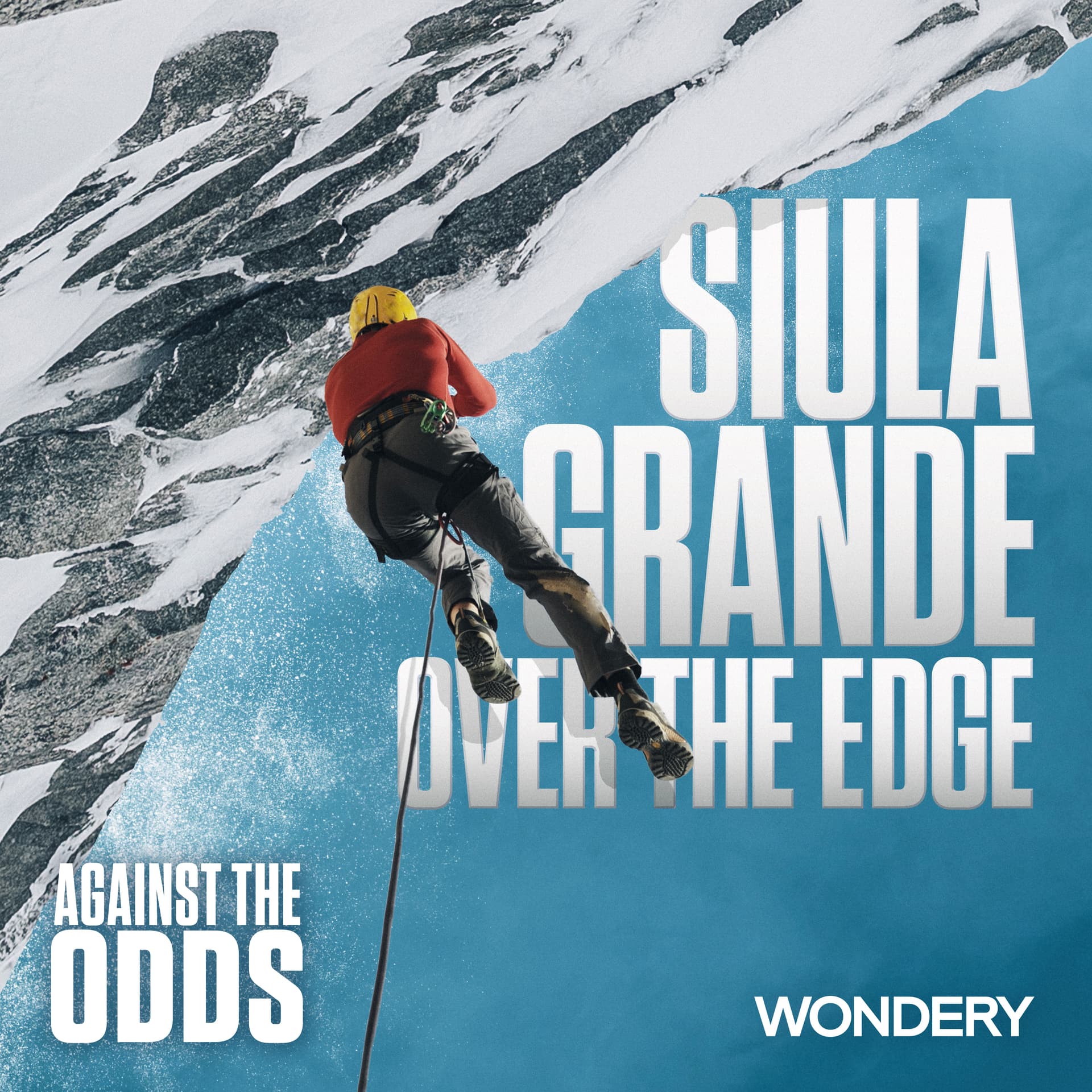
Simon Yates and host Cassie De Pecol revisit the 1985 Sula Grande west face ascent and descent disaster—Joe Simpson’s shattered leg, Simon’s 3,000-foot lowering attempt, the zero-visibility stalemate, and the knife-cut rope decision—then discuss how Simon later processed the trauma and his 2023 Tajikistan fall.
Guests
Simon Yates, UK mountaineer (early 60s), consultant on the series; climbed in the Alps, later authored books including The Wild Within and Against the Wall. Host Cassie De Pecol; Joe Simpson is central but not present.
Key claims
Simon describes his 21-year-old self as reckless and living in the moment; the rope is “primary” protection and decisions are continuous risk assessment. He says cutting the rope was an “action,” not a betrayal, and that the outcome saved both lives. He later made peace with the “rope cutting” label.
Notable examples
cornice collapse; Joe’s 25-foot drop; Simon cutting the rope from a snow “bucket” after remembering he had a knife; Joe arriving at base camp hours before they would leave; 2023 Patkar fall with Mick Fowler (food poisoning, storm, anchor mistake, rescue delay, 10-day recovery).
Written by AI. May contain mistakes. Listen to the episode to check what was said.
Chapters
Tap a time to open that second in VOThe Ascent of Siula Grande
0:46 to 2:14
Overview of Simon Yates and Joe Simpson's climbing journey and challenges.
“It's widely regarded as one of the greatest survival stories of all time.”
Understanding the Climbing Partnership
2:15 to 4:05
Discussion about the dynamics and trust in climbing partnerships.
“Joe was a few years older than you, but he looked up to you, both for your abilities and your overall approach to climbing.”
Preparation and Challenges Faced
4:06 to 6:08
Reflections on the team's preparation and unexpected challenges during the climb.
“And what was it about Sula Grande that inspired you to climb it, especially its daunting west face?”
The Bond of Trust in Mountaineering
6:09 to 7:10
Exploration of the critical trust required for climbing safely with a partner.
“It's a country we don't speak the language.”
The Descent and Critical Moments
7:11 to 10:13
Details about the descent from the summit and the events leading to Joe's accident.
“You have these times where either you can be both moving on the rope, climbing together, rope together, in which case if one of you falls there in likelihood pull the other one off.”
The Moral Dilemma Faced
10:14 to 11:46
Simon discusses the ethical dilemmas he faced during the critical moments on the mountain.
“And obviously, when you're scared and then something like this happens, it throws you further into out of control, into a mental fog, really.”
Aftermath and Psychological Impact
11:47 to 14:00
Simon's reflections on the emotional and psychological effects of his actions post-incident.
“You know, my mind is racing at incredible speeds trying to come up with a solution to the predicament that I find myself in, but I can't.”
Emotional Turmoil After the Incident
14:00 to 18:00
Simon Yates shares his emotional struggles and processing of guilt after cutting the rope.
“This incident wasn't just a physical ordeal.”
The Reunion with Joe
18:00 to 22:20
Yates recounts the emotional moment of reuniting with Joe after the ordeal.
“One of the first things Joe said to you was, thank you.”
Reflections on the Climb
22:20 to 26:30
Discussion on the lessons learned from the climbing experience and the challenges faced.
“And has your perspective shifted with time?”
Show all 14 chapters
A New Climb and a Major Fall
26:30 to 28:00
Yates describes his recent climbing experience in Tajikistan and the fall he suffered.
“a storm we carried on through it anyway for a while but when we got nearer to the top of the mountain.”
The Accident and Rescue
28:00 to 30:25
Learn about Simon Yates's harrowing accident, his injuries, and the rescue efforts that followed.
“I mean, in some ways it was really insightful because I wasn't angry or bitter or there was no sort of negative emotion at all.”
The Journey Back
30:25 to 32:54
Explore Simon's challenging journey back to safety after his accident, including the physical and emotional challenges he faced.
“So I was just basically a bit spaced out, lying on this glacier, waiting for a helicopter, which never came.”
Reflections and Future Plans
32:54 to 34:01
Hear Simon reflect on his past experiences and his future climbing aspirations.
“But obviously, yeah, it's easier to walk, isn't it, when both your legs are working.”
Transcript
Automatic transcript. May contain errors.0:00Cassie De Pecol:Audible subscribers can listen to all episodes of Against the Odds ad-free right now.
0:05Simon Yates:Join Audible today by downloading the Audible app.
0:15Simon Yates:From Wondery, I'm Cassie De Pecol, and this is Against the Odds.
0:46Simon Yates:It's widely regarded as one of the greatest survival stories of all time. In June 1985, two young British climbers, Simon Yates and Joe Simpson, completed the first ascent of the west face of Sula Grande, a nearly 21 ,000-foot peak in the Peruvian Andes. But on their way down, disaster struck. Joe fell and shattered his leg. Instead of leaving him behind, Simon lowered him 3 ,000 feet down the mountain, risking his own life to save him. Then came the moment that would define their story. In zero visibility, with no way to communicate, Simon unknowingly lowered Joe over a cliff and was forced to make a decision that would follow him for decades.
1:32Simon Yates:Simon Yates consulted on our series, and he joins me today from the UK. Hi, Simon. Welcome to the podcast.
1:39Cassie De Pecol:Thanks for having me along.
1:41Simon Yates:You're now in your early 60s. This incident happened more than 40 years ago. How would you describe the person you were at 21?
1:49Cassie De Pecol:Very different to how I am now. It's quite hard for me to imagine actually what I was like at 21. I was quite wild, really, quite reckless. And maybe some people would think I was a little bit crazy in some ways, but hopefully in a nice way. I was having a good time and I'd left college and I planned to sort of travel the world and climb mountains. I didn't really have much of a plan basically, other than just to go and climb. So that's what I was doing when I went to Peru.
2:16Simon Yates:Joe was a few years older than you, but he looked up to you, both for your abilities and your overall approach to climbing. He also described you as having a glint of madness, quote unquote. What do you think he meant by that?
2:30Cassie De Pecol:Well, hopefully, like a bit of a spark, a bit of fun, you know. Maybe he meant that I, you know, I perhaps had a slightly different view of the world. I lived in the moment. I didn't really think too much about tomorrow, which even at that age, quite a lot of people are already thinking about tomorrow. So, yeah, I suppose in that sense, I was a little unusual and, yeah, a little mad. I mean, most people would argue that mountaineers are mad just for doing it anyway, aren't they? Yeah, probably.
2:59Simon Yates:So you've described a climbing partnership as kind of a marriage of convenience, right? What exactly do you mean by that? and why do you think you and Joe were a good match?
3:10Cassie De Pecol:Well, obviously, if you want to go and climb a mountain, you've got to have somebody, well, some people do climb on their own, but most people climb with another partner. So that's what I'm talking about with a marriage of convenience. Obviously, you've got to get on as well, but in some ways, it's like a working relationship. I think before you go and do a project like the thing on Sula Grandi, it'd be foolish to not have an idea of who you were going with. So we climbed together before and at that point, we lived in a climbing community in the city of Sheffield. So we wanted to go and climb mountains or mountain faces that hadn't been done before.
3:43Cassie De Pecol:We were in this city. And then as it turned out, a sort of climbing legend from Britain was there, a guy called Alan Rouse. And he gifted us a mountain to go and climb this mountain, Sula Grandi in the Peruvian Andes. He'd done a load of climbing there previously and made a number of significant first ascents. And he knew that this mountain was still waiting to be climbed. So that's kind of the background of how we got together and why we went to that particular mountain.
4:09Simon Yates:And what was it about Sula Grande that inspired you to climb it, especially its daunting west face?
4:16Cassie De Pecol:There are a number of practical factors. I suppose we wanted to go ultimately probably on to the Himalayas. But Pru is like a, it's a staging post going from the Alps onto mountains, bigger mountains in the Himalayas or the Karakoram. It's big and it's steep and it's impressive. That's what drew us to it in the first place because it did look so striking. And those mountains in Peru, they're quite particular and peculiar because they have those incredible snow formations on them at the top. So that was what lured us to that objective, really. It is a fantastic looking mountain.
5:16Simon Yates:Transcription by CastingWords told by the people who lived them. In a special six-part series called AI, A New Kind of Being, This Is Actually Happening explores the powerful and unexpected ways artificial intelligence is changing human lives. Follow This Is Actually Happening wherever you get your podcasts.
5:40Simon Yates:You were both in your early 20s, but already experienced climbers, having spent a lot of time in the French Alps. That said, you never climbed at such high altitude before. And Silla Grande is almost 21 ,000 feet. So looking back now, how prepared were you really for that kind of challenge?
5:59Cassie De Pecol:Looking back, I could see we could have been better prepared. It wasn't just the mountain. You know, we'd never been out of Europe before either. So we're traveling to a developing world country. It's a country we don't speak the language. So there was a lot of new things going on there. We had to get ourselves from Lima to a remote town. Then we had to hire a guy with some donkeys to get us into our base camp. Then we had to acclimatise. You know, we had to come up against high altitude for the first time, really. You get sort of headaches and a slight touch of it in the Alps, but nothing like you do when you go above sort of 5 ,000 metres is where it really kicks in.
6:35Cassie De Pecol:So we were dealing with all those things and they were all new, really. We'd done some research, some background stuff, but I'd say looking back, probably not enough.
6:46Simon Yates:Alpine style climbing requires complete trust in your partner. As we say in the series, the rope between you could save your life or take you both down. Can you talk more about that kind of trust, the bond that forms between climbing partners?
7:00Cassie De Pecol:You have to have that trust. So I guess if you've gone and climbed with people and you see how they climb, you know really then whether you're willing to climb with them in mountains or not. And it is complete at times because as you've mentioned, you know, You have these times where either you can be both moving on the rope, climbing together, rope together, in which case if one of you falls there in likelihood pull the other one off. And you can have these occasions as well where you're perhaps climbing together but without a rope at all. So there's a lot of decisions. I mean mountaineering really the risk and all the things involved in it, it's like a continuous risk assessment basically.
7:38Cassie De Pecol:And the rope is a big part of that. The rope is the primary means of protecting each other.
7:44Simon Yates:It took two and a half grueling days for you guys to scale the West Face. And incredibly, you made it to the summit. So what did it feel like to stand on top to actually accomplish your goal?
7:57Cassie De Pecol:Well, obviously, it's a very happy moment. We've done what we came to do. But at the same time, you're also nervous because the job's only half done, isn't it? You've got to get down, basically.
8:08Simon Yates:Not long into the descent, things kind of started to go wrong. First, you collapsed into a cornice and Joe caught your fall. What do you remember about that moment?
8:18Cassie De Pecol:Just a huge bang, I suppose, as the cornice broke off. A cornice, it forms on a ridge of a mountain and basically it's an overhang of snow. And what can happen if it's not consolidated is that somebody walking up from the other side doesn't know it's overhanging on the other side and it can break away. And obviously you then fall down with it. I found myself tumbling with all these huge blocks of snow. And ultimately, I stopped and the blocks of snow carried on tumbling down below me, down the west face of the mountain. So obviously, it was pretty shocking, but I was quite happy that I'd stopped.
8:52Cassie De Pecol:Oh, gosh.
8:53Simon Yates:Wow. It just takes a split second, right?
8:56Cassie De Pecol:It does. Yeah, yeah. I was hanging over the edge. Joe couldn't really pull me up that much, actually, initially, because the rope had cut into the snow. And so it wouldn't pull up. I had to climb back up a little way myself and free the rope a bit for him to then start taking it in.
9:11Simon Yates:Then came the turning point. Joe took a fall while trying to descend an unexpected 25-foot drop in the path. When he first told you he'd broken his leg, what went through your mind?
9:24Cassie De Pecol:Well, despondency. It was like some sort of huge burden had suddenly dropped on my shoulders, basically. And my immediate thought was, well, neither of us are probably going to make it off the mountain now.
9:35Simon Yates:You've been honest about the dilemma you faced. You even admitted that part of you hoped he might fall off the mountain so you wouldn't have to face the impossible choice of leaving him behind or risking your own life to try to save him. What's the common thinking in the climbing world about that kind of situation? Are there unspoken rules or is every choice left to personal ethics?
9:59Cassie De Pecol:There's a set of ethics. There are unspoken rules, but that was like a, you know a moral dilemma I personally was having but obviously I overcame it didn't I I've been honest in saying I had these thoughts but ultimately I ended up trying to do the right thing you know which was to lower Joe down the mountain but it took me a little while to get there because I'd never been in a position like this before I'm very inexperienced you know this is our first visit to big mountains and I think what sticks in my mind most about it now is that But really, pretty much from stepping foot on the face of the mountain the first day and climbing up and climbing down, you're quite scared, really.
10:39Cassie De Pecol:I was quite scared. And obviously, when you're scared and then something like this happens, it throws you further into out of control, into a mental fog, really. And you've got to make some decisions, but you're not in a good mental state to do that for a little while.
10:55Simon Yates:Then came the moment that changed everything. It was dark, snowing, with no visibility, and you unknowingly lowered Joe over a sheer drop. When did you realize that you were stuck?
11:08Cassie De Pecol:We'd got the rope knotted together. And so when I carried on lowering Joe until the knot came up to the belay plate, and then I'm out of options because I can't lower him any further. And he couldn't get his weight off the rope for whatever reason. So this horrible stalemate developed, really. I couldn't pull him up. You know, I wasn't anchored to that mountain in any way, so I couldn't put his weight onto an anchor. There was basically nothing I could do, so I just grimly sat in the snow and hung on. Fairly quickly anyway, I started to get very cold, obviously, because I couldn't move. I'm just sat in a bucket, chopped into the snow.
11:44Cassie De Pecol:It's soft, sugary snow, so that snow is gradually collapsing around me, and I don't know what to do. You know, my mind is racing at incredible speeds trying to come up with a solution to the predicament that I find myself in, but I can't.
12:07Simon Yates:Hey, Dan Taberski here. I'm a podcast host, a journalist, and now with my newest project, the author of my own manifesto. Well, it's a manifesto about manifestos. My search for inspiration in a world that feels more infuriating, more out of its freaking mind with each passing hour. Manifestos are a call to action, an artful scream. They capture our anger and they try to do something with it. This is my attempt to take the manifesto back from mass shooters and nihilists and return it to its rightful place with the warriors, the visionaries, the regular folks with just the right amount of crazy.
12:42Simon Yates:I compare notes with radicals, secessionists, internet trolls out for a laugh, and punk singers screaming their guts out, all trying to turn their anger into the world they want to see. Listen to Manifesto wherever you get your podcasts. Audible subscribers can binge all episodes of Manifesto early and ad-free right now. Join Audible in the Audible app or by subscribing on Apple Podcasts.
13:09Simon Yates:Take me back to the moment that's defined so much of your life since, cutting the rope. It's often framed as a decision you made, but was it really? and to what extent was it a conscious choice versus a survival instinct?
Read the full transcript
13:23Cassie De Pecol:I wouldn't call it a decision at all. I would call it an action. You know, I was trying to find a solution to this and I wasn't coming up with one. And it was only when I remembered that I'd got a knife with me that there was a solution. There was a way out of it. And at that point, I don't know how long I'd been hanging on to Joe, but I was in a very serious position. I was going to be pulled off sooner or later. And here was the way out, wasn't it? So I, as quickly as I could, I took that action. I got my rucksack off, which was quite difficult with one hand holding, you know, the rope to take the rucksack off to then unzip the top flap of the rucksack where the knife was, open the blade of the knife, and then I cut the rope, basically.
14:02Cassie De Pecol:Yeah.
14:04Simon Yates:This incident wasn't just a physical ordeal. It was an emotional and psychological one. How did you process your grief, fear, and guilt while still having to get yourself to safety?
14:17Cassie De Pecol:Well, the first thing I had to do after I cut the rope, of course, was to get myself out of the, you know, I was desperately cold. And so I immediately I got something to do because I had to dig a snow hole where I was and get inside the snow hole, get myself inside my sleeping bag. And it was only once I'd done all of that that then I started to think, you know, what had happened. And yeah, there was this incredible feeling of guilt. Obviously, I didn't know what happened to Joe. I kind of hoped that maybe he'd landed on a snow slope at the bottom, but I didn't know exactly. And yeah, I just had this nagging doubt in the back of my mind, this nagging feeling that my action probably had killed him, you know, which is not a nice thing to spend the night with, really.
14:58Simon Yates:You said that at first you considered inventing a version of the story that would make you look better. Can you tell me more about that internal struggle?
15:07Cassie De Pecol:Yeah, well, it's just when I was walking down, I was thinking, you know, like I'd make it easier for myself if I came up with some story as to what had happened to Joe. rather than the reality of it. But then I just, you know, I'm a reasonably honest person anyway. And I just thought this is just going to be too complicated. And there's no way that I'm going to be able to live with it for the rest of my life. So I thought about it, but I ditched the idea fairly quickly because I wanted to do the right thing and tell people what had happened.
15:34Simon Yates:And I think that's an honest, you know, it's an honest thought. I think most people would go through as well.
15:39Cassie De Pecol:Yeah. But by the time I met Richard, I decided quite clearly, you know, I told him pretty much immediately exactly what had gone on.
15:47Simon Yates:What were those next couple of days like for you at base camp, believing Joe was dead and trying to get your head around everything?
15:55Cassie De Pecol:They were awful, actually. I was in a very acute state of shock. I don't know whether I was mourning even at that stage because I didn't really know what to do or how to look after myself. Richard was actually a great help to me over those days. He looked after me and was excellent, really.
16:11Simon Yates:Yeah, it's great that he was there. And were you thinking about what you would say to Joe's parents?
16:17Cassie De Pecol:I'd had that sort of dialogue with myself before I met Richard. You know, I decided I was going to tell Joe's parents exactly what I'd told Richard, which was, you know, the truth of what had happened.
16:29Simon Yates:No sugarcoat it.
16:31Cassie De Pecol:Yeah, no, exactly. Part of the reason we stayed was I couldn't face all of that either. You know, I needed to rest and recuperate before we went out of the mountain. So Richard wanted to go. There was nothing there for him. He'd been sat around, you know, at the base camp for ages anyway. And he was quite keen to leave. But yeah, I just wanted that time. We were going to leave the morning that Joe appeared at the camp. That was the morning we were going to leave. And thankfully, Joe turned up before we did.
16:59Simon Yates:Talk about timing.
17:00Cassie De Pecol:Yeah, yeah. So if it had been a few hours later, we'd have gone, basically.
17:04Simon Yates:So you didn't leave. And just hours before you and Richard were set to head back to Lima, you heard a sound. What happened next?
17:13Cassie De Pecol:Well, we heard sounds earlier on in the evening. But in the middle of the night, where we were, people moved around up there anyway. There were locals looking after their cattle. And so there were people pottering around. So that wasn't unusual. But then in the middle of the night when Joe arrived, I guess he'd been crawling and shouting. And then he got close enough to the camp for us to recognize, you know, wake us up and recognize his voice.
17:35Simon Yates:What did he look like when you found him like that?
17:38Cassie De Pecol:Well, it was a very eerie evening because it was snowing, you know, the big, soft, wet snowflakes. And Rich and I, you know, we ran towards Joe. And because of all he'd been through, he looked really haggard. And he almost looked like a ghost-like figure. That's what came into my mind, you know. It was a big moment, you know, a big, very emotional moment. for all of us. A lot of mixed emotions, but ultimately, you know, a feeling of joy, of celebration, of happiness.
18:06Simon Yates:One of the first things Joe said to you was, thank you. He said, you did right, Simon. What did those words mean to you?
18:14Cassie De Pecol:Well, that meant a massive amount to me. You know, like I was so happy, you know, that he was grateful for all that I tried to do, basically. You know, obviously it had not ended particularly well for him at that point. But I had been trying to do the right thing. And I don't know in mountaineering sort of history of where anybody single-handedly lowered somebody else down a mountain for that kind of length of time. So, you know, I'd put in a good shift, but yeah, it didn't work out for me. And then it did work out, didn't it? All in the end, there's a happy ending.
18:46Simon Yates:And Joe was never angry at you for cutting the rope. He understood it was the only option, that you shouldn't have to die just because he was going to. And he's always defended you to anyone who's questioned your decision.
18:59Cassie De Pecol:Yeah, you know, I think that's fair enough. Ultimately, however you look at it, what I did on that mountain, it saved both of our lives, didn't it? So, you know, you can't really say it was some sort of fantastic planned decision-making process because it wasn't. But the outcome was positive for both of us at the end of it all.
19:19Simon Yates:Yeah. And most people who understand mountaineering see you as a hero, someone who risked everything to get Joe 3 ,000 feet down the mountain. They recognize that cutting the rope wasn't betrayal. It was more an act of survival in an impossible situation. But there have been a few armchair critics who have judged your actions from the outside. What do you think those people don't understand?
19:43Cassie De Pecol:I think they don't understand the actual mechanics of climbing and the mechanics of what I was doing to get him down the mountain. And because of that, they come up with these, it's just a simple response, isn't it? You can't do that. But the situation, the predicament, everything, it's a bit more complicated than that. It's a bit more nuanced than just somebody cutting the rope because they've got fed up with it.
20:14Simon Yates:This story has been hailed as one of the greatest survival stories of all time. It tops a lot of people's lists. What do you think it is about this particular story that has captured people's imaginations so deeply?
20:28Cassie De Pecol:I think it's just the whole sequence of events. It goes wrong and you think, oh dear. And then it goes wrong again and you think, oh dear. And it reaches a point where it's gone wrong so many times. It's almost ridiculous, you know. And then ultimately, it comes right, doesn't it? That's what makes it such a powerful story. There have been stories about people falling down mountains or getting lowered down mountains. You know, there's lots of survival stories, really, from mountains. But this one is, it's because so many small things go wrong, and then ultimately it comes right. That's what I think makes it so compelling to other people.
21:01Simon Yates:I think so, too. You know, telling the Against the Odds story and then the movie, my jaw was just dropped over and over and over again. And I couldn't close my mouth the whole movie.
21:11Cassie De Pecol:You think you've got to be joking. And then it's just the most ridiculous series of events, basically. It's unbelievable. Yeah, yeah. What more can possibly go wrong? And it does, you know, like.
21:24Simon Yates:Right. Oh, my gosh. For you personally, what did you take away from the experience about survival, about friendship and about your own resilience?
21:34Cassie De Pecol:Well, that just tells me how different I am now, really. I didn't take much away from it at all, probably at that moment in time, because I was young, I was driven. And within a few weeks, I was back in the Alps. You know, I got straight back on the bicycle and carried on climbing. I climbed the North Face of the Eiger at the end of that summer, that same year. So I got straight back onto it. I think if Joe had died, I think it would have been, you know, much more difficult to deal with psychologically. But obviously, he hadn't.
22:04Simon Yates:It's crazy that you kept on climbing. That's incredible. And of course, this was something that happened to you. But over the past 40 years, it's also taken on a kind of mythical quality as epic survival stories often do. How has your relationship to what happened and to the story of it changed over the decades? And has your perspective shifted with time?
22:26Cassie De Pecol:Yeah, my perspective has. I think that's a very interesting question. My perspective has shifted with time because there's kind of this bravado in young men, you know, gung-honus and all the rest of it. I didn't recognize it at the time, but I was actually quite scared for a lot of all of this. And as time has gone on, and I suppose I've aged and matured, and my knowledge and all the rest of it has increased, I find, yeah, that's what I think of those times. And now when I'm in a mountain, because I know what I'm doing, and I'm very comfortable there, I'm just not scared like I was when I was in those early years.
23:04Cassie De Pecol:And it's a good thing on lots of different levels. One, I'm able to enjoy being in the mountains more because I'm not scared. And most importantly, because I'm not scared, you're then able to make processing decisions much more effectively.
23:17Simon Yates:You've had to revisit this ordeal countless times over the years as a public speaker, even as a consultant on the series. What's it been like having to constantly relive something so traumatic? Have there been moments where you just didn't want to talk about it anymore?
23:34Cassie De Pecol:Yeah, to be honest, there are moments like that. But I can't avoid it, you know what I mean? So it's going to stay with me forever, isn't it, really? So I just have to make the most from it, really, and just get on doing what I'm doing, really.
23:51Simon Yates:For a long time now, you've been known, at least in the public eye, as the guy who cut the rope. How has it felt to be summed up in such simplified terms? Has the label been a burden or had you made peace with it over time?
24:05Cassie De Pecol:No, I've made peace with it. I've heard some fantastic rope cutting jokes, actually, over the years. So really very clever ones, very funny. So I remember it through those. Do you want me to tell you one? Yeah. I used to work on, you know, on construction, on ropes, on buildings. So I was actually ringing up a mate of mine who was on a building, you know, hanging on a rope on a building in London. And I spoke to him and we finished the conversation. And about a minute later, he ran me back to tell me, you know, he'd had this conversation with me and he was working with a guy. And the guy said, when the call had finished, said, well, who was that you were talking to?
24:41Cassie De Pecol:And John said, oh, it was Simon Yates. And this guy quick as a flash said, oh, did you get cut off? It's a good one.
24:50Simon Yates:Oh my gosh. So you never stopped climbing. And in 2023, you experienced a serious fall while climbing in Tajikistan, suffering five broken ribs and two crushed vertebrae. Can you tell us what happened?
25:04Cassie De Pecol:I went with a very well-known British mountaineer called Mick Fowler to a mountain called Patkar in eastern Tajikistan. Tajikistan and Tajikistan is a mountainous country immediately north of Afghanistan. Mick wanted to do a new route up the north face of the mountain to the summit of it, which has only been climbed about four or five times. I think it's around about 20 ,000 feet high. The mountain was very dramatic and the line that Mick had chosen to climb up it looked fantastic. And we start climbing. Everything went perfectly well, really, until we got to our first camp, that first night on the mountain.
25:39Cassie De Pecol:we had a meal of freeze-dried foods and we'd not finished them very long when we both started to feel incredibly ill this is after sort of 10 or 15 minutes stomach cramped pain basically we've got food poisoning from these freeze-dried meals which manifested itself as very acute diarrhea and we spent many hours just being incredibly ill basically and the next morning there was a big debate as to what we should do should we go up should we go down we both felt very weak and what we decided in the end was we would continue and see how we got on so we continued we went slowly through that day but we did feel a bit better by the end of it we camped another night and then the following day we went up to what we hope would be our sort of high camp you know the weather had been perfect up to this time and so what should have been our summit day was horrible we were in a storm we carried on through it anyway for a while but when we got nearer to the top of the mountain.
26:35Cassie De Pecol:It was quite complicated and we didn't really know exactly where we were. So we then turned round and we went back to the camp. We'd started from that day. That evening we ran out of food. So we then had a day coming back down to our original first camp, during which time we're abseiling down the mountain. We spent a night there and then another problem, a weird thing that happened. We set the alarm for one o 'clock in the morning, or Mick did, because we needed to go back down the cool wire in the darkness for the same reason as when we came up because of all this rock going down in the daytime so Mick woke up at three in the morning was a lot of cursing battery had come out of the alarm would you believe and so we had to spend another whole day at this place before we could go down and this is another day without food of course and then the second night the alarm did go off you know as planned and we continued now we made a series of abseils down the cool world and basically I made a really silly mistake Nick he was anchored to another snowscrew near me I should have clipped my abseil rope into his anchor to act as a backup I didn't do that so the anchor that I've got on the ropes the abseil ropes is the only thing that's holding me to the mountain potentially um without thinking I started to abseil I stepped off the ledge we were on and started falling I just sort of fell off into the darkness and I knew immediately what had happened.
27:58Cassie De Pecol:I just thought, you know, I've ripped the anchor. I'm dead. This is the end of my life. And it was just a very brief moment. I mean, in some ways it was really insightful because I wasn't angry or bitter or there was no sort of negative emotion at all. It was just sort of acceptance and then a kind of an inquisitiveness as to what would happen next. And well, what happened next? Well, there'd be sort of a couple of collisions as I went off down this steep cool wall. And then I lost consciousness. And when I came round again, which was a surprise to me in itself, I was lying on my belly, sliding down the inside of a runnel of snow in a basin where these cool walls dropped down into a basin.
28:42Cassie De Pecol:And I just put my elbows out and I stopped miraculously.
28:46Simon Yates:And this time you were the one who had to be rescued, right? So how did that feel to be on the other side of that equation.
28:53Cassie De Pecol:Well, so Mick, eventually he turned up and you couldn't think of anybody better to be with really, or I couldn't. He's super organized. He makes very cool decisions. But when he arrived, looking at him, I could see that burden of responsibility that had fallen on him. And just, I felt a bit sorry for him. He's got to take control of the situation. He's got to deal with this really, because I've got, as it turned out, I'd got two crushed vertebrae and five broken ribs but more importantly I'm in a state of shock there as well so he's got to make the decisions and that's what he set about doing and it was impressive how he dealt with it but it had its bad moments you know he couldn't lower me down this because we didn't have enough time we needed to get out of this cool while before the sun came up as it was dangerous I'd lost one of my ice axes he lent me one of his ice axes I had to down climb with no ropes and he down climbed behind me or next to me with just one ice axe and that's how we got me back to the glacier we walked down the glacier a little way until we got to a flat spot where it was good for us to stay it was level ground there was water nearby us and we thought it would be a good place for helicopters to come in and land and rescue me we had a satellite phone we made lots of calls ultimately we spent two nights there sharing a sleeping bag sleeping in the open after which which Mick decided he was going down.
30:14Cassie De Pecol:By this stage, we knew some people were coming up. So he was going to meet up with those and tell them where I was. I did have some very strong painkillers with me, some tramadol. So I was just basically a bit spaced out, lying on this glacier, waiting for a helicopter, which never came. And at the end of that day, two guys appeared out of nowhere and gave me a meal. I mean, the meal was a big thing. when I got a packet of noodles inside me after I think five days at this stage without anything to eat I could actually feel this sort of heat going around my body as my body absorbed the nutrients from the food after that I was told you know there wasn't a helicopter coming or there might be a helicopter that picked me up further down but realistically the only way I'd basically got to walk down or stay there forever and of course I decided to walk down and so we ended up walking for three days back to the roadhead.
31:08Cassie De Pecol:It was very easy terrain to fall over on. So it was really hard work. You know, it was the weakest I've ever felt in my whole life. Certainly the third day, the final day of it, we went, it dropped down into a gorge, a very dry, hot, dusty gorge. And, you know, I was walking literally about 200, 300 yards and then I'd have to stop and sit on a rock and then continue. And we got back to the roadhead where there was a doctor and a helicopter. but the helicopter was not much used to me at this stage. So basically I had a rest day at the roadhead. The following two days we went a jeep that we'd already got booked to go back to the airport to catch our original flights home.
31:47Cassie De Pecol:Flew back to Birmingham and my wife met me in Birmingham and drove home to our village in the north of England. Spent the night and the following morning, it was a Sunday, it was 10 days after the original accident, my daughter drove me to the nearby infirmary and I walked into the accident emergency unit and told them what had happened. It caused a bit of a stir really. They did a lot of x-rays, they did a lot of scans and although the two vertebrae were crushed, they were not displaced in any way, the surgeon just signed me off. He said you know just keep walking basically, carry on. The pain subsided probably after about three or four months.
32:28Cassie De Pecol:The following year, I was back sort of winter climbing and going back to the mountains as normal again. Did you think about Joe in those days? No, I didn't actually. But later on, some journalists were asking me about it. And then I thought back to those times and I thought, it's going to be worse for him because he's crawling, he's got a broken leg. And the thing I had with my back is it wasn't massively painful when I was upright walking. The problem for me was it was transitioning from lying on my side to standing upright. And that was just massively painful. But obviously, yeah, it's easier to walk, isn't it, when both your legs are working.
33:05Cassie De Pecol:And I suppose that's what I take away from it. You know, human bodies are meant to walk. If you think I, after an accident like that, I could still walk. So what's next for you? Next for me is some trips to Tierra del Fuego, the tip of South America. I'm hoping to go and be able to climb down there again in January, February next year. In terms of climbing mountains, for a long time I sort of rationalized it as a mental and physical exercise in an extreme environment and through that exercise if you like, one of the big things for me was reconnecting with the natural world, the world that we're now removed from, or a lot of us are in the certainly in the developed western world.
33:45Cassie De Pecol:But really now I've got older I can't even be bothered thinking about it in those terms. I just think it's really quite simple. I just love doing it. And because of that, you know, I'll carry on doing it as long as my body and my mind will let me, basically.
34:00Simon Yates:Well, this has been great speaking with you. Thank you so much, Simon. And thank you for sharing your story with us.
34:06Cassie De Pecol:Pleasure.
34:21Simon Yates:This is the fourth and final episode of our series, Sula Grande, Over the Edge. Thanks so much to my guest, Mountaineer Simon Yates. He's the author of several books, including The Wild Within, The Flame of Adventure, and Against the Wall. For more incredible true stories of everyday people facing life or death situations, plus tips and expert insights, Order a new book, How to Survive Against the Odds, Tales and Tips for Animal Attacks and Natural Disasters, available now wherever you get your books. Click the link in the episode description for more. I'm your host, Cassie DePeckel. This episode was produced by Polly Stryker.
35:01Simon Yates:Our senior interview producer is Peter Arcuni. Audio engineer is Sergio Enriquez. Original theme music by Scott Velasquez and 2K for Freesound Sync. Series produced by Alita Rosansky. Managing producer is Desi Blalock Senior managing producer is Ryan Lohr Senior producer is Rachel Matlow Executive producers are Jenny Lara Beckman, Stephanie Jens, Marshall Louis, and Aaron O 'Flaherty For Wondery
35:32Wondery
35:37Cassie De Pecol:Follow Against the Odds on the Audible app or wherever you get your podcasts You can listen to all episodes of Against the Odds ad-free by joining Audible.
From the publisher
In 1985, high on Peru’s Siula Grande, everything went wrong, and two climbers made choices that became mountaineering lore. Simon Yates joins host Cassie De Pecol to talk about risk, survival, and being known as “the guy who cut the rope.”
If you’d like to learn more about Simon's adventures in mountaineering, check out his books: Against the Wall, The Flame of Adventure, and The Wild Within - available wherever you get your books.
Order your copy of the new Against the Odds book, How to Survive Against the Odds: Tales & Tips for Animal Attacks and Natural Disasters, for stories of everyday people confronted by life-or-death situations, showing you how they survived—and how you can too. Learn more at SurvivalGuidebook.com.
See Privacy Policy at https://art19.com/privacy and California Privacy Notice at https://art19.com/privacy#do-not-sell-my-info.
