
In short
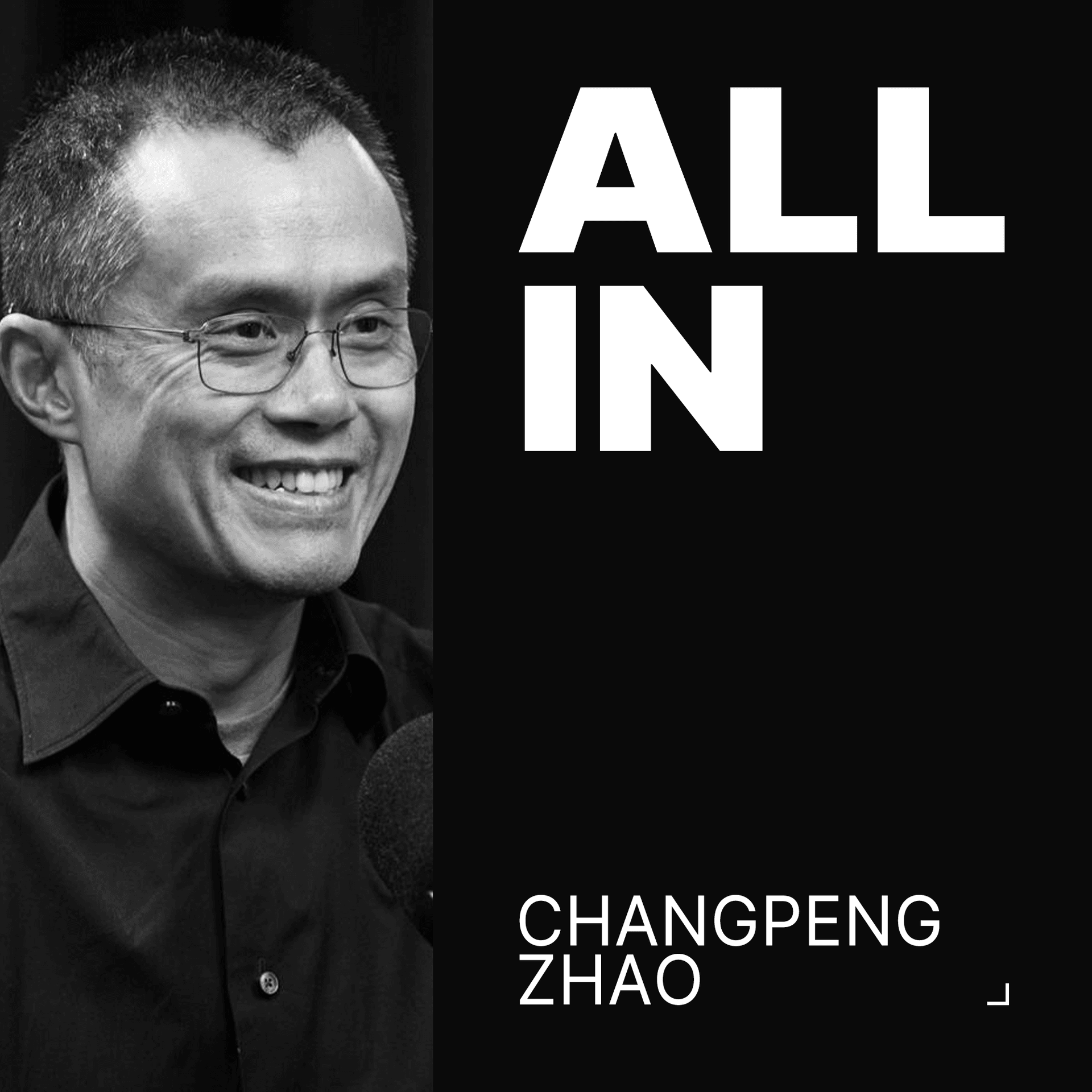
Podcast Summary: CZ's Untold Story: The Rise, Fall, and Redemption of Binance's Founder
Podcast Overview Podcast Title: All-In with Chamath, Jason, Sacks & Friedberg Episode Title: CZ's Untold Story: The Rise, Fall, and Redemption of Binance's Founder Description: A deep dive into the life and experiences of Changpeng Zhao (CZ), the founder of Binance, discussing his journey from China to Canada, his career in tech and finance, the establishment of Binance, and the challenges faced in the crypto industry.
---
Episode Structure
- Background and Early Life
- Emigration to Canada: CZ's family emigrated from China during the Tiananmen Square protests.
- Early Work Experience: Worked at McDonald's; relatable immigrant experience adapting to a new country.
- Education: Attended McGill University, initially studying biology before switching to computer science.
- First Jobs: Worked in programming and tech roles that shaped his career path.
- Career Trajectory
- Intro to Bitcoin: Came across Bitcoin in 2013, took six months to fully understand it.
- First Company in Shanghai: Experienced an entrepreneurial journey in Shanghai before moving into the crypto space.
- Founding Binance: Established Binance amidst growing competition in the crypto exchange space.
- Binance and the Crypto Boom
- Launch of Binance: Started in 2017, with rapid growth fueled by user engagement and innovative features.
- Initial Challenges: Navigated the complexities of operating in a regulatory environment and competition.
- Relationship with FTX: Initially partnered with FTX but exited after concerns about their business practices.
- Legal Troubles
- U.S. Government Scrutiny: Faced legal challenges regarding compliance with U.S. laws, leading to a lengthy negotiation process.
- Plea Agreement: Ultimately entered a plea to avoid a more severe indictment, reflecting the harsh realities of operating in the crypto space.
- Life After Binance
- Prison Experience: Described his experience in federal prison and how it led to a period of reflection.
- Post-Prison Life: Focused on new ventures, including educational initiatives like Giggle Academy, aimed at providing free education.
- Insights on Crypto and the Future
- Role of Privacy in Crypto: Discussed the need for enhanced privacy features in cryptocurrencies to protect users.
- Future of AI and Crypto: Explored the integration of AI in financial transactions and payment systems, envisioning a landscape where AI agents handle transactions autonomously.
---
Key Takeaways
- CZ's Resilience: His journey illustrates the importance of resilience and adaptability in the face of challenges, both personal and professional.
- Value Beyond Money: Emphasized that true wealth encompasses more than financial success; health, family, and personal fulfillment are paramount.
- Evolving Crypto Landscape: The necessity for privacy in crypto and the potential for AI to redefine commerce were highlighted as critical future considerations.
- The Human Element: CZ’s story serves as a reminder of the humanity behind high-profile business successes and failures.
---
Conclusion Changpeng Zhao's narrative is one of growth, challenge, and transformation, shedding light on the complexities of the crypto industry and personal resilience. His insights offer valuable lessons on entrepreneurship, the interplay of technology with society, and the importance of maintaining a balanced perspective on success.
---
Follow CZ and the Hosts
- CZ on X: [CZ's Profile](https://x.com/cz_binance)
- Chamath, Jason, David Sacks & David Friedberg on X:
- [Chamath](https://x.com/chamath)
- [Jason](https://x.com/Jason)
- [David Sacks](https://x.com/DavidSacks)
- [David Friedberg](https://x.com/friedberg)
For more insights and discussions, follow the All-In Podcast on:
- [X](https://x.com/theallinpod)
- [Instagram](https://www.instagram.com/theallinpod)
- [TikTok](https://www.tiktok.com/@theallinpod)
- [LinkedIn](https://www.linkedin.com/company/allinpod)
---
This summary captures essential discussions from the podcast episode and provides a structured understanding of CZ's journey and thoughts on the future of crypto.
Written by AI. May contain mistakes. Listen to the episode to check what was said.
Chapters
Tap a time to open that second in VOCZ's Early Life and Emigration to Canada
0:45 to 4:30
CZ shares his family's journey from China to Canada and early challenges.
“And then he went to do an exchange program in University of Toronto first.”
Cultural Adjustments and Early Jobs
4:30 to 7:00
CZ discusses adapting to life in Canada and his first experiences working.
“I don't know what the, do you remember what the minimum wage was in British Columbia?”
Education Journey and Decisions
7:00 to 9:30
CZ reflects on his university experience and career decisions during college.
“And was it a typical kind of college experience for you?”
Internship Experience in Japan
9:30 to 12:30
CZ recounts his internship in Tokyo and the skills he developed there.
“So you're technically a graduate from that school.”
Career Development and Company Success
12:30 to 14:00
CZ shares insights into his early career and the success of his first company.
“And then the more advanced versions, you move on to like the FPGA, which is a network chip card that's on the network card, on what we call the ether card.”
Early Career Reflections
14:00 to 15:00
Learn about the early career experiences and culture shocks faced after a major corporate acquisition.
“Even FPGA, if you want to reprogram it, the programming cycle is 10 times longer than software.”
Transition to Bloomberg
15:00 to 16:00
Discover the transition to Bloomberg and the challenges of corporate life in New York post-9/11.
“It means that previous success doesn't guarantee future success.”
Life as a Senior Developer
16:00 to 17:10
Explore the experiences of growing within Bloomberg and the challenges of management.
“but it became lively pretty quickly, I think.”
Moving to China: New Opportunities
17:10 to 18:40
Learn about the decision to move to Shanghai and the start of a new fintech venture.
“And there were fancy offices, fish tanks, free food and everything.”
Entrepreneurial Beginnings in Shanghai
18:40 to 20:40
Understand the challenges and successes of starting a tech company in Shanghai.
“Two of the friends were in New York with me.”
Show all 63 chapters
Building a Successful Business
20:40 to 22:10
Discover how the venture secured clients and established itself in the market.
“We started, we had quite a number of automotive clients, the Shanghai General Motors, Shanghai Volkswagen, Shanghai First Automotive.”
Life Changes and Family
22:10 to 24:10
Hear about personal life changes and balancing a startup career with family.
“Yeah, I met her in Tokyo when I first went to Tokyo.”
Discovering Bitcoin
24:10 to 26:30
Learn about the pivotal moment of discovering Bitcoin and its potential.
“And I think the thing that captivated me, I don't know if you felt this way.”
The Rise of Bitcoin Interest
26:30 to 28:00
Explore the growing interest in Bitcoin and the decision to get involved in the cryptocurrency space.
“It doesn't matter when you get into Bitcoin, you always feel late.”
Bitcoin's Early Days and Personal Experiences
28:00 to 28:35
Learn about the early perceptions of Bitcoin and personal anecdotes related to its use.
“And then at the time, just before that, it was the Silk Road arrest of Ross Wuberich.”
The First Transactions with Bitcoin
28:35 to 29:39
Discover the challenges and successes of using Bitcoin for real transactions.
“And then when I got back, I told the partners, we should do a Bitcoin payment system.”
Understanding Bitcoin's Value Proposition
29:39 to 30:24
Explore the philosophical perspectives on valuing Bitcoin and investment decisions.
“But you cannot calculate this way, right?”
Quitting for Bitcoin: A Life Transformation
30:24 to 31:24
Hear about the decision to leave a stable job for a career in Bitcoin.
“Back then, I realized there was like two fundamental technologies in my life.”
The Job Search in the Bitcoin Industry
31:24 to 32:44
Learn about the quick transition into the Bitcoin job market and initial roles.
“So I just said, I'm going to sell my apartment in Shanghai and then buy Bitcoin.”
Experiences at Blockchain Info
32:44 to 34:04
Gain insights into the culture and challenges faced at Blockchain Info.
“And then, but then Blockchain Info came along.”
Transition to OKCoin: New Opportunities
34:04 to 35:14
Follow the journey from Blockchain Info to new roles and challenges at OKCoin.
“So that was only like a few, I think I was only there for like six, seven months.”
Navigating Challenges at OKCoin
35:14 to 36:51
Discuss the cultural differences and operational challenges faced at OKCoin.
“So He Yi said, look, why are you working for this wallet company?”
The Idea Behind a Bitcoin Exchange
36:51 to 37:36
Explore the motivations and plans to start a Bitcoin exchange post-OKCoin.
“yeah so how do we get from there to Binance so 2015 I with a couple of my old colleagues said we're going to do a Bitcoin exchange in Tokyo in Japan because this is a year after after Mt.”
Pivoting to Software Solutions for Exchanges
37:36 to 39:38
Learn about the shift from a Bitcoin exchange to providing software solutions.
“And I was paying them a salary out of my own savings and I wasn't taking anything.”
The Impact of Regulation on Business
39:38 to 42:00
Understand how regulatory changes forced a pivot in the business model.
“And then in July 2015, a bunch of Chinese companies came to us saying they want systems for - Can I just say, by the way, sorry to interrupt you, But it's really incredible because there are so many founder stories.”
Navigating the Shift: From Clients to Crypto Exchange
42:00 to 43:19
Learn how the transition from servicing clients to launching a crypto exchange unfolded.
“But then in March 2017, the Chinese government shut down most of our clients.”
The Birth of Binance: ICO Insights and Strategies
43:20 to 45:23
Discover the motivation and strategies behind Binance's ICO launch.
“I was like, he only had one document and one website, no product, nothing.”
Understanding the ICO Demographics and Market Response
45:24 to 46:38
Explore the demographics of Binance's ICO buyers and the market conditions.
“So who were the buyers of the Binance ICO?”
Facing Regulatory Challenges: The Move from China
46:39 to 47:30
Learn about the challenges Binance faced with regulatory changes in China.
“And then we said, look, we're going to sell 60 % of it for$15 million, roughly.”
From Launch to Success: Binance’s Early Days
47:31 to 49:17
Understand how Binance gained traction and built its user base after launch.
“September 4th, like seven different departments of Chinese government issued a memo together saying that, number one, crypto exchanges are no longer allowed in China.”
Experiencing Surreal Success: The Rise of BNB
49:18 to 52:09
Hear about the unexpected success and rapid growth of Binance and its token BNB.
“So when you first launched Binance, was it an instant hit or did it take energy to find that product market fit?”
What Wealth Means: Reflections on Money and Success
52:10 to 55:23
Delve into how success and wealth have impacted CZ's personal perspective on money.
“So with all the crypto guys and then they already had a picture of Vitalik doing a fancy hand gesture which is a really cool picture.”
The Practicality of Wealth: Living with Purpose
55:24 to 56:00
Explore CZ's practical approach to wealth and how it shapes his lifestyle choices.
“it's an old house that I bought third or fourth hand.”
Managing Emotions and Success
56:00 to 57:39
Learn about the balance between personal emotions and professional success.
“I know my weaknesses and I learned to deal with it.”
Key Indicators of Success in Business
57:40 to 58:57
Discover the leading indicators of success in business beyond profits.
“When you were running Binance, I don't know if you do this, but sometimes people fixate on the leading indicator.”
Dealing with Law Enforcement in Crypto
58:58 to 1:01:07
Hear about the challenges of interacting with law enforcement in the crypto space.
“So the way I view it is if they pay like a commission fee, then they're willing to pay it because we must have given them some higher value.”
The Hostility of U.S. Government Towards Crypto
1:01:08 to 1:02:44
Understand the reasons for the U.S. government's stance on cryptocurrencies.
“So we eventually hired, we hired more guys.”
Growth and Competition in the Crypto Market
1:02:45 to 1:04:14
Learn about Binance's growth and competition dynamics with FTX.
“And why did you feel the need to do that?”
Investments and Strategic Exits
1:04:15 to 1:08:31
Explore the strategy behind exiting investments in competitive landscapes.
“I think I first met him in January 2019 in one of the Singapore conferences Binance organized.”
Legal Challenges and Indictments in Crypto
1:08:32 to 1:10:01
Gain insights into the legal challenges faced by crypto companies and leaders.
“One was the way in which the restitution happened was suboptimal to some of the holders of FTX, people who had cash money there.”
Navigating Legal Challenges
1:10:01 to 1:13:35
CZ discusses the complexities of facing legal challenges and negotiations with lawyers.
“And then I think early 2023 was more clear that they were making, they were either reach a deal of some kind or they're going to indict us or stuff like that.”
The Weight of Negotiations
1:13:36 to 1:16:01
CZ reflects on the arduous process of legal negotiations and personal impact.
“And the most common thing I hear from my lawyers is we have never seen them this hostile on a case like this.”
Understanding Charges and Perceptions
1:16:02 to 1:18:42
CZ explains the distinction between legal charges and public perception related to Binance.
“but no one went to jail for this in history.”
Courtroom Experience and Sentencing
1:18:43 to 1:22:21
CZ describes his courtroom experience, bail conditions, and expectations for sentencing.
“The government wanted to add two additional charges, they call enhancements.”
Final Sentencing Outcome
1:22:22 to 1:24:09
CZ shares the verdict and reflections on the sentencing process and implications.
“My sister had a place in the U.S., so I was staying with my sister for a bit of the time, and then I was traveling just to try to keep myself cool, chill.”
Sentencing and Initial Reactions
1:24:09 to 1:29:21
Learn about the sentencing process and initial emotional responses after the verdict.
“So then that's, and April 30th, I got sentenced.”
Navigating Prison Life: Insights and Advice
1:29:21 to 1:31:20
Discover the insights and advice given by prison consultants and how to stay safe in prison.
“It's a really bad experience overall, but nothing like no physical harm.”
Understanding Prison Demographics and Culture
1:31:20 to 1:36:15
Understand the demographic organization of prisons and the social dynamics within.
“I should be eligible for a minimum security prison, which is one level lower where most of the white collar crimes go.”
The Pardon Process Explained
1:36:15 to 1:38:00
Get insights into the complexities and nuances of the U.S. pardon process.
“But before I do that, let's just do a little bit of the final coda here.”
Understanding the Pardon Process
1:38:00 to 1:38:36
Learn about the complexities and uncertainties of the U.S. pardon process.
“The president can do whatever they want.”
CZ's Role in Binance and U.S. Crypto
1:38:36 to 1:39:19
Explore how CZ's legal status impacts Binance's operations in the U.S.
“The question that some people can kind of jump to is they think, what must CZ have done to try to get it?”
CZ's Post-Prison Activities
1:39:19 to 1:40:42
Discover CZ's initiatives and projects following his prison time.
“So, I think my guess would be that, look, the president is a pro-crypto president.”
Innovating Education with Giggle Academy
1:40:42 to 1:41:43
Learn how Giggle Academy aims to digitize education for billions.
“So I thought, no, it's possible to fully digitize all education content.”
The Concept of Tokenization in Education
1:41:43 to 1:42:56
Understand CZ's perspective on tokenization and its implications for education.
“Have you looked at versions of this like AlphaSchool?”
Funding Challenges for Giggle Academy
1:42:56 to 1:43:48
Explore the financial challenges and community support for Giggle Academy.
“When you issue a token, you can do the rewards.”
The Future of AI and Commerce
1:43:48 to 1:44:43
Discuss the role of AI in commerce and its implications for crypto.
“So if there's a token, then people is going to focus on the token.”
Agents and the Future of Crypto Payments
1:44:43 to 1:47:33
Understand how AI agents could revolutionize crypto transactions.
“And there's a richness of information there.”
Privacy Concerns in Cryptocurrency
1:47:33 to 1:50:10
Examine the importance of privacy in the cryptocurrency landscape.
“What is the role when you see a lot of stuff around free speech?”
CZ's Upcoming Book and Its Purpose
1:50:10 to 1:52:00
Learn about the motivations behind CZ's book and its intended audience.
“Because I was, I started drafting when I was in prison.”
Parental Support and Ambitions
1:52:00 to 1:53:28
Discussion about the importance of supporting children's individual paths in life.
“So that's as simple as I got from my parents.”
The Myth of Success
1:53:28 to 1:55:14
Exploration of the misconceptions surrounding success and the normalcy of achievers.
“I think that we glorify success in a way that makes it seem like it's impregnable.”
Rethinking Wealth and Happiness
1:55:14 to 1:56:46
Insights on the relationship between money, happiness, and personal well-being.
“Do you think that it's important to maybe dispel the myth that being a billionaire is not everything it's cracked up to be?”
Gratitude for Time and Balance
1:56:46 to 1:57:00
Reflection on the importance of time management and personal balance after transitioning away from high-pressure roles.
“So this is also the part, like, I'm actually very grateful that I don't have to run Binance anymore and I have more time.”
Transcript
Automatic transcript. May contain errors.0:00Changpeng Zhao:CZ, welcome to the All In Podcast. Thanks for having me here. It's really, really great to see you. It's a pleasure.
0:05Jason Calacanis:I want to go all the way back to the beginning because I think a lot of people don't really know your background the way that they probably should. The part of the background that I really care about is there's parts of your early journey in Canada which is very similar to mine. You worked at McDonald's, I worked at Burger King. But before that, your parents were able to emigrate from China right around Tiananmen Square, right?
0:27Chamath Palihapitiya:My father went to Canada to study in 1984. That's five years before Tiananmen Square. How did that come about? So your father stayed in Canada once he went there or no? He could visit us twice a year, basically, but most of the time he was in Canada.
0:43Bill Friedberg:And he was a teacher in China? He was a teacher professor. He was a professor in China. And then he went to do an exchange program in University of Toronto first. and then a couple years later he moved to UBC University of British Columbia in Vancouver and then he was there we were applying back then it's actually very difficult to get a passport it takes like three or four years to get a passport we started applying in 1985-ish it took like two, three years to get a passport and then after you get a passport meaning a Chinese passport a Chinese passport yeah so and then it takes like another few years to get a visa like that's just how long the process takes back then
1:21David Sacks:And then, yeah, so we got it shortly after 1989.
1:27Jason Calacanis:When you look back, it almost seems fortuitous. Isn't there a version where post Tiananmen, they kind of just shut everything down and say, okay, let's just reset. And then maybe they wouldn't have approved the visa or?
1:38Chamath Palihapitiya:No. Actually, after that, the visa got easier.
1:40David Sacks:The passports got harder. So they no longer issued new passports. Like the reissue of new passports got harder. But we were lucky. So we got the passports like, you know, like maybe a year before that.
1:52Bill Friedberg:And then we're waiting for the visa. And then afterwards, the visa got easier. So in some ways, that actually kind of helped us to get the visa.
2:00Changpeng Zhao:Wow. Yeah, in some really weird way. Did that event shape your perspective in any way, shape or form or not really? Were you too young or no? You were what, 12? I was 12.
2:09Bill Friedberg:So I think consciously, no, it didn't change me that much. But subconsciously, I think, you know, there were discussions about democracy versus.
2:17David Sacks:So there's some discussions. I was actually living on a university campus back then.
2:22Bill Friedberg:The China Science and Technology University is one of the top four universities in China. So there were a lot of discussions among the university students, which were probably seven to nine years older than me. So there were some discussions, but I was 12. So I wasn't really clued into it, but I think subconsciously, it may have some kind of subconscious impact. I don't know.
2:43Changpeng Zhao:And what was it like when you moved to Vancouver? I moved to Vancouver, yeah. So you land in British Columbia.
2:49Bill Friedberg:Yeah.
2:49Changpeng Zhao:In Vancouver. It's like a different, it's just different. It's very different. It's very different.
2:55Bill Friedberg:It's just a completely new country. And then - Did you know English at all or no? I studied English for like a couple of years in high school, but I was not fluent at all. But yeah, Vancouver is great.
3:06David Sacks:Canada is nice greenery, open space. Everything's pretty, the living standard's high. Everything's pretty good. But everything is very clean.
3:16Chamath Palihapitiya:The fruits are bigger. So it's just a really nice environment.
3:21Changpeng Zhao:Did both your parents work when the family was reunited? What did they do?
3:25David Sacks:So my father stayed, was like assistant professor in the university.
3:30Bill Friedberg:He gets like$1 ,000 Canadian dollars per month of like, I don't know what you call it. Like a stipend. Like a stipend.
3:36Chamath Palihapitiya:Yeah.
3:36Bill Friedberg:We get some like really low cost housing, the faculty housing from UBC. So we lived on campus. I think on the third day of our arrival in Canada, my mom went to a sewing factory to work, like sewing clothes. She was a math and history teacher in China, but she doesn't speak that much English. So she couldn't get the same level of jobs. And she basically can only work at a minimum wage factory. She did that for like seven, 10 years. And yeah, so she just worked there.
4:06Jason Calacanis:My mom was a nurse in Sri Lanka. And when we emigrated, when we got refugee status, my father was unemployed.
4:13Chamath Palihapitiya:Yeah.
4:13Jason Calacanis:And my mom became a housekeeper. And that's what she did. And then she became like a nurse's aide. And then I think when I was like 14 is when I got my first job.
4:23David Sacks:Yeah, yeah. I got my first job at McDonald's at, I think it's 14 or 15. I think it was 15. Yeah, 14. Yeah.
4:29Changpeng Zhao:We're the same age. So it probably would have been 14. I don't know what the, do you remember what the minimum wage was in British Columbia? I do. The minimum wage was$6, but McDonald's -
4:38Chamath Palihapitiya:Oh, that's incredible. In Ontario, it was$4.55. But in McDonald's, they pay$4.50. That's below minimum wage.
4:44David Sacks:Because McDonald's somehow had a special exemption because a lot of young kids work there.
4:49Changpeng Zhao:Yeah.
4:49Bill Friedberg:So I think it was on my 14th birthday that I applied for the job. And then a week later, I was flipping burgers there. And it was the first income I had.
4:58Jason Calacanis:You're not like this precocious, technical wonder kid who's coding 24-7 and learning computer science. Or were you?
5:07Changpeng Zhao:No, I wouldn't describe me as that.
5:10David Sacks:I think I'm a technical guy. I started computer science. I was interested in programming even in high school. But I wasn't a programming wizard.
5:20Bill Friedberg:I wasn't like, you know, one of those really genius coders.
5:23David Sacks:I think I'm a decent coder.
5:25Bill Friedberg:I think I wrote some decent code in my career. And then when I was like 28, 30-ish, I moved away from coding. I was like doing more business development, sales, et cetera. So there was like maybe, I would say, eight years of my career.
5:41Jason Calacanis:So you're a normal immigrant kid learning to adapt in Canada. Yeah. Did you have a lot of friends?
Read the full transcript
5:46Chamath Palihapitiya:Yeah, I had a lot of friends. Only Asian friends or no? Both. I actually had like both Asian and non-Asian friends.
5:53Bill Friedberg:But I was actually in our school, most Asians hang out with Asians. But I was actually one of the exceptions that I had like Caucasian friends. I had all kind of different friends. My teenager years in Canada was great. It was like some of the best years. Like, I think those years are really shaped me to be a happy person. I'm generally a happy person. How did it feel when you weren't able to get into my alma mater,
6:16Jason Calacanis:University of Waterloo, and so I had to settle for McGill? How does that make you feel?
6:20Chamath Palihapitiya:Does it make you feel stupid?
6:22David Sacks:So actually, I was deciding, my sister went to Waterloo.
6:25Bill Friedberg:So I was deciding between Waterloo and McGill and maybe UT. I knew I wasn't going to go to UBC. I wanted a different city. Yeah. And actually, UBC gave me the offer, but I just knew I don't want to go there. At the time, my friend's mother, who I really respect, she said, well, you might want to become a doctor because doctors have a good living, a good lifestyle. I took her advice. I studied biology. And Waterloo is not much of a biology school. True. So I went to McGill. But then one semester later, I said, no, no more biology.
7:01Chamath Palihapitiya:I'm going to move to computer science.
7:02Jason Calacanis:And was it a typical kind of college experience for you? Did you have great jobs in the summertime or were you just like an average normal university kid?
7:11Changpeng Zhao:How did you pay for school, by the way? I worked every summer. I worked every summer and I also worked part-time during the school year. So no debt.
7:18Chamath Palihapitiya:You were like, I must graduate without debt.
7:19David Sacks:Yeah, I didn't take any student debt. The first year, I actually still took about$6 ,000 Canadian dollars from my dad.
7:26Bill Friedberg:The second year, I was still a bit short. My sister gave me$3 ,000. And then from that point on, I never took money at all. I was self-sustainable. Wow. Yeah, so no student debt, very lucky. But I just worked every summer, like, yeah.
7:41Jason Calacanis:You know, the best thing about Waterloo, which was a savior for me. The co-op program. What's co-op program, yeah. And I had these incredible co-op jobs. I still graduated with about$30 ,000 of debt. But I was also a pretty prolific trader and equities. Okay. And my boss, this guy, Mike Fisher, did this incredible kindness to me where I was working at a bank and I was a derivatives trader. That was my day job. But I was trading equities and I'd made him enough money. And he said, he called me Sherman, didn't call me Chamath. He said, Sherman, how much debt do you have? And I said, it's about 30.
8:18Jason Calacanis:I said, Fish, it's about 30 ,000, 32 ,000. And he said, go downstairs right now to the CIBC and pay your debt and I'll write you a check. Wow, you should have.
8:27Changpeng Zhao:And he wrote me a$32 ,000 check. I should have said$300 ,000. But Canada is incredible because you can get this education
8:35Jason Calacanis:and it doesn't saddle you with this debt that you can't overcome, which is not true in the United States for many people.
8:43David Sacks:Yeah, even in McGill, there were people from the United States going to McGill paying international student tuition and it was still cheaper than the U.S. I was like, that's crazy.
8:50Chamath Palihapitiya:That's crazy. So yeah, we were lucky that the U.S., the Canadian tuition was okay. So you graduate from McGill in computer science? Yeah, in computer. Well, actually, I didn't graduate from McGill. I went there for four years.
9:02Bill Friedberg:And on my third year, I got an internship. On my fourth year, I got my third year, I got an internship job. And then extended, extended, extended. And I didn't go back to McGill. So I didn't graduate from McGill. And later on, I found out I still need a bachelor's degree to apply for work visas in Japan. So I went to one. This is like the doc. This is 2000. This is the dot com height. So I went to an online education program called the American College of Computer Science and got a degree there.
9:32Jason Calacanis:Oh, my God.
9:33Changpeng Zhao:So you're technically a graduate from that school. Technically, yes. Okay. So which internship did you get where you started to work there? So I got an internship in Tokyo.
9:46David Sacks:From first year college, I always worked on a programming job.
9:49Bill Friedberg:So I worked at a company called OriginalSim, writing some simulation software. And then 30, I got into a company in Japan, in Tokyo, called Fusion Systems, Japan.
9:59Chamath Palihapitiya:And then they were writing order execution systems for brokers of the Tokyo Stock Exchange. But sorry, that's a Japanese company with an office in Montreal or an office in Canada? No, no, no. I went to Tokyo. You went to Tokyo. Yeah, it's actually an American, a bunch of American guys' company that's in Tokyo. So it's like a bunch of guys were -
10:16Jason Calacanis:And you're thinking, this is an adventure. I'm going to go and live in Tokyo for a summer.
10:20Bill Friedberg:Yeah, yeah. I mean, I was a college student. And living in Tokyo is like, you know, it's fun. It's a dream. And the first time you go there, it's like, it's cool. It's from the future. It's cool, yeah.
10:31Chamath Palihapitiya:And what kind of software did you write? Mostly order execution software. So the same software that moves orders. So what drives Binance today? Pretty much, pretty much. So it's the same style. Like, actually, all the software I was involved with, no decision making. So when you first were exposed to this, it was not like, oh, wow, I love this.
10:50Jason Calacanis:This makes sense. or was it more, okay, I'm asked to write this code and I understand the concept, so let me just do it? Were you attracted to the subject matter or you just did it because it was your job?
11:00Chamath Palihapitiya:I first did it because it was my job, right? I was so young.
11:03David Sacks:I didn't know what all the different industries are. And actually, when I got to the company, the company was giving me a project on working on digital imaging storage systems. Like, you know, basically not iPhone photos app,
11:14Bill Friedberg:but for medical imaging for an icon. But very soon, the company's main product is the order execution system. So I was involved in that, and then that became the thing over my career. And I like it because it requires quite a lot of technical expertise.
11:29David Sacks:Everything is about efficiency, making it go as fast as possible, process as low latency as possible. That kind of appeals to me.
11:37Chamath Palihapitiya:I'm an efficiency kind of driven guy, like subconsciously.
11:40Jason Calacanis:And just to double click on that, when you look at high frequency trading organization, the Sasquanaharas, the Jumps, they go to such a degree to basically optimize for efficiency and low latency all the way down to it's their own circuit breakers. It's their own physical fiber infrastructure. They're willing to sort of pay the price to just shave off a handful of milliseconds on either end. How does that manifest in the software? So when you're writing that kind of software, how do you actually optimize for those boundary conditions in code?
12:11Bill Friedberg:Yeah, yeah.
12:12Chamath Palihapitiya:So, well, there's quite a few levels, right?
12:14Bill Friedberg:The first level you do is basically you write your software to be efficient and fast, like no slowness. You want to remove all the database lookups. So you want to do everything in memory. And then you want to reduce any sort of additional computation. You want to simplify the risk checks, especially pre-trade risk checks. And then the more advanced versions, you move on to like the FPGA, which is a network chip card that's on the network card, on what we call the ether card.
12:42Jason Calacanis:So that you don't have to go all the way up to memory and come all the way back down to the processor.
12:45Bill Friedberg:So back then, when I was like still writing code, like maybe 10 years ago, that round trip is about 100 microseconds. Microseconds, yeah. And then by avoiding that, you'd reduce down to 20 microseconds.
12:56Chamath Palihapitiya:Right.
12:56Bill Friedberg:And then you move it to the physical infrastructure.
12:58Chamath Palihapitiya:You want a co-location, right? You want to - Why haven't these organizations,
13:02Jason Calacanis:Like in the AI world, for example, with Grok, our big observation, even 10 years ago when we were starting the business was this exact idea, which is it's really inefficient for to sit in a GPU to go all the way up to HBM to come back down. So let's just take SRAM and just do everything here on chip. Yeah. Right. Manage it with C2C. And that technical problem made a lot of sense. And very, very fast for the decode phase of inference. Makes a ton of sense. Why, when so much money is on the line for high-frequency trading, why did they never try their own custom silicon? I understand FPGAs, but nobody really went to the point of actually saying, here's a specific ASIC, or did they?
13:39Jason Calacanis:And we just don't know about it.
13:40Chamath Palihapitiya:I don't think it exists on a very large scale.
13:44Bill Friedberg:I think the algorithms change too often. So when you go to hardware, like you want to design on chip, it's very efficient. It's very fast. But when you want to change it, it takes a long time. Right. So when you want to reprogram it, I think FPGA already offers kind of the best. Best of both. Both worlds.
14:03Chamath Palihapitiya:Even FPGA, if you want to reprogram it, the programming cycle is 10 times longer than software. The company you worked at in Japan, was it successful? It's successful. That company got sold to a NASDAQ-listed company just before 2000. For a lot of money?
14:17Changpeng Zhao:For like$52 million back then.
14:19David Sacks:So that was decent money.
14:20Changpeng Zhao:And so is that when you said, hey, hold on, there's something here or no? Was it something else that happened? No. So at that time, I was too young. I was like 20-something. So you're working at this place. You're just a coder. Yeah.
14:32Jason Calacanis:You're a salaryman. Yeah. In Japanese terms, right? Salaryman, yeah. You're a salaryman. So then walk us through what happens afterwards.
14:38David Sacks:So that company got sold.
14:40Bill Friedberg:There was a lot of culture clashes between the parent company versus the original company. That's my first experience about how mergers may not work.
14:48David Sacks:Yeah.
14:48Bill Friedberg:The two managements were just clashing. And then the same partners went to do a different company called Building 2. But now this partners, I didn't get any money, but the partners got quite a bit of money now. So they rented a very fancy office. That company only lasted a year. It means that previous success doesn't guarantee future success. In fact. So they spent a lot of money, had a very nice office, but that's zero revenue.
15:13David Sacks:So that folded within a year, and that's 2001. and so early 2001 I was looking for new jobs and then Bloomberg was hiring
15:23Bill Friedberg:and this is right before 9-11 I kind of got an offer before 9-11 and then 9-11 happened I still haven't moved and then I Where was this? To New York or? This was in well I was still in Tokyo back then and then Bloomberg is in New York the offer I was supposed to The offer was in New York The offer was in New York so after 9-11 I called Bloomberg say hey is the job still there? Do you still want me to go? And they said well do you still want to come? I was like, yeah, okay. So then I went. So I went to New York in November of 2001.
15:51David Sacks:Wow. What was that like? The streets were pretty quiet. Yeah. And, but, you know, I was fine. I was, you know, New York was quiet for a few months, but it became lively pretty quickly, I think. So I didn't feel too much issues.
16:08Chamath Palihapitiya:So I then went to New York and worked at Bloomberg for four years. Doing, again, the same thing.
16:12Jason Calacanis:You're kind of a salary guy. You're working at a big company. Salary, bonus, maybe some options or some phantom equity or something like that?
16:20David Sacks:Yeah. So I joined as a senior developer. I was put into a team called Tradebook Futures.
16:26Bill Friedberg:They just formed this team. And they had a system that allowed people to trade futures on Bloomberg, but it was like spread out.
16:32Chamath Palihapitiya:So they collected that into one team. And still no inkling of like that entrepreneurial bug?
16:39Changpeng Zhao:Not really. Back then I was like, nah. I worked in school.
16:43Jason Calacanis:What were you looking for?
16:44Changpeng Zhao:Stability? Like, why Bloomberg? Being in New York? Like, what was it?
16:48Bill Friedberg:I was just a young guy. I was like, I think I was like 24, 24, 25.
16:53Changpeng Zhao:Okay.
16:54Bill Friedberg:So I was just a young guy trying to get a job, you know, experience different parts of the world and just find my way through. I knew I wasn't experienced enough to do entrepreneurship myself, right? So I was, and I was working at a small company in Tokyo. The company only had like 200 people. Bloomberg at the time had about 3 ,000 people. So to me, that was a big company. And there were fancy offices, fish tanks, free food and everything. So I joined as a senior developer. I got some good bosses. I got promoted three times in two years. And then I was leading a team of 60 initially, and they kind of grew to about 80 people.
17:27Bill Friedberg:And that's when I became sort of a manager. I no longer wrote code, and I still started to manage.
17:33Jason Calacanis:The worst transition.
17:33Bill Friedberg:The worst transition, right? The worst transition. So that's kind of my Bloomberg experience.
17:37Chamath Palihapitiya:Yeah, so I stayed there for four years. And then you quit and moved to China? Yes. How does that happen? I think it was around like beginning of 2005.
17:48David Sacks:Again, the same friends I had made in Japan, they were talking about starting a new company, a new fintech company.
17:56Bill Friedberg:And they were in Asia, right? So they're talking about Tokyo, Shanghai, or Hong Kong. And they said Shanghai is most likely the most happening place for the future fintech. We should have picked Hong Kong. Hong Kong had a lot more happening since then. So I went there in 2005. So it was like five foreigners from a Chinese perspective, five Caucasians, four Caucasians plus a Japanese plus me. I'm the only one who speaks Chinese. And my Chinese was kind of rusty back then too.
18:23Chamath Palihapitiya:So the six of us went there to do a new IT startup in Shanghai. So all of you guys just land there. And what was the idea? So we thought, you know, we had all this Wall Street experience,
18:34David Sacks:Wall Street trading technology experience.
18:36Changpeng Zhao:And sorry, your other friends, had they moved to New York or no? They were still in Japan doing their own thing. Two of the friends were in New York with me.
18:43Bill Friedberg:And then the other three were from Japan. They were there. They always, they were, so the six of us came together. And we wanted to do, we want, our idea was let's bring the Wall Street trading technology into China so we can service the brokers and exchanges in China. But then, so we went, they rented a very fancy office again.
19:04Changpeng Zhao:Wait, okay, so hold on just.
19:05Jason Calacanis:So when you guys start this company, so this is now your first entrepreneurial, you're like, okay, let's do this. Pretty much. Did you know to even ask the question like, okay, guys, what's our equity split? What's the cap table? Did you know any of these things or you're just like, great, let's go do it.
19:22Chamath Palihapitiya:I'm just assuming it's one sixth, we're equal. Like how did it all? It wasn't one sixth. It was like the top guy had like, I don't know, 39, 40 %
19:30Bill Friedberg:and the rest five of us split equally. So I had about 11 % or so.
19:34Changpeng Zhao:Okay.
19:35Bill Friedberg:So I knew that, but I didn't know like, you know, all the ins and outs about, you know, shareholder rights, what terms, I didn't know any of that.
19:42Chamath Palihapitiya:Yeah, preferred versus common, none of it.
19:45Jason Calacanis:You're like, great, I got 11%, I'm moving to Shanghai.
19:47Chamath Palihapitiya:Yeah, so I just have 11%.
19:48Bill Friedberg:I have no idea what common stock is or versus preferred. So I just went. And then, so I was a junior partner in this group. And then once we landed in China, because I speak Chinese, right? So I began talking to potential clients. I went to talk to brokers. I found out we registered as a wholly foreign-owned,
20:07David Sacks:what we call Wofi, wholly foreign-owned enterprise. The Chinese brokers and financial institutions are not allowed to work with Wofi. That's right. So we found out after we started the company,
20:19Bill Friedberg:while we were in Shanghai. And so the company pivoted towards doing any IT system for any company. Work for hire. Work for hire. Deloitte, you became Deloitte. Not even Deloitte. We can be fixing printers or we can be writing like, you know, SAP implementations for you. We did all of that. So there's a whole spectrum of things. And so we did that for a few years and we actually made a living.
20:41David Sacks:For a few years? Yeah, for a few years. Like, and we made a living out of that.
20:46Bill Friedberg:Yeah.
20:47David Sacks:We started, we had quite a number of automotive clients, the Shanghai General Motors, Shanghai Volkswagen, Shanghai First Automotive. They were all clients of us. And then like maybe three or four years in,
21:00Chamath Palihapitiya:we started having offices in Hong Kong. And then we were dealing with a Morgan Stanley, Deutsche Bank, Credit Suisse. So it grew. So it was successful. The company's still around. The company's still around. So I left in 2013 after eight years, but the company's still around. So in the eight years you worked at that company, all in Shanghai? I was mostly in Shanghai, but then I spent quite a bit of time
21:19Bill Friedberg:helping to set up the Hong Kong office. And then I was also doing quite a lot of work for some clients in Tokyo.
21:25David Sacks:How big did that company get? I think it got to about 200 people again, and it kind of stayed there as far as I know, even till now.
21:33Jason Calacanis:And so as a junior partner, you just take profits and you share it?
21:37David Sacks:Yeah, yeah.
21:37Bill Friedberg:So, well, actually, we didn't take that much profits. I actually invested most of my savings back into that company, and I actually didn't cash out a penny. But after a few years, the company was stable enough to pay the partner salaries that all of our kids go to international school. So we get a six-figure salary. At that point, you had gotten married. Yes. Yeah.
22:00David Sacks:So at that point, I got married when I was in New York.
22:04Chamath Palihapitiya:So like, yeah. So and then, yeah, so I took care. And you had met your ex-wife how? Yeah, I met her in Tokyo when I first went to Tokyo.
22:15Bill Friedberg:So I met her in like 1999-ish when I was first in Tokyo, like doing the interns. Okay. And then she visited me in New York and then we got married and then we had kids. Now we are separated or divorced. In Shanghai, I had young kids and it was enough salary to put the kids into international school.
22:35Changpeng Zhao:And that was good enough for me. Wow. So far again, nothing here tells anybody that you're about to go and start Binance.
22:43Chamath Palihapitiya:No, no.
22:44Changpeng Zhao:Nothing? Nothing, no. I didn't know. So then 2013, 2014, how old were you then at that point? 2013, I would be 36. Yeah, mid-30s. Yeah, yeah. So again, salary guy, junior partner at this thing.
23:00Jason Calacanis:It's going well. Your kids are in private school.
23:02David Sacks:Yeah, yeah.
23:03Jason Calacanis:So then what happens?
23:04David Sacks:So then I came across Bitcoin, right? So my friends tell me, look, CZ, you got to look at this thing called Bitcoin. I look into it. I was like, it took me about roughly six months to fully understand it.
23:15Chamath Palihapitiya:So that was from like roughly July 2013. And that's because you read the white paper and you said, I need to read it again and read it again? Yeah, pretty much. And then because back then there was the Bitcoin talk for it.
23:26Changpeng Zhao:Yeah. And then that's pretty much it. Did you see my Bloomberg article in 2012? Does that have any influence? Unfortunately, I read a bunch of stuff. I actually don't remember what I read. I'm just kidding. But I did write this thing.
23:38Jason Calacanis:And it's funny because I had a kind of a relationship with Mike Bloomberg. He was kind of not even mentor. like he was just too senior, but he knew me, he liked me. He would invite me to certain things. With Mike Bloomberg? Yeah, with Bloomberg. And then I got to know some of Mike's team. And in 2012 or so, they said, Chamath, would you write an op-ed? And I was like, yeah. And I wrote it about Bitcoin. And I said, everybody should put 1 % of their net worth into Bitcoin. And I said, it's basically schmuck insurance. And then they published it in the Bloomberg terminal or whatever. And that's when I got red pilled on Bitcoin, where I was like, wow, it's the most incredibly interesting technical product that I had read about.
24:16Jason Calacanis:And I think the thing that captivated me, I don't know if you felt this way. It was the only white paper that I read end to end where I thought, this is one of the most elegantly written pieces of non-technical prose. Do you know what I'm trying to say? Like, it's not something that is like dense in an archive that is just meant for PhDs. You could literally give it to your sister, to your brother, to somebody non-technical, and they would understand it. And it's only nine pages. Exactly.
24:45Changpeng Zhao:You know what an enormous amount of intellectual skill it takes to do that? Oh, yeah. It's much harder to write it very short. Much harder.
24:51Chamath Palihapitiya:And elegantly and simply. Yeah, yeah, yeah. If anybody else tried to rewrite that thing, it would be 90 pages. So the friend that showed it to you, was he a co-worker of yours or no, just a random friend in Shanghai? It's a friend. It's a random. Well, not a random. It's a friend. We don't have any working relationships.
25:05Bill Friedberg:His name is Ron Cao. He runs, I guess now, Skyline Ventures. Back then, he was at Lightspeed Ventures. Of course. He was a managing director of Lightspeed Ventures in China.
25:15Changpeng Zhao:Okay.
25:15Bill Friedberg:So we have a poker house game, like, you know, small stakes, a bunch of struggling entrepreneurs versus, like, VCs.
25:25David Sacks:So the VCs have all the money and all the time. David versus Goliath. Yeah. But, you know, it's a fun game. It's not a very serious game. So in one of the poker games, Ron said,
25:35Bill Friedberg:see, you should look at this thing called Bitcoin. I was like, okay, Bitcoin. Okay. And so we talked about it a little bit. And then Bobby Lee, who was at the time was working for Walmart, was just about to quit Walmart to join BTC China to become their CEO.
25:49David Sacks:And as part of that deal, Bobby said he will bring Ron in as an investor, Lightspeed into BTC. Into BTC. So that's in July 2013. I was like, okay, so these two guys are pretty serious about this.
26:03Bill Friedberg:So I had lunch with Bobby the next day, and Bobby said put 10 % of your net worth into Bitcoin. He said there's a small chance you will go to zero, then you lose 10%. There's a much higher chance you will go 10x, and you will double your net worth. I was like, okay, that sounds pretty serious. So that's when I started learning, reading the white paper more carefully. It took me six months. So it was until the end of 2013, I started like, I'm convinced now. I'm ready to go. But then Bitcoin went from$70 in mid-2013 to like$1 ,000 by end of 2013. So you already went more than like 15x. How did that make you feel?
26:37David Sacks:I was like, I'm too late. I was like, I wish I got in early. Because back then, right? It doesn't matter when you get into Bitcoin, you always feel late.
26:46Changpeng Zhao:Yeah.
26:46Chamath Palihapitiya:Because everyone you talk to in the Bitcoin industry has bought before you. And did you talk to anybody while you were learning about it to say, like you have a community in Shanghai? There's a very small community in Shanghai.
26:57David Sacks:And then I was basically talking to anybody in the world that's willing to talk with me. And then I had a couple of friends in Taiwan. They worked for TSMC back then. And then they were trying to do a mining chip for Bitcoin.
27:11Bill Friedberg:So two of those guys left TSMC to try to do this startup. Startup never really took off. But that was one group of guys I was talking to.
27:20David Sacks:There was another couple. They were mostly miners. There was another guy called, his nickname is Fish, Silverfish. in China. He's like a big miner.
27:30Bill Friedberg:He runs the F2 pool even today.
27:32Changpeng Zhao:Oh, sure.
27:32Bill Friedberg:So those guys were based in Hangzhou. They came to Shanghai. I talked to them, etc. So there was a group of guys
27:39David Sacks:that you talked to. And then the biggest thing was in December 13th, 2013-ish, there was a Bitcoin conference in Las Vegas.
27:49Bill Friedberg:I flew there to meet everyone in the industry was there. There was a 200-people conference. Vitalik was there. Matt Rosak was there. Charlie Lee was there.
28:01David Sacks:A bunch of guys were there. And the same guys still today. And then at the time, just before that, it was the Silk Road arrest of Ross Wuberich. So the media was like, no, this Bitcoin is only used by drug lords. And when you go to the conference, it was like a bunch of kids, a bunch of geeks.
28:20Chamath Palihapitiya:And they're very nice people, right? So you talk to Vitalik, you know he's a very nice person. Were you still working at that company while you were doing all of this, moonlighting?
28:28Changpeng Zhao:Yes.
28:28Chamath Palihapitiya:So this is kind of the - You tell your partners, hey, guys, I'm just going to go to Vegas for a couple of days. I'll be back. Pretty much. Yeah, yeah, yeah. And then when I got back, I told the partners, we should do a Bitcoin payment system.
28:41David Sacks:Because BitPay was kind of the big player back then. BitPay just raised$4 million in 2013. So they was kind of the large player.
28:49Jason Calacanis:Can I tell you a very funny, I have two BitPay stories. Sure. I was very focused on trying to prove the transactional capability of Bitcoin. I went to my local car dealership and I bought a car with Bitcoin using BitPay in 2012 or 13. That Range Rover is probably$90 million. And then even more stupidly, there was a real estate development in Lake Tahoe called Martis Camp. Beautiful. And I had owned a couple of lots. And I said, you know, it would be great if I actually could prove that you could buy real estate with Bitcoin. And I called the guys at BitPay and they were like, yeah, we can facilitate this transaction.
29:32Jason Calacanis:No problem. I bought a piece of land. And then again, I thought this is an interesting story. And the Wall Street Journal wrote about it. Now that piece of land is a billion dollars.
29:42Changpeng Zhao:But you cannot calculate this way, right? CZ, I calculated this way every day.
29:46David Sacks:You can't calculate it this way because it's the stupidest purchase ever.
29:49Chamath Palihapitiya:No, no, no, no, no. No, that's the bucket of money mentality, right? No, no, no, it's true.
29:53Bill Friedberg:Right, so even if you didn't use Bitcoin, you would have used some money to buy the land. You could have used that money to buy Bitcoin.
29:59Changpeng Zhao:Yeah.
30:00Jason Calacanis:Right, so, yeah, yeah. So you're like, hey, we should do a version of BitBay. Yeah, yeah. And your partners are like, what are you talking about?
30:06Changpeng Zhao:Exactly. And now at this point, you still hadn't bought any Bitcoin.
30:10Chamath Palihapitiya:No, at this point, I had maybe one Bitcoin.
30:13Changpeng Zhao:Yeah.
30:13Chamath Palihapitiya:And one Bitcoin was like only a thousand bucks back then.
30:15David Sacks:Yeah, yeah. So, yeah. So then what happens? And then so I tell my partner, look, I think this is the biggest thing in my life, right?
30:24Bill Friedberg:So I think there's three fundamental. Back then, I realized there was like two fundamental technologies in my life. There's the internet. I was too young to do too much with it. And there was this Bitcoin thing. And I was 35, 36. I wasn't going to miss it. The next thing that's going to come along is going to be 15 years later.
30:39Changpeng Zhao:Did you feel old when you go to Vegas and you see all these young 22-year-old kids and you're like, I missed it? Did you think that at any point? No, 35, 36 is still okay.
30:48David Sacks:Okay. So it's still like doable. You know, you don't feel super old. Today I feel that.
30:54Bill Friedberg:But I thought, look, the next thing that will come will be 10, 15 years later. And that's AI, right? So today I say like there's three fundamental technologies in my life. But back then, like that's the thing. Right. So for me, it was very clear. I got to do something in this industry. Right. So I told my partners, look, I'm going to quit. and we're going to work in the Bitcoin industry. That's what it's called back then. And then I also need to buy Bitcoin. And I don't have many money. So I just said, I'm going to sell my apartment in Shanghai and then buy Bitcoin. But selling the apartment takes time.
31:31Bill Friedberg:So it took me like a solid few months to sell it.
31:34Chamath Palihapitiya:And it was it. You just got a rental apartment? I sold it at the time, actually, my family also moved to Tokyo. So my family moved to Tokyo.
31:44Bill Friedberg:We lived in a rental apartment. In Tokyo. In Tokyo. And then I was traveling in Shanghai. So that's kind of the time I started moving, started separating from the family as well. So I was spending a lot of time traveling.
31:59Changpeng Zhao:Right.
32:00Bill Friedberg:And so I sold the apartment for roughly$900 ,000, like just under a million bucks. And then started buying. And I got paid in trenches because, you know, you get a first down payment. You got paid in trenches. And every trench I get, I just buy. The first trench at$800 and the Bitcoin is dropping$600,$400. It kind of averaged to about$600.
32:21Chamath Palihapitiya:Incredible. Yeah.
32:23Changpeng Zhao:Incredible.
32:23Chamath Palihapitiya:So now you have your Bitcoin position, but you still don't have a job. Yeah, well, I was looking for a job at the same time. But you were looking for a job in the Bitcoin industry or you were just looking for any job? In the Bitcoin industry. That was very specific. It didn't take me that long to get a job.
32:36Bill Friedberg:Like the gap was probably from the time I said I'm going to quit until I finalized the job was probably only about two to three weeks. Oh, wow.
32:42Jason Calacanis:Yeah. And so who hired you?
32:44Bill Friedberg:I first discussed with BTCC, Bobby. He wanted to hire me.
32:47David Sacks:And then, but then Blockchain Info came along. I bought me the Roger Ver. So, and then at the time, Blockchain Info was, I was the third person to join the Blockchain Info team.
32:58Bill Friedberg:That was Ben Reeves, who's the founder. And that was Nicholas Carey, who was just hired the CEO. And I was like the third guy. And so I was like VP of engineering because Ben, we want to reserve the CTO title for Ben. So, yeah, I joined Blockchain Info and flew to York in London, like three hours north of London. I spent some time there, you know, figuring out what to do. How did that go? That didn't go very well. We expanded the team to 18 people, and then Peter Smith joined as a CFO, wanting to raise money for Blockchain Info. Coinbase just finished raising around$30 million, and that was a big one in the industry back then.
33:42Bill Friedberg:Peter Smith somehow maneuvered himself into the CEO position, pushing like Nicholas Carey to the product manager kind of role. The culture kind of changed a little bit. So I left, a bunch of the developers I hired left and then Ben Reeves sold quite a lot of his position
34:00David Sacks:and also left a few months later. So that was Mike's. So that was only like a few, I think I was only there for like six, seven months. So that didn't work out too well. But I learned a lot from that experience. Yeah, you learned what not to do. No, like Blockchain Info, when I joined, Ben Reeves said, look, we have no company. We have no office.
34:21Bill Friedberg:Everyone works remotely. We just pay everybody in Bitcoin. And so that's something I learned from that company. And I still
34:27David Sacks:look, that's still very heavily used in Binance today. So I learned a lot. I also learned that, you know, that company, the whole marketing at the time, Blockchain Info was the largest user platform in the industry. So they had about 2 million wallets, more than Coinbase at the time. And
34:46Bill Friedberg:the entire marketing was one thread on Bitcoin talk.org. One thread. The thread is 150 pages. Ben Reaves just replies to that thread. And that's how you grew to a 2 million user
34:57David Sacks:platform. I was like, okay, so you can do quite a lot of guerrilla marketing to be successful. So I learned a lot. But the culture changed a little bit. It wasn't fit for
35:07Bill Friedberg:for me and then I left. And then that was when He Yi hired me into OKCoin. So He Yi said, look, why are you working for this wallet company? Your experience is dealing with order execution exchanges. So He Yi hired me there.
35:24Jason Calacanis:As a developer?
35:26David Sacks:As a CTO. As a CTO. So in the process, I think DTC China helped me again. So I was kind of looking for a job again. So I left and then He Yi was talking to me and Bobby Lee found out. And Bobby Lee meant, so OKCoin back then offered me 5 % equity. And then, sorry, BTC China came along and offered me 10 % equity.
35:53Bill Friedberg:And then OKCoin matched it within three hours. And then I was debating between Shanghai and Beijing. And I decided to go to Beijing to join OKCoin back then. He Yi at that time had 1 % equity. So she hired me to be like the bigger sort of partner in the business. Wow. So that's how I went to OKCoin for about eight months or so. That didn't last long either. Because? I think there were also culture differences at OKCoin. There were some stuff that I didn't agree with, both in terms of like simple examples like how they run promotions, how they do fee discounts where you have to ask for it. Like they advertise a fee discount, but you have to ask for it to get it.
36:37Bill Friedberg:It doesn't apply to everybody, even though they advertise it as such.
36:41David Sacks:So small things like that. And then, so yeah, so that was in early 2015, I said, no, I'm going to leave.
36:50Bill Friedberg:So that's kind of, so that lasted for a few months in 2015, 2014 mostly.
36:57Chamath Palihapitiya:yeah so how do we get from there to Binance so 2015 I with a couple
37:05David Sacks:of my old colleagues said we're going to do a Bitcoin exchange in Tokyo in Japan because this is a year after after Mt. Gox and all that yeah so there's a vacuum in Japan
37:15Bill Friedberg:so we got two developers that came to me on the same day I decided to leave OKCoin they came to me and said look somehow they also quit their respective jobs I said okay well why don't the three of us do something And so we said, okay, so I will be the CEO and then I'll be the big guy with more equity and then I'll be responsible for fundraising. And I was paying them a salary out of my own savings and I wasn't taking anything. So the two developer person, we whipped up a demo very quickly. We downloaded an open source software for an exchange and then we tweaked the UI to be a little bit sexier.
37:51Chamath Palihapitiya:And then we hooked up. You just forked an open source project. Like this is our project. This is Binance? No, we didn't say it was Binance. Yeah. This is before Binance.
38:00Changpeng Zhao:Yeah.
38:01Chamath Palihapitiya:We didn't say, I was very transparent. I was like, we worked this demo up in two days, or in a few days, and this is a demo that we can show you. But this is not - The ultimate product. This is not - It's just the proof of concept. Yeah.
38:13David Sacks:It's just, yeah. So it's like, yeah. And then we had a script that took Bitfinex market data. Bitfinex was like the large exchange back then. And we just kind of copied the order book, and the order book was flashing, there's trades going on. So you've got a very lively demo. And when the investors saw that, it was like, wow, this is good technology. But it's not just a demo. When they ask me questions, I can answer it in very deep ways, right? When they ask me, like, you know, how do you structure this to be a fast exchange?
38:42Chamath Palihapitiya:I can talk about, you know, in-memory, matching. Optimizing database, all the stuff you've learned. Yeah, so I can go really deep when they ask questions, right?
38:52David Sacks:So my knowledge is there. So they were like, okay, this technology is cool, but you won't be successful running a Bitcoin exchange in Japan. You don't speak Japanese. I was like, okay, they have a point. So they said, why don't you sell this technology to other exchanges? Because most of the Japanese exchanges don't have very good technology. I was like, okay. So then I went to talk to a few of the exchanges.
39:15Bill Friedberg:Literally two weeks later, we signed a contract with one of the exchanges. And then they paid$360 ,000 for the system. So they made a down payment of$180 ,000. That was enough for me not to pay salaries anymore. So I was happy with that. So we pivoted from wanting to run our own Bitcoin exchange
39:35David Sacks:to exchange systems for a provider. Yeah, you're selling software. We're selling software. And then in July 2015, a bunch of Chinese companies came to us
39:46Chamath Palihapitiya:saying they want systems for - Can I just say, by the way, sorry to interrupt you, But it's really incredible because there are so many founder stories.
39:53Jason Calacanis:When somebody says, I've started a company, and then somebody says, well, how much is it worth or how successful is it? And, you know, let's just say Binance is a$200 billion company. Probably less than that, but - It's in the neighborhood. A lot of people think that there is some incredible origin story that is like lightning in a bottle. But so often than not, the story is more yours, which is this, it's kind of like moving along, meandering, learning things, trying some other things, this non-obvious iteration. And then all of a sudden things kind of catalyze. But even then you still don't get the right form because you're licensing it really.
40:32Jason Calacanis:And people just misunderstand that this is actually more what entrepreneurship is. It's the resilience and the grit to just keep grinding.
40:40Chamath Palihapitiya:For sure. For sure. I think most people idealize entrepreneurship. They just hate it and they go somewhere. No, it's like the Facebook story.
40:47Changpeng Zhao:You hack it together in college and, oh, it's now a million users. It's Facebook. It's Microsoft.
40:52Chamath Palihapitiya:Exactly. And also Google. These three are college, garage, and they just – Exactly. But the reality, Binance or Tesla, it's like a grind. It's a grind. It's a grind. You have to go so many different ways. Yeah. And it wasn't obvious from the beginning.
41:07Changpeng Zhao:Yeah.
41:07David Sacks:So I think those three are the exceptions that kind of just hit it from day one. Exactly. But then that kind of shaped the people's perception. Like 99.9 % of the other successful businesses are not like that.
41:19Changpeng Zhao:Right.
41:19Chamath Palihapitiya:So if you look at any other successful company. Yeah. So the same here. So get us to the founding moment. So you're licensing the software. We're licensing the software. That business went pretty well. So we've had like 30 different exchange clients.
41:32Changpeng Zhao:Wait, no way. Like over multiple years.
41:35Chamath Palihapitiya:Over two years. In two years, we signed up. Yeah, so this is a multi-million dollar licensing business. Yeah, and it's a SaaS business, right?
41:42David Sacks:We call it exchange as a service business. So we charge a fixed monthly fee every month. And this is platform business is paying us. It's a very steady business. Every new client increases the revenue. So every new client is like a step up. Exactly. So it's actually a very, very good business model. But then in March 2017, the Chinese government shut down most of our clients.
42:05Chamath Palihapitiya:and then by May, we were like, okay. And they don't touch you because you're the software vendor. We're the software vendor. Exactly. We don't run any business. Exactly. We're the software vendor.
42:15David Sacks:But then our businesses, we have no clients, right? So we lost our clients. And so by May, we were like, okay, we need to pivot. By April, May, we were like, figure out how to pivot. By end of May, we was like, okay. Actually, three guys who've worked for me said they want to do a Polonex copycat. Polonex was the biggest exchange back then.
42:35Bill Friedberg:And then I said, well, let me invest. We have some extra cash. Three days later, they want to do some on-chain chat trading software. I was like, no, we're not going to invest in that anymore. And then I said, well, why don't we do that? We have the exchange system already.
42:47David Sacks:We still need to customize it to do a crypto-to-crypto-only trading. My gosh. So in May, we said, okay, we're going to do a crypto. We're going to do an exchange again.
42:57Chamath Palihapitiya:The team said, fine. Sure. How big is the team at this point? 20 people. And we had tech people. We don't have marketing because we're a 2B business, right?
43:07David Sacks:We have two sales guys, two sales guys plus me. And then we said, well, now we can run our own. Let's do our own crypto-to-crypto exchange. So that was the end of May. And then June 1st to June 10th, there was a guy who was a BTC co-founder, Lin Ke. He ran an ICO in China. He raised$15 million in 10 days.
43:31Bill Friedberg:And then I looked at him. I was like, he only had one document and one website, no product, nothing. He raised$15 million.
43:41Chamath Palihapitiya:If he can do that, I might be able to do that too. You needed venture funding.
43:44Jason Calacanis:You're like, if I get the$15 million, I can build out a team. I can invest in some marketing. I can be in the J curve and not feel the pressure.
43:51Changpeng Zhao:Exactly. Yeah.
43:52David Sacks:So originally we were going to go to the VC funding route, right? But then when I saw that, I was like, well, and everyone talking about ICOs back then. I went to a conference mid-June 2017 and everyone's talking about ICO. Everyone's like, CZ, you've got to do an ICO. You've got to do an ICO.
44:08Bill Friedberg:So by mid-June, June 14th was the date. And then I said, okay, call the team, said we're going to do an ICO.
44:14Changpeng Zhao:Write a white paper. And so did you have a name at that point, like in the Bitcoin community or in the crypto community, either in China
44:22Jason Calacanis:or in Japan or somewhere?
44:23David Sacks:I had a little bit of a name. Even working at Blockchain Info, quite a lot of people know me. Blockchain info was the most popular platform back then. And OKCoin was also like I was a CTO. I was quite active on social media. I was also kind of managing their international markets, non-English speaking or non-Chinese speaking markets because nobody else, I was the best English speaker on that team, even though my English is not that great. But so I had a little bit of a name.
44:50Chamath Palihapitiya:People know me in the community. Because you needed a bit of a name or some kind of pedigree to actually do an ICO at the time. Yeah, yeah. But this is an advantage of when you get involved early in the industry, like you go to a few conferences, like there's 200 people.
45:03David Sacks:And by the second time you go there, people know you. But the third time, people are like, oh, you know, you're the expert. You're an OT already. So I had a bit of a reputation. So I thought, you know, Lin Ke, the guy who did the ICO in China, he's quite well known in China, but he's not known internationally. I have a little bit of both. I said, well, I can probably do an ICO and raise the same amount.
45:26Chamath Palihapitiya:So we did. So who were the buyers of the Binance ICO? To be honest, even to this day, I don't know.
45:32Jason Calacanis:Even to this day, you don't know.
45:33Changpeng Zhao:Right? It's like, I think - But are they Chinese? Are they Japanese? Are they people from all around the world that kind of knew you?
45:39Chamath Palihapitiya:Was it that your white paper was really good? Okay. So I think in terms of demographic,
45:44David Sacks:it's probably like 80 to, the ICO purchases are probably 80 to 90 % Chinese. And there were some like international guys who bought it. And I think the data shows that there was It's about 20 ,000 people who bought in the ICO. 20 ,000 people. 20 ,000 people. And this is like a brand new brand.
46:00Chamath Palihapitiya:Some people know me in the industry, and that was it.
46:03Changpeng Zhao:So even though the exchanges were put out of business in China, the ICO was allowed? No, the ICO wasn't banned back then.
46:10Chamath Palihapitiya:It wasn't banned. Yeah. It was not not allowed. It was not not allowed. Exactly. So let me just make one clarification.
46:18David Sacks:The exchange clients that we were serving were mostly stamp culture exchanges, not crypto exchanges. Okay. Crypto exchanges were not banned in March.
46:26Bill Friedberg:Crypto exchanges were banned after we started. I see. So that was in September. We're talking about like June, July, kind of from 2017.
46:33Jason Calacanis:Wow, you're really threading a needle.
46:35Chamath Palihapitiya:Yeah, yeah. So we didn't know that that ban was coming. We just saw like, you know, those... How much of the company did you sell? No, we didn't have... It was just the coins.
46:43Changpeng Zhao:We launched the token. You had to do no equity participation.
46:45Bill Friedberg:There's no equity involved. We launched a new token, BNB. It's still there today. And then we said, look, we're going to sell 60 % of it for$15 million, roughly.
46:57Chamath Palihapitiya:Because we're talking Bitcoin. And what were the original tokenomics that you designed for the BNB token? Well, we said a bunch of things, but the main one that was going to be live very quickly was going to be,
47:06David Sacks:if you hold BNB, you receive 50 % fee discounts when you trade on Binance.
47:10Bill Friedberg:Eventually, the platform that gets launched. That was the main thing. But we also said, look, it's going to be a, it's going to have, eventually it's going to have its own chain, its own decentralized ecosystem.
47:19Chamath Palihapitiya:There's like three or four things.
47:20Jason Calacanis:So then you guys must have been ecstatic. You're like, wow, we raised 15 million bucks. We're now going to launch this exchange. But then September comes around and then exchanges themselves were, so then what do you do?
47:31Bill Friedberg:Yeah, September comes around. September 4th, like seven different departments of Chinese government issued a memo together saying that, number one, crypto exchanges are no longer allowed in China. ICUs are no longer allowed. mining is not allowed crypto mining
47:45David Sacks:we said well we're gonna move well we said we have to move by then it was clear that while at the time China was one of the the largest user base they had like 30 something percent user base from China but we still have like 70 percent from the rest of the world we said look if we cut off that 30 percent we can still survive we can we can actually survive pretty well
48:05Chamath Palihapitiya:yeah
48:06Bill Friedberg:so we said well I just said look let's move let's move let's move to Tokyo back to Tokyo Back to Tokyo.
48:12Chamath Palihapitiya:You love Tokyo. I've been back in and out of Tokyo. I know it. And by the way, at that point, do you speak Japanese as well? I speak very little Japanese. What would I call taxi Japanese? Taxi Japanese.
48:23Bill Friedberg:I can say like, no, thank you. Good left, good right. In a restaurant, when I order, I say this, this, this. Not the full menu names. Sushi, I can name most of them.
48:33Jason Calacanis:Okay.
48:33Bill Friedberg:Yeah.
48:33David Sacks:So that's my Japanese level. But, you know, I know Japan. I know Tokyo. It's not like a new country for me, right? So I said, like, let's move to Tokyo. and we had like 30 people then. And everybody moved? Everybody moved. Wow. Back then, eight years ago, I think maybe one or two of the people were married and nobody had kids. So it was like a very easy move for the team.
48:56Bill Friedberg:So everybody just packed up and moved. I remember one girl cried, one product manager. She cried because her boyfriend is in China. So she cried, but she moved with us. And she's not married to her boyfriend. So anyway. Incredible. So, yeah.
49:12Chamath Palihapitiya:So we moved to Tokyo when China did that and our platform continued to grow. Yeah.
49:18Jason Calacanis:So when you first launched Binance, was it an instant hit or did it take energy to find that product market fit? At first, few zealous users that would tell everybody else, like, how did the virality start?
49:30Changpeng Zhao:How did the liquidity really get built?
49:31David Sacks:So Binance, I would say the product was growing pretty well, but the token price went down from ICO price. It went down 30, 40%. It took about three weeks to recover. So when we launched the product, because at that time, crypto was still pretty hot. I think the product market fit was there. It wasn't a new idea.
49:50Chamath Palihapitiya:It's just a crypto-to-crypto exchange. So then the ICO was critical then, right?
49:53Jason Calacanis:Because these people say, well, I own this token. Now I can trade at a fee discount. So that's why I'm going to choose Binance. But was it also architected better? Was it materially faster or more reliable?
50:06Chamath Palihapitiya:Yeah, for sure. It was. It was.
50:07David Sacks:So back then, when we launched, even using your eyeballs, you can see that placing an order on Binance is so much faster than on a competing platform. So the performance of the exchange system was visible.
50:19Jason Calacanis:And back then, 2017, who were the big platforms that you were competing with?
50:22David Sacks:There was Polonex, Bittrex were the biggest ones. And then there's a few Chinese ones. There's Huobi, OKEx, OKCoin back then.
50:29Bill Friedberg:And then in the Western world, Coinbase was there.
50:33David Sacks:Gemini wasn't there back then. Gemini was later.
50:38Chamath Palihapitiya:So Bitstamp was there. Bitfenix was there. Now they're kind of really, really small. So you're now in your late 30s. Yeah, yeah.
50:45Jason Calacanis:And this thing is working. 40s now. 40s, sorry, 40s. How did you internalize the success? You're like, what is this? Like, what's happening?
50:55Chamath Palihapitiya:Like, are you saying that to yourself?
50:57Changpeng Zhao:Yeah, yeah.
50:58Chamath Palihapitiya:There were some really surreal moments
50:59Bill Friedberg:where you were like, is this real?
51:01Changpeng Zhao:Yeah.
51:01Bill Friedberg:In a good way. Like, what's our revenue? I forgot the number but she said like a couple hundred bitcoins I was like that's crazy we can't be making them like are you sure? She's like yeah I'm sure like this number can't be correct we must be off by like a magnitude and we double check double check triple check like correct I was like that's crazy and then there was also a period where three weeks in when the BNB price was recovering so BNB ICO at like about 10 cents
51:28David Sacks:it dropped to like 0.0 dropped to 6 cents and then Hei joined. We announced Hei joining. And then for the next two, three weeks, every time I, you know,
51:41Bill Friedberg:you go to sleep, wake up, the token's up 20%. You go to a meeting, come up, the token's up 20%.
51:46Chamath Palihapitiya:You go to the bathroom, come back, the token's up 20%. I mean, it must have been very quick where you're like, wait a minute, I'm rich. That came a little bit
51:54David Sacks:later. That came in early 2018. About six, seven, seven, eight months in.
51:59Chamath Palihapitiya:Forbes put me on the cover. That's when like what I said. How did they even know to find you at that time
52:05Changpeng Zhao:to put you on the cover?
52:07Chamath Palihapitiya:I actually don't know but Forbes was doing a crypto edition.
52:10David Sacks:I see. So with all the crypto guys and then they already had a picture of Vitalik doing a fancy hand gesture which is a really cool picture. So yeah. So yeah. So they invited us and they contacted our PR department which maintains contact with them which was really Hei's team back then like team of four or five girls. And Hei says like
52:32Bill Friedberg:well, Forbes wanted to do a special feature with you and take some photos. I think you should go. I was like, I don't want to go. But they said, we're a new brand. Forbes can still help us increase the brand. With awareness, yeah. Yeah, yeah. So I said, okay, fine, I'll go. So I went to do the photo shoot. That was like my first photo,
52:47Chamath Palihapitiya:to put makeup on me. And then the first time, put makeup. CZ, what is money?
52:53Jason Calacanis:Is it important? I mean, don't take this the wrong way, but you got rich old. Yeah, yeah. So did it matter at that point?
53:00Changpeng Zhao:What is money when you're in your 40s and you make it? It still matters, but money is not everything. I think I was old enough that there's a couple of things that happened to me.
53:08David Sacks:Number one is I was older.
53:10Bill Friedberg:I was like 40-something, so I'm not like a young 20-year-old that just, you know, Lambos, big parties. I'm too old for that.
53:17David Sacks:So I have also my personality is quite stable, so I don't get too excited on things. Also, the other thing, not to brag, but I went from like a barely financially free
53:27Bill Friedberg:to like, you know, cover Forbes. and I was like, wait a second, how rich am I? I don't even know.
53:33David Sacks:When I look at my wallet, nothing changed. The Forbes cover, nothing changed for me. But then people say, look, now you might be a billionaire. I was like, am I really a billionaire? It doesn't feel that way. Even like a month ago, not a month, at that time, when we left China to go to Japan, I booked economy classes for a red-eye flight. And He was like, no, maybe we should upgrade to a business class so we can lay down sleep. Okay, that makes sense. So I have those kind of habits. So when you make money successively, from the$1 million, you become$10 million, you might want to buy some fancy cars.
54:09David Sacks:To$100 million, you might want to buy some yacht or something. To a billion, then you have... I didn't go through that stepwise process. I just went from a relatively okay kind of thing to you're on the cover of Forbes.
54:23Chamath Palihapitiya:So I didn't develop quite a lot of those habits. What does it mean now?
54:27Changpeng Zhao:Now, I mean, depending on the day you're a deca-billionaire or a centi-billionaire, what does it all mean?
54:34Chamath Palihapitiya:It doesn't mean very much to me. I think money is two things. Number one, you have to take care of yourself. You have to have food, shelter, you know. Which is very minimal amount of money.
54:43Changpeng Zhao:Which is very minimal. Like, you don't need that much for that. People can confuse themselves and create all kinds of complexity, but it doesn't take much. It doesn't take much. So that I for sure have.
54:51David Sacks:So I don't have a luxury life, but I have a very comfortable life, I think. And then the other... Sorry, what does that mean? If you look at my house, my house, like the living room water leaks every month or so because the house is too old. But that's the house that has,
55:07Bill Friedberg:that's the right size for me right now. No, it's not, we'll just fix it whenever it leaks. So that still happens, like that happened a month ago. So like people think I live in a very fancy house, you know, there's other crazies. I live in a decent size house, but you know, it kind of fits all my family members. But it's not a, it's an old house that I bought third or fourth hand. But it's in the right location. It works for you. It works for me. It's in the right location.
55:31Chamath Palihapitiya:It's functional. Things break once in a while. It's fine. Would you say it's because you're practical or is it just because you're just not moved by...
55:40Changpeng Zhao:I'm function driven. You're function driven.
55:43Bill Friedberg:If it functions, I'm okay. I don't care about the fanciness. I don't care about style. I don't care about colors. I don't care about deleting gold.
55:50Chamath Palihapitiya:If it's functional, I'm okay.
55:51Changpeng Zhao:Right.
55:52Chamath Palihapitiya:So if it solves the problem, I'm good. Do you ever have bouts of insecurity?
55:59David Sacks:Not really. I know my weaknesses and I learned to deal with it. So I hope I'm not super arrogant.
56:09Chamath Palihapitiya:So I don't think I'm arrogant. I've only gotten to know you in the last couple of years. I saw videos of you, I think it was in the late teens, early 2000s.
56:18Jason Calacanis:And my immediate reaction, because that's always been my struggle, is sort of these belts of insecurity or ego.
56:25Changpeng Zhao:I thought, man, this guy is really calm. Yeah, I'm calm.
56:29Bill Friedberg:Yeah.
56:29Changpeng Zhao:So I described this way. You're very well regulated, very self-aware, it seems.
56:34David Sacks:Yeah, other people's emotions may go like this, like happy, sad. I'll feel happy, sad, happy, sad.
56:39Changpeng Zhao:But my amplitude is very moderated.
56:42Chamath Palihapitiya:It's narrower. Yeah. Right.
56:44Jason Calacanis:So it just allows you to manage in many ways. I mean, success is somewhat illusory. If you're like working on a problem, nobody knows the toil. Yeah, yeah, yeah. Nobody really wants to hear about the toil. They want to have a very simple way of pointing to something and say, oh, wow, look at what you have. But if you're working and you have no time to enjoy it, nobody understands that. Yeah, yeah, yeah. Okay, so you launched this thing. It's going bananas. But there were some hiccups. Yep. Do you think that you got too addicted to the growth at any point?
57:16Chamath Palihapitiya:I wouldn't say I was addicted to the growth, but I was addicted to the work. Okay. The work was actually very satisfying, very rewarding. What was the average day for you? What were you trying to do? I was basically doing like 20 plus meetings a day,
57:29Bill Friedberg:like scheduled calls or meetings, and then plus other random stuff, and then having to respond to people on Twitter and stuff. But it was very rewarding because there's a sense of fulfillment
57:41Chamath Palihapitiya:that is very hard to describe. It's not the money. It's not the growth. So what was it? When you were running Binance, I don't know if you do this,
57:51Jason Calacanis:but sometimes people fixate on the leading indicator. Like revenue is a lagging indicator, right? Revenue and profits are just, they're here. That's from six months ago, a year ago, manifest today. What was your leading indicators? What were the North Stars that you really cared about
58:07Changpeng Zhao:that said, this is the health of the system? Yeah, yeah. I think it's really daily active users.
58:11Chamath Palihapitiya:It's not trading volume, it's not revenue. Why Dow versus those other things? I think as long as you keep helping,
58:17David Sacks:serving more users, then you're giving them value. So I believe a product is valuable when people want to use it. So the more people who want to use it, even if your revenue is zero, you have value. So any product that people use,
58:32Bill Friedberg:the more people you use, the higher value, right? So that's kind of always my philosophy. Whereas you can optimize for revenue, you can optimize for profit short-term, and you can lose the long-term growth. But I believe long-term, if you have a large number of people using your platform, that's where you create value, not just for yourself. You also create value for your users. People choose to use you because there's a value in using you, right?
58:54David Sacks:So that's kind of my North Star. And also knowing that, related to that was knowing that hundreds of millions of people are using us, we help them, right?
59:04Chamath Palihapitiya:So the way I view it is if they pay like a commission fee, then they're willing to pay it because we must have given them some higher value.
59:11Jason Calacanis:One of the double-edged sword of the DAO is that some of those DAO are bad actors. Yep. When was the first inkling that you had that that may be a problem and that you have to take that seriously? It was like, I think. What does that first meeting look like where they're like, CZ have good news and bad news?
59:32David Sacks:Yeah, yeah, yeah. There's actually a very clear point.
59:34Bill Friedberg:I think it was like Christmas Day, January 1st, or like New Year Day, January 1st, 2018. So this is like five months after we were kind of large, or five months after we started and we were number one exchange already. On that New Year's Eve, December 31st-ish, 2017, a U.S. Homeland Security guy reached out to me. His name, I think, is Joseph. I always remember his name was Patrick or Joseph. I'm not sure which one. He wrote an email, and then I got the email and said, well, he wants our help to help track some hackers who may have moved funds off the EtherDelta hack. EtherDelta was a decentralized exchange back in 2017.
1:00:13Bill Friedberg:They got hacked. They went down. So this guy who works for the U.S. government emailed us, and I didn't know how to deal with it. Nobody on our team knows how to deal with law enforcement. So I got a couple guys to huddle together and say, well, how do we help this guy? And then we gave the information that he requested. We verified, first of all, we had to verify who he was. And then afterwards, he thanked us. And then I said, hey, Joseph, can you recommend somebody that we could hire that can interface with law enforcement in the future. He recommended someone, but the guy was based in the U.S.
1:00:48Bill Friedberg:and we don't have a U.S. entity. We couldn't hire anybody in the U.S. back then. So we kind of had to let that go.
1:00:53Chamath Palihapitiya:But that was the point. It was like New Year's Day. Where you were like, this is going to happen more. Obviously. Invariably. A lot of large numbers. Yeah, yeah, yeah. So that's the day when I realized, look, we need to have somebody who has experience working with law enforcement. And so what did you do? So we eventually hired,
1:01:10Changpeng Zhao:we hired more guys. Yeah. Okay. Yeah.
1:01:12Jason Calacanis:Obviously, like you're not looking at the transactions, so you wouldn't know. But if we fast forward a little bit, the claims that then the US government under President Biden made at you was essentially that people like Hamas or people like other organizations were using
1:01:31Chamath Palihapitiya:Binance and you didn't do enough. Yeah.
1:01:34Bill Friedberg:So on this point, I may have some legal restrictions on what I can say and cannot say about the plea, etc. So I'm not a lawyer, but I try to stay very clear from that.
1:01:44David Sacks:But overall, though, I would just say the Biden administration overall is quite hostile to crypto.
1:01:49Bill Friedberg:I mean, they openly announced war on crypto. Yeah. Right. So it's good to see this new administration change 180 degrees. I think this is good for America. Yeah. This is good for the world.
1:01:59Chamath Palihapitiya:Yeah. So I think it was, I wouldn't blame the previous administration, but I think they just didn't understand it. Why do you think that they were so hostile to it? It's fear of the new. It's as simple as that.
1:02:10Bill Friedberg:I think they probably in their heads, there's some degree of let's not disrupt the current financial system, the banks, whoever else. There's probably a lot of lobbying from those industries as well to them. So that kind of brainwash or affect the thinking, however you call it. So that's human nature. I mean, if you think about it, it's understandable.
1:02:30Chamath Palihapitiya:It's not ideal, but it's understandable. So you're running the exchange.
1:02:34Jason Calacanis:Things are going well. From 2018, 2019, 2020, it's kind of like you're really coming into your own.
1:02:41Bill Friedberg:Yeah, yeah, yeah.
1:02:42Jason Calacanis:You eventually opened a U.S. entity?
1:02:44Chamath Palihapitiya:Yeah, in 2019, yeah. And why did you feel the need to do that?
1:02:47David Sacks:So 2019, there was some news about U.S. governments, basically, in my layman words, chasing BitMEX. There was some BitMEX in the news. There were some also Bitfinex stuff in the news. I think the US government froze, at least the Poland government froze like six to$800 million of their assets when their market cap was only like$4 billion.
1:03:07Bill Friedberg:That's like a large chunk. And then they got sued later on by the US government saying that they don't have enough reserves. So we saw those news and we're like, okay, well, the US government is looking at this industry and we better register. And, you know, again, I asked my friends, many of them have legal backgrounds, and then they sort of a general consensus was, okay, we should operate in a registered fashion in the U.S. So this is 2019. So we registered Binance U.S., and it's a separate entity. It's a separate deployment. It's a separate matching engine, separate liquidity. So, and Binance U.S.
1:03:43Changpeng Zhao:has been regulated from day one. 2019, 2020, 2021, things are just generally working.
1:03:50Jason Calacanis:Generally, generally, yeah. Then you start to see some of these other folks start to pick up steam, SBF and FTX, start to really, tell me about that. How did you meet him? Because you ended up owning a lot of the equity.
1:04:06David Sacks:Yeah, yeah, yeah. So, well, we invested in the only 20 % equity at some point, and then we exited a year later. Yeah. We didn't stay there for very long. I think I first met him in January 2019 in one of the Singapore conferences Binance organized. I think at the time, FTX did not exist.
1:04:26Bill Friedberg:Sam Bankerman-Fried, SBF, was running Alameda. And they hosted an after party in the Singapore aquarium on Sentosa. And they had divers in the fish tank, you know, holding a sign, etc. So they were like a VIP client. They were like a large trader on Binance. So we're friendly to them.
1:04:45David Sacks:Yeah, right. That was in January 2019. And then a couple of months later, they came to us saying, like, they want to start a futures platform. They proposed a futures platform, some kind of a JV.
1:04:56Bill Friedberg:I can't remember exactly, but I think they proposed 6040 in our favor. We won. I thought about countering proposals. Like, we had all the users. They don't have anything back then. I thought about counter proposing like 95.5, but I don't think that was very polite. They're still like a trader. They're still like a VIP client.
1:05:12Chamath Palihapitiya:So we declined that. We said no. Because they were a crucial part of the liquidity pool. Not a crucial part.
1:05:19Bill Friedberg:They're a large trader, but, you know, Binance, they were new too. It wasn't like they were there for like many years. Okay. They were only there for like, you know, probably six months or a year.
1:05:28David Sacks:I don't know the exact dates. And then a little bit later, they came back with a better offer and said, look, in summer, they came back with a better offer.
1:05:40Bill Friedberg:We still said no. And then in November, they came back and said, okay, look, we're going to offer you this really, really attractive offer. But then FTX was launched. At some volume, they said, look, we're going to basically give you 20 % at this price. And there was a swap of tokens, BNB versus FTT tokens. So we got some initial FTT tokens.
1:06:00David Sacks:At the time, BNB tokens are much more liquid, and FTT tokens are less liquid. So we've done that deal. And then almost as soon as we did that deal, I keep hearing from my friends, like, you know, SBF badmouthing us in the Washington circles in the US, et cetera. I was like, come on. And then they also did some other stuff, which is kind of annoying.
1:06:19Bill Friedberg:They pay five times salary to our VIP account managers that had access to our VIP database. And then so that girl goes working for, if we match that girl, then we have to 5x everybody. So I was like, okay, you go work for them. And then the day after the girl works for them, our VIP clients get called saying, look, they're going to get a better rate on FTX, et cetera. I'm like, so I call Sam, said like, can you stop doing this? We're like, we're your shareholder. At the same time, he's like, look, can we do a one-to-one panel on a crypto event, right? So I'm fine. We're an investor. We want to help promote.
1:06:58Bill Friedberg:I actually want multiple exchanges to be successful in the industry because then we won't be the ones that get targeted all the time. Yeah. There was always like, no, I always keep hearing there was some badmouthing, some other, this and that. So a year later, I think it was mid, early 2021, we said, and they were claiming to be like raising money at, you know, 32 billion valuations. We're like, well, why don't we exit? Actually, so in our investment clause, we had veto rights on any future rounds. All right. So if we want to block them, we could. I didn't want to use that to block them. Oh, wow.
1:07:35Bill Friedberg:So I was like, you know, why don't we just exit and we can compete? Right. So, and then we talked about exit. And then we exited, I think, if I remember correctly, it was in July. The deal was finalized and the transfer was done in July 2021. And this is like a full year and a half before they had issues. At the time, we didn't know.
1:07:56Changpeng Zhao:Right.
1:07:56Jason Calacanis:Because there was some rumors that a lot of their issues started after you sold and they were somehow conjoined. I'm sure you've heard of that, but you can put all of that to bed.
1:08:07David Sacks:Yeah.
1:08:07Bill Friedberg:So that's categorically not true. And also because of the competitive nature in the businesses, even though we're a shareholder, I never asked them for financial statements. Oh, wow. So I just didn't ask for it. I'm a very passive investor. So when I invest, I don't get involved in their business.
1:08:23Changpeng Zhao:Yeah.
1:08:23Bill Friedberg:And they're also slightly competitive. We have a futures platform. They have a futures platform. So I try to stay, you know, let them do their thing.
1:08:30Jason Calacanis:So post this, the thing with the FTX thing that most people talk about are a couple of things. One was the way in which the restitution happened was suboptimal to some of the holders of FTX, people who had cash money there. The other thing that people talk about is the value of some of these investments post. What do you think in the aftermath of all of this? It says anything at all about the industry or crypto in general?
1:09:00David Sacks:general or? Yeah. I don't understand the whole bankruptcy process, whether that's fair or not. I read a lot of different things online. Also, just to be transparent, there's an ongoing lawsuit between the state and us. They want to try to claw back
1:09:15Bill Friedberg:some of the money that we got a year and a half before. Right. So there's probably limited stuff. I can comment on that. Yeah, but again, I'm not an expert there, but I did hear some complaints about some Chinese users not eligible, etc., etc. But now from what I read is because of their appreciation of crypto, now in U.S. dollar terms, they have enough. Right. Even though if people held crypto back then,
1:09:39Chamath Palihapitiya:they probably have gotten more. I don't know what the deal is.
1:09:42Changpeng Zhao:When did things at Binance start to get complicated for you? You mean with the U.S. governments, right?
1:09:50Bill Friedberg:Yeah. For me, like, they started asking for information, the information requests, which we always comply, right? So that was like 20, 21, 20, 22-ish.
1:10:00David Sacks:And it was like late 2022, it was getting more hostile. And then I think early 2023 was more clear that they were making, they were either reach a deal of some kind or they're going to indict us or stuff like that.
1:10:15Changpeng Zhao:There was like, it became negotiations. How do you deal with that as a person? Do you think, I can't believe this is happening?
1:10:20Jason Calacanis:Like when you're in this meeting and your lawyers or whoever it is are telling you, hey, CZ, I think there's going to be an indictment.
1:10:27Chamath Palihapitiya:How does that meeting go?
1:10:28David Sacks:So number one, I'm not a legal background, so I have to rely on a lot of other people's advice. That's generally the harder part for me because I don't have experience there.
1:10:37Bill Friedberg:Like no one has experience going through this. You go through this once, you never want to touch it again, right? So no one really on the receiving end have any experience. You have a bunch of lawyers and the lawyers are – the lawyers I think are good, but how you organize lawyers actually is quite tricky.
1:10:53Chamath Palihapitiya:If you hire a bunch of expensive lawyers, they all have different specialties and they all have different opinions. And they all want to seem like the smartest person that's driving the decision.
1:11:01David Sacks:And also, they all want to take a lot of time to analyze. They get paid by more time they spend. I'm not saying that they're unethical. They want to do a really good job. But then they go in all kind of different tangents. So you get dragged in a lot of different places. That was the most troublesome part for me. If somebody told me, like, these are the three things you've got to focus on, this strategy. We also didn't have a strong legal team. Our team is young. our legal team didn't have this type of experience dealing with this type of issues.
1:11:32Chamath Palihapitiya:So that was always tricky. But I kind of look at, when I come, by the way, where was the entire team at this point? Still? We're all spread out. Now you're everywhere. Now we're everywhere. We're spread out.
1:11:43David Sacks:And I think 2023, I was in Dubai. I was in Abu Dhabi, Dubai, splitting time. So yeah, it was very stressful. But the way I deal with stress
1:11:53Bill Friedberg:I just look at the best and worst case scenarios, right? So ask the team, what's the best case scenario? Okay, you pay a fine, you get a DPA, or then this thing's over. Then, okay, so that's the best case. And then the worst case is, okay, so they were going to ask you to,
1:12:09Changpeng Zhao:they're going to try to put you in jail, stuff like that. Was that the worst case, though? Because at the time, it seemed like the fact pattern was folks would get some sort of probation or... That would be the worst, worst case.
1:12:20David Sacks:But also, yeah, so before me, nobody got put in jail. But they could ask for it. Yeah, right, right, right. There's actually another worst case, which is you fight it.
1:12:29Bill Friedberg:And then if you can't agree on a term, you fight it, and you stay in the UAE, which is a non-extradition country, and now you have citizenship, and so there's almost zero chance you'll get extradited. But then your travel is going to be limited. Anytime you cross to a different country, even if that country is a non-extradition country, there can still be a chance that there's a deal being made, right? You're kind of living in fear.
1:12:54Changpeng Zhao:Plus it also creates complexity just at government-to-government level if folks are allies. And it just creates a lot of noise. It creates a lot of noise.
1:13:01Chamath Palihapitiya:It also creates a lot of pressure for the UAE government potentially.
1:13:04Bill Friedberg:I don't want to trouble people who gave me citizenship.
1:13:07David Sacks:I don't want to be the trouble causer.
1:13:09Bill Friedberg:Right.
1:13:09David Sacks:Right. So, but, you know, the worst case scenario is like, you know, you don't go there. They indict you and they put you on the red notice list. Stuff like that, right? So those are potential possibilities. Yeah. So how did you resolve it? It took like the negotiations,
1:13:26Chamath Palihapitiya:like it was basically daily calls with like 12, 20 lawyers on call for like more than a year. More than a year. More than a year. Back and forth with the President Biden DOJ. The President Biden DOJ. And the most common thing I hear from my lawyers is we have never seen them this hostile
1:13:43Bill Friedberg:on a case like this. Right? We have never seen this before. This is this,
1:13:47Changpeng Zhao:like that's the most common phrase I've heard. At some point you just become desensitized to it or do you keep internalizing it, personalizing it? Do you think, why is this happening to me?
1:13:56Jason Calacanis:No resentment or just more, how did you deal with it?
1:13:59Changpeng Zhao:I'm just - It takes successive steps.
1:14:01David Sacks:And there were a couple of steps which are really hard to take. The step where you say, look, in the negotiations, right? They come to a few points where you say,
1:14:09Bill Friedberg:look, we're just gonna have to say no. And it's like, look, we just can't agree to that deal. They wouldn't back off. And I couldn't agree to that deal. So just have to say no. And then there was a couple of weeks that elapsed. You don't know what's gonna happen. Purgatory. So you could get indicted.
1:14:24David Sacks:They can indict you at any moment, right? So that's their choice. You already said no to that. There were like a couple periods like that. And then in those couple of weeks, you're mentally thinking, okay, I can't travel anywhere.
1:14:38Bill Friedberg:So I might have to get used to this life of just living in one country and be very careful, etc. There might be some sealed indictment that's not public at any border that you cross.
1:14:50Chamath Palihapitiya:And interestingly, they come back after two weeks and they say, okay, well, can you negotiate again? And then you're like, what do you think is happening over there? Well, no, I think that's a,
1:14:58David Sacks:now looking back, that's a very useful negotiation tactic. For me or for anybody in my situation. The silence. Yeah, the silence. For anybody who's going through this on the receiving end, you only go through this once. You're not experienced. This is your life.
1:15:13Bill Friedberg:I mean, there could be a sealed rent notice against you. and this is the life they have to deal with going forever and they don't, like, these things can stay there for, like, decades.
1:15:23David Sacks:For them, they do this every day. This is, like, this is the daily job, right? So, and, but they, I think they're smart enough that they know two weeks is about the optimum time because longer than that, you really get used to it and when they come back to negotiate, you're going to say no, right? It's like, look, I'm already used to this. So, if you leave the guy in the situation for too long. Interesting, interesting. So they're very skilled in this type of mental work.
1:15:46Changpeng Zhao:Right.
1:15:47David Sacks:Yeah, so there were some really tough periods. And for this type of stuff, you don't get used to it. It's mentally challenging.
1:15:54Changpeng Zhao:How did you get yourself to a place to agree to the final terms?
1:16:00Bill Friedberg:After a lot of negotiations, we're like, okay, basically said, okay, I evaluated a single charge of a banking secrecy evaluation, which is a registration failure, which is a federal crime. It's serious. but no one went to jail for this in history. And there's no...
1:16:16Jason Calacanis:Sorry, that charge, that's more technical. How does that relate to the perception of what was in the media, at least in America, which is money laundering and aiding and abetting folks and not doing KYC and not doing AML versus the actual charge? Are those two things connected and they're equal or these are sort of disjoint? The perception versus the actual specifics.
1:16:38Bill Friedberg:Sure, I can try to explain my understanding. I'm not a lawyer, so I want to make a small disclaimer here. This is my layman understanding. Could be wrong. My understanding is there's a first level is like banking secrecy act violation, which is a failure to register. Basically, we serviced U.S. users without registering as a financial services company in the U.S.
1:16:56Jason Calacanis:So that's a you thing. That has nothing to do with the user themselves doing anything nefarious or bad.
1:17:00Changpeng Zhao:No.
1:17:00Jason Calacanis:You did not register with the proper authorities to say, I'm going to take on U.S.
1:17:04Chamath Palihapitiya:customers. And so that's number one, right? So that's the kind of base layer.
1:17:09Changpeng Zhao:Okay.
1:17:09David Sacks:On top of that, you can say, look, you didn't have adequate KYC AML procedures. So all your procedures are not strong enough. So that's another level. Even if you're not registered, you're also supposed to have KYC, et cetera, AML procedures. And those things, people think that's a black and white thing. In reality, it's not.
1:17:32Chamath Palihapitiya:It's how well you do it. Which systems do you use? How do you do risk-to-risk? How many people do you have? What's your standard operating procedures? Yeah.
1:17:39David Sacks:Yeah, so there's actually a lot of details. And then quite a bit above that, in my understanding, is if you have somehow known and facilitated bad transactions. So you can have a weak AML program and that didn't catch all the bad players,
1:17:54Chamath Palihapitiya:but you don't know that. So it's not like you're intentionally facilitating that. It's not robust. It's not robust.
1:17:59Jason Calacanis:It's relatively naive, but it's there. Versus this is, I know this to be bad and I'm enabling it to happen regardless. Yeah.
1:18:07Bill Friedberg:Right.
1:18:08David Sacks:And there's a next level which you're personally handling the transactions. Right. Right. So which is, you know, Charlie Schramm handled transactions for Silk Road, for Ross, right? So that's how, you know. So there's different levels. I don't handle any transactions at all myself.
1:18:23Bill Friedberg:That's just not my thing.
1:18:24David Sacks:I just don't do it. And so they said, okay, Binance, number one, we didn't register. KYC AML is weak. So those are things we can find. We can agree on that. Layer one, layer two. Yeah. So we can agree on that. for those single charges, without any other additional stuff, no one ever went to jail in U.S. history, even until today. Right? So, and then the government, we couldn't agree on the two additional. The government wanted to add two additional charges, they call enhancements. The three and four. The three and four. They said somehow I personally facilitated,
1:18:53Bill Friedberg:but they couldn't provide any evidence.
1:18:54Chamath Palihapitiya:They were trying to lean on the company. Somehow something happened in the company, et cetera. They were trying to use. Were they able to point to a transaction or something? No, they wasn't. So these two enhancements, the court outright rejected,
1:19:05David Sacks:but we decided to, before I went to the US, we said we agreed that we will argue that in court. Right? And also based on, I don't want to get into the sort of privileged conversations, but like the understanding I went, before I went was no one went to jail. The worst guy who got punished was Arthur Hayes of BitMax.
1:19:23Bill Friedberg:He got six months home confinement for BitMax. And when I look at that case, he had much more direct interactions with clients. Whereas I had much less direction. Basically, I don't deal with clients at Binance. I deal with users on Twitter, but not like, you know, Binance backend kind of thing. So I felt pretty confident that, you know, we should be in a fairly strong position. And that's the best thing forward. Right.
1:19:46Jason Calacanis:So you're like, we agree with this. We agree with this. We're going to really debate this in court. Layers three and four. I'm going to come to the US. Yeah. And we're going to hash it out in court. Yeah. So you land in America. Yeah. You go into the courtroom. Yeah. You start this process.
1:20:01Changpeng Zhao:What happens?
1:20:02Bill Friedberg:So, yeah, there was quite a lot of details there. First of all, the first day, you go and plea, right?
1:20:09Chamath Palihapitiya:So the plea, the agreement I already debated. By the way, sorry, you're staying in a hotel? I was staying in a hotel, yeah. I was staying in a hotel in downtown Seattle. Is your family with you or no? My family went to join.
1:20:21Bill Friedberg:Well, not my kids, but my sister and my mom went to join me. I didn't want my kids to go. They had school. and then my partner has a business to run. I was already like no longer running the business. So I didn't want to drag her away from that. So my sister, my mom and my older kids were with me. And then, yeah, so that's, and then I'll stay in a hotel and then the next morning go into court. Go into court, the first part of the process is the plea, right? So the judge asks you, do you understand this paragraph, this paragraph this paragraph just say yes yes yes the paragraphs were already like negotiated out of the wazoo by the multiple Sony lawyers
1:21:05Changpeng Zhao:overlawyered overlawyered
1:21:07David Sacks:and you so so you know and then then the lawyers debate about you know the they didn't the first case after the plea they didn't debate about the charge they debated about my bail
1:21:21Bill Friedberg:my bail condition right so I got a post bail my lawyers argued I should be allowed to go back
1:21:27David Sacks:to UAE waiting for the sentence three months later. The government argued that I may not come back. So they want me to stay in the U.S. And they said they will not restrict me in my movement in the U.S. because I don't possess any harm to the community. They argued about that. The magistrate judge, the first judge approved me leaving the U.S.
1:21:49Bill Friedberg:to go back to the UAE for three months, which which would have been great. And then the government appealed that. My lawyer says, like, in his 40 years, he'd never seen an appeal on a bail condition. Wow. And then he said, well, this guy is a tone deaf because this will piss off the courts, which will actually be in my favor. And guess what? Two weeks later, the court ruled in the government's favor and I was kept in the U.S. So I was kept away from home for three months. When three months came... In that hotel? I was free to travel in the U.S. I was like, well, I'm stuck in the U.S., so might as well travel.
1:22:21Bill Friedberg:I had a sister. My sister had a place in the U.S., so I was staying with my sister for a bit of the time, and then I was traveling just to try to keep myself cool, chill. All right. And then three months later, the government requests for another three-month extension.
1:22:35Chamath Palihapitiya:So now I have to stay in the U.S. for another three months, a lot longer waiting for it. Now were your kids at this point coming to see you at least so that they could come see you? No, I didn't ask them to come and see me. So you didn't see them for six months?
1:22:45David Sacks:Yeah. Well, actually, I didn't see them for a year. Yeah. So that government asked for another three-month extension.
1:22:52Bill Friedberg:Then on April 30th, 2024, that's my court date. And then a week before that is when both sides submit their request, the government requests for 36 months, which is twice the maximum sentencing guideline for the worst case scenario for me.
1:23:08Chamath Palihapitiya:So the court said this court had never seen a government asking the court to ignore the sentencing guideline. Did you find that out for the first time sitting there in the court? No, just a week before the court because the government had to make the submission.
1:23:22Bill Friedberg:There's a written submission before. How did you react to that?
1:23:25David Sacks:Well, not good, right? So, and then my lawyers also, my lawyer tone changed. Before they said, oh, you can probably get home.
1:23:33Bill Friedberg:They said, like, the judge most likely is going to split the baby. So if the government's asking for 36 months, you're asking for probation. The government most likely picks up a number in between, right? So I was like, okay, that's not good. Wow.
1:23:46David Sacks:Yeah.
1:23:46Bill Friedberg:And also five days before my sentencing, on April 25th, Senator Elizabeth Warren went on TV to declare war on crypto again. So this is like five days before my sentencing. And she wrote an open letter to the DOJ saying all this stuff, which is actually, most of it is not correct. So, yeah. So then that's, and April 30th, I got sentenced. and then the judge said a bunch of really good things about me. I have all the excerpts in the book. And then at some point, the judge says, but, and then you're like, okay, that's not good.
1:24:23Chamath Palihapitiya:Wow. Yeah.
1:24:25Changpeng Zhao:And then I got four months. That's how they start the sentencing. They're like, he's telling you all the good things, and then he gets to the but, and you're like, oh, my God. Pretty much, pretty much, yeah. Wow.
1:24:35Bill Friedberg:Yeah, so the lawyers still debate. The sentencing on the April 30th, the lawyers debate in court about, Now, that's when the two headsets got rejected by the court. My lawyers argued, like, no, this and that. I never touched any of the transactions. I'm not aware.
1:24:50Jason Calacanis:This thing just layers three and four of the accusations.
1:24:53Bill Friedberg:Yeah, yeah. Got thrown out. Yeah. So, and then they argued about, you know, what the recommended sentencing should be. My lawyers, of course, argued for either probation or home confinement at the worst case. Right? And then the government argued, like, this guy's a really bad guy. You know, this case is really big. And we should punish him really, really hard with double the punishment of any legally recommended punishment. 36 months. So the judge landed at four. How did you deal with that?
1:25:25David Sacks:It was difficult at the beginning, right? It wasn't a four month. It was, am I going to be safe?
1:25:32Changpeng Zhao:Right.
1:25:33David Sacks:So if you tell me, like, I'm going to go to this place for four months, I'm guaranteed to be safe, I'll be okay. I'll be like, okay, fine, I'll just deal with it. But the uncertain part is, like, also, right after the sentencing, a bunch of the big media wrote that I'm going to be the richest person to ever go to U.S. prison. And then my lawyers plus prison consultants, they say, well, given all this coverage.
1:26:01Jason Calacanis:What is a prison consultant?
1:26:03David Sacks:That's a whole industry of some guy who devise you what prisons is like and give you advice and stuff like that.
1:26:08Bill Friedberg:How to live, how to. Yeah. So that's a whole big industry that's growing because of the prison population is growing in the U.S. So anyway, so the prison consultants like given the high profile coverage, you are probably the biggest target for potential extortion in prison. So your safety is going to be an issue. So that's the thing I was worried about then.
1:26:30David Sacks:I was like, so how do I deal? Like, you know, you go in and you don't have anything, right? How do I make sure that I stay safe? That's like the top consideration, right? So you're really thinking about how do you do that? So, well, you know, you talk to a lot of people who prison consultants are usually like ex-guards, ex-wardens. There's another group of guys who people who have been to, but those guys are in prison, but they are working there. They're not inmates. There's another group of guys who've been into prison, prison. Like, no, they were there for it, like, as an e-mate. So you talk to a lot of those guys, and then you figure out what prison's like.
1:27:10David Sacks:Do you make friends? Do you not make friends? You get advice on, like, no, if somebody comes up to you on the first day and they're really, really friendly, don't take anything from them
1:27:17Bill Friedberg:because, no, they will ask for 10 times more favor back later on. If you don't, then they stab you and stuff like that. So I got a lot of different advice, but at the end of the day,
1:27:27David Sacks:you just got to go and face it, right? So what I learned is actually the U.S. prison system is so vast, two million people stay in U.S. prison. The U.S. government spends per annum more on prison than on education, on schools. So that's how big the U.S.
1:27:44Bill Friedberg:prison population is. And there's 50 states, and every state has a different system. There's state prisons, there's federal prisons, and each one is like a mini city. Like the prison I went in has 2 ,200 inmates. It's like a small city. And they each have their own rules, et cetera.
1:28:04Chamath Palihapitiya:So I got some advice, but many of the advice are not really useful. But when you go in, you just got to deal with it. So you get sentenced on April 30th, you said? Yeah. And when do you start? So when you get sentenced, you don't know which prison you're going to. The court makes two recommendations. And then usually you will receive a letter.
1:28:24Changpeng Zhao:You can be in the hotel or doing whatever, and then you have to check in, basically, on some date. Like, you have to go. So in my case, the judge ruled that I don't need supervision,
1:28:34Chamath Palihapitiya:which is very unique.
1:28:35Bill Friedberg:Then I don't have to check in. So I just have to wait for a letter that comes to my sister's place, which is the address I registered with the court.
1:28:44David Sacks:In fact, the government, the DOJ, in their request, they asked me to be pre-mended, meaning that I'll be taken away in handcuffs. I think they really wanted that photo for PR reasons. But the judge said, look, he's not a risk. He's not a flight risk. He's not a risk to society. I'm not going to do that. In fact, the judge added one sentence that he does not need supervision, which is actually a very interesting legal clause I'll learn later. This is why when I finish my sentence, I don't have probation. There's no parole. I don't need supervision.
1:29:14Bill Friedberg:Oh, wow.
1:29:15David Sacks:So there's some really interesting stuff that you learn. How was that period, Korea?
1:29:22Jason Calacanis:Did anything bad happen or was it?
1:29:24David Sacks:Luckily, nothing too bad happened. It's a really bad experience overall, but nothing like no physical harm. There's no fights. There's no real extortion.
1:29:35Bill Friedberg:What I found, like, so my prison consultants tell me, like, you know, when you go in, don't join any gang. Stay to yourself. Just, you know, just stay to yourself. Be quiet. Stay out of sight. Right. The minute I walk into the prison gate, the guard says, well, you're going to need some protection here. I hear the Pacific Islanders are hiring so you might want to join them like that's like this is literally like the minute I walked through the gate one guard was saying this to me wow I was like what does that mean right and then you know after the whole day the first day was like the first day is putting like they take you through so many processes you strip search I talked on CNBC like you know they strip search you and then you move to your unit which is like 200 inmates there.
1:30:22Bill Friedberg:It's like three rows of cells, 20 cells each facing each other, three floors, and there's a common area in the bottom. And there's like 200 macho guys looking at you and you walk into a cell. But what I actually found out is they organize prisons by race, so by ethnicity. So if you are a Chinese dude, they group you with the Chinese dudes. And if you're like a white guy, they group you with white guys. black dudes group Mexican Spanish guys no they put them
1:30:52David Sacks:in one group this actually does avoid a lot of conflicts you are more likely to get along with people of your own ethnicity in terms of culture customs like no
1:31:02Bill Friedberg:there was one or two Arab guys that you know they pray they have a different schedule so they put you in groups by ethnicity and the guards actually the prison encourages because it reduces fighting and then once you're in a group if you have a problem with somebody else in some other group, there's a group rep and the rep will talk about it and there's like a hierarchy
1:31:28Chamath Palihapitiya:like union reps kind of like union reps and then they come together and they hash out yeah, they say look, stand down we've worked through it
1:31:36David Sacks:so there's a system to it but I didn't know any of this so I walk in and then this half Asian looking dude comes to me and says look my name's Chino
1:31:48Bill Friedberg:welcome to our group he says car welcome to our car I was like should I shake his hand should I not
1:31:55David Sacks:like am I joining this gang it's crazy and this guy is a Filipino German mix there's not enough Asians so they kind of group anything that's kind of Asian and they also group the Native Americans plus Pacific Islanders like the Hawaiians into the same group so our group only has six people out of this 200 people and I was sent to a low security prison. I should be eligible for a minimum security prison, which is one level lower where most of the white collar crimes go. But because I'm not a US citizen, they put me into a low, which is where all the drug laws are. So yeah, so it's a crazy experience.
1:32:35Chamath Palihapitiya:I have quite a lot of details about this part in my upcoming book. What was the first thing you did when you got up? A good shower, a good meal. when you first get so the shower is like
1:32:46Bill Friedberg:literally like in a box this big this is like a this is like a cowboy bar door like that covers the middle part they can see your legs and see your head but it's hard to take a shower without touching the wall so when you get out of prison the first time it's like taking a shower you no longer need to touch
1:33:04David Sacks:the shower wall that's like a luxury that's a luxury and also there's very limited fruits very limited protein like proper protein. There's a lot of carbs, a lot of like bread, flours, fried stuff, very little veggies, very little protein, very little fruits. I haven't seen a whole fruit for like months. When I got out
1:33:30Bill Friedberg:and saw like a plate of fruit,
1:33:31Chamath Palihapitiya:I was like, wow, that's a luxury I haven't seen for a few months.
1:33:35Changpeng Zhao:Wow.
1:33:35Chamath Palihapitiya:Yeah. Did you immediately just go back to the UAE? Yeah.
1:33:38David Sacks:Yeah.
1:33:38Chamath Palihapitiya:When I left prison,
1:33:40David Sacks:it took me about 26 minutes from leaving the prison door to getting on the airplane and flying out.
1:33:47Changpeng Zhao:What were you thinking?
1:33:48Jason Calacanis:Were you saying to yourself, I understand where they were coming from and I was at least vindicated on the parts that I felt were overreach. I can see where they were coming from with these first two things. Did you say that to yourself or did you say, this was a total railroad and this is completely unfair and how did this happen to me? Why did this happen to me? What were you saying to yourself?
1:34:14Chamath Palihapitiya:I have some restrictions on what I can say about the agreement, the plea, et cetera. I'm just talking emotionally. Emotionally, I just want it to be over with. And remember that when I first got out,
1:34:27Bill Friedberg:this is still the Biden administration. The election has not happened. And it wasn't clear who's going to win.
1:34:34David Sacks:It wasn't clear the U.S. policy is still the same.
1:34:37Chamath Palihapitiya:You went in when? I went in on May 30th, 2024.
1:34:41Changpeng Zhao:And you got out four months later.
1:34:43Chamath Palihapitiya:September. September 27th is the day I fully got out. The election was in November. Right. And by the way, sorry, at that point, you had been in America for a year. You hadn't seen your kids in a year. Yeah. Yeah. So at that point, I just want this whole thing to be over with.
1:34:58Bill Friedberg:And I thought they will continue. Well, I thought if the policies continue, then you will still be anti-crypto policies. Well, just whatever. We'll just survive however we survive.
1:35:09Chamath Palihapitiya:So, yeah, so that was kind of the mentality. So when you get back, had you come to terms as well with the fact that you couldn't run Binance per se and that that was part of the plea?
1:35:21David Sacks:Yeah, so I'm actually okay with that.
1:35:23Bill Friedberg:Stepping down was really, really hard. I actually cried out of it. And the only other time I really cried was like when my father passed away a few years ago.
1:35:33David Sacks:but after a few after coming back you know I was actually quite happy not to run Binance I had a lot more free time and then if I stepped on myself people would say hey this guy ran out of stamina but now I can't run Binance so so it's not my fault it's not your problem it's not my choice
1:35:51Bill Friedberg:right
1:35:52David Sacks:but after a while I was like you know there are other very useful meaningful things I can do with my life I think overall I'm in a very fortunate position right? I have resources.
1:36:04Bill Friedberg:I have enough money to do whatever I want to do in terms of enabling projects and businesses, et cetera, including like, you know, Giga Academy, free education,
1:36:13Chamath Palihapitiya:stuff like that. Yeah. I want to talk about that in AI. Yeah.
1:36:15Jason Calacanis:But before I do that, let's just do a little bit of the final coda here. Tell me about the process to start getting a pardon and getting it and what you had to do.
1:36:25Chamath Palihapitiya:And yeah. So on the pardon, I don't think anybody knows what the pardon process is. It doesn't seem like there's a process. Like, I don't even know what the process is. So, well, the process is you find a lawyer who writes you a petition, who put all the arguments
1:36:39Bill Friedberg:why you should be pardoned, why you were overly prosecuted, et cetera, et cetera, right?
1:36:45Changpeng Zhao:And why are you a good person? And a pardon, what is it for? Is it effectively to recognize over-prosecution? No, pardon should erase everything you had before. So, you're now a very normal person. But the reason to be considered for it can be anything. It can be anything. It's really just the discretion of the president reading the petition. I think so.
1:37:04David Sacks:Well, based on my understanding, the Constitution grants the U.S. president to give pardon. And that's about as much detail as it says, I think.
1:37:17Changpeng Zhao:Right, okay.
1:37:17David Sacks:And then how he does it.
1:37:19Jason Calacanis:So it's really about the social norms in that moment and then how he interprets those social norms.
1:37:24David Sacks:And then, you know, historically, most presidents pardoned on the last day, right? Exactly. And then Biden, I think, started pardoning in between.
1:37:34Changpeng Zhao:And he also did pre-pardons. Which is a bit new and also crazy.
1:37:39Jason Calacanis:Well, it was very new, yeah.
1:37:40Chamath Palihapitiya:It was largely around COVID for that, but yeah, that really caught a lot of people. He also pre-pardoned his son for some period.
1:37:49Jason Calacanis:That's right.
1:37:50David Sacks:Biden pardoned.
1:37:50Jason Calacanis:It wasn't just the COVID stuff.
1:37:51David Sacks:It wasn't just a COVID study. It was like a period of time where nobody even talked about.
1:37:57Jason Calacanis:That's right.
1:37:57David Sacks:It was like, why do we need it?
1:37:58Jason Calacanis:That's right.
1:37:59David Sacks:But anyway, so the process, I believe, is there's no process. The president can do whatever they want. And then, so you submit a petition and you wait. And then there is a pardon czar in the White House.
1:38:12Bill Friedberg:I think her name is Alice Johnson. She also went to prison for many years. She wrote a really nice book, which I read. But your lawyers, you know, your pinkers say, you need a status update, you need a status update. There's no, no, no. And then suddenly it happened.
1:38:27David Sacks:So that's kind of the extent I know about the pardon process. I don't think anybody knows. I don't think there's a fixed process.
1:38:35Changpeng Zhao:I don't think anybody knows what that is. The question that some people can kind of jump to is they think, what must CZ have done to try to get it? Do you want to put that to bed? Well, I didn't do much. I didn't do anything.
1:38:46David Sacks:But I think, look, without a pardon, it's quite hard for Binance to enter the U.S. in a proper way. Because you're the UBO. I'm the UBO. Yeah. I'm the UBO of Binance and Binance U.S., right? Without a pardon, Binance is severely limited to do stuff in the U.S. If U.S. wants to become the capital of crypto in the world, you cannot not have the largest player. You cannot have U.S. people not be able to access the largest liquidity pool. in crypto. And also, we're also one of the largest crypto ecosystems. So, I think my guess would be that, look, the president is a pro-crypto president. You obviously,
1:39:30Changpeng Zhao:He's had his own issues like the debanking. Exactly. Where he's felt what it feels like to be targeted. Not only debanking, he got 34 criminal charges. Yeah.
1:39:39David Sacks:Right? That as well. And he got, like one of the, I don't know all the other charges, but That as well. When I was in prison, I saw on the prison TV that he got 34 criminal charges. That's right. And one of the charges was he brought some document to his bathroom to read. That's right. That's crazy. Right? So I think the fact that he went through
1:39:55Bill Friedberg:the Biden DOJ would probably help me a lot to get the pardon because he will sympathize. He knows how aggressive that DOJ was.
1:40:03Chamath Palihapitiya:Right? So that probably helped me in some way. So how do you spend your time now?
1:40:07David Sacks:I'm still getting pretty busy now. So I do Giggle Academy, you know, this free education platform. I consult with many governments to help them to putting sound crypto regulatory policies. I get involved on the investment side. We invest in blockchain, AI, biotech,
1:40:25Bill Friedberg:the very active team doing investments. This is within Binance or outside of Binance? This is outside of Binance.
1:40:32David Sacks:This is part of EasyLabs. And then I also help mentor, coach a few guys, a few funders in the BNB chain ecosystem, et cetera. So being in all of those things, I'm actually pretty busy. Tell me about Giggle Academy. So I thought, no, it's possible to fully digitize all education content. And why is that important? There's some numbers. I think 700 to 800 million adults are illiterate. Two-thirds of them are women. And on top of that, there's about 500 million kids who are not in school. So if you add all of that up, that's like 1.2 billion people who are not educated.
1:41:08Chamath Palihapitiya:12, 13 % of the world population. Yeah. And these are all in really poor areas. There's just no schools around,
1:41:16Bill Friedberg:or they just couldn't afford to go to school. And the schools are not very good today either. The schools average you out.
1:41:24Chamath Palihapitiya:You have a classroom. How is the software designed? So it's just an app on a phone,
1:41:30David Sacks:or a phone or tablet. It's just an app. I believe that we have enough technology with gaming, understanding of human psychology, with AI. a single app can deliver
1:41:40Chamath Palihapitiya:all the education content you need. And we can do that for free. Have you looked at versions of this like AlphaSchool? And do you have any opinions on that? Yes, yes. I think AlphaSchool is great. AlphaSchool is really, really good. But, you know, it's high cost. High cost. Right.
1:41:54David Sacks:So it's more key.
1:41:57Changpeng Zhao:I think...
1:41:58Chamath Palihapitiya:I think Joe's software is called TimeBack.
1:42:00Changpeng Zhao:I think that's what it's called. Yeah, yeah. Have you had a chance to see...
1:42:03David Sacks:I have not played with a lot. I did meet some of the funders there and some of the key executives there, they target a, they solve a very hard problem of making the existing education better. Where I solve the other end of the problem, making the education accessible, hopefully better later.
1:42:20Jason Calacanis:And so your goal would be that this is widely proliferated.
1:42:25Changpeng Zhao:Are there schools in your view of how Giggle works or? No, I actually don't want to do schools. I want everyone to learn from one app. The software is very reward oriented. Yeah. Badges. Yeah, yeah. I'm just going to ask the obvious question.
1:42:40Jason Calacanis:When I looked at it, I was like, well, badges is like a trail of breadcrumbs to like - Tokenize. Tokenize and earn and payments. Am I just making this up or -
1:42:50Chamath Palihapitiya:No.
1:42:51David Sacks:So I thought really hard about this, but I will for a very long time resist issuing a token on DGO Academy. This is pros and cons. When you issue a token, you can do the rewards. You can learn to earn. Learn to earn, exactly. You can do a bunch of stuff. You can incentivize teachers. You can create content. Yeah. That's good. But for me, I want to avoid the token because of me. Right? Because if I do a token, everyone wants to buy the token. And everyone on the platform.
1:43:18Changpeng Zhao:People want to speculate on the token.
1:43:20David Sacks:People want to speculate on the token. Then I won't be able to tell these people. Are they real kids learning or are they just farmers that are trying to farm the token? Yeah. I want to, if I issue a token, if Giggle issues a token, everyone's going to. I have to be honest.
1:43:33Jason Calacanis:I think Giggle sounds really incredible, but that was where my reptilian brain went.
1:43:37Changpeng Zhao:It was the... Everyone thinks about that.
1:43:39David Sacks:It's a very obvious thing, right? Yeah, exactly. But I want Giggle to be a real free education platform instead of a token platform, instead of some crypto thing, right? So if there's a token,
1:43:50Changpeng Zhao:then people is going to focus on the token. So your goal is that you'll just deficit finances
1:43:54Jason Calacanis:and just continue to kind of proliferate this?
1:43:56David Sacks:Yeah, yeah, yeah. So that was my goal. But what happened is there's a community project that donated like$12 million. 12 million? 12 million US dollars based on meme coin. And this is not something like, and I've only spent like maybe three, four million dollars on the entire project so far. Yeah. So now, you know, it's actually net, like, you know, it's hard to give money away.
1:44:18Chamath Palihapitiya:Yeah. So it's hard to give money away with a positive impact. With positive impact. It's very, very difficult. Very difficult.
1:44:25David Sacks:So, yeah. So my plan is to, I will fund it for as long as it needs to reach that goal of fully digitized delivery
1:44:34Changpeng Zhao:of education in a gamified, sticky way. Let me ask an AI question for a second. Yeah.
1:44:39Jason Calacanis:You said that AI is this third pillar of your life that you see, these big waves, right? Yep. One of the most interesting things about AI is that when you basically get one level below the English and you start to look at the embeddings and the layer of embeddings, what you start to see is that it's this machine-readable language. It's not English.
1:44:58Chamath Palihapitiya:Yeah.
1:44:58Jason Calacanis:And there's a richness of information there. It's perfect for agents. Yeah. It can traverse it. You can cipher query it. You can do all this stuff that allows you to make really incredible leaps in productivity otherwise. It stands to reason that agents are also participants of commerce and need payments. And I think you've said this, it's like probably the largest user of crypto at some point in the near future. Describe that vision for us.
1:45:23David Sacks:Yeah, I think it's fairly straightforward. I think, as you said, right? I think it's very clear soon, each author is going to have like hundreds or thousands or millions of agents working for us in the background. And they will be transacting. They will be moving money around, right? So in theory, if I want to listen to this podcast, you know, people should pay a few cents to listen to it. Whatever economic model that you want you to do. More than that, CZ. Sure, of course. Sure. But there will be some economic model, right? Right. Right now, you know, even last year, we talked about agents buying tickets for us.
1:45:56David Sacks:It's not quite there yet, but you will get there, right? They will book restaurants. They'll pay for hotels for us. And then the agents can transact a million times more than us. And they are not going to use banks.
1:46:09Chamath Palihapitiya:Banks just won't be able to support them. Well, banks won't onboard an AML, KYC, an agent. It doesn't even make sense.
1:46:14Bill Friedberg:You can't do a KYC.
1:46:16Jason Calacanis:They can't swipe a card. It doesn't make any sense. But also what agents will do is they'll transact at a transaction volume and at a rate.
1:46:23Changpeng Zhao:Yeah. It'll make the traditional network's head spin. Exactly. They're just not going to be able to support it.
1:46:28Chamath Palihapitiya:Yeah.
1:46:28David Sacks:Right. And also even stuff like investments and trading, right? So today, you know, you open the Binance app, you look at a chart,
1:46:34Bill Friedberg:you have to like, you know, click on a price level and you have to type in the price and then a green or red button. That shouldn't be the interface. The interface should be like, hey, look, convert 10 % of my stable coins into BNB. And then you'll figure out, okay, if you have a large position, you will do it slowly over time. If you have a small position, which won't be one market order. All of that stuff should be just happening in the background. All right. So the agent can do this for us.
1:46:57Changpeng Zhao:Soon you will be able to. What is the most viable payment system today that agents could rely on? I'm actually not too sure. I don't think there is anyone that's super.
1:47:07Chamath Palihapitiya:What crypto project today do you think comes? Oh, you mean crypto. Yeah. That agents could use theoretically.
1:47:12Bill Friedberg:Again, it's early days. I don't want to name any specific projects. It will cause some token price fluctuations.
1:47:20David Sacks:But quite a number of people are working on it. So especially recently with a more like AI agent social network thing.
1:47:27Chamath Palihapitiya:So it's getting more and more hype. And yeah, so I think you'll get there. Let me ask you about crypto in general for a second. What is the role when you see a lot of stuff around free speech?
1:47:39Jason Calacanis:What is the role of privacy in crypto? One of the things that I struggle with, if you ask me, am I a Bitcoin maximalist? I would say no. Even though I was early, I think my biggest issue with it is that there's a lack of fungibility, which I think is problematic to get to mega scale. And then there's a lack of privacy. I agree. It's probably the biggest thing that will hold Bitcoin back from being ubiquitous.
1:48:00Changpeng Zhao:Where does privacy play as the world evolves as you see it?
1:48:03Chamath Palihapitiya:I think privacy plays a very fundamental role in our society.
1:48:06Bill Friedberg:But right now, as you said, I also think that Bitcoin and most cryptocurrencies do not have enough privacy features.
1:48:13Changpeng Zhao:Yeah.
1:48:13Bill Friedberg:I think when Bitcoin was designed, it was going to be pseudo anonymous. But the fact is, every transaction on the blockchain can trace, especially now you have a centralized exchange with KYC. Exactly. Exactly. And, you know, if you have like, it's actually very easy.
1:48:28Jason Calacanis:And by the way, we go always back to the same argument, which is it always goes back to the corner case of, well, somebody's using this for something illicit. And I say, there are those use cases, but the overwhelming majority is you buy a pack of gum, but tomorrow you may buy, you know, you may want to buy a certain movie or a video game. You may want to buy a cigarette. And it's not for me to judge. and dollars are fungible in that sense. There's complete anonymity. We have no idea about what it was used before I got my hands on it.
1:48:59Chamath Palihapitiya:Well, there are actually real applications where privacy is extremely important.
1:49:02David Sacks:If you book a certain hotel and people know that hotel address, like blockchain hotel address, the receiving address, they will know that you will be in that hotel. That's right. That's a physical security for you.
1:49:12Changpeng Zhao:That's right.
1:49:13David Sacks:So there are real use cases where privacy is very important. This is why people don't publicize their home addresses online. In many countries, if you review somebody, in Japan, if you review somebody's home address, that's illegal. So there are real use cases for privacy, which Bitcoin, most cryptocurrencies currently do not provide.
1:49:34Bill Friedberg:There's a counter argument, okay, law enforcement wanted to track down bad guys. That can be done, even with, no, that can be done.
1:49:41David Sacks:I'm supportive of that, but there's fundamental privacy issues. So I do think that in the future, we as an industry need to figure out how to evolve the privacy features, which no one's really focusing on right now.
1:49:55Bill Friedberg:There's a few privacy-focused coins. I shouldn't say no one. But they don't have much market cap.
1:50:02David Sacks:They don't have much size.
1:50:04Chamath Palihapitiya:Right.
1:50:05David Sacks:Tell me about the book. It's coming along.
1:50:08Chamath Palihapitiya:It's always a longer project than I anticipate, right?
1:50:11Changpeng Zhao:What was the point of it? Was it like catharsis or? Is it to make a point? Is it to tell the story? All of those things? A bit of everything.
1:50:20David Sacks:It started because I was bored. Because I was, I started drafting when I was in prison. It was just to keep me busy because I don't want to deal with,
1:50:28Bill Friedberg:you know, I don't want to be chatting with, it just keeps me busy in prison. So I started drafting it
1:50:32David Sacks:and typing on a very dumb terminal and sending it to my assistant. And then once I got out, I was like, well, I have enough that if I spend a bit more time on it, I can have a book. And then, But editing a book takes so long.
1:50:48Bill Friedberg:Every pass takes like two, three weeks if you want to edit a book. Because right now it's like 95 ,000 words,
1:50:55David Sacks:so it's like 300 pages. And then I'm also editing the English and Chinese version. So it just takes longer. But the point of the book right now, I think, is just to get the story out. I think there's many misconceptions about who I am, what I went through.
1:51:10Jason Calacanis:What are those misconceptions, do you think?
1:51:12David Sacks:Well, there's a lot of negative media about crypto. There's a lot of negative media about CZ, Binance, the entire industry.
1:51:20Bill Friedberg:And to some extent, I think there's a lot of negative media about Trump, the party, etc. That part is not too heavy in my book. I just know this is as simple as we talked about on this podcast. But just for people to understand like, you know, who I am,
1:51:33Chamath Palihapitiya:who to some extent, by extension, who Binance kind of is from my perspective. Is it an important story for your children? I think so, yes. Why?
1:51:45David Sacks:I think it's important for them to understand. They, of course, are on my side. They know all this media is not the right stuff. But I didn't have time to explain the story to them in this level of detail. And I think it's important for them to read this.
1:51:59Bill Friedberg:And they will understand a lot more detail than what I'm able to tell them verbally or in person, etc. even though the book doesn't contain everything but it's as much as I can put in what do you want for your kids I want them to live a healthy and happy life however they define it if they're happy just being a normal person then that's good for me if they want to do startups and you know build companies and that's great if they want to be artistic etc that's great if they want to do humanitarian efforts charity that's also great whatever they figure out what they want to do
1:52:32Chamath Palihapitiya:I just want to be there to support them yeah that's how similar or different is that from what you got from your parents pretty similar my parents didn't have pressure on me
1:52:42David Sacks:my parents didn't pressure me to be this and that like they're not even like normal Chinese parents where they want you to be a doctor or engineer or lawyer engineer
1:52:52Chamath Palihapitiya:that was my parents yeah okay my parents didn't do that with me my parents like you can do whatever you want just my parents said to me
1:52:58David Sacks:it's very un-Chinese very un-Chinese my parents said don't hurt yourself don't hurt other people So don't do drugs. Don't get into crime. And then don't hurt other people. So that's as simple as I got from my parents.
1:53:15Chamath Palihapitiya:And yeah. I think there's a lot of people that probably hear this and they'll probably think that, and I think this is a real compliment, by the way, so don't take this wrong when I say this this way.
1:53:28Jason Calacanis:That could have been me too. I think that we glorify success in a way that makes it seem like it's impregnable. It's like this very quixotic thing that happens. And it's not that. No. And the reason why I can say that is that when I spend time with you, and I'm sure now the people rounding two hours with you, they'll think, man, this guy is really normal.
1:53:54Changpeng Zhao:I'm a normal dude. Exactly.
1:53:56Jason Calacanis:A lot of people say that, like, you know, to me as well, in this weird way, it's like you're just a normal guy. And it's like there's something really valuable about working on things that you like because then the time just passes. And you kind of just put your head up and you're like, wow, okay, there's something new to try. Let's go try that. Let's go learn something. I want to give you a chance to speak to all these people who are probably thinking to themselves, wow, that could be me.
1:54:18Bill Friedberg:Absolutely. I think, number one, I'm a normal dude. I know I'm not super smart.
1:54:24David Sacks:But you don't need to be super smart to be successful. You can't be too dumb, but you don't need to be super smart. There's a lot of other things like, you know, principles, values, emotional quotient. A lot of those things come into play. I think there's a lot of luck as well. But I think for most people, you are in a situation where you are.
1:54:44Bill Friedberg:You usually cannot change the situation. So what you can only do is change yourself, right? So if you just push yourself a little bit every day, you don't have to push yourself too hard. You push yourself too hard, you're going to burn out.
1:54:55David Sacks:You're not going to last long. But you want to push yourself to like 120%, 110%, 130%, somewhere in that range where however you can last long. And if you do that for like 30 years and you get lucky, you will most likely be relatively successful. You might not be a billionaire, but you'll have a very comfortable life. Do you think that it's important to maybe dispel the myth
1:55:20Jason Calacanis:that being a billionaire is not everything it's cracked up to be?
1:55:23David Sacks:Oh yeah, absolutely. Money is money. So in our life, there's a few, I kind of picture a spider web graph, right? Money is only one tangent, right? So once you have enough, it's one thread. It's one thread. Having more doesn't help you. In fact, there's health, there's family, there's other things that can keep you happy, like your values, contribution, positive impact. Like that's intrinsic internal rewards that you feel very happy about. A lot of those things extremely important. So once you have enough money on this graph, more doesn't make you happy. Sometimes you have more, sometimes you have less.
1:55:57David Sacks:Then how's your health? Also, there's another time. How much time do you have?
1:56:02Bill Friedberg:Can you use your time the way you want? Are you working on the stuff you want? Are you spending with people that you want to spend with? And are your family healthy?
1:56:11David Sacks:You are very lucky if your family is healthy. That's already a huge gift.
1:56:18Bill Friedberg:and then your mental health is also important how to deal with pressure etc I somehow am very lucky to have a very sort of stable mind so I think all of those things
1:56:27David Sacks:are extremely important and all of those things you can improve on instead of just money a lot of people only chase money but sacrifice everything else
1:56:35Bill Friedberg:they work really really hard they don't have free time they are not spending time with their family their health deteriorates after 10-20 years
1:56:41Changpeng Zhao:they don't enjoy the time that they're spending on these things even to get the thing that they have so much of that they don't need. Yeah, yeah. So this is also the part,
1:56:49Chamath Palihapitiya:like, I'm actually very grateful
1:56:50Bill Friedberg:that I don't have to run Binance anymore
1:56:51Chamath Palihapitiya:and I have more time. Yeah. Whereas before, like, even though that was very enjoyable, but on my other quotients, I was not doing well. Yeah. Yeah, so, yeah. ZZ, thanks for joining the online podcast. Thank you. Thank you for having me. I'm going all in.
1:57:18Jason Calacanis:I'm doing all in
From the publisher
(0:00) From China to Canada
(6:13) CZ's Early Career: Shockingly Normal
(17:39) First Company in Shanghai
(23:08) Discovering Bitcoin
(30:11) Going All-In on Crypto
(41:27) Founding Binance
(1:03:57) The FTX Story: SBF Relationship and Collapse
(1:09:46) Facing Biden's Anti-Crypto DOJ
(1:25:25) Inside Federal Prison
(1:40:10) Life After Binance and New Ventures
Follow CZ:
Follow the besties:
Follow on X:
Follow on Instagram:
https://www.instagram.com/theallinpod
Follow on TikTok:
https://www.tiktok.com/@theallinpod
Follow on LinkedIn:
https://www.linkedin.com/company/allinpod
Intro Music Credit:
Intro Video Credit: