
In short
Podcast Notes: All-In with Chamath, Jason, Sacks & Friedberg
Episode Title
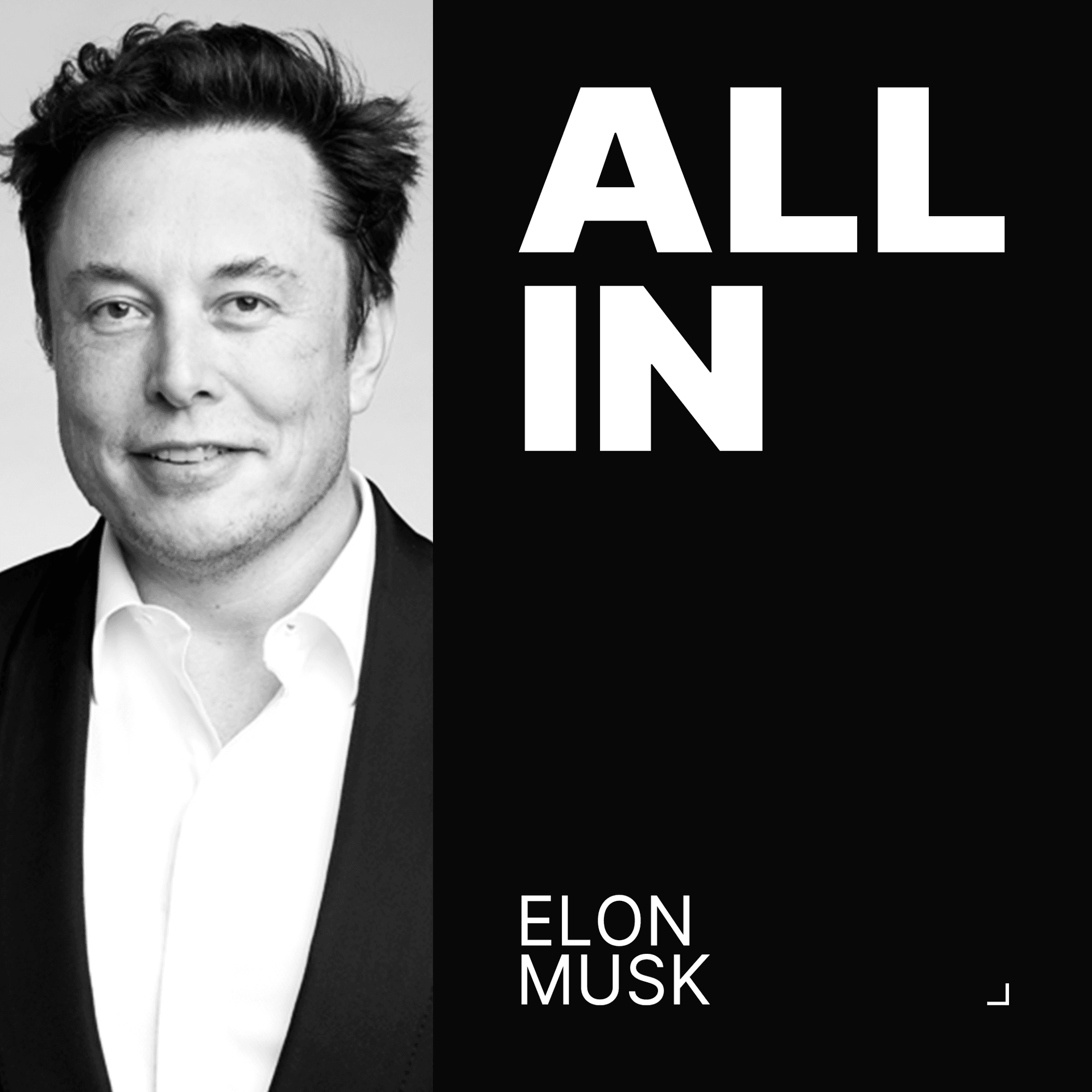
Elon Musk: OpenAI Betrayal, His Future at Tesla, and the Next Big Thing - Grokipedia
Date of Episode: [Date not specified in the transcript] Hosts: Chamath Palihapitiya, Jason Calacanis, David Sacks, David Friedberg Guest: Elon Musk
---
Episode Overview This episode dives deep into various topics surrounding Elon Musk, including discussions about social media algorithms, Musk's ventures with Tesla and OpenAI, and the implications of artificial intelligence on society. The episode is structured with a light-hearted "Disgracia" section, leading into substantive discussions about technology and governance.
---
Key Sections
0:00 - 3:10: Disgraciad Corner
- The hosts share their most disgraceful observations of the week, including:
- Jason Calacanis and Pete Buttigieg's virtue signaling discussions reflecting zero change despite their claims of social impact.
- The trending topic of Sydney Sweeney's dress and the hosts' humorous take on its visibility on social media platforms like X (formerly Twitter).
3:10 - 11:35: Elon on X's Algorithm and Content Trends
- Discussion on how the X algorithm influences content visibility, with humorous references to the impact of favoriting and interactions.
- Complaints about the algorithm causing overexposure to specific types of content, exemplified by the "SlutCon" event.
11:35 - 24:52: Creating Grokipedia
- Musk introduces Grokipedia, a project aimed at addressing the shortcomings of Wikipedia:
- The use of AI in generating more accurate and comprehensive information.
- Discussion of confirmation bias and the need for a reliable information source on the internet.
24:52 - 42:49: Looking Back on Three Years of X
- Reflection on Musk's acquisition of Twitter (now X) and its impact on free speech.
- Arguments around how the platform has evolved to foster different narratives and community engagement.
42:49 - 47:40: Tesla's Compensation Vote
- Discussion of an upcoming compensation vote at Tesla and the implications for Musk's future.
- Speculation on whether Musk would leave Tesla if the vote does not pass.
47:40 - 56:24: OpenAI Lawsuit and Corporate Governance
- Overview of Musk's lawsuit against OpenAI regarding its for-profit conversion and ownership stakes.
- Discussion around the irony of OpenAI's shift from originally being a non-profit to a profit-driven entity.
56:24 - 1:09:34: AI Power Efficiency and Future of Self-Driving
- Musk discusses advancements in AI and efficiency in self-driving technology.
- Insights into the future of robotaxis and how Tesla plans to integrate AI technology into everyday driving.
1:09:34 - End: Bill Gates and Climate Change
- Conversation shifts to Bill Gates and his changing stance on climate change:
- Musk's views on the evolving narrative around climate change and the need for sustainable energy solutions.
- Discussion of solar energy's viability compared to traditional fossil fuels and the challenges of transitioning to sustainable practices.
---
Key Takeaways
- Grokipedia is positioned as a potentially superior alternative to Wikipedia, emphasizing critical thinking and fact-checking capabilities.
- AI is seen as a transformative force in both technology and society, with Musk advocating for its ethical development and implementation.
- The episode juxtaposes Musk's forward-thinking ventures with current societal challenges surrounding governance, free speech, and environmental sustainability.
- The hosts engage in a blend of humor and serious discourse, providing insights into Musk's mindset and the future of his various enterprises.
---
Conclusion This episode of All-In blends entertainment with critical discussions on technology's future, free speech, and environmental issues, showcasing Elon Musk's ambitious projects and perspectives on shaping the digital landscape. The dialogue also reflects the hosts' unique camaraderie and conversational style, making for an engaging listening experience.
Written by AI. May contain mistakes. Listen to the episode to check what was said.
Transcript
Automatic transcript. May contain errors.0:28Let's get started. Disgraciad. Disgraciad. He was the best guy around. What about the people he murdered? What murder? You can act like a man! What the matter with you? He's just killed in manners. He insulted him a little bit. I smacked and I want the sticks! It's a little. Your hair was in the toilet water. Disgusting. I'm going to suffocate you, you little. It's a disgrace.
0:58Disgraciad. Disgracia. This is fantastic. This is our new feature. Chamath, you look like you're ready to go. Why don't you tell everybody who gets your Disgracia on this one? Wait, we all had to come with a Disgracia? You really? You missed the memo. All right, fine. Enough. I got one. I got one. Okay, all right. Just calm down. My Disgracia corner goes to Jason Calcanis. Oh, here we go. Come on, man. You can't. And Pete Buttigieg, where they, in the first 30 seconds of the interview, compared virtue signaling points about how each one worked at various moments at Amnesty International. Absolutely.
1:39Literally affecting zero change, making no progress in the world, but collecting a badge that they used to hold over other people. Disgraciade. We wrote a lot of letters. We wrote a lot of letters. Disgraciade. Which is good. That means it's like a good one because it's behind the scenes. Disgraciade. Jason Kalkanis and Pete Buttigieg. Disgraciade. Great. I'm glad that I get the first one. And you can imagine what's coming next week for you. I saw the Sydney Sweeney dress today trending on social. Disgraciad. It's too much. What? It's too much. What is it? I didn't even know what this is. You didn't see it?
2:12Bring it up, Nick. Pull up a picture, okay? Bring it up. It's a little floppy. Que le vestito et tropo. How is this disgraciad? What are you talking about? The dress is too much. It's disgraceful. A little bit of, like, look at this. Oh, my God. Too much. It's elegant. Too much. In my day, sacks, a little cleavage, maybe, perhaps in the 90s or 2000s, some side view. This is too much. Hey, guys. Hey. Great highbrow subject meta. We were discussing oral politics and Sydney Sweden's dress. I don't know. It's trending on X. Hi, Dad. Hi, Dad. Put away the phone, Jason.
3:09what's going on with the algorithm i'm getting sydney sweeney's dress all day and last week Well, maybe you should stop favoriting it. You favorited it 15 times. That poor Sax got invited to SlutCon for two weeks straight on the algorithm. I say the algorithm has become if you demonstrate You can't even tell if that's a joke or a real thing. It's a real thing in San Francisco. It's all too real. It's actually f***ing real. SlutCon is a real thing. For real? But I've noticed, yeah, if you demonstrate interest in anything on X now, if you click on it, God forbid you like something, man, the algorithm is on it.
3:52It will give you more of that. It will give you a lot more. Yes, yes. So we did have an issue.
4:01and we still have somewhat of an issue where there was an important bug that was figured out that was solved over the weekend which caused in-network posts to be not shown so you basically if you followed someone you wouldn't see them wouldn't see their posts it's obviously a big bug major bug then the algorithm was not probably taking into account if you just dwelt on something. But if you interacted with it, it would go hog wild. So if you, as David said, if you were to favorite, reply or engage with it in some way, it is going to give you a torrent of that same thing. Oh, Zach! So maybe you...
4:55Zach, what was your interaction? Did you bookmark Slakhan? I think you bookmarked it. Here's what I thought was good about it, though, is all of a sudden. If you haven't just sports with Sidney Sweeney's boobs, then you're going to get a lot more of it. Yeah. Okay. But what I thought was good about it was that you would see who else had a take on the same subject matter. And that actually has been a useful part of it. yeah so you do you do get more of a you get more of like a 360 view on whatever it is that you've shown interest in yeah yeah it just it's like it was giving you if you take a you'd have like it was just going too far obviously it was over correcting uh it had too much gain on um just turned up the gain way too high on any interaction would you would then get a tar into that it's like It's like, oh, you had a taste of it?
5:52We're going to give you three helpings. We're going to give you the food funnel. And that's all being done. I assume it's all being done with Grok now. So it's not like the old hard-coded algorithm, or is it using Grok? Well, what's happening is that we're gradually deleting the legacy Twitter heuristics. Now, the problem is that it's like as you delete these heuristics, It turns out the one heuristic, the one bug was covering for the other bug. And so when you delete one side of the bug, you know, it's like that meme with the internet where there's like this very complicated machine and there's like a tiny little wooden stick that's going, which was, I guess, AWS East or whatever.
6:35It's something like that. You know, when somebody pulled out the little stick, what's this? Oops. I think it'd be good if it... Half of Earth, you know. It would be great if it showed like one person you follow and then like it blended the old style, which was just reverse chronological of your friends, the original version with this new version. So you get like a little bit of both. Well, you can still you still have the everyone still has the following tab. Yeah. Now, something we're going to be adding is the ability to have a curated following tab, because the problem is like if you follow some people and they're maybe a little more prolific than you're, you know.
7:20You know, you follow someone and some people are much more, you know, say a lot more than others. That makes the following tab hard to use. So we're going to add an option where you can have the following tab be curated. So Grock will say, what are the most interesting things posted by your friends? And we'll show you that in the following tab. It will also be the option of learning everything. um but uh but i think having that option will make the following tab much more useful um so it'll be a curated list of people you follow um like ideally the most interesting stuff that they've said which is kind of what you you want to look at um and then uh we've we've mostly fixed the bug which would um give you way too much of something if you interacted with a particular subject matter um and then the uh the really big change which is where grok literally reads uh everything that's posted to the platform um uh which would actually there's about 100 million posts per day so it's 100 million pieces of content per day um i think that's actually just maybe just in english i think it goes beyond that if it's outside of english um so uh grok is gonna We're going to start off reading what Grok thinks are the top 10 million of the 100 million.
8:46And we'll actually read them and understand them and categorize them and match them to users. It's like this is not a job humans could ever do. And then once that is scaling, we'll add the entire 100 million a day. so it's literally going to read through 100 million things and show you the things that it thinks out of 100 million posts per day what are the most interesting posts to you how much of Colossus will that take? a lot of work yeah that's like is it tens of thousands of servers like to do that every day? yeah my guess is it's probably on the order of 50k H100 something like that wow and that will replace search so you'll be able to actually search on Twitter and find things with a plain language.
9:39We'll have semantic search where you can just ask a question and it will show you all content, whether that is text, pictures, or video that matches your search query semantically. How's it been? Three years in. This is a three-year anniversary, like a couple days ago. This is three years? Yeah, remember it was Halloween? Yeah, Halloween's back. Halloween's back, but it was the weekend you took over was Halloween.
10:11We had a good time. Yeah. Wow. Yeah. Three years. Well, three years from now. Yeah. What's the takeaway? Three years later, you obviously don't regret buying it. It's save free speech. That was good. Seemed to have turned that whole thing around. And that was, I think, a big part of your mission. But then you added it to XAI, which makes it incredibly valuable as a data source. So when you look back on it, the reason you bought it is to stop crazy woke mind virus and make truth exist in the world again. Great. Mission accomplished. And now it has this great future. Yeah, we've got community notes.
10:53You can also ask Grok about anything you see on the platform. you know just you just press the grok icon on any x post and we'll analyze analyze it for you and and research it as much as you want so you can you can basically have uh just by by tapping the grok icon you can um assess the um whether that that post is the truth the whole truth or nothing but the truth or whether there's something supplemental you need to be explained so i think it's actually, we've made a lot of progress towards freedom of speech and people being able to tell whether something is false or not false. Propaganda. The recent update to Grok is actually, I think, very good at piercing through propaganda.
11:41And we used that latest version of Grok to create Grokopedia, which I think is much more, it's not just, I think, more neutral and more accurate than Wikipedia, but it actually has a lot more information than a Wikipedia page. Did you seed it with Wikipedia? Actually, take a step back. How did you guys, how did you do this? Well, we used AI. But meaning like totally unsupervised, just a complete training run on its own, totally synthetic data, No seated set, nothing. Well, it was only just recently possible for us to do this. So we finished training on a maximally true-seeking, a version of Grok that is good at cogent analysis.
12:36So breaking down any given argument into its axiomatic elements, assessing whether those axioms are, you know, the basic test of coagency, the axioms are likely to be true. They're not contradictory. That the conclusion most likely follows from those axioms. So we're just trained Grok on a lot of critical thinking. so it just got really good critical thinking which was quite hard and then we took that version of grok and said okay cycle through the the million most uh popular articles in wikipedia and and add modify and delete so um that means um research the rest of the internet um whatever's publicly available um and correct uh what's correct the wikipedia article some fixed mistakes um but also add a lot more context um so sometimes really the the nature of the propaganda is that um you know facts are stated that are technically true but are not represent do not properly represent a picture of the individual or event this is critical because when you have a bio as you do actually all do on wikipedia over time it's just the people you fired or you you beat in business or have an axe to grind so it just slowly becomes like the place where everybody you know kind of who hates you then puts their information i looked at mine it was so much more representative and it was five times longer six times longer and the what it gave weight to was much more accurate, much more accurate.
14:26And this opportunity was sitting here, I think, for a long time. It's just great that you got to it because they don't update my page, but, you know, I don't know, twice a month with, you know, and then who is the secret cobble? There's 50 people who are anonymous who decide what gets put on it. It was a much better, much more updated page in version one. uh yes this is version 1.1 as we put it as we show at the top so um i do think actually by the time we get to version 1.1.0 it'll be 10 times better but even at this early stage um as you just mentioned it's it's not just that it's correcting errors but um it is creating a a more accurate realistic and fleshed out uh description of of people and events and subject matters.
15:15You can look at articles on physics and Grokipedia. They're much better than Wikipedia by far. Do you think that you can take this corpus of pages now and get Google to de-boost Wikipedia or boost Grokipedia in traditional search? Because a lot of people still find this and they believe that it's authoritative because it comes up number one. How do we do that? How do you flip Google? um yeah so it really can if people share a lot of if if if grokopedia uh is used elsewhere like if people cite it on their websites uh or post about it on social media um or when they do a search when grokopedia shows up they click on grokopedia it will naturally uh uh you know rise in Google's rankings.
16:07I did text Sundar because even sort of a day after launch, if you typed in Grokipedia, Google would just say, did you mean Wikipedia? Wikipedia, yeah. And it wouldn't even bring Grokipedia up at all. Yeah, that's true. How's the usage been? Have you seen good growth since it launched? Yeah. Is it very early? It went super viral. so we're seeing it all over the place but yeah and I think we'll see it used more and more as people refer to it and people will judge for themselves when you read a Grokipedia article about a subject or a person that you know a lot about and you see wow this is way better than Wikipedia it's more comprehensive, it's way more accurate it's not it's neutral instead of biased, then you're going to forward those links around and say that this is actually the better source.
17:08Wikipedia will succeed, I think, very well because it is fundamentally a superior product to Wikipedia. It is a better source of information and we haven't even added images and video yet. That's going to be awesome. Yeah, we're going to add a lot of video. so using Grok Imagine to create videos and so if you're trying to explain something Grok Imagine can take the text from Grokpedia and then generate a video an explanatory video so if you're trying to understand anything from how to tie a bow tie to how do certain chemical reactions work or really anything dietary things, medical things um we could uh well you can just go on and see the video of how it works that's created by when you have this version that's maximally truth-seeking as a model do you think that there needs to be a better eval or a benchmark that people can point to that shows how off of the truth things are so that if you're going to start a training run with common crawl or if you're going to use reddit or if you're going to use is it important to be able to like say hey hold on a second this eval just like you guys suck on this eval like it's just this is crappy data yeah i guess i think i mean there are a lot of evals out there um i've complete confidence that crockipedia is going to succeed um because wikipedia is actually not a very good product yeah it's it's it's the information is sparse uh wrong and out of date um and if you can go if you find if and and it doesn't have you know there are very few images there's basically no video um so if you have something which is um you know accurate comprehensive uh has videos uh where moreover you can ask if there's any part of it that you're curious about you can just highlight it and ask Grok right there like if you're trying to learn something it's just great it's it's it's not going to be a little bit better than than Wikipedia it's going to be a hundred times better than Wikipedia.
19:29Elon do you think you'll see like good uniform usage like if you look back on the last three years since you bought Twitter there was a lot of people after you bought twitter that said i'm leaving twitter elon's bought it i'm gonna go to this other wherever the hell they went and there's all these news and there's all these and there's all these you know yeah but blue sky is falling is my favorite i guess my question is as you destroy the woke mind viral kind of um control of the system and as you bring truth to the system whether the system is through grokipedia or through x do people like just look for confirmation bias and they actually don't accept the truth like what do you like or do you think people are actually going to see the truth and change yeah but i mean is that like you thought sydney sweeney's moves were great.
20:27Great to see mine. Looking good. Yeah. Solid, solid week up there. A little sheer, you know. Yeah. I think we just got flagged on YouTube again. Yeah, we did. That was definitely going to give us a censorship moment. Grade A moves. No, but like, but do people change their mind? I mean, I could take it because there's no such thing as grade A move.
20:55It's off the rails already. David, you were trying to ask a serious question. Go ahead. Well, I just want to know if people change their mind. Like, can you actually change people's minds by putting the truth in front of them? Or do people just take, you know, they kind of ignore the truth because they're, they feel like they're in some sort of camp and they're like, I'm on this side. They want the confirmation bias. They want the confirmation bias and they want to stay in a camp and they want to be tribal about everything. It is remarkable how much people believe things simply because it is the belief of their in-group, you know, whatever their sort of political or ideological tribe is.
21:32So, I mean, there's some pretty hilarious videos of, you know, you know, there's like some guy going around, is like a racist Nazi or whatever. And he was like trying to show them the videos of the thing that they are talking about where he is in fact, condemning the Nazis in the strongest possible terms and condemning racism in the strongest possible terms. And they literally don't even want to watch the videos. So, yeah, people, or at least some people, they will stick to whatever their ideological views are, whatever their sort of political tribal views are, no matter what. The evidence could be staring them in the face and they're just going to be a flat earther you know there's there is no evidence that you could show to a flat earther to convince them the world's around because everything is just a lie uh the world is flat i think the the ability to hit at grok in a reply and ask it a question in the thread has really become like a truth-seeking mission missile on the platform so when i put up metrics or something like that i reply to myself and i say at grok is the information i just shared correct?
22:50And can you find any better information? And please tell me if my argument is correct, or if I'm wrong, and then it goes through and then it DM Saks, and then Saks gets in my replies and tries to correct me. No, but it does actually a really good job of like, and that combined with community notes. Now you've got like two swings at bat, the community's consensus view, and then Grok coming in. I think it'd be like really interesting if Grok on like really powerful threads kind of did like its own version of community notes and had it sitting there ahead of time you know like you could look at a thread and it just had next to it you know or maybe on like the specific statistic you could click on it and it would show you like here's where that statistic's from i mean you can i mean pretty much every i mean essentially every post on x unless it's like advertising or something um has the grok symbol on it yeah and you just tap that symbol and you're one tap away from a grok analysis literally just one tap and we want to clutter the interface with where it's sure yeah providing an explanation but i'm just saying if you go on x right now it's one tap to get to get grok's analysis and grok will research the the the x post and give you an accurate answer um and then you can even ask us to do further research and further due diligence and you can go as far down the rabbit hole as you want as you want to go.
24:08But I do think this is consistent with we want X to be the best source of truth on the planet by far. And I think it is. And where you hear any and all points of view, but where those points of view are corrected by human editors with community notes. And the essence of community notes is that people who historically disagree agree that this community node was correct.
24:39And all of the community nodes code is open source and the data is open source. So you can recreate any community node from scratch independently. By and large, it's worked very well. I think we originally had the idea to have you back on the pod because it was a three-year anniversary of the Twitter acquisition. I just wanted to kind of reminisce a little bit. but I remember, yeah, I mean, I remember - Where's that sink? Where's that sink? Well, yeah. So Elon was staying at my house. We had talked the week before and he told me the deal was going to close. And so I was like, hey, do you need a place to stay?
25:14And he took me up on it. And the day before he went to the Twitter office, there was a request made to my staff. Do you happen to have an extra sink? And they did not, but they were able to - Yeah, who has an extra sink, really? but they were able to locate one at a nearby hardware store and i think they paid extra to get it out of the window or something well i think the store was confused because um my security team was asking for uh any kind of sink and and like like normally people wouldn't ask for any kind of sink you need a sink that puts in your bathroom or connects to a certain kind of plumbing so they're like trying to ask he's like well what kind of faucets do you want No, no, I just wanted a sink.
25:58Yeah, I think it's a mental person called. The store was confused that we just wanted a sink. Yes. And didn't care what the sink connected to. That was early. They were almost not letting us buy the sink because they thought maybe we'd buy the wrong sink. It's just rare that somebody wants a sink for a specific sake. For meme purposes. One of my favorite memories was Elon said, hey, swing by, check it out. I said, okay, I'll come by. And I drive up there and I'm looking where to park the car. And I realized there's just parking spaces around the entire building. And I'm like, okay, this can't be like legal parking.
26:39But I park and it's legal parking. Yeah, I mean, you're in downtown SF, so you might get your window broken. Yeah, I might not be there when I get back. But we get in there and the place is empty. And then it was seriously empty. except the cafeteria there was an entire uh there were two the twitter headquarters was two buildings one of the buildings was completely and utterly empty um and the other building uh had like five percent occupancy and in the five percent occupancy we go to the cafeteria we all go get something to eat and we realized there's more people working in the cafeteria than that twitter there were more people making the food than eating the food in this giant cafeteria it was giant really nice really nice cafeteria um the you know there's this is where we discovered that the the actual price of of the lunch was four hundred dollars um uh the the original price was twenty dollars but it had five it went for it was at five percent occupancy so it was 20 times higher and they still kept making the same amount pretty much so and charging the same amount so effectively lunch was$400.
27:49That was a great meeting. Yes. And then there was that, where we had the initial meetings, sort of the sort of trying to figure out what the heck's going on meetings in the, because there's the two buildings, two Twitter buildings, and the one with literally no one in it. That's where we had the initial meetings. And then we tried drawing on the whiteboard and the markers had gone dry. So nobody had used the whiteboard markers in like two years. So sad. None of the markers worked. So we were like, this is totally bizarre. But it was totally clean because the cleaning crew had come in and done their job and cleaned an already clean place for about two, three years straight.
28:42It was spotless. I mean, honestly, this is more crazy than any sort of Mike Judge movie or Silicon Valley or anything like that. And then I remember going into the men's bathroom and there's a table with, you know. Hygiene? Menstrual hygiene products. Yeah. Refreshed every week. Tampons, like a fresh box of tampons. Um, and, and we're like, but, but there's literally no one in this building. Um, so, uh, but no, no, it hadn't turned off the send, send fresh tampons to the van's bathroom in the empty building had not been turned off. No. So every week they would put a fresh box of tampons in an empty building, um, for years.
29:37This happened for years. And it must be very confusing to the people that were being asked to do this because they're okay i'll throw them away well i remember when you i guess they're paying us so we'll just put tampon so seriously have to consider the the string of possibilities necessary in order for anyone to possibly use that tampon in the men's bathroom uh at the unoccupied second building of twitter headquarters um because you'd have to be a burglar um who is a trans man burglar um who's unwilling to use the woman's bathroom that also has tampons statistically broken into the building and at that moment you have a period yes i mean you're more likely to be struck by a meteor um then need that tampon okay well i remember I think it was shortly after that, you discovered an entire room at the office that was filled with Stay Woke t-shirts.
30:49Do you remember this? An entire pile of merch. Yes. Hashtag Stay Woke. Stay Woke. And also a big sort of buttons, like those magnetic buttons that you put on your shirt that said, I am an engineer. um like look if you're an engineer you don't need a button like a big who's the button for who are you telling that to you could just ship code we would know we could check your but yeah they're like scarves um hoodies uh all kinds of merch that said hashtag stay woke yeah a couple music when you found that i was like my god man the barbarians are fully within the gates now i mean the barbarians have smashed through the gates and are looting the merch yes you are rummaging through their holy relics and defiling them i mean but when you think about it david the amount of waste that we saw there during those first 30 days just to be serious about it for a second this was a publicly traded company right so if you think about the financial duty of those individuals there was a list of sas software we went through and none of it was being used some of it had never been installed and they had been paying for it for two years they've been paying for a sas product for two years and the the one that blew my mind the most that we canceled was they were paying a certain amount of money per desk to have desk suiting software in an office where nobody came to work so they were paying nobody there was there was millions of dollars you're being paid for yes but for um analysis of pedestrian like software that use cameras to analyze the pedestrian traffic to figure out where you can alleviate pedestrian traffic jams uh in an empty building right that's like 11 out of 10 on a dolbert scale yeah it was pretty shout out scott adams you've gone off scale on your dolbert level at that point let's talk about the free speech aspect for a second because i i think that is the most important legacy of the twitter acquisition and i think people have short memories and they forget how bad things were three years ago first of all you had figures as diverse as president trump jordan peterson jay bada charia andrew tate they were all banned from twitter and i remember when you opened up the Twitter jails and reinstated their accounts, kind of freed all the bad boys of free speech.
33:18Yeah, stole the best deal. Yes. So you basically gave all the bad boys of free speech their accounts back. But second, beyond just the bannings, there was the shadow bannings. And Twitter had claimed for years that they were not shadow banning. This was a paranoid conservative conspiracy theorist. Yeah. There was a very aggressive shadow banning by what was called the Trust and Safety Group. which of course naturally would be the one that is doing the nefarious shadow banning. And I just think you shouldn't have a group called Trust and Safety. I mean, this is an old name if there ever was one.
33:59I'm from the Trust Department. Oh, really? We want to talk to you about your tweets. Okay. Can we see your DMs? Say that you're from the Trust Department? That's literally the ministry of truth right there. Yeah. The ministry of truth. They had maintained for years that they were not engaged in this practice, including under oath. And on the heels of you opening that up and exposing that, because by the way, it wasn't just the fact they were doing it. They created an elaborate set of tools to do this. They had checkboxes in the app. An elaborate set of tools to, yes, to de-boost accounts, yes.
34:36Yes. and you know subsequently we found out that other social networking properties have done this as well but you were really the first to expose it this is still being done at the other social media companies uh google by the way um so um for you know um and i'm picking on google because they're all doing it but uh for search results uh if you simply push a result pretty far down the page or you know the second page of results like like you know the joke used to be or personal is i think like where do you hide a what's the best place to hide a dead body the second page of google search results because nobody ever goes to the second page of google search results so you could hide a dead body there nobody would find it and and and you still have it's then then it's not like you've you haven't made them go away you've you've just uh put them on this one page too yes so shadow banning i think was number two so first was banning second was shadow banning i think Third to me was government collusion, government interference.
35:34So you released the Twitter files. Nothing like that had ever been done before where you just – you actually let investigative reporters go through Twitters, emails, chat groups. I was not looking over their shoulder at all. They just had direct access to everything. And they found that there was extensive collusion between the FBI and the Twitter trust and safety group, where it turns out the FBI had 80 agents submitting takedown requests. And they were very involved in the banning, the shadow banning, the censorship, which I don't think we ever had definitive evidence of that before. That was pretty extraordinary.
36:10Yeah. And the U.S. House of Representatives had hearings on the matter. And a lot of this was unearthed. It's public record. So a lot of people, some people on the left still think this is like made up. I'm like, this is just literally, the Twitter files are literally the files at Twitter. I mean, we're literally just talking about, these are the emails that were sent internally that confirm this. This is what's on the Slack channels. And this is what is shown on the Twitter database as where people have made either suspensions or shadow bands. Has the government come and asked you to take stuff down since or they just have to, the policy is, hey, listen, you got to file a warrant.
Read the full transcript
36:52You got to come correct as opposed to just putting pressure on executives. Yeah, our policy at this point is to follow the law. So if now the laws are obviously different in different countries. So sometimes, you know, I get criticized for like, why don't I push free speech in XYZ country that doesn't have free speech laws? I'm like, because that's not the law there. And if we don't obey the law, we'll simply be blocked in that country. So the policy is really just adhere to the laws in any given country. It is up to us to agree or disagree with those laws. And if the people of that country want laws to be different, then they should ask their leaders to change the laws.
37:42Yeah. But as soon as you start going beyond the law, now you're putting your thumb on the scale. So I think that's the right policy is just adhere to the laws within any given country. Now, sometimes we get in a bit of a bind, like we had gone into with Brazil, where this judge in Brazil was asking us to or telling us to break the law in Brazil and ban accounts contrary to the law of Brazil. And now we're somewhat stuck. We're like, wait a second. We're reading the law and it says this is not allowed to happen and also giving us a gag order. So we're not allowed to say it's happening and we have to break the law and the judge is telling us to break the law.
38:34The law is breaking the law. That's where things get very difficult. And we were actually banned in Brazil for a while because of that. One final point on the free speech issue, and then we can move on. I think people forget that the censorship wasn't just about COVID. There was a growing number of categories of thought and opinion that were being outlawed. The, quote, content moderation, which is another Orwellian euphemism for censorship, was being applied to categories like gender and even climate change. The definition of hate speech was constantly growing. Yes. And more and more people were being banned or shadow banned.
39:11There was more and more things that you couldn't say. This trend of censorship was growing. It was galloping. And it would have continued if it wasn't, I think, for the fact that you decided to buy Twitter and opened it up. And it was only on the heels of that, that the other social networks were willing to, I think, be a little bit chastened in their policies and start to push back more. Yeah, that's right. Once Twitter broke ranks, it became very obvious what the others were doing. And so they had to mitigate their censorship substantially because of what Twitter did. And I mean, perhaps to give them some credit, they also felt that they had the air cover to be more inclined towards free speech.
39:55They still do a lot of sort of, you know, shadow banning and whatnot at the other social media companies, but it's much less than it used to be. Yeah. Elon, what have you seen in terms of like governments creating new laws? So we've seen a lot of this crackdown in the UK on what's being called hateful speech on social media and folks getting arrested and actually going to prison over it. And it seems like when there's more freedom, the side that is threatened by that comes out and creates their own counter, right? There's a reaction to that. And there seems to be reaction. Are you seeing more of these laws around the world in response to your opening up free speech through Twitter and those changes and what they're enabling that the governments and the parties that control those governments aren't aligned and they're stepping in and saying, let's create new ways of maintaining our control through law?
40:52Yeah, there's been an overall global movement to suppress free speech under the guise of suppressing hate speech. Um, but then, uh, you know, it's the problem with that is that, um, your freedom of speech only matters, um, if people are allowed to say things that you, that you don't like, or even that things that you hate. Um, because, uh, if, if you're allowed to suppress speech that you don't like, uh, then, um, and you know, you, you don't have freedom of speech and, and it's only a matter of time before things switch around. and then the shoe is on the other foot and they will suppress you.
41:34So suppress not lest you be suppressed. But there is a movement, and there was a very strong movement to codify speech suppression into the law throughout the world, including the Western world, you know, Europe and Australia. The UK and Germany were very aggressive in this regard. yes and my understanding is that in the uk uh there's something like two or three thousand people uh in prison for social media posts um and in fact that this there's so many people in that were in prison for social media posts um and and many of these things are like you you can't believe that that someone would actually be put in prison for this they they have in a lot of cases released people who have committed violent crimes in order to to imprison people who have simply made posts on social media, which is deeply wrong.
42:30And underscores why the founders of this country made the First Amendment, the First Amendment was freedom of speech. Why did they do that? It's because in the places that they came from, there wasn't freedom of speech. And you could be imprisoned or killed for saying things. Can I ask you a question just to maybe move to a different topic? If you came and did this next week, we will be past the tesla board vote we talked about it last week and we talked about how crazy iss and glass lewis is right we use this one insane example where like ira aaron prize didn't get the recommendation from iss and glass lewis because he didn't meet the gender requirements but then kathleen also didn't it doesn't make any sense can you so the the board vote is on the six so She was an African-American woman.
43:20Yeah. Yeah, they recommended it against her, but then also recommended it against our enterprise on the grounds she was insufficiently diverse. So I'm like, these things don't make any sense. Yeah. So I do think we've got a fundamental issue with corporate governance in publicly traded companies where you've got about half of the stock market is controlled by passive index funds. and most of them outsource their decision to advisory firms, and particularly Glass-Lewis and ISS. I call them corporate ISIS. So all they do is basically they're just terrorists. And they own no stock in any of these companies.
44:09So I think that there's a fundamental breakdown of fiduciary responsibility here. where really any company that's managing, even though they're passively managing index funds or whatever, they do at the end of the day have a fiduciary duty to vote along the lines of what would maximize the shareholder returns because people are counting on them. People have all their savings in, say, a 401k or something like that. and they're counting on the index funds to vote, do company votes in the direction that would ensure that their retirement savings do as well as possible. But the problem is if that is then outsourced to ISIS and Glass-Lewis, which have been infiltrated by far-left activists, because, you know, where far-left, you know, you know where basically political activists go, they go where the power is.
45:11and so effectively Glass-Lewis and ISS controlled the vote of half the stock market now if you're a political activist you know what a great place would be to go work? ISS and Glass-Lewis and they do so my concern for the future because the Tesla thing it's called sort of compensation but really it's not about compensation. It's not like I'm going to go out and buy a yacht with it or something. It's just that if I'm going to build up Optimus and have all these robots out there, I need to make sure we do not have a terminated scenario and that I can maximize the safety of the robots.
46:02But I feel like I need to have something like a 25 % vote, which is enough of a vote to have a strong influence but not so much of a vote that I can't be fired if I go insane. So it's kind of, but my concern would be creating this army of robots and then being fired for political reasons because of ISS and Glass-Lewis declined to, ISIS and Glass-Lewis fire me effectively or the activists at those firms fire me. Even though I've done everything right. That's my concern. And then I cannot ensure the safety of the robots. If you don't get that vote, it doesn't go your way. It looks like it's going to.
46:53Would you leave? I mean, is that even in the cards? I heard the board was very concerned about that.
47:01Let's just say I'm not going to build a robot army. if I can be easily kicked out by activist investors. No way. Yeah, makes sense. And who is capable of running the four or five major product lines at Tesla? I mean, this is the madness of it. It's a very complex business. People don't understand what's under the hood there. It's not just a car company. You got batteries, you got trucks, you got the self-driving group. And this is a very complex business that you've built over decades now. It's not a very simple thing to run. I don't think there's an Elon equivalent out there who can just jump into the cockpit.
47:40By the way, if we take a full turn around corporate governance corner, also this week, what was interesting about the open AI restructuring was I read the letter and your lawsuit was excluded from the allowances of the California attorney general basically saying this thing can go through, which means that your lawsuit is still out there. right? And I think it's going to go to a jury trial. So there, that corporate governance thing is still very much in question. Do you have any thoughts on that? Yes, I believe that will go to a jury trial in February or March. And then we'll see what the results are there.
48:18But there's like a mountain of evidence that shows that OpenAI was created as an open source non-profit, it's literally, that's the exact description in the incorporation documents. And in fact the incorporation documents explicitly say that no officer or founding member will benefit financially from OpenAI. And they've completely violated that. And more of a, you can just use the Wayback Machine and look at the website of OpenAI. Again, open source non-profit, open source non-profit the whole way until you know it looked like wow this is a there's a lot of money to be gained here and then suddenly it starts changing um and they try to change the definition of open ai to mean open to everyone instead of open source even though it always meant open source i came up with the name yeah that's how i know so uh if they open sourced it uh or they gave you i I mean, you don't need the money, but if they gave you the percentage ownership in it that you would be rightfully, which 50 million for a startup would be half at least.
49:32But they must have made an overture towards you and said, hey, can we just give you 10 % of this thing and give us your blessing? You obviously have a different goal here, yeah? Yeah. I mean, essentially, since I came up with the idea for the company, named it, provided the A, B, and C rounds of funding, recruited the critical personnel, and told them everything I know. You know, if that had been a commercial corporation, I'd probably own half the company. So, but, and I could have chosen to do that. that if I it was totally at my discretion I could have done that but I created it as a non-profit for the world an open source non-profit for the world do you think the right thing to do is to take those models and just open source them today if you could affect that change is that the right thing to do uh yeah I think I think uh that that that is what the what it was created to do so it should I mean the best open source models right now actually ironically because fate seems to be an irony maximizer um uh the best open source models are generally from china yeah like that's bizarre and and and then i think the second best are one is or maybe it's better than second best uh but like the uh the grok 2.5 um open source model is actually very good um and i think we'd probably be and and we'll continue to open source our models but you know but whereas like try using any of the the the recent um so-called the open ai open source models they're out they don't work they basically they open sourced a broken non-working version of of their models as a fig leaf i mean do you know anyone who's running open open ai's open source models exactly yeah nobody we've had a big debate about jobs here Obviously, there's going to be job displacement.
51:35You and I have talked about it for decades. What's your take on the pace of it? Because obviously, you're building self-driving software, you're building Optimus. Yeah. We're seeing Amazon take some steps here where they're like, yeah, we're probably not going to hire these positions in the future. And, you know, maybe they're getting rid of people now because they were bloated. But maybe some of it's AI. You know, it's all debatable. What do you think the timeline is? And what do you think as a society we're going to need to do to mitigate it if it goes too fast?
52:10Well, you know, I call AI the supersonic tsunami. So, it's not the most comforting description in the world. But if there was a tsunami, a giant wall of water moving faster than the speed of sound, that's AI. When does it land? Yeah, exactly. So, now this is happening whether I wanted to or not. I actually tried to slow down AI.
52:40And then the reason I wanted to create OpenAI was to serve as a counterweight to Google. Because at the time, Google was sort of essentially had unilateral power in AI. All the AI, essentially. Um, and, um, and, uh, you know, Larry Page was not, um, you know, he, he, he, he was not taking as safety seriously. Um, uh, I don't know, Jason, I'm sure were you, were you there when he, he called me a speciest? Yes. I was there. Yeah. Okay. So you were more concerned about the human race than you were about the machines. And, uh, yeah, you had a clear bias for humanity. Yes, yes, exactly. I was like, Larry, we need to make sure that the AI doesn't destroy all the humans.
53:31And then he called me a speciest, like racist or something for being pro human intelligence instead of machine intelligence. I'm like, well, Larry, what side are you on? I mean, that's kind of a concern. And then at the time, Google had essentially a monopoly on AI. Yeah, they bought DeepMind, which you were on the board of, had an investment in. Larry and Sergey had invested in it as well. And it's really interesting. I found out about it because I told him about it. I showed him some stuff from DeepMind. And I think that's how he found out about it and acquired them, actually. I got to be careful what I say.
54:11But the point is that it's like, look, Larry's not taking AI safety seriously. and Google had essentially all the AI and all the computers and all the money. And I'm like, this is a unipolar world where the guy in charge is not taking things seriously and called me a speciest for being pro-human. What do you do in those circumstances? Build a competitor. Yes. So OpenAI was created essentially as the opposite, which is an open source nonprofit, the opposite of Google. Now, unfortunately, it needs to change its name to closed for maximum profit AI. for maximum profit, to be clear. The most amount of profit you could possibly get.
54:56I mean... It is so... It is like... It's comical. And when you hear... When you hear Sam... There's an irony maximizing. You have to say, like, what is the most ironic outcome for a company that was created to do open source, non-profit AI, is it's super closed source. It's tied in Fort Knox. The open AI source code is locked up tied in Fort Knox. And they are going for maximum profit. Like get the bourbon, the steak knife, you know. Yeah, I mean. You know, like they're going for the buffet. And they're just diving headfirst into the profit buffet. I mean, it's the revenue buffet, at least. profit we'll see um i mean it's like it's like ravenous wolves for revenue ravenous buffet no no it's literally like super it's like bond villain level flip like it went from being united nations to being specter in like james bondland yeah when you hear him say i'm gonna when sam says it's gonna like raise 1.4 trillion to build our data centers yeah no but i think he I think he means it.
56:14Yeah. I mean, it's, I would say audacious, but I wouldn't want to, yeah, insult the word. It's insane. Oh, actually, I have a question about this. How is that possible? In the earnings call, you said something that was insane. And then I think the math actually nets up, but you said we could connect all the Teslas and allow them in downtime to actually offer up inference. And you can string them all together. I think the math is like, it could actually be like 100 gigawatts. Is that right? Did you do it? If ultimately there's a Tesla fleet that is 100 million vehicles, which I think we probably will get to at some point, 100 million vehicle fleet.
56:54And they have, you know, mostly state of the art inference computers in them that each say are a kilowatt of inference computer. And they have built in power and cooling and connect to the Wi-Fi. That's the key. Yeah, exactly. um yeah exactly and and and uh you'd have a hundred gigawatts of inference compute elon do you think that the architecture like there was an attention-free model that came out the last week there's been all of these papers all of these new models that have been shown to reduce power per token of output by many many many orders of magnitude like not just an order of magnitude but like maybe three or four like what's your view and all the work you've been doing on where we're headed in terms of power per unit of compute or per token of output?
57:45Well, we have a clear example of power efficient compute, which is the human brain. so our brains use about 20 watts of power but and all that only about 10 watts is higher brain function most of it's you know half of it is just housekeeping functions you know keeping your heart going and breathing and that kind of thing so so you've got maybe 10 watts of higher brain function in a human and we've managed to build civilization with 10 watts of a biological computer and that biological computer has like a 20-year, you know, boot sequence. So it's pretty fun. But it's very power efficient. So given that humans are capable of inventing, you know, general relativity and quantum mechanics or discovering general relativity, like inventing aircraft, lasers, the internet, and discovering physics with a 10-watt meat computer, essentially, then there's clearly a massive opportunity for improving the efficiency of AI compute.
59:02It's because it's currently many orders of magnitude away from that. And it's still the case that a 100-megawatt or even a gigawatt AI supercomputer at this point can't do everything that a human can do. It will be able to, but it can't yet. So like I said, we've got this obvious case of human brains being very power efficient and achieving and building civilization with 10 watts to compute.
59:40and our bandwidth is very low. So the speed at which we communicate information to each other is extremely low. We're not communicating at a terabit. We're communicating more like 10 bits per second. So... That should actually lead you to the conclusion that there is massive opportunity for being more power efficient with AI. And at Tesla and at XAI, we continue to see massive improvements in inference computer efficiency. So, yeah. You think that there's a moment where you would justify stopping all the traditional cars and just going completely all in on CyberCab if you felt like the learning was good enough and that the system was safe enough?
1:00:33Is there ever a moment like that? Or do you think you'll always kind of dual track and always do both? I mean, all of the cars we make right now are capable of being a robotaxi. So there's a little confusion of the terminology because our cars look normal. You know, like Model 3 or Model Y looks, it's a good looking car, but it looks normal. But it has an advanced AI computer and advanced AI software and cameras. and we didn't want the cameras to stick out so that we didn't want them to be ugly or stick out. So we put them in unobtrusive locations. The forward-looking cameras are in front of the rear-view mirror.
1:01:12The side-view cameras are in the side repeaters. The rear camera is just above the license plate actually typically where the rear-view camera is in a car. and the diagonal forward ones are in the B pillars. If you look closely, you can see all the cameras but you have to look closely. We just didn't want them to stick out like warts or something. But actually all the cars we make are hyper-intelligent and have the cameras in the right places. They just look normal. So all of the cars we make are capable of unsupervised full autonomy. Now, we have a dedicated product, which is the CyberCab, which has no steering wheel or pedals, which are obviously vestigial in an autonomous world.
1:02:05And we start production of the CyberCab in Q2 next year. And we'll scale that up to quite high volume. I think ultimately we'll make millions of CyberCabs per year. But it is important to emphasize that all of our cars are capable of being robotic taxis. The CyberCab. It's gorgeous. I told you I'd buy two of those if you put a steering wheel in them. And there is a big movement online. You're not putting a steering wheel in. People are begging for it. Why not? Why not let us buy a couple, you know, just the first ones off the line and drive them? I mean, they look great. It's like the perfect model.
1:02:41You always had a vision for a Model 2, right? Like, isn't it like the perfect Model 2 in addition to being a cyber cab? Look, the reality is people may think they want to drive their car, but the reality is that they don't. how many times have you been say in an Uber or Lyft and you said you know what I wish I could take over from the driver and I wish I could get off my phone and take over from the Uber driver and drive to my destination how many times have you thought that to yourself no it's quite the opposite I have the Model Y and I just got 14 I have Juniper and I got the 14 one and I put it on Mad Max mode the last couple of days that is a unique experience i was like wait a second this thing is driving in a very unique fashion um yeah yeah it assumes you want to get to your destination in a hurry yeah um i i used to give cam drivers an extra 20 bucks to do that medical appointment or something i don't know yeah but it's it feels like it's getting very close but you have to be very careful you know uber had a horrible accident with the safety driver cruise had a terrible accident wasn't their fault exactly except you know that somebody got hit and then it they they hit the person a second time and they got dragged yeah yeah this is pretty high stakes so you're being extremely cautious because the car is actually extremely capable right now but we are being extremely cautious and we're being paranoid about it because to your point um even one accident would would be headline news well probably worldwide headline news especially if it's a tesla like waymo i think gets a bit of a pass i think there's half the country or a number of people probably would you know go extra hard on you uh yes uh yeah exactly um yeah not everyone in the press is my friend i hadn't noticed yeah some of them are a little antagonistic yeah so you just but people are pressuring you to go fast and i i think is everybody's got to just take their time with this thing it's obviously going to happen but i i just get very nervous that the the pressure to put these things on the road faster than they're ready is just uh a little crazy so i I applaud you for putting the safety monitor in, doing the safety driver.
1:05:08No shame in the safety driver game. It's so much the right decision, obviously, but people are criticizing you for it. I think it's dumb. It's the right thing to do. Yes, and we do expect it to not have any sort of safety occupant or there's not really a driver that just sits. Monitor. Safety monitor. They just sit in the car and don't do anything. Safety dude. Yeah. But we do expect that the cars will be driving around without any safety monitor before the end of the year. So sometime in December. In Austin, yeah. I mean, you got a number of reps under your belt in Austin and it feels like pretty well.
1:05:51You guys have done a great job figuring out where the trouble spots are. Maybe you could talk a little bit about what you learned in the first, I don't know, it's been like three or four months of this so far. What did you learn in the first three or four months of the Austin experiment? actually it's gone pretty smoothly um a lot a lot of things that we're learning um are uh just how to manage a fleet like because you've got to write all the fleet management software right so yeah um and you've got to write the ride-hailing software you've got to write basically the software that uber has you've got to write that software it's just summoning a robot car instead of a car with a driver um so so a lot of things we're doing we're scaling up the number of cars um to say what happens if you have a thousand cars?
1:06:37We think probably we'll have a thousand cars or more in the Bay Area by the end of this year. Probably, I don't know, 500 or more in the greater Austin area. And, you know, you have to make sure the cars don't all, for example, go to the same supercharger at the same time. Right. So or don't all go to the same intersection. It's like, what do these cars do? And then like sometimes there's a high demand and sometimes there's low demand. What do you do during during those times? Do you have a car circled the block? Do you have to try to find a parking space? um the um and then you know sometimes the like say it's a it's a you know a disabled parking space or something but the the writing's faded or the things faded the car's like oh look a parking space will jump right in there it's like get a ticket you gotta look carefully make sure it's like you know it's not a uh an illegal parking space uh or or or it sees it sees a space to park and it's like ridiculously tight but it's like i can get in there um with like you know three inches on either side bad computer
1:07:58but nobody else would be able to get in the car if you do that so um you know there's just like all these oddball corner cases um and um and regulators like regulators are all very um yeah they're they have different levels of perspicuousness and regulations depending on the city depending on the airport i mean it's just you know very different everywhere that's going to just be a lot of blocking and tackling and it just takes time elon let me cast you another like in order to take people to san jose airport like San Jose, you actually have to connect to San Jose airport servers because you have to pay a fee every time you're thrown off.
1:08:41So the car actually has to do a remote call. The robot car has to do a remote procedure call to San Jose airport servers to say I'm dropping someone off at the airport and charge me whatever, five bucks. Which is like, there are all these quirky things like that. the the the like airports are somewhat of a racket um uh yeah um so so that's like you know we have to solve that thing but it's kind of funny that the robot car is like calling the server the airport server to to uh you know charge its credit card or whatever it's like a send a fax yeah we're gonna be dropping off at this time but it will seem to become extremely normal to see cars going around with no one in them yeah yeah just before we lose you I want to like ask if you saw the Bill Gates memo that he put out a lot of people are talking about this memo like you know I just want to say Billy G is not my love oh man like did climate change become woke did it become like woke and is it over you know like what happened and what's what what happened with billy g i mean you know great question great question yeah you know you you think that someone like bill gates who i clearly started a tech you know started a technology company that's one of the biggest companies in the world microsoft um being uh You'd think he'd be really quite strong in the sciences.
1:10:26But actually, my at least direct conversations with him have, he is not strong in the sciences. Yeah, this is really surprising. He came to visit me at the Tesla Gigafactory in Austin and was telling me that it's impossible to have a long-range semi-truck. and i was like well but we literally have them um and you can drive them and pepsi is literally using them right now and you can drive them yourself or send someone obviously bogus but you can send uh a trusted person to drive the truck and verify that it can do the things that we say it's doing and it's like no no it doesn't work doesn't work and i'm like um okay i'm like kind of stuck there then it's like i was like well so it must be that um you disagree with the watt hours per kilogram of the battery pack so that you must think that perhaps we can't achieve the energy density of the battery pack or that the watt hours per mile of the truck is too high and that when you combine those two numbers the range is low and so which one of those numbers do you think we have wrong and what numbers do you think are correct and he didn't know any of the numbers.
1:11:48And I'm like, well, doesn't it seem that it's perhaps premature to conclude that a long-range semi cannot work if you do not know the energy density of the battery pack or the energy efficiency of the truck chassis? Hmm. Hmm. But, yeah, he's now taking a 180 on climate. He's saying maybe this shouldn't be the top priority. Climate is good, eh? It's just... Yeah, when he said climate is gay, that's wrong. It's totally retarded. Why would Bill Gates say that climate is gay and retarded? Come on. Maybe he's got some data centers he's got to put up. Does he have to stand up a data center for Sam Maltman or something?
1:12:34I don't know. What is Azure? I don't know. He changed his position. I can't figure out why. I mean, the reality of the whole climate change thing is that you've just had sort of people who say it doesn't exist at all. And then people who say it's our super lamest and saying, you know, RAR is going to be underwater in five years. And obviously, neither of those two positions are true. You know, the reality is you can measure the carbon concentration in the atmosphere. Again, you could just literally buy a CO2 monitor from Amazon. It's like 50 bucks. And you can measure it yourself. And you can say, okay, look, the parts per million of CO2 in the atmosphere has been increasing steadily at two to three per year.
1:13:28at some point if you continue to take to take uh billions eventually twillions of tons of carbon from deep underground and transfer to the atmosphere and oceans so you transfer it from deep underground into the surface cycle you will change the chemical constituency of the atmosphere and oceans just that you just literally will um then you can only then now you can say argue to what degree and over what time scale. And the reality is that, in my opinion, is that we've got at least 50 years before it's a serious issue. I don't think we've got 500 years, but we've probably got, you know, 50. It's not five years.
1:14:11So if you're trying to get to the right order of magnitude of accuracy, I'd say the concern level for climate change is on the order of 50 years. It's definitely not five, and I think it probably isn't 500. So really, the right course of action is actually just the reasonable course of action, which is to lean in the direction of sustainable energy and lean in the direction of solar and sort of a solar battery future and generally have the rules of the system lean in that direction. I don't think we need massive subsidies, but then we also shouldn't have massive subsidies for the oil and gas industry.
1:14:54Okay. So the oil and gas industry has massive tax write-offs that they don't even think of as subsidies. Because these things have been in place for, in some cases, 80 years. But they're not there for other industries. So when you've got special tax conditions that are in one industry and not in another industry, I call that a subsidy. Obviously, it is. But they've taken it for granted for so long in oil and gas that they don't think of it as a subsidy. So the right course of action, of course, is to remove, in my opinion, to remove subsidies from oil industries. But the political reality is that the oil and gas industry is very strong in the Republican Party, but not in the Democratic Party.
1:15:35So you will not see, obviously, even the tiniest subsidy being removed from the oil, gas and coal industry. In fact, there were some that were added to the oil, gas, and coal industry in the sort of big bill. And there were a massive number of sustainable energy incentives that were removed, some of which I agreed with, by the way. Some of the incentives have gone too far. um but um anyway the the the actual i think the correct scientific conclusion in my opinion um and i think we can back this up with with solid reasoning let me ask ask rock for example is that we should um we should lean in the direction of moving towards a sustainable energy future.
1:16:27We will eventually run out of oil, gas and coal to burn anyway, because it's a finite, there's a finite amount of that stuff. And we will eventually have to go to something that lasts a long time that is sustainable. But to your point about the irony of things, it seems to be the case that making energy with solar is cheaper than making energy with some of these carbon based sources today. And so the irony is, it's already working. I mean, the market is moving in that direction and this notion that we need to kind of force everyone into a model of behavior it's just naturally going to change because we've got better systems you know you and others have engineered better systems that make these alternatives cheaper and therefore they're winning like they're actually winning in the market which is great but they can't they can't win if there are subsidies to support the old systems obviously yeah i mean by the way there There are actually massive disincentives of solar because China is a massive producer of solar panels.
1:17:27China does an incredible job of solar panel manufacturing. Really incredible. They have roughly one and a half terawatts of solar production right now. And they're only using a terawatt per year. By the way, that's a gigantic number. the average US power consumption is only half a terawatt. So just think about that for a second.
1:17:56China's solar panel production max capacity is one and a half terawattes per year. US steady state power usage is half a terawatt. Now, you do have to reduce, to produce one and a half terawattes a year of solar, So you need to add that with batteries, taking into account the differences between night and day, the fact that the solar panel is not always pointed directly at the sun, that kind of thing. So you can divide by five-ish to say that, but that still means that China has the ability to produce solar panels that have a steady state output that is roughly two-thirds that of the entire use economy from all sources.
1:18:36Which means that just with solar alone, China can, in 18 months, produce enough solar panels to power the entire United States, all the electricity of the United States. What do you think about near-field solar, aka nuclear? I'm in favor of, look, make energy from any way you want. That doesn't, like, obviously harmful to the environment. Generally, people don't welcome a nuclear reactor in their backyard. They're not like championing. Put it here. Put it under my bed. Put it on my roof. If your next door neighbor said, hey, I'm starting my house and they're putting a reactor there. What would you do?
1:19:24Your typical homeowner response would be negative. Very few people embrace a nuclear reactor adjacent to their house. so but nonetheless I do think nuclear is actually very safe the it's there's a lot of scaremongering and propaganda around fission if you're talking about fission and but fission is actually very safe they obviously have this on you know the navy US Navy has this on submarines and aircraft carriers and with with people really walking right I mean a submarine is a pretty crowded place and they have a nuclear powered submarine so um so so i think i think fission's fine as as a as a as an option um the the regulatory environment is makes it very difficult to actually get that done um and then it is important to appreciate just the sheer magnitude of the power of the sun so this is here are some just important basic facts um even wikipedia has these facts right.
1:20:29You know, so you don't even have to go to Rockpedia, but even Wikipedia has, yeah, even Wikipedia got it right. Yes. Yes. I'm saying what I'm saying, even Wikipedia's got these facts right. The sun is about 99.8 % of the mass of the solar system. Then Jupiter is about 0.1 % and then everything else is in the remaining 0.1 % and we are much less than 0.1 percent um so um if you burnt all of the mass of the solar system okay then the total energy produced by the sun would still round up to 100 percent
1:21:11but if you just burnt earth um the whole planet and burnt jupiter which is very big and quite challenging to burn. You know, Jupiter into thermonuclear active. It wouldn't matter. The sun, compared to the sun, the sun is 99.8 % of the mass of the solar system. And everything else is in the miscellaneous category. So, like basically, no matter what you do, total energy produced in our solar system rounds up to 100 % from the sun. You could even throw another Jupiter in there. So we're going to snag a Jupiter from somewhere else and somehow teleport. You could teleport two more Jupiters into our solar system, burn them, and the sun would still round up to 100%.
1:22:04As long as you're at 99.6%, you're still rounding up to 100%. Maybe that gives some perspective of why solar is really the thing that matters. and as soon as you start thinking about things at sort of a grander scale like Kardashev scale to civilizations it becomes very very obvious I'm not saying anything that's new by the way anyone who studies physics has known this for a very long time in fact Kardashev I think was a Russian physicist who came up with this idea I think in the 60s just as a way to classify civilizations where Kodashev scale one would be you've used, you've harnessed most of the energy of the planet.
1:22:52Kodashev scale two, you've harnessed most of the energy of your sun. Kodashev three, you've harnessed most of the energy of galaxy. Now, we're only about, I don't know, 1 % or a few percent of Kodashev scale one right now, optimistically. um so um but as soon as you go to koshaph scale two where you're talking about the power of the sun then you're really just saying um everything is solar power and and and and the rest is in the noise um and um yeah so like the you know like the sun produces about a billion times or call it well over a billion times more energy than everything on earth combined it's crazy it's mind-blowing right yeah yeah solar is the obvious solution to all this and yeah i mean short term you have to use some of these other sources but hey there it is an hour and a half star powered like maybe we got a branding issue here yeah star power instead of solar power it's it's starlight yeah starlight it's the power of a blazing sun um
1:24:16how much energy does an entire star have yeah well more than enough more than enough all right and also you really need to keep the power local um so sometimes people honestly this i've had these discussions so many times it's where they say well would you beam the power back to earth i'm like do you want to melt earth because you would melt earth if you did that um we'd be vaporized in an instant uh so you you really need to keep the power local um you know basically distributed power and and i guess most of it we use for intelligence uh so it's like the other future is like a whole a whole bunch of solar-powered AI satellites.
1:25:01Elon, the only thing that makes the star work is it just happens to have a lot of mass, so it has that gravity to ignite the fusion reaction, right? But we could ignite the fusion reaction on Earth now. I don't know if your view has changed. I think we talked about this a couple of years ago where you were pretty like, we don't know if or when fusion becomes real here, but theoretically we could take like 10. I want to be clear. My opinion on... so I started physics in college at one point in high school I was thinking about a career in physics one of my sons actually is doing a career in physics but the problem is I came to the conclusion is that I'd be waiting for a collider or a telescope I don't have any to get that collider in physics but I have a strong interest in the subject so my opinion on say creating a fusion reactor on Earth is I think this is actually not a hard problem.
1:25:58It's a little hard. It's not totally trivial. But if you just scale up at Tokamak, the bigger you make it, the easier the problem gets. You've got a surface-to-volume ratio thing where you're trying to maintain a really hot core while having a wall that doesn't melt. That's a similar problem with rocket engines. You've got a super hot core in the rocket engine, but you don't want the chamber walls of the rocket engine to melt. So you have a temperature gradient where it's very hot in the middle and it gradually gets cold enough as you get to the perimeter, as you get to the chamber walls in the rocket engine where it doesn't melt because you've lowered the temperature and you've got a temperature gradient.
1:26:47So if you just scale up the donut reactor, Tokamak, and improve your surface volume ratio, it becomes much easier. And you can absolutely, in my opinion, I think just anyone who looks at the math, you can make a reactor that generates more energy than it consumes. And the bigger you make it, the easier it is. And in the limit, you just have a giant gravitationally contained thermonuclear reactor like the sun, which requires no maintenance and it's free. So this is also why would we bother doing that on making a little itty bitty sun that's so microscopic you'd barely notice on Earth when we've got the giant free one in the sky?
1:27:41Yeah, but we only get a fraction of 1 % of that energy on the planet Earth. We have to go. Yeah, right. So we've got to figure out how to wrap the sun if we're going to harness that energy. That's our long term. If people want to have fun with reactors, you know, that's fine. Have fun with reactors. But it's not a serious endeavor compared to the sun. You know, it's sort of a fun science project to make a nuclear reactor, but it's just peanuts compared to the sun. And even the solar energy that does reach Earth is a gigawatt per square kilometer or roughly, you know, called two and a half gigawatts per square mile.
1:28:24um so that's a lot you know um and the commercially available panels are around 25 almost 20 26 efficiency and maybe you know i mean you can eat and then you say like if you pack it densely you get an 80 uh packing density you're gonna uh which i think you know you've a lot of places you could get an 80 packing density you effectively have about uh you know 200 megawatts per square kilometer. And you need to pair that with batteries so you have continuous power. Although our power usage drops considerably at night, so you need less batteries than you think.
1:29:09And doesn't the question then become... A rough way to... Maybe an easy number to remember is a gigawatt hour per square kilometer per day is a roughly correct number. But then doesn't your technical challenge become the scalability of manufacturing of those systems? So, you know, accessing the raw materials and getting them out of the ground of planet Earth to make them, to make enough of them, to get to that sort of scale and that volume that you're talking about? And as you kind of think about what it would take to get to that scale, like, do we have an ability to do that with what we have today?
1:29:43Like, can we pull that much material out of the ground? Yes. Solar panels are made of silicon, which is sand, essentially. Um, and, um, I guess more on the battery side, but the battery side, yeah. So battery battery side, um, uh, you know, the like iron phosphate, lithium ion battery cells, this, you know, earth, I'd like to throw out some like interesting factoids here. Um, most people don't know, uh, if you said, um, uh, as measured by mass, what is the biggest element? What is, what is earth made of as measured by mass? Uh, actually it's, it's iron. Iron. Yeah, I think 32 % iron, 30 % oxygen, and then everything else is in the remaining percentage.
1:30:28So we're basically a rusty ball bearing. That's Earth. And with a lot of silicon at the surface in the form of sand. And the iron phosphate, so iron phosphate lithium-ion cells, iron, extremely common, most common element on Earth, even in the crust. and then phosphorus is also very common and then the anode is carbon but also very common and then lithium is also very common so there's actually you can do the math in fact we did the math and published the math but nobody looked at it it's on the Tesla website that shows that you can completely power Earth with solar panels and batteries and there's no shortage of anything all right so on that note yeah go get to work elon and just borrow the earth while you're getting implants uh into people's brains and uh satellites and other good fun stuff good to see you buddy yeah good to see you guys yeah yeah stop by anytime thanks for doing this you got the zoom link stop by anytime thank you for coming today and thank you for liberating free speech three years ago so yeah that was that was a very important milestone And I see all you guys are in just different places.
1:31:49I guess this is a very virtual situation. It's always been that. I'm at the ranch. Are you ever in the same room? We try not to be. Only when we do that summit, but otherwise we avoid each other. We're in the same room. Your summit is pretty fun. We had a great time recounting SNL sketches that didn't make it. Oh, God, there's just so many good ones. I mean, we didn't even get to the Jeopardy ones. Yeah, yeah. Those were so offensive. Oh, wait. Well, I think we skipped a few that would have dramatically increased our probability of being killed. You can take this one out. Boys, I love you. I love you.
1:32:30I love you all. I'm going to poker. Later. Take care. Later. Bye-bye. Love you. We'll let your winners ride. Rain Man David Sack.
1:32:45We open source it to the fans and they've just gone crazy with it. Love you, Wes. I'm queen of kinwai. I'm going all in. What your winners lie. What your winners lie. What your winners lie. Besties are gone. Go 13th. That's my dog taking a notice in your driveway. Sex. Win at all. Oh, man. My Abadasher will meet me at Blaine's. We should all just get a room and just have one big huge orgy, because they're all just useless. It's like this, like, sexual tension, but they just need to release somehow. Wet your feet. Wet your feet. We need to get merch. These are back. I'm going all in.
1:33:30I'm going all in.
From the publisher
(0:00) Disgraziad Corner: The most disgraceful things of the week!
(3:10) Elon on X's new algorithm, why there has been so much Sydney Sweeney content lately
(11:35) Creating Grokipedia: Wikipedia's failures, the future of information on the internet, confirmation bias
(24:52) Three years of X: Looking back on the Twitter acquisition and how it changed free speech on the internet
(42:49) Tesla vote on Elon's compensation, would he leave Tesla if it doesn't pass?
(47:40) OpenAI lawsuit, for-profit conversion, how much Elon should own, OpenAI's great irony
(56:24) AI power efficiency, Robotaxis, future of self-driving
(1:09:34) Bill Gates flips on climate change, solar, energy production
Follow Elon:
Follow the besties:
Follow on X:
Follow on Instagram:
https://www.instagram.com/theallinpod
Follow on TikTok:
https://www.tiktok.com/@theallinpod
Follow on LinkedIn:
https://www.linkedin.com/company/allinpod
Intro Music Credit:
Intro Video Credit: