
In short
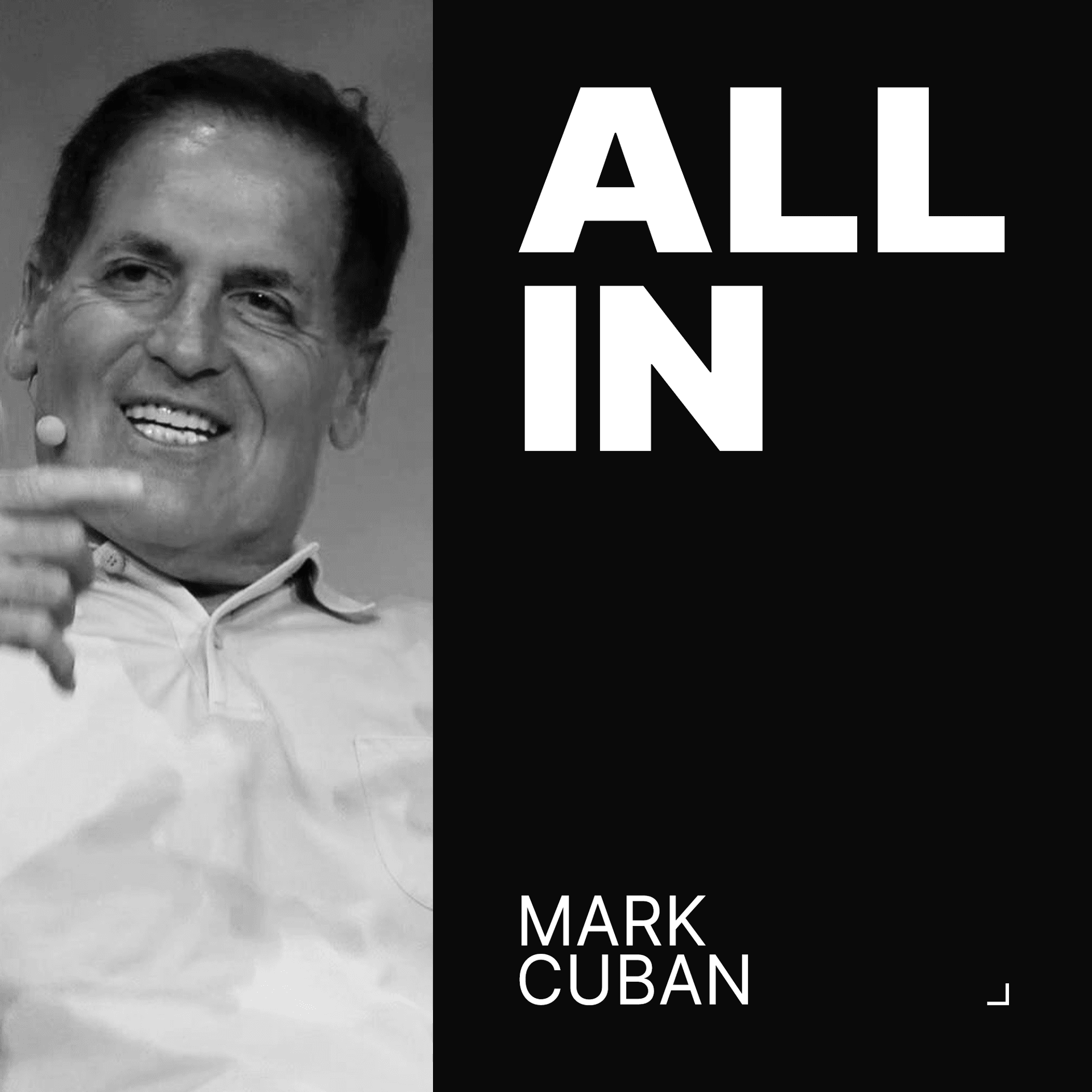
Mark Cuban discusses whether today’s AI “bubble” will wipe out most people, arguing it’s less like the dot-com era and more likely to destroy over-leveraged VCs/funds/PE. He also claims AI is harder to deploy in enterprises than people expect, creating major opportunity for entrepreneurs and AI-literate workers.
Guests
No guest is clearly identified in the transcript; it’s Mark Cuban speaking with an interviewer/host.
Key claims
Entry price matters; private capital is driving “pricing to perfection.” Big AI/data-center bets may fail due to power constraints and uncertain performance improvements. AI won’t replace most white-collar jobs soon because agents are brittle and require systems thinking and iteration. Large language models may reduce political information asymmetry by being more truth-seeking than social media.
Notable examples
AppLovin’s ad platform growth; data centers becoming “pickleball courts” if power can’t scale; Cuban’s earlier internet-stock collar trade; AI intranet/tool hopping (OpenAI/Claude/Copilot/Perplexity/Lovable); Open Evidence for medication timing; world models needing video/robotics (satellite spectrography via Matter.com).
Written by AI. May contain mistakes. Listen to the episode to check what was said.
Chapters
Tap a time to open that second in VOThe Nature of Current Bubbles
0:00 to 1:18
Exploring the differences between today's technology bubble and past bubbles.
“You and I lived through a couple of bubbles.”
The Shift in VC Dynamics
1:23 to 2:11
Discussion on the implications of current VC behavior and market dynamics.
“It used to be that product managers for brokerages had to outperform their numbers, right, for, you know, the SPX or whatever.”
Challenges in Data Center Investments
2:11 to 3:37
Analyzing the potential inefficiencies in current data center investments.
“And what's happening now is the market leaders, Google, et cetera, Meta, they're borrowing hundreds of millions, billions of dollars.”
The Future of IPOs in AI
3:37 to 6:01
The importance of going public in the AI landscape and its challenges.
“And then with all the hate going against data centers, I think that could be protecting them.”
The Importance of Strategic Planning
6:01 to 7:10
Emphasizing the need for companies to adopt strategic planning and foresight.
“Without consideration to compete with China and everything else that's going on globally.”
AI Implementation Challenges
7:10 to 8:13
Challenges faced in implementing AI in enterprises and its real-world impact.
“You know, because I just need to be protected, save part for my upside, but just cover my downside.”
The Evolution and Impact of AI on Jobs
8:13 to 14:00
Exploring AI's potential impact on jobs and new business opportunities.
“So AI is a lot harder to implement than anybody expected.”
Understanding AI's Limitations in Business
14:00 to 16:00
Explore the challenges and opportunities of using AI in various business contexts.
“let me just tell you what 97.6 percent of the other people who ran into this did right and then it would fix it for you would tell you it doesn't even do that it just says failed right or says whatever.”
The Evolution of AI Tools and Their Applications
16:38 to 20:40
Delve into the development of AI tools and their practical applications in business.
“And even with young people, it's like one group embraces it.”
Health Innovations Through AI
20:40 to 23:00
Discuss the role of AI in personal health management and future medical applications.
“I don't even understand all this shit in order to be able to convert it into a world model that will provide algorithms that other world models can use.”
Show all 17 chapters
The Intersection of AI and Politics
23:00 to 28:01
Analyze how AI and large language models might influence political discourse and decision-making.
“And so you were doing it before function and superpower.”
The Role of Large Language Models in Politics
28:01 to 29:59
Explore how large language models could influence political decision-making.
“And the last thing, you know, Claude OpenAI needs is, well, you know, they're lying their ass off about this.”
Leadership and Civic Responsibility
30:00 to 31:58
Discuss the need for leaders motivated by civic pride rather than personal gain.
“And hopefully, large language models seeking the truth will help educate people away from what the algorithms tell them.”
Economic Comparisons: Texas vs. New York
31:59 to 34:07
Compare economic conditions and quality of life in Texas and New York.
“And, you know, the thing that has been really eye opening for me, having lived in New York, California, and now Texas, you know, in Texas, we're spent half as much money per, sometimes less.”
Challenges of Building Companies in Silicon Valley
34:08 to 36:23
Discuss the challenges faced by startups in Silicon Valley compared to Texas.
“And housing prices have gone three years in a row.”
Impact of NBA Changes and Team Dynamics
36:24 to 38:17
Analyze the effects of recent rule changes on team dynamics and parity in the NBA.
“It's been so many years and you got your chip too with Dirk.”
Valuation Trends in Sports Teams
38:18 to 40:04
Examine how streaming subscriptions influence sports team valuations.
“Seems like the rule changes, the apron, and how punitive it is, has created a lot more parity in the league.”
Transcript
Automatic transcript. May contain errors.0:00You and I lived through a couple of bubbles. We've seen this movie before. And this wave seems very different than the dot-com wave. So let's talk about that. Are you concerned about a bubble? We're seeing bubbly like behavior people. It's not the traditional dot-com bubble, right? Because back then there were companies going public, getting crazy valuations and people are buying them. And the stock would go up, you know, 50%, 100 % with companies that had no revenue, no traffic, no nothing. And you'd go get a cab back then and people would be talking about them. And you don't see that at all today.
0:31So it's not a bubble that's going to impact most people in the room, right? Or most people across the US. But it could just destroy a lot of VCs and a lot of funds and a lot of PE, right? Because they're going all in. I'm going all in. AppLovin started with an$8 domain and no VC funding and became one of the largest ad platforms in the world. Now that same engine powers AppLovin ads for e-commerce. Your ads run inside mobile games, reaching over a billion people with full screen, distraction free attention. The platform finds buyers and optimizes for profit. You set the target, it does the rest.
1:11One cookware brand went from$4 million to$16 million, turned profitable and is on pace for$80 million this year. Visit applovin.com slash all in to launch your first campaign today. I'm doing all in. It used to be that product managers for brokerages had to outperform their numbers, right, for, you know, the SPX or whatever. But now you got to outperform to keep the money coming in. You got to outperform the fun next door. And they're all in Anthropik and getting their outcomes at SpaceX and celebrating. But if shit hits the fan. Yeah. It really is like I've only done venture for just over 10 years.
1:51And it is wild to watch so many people who deployed at the wrong time just out of business. They just invested at the peak. And entry price matters. And you and I have been in a bunch of deals together. And we used to get to investing companies at$5 million,$10 million as angel investors. And then all of a sudden, the request was$40,$50,$60. And the product's not launched. And you're like, how does this work? Yeah. And what's happening now is the market leaders, Google, et cetera, Meta, they're borrowing hundreds of millions, billions of dollars. Yeah, that's interesting. And there's already a private credit problem right now.
2:26Right. So you just layer on private credit, like Al Capital getting all the refunds. And then you, you know, you have these huge companies that have cash flow, but there's, you know, they're spending all their cash flow on CapEx, and then they're borrowing on top of that. 50 year bonds. Right. That's planning for perfection. Right. And that's going to be hard. and we're building these data centers. And if there's a price performance curve on AI that minimizes the power requirements, there's going to be a lot of data centers that are going to be turned into pickleball courts. Interesting. Because they just can't get the power turned on.
3:02No, no, just the power. Everybody thinks that, okay, there's going to be so much more utilization and there will be, right? It'll just scale like everybody expects, but there's going to be breakthroughs and technological breakthroughs as well. Just like we saw fiber back in the day, It was all about putting in fiber. Then it went from one gigabyte fiber to 10 to 100 gigabyte. And then there wasn't a fiber problem anymore. There wasn't a bandwidth problem anymore. Quite the opposite. We had dark fiber that people bought for pennies on the dollar. And just sitting there, right? And how is it not going to be the case that we don't get the same price performance improvements on the AI side and on the data center side?
3:37Yeah. And then with all the hate going against data centers, I think that could be protecting them. I mean, spending, committing tens of billions of dollars for 10, 20 years going out. Yeah. I mean, nobody can predict that well. I mean, you used the word pricing to perfection, I think, earlier in the conversation. And that's really what's happening. I mean, you have to have a thesis that we're going to put a hundred, you know, open AI, a hundred billion dollars to work. and that's going to come back, not just in revenue, but it has to come back in earnings. A margin dollars, yeah. Yeah, it has to be profitable.
4:16Yes, and you just don't know. And I'll tell you the other in terms, the corollary for bubbles, right, in this particular bubble, because it's so driven by private capital, there should be a lot more companies going public, not at the SpaceX level, not OpenAI, not Anthropic, but the$100 million dollar IPO. Because if AI does what AI knows, we all know what it'll do in terms of disruption, then you want to have some sort of currency that allows you to buy all those companies. You guys were talking about buying different legal companies. Well, if you don't have that currency, the stock is currency, you're going to have to go out and raise money to do it.
5:02And if anything happens and that money is not cheap, that money is really, really expensive versus if you go out and you do a hundred million dollar IPO or a 50 million dollar IPO and you can do a secondary or whatever as many times as you need if you're performing. But the minute that company that you're competing with, that is a legacy business can't keep up or there's some other company that has domain expertise that you need or data that you need, like you guys were talking about. Yeah. You want to be in a position to buy them. Yes. That is nobody's forward thinking. Yeah, no one is forward thinking like that at all.
5:33And I'm like trying to tell my portfolio companies, go public, motherfuckers, go public. They just don't think that's the right thing to do. Well, an M &A is, you know, not to make this political, but, you know, when you're an entrepreneur, you have to play the game on the field. M &A was off the table. Lena Khan had a certain perspective, which was we have to be like precogs in minority report. We have to predict who's going to be a monopoly in the future and stop them now. It's like, OK. Without consideration to compete with China and everything else that's going on globally. Yeah. Four years of no acquisitions.
6:09I mean, the people I talked to who were in corporate development were like, we've been told to stand down because it's not worth the breakup fees. But even so, right, it's, you know, with mergers and acquisitions at that scale, fine. But if AI does what we know it will do, the companies that are disruptive don't have to be enormous companies. No. You don't want to have to always raise cash to go out there and do that. Yeah, it's such a good insight. Right. Because back in the day, back with broadcast.com, we bought like five companies just from stock. And then there was always a bigger fish to come along.
6:41Yeah, which we were happy to be fished. Yahoo. Yeah. Yeah, the famous caller. If you were a Claude employee, if you're at Anthropic or at OpenAI, is it time to start thinking about the caller? Yes. Try to think about, yeah, pairing the position. You know, I colored my stock because how rich do I need to be? Right. You know, and if you're able to change your life, if I work for any SpaceX, any of them, whatever, I'd be like, you know, somebody put together a collar for me. Yeah. You know, because I just need to be protected, save part for my upside, but just cover my downside. Yeah. When you did it, you had to like actually orchestrate that, right?
7:21It didn't exist as a product. No, it didn't. So I had to actually create an index of internet stocks. I had Goldman Sachs create an index of internet stocks that I thought sucked. And then I shorted that index and we had to follow all the laws. And I just had to have that short in place until I was able to do a real caller in the market on my Yahoo stock. And I lost tens of millions of dollars on that short, but I made up for it. Yeah. I mean, one of the great trades of all time. What do you think this wave of capabilities in AI, I'm sure you play with it because you've always been a tinkerer.
7:59So maybe what are you tinkering with and what do you think is going to be the most world changing in the next five, 10 years for entrepreneurs, for society? Where do you look at it and go, hey, this is truly meaningful. Yeah. So AI is a lot harder to implement than anybody expected. For sure. Right. You know, you can do an agent pretty straightforward. Right. You can prompt away. You know, we cheated on tests. We cheated at work, you know, did projects, improved our productivity 100x. Right. All easy peasy. And we just assumed, you know, at the enterprise, it'd be just as easy. It's hard. Yeah.
8:37And it's terrifying and not terrifying for employees, because Dario and everybody saying 50 percent of white color. People are going to lose their jobs. Here we are two years later. They said within two years. And, you know, employment's still growing. People are hiring. We need more AI literate people. Right. So CEOs have no clue what is going on. None whatsoever. And that's not going to change. Right. And so, you know, trying to explain to them that you need to add a harness to this, you know, all the. Yeah. No chance. Right. And if you think about it from an AI perspective, if AI, we're talking about AGI and we're talking about taking over the world.
9:18If you need to have forward deployed engineers, that tells you all you need to know about AI. Because by definition, you should just be able to ask AI to do what I need you to do and ask and tell me how to implement it. Yet here you have Microsoft hiring 6 ,000 people. Right. You have Anthropic, OpenAI, all saying they're going to deploy to these companies, which tells you AI is hard. And then you have Alex Karp from Palantir freaking out saying, how can you give your alpha to these companies? When, in my opinion, he's just saying they're doing what we're doing. Right. Yeah. We're we're all about forward engineers at Palantir and they're doing the same thing.
10:01And again, it's a great insight because you can, if you're using it as a search engine or you're making your little agent to go do your cron job, okay, fair enough. It's going to work. You need to have a little bit of systems thinking. But when you start putting into the enterprise and this is mission-credible work. Let's talk about the little bit of systems thinking because that's the second part. Now, I'm not trying to shit on AI. I love it. I invest in it. It's going to be amazing. It's the most impactful technology that we've ever seen and may ever see, right? Right. But try going into cloud or chat GPT and saying, OK, I just want you to do this search for Jason Calacanis investments.
10:36And I want you to report and I want you to email it to me every week. Yeah, you can't do it. Can't do it. And then it says, OK, would you like for me to do an agent that gives you alerts? And then you say, sure. And then you have to know how to program because it either gives you a JSON file or it gives you code. And it comes out slop. Yeah. Then you have to not correct. You have to reiterate. Right. You know, if you want to say, you know, hey, let me load a picture in and you tell me if I'm hot or not. Or is this girl hot? What should I say to her? You know, we're business versions. Great. Yeah.
11:07Right. But A.I. is not going to, you know, take away 50 percent of the jobs. There's just so much it can't do that regular people need it to do. Yeah. Right. Now, does that create opportunity? Enormous opportunity. Yes. Right. So, like, I'm an investor in Lovable. and we were here this morning talking and um anton was saying that anton was saying that um they people are using lovable to create 770 000 applications a week a week yeah right and that only 30 of their business is in the u.s and only um 20 is engineers and what's happening is entrepreneurs to answer your question about where it's going right if you're an entrepreneur like Like he was saying before, there's no better time to be an entrepreneur.
11:58He nailed it, right? Because that's where AI is the most impactful. No matter where you are in the world, they have big utilization in Brazil, India, right? If you're in France, US, wherever. You know, like I gave it a prompt, like I said, because I wanted to see what it would take. I was like, okay, we're going to create an imaginary company that has a button that can record 24-hour video. and then I wanted to be able to send it to me every 24 hours. And I want you to create a patent and a business plan and tell me what licensing or whatever I need. 12 minutes. Yeah. Wow. Like, we've started tons of businesses.
12:38Yeah, six months to get a prototype, 12 months to launch it. Yes. And then you have to... And then I asked for a bill of materials and the source companies. Like, the basic stuff to be that, the blocking and tackling stuff that every company has to do at, you know, when you're setting it up and early in its life cycle. Done. Done. And even if it's wrong, so what? Because the one thing you and I both know, and everybody in the room should know, every single motherfucking business plan ever written in the history of business plans is wrong. Of course. Yeah. It's a thought exercise that at least gives you some sort of direction you're going.
13:17Yeah. And it's a guideline and a template it for you, right? But it's wrong. So what if the AI is wrong, if the model is wrong, you know, because you're going to learn and you're going to iterate, but it's still, again, all this talk about taking white collar jobs is ridiculous when it can't even do the basic shit, right? And you have to have, like you said, a programming mindset in order to be able to iterate and figure it out. and like even you would think if ai is advanced as we want to believe ai is right now all the errors that we get when we ask it to do a project it would learn from all those errors and even have hey i'm claude i see you have a problem with this right and it failed on these three attempts let me just tell you what 97.6 percent of the other people who ran into this did right and then it would fix it for you would tell you it doesn't even do that it just says failed right or says whatever.
14:13You know, again, AI is amazing. And particularly for programmers, it's game changing. When you have a narrow data set, like code or legal, tax, it's magic. And it's just math, right? Basic data, right? But when you want it to do, when normal people anywhere in the world want to use it for normal stuff, great. You start a business, great. But if you want to start getting advanced, it's like figuring out PowerPoint used to be or Excel, right? You always have to have your Excel expert, you know, or your PowerPoint. In your company. Yeah. Or whoever that you knew, right? Or there would be companies built.
14:54I've invested in like a company that's SlideShare, that all they did was have PowerPoint templates that you could download and redo. AI is not even that advanced for, you know, once you get to the second level. And so that creates so much opportunity for anybody to walk into a small, medium-sized, even large business and say, hey, I understand AI. I have a basic computer background or better. And so all these fails that you're running into across your company, big or small, I can help you fix them. Because what AI can do once those issues are fixed is phenomenal. But even better, if you're thinking as an entrepreneur to start a business, those things will eventually break.
15:40Agents get bored, right? And they drift. Because as the underlying large language model starts to change, the way it was originally programmed doesn't match what the large language model turned into. Right? You see what I'm saying? Yeah. And you even wrote something about this, right? Where it's taking more people to manage all this stuff. I'm going all in.
16:04starting a business usually means juggling a bunch of different services just to look legit not anymore with northwest registered agent you get a complete business identity all in one place a business address domain website phone number and more with privacy protection built in from day one don't spend hundreds or thousands on services you can get from northwest for free visit northwestregisteredagent.com slash all in free and start using free resources to build your business today. I'm trying to get the whole firm to be AI first. And even with young people, it's like one group embraces it. And, you know, they they solve, you know, I don't know, let's call it five or six really pressing issues.
16:52The other group is, you know, not embracing it. And the difference between those AI first employees and the non-AI first employees, the gap is like, whoa. It's almost like when we got into the industry and somebody knew how to use the office suite in a PC and then somebody else was like on legal pads. It's like that much of a difference. It's so stark. People who are AI literate, when do they run into a ceiling? Well, what I'm seeing is a lot of tool hopping, which is a good question because they started with open claw they started building it it got brittle does anybody still use open claw who's open claw anybody using hermes agent okay there you go who's on claude co-work and then oh whoa and perplexity computer anyone okay interesting those are the four that people have been bouncing around on and what i decided to do is i was just like hey token max it you can each spend a couple thousand dollars a month i don't care about that i just care about the gains and they all wound up going from open claw.
17:54All the agents started breaking. It's hallucinating. It's like too frustrating. They started using clawed co-work. Okay, great, but kind of limited. And then they started using lovable and they built intranets for the venture business that no venture business would spend a half million dollars and 12 months building an intranet. You'd just be like, I'm going to put it in Notion, Google Sheets, whatever. and then they just started building more and more software. So I have two or three people who are building software that I would say five years ago, we would have spent maybe two or three million dollars a year building this with that outsource company.
18:30You just would not have done it. Which means we wouldn't have done it. Right. You were just about the SaaS application that did it. And then we would have tried to like shoehorn it into a SaaS app and customize it. It wouldn't have worked. We would have given up. But how are you going to manage it now once they get there? Well, you know, again, to your company, Lovable, which man, congrats on that investment, because that company was going to go out of business four times. And I told Anton, every time they say you're going out of business, you add a hundred million in revenue, 600 million in revenue and four times, 200 million, 300 million.
18:57Oh yeah. It's going to be absorbed into the frontier models of the world, right? I mean, I've got lovable. I've got Synthesia.io. That was the first investor in 10 years ago, maybe that, that are just, it's just killing it. Right. I've got AMI, which is Jan LeCun's world model. We haven't even talked about world models versus LLM and transformers, right? Because everything we do is built on text and pictures. Nothing's going to be text and pictures in 10 years, right? But what's going to drive it? And people say, well, AI is so smart. It's going to change everything. I'm like, okay, if you show AI a video of a two-year-old on a high chair with a sippy cup, the two-year-old knows if you push the sippy cup over the edge, mom's going to come running and the kid's going to start laughing.
19:47AI's got no clue what's going to happen. None. If you're at a corner blindfolded and you have to cross the street, would you rather have your phone with AI or would you rather have a seeing eye dog? Yeah, dog. I'm taking the dog every time. Of course, yeah. It's not ready. Right? It's not ready. So just think about how far we have to go. Yeah. You know, and all this - Huge opportunity though. I mean, the world models are crazy because you have videos available on YouTube and just, we have the world there. So it's gonna learn - And that's still not enough. It's not enough. They have to wear gloves and now they've got people in Manila, like doing recipes.
20:27So I invested in the company, Matter.com and they're launching satellites just to take, And they do spectrography where they use the satellites to take videos of everything underneath them and use a spectrography. I don't even understand all this shit in order to be able to convert it into a world model that will provide algorithms that other world models can use. Yeah. Right? There's just no way that the future of AI doesn't include video. I mean, it's a huge part of it. And as the inference and the back to the build out of these data centers, as we wonder what's going to happen, people wanting to use more tokens and then these world building and video, man, that takes a magnitude.
21:13Yeah. Video, like if I'm going to be wrong on the data centers, it's going to be because of video. Yeah. Right. And world models and robotics, which is all related. Yeah. And robotics, you know, it's related, but we still got a long way to go. Yeah. Health. You look great, by the way. I don't know what's going on. You got the Reddit. What do you got? Reddit TrueTie? What's on the menu here? What's off the menu? Follow me on Instagram, mcubin. I just, I'm eating better. I mean, you look better now than 20 years ago. Oh, I appreciate that. Thank you. The TAM helps too, right? The TAM. But I mean, you look then and fit.
21:45And listen, we're getting up there now. We're not kids anymore. This is definitely going to help AI, all the work being done. And I use it too. Like I invested in a company called Open Evidence. Yes. Yeah. which is just for medical, right? And I used it. And I have one supplement I have to take because my iron levels are low and I have to take this one medication. And I was taking them at the same time and couldn't understand why I was having problems. I've run it through open evidence. And I said, here's everything I'm taking. Here's everything I'm eating. And they're like, no, you got to do this.
22:17When you get up to pee at three in the morning, take this medication. Oh man, getting old sucks. I was right there with you last night. What's going on? what's going on, right? And so, you know, but it's for health, it's going to make a huge difference, but it's not going to replace doctors. No. But I mean, it is pretty amazing. Are you on Whoop or your Apple Watch? I watch, yeah. Yeah. I mean, the Apple, the Whoop plus getting your blood test, just self-directed healthcare with AI, man, you're going to get some early wins. And then when you do go talk to your doctor. Oh, you have it right there, right?
22:53I get my blood tested. So now the friends are still up three to six months. Yeah. Right. And I've been doing it for 10 years. So I know all my trends. Wow. And so you were doing it before function and superpower. Oh, yeah. Like you could go look up Mark Cuban blood tests on Twitter, right? And I would get into it with doctors like eight, 10 years ago. And you're going to need this for your benchmarks. But it's only going to get better. Yeah. It's going to be really interesting. We had this big data moment. And it was like, okay, yeah, we're storing all this data. but we didn't have any intelligence against it.
23:24Now that's incredible when Apple is now putting that data, they're doing studies. I don't know if you've been invited to studies on your Apple watch. I'm like, well, this is going to get very interesting. Just added blood panels. So now your sleep data, your steps, your heart rate, your respiratory EKG, plus your blood work. Then if you can get your diet into it as well. Yeah. That's what iWatch has in iHealth, right? Yeah. So, yeah, you're just going to get smarter, you know, and that'll make your doctors able to be smarter because 95 % of medicine is guessing, you know, because you can't, there's no way a doctor can memorize all the new that happens every single day.
24:02You just can't. But a doctor using these tools, having, you know, the empathy and the ability to communicate and the ability to see. Yeah. Right. Because, again, there's you can't see. Yeah. You know, you could have doctor, you know, why am I bleeding? You got a blood, looks like you got a gunshot wound, right? AI is not going to tell you that. Yeah. When we look at the opportunity here, it's going to be a lot of change. A lot of talk about wealth disparity in the US. Invest America, our friend Brad Gerstner and our friend Michael Dell, another great Texan. And thanks for welcoming me. I'm enjoying my time in Texas.
24:45Yeah. I mean, it's great. I love Texas, man. Texas is fun. It's kind of like the heat's kind of like this, though. Yeah. We have air conditioning. We do have air conditioning. There's a record number of air conditioners coming from China to Europe this summer. You know, I looked at what companies installed them and everything. Oh, you always got to trade. You always got to trade. I'm curious, but there's no real... Sold out. They're all being shipped here from China at the moment. But really interestingly, you know, feels like entrepreneurship, which has been our shared passion for many decades.
25:19Hey, investing, another shared one, giving people access to public markets, invest America. We have this dueling narrative, socialism in America, capitalism. And it feels like this is the in our lifetimes, you and I are close in age. This is the most fevered we've ever seen it. I mean, we have states, maybe not since the 60s or 70s. I missed that. I was born in 1970. You were born, I guess, 1943? 23. 23. I always joke he's an older brother. I look good too, don't I? You look good for 1923. But, you know, this is pretty polarized. What's your take on the social? There's two things here. One, all the DSA stuff is local.
Read the full transcript
26:02It's really easy to be mandami And in New York, when you have a budget, you get to control it. And it's local, right? You got elected. You just do. And you have to balance the budget. And you'll see it in Michigan and wherever else. I don't think it's going to be game changing. But the more important thing is the people who are doing this are the people who are best at social media. Right. You know, because the algorithms drive how people vote in the United States. I can't speak to the rest of the world more than anything else. Whoever controls the algorithm controls the election in many cases.
26:34Trump knows how to use it. And what is unique about Mondami relative to Trump? He's, what, 31, 32 years old? Yep. His whole adult life has been Trump and social media. He studied it. And the two together. Yeah. And the guy in Michigan, same thing. So if you're good at AI, I mean, at algorithm, you know, driving algorithms, whether it's flooding the zone or, you know, like Trump saying, they're eating cats and dogs. Yeah, it's just attention. Yeah. And it's just, you know, defining the algorithms because whatever you search for, you get more of. And if they can get you to search for what they're saying and show your interest, then you're going to just get Mondami 24-7.
27:19and you'll get the positive size of the Dami. Or if you happen to be on the other side of the aisle and you are looking at stuff that's counter to that, you'll get more of that. We don't like, but one other piece I think is starting to change that. And that's the large language models. The thing that I think will save us as a world more than anything else in terms of information availability and reducing the information asymmetry as it applies to politics are large language models. Because large language models have to be as literate and literal and honest as they possibly can. Truth-seeking. Yeah, truth-seeking, better way to put it, yeah.
28:01So they have to seek truth. Otherwise, you'll lose trust in them. And the last thing, you know, Claude OpenAI needs is, well, you know, they're lying their ass off about this. Yeah, their currency is getting you the correct answer and the correct knowledge. Social media's currency is keeping you engaged. Right. It's two different missions. Totally different missions, right? And so you're not going to get rid of social media. But I think people, as they become more uncertain with their politics, are going to go more and more and more to large language models and say, who should I vote for? And the large language models are going to come back and say, well, what do you think about this?
28:37What do you insist on this and da, da, da. And they'll give you honest answers. Yeah. And if you ask it, hey, what's a reasonable immigration policy? It'll give you a reasonable policy, which is like, yeah, maybe shut the border and do a point based system like Canada, New Zealand, whatever it may be. Right. Yeah. I've done the same thing. And it's impressive. Very impressive. You know, my favorite troll now is like JD or, you know, AOC will, you know, they'll come out with whatever their craziness is on either side of the aisle. And then I'm like, at GROC, please vet these claims. Be as objective and factual as possible.
29:10Check your work. and show your stories. And then it just replies to them. So I've been just totally trolling Stephen Miller. Oh my God. Who, you know, he's like anti-immigration. I'm very passionate about like legal immigration and recruiting great people because - Right, you need them. We need them. Yes. Every, because you're running a basketball team. Every time you get Dirk Nowitzki, somebody else doesn't have him on the team. You get Jalen Brunson, he's not on the Mavericks anymore. Now he's on the Knicks. Yep. You know, like - Well, that's why we come to these things in Europe, right? Yes.
29:38Because great talent, right? Smart people. Obviously, you guys are geniuses for being here. But at the same time, there's a different vibe in every European country and India and the whole rest of the world. And I think you're starting to see some entrepreneurs leave us to come here. And that's scary. And hopefully, large language models seeking the truth will help educate people away from what the algorithms tell them. Yeah, I think it's important. You optimistic now? It's been pretty chaotic, but we're seeing such great progress. You're optimistic? About? Let's start with America, and then we'll go to humanity.
30:25Yeah, no, I mean, you know, like every country, we have our issues. Our issues just happen to be kind of insane. It is pretty wild. Yeah. But the good news is, you know, we have term limits for our president. Yeah. Yeah. And it seems like 12 or three terms is going to be the one for president. I mean, you're going to run. I mean, I hope you do, man. I would love to be your press secretary. That'd be a bet. We'd have so much fun. We'd have fun. We would have fun. Well, if he decides to run for a third term, then I'll run. But he's Yeah. Okay. That's good. That's breaking news. I mean, I honestly, like if you think about what we need, I think in leadership executives who can, I think, you know, who are like post money, post needing to make a living.
31:16No, I'm not going to even go there. Well, and then maybe who are doing it for love of country and maybe some amount of civic pride or. I get what you're saying. Right. And it's just like, you know, in the U.S., what the Democrats don't know how to actually do anything. Right. You know, they know how to take whatever happens and extrapolate that to the end of the world and the end of democracy. Right. Yeah. But and the Republicans, on the other hand, you know, do crazy shit. Right. Like they don't care about the people in the country. They don't you know, there's no connection to people. There's no empathy.
31:50And so, you know, we're. in the short term. But I think as we get past this next, the midterms and the next presidential election, I think we'll get back to normalcy. I think people want it. And, you know, the thing that has been really eye opening for me, having lived in New York, California, and now Texas, you know, in Texas, we're spent half as much money per, sometimes less. I think it's two and 2.2 times as much is spent on each citizen in New York. And we spend half as much, right? They have$6 ,000,$7 ,000 per person. They spend like$14 ,000 or something,$12 ,000 to$14 ,000. And the quality of life is better.
32:28But on the flip side, New York contributes more to the federal treasury than Texas does. And you would think it should be the opposite, right? Just because of the business and how things are run. So there are trade-offs. Yeah, but it's changing. What do you think about all of us moving to Austin and Texas? You got smart, obviously, for obvious reason, particularly. The wealth tax rate is just dumb, dumb, crazy. They tried it here. Everybody left. Yeah, it doesn't work. And they did it for about two years in France. Did they? Yeah, I don't know. But, you know, when Elizabeth Warren first proposed the wealth tax, so I found, and she said, well, we have these models and everything.
33:04So I found the economist at UC Berkeley. And I said, would you share your model with me or at least tell me about it? He goes, I'm like, was it more than one year? And he goes, no, it was just one year. I'm like, did you do any behavioral analysis to see how people would respond to the changes? Yeah. No. And so, you know, whether it's Mondami, Elizabeth Warren, whether it's California, it's showmanship more than reality. Yeah. And I think people are forgetting that people are mobile, you know, like in the U.S. It's pretty extraordinary. You got Travis, Sachs, myself, Elon, just a bunch of folks have all of a sudden just shown up.
33:42I was there first. You were. I remember talking to you about it. And the thing that's amazing to me is, you know, in California, they won't let you build anything. And then we go to, I come to Texas, I buy a ranch and I asked the guy like, hey, can I like put a solar farm in here? He's like, on your ranch? I'm like, yeah, here. He's like, oh, son, it's your ranch. You can do that. And it's like, can I like build like - Trust me, in the cities themselves? Yeah. I do that in the city of Austin. I mean, but just outside of it, you can build. Yeah, do whatever. And housing prices have gone three years in a row.
34:13Housing prices and rents have gone down. When you build a company in Austin now, I'm sure it's like that in Dallas and Houston and San Antonio. When I have founders move there, the entire pressure is released. People can own a home. And I was like, wow, is that why do people still go to Silicon Valley? That's like drives me. I think if you're a first time founder, nothing better in terms of soaking in it. But when you're a second time, you're soaking in it. But what they don't tell you, the it, the shit, right? Yeah, it's tough. I think second time founders have now realized if I build it in Texas or Nevada or Florida, I'm going to just, all the talent's going to come.
34:49Just the vibe in the Silicon Valley just sets people's heads so wrong. Yeah. Right? So whether it's Travis, Mike, by the way, I've known Michael Dell since we were 22. Yeah. And I used to do business with him way back when. But just, yeah, in Texas, it's just like build your company and go. Yes. In the Valley, it's like, so are you Series A? Are you Series B? Are you Series C? A lot of distractions, yeah. 25 years I've been waiting for my Knicks to win a championship, and you played a significant role. No, the Spurs played a significant role. They should have kicked your ass. And why didn't they?
35:24Why didn't they? I think it was coaching, lack of experience. Yeah. You know, because you're up, put aside the 29, right? You're up in the fourth quarter of every game. Wemby throws it into the back of some guy, misses two free throws. De 'Aaron Fox goes the wrong way. A lot of mistakes. Yeah, and you'd be talking about firing Mike Brown. I mean, we were concerned when he got hired and getting rid of Tibbs. Oh, my God. But JB was the real deal, right? Yes. He was my Indiana boy, OG, right? Yeah. You know, he saved you guys. Yeah. And you had Jalen Brunson. Yep. He left, and that was kind of destiny.
36:02His family wanted to come to New York. That's what he wanted. I mean, I could show you a text where his agent, you know, texted me and says he wants his own team. He wants his own team. Right. Right. Yeah. He was ready to go. And I texted or emailed you and I said, what's the story of this is what we're going to base the franchise on? You said, he's really good. He's the real deal. I love he's a great guy. That's the best part about JV. He's just really a good human. I was there for the fifth game, six rows behind the bench. That's cool. And man, I just cried. I just cried. It's been so many years and you got your chip too with Dirk.
36:37It's so amazing how sports plays such a role in so many people's lives. Yeah. Especially now, look at the World Cup. I mean, it's just like sports has just changed everything. And, you know, like I've been to four World Cup games in Dallas and I hate soccer, football. Right. Right. I hate it. But just the whole scene, the vibe, the energy, you can't beat it. It's like going to a Knicks game, going to a Mavs game. Same thing. Yeah. And the NBA, is it peaked? It sounds like... It's hard to say. I mean, for fans, no. Because it just grows on social media. I was walking in Paris and there was a basketball store.
37:17And it had Wemby jerseys and Gobert jerseys and everything. And so, I mean, it's just growing globally. Yeah. Is Wemby the real deal? Yeah, he got humbled though. Yeah. Which is good for him. It's like Dirk in 2006 got humbled and came back better. Wemby will come back bigger, stronger, better. Yeah. It's amazing how he went from this like incredibly, I don't know, there was a magic about him to, no, he's a villain. And he turned into a villain. Because it was New York and 50 some years, right? And just the circumstances. And, you know, San Antonio thought they had in the bag everybody. It's like I went to Indiana University, right?
37:54And if anybody here follows college football in the States, like we were the ultimate underdog. We had not had, you know, we had not won 10 games. We beat more top 10 teams last year than we did in 100 plus years of the program. And so that just changes people's attitude. You were very much involved in rule changes. and we're going to get on AI next, but it's just great to talk to you about this since we're both such super fans of the NBA. Seems like the rule changes, the apron, and how punitive it is, has created a lot more parity in the league. And nobody knows who's going to win. Well, because you have to break up your team, right?
38:36Because at some point, OKC will have to break up their team. That's why they collect all their draft assets, because you can't have three max players. And if one of them turns out to be hurt or not what you expected, then you're in deep s**t, right? And so the second apron is just a complete game changer. And you have to be so much better at putting together a team than you were before. And you have to get lucky. Like the Spurs have Wemby on a rookie contract. The OKC has got Hatchett on a rookie contract. He's not on a rookie contract any longer. So they have to be even more careful. And so it really changes the strategy behind building a roster.
39:15So we're going to see back-to-backs or any more? No chance. No chance. Maybe back-to-backs, but not a, what do they call it when you have three? The three-peat. Three-peat, yeah. No more three-peats. There can be back-to-backs. If Jay Williams, J-Dub hadn't gotten hurt for OKC, I think they would have beat San Antonio and I think they would have beat the Nets. I was worried about them versus the Knicks. I knew we could beat the Spurs. but I was concerned about it. You did not know you could beat the Spurs. I knew it would be. Come on. We beat them two out of three of the games of the year. We spanked them.
39:44I knew it would be like, I said Nixon six. It was Nixon five. You guys barely beat the Hawks. And then. Oh, come on now. We were tweaking the offense and we just had to get Kat to buy in us points. Anyways, let's talk AI. Let's talk AI. But it is so great to be a champion. God, it was. Where's your ring? They didn't give you a ring. They didn't yet. No, I'm going to get it at the ring ceremony. You got one. I always was like, man, I got to follow Cubes and get a piece of a team. You'd always tell me you wanted to buy a team. I always wanted to get a piece of the Knicks. And now it's like, my net worth doing great.
40:21The value of the team disconnected from reality. I mean, my only chance is to call Elon and be like - The crazy part about the valuations is it's not driven by attendance. It's not driven by wins or losses. It's driven by subscriptions to streaming services. And it's going to be interesting to see because it used to be we looked at ratings, TV ratings, and people said the NBA was underperforming versus everybody else. Now the Knicks play, obviously, there's some pent-up demand there. But what really matters is the number of subscribers Peacock gets, ESPN gets. The ratings come for ad sales, but it's more subscribers.
40:58I mean, I literally had to subscribe to like, I think, one or two more services. Well, that's the whole point, right? And did you keep them is the question. Yeah, I'll keep them, sure. I mean, will there be churn? If there's churn, who knows what happens with valuations? If there's not, valuations keep on going. Wow. It's so crazy. All right, listen, there's your 45 minutes with Mark Cuban, the one and only.
41:37jum치가
From the publisher
(0:00) Bubble talk: Comparing today's AI market to the dot-com bubble
(7:50) AI's real-world limits: why enterprise AI is harder than expected
(16:38) Transitioning to an AI-First Workspace
(21:26) Health & AI: self-directed healthcare and biometric data
(24:30) Politics, wealth tax, and AI as a truth-seeking force
(35:12) Knicks & Sports Talk
Thanks to our partners for making this possible!
AppLovin Ads — AppLovin's AI advertising platform reaches over a billion daily active users across mobile games. Full-screen video ads with a 35-second median watch time. Advertisers are profitably spending hundreds of thousands of dollars a day and advertiser access is still in closed beta. The window is open at https://applovin.com/ALLIN
Starting a business? Northwest Registered Agent gives you everything you need to build a complete Business Identity including free tools and built-in privacy. Get more at https://www.northwestregisteredagent.com/ALLINFREE
Follow Mark:
Follow the besties:
Follow on X:
Follow on Instagram:
https://www.instagram.com/theallinpod
Follow on TikTok:
Follow on LinkedIn:
https://www.linkedin.com/company/allinpod
Intro Music Credit:
Intro Video Credit: