In short
Nate Silver argues U.S. elections are driven mainly by polarization/partisanship, not fraud; discusses California’s slow mail-ballot counting and claims of ballot harvesting; then forecasts 2026 midterms and 2028 post-Trump politics, including Democrats’ chances and internal party factions.
Guest
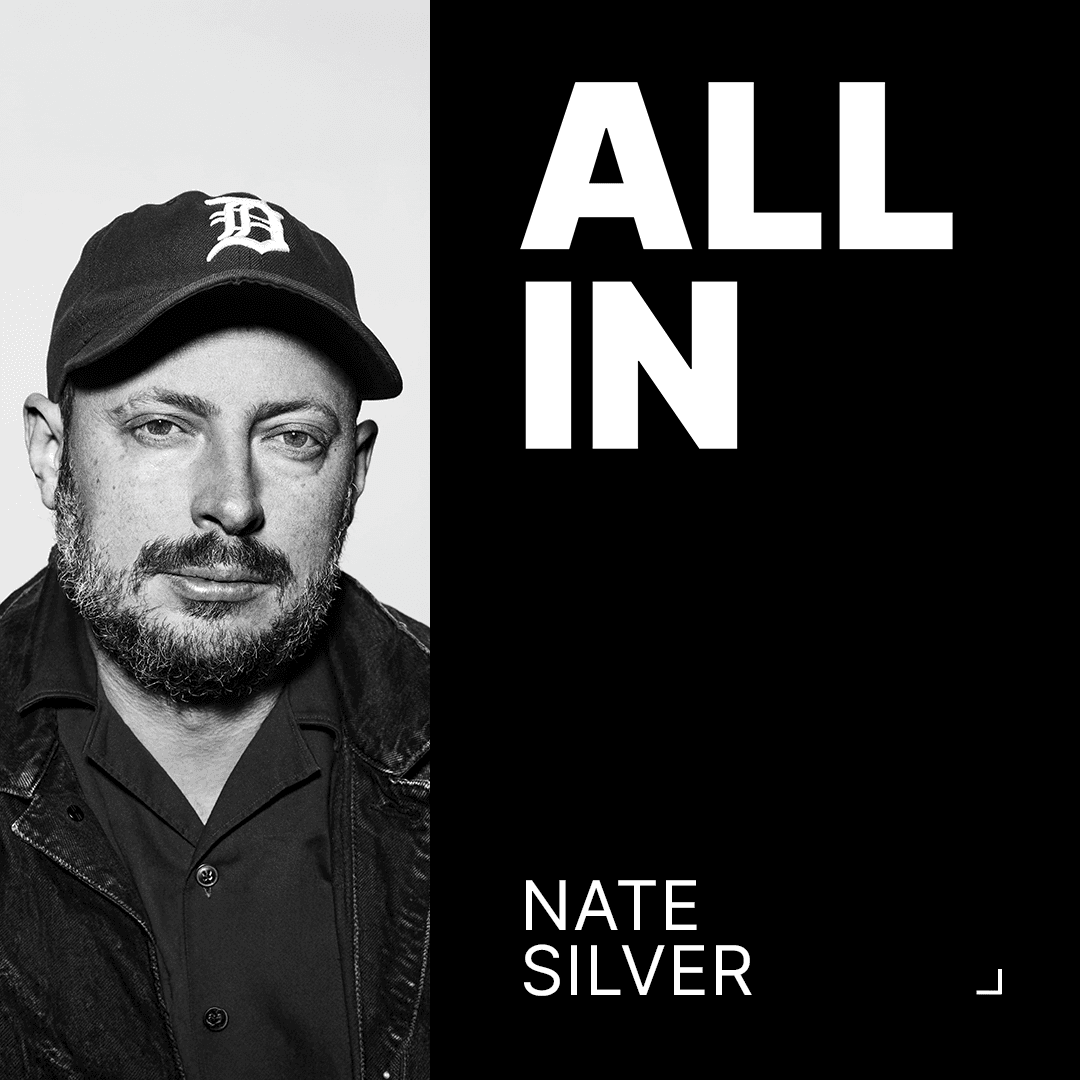
Nate Silver is a statistician, gambler, podcaster, and founder of Silver Bulletin (Substack). He consults for Polymarket and builds election models; he also discusses sports betting and prediction markets.
Key claims
- “No evidence of fraud” in California’s LA-area election patterns; late mail-in surges reflect systematic voting-timing differences, not independent ballots.
- California’s ballot-counting timeline is “completely unacceptable” and fuels “appearance of impropriety.”
- Fraud exists in isolated cases, but is “de minimis” and rarely swings major elections.
- Democrats likely win the House (2026) and are slight favorites in 2028; partisanship is “gravity” across 43/50 states with high confidence.
Notable examples
- LA mayoral/governorship vote timing (Nipya Rahman vs Karen Bass) and “ballot harvesting” videos.
- Al Franken’s 2006 recount (200 votes) as a rare fraud/swing example.
- UK-style “change elections” and Trump approval down to ~38% (as cited).
Written by AI. May contain mistakes. Listen to the episode to check what was said.
Chapters
Tap a time to open that second in VOUnderstanding U.S. Elections through Partisanship
0:00 to 0:59
Explore how partisanship influences voting predictions in the U.S.
“Partisanship is the gravity that dictates every election in the U.S., right?”
Nate Silver's Insights on the Knicks
1:30 to 9:39
Nate discusses the Knicks' playoff journey and team dynamics.
“Nice to see you with your Knicks hat on.”
Election Integrity and California's Voting System
9:39 to 14:01
Nate provides insights on California's voting process and election integrity issues.
“And obviously, you specialize in elections.”
Ballot Harvesting and Voting Accuracy
14:01 to 18:03
Explore the implications of ballot harvesting and the accuracy of election outcomes.
“But the difference in accounting that happened over time, the ratio just seems so different between Rahman and Bass.”
Voter ID Laws and Partisan Dynamics
18:04 to 21:26
Discuss the effects of voter ID laws on electoral outcomes and party dynamics.
“itself in seven minutes, even with 100 million votes in Maine or half a million or whatever it was.”
Polarization and Election Predictions
21:27 to 24:44
Analyze the polarization in U.S. politics and its impact on future elections.
“I mean, fundamentally, does this system not get set up in such a way that it creates a irreversible model for Democrat establishment to maintain its control over elected seats in the state?”
Factions Within the Democratic Party
25:10 to 28:01
Examine the different factions within the Democratic Party and their implications.
“The Republicans used to be, you know, this country club group, elites, rich people, business owners.”
Understanding Democratic Factions and Elections
28:01 to 29:21
Explore the dynamics of Democratic factions and their electoral strategies.
“I mean, you want to talk about hard data, population data in the US and jobs data is pretty good.”
The Challenges Facing the GOP
29:21 to 31:04
Discuss the uphill battle the GOP faces with low approval ratings and voter fatigue.
“I mean, the redistricting thing was a genuinely smart tactical move.”
The Rise of Socialism in American Politics
31:04 to 32:35
Examine the increasing popularity of socialism among younger Democrats.
“They're upset about just fatigue of having a singular center star of politics over the past.”
Show all 21 chapters
Entrepreneurship and Shifts in Voting
32:35 to 34:18
Analyze the entrepreneurial spirit among immigrant groups and their shifting political affiliations.
“I think there are huge generational divides where, you know, So I grew up, I'm 48.”
Developing a Winning Political Platform
34:18 to 36:28
Discuss what political platforms may resonate with voters in the post-Trump era.
“But the second and third generation of the American middle class are probably, you know, more likely, as you point out, to kind of be convinced of the benefits of socialism.”
Leadership and Competence in Politics
36:28 to 40:58
Debate the importance of leadership competence and generational factors in politics.
“Look, I think a electorally, I'm not saying morally or righteously, whatever else.”
The Future of Capitalism and Youth Perception
40:58 to 42:00
Explore the youth's disillusionment with capitalism and its implications for future politics.
“Sorry, let me just ask you a question on this capitalism.”
Understanding Generational Economic Anxiety
42:00 to 44:19
Explore how generational differences shape economic perceptions and voting behavior.
“to be very hard to grow your way out of.”
The Evolution of News Consumption
44:20 to 47:35
Discuss the shift from centralized news delivery to algorithm-driven content on social media.
“the internet's been around for a long time.”
Impact of Social Media on Politics
47:36 to 49:50
Analyze how social media algorithms affect political views and engagement.
“I want to see their tweets without having to give the algorithm an additional signal.”
Predictions for the Midterms
49:51 to 54:44
Examine predictions for the upcoming midterm elections based on current data and trends.
“So we'll have a model out within a few weeks.”
Gavin Newsom and the Future of the Democratic Party
54:45 to 56:01
Evaluate Gavin Newsom's position and prospects in the context of the 2028 election.
“for whom your contribution might make a lot of difference.”
The Rise of Younger Democratic Candidates
56:01 to 57:26
Explore the potential impact of younger candidates like AOC in the Democratic party.
“Like whatever you say about Graham Plattner and Janet Mills in Maine, I think Mills in the abstract might have been the safer choice.”
Challenges for Newsom and Democratic Strategy
57:27 to 59:21
Discuss the difficulties facing Gavin Newsom and the broader Democratic strategy moving forward.
“She got that possibility with her charisma?”
Transcript
Automatic transcript. May contain errors.0:00Partisanship is the gravity that dictates every election in the U.S., right? Like my job, don't worry, I will get criticized if we say, oh, whatever, Gavin Newsom or AOC is a 55 % favorite and they lose. But 43 of the 50 states stated, we could probably predict right now with 97 % confidence who they'll vote for in 2028. And it's not because of reading. It's because polarization and partisanship are very powerful forces that we can't seem to escape from.
0:36Starting a business usually means juggling a bunch of different services just to look legit. Not anymore. With Northwest Registered Agent, you get a complete business identity all in one place. A business address, domain, website, phone number, and more. with privacy protection built in from day one. Don't spend hundreds or thousands on services you can get from Northwest for free. Visit northwestregisteredagent.com slash all in free and start using free resources to build your business today. All right, everybody, welcome back to the All In interview program. We are delighted today to have the one, the only, Nate Silver on the program.
1:18I'm gambler, statistician, podcaster, sub stacker. Go subscribe right now for a hundy, quick hundy at Silver Bulletin over at sub stack. It's a great sub stack. How are you doing, brother? Nice to see you with your Knicks hat on. I'm good. You know, I think I have like one more week to wear the Knicks hat. It's a little bulky, not super podcast video friendly. But, you know, once in 53 years, once in my lifetime at least. Did you go to any of the playoff games? I went to a bunch of the Philly series. I went to, I think as Jason did, I was in Philly for like the New York City takeover of Wells Fargo.
1:55We know where the hell it's called now. Infinity or something. I went to the Trump game, which was not the right game to go to, but I wanted to be there. I wanted to kind of cover it for my readers. I felt like it was a moment where New York might triumph out of this shit show that it was to get into the arena. It was a little different. You had to show up, what, two hours early to get in? Three hours? I am not a particularly prompt person. No, I wasn't going to miss it. So I got there at like 6, 6.05 for an 8.30 game. Lined up. You're supposed to get in on 6th Avenue and 33rd. And I was like on 6th and 30th or 29th.
2:30It wasn't the worst. It wasn't the least efficient process I've ever seen. New York has a way of getting things done. And you just kind of like follow people. And once you get in, I mean, it was like literally TSA security. They like literally like look at your wallet by hand and they take your lighters. and your pens and your vapes and everything like that. And once you get in, it was pretty normal. I did feel like the crowd was a little bit fatigued by the second half, which was a choppy second half where there were some questionable officiating decisions. Did you bet any of the games? And did you find the odds were off anywhere?
3:05I had the Knicks to win the Eastern Conference Finals. And then after they wrapped up their series, I bet them to win the finals against either OKC or San Antonio. So I actually, the ticket was not cheap. I paid, it would not cover Jason's tickets, but I was able to cover my 200 level bowl seat with the profits from those non-homer bets. I thought the Knicks were legitimately overlooked in the East. And when you see a team that wins, like that game against Atlanta, where we were up like literally like 77 to 22 at some point or something. As somebody who like studies the stuff and builds models, to see that kind of signature significance for that level of dominance over whatever it was, four rounds of the playoffs, that's real.
3:48That's not noise. Do you bet prediction markets or how do you bet? Big Tony. I don't bet through Big Tony. If you are someone who's perceived... So I've been limited by DraftKings and MGM. A lot of the traditional retail sportsbooks limit you. The prediction markets do not. I consult for Polymarket, I should say. So if you're a sharp bettor, I have other issues, believe me with the prediction markets, but if you are a sharp better, then it becomes easier to just concentrate your activity on the prediction markets where, you know, you have very smart people, you have hedge funds, you're probably making bets in these markets more and more, but yeah, more, more and more.
4:24I don't want to go through the rigmarole of like, can I even get my money down? So I will admit I've gravitated toward, toward those. Yes. And when you look at this team, what do you attribute? Cause obviously during the season, it was up and down we were 15 games from the end of the season people were like hey we got to trade for Giannis we got to get Kat out of here but in January February we had this incredible run where we had used Kat as the set point center and then we backed off of it and I was on Knicks fan TV talking with like the real deep folks and there was speculation like they figured it out and they're like let's hold this play Mike Bronson let's hold Kat at the point from you know until the playoffs because we know it works so good.
5:06But what makes this team so special? Is it the wings? Is it just Brunson's grit? Is it the three-point shooting across the team? Selflessness, ball movement? There's so many things people talk about here with this team. I think it's Mike Brown and Kat. I'm not saying the most important components of the Knicks. I'm saying those are the deltas where things changed the most. On defense, a couple of things. Number one you have, I love Jalen Brunson, might be my favorite player. He's not a terrific one-on-one defender. He gets a few steals, but he's undersized. The low center gravity somehow doesn't work on defense as well.
5:41But every other defender of the Knicks, including Towns, which is a dissented point of view, are at least average, if not better. And so figuring out that system, by the way, when you rely on a defensive system that requires high effort and transition play, not playing your guys 37 minutes per game against like the charlotte hornets in the regular season probably a smart move yeah this is why tibbs had to go when you look back on it tibbs going who ground these guys into submission for three seasons and they were yeah it was like we were down one two or three starters for every round of the previous playoffs yeah yeah i remember going uh to the indiana i guess game seven of the semifinals against indiana in 2024 you kind of see like OG was hobbling around out there.
6:26I guess Josh Hart kind of valiantly played and you're like, these guys are like an infirmary ward. Um, and especially because you're relying on smart, high effort defense. So that part of defense and low key, they became like a much better defensive team in the second half. Right. Um, I remember also going this year to the Knicks Nets game in December, January, not the most fun part of the year in New York where, um, where they had lost like seven out of nine games and there was all the talk about like cat being traded and i just wanted to go and check out the vibe i actually bet on the knicks to win by like 15 points or more because i thought this is either going to be like the beginning of the end for this regime or it's going to be a turnaround game against you know a team that's trying to lose frankly across town rebels trying to lose and the fans were like pretty tolerant of cat they wound up winning by like 60 points or something totally absurd or held the nets of one of the lowest scores in the modern NBA era.
7:24And like that team from there, they, by the way, they won the NBA cup. Yep. But like in the second half, they had something like the fifth best defense in the NBA. They had the best defense in the NBA in the playoffs, maybe not sustainable, but like, but that on defense and then cat presenting, look, again, like I love Jalen Brunson. The offense can be a little bit predictable, maybe in touch possessions. Yeah. And it's amazing that jalen brunson i mean he shot like 53 between 16 and 22 feet which is kind of insane given that you know what's coming it's like marion rivera is like cut fastball you know what's coming um but just to have more optionality and variety in the offense and to have more ball movement so to have those two spontaneous things happen the coaching system-led improvement on defense plus like cat having a revelation like i think he's like one of the 15 best players in the league.
8:17He was raised. He's like, yeah, he's a really good player. And so those two things combined, you know, a little bit unusual for a veteran team granted, but spontaneous improvement on both sides of the ball coupled with the Knicks, by the way, have the most playoff games out of any team in the past four years, more than Boston, more than OKC, a lot more than San Antonio. There is empirical evidence that playoff experience does matter. This comes up in poker too. If you are in, your first big tournament and maybe you're rated the gpi number one player and you're playing in the main event of the world series of poker nerves are a thing even in golf nerves are a huge thing it's a physical ordeal almost and like you're operating a different operating system and to have had experience in a lot of high stakes games not all of which were wins but like it really does it really does help and and when those two comebacks from the pacers game from the boston games where we just broke their backs last year.
9:16That, I think, made it obvious to anybody. When we're down 10, 15 points, that's not a lead against the Knicks. The Knicks are going to come back. We're just that good. And it's just fantastic now that the entire league has to plan how do they beat the Knicks. We've spent the last five or six years, how do we get through Boston? How do we get through this team? Now, the entire league has to do that. All right. We should get started here. We got so much to talk about. And obviously, you specialize in elections. We have the mid-turns coming up. We're going to talk about 2028 post-Trump world, all of that.
9:48But we just concluded an election, an election which I don't want to speak for Dave, but you may have seen or heard the podcast where he was like, hey, this is not illegal, but it doesn't feel like a real election. Take us through what happened in your estimation in California with Spencer Pratt, fraud, just mail-in ballots. Yeah, that was just the LA election, Jason, just to be clear. Yeah, just to go with LA, but go ahead, build on it. The question that I wanted to talk to you about, Nate, is when you look at the in-person return data, and then you look at the early mail-in data, and then the late mail-in data, where suddenly Nipya Raman has this massive surge, and there's this huge statistical difference.
10:30as the ballots start to get counted in the days and weeks that follow, she wins. It seems very improbable that there's a true statistical difference in the population that might be in person, mail in early and mail in late. And I just wanted to get your read on that. So I'd say I think there's no evidence of fraud is the short summary version. The mistake that can be made is to assume that each ballot comes in independently when there There are systematic differences between groups and when they tend to cast their ballots. So Democrats have long been encouraged to vote by mail. Actually, it used to be more of a Republican thing, but like under Trump, who discouraged mail voting in 2016 and 2020 and 2024 to some extent like that shifted.
11:15So, look, I think California's system is completely unacceptable. I've done some consulting work on like the Indian election where you like literally have polling stations in the Himalayas and they actually stagger their elections. But once election day happens, they count their vote within 24 hours. I think it's ridiculous and very failed state that California takes longer than that. But if you have one party who systematically tends to vote later, also Democrats in both the L.A. race and the governorship had more of a choice to make. uh you know it wasn't clear you know for a while it looked like eric swalwell was gonna was gonna win and then katie porter and then and then and then you know becerra finally emerges but era like look my dad is from la i spent a lot of time in california and i am all on board with the criticisms of how the state is being governed at least in parts of the state i was in um san diego for new years and beautiful time of year to be in san diego and like you can like literally run on the sand on the beach and everyone's kind of like hot and you have good fish tacos and everything else like that.
12:23I kind of understood the California of like my youth or my dad's youth or whatever else and understand the appeal of the state. And I understand why LA and SF, I think LA in particular kind of never really recovered from the pandemic. We can talk about that. At the same time, it's a very partisan state. We have very partisan Democrats like Kamala Harris and Gavin Newsom, who emerged from the state. We saw in the registering referendum, I guess it was in 2025, how like you can debate whether it's a good idea or not, but like that traced with the democratic margin in presidential years very strongly, even though for many years, Democrats had been the party against gerrymandering.
13:01It's a capital D democratic state. It's not an idiosyncratic blue state like Maine or something. And like, so like to expect even a very talented Republican like Spencer Pratt to win the mayorship. I mean, even in New York, we have a bit more heterodoxy. Historically, we've had a socialist mayor. We've had Michael Bloomberg and Rudy Giuliani in recent years, too. California is not that way. It's much more of a machine state. But when you look at that statistical difference, I get the idea that Democrats mail in ballots and they show up late. But when you look at the overwhelming votes for Nipia Rahman over Karen Bass that happened late in the counting cycle versus early in the counting cycle and the statistical kind of shift over that happened.
13:51And you look at the difference between in-person and mail-in being so statistically different. And I get your point about Republicans are more likely to go in person and maybe you can make that leap there. But the difference in accounting that happened over time, the ratio just seems so different between Rahman and Bass. And then people bring up this idea of ballot harvesting where there were homeless people from Skid Row and the number of ballots that came from that particular region in the late mail-in was kind of concentrated for Nitya Raman. Do you get a sense that that actually is a true representation of individual voters and how they individually voted in that election?
14:27I think the California vote count is an accurate tally of the votes that were cast. I mean, yeah, look. Like, I think mail-in... Were they cast by the individuals that were supposed to cast them, right? This is one of the theories is that there's ballots that are getting filled out en masse in these ballot harvesting efforts. Or people walk around and they say, hey, fill out this ballot for this person and here's a free lunch or I don't know what's going on. But like, there's all these videos. I don't know if they're true or not. I think there is propaganda around this. I also think that like mail-in voting provides some verification challenges in different ways.
15:00uh you know i don't inherently see anything that wrong with a system where you go to a physical place to vote and you sign um you sign your voter log and and whether you show id or not and then if you have like a disability or you're really in bad straits you're traveling in albania or something then you can that makes sense but i want to ask i just want to ask you the empirical question what is the difference in states or districts or cities that don't have voter id and those that do politically? Like, does that basically create a huge overweighting for Democrats? Can you just help us understand the politics behind this from an empirical perspective, not putting on a spin hat or anything?
15:40So the theory used to be that Democrats benefit from higher turnout by kind of any means at all. And that was an era when Democrats tended to dominate among non-collegiate voters, whereas Republicans were like the, you know, country club, Kiwanis club, people who like show up on the first day of voting, that has shifted. Look where Democrats have really, really overperformed. It's in special elections. It's in midterms as opposed to high turnout races like when Trump's been on the ballot. And so I think if Trump, I think voter ID would be pretty reasonable. I'm not against voter ID. You show your ID to do, if you show ID even at mid 40s to get into a bar, you can probably show it to vote.
16:26But at the same time, I don't think that explains what we saw in California. I think it's a system that is much too slow. We have different tranches of ballots that are kind of differently and where younger people that might be more progressive tend to vote later and or by mail. And again, it's not like this happened in Alabama or something. The prior on Pratt advancing probably would be pretty low potentially. And I wish that people were we're less partisan i you know i have been um critical on on the newsletter silver bulletin about graham plattner for example um because i think he's somebody who has not proven a reliable figure so to speak and i was critical of of joe biden and i'm not even registered as a democrat by the way despite what people assume um but if you're gonna have five different ways to vote And I say this as someone with experience, like actually trying to build election night models and being on national TV on election nights.
17:28These blue shifts or red shifts are somewhat predictable and are going to be inevitable consequence of having different mechanisms to vote where you have like different cues in a line. Right. If you're at MSG and you have like a VIP line, the cohort that arrives to the VIP line is going to be different than the one that arrives through like the main gates on on 7th Avenue or whatever. And I think the system should be simplified. By the way, also things like ranked choice voting, which I, again, as an election wonk, I support giving voters more choice. You shouldn't need, like Maine or New York City take, an extra two weeks to count ranked choice voting where I could clod code a ranked choice voting algorithm that would resolve itself in seven minutes, even with 100 million votes in Maine or half a million or whatever it was.
18:19That we have the appearance of impropriety and we have a highly politicized system. I don't want to lead the witness here too much, but we do find isolated cases like this woman, Annika Brenda Lee Brown Armstrong. She was paying people three bucks or giving them cigarettes to register them. You have these on the margin, fraudulent looking behaviors. And then if it takes this long, that gives another appearance of impropriety. But I keep bringing up the Heritage Foundation. I'm sure you've looked at their data. They have a lot of people trying to figure out where fraud exists, investigating it.
18:55And it's de minimis. It's a couple of thousands of cases they can find. So even if you extrapolated them 10x or 20x, pick your multiple, it would never swing a major election. In fact, the number of elections that have been swung based on what they told me is like the most local smallest election where there's tens of thousands of votes or thousands of votes. So is that the issue that we're seeing here, this collection of appearances of impropriety? Yes. Look, the American election system is very decentralized, which, you know, as kind of like an old school liberal in some ways who I'm kind of against centralized power, I think is quite brilliant in some respects.
19:38But yeah, the scale, there are certainly cases of fraud. When Al Franken won, what was it, 2006, right? That came down to a recount of 200 votes. We're never going to know that with any degree of certainty. There is a margin of error. But in practice, and we know this too, when you do have recounts, again, I've studied this a lot, you have an 0.5 % recount threshold in most states. almost never have you had a margin larger than 0.05 % or so overturned. The errors can also cancel out. Again, the notion that someone can vote without physically being like the ward of their ballot, understand why that bothers people.
20:19And I think California has been complacent about this. And I think perception does matter. And I think there's a kind of certain arrogance, I guess, is a term that comes to mind. about saying, well, we want everyone to vote. And so we're just going to do things our way. And it takes a long time because we're like taking time to verify things. Again, you know, having studied elections all around the world, it's very unusual. Most countries we count much, much faster than the U.S. It's probably because we have an electoral college system. It's decentralized. But like in most elections in France or the U.K., where they keep having elections or wherever else or Japan or India, even, you know, the result of the vote within a few hours.
21:00And the fact that the United States, the technological leader of the world, and the supposed like beacrine of democracy can't do that, I think is a sign of atrophy of the efficacy of the system. Or is it by design, Nate? Let me ask you a question. If voter ID laws don't change, and mail-in ballot laws don't change, and the system doesn't change, is there a chance, do you think, from the data you've seen, for a Republican governor to be elected again in California or for Republicans to win more seats in the House or have a shot at winning a Senate seat in California? I mean, fundamentally, does this system not get set up in such a way that it creates a irreversible model for Democrat establishment to maintain its control over elected seats in the state?
21:44I mean, Democrats have lost plenty of elections recently, but not in California. Partisanship is the gravity that dictates every election in the U.S., right? Like my job, don't worry, I will get criticized if we say, oh, whatever, Gavin Newsom or AOC is a 55 % favorite and they lose. But 43 of the 50 states stated, we could probably predict right now with 97 % confidence who they'll vote for in 2028. And it's not because of rigging, it's because polarization and partisanship are very powerful forces that we can't seem to escape from. Again, I would love, you see a little bit of this in New England, actually, You see a Charlie Baker or Phil Scott in Vermont.
22:28You see a little bit of cross-partisanship in New England. You see even in the South, Bashir in Kentucky is a moderate but Democratic governor. For some reason, you don't see it as much in California. I don't know why. California has always been the laboratory of weird and eccentric political ideas, but it's become a machine state. Maybe because it's so large that voters can't kind of touch the candidates up close and don't have a lot of like directly relatable experience. Maybe California is just kind of like too large in general. But I look, I am very concerned about polarization and partisanship.
23:07I think it leads to lower quality of governance. I think it's exacerbated by gerrymandering, this gerrymandering kind of war to the bottom. and Democrats have paid the price where like the triangulation, you pick the least worst nominee, works perfectly fine in blue states. They're going to win the general election. It hasn't given the Democrats very effective general election nominees, right? Between, you know, I consider like, you know, they're one out of the last four. I consider Biden to have lost in 2024 before Harris lost instead. You know, the one election that did win was during a once in a century pandemic that, although I had my critiques of liberal handling of COVID, was kind of objectively handled.
23:51Well, I don't know. You can talk about Operation Warp Sheet. I understand my voters were very unhappy with the 2020 version of Trump and the greatest economic disruption since the 1930s. So they kind of won the gimme. They haven't won the close elections recently, except for Obama, who conspicuously at least kind of made rhetoric to trying to bridge a divide between the parties. Obama still has a, I looked at this today, a 57 % approval rating post facto with independence. Biden is at 20%. And look, I think a lot of Democrats and Republicans, certainly maybe even more so Republicans, frankly, under Trump, feel as though you don't even have to try to turn out the other side or persuade people.
24:34It's just a numbers game. And in California, if you're Democrats, you win the numbers game.
24:44You run back-to-back calls all day. Decisions get made, then the details slip. Plaid fixes that. Clip Plaid Note Pro to your phone, hit record, and stay in the conversation. Plaid Intelligence captures every word and turns it into structured notes, action items, and follow-ups. Not a transcript you'll never open. The actual work done for you. Capture more, miss nothing. Find Plaid Note Pro at Plaid.ai. I think we want to really get to 2026 and 2028 and talk about what you were alluding to, which is the polarization and how these parties have changed. The Republicans used to be, you know, this country club group, elites, rich people, business owners.
25:27Now they're the populist party. Then the other side, which used to be the working man and the working women's party, they've become this liberal, weird socialist party. And that seems to be playing. They're both popular. What's going on with the vibes, I guess, between these two parties? And how do you look at them? Because it does feel like inside of each of those parties, you have two sub parties. So you really have like some sort of four by four matrix or two by two matrix with four different groups. How is that going to play out in 2026, which still feels like the anti-Trump vote? Like, hey, I'm not happy about Trump.
26:01But 2028, Trump's not going to run a third time in all likelihood. So let's take those two buckets as well as the vibes and these parties fracturing a bit. Yeah, I think Democrats really have three factions as I've described them. One is the left. The avatars might be Zoran, might be AOC, might be Bernie Sanders. all of whom by the way are quite effective politicians in their own way i mean so so ran understood how to like be a nix cheerleader for example oh my god yeah that speech was like almost perfect whoever wrote it for him is a nix fan but look i'll be honest i i didn't vote for him but like i think find anyone who's like trying to like bridge gaps and expand a tent even if it's from a direction that i might not agree with I find that like somewhat appealing, I suppose, you know, AOC, you can take your leave.
26:58She has become a more effective tactical politician. You know, Bernie, what he's built with with being a freaking old guy from Vermont, the socialist mayor of Burlington, Vermont, coming within not a hair's breadth, but coming, you know, quite close and beating Clinton in 20 states in 2016 or whatever was quite impressive. But like that's one constituency. and historically the left has not had a lot of big wins outside of the bluest states. On the other side, there are the abundance libs kind of named after Ezra Klein, right? They are more pro-free market. They sometimes deny that they're centrist.
27:30I think they're pretty centrist. They are the ones who are very concerned with California as a case study of poor governance. And whatever you think about parties at the national level, generally speaking, it's the purple states, sometimes the red states where things are more functional, where there's more housing, where when you get out of the airport to catch an Uber, there's not some convoluted system where you have to wait 20 minutes in line to go to some shuttle like an LAX or whatever else, right? Where there's population growth. I mean, you want to talk about hard data, population data in the US and jobs data is pretty good.
Read the full transcript
28:07And those are states where people have moved to and the abundance libs are critical of democratic governance and critical of of um culture war issues on policing and trans rights and and you have what i call the resistance lib faction they're the ones who say they're really fit up with democratic establishment but are still often very partisan and often very like cheerleading for the blue team they're the ones who thought that Joe Biden was railroaded out of the 2024 race, for example, they're really Gavin Newsom's constituency. Why is Gavin Newsom going out of his way to support and endorse kind of the Bidens when Biden, even among Democrats, is not all that popular anymore?
28:51Everyone else wants to move on. And well, it's because it's a signal to like the resistance libs that like, I have your back. I'm a fighter. The reason why we didn't win in 2024 is because the media was unfair to Biden and or because Kamala Harris was a black woman. So pick a white guy who will fight for you and tweet in all caps and you'll win. So it's kind of like ride or die. We're going to just our team, our team, our team's going to win. It doesn't matter. We never apologize. Kind of the Trump playbook, never apologize, go on the attack. Seems to be what Gavin's doing, right? Absolutely. And he had some proof of concept.
29:27I mean, the redistricting thing was a genuinely smart tactical move. Democrats are going to wind up losing seats, But without California, they'd probably lose even more. And so he did skate where the puck was going there instead of the party's usual risk version that I've critiqued before. But at the same time, the triangulating spirit of like, let's pick Kamala Harris because she's the least unacceptable candidate, or Hillary, or John Kerry, if you want to go back to 2004. where the establishment doesn't seem to have an understanding of the fact that almost every election now, Obama in 2012 was, I guess, the exception.
30:05Almost every election now is a change election. We might ping pong back and forth for many cycles. I think Democrats are slight favorites to win in 2028. It wouldn't shock me if AOC or Newsom or Shapiro or Ossoff or whomever wins, if they're underdogs again in 2032. Look what's happening in the UK where, I mean, And it's kind of become like a running joke, but we're going to be through like what, like six prime ministers in nine years or something. And they're probably the U.S.'s like closest comp. It's not a good time to be a defender of the status quo. And I do think candidates like Kamala Harris, who was unable to distance herself, kind of literally unable or unwilling to distance herself from Biden, or Newsom, who's kind of like defending that legacy in the same way.
30:50To me, that seems like a failed strategy, but like in a lot of these World Cup games, sometimes you win on penalties. I don't think that any of the GOP nominees look to be particularly strong. Donald Trump in our approval ratings now is down to 38%. People are upset about Iran. They're upset about gas prices. They're upset about just fatigue of having a singular center star of politics over the past. Trump kind of is like, it's fatiguing a little bit. And so it's an uphill battle for the GOP. Democrats might do their best to give Republicans a fighting chance despite that. So just to extrapolate from that, the point about needing change, driving change on the progressive side, we are seeing socialists getting elected as mayor, socialists starting to rise at the state level.
31:43And many of these candidates that you've mentioned are self-declared socialists at the national level, we may potentially have a democratic socialist as president 2028, based on what you're saying. Is that ultimately where this goes, where the populist movements drive the left further left and everyone in that party now seems to be jumping on this bandwagon, proclaiming socialist principles as the only way to solve inequity and unfairness in this country. and, you know, kind of jumping on what we were from empirical kind of history shown doesn't work as a governing system, as a economic system, but suddenly everyone's kind of been swept away by it and seems to think it's, it's the only way forward.
32:25Does that kind of the, the output of the conditions that you're describing that the left, the Democrats basically become a socialist party and they embrace socialism fully and full throated? I think there are huge generational divides where, you know, So I grew up, I'm 48. So I still remember the kind of, not last questions, but like, I still remember the Cold War. I still remember the Berlin Wall falling, right? So for me, the connotations are of socialism are close, adjacent to communism, are a long history of failure of economic development in countries that adopted that system. I think people who are a little bit older don't realize that the socialism brand is much more popular among younger Democrats.
33:10By the same token, America is still a supremely capitalist country. And again, in my book, I have lots of critiques of the tech sector. We still are attracting the best and brightest young talent from all around the world. I personally think the AI capital boom, whatever it becomes of it, is responsible for keeping our economy, at least the stock market, in relatively good shape. And also things like where have Democrats lost support? Well, actually, the biggest differences are concentrated among Hispanic and to some extent Asian American voters. Who do you think are the most likely people to own small businesses in the U.S.?
33:52It's a cliche, but 100 % true that like recent immigrant groups are very entrepreneurial. It's one thing that I believe makes the United States great. And one thing that makes me very pro-immigration. But you have seen shifts in those groups and the most entrepreneurial groups away from Democrats. Yeah, because I mean, they all escaped socialist countries and socialist backgrounds and the economic mobility that's afforded by free markets and capitalism. And the degree of true liberalism we provide in this country is what's given folks opportunities that don't exist elsewhere. But the second and third generation of the American middle class are probably, you know, more likely, as you point out, to kind of be convinced of the benefits of socialism.
34:36This isn't your wheelhouse, Nate, but if you were hired to give a playbook to either party for 2028, what would be in that playbook? What would you tell them is the right platform for this moment in time, a post-Trump era, and with socialism, wealth disparity, healthcare? There's a group of issues here that keep coming up, the support of Israel, foreign wars. What's the perfect platform for either party, an independent or left-leaning or right-leaning? What are going to be on the top of Americans' minds if you can look that far out? Yeah, look, I, by most definitions, am an elite, as are you guys.
35:17You can afford tickets to game three of the first NBA finals game in New York in whatever, 25 years, and you're probably an elite. And most elites like me say they're socially liberal, economically moderate. I use the term liberal, meaning the way liberals use in Europe, meaning some role for the state, but pro-market in general. And that's probably my view. I'm not sure that view is actually an electoral winner as much, right? the most neglected voters in the US who are culturally a little bit more conservative but like economically more progressive potentially but not quite in the same way that you get from like an AOC they support small business they are wary of conglomerations of power maybe I'm putting that with too generous a brush but like I do think that like when you have the world's first trillionaire when people have a lot of anxiety Maybe the anxiety is not the right shape of anxiety, but understandable anxiety about AI when you have AI leaders saying things like it's going to displace all these white collar jobs.
36:28Look, I think a electorally, I'm not saying morally or righteously, whatever else. Right. I think combining a little bit of the right kind of anti oligarch rhetoric with moderation on some of the issues, you know, on the woke stuff. if I get that term already feels like it's becoming outdated. But still supporting small business, especially for men, right? Young men still want to feel as though they control their own destiny. A lot of them feel like they don't do that anymore, but I don't think they necessarily want all that much handholding. But no, it's a difficult thing to triangulate. And the US is not alone in having a lot of resistance and dissatisfaction with the status quo.
37:18I mean, again, this is part of why, and I'm sure about 2 % of your audience will be sympathetic to this, why I have been more defending of Zoran Mamdani living in New York is because he's at least getting the ins and outs, we'll see what happens after four years, of New York being a basically functional city. right? We have really nice new airports. It's not Zoran's doing, that's a hell of a lot of money spent, but like our crime is like relatively low compared to California. I used to live right near Penn Station, Madison Square Garden, not the nicest neighborhood, not the nicest block, but like I never walked around feeling unsafe there when I visit SF.
38:01Then you have to be more careful, right? And so I think like combining functional performance in government with whatever message you want is part of it. I think maybe even like having like a little bit more like optimism too. I'm kind of always a fan of like zigging where other people zag. Obama presented a more optimistic take about like kind of like the American spirit, right? You know, look, I see all the enthusiasm around the World Cup and the Knicks. I don't want to sound like cliched, but you know, tonight after we tape, this is tipping on a Monday night, New York time, right? I can wander around the streets of New York and there'll be some Norwegian bar that has Norway game on.
38:44That does make America great. And rediscovering those values, I don't know. I mean, maybe somebody like, I think maybe the most electable Democrat might be somebody like John Ossoff, who is younger, who is pretty progressive if you look at his voting record, but isn't a brawler in quite the same way that Newsom is trying to be. I mean, the generational part is a lot of this. You know, I think it's insane that we had a candidate who was trying to be president until he was 86 and the alternative is someone who's trying to be president until he's 82. Like, I don't you don't see very many Warren Buffett.
39:22Fine. If Warren Buffett ran for president, maybe I'd vote for him. Right. But like you don't see very many leaders in other parts of the world. You don't see very many CEOs or leaders. Otherwise, you know, I very much value the contribution of my older friends. Right. But like. to run the biggest country in the world as an 82 year old to me seems kind of insane. And so there's some basic level of competence that Mondami showing in New York. He's positive. He's fixing potholes. He's making it, you know, a celebration of whatever the sports teams are. He's fixing garbage. Like there are some basic things that New York is very much appreciating quality of life.
39:58And that's not something you expect from a Democrat or a socialist. and those kind of like blocking and tackling in the high level of engagement which Trump you mentioned kind of burns people out with that high level of engagement seems like Mondavi comes just under that he's a little more positive he doesn't use like the toxicity that much but he's engaging right and that seems to be working in New York and with the voter base no he's pretty popular here so far and again new york is a new york is a capitalist city i think it's different than somewhere like california it's not kind of as west coast uh freshwater progressive new york is a pragmatic place that people from all around the world migrate to it's a place where there's a lot of wealth all around you it's also a place that despite seeming like a chaotic shit show at times i mean it's look it's easy to be optimistic about new york in in mid June when we have like the most beautiful weather of the year and everyone's coming to visit and everything else.
40:57But like, but New York is a success story in a way that I think California has become less of one, maybe. Sorry, let me just ask you a question on this capitalism. Have you seen data that underscores this main line that everyone's talking about that the youth are kind of disillusioned by capitalism and don't believe in capitalism? I mean, to see this happen in a city like New York, to your point, a city that is a bastion of capitalism and progress and opportunity for people to put in place a candidate as mayor that denounces the capitalism as a system and talks about collectivism just seems to indicate that maybe there's a real movement with the youth.
41:36I mean, one of the statistics I always quote to people is I think 45 million people graduated college in the last decade in the United States that have all of them or a large percentage of them, I should say, have a pretty significant debt burden that they feel is going to be very hard to get out of. And I would argue that that's a function of the federal student loan program and its underwriting processes. And it really condemns people to a life that is going to be very hard to grow your way out of. But what does the data tell you about capitalism and what that says about the next cycle here?
42:09Yeah, where the cut point is, is probably around age 40, I'd say, obviously it kind of ages by a year every year. And like, you know, we saw, I saw before the New York mayoral race last year, people who were able to make incredibly accurate, almost block by block, neighborhood by neighborhood projections based on where Zoran would be good versus Cuomo, just based on knowing the city and where younger people, younger, more progressive people live, I would say, you know, I think part of it might have to do with economic anxiety for sure i think it's also your experience like growing up and exactly when you kind of came of age right again i grew up in like um i guess the first election i was old enough to vote in was clinton in 96 this is like the triumph of the west and capitalism you had a very robust economy in the 1990s you had a lot of growth um and by the time you get to your you know when the great recession hit, I already had by a year, right?
43:09I already had a job. I already had a foothold. I think that people kind of like born... If you were in college when September 11th happened, that might be kind of the cut point, roughly speaking. It doesn't cut quite cleanly from Gen X through millennials. It goes a few years into the millennials. But sometimes I kind of joke, it seems to me like people in their 40s through early 50s are the only sane people in the US, right? That kind of like second half of Gen X in particular, although we've never had a Gen X president, Kamala Harris would have been a boomer too, technically speaking. But there are people who are like, okay, we grew up and we worked hard and we still felt like more or less the American system worked for us.
43:55I think people wrongly or rightly that are half a generation younger don't have that experience. Also, we should talk about, But as much as I think that in certain ways the media is an overrated storyline, how people consume their news, you look now at what's happening at CBS and Paramount or CNN or whatever else. We had an era where you had very centralized news delivery systems under TV and radio. I know I sound like I'm dating myself. the internet's been around for a long time. But when you have three or four major networks that have a huge amount of editorial control over the message, and I used to work at the New York Times, right?
44:37You know, when I first got there, you would still have like the page one meeting every day where it's like, we are the people, the editors of the New York Times, like deciding like what is news and what's not. And now it's become very decentralized. Obviously, social media plays a role in that too. I think the evidence is pretty decent that phones and social media affect youth satisfaction a lot. You also have a culture, I think, among liberals where it's no longer a stoic culture. It's a culture where maybe you might express your grievance. Ironically, maybe AI will change this a little bit. There's some initial evidence that the models actually gravitate toward consensus views, expert opinion.
45:20And sometimes a jaded or hallucinated version of what the consensus really is. But, you know, Claude or ChatGPT is probably less polarizing than Blue Sky or Twitter. Let's talk about social media for a second. It used to be a paradigm of you follow people, you build your filter, you have your list, you spend a lot of time curating that. And then TikTok comes out with their For You page, FYP. YouTube goes full algorithm. And now X has gone basically full algorithm. You can follow whoever you like, but your follower count is not your viewer count and engagement count. And obviously, after Elon took over Twitter, Libs, a lot of celebrities decided to leave.
46:02Business people stayed. Lots of anonymous accounts. It's the free speech platform of all free speech platforms. It's chaotic. But what impact, just in that very tiny nuance of followers to algorithm, has changed and impacted politics? Because it feels like the filter bubble is becoming incredibly pronounced. I mean, you give two or three things alike, and now that's the rest of your entire day. Yeah, look, for me, I don't think a person should have a correlated stance on taxes and abortion and Gaza and the free market and whatever else. um partisanship is a very powerful force to squish this very complicated array of political issues we have in the united states on into into just one dimension blue versus red or left versus right and social media twitter in particular i think is a very effective mechanism for that and i get i get totally yelled at for um any bit of heterodoxy like in particular like saying biden is obviously too old democrats you're gonna you're gonna lose unless you replace him like that even though it's a stance that like literally 80 of voters agreed with will make you like seem like a heretic on twitter i've been critical by the way of of parts of what elon has done although some of the things predate him like the algorithmic feed um wasn't purely invented by email on it was improved or perfected or worsened depending on your point of view by the current regime you know i do think it's a problem that like look if i choose to follow an account, you, Jason, or the New York Times or whatever else, or Nick's account.
47:38I want to see their tweets without having to give the algorithm an additional signal. Like that part bothers me. I don't like the depreciation Twitter debates. It's about - That's incredibly frustrating. Like you literally have to favorite or like things in order to keep them in your feed. And I told the Twitter team, you should have a little button on the follow. Show me every post from this person. If I want to get my Ski Mountains reports or I want my Nick's fan TV, I want every single post. And there's no way to do that except like every post. And then your feed just goes off the rails. Yeah.
48:08I mean, it's very, look, I actually think the for you algorithm is pretty decent for what it is. You have to train it. Like, you know, for a while I got a bunch of like fight videos because they're compelling. You see like a fight of teenagers and like, oh, I spent eight minutes, seconds watching this or whatever else. It's terrible. If you click, don't show me this anymore. It is pretty responsive and it's pretty good. Like the algorithm knows right now, I just want to read tweets about the World Cup and is Giannis getting traded, right? And maybe a little bit about the New York and California elections.
48:40But I wish there were like, you know, I don't like any algorithm that like presumes it's like smarter than the user. And if I log in or if I subscribe to somebody and I want to see their tweets and I haven't muted them, then show me their tweets. You can mix in things that you think I'll like. breaking the algorithmic or the time the chronological feed is also annoying to me right like i want um if i'm watching the world cup and there's a tweet about a match from six hours ago someone's like oh my god amazing right i'm like what just happened and like it's not surfacing things in quite the right order um look i think a lot of companies kind of make the mistake of uh twitter was i'm not sure if twitter was ever going to be like a hugely profitable company.
49:23It was a very unique resource for following the news. If like I am, and like you guys are, at least you Jason are like total news addict. Like it was a very unique platform. And I wish that functionality had been preserved again, to be fair. Um, this started before Elon, although it has been continued since. Let's wrap on 2028 and in particular, Gavin Newsom. Oh, no, predictions for the midterms. Predictions for the midterms. Lightning round. Prediction for the midterms. House and Senate predictions. What does the data tell us right now? So we'll have a model out within a few weeks. Been a little bit delayed by the World Cup and the redistricting stuff.
50:02Prediction markets say Democrats are around, I think, 80 or 85 percent to take the House and 40 or 45 percent to take the Senate. Those both seem pretty reasonable to me. I think if anything, it's a little bit low on the House. I think it might be more like 85 or 90. My models surprise me sometimes. But look, we've been through a lot of elections that are inherently hard to forecast. The House is the one where everything kind of points in the same direction. Democrats are facing a very unpopular president, an economy that voters have a lot of anxiety about, Trump, no new Middle Eastern wars. On top of that, the very, very long history of the president's party drawing a backlash and performing poorly at the midterms the more recent history of incumbent backlash in the U.S.
50:47and all around the world, the good results Democrats in New Jersey and Virginia last year, and special elections. Look, the redistricting thing helps the GOP a little bit in the end, but you're fighting against a lot of gravity, whereas the Senate is more of a numbers game. Even in a pretty blue environment, Democrats have to win some seats in red states. It seems to me that taking a big risk in Maine which is a state that by all rights they ought to win in a d plus eight year in a d plus 10 state but grand platner is only two points ahead of susan collins i think i take that polling at face value i think he is i take him at 50 50 but like that's a unnecessary risk potentially um but look um the gop will be able to in these red states a candidate like talarico who is also probably in roughly a toss-up race and paxton is a far less than ideal republican nominee like partisanship is still a powerful force people are saying why are they kind of attacking talarico on i think things that are are not above board you know critiquing your sexuality or whatever else what's because texas is like a really red state and like trump's not popular so you're like you're kind of going for like the lowest common denominator but in our system that works a fair amount of the time so just a a polling and math and numbers game in the senate we're going to see more money spent than ever.
52:12Whereas the House, 435 seats, I think the partisan gravity is more likely than not just too much for Trump to overcome. Is there anything that Trump can do or that could change in a macro out of our control perspective that could shift things more significantly for the House back to the Republicans? If he can get gas prices down, it's such a visible indicator you drive by the chevron station whatever else right you you literally see it you know i think if you look at forecasts there is supposed to be some abatement but very contention on how long the conflict war in iran persists in this quagmire um you know look maybe if we uh maybe if we have a hei right by by in october or something who knows what happens then but no it's his unfavorable ratings are very entrenched and Democrats are very enthusiastic despite their misgivings about their own party.
53:10And as much difficulty as I think they'll have in 2028 nominating a candidate to vote for your generic Democrat against a generic Republican is a pretty easy ask for, for Democrats who feel like democracy on the line. And like, and like, so I think that's fairly baked in as someone who builds models. I don't been on politics, have been on sports, I'm always aware that like, yeah, there's the 10 % chance that the underdog you never see coming prevails, you know, Cape Verde ties with Spain or something. But like, that's pretty fundamentally driven. Whereas on the flip side, needing to pick up four Senate seats when you might blow the opportunity in Maine, it's a toss up, probably slight edge to the GOP with maybe gas prices and Iran determining whether it's more truly 50-50 or maybe 60 % GOP.
53:58The chances of winning both, is that 80 times 40 type situation? Or is it different because of politics and the way the statistics work? Are they correlated? Yeah. Yeah. They're almost perfectly correlated. So if the odds of Democrats winning the Senate but not the House are like 1%, if you go to Kalshi or Polymarket, whatever else, they have to be like around 1%. So conditional on Democrats winning the Senate, they'll almost certainly have won the House, they'll almost certainly have won governorships, which by the way, these things are important. I think people probably focus too much on the national picture and not enough on what happens at the state level where people actually have executive power and you're picking the candidates and the policies for the next generation.
54:41State legislatures are important. If I were talking to all the listeners, I'd say, look for a city council candidate, for whom your contribution might make a lot of difference. But like, no, if Democrats win the Senate, that means it's a really blue year to overcome the fact that you're winning in places like Ohio, Iowa, Alaska. And if that happens, therefore, probably the rest of it, all the dominoes fall that way. All right. Gavin Newsom in 2028, he's an enigma of a politician, worst run state in the union as far as I'm concerned, but he's so polished and he speaks so well and people seem to like him with that great hair what should we take from gavin newsom's you know continued ascension am i correct that he's still you know on the up he's not so we have an article up on silver bulletin which will publish shortly after we finish this podcast newsom has fallen in democratic primary polls from around 25 to 15 he's fallen on polymarket it from like 33 % to 22 % or something.
55:44I think he was benefiting from some degree of name recognition, whereas now Democrats see a candidate like John Ossoff in Georgia, another good looking young guy, but like actually has a credential, which he will never have of having won an election in a purple state and being a younger, fresher face. Like whatever you say about Graham Plattner and Janet Mills in Maine, I think Mills in the abstract might have been the safer choice. I think it's good that Democrats are showing a bias toward younger candidates, right? That's a lot of what happened with Zoran too. I wouldn't discount, by the way, someone like an AOC.
56:25I'm not sure if she'll run. Someone like Chuck Schumer might be very vulnerable in the 2028 primary. For example, she has a lot of time to wait. But I could see, again, in New York, it's New York, so therefore where you can't extrapolate too much from New York. However, people saying, we are sick and tired of the democratic establishment. I'll take a more centrist version or a more left-wing version, but not the same. I think ultimately Newsom has a hard argument to make. He's arguing for continuity with Kamala Harris and Joe Biden. He's embracing Joe Biden when that strategy has failed electorally.
56:57I would argue in California, governance-wise as well. To me, it's like a... I think Newsom is actually in a pretty defensive position. And that's why you see him having Hunter Biden or something on his podcast. Yeah, yeah. And AOC is now 36 years old, so she qualifies. You're saying it's not a zero chance that she could become the equivalent of Trump, the outsider, the burn it down, the I'm sick and tired vote? She's my bet. She's my bet. Yeah. Yes, you're a bet. Okay, what do you think? Let's talk about AOC. She got that possibility with her charisma? We've seen in states like Maine. We may see this in Michigan as well, where, yeah, I mean, look, for many years in the Republican primary, the notion was that the establishment always won out, that you'd have like the Rick Santorums or Sarah Palins or Herman Caines or whatever else is who would get 40 % of the vote.
57:51But the same country club establishment types we talked about at the top of the show would prevail at the end of the day. and then it doesn't take that much of perpetually growing dissatisfaction or generational term like young people in general like don't understand like why the f**k would i care about like a party brand anyway like the democratic party brand is like a a lame brand as certainly the gop is um interesting so if you're an avatar for that brand then like you know i look i think the best candidates even obama in 2008 obviously not even obama obama was a highly effective one of the generationally charismatic candidate.
58:29But even he combined, on the one hand, positioning to the left of Clinton on issues like Iraq. On the other hand, he had a whole, whatever, we have gay sisters in blue states, red states, and we play Little League in the blue states, and that whole post-partisan rhetoric. I think the most effective candidates can be exactly what he is. He has made some efforts. I mean, he had Charlie Kirk on his podcast, I think it was last year, right? He has tried to moderate i mean he's against the billionaire tax um he's tried to moderate on some of the culture war issues like nominated a institutional candidate from california she didn't come that far from winning but she lost all the swing states by by you know two to five points and like i don't believe at the end of the day democrats would be persuaded that like oh just because you're white and you have different anatomy like that that fell from the one that every Democrat was terrified by in 2024.
59:21All right. An hour with our guy, Nate Silver. Let us know what you think in the comments. We will have you back on when we do our live election coverage for sure if you're available and the audience always loves when you're on. He gets paid a lot on that night, Jake. I don't think he's coming on all in. All right, whatever. He's a fan of the pod. He's a fan of all in. He's part of the family. I'll come in the next day. Whatever. Whenever you're not securing the bag to secure more Knicks tickets for our repeat next year, everybody go right now if you hear my voice to the silver bullet and pop out a hundy and subscribe you're gonna love it 95 bucks jason that's what i rounded up to a hundy but yeah listen i know that you've probably done the metrics 94.97 is the right number for the guy at the door five bucks for the guy whatever i would skip a little bit off the top it's all good and uh yeah everybody go to polymarket place some bets our favorite partner nate's favorite partner and uh yeah We'll see you all next time on the All In Interview Show.
1:00:18Thanks, Nate. Great job, Nate. You rocked it. Thank you so much, guys. That was awesome. I'm going all in.
1:00:37I'm going all in.
From the publisher
(0:00) Nate Silver joins the pod!
(10:02) California's ballot counting problem: Raman's late-mail surge, ballot harvesting claims, and why the US counts slower than India
(25:18) Democrats' three-way civil war: The left, the abundance libs, and Newsom's "resistance lib" base
(34:48) The winning 2028 playbook: Anti-oligarch messaging, why young men want control, and immigrants fleeing the Dems
(45:48) How algorithmic social media entrenches polarization: Elon's X, filter bubbles, and the death of the chronological feed
(50:01) 2026 midterm predictions: 85-90% Dem House takeover, Senate toss-up, and the Iran/gas price wildcard
(55:20) Newsom is collapsing in polls: Nate's 2028 Dem bet is AOC
Thanks to our partners!
Northwest Registered Agent — Starting a business? Northwest Registered Agent gives you everything you need to build a complete Business Identity including free tools and built-in privacy. Get more at northwestregisteredagent.com/ALLINFREE
PLAUD — If your work depends on conversations — meetings, deal flow, interviews, customer calls — Plaud helps you capture and organize everything with highly accurate AI-generated notes that are not just simple summaries, but also highlight pain points, key decisions, next steps, and customizable summary templates. Check out Plaud at Plaud.ai/allin and use code ALLIN for up to 20% off! Which is also available on Amazon: https://amzn.to/43URLff (Code: ALLIN20X)
Follow Nate:
Follow the besties:
Follow on X:
Follow on Instagram:
https://www.instagram.com/theallinpod
Follow on TikTok:
https://www.tiktok.com/@theallinpod
Follow on LinkedIn:
https://www.linkedin.com/company/allinpod
Intro Music Credit:
Intro Video Credit: