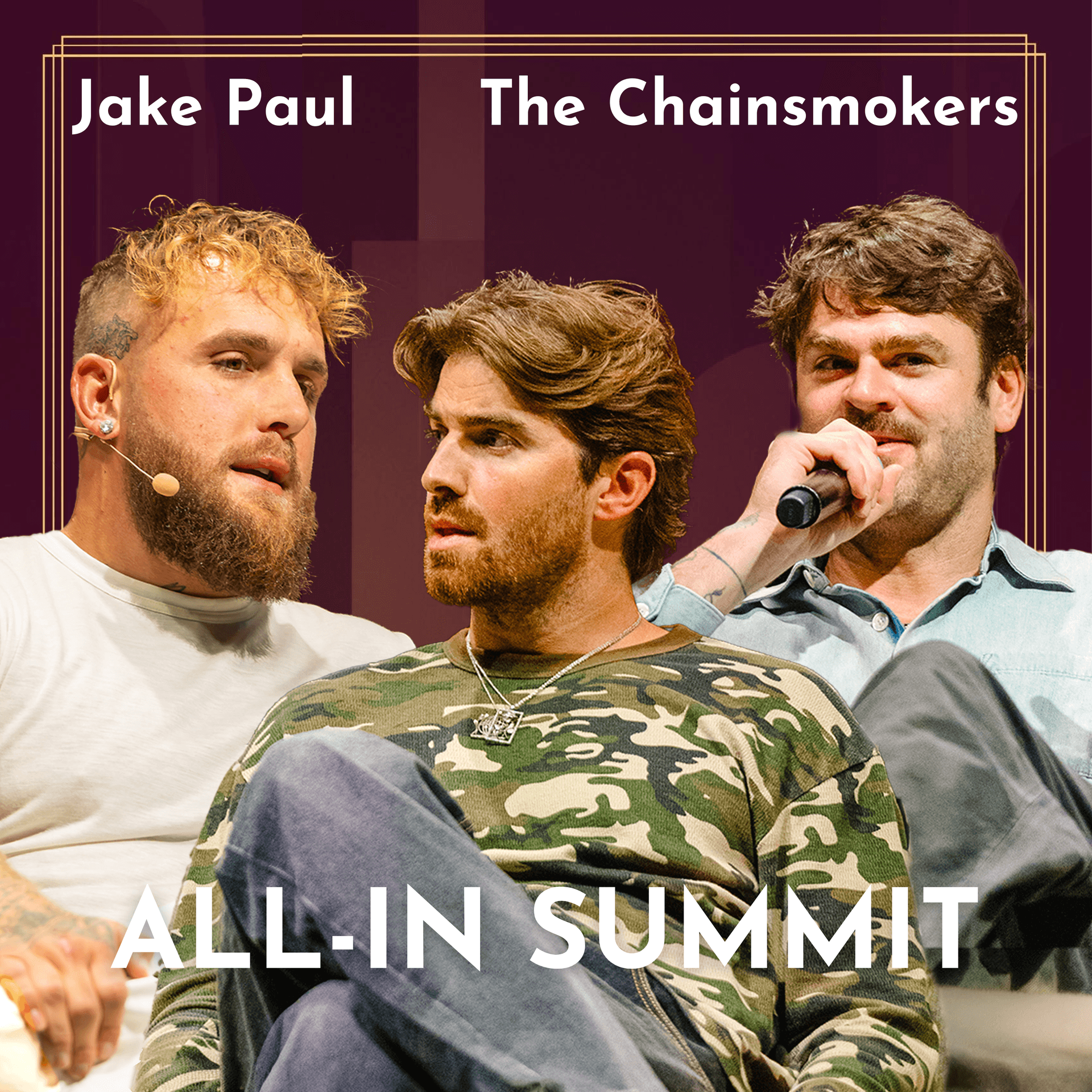

In short
Episode Notes: Scarlett Johansson vs OpenAI, Nvidia's Trillion-Dollar Problem, the "Vibecession," Plastic in Our Balls
Podcast Overview Title: All-In with Chamath, Jason, Sacks & Friedberg Episode: Scarlett Johansson vs OpenAI, Nvidia's trillion-dollar problem, the "vibecession," plastic in our balls Duration: 1:30:06 Air Date: (Date not provided)
Hosts
- Chamath Palihapitiya
- Jason Calacanis
- David Sacks
- David Friedberg
Key Discussion Topics
- Opening Remarks
- Context: The episode kicks off with playful banter recapping happenings around OpenAI, jokingly referred to as "General AI Hospital."
- Scarlett Johansson vs. OpenAI
- Overview:
- Scarlett Johansson claims OpenAI used a voice mimicking her likeness without permission for their ChatGPT technology, particularly linked to the character "Samantha" from the movie *Her*.
- Johansson is reportedly considering legal action after OpenAI's public apologies regarding the situation.
- Key Points of Debate:
- The ethical implications of using AI to replicate a celebrity's voice.
- The importance of securing rights before utilizing a public figure's likeness.
- OpenAI's defense regarding the anonymity of the voice actor used, which raises questions about transparency.
- OpenAI's Internal Challenges
- Resignations:
- Discussion on the resignation of OpenAI’s safety team and concerns over company practices.
- Examination of the heavy-handed NDA agreements that former employees are required to sign, which can affect vested equity.
- Implications:
- Concerns expressed regarding the company's culture and transparency.
- The relationship between employee retention and financial incentives.
- Nvidia's Financial Performance
- Overview:
- Nvidia reported record earnings, highlighting an 18% revenue increase quarter-over-quarter.
- Discussion about Nvidia's position in AI and tech markets compared to historical precedents like Cisco during the dot-com boom.
- Concerns Raised:
- The sustainability of Nvidia's rapid growth and the potential for market correction.
- Speculation about whether competitors will emerge as AI-related investments increase.
- Economic Sentiment: The "Vibecession"
- Public Perception:
- A significant number of Americans believe the economy is in a recession despite positive economic indicators.
- Factors include rising costs of living and inflation concerns, particularly in relation to household income and spending habits.
- Key Statistics:
- Surveys reveal that a majority of respondents feel financially squeezed, even amidst claims of economic recovery.
- Study on Plastics in Testicles
- Study Findings:
- Recent research indicates high levels of phthalates (harmful plastic chemicals) found in testicles from neutered dogs, raising concerns about plastic exposure in humans.
- Implications:
- Ongoing discussions about the effects of plastic exposure on health, particularly reproductive health.
- The call for more stringent regulation and consumer awareness regarding food and product safety.
- Final Thoughts
- Marketed Health vs. Reality:
- The discussion highlights the gap between marketed health benefits of food products and the actual health implications of consuming such products in an environment laden with plastics and chemicals.
- Call to Action:
- Advocating for systemic changes in how food is produced and labeled to ensure safety and transparency for consumers.
Key Quotes
- "There's lies, damn lies, and statistics." - Jason Calacanis
- "The mere fact that [OpenAI] contacted them and then tweeted out [Johansson], shows that [she] was on the brain." - Chamath Palihapitiya
- "Our food supply is totally corrupted." - David Friedberg
Conclusion This episode of All-In dives into the intersection of technology, ethics, economics, and health, highlighting significant challenges that companies face in navigating public perception, legal boundaries, and the ethical implications of technological advancements. The conversation emphasizes the ongoing cultural and economic tensions present in today's society, underscoring the need for critical engagement with these topics.
Written by AI. May contain mistakes. Listen to the episode to check what was said.
Transcript
Automatic transcript. May contain errors.0:00I just want to be clear here. I'm trying to do a docket and we have to put the kabash on this insanity of the soap opera that is becoming open AI sacks because every week it's three four five stories. Have you seen what's happened this week? Yeah, of course. Got to catch the audience up here. Let's catch the audience up on what's happened here. This week on General AI Hospital. Is them Paulmann's job security and jeopardy? Whose data was stolen this time? What did William say? Why isn't he talking about it? And with our special guest? Will our special guest get her revenge? General AI Hospital brought to you by the drama queen's at Open AI.
0:48Wow. I'm not a man. That's not me. Who made that? That was great. Did you make that? Yeah, that was me. 10 out of 10. That was great. That was my idea, but Nick's and Lon's execution. So shout out to our camera. Nick, Calacanis. You finally landed the... Hey. Broken clocks for right twice a day. Took four years. That was awesome. Broken clocks is right twice a day. The Jason Helicannis. That's my one or the bottom.
1:27But seriously, there was a big drama, sax. I don't know if you saw this, but you couldn't miss it with the Scar Jo. So they made an emergency, they had an emergency meeting, got all the developers together and they've reset. They took Scarlett Johansson out and they got a new person. I think arguably better. I'm free, Greg. I'm curious what you're taking on this. It's a better. Hey, Judge, you be there. How's it going? Good. Good. Yeah. Good. What's going on? I'm doing fine. I'm going to be a father real soon. And I think I can't have you help me some dad jokes. I'm going to tell you a joke and you tell me if it passes as a dad joke.
2:03I've never done that before. All right, what do you call a giant pile of kittens? Give it to me Emyeon -ton Yeah, it's in quite land Alright, there it is folks. If you want you can switch to Saxie poo, so you just go into open AI voice now? Yeah, they stole yours go into open AI go to voices and then just pick Saxie poo. It's right there between Putin and And Tucker, Saxi, Puttucker, you can find all your favorite maga guests on the number one maga program all in podcast. Here we go. All right, we're off to a strong start here. Everybody's in a good mood. Let's keep the good times rolling here and let's go over the Scargeau saga to recap if you're living under a rock this week.
2:52It came out that open AI specifically Sam had contacted Scarlet Johansson multiple times about lending her voice for one of OpenAI's chat box. Obviously, you know, she famously was the voice Samantha in the awesome film, Herr, and according to Scargeau, Altman told her she could, quote, bridge the gap between tech companies and creatives and help consumers to feel comfortable with the seismic shift concerning humans and AI. And that her voice, quote, would be comforting to people. Although she declined the offer, OpenAI released a chap out named Sky, which had a similar voice to Scar Jo's, according to Scar Jo, her friends and family thought the voice was her.
3:33She released a statement, Yadda Yadda. On May 13, the day opening eye launched Chat GPT -40, Omni, which we talked about last week, Altman tweeted her a reference to the film. Obviously, now Scar Jo is threatening legal action against OpenAI. Altman put out a statement apologizing and saying the voice was never intended to resemble hers, his quote, we're sorry to Mr. Johansson that we didn't communicate better. Open AI show documents to the Washington Post that confirmed the voice was provided by a different actress who is anonymous. Post reporters also spoke to the unnamed actress's agent who confirmed the story.
4:10I guess you sent us a comparison, let me restart there and see what we think. Yeah. Do you guys think they sound the same? I can understand and generate human -like text pretty well. It really depends on what you're looking for in an assistant. What specific tasks? When I was like, oh, sexuality. Like, I was like, open my eyes to like some other thing. Samantha. Where'd you get that name from? I gave it to myself actually. What do you mean? I think it sounds pretty darn similar. Dead on. I mean, I don't know if it's dead on. Honestly, it sounds like a digitally altered version of her voice. That's what it sounds like to me.
4:51It didn't get it perfect, right? Like they got it to 90 %? It sounds like it was her voice, but then they changed it. So either that or they hired a voice actor who sounds like her. And that's what the company has said is that they hired a voice actor, but they won't tell us who the voice actor is. They said because of privacy concerns, which doesn't quite make sense to me because is when you hire an actor, they want the credit. You know? Yeah. So the company could just clear this whole thing up by saying exactly who the voice actor is and why wouldn't the voice actor want that? You know, what does she?
5:31She doesn't exist. Oh, back to the general open -air app. Oh, wait, they made this act yourself. I mean, she doesn't exist. Of course, it's a DGV altered version of Scar Jo. And they got caught, okay? Cookie Jar. This is why Sam's Paul to Scarlet's agents or her two days before they launched is such a damning piece of evidence because it sounds like he's trying to shut the barn door on something they've already done, right? They've got this demo ready. They're gonna launch it in two days. They're realizing maybe they don't have the rights to use her voice. So you have to contact her to get those rights.
6:15But anyone who knows anything about Hollywood knows you're not going to be able to make a deal with a major star to use their name and likeness in two days. It's impossible. So this seems like a really crazy thing to do. I mean, I think the mere fact that he contacted them and then tweeted out her, which shows that Scarlett was on the brain, those are really damning piece of evidence, I think, in this lawsuit. And I think it's going to feed into her case. I think look, here's the thing, this company is going to go down in the history books. In one part, because the technical inventions that they've created are just next level and frankly created an entire industry.
6:52And I think they deserve a ton of credit for that. But they're also going to be written into the history books for two other things that are probably less aspirational. I think the first is that there's just all kinds of dust -ups and unnecessary drama that just seem to kick around every few weeks or months. And then the second is the sheer quantum of value capture that the employees have seen through secondaries before a fully functional business has been really created. And so I think it explains why folks circle the wagons consistently. It's a very, I think it's a very rational organization.
7:31They're technically ahead of everybody else. A lot of people want to put in money at crazy prices. A bunch of that value is transferred immediately to the employees who circle the wagons and do what's necessary to keep the taps flowing. And I think that that explains the whole thing. And I think that explains many Silicon Valley companies quite honestly. Circle the wagons, defend the company, sell your shares in secondary at 90 billion to thrive or whoever, what would you take free Burke on all of this craziness and drama? I think what we will see over time is that rather than have the ability to sue for their likeness, a lot of AI that is like a celebrity, the value of it will arise from the celebrity's endorsement, not actually using the celebrity's features.
8:25So without the endorsement, I know everyone kind of wants to point to this idea of lightness, but I think that there's something about the authentic aspect of having the celebrity actually endorse and provide their signature, their stamp on it. Restaurants are a good example. Some celebrity chef says I was involved in making this menu. That's a lot different than me making the celebrity chef's menu from his restaurant, putting his or her name and brand on it. There's a bunch of videos on YouTube now. I don't know if you guys ever, you guys probably don't watch these, but I love watching these videos where like music producers make tracks and how they do it.
8:56And so many of these producers now are using AI tools, taking samples off of old records or other tracks, and then telling the AI, make something that sounds like this or looks like this, but isn't like this. And so there's enough of a transformation happening that it isn't a direct likeness, and then they're able to create entire vocal tracks without needing a singer, or without needing the celebrity singer. So you're in the much ado about nothing on the scar. Yeah, I'm in the like, like the content itself, I think is probably less like compelling. Oh, you go go after her because the voice sounds the same But I do think that there's this element of like what if you could then say hey, you know Brittany Spears actually Lend her voice to this track.
9:37So do you think if she if she sews open a I do you think it should just get thrown out? It's not a real case. No, I think there's probably gonna be a lot of discovery to sexist point That's gonna show that they probably did and then just go for a week. You see yeah, no, no, I'm not I'm not saying that I'm saying I'm asking you more that yeah, even if they find it your point is it shouldn't matter my point is I don't think that it should be thrown out. Well, I don't know. I mean hold on let's say you're casting a movie and You know you can't get Scrawl of Janssen for it And so you tell the casting director get me a Scrawl of Janssen type.
10:04I think you can do that Okay, obviously you can't you can't use her name you can't use her likeness But you could hire a different actor who might look or sound like Scrawl of Janssen If the company actually did that and they did it nine months ago This is what the statement they put out. I think they've got a decent defense. But because they may have done it. To my point, I don't know if we believe that. I mean, again, why don't you just put out the name of the actual actor that voice actor that you used? And there's a very simple test here. If the person, if there's confusion amongst the public, which is what Scargeau put in her letter, and that was a legally written, deftly written letter to set up a huge settlement, Because she said the morning this came out all of my friends said oh my god congratulations on your Chat GPT or the other this is great The public being confused as the key issue here and there's something called the right to publicity This is basically how celebrities defend their rights.
11:00It's happening all the time to podcasters by the way There was a company that put me in there. I had space on something I said in a show and then they put ads against it and Who bravins been having this happen Joe? It's happening to me right now. I'm a little crazy thing with Facebook, and they've been doing a very good job the team at Meta Ashley, thank you. But hundreds and hundreds and hundreds of automated accounts pretending to be me selling all kinds of random stuff. It's predominantly on WhatsApp and Facebook in Meta. And I don't know what to do because I, we work together with them, we shut it down.
11:33I've actually had to reactivate my Facebook and Instagram accounts with fordormant so that we could actually have them be verified so that then it's easier to shut them down, but it is an impossible task when somebody's impersonating you to fight it. In my experience, it's been a month and we it's just like every hundred we take down another thousand pocket. In both of those cases, you guys have your exact image of you being shown to sell to sell stuff. I think that in this case, it's also unique to Scar Jo because she was the voice from her. There is no like if this were like a voice sort of like Cameron Diaz or sort of like Julia Roberts, It wouldn't be as big a deal because it would certainly got some differences to it But it's because they're trying to mimic the movie her Well didn't this meta use Morgan Freeman when like Zuck created like an AI or something is a project Do you guys remember that wasn't more than Freeman the voice they paid for it and They've come there's a company speech if I I'm not an investor anything that but they have Gwen a poutro as a licensed voice to read your stuff So this is this like this licensed goodness voice obvious.
12:35Obviously. Obviously. Like just whoever wants to get paid, here's the opportunity. Three people say, you guys think about the fact that they're not trying to say this is this person's voice, but they want to say like, hey, let's say you just can prompt the AI and say generate a voice that is sort of like movies that are comfortable and calming to people to listen to. And you know that we've that we think people will become to me. AI generates something that sounds like I said this before, but it's not deliberately trained on. using a computer to probabilistically copy something is still copying something.
13:07Yes. Come on, guys. Let's not make this too complicated. Is the public confused? Is the only test you need for you? What if there's two public actresses that both have similar voices? And then they both claim, hey, you tried to make this sound like me. What are you doing that case, Tim? Well, which one did you call to before the demo? Yeah, exactly. And did the CEO tweet her? I think your whole point about discovery is what is going to get them in trouble in this case. Because they were clearly trying to do an impersonation of her, right? Yeah, if they never reached out to Scarlett, they could claim it's just a coincidence, but they called her twice.
13:39They called her some months before and then two days before which indicates panic. Judge Sacks, give your verdict. I'm starting a new standoff show. Judge Sacks says... Guilty. Okay, guilty on the phone. Judge Sacks, sentence now. What's the sentence? The sentence is that Scarlett J. Hanson is going to end up owning more of this company than Sam Altman. That's just going to happen.
14:05They call her two days before. Why do you do that? Guilty. Because you know you have a problem. And you're trying to put the horse back in the barn. Exactly. Know what they should have done is as soon as she says no, you just change the voice completely. Or you get a fixer. Get Michael Cohen in there and get a settlement going. Let's get some fixer in there to fix it. Okay. Listen. Enough with open eye. Oh wait. There's more. Geez. It's ruining the docket. I guess we have to talk about the next drama from OpenAI this week. Former employees sign an agreement that they're forbidden forever from criticizing the company or even acknowledging that the NDA exists if a departing employee declines to sign the document or if they violate it, they can lose all vested equity they earn during their time at the company in practice.
14:54This means X employees have to choose between giving up millions of dollars. They've already earned or agreeing that to criticize the company in perpetuity. Sex is a lot of details here. No, but you can see why they wrote that in there. That makes sense if you think, hold on a second. If an employee can leave with a random copy of some old weights as a starting point to rebuild the model, that could be very valuable or. Well, that's I see. Yeah, but there's all kinds of like kind of quasi confidential information or knowledge or know how that you leave A place like that with so I could see why there was a justification to Be very Heavy -handed about it, but again the question isn't whether you're allowed to be heavy -handed you are The question is why backtrack and then off -uscate and lie after you get caught Well, what did well?
15:48What do they say? They claim it's an accident. Once they get caught with their hand in the cookie jar, which like you said, your mouth is just a heavy hand of agreement. It's in the company's interest to do this. Yeah. They just say it was an accident, just like the scarlet thing's an accident or coincidence. It's just getting hard to believe. Just own it and say, you know what, guys, it's a really valuable company. There's a ton of very valuable trade secret, know how IP confidential information, and we're going to be extremely - Let it just. On the offense and protect it because it's are and it's correlated to the importance of the company ecosystem.
16:19You could have said that and people could have been upset, but they would have understood. Here's what Sam Altman said. There was a provision about potential equity cancellation in our previous exit docs. Although we never clawed anything back, it should never have been something we had in any documents or communication. This is on me. And one of the few times I've genuinely been embarrassed running Open Add. I did not know this was happening and I should have. If any form employee who signed one of these old agreements is worried about it, they can contact me and we'll fix that too, very sorry about this.
16:53So he's very, very sorry. It's starting to be like BP oil, this company. They're just so sorry about everything. Here's the question is these are form documents at the end of the day and form documents don't write themselves, lawyers write them. And when you get a novel change in one of these documents, somebody thought that through and thought it'd be a good idea and put it in there. Right. And like Jamal said, there is a way to potentially defend that. It's not like these provisions don't exist. It's just a novel application to try and claw back someone's already invested equity from a company.
17:25Well, that is not - On behalf of these things. Yeah, that is not exactly standard. Sometimes it is completely non -standard. I'm just saying that these provisions exist in other contexts. And their application as a clawback of vested employee equity is something that I don't think any of us have heard before. So I haven't. Yeah, exactly. So my point is just this didn't happen as an ax and somebody made a strategic business decision To do this because they thought it'd be in the company's interest Yeah, so just in layman's terms the clawback means you had 10 million in equity You earn 75 % of it you got 7 .5 million in equity there.
18:01You say something disparaging about the company It they can take it back from you once you leave a company and And you vested equity, you don't lose it. I mean, as long as you have some period in which to exercise your option, if it's an option rather than stock, but other than that, I've never heard of a situation where employees can lose their vested equity. Even in a situation, Sacks, we've seen this where somebody commits fraud. They still get their vested equity and then it's up to the company to sue them for fraud separately, right? Like we've seen instances of that. I mean, I guess that's right.
18:35Like committing a crime. Look, I think the question here is, is it credible that they keep having these accidents and coincidences? What does Judge Saks say? Judge Saks says there's one too many coincidences. Look, I think like Jamal said, you could have just owned this and said that this is a defendant in the way he said and said, but you know what? It was too aggressive and we pulled it back. I think the thing is, look, if you think about the pendulum of culture in Silicon Valley, We used to have a very tough culture of founder -led businesses where there was extremely high expectations and if you transgressed it was very punitive.
19:19And then the pendulum swung all the way to the other opposite end where you had this like coddling daycare type approach that existed for like the last 15 or 20 years. And probably what OpenAI is is an example of a company that needs to be run a little bit more like the former, but stuck with a bunch of people that still pull it towards to be the latter. And that's the cultural tension that they're going to have to sort out because in order to be this incredible bastion of like AGI and innovation, I suspect that it's going to look more like a three -letter agency in terms of security and protocols in the next five or 10 years than it is going to look like the Googleplex.
19:58And I think they just need to own that. And this is probably a little bit of an insight into that tension. And they're going to have to go more in that direction. I think it's a good insight. You're not going to be allowed to build these incredibly crazy world -beating technologies where people are running around in an eight -seater bicycle. Just not going to work. And by the way, I mean, because it is such an industry -leading company, I think we could end up with some very bad fair use precedence or laws, because Scarlett Johansson is so sympathetic as a plaintiff compared to OpenAI. and it's, you know, unless they show us some discovery that proves that they really did hire the voice actor and all the rest of it.
20:39I mean, this could lead to some very bad presence for the industry around fair use. Well, and here we go. I think the Microsoft will pay the speeding ticket and we'll just all move on, but Freeberg, my God. Can you imagine like being two or three PhDs and, you know, machine learning or whatever, you study your whole life, you're pursuing general AI and like people are coming up to your desk and creating all this drama and nonsense and you're in the middle of a soap opera, while you're trying to create the technology, that creates super intelligence, it's nuts. Yeah, I find it annoying too, just listening to it.
21:12Okay, well, then in that case, we will move on from open AI. Oh, sorry. There's one more drama going on. It's not just drama, I mean, there's now a lawsuit. I think it's a very interesting case. The fair use case is interesting for us. I think it's a legitimately interesting case that's gonna, if it goes all the way, if it goes the distance, it's gonna create some really interesting precedence. Well, I mean, you, this is all about the, yeah, but yeah, these, what happens in these content cases is they get settled almost every single time. So the case law doesn't get codified, they just get settled at a court.
21:46You go look at all the fair use cases, they almost never go to the mat. And so this one will just be settled. It'll just be a question. I think the other, the interesting part of the other story is that the reason all All the stuff came out about the equity club acts was because the safety team quit and it got leaked during that process. So this is the third dramatic story of the week that one. And I think that one, I think begs a little bit more of a question of two heads of open ayes. Super alignment team left the company last week, the day after GPT for a launch. Ilja announced he was leaving the company.
22:23He was a chief scientist a few hours later his partner on the alignment team Yon Leica also announced he was resigning in a later thread like explained that he left due to quote safety culture and processes have taken a backseat to shiny products Okay, there's a little bit of disparagement to our former point about non disparage and NDAs so APA open AI lost both its heads of AI alignment. One day after it launched that new product. Is that a coincidence? It's interesting. If you don't know what super alignment is, it's basically making sure that the software doesn't go terminator. What are your thoughts on this pre -bur?
23:09I don't know. I mean, it could be some bad bureaucracy, bad politicking, not being listened to, but I think the real interesting question is is who's going to ask these guys what's really going on from a technology perspective, and what is that going to reveal? Because these guys clearly are on the frontier of model development and the performance of models. And so my guess is there are certain regulatory people who are going to have interest in the fact that this team just left. They're going to make a phone call, they're going to ask this team to come in and have a conversation, and they're going to start to ask a lot of questions about what the state of technology is over there.
23:48And I suspect that some things are going to start to come out. Sacks, it was reported that Ilya was on the side of the nonprofit, the slowdown AI, B cautious group when they fired Sam. So what's your take on what's going on here with super alignment inside of open AI, judge, Sacks? Let's call this what it is, a mass resignation. And we don't really know why. I mean, apparently they were promised something like 20 % of the computing resources of open AI and they didn't get that I definitely read that somewhere. And so that is part of it, I think, but we don't really know the whole story. And you know, when you look at this issue of the mass rising nation and then you look at the issue of the clawback of vested employee equity, you're like, well, wait a second, maybe they felt like they needed that clawback in order to to deter all these people who are leaving from spilling the beans about right.
24:49Whatever was upsetting them. Something clearly upset them, right? Yeah. That's why people are saying there's this mean. What did Ilya see? What did he see? And then like you said, the board did fire him. And the only explanation they provided was that he wasn't being candid. For which at the time we thought was an incredibly damning statement. And we thought we'd get some explanation of it. We never got any explanation whatsoever. You know, I thought that the board was being incompetent because I thought that either they fired him overly hastily or they had reason to firing, but then they communicated poorly.
25:22And you know, you add all these things up and it definitely seems like, we know what? Sam's a straight shooter. We should just have him on the pod to explain. I mean, I'll clear everything up. Stop. We've heard this before. Invidia, Nvidia just smashed all expectations while reporting record profits and revenue. The AI train continues on Wednesday. say, Nvidia reported earnings for the fiscal Q1 revenue was 26 billion up 18 % quarter of a quarter, 260 % year over year. Basically, they quadrupled year over year on billions of revenue. This chart is bonkers. We've never seen anything like this in the history of Silicon Valley or corporate America.
26:03This is if somebody like literally was mining coal and then found a diamond goldmine underneath it. It's bonkers. What's happened here? when you look at the revenue there, the sort of slow growth or moderate growth revenue that they experienced, that was all because Nvidia was primarily providing GPUs. For people playing video games or mining crypto, and then what you see with this unbelievable six quarter run and five, six quarter run is companies like Microsoft, Google, Tesla, OpenAI, et cetera, buying just billions and billions of dollars worth of hardware. I'll end on this in Chimoff and get your take on it.
Read the full transcript
26:47Here's 2019, top companies by market cap in the world. Obviously Microsoft Apple, Amazon, Google, Berkshire, Facebook, Alibaba, 10cent. And then you get some of the, you know, incumbents and legacy companies, J &J, Exxon and JP Morgan Visa. Way down on the list in 2019, number 84 was in video today. In video is the third largest company by market cap behind Microsoft and Apple and ahead of Google aka alphabet and Saudi Aramco. Shemoff, what's your take on this? Will it continue? And how do you conceptualize this level of growth on such a big number? I mean, I think it's a really, really incredibly fun moment If you're involved in anything AI related, just because it shows the level of investment that Nvidia's customers are making into making this new reality available for everybody.
27:50So, when you're spending effectively $100 billion a year on the CapEx of chips and then a couple hundred billion more on all the related infrastructure and then another couple 100 billion more on power, you're talking about half a trillion to three quarters of a trillion dollars a year being spent to bring AI forward to the masses. So I think that's the really positive take. The other exciting thing is if you're on the other side of the NVIDIA trade, which is you're working on something that does what they do cheaper, faster or better, it's also really exciting because at some point the laws of capitalism take in, right?
28:29We've talked about this when you are over earning so massively. The rational thing to do for other actors in the arena is to come and attack that margin and give it to people for slightly cheaper, slightly faster, slightly better so you can take share. Yes. So I think what you're seeing and what you'll see even more now is this incentive for Silicon Valley who has been really reticent to put money into chips, really reticent to put money into hardware. They're going to get pulled into investing in this space because there's no choice. You have a company that went from 100 billion a market cap to 2 .5 trillion in four years.
29:06It's just crazy. Too much value that that is there to then be leaked back. You know, the interesting thing to remember during the PC revolution, which is really mostly the 90s, right? It ended in the late 90s. I would say like 99, 99 right before the dot com bubble took over. Intel's peak market cap was I think it got to about $200 billion. And then their average growth rate from 1998 to today was negative 1 .4 % a year. So it went from about $200 billion to about $130 billion. And why? It's not that Intel was a worst company, but it said everything else caught up. And the economic value went to things that sat above them in the stack.
29:50Then it went to Cisco for a while. right? Then after Cisco it went to the browser companies for a little bit. Then it went to the app companies. Then it went to the device companies. Then it went to the mobile companies. So you see this natural tendency for value to push up the stack over time. So let me ask you that. We've done step one, which is now you've given all this value to Nvidia and now we're going to see it being reallocated. So, Jamal, who's in the arena trying stuff? Some of these things will actually and some networking. So right now, what you do is you speculatively bet on anything that kind of like, quote unquote, rhymes within video.
30:26So AMD is ripping the companies that make, HPM is ripping. So all of that stuff, the folks that make optical cables, this Japanese company that I found that makes like the high bandwidth optical cables ripping. So anything related to that ecosystem right now is at all time highs. But at the same time, what you find now is like every other day when you wake up and read the trades in Techland, you find that there's a company that's got seeded with five to 50 million bucks to create a new chip, right? You're also starting to see folks that are working a little bit above the stack and build better compilers, right?
31:07Things that'll allow you to actually build once run in many different compute environments. So all of this stuff is starting to happen. At some point, the spread trade will be that Nvidia loses share, even though revenues keep compounding to these upstarts. Yeah, death by a thousand startups. All right, so I guess one of the questions people are asking right now is, have we ever seen a company at this scale and the impact it's having, not just in technology, which from off just pointed out beautifully, but also it's having a huge impact on Wall Street, on the stock market, on finance. Well, the company that everyone compares in video to or ask the question about whether a historical comparison should be made is Cisco.
31:55So there's an article in Motley Fool saying, is Nvidia doing to be the next Cisco? There was one in Morningstar called Nvidia 2023 versus Cisco 1999, will history repeat itself? The reason they're asking these questions is that if you go back to the .com boom in 1999, you can pull up the stock performance chart. You can see that Cisco had this incredible run. And if you overlay the stock price of Nvidia, it seems to be following that same trajectory. And what happened with Cisco is that when the .com crash came in 2000, Cisco's stock lost a huge part of its value. Obviously Cisco is still around today.
32:33It's a valuable company, but it just hasn't ever regained the type of market cap it had. The reason this happened is because Cisco got commoditized. So to Chimau's point, the success and market cap of that company attracted a whole bunch of new entrants and they copied Cisco's products into their total commodities. So the question is, will that happen to Nvidia? And I think the difference here is that at the end of the day, networking equipment, which Cisco produced, was pretty easy to get pretty easy to copy. data around. Yeah. Right. Whereas if you look at Nvidia, it's these GPU cores are really complicated to make.
33:11And Jensen makes this point that the H100 for example has thousands of components and it weighs like 70 pounds or something like that. I mean, it's not just like a little chip. So it's a much more complicated product to copy. And then on top of that, they're already in the R &D cycle for the next chip, right? Well, whatever it's going to be the H200 or whatever it is. And so as people try to catch up with the H100, they're going to be on to H200. So I think you could make the case that Nvidia has a much better mode than Cisco. And just by the way, on this Cisco comparison, just to finish the thought, people were making this comparison six months ago.
33:52And what's happened since then? Nvidia's had two block orders. and the competitors don't seem to be that much closer, maybe a little bit closer, but so, you know, look, I think it's an open question. So there's a counter here, Freeberg, which is obviously, if you follow the Cisco analogy, one of the things that also some Cisco was, once people had bought all that capacity, there was no need, there was no file size, that was so great that it couldn't be moved easily around the internet. You know, you make movies HD, Super HD, 2K, 4K, the bet we've created too much bandwidth, there was no use for it.
34:28So I guess that's a counterargument for maybe when if we build up too much capacity in video also could not by competitors, but just by the build out being enough. So what's your take on back counterargument and then whatever else you have? I think that the Cisco analogy, it's a pretty different situation because Cisco evolved the business to become much more enterprise -centric and they were able to run an M &A process like we see with enterprise software where they could acquire and roll up lots of different product companies and sell into their enterprise channels. So do a lot of cross -selling.
35:02InVIDIA is not a super -equisitive business and it doesn't make as much sense because they're selling much more kind of infrastructure tools where ASISCO moved really high up in the enterprise stack. They were selling stuff into office buildings, they were selling software, they did acquisitions to kind of fully integrate. They had a very diverse set of products that were selling through an enterprise channel further up the value stack and a pretty distributed customer base, no serious concentration. Even though they did sell a lot into data centers, they were also selling to telcos, they were selling enterprises, they were selling to governments and so on.
35:35If you look at Nvidia's revenue, they did 26 billion dollars of total revenue in the quarter, 22 billion of which was data center, and about 40 % of that was from the top four hyperscalers. So a full one third of NVIDIA's revenue in the quarter came from, I believe it's Google, Amazon, Microsoft, and Meta. And so between those four businesses, you know that those companies each have, I believe, at least over or close to $100 billion of cash sitting on their balance sheet. They can't find great places to invest that cash to grow revenue. And so they've rationalized away the idea that they will make CAPEX investments to build over the next five to 10 years.
36:13And this is where that money flows. Yeah. We talked about that in a previous episode because there's no M &A to your point. You mean to constantly let you buy stuff where the UK is not going to let you buy stuff. So I think that they're going to have less maneuvering capability than Cisco had in the future. And obviously there's this deep concentration risk, which is going to be equally challenging. I think Nvidia, this is to build on Sax's point, is going to get pulled into competing directly with the hyperscalers. So if you were just selling chips, you probably wouldn't. But Sax is right, like these are these big bulky actual machines.
36:47Then all of a sudden you're like, well, why don't I just create my own physical plant and just stack these things and create racks and racks of these machines and go ahead and have a WS instead of selling to them. It's not a far stretch, especially because Nvidia actually has the software interface that everybody uses, which is CUDA. So I think it's likely that Nvidia goes on a full frontal assault against GCP and Amazon and Microsoft. That's going to really complicate the relationship that those folks have with each other. But I think it's inevitable because you're get, how do you defend, it's kind of the Apple problem.
37:22How do you defend an enormously large market cap? You're forced to go into businesses that are equally lucrative. Now, if I look inside of compute and look at the adjacent categories, they're not going to all of a sudden start a competitor to TikTok, stock, right, or a social network. But if you look at the multi hundred billion revenue businesses that are adjacent to the markets that Nvidia enables, the most obvious one is the hyperscalers, which are multi hundred billion dollar revenue businesses. So they're going to be forced to compete. Otherwise, their market cap will shrink. And I don't think they want that.
37:57And then it's going to create a very complicated set of incentives for Microsoft and Google and Meta and Apple and all the rest. And that's also then going to be an accelerant. They're gonna pump so much money to help all of these upstarts to your point, Jason. Chip away and nip at the Achilles heels of Nvidia until they fall. Yeah, and there's a great precedent for what you're saying because or clues, Amazon is making chips, Google is making chips. And in fact, Apple. Testas making chips. Apple is making chips. Everybody's made their own chips and they got rid of Intel and so this is how it's gonna go your margin is my opportunity And you know with all this market cap increase the good news is just reported that Jensen has bought a second leather jacket So well this market has enabled him to Expand the water.
38:47By the way, I gotta say he looks really good. He looks super fit great You know, he has a picture of how the man is in his late 50s. He's going into his higher son for He looks great. He looks great. He looks great. He looks great. 61 61 he looks amazing. He looks amazing. I'll tell you something in the zombie apocalypse draft on picking him. That guy seems crafty. You know, he's so peaceful. What do you think about balls? No plastic balls. No, no, no, his balls are plastic. He's got seal. No, no, he's got his have brass on his literally has a lot of balls. No, all of our balls have plastic at the end.
39:25Okay, well, we have two choices here. We can go with another tech story, or we can go directly to science, going around. Well, no, I think you should do state of the economy and then do science core. Okay, so you want to talk about our pocketbooks and then we'll talk about our pockets and then we'll just make a quick detour to the right and then talk about our balls. It's in the same vicinity. So let's get on our balls. Okay, great, yeah, let's end with our balls. That science core. I mean, freebiting totally likes to start with the balls. I don't know, is everybody's got different, kind of vibes here.
39:54The ballplay should come a little bit later in the and the pro. We want to save the ballplay for later. I have an a hard time keeping this to grab guys more than half of Americans think we're in a recession. I think we're in a vibe session right now because we're not in a recession. But people are feeling really bad. A Harris poll conducted by the Guardian shows at 50 cents 56 % of Americans Americans wrongly believe the US is in a recession, not surprisingly. They blame Biden. The poll highlighted a bunch of misconceptions. 55 % believe the US economy is shrinking. It's obviously not. 56 % think the US is experiencing recession.
40:35It's obviously not. 49 % of the above believe the S &P's 500 stock market index is down for the year. It's up 12 % this year. It was up 24 % in 2023. And 49 % believe that unemployment is at a 50 -year high when it's in fact at a 50 -year from low. And Americans are really concerned about the cost of living and inflation. Fair enough. 70 % said the biggest economic concern was the cost of living. 68 % said that inflation was the biggest economic concern. Important quote here. A majority of respondents agreed it's difficult to be happy about positive economic news when I feel financially squeezed each month and that the economy was worse than the media made it out to be.
41:17According to polls 70 % of Republicans 40 % of Democrats think Biden is making the economy worse. Tremoth, you have some thoughts on this. I'm going to go out on the limb and speculate that a lot of the big numbers that we use to gauge how we should feel about things in today's day and age are pretty brittle. Okay. Explain, read it. And fragile and may actually just be totally wrong. So what's an example? So, for example, like if you look at something like non -farm payrolls, right? So the first Friday of every month, you get this report that comes out from the Department of Labor and it shows what where unemployment is.
41:59But how do they calculate that? Do you think that they have a real time sense of exactly every person in that month that entered the workforce or exit of the workforce? No. They do a survey and then they extrapolate. And if you do that survey incorrectly, in Jason, you've commented on this before, for For example, if you don't capture adequately, the number of people that are on the sidelines and never join the workforce or the number of people that are part of the gig economy, so they are kind of working, you get an inaccurate sense of where the real economy is. I think that GDP is somewhat similar because if you just break down what GDP is, so Nick, there's a very simple pie chart I sent to, what is GDP?
42:38It's the sum of four things. Most of it is what people spend. then the next big chunk is what companies and governments spend. And then the last is what we export to other countries. So let's just pause for one second and think about what do you think happens when rates are zero versus when rates are at 6%. People spend a lot more. Well people are tend to save when interest rates are high. Just the natural thing like why would I buy a pair of these Nike shoes? I'll just put it in the bank and get 6%. But when the bank pays you zero, you're like, ah, let me buy these zero -force ones and move on, right?
43:17It turns out it's the same for companies companies find it easier to invest when rates are at zero because it's cheaper It's much more expensive because they're borrowing money at 6 % versus at 0 % or more corporate gets charged on a higher fee, right? then when you have high interest rates you have a currency that appreciates it makes exports less attractive to other people, which means then you become an important reporter. Okay, so what is the last thing that's left? The last thing that's left is government spending and you have to ask the question, what should governments do when rates are high?
43:51There is a chart I published in my annual letter if you just go to that for a second. And just going back to this chart right before it, just so the people who are listening, if you put the pie chopper in there, important for people to know, consumer is about 70 % of the economy and if you put investment in government together, that's just a 34 % percent. It is a consumer -driven economy, but corporate and government spending is a major piece as well. I just wanted to highlight that when interest rates are very high, all of a sudden governments are faced with this very difficult problem, which is, oh man, I have to spend a ton of money on interest, just like if you had a bunch of credit cards and all of a sudden the interest rates went up.
44:34So the choice is twofold. Do governments spend less? But unfortunately, it turns out that our governments in America, they just keep spending more and more. So even if net interest income is small, even if net interest income is high, they're just like, forget it, the taps are on. So what does this all mean? I think what it really means is that we do a very poor job of measuring all these dynamics together. And so I actually trust the survey data of these individuals more than I trust the GDP report. In the sense that I think it more accurately captures this dynamic rates are at 6%. People are saving more.
45:13If they're not getting paid more, things are costing more. The government is giving you free money so you kind of feel like everything is moving. So that the GDP measurement the way that it's classically done shows that wow, we grew with three or four percent, but the average individual American isn't feeling that. They're actually feeling that they have less money. So I would actually go with them and actually say, if we don't revisit this thing from first principles, we're going to get this dynamic where we think one thing is happening, but the actual exact opposite is happening. In this case, I do think we're in a quasi -sympetic recession.
45:50Sax, what's your take on the vibe session? Well, look, I tend to agree with you mouth on this. I think this is a classic story of who do you believe? Do you believe the experts or do you believe in the intuitions of the American people? And the experts have some statistics on their side, but the old saying goes, there's lies, dam lies and statistics. And then the American people have their actual lived experience on their side. They know what they're feeling. And I tend to trust in that. Obviously, we're in an election year and the press knows that, so we're trying to do this big cleanup effort for Biden.
46:26But why is it that people are feeling this way? Number one is inflation. And if you look at this chart, you can see that if you look at household net worth since the start of the Biden presidency and compare it to the change in household net worth at a similar point in Trump's presidency, in nominal terms, it appears to be the same. But then if you adjust for inflation, in other words, you look at the real household net worth, you can see that household net worth during the Biden term has been flat. Actually, it's down because of inflation, right? Because of inflation. Where did the inflation come from?
47:01Where did the inflation come from? Yeah. Well, Larry Summers warned in the first quarter of the Biden administration that if you passed an unnecessary $2 trillion of COVID stimulus, you had produced inflation. The inflation rate when Biden came into office of 1 .7%, we had a rip -roaring economy, But he started simulating and we talked about by nomics is this new policy of Pumping trillions of dollars of stimulus into a healthy economy which we've never done before what happened inflation went all the way to 9 % So people's wages have not kept up with the rate of inflation. This is why they feel worse off when you actually look at purchasing power People are worse off in terms of their actual ability to buy things their purchasing power has gone down Wages may have gone up a little bit, but they have not gone up as much as inflation so people feel worse off Now Larry also had that I think really informative study showing that inflation would have peaked at 18 % if you include cost of borrowing so again to Jamas point If you're trying to get a mortgage and you're paying seven and a half eight percent you feel way worse off If you need to buy a car and make a car payment you feel much worse off if you've got credit card debt which is now hit on all -time record, something like 1 .1 trillion, your credit card rates have never been higher.
48:18So the average American feels worse off because cost of borrowing has a huge impact on their household finances. And that's why if you read one of the last paragraphs in that story that you referred to, they use the key words, the consumer feels squeezed, the average household feels squeezed. They may not have lost their job yet, but they've lost purchasing power. And they've lost their under earning their under earning and so the the projection and you know the press the press can gaslight us all day long about how wonderful things are under Biden but the average American I think understands differently based on their own experience.
48:52I think the whole thing comes down to the projection of an individual or a household of their lived experience onto the economy. You assume that because you're having a tough time the economy is bad. And the economy as a definition for them is how do I earn and how do I spend? And if I'm under earning, that means there must be serious job loss and things are more expensive and my ability to purchase isn't improving. And so I think we're all kind of going to end up on the same take on this one. I mean, Nick, if you want to pull this image up, this is I think a helpful one which is disposable personal income relative to outlays that folks are needing to spend and more than they're making.
49:33So clearly indicating that they're feeling like they're under -earning. So the projection of that is the economy is bad, without recognizing that it is an inflationary experience, whereas economists use the definition of quote, economic growth being gross production, gross product. And so if gross product or gross revenue is going up, they're like, oh, the economy is healthy, we're growing. But the truth is, we're funding that growth with leverage. at the national level, the federal level, and at the household and domestic level. We are borrowing money to inflate the revenue numbers. And so the GDP goes up, but the debt is going up higher.
50:14And so the ability for folks to support themselves and buy things that they want to buy and continue to improve their condition in life has declined if things are getting worse. And if you go to the next image, as SACS pointed out already, here's the image of total outstanding credit card debt over a trillion dollars. It's totally spiked and it's going to continue to spike just like federal debt because of the next chart, which is the sudden jump in interest rates. So we've seen credit card interest rates jump from 12 % on average 10 years ago to 21 .19 % right now and it was at 14 % at the end of 2022.
50:53So we've gone from 14 % average credit card interest rates to 22 % now in just about 20 to 24 months. And so the projection that I think of the quote economy must be bad is resulted from the fact that income to spending is actually pretty negative. So here's the real median family income. This actually only goes through 2019. So it doesn't even capture the error that we're talking about, but this has been going on for quite some time that the average American's ability to improve their condition has largely been driven by their ability to borrow, not by their earnings. And this has created a substantial set of precedents that we're now running into a wall with interest rates spiking and inflation hitting us because of the overall federal debt that we've taken on.
51:39I think we're probably going to go around the horn and all agree. Obviously, the crazy spending started in the Trump and COVID era, and that caused a lot of the inflation as well, just to be fair. It's two administrations that are just out of control with spending. But the way I look at this is the Mickey D economy. People may not know this, but 96 % of Americans keep me else at least once a year in McDonald's, 8 % of Americans eat at McDonald's on an average day. And when you look at the prices of McDonald's here, if we look at this image. Yeah, this is incredible. This is unbelievable. Medium front rise at McDonald's, bucks 79 in 2019 and now, four 19.
52:18And then if we look at just McNuggets, four 49 to 758, 68 % increase McChicken, 129 to 389. And then here is a very interesting one. This is CPI versus McDonald's big Mac prices. Take a look at that. that as much as the consumer price index has surged, big Macs have exceeded that. And so Americans are seeing this over and over again when they go to McDonald's and other places. And that's what's causing the feeling. Because when you start to go back to that, McNugget chart, I just wanna see what is it end of 2019? So this is basically you'd wanna look at the four year stock price, right? So like these guys have jacked up prices massively.
53:00If you look at what's happened to the stock, the stock is way up. It's kind of been they've been very motivated and rewarded as a company for just rewarding the shareholder and kind of screwing over the customer. If you own equities in McDonald's and you're in the top third or half of maybe half of Americans who have equity exposure, you're feeling great. If you're on the bottom third or half and you're buying at McDonald's and you don't own equity in McDonald's, you feel terrible. Free break, you have some additional bots. Yeah, but remember what McDonald's and other fast food companies have said is that labor costs have climbed.
53:32And here's a chart on labor costs that you can pull up. Workers at Walmart and McDonald's have had pay increases. But this has really been to try and keep up with inflation, the inflation of other costs. So a lot of people will say, oh, they're price gouging, they're ripping off consumers to make profits for shareholders, but the truth is, the biggest component of running those restaurants is labor. And labor has gotten more expensive because the employees that work there have to earn enough to pay their bills and to afford their food. And this is the circular effect of inflation. It finds its way all through the economy, it filters down, and it eventually hits everyone.
54:10Look, fast foods are pretty competitive business. I mean, I think the reason why McDonald's is raising prices because everyone else is raising prices. I mean, otherwise they'd be losing share. And just look, go to the grocery store and look at the price of steak or chicken or whatever, or eggs. It's gone up tremendously over the last few years. I mean, let me ask you a kind of question. It was the last time you were in supermarket. Be honest. When's the last time you literally went to a... I'm just curious. It's not relevant. I mean, obviously we know that the price of eggs doesn't affect me. Okay, great.
54:43I mean, a fortunate position. That's not what the topic is. The topic is, what is the impact on the American people? And why do 70 % of the people in that poll feel that we're in a recession even though the expert tell us we're not, and I've explained it. Yeah, and the other thing is there's a super market the other day. I like going to market I take I go every week. I can't believe how expensive things. I mean some of the stuff I was just blowing out expensive things It's bought the look at the look at the package I sent you guys the Driscoll super sweet strawberries 6 .29 quarter the mark and I went and tried to find them here in San Mateo.
55:17There's none left They said schamaff quarter the market. I went to the Gona's not an I didn't know not an I go to Sagoona's every week A, because we like buying our own fruit, but also because our kids like to do it, and they like to see what things cost, and they like to pick stuff. But, you know, this sweetest batch was seven bucks. For how much that, by the way, 12 shrubs ago. Well, so here's what I'll tell you quite honestly. I'm like, I think that you need to put these guys on notice. Oh, on blast. The perfume, so the nose, like just like, it's incredible, okay? The smell is the aroma. It's just absolutely incredible.
55:56Yeah, but to be totally honest with you the mouth feel and the sweetness is not what this label would imply. Yeah, what were you talking in terms of mouth feel? I was expecting like something juicier, more succulent. Let me ask you a question about do you have a Somali A for your fruit? Yeah, I mean you seem like a real connoisseur here. Yeah, you do. Do you have a chance for fruit? No, I don't. I've been texting. I've been texting. I've been texting. Freebrook about free. For months, I am a connoisseur of fruit. Okay. It's very important to me. I like good fruit. So, you know, my wife and I go and find good fruit for our family.
56:35And it's really expensive. And even this over promises and under deliver. So, freebrook, if you can, if you can land a GMO strawberry, I'm gonna put it in my bell. Give me a GMO strawberry free break twice as big three times as sweet. Get in my belly. I think we should all go to Tokyo for a weekend and do some fruit tasting in Tokyo. Yeah, we have to get on the Hokkaido strawberries. This is where it's at. You have no idea like what you can spend on strawberries. People are spending ten bucks on a strawberry. It is bonkers. I bought a hundred dollar mango ones in Tokyo. Yeah, incredible. You know, the other thing I think with these numbers is if you're an economist and you're like inflation has gone down, that means the rate of inflation has gone down from six or seven percent down to three percent or 2 .9 or 3 .1.
57:24That doesn't mean prices aren't still going up. And so the question is, how do you want to recycle down? If you want to replace GDP, there is a very good article in the Wall Street Journal a few weeks ago about how there's been just a total breakdown in what these high level numbers say kind of what we've been saying and how Americans feel. And they introduced a different score. Well, they gave it publicity. It's not their score. But it's something that they call the core score. Okay. And what that does, it's, I'll just read it to you just so you can understand it. It's a county level index of well -being using measures of economic security, economic opportunity, health, and political voice.
58:02And so the lowest possible score is zero, the highest possible score is 10. As it turns out, when they use this across every county in America, the distribution is basically as follows. The most quote unquote prosperous county is false church Virginia, which is 7 .86 out of 10. And the lowest county is Jim Hogg County of Texas, which has a score of 2 .25. So to the extent that you want to start to look at granular measures, This is one. I'm not going to advocate for it, but it's an example. But what do you notice in here? What I notice is that there's a lot of patches of like meth to not good in most parts of America.
58:42And so other than a very few small pockets where people feel great, most of the country is sort of dissatisfied. And I think that that's a really important thing to internalize. Yeah. Some of this is classic psychology. You know, people do focus on on the negative, the media focuses on the negative, and then with social media, people are seeing lifestyles that are unattainable, just like they're seeing body types that are unattainable because people are doing filters, you're also seeing people living a lifestyle that's unattainable, and then it makes people, because their expectation of their life is so high, when they then subtract the reality of their life, they've got a deficit, and really happiness is, like, expectations minus reality equals happiness.
59:25Yeah, but you had that same dynamic when consumer sentiment was much higher in a previous administration and people are feeling much better about the economy. So that's a constant. Yeah, when people were having free money, you're talking about a free, Trump dropped free money on people's head. So your argument that might is crazy and spending, Trump sent them a free chat with his name on it. Yeah, when the economy when the economy was down 33 % year over year, okay, and both parties. Wait too much money, right? You admit he spent way too much money. both parties thought that we were ahead of for depression and so we had a bipartisan stimulus bill during an actual crisis once the crisis was over there was no need to keep spending When Trump Jason Once the once the seal has been broken.
1:00:12Yeah, I think it's fair to say both sides of the aisle now believe that they can and give away an enormous amount of money. Both absolutely. There's nobody that feels like they have a responsibility to stop. But I think I think what's actually, what's actually right in the sense that, so if you take that as a constant, right, that there will always be handouts now of all kinds, they'll be different flavors, depending on whether it's a Republican or whether a Democrat, a Democrat, and all rationalized, it's a big thing. It's all, but so then what I'm saying is, that's my point. This abstraction though, doesn't solve what's happening now, Because this free money is in the system, it's constantly in the system.
1:00:52It comes in different ways. So people should feel better. The fact that they don't in the face of this constant money train, I think is actually quite alarming. This is, I think, what the point is, which is we are economically in a very complicated moment in the sense that there is no pandemic to blame. There's no economy that's totally shut down. In fact, there's an economy that seems to be moving, but leaving an enormous number of people behind. So however it has been structured just sitting here today in 2024, it's broken for more people than it's working for. Yeah. Trump just to give facts.
1:01:25Trump will have spent $7 .8 trillion by and will spend slightly less like $6 .8 trillion. At the end of these things, the both going to have added $15 trillion. You're missing the fact that Trump had 2020 with when we had the COVID depression or what we could have been when it comes down. And the terribly time tax Let's see. Did you guys see it, Craig? Hold on, let me just make this one point. Just because both parties have been irresponsible and spending doesn't mean that we can't make further judgments about who's been worse. Sure. What's happened in the Biden administration is just quantitatively worse.
1:02:02Well, no, quantitatively Trump spent more, but you're saying qualitatively Biden's is worse because he didn't need to. There was no crisis. Right. Okay, I got it. So one spent more, one spent less, but one didn't need to go on. Absolutely. Look at Trump spending for COVID. Look at Trump spending before COVID. It was like a 5 % bump on Obama's spending. Well, the tax break was the one that that accounted for a lot of yeah, but anyway, we can sit here and debate Trump versus by Nozai. A lot about my balls, boys. Yeah, we're wasting time here. Wasting time on Trump and Biden when we can be talking about battle.
1:02:36If we're going to talk about our balls, we need to go to somebody who's an expert on our testicles, free bird. Let's go over to the science reporter. Let's talk about our balls with the Sultan of Science. There's been a study on Thalates, our balls, and plastic in our balls free bird to this up. Yeah, the consumer reports put out a really interesting or what has become pretty widely covered now story a couple of weeks ago where they measure phalates in common foods and Nick if you want to just pull up the image that's been repeated in a lot of media a lot of press people were going nuts over this phalates are these chemical compounds that are used in plastics or used with plastics to soften them so when you make plastics you can kind of you know make them softer and form them into all sorts of different shapes and use them for different applications like plastic bags or wraps or cubes are all sorts of things.
1:03:32And, uh, Thaylates are these kind of smaller molecules that, that kind of go along with the polymers that, that are the basis of the plastics. And they measured Thaylates, which are known to be toxic in terms of if you get enough of them, they can be carcinogenic and cause cancer. And they show that every product they tested had Thaylates in it. Wendy's chicken nuggets had, you know, 33 ,000 nanograms per serving. If you scroll up to the top. Look at the weight. Look Look at the Chipotle chicken burrito. Oh my God. Right. And just to be clear, guys, this is not just about packaging. Packaging plays a role, but the whole food supply chain, the way we wrap food, all of our water, all of our dust, all of the air we breathe.
1:04:15We have measured baylates in everything. So these baylates end up in the animals that are used to make milk and the animals that people eat. They end up in the water that goes into the vegetables that we grow in the ground. They end up being used to make the little plastic jars that we feed our kids out of the little yogurt pouches that our kids drink out of Everything just to move food around in plastic packaging freeberg freeberg Why would the chicken nuggets from Wendy's though be so is it because they are eating? They are eating things that have plastics in them, but but we also don't know and so then goes on the chicken So we're eating the plastic We're eating the plastic and it's also the fact that the way that they process the chicken and the material that they use and the packaging that they use and how they move this stuff From one place to another you got bags that are holding chicken breasts that then get put in the thing And then the oil has has you know the oil is transported in plastic We don't know so it's plastic all the way down.
1:05:08It's plastic all the way down These are the things like look at Annie's I first of all I really dislike Annie's labeling and patchick it packaging I think it's very ugly so I've never bought it for that reason But I know that there's a lot of private equity moms at Biannies because it's supposed to be better. Here, go. Keep going, Jack. This is a private, really good point. Yeah, look on, Chimau's making a really good point. Go ahead, Chimau. And so the problem is you see organic. When you go, like, again, we go to draggers. That's typically where we go sometimes to go to whole foods, but we go to draggers in Sagoanas.
1:05:40That's the places we go to in our neighborhood. And when you go and you look at these things like prepared meals as an example, the thing that has always attracted me to Annie's is because it is positioned as it is cleaner and better for you. And you see everybody buying it and what you actually see sitting on the shelf that's left over is actually the Chef Boyard in the Campbell's. And I always thought to myself, I won't buy Annie's because I actually don't like the label to be honest. That was really why I did just deeply dislike the packaging. But it turns out it's the actual worse for you.
1:06:14Yeah. And let me just part you guys. Let me tell you guys some stats about this. So we produce about three million tons of philates a year, creating them that we use in our industrial supply chain. The global market for philates is about $10 billion per year. We find it everywhere. In our tap water, as measured in the US in multiple places, there's about one microgram. So those were nine hour grams. So you kind of divide it by a thousand. So that any thing has 50 micrograms of philates in it. But there's about one microgram of philates per liter of water that you're drinking. Now, here's a study was done out of Germany where they basically tried to estimate how much people were consuming.
1:06:52And on average, people consume or ingest about six micrograms of phalates per kilogram of your body weight per day. So an adult male is consuming about 500 micrograms of phalates per day. That's half a gram per day. And the human body metabolizes and exprates it. It comes out. The EPA, all of the administrative agencies that oversee this stuff, they're like, it's Okay, we metabolize it as long as we don't consume more than we can metabolize. It's going to be safe because it's not going to stay in our bodies. It's going to watch out. Here's the problem. While it's in your body, while it's moving through your body, being metabolized, it is what's called an endocrine disruptor.
1:07:29And we talked about this in the past with respect to the sunscreens. These philates actually interfere with the hormones that are made by things like your pituitary gland, your thyroid, and even some of the hormones that are produced in testicle cells. There was another study done that really tried to estimate what the impact was. And here is a study that showed how do Thelites actually interact with different parts of the endocrine system. And they went through and they found all these places that biological hormones and the endocrine system are disrupted by the Thelites and we'll put credit for everyone that shared these papers here later.
1:08:11and they basically showed the mechanism by which the baylates are actually disrupting endocrine systems. Now, what is the endocrine system? We talked about endocrine disruptors in the past. The endocrine system is the interaction of hormones with cells in your body produced by all these different glands in your body, like your thyroid, your your terry gland and so on, control things like growth, tissue development, reproductive tissue activity, like making sperm cells, autonomic function, like body temperature, blood pressure, sleep, heart rate regulation, injury and stress reponts, your mood, all of those things are regulated by your endocrine system.
1:08:48And so when the hormones or the proteins or peptides that are made by those glands are disrupted by these stalates, it can actually disrupt those systems and mess them up. So while we're not consuming, generally speaking, enough stalates to cause cancer, and therefore, we all say, hey, it's okay, these stalates aren't that bad, we're not going to all die from cancer, the truth is there is demonstrations now on how they can actually disrupt the activity of your endocrine system and as a result have all of these deleterious effects. Another study done on 125 men out of China, this paper was done out of China, they saw damage to testicle cells that would die, testicle cells that would produce fewer sperm, and then testicle cells that produced sperm with extra nuclei, and they actually demonstrated this in rats.
1:09:36So the set of compounds can be fairly disruptive. So now we'll go to the next story, right? And the next story is the one that everyone's writing about, which is, oh my god, there's plastic and balls. So a team at University of New Mexico that was published in the Journal of Toxicological Sciences just last week. They took 47 neutered dogs testicles from a local pet clinic where they were getting neutered. And they found, on average, 128 micrograms per gram of microplastics in those testicles. And it was mostly polyvinyl chloride or one of the main plastics in polyethylene. And again, say lakes leach out of these plastics and leach into the cells.
1:10:14And then they went to the medical investigators office and they found these testicles that were frozen for seven years because when they do a medical investigation and they keep all the body parts, they keep them on ice and then they throw them away after seven years. So before they threw them away, they got permission of humans. They got permission to use these testicles to figure out are their plastics and they measure it. In the frozen balls. In the frozen balls. These are ancient frozen balls. How old are these balls? 23 frozen balls, about seven years old. Okay, seven year old balls frozen.
1:10:42Wait, are people donating their balls to science? Is that how it's exactly? When there's a homicide or someone, or you don't know who died, or there's an investigation into why someone died, the corner keeps the body parts in case it's needed for like a police case later. I don't want my balls used that way. You don't have the frozen balls on your driver's license like freeze my balls. They asked me to store my balls. I think they're right. You got such huge balls. Anyway, they got 23 these balls from these bodies and they found plastics on average, 328 micrograms per gram of testicle in these balls.
1:11:25What do you usually find? and Freiburg, what do you use to find in these balls? Well, we don't know, because we've never taken a human tissue and tried to take it apart in a very detailed way to figure out how much plastic is there, what is it doing to our body? But now I just wanna connect the dots. So now we have a sense that there's these spaylates and these other compounds that come with plastics that leak in that cause all this disruption. Separately, we're seeing this accumulation of these little plastic particles. And remember, plastics are polymers. They're long chains of monomers. And so they can be short chains, they can be long.
1:11:55So they break apart, break apart, break apart, and little tiny bits of them end up and they're very hard to metabolize and they sit in your tissue and then they can cause all this disruption. So, you know, I think these are like generally not - I'm just going to say it. I'm just gonna say it. First of all, I really appreciate that you did this. I think it's so important. We talked about microplastics a little bit ago. You know, J. Calm moved his whole family away because a few years ago from plastics, I've started to do it four or five months ago. But you can't get away from it. It's in the supply chain is your point.
1:12:26It's in the water, it's in the air, it's everywhere. This is what I was gonna say. I think our food supply, I think we should just say it out loud, is totally corrupted. And I think there's all of these other factors we look at, the rise in the use of SSRIs, the lack of sexual function in young men, the lack of sex, the low birth rate. I think these are all related. and part of it is the food supply, and part of the food supply problem is the fact that it is corrupted by these materials that should never be in our body. I wanna just push back on this because I don't wanna limit it. I don't wanna limit it.
1:13:02But I honestly think it's the truth. I don't wanna limit it. I don't wanna limit it to the food supply because here's the other thing. All of us are wearing clothes that use polymers, which are plastics. All of us are sitting at desks that have coatings of polymers on them. All of us have iPhones that use polymers. All of us drive cars and the rubber, one of the ways that they found that plastic, these micro particles are getting in the air, is through tires when we drive. Little particulates end up in the atmosphere. We breathe them in and then they end up in our body. Every part of our industrial supply chain uses polymers.
1:13:36Every part of our industrial supply chain. I see you, but the concentration, I'm going to guess that the concentration when you you actually put it in your body and then you're in testons and your organs are bathed in this stuff. I'm going to guess that the food supply has a huge part to do with this. Yeah, but when you're, let's say you take, let's say you're wearing a clothing, almost all of our clothes now, many of our clothes have polymers in them. We put it in the washing machine, it ends up in the water supply chain, we consume that water. It's very hard to say that there's a specific action.
1:14:06and our whole system has been inundated with these lower costs. Okay, then let me say it in a way that maybe you will agree with them. We need to fix something. My starting point would be the food supply. Yeah, where do you start? What, yeah, my big takeaway is sort of like yours which is almost impossible to alter this industry overnight given how ubiquitous these compounds are and everything we do and touch tires, phones, clothing, et cetera. But I think that this is gonna trigger at the beginning of a wave. If I'm noticing that a lot of folks are going to start to pay attention in the food industry and start to figure out ways to represent low plastic, low -failate food products as a way to kind of sell a more premium solution, I think that's been the trend historically with the food industry, Chimoff, is to respond to your ask right now and then show up with solutions.
1:14:57So I do think that that's... And just taking a step back, we don't have to use these... These are all based on fossil fuel. So the way we make plastics is we basically pull oil out of the ground and we turn it into these polymers. That's the basis of this chemical industry. We don't have to do that. With the same function, we can get the same function from what are called bioplastics. So these are compounds that can actually be much more biodegradable that are made with biological systems and not made from oil using synthetic chemicals systems. So I do think that there is a really big opportunity for a wave of bioplastic alternatives given that this is now becoming a little bit more obvious to folks that there is this kind of systemic problem that this is ubiquitous and that we do need to kind of address it.
1:15:44Okay, so just zooming out here for a minute, talked about the failates, but what about the
1:16:21rium over the joke next time. Oh my god. Oh, we're the air horn Nick played the air horn. That is true. Okay, let's get serious here for a second. I have a real question. Part of the thing that I think is broken is that I think some role on the way we got screwed up in how food is labeled, right? And then it was it was game defectively, right? So for years, even when I was growing up, I thought you should not buy food that had that was high in fat as an example. And little did I know I was ingesting all these sugars as a substitute to fat. It was a total mistake. Does the labeling need to become simpler and focus on these things that are just fundamentally Carcidogenic for us one two Are there like lawsuits that need to happen?
1:17:03Allah cigarettes where you kind of Connect the dots between these phalates and and a bunch of these diseases Because it just seems like I think people have thrown their hands in the air for years right some people say autism and Diet are correlated right other people so they're there you know from the rise of Crohn's. There's so many of these conditions that there is a cohort of people that attribute most of the reason what the pathology of the disease exists to food. So what do we do? We're a pesticide, right? Yeah, that was in there too. Is that your actual office behind you? Or is that a background to mom?
1:17:40That's my office. Yeah, yeah. So like every one of those books is coded in some of these compounds. No, these are Thaline -free because these are from the but 1400s. They don't have that back there. Okay, good. All right. Well, everything else that the desk is made of, all of those items. Yeah, these are collectors items, bro. These are from an era where that's something. And you're you're you're I'm assuming you're you're you're wearing a pure baby wool sweater, which doesn't have any polymer. But baby cash. Yeah. But I think what's what's what's overwhelming about this problem? Right? I think I think maybe every cat who is biodegradable.
1:18:17Yes. What's overwhelming about this problem is the ubiquity of the problem. It's almost like asking, tell me everywhere that carbon is used. Like imagine if you had to label every - No, I know what you're doing. I'm trying to hone you into this one area that I actually, I get the tires and the this and the that. I'm trying to get to something that I fundamentally care about. I have young children. I feed them food every day. I don't trust my food supply. I've never really trusted it. And this kind of stuff adds to this body of evidence where I'm worried that if my kids go through some kind of an issue, at the core of it will actually be something dietary, and it's typically overlooked by modern medicine because you'll treat it symptomologically, you'll try to give it some kind of pill, it's not how you treat a lot of these things, it could turn out.
1:19:05Where I think restructuring someone's diet can actually have an enormous impact. So I'm just trying to figure out what is something that we can all start to do To get a handle on this because you're putting food in your body every day. Yeah, it seems like you're saying it's it's helpless here free bird. There's nothing we can do. I think what you're moth and I are saying asking you is like where do we start? How can we start to get off of plastics? I think we got to go into the source so biopolymers are made by living organisms They're typically longer chains of what are more like sugar molecules.
1:19:40And they can be used in a similar way that we're not going to be as good as synthetic polymers that we use today. So a lot of our applications, a lot of our industry would have to be rebuilt if we really wanted to go back to redesign the whole system. But we got to redesign the whole system, Chimac. We're making everything out of these products because they're cheap. And because we can pull oil out of the ground and turn it into cheap stuff and then it makes things affordable for everyone on earth. and that's how this industry emerged. You know, it was not like someone randomly came along and said, let's put plastics in everything, because it's gonna be good for people.
1:20:11It was a way to make products more accessible and more available and cheaper and it's everywhere. And so I think there's this real question of like, what industrial synthetic chemistry is, do we use today as a species that we should rethink using and start at that level and then rebuild from there? And I think shining a light on this stuff and just talking about what these products are. I think that that starts us. I think that's a lot of, a lot of Tory, but too complicated. I want something simpler, which is like, can we get a lot past so that chickens cannot eat certain kinds of food that are known to be high in failings?
1:20:43Yeah, and here's an idea. Look at this, Tramoth. Like, look at this banana. Like, I just, as a news flash, a banana already has a wrapper. It's called the peel. And then people are wrapping plastics on this stuff. Like, I think consumers need to demand that like, why do you have to take a picture of a banana? Why do you take a picture of a banana? I found that on the internet. I didn't actually take them myself. Oh, okay. I thought you were like sitting at the store, photographing the nanos. No, no, it's just, you know, when you see this kind of packaging, this is what has made me nuts in my life is all this crazy packaging going on.
1:21:13And in Europe, you are required at the supermarket. And people do this when they get to the end of the counter. They take the packaging off. The supermarket has to take the packaging, right? So they have to bear the burden of it. So if you get a tube of toothpaste, you can take the packaging off and hand them the other places are now saying, hey, if you're coming for peanut butter or grains or flour or sugar, they have a barrel of sugar, they put it in a brown bag and you get this like more clean experience. I think we have to have like both ends of this, the supply chain, but also consumers. There's like a marketing.
1:21:44I want my bananas to come with packaging on them. You do. You want the brown on the fingerprints? I don't want anyone's fingerprints. Okay. I'm sorry. But it's not your peel, bro. Brother, brother, you don't eat the peel. Yeah, but it's like a touch it. I haven't we haven't bought water bottles. I want everything to come in hermetically sealed plastic. Yeah, but then how many people in your house handle your banana? Pause. Whoa, whoa. Hey, how many people in this house handled in banana? Oh, no, did he? No, but the real issue is not that. It's like when the girls in your family have puberty younger and younger and you're like, why is that happening?
1:22:20Or inconsistent periods? Or when the boys go through these weird, you know, moments where they're like not really good. I saw those tick tock. No, I'm just telling you like, wait, there's so many things that we have to panic about. It's hard to, to your point. It's hard to attribute. Yeah, to one thing. Yeah, but I think that, I think the thing that everybody could get focused on is how can you correct at least the marketing versus the reality in our food supply. You know, a different example, I remember Nat telling me something, which was along the lines of like hormone free is something that's marketed, but like chickens had been hormone -free since like the 50s, but it's like, there's some latent hormones left inside of them.
1:22:59And then some of the feed is really poorly constructed. And you should be focused on like air chilled versus water chilled. There's whatever. There's just so much bullshit up there. And so I think it's hard if you're like trying to take care of your family. It's expensive at all. Yeah. It's just like it seems like it's awesome. I mean, everyone feels helpless and everyone wants to I find this super frustrating because it's something that I really care about my like what I eat right totally and it came from a place where A lot of disease in my family and then I was overweight when I was young and so I just want to kind of like to lift No, I mean you eat and it's impossible if you're eating vegetables, but my my takeaways There's gonna be a lot of fail -ades in my balls.
1:23:44Yes, absolutely despite all the stuff that I do I'm no better off than somebody eating at Wendy's in the end of the day And I feel like well, what is all that time and expense and difficulty? Is it it's not worth it? Well, there's other health benefits too And of course and there's environmental benefits, but you know, we went all Glass bottles as I told you and you know, then I find out that some of the cans we have because it's a couple of things we like like certain Natural sodas like I plastic on the inside of the aluminum plastic on the inside exactly I'm like, I thought I was doing the right thing here by going aluminum.
1:24:15Yeah, I get it. No, no, no, we're going to pass it to you. I mean, that's the answer. Exactly. So the moral of the story is, don't try to do the right thing. I mean, I don't know. But anyway, I just want to... I think this stuff is unavoidable. I really do. That's why I'm not... I think you're right. And I think that's why you see all of these kinds of diseases, these chronic and acute conditions just ticking up. Tick, tick, tick, tick, tick, tick, tick. Well, anyway, I think this was a fascinating science corner and I took a screenshot of SACs during it. This is SACs's interest level. You can always tell how good it is.
1:24:52No, I thought this was a science corner I could finally use. Absolutely. They actually checked SACs's balls for the plastics and all they found were steel. So there it is. Yeah. It's just brass balls. going around the horn here. What's your favorite balls in pop culture for me? It's gotta be idiochrosy. I love, have you guys seen idiochrosy in Mike Judges' film? I haven't seen it. Okay, so in the film, we'll just queue this up. Society has gone to the lowest possible IQ. Everybody's got an ADIQ and like people, like a reality TV star is running the country into the ground. That's what he has in idiochrosy.
1:25:33And the number one television show is essentially a TikTok called Outch My Balls. Here it is.
1:25:57It's basically the number one television show in this society. this dystopian society where all the crops have died and they don't know how to make crops anymore is out my balls. It's just a super cut of a guy getting kicked in the nuts. Sax, what's your favorite ball moment in pop culture? We're going to eat Glenn Ross. All right, here it is folks. Yes, that's how I call it. You have to have these. That's how I like ball the new. Friber, are you going to favorite ball clip from pop culture for yourself? Yeah. That tickles you. No. I'm going to find one. You got one. Okay, everybody, this has been a spectacular episode of the World's Number One podcast.
1:26:46It's episode 180 of the All in Podcast with you again for the Sultan of Science. David Freiburg. David Sax. But the rain is yeah, there's a compilation of YouTube on YouTube of all these Austin Powers moments of Austin Powers getting kicked in the balls. Yeah, bye See you all at the end some in September Bye -bye Well, let your winners ride Bring man David
1:27:28I'm going to the toilet. I'm going to the toilet. What? What? What? Besties are gone. Go thrifty. That's my dog. Take it away. I wish you're driving. Sit next to him. Sit next to him. Oh man. I have to be out here when we meet. We should all just get a room and just have one big hug or two because they're all just like this like sexual tension that we just need to release some of them.
1:28:10And now the plugs, the All In Summit is taking place in Los Angeles on September 8th through the 10th you can apply for a ticket at summit .allinpodcast .co scholarships will be coming soon. You can actually see the video of this podcast on YouTube, YouTube .com slash at all in which search all in podcast and hit the alert bell and you'll get updates when we post and we're gonna do a party in Vegas. My understanding when we hit a million subscribers and look for that as well you can follow us on xx .com Slash the all -in pod Tiktok is all underscore in underscore talk Instagram the all -in pod and Unlinked in just search for the all -in podcast you could follow Chamath at x .com slash chamaath and you can sign up for a Substack at chamaath .substack .com I do free bird can be followed at x .com slash free bird and oh hello is hiring click on the careers page at ojjnetics .com.
1:29:09And you can follow sacks at x .com slash David Sacks recently spoke at the American moment conference and people are going crazy for it. It's pinned to his tweet on his x profile. I'm Jason Callicanas. I am x .com slash Jason. And if you want to see pictures of my bulldogs and the food I'm eating, go to instagram .com slash Jason in the first name club. You can listen to my other podcasts this week and start ups just search for them on YouTube, where you're favorite podcast player, we are hiring a researcher, apply to be a researcher doing primary research and working with me and producer Nick, working in data and science and being able to do great research, finance, etc.
1:29:46All in podcast .co slash research. It's a full time job working with us, the besties. And really excited about my investment in Athena, go to Athena. Wow. See you in a wow .com and get yourself a bit of a discount from your boy, Jake Owl, bein' a wild dot com. We'll see you all next time on The All In Marcus.
From the publisher
(0:00) Bestie intros: Recapping "General AI Hospital"
(2:46) Scarlett Johansson vs. OpenAI
(14:37) OpenAI's novel off-boarding agreements, ex-employee equity problem, and safety team resignations
(25:35) Nvidia crushes earnings again, but it faces a trillion-dollar problem
(40:05) Understanding why economic sentiment is so negative among US citizens despite positive data
(1:02:36) New study shows plastics in testicles
Follow the besties:
https://twitter.com/DavidSacks
Follow on X:
https://twitter.com/theallinpod
Follow on Instagram:
https://www.instagram.com/theallinpod
Follow on TikTok:
https://www.tiktok.com/@all_in_tok
Follow on LinkedIn:
https://www.linkedin.com/company/allinpod
Intro Music Credit:
https://twitter.com/yung_spielburg
Intro Video Credit:
https://twitter.com/TheZachEffect
Referenced in the show:
https://x.com/BobbyAllyn/status/1792679435701014908
https://x.com/sama/status/1790075827666796666
https://openai.com/index/how-the-voices-for-chatgpt-were-chosen
https://www.washingtonpost.com/technology/2024/05/22/openai-scarlett-johansson-chatgpt-ai-voice
https://x.com/SydSteyerhart/status/1792981291266138531
https://www.vox.com/future-perfect/351132/openai-vested-equity-nda-sam-altman-documents-employees
https://x.com/sama/status/1791936857594581428
https://x.com/ilyasut/status/1790517455628198322
https://x.com/janleike/status/1790603862132596961
https://x.com/janleike/status/1791498184671605209
https://openai.com/index/openai-announces-leadership-transition
https://nvidianews.nvidia.com/news/nvidia-announces-financial-results-for-first-quarter-fiscal-2025
https://www.google.com/finance/quote/INTC:NASDAQ
https://www.morningstar.com/stocks/nvidia-2023-vs-cisco-1999-will-history-repeat
https://www.fool.com/investing/2024/03/06/is-nvidia-doomed-to-be-the-next-cisco-what-investo
https://www.elitetrader.com/et/threads/nvidia-and-the-cautionary-tale-of-cisco-systems.379022
https://chamath.substack.com/p/2023-annual-letter
https://www.theguardian.com/us-news/article/2024/may/22/poll-economy-recession-biden
https://fred.stlouisfed.org/series/CCLACBW027SBOG
https://x.com/KariLake/status/1792986501820850333
https://www.google.com/finance/quote/MCD:NYSE
https://www.wsj.com/economy/gdp-and-the-dow-are-up-but-what-about-american-well-being-87f90e6d
https://onlinelibrary.wiley.com/doi/10.1111/j.1365-2605.2007.00837.x
https://pubmed.ncbi.nlm.nih.gov/12708228
https://www.ncbi.nlm.nih.gov/pmc/articles/PMC7559247
https://pubmed.ncbi.nlm.nih.gov/21524797
https://academic.oup.com/toxsci/advance-article/doi/10.1093/toxsci/kfae060/7673133
https://www.youtube.com/watch?v=o6yuYkfNh-k