
In short
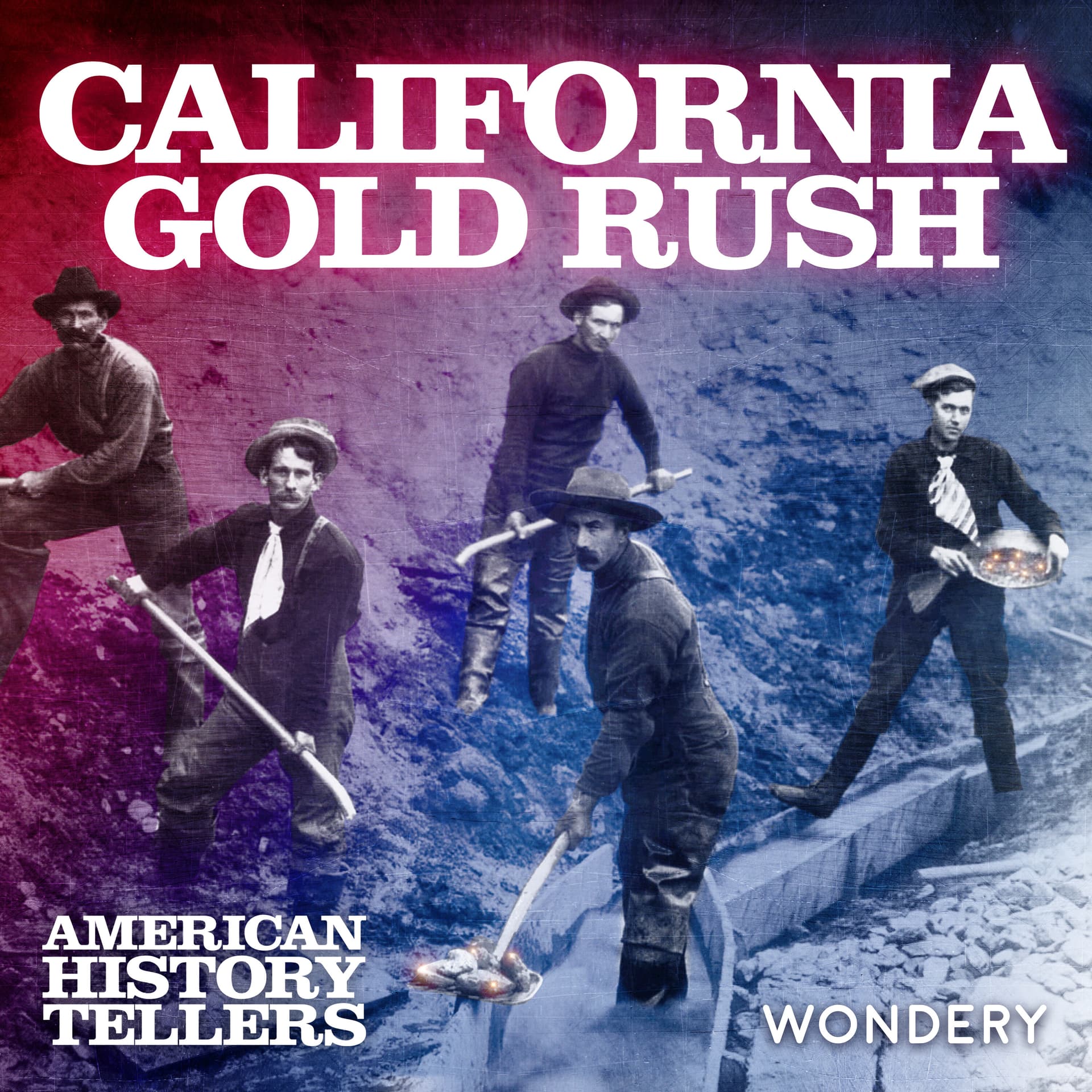
California Gold Rush (1848–1851) and how it escalated violence against Native Californians (Miwok, Nisenan, Pomo, Wapo, Yokuts, Awanichi), including state disenfranchisement, massacres, and failed treaty promises.
Guest backgrounds
No podcast guests are named in this episode. It uses actor Robbie Damon for voice acting.
Key claims
Gold rush settlers displaced Native peoples “often by force”; U.S. and California policy shifted from informal discrimination to law; Native voting rights were excluded in the 1849 constitution; retaliatory cycles culminated in U.S. Army actions like the “Bloody Island Massacre”; treaties negotiated under President Millard Fillmore were not ratified by the Senate, leaving reservations without legal protection; California’s “Act for the Government and Protection of Indians” enabled forced labor.
Notable examples
Sutter’s Mill violence (Oregon miners raping and killing Nisenan); Kelsey brothers’ Napa Valley ranch slavery and forced labor; Pomo raid during a thunderstorm (Shook/Zasis) leading to Kelsey/Stone killings; Clear Lake “Bloody Island Massacre” under Nathaniel Lyon; James Savage’s Mariposa Battalion against the Awanichi; Bautista’s Potoyensi treaty negotiations; Senate ignoring treaties.
Written by AI. May contain mistakes. Listen to the episode to check what was said.
Chapters
Tap a time to open that second in VOA Night of Desperation
0:39 to 4:25
A dramatic retelling of a Native American's desperate act to survive.
“This episode contains descriptions of racial and sexual violence and may not be suitable for everyone.”
Impact of the Gold Rush on Native Tribes
6:11 to 14:00
Exploration of the devastating effects of the Gold Rush on Native American communities.
“As the lure of gold brought miners into the hills of Northern California, they came into contact with local Native American communities.”
Debate on Indian Voting Rights
14:00 to 16:56
Explore the contentious discussions surrounding voting rights for Native Americans during California's Constitutional Convention.
“That's why I think we should guarantee Indian voting rights in the state constitution.”
California's Disenfranchisement
16:56 to 18:33
Learn how California's constitutional amendments excluded Native Americans from voting rights post-statehood.
“The pro-Native contingent responded by suggesting a compromise, granting voting rights to some Native Americans, but only if they owned land under American law.”
Introduction to British Scandal
18:33 to 19:10
A brief introduction to the hosts and the premise of the podcast British Scandal.
“and Native people were also barred from testifying against white people in court.”
Exploitation of Native Labor
19:10 to 21:22
Understand the harsh realities and exploitation faced by Native Californians during the Gold Rush.
“In this series, a Derbyshire couple are bored of their curtain-twitching, lawn-mowing suburban life.”
A Desperate Plan
21:22 to 24:28
Follow a Pomo village's desperate plan to fight back against their oppressors amidst starvation.
“Unable to leave their villages except to work, they couldn't visit their hunting and foraging grounds.”
Retaliation and Violence
24:28 to 28:00
Examine the brutal retaliation faced by Native communities following the killings of Kelsey and Stone.
“gathered outside the house where Andrew Kelsey and his partner Charles Stone lived.”
The Retaliation and Casualties of Native Americans
28:00 to 28:49
Explore the tragic consequences and lack of accountability faced by Native Americans during the violence following the Gold Rush.
“But estimates range from 120 to as many as 800.”
Laws and Policies Against Native Californians
28:50 to 31:19
Learn about the oppressive laws established in California that targeted Native Americans under the guise of protection.
“and ultimately no one ever charged them with any crimes.”
Show all 15 chapters
President Fillmore's Attempt at Peace
31:20 to 34:28
Understand President Fillmore's strategies aimed at negotiating peace with Native Americans amidst the violence.
“the two races until the Indian race becomes extinct.”
Negotiations and Treaty Terms with Native Leaders
34:29 to 37:58
Delve into the complicated negotiations between U.S. officials and Native American leaders regarding treaties and reservations.
“The treaties also would grant the Native people hunting and foraging rights within their reservations.”
Consequences of Unratified Treaties
37:59 to 40:58
Examine the dire consequences faced by Native Americans when treaties were not ratified, and the ongoing violence that ensued.
“The Potoyensi chief named Bautista led the negotiations with Wazencraft, McKee, and Barber for land near the Merced River.”
The Decline of Native Population and Continuing Gold Rush
40:59 to 42:01
Analyze the drastic decline in Native American populations amidst the continued influx of settlers during the Gold Rush.
“with lands covering less than 2 % of what the treaties had originally promised.”
The Changing Landscape of Gold Mining
42:01 to 42:51
Learn about the evolving mining techniques and their impact on Native lands.
“and soon a new technology would make the primitive techniques of the 49ers obsolete and wreak even greater destruction upon Native people's ancestral lands.”
Transcript
Automatic transcript. May contain errors.0:28Hello, American History Tellers listeners. That's AmericanHistoryLive.com. Come see my Days That Made America tour live on stage. Go to AmericanHistoryLive.com. A listener note. This episode contains descriptions of racial and sexual violence and may not be suitable for everyone.
0:55Imagine it's a cold, stormy night in December 1849. You're riding a horse across the ranch where you work in Napa Valley, California. Normally, you'd be fast asleep by now. Your boss expects you to be up for work by 5 a.m., and he's been known to beat workers who show up late. Most of his laborers, like you, are from the local Pomo and Wapo Indian tribes. But tonight, you're praying your boss doesn't find out where you are. Because you and another ranch hand have borrowed two of the boss's horses so you can steal a cow from his herd. White miners have pushed tribes like yours off your ancestral lands, and as a result, your people are starving.
1:35In an act of desperation, leaders from a nearby Pomo village hired you to take one of the cows. As you approach the field of cattle, you turn to your partner, a fellow Pomo named Shook. I think we should back off tonight. The lightning and thunder have the cattle spooked. They look fine to me. Come on! Even your horse looks jumpy. Let's come back tomorrow night. No, I'm not going to risk sneaking out here again. You sigh and spur your horse onward through the driving rain. But the truth is, the storm isn't the only thing that's worrying you. This is a bad idea, Shook. The boss, you know what he's like.
2:14If he finds out we stole this cow, it won't be just us he punishes. He'll go after every Indian within 50 miles of here, even if they had nothing to do with this. But he's not going to find out. Cows wander off all the time. We lost two just last week. I guess. Besides, are you just going to let the people in that village starve? They hired us to get food. We can't let them down. You know Shook is right. When you spoke with the elders in the village, you were shocked at how sunken their cheeks looked, and you could hear the children wailing from hunger in nearby tents. They're already starving, and winter has barely begun.
2:54So reluctantly, you decide to go ahead with the plan. As you approach the cattle, Shook rides to one side of the herd and readies his lasso. When he gives you the signal, you spur your horse forward. You ride into a group of a dozen cows. Your goal is to separate one of them from the herd and drive it towards Shook so he can lasso it. But just as you manage to isolate one cow, the sky flashes with lightning, followed by a booming clap of thunder. The cow panics and start to charge right at your partner. Shook's horse rears up in terror, and he tumbles off the back of the animal, landing hard in the mud.
3:34You watch as both the cow and the horse run off into the night. Shook staggers to his feet. Come on! If we can't find that horse, we're done for. You help Shook onto the back of your horse, your heart beating fast. You might be able to explain away a missing cow, but a horse is another story. If your boss finds this out, you could be beaten or even hanged. So together, you and Shook ride off into the darkness, searching desperately for the horse. But the rain is falling harder, and you know there's little hope you'll find it. Before tonight, your people were already facing brutal treatment and the threat of starvation.
4:15But now you have a terrible feeling. Things are about to get much worse.
4:23I'm Alice Levine. And I'm Matt Ford, and we're the hosts of British Scandal. Yes, indeed. In this series, a Derbyshire couple are bored of their curtain-twitching, lawn-mowing suburban life. So they sell their house, build a yacht, and sail off around the world. Which sort of sounds idyllic until a sperm whale sinks their boat and they begin to starve. Oh, yes, and they didn't bring a radio because real sailors don't use radios. Right? This is the story of Marilyn and Morris Bailey. And the 117 days they spent lost at sea. Follow British Scandal wherever you get your podcasts, or listen early and ad-free on Audible.
5:04During World War II, New York communist Julius Rosenberg began spying for the Soviet Union. Soon he was persuading other Americans to betray their country as well. But when his wife's brother joined the Manhattan Project, Julius targeted him as a valuable new recruit and inadvertently set the stage for the ultimate betrayal. Hi, I'm Lindsey Graham, host of Audible's original show, American Scandal. We bring to life some of the biggest controversies in U.S. history. Presidential lies, environmental disasters, corporate fraud. In our latest series, two young New Yorkers meet and fall in love. Julius and Ethel Rosenberg's commitment to each other is matched only by their commitment to communism, and the couple risks everything to help the Soviet Union develop an atomic bomb.
5:47But when they're uncovered, they have to make an impossible choice about where their loyalty truly lies. Follow American Scandal wherever you get your podcasts. Audible subscribers can listen to all episodes of American Scandal The Rosenbergs ad-free right now. Join Audible today by downloading the Audible app.
6:10From Wondery, I'm Lindsey Graham, and this is American History Tellers, our history, your story.
6:32As the lure of gold brought miners into the hills of Northern California, they came into contact with local Native American communities. Tribal nations like the Pomo, Miwok, and Nisanon had called the region home for thousands of years. They had encountered European settlers before, but they had never experienced anything like the gold rush. In a matter of months, tens of thousands of miners had overrun their land. Initially, some native people joined in and mined the gold around where it was first discovered at Sutter's Mill. But as the easy pickings of the early gold rush disappeared, mining got competitive, and white settlers began to displace indigenous communities, often by force.
7:14When California became a state, informal policies that discriminated against Native Americans became law. State officials deployed militias to violently put down Native resistance, and the federal government enacted a policy of pushing tribal communities off their land and onto reservations. For the white settlers, the gold rush promised riches, but for Native Americans, it became a fight against catastrophe. To help tell this story, we've enlisted actor Robbie Damon to voice the characters you'll hear in this episode. This is Episode 3, Battle Lines.
7:51Before the Gold Rush, the mountains east of Sacramento were mainly inhabited by two indigenous communities, the Nisanon in the north and the Miwok in the south. The Miwok and Nisanon spoke different languages, but shared many customs. Both groups tended to live in small, autonomous villages. For food, they fished the local rivers, hunted deer, elk, and birds, and foraged for seeds, nuts, and berries. They depended heavily on acorns from oak trees, which they made into a porridge. They often tattooed their bodies and wore their hair long, except when mourning the dead, when they'd shave their heads and pour ashes over their exposed scalps.
8:28But this traditional way of life was disrupted with the arrival of California's first major European colonizers, the Spanish. Starting in 1769, they established coastal missions and began to forcibly convert Native people to Catholicism. Further inland, near the Sierra Nevada Mountains, the Spanish established large farms and ranches where they forced Miwok, Nisanon, and other Native people to work for little or no pay. This system of exploitation continued under the government of Mexico, which gained independence from Spain in 1821. For native people like the Miwok and Nisanan, Spanish and Mexican colonization was devastating.
9:08The missions and ranches introduced domesticated animals like pigs, sheeps, and cows, which forced the clearing of land for grazing. This destroyed the tribe's main food sources, clearing entire oak forests and driving away the deer, elk, and other game they relied on. The Spanish also introduced diseases like measles and smallpox, for which the native people had no natural immunity. Between disease, declining wild food sources, and brutal working conditions at the missions and ranches, the native population in California fell from 300 ,000 at the start of Spanish rule to half that by the late 1840s.
9:45After the United States seized control of California from Mexico in 1848, the U.S. continued the Mexican policy of forcing indigenous people to work on ranches, and then came the gold rush. The Miwok and Nisanan people had long known that gold existed in the mountains, but it was not culturally or economically important to them. At first, they didn't understand why white people coveted the mineral so fervently. But once it became clear that gold was something white settlers would pay for, some Native people saw an opportunity. By Christmas 1848, one observer reported that there were roughly 4 ,000 Native people mining in California.
10:23Many set up their own businesses to dig for gold, and they flourished. At first, the gold rush seemed to be a boon for some Native Americans. But that changed as competition increased, especially with the arrival of American miners from nearby Oregon in early 1849. These settlers had already clashed violently with Native tribes, and now they brought their hostility to the California gold fields. In April 1849, a group of Oregon miners raped several Nisenan women near Sutter's Mill, then killed the Nisenan men who tried to stop them. Soon after, the Nisenan retaliated by killing five Oregonians at the middle fork of the American River.
11:03In response, a dozen other Oregonians formed a posse and rode into a Nisenan village near Sutter's Mill, where they opened fire with rifles and killed 30 men, women, and children. Other acts of violence were unprovoked. One 49er reported seeing two Oregon miners flip a coin to decide which of them would shoot a Native man who had simply passed within reach of their rifles. And that summer, the violence spread, as more waves of 49ers began arriving from the east. Many of these new settlers had been given guns and ammunition by the U.S. War Department, supposedly for protection from Plains Indians on the journey west.
11:40And as these heavily armed settlers began driving them off their lands, some native California inhabitants responded with violence of their own, leading to endless cycles of retaliation. Many natives eventually realized that every killing of a white man would be met with a disproportionate number of killings of their own people. But the violence continued, in part because the rule of law in California was lax. California was not yet a state, and the limited government played only a small role in people's daily lives. If there was any government policy with regard to Native people, it was to let local ranchers and white miners do what they wanted.
12:16But as the push for statehood gathered momentum, political leaders began to debate how best to handle the violence.
12:27Imagine it's September 1849 in Monterey, California, where regional delegates have gathered from all over the territory to draft a constitution and petition for statehood. You're a young delegate originally from Missouri, now based here in Monterey. A constitutional convention is taking place in a handsome stone schoolhouse in a huge meeting room on the second floor. There are large fireplaces at each end and four long wooden tables for the 48 delegates. U.S. flags and portraits of George Washington decorate the walls. You're excited to be at this convention, helping to shape the future of what could become America's second largest state.
13:04But there's one issue that's troubling you more than any other, the treatment of Indians. So when you see the convention chairman walk in alone before tonight's session, you seize the opportunity. Chairman Dimmick, could I bend your ear for a minute? Certainly, young man. Go for a drink? Oh, sure. Thank you. He produces a flask from his coat. You don't like whiskey, but you're trying to be cordial so you take a sip. For his part, Dimmick takes a long pull and smacks his lips. Well, what's on your mind? The Indian situation. Ah, yes. Damn shame. I agree. They're stealing our cattle. Standing in the way of progress.
13:45Actually, sir, I... I meant the recent wave of violence near Sutter's Mill. White miners have been indiscriminately attacking local Indians, destroying their villages and claiming the land for themselves. Yes, the lawlessness in the goldfields has been troubling. I agree. That's why I think we should guarantee Indian voting rights in the state constitution. Only by giving them a voice in our government can we pass laws that will protect them from these wanton attacks. Timmock takes a long look at you and then has another sip of whiskey. He tries to smile. That's, um, tricky. In my experience, Indians don't understand our system of government.
14:26But they can learn. Don't we owe it to them to offer them the advantages of civilization? This was their land before it was ours. Dimmick takes a moment to answer. I'm sure there are some good, hard-working Indians out there. Capable of understanding our system of government. In which case, I'm confident we can work out a way to grant them the right to vote. Hearing this is a huge relief, and you shake the chairman's hand. You always suspected he was a good man and willing to listen to reason. But when you part ways with the chairman, he walks over to a group of delegates originally from Oregon.
15:02They are notorious for their hostility to Indians, and the chairman seems awfully friendly with them. One slaps him on the back and produces a cigar. Another tells a joke, and they all start laughing. You're left standing with a sour taste in your mouth. And it's not just the whiskey. You've got a sinking feeling that despite the chairman's reassurances, Indian voting rights could be doomed.
15:28The California Constitutional Convention began on September 1, 1849, in Monterey. Forty-eight delegates attended, including John Sutter of Sutter's Mill. A few of the delegates had Native American ancestry, or Native wives. But the notion of Native American rights, especially voting rights, was one of the most divisive issues under debate. The delegates who supported Native rights argued that Native Americans were the original inhabitants of California and therefore deserved to participate in its government. They also pointed out that other states with large Native populations, like Wisconsin, had already granted them the right to vote, so there was legal precedent.
16:07Delegates opposed to suffrage for Native Americans included Oliver Wazencraft from Ohio. He and others argued that Native people didn't understand the American system of government and were therefore unprepared to vote. The debates got heated and dragged on for so long that some delegates had to leave for other obligations. Finally, the delegates that remained agreed to vote on a constitutional amendment that would enfranchise all adult men except Indians, Africans, and the descendants of Africans. When the votes were counted, the initial tally was 20-20. Convention was deadlocked. So it fell to convention chairman Kimball Dimmick of New York to break the tie.
16:46Despite his moderate rhetoric regarding Indian rights, he voted in favor of the measure, thereby disenfranchising non-white Californians, including Native Americans. The pro-Native contingent responded by suggesting a compromise, granting voting rights to some Native Americans, but only if they owned land under American law. But the opposition rejected that idea, too. They feared that wealthy landowners like John Sutter would game the system by granting his Native workers a few acres each and then controlling their votes. Eventually, the convention did adopt one measure. The state legislature could grant voting rights to individual Native Americans, but they had to approve each potential voter one by one and then by a two-thirds majority.
17:30Although this fell short of an outright ban on Native American voting, set the bar impossibly high. In practice, Native Californians would be blocked from the polls. The delegates signed the state constitution on October 13, 1849. Voters then ratified it on November 13, setting California on the path to statehood. That same November day, voters elected California's first two U.S. senators. One was John Fremont, the soldier and explorer whose wife, Jesse had braved a harrowing journey across Panama to join him. Both Fremonts were ardent abolitionists, but their liberal views did not extend to indigenous people.
18:10John Fremont had personally led numerous expeditions into the West, where he and his men shot and killed many Indians, often on sight. And now Fremont would be representing California in the U.S. federal government. But the state government was no friendlier to Native Americans. After California became a state in 1850, its assembly passed multiple laws to curtail and suppress Native rights. In criminal trials, Native Californians were considered guilty until proven innocent, and Native people were also barred from testifying against white people in court. Laws like these sent a clear message that the basic rights of Indigenous people in California would not be protected.
18:49As a result, when conflicts over land intensified during the next few years of the gold rush, white settlers would go after native Californians with an increasing sense of impunity and ever more deadly force.
19:07I'm Alice Levine. And I'm Matt Ford. And we're the hosts of British Scandal. Yes, indeed. In this series, a Derbyshire couple are bored of their curtain-twitching, lawn-mowing suburban life. So they sell their house, build a yacht and sail off around the world. Which sort of sounds idyllic until a sperm whale sinks their boat and they begin to starve. Oh yes, and they didn't bring a radio because real sailors don't use radios. Right? This is the story of Marilyn and Maurice Bailey. And the 117 days they spent lost at sea. Follow British Scandal wherever you get your podcasts or listen early and at free on Audible.
19:53As California advanced towards statehood, white miners continued to enforce their claims on the gold fields of Northern California. Throughout late 1849, they seized more and more land from the Miwok and Nisanon people in the Sierra Nevadas, expanded into new areas, and increasingly relied on native labor to mine their claims. Among the cruelest of the white miners during this period were brothers Benjamin and Andrew Kelsey. The Kelseys owned a large ranch in Napa Valley, north of San Francisco, which they had purchased from a Mexican landholder. With the ranch came about 15 ,000 head of cattle, 2 ,500 horses, and a built-in labor force, members of the local Pomo and Wapo tribes who lived on what was now the Kelseys' property.
20:37The Kelseys brothers built fences around the Pomo and Wapo villages on their land and detained all the residents under strict nighttime curfews. By day, they worked them in slave-like conditions. Workers were paid only with meager rations and items like handkerchiefs. Rule breakers were whipped, beaten, and tortured. Andrew Kelsey also raped Pomo women, as did one of the brother's partners, an overseer named Charles Stone. Then the rush came, and in the spring of 1849, Benjamin Kelsey rounded up a hundred Pomo men and forced them to march into the goldfields to mine. When malaria broke out among the workers, Kelsey fled the goldfields, abandoning his workers.
21:17Most died, either of malaria or starvation. Back at the Kelsey's Napa Valley Ranch, the Pomo were also beginning to starve. Unable to leave their villages except to work, they couldn't visit their hunting and foraging grounds. And as winter approached, one village came up with a desperate plan. They hired two Pomo workers on the Kelsey Ranch, men named Shook and Zasis, to steal a cow for them to eat. But the two men attempted their raid during a thunderstorm. Shook's horse got spooked, threw him off, and bolted. The two young pomos searched everywhere, but the horse was not to be found. They knew the Kelseys would assume the horse had been stolen and might retaliate by torturing not only them, but any pomo they suspected of being involved.
22:02So later that night, Shook and Zasis snuck into the village that hired them and called a meeting to discuss the disaster.
22:13Imagine it's December 1849. You're a Pomo elder in a village on the Kelsey Ranch. There's a terrible thunderstorm tonight, and you're huddled around a small fire in a reed hut. Smoke makes you cough, but you stay close to the heat. You're thin from lack of food, and it's hard to keep warm otherwise. You and two other elders are waiting to hear from the two Pomo ranch workers you hired to steal a cow for your village. At last, the two ranch hands arrived, dripping wet as they enter the hut. You hand them a wooden bowl of acorn porridge to warm themselves, and you ask about the raid. Did you get the cow?
22:50One of the men, shook, shakes his head sadly. No. We failed. And it's worse than that. In a trembling voice, he explains what happened. When he's finished, you hold your head in your cold hands. Andrew Kelsey will be furious. He values the lives of those horses more than ours. I know. But I have an idea. I can say I saw a white man prowling around the stables last night. I'll claim he stole the horse. Why would Kelsey believe you? An Indian. Besides, we'll see your wet clothes and know you were out in the rain. But what if we just confessed? We could throw ourselves on his mercy, then pay him back for the horse.
23:30Pay him back with what? We can't even feed ourselves. and I don't trust Andrew Kelsey's mercy. And what do you suggest? We have to do something. You swallow hard. The idea's been building in your mind for weeks now. It seems desperate, but it might be your only chance. You take a deep breath, attempt to explain. We can't sit back and let Kelsey and his brother kill any more of us. How long before they take more of us to the goldfields? Never to return. Or keep us here and force us to starve. I think we should fight. Shuk and Zasis look at you with skepticism. So do your fellow elders. But as you outline your idea, you can see by the looks on their faces that they're coming around.
Read the full transcript
24:15And really, none of you have any choice. With more and more white men pouring into the region every day, your only remaining option is to go on the attack.
24:27After hatching their plan, a group of 16 Pomo men, led by the ranch hands Shuk and Zasis, gathered outside the house where Andrew Kelsey and his partner Charles Stone lived. In the morning, when Stone emerged, a Pomo leader named Kranas jumped up and shot him in the stomach with an arrow. Then the rest of the Pomo charged. A panicked Stone yanked the arrow from his gut and managed to beat the Pomo off. He then sprinted back to the house and locked himself inside. Eventually, Andrew Kelsey emerged to beg for mercy, swearing he was a good man. Tranas replied, Yes, you are such a good man that you have killed many of us, and then shot him with an arrow.
25:07Kelsey managed to escape and swam across a nearby river, but the Pomo ran him down and stabbed him to death. Meanwhile, back in the home, other Pomo fighters followed a trail of blood upstairs where they found Charles Stone's lifeless body, which they tossed out the window. But the Pomo knew their troubles were not over. They had no doubt that the white people in the region would respond to the killings with more violence. But they badly underestimated how brutal things would get. The killings of Kelsey and Stone inaugurated a period of retaliatory violence against multiple Native communities that lasted months.
25:43And for the first time, it involved not just vigilante groups of civilians, but members of the U.S. Army. On Christmas Day, word of the Kelsey Stone killings reached the town of Sonoma, 70 miles south. Stationed nearby were soldiers of the first dragoons, an outfit that had fought in the Mexican-American War. Outraged at the killing of white men by Indians, these dragoons grabbed their guns and rode into a Native American village near the Kelsey Stone ranch. They opened fire and killed 35 people. Vigilantes began killing as well. Inspired by the dragoons, Benjamin Kelsey and another brother, Samuel, organized a group of around two dozen men who began attacking native villages, burning down huts and killing any natives they found, regardless of tribal affiliation.
26:31Pomo, Wapo, and Miwok men in the villages often made suicidal last stands to allow their women and children to escape. But the vigilantes would ride the escapees down and either shoot them in the back or drive them into rivers to drown them. They also scalped the victims and returned home to parade the bloody trophies through town. The vigilante killings finally slowed in March 1850. But two months later, the U.S. Army resumed the campaign, with even deadlier results. Army officers became convinced that the men who killed Kelsey and Stone were hiding out in a Pomo village on an island near Clear Lake, 100 miles north of San Francisco.
27:09So the Army decided to destroy the village. The captain in charge was the West Point-educated Nathaniel Lyon. Lyon had received explicit instructions not to negotiate with the Pomo. And when he reached the shore of Clear Lake and came within sight of the village, Lyon ordered the two Native Americans that guided his troops to the village to be executed in order to ensure his army would have no translators and therefore no possibility of negotiations. Then, on the morning of May 15, 1850, Lyon ordered his troops to board boats and begin their attack. The Pomo fought back as best they could, but they were answering rifle fire with arrows and slingshots.
27:48It was a slaughter. No one knows exactly how many Pomo died in what would later become known as the Bloody Island Massacre. Most of the bodies were lost in the lake or later cremated by a few survivors. But estimates range from 120 to as many as 800. U.S. troops suffered zero casualties. Lyon was commended for leading the assault and later promoted.
28:15Overall, well over a thousand Native Americans, mostly Pomo, died in retaliation for the deaths of Stoney and Kelsey. Most of the architects of these slaughters faced adulation rather than punishment. Newspapers ran heroic accounts of Bloody Island and other assaults on Native communities by soldiers and vigilantes alike. Eight leaders of the Kelsey-led vigilante group did get arrested, including brothers Benjamin and Samuel. They were even hauled before the California State Supreme Court, the very first case the court ever heard. But all eight were released on bail, partly because the state was so new there were no jails to hold them, and ultimately no one ever charged them with any crimes.
28:56Other atrocities also went unpunished. During the entire year of 1850, despite dozens of massacres, only one white man was convicted of the murder of a Native person. But his penalty was slight. He only had to do the laundry of the sheriff who arrested him. Such a lack of accountability only reinforced the notion that Native lives were expendable. On occasion, Native people did strike back. In December 1850, a Jokits chief of the Potoyensi tribe named Bautista led a raid on a trading post along the Fresno River, south of Yosemite. The post belonged to a miner and frontiersman named James Savage, who had attempted to cultivate good relations with the native Californians by learning their languages and trading with them.
29:40But Savage also profited greatly from a mining operation that employed native workers, and Bautista likely believed that the workers had been exploited. During the raid, Bautista's warriors killed several white men and stole blankets, food, mules, oxen, and horses. In the end, Bautista ended up getting away with the raid, but such victories were rare. Much more commonly, Indian raiders were hunted down and executed. On many other occasions, white settlers would retaliate at random, riding into nearby villages and killing a dozen or more Native people for every white death. The state government responded to this violence with new policies, but they did little to protect Native Californians or improve their circumstances.
30:22In 1850, California passed a law called the Act for the Government and Protection of Indians. Despite its benign-sounding name, the law's effects were devastating. It allowed any white person to arrest any adult Indian found loitering or strolling about, or frequenting public places where liquors are sold, or begging, or leading an immoral or profligate course of life. Any Native person arrested could then be leased to the highest bidder and forced to work up to four months without compensation. It was, in effect, a state-sponsored system of temporary slavery. And for the next 13 years, thousands of Native Americans in California would be bought and sold.
31:03The law was not repealed until 1863, when the Emancipation Proclamation abolished slavery. In 1851, a year after the passage of the Protection of Indians Act, the state's first governor, Peter Burnett, gave his farewell State of the State address. In it, Burnett flatly declared that the war of extermination will continue to be waged between the two races until the Indian race becomes extinct. Burnett said he viewed this extinction with painful regret, but explained that the triumph of whites over Indians was inevitable. After this speech, California began selling war bonds to armed militia groups that would actively hunt down and kill Native people.
31:42San Francisco alone had 71 separate militia outfits. Soon, even small-town governments began sponsoring their own militias and their own campaigns to kill or drive out any neighboring indigenous communities. As the killings increased, some white Californians grew alarmed at the scale of the violence. Alonzo Delano, the portrait artist who arrived in gold country in the fall of 1849, wrote that nine-tenths of the troubles between the whites and Indians were the fault of the white people. James Marshall, the foreman who first discovered gold at Sutter's Mill, was sympathetic to Native people as well.
32:17He loudly protested when a vigilante posse arrested seven Nisenan men and threatened to execute them for crimes they almost certainly did not commit. But the posse told Marshall that the seven executions they had planned could easily turn into eight, and Marshall backed down. Not everyone who spoke up against Native American abuses was bullied into silence, and some of their protests eventually grew loud enough to reach ears in Washington, D.C. The White House was determined to tamp down the violence, But federal officials also wanted to secure California for white settlers. In the end, their attempts at brokering a peaceful solution would backfire and set the stage for a genocide.
33:08Unlike many U.S. politicians, President Millard Fillmore did not think that war with the indigenous people in California was inevitable. and he wanted to stop the bloodshed. Fillmore took over as president when Zachary Taylor died in 1850. He shared the prejudices of his time, believing that white settlers were superior to Native Americans. But he opposed the popular doctrine of manifest destiny, and he abhorred the widespread bloodshed in California against its native inhabitants. So in late 1850, Fillmore sent two negotiators west to sign treaties with indigenous groups in California, hoping that by doing so, he could end the cycle of violence.
33:46His choices for the negotiators were Virginian Redrick McKee and Kentucky Army Colonel George Barber. Neither had any real experience working with Native Americans. And when they arrived in California, added a third negotiator to their ranks, Oliver Wozniakraft, one of the delegates at the Constitutional Convention who had opposed Indian voting rights. These three treaty negotiators had one main goal, to move California Native Americans onto reservations and away from the richest gold fields. Fillmore believed this removal, however painful for Native people in the short term, was in their best interest and would reduce the number of violent encounters between Natives and white settlers.
34:26In exchange for moving to reservations, the government offered Native groups a guaranteed allotment of food, clothing, and blankets every year. The treaties also would grant the Native people hunting and foraging rights within their reservations. Many white people who were sympathetic to Native Americans supported the reservation system. They saw it as the only way the tribes could avoid extinction. But most Native people had a different point of view. They approached the treaty negotiations with major misgivings.
34:58Imagine it's March 1851 along the Mariposa River, 100 miles southeast of Sacramento. You're a chief of the Potoyensi tribe, and you're gathered here today with several other local chiefs. Your people are from the mountains, 50 miles away, but you appreciate the cool glens and babbling brooks down here in the foothills. Still, you're not here to admire the scenery. A few months ago, you led a raid on a trading post run by white settlers. Three white men were killed, and the retaliations against your people have been brutal. You're desperate to put an end to the violence, so you've agreed to negotiate a treaty with U.S.
35:34government officials. The white men soon arrive on horseback. One of them, with thick black hair and a mustache, steps forward and introduces himself as Oliver Wozencraft. The terms are simple. If you move to the reservation we're proposing, you'll be free to live your lives however you want. What will stop white men from moving onto the land? U.S. soldiers will protect your rights. Those same soldiers who've been killing us? What about the massacre of the Pomo at Clear Lake last year? That was an unfortunate incident, and our president is angry about it. From now on, the soldiers will protect you.
36:11That doesn't sound likely to you, but there are other things you want to discuss. Where will this reservation be? Wozencraft nods to an aide who sets out a small folding table and unfurls a map across it. You can see it right here. It's near the Merced River. You look where he points and frown. That's in the lowlands. We're mountain people. We want to stay in the mountains. I'm afraid that's impossible. That's gold country. More and more white people keep arriving there every day, which will make it hard for you to find food. You're already stealing cattle, aren't you? What other choice do we have?
36:49We have to eat. I understand. I don't blame you. White people are angry about the missing cattle. And the longer you stay in the mountains, the more bloodshed there will be. As awful as it is to admit, you know the official has a point. Many of your best hunting and foraging grounds are gone already, cleared to make way for the gold mines. And you can't keep raiding white ranchers forever. Too many of your own people have died in the retaliations. What's this land like? Near the Merced River. It's not unlike where we're standing right now. Very lush. Full of oak trees and good game. I know it's not what you're used to, but it's good land.
37:30He gestures around. You take a moment to study the land again, the trees and brooks and cool glens. It is lovely, but it's not your land. It's hard to picture your people living here. Your heart breaks at the thought of uprooting your whole tribe and abandoning land you've lived on for countless generations. But you fear you have no choice. If you don't accept this treaty, your people could face total annihilation.
37:59The Potoyensi chief named Bautista led the negotiations with Wazencraft, McKee, and Barber for land near the Merced River. Eventually, he and other leaders from the Yokuts tribe agreed to the treaty's terms. Bautista had good reason to sign the treaty. Without government protection, Bautista feared his people could be wiped out because he'd led the raid against James Savage's trading post, and he knew Savage was out for revenge. Before the attack on his trading post, Savage generally opposed violence against Native people, but the raid had radicalized him. In February 1851, he organized a militia group called the Mariposa Battalion and began rounding up recruits.
38:39He had little trouble finding them. By 1851, the easy gold was drying up in the mines, and most miners made less than$8 a day. Meanwhile, militias paid$10 to$15 a day. Eventually, Savage signed up 560 men to the Mariposa Battalion, and they became the primary force by which the government harassed and suppressed Native people in gold country. So with the signing of their treaty, Bautista and his people avoided Savage's wrath. And they were not alone in making this same calculus. By the spring of 1851, most Native Americans in California were actively negotiating treaties. One of the few exceptions were the Awanichi people, led by a chief named Tanaya.
39:22The Awanichi lived in the isolated Yosemite Valley and had resisted most incursions of miners so far. They saw no need to negotiate. But the U.S. government wanted all California natives confined to reservations. So Wozencraft, McKee, and Barber sent James Savage's Mariposa Battalion to harass the Awanichi and force them to sign. The battalion systematically burned Awanichi villages and destroyed caches of acorns and other food needed for their survival. Chief Tanaya held out for as long as he could, but after Savage's battalion captured and murdered one of his sons, he lost the will to fight.
39:59In June 1851, Chief Tanaya and his people were taken to a reservation. With the surrender of the Awanichi, active native resistance all but ceased in California. By that summer, 18 different nations had signed treaties and moved on to reservations. Soon, however, those nations were betrayed. President Millard Fillmore had pushed for the treaties, but under U.S. law, the Senate had to ratify them. The Senate received the treaties in July 1851 and ignored them. They took no votes and didn't even debate them. This effectively nullified the agreements. For the Native people in California, the consequences were dire.
40:37Because the treaties were never ratified, the reservations most of them had already relocated to had no legal status. White people could encroach upon reservation land without punishment. And when the Native tribes realized they'd been cheated, they tried moving back to their homelands, only to find that white miners and ranchers had already moved in. Eventually, President Fillmore was able to pressure Congress into establishing five reservations, with lands covering less than 2 % of what the treaties had originally promised. But the Native groups living on them were given no land ownership rights or federal protections.
41:13Even on the reservations, they were now people without a land to call their own. In the coming years, Army soldiers, vigilante groups, and militias killed an estimated 15 ,000 more Native Americans in California. Disease and starvation, thanks to the destruction of their traditional food sources, reduced their numbers even further. As many as four out of every five indigenous Californians died in less than a decade. What had been a population of 150 ,000 in 1848 plummeted to just a fifth of that by the mid-1850s. But against this backdrop of genocide, the gold rush continued. By the middle of the decade, it had brought more than 300 ,000 settlers into California, most of them white Americans, and most of them hungry for gold.
41:58But already the gold rush had peaked. Gold was becoming increasingly hard to find, and soon a new technology would make the primitive techniques of the 49ers obsolete and wreak even greater destruction upon Native people's ancestral lands. From Wondery, this is Episode 3 of California Gold Rush for American History Tellers. In our next episode, as gold becomes harder to find, the original 49ers are pushed aside in favor of new industrial mining techniques, and women making their way to California find advantages and opportunities unlike anywhere else in 1850s America.
42:35Follow American History Tellers on the Audible app or wherever you get your podcasts. You can listen to all episodes of American History Tellers ad-free by joining Audible. And to find out more about me and my other projects, including my live stage show coming to a theater near you, go to notthatlindsaygram.com. That's notthatlindsaygram.com. If you'd like to learn more about the Native American experience during the Gold Rush, we recommend An American Genocide by Benjamin Madley. American History Tellers is hosted, edited, and produced by me, Lindsey Graham, for Airship. Audio editing by Molly Bach.
43:13Sound design by Derek Behrens. Music by Lindsey Graham. Voice acting by Robbie Damon. This episode is written by Sam Keene. Edited by Dorian Marina. Produced by Alita Rosansky. Our managing producer is Matt Gant. Senior Managing Producer is Tonja Thigpen. Senior Producer is Andy Herman. Executive Producers are Jenny Lauer-Beckman and Marsha Louis for Wondery.
From the publisher
For white settlers, the Gold Rush offered a chance for fortune, but for California’s Native inhabitants, the sudden hunger for gold spelled disaster. As the numbers of miners grew, they forced Native people off their ancestral lands, often starving or slaughtering them in the process. As California became a state, informal policies that discriminated against indigenous Californians became law. Soon, the state would deploy militias to violently put down Indian resistance.
Be the first to know about Wondery’s newest podcasts, curated recommendations, and more! Sign up now at https://wondery.fm/wonderynewsletter
Listen to American History Tellers on the Wondery App or wherever you get your podcasts. Experience all episodes ad-free and be the first to binge the newest season. Unlock exclusive early access by joining Wondery+ in the Wondery App, Apple Podcasts or Spotify. Start your free trial today by visiting wondery.com/links/american-history-tellers/ now.
See Privacy Policy at https://art19.com/privacy and California Privacy Notice at https://art19.com/privacy#do-not-sell-my-info.
