
In short
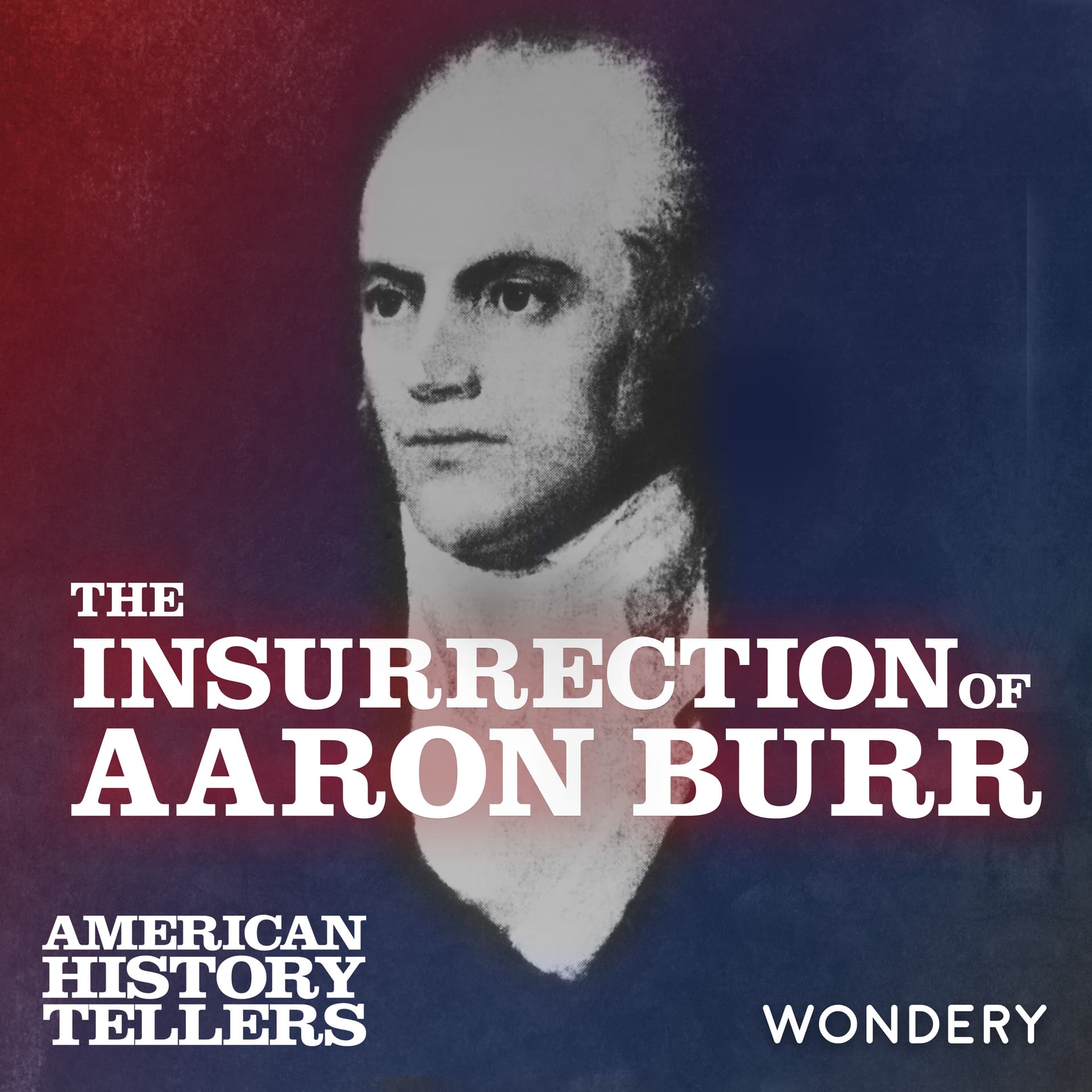
Episode topic: Aaron Burr’s post–vice presidency conspiracy (1804–1806) to carve out a new western empire, using Louisiana secession, a Mexico invasion, and possible British/Spanish support.
Guest backgrounds
No podcast guests appear in this episode; it’s a narrated history episode.
Key claims
Burr sought military/financial backing from Great Britain (Anthony Merry) for Louisiana independence and threatened to turn to France if Britain refused. He cultivated Creole New Orleans support via General James Wilkinson (a Spanish agent) and the “Mexico Association” (about 300 traders). Burr also explored a contingency plan involving Eaton’s claims of seizing Washington and assassinating Jefferson, but Eaton refused to recruit naval officers and instead warned authorities.
Notable examples
Burr’s March 1805 farewell address; his March 1805 acquittal of Samuel Chase; Blennerhassett Island as a staging base; Burr’s $50,000 pledge from Daniel Clark; anonymous letters to Jefferson; Wilkinson’s appointment as governor of Louisiana Territory.
Written by AI. May contain mistakes. Listen to the episode to check what was said.
Chapters
Tap a time to open that second in VOAaron Burr's Ambitious Plans
0:21 to 6:05
Discover the motivations behind Aaron Burr's meeting with the British ambassador.
“You're the British ambassador to the United States, and you're welcoming Aaron Burr into your study just days after he stepped down from the vice presidency.”
Burr's Journey and Challenges
6:05 to 10:00
Explore Burr's escape from political turmoil and his plans for the future.
“In mid-August 1804, a month after killing Alexander Hamilton, Aaron Burr boarded a ship in Philadelphia bound for Georgia.”
The Creole Delegates' Grievances
10:00 to 14:00
Learn about the grievances presented by Creole delegates to Congress.
“After the Louisiana Purchase was finalized in 1803, Congress divided the new territory at the 33rd parallel, located at the current north border of the state of Louisiana.”
Burr's Plans and Political Maneuvering
14:00 to 19:09
Explore Aaron Burr's intentions and political landscape as he navigates post-vice presidency.
“Well, as soon as his term ends, Burr plans to travel through the Louisiana Territory.”
Burr's Journey and Conspiracy in New Orleans
19:19 to 28:05
Follow Burr as he seeks support for his plans in New Orleans amid growing tensions.
“So they sell their house, build a yacht and sail off around the world.”
Burr's Ambitions in Washington
28:05 to 29:36
Learn about Aaron Burr's plans for expansion and revolution in the early 1800s.
“The editors declared, How long will it be before we hear of Colonel Burr being at the head of a revolution party on the western waters?”
Burr's Daring Schemes
29:36 to 31:48
Explore Burr's conspiratorial plans involving Spain and Britain.
“Undeterred, Burr used the rest of his time in Washington to continue to pursue an alliance with Great Britain.”
Recruitment and Support
31:48 to 32:27
Discover how Burr sought support from allies and potential conspirators.
“he remained in contact with allies from his riverboat journey in the West.”
Warnings to Jefferson
32:27 to 35:10
Understand the warnings President Jefferson received about Burr's plans.
“And President Jefferson was about to hear that his former vice president was threatening revolution.”
Eaton's Alarm and Dismissal
35:10 to 37:00
Learn about Eaton's attempts to warn Congress about Burr's conspiracy.
“Davis was a staunch Federalist, so much so that he adopted Hamilton as his middle name as an adult in honor of his hero, the former Treasury Secretary.”
Show all 12 chapters
Burr's Desperate Measures
37:00 to 42:04
Examine Burr’s shifting strategies as he seeks a government position.
“Imagine it's March 1806 in Washington, D.C.”
Burr's Land Deal and Military Ambitions
42:04 to 44:10
Learn about Aaron Burr's plans for land acquisition and military strategy against Spain.
“But Jefferson still did not believe that Burr posed a danger to the Republic.”
Transcript
Automatic transcript. May contain errors.0:00Audible subscribers can binge new seasons of American history tellers early and ad-free right now. Join Audible in the Audible app or by subscribing on Apple Podcasts.
0:20Imagine it's late in the evening in March 1805 in Philadelphia. You're the British ambassador to the United States, and you're welcoming Aaron Burr into your study just days after he stepped down from the vice presidency. After a strange meeting with a friend of Burr's last year, you have a strong suspicion about why he wants to see you, and why he's come after dark. You gesture toward a worn leather chair in the corner. Please, Mr. Burr, take your seat. I read your farewell speech to the Senate. The newspapers were impressed. I must congratulate you. Well, thank you. And now that your time as Vice President has come to an end, I suppose you're planning your future.
1:01From what your friend told me last summer, I gather you've set your sights west. Burr nods as he leans back in the chair. Yes, indeed. And that's why I wanted to see you. It might interest you to know that the residents of Louisiana are determined to win their independence from the United States. But first, they need a promise of protection and assistance from a foreign power. And by foreign power, you are referring to His Majesty's government. Precisely. You don't beat around a bush, do you, sir. Burr shakes his head, his eyes flashing with excitement. Well, I'm sure you can imagine the benefits this would afford your country.
1:37What exactly are you planning, Mr. Burr? It would be too dangerous to disclose any details at the present moment, but in regard to military aid, two or three frigates would do nicely, as well as two or three additional vessels to be stationed at the mouth of the Mississippi, to prevent a blockade, of course. Two or three frigates. Yes, more than enough to match any naval force the United States could muster. Now, with respect to money, though, I believe a loan of about 100 ,000 pounds should be well enough to begin the enterprise. More may be needed at a later date. I see. You know the potential gain for Britain would more than offset this initial cost.
2:15You nod, but think about all the challenges your country is up against. It's been two years since Britain declared war on France. The balance of power in Europe is at stake. Yes, but we're in the fight of our lives against Napoleon at the moment. His fear of influence has grown dangerously large. And now you have a chance to expand the influence of His Majesty's government. The population of Louisiana is growing every day. Think of the trade opportunities. And you believe you can succeed in making Louisiana independent? Well, with enough guns and money, absolutely. But I urge you to write your superiors.
2:51See what they think as soon as possible. Before you can respond, you see Burr's eyes narrow. Because although I would prefer an ally in Britain, I am certain that France would eagerly support a movement for Western independence. Anything to regain easy access to trade on the Mississippi River. Burr folds his arms and sets his jaw in defiance. His message is clear. If Britain doesn't support him, he'll turn to your country's greatest enemy. Well, I will write London immediately. And as soon as I have a reply, I will be in touch. Burr rises and gives you a curtain on, then follows one of your servants out.
3:28You walk to your desk in search of paper, thoughts swirling through your mind. Burr's chance of success seems unlikely, but the American Revolution proved that secession is possible if the right people are in charge. And Burr still has connections and powerful friends. From what you've seen, he might also possess the sheer determination to pull off this daring scheme.
4:19www.armandhammer.com Powerful, clean. Minions don't wait, especially for Wi-Fi. Summon same-day Wi-Fi from Xfinity and get the same price for five years. And seen minions and monsters only in theaters. Xfinity, imagine that. Restrictions apply. Not available in all areas. Learn more at Xfinity.com slash same-day Wi-Fi.
4:45From Wondery, I'm Lindsey Graham, and this is American History Tellers. Our history, your story.
5:07In March 1805, Aaron Burr completed his term as vice president. Just days later, he traveled to Philadelphia to call on Anthony Mary, Britain's ambassador to the United States. Burr was seeking military and financial aid from Great Britain, for a plot to carve out a new country in the Louisiana Territory. It had been less than a year since Burr shot and killed his rival Alexander Hamilton in a duel. Since that time, Burr's reputation and finances were in shambles. But he refused to sink into obscurity. As his time in Washington came to a close, Burr hatched a conspiracy that he hoped would return him to power and his plan would hinge on America's new frontier in the West.
5:49But Burr knew he could not do it alone. He would have to make the journey west, across the Appalachian Mountains, to seek allies and funds. His ever-shifting plans were audacious, but Burr was certain he would find glory and greatness on the frontier, no matter the risk. This is Episode 2, Gathering Forces.
6:12In mid-August 1804, a month after killing Alexander Hamilton, Aaron Burr boarded a ship in Philadelphia bound for Georgia. Earlier in August, the state of New York had indicted Burr for Hamilton's murder. So he decided to head south, hoping to disappear from the public eye and the threat of arrest. Burr sailed down the Atlantic coast, reaching Georgia at the end of August. He intended to tour Spanish-held Florida, but torrential rains forced him to turn back. Burr instead went to visit his daughter and her young family in South Carolina. As he traveled, he was surprised by the warm reception he received.
6:48Most Southerners had disliked Hamilton, believing his financial plans were a threat to their agrarian economy, so his death weighed less on their minds. Burr's travels gave him hope that he could still have a future in politics. But Burr still had problems, including his large amount of debt accumulated after years of living beyond his means. He arranged for the sale of his house and furniture to pay his bills, but he still owed several thousand dollars. Compounding this debt as he returned north, he learned that a grand jury in New Jersey had also indicted him for murder. Now he was a wanted man in two states.
7:24Despite his fugitive status, Burr was still the sitting vice president. And fortunately for him, federal law did not yet provide a way to extradite criminals from the District of Columbia to other states. So Burr believed he could safely return to the nation's capital to fulfill his sole vice presidential duty, presiding over the new Senate session. On November 4, 1804, Burr called the Senate to order. The most pressing business was the impending impeachment trial of Supreme Court Justice Samuel Chase. President Jefferson and his fellow Republicans were hoping to oust the staunchly Federalist Chase on the grounds that he was letting his partisan leanings impact his decisions in court.
8:05The House had already impeached Chase, and soon the Senate would conduct a trial and decide whether to acquit or convict. As vice president, it was Burr's job to preside over the trial and maintain order and decorum. Alexander Hamilton had, of course, been a leading voice of the Federalists, and many of them were disgusted to see his killer in the Senate chamber instead of a jail cell. But Republicans were determined to impeach and remove Chase, and they treated Burr warmly in hopes of influencing his conduct during the trial. Burr joined James Madison for rides in his carriage, and the new Treasury Secretary Albert Gallatin often visited Burr at his boarding house.
8:43Republicans even tried to help Burr with his legal troubles. A Virginia senator circulated a petition urging the New Jersey governor to stop prosecuting Burr, and 11 Republican senators signed on. One Federalist accused the Republicans of caressing Hamilton's murder, calling Burr an exception to all rules.
9:04But while Burr enjoyed his improved standings in the Capitol for his past behavior, behind the scenes he was still focused on his future. He had four months left as vice president, and he was determined to use them to his advantage. That fall, General James Wilkinson took lodgings near Burr's boarding house. Wilkinson was the U.S. Army's general-in-chief, but secretly he was also a paid agent for the Spanish crown. And six months earlier, he and Burr had met clandestinely for several days, huddling over maps of the western frontier. Now, in the final months of Burr's vice presidency, the pair continued their private conversations, meeting frequently at odd hours.
9:44Burr's landlord took notice. He later described their meetings, declaring that the pair kept a number of maps and charts of East and West Florida, of Orleans, of Louisiana, and of adjoining country. Wilkinson and Burr were secretly making plans to change the fate of America's new lands in the West. After the Louisiana Purchase was finalized in 1803, Congress divided the new territory at the 33rd parallel, located at the current north border of the state of Louisiana. Above this parallel was the Louisiana Territory. Below was the far more populated Orleans Territory. Cotton and sugar plantations blanketed the rich soil of the Orleans Territory and crops moved through the bustling port of New Orleans.
10:28But the territory's eastern and western borders were in dispute. Both the United States and Spain claimed ownership over parts of Texas and West Florida. Some Americans feared the competing claims would spark war between the two nations, and a number of western settlers coveted Spanish lands for themselves. Many of these had only a super-official attachment to the United States. In 1804, America still did not have a strong national identity. The Constitution was just 15 years old, and the federal government's reach was limited. West of the Appalachians, American settlers faced a harsh and unpredictable existence.
11:06Their communities were remote and therefore largely ungoverned. Violence frequently erupted, and disease was a constant threat. The ruggedness of frontier life fostered a fierce sense of independence, and as a result, secession movements sprang up throughout the West. Loyalty to the Union was especially weak in New Orleans. The city was populated by French-speaking Creoles, who resented falling under American control. With a stroke of a pen, the Louisiana Purchase had imposed America's language, laws, and taxes on them. In this volatile landscape, Burr saw opportunity. And he took comfort knowing that whatever form his plans ultimately took, he could rely on General Wilkinson for manpower to execute them.
11:49As the senior commander of U.S. forces in the West, Wilkinson could move troops without arousing suspicion. And during that winter in Washington, he was already proving himself to be a trustworthy ally.
12:04Imagine it's early December 1804 in Washington, D.C. You're a cotton planter from New Orleans, and you've traveled more than 1 ,000 miles on behalf of your fellow Creoles. You're here to present a petition to Congress listing your grievances against the United States government. After a long day of meetings, you're sitting in the corner of a tavern near the Capitol. You look up from your wine glass as a man with a generous build and a gold-button uniform walks toward you with a smile. Well, look who it is. Bonjour, monsieur. Hello, General. You recognize the man as General James Wilkinson. You met him a year ago, when he led troops into New Orleans to finalize the French handover to the United States.
12:45The very action that's ultimately brought you here to D.C. Is this seat taken? Oh, no. Be my guest. Wilkinson drops into the seat across from you, spilling ale from his pewter tankard. How fortunate to find you here. Any luck in Congress? Oh, so you know my business, Darren. No, not yet. We're holding another meeting tomorrow. Well, best of luck to you then, too. You know, you have my sympathies. Well, thank you, General. Did you know Congress has banned us from acquiring new foreign slaves? They don't understand how high our mortality rates are. We need more slaves or our plantations will be ruined.
13:21Wilkinson nods fiercely. Quite right. Imposed a horrible burden on you. This nation was founded upon cries of taxation without representation. But we, we lack any semblance of democratic self-government. Are we not now U.S. citizens? Or are we colonial subjects? It is an outrage, and I completely agree. Wilkinson leans forward, his eyes darting across the room, making sure no one is listening. And you know, you should share your concerns with Aaron Burr. The vice president, what does he have to do with this? He's a brilliant politician. And he won't be vice president for much longer. I'm afraid I don't follow.
13:58If he's no longer the vice president, what use is he? Well, as soon as his term ends, Burr plans to travel through the Louisiana Territory. He has certain projects in mind there. Huh. And what kind of projects? Wilkinson takes a swig of ale and gives you a conspiratorial grin. Oh, you know, Burr is the type of man who succeeds in everything he tries. You would do well to give him all the information you can about your lands and how you would like them to be governed. Wilkinson's slam has tankered down on the table and rises from his seat. With a wink, he turns around and walks back toward the bar.
14:35You stare after him in confusion. If you're not mistaken, it seems that the general who helped secure possession of the Louisiana Territory is now plotting against his own government. But if Aaron Burr is truly willing to help fight for the interests of New Orleans, it may be worth your while to listen.
14:56In December 1804, Creole delegates from New Orleans arrived in Washington with a petition of grievances. General Wilkinson urged them to speak with Aaron Burr. He noted that Burr was especially interested in local opinion about Mexico and how much popular support residents had for the Union. The Creole delegates followed Wilkinson's advice and befriended Burr, who looked forward to visiting New Orleans for himself. But while Burr was making his plans for a journey west, he still had a job to do in the East. In January 1805, the impeachment trial of Supreme Court Justice Samuel Chase began in the Senate.
15:32As vice president and head of the Senate, Burr took lead over the proceedings, interrogating witnesses. He worked hard to be impartial, despite pressure from Jefferson and the Republicans to sway the outcome. His even-handed conduct won him respect, even from politicians and reporters who disliked him. A Massachusetts congressman declared, I could almost forgive Burr for any less crime than the blood of Hamilton, for the decision, dignity, firmness, and impartiality with which he presides in this trial. On March 1, 1805, the Senate acquitted Justice Chase. The next day, Burr delivered a farewell address to the Senate that left some members in tears.
16:11He spoke about the rule of law and the Senate's duty to fight what he called the sacrilegious hands of the demagogue or the usurper. Burr left the office of vice president on March 4th. A few days later, Jefferson unknowingly gave Burr a parting gift when he appointed Wilkinson as governor of the Louisiana Territory. Jefferson had no idea about his scheming with Burr, but soon Wilkinson would move to St. Louis and take up his new role. Shortly after, on March 13, Burr left Washington for Philadelphia. His career in government was over, but he could not return to his home in New York without facing arrest.
16:48He had debts hanging over him, too, and because of his legal troubles, he could no longer earn an income by practicing law. Writing to his son-in-law, he declared, In New York, I am to be disenfranchised, and in New Jersey, hanged. Having substantial objections to both, I shall not for the present hazard either, but shall seek another country. Burr planned an expedition to the Orleans Territory. From Philadelphia, he would go to Pittsburgh, then down the Ohio and Mississippi rivers before finally reaching New Orleans. He hoped to meet wealthy and influential Westerners along the route and wanted to gauge their sentiment toward the Union.
17:26But before he left Philadelphia, Burr had some other important business to attend to. First, he joined a plan to dig a canal in Indiana at the falls of the Ohio River. The canal project would be the official reason for Burr's journey west. Next, he arranged to meet with British Ambassador Anthony Mary. The previous August, through a friend, Burr had offered his services to Mary to effect a separation of the western part of the United States. But this time, Burr told Mary himself that the residents of Louisiana might be persuaded to secede from the United States if they could secure an assurance of protection and assistance from some foreign power.
18:06Mary reported the meeting to officials in Britain, declaring Mr. Burr intends to be the instrument of effecting such a connection. But Burr needed Britain to provide guns, ships, and money. He asked Mary for two or three frigates and a loan of about 100 ,000 pounds. Mary was impressed by Burr's confidence, and he encouraged London officials to support the scheme. Meanwhile, Burr finalized preparations for his trip. Newspapers reported that Burr was journeying west for business related to his Ohio River Canal project. But Burr had other plans in mind. Just days after stepping down from the Vice Presidency of the United States, Burr was conspiring to divide that very nation in two.
18:54With the VentureX Business Card from Capital One, you earn unlimited double miles on every purchase. Plus, big purchasing power means you can spend more and earn more. The Capital One VentureX Business Card. What's in your wallet? Terms apply. See CapitalOne.com for details. I'm Alice Levine. And I'm Matt Ford. And we're the hosts of British Scandal. Yes, indeed. Indeed, in this series, a Derbyshire couple are bored of their curtain-twitching, lawn-mowing suburban life. So they sell their house, build a yacht and sail off around the world. Which sort of sounds idyllic until a sperm whale sinks their boat and they begin to starve.
19:30Oh yes, and they didn't bring a radio because real sailors don't use radios. Right? This is the story of Marilyn and Maurice Bailey. And the 117 days they spent lost at sea. Follow British Scandal wherever you get your podcasts, or listen early and at free on Audible.
19:57In April 1805, Aaron Burr boarded a 60-foot houseboat in Pittsburgh and set off down the Ohio River. For his plans to succeed, he would need to move men and supplies from population centers in Kentucky, Ohio, and Tennessee down to New Orleans in the southwest. And for that, he would need a base on the Ohio River, which flowed into the Mississippi. On May 5, 12 miles downriver from the town of Marietta, Ohio, Burr found such a base. Blennerhasset Island was a narrow 300-acre strip of land in the middle of the Ohio River. It was owned by a wealthy and eccentric Irish immigrant named Harman Blennerhasset.
20:35Back in Ireland, Blennerhasset had caused a scandal by marrying his own niece, Margaret. To escape, the couple fled Europe for the remote American frontier. Burr had never met the Blennerhassetts, but he carried a letter of introduction from a mutual friend. The couple invited Burr to dine with them in their mansion. And while there is no record of their conversation, Burr likely described his plans for a lucrative invasion of Mexico, something that would have appealed to Blennerhassett, whose fortunes were declining. Whatever was discussed, the dinner would prove fateful. As Burr continued developing his plot, Blennerhasset Island would form a key part of his plans.
21:15Burr used the next leg of his journey to reconnect with friends and form powerful new acquaintances, from politicians and militia officers to wealthy businessmen. In Cincinnati, he called on Jonathan Dayton, an old friend from his days at Princeton University. Dayton was a signer of the Constitution and a former New Jersey senator. Now he would become one of Burr's closest confidants. During his travels, Burr was careful to tailor his appeals to the interests of each individual listener. Sometimes he emphasized the many ways the eastern U.S. was taking advantage of the West, or the many perceived failings of the Jefferson administration.
21:52Other times he talked up the prospect of leading troops against Spanish forces in Mexico and the vast land holdings and natural resources that lay waiting there. But he never revealed the full extent of his plans. Burr soon left Cincinnati for Louisville, where he abandoned his houseboat. He continued on horseback through Kentucky and Tennessee. As a former vice president, he was one of the most prominent Americans to ever cross the Appalachians, and everywhere he went, he was met with parades and formal dinners. On May 30th, Nashville welcomed him with a cannon salute. There he stayed with General Andrew Jackson, a former congressman and future president.
22:32Burr was especially interested in the 2 ,000 Tennessee militiamen under Jackson's command. The pair bonded over their mutual frustrations with the Spanish, and Jackson threw a ball in Burr's honor. After a few days, Jackson provided Burr another boat to travel down the Cumberland River, which flowed back into the Ohio. Then, in early June, Burr met up with General Wilkinson at Fort Massac, an outpost on the Ohio River about 35 miles east of where it met with the Mississippi. Wilkinson outfitted Burr with an army barge and gave him letters of introductions to friends in New Orleans. And later that month, on June 25th, Burr finally reached New Orleans, where he planned to gauge public opinion about the possible invasion of Mexico and find potential supporters.
23:17Like Burr, many New Orleans residents resented the United States government and hungered for Spanish land. So Burr knew that this city would be central to his plans for the West, and he was determined to win favor with its residents.
Read the full transcript
23:34Imagine it's a hot, muggy night in New Orleans, June 1805. You're a cotton merchant, and you're at a grand ball where the guest of honor is former Vice President Aaron Burr. You're skirting the perimeter of the dance floor in search of the esteemed visitor. And finally, you see him, speaking to a trio of young women. Mr. Vice President, I hate to interrupt you, but may I speak with you for a moment? Burr nods, then turns back to one of the ladies, pressing a kiss to the back of her hand. Please save a dance, won't you? The woman gives Burr a shy smile and walks away with her friends. Burr watches her go for a moment before turning his gaze on you.
24:11Yes, sir, you have my undivided attention. Well, thank you, sir. May I ask what brings you to New Orleans? It's not often we see such eminent men travel all the way to the Gulf Coast. Well, I'm a Francophile at heart. I've always longed to visit this city. And now that I'm here, well, I've found much to enjoy. especially the company. Burr glances back toward the women he was just speaking to. You're not so sure about his tension being undivided, but you press on. Well, I myself relish the business prospects we have here, especially given how close we are to Mexico. I take it you've met Daniel Clark?
24:42He's been quite successful in his endeavors there. At the mention of Daniel Clark, Burr fixes you with an intense stare. He takes you by the arm and pulls you into a corner. I did make Mr. Clark's acquaintance and found him to be a very impressive man. Tell me, what do you know about his Mexico association? Well, I know plenty. Clark wants to liberate Mexico from Spanish rule. Mexico is a land of opportunity, I tell you, full of sugar plantations and silver mines, and everyone knows Spain has become too weak to govern it. Burr's face darkens. Yes, I agree. The United States should seize Mexico for itself, But Jefferson is far too reluctant.
25:22I'll never understand how our country can elect a president who's never been a soldier. You raise your glass. Well, cheers to that. Do you know that the French army left behind more than 50 cannons here in New Orleans? But Jefferson declined to purchase them. The man has no military sense at all. Suddenly, Burr's eyes light up. 50 cannons? Well, with those and a few thousand troops, Mexico could be ripe for the taking. If war doesn't come, New Orleans should act independently. Well, that's what Clark thinks, too. But I'm not sure your peace-loving President Jefferson would stand for such an action.
25:56But who cares what Jefferson thinks? With 50 cannons, we can do more than annex Mexico. We could separate New Orleans from the Union, too. Oh, careful, sir. You're starting to sound seditious. Burr smiles and shakes his head. Well, I've jest, of course. But we could gain much from an expedition against Mexico. All we need is the funding. Well, I'd be happy to introduce you to some of my friends in business. I'd like that very much. Now, if you'll excuse me, I think a young lady owes me a dance. Burr grasps your arm in gratitude and then walks off. You're thrilled to have such a prominent man understand the interests of New Orleans so clearly.
26:35With Burr on your side, you might actually have a chance of seizing Mexico and acquiring its riches.
26:44Burr enjoyed his time in New Orleans in the summer of 1805, especially forming ties with a secret cabal known as the Mexico Association. This shadowy group of 300 traders and adventurers wanted to invade and seize northern Mexico, despite such an act being in violation of U.S. neutrality law. And Burr soon won the trust of Daniel Clark, a wealthy merchant and leading member of the Mexico Association. Clark hosted a dinner in Burr's honor and pledged$50 ,000, more than a million in today's money, in support of a private expedition against Mexico. And Burr was delighted to learn that the French army had indeed left 55 cannons behind in the city, sparing him from having to acquire artillery elsewhere.
27:29After three weeks, Burr left New Orleans to return to Philadelphia. To avoid the difficulty of traveling upriver, most Easterners sailed home along the Gulf and Atlantic coasts. But Burr wanted to see more of the country, so he embarked on a punishing overland journey through dense wilderness. Along the way, he continued nurturing his new friendships and recruiting men for his new enterprise. But while Burr traveled north, rumors about his plans began to spread. In early August 1805, a Federalist newspaper in Philadelphia speculated that Burr was plotting rebellion and foreign invasion. The editors declared, How long will it be before we hear of Colonel Burr being at the head of a revolution party on the western waters?
28:12How soon will Colonel Burr engage in the conquest of Mexico by granting liberty to its inhabitants and seizing on its treasures? Other newspapers quickly joined in and recirculated the speculation. But the rumors did nothing to stop Burr from moving forward. By November 1805, he was back in Washington. He had accomplished his aim of acquiring friends. political supporters, and promises of money on his recent journey. Now he would shift his focus to securing foreign backers.
28:45In late November 1805, Burr sat down with President Jefferson at the Executive Mansion. He had one topic on his mind, the rumblings of war with Spain over border disputes in Texas and West Florida. Burr hoped that if a war started on the Spanish border, Jefferson would order General Wilkinson to Louisiana with soldiers in the name of protecting U.S. sovereignty. This would give official cover for Wilkinson to invade Mexico on Burr's behalf, seizing land for Burr's new empire. Burr also believed that if a war broke out, he might even be given command of his own militia, which would enable him to start a secessionist rebellion in New Orleans while Wilkinson fought the Spanish in Mexico.
29:27But Burr left his meeting with Jefferson disappointed. The president was set on finding a peaceful solution and had no intention of going to war with Spain. Undeterred, Burr used the rest of his time in Washington to continue to pursue an alliance with Great Britain. The same week he sat down with Jefferson, he once again called on British ambassador Anthony Mary. Burr told Mary that he planned to launch his own expedition against Mexico in March 1806, just four months away. He pressed Mary again for assistance, but the ambassador told Burr that he had heard nothing yet from London. Still unsure whether he had British support, Burr developed another backup plan.
30:06He had his friend Jonathan Dayton meet with the Spanish ambassador, Carlos Martinez Irujo, in early December of 1805. The Spanish feared the threat of war with America. So Dayton led Irujo to believe that Burr had abandoned any plans of invading Mexico and instead planted the idea that Burr's only goal was to lead a rebellion in New Orleans. Dayton painted a picture of an independent nation on the western frontier, one that could act as a buffer between Mexico and the United States. He also insisted that Britain had promised to support Burr's plans and described how the arrival of British warships in New Orleans would trigger an uprising in the city.
30:45But just a few days later, Dayton met with Orujo again and admitted that he lied about British support. Instead, he unveiled an even bolder scheme, the capture of Washington, D.C. Dayton told Orujo that Burr would have soldiers seize control of Washington, empty its banks, and set sail for New Orleans. Once Burr arrived there, he would win the city's independence and break the United States' power in the Southwest. Dayton asked Orujo for money from the Spanish crown to fund the scheme. This proposal to capture the nation's capital was a dramatic escalation in Burr's plans. Urujo called the plot almost insane, but was nevertheless intrigued.
31:26He wrote officials in Madrid, recommending that Spain help pay for Burr's audacious plan. He declared, Spain would view with extreme satisfaction the dismemberment of the colossal power, growing up at the very gates of her most precious and important colonies. Urujo even gave Dayton and Burr a few thousand dollars to get started. And while Burr was making overtures to the British and the Spanish, he remained in contact with allies from his riverboat journey in the West. In early December 1805, he wrote Harman Blennerhossett, alluding to the opportunities he could offer the Irishman. On December 21st, Blennerhossett replied, declaring, viewing the probability of a rupture with Spain, I am disposed in the confidential spirit of this letter to offer you my own services.
32:10Burr could now count on the help of Blennerhossett and his strategically useful island property. Burr had gathered friends, supporters, and funds. But his plotting and scheming had not gone unnoticed. Soon, warnings of Burr's conspiracy against the United States would reach its chief executive. And President Jefferson was about to hear that his former vice president was threatening revolution.
32:37During World War II, New York communist Julius Rosenberg began spying for the Soviet Union. Soon he was persuading other Americans to betray their country as well. But when his wife's brother joined the Manhattan Project, Julius targeted him as a valuable new recruit and inadvertently set the stage for the ultimate betrayal. Hi, I'm Lindsey Graham, host of Audible's original show, American Scandal. We bring to life some of the biggest controversies in U.S. history. Presidential lies, environmental disasters, corporate fraud. In our latest series, two young New Yorkers meet and fall in love. Julius and Ethel Rosenberg's commitment to each other is matched only by their commitment to communism, and the couple risks everything to help the Soviet Union develop an atomic bomb.
33:21But when they're uncovered, they have to make an impossible choice about where their loyalty truly lies. Follow American Scandal wherever you get your podcasts. Audible subscribers can listen to all episodes of American Scandal, the Rosenbergs, ad-free right now. Join Audible today by downloading the Audible app. I'm Alice Levine And I'm Matt Ford And we're the hosts of British Scandal Yes indeed In this series A Derbyshire couple are bored of their Curtain-twitching, lawn-mowing suburban life So they sell their house Build a yacht And sail off around the world Which sort of sounds idyllic Until a sperm whale sinks their boat And they begin to starve Oh yes, and they didn't bring a radio Because real sailors don't use radios Right?
34:04This is the story of Marilyn and Maurice Bailey And the 117 days they spent lost at sea. Follow British Scandal wherever you get your podcasts, or listen early and ad-free on Audible.
34:22In December 1805, two anonymous letters about Aaron Burr landed on President Jefferson's desk. The first referred to the meeting Burr held with Jefferson in November. It declared, You held a long and private conference with Burr a few days ago. At the very moment, he is meditating the overthrow of your administration and, what is more, conspiring against the state. The second letter described Burr's plans to invade Mexico. But it declared Burr's true object, the destruction of our government, your ruin, and the material injury of the Atlantic states. Then, in January 1806, Jefferson received a third warning.
35:00This one was not anonymous. It was from Joseph Hamilton Davis, a federal district attorney from Kentucky and the brother-in-law of Supreme Court Justice John Marshall. Davis was a staunch Federalist, so much so that he adopted Hamilton as his middle name as an adult in honor of his hero, the former Treasury Secretary. In his letter, Davis did not mention Burr by name, but he told President Jefferson that General James Wilkinson was a paid agent of Spain and that he was involved in a plot to separate Western territory from the Union. Jefferson sent a reply in February, asking Davis to collect more information.
35:40As news of his plot was reaching the president, Burr was focused on recruiting disaffected U.S. military leaders. One of them was an Army officer named William Eaton. In March 1805, Eaton had led American and foreign troops across North Africa to protect American trade routes. Against unlikely odds, Eaton won a crucial victory and returned home a national hero. But his efforts cost him dearly. He paid for the campaign out of his own pocket, and Congress refused to reimburse him. In his bitterness, he turned to alcohol and developed a reputation for heavy drinking. In Burr's mind, Eaton had plenty of reason to resent the federal government and possibly even turn against it.
36:22Throughout that winter in Washington, Burr slowly revealed his plans to Eaton. He spoke about conquering Mexico and his plans to start a revolution in New Orleans. But Burr also had a more shocking proposal. According to Eaton, Burr said that if he could secure the Marine Corps and naval commanders, he would turn Congress neck and heels out of doors, assassinate the president, seize on the Treasury and Navy, and declare himself the protector of an energetic government. But in trying to cultivate Eaton as a military ally, Burr miscalculated. When Burr asked Eaton to recruit naval officers into the plot, Eaton refused.
36:59Instead, he became determined to spread the alarm about Burr's conspiracy.
37:07Imagine it's March 1806 in Washington, D.C. at the Capitol building. You're a U.S. Army officer, and for months you've been hounding Congress to pay you back for your expenditures during the war on North Africa's Barbary coast. Today you're here with a piece of information that you hope will help you win favor with government officials. You corner a congressman from Massachusetts just as he walks out the House chamber. Congressman, I hoped I'd find you here. You block the congressman's path as he tries to step around you, avoiding your gaze. I'm afraid I don't have any news about the money. I'm sure you'll be reimbursed in due course.
37:43But I have a pressing matter to discuss with you. Something more pressing than finding your next drink? It must be important. You take a deep breath to steady your nerves, trying your best to ignore the pointed comment. Congressman, I must tell you that I've spoken at length with Aaron Burr. I have reason to believe he's planning a secret expedition into Spanish territory. Well, good. Then he'll be all Spain's problem. I never liked him. Listen to me. Burr is planning a revolution in New Orleans. He wants to start a secessionist rebellion. He's plotting to establish a new Western nation with himself as emperor.
38:16The congressman looks at you in confusion. What are you talking about? And that's not all. He's even thinking about trying to seize control of the government here in Washington. He told me that once he has the military in his grasp, he plans to throw out Congress. He wants to assassinate the president so he can declare himself sovereign. This is nonsense. I've never heard anything so ridiculous. Please, if you'll excuse me. You throw up your hands, desperate to make him listen. Please, Congressman, I'm trying to tell you. Aaron Burr is plotting treason. Something must be done. Sir, you are a drunkard who hates President Jefferson and this administration.
38:54I do not know what your game is, but I have absolutely no reason to trust your word. But you trust Aaron Burr, the man who killed Hamilton? The traitor to two parties? He has a long history of duplicity, and now he has nothing to lose. Please, you must believe me. The Congressman's shoulders clench, and for a second, there's a flash of recognition and fear in his eyes. Well, I won't dispute that Burr is a dangerous man, but where is your proof of all of this? I would be more than happy to share all of that. All I ask in return is that Congress pay off my debts from the Barbary War. But immediately, you see that mentioning your debts was a mistake.
39:31The congressman sets his jaw and fixes you with a contemptuous stare. Oh, now I understand. Go bother someone else with your nonsense. I do not have the time for this. The congressman rushes off, and you're frustrated to be dismissed. But you won't back down. You are certain that your knowledge of Burr's scheme will be the key to winning over the administration. If there's any hope of getting the money you're owed, your only choice may be to go directly to President Jefferson himself.
40:04Soon after hearing about Burr's plans to seize Washington, Eaton relayed the information to two congressmen. Both lawmakers dismissed him. To them, Eaton was untrustworthy, and the scheme he described too outlandish to be believed. So Eaton went to the executive mansion to warn the president himself. He suggested that Jefferson get Burr out of the country by awarding him a diplomatic post. But Jefferson refused. Over the course of several months, Jefferson had received multiple warnings that Burr was hatching a plot against the United States, but he had taken no action against his former vice president.
40:39On principle, Jefferson hated conflict. He had faith in the loyalty of Western citizens, and he hoped Burr's plans, if they were real, would fizzle out from lack of support. As a Republican, he preferred local public opinion to decide the issue, rather than executive military power. And crucially, the warnings came from sources that Jefferson did not trust. Eaton had a reputation for drinking, and he was known to harbor frustrations with the administration. And the other most prominent source of Burr rumors, Joseph Hamilton Davis, was a passionate Federalist. Jefferson had reason to believe accusations against Burr were politically motivated.
41:16Meanwhile, by late March 1806, as the warnings of conspiracy accumulated, Burr was growing desperate. He had originally planned to launch his expedition that month, but he had still not heard back from the British or the Spanish, and he worried his funds were insufficient to pay for the weapons, boats, and soldiers he thought he needed. Burr wanted a contingency plan in case his more ambitious schemes failed, So he called on President Jefferson again and asked him for a position in the federal government, either in the cabinet or as ambassador to France or Britain. He hinted that if Jefferson refused, Burr could do the administration much harm.
41:54But Jefferson rejected Burr's request, telling him that the public had lost confidence in him. Jefferson left the meeting disliking his former vice president more than ever, especially after Burr's veiled threat. But Jefferson still did not believe that Burr posed a danger to the Republic. Soon after Jefferson denied him a job, Burr wrote to General Wilkinson, telling him that he was postponing their expedition until December. He turned his focus then to fundraising, contacting friends who might help him bankroll his plans. And he arranged to buy a 300 ,000-acre tract of land known as the Bastrop Land.
42:28This tract was near the Ouachita River on the present-day border of Louisiana and Arkansas, not far from Mexico. Burr believed the Bastrop Tract would be the ideal start to start a war with the Spanish. But it could also provide him with cover for moving soldiers throughout the Southwest. If anyone asked, he could simply say he was settling men on his land. And if his plans for war against the Spanish failed, he could still use the Bastrop Tract, making a fresh start as a frontier landowner. But while Burr was working out his land deal in late April, news reached Washington of military movements in the Southwest.
43:04Spanish soldiers were marching near American settlements on the Sabine River, the disputed, unofficial boundary between Louisiana and Texas. President Jefferson ordered General Wilkinson to New Orleans to help reinforce the border. Burr was thrilled to hear that a military conflict with the Spanish was finally brewing. More confident than ever, he intensified his fundraising and recruiting efforts. He reached out once again to Spanish Ambassador Irujo and British Ambassador Mary, seeking their respective nations' alliances for his breakaway republic. Neither man was able to offer money or military support, but undeterred, Burr forged ahead.
43:41In late July 1806, Burr issued his orders. He told Blenner-Hassett he would arrive at his island by late August and make it his staging ground. Jonathan Dayton, the former U.S. senator in Ohio, would assist with supplies. Other Burr allies sailed to New Orleans to help recruit there. At long last, Burr was ready to launch an army, the first step in bringing his plot to life and establishing a new and rival American empire. From Wondery, this is episode two of our four-part series, The Burr Conspiracy, from American History Tellers. On the next episode, Western newspapers reveal Burr's plot to foment secession and invade Mexico.
44:22And while Burr readies his forces, chief co-conspirator James Wilkinson starts having second thoughts. jeopardizing the success of the mission.
44:58history tours I'm arranging, and all sorts of other things, go to historyishuman.com. That's historyishuman.com. American History Tellers is hosted, edited, and produced by me, Lindsey Graham, for Airship. Audio editing by Molly Bach. Sound design by Derek Behrens. Music by Lindsey Graham. This episode is written by Ellie Stanton. Edited by Dorian Marina. Produced by Alita Rozanski. Our production coordinator is Desi Blalock. Managing producer is Matt Gant. Senior managing producer, Tanja Thigpen. Senior producer is Andy Herman. Executive producers are Jenny Lauer Beckman and Marshall Louis for Wondery.
From the publisher
In the summer of 1804, Vice President Aaron Burr was wanted for the murder of Alexander Hamilton. The fatal duel made him a political pariah and the target of widespread public outcry.
But as Burr’s Vice Presidency came to an end, he refused to slink into the shadows. Vowing to rise again, he decided to seek his fortunes in the West. Soon, he would journey to the newly acquired Louisiana Territory, recruiting allies and seeking to fulfill his dreams of rebellion and conquest.
Be the first to know about Wondery’s newest podcasts, curated recommendations, and more! Sign up now at https://wondery.fm/wonderynewsletter
Listen to American History Tellers on the Wondery App or wherever you get your podcasts. Experience all episodes ad-free and be the first to binge the newest season. Unlock exclusive early access by joining Wondery+ in the Wondery App, Apple Podcasts or Spotify. Start your free trial today by visiting wondery.com/links/american-history-tellers/ now.
See Privacy Policy at https://art19.com/privacy and California Privacy Notice at https://art19.com/privacy#do-not-sell-my-info.
