
In short
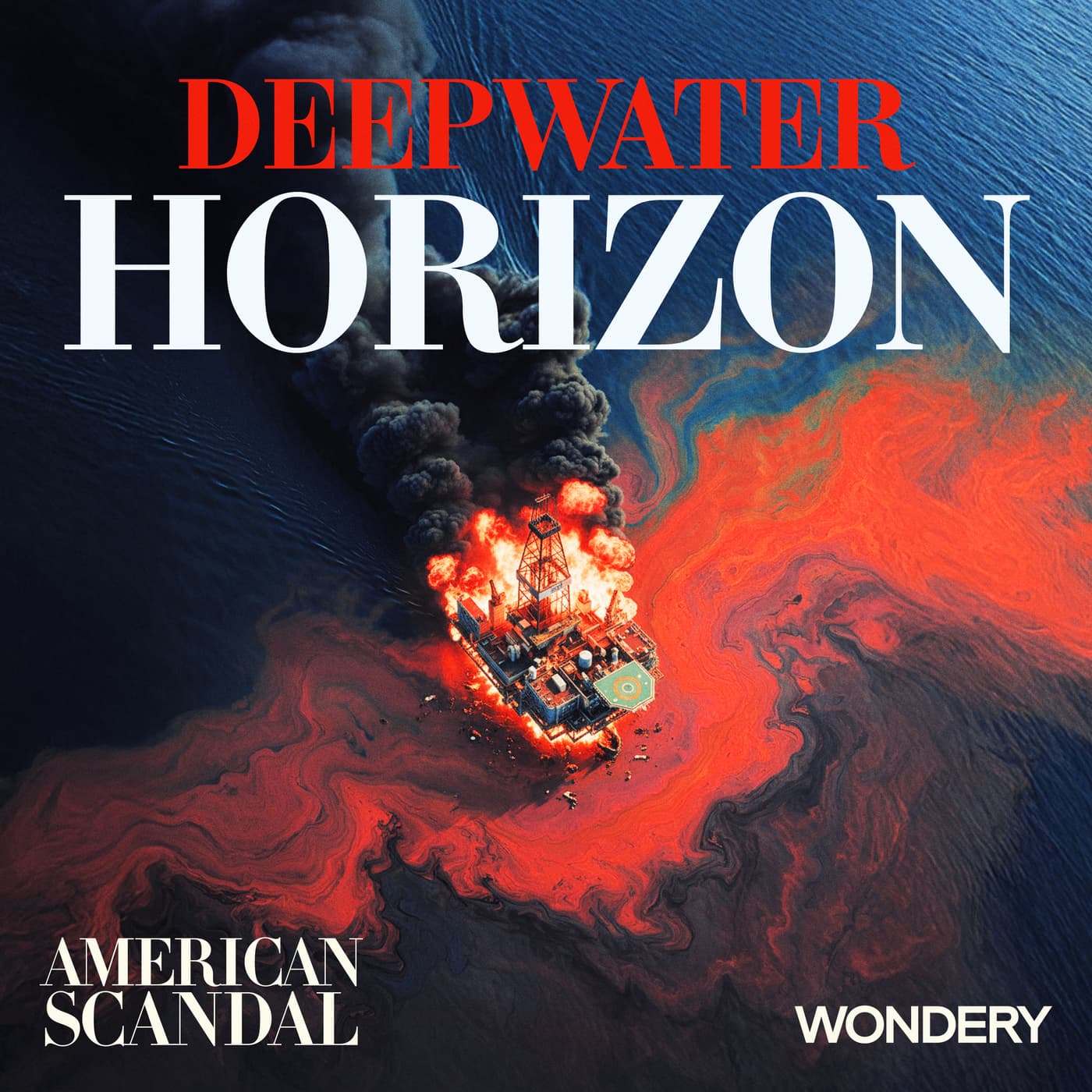
The lead-up to the Deepwater Horizon disaster—cost-cutting, disabled safety systems, drilling mud losses, the “well from hell” (Macondo), and the failed cementing/negative-pressure testing that precedes the blowout and ignition.
Guest backgrounds
No podcast guests are introduced in this episode. It’s a dramatized American Scandal narrative hosted by Lindsay Graham.
Key claims
BP and contractors prioritized speed and budget over safety; alarms and maintenance were deferred; Halliburton’s nitrogen-foam cement tests were mishandled; BP skipped a cement bond log; centralizers and cement testing were reduced; negative pressure tests were misinterpreted; the blowout preventer failed to seal.
Notable examples
Disabled fire/gas alarms; drilling mud cycle imbalance; blowout preventer leaking valve; using only six centralizers instead of 21; nitrogen foam cement at 3.5 miles; skipped cement bond log; negative test readings that later proved misleading; blowout preventer failure as mud/gas erupted and ignited.
Written by AI. May contain mistakes. Listen to the episode to check what was said.
Chapters
Tap a time to open that second in VOMike Williams' Journey to Deepwater Horizon
0:45 to 3:19
Mike Williams prepares to start his new job on the Deepwater Horizon rig.
“The 36-year-old Williams is on his way to start a new job as chief electronics technician on the Deepwater Horizon Offshore Oil Rig.”
First Impressions of the Rig
3:19 to 4:05
Williams meets his new colleague and learns about the rig's reputation.
“and Williams begins to wonder exactly what kind of mess he's flying into.”
The Transformation of BP
5:06 to 6:39
A historical overview of BP's transformation and its impact on safety.
“From Wondery, I'm Lindsey Graham, and this is American Scandal.”
Meeting the Crew and Safety Culture
6:39 to 8:23
Williams meets key personnel and hears about the rig's safety record.
“When Mike Williams arrives on the Deepwater Horizon in April 2009, the first man to greet him is Jimmy Harrell.”
Problems on the Horizon
8:23 to 10:10
Williams discovers significant maintenance issues affecting the rig's safety.
“It's reassuring to Williams that they seem to take safety so seriously, but it doesn't quite square with what he heard on the flight over.”
A Dangerous Conversation
10:10 to 11:28
Williams confronts his boss about disabled safety alarms on the rig.
“been in dock for repairs, and many essential tools haven't been properly inspected in nearly a decade.”
Drilling the Macondo Prospect
11:28 to 14:03
The crew begins drilling at the Macondo Prospect, facing new challenges.
“Hey, can I talk to you for a minute, Mr.”
Drilling into the Deep
14:03 to 17:17
Learn about the challenges faced during the drilling process at Macondo.
“As a mobile platform that moves from site to site, Deepwater Horizon isn't directly attached to the seafloor.”
The Well from Hell
19:16 to 24:19
Explore the complications and escalating issues faced at the Macondo well.
“It's late February 2010 by the time the crew of the Deepwater Horizon stops a leak in the Macondo well.”
Cementing the Future
24:19 to 28:00
Understand the critical decisions surrounding the cementing process at Macondo.
“And to seal the well properly, the team needs to cap it with cement.”
Show all 12 chapters
The Macondo Well Issues
28:59 to 34:10
Explore the concerns regarding the cement mix and safety tests at the Macondo well.
“The nitrogen foam Jimmy Harrell is so worried about was designed and supplied by the specialist firm Halliburton.”
The Blowout Disaster
34:10 to 36:43
Witness the catastrophic blowout at the Deepwater Horizon and its immediate consequences.
“The night shift crew calls BP headquarters in Houston to give them the good news.”
Transcript
Automatic transcript. May contain errors.0:00American scandal uses dramatizations that are based on true events. Some elements, including dialogue, might be invented, but everything is based on historical research.
0:25It's April 2009 on the tarmac at Port Fortchamps Heliport in Louisiana. Mike Williams instinctively ducks his head to avoid the rotor wash as he approaches the helicopter, then slings his duffel bag into the cargo hull. He's brought everything he needs for the next three weeks. That's the length of his shift, or hitch, as it's known among rig hands. The 36-year-old Williams is on his way to start a new job as chief electronics technician on the Deepwater Horizon Offshore Oil Rig. He'll be responsible for every electronic system on board, from navigation to security, and the rig is positioned off the coast of Louisiana right now, and the only way to get there is by helicopter.
1:04As he climbs into the cabin, Williams feels a thrill of excitement. The Deepwater Horizon is meant to be one of the most technologically advanced rigs in the world, and as a mobile unit, it moves from site to site and is responsible for drilling some of BP's deepest exploratory wells. So for Williams, joining its crew feels like a step up to the big leagues.
1:29Williams grabs an empty seat in the chopper and straps himself in. Sitting beside him is a large, ruddy-cheeked man in his mid-30s. The man sticks out his hand. Hey, how you doing? You must be one of the new guys. Jason Anderson, tool pusher. Williams leans over to shake Anderson's hand. Mike Williams, chief electronics technician. Electronics, huh? You're going to have your work cut out on the horizon. Yeah, what do you mean by that? I mean it's not too late to stay behind. What, does the TV in the mess room not work or something? Yeah, that, along with half the other systems on board. You're kidding.
2:01Not even a little bit. You can't even flip a light switch without something else breaking. Oh, come on, it can't be that bad. The Horizon has one of the best reputations in the Gulf. You know, we've got a reputation, all right. Run it, break it, fix it, run it again. Like I said, you're going to have your work cut out. William shakes his head. And here I thought this might be a promotion. Ah, I didn't mean to rain on your parade. You're joining a great crew, at least. The best, I'd say, in fact. I've been on horizon practically since she was launched in 01. We make sure we look out for each other.
2:32Well, I was in the Marines, and it was the same there. No man left behind, right? I thought you had that look about you. Well, you'll fit right in. All right, looks like we're about to take off. Anderson bellows over the growing engine noise. Welcome to the family, I guess. A few minutes later, the helicopter is flying over the sapphire blue waters of the Gulf of Mexico. Mike Williams has worked on a lot of rigs, yet he feels a sense of awe when the deep water horizon comes into view. Thick concrete columns rise out of the water, supporting a wide deck and two floors of living quarters. Above them, towering some 260 feet high into the sky, is the steel oil derrick.
3:13But as the helicopter circles the rig and prepares to land, Williams' mind returns to the tool pusher Jason Anderson's comments, and Williams begins to wonder exactly what kind of mess he's flying into.
3:29Here it is. This corner kick could be a big one. There's the cross. He rises to meet it, and it's a car! Soccer's biggest tournament is here, and Enterprise is turning every corner kick goal into your chance to win a car. The moment a corner kick is called, post on X with hashtag tag on every corner, hashtag sweepstakes, and tag enterprise. If it's a corner kick goal, you could win. Winners may pick up their cars at an enterprise or an enterprise car sales location on a corner near them. With over a thousand corner kicks expected, that's a lot of chances to win. For more details and an additional chance to win, visit oneverycorner.com.
4:10No purchase necessary for legal residents of the 50 U.S. states in D.C., Puerto Rico, Canada, Ireland, the United Kingdom, France, Germany, and Spain, who are 21 and older. Sweepstakes end July 19th, 2026. Void where prohibited. Prize awarded if a corner kick goal is scored. For entry details and official rules, visit oneverycorner.com. I'm Raza Jafri, and in the new season of The Spy Who, we go back in time to meet Benedict Arnold, the spy who betrayed the American Revolution. As America fights for freedom from Britain, Arnold emerges as one of the rebel's greatest generals. But when his loyalty is pushed to the limit, he turns spy and devises a plot to shatter the rebellion and make George Washington a prisoner.
4:49Follow The Spy Who now, wherever you listen to podcasts. You can also listen to the full season of The Spy Who Betrayed the American Revolution early and ad-free on Audible.
5:06From Wondery, I'm Lindsey Graham, and this is American Scandal.
5:29During the 1990s, the oil giant British Petroleum was transformed. Under the leadership of John Brown, the once deadridden, bureaucratic state enterprise, became one of the most profitable companies on the planet. By the year 2000, BP had oil fields from Alaska to Vietnam and from the North Sea to the Gulf of Mexico, with revenue topping$100 billion a year. Key to the company's success was a relentless policy of risk-taking and cost-cutting. But even according to its own internal investigations, that focus on profit fostered a culture of bullying and an apparent disregard for environmental and safety regulations.
6:08And despite the best efforts of lawyers at the Environmental Protection Agency, as well as multiple criminal convictions, BP showed no sign of changing its ways. And by 2009, the company was drilling deeper than ever before, using rigs like Deepwater Horizon to find oil miles beneath the Gulf of Mexico. The rewards were potentially enormous, but the risks were even greater. So faced with an unstable well and the constant pressure to drill faster, problems quickly began to mount for the crew of the Deepwater Horizon, and eventually conditions on board would reach the breaking point. This is Episode 2, The Well from Hell.
6:48When Mike Williams arrives on the Deepwater Horizon in April 2009, the first man to greet him is Jimmy Harrell. The Horizon's chain of command changes depending on whether it's moving or drilling. When the rig's on the move, the captain is in charge, just like a ship. But once it's latched up in a position over a well, the offshore installation manager takes command, and that's Jimmy Harrell. Harrell is a Mississippi man in his mid-50s with a long white mustache that droops over his upper lip. He introduces himself to Williams and takes him on a tour of the rig. They pass along the main deck and descend into the accommodation block, a two-story steel structure packed with crew cabins, a mess hall, offices, even a movie theater.
7:32As they pass from room to room, Harrell points out the key personnel that Williams will be working with in the coming weeks. Most of the people on board, including Harrell and Williams, don't work for BP. Another company, Transocean, owns the Deepwater Horizon and is responsible for the rig's daily operations. But while it is Transocean personnel doing most of the work on board, it's the company's client, BP that's in charge of the design, planning, and execution of the drilling program. And a group of BP well site leaders ensures everything on Horizon meets with BP's approval. As the tour continues, William sees safety notices everywhere.
8:10Jimmy Harrell proudly tells him that they've now had six years with no time lost incidents on the Deepwater Horizon. The federal regulator, the Minerals Management Service, even gave the crew an award last year to recognize the rig's exemplary record. It's reassuring to Williams that they seem to take safety so seriously, but it doesn't quite square with what he heard on the flight over. At the end of the tour, they stop off at the drill shack, a steel-enclosed cabin the drilling team uses to house their monitoring and computer system. There, they're greeted warmly by the drill team who call Harold Mr.
8:43Jimmy. Among the men in the shack is Jason Anderson, the tool pusher Williams met on the helicopter. Anderson takes Williams to the window that overlooks the moon pool, a square hole in the deck that opens onto the sea. Through this moon pool, the team can lower equipment into the sea even in stormy weather. Right now, a drill bit is suspended over the pool, and Anderson tells Williams they are preparing to drill into the seabed, the first step in opening a new exploratory well. Then suddenly, behind them, one of the tool pushers curses at his computer screen. Eager to make himself useful, Williams goes over to take a look.
9:18A blue screen of death stares back at him from the monitor. The tool pusher says that's been happening a lot, and it's making a difficult job even harder. The computer system manages the sensors that acts as the driller's eyes and ears on the well, but when the computers freeze, they have no way of knowing what's going on under the water. Williams is a bit taken aback. As far as drilling for oil goes, this is one of the most challenging regions in the world, but the crew is still relying on technology that looks like it's from the 1990s. For a rig that's supposedly at the cutting edge, it doesn't seem that well-equipped.
9:52Built in South Korea in 2001, the Deepwater Horizon was once a state-of-the-art rig. But by the time Mike Williams arrives, it's starting to show its age. Salt water has corroded its pipes, and many of the rig's sensors have stopped working properly. Drilling has always been the priority. The rig has never been in dock for repairs, and many essential tools haven't been properly inspected in nearly a decade. This all means that maintenance takes up more time every shift. And the crew's workload isn't made any lighter by the fact that their numbers have been reduced year after year. When the rig was first deployed, there were so many employees on board that there wasn't enough work for them all.
10:31But to cut costs, Transocean has transferred more and more crew members off the rig. Now there are fewer people doing more work than ever before. But it's still not enough for BP. As one of Transocean's biggest clients, BP is putting intense pressure on the company to drill faster and at an even lower cost. So no matter how hard the crew of Deepwater Horizon think they're working now, they know it'll be even worse next year or even next month. So for Mike Williams, his first days on board leave him feeling unsettled. When Williams brings up the maintenance problems, the other crew members say they've spoken to TransOcean's management several times already, and nothing ever seems to get done.
11:11But after a couple of weeks on Deepwater Horizon, Williams discovers a problem he simply can't ignore, one that could put all their lives at risk. So right away, he goes to see his boss, Jimmy Harrell, in his office.
11:27Williams knocks sharply on the door. A voice from the inside calls out. Yeah, come in. Hey, can I talk to you for a minute, Mr. Jimmy? It's urgent. Hey, sure, Mike. What's up? William steps inside and pulls the door closed behind him. He sits across the desk from Harold. I've been working on that fire and gas detection system, and it looks like someone has disabled the alarms. Harold leans back in his chair and smiles reassuringly. Oh, yeah, that was us. We shut them off. You shut them off? Yeah, there were constant false alarms in the middle of the night. No one was getting any sleep. But, sir, isn't that a serious safety hazard?
12:02We were more concerned about people making mistakes on their shift because they only got two hours of shut-eye. But what if there's a real emergency? Our watch officers were spotted. They're on the bridge 24-7, monitoring the fire and gas sensors in real time. Look, if anything happens, they'll hit the alarm. But in a crisis, I mean, even a few moments of hesitation can make all the difference. I would sleep better knowing there was a working alarm. Well, Mike, I understand that, but we just can't fix it right now. This is the best we can do. But I do appreciate you coming to me with us, though.
12:31Thanks. It's clear that as far as Harold is concerned, the conversation is over. But Williams doesn't move. Harold frowns. So, um, anything else I can help you with, Mike? Yeah, because it's more than just the alarm system. I'm finding problems like this everywhere. We've got computers that don't work, sensors that malfunction. Look, I'm doing my best to patch things up. But to be honest, a lot of these systems just need ripping out and replacing. Harold sighs. Yeah, I know. And trust me, I've raised this with the higher ups. There's simply certain trade-offs we have to make. Right now, it's my job to keep all of you guys on this rig safe.
13:07That's what I'm trying to do. But it's also my job to get these wells dug. Because if I don't, I can tell you what's going to be ripped out and replaced. It won't be the alarm system. Mike Williams thanks Jimmy Harrell for his time and then trudges back to his office. He thinks Harrell is wrong, but it's not his call to make. He has to respect the chain of command, so he returns to work, and the alarm system on the Deepwater Horizon stays silent.
13:36At the beginning of 2010, the Deepwater Horizon has moved to a new well in the Gulf of Mexico. BP has named it the Macondo Prospect. Macondo is about 41 miles off the southeast coast of Louisiana. It's the job of the Deepwater Horizon crew to confirm whether this site has commercially viable quantities of oil and gas. If they're successful, they'll cap the well, and BP will build a permanent rig on the site to extract the oil at a later date. As a mobile platform that moves from site to site, Deepwater Horizon isn't directly attached to the seafloor. Instead, it floats on the surface, kept in position over the well by thrusters and propellers.
14:15From there, a pipe connects the rig to the wellhead 5 ,000 feet beneath the surface. The plan at Macondo is to drill another 13 ,000 feet into the rock to reach what is hoped to be an enormous reservoir of oil and gas. It won't be simple. The forces at play are enormous. The diamond-tipped drill the Horizon team uses is just 7 inches wide at its thinnest point and cuts through the rock by rotating at a high speed. Every extra foot deeper they drill, the heat and pressure will increase, which means the slightest mistake could have disastrous consequences. But the crew of the Deepwater Horizon has plenty of experience, and they have no reason to be especially concerned when drilling begins at Macondo in February 2010.
14:57It soon becomes clear, though, that this is no ordinary well. Tool pusher Jason Anderson is on shift at the drill shack, maneuvering the drill into position deep below the sea. One of the well site leaders from BP is with him. They're already behind schedule, and the BP manager urges him to drill faster. Anderson is hesitant, though. Every well has its own temperament, and they've found that Macondo is especially volatile. It's already started to belch gas, and what drillers call kicks, these can be dangerous. Without careful monitoring, the gas they release can surge past the drill and rise up the pipe to the oil rig above, potentially causing an explosion.
15:36But BP is the client, and it's in charge of the drilling program, so Anderson does as he's told. He increases the speed of the drill while closely watching the well. Soon, though, he notices a problem. It's not gas this time, but mud. As the drilling team digs deeper into the bedrock, the enormous weight of the earth threatens to crush the newly cut well. So to stabilize the pressure and prevent the well from caving in on itself, they use drilling mud to fill the hole they make. Drilling mud is a mix of synthetic fluids, polymers, oils, and chemicals that can weigh twice as much as water. It's pumped in and out of the well during the drilling in a constant cycle.
16:16Anderson can tell a lot about the state of a well just from the drilling mud. In a healthy well, the volume of mud being pumped in should match the volume coming back out. But right now, the cycle has been broken. There's more mud going in than is coming out. Anderson frowns. This is bad news. It means somewhere far below them, the walls of their well have collapsed, and the drilling mud is leaking into the surrounding rock. Anderson explains what's going on to the BP supervisor, who curses under his breath. Drilling mud is expensive stuff, up to$500 a barrel. So even as they speak, BP is losing hundreds of dollars a second.
16:54So he tells Anderson to do something to stop it, and quickly. But right now, Jason Anderson isn't worried about the costs of drilling mud. Between the kicks and this latest collapse, he's afraid they're losing control of Macondo altogether, and that the Deepwater Horizon is now sitting on top of a bomb, one that could go off any second.
17:17I'm Raza Jaffrey, and in the new season of The Spy Who, they open the file on Benedict Arnold, the spy who betrayed the American Revolution. America is fighting to free itself from the British Empire, and one of its foremost generals is Benedict Arnold. He's a smuggler turned battlefield hero and admired for his aggressive tactics. But when a war wound, a new wife, debts and politics test his loyalty to the max, he turns spy and devises a plot to shatter the revolution and help Britain capture rebel commander-in-chief General George Washington and that plot would make him the most infamous traitor in US history follow the Spy Who now wherever you listen to podcasts you can also listen to the full season of The Spy Who Betrayed the American Revolution early and ad-free on Audible
18:18You there! Tis I, Queen Mortuana of the Night Realm, a.k.a. Kate McKinnon, and her Raven minion Jojo, a.k.a. Emily Lynn. If you do not download and binge my show, Heads Will Roll, Air Apparent, Unaudible, I will cut off your head! Oh no! Maybe just tell them about the guest stars, like Richard Kind, Carrie Coon, Jimmy Fallon, et al. But they were in it, And if you don't listen to them, then I will cut off your tongue, then cut off your head, and then put the tongue in the head hole. Aw, you tried. Listen now exclusively on Audible and Dental's The Audible app today, or off with your head! I'm kidding.
19:16It's late February 2010 by the time the crew of the Deepwater Horizon stops a leak in the Macondo well. They pump in gallons and gallons of drilling mud to balance the pressure and plug the fissures in the rock. But patching the well in this way isn't quick, and it's not cheap. It costs BP two weeks of drill time and$14 million. BP originally planned for the Macondo well to be ready in 77 days at a cost of$96 million. but both those targets have already been blown. Deep-sea drilling is a risky business, and problems like these are not uncommon, but BP has little patience for setbacks. The company wants the project back on schedule and back on budget, and the crew of the Deepwater Horizon is put under pressure to make up for lost time.
20:01According to a later report by the Bureau of Ocean Energy Management, John Guide is one BP employee who knows precisely how many corners the Deepwater Horizon team is being forced to cut. 52-year-old Guide is an engineer who oversees operations on the rig from BP's headquarters in Houston, Texas. And just days after the leak in the Macondo well is fixed, he has a conference call with the crew on Deepwater Horizon to discuss another problem. Guide is a BP veteran. He's worked on dozens of deepwater wells before Macondo, but this one is turning out to be especially troublesome. He knows that many on board the oil rig have adopted a new name for it, calling it the well from hell.
20:40Guide hurries into a conference room with his laptop in one hand and a coffee in the other before dialing into the call with the drill team. His BP counterpart on the rig brings him up to speed. A leak has been detected in the blowout preventer, one of the most important pieces of safety equipment on the well. In the event of a kick or an even worse emergency, the huge 300-ton device uses a series of valves to seal the well and stop gas and liquid from surging up the drilling pipe to the rig. On his laptop, Guide watches footage recorded by a remote-operated vehicle on the seafloor. The video is grainy, but it still clearly shows hydraulic oil leaking from one of the valves on the giant blowout preventer.
21:20Seeing this, Guide sighs. First, they lost all that drilling mud, and now this. There doesn't seem to be anything on this job that doesn't leak. Guide sips his coffee and listens as the team on the rig discusses the implications of the leak in the blowout preventer. The drill team wants to stop work entirely while they finish repairs to the unit. They're even talking about hauling it back to the surface for maintenance. That could lead to a delay of weeks or even months. Guide clenches his jaw because this is the last thing he needs. He already has corporate breathing down his neck. Most of the executives he works with have only been in their jobs for a couple of months and don't really understand how things work out on the rigs.
21:58They keep making last-minute changes to the drill program that Guide then has to explain to the disgruntled team on Deepwater Horizon. In one email to his boss, Guide has already explained that the Horizon crew are at their wit's end. So now, he taps his fingers on the table as he tries to think of a solution that will satisfy headquarters without putting too much additional pressure on the drill team. It's just then when Guide remembers something. According to federal regulations, a blowout preventer only needs to be repaired if it's not working properly. But in this case, it's only one leaky valve, which has a workaround.
22:33The rest of the preventer is working just fine. So Guide speaks up to interrupt the debate. He tells the crew that there's no need to haul up the blowout preventer. They can just neutralize the pressure on the leaky valve and keep drilling. To Guide's relief, the team agrees. His solution will save them all time and hassle. No one wants to be working on this well longer than they have to. So Guide ends the call with a sigh of satisfaction. One more disaster averted. And from that point on, there are hopes that things on Deepwater Horizon might finally be turning a corner. Because despite all the problems, there are signs the drill team is approaching the hydrocarbon reservoir they've been looking for.
23:10They've detected elevated gas levels, and as they drill deeper, sensor readings confirm a large, high-pressure formation of oil and gas. Then, in mid-April, the drill reaches its target depth of 13 ,293 feet, and it's clear that Maconda holds a rich deposit of fossil fuels. But BP doesn't want to stop there. The plan is to drill 1 ,000 feet more to search for another suspected reservoir even deeper in the rock formation. But as the drill team presses on, it becomes apparent that they've not yet tamed the well. Drilling mud again begins to leak. They try to pump more in, but that doesn't work, and soon they've lost almost 3 ,000 barrels, roughly$1 million worth of mud.
Read the full transcript
23:52BP is effectively pouring money into a bottomless pit, and executives at the company decide it's time to cut their losses. On April 9, 2010, they call off operations at Macondo. The well from hell has finally beaten them. With further drilling canceled, the team on Deepwater Horizon moves to seal Macondo. BP might return to the site at a later date, But that could be years away, so the crew must ensure the well is stable enough to be left unmonitored for a long time. And to seal the well properly, the team needs to cap it with cement. But first, they need to install centralizers. Centralizers are metal springs that hold the pipe in the center of the wellboard, so that when the cement is pumped in, it forms an even seal on all sides.
24:36Without enough centralizers, the pipe could shift inside the hole, leaving channels in the cement that oil and gas can flow up, potentially risking a blowout. And to ensure everything is done properly, BP has a specialist cement contractor on the job, Halliburton. They recommend using 21 centralizers to stabilize the well. But Deepwater Horizon only has six on hand. An extra 15 centralizers are ordered by a BP engineer, but his bosses are concerned about time. Even after the centralizers arrive on the rig, it'll take at least 10 hours to install them, and the Macondo project is already$50 million over budget.
25:14They need to save time and money wherever they can. So it's decided that they will proceed using just the six centralizers they have. Many of the Deepwater Horizon crew aren't happy, but it's not their call. And on April 19th, a meeting is held on board to finalize plans for the cement job.
25:35Jimmy Harrell, Deepwater Horizon's offshore installation manager, leans back in his chair and runs a thumb along his mustache. Beside him are senior men from the drilling team, and none of them looks impressed with what they're hearing. Standing in front of a whiteboard is Bob Caluza, a newly assigned well site leader from BP. All right, Halliburton's confirmed that we need a special cement mix from a condo. I guess that's appropriate because, as I think we've established by now, it is a very special well. Calusa looks around the room, but no one laughs at his joke. He turns away to the whiteboard.
26:08So we're using this nitrified cement. The nitrogen bubbles make the mix lighter, so the fragile walls of the well we're dealing with down there will be less likely to collapse under the pressure. Jimmy Harrell leans forward to interrupt. Sir, if I may, can I stop you there? Yeah, is something wrong, Mr. Harrell? Well, you're talking about using that nitrogen cement foam in the deepest parts of the well. Yeah, from top to bottom, that's the plan. Well, sir, you realize that well is three and a half miles deep. If we put nitrified cement at that kind of depth, the pressure's going to squeeze the nitrogen right out of it.
26:38It'll rise back up the well like bubbles in soda, leave behind a bunch of holes for the oil and gas to slip through. And that, to my mind, defeats the whole point. Well, I appreciate your input, Mr. Harrell, but this plan has already been approved by BP and Halliburton. The walls of the well won't support regular cement. Yeah, I've been doing this job for 30 years, and I can't count on two fingers the number of times I've seen nitrogen foam used at the bottom of a well. If we go ahead with this plan, there's a good chance we're going to get a leak. Why risk it on the well from hell? Calusa taps his diagram for emphasis.
27:09Stopping a leak is exactly why we're using the foam. The engineers have done the calculations. Yeah, sir, I'm telling you, hydrocarbons are going to blow right through that foam, Mr. Harrell. If we change the cement mix now, it will cost us months of extra time and millions of dollars. I, for one, don't want to have to explain that to headquarters. They've given us a plan, and we're sticking to it. Aluza tosses his marker down on the table between them. Harrell shakes his head. He's not going to win this argument. Well, I guess that's why we have the blowout preventer, right? Oh, wait, that's leaking too.
27:42No one laughs at Jimmy Harrell's joke either. Everyone on board is feeling increasingly nervous about closing the condo well. Nothing seems to be going right on this job. But it's far worse than even Harrell realizes. Despite what Bob Caluza says, there is something wrong with the cement, and the crew's attempts to seal the well from hell will only result in disaster.
28:08As Americans, we're constantly grappling with the fundamental question. Do we settle for the world as it is, or do we strive to create the world as it should be? Our answers tend to ebb and flow through the decades. But once, just after a war that nearly tore us apart, we came as close as we've come to answering it. And it's a story worth a closer look. I'm Michelle Obama, and I'm proud to announce Higher Ground's new podcast, Reconstruction, The Unfinished Promise. Guided by best-selling author Malcolm Gladwell and featuring my husband, Barack Obama, This limited series uncovers the untold stories of Reconstruction, what they mean for us today, and how our past can shape the future we choose to build.
28:58Reconstruction, the unfinished promise, is available now on Audible or wherever you get your podcasts.
29:17The nitrogen foam Jimmy Harrell is so worried about was designed and supplied by the specialist firm Halliburton. But no one on board the Deepwater Horizon knows that Halliburton has already found serious issues with the cemented plants use on the Macondo well. Two months earlier, back in February 2010, Halliburton tested the nitrogen foam they had designed for the well, and the results were troubling. The slurry proved unstable under pressure. Halliburton re-ran the tests, hoping to get a better result, but the concrete failed on nine separate occasions. By the book, Halliburton should have alerted its client to the problem.
29:53But informing BP would have raised uncomfortable questions about the quality of all Halliburton's products, potentially jeopardizing lucrative contracts. So instead, Halliburton sent BP the test results without marking them clearly as failures. The BP manager responsible for them never even noticed. Then Halliburton ran the tests again, only this time they tweaked the conditions and got the positive results they were hoping for. This was not evidence that the concrete mix was suitable for the Macondo well, but it was good enough to get BP's approval. And on April 19, 2010, the Macondo well is sealed with a nitrogen foam cement.
30:32Earlier the next morning, Halliburton emails BP to let them know that the cement job is complete and that it all went well. Once cement has been pumped into a well, it's normal industry practice to perform a cement bond log test to check that it's stable. But at Macondo, BP's well site leaders decide that the test is unnecessary. Examining the cement will take 12 hours and add half a million dollars in costs to a job that is already delayed and over budget. The contractors who were meant to run the cement tests are already on board the Deepwater Horizon, but BP flies them home. So all that remains are a few more safety tests to check that the well's pressure is stable.
31:11And on April 20th, Jimmy Harrell and the drill team meet again with BP's well site leader, Bob Caluza. Despite Harrell's concerns about the cement mix, they have successfully completed the first of the tests on the Macondo well. In the positive pressure test, drilling mud was pumped into the well to see if the cement seal held, and it passed. Now Caluza outlines BP's plans for the final steps in plugging the well. But as Harrell reads through the operations for the day, he notices something is missing. Waiting until the end of the meeting, he pulls Calusa aside and tells them they also have to perform a negative pressure test.
31:47This check removes some of the heavy drilling mud and replaces it with lighter seawater. This reduces the pressure on the cement seal from above. If the seal is secure, though, it should still be able to hold. Given the success of the positive pressure test, BP apparently thinks it's unnecessary. But Harrell is insistent. It's his policy to also always complete a negative test before declaring a well safe. And after all the problems they've had with Macondo, he thinks they should be taking more precautions, not less. So having given way on the cement, Harrell is determined not to compromise this time.
32:21He has to put the safety of his crew first. The negative test will go ahead, whether BP likes it or not. So at 5 p.m. that afternoon, the drill team assembles in the shack, ready to start testing. The goal of the negative test is simple, to release pressure from the well and see if it holds. If it can sustain zero PSI, the cement job has worked. If the pressure increases or fluids come out of the well, it likely means there's a leak. And as soon as they begin the test, things don't go to plan. According to later testimony from the National Commission on the Deepwater Horizon oil spill, every time the team tries to release pressure from the well, the readings jump back up.
33:00The crew debates what this means and what they can do next. Another test is needed, but it's getting late, and they've been on deck for 12 hours already. They're exhausted and hungry, so it's agreed to let the night shift handle it. When this new team clocks in and repeats the test, at first the pressure drops to zero, but then it soon begins to rise again. They run the test once more with the same results. It's a clear indication that hydrocarbons are leaking out of the reservoir into the well, But they're so close to finishing this job and getting off Macondo, no one wants to be the cause of unnecessary delays.
33:34So the team searches for alternative explanations. Jason Alexander is the senior tool pusher on the night shift, and he offers a possible theory. The weight of all the drilling mud still down there might be causing the sensors to give a false pressure reading. This theory is a stretch, but it makes a convenient explanation for the results they've been getting. So the drill team runs a fourth negative test, this time measuring the pressure in a different pipe connected to the well. It holds at zero psi for 30 minutes. So relieved, the team declares the test of success and that the well is safe.
34:07Deepwater Horizon can finally leave the well from hell. The night shift crew calls BP headquarters in Houston to give them the good news. Then they start the final stage of shutting in the Macondo well, pumping out all the remaining heavy drilling mud and replacing it with seawater. But all the while, 18 ,000 feet beneath them, the pressure is building. And suddenly, on the drilling deck, an alarm sounds.
34:34In the drill shack, Jason Anderson peers over at the console. One of his team throws up his hands. Uh, Jason, the pressure's climbing again. Are you kidding? We already told BP the well was stable. I'm sorry, boss. Anderson stomps over to the sensor and scowls. All right, shut off the pumps. I'll call Mr. Jimmy. Management's going to be mad when they hear about this. Yeah, but when are they ever happy? Suddenly, there's a roar from outside. Anderson rushes to the window. Drilling mud is spewing out of the pipe onto the rig floor. The drilling assistant turns to look at Anderson and alarm. What's going on down there?
35:08We've got to get to the drill floor now. Go! Anderson slams open the door to the drill shack and clatters down the stairs outside. The other man follows hot on his heels. The platform below is already slick with mud, and it coats them like a heavy rain as they descend. Oh, God, it's blowing out. Call Jimmy. Anderson has to yell to be heard over the thunderous sound of the mud being forced out of the drilling pipe. The air is already tinged with the smell of gas. Make the call, then get out of here. If that gas finds a spark, we're dead. The drill assistant races to the phone on one side of the platform.
35:41Anderson heads to the control panel. He covers his eyes as he dashes across the drill floor. His face and body are caked in thick, oily mud. He can barely breathe and knows he has only seconds to act. He pounds his hand against the control that activates the blowout preventer. It's supposed to seal off the well, but nothing happens. The torrent of mud keeps coming. Anderson hits the panel again and again. It's not working! It's not working! In that instant, Jason Anderson knows that the blowout preventer has failed. and there's now no way to stop the flow of gas and mud that's shooting up the pipe and over the rig.
36:20In that moment, Anderson thinks of his wife and kids back in Texas. This was supposed to be his last day on the Deepwater Horizon and he's glad they don't know what's coming because he does. Anderson braces himself as the gas ignites with a deafening roar and the last thing he sees is a wall of flame.
36:42From Wondering, this is Episode 2 of Deepwater Horizon for American Scandal. In our next episode, the surviving crew members try to escape a burning rig, and as oil spreads across the Gulf of Mexico in the wake of the explosion, communities in the region grapple with the true scale of the disaster.
37:06Follow American Scandal on the Audible app or wherever you get your podcasts. You can listen to all episodes of American Scandal ad-free by joining Audible. And to find out more about me and my other projects, including my live stage show coming to a theater near you, go to notthatlindsaygram.com. That's notthatlindsaygram.com. If you'd like to learn more about the Deepwater Horizon oil spill, we recommend the books Run to Failure by Abram Luskart, A Sea in Flames by Carl Safina, and Fire on the Horizon by Tom Schroeder and John Conrad. This episode contains reenactments and dramatized details.
37:45And while in most cases we can't know exactly what was said, all our dramatizations are based on historical research. American Scandal is hosted, edited, and executed and produced by me, Lindsay Graham for Airship. Audio editing by Mohamed Shazib. Sound design by Gabriel Gould. Music by Thrum. This episode is written and researched by Lauren Sudworth. Fact-checking by Alyssa Jung Perry. Managing producer Emily Burke. Development by Stephanie Jens. Senior producer Andy Beckerman. Executive producers are William Simpson for Airship and Jenny Lauer Beckman, Marshall Louis, and Aaron O 'Flaherty for Wondery.
38:20Wondery.
From the publisher
When Chief Electronics Technician Mike Williams joins the Deepwater Horizon in 2009, he’s told it’s the safest rig in the world. But as BP rushes to finish drilling the Macondo well, systems fail and standards slip—with disastrous consequences.
Be the first to know about Wondery’s newest podcasts, curated recommendations, and more! Sign up now at https://wondery.fm/wonderynewsletter
Listen to American Scandal on the Wondery App or wherever you get your podcasts. Experience all episodes ad-free and be the first to binge the newest season. Unlock exclusive early access by joining Wondery+ in the Wondery App, Apple Podcasts or Spotify. Start your free trial today by visiting wondery.com/links/american-scandal/ now.
See Privacy Policy at https://art19.com/privacy and California Privacy Notice at https://art19.com/privacy#do-not-sell-my-info.
