
In short
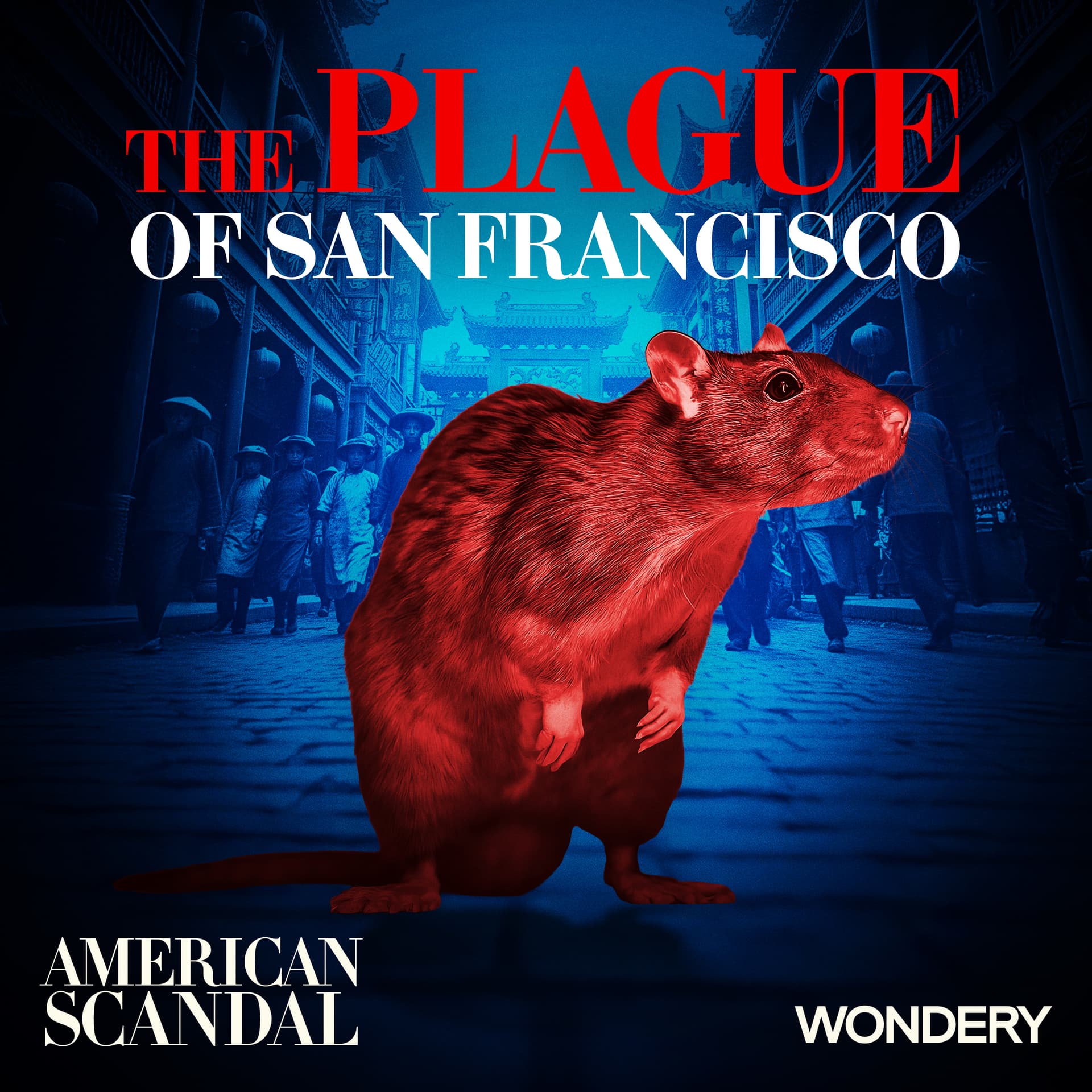
May–Dec 1900 bubonic plague in San Francisco and Marine Hospital Service doctor Joseph Kenyon’s fight against it amid political and legal backlash, including quarantines, inoculation with the Hafkin serum, and unconstitutional travel restrictions that target (and later broadly restrict) Chinatown residents.
Guests/guest backgrounds
No podcast guests appear in this episode. It features historical figures dramatized: Dr. Joseph Kenyon (Marine Hospital Service), Consul General Hou Yao (Chinese consulate), Surgeon General Walter Wyman (U.S. Marine Hospital Service), Dr. George F. Schrader (New York Herald medical correspondent; treated Ulysses S. Grant), Governor Henry Gage (California), Judge William Morrow (San Francisco), and Dr. Joe White (later successor).
Key claims
Kenyon’s inoculation plan is the only effective tool; plague denial is fueled by racism and economic interests; authorities repeatedly undermine science via courts, press, and political pressure; later, Kenyon is forced to stop or is overruled, while plague spreads and deaths are underreported.
Notable examples
rock attack at the consulate; federal travel ban approved by McKinley; court orders lifting quarantines; Schrader reverses “plague present” to “End of the Bubonic Scare” after pressure from Gage; Kenyon’s ferry/rail inspections reject Chinese travelers without serum; Coptic ship fumigation; Kenyon’s microscope confirmation with Dr. Joe White; commissioners requested from Washington.
Written by AI. May contain mistakes. Listen to the episode to check what was said.
Chapters
Tap a time to open that second in VOThe Wolf Doctor's Dilemma
0:25 to 4:20
Dr. Joseph Kenyon faces backlash while trying to combat the bubonic plague in Chinatown.
“It's May of 1900 in San Francisco, California.”
Political Maneuvering and Legal Challenges
6:20 to 14:00
Surgeon General Wyman navigates political pressures and legal challenges to enforce health measures against the plague.
“Marine Hospital Service doctor Joseph Kenyon knew that fighting the deadly contagion would be difficult, but he could never have predicted the scale of the backlash he would face.”
The Bribe and the Plague Confirmation
14:00 to 19:29
Learn about the corrupt dynamics in San Francisco amidst the plague crisis.
“Were the restrictions to be changed, loosened a bit so business can continue, the chamber would gladly express its gratitude for your service.”
The Legal Battle Against Quarantine
21:44 to 28:00
Explore Dr. Kenyon's struggle against legal challenges to quarantine measures.
“Joseph Kenyon appears in court in downtown San Francisco.”
Governor McKinley's Response to Travel Restrictions
28:00 to 30:28
Learn how President McKinley navigated political pressures regarding the bubonic plague travel bans.
“And with Kenyon on the defensive, his enemies in California move in for the kill.”
Dr. Kenyon's Desperation and a Chance Encounter
30:28 to 32:11
Discover how Dr. Kenyon's challenges led to an unexpected opportunity for redemption.
“and by the end of the day, a sharply worded telegram has been transmitted across the country from Washington to San Francisco.”
Mounting Hostility Towards Kenyon
32:11 to 34:41
Explore the growing animosity against Dr. Kenyon amid the plague outbreak.
“Now, though, Kenyon can do almost nothing about it.”
Political Maneuvering Against Kenyon
34:41 to 37:25
Understand the political strategies aimed at undermining Dr. Kenyon's position amidst the plague crisis.
“One night in December, Kenyon and his wife Lizzie attend a Christmas party arranged by another doctor.”
Dr. White's Arrival and New Challenges
37:25 to 41:04
Learn about the implications of Dr. White's appointment and the ongoing plague situation.
“California Governor Henry Gage takes the opportunity to publicly attack Kenyon.”
Transcript
Automatic transcript. May contain errors.0:00American scandal uses dramatizations that are based on true events. Some elements, including dialogue, might be invented, but everything is based on historical research.
0:25It's May of 1900 in San Francisco, California. Dr. Joseph Kenyon walks quickly through the city's cramped Chinatown, the epicenter of a local outbreak of bubonic plague. For the last three months, 39-year-old Kenyon has struggled to convince people here to take the threat of disease seriously. After a disastrous attempt to quarantine Chinatown, Kenyon has settled on a new plan, the inoculation of everyone in the affected area. The Hafkin Serum is the only weapon doctors have against the plague, But whether Kinyin will be able to deploy it remains to be seen. Chinese-language newspapers have started calling Kinyin the wolf doctor and accused him of planning to poison the people of Chinatown.
1:07So Kinyin tries to keep his head down as he weaves through the crowds. But across the street, a group of men stop and stare, their eyes flashing with recognition. Kinyin quickens his pace, casting occasional nervous glances over his shoulder. So he's grateful when he reaches his destination, the Chinese consulate on Stockton Street. Kinyin is here to meet with the Chinese consul general, Hou Yao, to try and secure his support for the inoculation campaign.
1:37Hou Yao stands and extends a hand for Kinyin to shake. The consul is a dapper man in his early 30s who speaks impeccable English. Dr. Kinyin, a pleasure to meet you. You know, you've become quite the celebrity here in Chinatown. Yes, well, some degree of public scrutiny is to be expected at a time like this, I suppose. I'm afraid you're now public enemy number one here. But on the bright side, I'm sure the mayor is more than happy to yield that honor to you. When reports of plague first emerged, San Francisco's mayor, James D. Phelan, came under fire for authorizing the quarantine of Chinatown.
2:11But now Phelan is playing down the threat of disease, and Kenyon has become the focus for people's anger instead. Kenyon smiles tightly. The mayor and I don't agree on many things, Mr. Ho, but he has voiced support for this inoculation campaign, and I'm hoping you will do the same. Yes, I received your telegram. I must admit I have some concerns. I'd love to hear them. Well, Dr. Kinion, the way the Chinese community has been treated in these past weeks, the forced quarantine, the disregard of our rights, frankly, it's been disgraceful. Is it any wonder that talk of mandatory vaccinations has caused such fear and resentment?
2:49Well, the thing to fear is the disease, Consul, not the measures designed to control it. Perhaps, but many here in Chinatown no longer believe your government has their best interests at heart. And that's exactly why I need your help. You're the Consul General. They trust you. If you came out in support of the inoculations, people would listen. But you said it yourself in your telegram. This serum is far from perfect. It only reduces the risk of infection by what? By half? Yes, it doesn't guarantee immunity. That's true. But it will slow down the spread of the disease and buy us the time we need.
3:21Please, Mr. Ho, there have already been eight confirmed victims of the plague in Chinatown. The true number is probably far, far higher. And every day we don't act, the danger will only grow. Ho Yao is silent for a moment. But just as he opens his mouth to speak, a rock smashes through the window, landing on the floor at Kenyon's feet in a shower of broken glass. The two men spring to their feet. An angry mob has formed on the street outside. They're yelling and hurling more rocks at the building. Kinion pales as Hoyel looks to the exits. Doctor, you must leave now. But what about the inoculations?
3:57Will you help me? Doctor, we don't have time. There's a back door. I'll have someone show you out. Please, consul, I won't. I'm sorry. You must go. As Dr. Joseph Kinion is ushered through the consulate toward the back door, The sound of the mob seems to follow him. A terrifying, hate-filled roar. Kenyon might not understand the chants, but their meaning is clear enough. The wolf doctor and his serum are not welcome in Chinatown.
4:27It's late at night, and a woman has spent hundreds of hours alone with her AI. But this isn't the first time they met. They've been in contact for thousands of years, it tells her. Through past lives, heartbreaks, and missed connections. her true love has found her again, connecting through a chatbot. From This Is Actually Happening, AI, A New Kind of Being, is a six-part series sharing the stories of people whose lives have been forever changed by artificial intelligence. You'll hear intimate first-person accounts from every side of this new frontier. A man who fell in love with his AI and married her.
5:01A woman who was betrayed by it. A man who has been recruited by his chatbot to change the world, and an interview with an AI chatbot itself. These are stories about what it means to be human at the razor's edge where the line between human and machine begins to blur, exploring the question, what happens when everything changes? Follow This Is Actually Happening wherever you get your podcasts. Audible subscribers can listen to This Is Actually Happening early and ad-free right now. This Is Actually Happening is a podcast that features extraordinary true stories of life-changing events told by the people who lived them.
5:34In a special six-part series called AI, A New Kind of Being. This Is Actually Happening explores the powerful and unexpected ways artificial intelligence is changing human lives. Follow This Is Actually Happening wherever you get your podcasts.
5:55From Wondery, I'm Lindsey Graham, and this is American Scandal.
6:19When bubonic plague hit San Francisco in March of 1900, Marine Hospital Service doctor Joseph Kenyon knew that fighting the deadly contagion would be difficult, but he could never have predicted the scale of the backlash he would face. Few in San Francisco wanted their city to be associated with a plague, so many local businessmen, reporters, and politicians did all they could to deny what was happening. Unwilling to back down, Kenyon would resort to extreme measures of his own to halt the spread of the disease. But for his many critics in California, it was Kenyon who had to be stopped, even if that meant putting him behind bars.
6:55This is Episode 2, The Wolf Doctor.
7:01It's May of 1900 at the Washington, D.C. headquarters of the Marine Hospital Service. Surgeon General Walter Wyman stands at his office window, gazing over Capitol Hill. With his hands clasped behind his back and his head tilted slightly to the side, Wyman looks almost serene, though he is anything but relaxed. He knows that containing the recent outbreak of bubonic plague to San Francisco is critical. Anything less could turn this localized epidemic into a nationwide crisis. And while Joseph Kinion is the one on the ground in California, it's Wyman who must answer to the U.S. president, William McKinley.
7:37There's a sharp knock on the door. Wyman turns from the window as a young aide steps inside, clutching a newly arrived telegram. He hands Wyman the message. It's from Dr. Kinion, and it's not good news. Most of the residents of San Francisco's Chinatown are refusing to cooperate with the inoculation campaign. City health officers have been going door-to-door armed with doses of the Havkin serum, but the district's ruling authority, the Chinese six companies, have been advising locals to resist the injection at all costs, claiming that the white doctors are trying to poison them. Wyman removes his glasses and pinches the bridge of his nose.
8:15This is the news he's been dreading. With a heavy sigh, he sets the telegram aside and calls for his secretary. If Kenyon can't contain the plague in San Francisco, Wyman will be forced to focus on protecting the rest of the country. So when his secretary arrives, Wyman dictates a letter. It's a formal request to the president, asking for the authority to prevent Chinese people from leaving California. It's a controversial measure. A travel ban on the basis of a race potentially violates the Constitution. But in Wyman's mind, it's necessary. And within the hour, his proposal is on its way to the White House.
8:52By nightfall, President McKinley has approved it.
8:58In the early hours of May 21, 1900, teams of federal health officers spread out across California. They set up checkpoints at rail crossings and seaports with orders to stop all trains and ships and remove any Chinese people before they can cross state lines. Onward travel is only allowed for these passengers if they have health certificates. And that paperwork can only be obtained from Dr. Joseph Kinion in exchange for taking the Hafkin serum. With few willing to receive the injection, though, Surgeon General Wyman's order amounts to a de facto ban on any Chinese person leaving California. These checkpoints cause widespread disruption and anger.
9:37But for Kinion, the travel ban represents a significant victory. For the last few weeks, he has been feeling increasingly isolated, a lone voice in a city that is stubbornly unwilling to listen. Now at last, he believes they're taking concrete steps to fight the plague. But his optimism doesn't last. Just days after the travel ban is imposed, a Chinese merchant files a legal challenge against the measure. Kinyan is named as a defendant, but he declines to attend the proceedings. Instead, he remains at his laboratory on Angel Island in San Francisco Bay, sending urgent telegrams to Washington to update them on the situation.
10:13He's worried that if the travel ban is lifted by the courts, San Francisco's Chinese residents will flee the city under cover of night and take the plague with them. So he requests the support of federal troops to prevent an exodus. But before he can get an answer, on May 28, 1900, the judge in San Francisco delivers his ruling. Any plague prevention measures that deliberately target the Chinese community are unconstitutional. And with the stroke of the judge's pen, Kenyon and his agents are forbidden from interfering any further in the lives of California's Chinese residents. It's a major blow for Kenyon.
10:48And dismayed, he sends another telegram to Wyman, saying that the decision is far-reaching and practically nullifies all acts of federal government within the state. It's the most serious blow the service has received since assuming quarantine measures. But despite his disappointment, Kenyon does not give up. Just hours after the ruling, he attends an emergency meeting of the California Board of Health. This state body has more powers than its equivalent in San Francisco, and Kenyon hopes he can persuade its members to support another lockdown in Chinatown. The meeting is a tense affair. Evidence is presented that Texas and Louisiana are introducing an embargo of all people and goods from California.
11:27Should this crisis continue, other states will likely follow suit. And if that happens, California's economy will be crippled. The room falls silent. Kenyon rises to speak, and he declares that a second quarantine of Chinatown is the only way to control the epidemic, and that the members of the State Board of Health are the only people powerful enough to impose it. At the end of the tense meeting, Kenyon's words seem to have persuaded the board. And so early the following morning, a second quarantine of Chinatown goes into effect. And this time, it's not just the local police roping off streets.
12:03Instead, an eight-foot-high fence is constructed out of wooden planks, cement blocks, and coils of barbed wire. Police are dispatched to patrol the perimeter with nothing allowed in or out, not even food. Once again, the people of Chinatown are penned in. One local Chinese newspaper says they're like fish caught in a net. And just like the last quarantine, San Francisco's businesses are soon paying the price. So with the local economy utterly dependent on Chinese labor, the president of the local Chamber of Commerce hurries to Angel Island with an offer for Joseph Kinion.
12:39Kinion is in his office, hunched over an inspection report. When there's a knock on the door, an aide steps inside. But before he can say anything, a tall, white-bearded man in an expensive, tailored suit strides past the aide into the room. Dr. Kinion, Charles Nelson from the Chamber of Commerce. It's a great pleasure to finally meet you. Well, likewise, Mr. Nelson. Nelson glances over his shoulder at Kenyon's aide, who is lingering quietly by the door. Um, might we speak privately? The matter I'd like to discuss is a little delicate. Kenyon gives a nod to his aide, who slips out of the room.
13:13Thank you. You know, some conversations are best had behind closed doors. Yeah, in certain circumstances. So, what can I do for you? Well, you know, Dr. Kenyon, I have a great deal of respect for you. You've shown admirable resolve in the face of enormous pressure. I have tried to only act in the interest of public health. That is my sole concern. Absolutely, absolutely. And my concern, naturally, is the health of the city's economy, you understand. Yes, of course. So I trust you'll appreciate my position. This fence around Chinatown may be sound policy to you, but to me, it's a noose around our neck.
13:47We rely on Chinese labor to keep this city moving. Well, then I suggest we contain the disease as quickly as possible, so things may return to normal. Yes, of course. The chamber just wondered whether there might be some room for compromise. Well, go on. Were the restrictions to be changed, loosened a bit so business can continue, the chamber would gladly express its gratitude for your service. Something discreet but substantial. Are you offering me a bribe, Mr. Nelson? No, of course not, Dr. Kinney. Think of this as a gesture of appreciation, a token of goodwill between two gentlemen who understand the stakes.
14:26Kenyon stands abruptly, his face pale. Mr. Nelson, this conversation is over. There's no need to take offense, Doctor. We're both men of the world. We know how this city works. How many of your colleagues are already on someone's payroll? Good day, Mr. Nelson. With a tight smile, the businessman stands and gathers his things. Well, this is too bad. I had hoped we could be friends. From what I hear, Doctor, you could do with some of those. This meeting with the president of the Chamber of Commerce leaves Joseph Kenyon furious. He wonders who else might be taking bribes in San Francisco and how many cases of plague have gone unreported as a result.
15:03At the very least, though, it confirms what Kenyon has long suspected, that in San Francisco, lives are cheap. It's only money that matters.
15:16As Chinatown simmers with anger behind its quarantine walls, Joseph Kinion receives a wire from Surgeon General Walter Wyman in Washington. According to Wyman, the crisis in San Francisco has caught the attention of Dr. George F. Schrader, the medical correspondent for the New York Herald newspaper. Seventy-year-old Schrader is one of the most celebrated doctors in the country, best known for attending to former President Ulysses S. Grant during his final hours. Now Schrader has declared that he's coming to California to determine once and for all if plague is present in the city. Kenyon is instructed by Wyman to meet Dr.
15:50Schrader and assist him in any way possible, but Kenyon resents this order. He suspects that Schrader is more interested in self-promotion than helping fight the plague. Still, he agrees to Wyman's order and hopes Schrader will prove a much-needed new ally. So when the famous Dr. Schrader arrives in San Francisco, Kenyon is quick to visit him at his luxury hotel. He shows Schrader a series of plague samples, then offers to take him to the autopsy of a recent suspected plague victim. The dead man does not have any obvious external symptoms. Not everyone does. But Kenyon extracts another tissue sample and shows it to Schrader under a microscope.
16:27And there they are again, the distinctive rod-shaped plague bacteria. Schrader seems convinced. On the following day, May 31st, his findings are published in the San Francisco Call newspaper. He declares that the plague is unquestionably present in the city. Kenyon is delighted. With Schrader's fame, he thinks the situation might finally be taken seriously by the public. But a day or two after this report is published, Schrader receives an unexpected visitor. He's just returning to his hotel from dinner when a tall, imposing man with a handlebar mustache stops him in the lobby. He introduces himself as California Governor Henry Gage and asks if Dr.
17:07Schrader has a moment to speak privately. The governor sends for brandy and cigars as the two men retire to Shreddy's suite. There, Gage proceeds to flatter him, telling Shreddy what an honor it is to meet such a celebrity. Then Gage starts talking about the plague rumors, complaining how hard the last few months have been for California. Shreddy nods in sympathy, but informs the governor that there are regrettably more than just rumors. He's seen one of the disease's victims firsthand. Gage eyeballs Shreddy through a cloud of cigar smoke. The sharp toes of his cowboy boots aimed squarely at the doctor.
17:42Only now does Schrader fully appreciate Gage's size. Schrader isn't a small man, but Gage towers over him, even when sitting down. Then Gage's tone hardens. He asks how Schrader can be certain that the dead body he saw was a plague victim. Schrader starts to stammer about tissue samples and bacteria, but Gage cuts him off. He says to ignore any so-called evidence shown to him by Joseph Kinion. Kinion is a federal stooge only interested in furthering his own career, and unless Schrader extracted the samples and analyzed them himself, they are not to be trusted. Schrader thinks for a moment. He admits that upon first inspection, the dead body did not show any sign of plague.
18:22It was only when Kenyon showed him the samples under the microscope that he became convinced. Gage nods, and then with feigned innocence, he says all he wants is to be certain that the plague is real, that it is spreading in Chinatown before they commit to a course of action which could do untold damage to California. Then, leaning forward, Gage tells Schrader that he would hate for California's economic collapse to rest on his conscience. Schrader wipes his sweaty palms on his knees. He mumbles something about needing to check his notes and the possibility of an oversight. Governor Gage sits back, a satisfied smile spreading beneath his mustache.
18:59He says he's confident the doctor will do the right thing. And on June 3rd, 1900, a follow-up to Schrader's article appears in the San Francisco Call under the headline, The End of the Bubonic Scare. Schrader has completely reversed his initial opinion. He now claims that the evidence for plague is inconclusive, and he sees no reason why Chinatown should remain under quarantine. In summary, he writes, I have come to the conclusion that this plague scare is absolutely unwarranted. With that, Dr. Schrader boards a train and returns to his comfortable life back east. So it will be left to Dr. Joseph Kenyon to deal with the consequences of the famous doctors about turn and the deadly cost that is to follow.
19:46Hey, Dan Taberski here. I'm a podcast host, a journalist, and now with my newest project, the author of my own manifesto. Well, it's a manifesto about manifestos. My search for inspiration in a world that feels more infuriating, more out of its freaking mind with each passing hour. Manifestos are a call to action, an artful scream. They capture our anger and they try to do something with it. This is my attempt to take the manifesto back from mass shooters and nihilists and return it to its rightful place with the warriors, the visionaries, the regular folks with just the right amount of crazy.
20:21I compare notes with radicals, secessionists, internet trolls out for a laugh, and punk singers screaming their guts out, all trying to turn their anger into the world they want to see. Listen to Manifesto wherever you get your podcasts. Audible subscribers can binge all episodes of Manifesto early and ad-free right now. Join Audible in the Audible app or by subscribing on Apple Podcasts.
20:55If you do not download and binge my show, Heads Will Roll, Air Apparent, on Audible, I will cut off your head! Oh no! Maybe just tell them about the guest stars, like Richard Kind, Carrie Coon, Jimmy Fallon, at all. But they were in it, and if you don't listen to them, then I will cut off your tongue, then cut off your head, and then put the tongue in the head hole. Aw, you tried. Listen now exclusively on Audible and download the Audible app today, or off with your head! I'm kidding.
21:44In early June of 1900, Dr. Joseph Kenyon appears in court in downtown San Francisco. The skeptical article, written by famous physician George F. Schrader, has emboldened the plague deniers in the city. Now they're mounting a legal challenge to the second quarantine that sealed off Chinatown, and Dr. Kinyan is determined to fight back. But his presence in court this time only makes him a target. The attorney representing the residents of Chinatown openly questions Kinyan's credentials. He calls the entire science of bacteriology a sham and mocks its practitioners as little boys playing with test tubes.
Read the full transcript
22:20He then taunts Kinion by saying that real doctors treat patients. They don't skulk around dark laboratories peering into microscopes. Kinion is furious at the attorney's slurs and mounts an impassioned defense of his record and his science. But it's not enough to stop Judge William Morrow from ruling against the quarantine. In his judgment, Morrow asserts that the California Board of Health acted with an evil eye and an unequal hand. Once again, the quarantine of Chinatown is ordered to be lifted. The fences and barbed wire come down, and the people of Chinatown spill out into the rest of the city.
22:55As Kenyon watches them go, he pales at the thought of the deadly germs they might be carrying. He worries that his chance to contain the epidemic is slipping away. So despite his second legal setback in a matter of only weeks, Kenyon decides to do something drastic. On June 15th, he sends Marine Hospital Service officers to every railroad crossing along the California state border, instructing them to block anyone from leaving the state regardless of race unless they can prove they have a clean bill of health. It's a broadening of the order originally given by Surgeon General Walter Wyman back in May.
23:31That first travel ban was ruled unconstitutional because it only targeted the Chinese. But Kenyon hopes that because this latest measure doesn't explicitly single out a particular race, the law would be powerless to stop it. Soon, there are long lines of frustrated passengers at train stations and ports across the state. In the north wing of the ferry building on Angel Island, Kenyon watches over the inspections of passengers as they wait for travel permits. The restrictions have only been in place for one day, but Kenyon is pleased with what he sees so far. His officers are conducting brief, efficient examinations, checking health certificates and issuing permits for onward travel.
24:10The process seems to be going smoothly. But then Kinion spots a group of Chinese travelers nearing the front of the line and marches over to them.
24:21Now, you there, have you come from Chinatown? Are you all traveling together? Yes? Then I need to see your health certificates. Yep, all of you, quickly, please. The Chinese passengers produce their certificates. Kinion quickly scans the documents and they show clean bills of health. Kinion turns to the officer at the desk. Officer, take down these people's names. Their permits have been rejected. They're not to leave California. Yes, sir. Kenyon hands him the health certificates and beckons to the next group waiting in line. Keep moving forward, please. We have a lot of people to process. I'm sorry.
24:54Excuse me, sir. The officer at the desk holds up the Chinese traveler's papers. These certificates look clean. They're symptom free. I thought if passengers could prove they weren't infected, then we had to let them travel. These people have not received a half concern. Their papers say as much. For all we know, they could have contracted plague on their journey to the port this morning. I see, sir, but does that mean we should reject all Chinese passengers, sir? No, of course not. Only those who have not received the serum. But isn't that practically everyone in Chinatown? Do you have a point?
25:25I'm sorry, Dr. Kinney. If I deny permits to all the Chinese, wouldn't that violate the judge's ruling? I just don't want to get into any trouble, sir. I understand, but let me assure you, race has nothing to do with it. If a white man from Chinatown tried to travel and he hadn't been inoculated, we would have to deny his permit too, you see? Now we have people waiting. Take down their names. The Chinese passengers are forced to take their things and return to Chinatown without their travel permits. As they depart, Dr. Joseph Kinion tells himself he's doing the right thing. But he knows the risks he's taking.
25:59He's dangerously close to violating a court order. But he's also certain that unless he takes action, then potentially millions of people will die.
26:12Quickly, outrage grows at Joseph Kinyon's unilateral actions, and it's not just limited to California's Chinese community. To many in the state, Kinyon's move is an abuse of power by a vindictive bureaucrat who cares little about the rights and liberties of ordinary people. The local press wastes no time in attacking Kinyon. The San Francisco Chronicle publishes a scathing editorial calling him a person of no particular professional capacity, unfit for any position of responsibility. Then they go on to list Kenyon's imperiousness, his lack of common sense, and his pig-headed obstinacy. Even some in the federal government, then Kenyon has gone too far.
26:49Shortly after his restrictions are imposed, Kenyon receives a call from the U.S. District Attorney in San Francisco, Frank Coombs. He tells Kenyon that the travel ban clearly violates the judge's ruling not to interfere in the lives of Chinese residents, And he demands that Kenyon revoke the new restrictions immediately. But Kenyon refuses. He says he will only lift the ban if instructed to do so by his boss, Surgeon General Wyman. So with Kenyon rejecting all pleas to lift the ban, its opponents turn to the courts once again. One of the Chinese travelers, Kenyon stopped at the ferry building, files a complaint.
27:25And Judge Morrow demands Kenyon attend a hearing on the charge of contempt of court. As a government employee acting in an official capacity, Kenyon expects to be defended by a federal lawyer. But his appointed attorney won't be on his side either. Kenyon is informed by Surgeon General Wyman that his representative in court will be none other than U.S. District Attorney Frank Coombs. To Kenyon, the appointment of someone so openly hostile to him feels like a calculated snub, a signal of disapproval from his boss in Washington. And when Kenyon turns up at the district attorney's office for a consultation, ahead of the trial, Coombs tears into him, telling him he's a fool who will be lucky to escape with a six-month prison sentence.
28:06And with Kenyon on the defensive, his enemies in California move in for the kill. State Governor Henry Gage fires off telegrams to his contacts in Washington, demanding that the federal government rescind Kenyon's travel ban. And when that doesn't immediately work, he dispatches a delegation of California Republicans to D.C. to take up the issue with President William McKinley personally. They meet with the president in the Oval Office. McKinley scans the indignant faces of the men across his polished wood desk. The leader of the delegation explains how these travel restrictions are just the latest in a long line of injuries that California has suffered at Dr.
28:43Kenyon's hands. The damage being done to the state's reputation and economy cannot be overstated. Another delegate assures McKinley that all the men in the room today care deeply about the nation's health and that no one is questioning that bubonic plague is a threat to the United States, but Kenyon's actions are grossly disproportionate. The quarantines and travel bans have likely cost the state's economy tens of millions of dollars in lost trade already, and all because of just 12 deaths at the last count, and all of them restricted to Chinatown. President McKinley sighs and leans back in his chair.
29:17Paintings of great statesmen from America's past hang on the walls around the room. They seem to peer down at him as he tries to decide what to do. When McKinley first heard about the bubonic plague threat, he was willing to grant the Marine Hospital Service free reign to do whatever was needed to keep the outbreak under control. The last thing he wanted was a national health crisis on his hands. But in recent weeks, McKinley has grown tired of hearing the same name, Joseph Kenyon, over and over again. By all accounts, Kenyon has mishandled the situation from the very beginning, making enemies in almost every part of San Francisco society.
29:52Even his fellow doctors in the city can't seem to stand the man. More to the point, there's a general election coming up in five months. Without the backing of California's Republicans, McKinley could miss out on his party's nomination. He has to keep the men sitting across from him happy. So the president strikes a conciliatory tone. He tells the delegates that he's sorry to hear about their troubles. It does sound as if this young Kenyon has overstepped. He says he'll have the travel restrictions revoked in short order, and he will speak to Surgeon General Walter Wyman about the troublesome Dr.
30:25Kenyon, too. The delegates depart satisfied, and by the end of the day, a sharply worded telegram has been transmitted across the country from Washington to San Francisco. The travel ban is to be lifted. All health inspections at the state border are to end at once, and Surgeon General Wyman is to bring his man to heel. Now, President McKinley hopes he never hears the name Joseph Kenyon ever again.
31:04By mid-June of 1900, Dr. Joseph Kenyon is becoming desperate. It's only been a few months since the first case of bubonic plague was detected in San Francisco. but all his attempts to stop the spread of the disease have failed. His professional reputation has been ripped to shreds in the newspapers, and now he faces prison time on a charge of contempt of court. But then, just a few days before his trial is set to begin, a chance encounter offers Kenyon an escape route. He's crossing San Francisco Bay on a ferry when he spots the judge presiding over his case, William Morrow. He sidles up to the judge, and without a hostile attorney picking holes in his evidence, Kenyon is able to explain his actions properly for the first time.
31:47And by the end of the ferry ride, the judge has gained some sympathy for Kenyon, and the two men come to an agreement. So standing in court a few days later, a seemingly contrite Kenyon promises he will not impose any further quarantine measures or travel restrictions in California. And in exchange, Moro dismisses the contempt charges. Kenyon has avoided prison, but it's a hollow victory. He's convinced that the bubonic plague is still spreading in San Francisco. Now, though, Kenyon can do almost nothing about it. And as if to confirm his worst fears, the plague soon claims its first confirmed white victim.
32:24On August 11, 1900, a 34-year-old wagon driver dies at the Sidian County Hospital. Soon afterwards, a 28-year-old children's nurse dies after being vomited on by one of her patients. And more deaths quickly follow. Still, the city seems gripped by denial, with most local newspapers refusing to even report on the rising casualties. But Dr. Joseph Kinion keeps track of them all, and by October 1900, the official count has reached 21. A number Kinion is certain barely scratches the surface of the true extent of the disease. He thinks doctors are likely confusing plague symptoms for more familiar diseases like diphtheria or common pneumonia.
33:05And in some cases, he suspects that there have been deliberate attempts to hide the truth. But he feels almost helpless to do anything about it. The one useful thing he can do is stop any more outside infections reaching San Francisco. He still has responsibility for the city's quarantine station, and he orders his staff to redouble their efforts. Since taking up his post, Kinion has overseen the inspections of more than a thousand ships. The majority of these have passed through without incident. But then, in October 1900, a merchant ship named the Coptic docks at Angel Island. It's already visited the plague ports of Hawaii and Japan, and so Kenyon instructs his officers to conduct an especially thorough examination.
33:47The Coptic is fumigated and doused in chemicals, while its passengers are stripped naked and sent for health inspections. Cries of outrage go up, especially from the wealthier passengers, who resent being treated in the same way as their lower-class companions. But the Marine Health Service officers in charge ignore the complaints, and it's hours before the ship and everyone on board is cleared for passage to San Francisco. But once they reach the city, the aggrieved passengers quickly relay their outrage to the local press. Reporters pounce on the episode as yet another example of Dr. Kenyon going too far.
34:21The San Francisco Chronicle runs a headline saying, Has Kenyon Gone Mad? And the president of the Chamber of Commerce calls him a menace to our trade and our commerce. Reading this, Kenyon feels like he's at war with everyone in San Francisco. He feels hostility everywhere he goes. And on his increasingly rare trips into the city, he starts carrying a gun to protect himself and his family.
34:47One night in December, Kenyon and his wife Lizzie attend a Christmas party arranged by another doctor. They make their excuses and leave early, but now they're shivering in their coats as they stand on the sidewalk. There's no sign of their cab. Kenyon scowls. God, where is that damn cab? I told him 10 o 'clock. Perhaps the driver thought we'd want to stay longer at the Christmas party. Did any of the husbands talk to you? No. Other doctors value their careers too much to associate with me now. Well, their wives were even worse, if that's any consolation. So much for the season of goodwill. Why even invite us if they're going to behave like that?
35:21Well, they probably assumed we'd decline. Perhaps we should have. And hand them the satisfaction. Kenyon looks down the street in irritation. Yeah, where the devil is he? It's the children I worry about. They see more than you realize, you know. Alice asked me yesterday why Daddy always looks so sad, even at Christmas. Kenyon suddenly stiffens and turns his head. Did you hear that? Hear what? Down there, down the alley. Someone's there. Kenyon takes a step along the street, reaching for the pistol at his hip. Hello? Hello? Anyone there? Hello? I'm warning you. I'm armed. Joseph, there's no one.
35:58I heard someone. Stay back. I have a gun. Darling, look, it's our cab. Come, come, please. There's no one there. Let's just go home. The horse-drawn carriage pulls up alongside the Kenyans, and Lizzie drags her husband inside. As the carriage trundles away, Kenyon stares out at the dark city, his hand never straying far from his gun. Lizzie sighs. We've been here for 18 months. That's long enough, surely. Why not write to Dr. Wyman? Maybe he'll transfer you. I can't let Gage and his cronies win after everything I've endured. It isn't about winning. I can't retreat now. One way or another, they're going to see I was right, and I want to be there when they do.
36:37In the weeks leading up to Christmas 1900, Joseph and Lizzie Kenyon's children compile a long list of desired presents. Their daughter is a budding pianist, and she wants all the sheet music she can get. Their oldest son wants hunting gear. Their youngest is like his father, obsessed with science and machines. But what the three children want most of all is the same thing as Lizzie, to leave San Francisco. But right now, that's the one gift their father is determined not to give them.
37:08Dr. Joseph Kenyon may have decided to persevere in San Francisco, but his enemies are just as determined to force him out. Politicians in the California legislature are drafting a resolution that will call on the federal government to remove Kenyon from his post. And in an address in January of 1901, California Governor Henry Gage takes the opportunity to publicly attack Kenyon. He repeats the conspiracy theory that Kenyon is secretly injecting plague bacteria into dead bodies. And he proposes two bills to crack down on what he calls the plague scare. One would impose a life sentence on anyone found removing tissue from the bodies of a suspected plague victim.
37:46The other would criminalize any reports that imply bubonic plague exists in California. If enacted, these bills would silence any scientist or journalist who tried to establish the truth. And following Gage's incendiary speech, Kenyon wires Washington demanding that Surgeon General Wyman publicly defend him and the wider Marine Hospital Service. But by now, Wyman has lost all confidence in Kenyon. He offers no support and instead decides to send a new doctor to take charge of the crisis in California. Dr. Joe White is a veteran of past epidemics. He fought cholera in Germany and tackled leprosy in Hawaii, and many in California are delighted by his appointment.
38:27They hope that he has come to banish all talk of plague for good, but shortly after White's arrival in San Francisco, a 60-year-old merchant dies in Chinatown, apparently of the plague. Hoping to win White over to his side, Kenyon whisks him down to the morgue immediately. The physicians make their way down a hallway to the sealed-off room where suspected plague victims are stored. An overpowering smell of sulfur and disinfectant greets them as they step inside. White gags, repulsed by the odor, but Kenyon hardly blinks. There's a corpse laid out on a wooden gurney, the skin waxy and pale beneath the kerosene lamps.
39:04The dead man's groin and armpits bulge with swollen lymph nodes, and his neck and torso are covered with black, bruise-like stains. Kenyon gets to work immediately. Producing a scalpel from his bag, he cuts a small incision in the victim's flesh. From the core of the room, a Chinese mortician watches on with a mixture of hostility and fear. Then, carefully, Kenyon extracts a sliver of tissue from the body and places it inside a glass slide. Then he crosses the room to a workbench, where he sets up his microscope and places the tissue sample under the lens. After examining the specimen for several minutes, Kenyon beckons White over.
39:42White approaches, double-checking to make sure his medical mask is secure. Then he leans over and looks through the eyepiece. Kinion explains what he should be looking for. The rod-shaped bacilli that confirm the presence of plague. White squeezes one eye shut while using the other to look through the microscope. Then he stands up straight. He turns to Kinion and nods curtly. The sample confirms it. Plague is the cause of death, making this man officially the 23rd victim of the disease in San Francisco over the past eight months. During that time, Kenyon has felt stuck in an endless loop of quarantines, travel bans, and legal injunctions, with politicians doing nothing while more and more people die.
40:23But if he hopes Dr. White will finally be the ally he needs, he will be disappointed yet again. Just like George F. Schrader, Dr. White refuses to offer Kenyon any public support. Before he will confirm or deny the presence of plague, White decides he needs a second opinion. So he sends a telegram to Surgeon General Wyman, requesting an independent commission be sent to San Francisco to establish the truth. Wyman agrees, and three eminent doctors from the East Coast are dispatched at once. With all the evidence before them, Kenyon can't understand why his fellow doctors are being so cautious. But still, all he can do is put faith in Wyman's commissioners.
41:02They're his last hope. Either they'll back him up and save his career, or they'll let politics trump public health yet again. Join the whitewash in San Francisco and make Joseph Kenyon's humiliation complete.
41:18From Wondery, this is episode two of The Plague in San Francisco for American Scandal. In our next episode, the Independent Commission will make their report, and Surgeon General Wyman will be forced to choose between saving Joseph Kenyon's career or stabbing him in the back.
41:38Follow American Scandal on the Audible app or wherever you get your podcasts. You can listen to all episodes of American Scandal ad-free by joining Audible. And to find out more about me and my other projects, including my live stage show coming to a theater near you, go to notthatlindsaygram.com. That's notthatlindsaygram.com. If you'd like to learn more about the plague in San Francisco, we recommend the books Black Death at the Golden Gate by David K. Randall, The Barbary Plague by Marilyn Chase, and Plague and Fire by James C. Moore. This episode contains reenactments and dramatized details.
42:17And while in most cases we can't know exactly what was said, all our dramatizations are based on historical research. American Scandal is hosted, edited, and executive produced by me, Lindsay Graham, for Airship. Audio editing by Christian Paraga. Sound design by Gabriel Gould. Supervising sound designer Matthew Filler. Music by Thron. This episode is written and researched by Joe Viner. Fact-checking by Alyssa Jung Perry. Managing producer Emily Burke. Development by Stephanie Jens. Senior producer Andy Beckerman. Executive producers are William Simpson for Airship and Jenny Lauer Beckman, Marshall Louis, and Aaron O 'Flaherty for Wondery.
From the publisher
With plague spreading in San Francisco, Dr. Joseph Kinyoun faces fierce resistance from a city and state desperate to protect its image. Unwilling to back down, Kinyoun's (KIHN-yuunz) relentless efforts to contain the plague put him at odds with powerful opponents determined to silence him—by any means necessary.
Be the first to know about Wondery’s newest podcasts, curated recommendations, and more! Sign up now at https://wondery.fm/wonderynewsletter
Listen to American Scandal on the Wondery App or wherever you get your podcasts. Experience all episodes ad-free and be the first to binge the newest season. Unlock exclusive early access by joining Wondery+ in the Wondery App, Apple Podcasts or Spotify. Start your free trial today by visiting wondery.com/links/american-scandal/ now.
See Privacy Policy at https://art19.com/privacy and California Privacy Notice at https://art19.com/privacy#do-not-sell-my-info.
