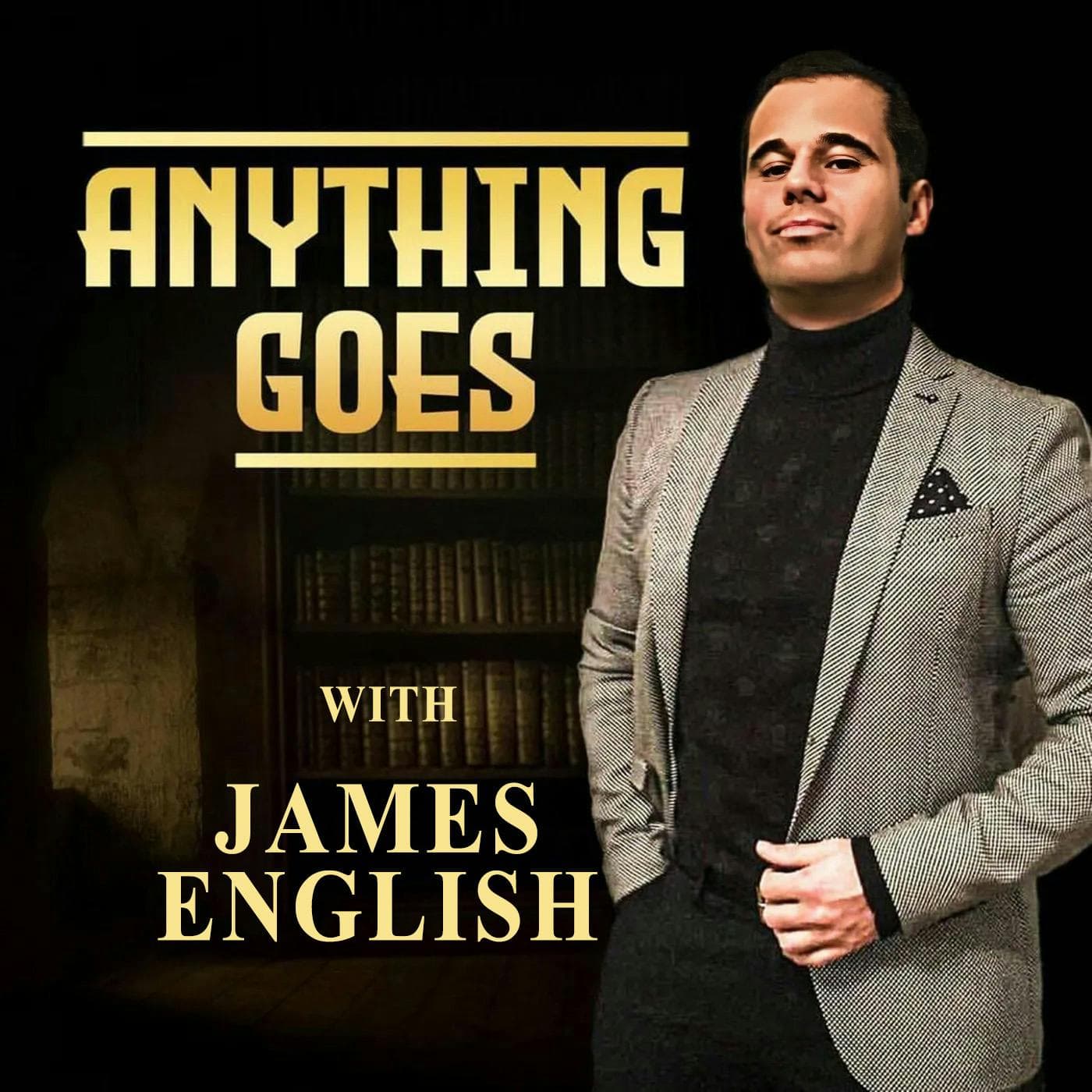
In short
Bruce Bryon discusses his wrongful conviction and 29 years in New York prisons, arguing the criminal legal system is incentivized to secure arrests/convictions rather than truth. He also connects his experience to broader themes: prosecutorial misconduct, witness corruption, prison labor, and the role of mindset/faith in surviving incarceration.
Guest (and background)
Bruce Bryon is a formerly incarcerated man who says he was wrongfully convicted for a murder he did not commit. He grew up in New York after his parents migrated from Antigua and Dominica (Lower East Side Manhattan, then Queens). He describes himself as academically strong, later becoming a reader and self-educator in prison.
Key claims
- Prosecutorial misconduct and police-prosecutor alignment led to his conviction.
- His court-appointed attorney (Reginald Tao) allegedly didn’t investigate (no private investigator) and sought psychiatric help due to PTSD.
- He names former Queens prosecutor John Scarpa as a rogue figure with misconduct history and immunity protections.
- Wrongful convictions are driven by misidentification, incentivized testimony deals, and suppressed disclosure.
- Prison labor and life-without-parole function like “slow death” and modern slavery.
Notable examples
- He says he was arrested in Queens and later charged after being taken into custody in Syracuse.
- He cites witness testimony allegedly involving drug users offered deals (e.g., reduced time for testimony).
- He mentions stop-question-frisk oversight findings tied to precincts (103rd and 113th).
- He names Travis Lilly as the victim.
- He references Darryl Austin, a bunkmate who died by suicide before his innocence was proven.
Written by AI. May contain mistakes. Listen to the episode to check what was said.
Chapters
Tap a time to open that second in VOBruce Bryon's Story Begins
0:30 to 1:33
Bruce shares his experience of being wrongfully convicted and the impact of systemic corruption.
“Star Wars The Mandalorian and Grogu is now streaming on Disney+.”
Bruce's Early Life
1:33 to 4:00
Bruce discusses his childhood in New York and the family dynamics that shaped him.
“But before we get into everything though, I always like to go back to the start of my guests, get more of a bit of understanding about you, Bruce, where you grew up and how it all began.”
Disconnect Between Generations
4:00 to 5:32
Discussion on the breakdown of generational respect and community bonds.
“There's a brokenness, I also think, um, between young people and the elders, like, like my parents and, and older, you know, parents, you know, men and women in their seventies and eighties.”
The Divide and Conquer Mentality
5:32 to 7:37
Exploration of societal divisions and the influence of social media on community and trust.
“Um, I think, I think all of that was social conditioning.”
The Good in the World
7:37 to 7:50
A reminder of the positivity and goodness present in society despite challenges.
Awakening and Fear
7:50 to 8:31
Discussion on the awakening of consciousness and the fear of stepping out of comfort zones.
“are good they give you the time of day they're nice yes you're going to get people stressed because they're caught on a system but the majority of the world is good.”
Imagination vs. Reality
8:31 to 10:22
Bruce reflects on the importance of imagination and creativity in education and life.
“You're very clearly educated to understand certain things through your life.”
Critique of the School System
10:22 to 13:57
Criticism of how the school system suppresses creativity and individuality.
“There used to be a saying that says, if you want to hide something from a Black person here in America, then you put it in a book.”
Overcoming Adversity: The Power of Positive Mindset
14:01 to 22:32
Learn how individuals can transform negative experiences into fuel for success through positive thinking.
“You know, children are only allowed to speak when they're spoken to or they tell how much, how wrong they are or how much they couldn't make it.”
The Impact of Wrongful Conviction
23:03 to 28:03
Explore the personal story and systemic issues surrounding wrongful convictions and prosecutorial misconduct.
“Young guy, hustled every now and then, sold little drugs, you know, tried to make a living.”
Show all 46 chapters
The Power of Prosecutorial Immunity
28:03 to 29:39
Learn about the implications of qualified immunity for prosecutors and its impact on justice.
“So, the fact that he had qualified immunity as a prosecutor meant that he can do...”
Consequences of Wrongful Convictions
29:40 to 30:39
Explore the devastating effects of wrongful convictions on families and communities.
“as a result of removing someone from the household.”
Prison Labor and Economic Exploitation
30:40 to 31:55
Discuss the economic aspects of prison labor and the exploitation of incarcerated individuals.
“Auburn Maximum Security Prison in upstate New York and Syracuse is the first maximum security prison built in New York State.”
Expectations vs. Reality of Conviction
31:56 to 32:56
Hear about the psychological impact of being wrongfully convicted and the initial hopes of release.
“and arrested for being undocumented in this country, they're going to private prisons.”
The Human Cost of Crime and Justice
32:57 to 34:26
Understand the universal harm caused by crime and the importance of acknowledging its impact.
“It was a young person that was killed in a drug-related shooting.”
The Flaws of the Justice System
34:27 to 35:58
Learn about the systemic flaws in the justice system, especially in marginalized communities.
“And to not just, uh, be so quick to arrest any and everyone that they feel could potentially be a suspect.”
Misidentification and Prosecutorial Misconduct
35:59 to 36:58
Delve into how misidentification and misconduct contribute to wrongful convictions.
“They're incentivized for the arrest and for, you know, closing a case as soon as possible.”
The Role of Corruption in Convictions
36:59 to 42:00
Examine the role of corruption and witness manipulation in securing wrongful convictions.
“I recently, I moderated a panel last week with the federal monitor, who she was absent, but her staff were there.”
The Trial and Conviction Experience
42:00 to 45:03
Bruce shares his feelings during his trial and the conviction process.
“but he just happened to be one of them that he just wanted to utilize this.”
Faith and Survival in Prison
45:35 to 56:14
Bruce discusses his faith and strategies for maintaining hope in prison.
“I didn't, you know, I just said, I trust that God will allow the truth to prevail.”
Transformative Prison Experience
56:44 to 1:02:02
Discover how mindset and education can redefine prison life.
“From being depressed, from being sad, from being down, from seeing this prison as being this place of captivity.”
Coping with Trauma and Violence
1:02:02 to 1:10:00
Explore methods to process trauma while maintaining humanity.
“What's the worst thing you've seen in prison?”
Rewiring the Brain: The Power of Affirmations
1:10:00 to 1:12:40
Learn how affirmations and subconscious programming can reshape your mindset.
“gratitude, different affirmations from my board.”
The Role of Inspiration in Transformation
1:12:40 to 1:14:42
Discover the importance of inspiration and how it can emerge in quiet moments.
“And it made me think this morning about how I would sit up in that prison cell and in the middle of the night, because I'm sleeper depending on the pad, in the middle of the night, I would begin writing.”
The Journey Towards Justice: Overcoming Wrongful Conviction
1:14:42 to 1:17:08
Understand the steps and persistence needed to overturn a wrongful conviction.
“and what I would consume, the books and the articles and the things that I would read and internalize, I began seeing it more and more and more and more and more, day in and day out.”
Living with Hope and Gratitude During Imprisonment
1:17:08 to 1:19:43
Learn how gratitude and hope can sustain you through the darkest times.
“Was that with the telephone or something?”
Encounters with Infamous Criminals
1:19:43 to 1:22:13
Explore what it's like to share a space with notorious criminals during incarceration.
“They have now, in New York State, they have, um, conviction review units.”
The Joy of Freedom and New Purpose
1:22:13 to 1:24:03
Experience the profound emotions and new life goals upon being released from prison.
“you were going to be a free man, how did you feel that day?”
Vision Board and Serendipity
1:24:03 to 1:26:26
Learn how Bruce Bryon used vision boards to manifest his goals and connections post-incarceration.
“So I'll make sure you get it so you can see the full episode, part one and part two.”
Adjusting to Life After Prison
1:26:27 to 1:28:49
Explore the challenges Bruce faced adjusting to a rapidly changing world after 29 years in prison.
“and then coming out to a whole different world?”
The Power of Intentions and Clemency
1:28:50 to 1:31:10
Understand the impact of intentional living and the complexities of executive clemency.
“You know, from public transportation to the way people interact, the way we communicate, it's we're beginning to develop, you know?”
Grieving and Healing
1:31:11 to 1:33:42
Discover how Bruce coped with grief during his incarceration and his philosophy on emotional healing.
“Um, because this guy could have been utilized continuously for the good that he was doing.”
Staying Grounded in Chaos
1:33:43 to 1:35:41
Learn how Bruce maintains calmness and clarity amidst challenges and media attention.
“So, you know, taking that time to actually mourn, excuse me, or to grieve, to express grief, was that, you know, very rarely do you have that opportunity.”
Freedom and Future Aspirations
1:35:42 to 1:38:01
Hear about Bruce's feeling of freedom and plans for sharing his story through literature and platforms.
“Yeah, I think just staying grounded and knowing who you are.”
The Importance of Storytelling
1:38:01 to 1:40:08
Learn how sharing stories can help others navigate their struggles.
“They're going to make a movie of your life, books, what's their plans for the future?”
Life After Prison and PTSD
1:40:09 to 1:42:30
Explore the challenges of adjusting to life after incarceration, including PTSD.
“Obviously, your survival instincts kick in.”
Meeting Joe Rogan: A New Platform
1:42:31 to 1:44:59
Discover how Bruce's appearance on Joe Rogan's podcast changed his life.
“He's a comedian at Joe Rogan's comedy club, The Mothership.”
Lessons on Ambition and Self-Love
1:45:00 to 1:47:36
Understand the significance of ambition, self-love, and making a positive impact.
“It's so important that you lift as you climb, right?”
Living with Regrets and Moving Forward
1:47:37 to 1:50:16
Learn how to cope with regrets and focus on self-improvement.
“So it's okay for me to live with those regrets.”
The Meaning of Life and Luck
1:50:17 to 1:52:00
Discuss the significance of luck and the outlook on life's challenges.
“What's all your social media stuff for people who maybe get in contact with you, ask you questions, maybe job opportunities?”
Reflections on Life and Inspiration
1:52:00 to 1:53:14
Exploration of how one word or moment can change someone's life.
“For me, it may have started as a podcast, but it was much more than that because, you know, we've been communicating for a while about this.”
The Impact of COVID-19 on Mental Health
1:53:14 to 1:55:05
Discussion on the devastating effects of COVID-19 on individuals and communities.
“when I was in prison, and I watched so many people die that I knew, including officers that, you know, that guys had a decent relationship with.”
Encouragement and Worthiness
1:55:05 to 1:55:58
The importance of words of encouragement and recognizing one’s worth.
“And I've watched it for decades in prison.”
Shared Humanity and Justice
1:55:58 to 1:57:17
The necessity of emphasizing human dignity and empathy in our society.
“So whatever thoughts or whatever inclination you may have to take your own life or to feel like you're not worthy, know that that's not true because you are worthy.”
Shared Humanity and Justice
1:57:51 to 1:58:14
The necessity of emphasizing human dignity and empathy in our society.
“We are outgunned and we are outmanned, but we have each other.”
Gratitude and Closing Thoughts
1:58:44 to 1:59:43
Final expressions of gratitude and encouragement for the audience.
“Hopefully a lot of people can learn from it and do better with their own lives.”
Transcript
Automatic transcript. May contain errors.0:02I want to hire a private investigator. Some folks say I'm the best. ABC Tuesdays, TV's hottest PI is back. You sure you're ready to take on a serial killer? It's like a dozen more likely explanations other than serial killer. All right, maybe not a dozen. In Florida, crime has no off-season. I just heard you were shot at today. With a rocket launcher. Well missed. R.J. Decker, Tuesdays, 10, 9 central on ABC. Next day on Hulu. Star Wars The Mandalorian and Grogu is now streaming on Disney+. What are you waiting for? Hop on. The must-see galactic adventure comes home on Disney+. This is the way.
0:43Our only chance is to work together. I like this kid. Always wear your seatbelt. Star Wars The Mandalorian and Grogu now streaming on Disney+. Read PG-13.
1:06You can now follow me On all my social media platforms To find out who my latest guest will be And don't forget to click The subscribe button and the notifications Bell so you're notified For when my next podcast goes live
1:33and boom we're on and today's guest we've got bruce brian bruce how are we i am well how you doing really well thank you first and foremost thanks for coming on the show a mad story 29 years in prison wrongly convicted yes a lot of people that interview will say the system is broken is prime example of the corruption behind closed doors and um yeah you lost 30 years of life by the corruption of the system. But before we get into everything though, I always like to go back to the start of my guests, get more of a bit of understanding about you, Bruce, where you grew up and how it all began. Well, my parents migrated here from Antigua, West Indies.
2:12My mother's from Dominica, my father's from Antigua. My siblings were all born there. They migrated from Antigua, West Indies to New York in the late sixties, um, lower east side, Manhattan. So from around, from the time of birth to around 78, I was born in 69, to around 1978, 1979, we moved to Queens. I was about nine years old, maybe eight. Yeah, about nine. And you begin to attend school, different environment. My family was able to buy a home in Queens, which was essentially the start of a new beginning for my family. Prior to that, we had lived in a tenement building on the Lower East Side in Manhattan.
3:03So it was a fresh start for us, moving from Manhattan to Queens, New York. What were your late-count school? School was... I was good in school. I was pretty, you know, outside of being a mischievous kid in terms of understanding the work and doing the work academically, I was always up to speed. In fact, school was relatively easy for me. Did you have a big family, brothers, sisters? Yes. I have a little brother who has a different mother, and I have five other siblings by the same mother. Are you as close? Yes. That's a good thing. Yes, that's a beautiful thing. Especially nowadays, everybody's broken, everybody's hating on each other.
3:46You know, back in the day, it was all family, very close-knit. You grew up in the same household, mother, father, four or five brothers or sisters, and everybody stays strong. Everybody worked together. Everything's broken now. Everything's changed. Yeah. Everything has changed. There's a brokenness, I also think, um, between young people and the elders, like, like my parents and, and older, you know, parents, you know, men and women in their seventies and eighties. there's a disconnect between them and young people, young teenagers. You know, it's why I'm currently working on doing what you're doing, to create a line of communication by which young people can hear the wisdom of the elders and what it is that got them through their challenges in life.
4:37Well, there's no respect anymore. Mm-hmm. The respect has gone. Like, back in the day, you respected your elders, you respected the people from the communities who had lived that life. everybody knew each other but like you say there's a disconnect social media plays a massive part on that disconnect also people are so caught up in their own little world in their own little bubble but there's no communication that's why a lot of suicide is rife is where i believe but tribal is tribalism we should all be in packs we should all be a part of something that's why people go and support basketball nfl soccer they just want to feel part of something but it doesn't It's the family life, it's the family structure, the friendships, but there's no trust out there anymore.
5:18I was saying that just before the podcast, that I don't trust any cunt. But also, what it means to be in community with other people, and that sense of community has been broken. There's been a culture shift. You know, there's been a tremendous amount of change with all sorts of drugs. Um, I think, I think all of that was social conditioning. The idea of divide and conquer. I think when you live in a capitalist society, it benefits capitalism to have a level of division amongst those that are what they call from the middle or the lower class financially, right? From the socioeconomic perspective, it makes sense that society keeps people divided.
6:03And I think the sooner people wake up and understand that there's a shared humanity that we all have and we're not defined by our checkbook, we're not defined by what it is that we do for a living. You know, we're all a part of the human family. It's why I call myself a human justice ambassador because I'm a part of the Human Justice Network. because when you start with human, there's an even playing field, right? There's an even playing field when we understand that, you know, despite you being from the other side of the world and me being from America, we're still connected by our shared humanity, you know?
6:47But like you says, it's the people behind the curtain. It's the people who have fund both sides of words. Social media has now come into play. You've got left wing, right wing, white, black, Christian, Muslim, everybody's finger pointing and looking to blame. They're doing this, look, they're doing this, they're doing this. But with everybody attacking each other, it lets the people behind them pull the strings and operate for more years, 10, 20, 30, 40, 50 years ahead of the game while everybody fights and argues. Because like you say, we're all human. We're all connected in a world that's disconnecting us because something feels missing.
7:22And like you say, the divide, it makes it easier for them to be controlled. and they're all saying there's divide and conquer we know this but it's the people behind the curtain that's getting everyone to fight instead of working together to expose the evil then the world would be a better place but right now everybody's being played right now everybody's just hating and full of rage the world is a good place as well social media makes us think the world is in turmoil there's a lot of beauty out there there's a lot of good people the people I speak to are good they give you the time of day they're nice yes you're going to get people stressed because they're caught on a system but the majority of the world is good.
7:59If you go on the news and social media, you would think it's falling apart and we're looking to blame. And it's the blame game and it's causing so much hatred and it's causing so much unrest and it's fucking with people's frequency. You know, your vibration should be vibrating high at a higher speed and everything's suppressed, everything's static, everything's noisy. I think people are waking up also, but I just think people are too scared to step out of the comfort zone and ask the questions because then they'll be ridiculed, then their name will be tarnished, and bad things do happen when you step out and try and create awareness.
8:32Did you see this at a very young age? Because you're a very smooth guy. You're very clearly educated to understand certain things through your life. You must have educated yourself and read a lot of books. But did you see this at a young age, or were you oblivious? I think at a young age, you begin to see the fragments in society. Coming up on the Lower East Side, I remember vividly some of what I saw. While I didn't fully understand it, because my house was filled with love, right? So there was a level of unity there. So when you're filled with love, you don't really understand poverty. You don't really understand things and stuff and what makes people feel like they have more materialism or that they're worth more, based on the material things that they have.
9:19You don't see the world through that lens, right? You see the lens through a lens of family. community, the love, and you're able to play. And there's a level of safety that I always felt as a young child because, you know, I had so many siblings and I had so many people in my household. I think as you get old, though, it becomes clear that not only is the system doing what it was designed to do, it's actually not broken. It's doing what it was designed to do, right? Once you begin to understand and become conscious through studying, through reading, but more than anything, through observation, you begin to question certain things.
10:01You begin to interrogate certain things. Well, why is this this way? You know what I mean? Why do they have more privilege than I have? Why do they have more stuff when I can barely attain certain basic needs, right? So you begin to question things and interrogate things, and the deeper you question it, the more you start opening those books. There used to be a saying that says, if you want to hide something from a Black person here in America, then you put it in a book. Because we weren't known for reading, right?
10:35I've, you know, reading has always been something that I enjoyed because it allowed me to imagine. And I think one of the things I see today is that we've been, young people have been robbed of their imagination. right? The inability to imagine and to just be a child and to imagine what can be or what should be or what it is that you see through your vivid imagination, what it is that you want, what it is that you desire. I want to hire a private investigator. Some folks say I'm the best. ABC Tuesdays. TV's hottest PI is back. You sure you ready to take on a serial killer? It's like a dozen more likely explanations other than serial killer.
11:19All right, maybe not a dozen. In Florida, crime has no off-season. I just heard you were shot at today with a rocket launcher. Well missed. R.J. Decker, Tuesdays, 10, 9 central on ABC, next day on Hulu. Star Wars, The Mandalorian and Grogu is now streaming on Disney+. What are you waiting for? Hop on. The must-see galactic adventure comes home on Disney+. This is the way. Our only chance is to work together. I like this kid. Always wear your seatbelt. Star Wars The Mandalorian and Grogu. Now streaming on Disney+. Read PG-13.
12:04All that stuff that I learned as a young person started coming back to me when I was sitting in that prison cell years later. But that's what the schooling system is good for. killing imagination, killing dreams. It's not done for creativity, imagination, because everything in this universe is created by thought, is created by imagination. These microphones, this table, cameras, someone has imagined setting these up, doing them, creating them. Everything around us is through imagination, through the gift of creation. But when you're in a system to not put your hand up, not ask the questions, the American schooling system is the same as the schooling system here.
12:44like they go to prison and school on the same bus they wear the same uniforms they put their hand up they stay in line to get the same foods like everything is that in a dense classes no lighting concrete walls it's the same everything is a system everything's patterns to keep you not thinking outside the box and because if you're getting told every time you put your hand up like you're wrong or don't ask questions you eventually be scared to ask questions and that's why you're more easily easily led down a path of not wouldn't say no life but no imagination like you can be anybody and you you genuinely want in life and it's a beautiful thing if you can tap into that abundance and tap into that visionary that you have but we're just so dumbed down with so much noise from a very young age everything's sort of backwards i don't have all the answers with it all if i'm honest but it's just trying to understand it all too for people watching or listening that You can make choices, you can make better decisions, you don't have to go with what you've been taught your whole life, you know?
13:45I think they begin to stifle and suppress creativity. The public school system as it stands for years have done that. I think it stifles, I think it suppresses the creativity. You know, children are only allowed to speak when they're spoken to or they tell how much, how wrong they are or how much they couldn't make it. I got a close friend of mine now by the name of Kay Bain, who is the founder of the Human Justice Network and CCD, Community Capacity Development. And one of the things that Kay Bain was told in high school was, take this pass and you can go wherever you want to go. You don't even have to come to class because you're disrupting everyone else.
14:32You're not going to college. You'll never see the inside of a college room. Yet today, my brother Kay Bain is currently pursuing his PhD at NYU. So I say that as an example of how the school system and how people have been conditioned to judge little young Black boys, young Black girls in this country that are expressing their creativity, whether it's through their dress, through their hair, or just through the way that they express themselves. You know, here's a young guy that was told he wouldn't make it to college. And today he's pursuing his doctoral degree. And he's a founder of several businesses.
15:13He's a social entrepreneur. And he's doing extraordinary work, right? And this guy is literally going to NYU to pursue his PhD. And he was also on the mayor, the mayor-elect, Mandami, our current mayor in New York City. He is on Mandami's transition team. But if he had listened, if he had internalized what that teacher said to him, when he tried to stifle and suppress his creativity. He wouldn't be where he is today, right? So sometimes you can take those circumstances and turn them into fuel, but it takes a special kind of guy to do that. It takes a special person to take those negative responses that you receive and to turn them into fuel.
15:59And that's what led me to have my mindset shift while I was in prison to change my mind. Yeah, Les Brown says that he says, people's opinion of you doesn't have to be your reality. Very powerful. What was Les Brown is one of the guys I've always admired. He was a legend. I actually would like to meet him. I've always, I've listened to several Les Brown tapes while I was in prison about public speaking. It's something that I would study. It's something that I had an appreciation for. is communication and hearing guys like Les Brown speak, hearing guys like John Maxwell, and just hearing them speak in great orators, even Malcolm X, Dr.
16:41King, some of the great speeches that we've heard over the years. You learn and you listen and you observe. You know, it's just how they were able to communicate what it is that they feel and what it is that they thought internally. But you feel their passion. You feel their confidence. And they never always had confidence. That's the beautiful thing. they've worked at it if you listen to les brown's story what he had to go through at school they called him basically a retard that he couldn't think he wasn't normal and became one of the biggest motivation speakers of all time unbelievable achievement what he done i used to listen to him when i was going through a lot of changes because i never had motivation around me i never had any role models so i had to search for it and these were the guys that came up and i just thought wow that just spoke positive into your life.
17:28And then when you start thinking positive, you attract positive. And it just made sense. And then once that good thing started happening, I realized maybe I am good. It's just because I was doing good. I changed all the negatives to the positives, and then the doors opened for more positives. It was a beautiful thing. And it's not easy to do that. Um, there's a young guy, a young friend of mine. He has this saying, positive energy equals positive results. And I love that he does that. He does it all over Instagram, on different social medias. Positive energy equals positive results. And it's so true, right?
18:04And it's something that I try to tell young people today, to internalize that, right? You have to will yourself, despite your external circumstances, you have to will yourself to have and give off positive energy. because positive energy will attract positive results. What did you do after school? After school, I went home. I'm a chievous kid. I was like any other average kid, playing in the street, hanging out, you know, everything from just chasing girls as a young age, you know, doing after school stuff. I didn't bury myself in sports. I like to read more than I did sports. I liked to run when I was younger.
18:51And as I came into my teenage years, I always liked to work out. Because when we moved into the house from Manhattan to Queens, Southeast Queens, when we moved over there, there were waits in the basement that the previous owners of the house had left there. There were waits, there was a ping-pong table. So I enjoyed it. That's why I like pickleball now. You know, I played a few times in Lifetime Gym. I like pickleball. But, um... Is that the hit with your hand? That's with a paddle, but it's... Against the brick wall? No, it's against a person. Teams. Sometimes it's two on two. Yeah, yeah, yeah.
19:27The smaller court. Pickleball. But it reminds me of ping pong, right? And having the ping pong table in the basement of our home and being a young person always playing in my basement. You know, and it's, you know, it's something that gives you high energy. Eye, hand, coordination. Um... Speed. Speed. but more so the coordination and the reflexes. And then I also liked boxing, which has always been my favorite sport, boxing. And it was all about reflexes, how you respond quickly to circumstances. And I think, you know, liking these sports that dealt so much with primary reflexes allowed me to be able to pivot in my own life.
20:14when I find myself in dire circumstances. You know, that internal reflex of how to respond when you're in situations of fight or flight. How to navigate through the pain? How to navigate to the pain, right? Because trauma, I always hear people saying that you're responsible for your trauma. And I get that. But what I believe is that not everyone is responsible for their trauma. Some people are innocently victims, and what they are responsible for is how they respond to that trauma, how they navigate, and how they develop healthy coping mechanisms to confront and deal with the trauma. And that's what they're responsible for.
21:01So for me, it was how I responded to negative situations, how I decided to find the wherewithal to respond both with speed and in a conducive way that would benefit me. Because as a young person, it wasn't always in a conducive way because you didn't have the tools, right? You didn't have the language or the tools or the understanding of how to navigate something in a more meaningful and a productive way where it would benefit you. You know, as I age, um, I think I use the metaphor of sports and reflexes because as I age, I've been able to, um, cope with some of the harshest circumstances in a way that allowed me to thrive when most people were only surviving.
21:54I was able to begin the process of thriving. Before you went to prison at 23, how was life before that? Star Wars The Mandalorian and Grogu is now streaming on Disney+. What are you waiting for? Hop on. The must-see galactic adventure comes home on Disney+. This is the way. Our only chance is to work together. I like this kid. Always wear your seatbelt. Star Wars The Mandalorian and Grogu now streaming on Disney+. Read PG-13. This episode is brought to you by ChatGPT. Hey, it's Bill Simmons from the Bill Simmons Podcast. Have you guys heard about ChatGPT work? It's the new way to use ChatGPT for bigger multi-step projects.
22:45And when you need more than just answers, give ChatGPT work access to your apps and files, and it can create real work documents like spreadsheets, slides, and structured reports. Get started at ChatGPT.com by selecting work mode available on Plus and Pro plans. Young guy, hustled every now and then, sold little drugs, you know, tried to make a living. Wasn't deeply into the... into none of what they accused me of, murder and different things like that. All so much falsehood, so much misconduct, so much prosecutorial misconduct. So I'm just an average young guy coming up in Jamaica, Queens. And Jamaica, Queens, where I'm from, where my family had migrated to from Manhattan was filled with what I would say people that sold drugs, but they sold drugs in what they called crews.
23:45So it was a number of people involved in drug dealing. And it's why, and they all belong to a particular set, it's why they falsely accused me of being a part of a crew that caused the death of a young person in a drug-related shooting. Um, because it's sensationalism, right? It's sensationalism. And, you know, when you have... when you're convicted in a county like Queens, and you have a rogue prosecutor by the name of John Scarpa, who has a history of misconduct, he has a history of engaging in misconduct to secure a conviction. Um, because the reality is prosecutors were incentivized, you know, through promotions and different things like that, to secure convictions.
24:34While their job was to do more than just secure a conviction, their job was to uphold justice, right? And what justice looks like. Justice is not just arresting someone and having them be charged and convicted for crimes they did not commit, just to close a case. And this is ubiquitous in this country. Um, it's why they have an International Wrongful Conviction Day, which is October 2nd. And many people don't know that. October 2nd is Wrongful Conviction Day across the country, because there have been thousands of people who have been wrongfully convicted and been proven to be wrongfully convicted.
25:16Now there are... I'm sure there are tens of thousands or more who've been convicted, but just haven't had the means to prove their conviction was false. See, this judge, was it a certain skin color he was going against, or was it everyone? Was it racism with him? I think, um, the judges, I had about 13 different judges. Did you? Yeah, 13 different judges. I had Judge Hanafi. I was in front of him. I was in front of Judge Demarcus. Um, then I was convicted in front of Judge McGann. But I had, I was in front of several, for 13 months, I had never seen a judge. I was just going to court. Right? And I didn't know that my attorney was seeing a psychiatrist at the time.
25:59My attorney was Reginald Tao. He was a court-appointed attorney who was seeking significant psychiatric treatment because he had been attacked and slashed by his previous attorney. By his previous client, rather. And because his previous client couldn't get rid of him, he decided to attack him. and he was suing the city. So while he was suing the city, he was seeing a psychiatrist, right? Because he was suffering from severe PTSD. So this guy would never communicate with me, never come and talk to me, never come and visit me, never had an investigator on a homicide. He never had... I don't know anyone who's never had a private investigator involved in their case for homicide.
26:48My attorney didn't have a private investigator at all. He had no interest in the case because he was dealing with his own trauma. He was dealing with his own trauma. Um, which in a way I can understand, I just wish that he had been more transparent and said, I can't represent you because of what I'm dealing with, which is something he refused to do. Do you feel as if you had a better lawyer? Absolutely, no question about it. You would have got... There's no question about it. I mean, even today, I've had friends of mine who are deep into AI, and they've put my entire case into AI and say, what would be the outcome today?
27:28And they said, there's no way he would be convicted. We can look at, you know, you can look at all of the misconduct, because my prosecutor, subsequently later on, he was pushed out of the DA's office in Queens and forced to become, essentially became, a defense attorney. But his conduct never changed. So he was later on arrested and charged with fraud for trying to get a witness to change their testimony to benefit his client. He also has numerous lawsuits against him for misconduct. Um... So, the fact that he had qualified immunity as a prosecutor meant that he can do... He was above the law, essentially.
28:13He can do what he wanted. He had absolute immunity. He can, I mean, the prosecutor can come in here and lock me and you up today and say that we're plotting to take over America and we'll go to prison for years. And then they, now we're innocent. Nothing happens to the prosecutor because he has immunity. How do they get that? How do they get immunity for something like that? Like it's the law. That's a big battle of power to have in your hands. That's unbelievable power to have. you know, is to take people's lives away. So what happened on the run-up to getting charged? When the police came through your door, like, what happened?
Read the full transcript
28:52Did they come through your door? Police came to my door in Queens. Police or FBI? Police, um, you know, detectives, homicide detectives. And they arrested me days, months later, in Syracuse, upstate New York. Um, it was just, it was just horrible, right? It was devastating to be arrested and charged for a murder you didn't commit. Family is devastated, loved ones are devastated. And they don't look at these things, they don't look at the families that are disrupted when someone is charged or accused and convicted. Even if they did a crime, the system never considers what happens to that family, right?
29:39and how broken it can often become as a result of removing someone from the household. You know? So, I mean, again, the system has done exactly what it was designed to do. Arrest, convict, you know, and just try to close cases. I know countless guys right now that are still in prison, wrongfully convicted. I know guys that have 50, 60 years for robbery, for robbing a department store. They essentially have death by incarceration is their sentence. Because you give a guy 60, 70 years, what's the chances of him living that long under those conditions? So that's a death sentence, but it's death by incarceration.
30:29So the United States still has a death penalty, but it's the death penalty, it's a slowdown in New York State, right? It's a slow death when a person has LWAP, life without parole. There's slavery also. Absolutely. There's free workers. Auburn, they make license plates. Auburn Maximum Security Prison in upstate New York and Syracuse is the first maximum security prison built in New York State. Um, and they make license plates. They save some, you know, they generate some$180 million a year off of incarcerated people who are being paid sometimes six cents or 10 cents an hour to work for decades, making license plates.
31:08In Greenhaven, where I spent nine years, they have what they call upholstery. Um, chairs, sofas, they're making them. System is producing them, you know, mass producing them, because these guys are making 25 cents, 10 cents an hour, making sofas, while the system sells them for thousands of dollars. Core Craft. Core Craft is the name of the company, and I'm 100 % sure Core Craft is on the stock market. Very similar to the private prison sector, right? Core Civic and GEO, they're all on the stock market, and they've had a boom with their stocks under this current administration because many of the people who are undocumented and arrested for being undocumented in this country, they're going to private prisons.
32:05And in order for private prisons to, um, to continue to function, they have to have product, right? They have to have people. They have to have people in order to stay open. What you're thinking when you get charged? Did you think, okay, I'll take it? I'll be out soon? Well, I did think I would be out soon. Um, the farthest thing from my mind is that that I would spend 29 years in prison. The farthest thing from my mind is that I would be sentenced and convicted and sentenced to 37 and a half to life. Um, that was the farthest thing from my mind. Because when you know that you didn't do something, um, you're not thinking about spending, you know, majority of your life in prison.
32:55Who was the guy that was killed? It was a young person that was killed in a drug-related shooting. Travis Lilly, I like to say his name, because the potential of that life should be honored. I want to hire a private investigator. Some folks say I'm the best. ABC Tuesdays, TV's hottest PI is back. You sure you're ready to take on a serial killer? It's like a dozen more likely explanations other than serial killer. All right, maybe not a dozen. In Florida, crime has no off-season. I just heard you were shot at today. With a rocket launcher. but I missed. R.J. Decker, Tuesdays, 10, 9 central on ABC.
33:34Next day on Hulu. Star Wars, The Mandalorian and Grogu is now streaming on Disney+. What are you waiting for? Hop on. The must-see galactic adventure comes home on Disney+. This is the way. Our only chance is to work together. I like this kid. Always wear your seatbelt. Star Wars The Mandalorian and Grogu Now streaming on Disney Plus Read PG-13
34:07You know, the fact that I'm innocent and I was wrongfully convicted doesn't change the harm that was done to the family as a result of a life being lost and that goes, that's universal, right? When a person loses their life the impact it has on that family on that community on those loved ones should always be acknowledged and should never be overlooked. However, when you talk about justice and what justice looks like, I think it's important to make sure that when you, when both detectives and prosecutors and the criminal legal system decides to pursue a conviction or an arrest, um, they should be, you know, a million percent sure that this is the outcome that they want.
35:00And to not just, uh, be so quick to arrest any and everyone that they feel could potentially be a suspect. How many suspects did they have? There are several suspects. I'm saying they had, I mean, three of us were arrested, but it was, this area was like an open drug market. So, so many people were being investigated and interviewed at the time that they should have done a much deeper and in-depth investigation than what they've done. But when crime happens in the inner cities, in the margins of society, in these pocket communities that are often, you know, impoverished and overlooked. The officers that police these areas, they don't really have an interest in who did what.
35:51They have an interest in an arrest and a conviction. Because again, these people are incentivized. They've incentivized prosecutors, cops, become detectives. They're incentivized for the arrest and for, you know, closing a case as soon as possible. Wrong guy, right guy, doesn't really matter to them. an arrest is made, very similar to the over 3 ,500 cases in the United States that have been overturned. It's an arrest. It's a conviction. It's what they enjoy doing. It's how they make their living, right? Both prosecutors and rogue officers, like former Brooklyn detective Louis Garcella, who single-handedly pushed black people back into slavery.
36:45He was responsible. One detective, he was responsible for over 400 years of wrongful incarceration. This is one detective. And he's not alone. He's not alone. I recently, I moderated a panel last week with the federal monitor, who she was absent, but her staff were there. And the Office of Community Liaison was there. And they look at stop, question, and frisk in the borough of Queens. And there were a couple of things that they found. The federal monitor was put into place around 2013 because they felt the stop, question, and frisk that the NYPD were engaging in in New York City was unconstitutional.
37:39A federal judge found that. So they implemented a federal monitor to have some level of oversight. And the Office of Community Liaison, their job is to go into the community and hear the voices of the people in the community and bring that back to the federal monitor, right, to their staff so that they can bring it to the woman who is the actual monitor and tell her this is what the community is saying is taking place with the NYPD.
38:08and while I was moderating this and they pulled out the charts, they pulled out the charts and they said, in Queens, there were two precincts where the numbers have skyrocketed and have gone up over the years, over the past year, of stop, question, and frisk. And that is the precinct that arrested me, the 103rd precinct and the 113th precinct. Now, these are precincts that essentially police poor Black and brown communities, right? And when they come, they often arrest entire blocks. So it didn't, it wasn't a coincidence. It didn't surprise me that the 103rd precinct was involved in a huge influx of stop, question, and frisk, which is often unconstitutional.
38:58constitutional. But they do it because, number one, misidentification and prosecutorial misconduct are two of the top ways in which the number one and number two ways in which wrongful convictions occur. What evidence did they have against you? People using substances or substance abuse users, you know, formerly known as drug addicts, people that were using drugs to say, well, I have a case pending. I'm facing 7 to 15 for a robbery. And I'll testify and say, James and his friends did this, if you give me a deal and only give me a year. These are the things that happened in my case. So corruption from witnesses as well?
39:44But it's not just from witnesses. I think that the office of the prosecutor, you know, they actually, um, they orchestrate these levels of misconduct. They make it okay. If you take a guy that's facing seven to 15 years, um, he's been using drugs and you put him in a safe house, you give him money for drugs, you tell him the 57 to 15 years he's facing for the armed robberies, we'll overlook it and give you eight months if you testify and say, these guys did this. Is this this guy Scarpa who's getting these witnesses to testify? Absolutely. So he's just wanting convictions no matter what? See if you had a better lawyer, could he have destroyed the drug addict's credibility?
40:35Um, I think even, even if they, even with their credibility being destroyed, there is something about, people getting on the stand as eyewitnesses and saying, you know, because drug users do this all the time. The court system does that. This is very common. And people get convicted and they find out years later, oh man, this guy was on drugs, he was lying. Or they don't even disclose the fact that they gave this guy a deal under the table and it comes out 20, 25 years later. So with the level of misconduct that John Scarpe engaged in, and he was very good at misconduct, because he utilized it in several cases, very, very eerily similar to my own, and he secured convictions.
41:26So his ability to convince witnesses to come and testify, to engage in underhand behavior, to pay prosecution witnesses, to provide them with drugs, to provide them with whatever it is that he had to provide them with, whether it's drugs, money, or a secret deal. His ability to do that was unbelievable, right? Convincing. And all prosecutors have a certain level of power that they wield. Not all of them use it in a negative way, but he just happened to be one of them that he just wanted to utilize this. And he's been doing this since the 80s. to secure convictions. Right? So he was an old-school prosecutor.
42:12Right? They've done things a certain way for years. The 70s, the 80s, the 90s. The way that they orchestrated cases and convictions were unbelievable. While you're going through your trial, when did it sink in that you might be actually losing? That never sunk in until I was actually convicted. Never? No. Even with the lies that people set on the stand, you always feel like, oh, they know this guy's transparent, this guy's getting drugs. You know, despite the tricks that this guy is trying, he didn't reveal that he gave a secret deal to one of the witnesses until, um, a lawyer began to question him.
42:58My co-defendant's lawyer began to question him. Clarence Smith's lawyer, Alan Brenner, began to say, hold on, didn't you get a deal? while they were supposed to tell us this, long before he took the stand, it didn't come out until he took the stand. We were never informed of this. It just so happened that my co-defendant's lawyer began to dig a little deeper into it. What are you thinking then when you got guilty? Of course you're sad, you're shocked, you're hurt, But there was a part of me that really wasn't worried. I was determined that I would make it out of prison and that the truth would prevail.
43:43I always had a strong faith. And I was always very prayerful. So there was a part of me that, you know, I was hurt and I cried and I saw my family there that were hurt. But I knew deep down inside there was something inside. I didn't go back distraught. I didn't faint.
44:04I want to hire a private investigator. Some folks say I'm the best. ABC Tuesdays, TV's hottest PI is back. You sure you're ready to take on a serial killer? It's like a dozen more likely explanations other than serial killer. All right, maybe not a dozen. In Florida, crime has no off-season. I just heard you were shot at today with a rocket launcher. Well, it missed. R.J. Decker, Tuesdays, 10, 9 central on ABC, next day on Hulu. Star Wars, The Mandalorian and Grogu is now streaming on Disney+. What are you waiting for? Hop on. The must-see galactic adventure comes home on Disney+. This is the way.
44:46Our only chance is to work together. I like this kid. Always wear your seatbelt. Star Wars, The Mandalorian and Grogu. Now streaming on Disney+. Read PG-13. This episode is brought to you by ChatGPT. Hey, it's Bill Simmons from the Bill Simmons Podcast. Have you guys heard about ChatGPT work? It's the new way to use ChatGPT for bigger multi-step projects. And when you need more than just answers, give ChatGPT work access to your apps and files and it can create real work documents like spreadsheets, slides, and structured reports. Get started at chatgpt.com by selecting work mode, available on Plus and Pro plans.
45:35When the judge said 37 and a half to life, I didn't, you know, I just said, I trust that God will allow the truth to prevail. And I wholeheartedly believe that even today, right? Did you appeal? You appeal, yes. How many times did it get rejected? Oh, several times. which is quite common, which is common. It's always a little bit disappointing. I mean, it's very disappointing to some people, but I think for me, I took everything with a grain of salt and I knew deep down inside that I would be where I am today. There were never any doubts that I would make it home, in my mind. There were never any doubts about that.
46:14I never thought about suicide. I had a bunkie by the name of Darryl Austin. He slept in the cell with me for months. In 1998, he winded up taking his own life. He was subsequently found, posthumously, he was found to have been innocent all the time because he had the detective that I just mentioned to you, Louis Garcella. And Darrell Austin was very depressed, very sad about his conditions. And he would always tell me, you're not the only innocent person. I'm innocent too. And it just so happened, Darrell was innocent. And he was telling the truth. But he took his life before he was able to prove that he was innocent.
47:06He wound up killing himself. Thoughts, those type of thoughts never entered my mind. See, the police and the prosecutors, are they corrupt and working together to get the charge and then get the conviction? Or is it just so happens are so many people corrupt? I think, well, not I think, I know. You know, the police are aligned, essentially, with the prosecutor. So the police and the prosecutor work, they work hand in hand together, right? And the prosecutor takes, essentially, whatever the police give them. And then they can shape it and mold it and twist it however they feel. So they're very much aligned.
47:50What prison did you go to? Oh, I went to several prisons. I was in Greenhaven, maximum security prison. I was in Clinton, Dannemora, where they made that movie where those guys escaped from Dannemora. Clinton, I was in that prison. I was in Shawongunk. I was in Comstock, which is great metal. Then I came down, I was in Sullivan. Then I went to, prior to Sullivan, I was in Southport. Then from Southport, I went to Sullivan. From Sullivan to Sing Sing. So I was in essentially, you know, a whole host of maximum security prisons in New York State. How do you learn to keep the faith and fly straight, stay out of trouble, survive?
48:44Obviously your survival instincts have kicked in, but how do you actually survive knowing that you're innocent to not get in more trouble? Because a lot of people might have pressed the fuck it button, or they might have just started going nuts, which is understandable as well, that the system has failed them. But how do you stay on survival mode and try and stay on the right path to then fight for your freedom? So I think, for me, you just said something. Staying in survival mode. I think staying in survival mode actually gets you into trouble. So I shift from survive to thrive and said that I was going to begin processing my prison as an educational journey, as part of the journey of life.
49:30I began to change the way I saw the institution, right? The cell became an office for me. The library was a place, of course, where I studied and worked towards my freedom. You know, the yard was for gym and for exercise. So there was always something meaningful, purposeful for me to do throughout the day. So I kept the vision board. I had goals. I would write down my goals. I would journal. So for me, I just was living life. I didn't lose life when I went to prison. I transformed my life. I was in an environment that contained me, but it didn't contain how I think. It didn't contain my mind. So while I had these barriers that prevented me from walking outside and going into the free world, I didn't have barriers around my mind that allowed me to live and be and think and do whatever it is that I wanted to do mentally.
50:27right? Um, the great South African leader who I deeply admire, Steve Bantubiko, and I'm paraphrasing, um, Steve Biko, he made a statement many years ago. He said, the greatest weapon of the oppressed is the mind, the greatest weapon of the oppressor is the mind of the oppressed. So if they have your mind, then they have you totally. But if they have your body and they don't have your mind, there's a certain level of transcendence that you can hold on to. There's a certain level of imagination that you can hold on to. There's a certain level of vision that you can hold on to, right? And where you see me sitting today is this, I visualized this long before I got here.
51:18right? I visualized myself being in the presence of my mother, being in the presence of my family. And the vast majority of what I visualized came to fruition. The only thing that didn't come to fruition was me being free while my father was alive. My father passed away in 2017. Sorry, Hilla. Um, thank you. And I was forced to go to his, uh, to his wake, his viewing, shackled around my angle, shackled around my waist, shackled around my wrist. That's the only part of my visualization, of my vision board, of my life and my imagination and my future that I held onto while I was in prison that didn't come into fruition.
52:03Yeah, that must be the most difficult thing, is losing their loved ones and not being by their side. Oh, very difficult. I know countless guys that have either attempted suicide or have committed suicide during the course of their incarceration because they lost a parent. I know guys that lost their minds, literally. Some have also lost their minds and become extremely violent. because they were denied access to go to their loved one's funeral, their mother's funeral in particular, which is really heart-wrenching, right? So, you know, and you witness these things and you say to yourself, I never want to become that.
52:51So I think psychologically, you kind of prepare yourself mentally and say, if this does happen, I don't want my response to be that.
53:07Right? And I don't know how to tell a person how to prepare for something like that. But I do know that if you're serving a long sentence, you have to prepare. Mentally, emotionally, I was very spiritually grounded. I was always in the church. So God was the head of my life and I always kept faith in God. In fact, I went to church this morning. before I came here. And like I said, I came because I gave you my word a very long time ago that I would be here. And my word means everything to me, right? A man is measured by the sanctity of his bond. And your word should be your bond on some level, you know?
53:46So for me, it's... learning and watching the experiences of others that gave me that, you know, that helped me with that hope and that foresight to say and that vision to say, you're going to be out of here, man. And you're not going to respond the way this person responded when his brother died or when his mother died or when his child died. I've been in prison with guys who their childs were killed in the street while they were in prison. You know? And some of these guys have never been the same since. What was your key ingredient then? Was it faith? Was it number one? Prison is a cold environment.
54:32It's up to you to create your own heat. Where that heat comes from is totally up to you. My heat came from my spirituality, my relationship with God. So yes, my faith played a major role. It came from hope, my interaction and my relationships with other people. that were older than me, that would pour into me and tell me, this is how I navigated this. Also, the type of reading that I engaged in. Man's Search for Meaning by Viktor Frankl. Left to Tell by Immaculée Illibigiza. Dale Carnegie, How to Win Friends and Influence People. When you begin reading these books, it kind of changes the way you think and you process information.
55:23is really, and this may sound cliche, but it's really, really about your mindset. Where you are doesn't have to define who you are. And once you internalize that and you understand that and you begin to say, well, I want to shift my mindset. I see you. Avatar Fire and Ash is now streaming on Disney+. It's the film critics are calling the best Avatar yet. A true epic and completely jaw-dropping. This is the only purest thing in this world. Return to Pandora on Disney+. It will be an adventure for the whole family. And watch the Oscar-winning phenomenon at home. This is sick! Avatar Fire and Ash, now streaming on Disney+.
56:13Rated PG-13. This episode is brought to you by ChatGPT. Hey, it's Bill Simmons from the Bill Simmons Podcast. Have you guys heard about ChatGPT work? It's the new way to use ChatGPT for bigger multi-step projects. And when you need more than just answers, give ChatGPT work access to your apps and files, and it can create real work documents like spreadsheets, slides, and structured reports. Get started at ChatGPT.com by selecting work mode available on Plus and Pro plans. at ZocDoc we know you care about your health you wouldn't do that early morning cardio if you didn't so the fact that your annual physical is overdue just shows how hard it can be to get seen by a doctor sorry that doctor's not a network press 1 for more options you've reached us outside normal business hours the next availability is in 3 months but ZocDoc makes finding the right doctor easy download the app and search by specialty, insurance, and availability read real patient reviews then book instantly ZocDoc, ready to be seen?
57:15From being depressed, from being sad, from being down, from seeing this prison as being this place of captivity. Once you change your mind, you change your life. Did you ever read The Count of Monte Cristo? Absolutely. Yeah, that was a great book. I watched that movie as well. He was someone who was set up, but he came out, he came out bigger and stronger. he actually learned in prison how to read, how to write, how to fight, and came out strategically, strategically. Um, and yeah, he got his revenge, you know, but revenge is, can come in all different forms, you know, revenge. But see, when you're in prison as well, was there much violence around you?
58:00How do you like stay grounded with it all? Because I imagine a lot of drugs in prison in America, just as much as the UK. Oh, yeah. The same things that you happen... Prison is a micro... a micro-co... a micro-society of what happens in mainstream society, right? It's just on a smaller level. So everything that happens in society happens in prison. Same corruption that you see in the streets is the same corruption that happens behind prison bars. You know, the drug dealing, you know, um, the hustling, the robberies you may see, every criminal activity you see in society, that same behavior happens in there.
58:42But also, the same institutions of higher learning you see in society, some people have turned their incarceration into institutions of higher learning. And they begin to study, right? Many of the guys that I surrounded myself with, they've turned their prisons into institutions of higher learning. And that's what got them through. That's what allowed them to separate themselves from just being a prisoner, from being an inmate. You know, that allowed them to separate themselves from being involved in criminality while they were in prison. Many guys may have done something to go to prison. That doesn't mean that they're defined by the something that they did.
59:32Right? They're better than the worst thing they've ever done. And there's a light bulb, a switch that goes off inside a lot of guys' heads that causes them to say, well, I'm going to follow these guys going to college in prison. I'm going to follow these guys that are doing right. I want to get involved in that. Because, you know, there's a way to maintain your humanity despite being considered a number. yeah so a lot of people would have followed your lead then because if you're in prison i would be looking for people like yourself as well to think what are they doing different they're not breaking they're not bending they're learning they're orchestrating trying to get their own freedom like you see your your friends that your four friends you will be whatever they are that you will become the fifth you know so it's to surround yourself with the right sort of people but a lot the majority of people do gravitate towards the violence, the drugs, to numb the pain.
1:00:31Instead of sitting with the pain, absorbing the pain, and finding, like you says at the very start, is finding ways through the pain. You have to separate yourself and find out what works for you. And I can't tell you how right you are about people watching and seeing how you live and then being encouraged to follow that. I get letters or phone calls. just about every day from guys in prison, or messages that say, you know, I used to always watch you when I was in Greenhaven with you or when I was in Sing Sing with you, and you were always on a consistent path of trying to do the right thing. And I want you to know that, you know, I was encouraged by that.
1:01:18So somebody's always watching, right? Even the young guys that may be gangbanging today, they're watching because many of them want something different. Right? And when they see something different, they're attracted to it and they want to know what it is that you're doing that makes you kind of rise above the fray and not see you amongst the crowd and doing what everyone else is doing. So a lot of kids want different. A lot of young people want different. And they see the examples. And, you know, you'd be surprised how many people say, you know, you were a mentor of mine's, even though we never spoke.
1:01:56Because I would watch you and see how you operated and how you lived while you were in prison. What's the worst thing you've seen in prison? That's a really good question. Um... I've seen a guy get killed. I've seen guys get killed in a prison, yeah. Stabbed to death. Yeah. How do you overcome that though? How do you cut away that sort of PTSD and trauma? And because that's, that's like war. It's a prisoner of war. I think it's important to recognize it for what it is, recognize that it is traumatic to witness. Because I've seen, you know, I've seen countless stabbings and cuttings and, and deaths.
1:02:46You see it over and over again. I've spoken to guys today, and tomorrow, they're swinging from the light. They're dead. I think... a friend of mine, who I work with from Justice Defenders, who is from the UK, his name is Alexander McLean, and he put it best to me in words. It's not that our hearts are broken. He said our hearts are meant to be broken. The important part is that we maintain a softness in our heart. Right? And that's how you remain and maintain your humanity and your dignity. By not allowing yourself to become desensitized by the level of violence, by the volatility, by the negativity that you see on the daily occurrence, right?
1:03:43When I was in Dannemora in Clinton, oh, this is four or five stabbings a day. Easy, four or five stabbings or cuttings every day. Um, sometimes you see the bones hanging out of a guy's head from a stab wound or from his face, right? So this is very common. Um... I think that you have to see it for what it is, understand it, and don't normalize it. as a normal part of human behavior. You have to call it as, you know, this is a way in which people who don't know how to vent and express their anger in a conducive way, they lash out and they use violence as a means of responding to certain situations.
1:04:29And maybe that's all they've been taught, right? Maybe they've been taught to, if you can't resolve a problem, it's okay to resolve the violence. and you have to understand it and call it and process it, right? So it doesn't get the best of you to where when you see it again, you don't say, oh, that's just, it's okay, that's business as usual. So you want to remain sensitive. You want your heart to remain soft. You want your heart to remain human. You want to maintain that human dignity and that compassion and that empathy for humanity because today it's him, tomorrow it could be you. Did every year you get stronger, spiritually, mentally?
1:05:12I think beyond every year, I think every month you get stronger. Every day you get stronger. Every day your resilience is building. I would have a list of words on my wall next to my vision board. So I would have words like abundance, faith, strength, courage. What is courage? Bravery, you know? It's okay to wake up fearful one day. Doesn't mean you don't have courage, because courage is not the absence of fear. Courage is essentially being able to press on, even despite your fears, to still move forward, right? And you develop that level of resilience, right, without becoming desensitized by what you see, without becoming, um, without losing, you know, that softness of the heart.
1:06:10How did you overcome, like, was it, must have been days where you did feel broken, or you did feel sad, like losing a loved one, or a Christmas or a birthday, like, how did you, did you get over that fast, though, and not dwell on it? Yes, yes. Never broken. I never once felt broken. Um, I felt hurt. I felt I had to bend, but in life sometimes you feel bent, you feel hurt. It doesn't mean that you're broken, but you can always bounce back and mend. It's your self-talk. For me, I talked to myself all the time when I was inside. It's what you tell yourself. See, what you tell yourself is not simply words.
1:06:57When you look at affirmations and you read them, it's not simply words, right? You're internalizing the vibration of that word as it reverberates through your body, right? So when you understand that language and that your voice holds a certain level of power, not just for other people, but for yourself, you remind yourself that in the Bible, in the Old Testament, there's a statement that says, by King David, after he had done some things that were totally against God, King David said he had learned to encourage himself. Right? And when you begin to learn to encourage yourself, when you begin to learn to have that talk in the mirror with yourself and tell that person that you see how much you love them and how they're the most important person in the world to you is the person that you look at in that mirror and how meaningful their life is and how it's going to be and how much you're on the right path by doing the right thing.
1:08:02And you tell that person, don't give up. Keep holding on. God is good. This is a journey. This is a part of life's journey. You haven't lost any life. You're just in a different place. You can still read. You can still study. You can still become better. You don't have to become bitter. You see? you can still be grateful, like being grateful, having gratitude daily on my board is what I would read from. And you begin to internalize the vibrations. And I say them out loud, right? You begin to internalize those words and those feelings. And you begin to live them out day in and day out. Guys would always tell me and another guy by the name of Andre Galloway, they knew him as Word, Boxing Word.
1:08:50He's a great fighter. great boxer in the prison at the time, his name. They called him Word is Bond. In fact, I spoke to him this morning. But Word and I were in Greenhaven on the same gallery, a few cells apart. And there would come a time when guys would always say, to me and Word, you guys are always smiling. Why you guys always smiling? We ain't in prison, we got life. You guys think this is a joke. I would say, because we're in prison, I don't have to wake up angry every day. I don't have to wake up miserable every day. That's a choice. Right? That's a choice that you're making. You're making a choice to wake up angry every day.
1:09:39I read a book called The Power of the Subconscious Mind. Yeah, I thought. And it said, if you want answers to things, Read those questions and have those dilemmas at night before you go to bed. Let them be the last thing that you read. So I would read the last thing I would read would be joy, gratitude, different affirmations from my board. I would read these things or read my book that I felt was bringing me joy, and I would go to sleep, right? Allowing the subconscious to do the work. whether they were answers for a test that I had in college or a paper, a 20-page paper I had to write, I would go right back to the cell and begin reading the questions that I had.
1:10:28And before I went to sleep, those were the last things I would say. Or it would be my prayer. Or it would be my affirmations. Those were the last things I would say. And those things, um, they have a way of changing, rewiring, um, you know, uh, rewiring your brain. Yeah. The neuro pathways are amazing. There's an amazing man called Joe Dispenza. He says that like neurons in the brain, which fire together, wire together, meaning you're 95 % of your day is controlled by your subconscious. So we do things robotically, but you can rewire. He says it takes 21 days to break a habit and 21 days to create a new one.
1:11:07And to do so, you must do something new for 21 days. But no matter if people are in chaos, pain, being abused or happy, whatever you try and do, the brain takes you back to what you're programmed to do. No matter what it is, it takes you back to that comfort. No matter if you're in a life of pain, you're used to the pain. But to actually come out of the comfort zone and do it new consistently, you can change the neurons because they then create new patterns, but you must do it for 21 days consistently. Yes. And as you do it for much longer than 21 days, for years, imagine doing that. You literally rewire the brain.
1:11:43Neuroplasticity is very real. You consume garbage, then you're gonna put out garbage. But if you consume quality stuff, then you're gonna become filled with quality thoughts. You know what I mean? Thoughts of inspiration. Thoughts of love, thoughts of gratitude. And understand that you still have life despite where you are. You may not be where you wanna be, but you don't have to be the person that you used to be. Right? That's life. And I learned, this morning I learned, excuse me, from an older friend of mine named Alan Bushman. He sent me a text this morning, because I asked him why was he up so late last night.
1:12:30And he's 80 years old. And he sent me a text this morning that said, inspiration has its own timeline. Inspiration has its own timeline. And it made me think this morning about how I would sit up in that prison cell and in the middle of the night, because I'm sleeper depending on the pad, in the middle of the night, I would begin writing. Whatever it is, whatever answers, whatever questions I had in my mind that I was, that the Spirit was giving me answers to, I would wake up and I would write. No matter how tired I was, 3, 4 in the morning, I would wake up, I would write. 2 o 'clock in the morning, I would begin.
1:13:08Even if I just had to scribble it down, I knew when I got up, I would understand my handwriting and what I was writing. Right? Inspiration has its own timeline. You can be inspired 3 in the morning, 2 in the morning. Oftentimes, that's when that inspiration comes, in those still, quiet moments where you hear the voice of God, or you hear the voice of inspiration, or you hear the voice of the universe. whatever you want to label it, right? It's oftentimes in those still moments that inspiration, you become inspired, right? So inspiration does have its own timeline. When did you start seeing light at the end of the tunnel?
1:13:50Obviously, you had your belief, you had your faith, you were staying strong, but when did it start to come into fruition that there was a possibility to start working on your case to overturn it? I think it started coming to fruition early on. I think the journey that I was on in transforming my thoughts, transforming the way that I think and the way that I live, gave me the foresight and the vision to see things come into fruition. I really and truly believe that, um, because every day I would live and act as if I was going home tomorrow. And that's because I trained myself to think and live that way, based on the books that I would read and the conversations I would have with particular people, but more so based on my meditation and my prayer and what I would consume, the books and the articles and the things that I would read and internalize, I began seeing it more and more and more and more and more, day in and day out.
1:14:52And so when it began to materialize, of course, there's the shock when they say, you've been granted executive clemency. The governor said, let you out. when these things happen, you know, you're shocked, you're blown away. When attorneys like law professor Steve Zeidman and other attorneys like Josh Dubin and guys like Derek Hamilton, when they start intervening and coming into your case, I don't think that it was just by chance or it was just the 10 ,000 letters that I wrote, over 10 ,000 while I was in prison. I think it was also a way of the universe conspiring with me to bring certain things that I desired so much to come to pass.
1:15:42I think the universe actually conspires with you when you want something bad enough. The universe will work with you on achieving that very thing. So the 10 ,000 letters, was that for legal advice? For help, yeah. In New York State, you get five free letters every week, but they have to be going to a legal entity. If I want to write you, it is, I need a stamp. If I want to write a lawyer, I don't need a stamp. And that's for five free letters every week. Every week, I would write for five letters. Every single week, I would write. Some weeks. To whom? To different lawyers. Lawyers from across the country.
1:16:20Out of the 10 ,000 letters you were sent, how many replies did you get? I got quite a few replies. You know, some people replied and said they couldn't help. But I got quite a few replies. I got quite a few replies. So when did people decide to start helping? How many years into your 29-year sentence? I would say... I would say about a little over 20. About 20 years. Different lawyers started coming. Some of those lawyers passed away. Mary Ann DeBarry, she passed away from brain cancer. Alan Brenner, he passed away from brain cancer. Private investigator, um, Eddie, he passed away from brain cancer.
1:17:03Um, good, Ed was a, was a great guy. Um, all brain cancer? All brain cancer. Was that with the telephone or something? Like, why? I don't know what, why they died, but that would, that had me kind of scared. I, I didn't even want to tell attorneys after that. Jynx, every fucking attorney, man, everyone's dropping down a brain cancer. That's surely got to be a mobile phone or something. That's got to be some connection on the phones all day at the office or something. But these were before... Mobile phones? ...seller phones were ubiquitous, as they are today, right? So, and Marianne was up there in age, Marianne DeBarry.
1:17:42Um, Alan Brenner wasn't really old. Um, Ed Webster, the private investigator, he was up there in age, you know? So I don't know. I don't believe in coincidences. I just think that it just happened, you know, at that time. But these are people that were helping me 10 years ago, 15 years ago, trying to help me, because they received mail from me. Or because someone else told them about me and said, you should look at this guy's case. So I think, and even then, when you start that little, that sign of hope, that booster, that hope booster, even though you had faith and you had hope, when you start seeing it come to fruition as you act, it gives you that little booster and you begin telling yourself, I'm doing something right.
1:18:36I'm going to keep doing what I'm doing. I'm grateful. And I think that when you express gratitude for the little things, the universe opens up the door for you to have bigger things and better things. The Bible says, when you are faithful in little things, I will make you faithful over much more. So being faithful in those small things, being appreciative of those small things, and living a life of abundance. Right? Living a life of abundance despite being in a prison cell was so important to me. Abundance was a word that I had on my board and that I would read daily. and you know because you don't have a lot of material things doesn't mean you can't live a life of abundance you can live a life of abundance you can visualize a life of abundance through your thoughts um through your love that you express and that you're giving to the world through your empathy through your compassion um for me that's what living a life of abundance is what is the procedure to get your case overturned what sort of things do you have to do to eventually get the wheels in motion?
1:19:46They have now, in New York State, they have, um, conviction review units. And they look at it, they review it. You just have to keep... And there's no specific way, right? You can continue, you have to do some kind of motion, a post-conviction motion, whether often it's a 440.10, newly discovered evidence, whatever the misconduct may have been, whatever it is that you find that's newly discovered evidence that can prove your innocence. It's a route, it's a pathway for you to get your case overturned, whether through the state level or, um, if it's denying the state level and you go to the, uh, to the Appellate Division or something like that.
1:20:27But there are different mechanisms by which you can, um, pursue. What sort of prisoners were you in with? What sort of crimes did they do? Everything. Were you ever fearful of anyone? No. Everything that you can name. every type of crime you can name, from David Berkowitz, who was known as the Son of Sam, you know, guys like that I was in prison with. What did he do? They claimed that he was a serial killer in New York City back in the 70s. I was just not... Recently, when I went into Greenhaven, I had a chance to talk to Mark Chapman, who's responsible for killing John Lennon from the UK. You know, the UK.
1:21:12Everyone knows who John Lennon is. Um, he's been in 46 years now. John Lennon was assassinated in the Dartmouth. Just up the road. Just up the road here. Um... Mark Chapman is... He was sentenced to 20 to life. He's been in 46 years now. The parole board keeps denying him. So I had a conference, I had a conversation with him, not long ago, about what his life has been. he's 70 now, he went to jail at 25. He's now 70 in his 70s and stuff. Did they ever say why he done it? Was he not hearing voices then? Yes, he was mentally unstable. From what he said to me, they were mentally unstable. Um, so there, you know, um, I mean, every kind of, you know, serial killers and different things like that.
1:22:01They're all, those guys, everybody you see on the news becomes your next door neighbor. See, after the 29 years in prison, wrongly convicted, see when you eventually get told you were going to be a free man, how did you feel that day? Um, hard to describe.
1:22:23You know, deep, deep sense of joy. Deep sense of joy, man. And I'm not sure that there are words that can actually describe what I felt and how I felt.
1:22:42Unbelievably excited, you know, very tearful, just knowing that I was going back to being a free man and seeing my family. and being able to do and be and help others who were either on the path of destruction or who were left behind in prison, the joy that I felt. Because I knew that this is the work I wanted to do. I was committed to it. Because this was very personal for me. Being wrongfully convicted for me was... It was a journey that I felt God took me through in order for me to find a deep sense of purpose and meaning in doing the work that I do now with Justice Defenders, which was founded by a guy in the UK, Alexander McLean.
1:23:42Again, which was something I saw on 60 Minutes with Anderson Cooper. And I put it on my vision board, Justice Defenders. and now I'm a U.S. ambassador for Justice Defenders. In fact, Anderson Cooper recently released a documentary on Justice Defenders that highlighted a bit of my story. I'm highly featured in it. So I'll make sure you get it so you can see the full episode, part one and part two. But these are the things that I literally, literally saw in Sing Sing on a Sunday at 7 o 'clock, watching 60 Minutes, and said, I want to be a part of that, and wrote Justice Defenders on my vision board, and then told my nephew John, my sister's son, little John, I need you to begin reaching out to this organization and tell them your uncle wants to work with them when he gets out.
1:24:40I never said if I get out. I always said when, because I believe that you can speak things into existence. From everything that I've been taught, much of it has been self-taught, you know, words matter. So I would say when I'm released. And it just so happened that serendipitously, we were at an event at the same school, Alexander McLean and I were at NYU, which is downtown. And I was at one event, he was at another. My friend that works there, Darren Breeden, I called him and said, I'm at this event at NYU. I don't see you. And he said, oh, I'm at an event too. He said, we're at different events.
1:25:26He said, tell me where you are. I'm going to come get you and bring you to my hands. So he came over from the building he was in, which was right across the street. He came to the building I was in, and he said, come on over to my event. And I went to his event, and that's where I saw Alexander McLean. And I said, that looks like the guy. that's like one of my heroes. I saw him on 60 Minutes. And he said, you know, go talk about it. I said, I am going to talk to him. Right? Um, I saw people, and I was, you know, his partner, Mateo, who works with Justice Defenders, who I had been, who my nephew had been communicating with and setting up Zoom, so as soon as I got out, I had like a Zoom with him.
1:26:09I saw him there. I saw another lady who I admired her work for many, many years by the name of Boz Drasinger. I saw her at the event. So for me, it was, man, I was able to put this on my vision board and will it to pass, you know? How different was life, though, 30 years ago and then coming out to a whole different world? Oh, man. It's still, I mean, I've been home two and a half years after 29 years inside. So the adjustments are daily, right? Um, I'm still learning. It's fucking crazy. A lot of people came out after 20 years of wanting to go back in because it's changed so much. Yeah. I'm still learning how to not get tickets on a car.
1:26:57Right? Because I seem to have been flooded with parking tickets and different things like that. Um, you know, I'm still learning. I'm still learning things about the phone that, you know, features and tools on the phone that I haven't been able to grasp yet because I didn't feel the need to use them. You know, from taking the phone to measure, people using the phone to measure stuff, like a measurement. You know, the iPhone can do all that stuff. You know, just recently someone took it, began to measure and stuff. I said, oh, you know. So these are all things that I'm constantly learning. I'm constantly learning.
1:27:37Um, but it's, it's, it's a part of the journey, right? And to see how the world has changed. Um, when I left, there were no such thing as pronouns. Now there are pronouns attached to people's, um, identity. Um, yeah, there's a lot of shit you can say back then, but you can't say now, or else you'll get in trouble. Like it has changed. The world has changed. I wouldn't say it's evolved. I don't think it's evolving. I don't think we're getting smarter. I think we're devolving in a way. I think our attention span has come down. I think a lot has changed because the human mind, like you say, it can do anything.
1:28:16If you look at the pyramids and other things that's been here for thousands of years and how the creation of them. And I just think everything now seems a bit dense. You know, I think. I'm not, I'm not sure I agree with the term evolve. Maybe the world is evolving, but I think individually we're developing. Right? I think that we're developing because human beings with intentions, we, you know, go out and we create things. Things are created that allow us to develop further, like AI and, you know, like the countless different things that you see, like the phones and everything else, right? You know, from public transportation to the way people interact, the way we communicate, it's we're beginning to develop, you know?
1:29:01I try to live my life with intentions, with everything that I do. So I think evolution is a process without intentions. It just happens. But I think as we develop, we do it with intentions. See, when you get out as well, obviously when you tell people you're innocent, a lot of people don't believe it also. But see, when you eventually got it overturned, was there any apologies to you? No, and I wasn't looking for any, to be quite honest. but you know, I think when people get to know you and they sit and talk to you, I think people can get the energy and look you in the eye and get your presence and know whether you're being honest or you're being false.
1:29:49But not only that, Governor Kathy Hochul of New York State doesn't release someone convicted for murder, a high-profile case where a young person was killed, on executive clemency if there's nothing wrong with the case. So what is that? Is that like a pardon? Yes, it's very similar. There are three types of clemency, executive clemency. There's a pardons, commutations, and then there's just regular clemency where the governors of every state have the power to do so. Governor Kathy Holt, who can actually release 100 women tomorrow from Bedford Hills if she chose to. She can release 100 men tomorrow and no one can stop her because she has the executive power to do so.
1:30:35And clemency is something that people earn. Many of the incarcerated women in Bedford Hills that are pursuing masters and PhDs and have transformed their lives and some have been impacted by domestic violence, I think many of them truly deserve a chance at executive clemency. just like many of the men that I was with deserve executive clemency and it's up to the the governor Kathy Hochul to to grant executive clemency she has the power to do so yeah I read a book remember the the leader of the Crips I forget his name Tooke Williams yeah I read his book I think he got a Nobel Peace Prize that he changed his life nominated for a Nobel Peace Prize transformed his life and Arnold Schwarzenegger who was the governor still chose to allow his execution to move forward huge disappointment, huge disappointment.
1:31:29Um, very, very disappointment. Um, because this guy could have been utilized continuously for the good that he was doing. To prevent things happening. To prevent things from happening. Um. Great book. Mm-hmm. So it was, yeah, Arnold Schwarzenegger, he was the mayor of - Arnold Schwarzenegger was the governor of California when Toogie Williams was executed. And he could have stopped it. He could have prevented him from being executed. And two, he could have stopped countless acts of gang violence that probably still take place in LA today. He could have been instrumental in preventing many of that.
1:32:04How's your life been the last two and a half years? It's been beautiful. I don't know what a bad day looks like. Has it been the same pace as prison, or is it a little faster now? A lot faster, of course, because, you know, New York City is a fast-paced world. But life is beautiful. A beautiful day in America. It's a beautiful day in America. How was it going to your dad's grave for the first time? Um, it took me a while to even go there. How so? Oh, well, because I really like to protect the memories that I have of him, as opposed to going to see a rock or a stone that has him buried in, right?
1:32:42And I believe that physically we leave, but spiritually, and the soul continues to live. where I continue to roam the Earth and live within, you know, those people that love them and live within the universe. So I like to protect those memories of life, because I don't think that the spirit and the very essence of who we are actually dies. I don't think it ever dies. Did you ever have that release? Did you ever have that moment where you just cried for everything? Absolutely. Absolutely. I have countless moments like that. So? Well, yeah, I have countless moments. Even when I was in prison, when my father passed on February 6, 2017, I was in college.
1:33:26So in prison, it's business as usual. You get to go to school. You know, you have a death today at school. They tell you someone died in your family today. You have school tonight. You may have a paper due next week. That doesn't stop. That doesn't change. So, you know, taking that time to actually mourn, excuse me, or to grieve, to express grief, was that, you know, very rarely do you have that opportunity. You sit in a cell, you cry, and then you go back to school. And sometimes I would be sitting in school, in prison, and I would be reading, and I just tears going down, and people, somebody in the class would say, you all right?
1:34:11And I'll say, yeah, I'm all right. Because I didn't share with a lot of people, right? But sometimes I would sit in class for months after, and tears would just flood, and it would be something that I couldn't prevent, you know? So the body goes through that process of grief. But grief is good, right? It's like the tears are coming down to water the plant of who you are and allows you to grow from it, right? Like rain coming from the sky, waters the soil, plants grow, the tears come from the sky, which is the head, the mind, the heart, um, come from you and you're allowed to grow and develop after you, grief, and shed those tears.
1:34:56You are an inspiration. You are a cool cat. You're so smooth, mate. I don't know. It's just your presence. It's like you say, it's your aura. You speak from the heart. You've learned to educate yourself to stay calm in chaos, which I think is important. Sometimes we can, sometimes we get lost. You know, a lot, so many people are lost, including myself. My life is amazing, but I still get lost in it sometimes. Sometimes you get lost in your own importance and forget to come back to basics. Yeah. But I think it's amazing from what you've overcome to keep balance, to keep sane. And in the sane world, there's probably more people and saying outside a prisoner is actually in prison as well.
1:35:33There's a lot of crooks here as well. But how did you manage to get through the media stuff and all the attention as well? Could you adjust to that okay? Yeah, I think just staying grounded and knowing who you are. I've often heard people say, you know, desperate times call for desperate measures. And I would always say that is not the case. when things become desperate, when things become chaotic, it's a time for calmness. It's a time for you to breathe and reflect and think deeply about the next decisions that you're going to make in your life. It's not a time to do anything haphazardly or desperately.
1:36:17You should maintain a sense of calm because in that calmness, you're going to find solutions and answers, and you're going to find strength to move through whatever it is that you're facing at that time, right? The answer is in the challenge. The answer's in the impediment. The answer is in the obstacle. The obstacle is dear, and it's the very answer. And so I think once you fully grasp that and you understand that, you realize that there's really no need to get too panicky or to get too nervous. just maintain a sense of calm. And I understand human nature is to, you know, shock, um, fight or flight.
1:37:00But, uh, oftentimes I find myself, when I'm in those positions, it's really, I mean, flight for what? You might as well stand firm and fight, and fight through it. So when you were standing at the gates, and the gates were open and took him out, were you scared behind him? No. Did the air seem different? The air was different. The air was thick. I was almost, it's like I was walking on a cloud. Like I was high. How many people were waiting for you? Oh man, it might have been 50, 60 people outside waiting for me. About 50 people out there. Did you dream that moment? I envisioned it. I didn't dream it.
1:37:44I had a vision. You believed it already existed? It already happened? The law of attraction? Yeah. And how long did it take to really come back down to earth a bit and just, okay, I'm out, I'm free, I can... I still haven't come back down for air. Still buzzing from it? Still buzzing from it. So what are they going to do? They're going to make a movie of your life, books, what's their plans for the future? I mean, I'm working on some literature to tell my story and share my story. I'm also working on a platform to be able to share more of what it was that got me through right and what it is I think can get other people through creating a platform so they can hear the voice of bright people like yourself and other elders um so there are a few things in the mix you know what does get people through like a lot of people who watch these and listen And a lot of people are struggling, not just in the UK, America, all around the world.
1:38:42There's different levels of struggle, but a lot of people feel stuck in cement. You know, a lot of people don't know how to really get through and navigate and find those tools to navigate through better decisions, better choices. Like what advice would you have for these people who are maybe stuck? I think, I think storytelling does a lot in terms of, um, helping people find a way to learn from others. of what it means to get through some of life's most difficult challenges. But it's really important for people to be open to that, to be open to hear, because we're all connected by stories, by our stories.
1:39:25Everyone has a story. The guy you see sleeping on the corner wasn't born sleeping on the corner. There's a story behind how he got there, or how she got there. And I think when you learn those stories, It helps shape how you view life and your next steps. It helps you make better choices or better decisions within the choices that you're offered or the options that you have, you know? So I think it's important, man, for us to tell our stories, for us to share, so that someone from the UK that sees you or sees me and says, you know, hopefully something I've said can help them get through a bad day.
1:40:07Have you got a lot of traits still from prison? Obviously, your survival instincts kick in. You've got to look over your shoulder all the time. Have you adjusted to normal life here? Do you still feel not on edge, but still wary of life? I think I'm just a little bit more conscious and a little bit more aware than the average person when I'm out in certain settings, which is a trait from incarceration. So you always want your back to the wall and different things like that, you'll always observe your environment before you enter it. Um, which is, those are all remnants of little residuals of, I guess, PTSD and stuff.
1:40:44You know? You can't, some of that stuff you just... You can navigate it as best as you can, but some of it is just, you know, it's not gonna be as pronounced in me as it may be in others. But I do recognize, I'm aware of it. I'm very conscious of, um, actions that I might take that are a result of my past. How did the Joe Rogan podcast come about, the biggest platform on the planet? How did that come into fruition? Well, my lawyer, Josh Dubin, when I got out at the time, um, he had a relationship with Joe on bringing in guests that were wrongfully incarcerated and shouldn't have been in prison to begin with.
1:41:32And Joe asked to see me. So, how was that response after that? How was your life then? It was, for me, it was, um... I didn't, I didn't, I wasn't aware that he was this big podcast. He was just a regular guy to me. You know, he's really a regular guy that, you know, smokes his weed, likes to tell jokes. And that's how I responded, and that's how he responded to me. I think the media probably had him a bit different. But I think when the media is allowed to give you snippets of a person or what a person says, it's designed to shape the public perception of that particular individual. Right? And what the public perceive him to be is not what I got when I seen him, when I met him.
1:42:29In fact, there's a guy by the name of Brian Sampson. Brian Simpson, actually. He's a comedian at Joe Rogan's comedy club, The Mothership. And Brian did something great. He sent me a, after I left the event, Austin, Texas, where his podcast is being held, Brian sent me a portrait he had gotten of me walking out of prison. He had put it in a plastic frame, and he framed it, and he sent it to me. Brian and I maintained contact because Brian told me a story about how he got to where he is to have a comedy special to have a comedy show and to have his own show to be touring doing comedy Brian Simpson was homeless and Joe Rogan found him while he was homeless and gave him his start actually two guys like that a black guy and I think maybe, I don't know if he's Spanish or Middle Eastern, but both of these guys were homeless when Joe Rogan found them, helped them get their act together, provided the opportunity for them to tell jokes and to thrive.
1:43:55And now they're successful, and they're still a part of his comedy team. So this is some of the things that the public doesn't know that he's done. You know, and the guy told me, this is Brian telling me himself, about how much Joe actually changed his life. Yeah, that's unbelievable. Yes. And it's good to see people use their platform for the greater good. Absolutely. And their status. And that's why I think it's important that you don't get caught up in your own importance sometimes because when you start elevating, it's good to bring others up with you because what happens is sometimes, I can speak for myself, that when you're elevating, because I come from nothing, so when you elevate, you're scared to lose it.
1:44:39So you just want to concentrate on you to keep going. But sometimes you forget about others. It's not as if I'm still growing, but sometimes it's good to just give advice or give people a helping hand and just help others. I think sometimes, including myself, you can get lost sometimes, but it's important to help others because that's the gift in life, I think. Absolutely. You are blessed to be a blessing. You're blessed to be a blessing. It's so important that you lift as you climb, right? Because you're not alone. It's so important to pull someone up as you climb. So very, very important, because at the end of the day, we're all connected, right?
1:45:23So that's just a part of, many people say, it's a part of paying it forward. For me, it's a part of what humanity needs more of, just lifting each other up as you climb. I watched my father do that my whole life. The people he brought to help come into this country as he was trying to find his footing in this country, right? Coming up deeply impoverished in the Lower East Side, Manhattan. Still trying to help relatives or loved ones back in Antigua get into the country so that they can find and live a better life. It's very, very important. What's the greatest advice you've ever had?
1:46:06probably that, well, it's not one thing. That's a very good question.
1:46:14But my father always talked about ambition and having ambition to do something, not just more, but to do something better, right? To make the place better than what you came into, meaning the world. So you have to have ambition to do and be and bring more into the world than what you received. Right?
1:46:44But also I think that love is so important. It's mostly important that you love what you see when you look in the mirror. So self-love, it all starts there. So loving myself is probably the most important lesson that I've ever learned in my life, is the importance of self-love. Do you have any regrets? Do I have any regrets? Yes. But regrets do not mean that I don't love what I see when I look in the mirror. So I live with those regrets. I understand that I have them, right? But I understand that there's a way to do things better day in and day out. So it's okay for me to live with those regrets.
1:47:46It's okay to regret not doing or not being present or being a better young person as a child to my parents, because I watched them work so hard. It's okay to have those regrets. As long as I, today, I love what I see when I look in the mirror, and I understand that I can do better and bounce back from what I was. I can do, be, and have more, right? In this life. I can be more to myself and more to someone else. Do you have a question why you dealt those cards? No. Never? No. You just play the hand that you were dealt. Right? Because it's not about just staying stuck. I don't think I had to really question why I was dealt when I look at society, right?
1:48:42Why not me be having dealt with those, that deck of cards or that hand of cards, right? I mean, so many people globally can ask why, why me? I try not to spend too much time asking why me. I try to spend more time in becoming a better me, right? Better to myself, better to my family, better to my loved ones. And just understanding that, despite the pitfalls, despite the setbacks, despite the regrets, you can still live a meaningful life right now today because the reality is this. All you have is now. Right? Because today is the present that you asked for yesterday. Today is a gift that you asked for yesterday.
1:49:36You only asked for tomorrow. And today is the tomorrow that you asked for yesterday. And you got it. Yeah. I think you've utilized your time. Like you've gravitated your time very wise, you know, like you've probably utilized your time better than a lot of people outside of prison. Mm-hmm. You know, a lot of people are stuck in a prison outside the walls. Mm-hmm. Mentally, like you say, the freedom is a mindset. And you've utilized that to your advantage where you've learned, you've educated, you've understood who you are you've learned how to love your affirmations are important you've convinced yourself of these things of affirmations a lot of people out here stuck in that so even though you're 30 years in prison you've educated yourself 30 years there's people stuck in an office job for 30 years and not really learned anything you know obviously you would still want to be free but you've utilized it to like you've done amazing you should be proud like you don't need me to tell you this but it's unbelievable what you've came through and how you've overcome it, how you've stayed so calm, which is a beautiful thing.
1:50:40What's all your social media stuff for people who maybe get in contact with you, ask you questions, maybe job opportunities? Yeah, bruce.bryan24. Um, bruce is B-R-U-C-E, period, then B-R-Y-A-N, two, four. That's my social media. And Bruce A. Brian is my LinkedIn. Um, that's where you can mostly find me on LinkedIn. Bruce, capital A, last name Brian. Um, What does a 24 mean? That's my date of birth, 11, 24, 69. So my birthday is November 24th. Is that your lucky number? My lucky number is actually eight. I like eight. I think that's a Chinese lucky number as well, yeah? Yeah, I've always liked eight.
1:51:27It's like the circle of life. It's like the year and the year and because it goes round. that's why you see a lot of the Chinese registration places like 8-8, 8-8, like they believe that number's a strong number. Yeah. I like 8, um, I like around, I like circles as opposed to squares. Um, life is, you know, 360 degrees, a cipher, as we say. Um, and I like the curves that you have in the 8, right? Because sometimes life throws you a curveball, and it's how you respond to that curveball that makes a difference. How are you feeling today, brother? I feel blessed, man. I feel blessed. I feel happy.
1:52:09I feel excited. I'm honored to meet you. Just sit down and vibe with you, man. Your energy is beautiful. For me, it may have started as a podcast, but it was much more than that because, you know, we've been communicating for a while about this. And I think the right time is now, today. Right. Definitely. I think we've created some magic. I think a lot of people get so much from this. And that's the whole point of the journey is to try and help others and elevate others along the way. And just one sentence can change your life. Doesn't matter how dark or depressed you are. one word, one sentence from someone can make you go, that's it.
1:52:54It's just a light bulb moment. Like your life changes in a split second. It doesn't have to be 10, 20, 30 years. One moment is enough for people listening, watching. Okay, I'm going to do better. What have I got to complain about? This man spent 30 years in prison, wrongly convicted, but I'm moaning about something stupid. Yeah, and you know, during COVID, when I was in prison, and I watched so many people die that I knew, including officers that, you know, that guys had a decent relationship with. You know, they're at work today, and then the next week, they're not at work. They die. They have COVID or they're on the machine.
1:53:33And you're watching the news and you see... truckloads of bodies standing outside of morgues because they're filled with capacity. So there's hundreds of bodies inside of trucks. They can't make it inside the church or the morgue or what have you. And then you watch the news and CNN, and you see people, see the streets empty. But you learn about people who have literally taken their own lives because they've lost everything, right? Or they felt they have lost everything during COVID. Loved ones have died. And you say to yourself, you know, what could they have done differently? What was on their mind that made them say, life was no longer worth living because they felt they, you know, they faced some difficult times.
1:54:24You know, we're all going to face difficult times. And I just wonder sometimes, as you said earlier, you know, you never know what you can say that can change somebody's mind. And for me, I always wondered when I seen that, like, what could I have said differently? Because everyone during COVID were making statements like, oh, I felt like I'm in prison or I'm in solitary confinement. And it would make me so angry. And I would say, well, what about the guy that's really in solitary confinement that's dealing with it, right? That's losing loved ones. I know people that were in prison that lost both parents to COVID and they're devastated.
1:55:04Yet they've, you know, they found the courage to push through. So I just wonder sometimes if what it would have been like if, you know, someone would have gave them a one word or one sentence of inspiration to stop them from giving up or to stop that person from, you know, because mental health is real. And it's very, very, very serious. And I've watched it for decades in prison. and there's a special place in my heart for guys that have those challenges and women that have those challenges. And you wonder sometimes what advantage could we give them for them to press through. And sometimes, as you said, it's just a word.
1:55:49It's just a word of encouragement. It's just letting them know that your life matters, right? What you have to contribute to the world, it matters. So whatever thoughts or whatever inclination you may have to take your own life or to feel like you're not worthy, know that that's not true because you are worthy. And it don't matter. I think we'll finish up on that, my brother. Listen, would you like to finish up on anything else? I just want to say thank you for the opportunity. I just want to say that it's so important that we understand that we're all connected by our shared humanity. you know and just let's keep making what it means to be human at the forefront of our minds and our lives we hear a lot of talk these days about artificial intelligence I want to hear more and speak more about human intelligence human dignity and human empathy.
1:56:53Because I'm a human justice ambassador, I'm a justice defenders ambassador, and we know that those people on the margins of society, whether it's in prison or it's in impoverished communities, their life matters, they matter. And as you said earlier, we should do our best to pick somebody up as we climb.
1:57:16I want to hire a private investigator. Some folks say I'm the best. I'm watching you. ABC Tuesdays, TV's hottest PI is back. You sure you're ready to take on a serial killer? It's like a dozen more likely explanations other than serial killer. All right, maybe not a dozen. In Florida, crime has no off-season. I just heard you were shot at today with a rocket launcher. Well, missed. R.J. Decker, Tuesdays, 10, 9 Central on ABC, next day on Hulu. I'm not giving up. I am selling the building. The final season of FX is the bear. The restaurant is flooded. Everything's either going to be okay. Or not.
1:58:03We are outgunned and we are outmanned, but we have each other. FX is the bear. The final season. All episodes now streaming on Disney plus. This episode is brought to you by chat GPT. Hey, it's Bill Simmons from the Bill Simmons podcast. Have you guys heard about ChatGPT work? It's the new way to use ChatGPT for bigger multi-step projects. And when you need more than just answers, give ChatGPT work access to your apps and files, and it can create real work documents like spreadsheets, slides, and structured reports. Get started at ChatGPT.com by selecting work mode available on Plus and Pro plans.
1:58:44And gratitude opens the door for more. so I'm grateful and I express my oceans of gratitude to you for this opportunity to sit and talk with you and um listen man you know we've been communicating for a while and thank you no thank you brother like I say you're an inspiration I think it's unbelievable what you're doing and the way you speak very educational for the youth and for anybody by the way struggling in life I think it's amazing how far you've come and how you've overcome it I think there's so many positive messages in that story. Hopefully a lot of people can learn from it and do better with their own lives.
1:59:18And not everybody's struggling, of course, but I'm sure people do look for inspiration. I think you're the right person to give them that. So again, thank you. Thank you for your time. I wish you nothing but the best for the future. And anything I can ever help with, you have my number and you know it'll be done, brother. Yes. Thank you so much. God bless, bro. Gratitude.
1:59:42Thank you.
From the publisher
Anything Goes with James English, Ep 539
29 Years in Prison Wrongfully Convicted - Powerful Bruce Bryon Story
29 years in prison… for a crime he didn’t commit.
In this powerful podcast episode, we speak with Bruce Bryan, a man who spent nearly three decades behind bars after being wrongfully convicted. His story exposes the devastating reality of wrongful convictions and the flaws that can exist in the justice system.
Bruce shares what it was like to live 29 years in prison while knowing he was innocent, how he survived the mental and emotional toll of incarceration, and the moment he finally walked free.
This conversation explores the human cost of wrongful convictions, resilience in the face of injustice, and what life looks like after losing almost 30 years to a system that got it wrong.
Bruce’s journey is a powerful reminder that justice delayed can take away an entire lifetime.
What You’ll Learn in This Episode
* The case that led to Bruce Bryan’s wrongful conviction
* What life is really like inside prison for decades
* The emotional toll of losing 29 years of freedom
* The fight to prove innocence
* Life after prison and rebuilding a new future
If you care about true crime, justice reform, and real stories of resilience, this is an episode you don’t want to miss.
👍 Like, comment, and subscribe for more powerful conversations.
#viral #prison #podcast #youtube #jamesenglish
You can contact James on his social media platforms.
http://instagram.com/jamesenglish2
https://x.com/jamesenglish0
https://www.facebook.com/share/1GHEKrNZV1/?mibextid=wwXIfr
https://www.tiktok.com/@jamesenglishpodcast?_t=ZN-8z0ZI6MBb9C&_r=1