 Ask ChatGPT

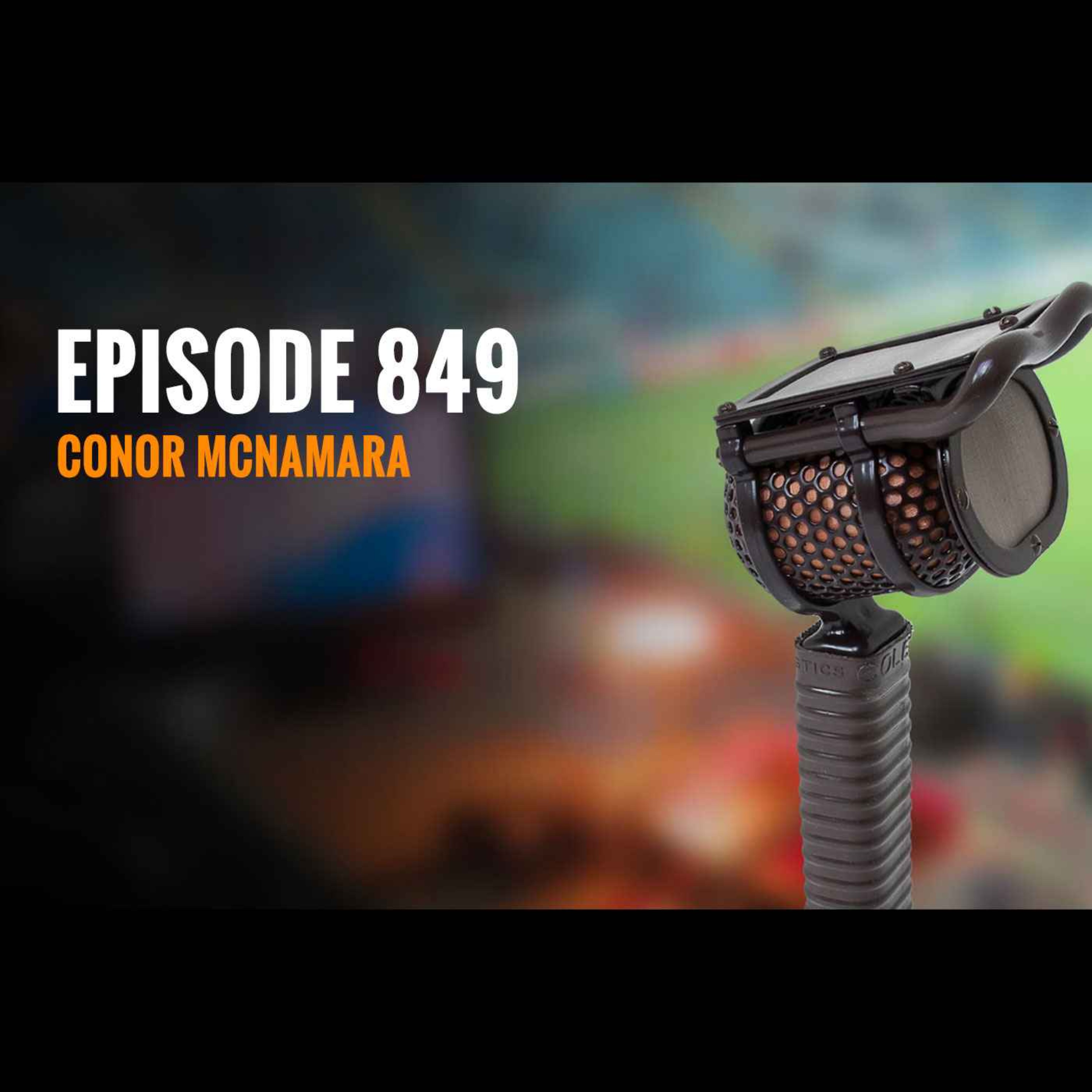
In this episode of the Arseblog Arsecast, host Andrew is joined by BBC commentator Conor McNamara. They discuss Conor's journey into sports commentary, his experiences, and insights into the industry. Key topics include commentary preparation, match day experiences, the impact of VAR, and advice for aspiring commentators.
Written by AI. May contain mistakes.

Get the gist, explore an idea or ask about something said.
 Claude
On Arseblog Arsecast, The Arsenal Podcast, what are the key points of this episode?
Searching your listeningAutomatic transcript. May contain errors.
0:23Hello and welcome to a brand new Arseblog Arsecast right here on Arseblog.com. How are you? I hope you're well. Thank you very much indeed, as always, for being here. You have done it, my friends. You have survived another interlull. And thankfully, it appears as if our players have survived another interlull as well. No big problems to report, certainly as yet. And a few of them have been on the score sheet. Gabriel Martinelli scoring for Brazil. Leandro Trossard scored for Belgium. Eberachese on the mark for England, scoring the fifth in a big win over Latvia. Max Dowman, of course, scoring for England under-19s.
1:04And the goal machine himself. Mikel Goliador Merino. Mikel Goliador Merino on the double for Spain as they beat Bulgaria 4-0. That's six goals in his last three games for Spain. He got a hat-trick away to Turkey and he scored in the previous game as well. only Mikel Oriathabal, who is his former Real Sociedad teammate, has scored more goals for Spain under this current manager, Luis de la Fuente. So whatever we did when we had all those injuries and there was no choice but to play Mikel Moreno up front, it has absolutely unlocked something in this guy, a sort of latent goal scoring ability. The stat is crazy.
1:45I think in his previous 34 games for Spain, he had two goals. And in 2025, in, let me have a look here, five appearances, he's got eight, bringing his total to 10 for Spain. So look, Victor Jochrez is on a bit of a barren streak in front of goal. I think it's 10 games all in for club and country without a goal. Maybe he needs the threat of another striker who's there, ready and willing to take his place and put those chances away. And actually being a bit serious, maybe we also need an alternative to Victor Jokeres as well, because we've asked a lot of him. The games have been a bit difficult, but, you know, it is a bit of a barren spell.
2:24And if he doesn't score, then, you know, somebody else is going to have to get those goals. And Marino, certainly in the penalty box, has shown that he can do that. Done it for us this season against Newcastle already. And who knows what more might be to come from him. Anyway, Arsenal talk is at a minimum in this particular episode, because not much has happened beyond the internationals and the interlull. and the players will have come back to North London. They'll be assessed by the physios and the medical staff. They'll have a training session tomorrow and then they can prepare for Fulham. And there's a clutch of games obviously coming between the end of this international break and the next one.
3:00So for today, we're going to do something a little bit different on the podcast. It's not really Arsenal related, but I hope you will find it interesting. I hope you'll find it insightful. We listen to these guys. and by these guys I mean football commentators every time we watch a game. I know some people do the mute thing, I can't do it. You've got to experience the game with the commentator for me. And for today's show we have one of the best in the business. It is my pleasure to welcome to the Arsecast a man who sounds exactly like himself and nobody else. You'll know him from his work with the BBC and Premier League Productions.
3:35It's Conor McNamara. Conor, thank you very much indeed for being here. Hey Andrew, I wish I had your microphone technique. I was thinking about this. I was thinking, what is with this guy's voice? And what I've worked out is you've got world-class microphone technique. I've never met you in real life, so I don't know what you sound like off a microphone. But people think you speak from your mouth, but you speak down in your stomach. I guess. Big fan, big fan. Thank you very much. It's quite funny because for years I used to get messages on social media and people would say, are you commentating on the Premier League?
4:07Are you doing Bournemouth versus Crystal Palace today? And I'd say, no, not me. It's another token paddy. I think I know who it is, though. I think I know who that is. So, yeah, maybe this is just going to sound like one voice to some of the people who are listening to this. But I'm sure they'll get the distinction soon enough. So, look, you have been doing this job as a commentator for a long time. You started in, well, you came from Limerick and ended up on the radio. How did that journey come about? What was it about getting into radio, getting into sports commentary that was part of growing up?
4:44Because I know when I was a kid, radio was all I wanted to do. It was more the presentation, you know, music, DJ kind of stuff, which I did. But that was a bug that I had from like a really early age. Was that the same with you? Yeah. Look, in my house growing up, radio was the medium. And it sounds so nerdy. It sounds so old fashioned. But it was kind of cool at the time. is that, you know, you can imagine a family would sit around the table and talk about football, obviously, or talk about golf. It's weird. My family used to sit around the table and talk about radio. So my dad used to work with RTE for many years, still does.
5:19He still does a show on Saturday mornings on the RTE Goals at a classic hit station. And, I mean, we track it back. His kind of love for it came when he was a kid. His mom and dad had a lady who came in as a sort of housekeeper, or open air, whatever you'd call it nowadays. And she had worked in the past for BBC Radio 4. She had been a broadcaster in her younger life or whatever. So that was just this weird kind of, you know, growing up in Limerick in the 50s for my dad, kind of inciting someone who'd been on BBC Radio and sort of having them in the house and all that. So we sort of traced it back to that's where it came from.
5:53But yeah, growing up as a kid, the thought of being in radio is really what we would, you know, what I always would have wanted to do. And in terms of football commentary, like that definitely came later but but only because you would think if you were to draw a line of of all the possible jobs you could get in radio football commentary seems such a long shot you know it's like i often sort of say it's like i want to be an astronaut it's great right astronaut but how is that actually going to happen um and and the reason i'm saying that i'm not you know bullshitting it up into being this this you know elite job but what i mean is that there was so few of them i mean when i was growing up i mean philip green used to do a lot of the commentaries in the radio, football, Mjolnir Hurtig would do all the Gaelic games, you know, Hurtig, Gaelic football, everything.
6:34You know, you basically would have one guy for every sport tops. So how would you be? And by the way, those guys go on for decades. It's not like they get a four-year term or something. They're all there like the Pope till they die. You know, how would you ever get into it? So that sort of seemed more of a, you know, pipe dream part that I didn't put much consideration into. But when I was a teenager, I used to work in the sort of local radios, Radio Limerick. I remember spending a couple of summers down in Kerry working on the local Kerry radio station doing their breakfast shows. I was going to be a teenager.
7:06But it was all great experience of just, you know, being live, being on the microphone, being able to cope when things go wrong, finishing your sentence, whatever it is, all good skills. And then I went to university in Manchester and I did a sort of television, radio, media degree thing. And then that sort of got me kind of focused towards these things. And I was lucky because I was in Manchester around the time when this Radio Ireland, which is now today FM, started. That's right. And they were looking for people to, John Giles was there, used to do match reports for them, which you think about it now, crazy.
7:34Crazy. He used to go on a really dodgy phone line and do match reports, but I used to. And they, I mean, I was university, I was 18, 19, but they used to send me to Highbury, to Elland Road, to Anfield, all those big games. And it was like doing a PhD in football reporting. And yeah, the sort of long story short is that having had no rights, They suddenly got some rights to an FA Cup final game, and they didn't have a commentator, but I'd been doing reports for them. So they said, geez, we'll give this kid a chance. And they definitely thought I was older because I'd never met them face-to-face.
8:03I'd sent in the upset. They probably thought I was mid-20s, late-20s. I was only like 18, whatever it was. And there I am commentating at Wembley, FA Cup final. And of course, once you do one, there's no going back then. There's no sort of, I'll consider something else. I now am a football commentator. That's what I do. Right. So yeah, kind of right pace at the right time stuff to fall in there. And then it moved on to doing television in Ireland. And then I think it was only 2004. So it was like 24 or whatever. It just turned 24. And I moved to England to work to the BBC. And it's sort of been there ever since.
8:37I've just twigged who your dad is, by the way. Oh, good. I never knew that. Your dad was like a legendary DJ here in Ireland for years and years and years. Yeah, he did really. It's funny, actually, this weekend I'm going down to memory because the school that he went to, that I went to, the Crescens, the Jesuits, they're actually honoring him, this sort of, you know, Hall of Fame or, you know, Roll of Honor, I think they call this kind of thing. But it's really nice for him. But we're kind of being nostalgic for a lot of those kind of things. But yeah, he used to sort of be, you know, you know, a radio DJ playing just normal, you know, the hits or whatever on weekends.
9:14And then he was getting a bit older, but he made a really smart move. He became the Irish Pete Tong. So he decided to sort of adopt the dance music thing. And he used to always wear a baseball cap, and his face was always a bit silhouetted. And the reason for this was because he was getting, you know, I was a teenager, and he was getting on a bit, but he wanted to still think he was cool and trendy. So he did that. But, you know, he's the master of reinvention. He's like Kylie Minogue. He did some classic music radio station, and now he's doing the classic hits. But he loves it. It's an absolute drug for him.
9:45Yeah, that's amazing. Yeah, because, you know, I remember him in the 90s when the club scene was really taking off. And, you know, he had a big show doing that stuff. That's ghast. Just think, I used to go to big night, like the pod in Dublin. That's right. And my dad was the DJ. I mean, what's going on? I mean, to be fair. You went to Cream in Liverpool. You went to the Ethan, Ministry of Sound. It was like, it's my dad. Dropping me to school. Thankfully, thankfully, I never had to go to the pod in Dublin with my dad as the DJ. Because I had to behave myself in ways that I probably didn't want to back then, you know?
10:15Oh, amazing. Anyway, listen, take me back to that then, because your first radio gig doing the FA Cup final from Wembley. Listen, I know, I mean, I've done radio. I remember doing football stuff for Shannon's Eye and Northern Sound, where they would send me to like the RDS or St. Pat's or Shamrock Rovers to work off a big mobile phone to report for Longford Town. It was really the pinnacle of sports reporting. But, you know, the audience was small. Wembley the FA Cup final the occasion of that itself I know you're broadcasting live on the radio in Ireland but it's still a big thing like the FA Cup final in Ireland has always been huge you know because we like in England we didn't have all the live football that we have now so the FA Cup the build-up to it the day itself was always huge so what were you thinking at 18 years of age going into that?
11:15Like how did you do like days of prep to make sure that, you know, you're not going to get dead air is the enemy, of course, on radio and all that? It's great to have the kind of bulletproof fearlessness of youth. You know, you think back and I mean, first of all, I was like, I mean, you know, you got to think I am a kid here. I was not the first choice. I wasn't the second choice. I doubt I was the third choice. I'm pretty sure they would have approached people for RT, the national broadcaster, maybe someone thought that we're going to do. But then they realized, hang on, you've only got the rights to this one game.
11:43So this isn't a, you know, if I burn my bridges elsewhere, you can't promise me other gigs. So I have a feeling one or two people might have pulled out, but I only found out the week of the game. So Monday or Tuesday before the FA Cup final. They're obviously desperate. I've been on doing reports. They think, look, fine, he's not a total shambles. He could do the basics, but I'd never done a commentary. But it was great. No, I mean, I think back now and I cringe because I remember, you know, I'm a university student at the time, those fool's cap A49 sheets that you'd be taking your notes in college.
12:13And I started up one of them and I wrote about two or three pages of my, you know, my preamble, what I thought a commentator would say. Sure. Sort of my Barry Davis impersonation. So I wrote all that out. And this was sort of, when the game kicks off, this is how I'm going to set the scene, this is how I'm going to do it. And I knew none of the mechanics. I mean, all the basic stuff that I would know now, but you can't say the score often enough on the radio. You've got to be inventive about saying it in slightly different ways. You've got to describe where the geography, it's not television commentary, it's not just reaming out the names, you've got to say where on the pitch, the ferocity of the tackle, the distance of the pass, the whole flow.
12:48You've got to paint the picture. I knew none of that stuff. I mean, I cringe to even think of looking back and listening to that tape. I have heard little excerpts of it, but what was brilliant was that Roberto Di Matteo, it was Chelsea Middlesbrough, Roberto Di Matteo scored one of the fastest ever goals. It was like 47 seconds. Best thing that could have ever happened to me because then I stopped looking down on my notes and I was like, oh, what's happened here? And then I had to go with it. And then it was just that any of my preview stuff was out of date. Now this is how Chelsea are now in front.
13:16How our middles were going to react. So that was definitely the best thing to get me up into it. But yeah, in terms of prep, in terms of research, I mean, I barely knew the players' names and you look back on it now. And look, in a funny way, in a funny way, maybe that helped. I think if you're a kid starting out as a commentator now, you've got this deluge of stats and data, historical context. And it's very difficult to not just fall into the trap of, oh, I'm afraid of what I say will be wrong. So I'm going to say this fact because this fact is correct. And that means I'm not wrong. Yeah. But it's not an entertaining commentary.
13:48So maybe it was good for me to sort of invert the compass, freestyle it and get to it. But no, look, I absolutely loved it. And having done it was, you know, I can only compare to what I imagine a singer who goes on stage at a Glastonbury feels or what you know you come off afterwards and you're just buzzing and you want to do it again as soon as possible and of course I had to wait eight I think so that would have been made I think I didn't do a commentary again till like the following February and then even then maybe did two that season so it took a while to get up but then once it did it really um it rocket shooted and soon I was doing three games a week yeah I mean that's um that's sort of where I was going to go next is like you did some tv presentation but was commentary the thing that gave you that was that the the thing you really really wanted to do yeah it's funny and and to this day i kind of feel this so i did in my early days i was you know presenting on tv what was then called tv3 in ireland and and it was great fun it was a great kind of thing to be involved in and you know people don't realize now i mean we barely had mobile phones you were talking about broadcasting and you know we were sort of like what influencers are now you know oh there's the guy on the telly or we were there with a camera crew and you know there was wherever we went to things there was a bit of a scene happening that was the thing and it you know when you're in your early 20s it's it's you know it's very exciting kind of stuff um but yeah what i thought was there was an awful lot of faff with lighting and makeup and what clothes you're wearing and i was just like yeah it's fine but it's got a very limited shelf life of that you know and to this day the television meetings i mean they spend 90 of the time talking about how it looks and where people are standing and does that outfit match that and and it's just like come on like there's so much more detail there's so much more stuff so that the commentary side of it sort of attracted me that there was just a depth to it um and i thought it was yeah it was prestigious i thought it was cool it was like yeah you know i i really wanted to be a part of that rather than the the sort of you know and and people you know it could be very simplified you know about people just being on autocue or whatever yeah you know that there are brilliant presenters who who bring great depth and expanse to it but i think that the stuff i've been exposed to was very much just just read the script just survive, just get to the end of it.
15:51And I just felt I wanted a bit more depth to it than that. But yeah, the commentary was definitely the thing that gave me the most. Plus it's the duration. I think kind of no matter who you are, even if your chappers do match of the day, if you count up the actual number of minutes you're talking on air, it's very little because you're queuing into other things. You're asking people other questions. Whereas commentary, you get a really good, you know, two hours of breathing through your ears. Yeah, yeah, yeah. I mean, was that time at TV3? And again, you know, the sort of like, oh, it's TV station.
16:19I remember TV3, I could be wrong here, but it was a bunch of prefabs out in the Ballymount industrial estate, you know. But was there a mix of like going to games and doing the sort of in studio? Yeah, this is what's mad about it. So the presenting it in studio, but all those commentaries. So TV3 got the rights to Ireland's away games qualifiers for Euro 2000. And it was a funny one because they were in the same group as Yugoslavia and Croatia, who had just obviously been partitioned from each other. and there was a the the whole group got delayed because there was the kind of balkan war thing was going on against and that funny enough played massively in my favor so tv3 launched summer of 1998 and those uh qualifiers were supposed to be that you know the september october november of 98 and i'd only just come in the door they wouldn't have trusted me those games were all put off didn't happen until a year later but then suddenly i had a year of of showing them what I could do.
17:13But to answer your question, I went to Belgrade, I went to Skopje, Macedonia, I went to Zagreb, flying on the team plane. You know, and this was the Republic of Ireland team that was full of Premier League players at the time. So that was an incredible pause. I'm going to go to Malta in that group. So yeah, it was always. And then to be fair, when TV3 got the Champions League rights, which was the kind of next thing that came for me, again, that was going to all the games. I went to the San Siro and did the Bayern Munich Valencia final. but went to, you know, look back at it now. I remember going to the Czech Republic, Prague, Arsenal playing, Spartan Prague, that was the first Champions League game.
17:50From memory, was it Silvino? Is that the Brazilian fullback? I remember he scored the winning goals. And this is really going back now. But yeah, we used to go to all those games. And it was brilliant. So again, that was the kind of experience you just could make. If you want to be a commentator, there's no course you can pay to do that kind of exposure. Other than go do it. Yeah, I mean, I used to do voiceover for Satanta Sports. And the voiceover booth in Satanta Sports was also a commentary booth. Off tube, yeah. Yeah, and you would see the commentary mic that people would hold up. And I hope, I assume these days, everyone has their own mic because the one that was in there was not something that I would like to put close to my mouth, to be honest.
18:33But what was remarkable to me, because, you know, when you're watching football on whatever channel it's on, Not everyone can send a commentator to the games and the commentary is remote. But what was striking to me was the tiny little square monitor on which those games were shown. Because you'd have this idea that you'd have like a big screen and you might have a different view, a different view. But it literally looks like an old Sony portable television. You know, trying to commentate on games in that context, I mean, must be more challenging. There's two things. So number one is there's now a lot more football on.
19:12So back in the day, when I was getting my break, they would show one Champions League game in ice. They would then do a wrap around the highlights of the goals or the other thing, but they wouldn't do commentary of it. Or they would do commentary of the Republic of Ireland game, but they wouldn't care about the other games in the group. They'd just show the goals and talk over to the studio. So nowadays, this proliferation, every network has got their different feeds and you can choose what game you want to watch. So there's way more games. So suddenly it's not just all the focus, all the budgets on doing one game well, it's spread out.
19:39So that's definitely a starting point for this off-tube thing. The other massive thing is COVID. So before COVID, it was still a niche enough thing. It was the kind of what I would call Eurosport kind of coverage. They're doing games, they're banging it out. And I've been to these places, but it's like a hen farm place that you go in and you will have 40 booths and you'll have one guy commentating in the same game in Japanese, one guy doing it in Polish, one guy doing it in French. They're all next to each other. and it's a bit weird, it is, but look, you know, it does the job. But yeah, for COVID and people like, you know, the BBC who would never have done this just because, yeah, you know, football starts coming back, but travel is a nightmare and getting tests and having to send people to different countries, it has to be, you know, absolutely essential.
20:24So they start sort of trusting this a bit more. And then the trouble is everyone was so appreciative at that time of work. I remember in COVID thinking, God, they're never going to use stadiums again. You know, this has been a great racket. I've had a great run at this, but this is all going to end now. And so when it did come back, we're all so appreciative. We would have jumped through hoops. So everyone went in and gave it socks and did their best job with these off-tube watching the screen commentaries. And the trouble is for most people at home who, again, were just grateful to be watching it, they didn't really notice.
20:52They didn't see any difference. So the bosses are going, hang on, why are we spending thousands of pounds sending these people and putting them up in hotels and the risk of flights being delayed, you know, when we could just get them in the office to do it? I mean, there's no doubt the quality is massively impaired. So the way I describe it is if you had to drive your car, you know, those mornings where there's ice and your car window is and you kind of make a little letterbox and you're looking through and you're waiting for the heat to clear it. If you were to go properly driving around all day like that, that you've just got a little view.
21:19So what would you, you would go very slowly. You wouldn't take any risks. You know, the safe, safe, safe. That's kind of what off-tube commentary is. You've got to pause for a moment. Is that really that player who I think it is. You let it breathe a bit more. You know, if there's a VAR review, you don't speculate too much because you just don't have the extra information. So yeah, definitely from a viewer's experience, they're not getting as high quality a thing. But when I go back to it, if a network wants to produce 12 commentaries in a night, you know, by the time you get down to who's watching commentaries eight through 12, the audience is very small.
21:51So they're not going to justify the bigger cost and they're happy to have the the impaired commentary, she was saying. Sure. Tell me about the move to the BBC then. Was that something that you, you know, sought out on your own as a way to progress? Were they looking for people? Was it a, you know, the classic, here's my demo tape kind of thing? I was so lucky. So Mark Lawrenson, who at the time would have been an absolute stalwart on Match of the Day. He was almost every Saturday on Match of the Day. He used to do the Champions League midweek with us on TV3. So I got to know that. Lawrenson, he's such a nice guy.
22:24You know, for a guy who's such a legend, so many medals, so famous just for being on Match of the Day, alone being a footballer. And yet he's just a nice guy. He's a funny guy. And I've always had a great time for Lauro. But he came up to me one of those evenings, you know, you're having the cup of tea at halftime, presenting the studio or whatever. And he came up to me and he said, he said, by the way, do you know that BBC are looking for commentators? And the reason was that digital radio was starting up. So they wanted to create what's now Sports Extra, Five Live Sports Extra. Five Live was always the kind of top rank of football commentary.
22:55And now, a bit like the point I've been making about, you know, TV companies, radio companies wanting to do multiple games at the same time, et cetera. They're starting up this digital radio, but now they need, they're still going to do it to the same standard. And historically, BBC Radio always had two commentators for every game. So even for this Sports Extra now, they're going to have two commentators. So if they're going to do three or four of them a weekend, they're going to need more commentators. So this is, you know, a rare occasion, blah, blah, blah. So then there was a friend of mine, Gillian Callig, who had worked in TV3 as well.
23:23And she was working for BBC at the time. So I kind of contacted her and said, look, have you heard anything about this? Or is there some kind of internal intranet or whatever where the jobs be posted? And she was able to send me the link of it. So I applied to that and I remember going over and, and again, look, it's the innocence of youth. Like I think I must've come across as a breath of fresh air to them because everyone else, almost, almost 100%, everyone else who would have gone for that job would have worked at a local BBC station. So it would have been part of the BBC infrastructure and with the greatest respect would have been a little bit the same, would have just all have had the same standards and the same courses they'd have been on or the same ideals.
24:00And I probably came in as just totally different. And I think that worked in my favor, thankfully. But yeah, I ended up getting the job. And then I always remember, actually, I did those interviews, say around February time, 2002. So this is in the buildup to the World Cup. And I was supposed to go to the World Cup which would have been the whole Saipan and the Roy Keane and all that. I was going to that tournament and I was going, you know, in the camp doing reports and blah, blah, blah. And then I got offered this job and it was like, you know, do you want to come and join the BBC? And I always say in hindsight, I kind of wished I'd waited and gone to Saipan and did all that.
24:32But anyway, like you couldn't say that was such a great. So I joined in April. So there only would have been April, May. There was only a little bit of the season left. But look, it got me in the door and I started doing games with Ian Dennis, who's now senior football reporter at BBC. So we started together and we used to do games every weekend, sort of two-handed. And it took us a good two years of doing that before then we started then being trusted to do stuff on Five Live regularly. And it was sort of just, you know, getting up to speed with what was required. But again, brilliant education because I see so many kids nowadays who are thrust in to do commentaries and they're not ready.
25:07And of course, they can't say no, of course they're going to do it. But you need to build up your repertoire. You need to get very experienced to do this. And you can't read it in the book and you can't be taught in the classroom. You've got to do it. So a lot of people are learning on the job, which is hard for them. And I feel sorry for them. What about, you know, that, as you mentioned earlier, the difference between radio commentary and TV commentary, where radio, you really do have to paint a picture. And I think for people of a certain vintage, maybe, you know, there is something so evocative about radio football commentary.
25:40Like, you know, we would sometimes be able to get BBC, maybe Radio 4, but certainly Radio 5 Live. It would come in on the medium wave and you could sit in your car and it would drift in and out. Swirly, yeah. Yeah, and it's amazing. It's so evocative to me, that idea of radio. But it is different because on TV you can, to some extent, let the pictures do the talking in a live broadcast, right? Is radio commentary a great grounding for that in terms of being able to describe and paint a picture for the listeners who are sitting, you know, in their kitchen or listening on their headphones, whatever it is.
26:16You know, you have to describe, as you say, where the ball is, what's happening, what the weather's like, you know, all of these things. Does that then give you a way to sort of embrace a sort of less is more approach to TV commentary? I'd like to think so. I mean, I definitely think if you listen to modern television commentary, I think there's a lot more of the radio stuff has come in. People are, in general, a lot more descriptive. If you go back and listen to a game from the 80s, you know, it'd be like Robson, Reid, you know, Lidicard, you know, and that was kind of what was in it. And there's way more sort of talk about it now.
26:51And I think a lot of that will be, most of the commentators did come through radio and excitement to do. And then just, I guess, you know, there's more information, there's more stats there's more whatever but yeah if you listen to a commentator 2025 compared to 30 years ago it's a big big difference the volume of stuff that they say um but to to answer your question what i the description i always give is if you are when you're doing a television commentator commentary you are like the bass player or you're the keyboardist in a band so the the drummer is keeping the beat and and you know what these things are is the director the director's choosing the shots now they're listening to your commentary so if you're straight talking about jose marino you'll hear the director and you know people don't know this throughout the whole game you hear the director constantly in your ear yeah and he'll be like okay uh number five just like hold that shot of marino okay connor we're going to marino now you know because you're talking about him and they will they will they will describe these things but but in the main you know you can't just go off on wild tangents and expect them to follow you there's a pattern that you're also following with them so you know in very basic terms when the goal goes in they will tend to have 10 seconds of the celebrations then they'll have a reaction of a crowd and then they'll show the replay there's usually a set number of replays then it'll come back you know and and always after the last replay they'll always zoom in on the guy who's actually scored there's a certain pattern so you're you're the bass player you're playing along to this pattern sure when you're on radio you're you're freestyle jazz saxophonist you know you can just go off on we were now going way over there we're going to talk about the train that is running on the hillside and we're going to talk about the thing that happened in the restaurant last night or we're going to talk you know you've got a huge freedom now for some people that's intimidating i find that much easier in a way because you know you're not constrained by stuff some people almost like the the color by numbers thing it kind of keeps them on track or whatever and i think like my my bbc colleague john murray is just the master of that of you know you paint a picture you're there with them i was listening to him at the writer copplate and you might as well have been sitting inside the fairway he just makes you feel in the moment with his with his descriptions and very few of them often about the sport you know he's describing what the spectator beside him is or what type of grass it is or he describes some insect or a bird or something and you know it's just little details but um but you can do that on on radio if he if he did that on television it wouldn't work you know if you're looking at rory mccleroy and a t and you're talking about an insect i mean you get away with a little you know 10 second thing but you couldn't do it on a regular basis yeah um so yeah so those are the kind of the differences between them.
29:18And not many people seem to do both to a high level. And a lot of people have said to me, it's like, you know, it's interesting that you do both. I find it, I never sit down doing a TV commentary and feel, oh no, hang on a second. This is not a radio. I need to, you know, switch to this mode. It's just kind of obvious. It's like having breakfast and dinner. They're two different things. They're similar, but they're very different. You wouldn't wake up in the morning and start eating roast beef. You know, it's just one of those things. But yeah. And also I just think I've been doing it for so long you know i've been doing hours and hours and years and years and years and um it it comes quite naturally but but i enjoy it and i enjoy having the mix of the two sure okay well listen take me through uh let's say uh you're doing an arsenal game three o 'clock on a saturday you know which is a rare thing these days but but talk me through your day like uh you know your your pre-game prep like what time do you get there what's the sort of um pre-game preparation you know if you're working with a co-commentator versus uh you know for match of the day i don't think you have co-commentators so you you're you're you're commentating on your own what's you know i'll maybe ask you the the dynamic there about co-coms versus you know commentating on your own but what would be the the plan for the day for you if you're doing that game like a huge huge amount of it is logistics uh and and in many respects we're like truck drivers we have to get to a certain place at a time that that's the kind of key priority number one um i usually tend to get my games, it's really improved in recent years.
30:44It used to be two weeks in advance, one week in advance. Now it's a month, six weeks in advance, which is great. And so straight away, I'll go in and I obviously put it in my diary, but I do what I call my sort of prelim prep. So I have sort of a template on my laptop for every game that I do and team names. And there's a sort of template thing about bookings and previous games and who they play next. And there's kind of a template sort of stuff. But I mean, I'm talking about six weeks out, I will start putting in the basics of that. And I'll do this when I'm sitting outside the school waiting for my kids to come out or I'll do it when I'm on a train or, you know, when you're hanging around, any hanging around period that comes out, I can just do 10, 15 minutes here and there.
31:20So you'll actually end up doing quite a lot there, but you don't realize it because it's just in small chunks. I always say that the prep for a game is a day's work. So, you know, eight, nine hours, but you don't sit down and do it, you know, 9am through to 6pm or whatever. You do a few hours here, a few hours there. And it's different things become available at different times. So obviously, if I'm doing an Arsenal game now in December, I don't know the narrative. You know, maybe they go unbeaten between now and December. Maybe they're 10 points clear. But also maybe they've had a bit of a slump.
31:48So you can't, if you try to prep too much now, all that stuff is very much out of date. So it's factual things that won't change. Such as, so let's say the game is Arsenal-Newcastle, right? So I would go back and the last time they played, you know, and bring that back a few years. Because those things won't change between now and then. So if I say Gabriel was sent off against Newcastle two seasons ago, So that's not going to change between now and when the kickoff is. So there's a lot of that historical stuff. I get into my notes. I get into my templates way, way, way in advance. Then the week of the game, it's coming much more.
32:21How do they get on in the Champions League in midweek? Who came off the bench? Has he now started four games in a row? That sort of stuff that you can only do once they've played the most recent game to the one you're doing. So, yeah, there's a lot of work. And I love the match day itself is not work to me. That is fun. That is enjoyment because I've done the work. Sure. So, you know, I arrive ready to go and I have nothing to worry about. I've it all done. But yeah, typical match day. I mean, you say three o 'clock, it's easier to say like a 4.30 Sunday. 4.30 Sunday, I'd arrive somewhere between one and two at the stadium.
32:59And it's such a social life. And again, that was the thing that we kind of took for granted. I think COVID made you realize it is, you know, every week I'm meeting hundreds of people, literally the same circus travels around to all these games the same radio people written journalists television people the cameraman that you know it's the same faces you see every weekend and so you know you you literally have a two-hour social meeting there you're just chatting to people and you're laughing about the funny thing that happened or did you hear this row this guy got into it a manager or this guy showed up the long match you know that this real camaraderie it's like being in school commentators guild kind of thing yeah yeah but across the board you know the commentators the press officers.
33:36Sure. And I think, sorry, just to go off on a tangent for a sec, but I was thinking about this recently, is I think people always assume there's a rivalry in the media. They're like, oh, you know, the BBC people won't like the talk sport people or Sky people hate the TNT sport people. And not at all. You know, they're all people who probably work together other places and the level of how they help each other out, you'd be really surprised. You know, you'd be on a gantry and I'll go up to Peter Drury and I'll say, look, what do you think Pep's doing with the formation here? And he'll say, oh, I think he's going to play him at left wing back or someone you know John Chappie will say you know how are we pronouncing this new signing and you just make sure we're all on the same page but there's you know there's a lot of cohesion there that you maybe wouldn't expect so anyway that kind of social part of it is good varying quality degrees of nice lunch at stadiums Tottenham is unbelievable Arsenal very good by the way but Tottenham have taken it to a whole new level so yeah you get your nice meal and stuff before the game and then depending so if it's radio you might have a very early commitment so say it's a 4.30 Sunday you might have to go and do a half time piece in the two o 'clock games it'd be 2 45 you kind of tease or promo of what's coming up um uh for for television you tend as a commentator not to do much pre-game and sometimes because I do a lot of work for Premier League production sometimes you have to go down to the pitch and maybe do a a bit in vision with whoever the pundit is like Andy Townsend or Jim Begdon or whatever and you do a piece for maybe in sport and in the Middle East or stuff like that so you might you might have you might be asked to do some of that but in the main my my sort of click into action work is one hour 15 before kickoff we get the teams so my job when i'm working with premier league and there's a bit of pressure on this is you've got to very quickly uh tell them what the formation is because that's then the formation that they will put up across you know their graphics and websites and all this kind of stuff and there's a pressure on that and you know i think traditionally doesn't you know you'd watch the champions league and they put up crazy formations you wait for do that yeah they're mad for that you know and so there's a pressure to get that right um and it can be you know some teams very straightforward but some managers do very you know i always say with pep guardiola you can't write down on paper his formation it's it's fluid it's like trying to draw water you know it moves around so much um but yeah so that that's kind of a pressure thing where i'm sitting there waiting literally a countdown on my thing right three two one here's the teams and then hopefully within 60 seconds of us and then say, right, this is the formation.
35:58So I read that out and then start putting all my, you know, what I'm going to say over that graphic. So that, because that's the kind of thing you do, you know, I don't script what I do, but that's a bit you have to script because you have 20 seconds of the goalkeeper, the back four, the midfield. You got to be tight, tight, tight on that. And then it's around that stage where the pundits will kind of show up and you'd be having a quick chat with them. And it's funny, you don't really do much chat, you know, you have a five minute chat, but then you're both sitting there doing your own thing getting you know getting ready to go and then um and then once once you're on air you're up and away and then depending so again the difference between tv and radio often radio or actually when i do match of the day you go down afterwards and you interview the managers so that's sort of other work to do at the end of it when i work for premier league once the once the final whistle blows you know you've done a few minutes recap of the whole thing then then you're done your day's job is done so you can leave you can leave pronto on it um but and to be honest i rarely do you should get out to the press room because you just talk to people and let the crowd you know you don't want to be queuing up at the but what's the address of the caledonian road or whatever it is you want to be in those queues sure for the tube so um yeah so like that that's kind of the day's work um but as i said it's the real work is done in the it's the days and weeks beforehand is where you're you're prepping it all the time so you mentioned match of the day and talking to to managers and you're talking to them maybe in um how would you say this politely that they're in heightened emotional states after the game so they could be jubilant or they could be absolutely fuming you know is is that difficult for you in terms of what you have to ask them i know your time with them is pretty short so you've got to get like the snappy thing for match of the day so the questions can't be too probing but but you know with your experience now are you sort of able to judge the mood of a manager well enough to ask perhaps a difficult question, but in a way that's not going to have them, you know, look at you like they want to kill you, you know?
37:54I think there's a few parts to it. First of all, it's the part of the job I enjoy the least. And I think many people would love that. At the end of a game, wow, you get to go down and talk to Mikel Arteta. I mean, people would like that. And for me, it's like, I find it difficult to put my finger on the problem with it, but it's sort of, there's a lot of hanging around. You get this thing and it's, you know, all you want is their answer. It's not about, oh, my clever question or whatever. And I often find like, I don't project my voice very well asking. So if I'm doing the commentary, this is the tone because the exciting thing is that, and then I'll go, well, Mikhail, what do you think of that today?
38:29You know, because you're trying to kind of be soft and warm and whether you're not bombastic into their face. Now, as you know, there are people who that is their job. So when they go there, they do the interviews before the game and after the game, that is their role. So they put a lot more time and thought into those questions. And that's a big moment for them to kind of deliver on. um i think for me yeah it's trying to just get the good sound by what you want is them to almost make the good point not you and the question um so it can it's not the most satisfying thing but i think um i think in terms of the mood and stuff yeah okay if you are a well you know if you're if you've got a patch a lot of the written journalists you know they will cover the games on merseyside or manchester or london um or a lot of the broadcasters it's the same thing they'd have a patch they're into the same people all the time they don't want to piss them off you know they want to be on side.
39:15And I think because I'm always going to different stadiums every week, I don't have that bond to sort of build or bond to protect. And I also think probably just because I've done so much BBC work over the years, you kind of just feel an onus to, well, come on, get to the story. Give me the guts and all. So, oh, you'll be delighted with that rather than, well, that wasn't good. And a good example for that is in the radio days, I mean, you've a lot of what we call a huddle. So you're sort of a group of guys and some, actually there's a whole story in this as well about how the who gets to ask the question first and how many questions you get or whatever but in the menu you'll ask a few questions someone else you ask yes but if you're the local radio guy it's always like be friends be friends be friends but they're keeping their microphone in when you as the the network bbc guy goes well hang on you must be really upset about this and yeah that's the answer they want but they don't ask the stinky question again so there's yeah there's a bit of politics about that but i'm um yeah it's look definitely when i was younger you'd be nervous you'd feel your heart beating a strip cage for your interview yeah Graham Sunes, Mark Hughes, Alex Ferguson and stuff.
40:13But the older I get now, yeah, look, it's just part of the job. It's part of the role. What I would say is I've very rarely ever got really brilliant, interesting answers out of a post-match interview. You know, they're just in the heat of battle. Of course. They've also been safe. It's a lot of cliche stuff. But, you know, people want to know what they're thinking. Any awkward ones that you can remember? Yeah, no. But look, the one that absolutely stood out and there's been very, well, I mean, actually, I'm trying to think now. There was one where I mentioned Graham Soonis there. When Soonis was manager of Blackburn and he was sent off for something and I went down, you know, so he's obviously dissent to the referee or who knows what he did.
40:49But I went down and the way I posed the question, I just, for some reason, I thought he'd kind of laugh about it because they'd won anyway. So he was sent off, but they'd won. And I was like, well, you were showing the right card, but I suppose you can't have too many complaints about that. I think, you know, he's obviously told someone to F off or whatever. But he was like, what do you mean? There's a disgrace. And he was like really leaned over me. and I wasn't ready for this reaction. I thought this was going to be just a happy jovial end to the end. And I was like, no, no, I don't know, I'm sorry.
41:16But the one in more recent times that was more high profile was when Jose Mourinho was manager of Manchester United and they had drawn nil-nil at home to West Brom. And the gantry at Old Trafford, I mean, it's well publicized how the place is aging and creaking and you have to go over a gantry bridge and then you've got to come down the steps and then you've got to go through, literally through a kitchen. It's like that famous scene in Goodfellas where you're kind of going through and guys have literally plates of dessert. And I mean, you literally do. You go through a kitchen. You come out into the normal press area.
41:46You go down inside the pitch. So anyway, we're always in a rush to get down in time to do the interview. So you're scrabbling to get down there. And I got down and floor manager is there. And he's kind of a producer in the tunnel, making sure everyone's where they need to be. And he's like, come on, Conor, Jose's waiting now. So I'm just rushing. And I'm, you know, I put no thought into this. This is just a conversation starter. Tell me what you think. The game has been nil-nil. and I said, well, Jose, you've cancelled each other out today. Some of that, right? And he took that to be the biggest insult.
42:12So my view was, it's nil-nil, no one scored, you cancelled each other out. Was, he thought it was that, you know, you're two even teams and that you both weren't trying or something. And obviously in the game, Man United at home, they'd been attack, attack, attack, but they couldn't score. But he was like, you think? You think? You think? You think this? And I'm like, oh, no, I don't want this fight. You know, he said 90 minutes of the touchline of being, you know, in the face of whoever the West Broadbent in the face of the fourth official here in the crowd but he's battle hard and ready to go I'm just I don't care and it's like that you know if you're in the pub and someone slags you off and you're in bed that night you think oh that's what I should have said back to yeah yeah yeah so obviously afterwards you think what I should have replied was and what I should have said was and I just you know I just didn't want to I was just like what like you know but yeah it was a bit of a good but it was around that time where you know social media Twitter and stuff was huge and and the clip of that sort of went viral.
43:06So you get millions of people watching it. And I always remember the Squires, you know, the cartoon. David Squires. Yeah, yeah, he's great. And again, you feel like you're part of a moment kind of thing, which I never want, like not for those kind of reasons. I know, yeah. But yeah, that was one that sort of went high profile. And, you know, what can you do? What can you do? Tell me about working with, you know, co-commentators who typically are going to be ex-pros, you know, as I said, when you're on your own, you're sort of in control of everything. But when you've got somebody beside you, you know, I guess some people are, I don't want to say better than others, but some people, you know, you can flow with more easily than others.
43:49Can that present a challenge at times? Yeah, I think absolutely. The different personalities I've been looking over my career, God, I've commentated with hundreds of different co-commentators and some of them, you know, literally for the first time, I remember I did when Robbie Savage did his first ever commentary for the BBC. I was the I was the co-commentator. I laugh about him now. I was like afterwards, the boss said, what do you think of him? And I said, I think he's really good because he's different and he's, and I was like, that's it. I created a monster here. I should have said you were terrible.
44:16We might never have had to put up with you again. But the, okay, here's the kind of the takeaways I have from over the years. Number one is professional athletes, their entire life, they've been coached. So when you meet up with someone, so like, let's take any, who's an older Premier League, let's say Jordan Henderson, right? So if Jordan Henderson in the next couple of years retires and wants to do some media work, you would think, oh, this is Jordan Henderson. He knows everything about football. I'm not going to give him feedback. I'm not going to tell him how to do it. You know, that's all they want.
44:46They crave it. You know, every day is you tell me the role. Obviously I've got to deliver my own thing within the role, but you, you know, tell me what you're doing to do, what you don't want me to do. If I'm doing it wrong, tell me, you know, there's nothing they hate worse. And you hear that with footballers, you know, if the manager leaves them out of the team and he says, oh, it's just rotation. It's like, no, no, tell me why, you know, am I cutting back too much? Am I playing it to the keeper too much? Do I need to be more direct? You know, tell me the reason. So over the years, that's really struck me about how they want to be constructively.
45:13That's so interesting. Yeah. Yeah. And then, yeah, what I would say over the years in a funny way is the guys who've won the most medals, the guys who've been more successful are probably more comfortable in their skin, but they don't have the point to prove doing this. And that can go two ways. One, it can just look, I'm a famous name, I just show up and I just do it. And you'll be impressed just because it's me. But a lot of them is that they just don't have to try too hard. And then some of the guys who maybe didn't have that stellar success on the pitch are then trying to make the, you know, I'm the controversial singer or I'm able to bite in.
45:45So there's those kinds of things. But in the main, I've really been surprised how, you know, there aren't people who you think, oh God, that was a nightmare to do a name or whatever. You know, it is a positive experience. And I guess you've got people talking about something that they know about. Yeah. Which is always a joy. And I think, you know, and I hear about them so often from talking to these guys and they'll say, oh, look, I love doing commentaries. Because when you're in the studio, even though your face is on the telly and you're being seen, they get such a small amount. You know, like at halftime, you'd have three pundits on a couch and the presenter will barely get to ask each of them a question.
46:18So they've watched the whole first half. They've got to try. And if you know yourself. if you're going from not broadcasting, suddenly broadcasting, you'll make a stumble or you'll do a trip on a word or a sentence. But that was it. That was the only sentence they were getting. And then it's like, that was your whole day's work. So they feel a real pressure to deliver, to match, you know, they're showing the replay of what happened and they're trying to watch what it is and match up what they're talking about. And whereas when they come and do a commentary, it's just, there's a freedom, there's a flow.
46:44It's like, if they don't feel comfortable saying something, just nudge you and you'll take over. Or then if they want to come in, they'll nudge you and they'll come in. So in a funny way, I think you get the best out of the former players when you have them in a commentary situation as opposed to in studio. Right. So tell me, like, given the way the media landscape has developed over the last number of years and things have changed, you know, online, the sort of, not skewing, but the sort of change, let's say, from traditional broadcasters, media outlets that kind of stuff to stuff like i do you know fan made content and the way things play out online does that or has that had any influence on your work or the work of commentators in in general because i think you know you talk about stumbling over a word but like you'll see sometimes whether it's a pundit or whether it's a co-commentator or even a commentator say something and then it's like it's everywhere it's like oh listen to what this guy said do you is that something that's in the back of your mind at all?
47:47Or do you, do you just sort of have to get on with the job? Because I assume the job itself is pretty much the same. It's just how people view the job or people react to the job. That's different. I think I'm lucky in terms of that sort of, if you make a mistake going for a thing. Yeah. No, it can happen. Of course, if I said the wrong player scored or if I, you know, just came out with it, I mean, you know, the famous sort of Coleman balls type of thing, which you can obviously do, you're mixing up your metaphors or whatever, which absolutely happens because you're starting sentences all the time that you have no idea how they end.
48:18And then you get distracted by moving on to the next thing and it happens. But I think there's a lovely anonymity to being a commentator. Everyone knows what the Gary Devils and the JB Carrigers look like. And very few people would recognize any of the commentators really if they're sitting beside them on the tube. There's a nice sort of anonymity there that it's not like, oh, look what this guy that you all know looks like did, because they don't really know. but to the wider point yeah I'm a bit worried there's definitely been an embracing of this you know let's give the best example being the guys are on the pitch before kickoffs you have the presenter and the sprinklers go on them or something and that was the thing where in the old days you go oh look at this Thierry Henry got drenched or whatever it almost and they legitimately don't do this and I want to make that point they don't on purposely try but what I feel now is they're delighted when that happens now oh that's a little moment that can go on social media.
49:12And you're kind of thinking, hmm, we should be a bit better than that. And there's definitely been an embracing of the pundits backing up the teams that they're known to be supporters of, or the, you know, and in the old days, they would very much be encouraged to keep those allegiances under wraps, whereas now it's the total opposite. You know, they want the tribal nature of it. And I'm not sure that's a great thing. I mean, you know, if it works for people, if that's what people want to see. In terms of your point about, you know, fan media and stuff, which has massively grown in. And the analogy I would give is, I always remember, this is going back a bit, and they all do it now, but he was the first, is when Sam Allardyce got the job at Newcastle, his backroom staff was enormous.
49:52And you'd see them come out at halftime to go to the dugout. And it was like 70 people. You were like, who were all these people? It was analysts and physios and tactics guys. And he had this huge backroom staff. And we'd all kind of go like what do they all do and i bet you you know some of the older uh brigade must go into a press room now and go who are all these people like you know how many of them are writing an article how many of them are needed to do an interview why are there 300 people in the media room in in the emirates you know ahead of a game um so but it's it's it's it you know as you know everything has been segregated up it's not just on match day that people want content they want stuff that they can use throughout the week and I think the the fan media stuff has been a huge boost to the whole thing that you know the people have been able to spend more time on stuff and I think in the old days yeah like the classic thing of match of the day is is right the big game gets a 10 minute edit but some of the games only get a three minute four minute edit and but you're a fan of that club and even if that game is a bit dull a routine one nil win you still have a million questions you want to ask about why did he play him at left back yeah is this new striker any good and you know, Fan Media has created a world where you can go into deep, deep dives and all that stuff and clearly it's really popular and you can see now the clubs and the sponsors, everyone are really embracing it and they want partnerships with Fan Media and it's, you know, I think it's really, really healthy.
51:13I will tell you one story. So last season I was doing, and I'm going to set this up as well. So look, I'm very privileged. I get to go to these grounds. I can go and hang around the tunnel. I can say hello to people. I've got a pass that allows me on the pitch if I wanted You know, it's a really privileged position. And I think in the early days of Twitter and social media, it's cool to take photos around there. People, you know, behind the scenes and so on. I get all of this. What I've been really surprised is I've seen it now. You know, every Premier League game you go to, there'll be influencers down on the pitch doing stuff.
51:43And to me, they're doing just the most basic stuff. It's just like, look, I'm here. I'm here. I'm by the pitch. It's like, no, come on, do something that you're there, you know. And then when they do the thing, it's kind of just a lame thing. And you're like, come on, you know, make it suit the day it is. I appreciate it probably sound like an old footy-duty. But anyway, in the context of that, FA Cup last season, and I'm doing it for BBC. It must have been BBC. Yeah, BBC TV had the highlights, it must have been. I can't remember. It wasn't a live game, but I had to do the interview afterwards.
52:11And it would have been used on the website or whatever. But I was doing the interview. So down in the tunnel, Morgan Rodgers had scored the winning goal. And this guy, who was obviously some sort of influencer type, had been given some, because of the FA Cup, through a sponsorship, through whatever, he was allowed to come and do pre-match interviews. and he was recording on his phone and doing a video thing. And again, all fine, totally get it. And then they said, because you're in due for highlights, whatever, like you're not live in here, so you're not the priority. I presume it would have been the ITV game.
52:37So they're priority when they come in. And this is the thing for any game. The host broadcaster gets the first interview and then it's kind of a hierarchy of where you go. But sometimes you're doing one manager when another manager comes. You're mid-interview, so he's ready to do you. But then they say, okay, he can go and do the local radios first. He'll come back to you. or sometimes he'll go do the written press to then take time, then he'll come back to you. But there's a hierarchy to these things. But anyway, in this scenario, I'm doing one manager while the other manager comes or the player, you know, Morgan Rodgers who we wanted to interview.
53:06So they said, here, Morgan, you can do this social media guy while you're waiting kind of thing. So then suddenly I've wrapped mine up and your man is still setting up his phone. So I'm kind of standing ready to go, standing behind him. And he starts the interview. And I swear to you, these are the questions. He goes, well, Morgan, you must be delighted. You've scored that winning goal tonight. You're going to get smashed tonight And don't get me wrong, I get it. Like what he's thinking is, I want the reaction. I want the clip that'll go. What's the clip that'll go social media? And if it's like Morgan Rodgers going, yeah, I'm going down the club and I'm going to chase the ladies and I'm going to drink vodka.
53:37What? In a tunnel. He's literally still wearing his kit. And to credit Morgan Rodgers, he goes, he kind of looks at him puzzled. He goes, yeah, we're just happy to get the win tonight. It's good to be into the next round and good moment for me to get the goal. I've been working on that kind of thing. And he gave the straight-laced answer. Second question. Yeah, so there must be buzzing in the dressing room. I mean, you and the guys, will you all go out and you get smashed tonight, will you? And he went to it again. And at this point, the Aston Villa press officer said, he goes, sorry, this is a post-match interview.
54:08Like, I'm stopping. Like, what do you do? You know, you can't use it. So like, part of me admires the guy's gumption. Like, he's thinking, I'm going to get this, you know, controversial clip or things. But But also, you know, you've got to kind of think, well, you're not going to get invited back in now. You'll never be allowed to do this again because you've done it in that way. So that was just a real sign to me thinking, wow, things really have changed. They have changed. He's still wearing his match kit. You can see the flecks of grass on his boots. He's just come off. That's not going out in the BBC.
54:39Game's gone. Listen, let's do a couple of quick ones just to finish off because I really do appreciate your time. How has VAR changed the job? Because while it might be a bit more streamlined now, we've certainly, as fans, experienced these big delays in games. And if you're doing a live broadcast, you know, on Match of the Day, you know, you don't get the sense that there's been a four minute delay. They might tell you, well, it's been a while for this decision. But, you know, it could take four or five minutes and has taken that amount of time. you have as a commentator i guess and we hear them say it on sky sports you have access to the the far audio you can hear what they're saying um but it must be difficult to sort of fill that gap with complete uncertainty because until they made a decision all you're aware of is that they're looking at something that oh look they're looking at the replay again and again and a different you know has that had an impact on how you um how you have to manage those situations Yeah, look, it's had a huge impact.
55:45Sorry, I know you're saying quick ones at the end. Every answer's got loads of detail to it. But I used to always do a lot of rugby commentary as well. When the TMO thing came in in rugby, you could really tell the difference. When a try went in, every single try was then checked by TMO, the television match official. And it led to a real toning down of the big moment. So if it was like, here comes, you know, name a player, you know, Brian O 'Triscoll, it's a try for Ireland. that was a try but hang on let's see does it actually get given you know you don't have that moment of celebration and and i think people got to kind of work around it a bit and my view was always look give it a big moment anyway and if it gets if it gets turned around it gets turned around and that's what i try and do now even if you think guys guys offside you kind of oh you know could be onside here but hey big goal and give it give it give it socks and then you can say now we'll see does it does it does it count um in terms of okay the trumpet via the two two big problems with var I've it all worked out, by the way.
56:39Okay. Two big problems. Number one is fantasy football. I'll come to that in a moment. And the other problem with VAR is communication. So as you referenced there, the commentators can hear what the VAR is saying to the referee. And just take for a moment whether you agree with it out of it. At least you see the process. There's a point that they're doing it. There was a famous one involving Arsenal. I'm trying to think of Arsenal examples, but where Odegaard, I can't even remember the game now, but he kind of stumbled down and he handled it. It was against Manchester United at Old Trafford, I think.
57:11Yeah, that sounds right. And that one at the time, in my commentary, it was like the process that they were going through made sense. They were like, he stumbles. It's a natural thing to put your arm out like that. There had been an incident in a West Ham game a few weeks before where one hadn't been or had been given on that, and they said, no, they shouldn't because he was naturally going down. You know, this whole, what is a natural movement? If you fall on the ground, your hands will not be down by your side. Your hand will instinctively go out to break your fall. but they were that this is their view now now you look at it afterwards and I think subsequently PGMO had admitted that no you know he had forced himself to fall down he wasn't actually falling down anyway but the point being that in the description of it I can hear that the point the VAR is making to the referee is that he's going down the hand instinctive goes out to break the fall hits the thing that's not an intentional moving he doesn't move that to get the ball so for me that if everyone in the stadium can hear that if everyone in the stadium, if everyone at home can hear all of that stuff, at least they see the process.
58:09It's not, oh, it's crooked and oh, they're, you know, trying to bail their mate out or all these things you hear about VAR because it's not that. They're trying to do in a very pressured circle that they're trying to make the right call and there's so many, you know, it's like every snowflake in an avalanche pleads not guilty. You know, every incident you would say, oh, the exact same thing happened to the Man United game. It didn't. Like a snowflake, there was a slight difference to it. You know, there was a nudge on the guy before it or there was no nudge or there was no one behind him or there was no one behind him.
58:36No two incidents are exactly the same and yet they're trying to apply a precedent for a previous incident onto it. But it's like hearing a good barrister or a good summing up a case in court when you can hear at least what their rationale is. So for me, that really helps the commentator and it probably makes you sound more informed or more educated than you are because you're getting that. And my view of it always is, it's not for me to judge. And while we're waiting to hear from them, you can say, oh, I think he could be in trouble here. or stuff like that. But once you're hearing their view, I feel my job is to try and, as much as possible, convey what their view is or the reason, the rationale.
59:11Now, you'll get abused for it afterwards. Oh, the commentator thought it was a penalty. No, that's an eye thought it was a penalty. I'm saying this is what the officials think. So that's, look, you know, I find it an interesting process, I guess. I don't find that too stressful. In terms of how fantasy football has killed football in VAR, why VAR is destroyed by fantasy football is, if you're okay you're an Arsenal fan maybe every two months maybe every two months there might be a VAR decision that really sticks with you you think you know what that one now that cost us and we could have you know if you do fantasy football every weekend every game oh because Mo Salah didn't score now I'm pissed off about it even though I'm not a Liverpool fan or because Bruno Fernandes you know and if VAR had allowed that so every game suddenly there's something that's roiling you and annoying you, that it shouldn't do.
1:00:00Yeah, of course. If it was only on your team. But the vested interest that everyone has in every game now means that every VAR decision is damaging one way or the other. So I'm definitely putting fantasy football on top of the pile of things to blame. Run by the Premier League, no less. So, you know, they've opened up that can of words themselves, you know. It's probably a very difficult question to answer, having commentated on so many incredible games and sporting events. You know, you've done rugby, you do golf as well. But is there one commentary that sort of sticks out to you as the one, not necessarily the best game you've ever seen, but maybe the best experience you've had in a stadium at a game?
1:00:41Yeah, look, I've been so lucky and they're a long, long, long list. And I think I remember a lot of it in moments, you know, but the one I've always said, and I think we'll still take some beating, is World Cup quarterfinal in 2006 in Germany. And it was Brazil against France. And this was the tournament where, you know, Zidane would ultimately headbutt the guy in. And any game in that knockout stage would have been Zidane's last game. So he was retiring after this. So if they go out in the quarterfinal, he's done. And they're taking on the Brazil team. And that was the Brazilian Ronaldo, Roberto Carlos, Kaká.
1:01:18It was an insane team. And they were like doing the Nike adverts, tiki-taka around the base. and they were just rock stars and everyone expected Brazil to win and Zidane single-handedly never seen individual performance where he destroyed Brazil and you know people look at it on YouTube the highlights that he's like flicking the ball over the top of Ronaldinho picking up the other side he's nutmegging Roberto Carlos he's just you know it's just absolute make-up stuff and this is a guy who's about to retire and he swings in the free kick and Henri scores the goal and they win but I always thought like during that game doing that commentary you know goosebumps bumps and just think I can't believe I'm getting paid to be here to sit in the halfway line to watch this, to broadcast this high quality, this standard.
1:01:59So that one always really sticks out as just being this wow moment. But I've been so lucky. Going to the Nou Camp and seeing Messi score free kicks and I remember being in Real Madrid one night when Barcelona won 5-0 and the Real Madrid fans were waving the white hankings. Just these little moments down through the years where you think this is so cool to be here. So I've been very, very lucky But yeah, I always say that that 2006 Brazil-France was the kind of, it won't get better than that. Do you get a chance, you know, when you go somewhere to a city to commentate on a game, do you get much time to have a look at your surroundings?
1:02:36Because you've obviously been far and wide, but is it sort of bang, arrive, in, out kind of stuff for the most part? I've tried a lot more about that because in the early days, and I think you're just nervous. And, you know, if you take those early TP3 Champions League games, we were talking about at the start. In those days, we'd fly the morning. If you go to something like Prague, you'd fly that morning. So you'd be on a really early 6 a.m. flight. You'd get there. And then all you want to do is go into a hotel room and try and sleep for a few hours and then get some food. And so, yeah, for years, all I ever saw was the airport, the hotel, the football stadium.
1:03:08And then I think as you get older, and it's funny, like, because you always assume, I'll be back here. You know, I'll be back here for another game. I don't need to go see the famous thing. And then as you get older, you realize, no, come on. like you need to you're in Istanbul this is cool like get up and get out and do stuff and definitely made a huge effort to do that over the years um and it does help you you know you get a flavor for the place and the mood of things and you sort of see what goes on but then and it works both ways you know I was at the club world cup in the summer and and I really enjoyed it and I know I think you know this part of the world it got you know sort of lukewarm reaction and I think the kickoff times in fact most of it was the middle of the night and stuff didn't help but but I really enjoyed it and people said to me yeah but like if you were to walk on the street in Miami do they know that the Club World Cup is on the answer is no but when I was in Miami the I was there for like 11 days or something and I found out that the what's it called the Stanley Cup so the the ice hockey finals Stanley Cup finals were on in Miami the week I was there didn't see one mention of it didn't see second of it on TV didn't see a single poster about it you know it's just that's the way America is they're so just engrossed in their own thing and you know there's a big enough population that they can, you can just love archery or you can love lacrosse.
1:04:17And that can be the biggest thing in your life. And you can spend your life watching it, going, doing it, but you don't have to share it with anyone else. You don't have to impress upon anyone else. And I think coming up ahead of the World Cup next summer, there's going to be a lot of this talk about, oh, are Americans really into the football? It kind of doesn't matter. They're into what they're into, but there's such a huge population that that still means there's enough people to fill the stadiums and to generate the big interest in it. Yeah. If they can afford the ticket prices. Final, final question, you know, for anyone listening, there might be some young aspiring radio broadcaster, somebody who wants to get into the commentary world.
1:04:53Any advice for anybody within the sort of structures of the media landscape we live in right now? Yeah. The number one thing is you've got to, you know, to become a commentator, you've got to do it. You can't learn it in a classroom. You can't read it in a book. You've got to do, do, do. And I often speak, you know, I get emails or letters from young people. And the response I give is I say, you've got to go and just do it. Don't wait for that moment to come. So go be at a school game, a college game, anything at all. Just go hide yourself away. Kids nowadays, they all have the gadgets to do it.
1:05:26You know, in our day, you'd have to buy a device to record it. buy a microphone or, you know, now on your phone, just record and do it. And when I say do, I mean, do 60, 70, 80 of them and then have a look and see how you're at, you know, but nobody, nobody, I don't care, you know, Barry Davis, John Mattson, Martin Tyler, when they were a teenager and they tried it the first time, it would have been terrible. It just would have, you know, you've got to do it and do it. And it's like learning a guitar or it's like being an artist, you know, get your portfolio, do your work. And I guarantee you a number 60, 70 will be so much better than the first two or three that you did.
1:05:57So that first and foremost about doing it. Then you've got, you know, the world is great in terms of the opportunities and social media and the internet and YouTube. And people can set up their own channels and they can do stuff. But of course, the flip side to that is that how do you stand out and how do you get noticed in a world where there's so many millions of those? But I'm saying that, you know, to get the chance is still the difficulty. But at least when that moment comes, when you get the chance, where someone says, okay, someone's sick or someone's whatever, can you go out and cover this?
1:06:23That, you know, it's not a, hang on, how do I plug the microphone in? You know, how do I clear my throat or do I need to go to the loo beforehand or all these little mechanics? Have that done a million times. You're not even thinking about that stuff and you can concentrate on the detail of the game. But, you know, definitely just get involved, work experience, get to be involved. If it's making the tea, if it's, you know, doing the photocopying, whatever it is, get your foot in the door and learn from seeing people do stuff. And then, you know, just as we know, the way the media works is you get your chance because someone doesn't show up or someone can't.
1:06:52If you've proved yourself to be responsible and trustworthy and you're giving a simple task and you do it, then you will get asked to do bigger things. And then that's where it comes down to your talent. Then are you good enough to make them say, I want to hear more of this person and I want them to have more chances. But yeah, do the practice. Don't wait for the moment to come. Practice yourself to get there. All right. Well, listen, it's been an absolute pleasure, Conor. I really do appreciate your time. Thank you very much indeed. Good stuff. Cheers. Cheers.
1:07:19So there you go, Conor McNamara. All you Irish folks sound the same, eh? You folks are in the mud right now, let me tell you. We don't. Not a bit. Well, maybe a little bit. Just a smidgen. But anyway, thank you very much indeed to Connor. I really enjoyed that chat to get some behind-the-scenes stuff on the work that he does, but also working within the game itself. You know, we talk all the time about players and managers and coaches and executives and all those kinds of things. But this is another area that every week we are experiencing when we watch football, when we watch Arsenal. and I'm really appreciative to Conor for taking the time out to talk to us on the show today.
1:07:59So look, I'm going to leave it there for now. Obviously, there is a bit more to talk about when it comes to Arsenal, when it comes to our game against Fulham, but Mikel Arteta is having his press conference tomorrow and we'll probably get a bit more information about that. If you want to hear more about Fulham, if you want to hear more about what we might expect from that game, etc., etc., you can join us over on Patreon tomorrow afternoon. We will have our usual Premier League preview podcast. That will be available mid-afternoon, there or thereabouts. If you're not already a member on Patreon, it costs just$6 a month.
1:08:30You can sign up at patreon.com forward slash arseblog. It gives you instant access to everything that we do on Patreon, not just the preview podcast we'll do tomorrow. We did an episode of Waffle this week, the podcast in which myself and James talk about anything and everything except Arseblog. There's a whole archive of stuff there, and your subscriptions really do help support everything that we do on Arseblog. So patreon.com forward slash arseblog if you fancy that. For now, though, folks, take it easy and we will catch you on the next one.
1:09:32I'll see you next time.
In this episode I'm joined BBC commentator Conor McNamara. We chat about how got into the world of commentary as a teenager, his first game being one of the most profile fixtures in the football calendar, and how work on radio and TV in Ireland led him to join the BBC in 2002. We discuss the differences between commentating on games on both those mediums, what a typical match day is like for him in terms of preparation, post-game interviews with managers, awkward moments, how things like VAR and the changing media landscape have impacted his work, advice for any aspiring commentators, and lots more.
Get extra bonus content and help support Arseblog by becoming an Arseblog Member on Patreon: https://www.patreon.com/arseblog
Hosted on Acast. See acast.com/privacy for more information.