 Ask ChatGPT

The episode mixes (1) discussion of Arsenal’s start to the season—7 wins from 8, including a surprising 0-1 defeat to Brighton—and (2) a “now and then” segment previewing a new book on the Arsenal–Manchester United rivalry from Arsène Wenger’s appointment to Arsenal’s 2003–04 unbeaten title run.
Clive Palmer (Arseblog/Arsenal podcast contributor) discusses tactics, squad rotation, and player roles. Dominic Hoffman is the author of The Greatest Rivalry, Arsenal-Manchester United and the Battle that Defined an Era.
Brighton showed Arsenal can’t be “invincible” and highlighted the need to respond and adapt after setbacks. Arsenal’s midfield relationships (Rice–Gimaraes, plus new defensive pairings) take time. The team is “forward-light,” lacking a consistent goalscoring forward beyond Bukayo Saka. Fatigue/energy and squad rotation will be the main barrier later in the season; Declan Rice being rested from England is praised as sensible load management. Arteta is described as obsessive about marginal gains and likely to keep improving attack.
Brighton’s press disrupting Arsenal; comparisons to Arsenal’s past “walk it in” tendency; Saka’s increased central/6-yard-box scoring; Rice–Gimaraes role learning; references to the Community Shield and the Chelsea game as evidence of attacking variety.
Written by AI. May contain mistakes.
Discussion about the Arsenal season start and upcoming guest author.
“And I say that as somebody who, you know, has to write about Arsenal every day and do podcasts every week about Arsenal.”
Analysis of Arsenal's performance in the opening games of the season.
“And we'll talk to the author of that book a little bit later on.”
In-depth discussion on the unexpected loss to Brighton and its implications.
“I think, you know, going back to Community Shield, when you saw the team sheets come out, I thought, that City team was quite good.”
Exploring tactical decisions and player relationships in midfield.
“You have to accept that there are going to be days when it doesn't work, your performance isn't there, the opposition's performance absolutely is there, and in key moments, things don't quite go your way.”
Discussion on Arsenal's goal scoring challenges and strategies for improvement.
“it sort of reminded me of the Manchester United home game last season when they scored two unbelievable goals outside the box in Tugane, I think Dorgue scored one.”
Debate on the team's playing style and the need for striker-like mentality.
“He'll be busy in his office during this interlal, that's for sure, working out where it went wrong or what we could do better.”
Discussion on the need for more forward-thinking players in the squad.
“Remember when Ian Wright would wake up and come play?”
Analyzing Bukayo Saka's shift in playing style and positioning this season.
“That feels, you know, again, without being too reductive about it, a missing piece.”
Exploring Saka's shot-taking behavior and its implications for his performance.
“He's tended to score his goals in that inside right channel where he comes in on his left foot, you know, from close range.”
Comparing Saka's role to other players and how he might develop further.
“So he's on the right-hand side of our midfield.”
Addressing the concerns over Saka's heavy responsibility in the team.
“But you see how West Ham used Mark Bowen for a while, Jared Bowen for a while.”
Discussing the struggles on the left-hand side of the pitch and player effectiveness.
“have the turning point moment at comment I'm sorry um Brian and when I'm talking about him now more positively is because we can see the change, can't we?”
Arguing the necessity for additional forwards in the squad to enhance performance.
“How do you look at that left-hand side then?”
Analyzing the implications of Declan Rice's absence from the England squad.
“You know, he talked about being in terrible pain at the World Cup, and he talked about being exhausted for the last three months of the season.”
Learn about the importance of managing players' fatigue and energy levels throughout the season.
“I'm really pleased that he's not being thrashed.”
Explore how Mikel Arteta should utilize squad rotation to navigate a busy fixture schedule.
“they're going to be absolutely critical to this group.”
Discuss the challenges faced by Arteta in managing young players alongside established stars.
“I think it's in this period where we need to see Arteta really lean into his squad.”
Discover the journey of Myles Lewis-Skelly and his development amid a competitive squad.
“And so, yeah, I do think this is a real test for him.”
Learn about the dynamics of Arsenal's midfield and the competition among players.
“And I've got the mentality to overcome this and force the manager to make a decision.”
Examine Mikel Arteta's drive for continuous improvement and strategic growth.
“And I think going back to what you said a few minutes ago about Arteta recognizing there are going to be certain players for certain games, you know, he really does feel like one of those.”
Discuss the potential tactical changes needed to enhance Arsenal's attacking play.
“Yeah, this guy's an obsessive, isn't he?”
Discussion on the current state and dynamics of the team, focusing on creativity and leadership.
“Very quick, dynamic, and quite rotational in their movement.”
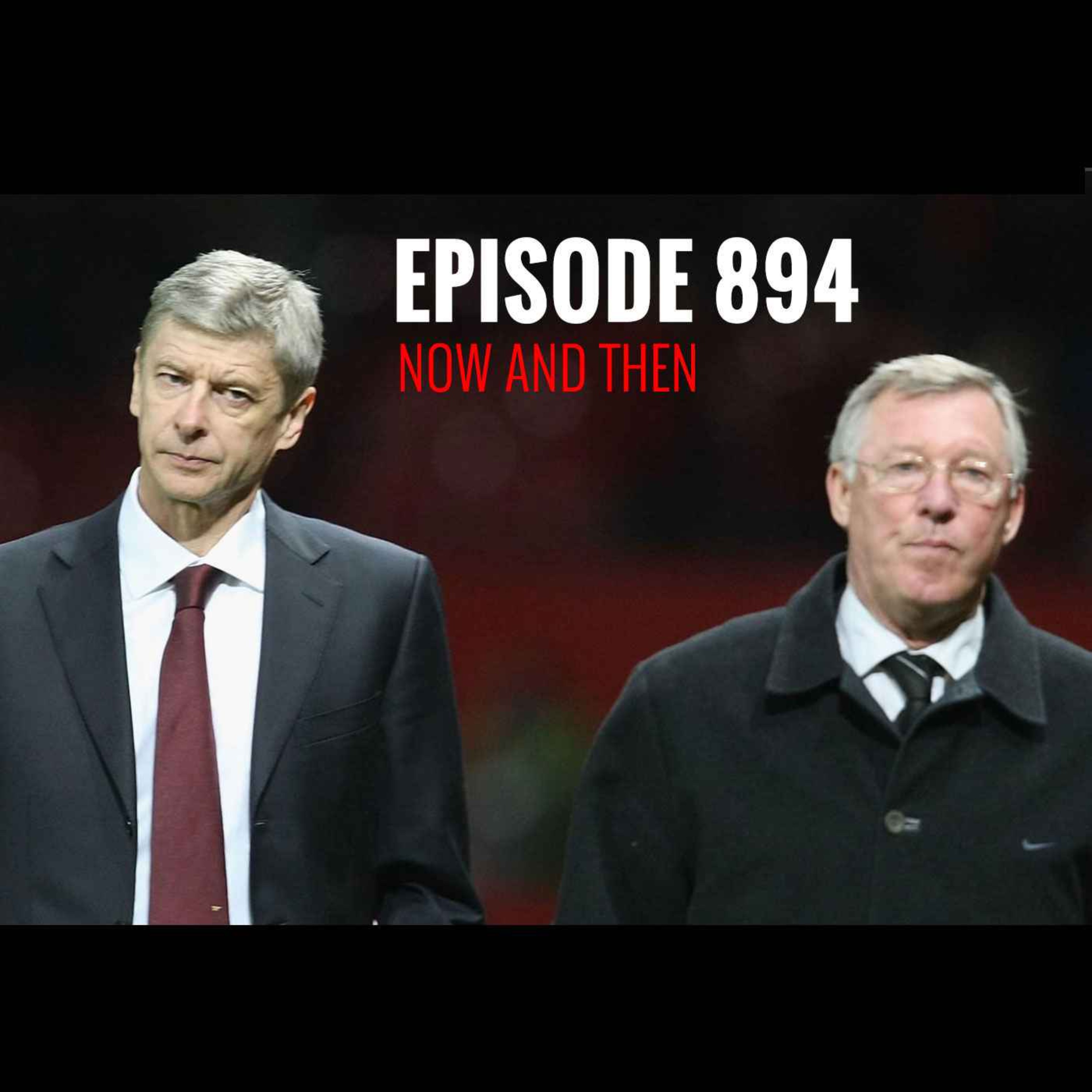
Looking back at Arsene Wenger's appointment and the historical context of his impact on Arsenal.
“You can find him in all the usual social media places.”
Dominic Hoffman discusses his book on the historic rivalry between Arsenal and Manchester United.
“Thank you, first of all, for having me on the show to talk about this.”
Discussion on how financial factors influenced the Arsenal-Manchester United rivalry and the shifting landscape.
“United obviously won leagues before Arsene Wenger came along, did the double in 98, and then we go all the way to 2004 when Arsenal went unbeaten.”
Exploration of key matches and incidents that fueled the rivalry between Arsenal and Manchester United.
“They're in the top three in every single one of the seasons.”
Explore the origins of the fierce rivalry between Wenger and Ferguson, including key incidents and cultural shifts.
“And then obviously as Wenger comes in, we can talk about how it builds up.”
Learn how Wenger's foreign approach challenged the traditional British football culture established by Ferguson.
“the Tuesday club and the lifestyle wasn't as healthy.”
Discuss the high level of football quality and memorable matches during the Wenger-Ferguson era.
“He knew British managers and he knew the league.”
Examine the unforgettable moments and contentious incidents that defined the Arsenal-Manchester United rivalry.
“Some of those games are, I mean, I think about the only one that was dull was one of the League Cup games because they put in all of their second string team.”
Reflect on the legendary midfield battle between Keane and Vieira, encapsulating the intensity of their rivalry.
Explore the evolution of football rivalries and their impact on teams.
“But, you know, in that period, it was as intense and as good as it gets.”
Details about the book 'The Greatest Rivalry' and how to enter the competition.
“The book is called The Greatest Rivalry, Arsenal, Manchester United and the Battle That Defined an Era.”

Get the gist, explore an idea or ask about something said.
 Claude
On Arseblog Arsecast, The Arsenal Podcast, what are the key points of this episode?
Searching your listeningAutomatic transcript. May contain errors.
0:00I always appreciate when thoughtful and luxurious design can help change the way a space feels. That's why I love how the 48-inch panoramic display stretches across the entire dashboard in my Lincoln Navigator SUV. It helps make it easy to stay connected while giving the cabin an open, expansive feel. Whether I'm juggling errands or just enjoying some quiet time, this feature brings a fresh perspective and helps elevate even the everyday moments. Visit Lincoln.com to learn more.
0:59Hello and welcome to a brand new Arseblog Arsecast right here on Arseblog.com. How are you? Hope you're well. Thank you very much indeed, as always, for being here. I hope the interlull, this long extended interlull, is treating you well so far. You're not going too crazy with the lack of arsenal. We've had a lot of arsenal. Now we've got no arsenal for a few weeks. And then there'll be a lot of arsenal again very soon. So take the downtime where you can get it, I say. And I say that as somebody who, you know, has to write about Arsenal every day and do podcasts every week about Arsenal. This does not make it easier.
1:37But look, who am I to complain? Very much a first world problem, makes things a little more challenging. But necessity is the mother of invention, as they say. And, you know, who knows what crap we'll come up with in the next couple of weeks before football begins again. Anyway, today's show, we've got two guests for you. We're going to talk about the start to the season and some of the issues that we faced in the opening eight games in just a couple of minutes before we talk to the author of a new book, which is focused on the rivalry between Arsenal and Manchester United between the time that Arsene Wenger was appointed manager and the time that Arsenal won the league by going through the entire season without losing a game.
2:20So within that period, there were some incredible moments, brilliant memories, some not so good memories. But what we had were two teams at the top of their game, two brilliant managers, two sets of fans that could not stand each other, and some incredible individuals and moments of brilliance and violence and controversy. And it's all in this book. So we're going to do a little bit of now, a little bit of then in this podcast. And we'll talk to the author of that book a little bit later on. For now, though, let's get on with the opening eight games. Arsenal won seven of them before falling to defeat to Brighton.
2:55And with me this morning to talk about our start to the season and much more besides. Delighted to welcome back. It's been too long since we've talked to Clive Palmer. Good morning, Clive. Good morning, Andrew. It's been a while, isn't it? We were just saying. Yeah, too long, I think. Too long. You know, for people, I mean, they can hear your dulcet tones elsewhere, of course. But here, it has been too long. So let me start by asking you, now that the dust has settled a little bit on the Brighton game, which was, I don't know if you'd say a shock to the system per se, but it was certainly a little bit unexpected.
3:27And we've had to come to terms with the fact that, wow, OK, we're not going to win every game this season, despite what the journalists were telling us. What's your, how do you feel about the start to this season? You know, eight games, seven wins, one defeat. You're obviously coloured a little bit by the recency of the Brighton game, but overall, how are you feeling about things? Yeah, I feel all right. I think, you know, going back to Community Shield, when you saw the team sheets come out, I thought, that City team was quite good. And you see it on paper, and then you see our team, and you think, okay, let's see what we do.
3:58And we just ripped into them, didn't we? So that was really promising. So that just adds to the fuel that we are the greatest team in the world, aren't we? League champions, we rock up on a Friday night home to Coventry, and everyone's excited to see their mates again they haven't seen since last season. And then we win that game easily. And then we just continue to roll downhill. And it's been quite nice, actually, to see how we've been appreciated differently, or you could say being set up for failure. And it's been quite nice how we've been playing. So players who maybe weren't so prominent last year, like Odegaard and Havertz, have come with their best boots and they're playing well.
4:37And it's all great. It's all great. I found it really enjoyable. And then Brighton came along, didn't it? And it's sort of like a reminder that this game, you never crack it, right? You never quite beat it. It is true. I mean, I've... Lewis just did a video for our YouTube channel where he looks at the game and looks at, you know, how it could have gone the other way, how Arsenal got themselves back into it. My sense is that, you know, when we got to the second half, we were a bit fortunate. But I've sort of come around a little bit on the idea that the first half was more even than I thought.
5:11It was one of those where my emotional response to what was happening on the pitch was maybe slightly different from the way it was playing out. But, you know, it's also one of those that I think you just kind of have to contend with, right? You have to accept that there are going to be days when it doesn't work, your performance isn't there, the opposition's performance absolutely is there, and in key moments, things don't quite go your way. And I suppose the way to frame it, despite the fact we have to wait three weeks, is it's about the response now. And I think what we've learned about this Arsenal team over the last number of years is that when there is a setback, generally speaking, it is something that we are far better at responding to quickly than we used to be.
5:54Yeah, absolutely. I agree with Lewis that it wasn't even first half. You know, I watched this game pretty cold because I was at the Emirates for the women's game, the Manchester United game. So I didn't see the first half. I listened to it. And what's the second half in the ground? and so sometimes when you're disconnected from the game you can see it clearly when you're emotional you know what happens and every pass is times 10 if it goes wrong you know so um what the fuck are you doing exactly when you get rid of him sell him so um and so yeah but then when you re-watch it again and it is a game to re-watch for those who can put themselves through the pain you realize it came in 50 minute chunks and we got beat up in the first 50 minutes and the second 15 minutes, we were absolutely fine.
6:36And we were just doing what we normally do, we control a game and then we got chinned a couple of times before half-time and it is a little bit of a jolt, but it sort of reminded me of the Manchester United home game last season when they scored two unbelievable goals outside the box in Tugane, I think Dorgue scored one. And it's like a little reminder to you about, it's hard to be invincible he says, throwing out a buzzword it's hard to be invincible it's hard to win every single moment and you just have to accept on occasions that the other team have maximized what they got from the game they played really really well there's a first impression of the game where they pressed us and the last impression of the game and we are searching for that to come back into the game in maybe not a structured way and we look a bit ragged and you walk away and you feel in your heart that you've been beaten badly Well, actually, you were just beaten.
7:29You know, and you have to accept it. It's how you react. And we are good at reacting. You know, when we do have a jolt, we analyze it well and we do react well. We tend to go on another run. And I expect that to happen. Soon to get back for Leeds on the 10th, I expect us to react really, really well and learn the lessons from this game and remind ourselves that sometimes you have to respect the game that's on offer. And we maybe should have had a slightly different tactical plan to play maybe over their press more consistently. Yeah, I mean, I think, you know, without wanting to relitigate the whole game again, you know, I think there were decisions that the manager made or didn't make at certain points, maybe half time, maybe the first two couple of substitutions didn't really make sense to me.
8:09But we talked about that anyway on the Arscast Extra on Monday. So I don't want to go over it again. But what I did want to maybe touch on a little bit was this was the first game that Declan Rice, Martin Odegaard and Bruno Gimaraes started in midfield together. And I think maybe the connection between Rice and Gimaraes is the key one here. Arteta talks all the time about relationships and about how it takes time for those relationships to build on the pitch. Is there something to the contention that in this game, you know, we had a new-ish relationship? Well, a new relationship at the back between Konzik and Gabriel.
8:43It's not the first time they started together, but he only arrived in the summer. So that's new. You have Gimaraish and Rice who maybe weren't on the same wavelength, I think it's fair to say. and Gimrach more than Rice, I would say. It seemed to be an issue for him maybe being a bit too Newcastle in terms of how he approached certain situations in the game. And that's a relationship then that has to develop. And as well, I know Christos Solas has been here and has had a good preseason and has started quite well. But again, he's a new player playing with Havertz, playing with Calafuri. You know, those relationships, you know, if they do take time, there are maybe going to be days where the need for those to develop a little bit is obvious.
9:32Yeah, I think starting with Bruno, I think at Newcastle, he's allowed to wander, shall we say. He's allowed to go where he wants to go and get it. And just for the first goal, I could see him in the front two press next to Havertz. I'm thinking, what are you doing there, mate? That's Odegaard's role. What are you doing? What are you doing? Get back in and he got back in. But when he got back in, he decided to jump around and he got passed around. and this is just part of him learning how we play and what his role is in the team. I do think for certain away games, I'd be interested to see if we see that team again in the middle of the midfield.
10:04I think because I think there is a closer synergy between Bruno and Odegaard than there is between Bruno and Myles or Zubamendi, shall we say. I think Bruno's skill is understanding where to be to create something slightly higher up, to shoot for the last pass. and I think for certain games he'll be really suited for that. For certain home games we can wear him in the middle there next to Rice but I think it was what I found watching the game that Rice was almost compensating for where Bruno wasn't and that takes him away from areas on our right-hand side where we've been really, really good in our right-hand side build-up.
10:37So, new relationship there. Maybe Timber came back in with Saka. Slightly new relationship there. Maybe a bit rusty, Timber was. And then, obviously, you know, the sentiment field is the core of a team, right? And how the team compensated for the fact they didn't have control of the game by dropping away from the front line just meant we lacked presence in the forward area. So I know we lost the game, right? No one wants to hear that it's great when we lose the game. But I do think you learn a lot when you do lose. I think you learn a lot how you react to certain situations. And I think we'll learn a lot from this game.
11:10And our manager is not dumb, is he? I think he'll work it out. Yeah, yeah. He'll be busy in his office during this interlal, that's for sure, working out where it went wrong or what we could do better. Something I wrote about during the week was goal scoring. And I was looking at our goal tally in comparison, let's say, to Brighton, in comparison to Manchester City. It is an ongoing worry, I think. it's one I think we would have felt more comfortable with if we had addressed it further in the transfer market in the summer but we didn't that's water under the bridge now so we can't really there's no point bemoaning it we just have to find a way of getting around it but I think we've scored eight goals in our five games in the Premier League and I wrote about this on the blog and I think it was Giant Gooner on on Blue Sky who sort of not took me to task but made the very good point that actually the fixture list might play a part in this given that you know apart from coventry at home we've been away to villa home to chelsea which is a tricky game away to sunderland away to brighton really difficult away games you're not sort of beating up on the also rands here by any means and we know how difficult those games are i did want to get your sense of where we are as a team in that regard though taking into account the the complicated fixture list versus how we have looked in front of goal and and what we might have produced or not produced in these games yeah one of the one of the nice things about this season has been the the attacking intent we show particularly in those early games so with other guards been the biggest difference really running into the box a lot more not staying spending a lot of time away from the danger area so that's been quite nice to see new relationships with solace coming into the team and have us being fit and fresh the chelsea game was a really good cat you know really good show reel for what we can do when we're behind and how we can attack but i have this theory andrew i have many theories as you know i think i think we're the team i think we're a team of 11 midfielders I say this all the time, but I think in our mindset, we are a controlling team.
13:23And we go out to control the ball in many different ways. A lot of versatile players are all good on the ball. Even our goalkeeper can play in midfield. And so we just have this team that understands how to rotate, move, create, get in behind if we need to. But I'm not sure in that 11, there is a true player that puts on his shim pads in the morning, pulls up his socks and says, I want to score a goal today. Well, there is one player like that, but the manager seems, you know, fairly reluctant to play him in the Premier League so far this season. You're absolutely right. So you finished off my sentence there.
14:00Remember when Ian Wright would wake up and come play? Come on. I don't care what's happening. I'm scoring today. We haven't got that player in our group, maybe just one. You know, I think we're trying to develop Saka into that. He's been far getting into central areas. Of course, we missed a chance we then judging for it. But I quite like the change in his dynamic this season where he's ending up. And so we have this team of really secure midfielder type technical players with high IQ. But I think when we don't win or we have a nil, we all come back to that point. We need a forward or two that really think like a forward, that judge themselves on the currency of goals.
14:42And I think that squad still misses one or two players like that. Can we develop it in-house? I'm sure he's trying to think about that. But we've always attacked us in XI, defended us in XI. That's got us where we've got to, where people have literally said we're the best team in Europe. But like fans, we always want a little bit more, don't we? A little bit more. That feels, you know, again, without being too reductive about it, a missing piece. And maybe something we were trying to sort out during the summer. I mean, it's quite interesting to note that Erling Haaland, And as you might expect, is the leading shot taker in the Premier League so far with 20.
15:22He's also had the most shots on target in the Premier League with 10. But Kaio Saka is second for shots on target with nine. So do you view that as a really deliberate, not change, because I think Saka's always had this kind of output. Like part of what has made him such a good player is the relentlessness of what he tries to do, whether it's shots or crosses. He is always in that final third looking to do something, you know, he very rare or well, not very rarely, but more than most, he will take on the responsibility for that final pass or take that shot. And typically he has more shots than anybody else in this team.
16:09But do you view the way he is being used or what is being asked of him as something different from the past? Or is it just a case that now he's got Ben White outside him and he's got Martin Odegaard behind him and he's got Kai Havertz there as well, who he's a good foil for? you know part of me wonders if there is a physical uh challenge for bakayo saka in that is he quite as sharp over those first couple of yards after that hamstring injury are they trying to modify his game a little bit by getting him into positions and two of the goals that he scored this season were basically him in the center forward position which is not necessarily where he has tended to be, you know.
16:53He's tended to score his goals in that inside right channel where he comes in on his left foot, you know, from close range. He can go with his right and go with his left. But tap-ins on the six-yard box are not high on the list of goals that he scores typically. Yeah, he seems to be going through the Raheem Sterling treatment that Arteta did for him, get him on a back post. Remember Sterling had that 20-goal season plus. And it was just all about getting into the areas. And I think you're right, Andrew. You can see the change where he's scoring, even from the Champions League semifinal last year, the Atletico Madrid.
17:28Where was the goal? Right six-yard box. So, yeah, he's definitely changing. Our right-sided bias is really becoming acute now because Declan Rice has now moved over there as well. So he's on the right-hand side of our midfield. He's in the back three build-up. We have a back four diamond. He's on the right tip of the diamond a lot of the time. and so now we're underpinning our creative side with Declan Rice on that side as well plus point is he can switch the point of attack he's got bullets in their boots and when it travels distances we can progress on the left hand side as well so that's a very distinctive attacking change and that gives Saka the platform to travel to travel into a middle of goal and but the negative point is that we can all see that he's developing into our forward which is great but you know you've got a score right so every time you miss a goal and the other team goes up the other end and scores a goal then he gets some negative criticism whereas i quite like this change i like the fact he's trapped and i think he's really intelligent he knows where to be he for me he still has got that one two burst you know you do a one two and he can still get in he may not have what i call speed stamina the 30 yard sprint you know sure And the sort of thing that Martin Elliott had, that Madaweke has, those long sprinters that Rashford has, the long sprinters.
18:45He hasn't got that maybe, but he's still sharp around the box. And for me, you just keep having your shots, keep taking them, and they'll start to go in, you know. So, yeah, I sort of like it. When you mention names, the comments go, oh, my God, he's not like him. But you see how West Ham used Mark Bowen for a while, Jared Bowen for a while. like a he's a left-footed wide player that really is a striker out wide you know salla was a striker out wide wasn't he player that played out wide but really getting in the box and scoring maybe we're going to start to see him develop into that role because as you get older you don't be on the chalk on boots all the time do you want to be able to travel inside and impact the central area so i quite like this change if it's designed um i mean i've seen people talk about saka's decision making and maybe that at times, you know, he's taking the wrong option or he's being, you know, I don't know the right word, but, you know, people will use the word greedy, that he's, you know, shooting too much when there are players in better positions.
19:44Is that a problem in your mind? Or is that, you know, a guy who is not necessarily playing the odds, but who knows that the more shots you take, the more likely you are to score? You know, I don't think for, you know, for example, There have been too many options or too many incidents this season where there's been somebody waiting for a Bakayo Saka pass to turn the ball in and he's had a shot and it hasn't gone in. It's been a waste of an opportunity. But that high volume thing, like I can remember and you can remember and people listening can remember Arsenal teams that just did not have players who were willing to put their foot through the ball or like take that responsibility.
20:24They're always looking for the final pass. The classic Arsenal just want to walk it in meme. You know, that didn't come out of nowhere. So I'm pretty comfortable with it. I think there are, you know, I really think Bakayo Saka should have two or three more goals to his name already this season because the finishes weren't quite there. But I would be much more concerned about Bakayo Saka if he was not getting those chances, if he wasn't having those opportunities in the first place. The finishing can be better. but I've seen you know we've seen players in the past just sort of float through games and have no impact I think it's it's more promising it's more encouraging for me that he's missing the chances because you know a we're making them in the first place and b he's in the right positions to to take those opportunities on yeah I'm loving what I'm seeing I know it's difficult when you seem to have the turning point moment at comment I'm sorry um Brian and when I'm talking about him now more positively is because we can see the change, can't we?
21:24There was one chance in the Napoli game, I don't remember when he came in off the left, in on the keeper and he went over the bar. That to me is a miss, right? He can do that all day long, right? Forget where he's playing. That's a sack of goal. I look at that and I think, come on, there's more in you there. I'd like to, as he's developing into this role, I'd like to see him a bit more decisive. I'm glad with the shot volume. I'm really glad you got that stat because that sort of validates what I've been thinking. I want him to take shots. You know, my issue is the burden that he's been carrying for many, many years.
21:59I want that to be lightened. I want somebody else to be shot heavy as well. You know, I want other people to really be in those charts. And I look at our, I still look at our left-hand side. I'm still not there yet. You know, I'm not there. I like the players that play there, but they are facilitating players. They are assist players. They are creative players. I want to see more striking power in the team, you know, and you need it, you know. You need that dynamism. I think what Brighton uncovered really was they made us play the game in an area where our lack of dynamism over distance was highlighted.
22:40And so they're not going to sit there and watch us play week on week and watch us beat Chelsea and say, we can let Odegaard and Havertz and Saka and these players just get the ball and get their heads up and pick their passes. They're not having that. They're going to get our heads down in our own half and change where the game is being played. And they did that successfully for the time they needed to to stay in the game. And they did well. And so for me now, more dynamism. But also, we've got the ability to play over these presses, etc. But the burden on Saka is a concern for me. because I don't see anybody else that's going to come up with the goals at the moment to really take us forward.
23:20How do you look at that left-hand side then? You know, Salas is, you know, he's been promising without producing too much in terms of end product, at least in the Premier League anyway. Aberace has, you know, hasn't really looked that convincing out there, even if people have thought and suggested that, you know, that's A, where he was first bought for Arsenal. I'm not sure. but be as a solution to that left-hand side in the absence of Martinelli. He's got to ring more out of these players than we've got so far, right? Yeah, I think so. I think Eze was developing a little bit more into a number eight, shall we say, for England.
24:01He's playing in the midfield, in the inside. Obviously, with Odegaard's injuries last year, he played like 43 % of the games. He's playing a lot of times with number 10 or second strike, and I think that suits him. but Odegaard's come back to better than previous years Odegaard and so now you've got to fight for that position against the skipper so now you've moved out to the left and I don't know about you Andrew but at 28 you don't want to be moving to the outside of the team you want to be moving inside to the team so now he's out on the left a little bit more having to play in wide areas he can actually do it, there's no drama there these are first world problems, he can do it but I also think he needs to embrace it you know he needs to embrace this now and and really show that he should be in a team because he should be in the team he should be in the first 11 more regularly than he actually is so he needs to embrace this and really recognize this opportunity for him here and he has unique talents to create and finish he has got the shot power you know so we need to get that out of him you know so the team will develop as it does the first few games we're thinking well this team this is it this is the group ben white's back you know if you always fit they're gonna play 55 games well he doesn't go like that he doesn't and um ezell will have his moments hincapi will have his moments timber will be back soon and it will just develop again and we'll have to find a different style because teams will look at what we've done previously and try to stop us we'll have to go again maybe go a bit more direct a bit ugly like last season then teams will drop off and we'll go to a more controlling game the big thing is we have all of these options the one thing that's probably hanging around in people's minds is we're probably a forward light and that's the issue that will never go away unless you win every game so we're forward light and on my eyes we're looking at the january transfer window well i can't even go there at this point you know it's it's it's it's the end of september we've got a lot of football to play i'm not going to drive myself mad by thinking about january just yet or drive anybody else mad by thinking about january but i agree with you I agree with you we are a player light in attack and um yeah the the the transfer window was good in in the bits that we did but the bit we didn't do I think was was quite bad and reflects poorly on the people who are trying to get those deals done but that is water under the bridge let me ask you about uh Declan Rice dropping out of the England squad were you pleased by that because I have to say I was I think you know what he went through last season was a feat of endurance for him.
26:33You know, he talked about being in terrible pain at the World Cup, and he talked about being exhausted for the last three months of the season. And then everyone's going, well, Declan Rice is not going to be played until after the first international break. And it's like, hang on a second. You don't know Mikel Arteta. And lo and behold, Declan Rice is in the top five players with outfield minutes for Arsenal so far this season, along with Bakayo Saka, Martin Odegaard, Kai Havertz, three players around whom we depend on a lot, but they've had their injury issues as well. So assuming it is just common sense and a bit of caution or an abundance of caution, as certain doctors might tell you, were you pleased to see Rice drop out or does it suggest to you that he's still managing something that could be a bit concerning?
27:23I'm really pleased. Whether this is done between England and Arsenal, or it looks like it may have been. Someone's been sensible about this player. There are certain players we just expect to be there all the time. And he's one of them. And we just don't expect the tank to ever run out. But when it does, it's quite a surprise. We've got to protect his career. He's 27. He's in the peak years now. But that peak will not last long if he's overplayed and he's already been overplayed. There was a stat recently at the start of the season that he's got 6 ,000 more minutes in him than Bruno Gimenez. right and Bruno's older than him right so so it's almost like a car in it you judge your car on the miles it's done you know and um sure we don't want to make him too high miles if we don't need to right so particularly in just come out of an international tournament it's the first break does he need to be playing four games for England in this break absolutely not and so he's very smart I do think this is something that we need to think about more now a lot of us think about Saka as well, what's going to happen there with him.
28:27I'm really pleased that he's not being thrashed. Because if you're looking at us, the one thing that really worries me, apart from the lack of a forward that we have a nil at Brighton, we're all talking about, this team went deep last year, went to Champions League final and a lot of the players, I think only Man City had more players at the World Cup than us. They've rejuvenated their midfield with new signings. They've rejuvenated with an extra forward. So they've done what they do. And so the biggest barrier to success for me is going to be fatigue and energy. And it may come up later in the season.
29:02And so all those players that we don't like at the moment because they can't trap a ball or they can't win a race or can't win a header, they're going to be absolutely critical to this group. They're going to be critical. And that is the one barrier I worry about. Fatigue, energy, not even so much injury, Andrew. that spark you know you see your team you can see in five minutes that we're there and I don't want to go back to the attritional football that we played last year though I loved it at the time I wanted to win the league and I want us to win it better but we have to recognise the game is attritional it is attritional and we are good at that but we have to be careful we have to remember that those players not playing are as critical as the ones that are we talk a lot about Mikel Arteta and the deep squad and having a deep squad available to him and using all the players in a squad and rotating well and managing the minutes and managing the load.
29:58I'm relatively comfortable with what we've seen so far this season because I think you can look at this first chunk of games, particularly given the way the fixture list was with Arsenal, like away to Villa, away to Sunderland, away to Napoli, away to Brighton. That's tough, you know? So I can sort of understand a manager going, right, let's just get through this first chunk of games as well as we can. And I think seven wins from eight, despite the disappointing defeat to Brighton, seven wins from eight is good going, you know? But it's when we come back from this international break and fingers crossed those who've gone away, come back unscathed.
30:36I'm looking at somebody like Shurian Timber, for example, who's gone away with the Netherlands. I'm hoping it might be useful for him. Sometimes we don't want a player to go because we're like, oh, he could get injured or he looks tired, he's in the red zone. With Timber, I'm like, okay, we've got to find out whether or not this guy can get fit again and match fit again right because he's been out for essentially six months um and he needs to play so it could be useful for him to go away but but when we come back and you start looking at this sort of game every three days i think there's 20 games between october the 10th and the end of the year maybe more uh there is another international break in there as well so you're looking at games every three or four days with the EFL Cup, the Champions League, the Premier League.
31:21I think it's in this period where we need to see Arteta really lean into his squad. It doesn't mean you make eight, nine changes for every game, but it means you have to use different players at different periods in games. Hopefully scorelines allow you to do that, but also showing trust in the squad and trust in some of the players that maybe, for understandable reasons, he trusts a little less than some of the others, you know? yeah absolutely and at the time of recording Andrew I believe that Timber's out of the squad for the the Netherlands Germany game which is good right so he's being rested for that game because I think people recognise that he has to get back to the level and he's only going to do that if we don't overplay him maybe he wasn't quite ready for Brighton by the way you know but because of the situation there we had to play him and so yeah I totally agree with you there I think what's coming up with Arteta I think if you want to critique him maybe rotation and overtraining is something that's been consistent over the last few years.
32:22We're lucky we've got a big data source of him now, haven't we? And by the way, we all pick a different team after the game. You know, we all do. And he should have played. Why didn't he play him? He should have seen what was coming. And when we listened to our previews, maybe we weren't so sharp on some of that. And so, yeah, I do think this is a real test for him. But I think he's more capable of doing it. I think he understands the course now. He understands it every three-day course. He understands the emotion of Europe. I think we handle that much better than we did in the first year. We're getting better at that.
32:54And I do think if he's brave enough to pick the right horses for the right course, I think we're going to be fine. I trust all the players, basically. I look at the team and I trust most of the players. And so I'm comfortable with change. If the change aligns to the game plan, I'm even more comfortable with it. If you're forced to make change and it does align to the game plan, and you uncover someone's weaknesses, then you find out what you find out, right? So I'm more confident that he has learning and he has to recognize that with this team last season, I felt that the mantra was we're all in.
33:29We're going to have a big squad, a deep squad to conversate what happened the year before. But this year they've all won. And I wonder, it may be more challenging now to keep people happy. We did it last year, but this year, We all want to play, right? So let's see what happens. I mean, do you think that that's a more competitive environment or a more challenging environment for the manager? For example, somebody like Myles Lewis-Skelly, who didn't really play last season, wasn't playing anywhere near as much as he would have liked, but towards the end of the season made that breakthrough in midfield.
34:05Some will say a little too late, but we got over the line in the Premier League and let's not be too picky here, right? He has emerged, but obviously we bought a player for 75 million pounds who's going to play in his position quite a bit. Is that the challenge for Arteta or is it a case that for someone like Myles Lewis-Gelly, who turns 20 on Saturday, I know this because I share the same birthday with Myles and also Kieran Gibbs and also Kenny Sansom. So for whatever reason, I'm not an Arsenal left back. I don't know why that never came to pass. Yeah, thank you very much. but you know at 20 years of age is is is this you know still part of his development or you know where's the balance between what miles has to do to sort of play more than he would like and what michael arteta has to do to keep 75 million pound brazil international happy and a 20 year old who you know in the games he's played this season has done really really well and whose future you know looks really really bright at Arsenal.
35:10Yeah I mean it's interesting isn't it and there's Miles and there's a couple of World Cup winners from Spain and there's the England vice captain in the prime years and they're all in our midfield group and it's the reason why most people have us as favourites or second favourites for the league but within that competition you wonder about the players who are not getting the minutes they deserve but players are slightly different they, Miles has done some wonderfully mature interviews this week you know because he's back England squad there's lots of things to read on different platforms apart from apart from the bit about dogs yeah I was a bit disappointed about that but come on he's been he's been his authentic self I used to be scared of dogs now I was young by the way but not anymore but yeah it was it's really good to see and he embraces a Bruno coming in he wants to learn from him I'm thinking you haven't miles but you might take your minutes but he doesn't think like that you're thinking, yeah, I will learn from you.
36:08I'm going to get better. And I've got the mentality to overcome this and force the manager to make a decision. And that's the way these guys are wired. You know, if you're looking at Zubimendi right now, he's running around like a three-year-old. You put him at right back, you put him in the field, whatever minutes he gets, he wants to play. And I love to see this, you know. What I didn't enjoy so much, and by the way, just from a distance, was maybe some of the players at Ipswich just maybe not taking that game seriously enough. But again, you may say, look, that game's not important. We've got 60 games to go.
36:41You don't want to kill yourself in that game. But we are supporters. We want to see them kill themselves in every game. And when they get injured, we say, what do you do that for? And so, yeah, I think Miles is an interesting guy. His mentality is so rock solid. If you think what's happened to him, you get into the Arsenal team, you get into the England team, you score on your debut, and you don't play for a few months, then you're out of the England squad. Then you're not in the Arsenal team. it's sometimes fine to be in the squad then you come back and you play in the Champions League final and you help us win the league and you come back you're back in the squad, I love those stories, I absolutely love them when you have to fight for your career, fight for your minutes and do that with grace do that with humility, I love it I absolutely love what he's doing and I just wish him all the success.
37:27Well hopefully it is a season where he can develop even further because if he does it'll be very exciting because of what he's already capable of bringing to this team on the pitch. And I think going back to what you said a few minutes ago about Arteta recognizing there are going to be certain players for certain games, you know, he really does feel like one of those. You know, I know you can make the arguments about forwards and people who come in, but I do think, you know, there are certain games where, you know, the Rice-Louis Skelly-Odegaard midfield is going to be better for us than Rice-Gimmarais.
38:03and Odegaard. But then, you know, maybe you could play Rice-Louis-Gelley and Gimmarais in certain games as well and give your captain a rest, you know. That's where my head's going, Andrew. I think, I do think that's something that we could use, particularly for tough away games. Be really combative. And so it's great to have these options and we're going to argue about them for the next few months, aren't we? Because we have these options and they have a high level, a high quality and the arguments are justified because, you know, because they're that good and this is what we want, right? We don't want a situation where we have a player that's so good that we're worried about the minutes that he's playing and we're just hoping we get substituted and get two goals ahead.
38:41And we've been in that position for many, many years, right? We have. Yeah, or the argument becomes when it doesn't go well or you don't play well, that you're missing the players that you need to have that variety and have that variation. And I don't think anyone can accuse Arsenal of missing that this season. Just very finally, I know it hasn't been officially announced yet, but there were a couple of stories this week, one on the BBC, one from David Ornstein, to say that Mikel Arteta has agreed new terms with Arsenal, a new contract, which I think is probably going to be a three-year contract there or thereabouts anyway.
39:13Maybe the least surprising thing that's ever happened at Arsenal Football Club because, you know, he's won us the title after 22 years and has made a big, big impact. But are you confident that this is a man who, you know, having done that isn't going to rest on his laurels? Because to me, he looks like somebody who is always looking for improvement. He's always looking for things to be better. And, you know, it becomes increasingly difficult, doesn't it? When you come in a sort of rock bottom, I'm not saying it's easy to do what he did or to make things better, but the improvements are obvious.
39:47When you get to this level, talk of marginal gains, talk of like being smart, all this sort of stuff becomes really, really important. And, you know, I think that's going to be the fascinating thing about the next, you know, three years under Mikel Arteta is how does he make something that's already very, very good, even better? Yeah, this guy's an obsessive, isn't he? Right. So, I mean, we love our team and we're pretty obsessive. But then you stand in front of him and you meet him and you realize that there's someone that cares more than you do. A lot of his leadership identity is based on those margins, isn't it?
40:26and what he can achieve. And some people mock him for some of those ideas, but the players love the ideas. The freshest by which he approaches the season, how he motivates them as young men, how he develops them. His own leadership style has developed over time. I think he's obsessed about this. And being the guy that he is, I have no doubts he's already looking at ways to improve. Tactically, he's already changed us this year. I think the goal was clear last year to win the league. He went about it in a squad way, in a collective way. I do think with the end of last season, once you win the league and you get close to the Champions League, it's harder to plan and strategise because you're not sure where you're going to be.
41:07I think some of last season's summer plans were done way before. So they look smooth. We brought in eight players. But this year, we weren't sure if we're going to be champions. So those plans are maybe a little bit later to land. But we landed where we have as a group. I think we've held some power for January I think he is I still think it's another layer for him to go Andrew particularly when it comes to attack I think he understands how to build our play the use of the change of the goalkeeper and our back our defenders are all great on the ball I mean field group is now we've spoken about already it's now got depth and variation to it but in attack there's room to not just buy a player but redesign how we do attack you know and maybe some fundamental changes there and I'm interested in that It's a last piece, you know, for me.
41:53There are different teams around Europe at the moment. You've got Barcelona playing with wingers up front, you know, and things like that. PSG do something similar with Dembele. Very quick, dynamic, and quite rotational in their movement. We are a little bit more tilted to one side. We're a bit more creative and we're a bit more collective. So there's room for change, right? And I think he'll spot it. He'll do it. And I honestly, he's the MVP of the club. There's no doubt about it. We know this. He's started as a coach, developed into a major, and he's developed into an exec and a major. And we had a bloke like that before, didn't we?
42:29And I think the club is comfortable federating that all to him. And he's respecting it and developing this team, developing some young players. And young players seem to want to come and play for him and stay and re-sign. So these are all positive signs. Yeah, I could not agree with you more about the attack being kind of the final piece or the piece where I think if he's looking and he's analyzing what he's done and where this team can go, that's the obvious answer, you know? And if it's obvious to us, if it's obvious to me and you, I'm sure it's obvious to him. All right, listen, we better leave it there, Clive.
43:03Pleasure as always. And hopefully we don't leave it so long. We'll chat again soon. Thank you very much.
43:16through. It shows up in the smallest moments. You bite your tongue instead of escalating. You put your phone down instead of firing off that text. You say what you actually mean instead of what would hurt someone else the most. Nobody applauds those moments, but they quietly change your life. That's what growing feels like, and that's exactly what Grow Therapy is here for. Grow is therapy that works, covered by insurance. Sessions average$21 with insurance, and some pay as little as$0 depending on their plan. There are no subscriptions, no long-term commitments. You just pay per session. Grow connects you with thousands of high-quality licensed therapists across the U.S., offering both virtual and in-person sessions, nights and weekends.
44:00You can search by what matters, like insurance, specialty, identity, or availability. And you can book a therapy session in minutes and begin in as little as two days, not the national 48-day average. See if you could pay as little as$0 for therapy in seconds at growtherapy.com slash start now. That's growtherapy.com slash start now. growtherapy.com slash start now. Availability and coverage vary by state and insurance plan. During Lowe's Pro Savings Days, save more on the products you count on to get the job done right. Get a free two-pack of DeWalt 20-volt max XR 8 amp hour batteries when you buy a select DeWalt 20-volt max power tool.
44:46Plus, save up to 35 % on select major appliances. The right products, the right deals, ready when you need them. Our best lineup is here at Lowe's. Valid through 925, while supplies last. Selection varies by location. Hi, I'm Nick, co-host of The Best One Yet. You optimize your workouts, your portfolios, and that rando startup idea that hit you in the middle of the shower. But if you're not hydrated, you're already playing catch-up. So we keep a stash of Liquid IV in our studio. One stick mixed into 16 ounces of water is clinically demonstrated to hydrate faster than water alone with three times the electrolytes of the leading sports drink, plus eight vitamins and nutrients.
45:23Whether you're traveling, exercising, or podcasting, the best business news ever, Liquid IV makes it easy to stay hydrated wherever life takes you. So shop now at liquidiv.com. Liquid IV hydration that goes wherever life takes you.
45:38Thank you very much indeed to Clive. You can find him in all the usual social media places. And of course, on the Arsenal Vision podcast, which you can listen to wherever you get podcasts or at arsenalvisionpodcast.com. Not sure why exactly I went full voiceover guy on the dot com. But anyway, that's where you can get a bit more, dare I say, a lot more Clive, if that's what you're looking for. Right. This week, 30 years ago, Arsenal appointed a relatively unknown Frenchman named Arsene Wenger as manager of the football club. It came as a bit of a shock. There was talk of Johan Cruyff. There was talk even of Terry Venables, if you remember.
46:18And what happened under Arsene Wenger has gone down in history. But a big part of that history is the intense head-to-head rivalry we had with Manchester United during that period. So given that it's an interlore, I thought it might be fun to look back at those times, those heady days. And I'm delighted to welcome to the show Dominic Hoffman, who is the author of a new book called The Greatest Rivalry, Arsenal-Manchester United and the Battle that Defined an Era. I mean, there's enough going on in the title there, Dominic, to get us going. Thank you. Thank you, first of all, for having me on the show to talk about this.
46:56Yeah, I mean, somebody did say to me, why did you call it the greatest rivalry? It is marketing. Come on, you've got to market your book. You're going to have the second best rivalry or whatever. But no, I mean, we'll get into it. But I truly believe that I think this is the greatest rivalry that at least the premiership has seen to date. you're not an Arsenal fan and you're not a Manchester United fan I'm you know fully invested on one side of the of the rivalry and um I remember it very well and I remember how intense it was and I remember just how uh just how much these games meant and and um you know for fans how much was riding on them particularly during the time uh when Arsene Wenger and Alex Ferguson and we're going head to head.
47:42But what was it about this rivalry that stood out to you as a neutral, for want of a better term, and made you want to document it and write about it? I mean, I love a sports rivalry anyway. I think that's key to any sports. You can't beat a great rivalry. You think about Borg, McEnroe or Arlie Frazier. You need two sides at the top of their game that brings a kind of extra element into it. And while I'm neutral, in a way, what that meant was that I could write about it looking at both sides without a bias. I didn't have any internal bias. And I do remember this as a fantastic rivalry at the time.
48:23It didn't really matter who you supported. As it built up over time, every Arsenal-Man United game was still a must-watch. There was so much media coverage at the time. There was so much hype, and it kind of lived up to the hype. and also because of the way it developed over those seasons the fact that it actually had a lot of needle in it compared to say some modern vivals you might talk about I think that added a lot of spice to it too I think if you think about why do people watch the ashes and love the ashes England Australia it's because there's a bit of needle there as well and again as a viewer that just heightens the experience so I wanted to talk about it and I there have been of course excellent books about that time but most of them either one side or the other they're either talking about manchester united and ferguson at the time or they're talking about arsenal and wenger so what i want to do is just balance it and say okay let's look at it from both sides with a neutral kind of view and i mean i do honestly believe i mean you look at those eight seasons and we'll talk about some of the moments in them it's just there's so many iconic moments during this rivalry um and it just developed the premiership i think as the league to watch i think it was the first catalyst for that i really do believe that um and yeah so like i say because i wanted to do the two together rather than from one side and it is just an era i remember as fantastic and i went when i was doing the research obviously you go back to youtube and you re-watch games some of those games still i mean sometimes you watch things they don't hold up they still hold up oh it's amazing games during that time i think what it is as well is that it feels like you know now looking back it feels like a different era of course it is a different era right but what i mean is that the game itself and the premier league was obviously not as much of a product let's say as it is now and i think you know maybe you could look at 2005 as not necessarily the end of the Wenger, Ferguson or Arsenal-Manchester United rivalry, but in terms of that particular, how intense it was and how basically these two teams dominated the Premier League for X amount of years.
50:42United obviously won leagues before Arsene Wenger came along, did the double in 98, and then we go all the way to 2004 when Arsenal went unbeaten. And within that period, he had this incredible rivalry. But, you know, I remember at the time there was, you know, a sense that Manchester United were this financial firepower. And when I look back at it now, that's true. But it's also because they made their own money, right? They were the first club to really view the global fan base, the marketing potential of Premier League clubs, to really make the most of that, right? Other clubs are years and years and years behind.
51:24Arsenal included were years behind. So there's something really, if you can put it that way, I don't know if pure is the right way of putting it, right? But in 2004, 2005, all of a sudden we had Roman Abramovich. And that completely shifted the landscape. It shifted the landscape financially, but it also shifted the landscape really significantly in a sporting way. So this particular era of football, these years of Wenger, Ferguson, and when the title was going back and forward between Arsenal and Manchester United, it felt like kind of the last organic, if that's the right way of putting it, sporting or Premier League rivalry.
52:04Yeah, I would agree with that. And what the book does, it actually goes from when Wenger joins up to, as you say, 2004, 2005 is kind of the last season I come in detail, which is when Chelsea go and break the Monopoly. I think what's interesting is before the rivalry, Manchester United had started to dominate under Ferguson. They kind of bested Newcastle. They bested Blackburn. I mean, I'm sure in his mind before Wenger came, he was king of the roost. I mean, it could have been eight years of just Manchester United dominating. So, again, from a neutral point of view, the fact that Wenger came and that Arsenal became a power to match United was fantastic because I honestly think if Arsenal hadn't, I don't think anybody else could have competed with Manchester United during those eight seasons.
52:51But the beauty of Wenger and what he developed was you then had these two teams. I mean, for eight seasons, they win. United win five, Arsenal win three. They're in the top three in every single one of the seasons. So it kind of, in a way, saved football at that time, I believe. I mean, it really, it would have been, I think, otherwise just a pure Manchester United dynasty. And then, as you say, Arsenal come in, Abramovich comes on, they start. For people who don't remember that time, you could spend at will. It wasn't like now with PSR rules, et cetera. You could literally spend at will, and Chelsea did.
53:23And, you know, they then became one of the powers as well. And unfortunately, I think Arsenal, with the whole new stadium and things, they were slightly more restricted financially. United was still a power. But it was never quite the same after Chelsea came along. And that's why I focus on those eight seasons, because for those eight seasons, it was literally pure United versus Arsenal. I mean, the thing about the Chelsea, the Abramovich thing is that it just shifted everything in football. You know, monetarily, the ownership structures, the people who are in charge, how much money they could spend.
53:56And now we end, you know, we're in an era where nation states own football clubs. and it's sort of just the norm because nobody can do anything about it. But I think what's really interesting about this is that, you know, obviously Wenger versus Ferguson is where this really sparked, you know, and we can talk about their relationship maybe in a moment. But Arsenal fans of a certain vintage will remember winning the league in 1991, of course, when there was a brawl at Old Trafford. You know, 21 players involved, I think David Seaman was the only player who wasn't involved. Arsenal were docked two points and still went on to win the league.
54:38So down the years, and not just with that incident, of course, there've been other incidents, which maybe you can mention, that this was a rivalry, let's say, that there was a bit of kindling there before the fire got started. Yeah, you're correct. I mean, the first big game I kind of remember between them, actually as a kid, is the FA Cup final, which is the one when Arsenal were 2-0 up and the crews were something like five minutes to go. And then United make an amazing comeback. They take it to 2-2. You're thinking, that's it. And then in the last second, Liam Brady goes down the line, crosses, and Sunderland slides in and scores the winner.
55:17So that's kind of the first big game I remember between them. But then you're right. There was a game in 88-89. It's the one that led up to Arsenal were 2-1 up. It was at Highbury, and United get a penalty, and it was Brian McClure taking. And he misses, and that's when he gets taunted by Winterburn. That's kind of the first spark, as you said, to then leading to the famous Battle of Old Trafford in 1990, which, as you mentioned, was basically a 21-man brawl. Again, if people don't know it, go back and watch it. It's an incredible scene now. two minutes of chaos. And it was kind of the first time that there had been fines and points docked.
55:56I mean, that didn't really happen even back then. So that's kind of, to me, what sets the scene before Wenger comes in. And then obviously as Wenger comes in, we can talk about how it builds up. But I think the first season, United still win both games. United win the title. They're still the top dog. But you get the whole Michael Wright incident in both games, both at Old Trafford and back at Highbury. And that, to me, is under Wenger Ferguson, the thing that kind of starts the real needle between the two of them and the two teams at that time. It's the whole Smychel Wright incident definitely kind of was the first catalyst.
56:38And then you move on from there to every game getting slowly more controversial. It's fascinating to think how that might have played out now in the social media age because Ian Wright contended that Peter Schmeichel racially abused him. And then in the second game, there was a pretty bad tackle by Ian Wright on Peter Schmeichel. So no love lost there whatsoever between those two. And it obviously grew down the years. But I'm curious, you know, as a neutral, we have to remember when Wenger came in, I think there'd only been one foreign manager in the Premier League, two maybe? Between Benglos at Villa and Ardiles at the top.
57:18Ardiles. So foreign manager... Neither of which works very well. No. But it was a real rarity for a foreign manager to be present in the Premier League and to come into the Premier League, maybe to a really big club like Arsenal, a bit of a sleeping giant perhaps at the time. But to what extent do you think that was part of, you know, what had the two men at odds? Because, you know, the Premier League, English football, it was quintessentially British. There weren't even that many foreign players at that point. You know, there were some, but not to the extent that there are these days. There's a famous Ferguson quote about, like, what does Wenger know?
58:01This Frenchman coming over here, he doesn't understand our football. And obviously Wenger, he understood enough about English football to completely change the lifestyle and the habits of all his Arsenal players, particularly the English players who, you know, the Tuesday club and the lifestyle wasn't as healthy. Exactly. Mars bars and all the booze. Not the greatest diet you can have. But do you feel like that was a significant factor in the rivalry between the two men, that Ferguson sort of was like, not quite you're coming over here and taking our jobs, but you're coming over here and telling us what to do.
58:41who are you coming from Japan via France to do that? Yeah, no, I completely agree. I mean, as you say, there were only two foreign managers before. And I think England was at that time still a very insular country. And the press, I think, were very insular. That's what led to, I mean, there's the famous headline with the Arsene Hu when he gets appointed. And I think there was a reaction from the press of like, why is this person coming in from Japan? I think with Ferguson, you've got somebody who was very old school. very kind of tough Scotsman. He was competing in a league full of British managers.
59:17It's the world he knew. And he had basically dominated it. He had got, as we say, he'd kind of bested Keegan. He'd bested Dalgleish. He was top of the pile. And then suddenly you get this manager coming in that nobody really knows. As you say, from Japan, he kind of looks like a high school professor. He doesn't even kind of look like your regular manager. I think that was probably quite a shock to Ferguson. and also I mean he had all these modern ideas he was very good with the press and excellent with the press he got them on board pretty quickly and I think Ferguson probably resented a little I'm guessing here that Ferguson probably resented a little that I think Benga was seen as kind of the modern face of football and that probably smarted a bit to him he's like well I'm you know king of the pile here and this this foreign manager is coming in and suddenly everyone's talking about his revolutionary methods and the diet and the nutrition etc um but it was it was great for english football to have that and you know obviously over time finger brings in a lot of foreign talent um and it just kind of opened up the way i think for the future for foreign coaches to win acceptance but i do think that the different personalities um definitely added to the rival i think there was definitely a part of ferguson that was kind of surprised by this and challenged by the fact that it wasn't the world he knew.
1:00:39He knew British managers and he knew the league. And suddenly to have somebody coming in from Japan with all these new ideas, it was kind of like a challenge to him. I think as well, we can maybe talk about some of the more contentious incidents in a moment, maybe. But what strikes me is that the quality of the football, for you, let's say, as a neutral fan, right? We all enjoy it when a team go at each other and there's a bit of aggro on the pitch. But like if it's 22 cloggers hoofing the ball around, it's not that interesting in the end. You can go watch ice hockey if you want to do that or watch boxing or whatever it is, right?
1:01:11But the quality of the football and the quality of the two teams that were engaged in this rivalry, I think, is sometimes a bit overlooked. Because we can talk about pizza and we can talk about, you know, the bad tackles and the sendings off and the physical nature of these games, which was, you know, part of what made it so great. There's no escaping that. But the quality of the football and the quality of the individual players, these two teams were like just two unbelievably good teams. And I can say that now about Manchester United all these years later. I can live with myself a little bit.
1:01:48Back then, I wouldn't have been able to. But it is that. The games were just so good. You know what? I completely agree with that. And that's a really good point because it is very easy. And I've done a number of podcasts on this. it's very easy to get into the narrative of the big moment there are controversial moments yeah p brigade and you know viera keen and this toy um kione it's very easy to get sucked into those but as i say going back and watching the games there are some absolutely brilliant matches and the other thing you notice going back is because you know also you don't have var the refereeing is a bit more loose so again it adds to the intensity of the game so i'm not saying dirty games i'm saying it just adds to the intensity and there's a lot of clashes where you would just have a yellow card immediately now and then probably one of the players would have to hold back a bit there isn't really that it's much more high level intensity the speed of a game is still really impressive you know it's not like modern football so much where you have a set system and you really have to stick to the system again when you go back and watch them there are games where they are just literally flying at each other um you know pizzagate is a really good example because you actually when i went back to watch that game the whole narrative is about afterwards and the pizza but when you watch the 2-0 game it's 2-0 united it's a ferociously fast game and it is still brilliant to watch you know you've got to be andy gray commentating and you know martin tyler from that time which if you were watching it then sort of gives you goosebumps again to go back to that um but no it is a very important point people forget sometimes with all the controversy around it, that the quality of football and the quality of the two teams with people like Bergkamp, Henri in there.
1:03:33Absolutely. Some of those games are, I mean, I think about the only one that was dull was one of the League Cup games because they put in all of their second string team. But I wrote about every game during that time and there was very few that you would say were boring. And even one of the games that was probably one of the dullest, Henri scores a wonder goal against Manchester United and lights up the match. So even there, where it wasn't even a great game, you have a moment that was fantastic. So yeah, with the quality that both teams had, you just knew that something could happen at any time.
1:04:06And honestly, going back and watching them again, they hold up. Yeah, there were loads of contentious issues though. Unbelievably, I was just sort of sitting here thinking while you're talking and I'm going, you're mentioning this. And then I'm going, well, you know, what about this one? What about that one? You know, the 50th game, the one at Old Trafford when Wayne Rooney dived over Saul Campbell to get a penalty and Saul Campbell wouldn't talk to him for like six months afterwards. There was the game when Jose Antonio Reyes was like kicked around by the Neville brothers. I think that day Rio Ferdinand should have been sent off because he sort of hauled back Freddie Jumberg and you're talking about the referee being a bit looser.
1:04:46It's moments like that where you kind of, oh God, should we have video referees for this? We've opened the Pandora's box of VAR because of things like that, where you're looking at those moments and you're looking at that rivalry. And I guess if we're talking about eras and we're talking about how, you know, the football was so good, the physicality of these games now, I don't think would stand up in the modern era in terms of keeping 11 players on the pitch. And it's, you know, obviously lots of those games didn't end with 11 players on the pitch. but I think in this day and age the physical element would probably yeah it would make all the headlines again and you know you can go back to that one in 2003 when Van Nistelrooy missed the penalty and you know they're kind of iconic scenes and obviously from my point of view as an Arsenal fan you know the idea of Lauren strangling Phil Neville is an image that lives in my mind one of those I'll see before I pass into the grave beyond but you know that aspect of it you know if you try and frame it within the context of what football is like today it just wouldn't work no um but i do think that's part of then while we talk about the great football i mean it is some of those instances that make it to me such a iconic rivalry as well because you know people will talk about say manchester city liverpool recently yeah um as being another rivalry but i think the beauty of the arsenal manny one was to something seemed to happen almost every game at At least one game a season, something happened.
1:06:18So if you think back, you had, as we talked about, the Wright versus Michael incident. You had the Overmars goal at Old Trafford and the Barry first face, which became literally a Premier League iconic. That picture of him in the crowd is very, very iconic. We haven't even talked about the FA Cup semifinal replay, which is probably the greatest or one of the greatest FA Cup games of all time. you got Manchester United scoring 6 past Arsenal 1 season 6-1 you got Wiltord scoring Old Trafford to clinch the double so many iconic moments that's also before you get to the Van Nistelrooy penalty miss Pizzagate, Keane Vieira clashing in the tunnel so for me it just seemed to produce compared to other rivals an amazing amount of iconic moments that I honestly believe if you said somebody put your 25 top Premier League iconic moments in list, probably four or five of them would be from this era.
1:07:16Yeah. It just seemed to produce it. For whatever reason, every game seemed to produce something that just made them special. Yeah. I mean, I was going to ask you about certain head-to-heads, and I think, you know, you can talk about standout players and you can talk about Henri and you can talk about, you know, particularly some of the defensive players that Manchester United have, but you know with the Beckham and Giggs and then all of that but but Keane versus Vieira was the one that sort of had everybody captivated because it was this clash right in the middle of the park you know and I can remember the the game at Old Trafford where Wiltor did score that and there's like a challenge on Keane or on Vieira by Keane in the middle of that and it's like studs up in the middle of the thigh it's like you are not winning this title on our ground uh it didn't quite work out like that but but because of the personalities of those two players and because of how competitive they were and how combative they were and also again how good they were as footballers like if it's you know Robbie Savage taking on somebody else you know it's like okay leave them on who cares but when it's too many boys yeah exactly exactly yeah put them in a room let them fight we'll come back and pick up the pieces later but but because of like their personalities because of their their just their will to win and and because of how good they were it was just impossible to escape that as like the centerpiece for so many of these games like if if fergus and wenger was a rivalry that everyone talked about so too was keen vieira definitely i mean it is the iconic one that everybody associates with it it's even on the cover of the book because you can't have the ball cover without that being on there i think like you say the beauty was they were both absolutely brilliant players um and also i mean they would go in heavy on each other but there was there was kind of no quarter given but there's no quarter asked as well they both were very respectful like it wasn't like one of them would complain when the other one fouled them they both gave as good as they got and i think they both had a huge respect for each other and and definitely later on um in later interviews you know once the rivalries were finished you can see they have a great amount of respect for each other, but they're probably two of the greatest midfielders, honestly, that the Premiership's ever seen.
1:09:29So to have them leading the two teams during this era, they did become the iconic kind of image. And then I guess after that is the Van Nistelrooy Keown is kind of the next, if you're going to talk about a pairing, that's one that everybody always remembers. But that's kind of slightly for more different reasons. But yeah, I think Roy Keown and Vieira, it was just brilliant to watch. I mean, they're both captains of the team at the time and they were just absolutely brilliant midfielders. And neither of them was going to give up, you know, give any quarter in the midfield. They both had a strong will to win.
1:10:02And yeah, that just became the iconic image of that. It was those two. Yeah, it is a shame that, you know, it sort of fizzled out a little bit, you know, because of, well, Chelsea's arrival, because Arsenal was a team, you know, that when it got to 2005, 2006, underwent a bit of a transition. It became younger. smaller, less physical, United still. United as well. Yeah. But, you know, in that period, it was as intense and as good as it gets. And I guess just sort of finally, how do you reflect now when you look at it and then you see these, Keane and Vieira did a TV program together. Wenger and Ferguson have appeared together.
1:10:46There's even a bit in the book where, you know, you talk about Ian Wright and Peter Schmeichel and Ian Wright says, we're friends now. which they weren't back then, that is, I guess, just sort of born out of that mutual respect that you mentioned, because you can be a rival, but if you respect your opposition or respect your opponent, I guess over time when the heat of that rivalry dies down, you can sort of step back objectively and look a bit and I guess realize, well, maybe this person is not exactly who I thought they were. Yeah. And I think with anything like this, what they realise over time, and I think what Wenger and Ferguson appreciate, is you bring the best out of each other.
1:11:31I mean, as I said, if Wenger hadn't come along with Arsenal, you could well have had eight seasons of United almost winning every season. Now, would United have fans loved like that? Probably they would have loved it. Yes, at the time. But I honestly think if you spoke to United fans, they probably appreciate now in hindsight the rivalry more. because, yeah, you can win eight seasons in a row, but that gets dull in a way. But to have a great rival, I mean, that's so much more box office. And, I mean, you have to be careful what you wish for because I always think of the one that I always think of is kind of Celtic Rangers.
1:12:04So if you remember when Rangers went to administration, they dropped three divisions. Celtic fans were over the moon. They were like, this is hilarious. You know, for two months they could give Rangers fans stick. But then they pretty much realized that it wasn't the same. Like, okay, they were just winning titles, but they didn't have that game to look forward to each season. And they missed each other. You need, to me, two great rivals in a season. It's so much better than just one team dominating. Sure. And because they were both at the top of their game, I mean, both teams are literally playing fantastic football all the time.
1:12:36I mean, Wenger and Ferguson, I think everyone would agree, are probably two of the greatest premiership managers. So you had this whole thing lining up against each other. So I'm sure they appreciate that without the rivalry, you need somebody to bring out the best in you. And I think otherwise United might have just cruised to titles, but with this rivalry, they both brought out the best in each other. I think you need that. And I think that's what helped it was the fact that, yeah, I mean, if you looked keen in the error, they would realize that they both upped their game because of the opponent.
1:13:10Yeah, we don't have all these memories without it either. So there's good ones and bad ones and some bad ones, I have to say. But there's a lot in the book that we haven't talked about. So I'll urge people to go and get a copy. I'll tell them how they can do that. But for now, Dominic, we better leave it there. Thank you very much indeed. Thank you so much for having me on. I really appreciate it.
1:13:43Thank you very much indeed to Dominic. The book is called The Greatest Rivalry, Arsenal, Manchester United and the Battle That Defined an Era. It is published by Pitch Publishing and they have very kindly given us a couple of copies to give away. to enter the competition. All you've got to do is follow the link in the show notes to the pitch publishing website. You'll see the cover of the book. I want you to tell me the two Arsenal players that are on the front cover of that book. So tell me the two Arsenal players on the front cover of that book. Link is in the show notes and you can send your entry to competition at arseblog.com.
1:14:23That is competition at arseblog.com. So enter away. We'll get the winners on next week's show. And of course, if you want to get this book, it's available from all the usual places. But I would urge you, if possible, and if it's within your means to do so, to ask your local independent bookstore to order it in for you. They would love the business. They pay their taxes. They pay their employees. So if you can, get it from your local independent bookshop. They can probably deliver it to you as well if you're not in a hurry. And doing so makes the world a very slightly, slightly better place. Also, if you do feel like reliving some of those games between Arsenal and Manchester United, don't forget that there is a huge archive on the Premier League website these days.
1:15:07Sometimes it's only 20-minute highlights, but sometimes you can sit down and watch the full games via the Premier League archive, which is on the Premier League website, premierleague.com. So if you want to relive some of the good ones, obviously, that's where to go. So there you go. There is the show for today. I hope you enjoyed it. Hope you enjoyed both our guests and the chats that we had. If you do, please give us a rating or a review in the podcast app of your choice. That would be very, very nice of you. We'd appreciate that a great deal, but we appreciate you being here as always for downloading, for listening, for subscribing, and all the rest.
1:15:42You can join myself and James for an Arsecast Extra, I think, on Monday. Not 100 % sure. It could be Sunday, maybe Monday, but we will have an Arsecast Extra for you coming pretty soon. For now, though, folks, have yourselves a great weekend. And we will catch you on the next one. Until then, cheers. Bye-bye.
1:16:28We'll be right back.
1:16:54Bats and rolls of fiberglass insulation. 24 more cartons or pails of joint compound, tape, and bead. Or when you spend$200 or more on 3M painting and job site essentials. Members get more at Lowe's. Valid through 925. While supplies last. Selection varies by location. Program subject to terms and conditions. See lowes.com slash terms for details. Subject to change.
In this episode I'm joined first by Clive Palmer to talk about Arsenal's opening eight games of the season, and how we feel about how they went, with the context of the recent defeat to Brighton looming over everything. We also chat about Bukayo Saka and whether there's been a tactical shift applied to his game, where we're missing something in the squad, Declan Rice's withdrawal from England duty, where we continue to go under Mikel Arteta with news that his new contract is imminent, and more.
After that, I talk to Dominic Hougham, author of a new book entitled: 'The Greatest Rivalry: Arsenal, Manchester United and the Battle that Defined an Era'. We discuss those incredible years when we went head to head with them, the roles of the manager, the changing face of English football, some of the individual and team battles, and lots more – including your chance to win a copy of the book.
Here's the link to the Pitch Publishing website: https://www.pitchpublishing.co.uk/shop/greatest-rivalry
Get extra bonus content and help support Arseblog by becoming an Arseblog Member on Patreon: https://www.patreon.com/arseblog
Hosted on Acast. See acast.com/privacy for more information.