
 Ask ChatGPT


- Podcasts
- Aspire with Emma Grede
- Angie Martinez on the Tupac Interview She’s Finally Ready to Share
Aspire with Emma Grede24 Nov 2026 · 1h 2m · 24 chapters
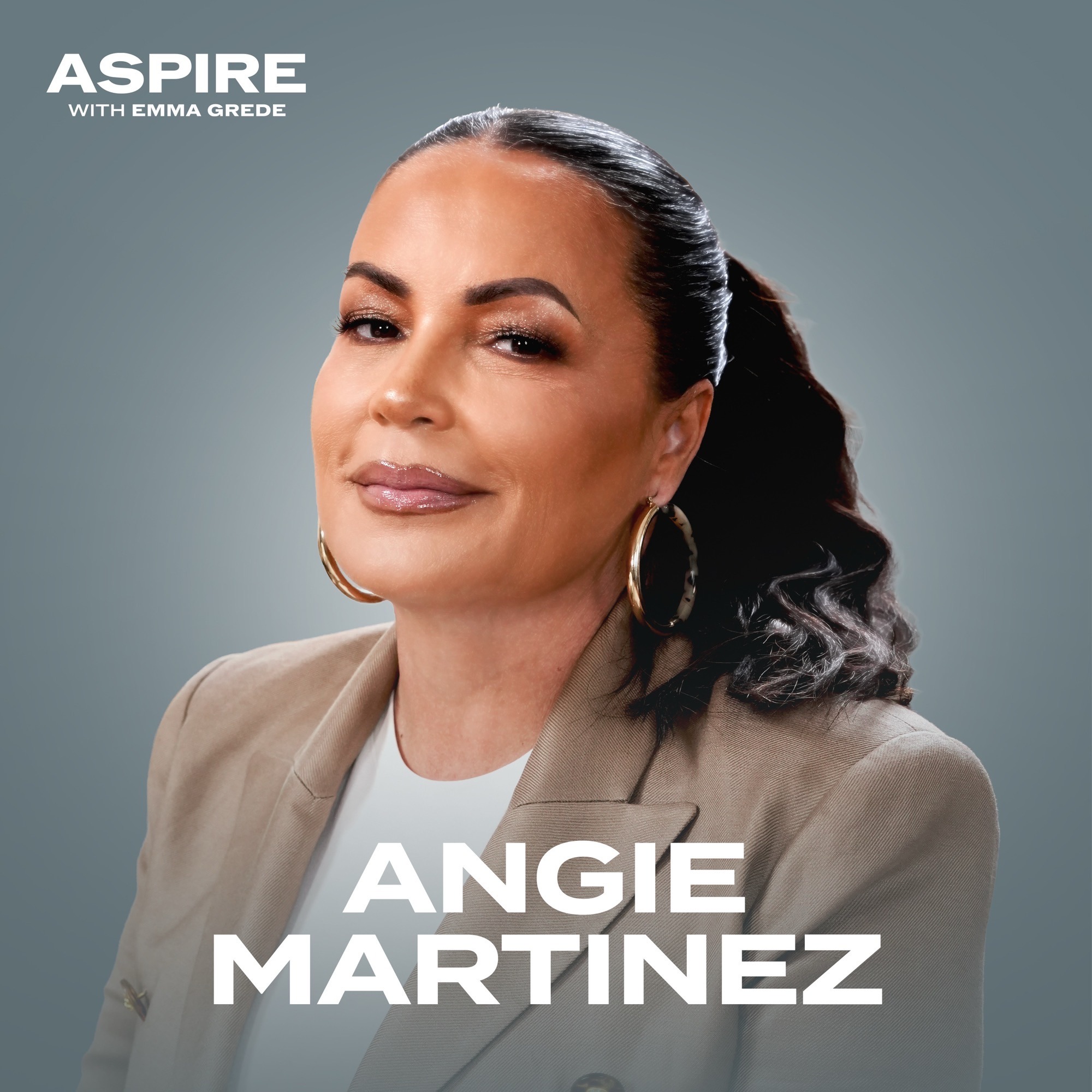
Angie Martinez on the Tupac Interview She’s Finally Ready to Share
In short
Angie Martinez, “Voice of New York” hip-hop radio host, discusses her career growth, integrity in interviewing, and the 30-year decision to keep Tupac’s full, 2+ hour interview private. She explains how social media/virality pressures shaped (and threatened) her choices, and how she later planned a careful release with context and adult perspectives.
Guest backgrounds
The episode’s guest is Angie Martinez (30+ years at Hot 97; wrote two books; launched her podcast; runs a production company; directed a first film; working on upcoming projects). She also references her Tupac interview release plan featuring hip-hop figures: Joe Budden, Charlamagne Tha God, Wallo (Million Dollars Worth of Game), Matt Barnes, Big Boy (L.A.), and Bootleg Kev; she says Tupac discussed people including Junior Mafia and Mob D.
Key claims
She withheld the full Tupac tapes to avoid further violence and harm, and because social media would distort the content. Integrity, consistency, and editing for truth—not “hurting someone”—built her trust with artists and audiences.
Notable examples
Tupac called her for “I Ain’t Mad At You,” they talked for about 2.5 hours in his apartment while tensions were high; she says releasing then could have led to deaths. She describes inviting hip-hop voices to hear the tapes first, and recounts Ed Lover reacting and correcting details after listening.
Written by AI. May contain mistakes.
Chapters
2:30
The Journey of Angie Martinez
Listen to Angie share her experiences, ambitions, and her perspective on continuous growth.
“I am so happy to have you since I got the opportunity to sit down with you on your podcast.”
5:20
Navigating Change and Vulnerability
Angie discusses her evolution in handling vulnerability and how she learned to share her own stories.
“And that is one of the most interesting things.”
6:50
Integrity and Trust in Media
Explore the importance of integrity and trust in Angie's career and how it shapes her interactions.
“Like knowing that you have a taste level, you have a point of view and trusting that.”
13:50
Reflecting on Early Career Aspirations
Angie reflects on her beginnings at Hot 97 and her aspirations when starting her career.
“LegalZoom is not a law firm and does not provide legal advice.”
14:33
Angie Martinez's Journey in Radio
Angie Martinez discusses her early career, passion for music, and the evolution of hip hop.
“What was it that got you to like from the phones to that first spot on air?”
16:57
Angie Martinez's Journey in Radio
Angie Martinez discusses her early career, passion for music, and the evolution of hip hop.
“Well, I was always interested, even when I was terrible.”
28:00
The Tupac Interview Backstory
Angie Martinez discusses the pivotal moment leading to her interview with Tupac.
“And so what happened is I didn't put the interview out initially because he was very, it was a very specific time and culture.”
29:00
The Context of Tupac's Anger
Martinez reflects on Tupac's emotional state and the cultural tensions of the time.
“And I had a boyfriend at the time who was like, what you want to go there for?”
30:40
Decision to Delay the Interview Release
Angie shares her reasons for not releasing the tapes sooner, focusing on the potential for violence.
“And if I'd come back to New York and shared that full conversation, there would have been more violence.”
32:50
Confronting the Past with a New Lens
Martinez discusses the release of the tapes and her approach to involve hip hop voices.
“So at some point I had to come to terms with, okay, but at this point it's history.”
Show all 24 chapters
35:10
Reflections on Impact and Guilt
Angie elaborates on the weight of her decisions concerning the tapes and their impact.
“Who did he speak about on the tape that you invited in?”
37:10
Learning Through the Editing Process
Martinez reflects on her personal growth and the emotions stirred during editing.
“and it wouldn't have been what anybody said.”
39:48
Empathy and Connection in Interviews
The conversation turns to how Angie connects with interview subjects and the emotional impact.
“I try to get some perspective of people that really knew him also to give some other context as to what was happening with him in the moment.”
42:00
Navigating Energy and Relationships
Explore the impact of energy sensitivity on relationships and how to manage external influences.
“I used to be really sensitive to energy and it would derail me very easily.”
45:50
The Balance of Taking Things Seriously
Discuss the importance of seriousness in professional roles and personal routines.
“I'm in production on a couple of other things that I'm trying to do.”
48:50
Finding Fulfillment in Multiple Projects
Learn about balancing various projects and the challenges of prioritizing personal passions.
“I think giving a really good gift starts long before you actually go shopping.”
49:58
Valuing Yourself and Negotiating Worth
Understand the evolution of self-worth and negotiation skills in professional contexts.
“Some of my favorite Thanksgiving memories are standing at my kitchen sink, washing collared greens and listening to stories.”
56:00
Integrity vs. Paycheck
Discussing the balance between meaningful work and financial compensation.
“You couldn't have integrity and the paycheck.”
57:00
The Journey to Self-Employment
Angie shares her journey of transitioning to self-employment and its implications.
“I'm interested to know what, what you think not asking for more actually, like what did it impact?”
58:56
Owning Your Work
The importance of ownership in creative work and negotiation dynamics.
“This whole idea of own 100 percent, do everything yourself.”
1:00:06
Learning from Mistakes
Reflecting on past mistakes and the growth that comes from them.
“And so I think again, in sharing that and then in being like very specific, like having real specificity, we're teaching each other how you can craft things because there is no one size fits all.”
1:01:05
The Value of Privacy
Exploring the balance between public and private life in the media.
“It's just about learning from the ones you make.”
1:03:22
Finding Meaning in Life
Insights on living a meaningful life and embracing discomfort.
“The truth is, is that honestly, everything's going to be okay.”
1:05:52
Aspirations and Future Goals
Angie's aspirations for her future and her creative pursuits.
“What do you still aspire to be or to become?”

Ask about this episode
Get the gist, explore an idea or ask about something said.
 Claude
On Aspire with Emma Grede, what are the key points of this episode?
Searching your listeningTranscript
Automatic transcript. May contain errors.
0:09I first sat down with Angie Martinez on her podcast and I left that conversation wanting so much more. For anyone who doesn't know Angie, she's known as the Voice of New York. For more than 30 years, she's been one of the defining voices in hip hop radio, interviewing some of the biggest artists in the world and earning a level of trust that very few people in media ever achieve. What fascinates me is the care she's taken with the people behind those interviews and the responsibility she feels towards their stories. Her career raises a question I think about constantly. How do you keep growing, evolving and taking bigger opportunities without losing the integrity that made people trust you in the first place?
0:49That question sits at the heart of the extraordinary story she shares today about the Tupac interview she chose not to release in full for 30 years. Because of the attention it would have generated, she knew it wasn't worth the damage it might have caused. That story made me think about the cost of short-term wins over the value of long-term relationships. Angie's career is proof that the decisions nobody applauds at the time may become the ones that define your reputation. Here's my conversation with Angie Martinez.
1:48Nerds! nerd while it's smart money podcast on your favorite podcast app. Still wearing the same old underwear? Chances are it's time for an upgrade. Start with Tommy John, a 2026 men's health editor's choice in best men's underwear. Experience exceptionally soft fabrics, a fit that moves with you, and all day comfort across our premium underwear, sleepwear, and loungewear. One less gift to worry about. One more reason to treat yourself. Own gifting season this Black Friday with 50 % off site-wide at TommyJohn.com slash holiday and use code holiday.
2:30Angie Martinez, welcome to Aspire. I am so happy to be here. I am so happy to have you since I got the opportunity to sit down with you on your podcast. Yeah, it was so much fun. Do you know what? It was so much fun. I had such a nice time, but I kind of walked away from that going, I need more of Angie. Yeah, because I just have so many questions like for you, so many. I know, we had all intentions of like connecting after. Yeah, but it's hard. Life, life, life. Well, you're busy. So we have to actually connect with each other. We have to schedule to be on somebody's, one of each other's podcasts.
3:01This is it, this is what we need to do. And now I don't mind because I look at your career and I mean, listen, my audience is full of the most unbelievably ambitious women. And when I look at what you've done over the last 30 years, you're the voice of New York, undoubtedly that's how I think about you. You've written two books, you've launched your own podcast, your own production company. You've recently directed your first film and you've got an amazing project coming up that I cannot wait to talk to you about. But what I find most interesting about you is that you seem to be the type of person who isn't scared or afraid to kind of start again and start at the beginning.
3:33And I find that such an appealing quality in somebody that is so established and so well known. Well, don't you have that too? Don't you have that thing in you where you're like, you just want to, I want to learn. I, I get bored. Like if you, if you feel like you, I don't feel like we ever master anything, but like, if you feel like I've done this, I get it. I know the steps I can show up and it's pretty easy. When some things become too easy, don't you want to have that fire of learning? I love learning and bumping your head and self-correcting and course correcting. And like, to me, that is part of the journey and the growth.
4:10And I pray to God that I do that till the lights go out. Like I want to do that. I want to keep growing, keep learning, keep stretching myself, keep being uncomfortable. And you know, anytime we start something new, whether it's like a hobby, like I told you, I started golfing a few years ago. It's horrible. I hate it, but I love it at the same time. But like even learning film and learning television and production and, you know, I've been around it forever, but like really getting in the weeds of it, how to do it is something new. And you know, you feel like a student. I love feeling like a student.
4:39But it's interesting that you're comfortable with feeling like a student because I feel - Are most people not? Well, I feel like specifically a lot of women aren't comfortable not being good at things. And even you, right? You're a perfectionist. We've spoken about this before, but to learn new things, you've got to be willing to be bad at something. You have to be. You've got to be willing to start at the beginning. I always say that. If you're not like whacking anything, that means you're not trying hard enough. You learned how to do it and you're just still doing the same thing, whether it's out of comfort, fear, and I don't know, that's like boring to me.
5:06So yeah, I'm okay. And I'm okay letting people see like, oh, maybe she didn't nail that out of the gate. She's working towards something. I love that you're so honest about that because I think there's so much to learn from the way that you have continually expanded yourself. And that is one of the most interesting things. When I look at the trajectory of your whole career and all of the projects that you've got coming up, it feels that you're very expansive. You've took what you're great at, you've leveraged it, you've moved it into another thing and you're not afraid to fail. And I want to ask you, because as someone who's been doing this for over three decades, what's changed the most since you started your career?
5:41I used to really frame things around how they were going to land for other people. I really did that. Even though I would say, like all of us say, you can't care what people think you have to do. You know, I did. I cared. I cared very much. I didn't want to hurt people's feelings. I wanted to be fair. I cared about how things landed with people. and then, you know, social media happened and the internet happened and you realize you are at a war that you cannot win because you can do everything right. Your intentions could be amazing. You could actually help people. You could actually be doing things that are good for other people and there will still be people that have a problem with it.
6:19It actually helped me in a lot of ways because it freed me to think, okay, there's going to be this much of a segment that might not like this and I have to be okay with that. And it really kind of trained me to start being like that just overall and trusting that I am doing good work and trusting that what I'm doing is meaningful to me and not really worrying so much about outside noise and outside opinion. And I hear people say that all the time. And a lot of times I don't believe people because I know I used to say it. But it's a great lesson, but it does take time to learn it, right? Like to do things for yourself.
6:51Yeah. Like knowing that you have a taste level, you have a point of view and trusting that. That takes a while to like. I feel like you're better at it. You're really good at it. Yeah. You know what? It's not that I'm really good at it. I think that I just learned earlier that there was so much distraction that I would never get moving if I listened to that. Yeah. So like, to me, it was like, there was no other way. It was like, there was so much coming at me and against me that I just thought I'll be standing on a spot if I don't go against the grain. If I listen to what everybody's saying. Do you like against the grain?
7:22Yeah, I do. Yeah. Some people lean into that. I know that I noticed that actually fuels some people. I'm not fueled by that. Oh, interesting. Against the grain wears me out. What fuels you? What fuels me is feeling like what I'm doing is purposeful. Like, you know, when we first launched my podcast, I could see the reaction that women were having to it. I could feel it working. That really fuels me. Like, okay, I'm doing something that I know is meaningful to these group of people or to someone. And feeling like I'm making progress. I'm learning something. I'm doing something better today than I did yesterday.
7:51That fuels me. I know conflict and resistance fuels a lot of people. Yeah. I almost wish I had a little bit more of that in me. I'm sure that can be arranged. Don't wish for it. No, no, please. I don't wish it. I'm not willing it. Just don't wish for it. I'm not calling on it. So let me ask you. But I feel like you. Listen, I need it. Yeah. I actually need it. And in a way, listen, it doesn't always need to be something that is, you know, like something terrible and something massive. But if somebody tells me no, like when I started Good American, the idea that everybody said to me, this is not possible.
8:20Yeah. You can't make a seamless garment in this size. We can't make these jeans in this size. I was like, I'll show you. I'll figure it out. And so again, it doesn't always need to be this big, bad enemy that having someone that just says to me, it can't be done. Yes, that is different. That is true. That is true. Tell me, like, again, because you have spent the longest time sitting across from other people, earning their trust, allowing them to open up to you. What does it feel like when you're in the seat? Like, do you, are you able to be vulnerable and do you feel comfortable to be vulnerable?
8:53I don't know. I learned early, like in my career, that it was not about me. I really decided early that I wasn't going to be one of those people that, and it's shifted since then. My podcast has shifted that I've shared my own stories. I've connected so much with my audience that I've decided to share more. But the beginning part of my career, it was like, it's not about me. It's about the music. It's about the artists. I rarely would tell personal stories because I just was like, oh, they don't want to hear my stories. Then I realized over time, people did want to hear the stories. And so I got more comfortable sharing them.
9:22So I kind of walk the fine line. I definitely don't walk around like, look at me, look at what I'm doing. Let me tell you how I feel. I'm not like overly just sharing to share, but if I feel like I've had an experience that, oh man, I learned this, this thing happened to me. And I want to just tell you because maybe you or somebody you know needs to hear this. Then I share it. So I try to share with purpose. You know, I notoriously started my podcast after I had a really bad car accident and I was down. I was like physically down, emotionally down. And I wanted to say that. And I wanted to let people know how down and how I got back up and some of the questions I was asking myself and how I did that because I remember looking for podcasts and this, I mean, there weren't as many podcasts.
10:052022 you started. Yeah, so the accident was a couple of years before that. So the podcast landscape was not like - It was very different. Like if you need help figuring something out now, there's 75 different podcasts for you to listen to. Back then it was less. And so I was like looking for information, like, why do I feel like this? What's happening with me? And I just remember thinking, I want to have a platform that can talk about people's like real moments like that. And that's kind of how I real life launched. So that was a turning point for me, realizing, oh, wow, these stories are meaningful to people.
10:35And people want to hear from you. And people want to hear from me. So if you had to chalk your success up to like one single thing, one single Angie trait, what would it be? Consistency. and I think integrity. I think I say what I mean. I mean what I say. I don't tell people I can do something for them if I can't. I try to be empathetic to people's situations and circumstances and I'm honest. You know, if I can do that, I can do it. If I can't, I can't. And also my intention. I never, somebody sits in the chair and opposite for me, I'm not trying to hurt you. I'm trying to learn from you. I'm trying to help you tell your story.
11:09I'm trying to help you be honest when I see maybe you're not. You know what I'm saying? I'm really, my intentions are good. Does it always land every single time, right? Obviously not, especially this long of a career. It can't, right? You can't. You think you know the right thing for somebody or the right conversation to have and it could go wrong. It happens all the time. But I do think what comes across, like if you were to ask me, like why is Angie so successful? It's integrity, pure and simple. Thank you. You have bucket loads of integrity. And I think that people understand that when they sit opposite you, you have their back and you are trying to find the truth But it's not like I'm some angel from, you know, some holier than thou person.
11:48It serves. Let's get into that. Let me tell you something. Integrity actually serves you, yourself. Like me having integrity serves me. You know, I sleep better at night. I feel okay. I feel more confident in how I'm showing up because I know I'm not here to hurt anybody. I know that. So it does put a battery in your back of confidence. and just, you know, when you do sneaky things or you're mean-spirited or you're opportunist at the expense of other people, all that shit catches up to you. Well, and also I think it's just a baseline of being good in business. And if you want to be around 30 years from now, there is just a reputational element of that that means that you will be trusted, people will come to you.
12:30And that's just, it's a baseline of how we have to operate in business. It doesn't matter what your business is. For sure.
12:40One thing I've learned from being around founders is that the unglamorous parts of building something are usually the parts you can't afford to ignore. Everyone wants to talk about the idea, the brand, the launch, but the structure underneath the business matters just as much. That is where LegalZoom comes in. If you're starting a business, they can help you set it up correctly from the beginning so you're not trying to unwind avoidable issues later. LegalZoom helps you get it right the first time, saving you time and fees down the road. They have 25 years of experience and have helped launch millions of businesses, which is why LegalZoom is America's number one online legal services company.
13:18Once the business is running, there are still deadlines, filings, and requirements that have to be handled. LegalZoom can help you stay compliant by tracking those deadlines and filing the required reports for you. It also applies to your personal life. If you're creating a will or a trust, LegalZoom creates a will or a trust that's specific to your life and what you care about. Built by attorneys, tailored by you, and accepted in all 50 states. When you need a legal hand, visit LegalZoom. Go to LegalZoom.com to get started. LegalZoom provides access to independent attorneys and its law firm, LZ Legal Services.
13:55LegalZoom is not a law firm and does not provide legal advice. Do you ever wish you could ask nosy questions about people's money? I have$729.71 in my bank account. We bought a$1.3 million house on a$350 ,000 income. On the podcast, What We Spend, we ask those questions. It's a show about money and all the feelings that come with spending it. I want to be the kind of person who can just take care of the people in my life. Listen to What We Spend, an Odyssey original, available now wherever you get your podcasts.
14:33so take me back to the beginning because I do think it's really important for you know I know you and you have had this again amazing career but I'm really interested to understand the version of you that started out because it's a very very different time right different time in careers and how they were started what did you actually want when you were working at Hot 97 and you were answering the phones and you were driving around in the truck. And I was 19 and 20 and 21. So young. What was it that got you to like from the phones to that first spot on air? Oh man, just consistency, learning, wanting to learn everything about the building, things that didn't even pertain to me.
15:14Like I'm not in that department, but I was curious about how that department ran. I wanted to learn how to engineer and run the boards and edit. And I wanted to know what was going on in the sales department in the back office. really just informing myself of the operation and really having a genuine interest and curiosity about it. And that's really where it starts. People always say, find your passion. It's really a thing, especially when you're young, because you're trying to find something that drives you, that gives you passion. And so the music was always the thing for me. I did fall in love with radio.
15:44And then I learned every single thing in every department. I love that you learned every single thing and you weren't just trying to get on the air. That's interesting. I didn't even know that was my journey. I just knew that I love music. I was starting to fall in love with radio. I knew that radio was at a pivotal point where hip, the music I love, hip hop music was starting to become a real thing. And that a 24 hour hip hop radio station in New York could actually be a reality. So I'm on the ground floor where that, that didn't exist before. It was only, you had to listen on the weekends or the nights.
16:14So we're building something brand new. And the beauty of, of something brand new is there's no expectations. There's no playbook. No playbook. You were making it up as you went along. And I think there is something so much to be said about careers and timing. Like you happened to hit this sort of magical timing. But before we move on to that, because I do, I am fascinated by what was going on in that moment and how you were so much a part of the community that you were also reporting on. But you also said, I read somewhere, that you were terrible when you first started. Aren't we all terrible?
16:47That goes to what we were saying. If you're learning something, you have to be terrible. You're going to be terrible. But how long did it take you to actually find your footing and realize, actually, this is something I'm interested in and this is a career path? Well, I was always interested, even when I was terrible. I loved it. Like I thought I just would hear myself back and I'd hear myself posturing and I'd hear myself, you know, trying to sound like what I thought a radio personality should sound like. And the truth is that that was never going to serve me. Obviously, who you are and being authentic is always going to be your best.
17:16So always check that box. Like, how do I fit in here most authentically? You know, I always talk about how like coming up, people would, I didn't talk right for radio. They wanted me to say, pronounce my W's. And I would say, especially young, I'd be like, W, W-P-O. You know, so they would always try to correct my New York accent. And that wouldn't have served me, honestly. So it's finding the fit, learning the operation, whatever it is, and then finding how you fit in most authentically so that you can bring your skills and your assets to the table. Yeah, you can stand out, right? Like there was something about you that clearly did stand out.
17:52Was there a moment that you realized that artists trusted you differently from perhaps like other interviewers? Yeah, that started later. That took some time to build that. Again, I just got thrown into this. We were building this thing and I was doing interviews. I just was doing interviews as a fan. I loved the music. I had genuine curiosity about the artists that were sitting there. And then as that grew and as the landscape changed and interviews started becoming more important and then all of a sudden clips started happening and things start changing. So you have to kind of change with it and understand.
18:23I had to start understanding that too, how this is going to land versus how it used to land. And so all of that came in, but people, I don't know, people just started saying, I just trust you. I just feel comfortable talking to you. And then I started to kind of take ownership in that. You understood that as an asset? I understood it as an asset. And I also started to think, why is it? Let me make sure that I'm doing that more. And then really living by that. Like, okay, why do they trust me? They trust me because I'm not here to hurt you. Like, I really don't. I mean, anybody who's worked with me over the years will tell you I have, sometimes I save people from themselves.
19:00I really don't want to hurt anybody. I want people to be inspired, entertained. I want you to watch. I'm in the business just like everybody else is in the business. It is still a business. I need to do interviews that create interest, right? Yeah. But not at the expense of hurting someone. When it comes back to that integrity thing, but I also think recognizing your superpowers, It's like knowing what you uniquely bring to a situation is something that a lot of us don't figure out until so late. And it's one of those things that early, I think, can be so helpful. Just knowing like, where am I different?
19:29Where do I have something that perhaps somebody else doesn't? Yeah, but also you got to be mindful to stay awake and stay present so that you know when you're shifting, when your thing shifts. People used to tell me, you're really good at interviews. I'm like, I am? Oh, I guess I'm really good at interviews. And then I'm like, wait a minute. I don't think that I'm really good at interviews, actually. I think that I'm really good at seeing truth in people and and storytelling and helping them tell their story. I think that kind of shifted for me about what I thought I was good at. I'm a really good editor so I can get in and, you know, some people get awkward in the chair and you're interviewing somebody and they spend 10 minutes telling you about something that they don't even really care about.
20:07They're just uncomfortable. Yeah. So let's just cut that out. Let's get to the point that we know we both care about. And so I started to learn how to edit. And I think that also makes the interviews, it's storytelling. It's all about storytelling. But when you're storytelling, you also have to have integrity in that because you don't want to misrepresent anyone. You want to see what their truth is and then help them tell it in the best possible way. Whether that's in the line of questioning, the way you edit it, the clip you use, the caption that goes with the clip. All of those things are all small little things.
20:37And you think people don't see you. They see you. see it. So back in the day, how did you actually navigate? Because I'm interested that like, it seems like the trajectory of hip hop and your career were both kind of coming up at the same time. And to me, it's interesting because you were both a peer and you were press, right? And so how did you navigate being both of those things? Didn't anybody ever say to you like, yo Angie, like don't, don't let this make it into one of your shows or like, you know, I'm just interested that, that relationship and how you trod the path and could remain on both sides?
21:08Yeah. If somebody said, don't put this on the show, I would not. I would never go against that. I'm a human being person first. I don't want to hurt my audience. I don't want to hurt a guest or a human, a person. So, you know, people used to say, are you for the artists or are you for the audience? And I'd say, actually both, like it's both. It's not one or the other. So I think you just have to be careful. It's really not that hard, Emma. I think you probably would do the same thing. If I pulled you aside and was like, Emma, my life is in trouble and I said this and that's going to hurt my family.
21:37You're not going to air it, Emma. Or would you? No, you wouldn't. No, let me be honest. I'm just saying, it's not that hard. It happens, right? Like there have been times on this show where people have said things that I genuinely believed would discredit them, would affect their business, would affect their family. Period, end of. It's coming out. On the other hand, there's times where people, you know, I like to talk about money. I'm going to talk to you about money. And they say to me, you know what? I just feel like if people know this or like I shouldn't have said that. And you know, I've always got, And I'm like, what is that?
22:06Like, what is that about? Like, let's have a real conversation about it. Because again, so much of what I'm trying to do here is from your life, from your lesson, from your career to inform the next generation, the girl coming up, the person that wants to be Angie. And they said, you came here and you sat in the chair. I'm like, come on. And you know the end goal. Let's go. I know, I get it. Let's go. Because otherwise I'm like, you've also got to be, you know, and I'm sure that you feel the same. You've got to come to play, right? You're sitting in the chair. You're having a conversation. you come to play.
22:35Like, don't come and be coy. Yeah. Like, please. I'm like, come and let's like have the conversation. And then you're sitting there being cute, smiling, acting like it's okay. And you're like, God! Tell me everything. But again, I think coming back to like trust and connection and your responsibility as an interviewer, you're never trying to fuck someone over. You're actually coming to tell a story. And that integrity is really important. What do you think, I guess like in this business and where we are now, there's such a chase to be viral, to go viral. What do people actually misunderstand about what builds a lasting brand, a lasting personality, a lasting career in that chase to just be popular and say something that's going to go massively viral?
23:17It also depends what your goals are. Maybe that is your goal. Maybe you just want to get viral so you can get X amount of people because you have a business and you need this, this. So maybe your goal is to go viral and go about your merry way. That's not a career. that's just you're using this tool for one thing. Maybe you have a thing you're launching and you want to get your numbers up this month to get, you know what I'm saying? To get it popping. And then that's their thing. If you're looking for a long-term career, there does have to be trust and there does have to be a reputation. People want to know who you are so that he can trust you to come back.
23:49So that when you say something, people believe you. And that takes time and that takes, it's beyond a viral moment. I've had plenty of viral moments. You had them. Yeah, I've had plenty of viral moments. Most of them just kind of happen organically. Sometimes we lean into something that's going on because, you know, I'm not. Yes. Yes. Everybody's talking about this. I got somebody in the chair that, oh, we're going to kill this. You got something to say. Let's do it. Let's get it. Yes. You know, so you go for it. But it can't. I mean, even money, like I know we love money. We're going to talk about money.
24:18But like money doesn't drive me. Clicks don't drive me. I like them. I like money. I like clicks. I like success. but not at the expense of peace.
24:34One of the most important things when you're making decisions about your health is having access to the right information and the right people to guide you. That's what I find interesting about Weight Loss by HERS. They give people access to personalized care and FDA approved GLP-1 medications, including Wegovy, when prescribed by a licensed provider. Wegovia is available as both a pill and a pen, so there are different treatment options that a provider can consider. The process starts with an online consultation where a licensed provider determines whether a prescription is appropriate. And HERS also offers nutrition and lifestyle guidance along with 24-7 messaging with your care team so you have access to support throughout your treatment.
25:17Ready to reach your goals? Visit 4hers.com slash aspire to access personalized, affordable care for weight loss, hair menopause, and so much more. Individual results may vary, and stopping treatment may result in weight regain. Weight loss by HERS is not available in all 50 states. Wegovi is the registered trademark of Novo Nordisk AS. To get started and learn more, including important safety information, Wegovi clinical study information, and restrictions, visit 4hers.com. RingCentral's AI receptionist uses Voice AI to answer on the the first ring, so you'll never miss a call again. In just a few minutes, you can personalize your own AI receptionist to answer questions, route calls, schedule appointments, and even send texts in multiple languages.
26:03Plus, it's easy to scale. Create unlimited AI receptionists across any phone system. It's all powered by one reliable platform for effortless AI communications. See for yourself at ringcentral.com. RingCentral, voice of your business.
26:22There is a thing that I wanted to ask you about that actually strikes to the very heart of this question around integrity. Yeah. Which is this Tupac interview that you have sat on. Oh, wow. So for anyone who doesn't know, you did an interview with Tupac 30-something years ago, 30 years ago. And you had... 30, exactly. I mean, this was to my... Let me give you my understanding of it. This month is actually 30 years ago. Which is wild. Do you remember what you were doing 30 years ago? No, I was just a little child. Let me tell you, I was obsessing over Tupac. That's what I was doing. That's what young women were.
26:57Back to the point, because you have had this interview that you did with Tupac that was a long-ass interview, which is what I've heard. And you have only ever released 12 minutes of it. Yeah, it was a little over two hours. It's about 12 minutes I put on the air. I mean, first of all, as a fan and a person. No, it's crazy. I die to think about that. But I'm very interested in A, what really led your decision to keeping the entirety of the interview private? And especially speaking to this question about fame and virality and what's trending, because we're in a moment right now having just had that verdict, having the 30 year anniversary of his death upon us.
27:37And it seems to me like there would be a moment and so much pressure coming from fans, coming from everywhere to release the interview. So why haven't you? The pressure has been ever since I mentioned that I had the tapes, the pressure has been there. I don't subscribe to that. Like, I'm not going to make a decision or push a button because people want something. It has to make sense and feel good on my spirit. And so what happened is I didn't put the interview out initially because he was very, it was a very specific time and culture. It was probably one of the most important times of hip hop culture where we were about to lose two of our biggest pillars.
28:14You know, we didn't know it was right there, but you could feel the energy. The energy was heavy and dark and it was shifting. Like you said, I came, I was growing up alongside of it. I was coming of age at the same time hip hop was. And I'm on this platform. My platform is growing. I'm having this presence in New York. And I get a phone call from Tupac that says he wants me to be in his video for I Ain't Mad At You. And I couldn't do it because the tensions were high. It was like a real problem, what was happening in New York and L.A. So he said, how could I be mad at the whole coast? That's absolutely ridiculous.
28:44And I said, well, New York hasn't heard you say that. You should come be on the radio and let's talk about it. And he was shooting a movie. He said, I can't do that. But if you want to come talk about it, come to L.A. I'll fly you to L.A. And you can tell him what I said. And I said, OK. And I got on a plane. It's funny because I was young. I was like, whatever. I was in my young 20s. And I had a boyfriend at the time who was like, what you want to go there for? And I just remember thinking to myself, especially as a young woman, like, you know, sometimes we can let things like that stop us from what we're supposed to be doing.
29:14Oh, Angie, thank God you didn't. No, of course not. Of course not. But that's one of them ones where even for the wrong reasons, you should have gone. But even as grown women, it sounds like, of course. But as a young woman who thinks, you know, she's in love at the time, it's her boyfriend and he doesn't want her to go. Like it could. No, it couldn't for me. But for somebody else, it could have taken you off course. Yeah. I say that because young women should be aware of your decision making based on young relationships and how people are trying to like move you and control you. Damn right. And so anyway, so I get on the plane.
29:48I go to Tupac's house and I sit in his apartment with him for two and a half hours and we talk about what's happening. And he was really angry in the moment. And it was a hostile time. And he was young. Had you interviewed him before? Never. I never met him. He says we met like in passing at a party or something, but I didn't. And he used to, when he was in prison, he used to listen to me on the radio. That's how he knew who I was. And so when he decided he wanted to have this conversation with New York, this is why he chose me. And because he would say to me that I would listen to you on the radio and you didn't, you didn't like embellish.
30:17You didn't say any lies. You always said facts and you were truthful. And he said this to me in the tapes. He said, I thought if anybody's going to listen to me, she's going to listen to me. And so his point of view of calling you in the first place and asking you to be part of that video was, I have a message. Yes. For the whole East Coast. Yes. And that for sure, when I went to L.A., that was absolutely his objective, for sure. And so I go there. I do this two-hour interview in his apartment. And if I'd come back to New York and shared that full conversation, there would have been more violence.
30:47Absolutely. It wasn't even like a doubt to me of what was going to happen. He was calling people out by name. He was, there were accusations. He was, you know, talking about Biggie's wife. And he's just really disrespectful. Was he angry? Oh, very angry. This is a young man who had just been, first of all, he had been shot multiple times. He's probably looking around at people he thought he could trust and then could he trust them? He was dealing with trauma. He had been incarcerated for something that he says he didn't do. I think he just felt under attack from every angle and he had something to prove.
31:25Came out of jail, Suge gave him money and he put death row on his back and was at war. In his mind, he was really at war. Now, granted, all of that was happening. And then at the same time, he had big dreams about what we could do in this culture and how we can make a difference and how we can change people's lives. Did you talk about that? Absolutely. He was brilliant about that. You know, he, I mean, he's, you know, he's a child of the Panthers. Like, you know, there's purpose in what he was chasing and going after. But it was also anger and trauma and all that stuff happening at the same time.
32:02So it's a very specific. I don't think these tapes represent who he was as a whole. I think it represents who he was in that very specific moment in time, which was a very pivotal time, an important time in hip hop history, which is really the reason I felt at this moment. It's these are not my tapes anymore. It's been 30 years. It's part of history. And I know people have wanted them for years. And one of the reasons I didn't want to put them out maybe 10 years ago is I just I hate what social media does with important content. And I just was feeling like at first I was protecting it because I didn't want anybody to get hurt.
32:39Right. And then years pass and then I'm holding them because you put them out and people just abuse it and they make up versions that are not true. It's just it's just kind of gross what happens sometimes. And I just I valued them so much that I didn't want that to happen. You know, I didn't want that to happen. So at some point I had to come to terms with, okay, but at this point it's history. It's been 30 years. And what is the best way I can put them out in the world? Now, granted, I can't control the outcome fully. I have to know that. But if I'm putting my best foot forward, how do I do that?
33:09And so what I decided was I was going to confront the people that he talked about on the tapes and share some of the things that were said so they could hear it first, give them the opportunity to speak on the tapes. during this pod. I did a four-part podcast where we're going to put the tapes out. And it's interesting because we're all adults now. So to look at these tapes through adult eyes, it's so, I mean, it was, we cried, we laughed, we, it was all kinds of stuff. There's like, it brings up all types of emotions that I really didn't expect because it's been 30 years. We walked into the set and there was this statue that he had in his apartment when we did the interview.
33:46And the statue's behind us. There's a picture of Pac and I and you can see the statue from his apartment. And so one of my production team found that statue. And so on set, when we're doing the pod, the statue's there. And when I first walked in and saw it, I got like a visceral, emotional reaction seeing it because it took me. It's not just Pac and it's not just the interview, but it's the times and the loss. You know, it just brings up all of that. The loss. And also, I imagine sitting there as grown people. you can't help but imagine where would he have been? What type of man would he be? It came up so much.
34:24And one of the things about framing it is, you know, there's a podcaster on every street corner at this point, right? And so you put these tapes on and then people are going to frame it. This is what I think was happening. And this is... So what I decided was to invite some of the people, some of the voices of hip hop culture now that I do believe care about the culture and do have an interest in it. And I invited them. So I have Joe Button and Charlamagne and, you know, Wallow from Million Dollars Worth of Game and Matt Barnes and Big Boy from L.A. and Bootle Kev. So I invited all these voices of hip hop culture to come hear the tapes so that we as a group of adults who have been framing hip hop stories for years can look at these tapes first and give people opportunity to hear it through everyone's lens.
35:12Who did he speak about on the tape that you invited in? Junior Mafia, Mob D. I'll tell you one story. We had, so Ed Lover, who was on the air at the time, they had a personal problem in the moment. Pop definitely was like, tell Ed Lover that to watch what he says is he's going to get his ass kicked. Like he talked about a mutual friend that had passed. And it was funny to see Ed listening to it for the first time and then saying, well, that's not exactly what happened. Well, and laughing and being able to laugh. Like you're hearing something that if he would have heard it 30 years ago, I don't know if he's laughing.
35:46You know, I don't know what his reaction was in that moment. As a grown man, he can laugh and he can miss Pac. And he could be like, come on, Pac. He could be mad at Pac. And he could also love Pac at the same time. It's like, you can only do that as an adult. And so that was lovely. And he actually corrected a few things that he said and was able to say, well, after this conversation, this is what happened. And so it can give context in a way that we couldn't have 30 years ago, that none of us could have. I mean, I think the whole reason that whole East Coast, West Coast thing got so out of control is because a lot of us didn't have the context at that time.
36:21No. So what were you actually scared of? Well, exactly what I said. I didn't want people to die. I really did not. And you thought that what was in those tapes, people could die. Absolutely. Yeah, for sure. And you know what I always say? I'm really grateful for that decision for so many reasons. Number one, it would shape how I would value my voice within the culture because I knew, you know, not everything's for play play. Like, you know, sometimes how you conduct, how you carry, how you frame a story is literally life and death can happen here. You know what I mean? It's not always that the stakes are not always that high, but it could happen.
36:57But also had I put those tapes out at that time and now we lost Big and we lost Pac, I would have forever wondered what I contributed to that for my whole life. and it wouldn't have been what anybody said. It wouldn't, maybe nobody would have said that. Maybe nobody would have thought that. I would have forever wondered what I contributed. And I don't have that guilt. I have the luxury not having that guilt on me. You know what I'm saying? So I'm really grateful that for that moment and that decision that I made at that time. What do you think you learned about yourself during the process of filming the episodes and kind of putting this whole thing together and eventually being able to release in a way that felt right to you?
37:40It's interesting. I don't know. I think I'm still unraveling it. I'm curious to see certain people's reactions about the tapes. I think I'm still unraveling. I'm still in it. We're still kind of wrapping up edits and still we're still kind of I still have one like last interview to do. I can hardly wait. And when I tell you I'm still in it, which is maybe why when I showed up today, even for you, my energy is a little off today and I pray I didn't give that any of that to you. You didn't. But just for the record, none of us knew this was happening today. Like we didn't know that you would film something.
38:10I didn't even know if we would plan on sharing it, but I'm so in it. Do you ever get like this when you're like, you're just in the weeds of something that is very hard to pop up and fake present on anything else? Well, first of all, I love that about you. It's very clear from our conversation right now that you are telling me a story of what's happened as opposed to giving me the kind of, you know, the notes, relax. I'm not even prepared for that. lines. And I love that about you. And I love that we, I had a question for you in my prep about the interview because I'm a fan and I have thought about it since I saw you and Charlemagne talking about it and knowing that you sit on that, but it was just like, let's have a conversation.
38:51Let me just ask you the question. Yeah. You didn't know that I actually did it. I actually didn't know that. Honestly, that conversation with Charlemagne really, it's always been on my mind. I have always thought at some point other people will want to hear these tapes because there's things to learn in it. Yeah. Even though what he's saying sometimes in certain parts, you're like, oh, it's like hard to hear. I hate that he said that. That's probably not who he is or who he would have been had he evolved past that moment. So it's hard to hear. You know, it's like anything, not everything ages well.
39:20You see a 20 year old video of you thinking, you know, everything and you're probably like, oh, God, she knew nothing. Nothing. Any of us when we're angry and when, you know, we're incensed about something, that's not when we're at our best. Right. So So I can imagine what you were sitting on also as somebody who has a lot of integrity. Like, you know, one thing is not fanning the flames. The other thing is showing someone at their worst. And that is a hard thing. It's a hard thing. That's why I try to do it with some context. I've reached out to his family. I try to get some perspective of people that really knew him also to give some other context as to what was happening with him in the moment.
39:55And, you know, at the end of the day, Tupac was human. You know, he was complicated and passionate and he had brilliant ideas and he had trauma and some toxic traits. And, you know, he's like a big ball of humanness and he was not afraid to be loud about it. And that's like just wow to watch. You know what I mean? I was wowed in the moment. Yeah. Well, I think, again, any of us at 20-something years of age are very different from what we evolve into. Have you seen the picture? If that's meant, I mean, no, I'd die to see the picture. The picture? I'm a child. I'm like 20. Yes, I'm in my 20s. I'm there in a t-shirt with no glam.
40:37You didn't glam? No, there was no glam. You didn't glam back then? There was no glam. Oh, thank goodness I wasn't, you know, doing the thing there. There was no glam. How awful. I'm like in a t-shirt. I'm in a Nautica t-shirt. Oh, wow. With a red lipstick. That was my glam. That was your glam. I put a red lipstick on. Okay. But I really was there to get a story. I really was there because I thought I could help. I really thought I could help simmer down the tensions that were happening. Well, and Angie, maybe actually, listen, given the benefit of hindsight and all of this time passed, maybe what you intended to do will still happen to some degree.
41:11And I think it's a lesson. And I think that, listen, this is such a, for anyone who is even remotely a fan, but even more broader than that because of what happened in the years and the aftermath. Like this is a hugely interesting story, but I think it's kind of interesting to see what 30 years later does. Yeah. And what people can learn thinking how I feel right now is not how I'm going to feel in 30 years. And maybe that changes our behavior. I wonder, do you ever, when you're in interviews and you get this information and it's all so heavy and so real, does that stay with you? Like, do you carry that around like a little piece of you?
41:48Yes, because I am an empath by nature, but I am getting better. at that, the older I get and the busier I get and the more specific I get. Like when you really are on a mission or you're doing something and you are fully locked in, it's very hard to let energy kind of derail you. I used to be really sensitive to energy and it would derail me very easily. And I didn't like that about myself. I didn't, I didn't like giving outside noise that much power. You know, sometimes people will say something and I will want to call them after. And I have called them after and been like, hey, there's this thing that you mentioned that you're doing that isn't working that you said, it's usually about money.
42:27And I'm like, can I introduce you to someone or can I, like, do you know what I mean? Like I get that, like that stuff will play on my mind. Have you ever had something where you're like, oh my goodness. Oh my God. All the time. What do you mean? Well, that's how partially why my relationships within hip hop culture, especially, but my relationships are so strong because I'm not sitting across you. I'm not a robot. So if you say something from on a human level that I connect to, or I later think I could actually help you with, of course, I'm going to make the call. I just, I don't want to share it because it's not my story to tell, but I just had somebody on an artist and she was saying that, you know, I just take it for granted because it's too easy for me.
43:06It's just something like that. And I saw her a couple of weeks later, I just saw her and I was like, Hey, you know, that thing you said to me, I've been thinking about it. Don't take things for granted. Don't assume the opportunity you have today, you're going to have it in the next year or two years. Like, don't take it for granted. Like, grab it, grab it. And you know, so it was pulling on me to say that to her because the thing she said sat with me. Yeah. It's a young person's thing to say. Right now I wake up, I kiss the ground. I thank the Lord. I'm gratitude and I'm so like, do you know what I mean?
43:37Because I feel like I thought, you know, I'm about to turn 44 and I'm like, I am so aware. Emma are you really as together as you project What's that? Are you really as together as you project No you know and it's so funny because I wish I didn't fucking project that Because everyone's using me You make me think shit I need to be taking more supplements I need to be up at 5am And I'm tired Like I was hard to get here today at the time I was late today But you know I think it's my job You know like because I do so much I don't look at like the diet or the supplements or the work I'm like it is my job to be the best It's like if you run these companies and I have all these people that literally rely on me.
44:15But does the best always work for you? It's working out so far, Angie. Really? I think so. Okay. Here's the thing. I take it seriously. I take it seriously that I'm supposed to turn up and have a lot of energy. You know, every meeting I walk into, somebody wants something from me. I don't turn up and they're like, you know, it's time for us to present. They're like, what does Emma think of this situation? What is Emma giving in this situation? And if I don't have energy or an idea or a creative thought, like I'm, I'm not turning up and giving you what you need. And so for me, I just see it as like part of the job as a founder, as a CEO.
44:49It's like I have to be on my A game. And to me to be on my A game, I need all these other things to work out. So I'm militant about it. It's so inspiring though. I just take shit seriously. I know. There's certain things I need to take more serious that I'm inspired that you take so seriously. Like your 5 a.m. routine. I just gotta have a night. I really want to be that. I can't do it. I can't do it. I hate everybody at 5 a.m. I have a bad attitude. I don't want to talk to anybody. It takes me a little while. No, I'm an annoying morning person. And I know that would drive me nuts. Listen, I've been married for 14 years.
45:22Does he hate you in the morning? He's like, just like, you know, simmer. Wow. But it's inspiring. But you know, again, I never want to project that idea that I'm so together. Well, then you're failing. There's where you're failing. There's where I'm failing. You're failing right there. I'm failing in looking two together. Okay, fair. Fair, fair, fair. That's that is true. All right. So let me just talk about. Let me go back to you. Oh, sorry. I can't help it. Do you see what I do? I can't help it. You're an interviewer. I fully expected this and I'm sorry. You're here for it. So, again, you have all of these different things, right?
45:50Different projects. You're still on the radio. Yeah. Can you imagine? I can't imagine. I'm still on the radio. I have my podcast. I got my Netflix special. Boom. I'm in production on a couple of other things that I'm trying to do. Yeah. How does each thing fulfill you? And why have you decided to like stay in the radio game, add on the podcast, be doing your special? I don't know. I don't know is the answer, Emma. I don't know all the answers. I don't know because maybe you're just catching me on a day where today I'm tired. Like today I really am. I'm like, okay, I need to refocus. I need to do what you say.
46:22And like, I have to start really prioritizing what are the absolute things I want to do and the things that I may have to take off the table. taking things off the table that you kind of like and you see a vision for is really hard and that you're good at and if you're good at it and you're like you know it would be really a good idea Emma these cups if we took these cups and we like we bedazzled them and we put them in the they're gonna do so great and then all of a sudden I meet the guy who owns the bedazzle company and now all of a sudden I'm spending four hours a day in a bedazzle cup I don't even like bedazzle Yeah, see, I don't have that.
46:57I have that. I don't have that. I'm the outsource queen. I'm like, if someone, here's my rule. If someone can do it better than me, give it to them. Like, I only do the shit that I believe I'm the best at. And then you have a piece of it. Yeah. Like, I don't know. Yeah. No, but seriously, like the way I think about it organizationally, you said you're a great editor. Yes. But that isn't the single best use of your time. No, it's the worst use of my time. Facts. But nobody can do it better than me. Then you want to train somebody to do it as good as you. I have tried. Oh, it has not happened. And I realized it's part of my superpower, though, because it's not just a you think of it as just an editor, right?
47:32No, no, I think it's I'm learning that is one of the most important things. Well, it's also like it's a superpower because it helps to frame a story. And I haven't really met someone that can do that. And now, granted, I'm not editing changing angles and doing all that. I'm editing one pass just for story because I think people's stories are really important. And I take you sitting here with me telling me your most deepest, darkest emotional thing. I want to make sure that it's clear and honest. And I don't know, just, but you're right. Trust me, my whole team is like, find an editor. I'm like, you find an editor.
48:04You find me and let me know about it. I can't wait. But I do think that's interesting because again, when you're a perfectionist and you believe that you can do everything better, it does somewhat stifle your ability to grow. I know, I'm learning that. It's a lesson I'm literally learning right now. And it's also like, there's a level of like, is it good enough, right? And when is it good enough? everything. I want to, I could listen, even the Tupac tapes, right? We're getting ready to drop them. I could spend another year on this project. Oh, please don't. Not now. But I'm just saying I could, and I've done this before because I write also.
48:33So I'll write a thing. It's a great script idea and I'm tweaking it for a whole year. It's terrible. It's a bad habit and it's a habit I'm changing now. And I've made, I've slightly tweaked to be better at it. And I'm seeing how much more productive I am.
48:52I think giving a really good gift starts long before you actually go shopping. It's paying attention throughout the year. When someone mentions something they've been wanting to try or you know it's a little ritual they really enjoy, those are the details that make a gift feel personal. And I think that's especially meaningful when you're shopping for the woman in your life. Macy's has a holiday gift guide that makes it easier to find something suited to the person you have in mind. For someone who loves fashion, a Coach Kensington handbag or an oversized cashmere scarf feels like a lovely choice.
49:24If she's passionate about beauty, there's the YSL Candy Lip Gloss Duo. And for someone who loves jewellery, an initial necklace can feel especially personal. Macy's makes it easy to get specific. You can start with what she's interested in, whether that's fashion, beauty, or jewellery, and find pieces that feel suited to her personal style. It's a helpful way to narrow down the options when you're shopping for someone whose taste you really know well. And the best part of giving a thoughtful gift is seeing someone's reaction when they realize you remembered something special about them. Check out Macy's online gift card for even more ideas.
50:01Some of my favorite Thanksgiving memories are standing at my kitchen sink, washing collared greens and listening to stories. But let me give you a bit of a backstory because I didn't always have this memory. Now, after I moved here from England, I wanted to learn how to cook a proper Thanksgiving dinner. My trainer, Rob, introduced me to his mum, Miss Nancy, and now she comes to my kitchen every year so that we can cook together. This will be our sixth year Thanksgiving anniversary. Miss Nancy taught me the difference between stuffing and dressing and how long those greens need washing. We even had salt before one final rinse, and I swear we've spent hours at that sink, and I love it.
50:40She's sharing things that have been passed down through her family, And that time together has become a tradition that I treasure. Then there's my granddad's Jamaican rum cake. It's quite a process and I've written down the ingredients because, you know, grandparents don't write recipes down. I also make my British roast potatoes every year. They have to be properly crispy. But for me, the joy is in the preparation. I'm working towards the holidays all year. Wherever I travel, I buy Christmas decorations and I'm always thinking about what I can do to make the season special for my family. I want my children to have a whole season of things that they look forward to and memories of doing them together.
51:20That's what I find so lovely about being introduced to somebody else's traditions. Something they've done for years can become part of your family's life too. Travel gives us another way to do that. When you book a home on Airbnb, a host's local recommendations can give you somewhere to start exploring. It might be a neighborhood where people go all out with the Christmas lights or a holiday market where you find a decoration to bring home. That last one would definitely be something that appeals to me. You can make the meal your family always makes, then head out and discover how people in that place celebrate.
51:53The person who lives there might point you towards something you would never have found on your own. And if you're traveling over the holidays, you could list your space on Airbnb and share some of your own local traditions. A host's guidebook is a chance to tell guests where you'd send a friend who was visiting. You might recommend a cherished neighborhood walk or a seasonal event that they wouldn't otherwise know to look out for. Those suggestions could become part of the trip that they talk about when they get home or the reason they come back next year. Another family gets to experience the place you know so well and any extra money you earn could go towards your own holiday plans.
52:28In the days between Christmas and New Year, I like to write down the places I'd like to visit and the things that I want to show my kids. Creating those experiences for them is a big part of the life that I'm working towards. So much of what I treasure now started with somebody sharing something with me. And I think it's lovely to be able to pass that on.
52:51So let's actually just talk about you and the trajectory of how you've managed your career, because you've talked about being so focused on being fair that you actually undervalued yourself, which I think is the case for so many women. So like, where are you with that now? You know, I started in radio very young. I was so grateful to be there. I felt every opportunity was like, I can't believe they're going to let me do this. They're going to let me get on the radio. Oh, they're going to let me do, now they're going to move my time slot up. Then they're going to, I'm allowed to, I don't know, I just was so that I didn't see, I didn't see my value.
53:21I thought of it as a gift that I was able to do this thing. And then years would pass and I didn't change my mindset. It wasn't until I had my son and I was on maternity leave. How old were you when you had your son? I was 30. Right. So that's grown woman already. I'm already a grown woman, still undervaluing myself. And I had my son and I was on maternity leave and I was coming back and my contract had ended. And I thought to myself, what does my life look like if I don't go back? And I started to be okay with it. I started to figure out how I would be okay if I didn't go back on the radio. And when I came back to them and said, hey, you know, I'm not really sure.
53:58All of a sudden, my number doubled. And most people would be happy about that, right? I was not because I thought, oh my God, this whole time, it could have been doubled and nobody cared enough about me to say, hey, you deserve more or hey, this is what's happening. And then I started looking at everything differently. But well, and equally, you didn't care to ask. I didn't care. I didn't. I don't know. I don't know what that was about. I think it was a combo of me being loving what I did and just being grateful to be able to do what I loved, feeling like I'd been given an opportunity. I don't know.
54:34I just didn't know. Well, in fairness to you, Angie, I do think we're talking like, this is years ago, right? We're talking 20-something years ago. Yeah, 25. In the culture, women weren't talking so much about negotiation, about money, advocating for yourself. No, women supporting women. I'm sure there are people that could say, oh, we were talking about it. It wasn't mainstream. It wasn't at our fingertips. It wasn't easy information to access. No, for sure. I wasn't having these conversations at all. Now, somebody might look at me like, all those years you knew, how could you? It's getting better, but that's why I talk about it as being something that is consistent, right?
55:11And an evolution because the amount of money that we leave on the table doesn't stop because you ask for a pay increase or you negotiate better once. It's continuous. And so what I try to talk about all the time is how much, you know, like to understand how money compounds. And it's not that you left a hundred grand on the table. It's that you left 500 grand on the table because what that a hundred grand could have become is, you know, and I want to reframe how we think about these things. There was also a lot of bad, not only did we not have financial information, but it was also things like not everything is money or you can't buy everything.
55:51You know, it's just all of these things that were fed to us about money not being important. Yeah, because the idea was that those two things couldn't be linked. You couldn't have integrity and the paycheck. And I still think to this point now, you know, it's like that you can't do something that is meaningful and with purpose and get paid as you should for it. And my point of view is the exact opposite. It's like you can do deeply meaningful, important work. But you knew this your whole life. You knew this your whole life. I knew my whole life. Yeah. I knew my whole life. Who taught you that?
56:21Somebody taught you that. Yeah, I do think that my mom taught me out of necessity, right? If you're a single mom with four kids, it's like, you got to make ends meet. And she had to do it. But by the same token, I think what happened to me is that I just thought like, why not ask? Do you know what I mean? Like there wasn't that fear there that something, again, I wasn't in a high profile job that I thought somebody else could be in my seat. I was like, you know what? I'll just go somewhere else if these lot don't pay me. And inevitably, that's what I had to do. It's like, they didn't want to pay me.
56:48So I had to go somewhere else. no one wanted to employ me. So I started my own thing. I wasn't like a founder that had dreams of being a founder. I was a girl that no one would employ. So I just employed myself. Not a bad idea. It worked out. Do you know what I mean? It did kind of work out. I'm interested to know what, what you think not asking for more actually, like what did it impact? Like what kind of mistake that I'm just wondering what that mistake actually cost you? Man, it cost, well, it cost me money for sure. And it also like probably stopped me from doing other things. And it just like, it taught them how to treat me.
57:22It made them think it was okay to underpay me. And so for that alone, because it's not just for me, it's whoever comes next. If I'm doing afternoon drive or a primetime slot and the girl in middays, it's also teaching them how to treat her or whoever's going to go in that slot when I leave. It's, so it's not really just about me. It's like the, what does the system think is okay and not OK. So every time we crack a door or we raise the ceiling that it's not just for us, obviously. Right. It's for everybody that comes behind. It's for everyone that comes behind us. Yeah. When you think about like, again, I find it so impressive that you've taken your own money and you've decided to invest in yourself.
58:01I know that you self-funded your own podcast. I did that for a while, but, you know, I don't do that anymore. Tell me. Tell me about that. Also, that's two lessons in one place. One lesson, yes, it's good to own things. And if that's your full-time job and you have the capacity and the bandwidth to do it on your own, I say do it on your own. If you have the bandwidth, if you don't, and you're doing four other things, and my team is small still, it was more beneficial, not just financially, but for my time to partner with somebody who does this all day, every day. And so I did that. So I partnered with The Volume and it's been great for me.
58:37Where I was also taught, you know, Do it yourself. I come from like, you know, hip hop and starting your own label and Rockefeller and Murder, Inc. And, you know, I learned all those lessons of like ownership. But if you don't have the bandwidth, it sometimes can hurt you. Do you agree with that? Are you looking? First of all, one million percent. This whole idea of own 100 percent, do everything yourself. It's like, yeah, if you have the capacity. I think what I've my career has shown over and over again is 100 % of nothing is still nothing I would rather own 50 % of the thing and give it away to people that make it actually happen and like you know I think the one thing to hold on to is though is your power in that like I want final say and you can't put my pod out without me and you can't take my pod from me and if I want to do something else with my pod I have the rights to do that so it's really protecting your rights for the things that you create but it's okay to find a partner, especially a partner that respects you.
59:38One million percent. And also understanding there is a negotiation. There is no one size fits all. You can own your IP. You can retain certain rights. You can have all the approval and you can do a distribution deal over here. And I think that what happens is, again, because we don't have nuanced enough conversations as women, we don't actually even understand where we get to negotiate. And again, so much of my show is about saying, well, how did you do it? What bits are you prepared to give away? And what stuff is so sacred that it has to stay with you. And so I think again, in sharing that and then in being like very specific, like having real specificity, we're teaching each other how you can craft things because there is no one size fits all.
1:00:17And that's important. It's funny you're making me think this. I did a show a few years ago and I did not have the rights. I did not have the right to the final edit. And I hated some of the decisions that were made. And you know, when people sit in the chair, They trust me. So it's my years of equity that I have put into relationships and people trusting me. And then they come to be on my show. And then I can't even protect them from the final product. I vowed that that would never happen again. I will partner with people, but I will have the final say. Is this around American Idol? No, that was, I did a show with WeTV.
1:00:50And it's not WeTV's fault. It's my fault for not making sure that I had the final say and was firmly in that. But you know that now and you would not do that again. I would never do that again. Yeah. But I do think it's absolutely key, Angie. It's like, it's not about not making any mistakes. It's just about learning from the ones you make. Yes. Right? You'll do better next time. That's how it goes. Yeah. I want to understand you are fiercely private. And in my research - You think so? Yeah, you are. Yeah, you are private. There's not that much out there about you and love and relationships and your family life and children.
1:01:22You know, it's like, it's kind of locked up. And is that being very purposeful? or is it just something that has happened by default because you're always, you know, interviewing other people? I think I'm a little more careful where other people are involved. I'll tell you how I felt about something, how something experienced. But if I'm talking about my children, I'll talk about my kids. But if I talk about them too much, now they're involved. And that's, you know, I'm putting energy into their lives that they didn't ask for. Or if I'm in a relationship with someone and we split up, I'm putting that energy onto someone who didn't ask for it.
1:01:57So I think I'm careful where other people's lives are concerned. For mine, like, I don't feel that guarded. I mean, that's fair enough. I've definitely shared something. I've definitely shared some loss and some mistakes and bad relationships and good relationships. But you're in a good relationship now. Oh, Emma. I'll do. Oh, Emma. That's a way to nature. Oh, Emma. She says, oh, oh, Emma. It depends on the day. Don't it always. Don't it always. I'll go back. I'll say one thing to you. Sometimes when you're in it, it's not always great to share while you're in a storm. Sometimes get to the other side of the storm, get your lessons together, figure out how you feel about it, and then you can share.
1:02:48Sometimes if you're still in a storm, you kind of got to just hold on to that a little bit till you can figure that out. Does that make sense? That feels like some wisdom right there. No, it's real shit. It's real shit. It's wisdom, but it actually makes me think so much about stuff that you would have understood or that stuff that you would understand now being in this season of your life that you could never have understood in your thirties. And when it comes to living a life of real meaning, what do you know now that you could never have known back then? The truth is, is that honestly, everything's going to be okay.
1:03:25The same way you say you have to, you have to fuck up to like, to fix, to learn. And so it's like really just being okay in discomfort, being okay when you're tired, being okay when you get a win and really trying to stay steady on the course. And I think I used to fluctuate a lot. Oh God, I would get upset. I would get down. I did this work that didn't. And I feel like now I kind of, I coast a little better. And I wish I could have did that. I just would have enjoyed the ride more if I knew that earlier. No doubt. But now it's okay. Now I'm like, ooh, I didn't like the way that felt today. But I don't sit in that.
1:04:01It doesn't control me. It's just kind of the facts. And then tomorrow will be a different day and I will feel something differently tomorrow. And that's with wins, with losses. I thought this was going to work out that way. It didn't. Okay. We're on to the next day. Moving on. Yeah, it's really like a marathon. It is really not these little peaks and valleys. That's all they are. is that everything is a peak and a valley until you can look at 30 years in retrospect and say, okay, so what were the real lessons of that 30-year block or that 10-year block? And every day is just like, what can I fuck up today?
1:04:33What can I learn today? Sometimes I'm like, please don't teach me nothing new today. I know. Sometimes it's so hard. I'll ask, I'm like, why is this lesson so hard? Why? And it's usually for reasons. It's usually because you needed it to be. Angie, what are you excited about in this next chapter of your life? I'm excited to be more disciplined because I'm really taking this seriously, how we were talking about earlier. It's the responsibility you have to show up the way you know that you want to show up and that you're capable of showing up. I didn't always do that. I didn't always prioritize that.
1:05:05My health, fitness, all those things. And I am, my brain, something's changing in my brain right now where I really have a full understanding that the rest of my life doesn't flow the way I want it to if I don't first do those things. And so I'm really not there yet. but something's changing in me where I have that kind of awareness. And so I am excited because I feel like I'm stepping into something new that I know there's a shift, there's a pivot happening. I may not get up at 5 a.m., but I might get up at 6 a.m. And it's starting already. It's starting to happen. The 6 a.m. is happening. I'm watching what I eat better.
1:05:41I don't know. I'm just becoming aware of physically and emotionally taking care of myself on another level. And it's going to be fun to see how that translates in the rest of my life. Final question. Yeah. What do you still aspire to be or to become? That's a good question for aspire podcast. It's a good clip question. What do I aspire to be? Always the editor, Angie. I know. Do you see how I do that? It's so bad. She just made a bonus episode. I'm so sorry. What do I aspire to be? I aspire to be a woman who gets up every day and does what she wants to do. With integrity, with discipline, that's the part that I'm working on really hard right now.
1:06:26And with care and to create things, whether it's documentaries, films, television, I do want to do more in that space. I've been learning it. I've been studying it for the past five or six years, creating content, creating things that help other people want to elevate to the next phase of their life, whatever that is. Whether you're 20, trying to figure out your 30s or you're 60 trying to figure out what 70 looks like. I wish to make content to make things that inspire you to like push yourself a little further. And so is that a long, complicated answer? No, I think it's a perfect answer. And I think that you should know that for 30 years, you've been doing that.
1:07:05I think for 30 years, you've been showing us what is possible, how to live and to work and to have integrity and to move through life. And I think I'm super excited to hear that answer because it just means we get more. More Angie. More, more, more. More? I'm not going anywhere. Look, God willing, I'm here. We want all the things. And I'm really trying to - At least not before these two-part tapes. Let me tell you. I just - It's so good to talk to you about it too because I really haven't talked to anybody about it. I've just been creating - I'm so excited. I can't even cope. I've been creating in this little bubble and it's been emotional.
1:07:38It's been, I don't know, just something happening inside of me. I don't know if it's - I really don't even know where it lands yet because I'm still in it. But yeah, it's a four-part doc and you know, I definitely want to talk to you after it comes out. We can't wait to see. I will be hanging on the phone after the other two million people that want to speak to you. Okay, we do rapid fire. Here we go. Angie. Yes. What is the first thing you do in the morning and the last thing you do at night? I pray first thing in the morning. Absolutely first. What I'm grateful for and also what I want out of the day.
1:08:09And honestly, I end the day that way also. Is that boring? No, it's not boring. It's beautiful. Also, that's your routine. So that's what we get. You have to because it's the only thing that keeps you connected. Anyway. What's the most requested song of your career? Emma.
1:08:33Probably Juicy. Probably Biggie. I don't know if that's true or not. That's all right. I like it. I feel like it should be. It should be. It was all a dream. What's the best piece of advice someone's given you? Is that nobody's coming to save you. Oh, that's my one. No, really. Like, nobody's coming to save you. The faster you learn that, the faster you can get on with your life and make some changes that need to be made. Damn right. If you had to give this chapter of your life a title, what's it going to be? Fuck, Emma. These are hard. This chapter of my life, what's it going to be? Onward and upward.
1:09:07I'll take it. Do you have a book that's changed your life? Aside from my own, you mean? I mean, you are a New York Times bestseller. So I mean, my book did change my life because it forced me to like look at my life. It forced me to look at the habits in my life, the things that work, the things that didn't. I say that everybody should write their own memoir, whether you publish it or not. It's great advice. Angie, thank you so much. Thank you, Emma.
1:09:36If you're loving this podcast, be sure to click follow on your favorite listening platform. While you're there, give us a review and a five-star rating and share an episode you loved with a friend. We'll be so grateful. A Spy with Emma Greed is presented by Odyssey. I'm your host, Emma Greed. Our executive producers are Ashley McShan, Derek Brown, and me. Executive producers from Odyssey are Asha Saluja and Leah Reese-Dennis. Producer, KK Sublime. Stephen Key is our senior producer. Sound design and engineering by Bill Shultz. Angela Peluso is our booker. Original music by Charles Black. Video production by Phil Sweetek and Carlos Delgado.
1:10:15Social media by Olivia Homan, Catherine Bale. Special thanks to Brittany Smith, Sydney Ford, my teams at The Lead Company and WME. Josephina Francis, Hilary Schuff, Eric Donnelly, Kate Hutchinson-Rose, Tim Meikle, Evan Cox, Kurt Courtney, Andrew Steele, Sean Cherry, and Lauren Vieira. If you have questions for me, you can DM me at aspirewithemagreed. greed is spelled g-r-e-d-e that's aspire a-s-p-i-r-e with emma greed or you can submit
From the publisher
Thirty years ago, Angie Martinez flew to Los Angeles and sat in Tupac Shakur's apartment for more than two hours. Only about 12 minutes of that interview ever made it to air. Days before The Tupac Tapes with Angie Martinez premieres on Netflix, Angie joins Emma Grede to explain why she kept the rest to herself for three decades, and why she's ready to share it now.
Angie has spent more than 30 years on the radio as the Voice of New York, and artists trust her with stories they won't tell anyone else. She and Emma get into how she earned that trust and what she did to protect it. Angie also opens up about the moment she realized she'd been underpaid for years, and the lesson that made her insist on final say over everything she makes, including the Tupac interview.
In this episode, you'll learn:
- Why Angie believed releasing the full interview at the time could have cost lives
- How she decided the tapes belonged to history and found a way to release them with context
- Why integrity builds the kind of confidence that carries a long career
- What happened to her pay the moment she was ready to walk away
- Why undervaluing yourself also sets the rate for the woman who comes after you
- When partnering makes more sense than owning it all, and the rights you should never give up
- What she knows now about riding out the highs and lows and why she’s still willing to be a beginner at this stage of her career
The Tupac Tapes with Angie Martinez, a four-episode video podcast, premieres November 27 on Netflix.
More from Aspire with Emma Grede
All episodes
We use cookies.They keep VO running smoothly and help us improve it. Privacy policy