 Ask ChatGPT

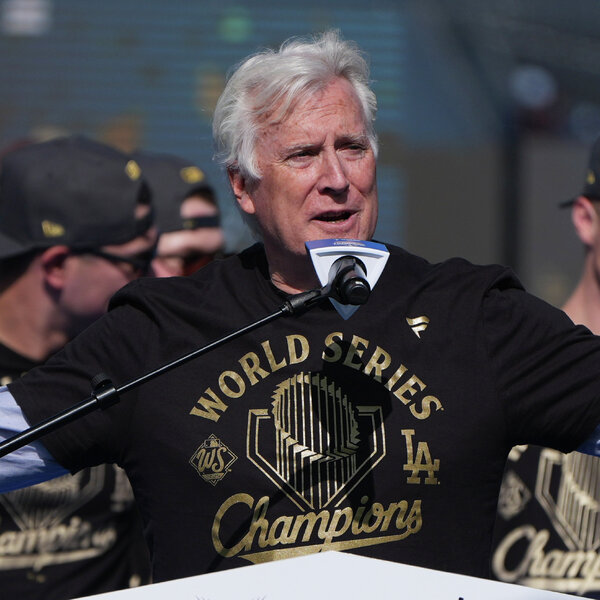
The Justice Department, SEC, and Delaware regulators are investigating Mark Walter’s insurance empire over more than $20 billion in loans/affiliate transactions, raising questions about whether insurers misreported or failed to notify regulators about loans to entities in the “Walterverse,” and what this could mean for the insurance industry and future AI financing.
Zach Meider (investigative reporter) and Sridhar Nadarajan (finance reporter), both covering financial regulation and markets.
Insurance companies provide “permanent” capital for private credit and AI infrastructure; post-2008 bank restrictions increased reliance on insurers. Regulators say Delaware was “intentionally misled.” Investigators shifted from a Guggenheim revenue-booking whistleblower to Walter’s insurer affiliate-loan reporting.
FBI search of Walter’s devices at Midway Airport; affiliated loans rising from ~3% to 40%+ (about $1.4B to $20B+). Walter says no fraud and policyholders are paid. Annuity sales reportedly down ~30% after bank distribution partners paused. Regulators want affiliated assets reduced from ~42% to <10% by next June.
Written by AI. May contain mistakes.
Discussion on the investigations into Mark Walter's businesses and their implications.
“Billionaire Mark Walter has been scrambling in recent months to raise money to satisfy investigators who are looking into transactions in his insurance business.”
Exploring the implications of affiliated loans within Mark Walter's insurance companies.
“and they notice that there's a lot of transactions going on between Walter's insurance companies and other parts of his empire.”
Insight into the Delaware Insurance Commissioner's remarks on the investigation.
“We heard from the Delaware insurance regulator this week.”
Analyzing the risks associated with potential mismanagement of insurance funds.
“Now, you can make some assumptions, which are we can see what he owns.”
Discussion on the financial pressures Mark Walter faces due to investigations.
“He has a lot of life insurance companies.”
Learn how recent investigations are affecting Mark Walter's sports and insurance businesses.
“What has this circumstance these investigations had?”
Understand the ongoing investigations into Mark Walter and the implications for the industry.
“the annuity issuer are getting paid on time.”
Explore how the scrutiny of Mark Walter's practices may shape the insurance industry.
“So we started off by talking about how he was a pioneer, kind of rethinking the way that this insurance business could work.”

Get the gist, explore an idea or ask about something said.
 Claude
On Big Take, what are the key points of this episode?
Searching your listeningAutomatic transcript. May contain errors.
0:00The world of business is constantly evolving and Comcast Business keeps you totally in step with secure AI-backed networking in more than 100 countries. They're powering over 90 % of the Fortune 500 and millions of small businesses. That's a lot of muscle. And behind it all, thousands of experts answering your call at 2 a.m. like it's 2 p.m. One partner powering how business gets done for companies around the globe. When you add it all up, no one does business like Comcast Business. When you own your own business, you need to keep things moving. Need to book a last-minute flight? Earn a$300 travel credit to cover that.
0:37Need to take a meeting before takeoff? Do it from the comfort of the Chase Sapphire Lounge by the club. Need to catch your breath before you board? Done. Chase Sapphire Reserve for Business. The business card that gives back all you put in. Visit chase.com slash reserve business to learn more. Cards issued by JPMorgan Chase Bank. Any member of DIC. Subject to credit approval. Terms apply.
1:02Bloomberg Audio Studios, podcasts, radio, news. I'm embarrassed to say that I've been following this story since 2013. Is that right? When I wrote a story about private equity and private credit entering the life insurance business and the potential problems and the Dodgers deal. And now here we are 13 years later. Suddenly, it's becoming a news item that people want to follow. I'm David Gura, and this is The Big Take from Bloomberg News. Today on the show, why the Justice Department and the Securities and Exchange Commission are looking into more than$20 billion in loans inside Mark Walter's insurance empire.
1:47Investigative reporter Zach Meider and finance reporter Sridhar Nadarajan on what the probes mean for his businesses and for the insurance industry.
1:58Billionaire Mark Walter has been scrambling in recent months to raise money to satisfy investigators who are looking into transactions in his insurance business. Sri, first things first, why is the backdrop to this story insurance? It's just such a great source of permanent, patient, long-term capital. What the big asset managers need is money that's not flighty. They don't want to be answerable to investors who are ready to pull money in three months because that's not the ideal model for making loans, private credit loans. The big need across the world right now is this AI infrastructure build-out.
2:33And you have someone like the chief of Apollo, Mark Rowan, talking about the fact that it will be the insurers that will fund that$8 trillion AI boom and not the banks. And it all goes back to the financial crisis, right? Post-financial crisis, banks are under a lot more restrictions about the kind of investments they can make. At the same time, insurance companies turn out to be a kind of relatively perfect owner from a capital rules perspective. And so a few smart guys on Wall Street, including Apollo and Mark Walter, were the first people to spot this opportunity. So right after the financial crisis is when they were like, we're going to go buy insurance companies and we're going to use them as the vehicle to invest in private credit.
3:20So you have the SEC, the Justice Department looking into this empire. What were they specifically targeting? What attracted their attention to begin with? Right. So what attracted their attention to begin with had to do with Guggenheim, where he is CEO. So there's a whistleblower who raises an issue about how a certain arm of Guggenheim is booking revenue. And somehow this gets the attention of the federal authorities. They start investigating. They take it seriously enough that they actually board his jet and take his phone and laptop. Describe what happened. This is the Midway Airport in Chicago.
3:58The Midway Airport in Chicago, this is a year ago, September. We know the FBI has a search warrant to see his devices and then also issue essentially subpoenas to many other people. We're talking, you know, more than a dozen other people. Well, you know, Guggenheim, I should say right up front has says their auditors were aware of this whistleblower issue and they gave it a clean bill of health. The auditors were totally comfortable with the way they booked the revenue. And it sounds like eventually the federal authorities kind of shifted their focus to another issue that didn't have to do with Guggenheim itself.
4:33And what was that? Walters Insurance Companies. So they issue a lot of subpoenas. They get a lot of documents. They find out a lot of stuff. and they notice that there's a lot of transactions going on between Walter's insurance companies and other parts of his empire. And they notice also that the insurance companies are supposed to report to their regulators if they make, say, for instance, if they make a loan to Mark Walter and they didn't do it. And so the investigation kind of shifts to, wait a minute, how did these insurance companies come to loan all this money to Mark Walter's affiliates, companies that he controls outside of the insurance companies without making the proper notification to authorities.
5:20And you might say, that sounds like kind of a minor thing, right? This is like a paperwork thing. They check the wrong box on a form. But this kind of goes to the heart of why we regulate financial companies. Because fundamentally, the money that an insurance company has, if you buy life insurance, you're paying a premium every month on the expectation that sometime, maybe 20, 30 years from now, there will be money available to pay a claim. So it's a very long-term promise that you better hope the insurance company can keep. In the meantime, that insurance company gets to do whatever it wants with it, but there better be somebody watching and making sure that the owners of the insurance company aren't just pocking it for themselves.
6:06We heard from the Delaware insurance regulator this week. What did they say about their sense of what had been happening here? This week, the Delaware Insurance Commissioner issued a statement, basically said, we were lied to. We were intentionally misled, was the quote they used. There was some active effort at deception. Now, they didn't say who did this deception, but they suggested that it wasn't someone at the insurance companies themselves, the people actually filling out the forms and submitting them to the regulator. It was somebody else. They didn't say who that was. And again, just to make sure that the listeners don't think that this is just some sort of a minor oopsie instead of giving$2 ,500 in a campaign donation someone gave$2 ,850.
6:51This is not like that. To underscore the gravity of the matter, you are talking about an insurance firm with a$70 billion balance sheet saying up until last year that only 3 % of its assets were affiliated loans. that is loans made to entities controlled by the insurance owner, controlled by the world of Mark Walter, the Walterverse, to go from there to say, actually, the real figure is over 40%. Four out of every$10 in that insurance balance sheet was going to another part of the Mark Walter universe. That is a big number. And even when you put the actual dollar figures next to it, you've gone from about$1.4 billion in affiliated assets to over$20 billion in affiliated loans to the Walter world.
7:41That shows you why insurance regulators should be worried about it, why it has piqued the curiosity of federal authorities, the DOJ and the SEC. Zach, how good a sense do we have of where these affiliate loans were going? So yes, they're being made in Walter's world, but to what end? Do we know? No, we don't know. And this is a crucial question. It's a crucial question. Now, you can make some assumptions, which are we can see what he owns. He owns the Dodgers. He owns the Lakers. He owns a bunch of chunky assets. And so if he borrowed money to buy some of them or to finance previous borrowing, it's a fair bet that probably some of that came from this huge amount of borrowing he did from his insurance companies.
8:25but the the disclosures we've seen so far don't show the connection because basically what he did was he structured hundreds of loans to essentially known opaque llcs an llc with a name like you know claremont avenue capital llc right there's hundreds of land yes right and they were ostensibly controlled by third parties, not by Walter. The money would flow from the insurance companies to these LLCs. And then from there, it would go somewhere else. And we know now it went to Walter one way or another, to Walter's companies. But where it went, we don't know. Zach, what have we heard from Mark Walter about the investigation and the interest in him right now.
9:13Right. So in August, Walter's holding company put out a statement that said, among other things, there has been no fraud. And also there is no victim here. No one has been harmed and no one has claimed they were harmed. The people who invest in the insurance companies, annuities, who are expecting these payments in the future, everyone's being paid on time. There's no lack of being able to pay their bills when they come due. And what he means by there's been no fraud is that obviously the concern here is that if these transactions were not reported properly to the authorities, that maybe that involved some kind of deception that could be a criminal offense.
9:58And they're saying there was nothing like that.
10:08or take the 6 a.m. Make a new hire or promote internally. Celebrate a win with the toast at the gate or unwind at the lounge. Big props to this team. Some decisions are a win-win, like earning eight times points on Chase Travel. Chase Sapphire Reserve for Business, the business card that gives back all you put in. Visit chase.com slash reserve business to learn more. Cards issued by JPMorgan Chase Bank, any member of DIC, subject to credit approval. Terms apply.
10:40Could we talk about the risk here? So, Zach, a moment ago, mentioning the fact that if you take out a life insurance policy, the expectation is there's going to be a claim in the future. How risky was this for folks who were buying life insurance? So, to be clear, Walter does not really sell life insurance. He has a lot of life insurance companies. They're regulated like life insurance companies, but they sell annuities. Which have become more and more popular. Right. Yeah. It's sort of a tax advantaged savings product. But unlike something sold on Wall Street, regulated by the SEC or whatever, these are regulated by the insurance industry.
11:17So it's the insurance regulators that are making sure that when I give you cash upfront and I expect a stream of payments over years and years in the future, that you're going to have the money available to make those obligations. that's the business that he's in. And what's great about the annuity business is this big chunk of money up front that you get to invest for years and years. And you know how long roughly. And so you can go take that and buy something maybe that is not particularly liquid, like a sports team or, you know, no ready market to buy and sell day to day. And so the question for regulators is whether you're not just taking the money and spending it on something that's not going to retain value for the policyholders whose money it is at the end of the day.
12:07Before I came in here, I went to the Bloomberg Billionaires Index and Mark Walters worth$16 billion. Why is he under such pressure now to raise cash? So the amount of affiliated assets that are on the books of his insurance companies is roughly around the same as it was when this first came to light, which is over$20 billion. So that's, you know, if he could just reach into his pocket and write a check for$20 billion, that would just go away. But obviously, if you look at the Bloomberg Billionaires Index, a lot of these assets are pretty illiquid. They're like a stake in the Lakers. Well, he's in the process of selling that, but it hasn't closed yet.
12:46Bob Iger and Josh Kushner. Correct. You know, a stake in the Dodgers, something he says he's not going to sell, something that's extremely illiquid, right? You can't just go to the stock exchange and and sell a stake in the Dodgers. And so the amounts are quite significant. And it's a question of if he borrowed this money to buy stuff that's relatively illiquid, how can he sort of rearrange things so that he can pay back some of this? And that rearrangement that Zach is talking about is not prompted by some sort of aesthetic pleasure. This is something that the regulators want him to do. As part of the remediation process, the insurance regulators want to make sure that the affiliated assets on the insurer's balance sheet goes down from about 42%.
13:33It's only down to about 35%. It gets down to somewhere around that level. they have said by sometime June of next, around June of next year, they want to bring it down to less than 10%. So if you're going to swap out a lot of those affiliated assets with assets that are not really linked to the Walter world, you need to rearrange a lot of things in that sprawling Walter empire to be able to accomplish that. The pressure mounts on him, mounts on these insurance companies as well. I said a moment ago, the popularity of annuities is up. What has this circumstance these investigations had? What effect has it had on his businesses?
14:07So we saw just the other day, the first quarter since this investigation was made public, unsurprisingly, sales of new annuities were down a bit, I think 30 some percent. That's probably driven by the fact that some of the distribution partners, big, big banks that sell these annuities and their product lineup have said, we're going to pause until we understand what's going on here. So not surprising. But what we really don't know is what kind of pressure that puts on the company, because if you're running an insurance company the right way, you're matching assets and liabilities. If all your assets that you can liquidate in 10 years are matched with liabilities you need to pay out in 10 years, everything's fine.
14:48Now, if they're not matched, then that could have a big effect. And in terms of what impact does it have on businesses, that's a very tangible way to look at it is in a way that a lot of people can connect with is just look at his sports universe. Billionaires don't buy sports team to buy and flip them like you're doing with some Jersey Shore property. You don't buy the Los Angeles Lakers and within 12 months or just over a year in that period agree to sell it, even if it's a record-breaking price. And$12.5 billion for the Lakers is, we understand, the heftiest price anyone's paid for a sports franchise.
15:25Yet, that's not a good enough answer for them to do it, because that's not why billionaires buy sports team, you don't spend all your life making money to be then able to acquire these toys, and that's truly what they are. And then say, you know what, if a better buyer comes around, and I look at my multiple uninvested capital and my return on investment and I'll get out of this. That's not why individual wealthy folks do that for. And the fact that he's agreed to sell the Lakers, the fact that he's exploring a deal for his Formula One Cadillac team, closing in on a deal to sell the Los Angeles Sparks, gotten out of Chelsea.
16:06That's some serious rearrangement in his business world. You may have noticed that these sports businesses, for the most part, have been absolute phenomenal deals for Mark Walter. The Lakers, he turned around and he's selling it at a steep profit after one year of ownership. The Sparks, I've paid, I think, 10 million for a deal. M, million, yeah. Gonna sell it for three quarters of a billion. So when Walter's people say, there's no victim here, part of what they mean is that all these insurance customers, these annuity holders looking for their check every month from the annuity issuer are getting paid on time.
16:51These insurance companies are paying their debts now. And in fact, what we can see about the underlying assets are fine. And the auditors and other people who've had a chance to look at what these investments are that are affiliated have not raised issues about whether they're credit good. Now, could we learn things in the future that change that picture, of course, we never know for sure. But right now they're saying these investments are great. They were misreported. Maybe they shouldn't have all gone to Mark Walters' other companies, but the money's all there and everything's going to get paid back.
17:25Where do these investigations stand now? So we're some months removed from the FBI boarding that aircraft. Do we have a sense of where we are in that story? The Southern District of New York, the U.S. Attorney's Office there, is conducting a parallel investigation with the SEC. And now, just this week, we learned that the state of Delaware Insurance Department is also conducting a parallel investigation into kind of the same conduct. Where it goes from here, we don't know. They issued a lot of subpoenas and conducted interviews in February and this spring. And so we don't really know whether they're just kind of reviewing the information that they have already acquired, whether they're looking for new information, whether they're talking to parties about a potential settlement or what have you.
18:19So it's anybody's guess how long it takes. And if you're in Walter's defense team, you spend a lot of time trying to read the tea leaves here to see which way it'll go. Let me ask you, lastly, what this means for the insurance business. So we started off by talking about how he was a pioneer, kind of rethinking the way that this insurance business could work. You spoke about Wall Street's current interest in getting funding from insurance companies. is it having or likely to have an effect on the way that business works going forward? The scrutiny that he's under and what we've seen in terms of regulatory response to the way that he organized his businesses.
18:53The best show for that is if you talk to other private equity firms and other alternative asset managers who actually own insurers and get a pulse for their mood because they are pissed off. The longer that this drags out, it invites more scrutiny. And the biggest players will tell you, many of us are responsible players. one actor's behaviors and one actor's investment style and one actor's way of operating an insurance firm should not tar the entire industry. For all of these players, they want a resolution here. If there was something that was not above board, they want that handled so that the insurance industry and these players operating in this industry can move on with some clarity.
19:37The financing needs that will drive the world and some of the most important sectors in this world rely on that massive, massive pool of trillions of dollars in insurance capital. And if you choke that off, that will have serious implications for the U.S. economy and for the global economy at large.
20:00This is The Big Take from Bloomberg News. I'm David Gura. The show is hosted by me, Sarah Holder, and Juan Ha. The show is made by David Fox, Jeff Grocott, Naomi Ng, Julia Press, Naomi Shaven, Julia Weaver, Yong Yong, Aaron Edwards, Patty Hirsch, Tracy Samuelson, Sean Carter II, Emma Munger, and Alex Agura. Our executive producer is Nicole Beamster-Boer. If you liked this episode, please leave a review wherever you listen. It helps people find the show. For unlimited access to all of Bloomberg.com, we have a subscription offer at Bloomberg.com slash podcast offer. Thanks for listening. We'll be back on Monday.
20:43If you listen to financial news, you know a lot of time is spent thinking about what's next, the next opportunity, the next investment, the next move. But sometimes what matters most is being ready for what you never saw coming. For more than 75 years, Cincinnati Insurance has worked with independent agents to help protect businesses, homes, valuables, and more. Because planning for the future isn't only about knowing what's next. It's about making sure you're ready for what you can't predict. Let Cincinnati insurance make your bad day better. Find an independent agent at CINFIN.com. When you own your own business, you need to keep things moving.
21:23Need to book a last-minute flight? Earn a$300 travel credit to cover that. Need to take a meeting before takeoff? Do it from the comfort of the Chase Sapphire Lounge by the club. Need to catch your breath before you board? Done. Chase Sapphire Reserve for Business. The business card that gives back all you put in. Visit chase.com slash reserve business to learn more. Cards issued by JPMorgan Chase Bank. Any member of DIC. Subject to credit approval. Terms apply.
Mark Walter’s insurance businesses are under investigation, and it’s ricocheting through the insurance industry, the AI economy and the sports world. Walter is a serial team owner whose portfolio includes stakes in the NBA’s Lakers, the WNBA’s Sparks and the UK’s Chelsea FC.
On today’s Big Take podcast, reporters Zachary Mider and Sridhar Natarajan sit down with David Gura to talk about how loans made by Walter’s companies attracted the attention of the Justice Department, SEC and the Delaware insurance regulator — and what it could mean for Walter’s multi-industry empire.
Read more:
Mark Walter’s Empire Borrowed Billions More From His Close Allies
Walter in Advanced Talks to Sell WNBA’s Sparks for $750 Million
‘I Hate Losing’: Walter Rushes Makeover as DOJ Probes His Empire
We have a special Bloomberg subscription offer for podcast listeners at Bloomberg.com/podcastoffer.
See omnystudio.com/listener for privacy information.