
In short
Coast FI (coasting to full financial independence) and how a couple reached it in their 30s by shifting from “save aggressively” to “save less,” while still keeping retirement accounts on track until they could stop contributions.
Guests
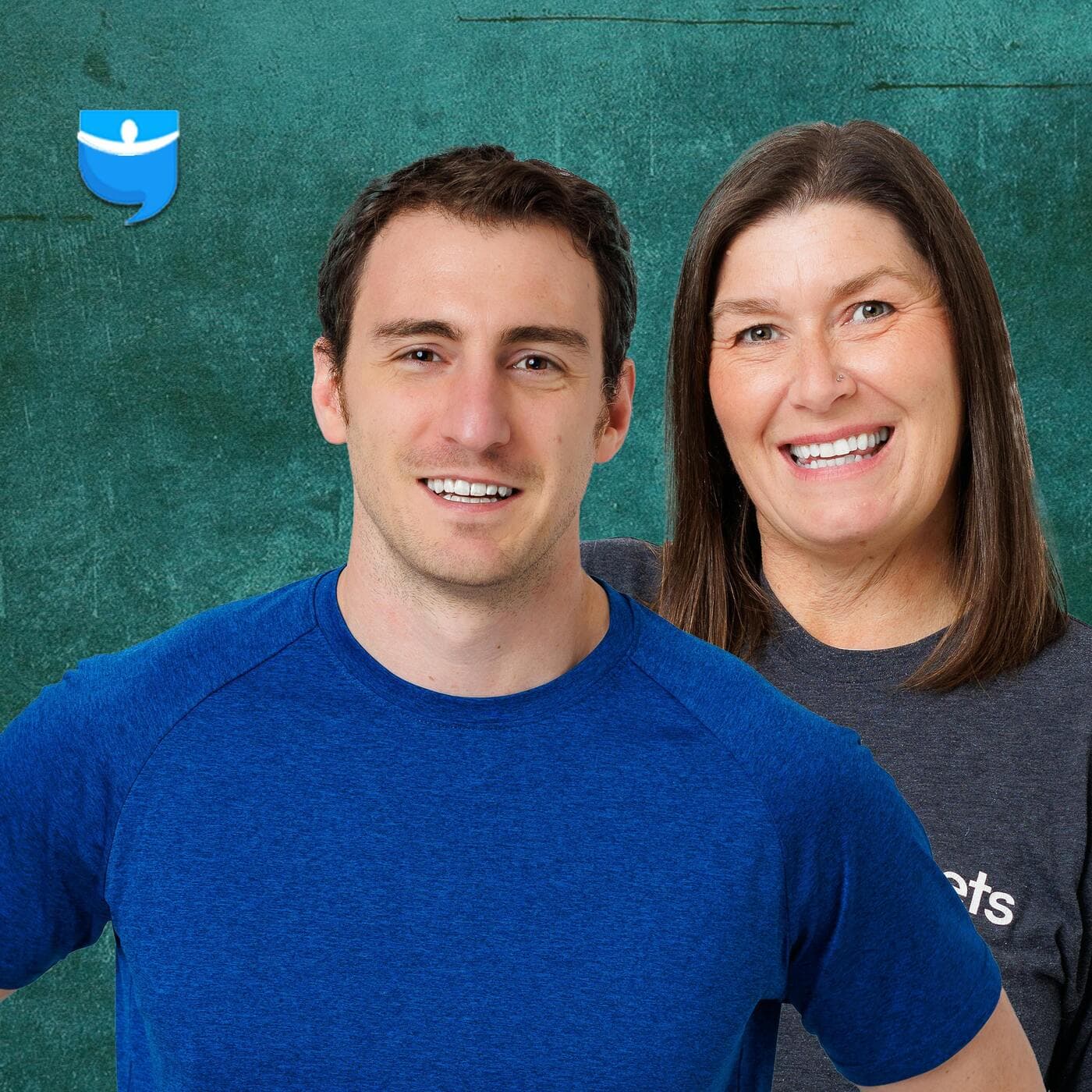
Jess and Corey (the “Fioneers”). They’re FI educators/creators known for the Coast FI calculator. Jess previously worked a toxic corporate job, then took a part-time role, later started a coaching business (“Designer Life you love group coaching”). Corey continued working full-time initially, later became an entrepreneur.
Key claims
- Coast FI = enough saved/invested that you can stop contributing to retirement and still fund retirement by the target age.
- A mental-health burnout crisis (Jess) forced a lifestyle pivot.
- Gradual steps worked: part-time work, expense reductions, then business experimentation.
- They stopped saving for retirement entirely in 2023.
Notable examples
- In 2018: ~$300k in retirement accounts, ~$60k cash, and real estate via home equity.
- Jess quit the toxic job after a 6-month leave; later worked 3 days/week.
- They reduced expenses unintentionally after gaining time/flexibility.
- They had ~2 years of liquid cash to cover expenses while the business ramped.
Written by AI. May contain mistakes. Listen to the episode to check what was said.
Chapters
Tap a time to open that second in VOUnderstanding Coast FI
0:00 to 0:45
Jess and Corey explain the concept of Coast FI and their journey towards it.
“When you're ready to start your business, Northwest Registered Agent helps you do more than just file paperwork.”
Understanding Coast FI
3:34 to 6:12
Jess and Corey explain the concept of Coast FI and their journey towards it.
“For the folks that might have missed Tuesday's episode, can you quickly define for us what CoastFi is?”
Lifestyle and Financial Changes
6:12 to 8:34
Insights into lifestyle and financial changes leading up to Coast FI.
“and like make sure that we were still enjoying our lives along the way.”
Impact of Mental Health on Financial Decisions
8:34 to 11:28
Discussion on how mental health influenced their financial choices and lifestyle adjustments.
“as well as inflate our lifestyle a little bit at the same time.”
Transition to Part-Time Work
11:28 to 14:00
Exploration of the transition to part-time work and its implications on income and lifestyle.
“Did you go back to the same employer and just ask for part-time work or did you get a whole new job.”
The Journey to Coast FI
14:00 to 22:37
Learn how living off one income and making lifestyle changes can lead to financial freedom.
“or stressing about work and all the costs associated and found that my like true hourly wage at the part-time job was a whole lot higher and the job was a whole lot easier.”
Income Progression and Financial Insights
25:08 to 28:00
Explore how income increases and financial planning contribute to the FIRE journey.
“What was your income at the highest level when you were both working full time at those high paid jobs?”
Understanding the FIRE Journey and Projections
28:00 to 32:24
Explore the fluctuating incomes in the FIRE journey and the importance of realistic financial projections.
“And there's fluctuations and all that kind of stuff.”
The Concept of Coast FI and Its Benefits
32:25 to 35:02
Learn about Coast FI, its potential benefits for various age groups, and how it can transform financial perspectives.
“Who do you think Coast Fi works best for?”
The Impact of Compounding and Retirement Planning
35:03 to 37:55
Discuss the power of compounding and how individuals can plan for retirement regardless of their age.
“And their COSFI number would be$900 ,000 to eventually get to 2.5 million.”
Show all 11 chapters
Reflection on the Coast FI Concept
37:56 to 39:54
Reflect on the Coast FI concept and its potential to positively influence financial decision-making.
“my retirement accounts until traditional retirement age.”
Transcript
Automatic transcript. May contain errors.0:00Mindy Jensen:When you're ready to start your business, Northwest Registered Agent helps you do more than just file paperwork. You get all the tools to build a real business identity from day one. A business address, website, phone number, operating agreement, free guides and more at no extra cost. Northwest Registered Agent has been helping small business owners and entrepreneurs launch and grow businesses for nearly 30 years. They are the largest registered agent and LLC service in the U.S. with over 1 ,500 corporate guides. These are real people who know your local laws and can help you in your business every step of the way.
0:33Mindy Jensen:With Northwest, your business is set up to stand on its own from day one. That means your home address, personal email and phone number stay private. Don't pay hundreds or thousands of dollars for what you can get from Northwest for free. Visit NorthwestRegisteredAgent.com slash money free and start using free resources to build something amazing. Get more with Northwest Registered Agent at northwestregisteredagent.com slash moneyfree. I'm skeptical of a lot of financial products, but life insurance isn't one of them, at least not term life. For the vast majority of you listening, term life is simply the right answer.
1:09And the smartest way to buy it isn't one big policy, it's a ladder. Your need for coverage isn't flat. It declines over time. You've got a 30-year mortgage, a couple of young kids, maybe a spouse mid-career. In 15 years, the mortgage is going to be smaller and the kids are almost launched. So instead of buying one giant 30-year policy you'll overpay for, you stack a few, say a 10-year, a 20-year, and a 30-year layer. So your total coverage steps down as your actual obligations step down. You only pay for what you actually need when you need it. Ethos is a platform that helps you find life insurance 100 % online.
1:38You can get a quote in seconds and apply in minutes. There's no medical exam. You just answer a few health questions online. You can get up to 3 million in coverage. Some policies are as low as$30 a month. That makes building a ladder genuinely fast. Get your free quote at ethos.com slash bpmoney. That's E-T-H-O-S dot com slash bpmoney. Application times may vary and rates may vary. When's the last time you enjoyed checking your finances? Well, Monarch is trying to change that. Open it up and in a couple of minutes, you know exactly where you stand with your spending, your goals, your net worth, your investments, everything all in one place.
2:14And it goes wherever you go. Quick check in on your phone between meetings, or check the bigger picture on your laptop on Sunday night. Everything syncs, everything refreshes whenever you want. Use the code POCKETS at Monarch.com to get your first year of Monarch Core half off at just$50. That's 50 % off your first year at Monarch.com with the code POCKETS.
2:37Mindy Jensen:In Tuesday's episode, we covered the basics of what COSFI is, how to calculate your COSFI number, and how to achieve it. Well, today we are joined by the couple who created the calculator we used in that last episode, famous for COSFI, the Fioneers. We're going to hear how they achieved COSFI in their 30s, the circumstances that led up to it, and why it was the best option for them.
3:06Mindy Jensen:Hello, hello, hello, and welcome to the BiggerPocketsMoney podcast. My name is Mindy Jensen. And with me as always is my pioneer of the FI mustache co-host, Scott Trench. Thanks, Mindy. Great to be here. And I'm so glad we stumbled across this concept of Coast FI, which we're going to discuss with Jess and Corey today. Mindy's already done a great job introducing them, but we're so excited to welcome them back. Jess and Corey, again, here to BiggerPocketsMoney to talk about their FI journey. Corey and Jess, welcome back to the BiggerPocketsMoney show. Thanks so much for having us. Exciting to be here.
3:36For the folks that might have missed Tuesday's episode, can you quickly define for us what CoastFi is? Yeah, as we think about CoastFi, we like to think of it as both a financial milestone and a lifestyle. So as a financial milestone, it's the point where you've saved and invested enough money that you no longer need to contribute another dollar towards your retirement. The amount that you've already saved and invested will grow to fully fund your retirement. And so while you think of full financial independence as the point where work is optional, at CoastFi, savings is optional. The name CoastFi typically comes from this idea that you're coasting to full financial independence by reducing or stopping altogether your savings.
4:20And what did this look like for you guys? Could you give us a little bit of background on your money journey and how you decided to approach CoastFi? We were pursuing full financial independence and retire early because he had followed the fire movement and Mr. Money Mustache and sort of came to me on an annual basis and said, hey, let's just say 5 % more. I would say, okay, I would rather travel, but if we can travel and we can save more, we'll do this. So it wasn't until about 2018 that I really started to understand what this all meant and the fact that saving more could give us more freedom earlier.
5:01And I got really interested in the financial independence movement. But at the same time, I was already in a job that was really toxic for my mental health. And so I learned about FIRE and I thought this seems like a really interesting idea, but I couldn't see myself pushing through for another 10 years, which is what our timeline was
5:26Mindy Jensen:at the time. And so we were starting to think about what would our path to financial independence look like? And we wanted it to be a slower, happier path. But then really quickly, probably about a week after we like mutually together decided we wanted to pursue this FI thing, I had a mental health crisis and ended up with severe burnout, severe anxiety that had been building over a period of time and needed to take six months completely off of work. And so for us, that threw a wrench into things. I think we had at the time thought we were going to pursue financial independence, but we were just going to do it at like a slightly slower pace and like make sure that we were still enjoying our lives along the way.
6:16And then we really had this fork in the road where we needed to decide like, how are we going to live life moving forward? During that time, we were faced with a lot of questions, particularly how can we start using our financial freedom to improve our lives now? And that led us down a whole bunch of rabbit holes learning about how people were using FU money, people who were semi-retiring. During that time, I learned about this concept called Coast Fi, and it seemed really compelling to us. And so all of this learning led us to say, what if we took our fire path really differently than we expected we would?
7:00Can you tell me a little bit more about maybe three components to this journey. One is, what was the lifestyle looking like prior to this inflection point, this mental health crisis? What did your financial position look like? And specifically, you know, Coastify really emphasizes this theme of having enough save for traditional retirement at traditional retirement age. Was your wealth primarily at that point in retirement accounts? And then the third component of that question is, what did things look like after we began shifting the goal to Coast Fi? So several part question, I can ask them all again in there, but I'd love to hear, you know, those components of the story there.
7:38I'll start by talking about the lifestyle piece. And then Corey, you can jump in and talk about the finances piece. So the lifestyle at that time was really dominated by work. And so we had both started our careers with really, really low incomes. I think like one year collectively, we made$30 ,000 a year living outside New York City. And so after that period of time, we both just put our heads down and we're like, we really need to increase our incomes. And so we had over time really focused on that and really spent the vast majority of our time and energy focused on work and climbing the corporate ladder, which for me led to that really severe burnout and mental health crisis that I had.
8:27We had then gone from, you know, barely surviving to increasing our income significantly, which allowed us to start to save quite a bit, as well as inflate our lifestyle a little bit at the same time. Passing it to you, Cor. Yeah. So when we reached this inflection point, I just pulled it up in our spreadsheet. So if you You see me glancing over here. I have a net worth spreadsheet that I track and have tracked for, gosh, I can scroll over since 2011 or something.
8:59Mindy Jensen:Wow. We've never had a guest with that much information, have we, Scott? Every single guest is like, oh, I've got a spreadsheet. Of course you do. Shocker. The Money Nerd has a spreadsheet, one of many spreadsheets, I guess, right? So in 2018, when we reached this inflection point, we had about half of our net worth in retirement accounts. a significant portion in real estate and about$60 ,000 in cash. Can you walk us through what the real estate portion looked like? Was that in home equity or were you acquiring rental properties at this time? Home equity. I'm gathering a picture of a pretty intense savings situation, maybe living like we were only making a little more than that$30 ,000 combined income that you started out with.
9:42And their work is getting progressively more difficult or challenging, or there's more responsibility or there's more pressure building. And this reaches a boiling point. And what happens next? What changes about your lifestyle and your financial goals at that point? I think the thing that I want to add about the financial picture was at the time we had somewhat inflated our lifestyle. So we were at that time spending about$70 ,000 a year. So we had like more than doubled what we were spending compared to what we were when we first started out. I think at that time had about 300 ,000 in our retirement accounts.
10:21And so that did allow us, like we were able to look at our money and say, how much freedom does this actually give us? And really helped me at that time to be able to say, okay, like I could completely quit this job if I wanted to, or I could take a leave of absence and apply for short-term disability, not knowing if I'm going to get it. At that time, then eventually I took that six month leave of absence, quit the job that was causing the mental health challenges in the first place. And then when I went back to work, actually, we realized that our$300 ,000 had actually allowed us to reach COSFI.
11:07And so it left me with a question of saying, maybe I never need to work full-time ever again at the age of 31. And so I went back to work part-time, got a new job where I worked three days a week as my mental health continued to improve. Time-wise, right, and lifestyle-wise had a lot more freedom and flexibility and time to focus on health and well-being.
11:33Mindy Jensen:Did you go back to the same employer and just ask for part-time work or did you get a whole new job. I got a whole new job. I was going to ask, how did you step down from that? Because I think a lot of people hesitate to ask, can I go part-time? I think a lot of employers hear you ask to go part-time and they think the option is full-time or part-time when really the option is you can have me part-time or you can have me no time because I'm going to go find a job that allows me to do part-time. It's hard for us to reframe that in our minds as well. So I just is to go get another job. And right now when we're recording in July of 2025, the job market is really tight.
12:14Mindy Jensen:But if you're pursuing this in a few years, maybe the job market opens up and you have a lot more options, or maybe you're in a field that's in high demand and you have a lot more options. Do what you want. Don't do what your employer wants. Curious to learn exactly how Jess and Corey achieved Coast Fi? We'll be breaking it down right after this break.
12:38Welcome back. I have another question about the job switch here. There's some situations where this rule could be reversed. I've observed that when, let's say I'm making$100 ,000 or$50 an hour at a job and I want to go part-time, usually that doesn't come with here's$60 ,000 or$50 an hour at that. It's usually, oh, here's$35 an hour and part-time. There's both a reduction in the hourly rate of pay and the total amount of pay. That can definitely be changed. In some cases, you can make more or whatever. How did you find that in your situation? Was there a sacrifice on both the income and benefits or were you able to basically make the same amount just with less hours?
13:17You know, it's interesting because at the full-time job, I was working about 50 hours a week and I was commuting for an hour and a half every day and it was incredibly stressful. And when I took the part-time job. I was working 24 hours a week, no more. I was commuting 20 minutes each way. And so I worked 60 % time and I probably made like 55 % as much. So it was a slight reduction, but felt to me totally worth it. And I know you guys probably know about like the true hourly wage where you take into account like all of the hours you work and spend commuting or preparing or stressing about work and all the costs associated and found that my like true hourly wage at the part-time job was a whole lot higher and the job was a whole lot easier.
14:11Yeah. I love that you mentioned that the commuting costs as well, because that's, that's something I think that I was not factoring in or I was asking the question and a lot of people don't think about if you're having, if you have a long commute and you're working long hours and it's all consuming from a mental standpoint, that could be a huge change. One thing that I will call out as well is it sounds like implied in this conversation is you guys were saving at least 50 % of your income at leading up to the point where this happened. And that's a huge advantage. If you can live off one income, it allows these options to develop in life.
14:44And so I think that that's critical to call out here is this was enabled by even 70 ,000 relatively low spending given your household income. Yeah, the other thing that's really interesting about this one shift in our long journey is that that year after when Jess started working part time, we actually reduced our expenses without even intentionally trying to do so. So life was so busy up to that inflection point that we were spending a lot of money on takeout and kind of convenience. And then after when she had a lot more time and flexibility working part time, we surprisingly reduced our expenses.
15:22I remember the point when we were reviewing our annual expenses and we're like, wait a second, these numbers can't be right. Like, why are we spending so much money less? You know, like and then we had to like dig into it and figure it out and kind of work backwards. It wasn't like, oh, we're earning less, so we should spend less. It was just like mindset and lifestyle change.
15:39Mindy Jensen:So Corey, were you working full time when she went down to part time? I was, yep. And were you still continuing to contribute to retirement accounts, even though you discovered that you were Coast Fi? Yeah, so we were still contributing. So our Coast Fi journey has been one of many small steps. And so the first step was like reducing Jess's part time work. But we'd continue to contribute probably over the next four or five years as we were still earning high income. And why did you choose to continue to contribute if you were already Coast Fi? Yeah, it's a good question. I think it was a combination of we had disposable income.
16:17At the time, I was really enjoying my work. And so I wanted to continue working full time. And there was also certainly a motivation of like scarcity mindset. Like I wanted to have a little bit extra cushion, right? The age old challenge that many of us run into is like, I didn't want to have to worry about it. And so I wanted to save a little bit more. As Corey said, we had a progression over time. And I think it can be really scary for people to go from being in this like full accumulation mode where you're saving 50 % of your income to one, like if people are reaching fire to go to start spending down.
16:56It can also be really scary to go from I'm saving 50 % of my income to saving zero. And so we often recommend in the process that we took ourselves was take a gradual approach. Like what are lifestyle shifts that you can make? And we assumed that me working part time was going to dramatically reduce our savings, right? It didn't because we spent so much less. So then we were like, oh, what's the next change? that we can make. And so about a year later, then I ended up using some of the extra time to start a business and then quit my coaching business. And then I quit the part-time job to focus on that.
17:40Corey was still enjoying his job at that point. So why leave, right? When he didn't need to yet, even though I was like, hey, do you want to leave? We can travel. We can do all of this stuff. But like he just wasn't ready to, he was enjoying that. And so for then the couple years after that, what we did was we decided, okay, what's our future lifestyle? What do we want that to look like? Are there things that we can do now to prepare ourselves for that? And so we did an expensive camper van experiment where we rented out a camper van to see if that was something that we would enjoy doing. And then over the next two years, we bought and we built out our own camper van, which during that two year period of time then reduced our savings rate down to about 20%.
18:28So we cash flowed it, reduced the savings to 20%. And then from there, it was like, oh, well, now we have the evidence that the money is still continuing to grow in the background, right? I think everyone tells you that, but sometimes it's nice to see it from your own life experience. And so then that gave us more confidence to then when, you know, things got frustrating at work for Corey, then he was able to say, okay, maybe it's time for me to go and take a mini retirement and then join me as an entrepreneur. So 2023 was the point where we stopped saving entirely for retirement. So we haven't added a single dollar to retirement since 2023.
19:16Walk me through that inflection point too, and similar question around the financial position in terms of cash. And we know, coastify the retirement accounts were well set, it sounds like, to be fully funded by traditional retirement age. But was there cash or other assets that made you feel more comfortable with both going into the entrepreneurial or leaving the full-time work environment? Oh, absolutely. And I would have to look to get precise numbers, but I remember having about two years of cash or liquid assets that we could tap into to cover our expenses for two years effectively if we didn't earn any income.
19:53By this point, we already had a business that was covering a good portion of our expenses, but not all of them. And so we gave ourselves a long run way to then grow the business for that to be able to fully support and cover just our expenses. Awesome. It was certainly the combination of like the near term and having the cash and the long term, knowing that our retirement was taken care of. I have a couple of observations I'd love to call out. First, one theme here is people say, oh, I don't want to pursue FIRE because I love my job. Right. And that's where you were, Corey, a few years ago. That changes over time.
20:29Nothing stays the same forever. Even though you loved your job then, the fact that you guys were pursuing versions of FIRE, Coast Fire, the things that gave you options in life and building liquidity allowed for when that changed for you to have that flexibility and confidence to do that. Second, and again, there is a rule, but there are plenty of exceptions. The liquidity position, I think, is so critical for the FIRE journey and taking that leap and moving into the entrepreneurial space, building a cash position. And it's not everybody, but it's a big percentage of folks that seem to be much more comfortable with it.
21:02I'm certainly of that type as well, where I feel just much more comfortable having a much greater cash position than the most portfolio theory would suggest. I think it's very compatible with real estate investing and financial flexibility in there. And then the last thing I want to point out is wealth creation, in my observation, is both a process and an event in the sense that it's actually, I think, very good strategy for one spouse in a married couple to work an income where the spreadsheet ties very nicely into it, right? Here's what we're going going to get earned over the next couple of years.
21:33Here's what we're going to spend. Here's what's going to accumulate. Here are the benefits that are going to apply. And then one spouse to work on a business, which has uncertainty, but great upside and flexibility downstream. And I love that that played out in your story here specifically, because I think that the business could fail. Nine out of 10 businesses fail. But if you could repeat that process long enough, you stick with it long enough, there are good odds that over time, that's going to be very successful and will give you future options in life for many people. So I just, those are three observations that I found across many, many of our podcasts here.
22:07And I love that they played out so wonderfully in your situation here and afford you guys a great lifestyle and optionality now. Yeah, I think that's pretty spot on. I think when people see the lifestyle that we have today, they probably think we're really risky. People are like willing to take big leaps forward. But But the reality is it's been a seven year process to get from where we were to where we are today. And it's been small incremental steps to kind of reassure ourselves and kind of mitigate the risk that we saw. All right. Before we take this next break, I just want to let everybody know that we have a special deal for BiggerPockets Money listeners at BPCon 2025.
22:47That's October 5th through 7th in Las Vegas. For those who use the code money100, you're going to get$100 off your ticket to BPCon, and we're going to be throwing a special money workshop, a DIY financial planning session where we'll go over where we're at, where we want to go, what steps we need to get there, and providing checklists and all that kind of stuff for all the blocking and tackling like estate plans and all that kind of good stuff. We'll have a bunch of experts in the room, me and Mindy, and we'll link you up with some peers that can help you talk through those challenges. And we'll stay there for about an hour to three hours, depending on how long you need answering any questions that we can help out with.
23:22So check that out. Money 100 for BPCon 2025, October 5th through 7th. If you've been putting off life insurance, I get it. The old process was miserable. Phone calls with an agent, a nurse coming to your house for a blood draw, then waiting weeks to find out what you'd pay for. That friction is exactly why so many people who should have coverage don't. Here's what I believe. Most BP money listeners need term life, and the right move is to build a ladder. A few term policies of different lengths stack together so your coverage steps down as your mortgage shrinks and your kids get closer to being financially independent or you get closer to hitting your financial independence number.
23:56The thing that makes that practical now is Ethos, a platform that helps you find life insurance all 100 % online. Same day coverage, no medical exam. You just answer a few health questions online, Up to$3 million in coverage, some policies as low as$30 a month. So building a two or three layer ladder that used to take a month of appointments is something you can knock out before your coffee gets cold. Get your free quote at ethos.com slash bpmoney. That is E-T-H-O-S dot com slash bpmoney. Application times may vary and rates may vary. You know that feeling you get when checking your finances means logging into five different apps?
Read the full transcript
24:32That's why I use Monarch. Setup takes about 10 minutes. You can link your accounts, and everything you own and owe lands in one clean dashboard. Banking, cards, investments, even keeping track of recurring charges. After that, you can stay on top of your money in just minutes, not hours per month. Monarch saves you time and actually helps you use it wisely. Use the code POCKETS at Monarch.com to get your first year of Monarch core half off at just$50. That's 50 % off your first year at Monarch.com with the code POCKETS.
25:06Mindy Jensen:Thanks for sticking with us. What was your income at the highest level when you were both working full time at those high paid jobs? So our highest income years were actually after Jess started working part time. Yeah, which is funny, like the progression of my career, it was small leaps for many years. But then there were certainly some key promotions and increased responsibility where my salary doubled within the period of, I don't know, four years or so. Like our highest income year was in 2021, which was actually the year that Jess left her part-time job, actually. And that is because you did the, you created your own company, Jess.
25:56Mindy Jensen:Is that right? Yeah. So basically then I started doing the designer life you love group coaching programs that I do in 2020. And then I was doing that on the side with my part-time job for the remainder of that year. Got to the point that year where those two combined was more than what my like crazy toxic job salary had been. And so then I decided to quit and then, you know, grew the income and revenue from the business alongside Corey growing his income and was doing it in 25 to 30 hours a week on my schedule, doing things that I love to do, which I think was like the best part about it. So what was that income?
26:45So gross income and our highest income year was $240 ,000.
26:50Mindy Jensen:And how much were you saving of that$240 ,000? We saved$124 ,000. Wow, that's awesome. What were you doing when you earned$15 ,000 a year each or$30 ,000 combined? I was working in higher ed and I was earning a lucrative like$24 ,000 per year. So I did an AmeriCorps fellowship and I I earned$11 ,000 a year before taxes. This is gross income. And this was in New York City? It was in New Jersey, like in the New York City suburbs. Wow. Often we'll have a money story on and folks are like, well, these folks made$200 ,000. Well, almost nobody moves into a fire journey starting at$35 ,000 in household income and finishing there as well, right?
27:40Many, many journeys involve this progression from an income standpoint in many fields, especially if there's two folks involved in the situation, offer those opportunities over a 10, 15, whatever, however long the journey is, journey to financial independence, especially if there's businesses or sales roles that are involved that go in there. And so that's like, it's just fantastic. You guys started out this journey in one set of circumstances, really, and I would say in the bottom quartile of earners, perhaps in the country at that point in time for household income and ended likely in the top decile at that peak over a period of time there.
28:17And there's fluctuations and all that kind of stuff. But that is much more typical of the FIRE journey than folks staying in a high income the whole way or staying in a low income bracket the whole way. Yeah. And I have two thoughts in addition to that. One is there were only three years where we collectively grossed more than$200 ,000 in our long journey. There was only three years where we earned more than$200 ,000. The second is it also goes to show that often we plan for the worst case. So when Jess started working part time, it was like, oh, no, are we going to reduce our savings rate, you know, a little bit.
28:48It was an obvious like we're going to do this for her health, mental health and recovery. And so it made sense, but there was still the financial element of like, oh, is this going to work out? So we often plan for the worst case, but often there is upside beyond that, which is evidenced by our progression of income. I love that. And I can't myself. I got to jump in again here. I talked to a BiggerPocketsMoney listener recently, and this problem is very common among our crew here, where people are so conservative in their projections and the numbers they're putting out. This person was a multimillionaire and they were really worried about things.
29:23And I was like, OK, look, that's fair. You can project out the worst case scenario with a conservative portfolio here and earnings potential and what's going to happen with all that. But you should also put in a realistic case scenario where returns are something along the lines of what we've had in the past and something works out over time here. And there is a promotion as you continue to work for another five, 10 years in your career. And when that happens, you're like, oh, wow, the odds of something actually working are not zero. in my financial model and shouldn't be. The odds of one spouse's business succeeding are not zero.
29:55And that changes the game in terms of how you run things, right? If you just said, I'm going to assume that there's going to be no income from a business that Jess is going to start, that really makes it painful and difficult to do these things. But if you say, hey, there's a 50-50 shot, this thing's going to be generating a hundred grand a year in two or three years in a very flexible position, that is a much better way to model things out. And you're probably going to see success in some of these endeavors. And I think that that's a very real risk among our community is they're so conservative that they're not actually weighting the realistic upside of potential in their portfolios over time.
30:28One thing that I would add to that too is I tend to see people in the community think that they're making forever decisions. That like if they make a decision to work part-time, that like they're making a decision to work part-time for the rest of their lives. Or like if they're making a decision to start a business, like this is a forever thing that they can't change. And we see this in our community often and need to remind people and remind ourselves that we can pivot if needed. Like we're not doing something that's like completely set it and forget it. Like we're both working on this business right now.
31:05Great. We love that. And if in a couple of years we find that we're not generating enough income to cover our expenses and do the things that we want to, like one of us or both of us can go back to work, right? Or we can figure out how to generate income in another way. I think people underestimate their ability to problem solve and be resourceful in the face of challenges.
31:28Mindy Jensen:I can't agree enough with your statement that the people in our community tend to think of these as forever decisions. There's the stigma around people who are retired and then they go back to work. It's okay to test out retirement and decide that's not for you. It's okay to test out part-time work and decide, you know what? I just really hated that job. I want to go back and get a full-time job at this new place that I'm doing. Or I don't want to even do the part-time now. I want to start my own thing. I think that there's a lot of rigidity in our community and loosen up people, loosen up, test things, take a stab at something.
32:04Mindy Jensen:And if it doesn't work, then, you know, try something new. Pivot. We need to insert that friends scene where they're trying to get the couch up the stairs. Every time I say the word pivot, I think of that. Scott's like, I don't know what that is. I haven't seen that episode. Now let's switch gears a little bit from your specific fire story to the concept of Coast Fi in general. Who do you think Coast Fi works best for? And is there somebody that this may not work for? I think the first thing that I would say is, I think that Coast Fi might work best for most people. For those who are, I think, just getting into their personal finance journey, Coast Fi can be a more approachable milestone.
32:48And for those who are pursuing full fire, if they achieve Coast Fi, they can use that freedom to design the life that they don't want to retire from earlier, right? There's so many people who reach their FIRE number, take a couple of years off to recover from burnout, and then decide they want to do some sort of productive work? What if they reached Coast Fi, thought, what is that work that I would want to do five years down the road once I'm recovered from burnout, and then do that and generate income until you reach FIRE, and then you get there. And it's just like any other day, because you're already living the life that you want.
33:31I would love to push back respectfully here and say my observation is that the Coast Fi is really a young person's privilege because the power of compounding allows a 300 or whatever, some odd thousand portfolio to achieve that$2.5 million traditional retirement level 30, 40 years down the road. and when you look at someone who's 50, for example, there is no COST-FI, right? If they're starting over, there'll be a grind for that. Would you agree with that push or how do you think about COST-FI for folks who are maybe older than 45? I'll start, Jess, and then if you want to add to this. But I think mathematically, yes, there's a smaller number to reach COST-FI when you're younger and have more years for compound growth to take its effect.
34:16The part that I disagree with is I've seen people in their 50s reach COSFI and still see that transformational moment where they realize they have more freedom and it gives them permission to start doing more meaningful work in their 50s. And so, yes, it is a larger number when you're in your 50s and you only have 15 years of growth. For example, if you're planning to retire at 65, then it is a 30 year old that has 35 years, but I've still seen people from a wide spectrum in their mid 50s down to late 20s reach Coast Fi. And so I don't think it's necessarily a young person's game. I think it is very possible to reach your Coast Fi number in your 50s and still have a meaningful change.
35:02Mindy Jensen:What I like about the concept of Coast Fi is that it can give you hope at whatever point in your journey that you're at. I pulled up a copy of the Fionner's COSFI calculator, and I typed in age 50, and I typed in$100 ,000 in annual expenses, retirement age of 65, assuming a safe withdrawal rate of 4%, assuming an inflation adjusted growth rate of 7%. And their COSFI number would be$900 ,000 to eventually get to 2.5 million. And if you're sitting at age 50 thinking, you know, oh, I just started saving a couple of years ago, I've got, you know, a few hundred thousand dollars or $500 ,000. Oh, wait, I only need 900 ,000 to reach 2.5 million by the time I'm retired, as opposed to I have to save 2.5 million.
35:55Mindy Jensen:And for somebody who's starting off later, I think this could still be a position of, you know, yeah, you can do it. I agree. I think sometimes we think like, oh, compound interest only works if you have like 40 years. But really, you know, like your money's probably going to double every seven to 10 years. So if you want to retire in 10 years right now, you just need half, right, of what your full goal is. And then that gives you a lot of freedom and flexibility. I think sometimes the motivations for people based on their age sometimes are different for reaching Coast Fi, but we see the motivations across the board for people.
36:35So some people want to spend more time with young kids or aging parents. Some people want to start a business.
36:45Mindy Jensen:Some people want more freedom and flexibility to live their life outside of work. Or some people want to use it as an off-ramp into full retirement. So for some people too, as they get older, they may reach Coast Fi when they're 55 and they may say, great, this is fantastic. Like this allows me to start scaling back my work, moving into a full retirement age of 62, 65, something like that. And for me, like that's a huge win. Like anytime someone has any freedom earlier than their full retirement age is incredible and fantastic. And the vast majority of people in our country will never have that.
37:29And so looking at that for someone who's at any age reaching Coast Fi, I think is absolutely incredible. Yeah, I completely agree with that. If you can say my retirement account is fully funded and I don't have to keep aggressively saving for retirement. It's got to be just a huge mental load off of your shoulders and free up to really think about, hmm, do I really want to be doing this work or do I want to be doing something else? I may need to generate income to cover my expenses between now because I can't tap into my retirement accounts until traditional retirement age. That's by definition of the Coast Five, but it's there.
38:02I do also think that the power of compounding is a real benefit. And in particular, the 20 or 30 year olds may find this number of particular comfort because some of these numbers seem very attainable for members of the FI community early in life to get to reach Coast FI. And maybe you can look up and say, I don't need to death march to the next several million dollars or whatever it is to get to through financial independence right now. I can kind of look up and be like, hmm, what do I want to do for these next 10 years in a more meaningful way? And that's the power of this concept that I think we haven't really fully explored here.
38:39And the benefit is exactly what you guys went through here is there's no reason to force yourself into these horrible situations at work or in life if you're able to achieve Coast Fi and take your foot off the gas.
38:50Mindy Jensen:Okay, so Jess and Corey, this was a lot of fun talking to you. What is next for the pioneers? So in the next couple of months, we are really excited to be running our third Slow Fi retreat. And so we are headed out to Lake Tahoe with 45 other slow-fi, coast-fi enthusiasts to learn more about how we apply financial freedom and design the lives that we want today. Okay. And where can people find out more about you? They can find us at thefioneers.com or on YouTube at Fine Years. Awesome. Thank you so much for your time, Jess and Corey. I really appreciate you talking about CoastFi with us and giving us your experience.
39:36Mindy Jensen:I think the CoastFi concept is not something that Carl and I had heard about before we wrapped up our Fi journey. And I really wish we would have because I think it is a really healthy approach to your finances as opposed to the all out push for getting there as fast as you can. So I really appreciate the attention that you guys draw to the concept of Coast Fi. And I'm so glad you showed your calculator to economy this year, because that's going to be life changing for people. So thank you again for your time. I really appreciate it. And we'll talk to you soon. Yeah, thanks for having us. Thanks so much.
40:13Mindy Jensen:All right. That was Jess and Corey. And that was a really fun conversation. I just really love the concept of Coast Fi. And I truly wish that Carl and I would have learned about it a little sooner in life. Scott, what did you think of the episode? I thought it was great. I think that the before and after is just so fascinating to me of what, you know, there's inflection points that really break people's worldviews down and chart a different trajectory. And we often talk about those in the context of the exploration of FIRE. What actually gave you awareness about financial independence and began shifting a fundamental change in your lifestyle and spending habits, maybe your income or career as well?
40:52And in this case, they shift from I don't have to pursue FIRE with this relentless death march to FIRE concept that we've uncovered a bunch. I can actually just take my foot off the gas. And the wonderful or the beauty of that concept in their story, and I think many stories, will be that that actually does not impede progress toward long-term financial goals and brings a lot more happiness and contentment right now.
41:16Mindy Jensen:I absolutely agree. I'm super excited for people to start using this calculator on the pioneers and just see how their life can change, how their mind shift about their finances can change when you see what that number is. I think it's eye-opening. All right, Scott, should we get out of here? Let's do it. That wraps up this episode of the BiggerPocketsMoney podcast. He is Scott Trench. I am Mindy Jensen saying cheerio, Romeo.
From the publisher
Coast FI is a fascinating concept that's gaining traction in the financial independence community. And no, to Mindy's disappointment, it doesn't involve having enough money to live beachside (though the lifestyle can be just as relaxing). Unlike the extreme FIRE approach that dominates personal finance blogs—where you're told to save every penny, never eat out, and forget about vacations—Coast FI offers a more sustainable path to early retirement.
Enter Jessica and Corey from The Fioneers, who've proven this gentler approach actually works. When they discovered the FI movement, they were earning just $30,000 combined—hardly a six-figure head start. As their income grew, so did their savings rate, but Jessica quickly realized that climbing the corporate ladder came with a hidden cost. The stress became so overwhelming that she needed a six-month mental health break from work.
That break changed everything. Jessica never returned to traditional employment, instead building her own business. Today, she and Corey have achieved what they call "slow FI"—they're Coast FI with complete time autonomy, still enjoying travel and comfortable living, while on track to retire in their early 50s. They're living proof that financial independence doesn't require sacrificing your mental health, relationships, or joy along the way.
Their story challenges the narrative that you must choose between financial freedom and actually living your life. Sometimes, the scenic route gets you exactly where you need to go.
In This Episode We Cover
-
Coast FI explained and how it’s a far more enjoyable alternative to standard financial independence
-
Saving and investing even while making a below-median income salary
-
Resisting lifestyle creep and how to use pay raises to increase your net worth
-
The danger of going “too fast to FI” and how retiring too early can be a detriment
-
Part-time jobs, side hustles, and other ways that you can make more apart from your W2
-
Spending money to “escape” and how quitting a stressful job could save you more money
And So Much More!
Learn more about your ad choices. Visit megaphone.fm/adchoices
See Privacy Policy at https://art19.com/privacy and California Privacy Notice at https://art19.com/privacy#do-not-sell-my-info.
