
In short
Plastic surgery and facial aesthetics—authenticity, societal pressure, when to say no, and safety concerns about med spas; also non-surgical options and future trends.
Guest background
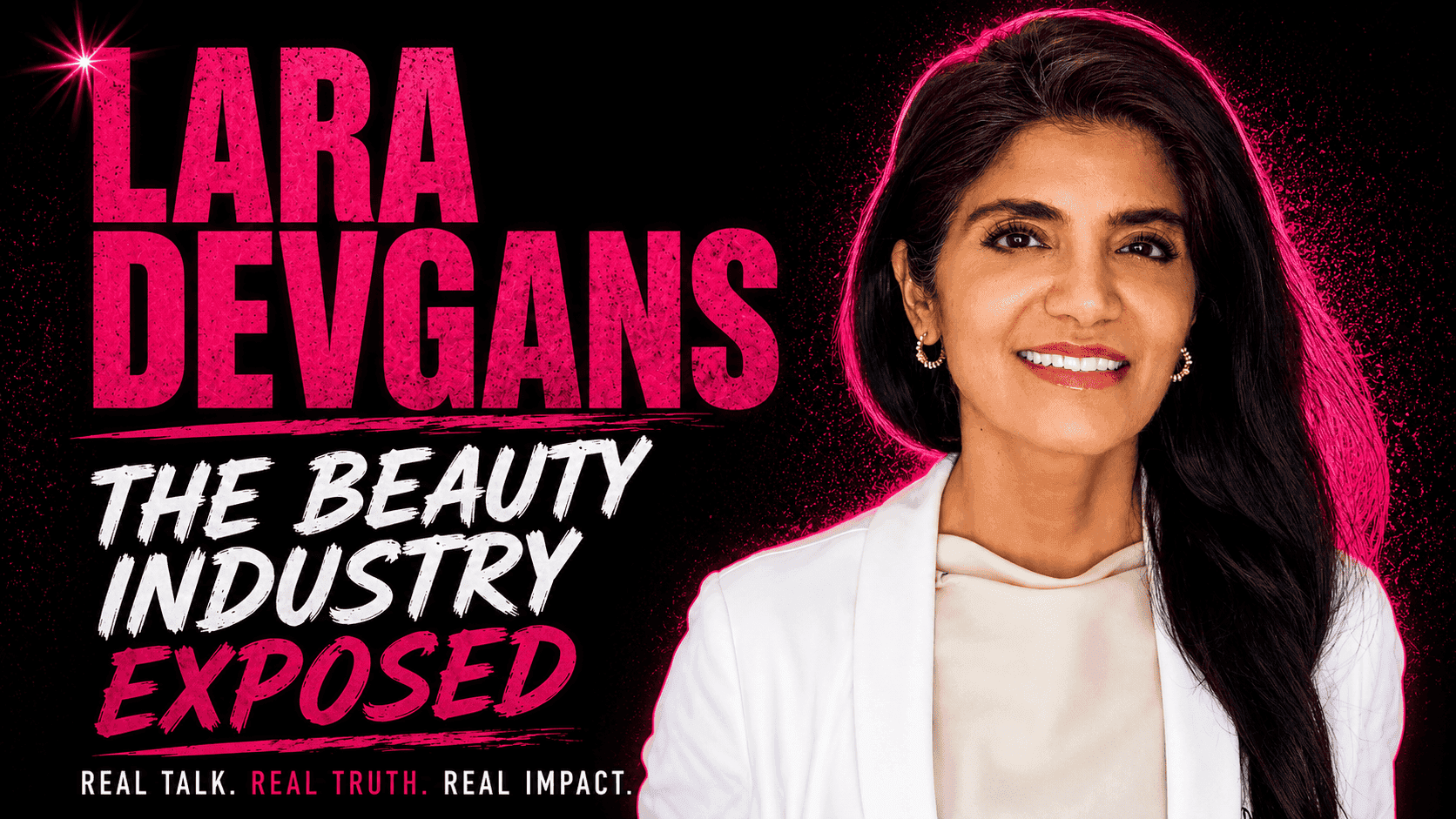
Dr. Lara Devgan, board-certified plastic surgeon known for facelifts, eyelid surgery (blepharoplasty), and “finesse” non-surgical facial optimization; does face, breast, and body surgery. Clinical-scientist training including NIH clinical research fellowship and surgical outcomes research at major institutions (Yale, Johns Hopkins, Columbia/Presbyterian, NIH).
Key claims
A surgeon’s most important decision is when/how to refuse patients; plastic/reconstructive surgery should meet people safely where they are. Social media filters are a major demand driver. Non-surgical injectables/lasers can be as risky as surgery due to complex facial anatomy. Med spas often lack proper gating/training; safe practice requires years of residency-level training.
Notable examples
Pinch test for facelift candidacy (>1 cm laxity in neck/jowl/midface). Non-surgical “evidence-backed” steps (avoid smoking/alcohol, sleep, sun protection) plus Botox, lasers, PRP, suture suspension. Complications cited from poorly trained providers (tissue necrosis, facial paralysis, blindness, death, stroke). Future: smaller incisions, more longevity/“molecular and cellular health,” and broader acceptance of overall health for skin quality.
Written by AI. May contain mistakes. Listen to the episode to check what was said.
Chapters
Tap a time to open that second in VOThe Ethics of Plastic Surgery
0:00 to 0:36
Learn about the importance of surgeons knowing when to say no to patients.
“A good surgeon should sometimes turn patients away.”
Authenticity and Plastic Surgery
1:02 to 1:40
Explore the relationship between plastic surgery and personal authenticity.
“I'm going to talk about the controversy on everything that people want to know.”
The Journey of Transformation
1:40 to 2:36
Understand the patient experience and satisfaction in plastic surgery.
“appropriate for themselves, we should give people a little bit of space to think about topics like confidence, identity, and how they present themselves to the world.”
Discussing Facelift Techniques
2:36 to 3:24
Learn about various facelift techniques and their evolution over time.
“And you have, I mean, an extensive background.”
Choosing a Facelift
3:24 to 4:52
Find out how to know when it's the right time for a facelift.
“Have you seen this, this like new facial technique?”
Alternatives to Surgery
4:52 to 6:20
Discover non-surgical options available for those who can't afford surgery.
“If you have more than one centimeter of pinchable laxity in the neck, jowl, or midface, or if you significantly feel improved when you go like this with your fingers and lift up, then you can anatomically be a candidate.”
Societal Pressures and Expectations
6:20 to 7:20
Discuss how social media influences perceptions of beauty and surgery.
“buckle fat, fat excision, submental liposuction.”
Navigating Motherhood and Aesthetics
7:20 to 8:12
Explore the challenges of balancing motherhood with personal aesthetics.
“Apps like Instagram and TikTok have hours of daily time used per individual.”
Supporting Children’s Decisions
8:12 to 11:08
Learn how to approach conversations about cosmetic procedures with children.
“Now my daughter's 18 and my daughter actually just got, she just had a breast reduction.”
Building a Skincare Brand
11:08 to 12:36
Discover Dr. Devgan's journey in creating a skincare line based on science.
“What do you think about people saying that I know you have your own brand?”
Show all 17 chapters
True or False: Myths in Cosmetic Surgery
12:36 to 14:00
Evaluate common myths about cosmetic surgery and the psychology behind it.
“I mean, obviously you have an extensive, extensive overachieving background over here, but I'm going to have fun with you real quick.”
The Intersection of Substance and Appearance
14:00 to 15:04
Explore the balance between personal expression and professional success.
“substance who contributes to the world and being a superficial plastic surgery junkie.”
Risks of Non-Surgical Treatments
15:06 to 15:34
Understand the dangers of fillers and non-surgical cosmetic procedures.
“I think you don't know what you don't know.”
The Importance of Proper Training in Aesthetics
15:35 to 16:44
Learn why extensive training is critical for safety in cosmetic procedures.
“There have been cases of not only tissue necrosis, facial paralysis, blindness, even death and stroke, horrible complications.”
Innovations and Future Directions in Plastic Surgery
16:44 to 18:25
Discover upcoming trends and innovations in the field of plastic surgery.
“And that training program unpopularly is a 10 ,000, 20 ,000 hour, six to 10 year training program.”
Empowerment and the Role of Women in Surgery
18:25 to 19:08
Discuss the empowerment of women in the medical field and achieving balance.
“I love that I really and you're giving back I mean in a sense it is hope it's helping other people every day I feel better about themselves and you get to come to work and experience that I just love that for you.”
The Future of Cosmetic Procedures
19:08 to 20:15
Anticipate the evolution of cosmetic surgery and health practices.
“I predict a few changes in the coming decade.”
Transcript
Automatic transcript. May contain errors.0:00Dr. Lara Devgan:A good surgeon should sometimes turn patients away. Absolutely. I think the most important decision a plastic surgeon makes is when and how to say no to a patient. We now have more med spas in America than we do McDonald's locations. So many. And the lack of safety and gating as an entry point into establishing a location like that astounds me. It's not like going to Burger King where you just order off the menu. I'll take a number three with cold tomato and extra pickles. You know, they're asking me for my judgment.
0:35The BILF Pod:Welcome back to the Build Pod, where authenticity trumps authority. I am actually on location. This is such a privilege. I'm here with the one, the only, on per ab, might I add, Mrs. Dr. Devgan. Thank you for taking it. I know you're so busy. You actually have a patient upstairs. So I am so excited to get 15 minutes of your time.
0:56Dr. Lara Devgan:I'm so happy that this worked out. Thank you so much for being here.
1:00The BILF Pod:So we're just going to dive right in. I'm just going to get, I'm just going to get, I'm going to talk about the controversy on everything that people want to know. So let's just talk about medicine in general, you know, plastic surgery in general, people have, and I, by the way, I'm a huge fan of plastic surgery. I love it. I've had, we'll talk about it off camera, but I, I'm definitely, and I believe that, you know, if it's broke, it doesn't matter. It doesn't make you unauthentic. If you've had plastic surgery, it's really what makes you feel good. But, you know, there's a lot of controversy surrounding it and not being authentic.
1:29The BILF Pod:So let's start there. How do you feel about that?
1:32Dr. Lara Devgan:You know, authenticity is how you define it and it's what you make of it. I think in the same way that we should give everybody the grace to make decisions that are appropriate for themselves, we should give people a little bit of space to think about topics like confidence, identity, and how they present themselves to the world. So, you know, But to me, plastic and reconstructive surgery at its best is just meeting a person where they are. And if you can do something in a safe and medically responsible way that means something to you, frankly, what what does anyone else have to do with it? What business of it is theirs?
2:05Dr. Lara Devgan:Yeah.
2:06The BILF Pod:And don't you feel good afterwards? Because some of it's instant gratification, you know, they wake up and like, wow, doesn't it make you feel as a doctor like you really are doing something great for this person?
2:16Dr. Lara Devgan:It's a truly amazing profession because there is such a high patient satisfaction and it's really beautiful to go on these little mini journeys or major journeys with patients and see them through before, during, after the whole process. There's nothing I love more than seeing my happy patients at the end of the line.
2:35The BILF Pod:Yeah. And you have, I mean, an extensive background. I know you graduated from Princeton. Gail. Gail, I have Princeton. Sorry. Oh, look, my people messed up. Sorry. No, no. Yeah. So you have, I mean, you're, you have an extensive background and you, your specialty is you do facial, right? That's your, that your specialty. I know you do everything.
2:53Dr. Lara Devgan:I am a board certified plastic surgeon. So I do operate on the face, breast and body, but I think I'm most known for facelift, lepharoplasty or eyelid surgery and finesse non-surgical facial optimization. So a lot of what I'm dealing with is the tiny millimeter level details that create an optimized beauty. And a lot of that is in the face. It can be anywhere, but, you know, we lead with our faces.
3:17The BILF Pod:Absolutely. That's the first thing you see when you see people. So with that being said, you know, there's a lot of talk about this new facial. Have you seen this, this like new facial technique? Have you seen it? Like it's all over in Asia. There's a new way to do these facial or the facelifts. Have you heard anything about this?
3:34Dr. Lara Devgan:Yeah, there are. Well, a little bit of it is a media cycle and a little bit of it is real medicine and surgery, but there are a number of described techniques for facelift surgery that vary in terms of incision lens, tissue plane depth, invasiveness, recovery, whether you're lifting the muscle, the fascia, the skin, all of the above. So I think one caveat I would say is that there's nothing that's completely new right now, but I think we all stand on the shoulders of prior generations in surgery. And so the techniques today are better than they were a decade ago, for sure.
4:15The BILF Pod:Yeah, absolutely. I would definitely, and I'm sure they're like more refined and people want to have, I think people want more of a natural look. Would you agree with that? That they want that. So what about, let's talk like a little bit about like the stuff you're not supposed to talk about. First of all, what's your favorite plastics to perform?
4:32Dr. Lara Devgan:I love the facelift. I think it's an elegant, beautiful operation. It really shows you every level of depth of human anatomy, the bone, muscle, fascia, fat, subcutaneous tissue, skin. It allows you to convey identity and beauty in tiny little details. So if I had to only do one surgery forever, it would be that.
4:51The BILF Pod:And how do you know when it's time to get a face lift?
4:54Dr. Lara Devgan:Okay, pinch yourself. If you have more than one centimeter of pinchable laxity in the neck, jowl, or midface, or if you significantly feel improved when you go like this with your fingers and lift up, then you can anatomically be a candidate.
5:06The BILF Pod:Oh, maybe it's time for me. I don't know.
5:09Dr. Lara Devgan:You look beautiful.
5:10The BILF Pod:Thank you. I love you even more now.
5:11Dr. Lara Devgan:Thank you.
5:13The BILF Pod:What about the people that can't afford it? Like, what do they do? Is there an alternative? Do you believe in like non-surgical techniques? Like, does all this, listen, I goop my face with all this stuff. I'm like constantly with the skincare. Is that an alternative or there's really no alternative if you need a face?
5:28Dr. Lara Devgan:Well, yes and no. there are so many non-invasive and minimally invasive evidence-backed interventions that actually do truly work. Some of them are totally free, like avoiding smoking alcohol, getting enough sleep, sleeping on your back to avoid positional wrinkles, staying out of the sun. Those things in an evidence-backed way will make you age better and look younger. Then there's a whole realm of non-surgical procedures, judicious Botox, subtle injectables, suture suspension, laser resurfacing, PRP microinfusion. There is a huge body of research to support the efficacy and safety of those techniques.
6:02Dr. Lara Devgan:And the most beautiful results, like for my celebrity patients and public facing people, the most beautiful results involve some combination of surgery and non-surgical procedures. So those absolutely work. And then you don't have to jump from zero right to a facelift. There are many other little tiny tweaks. the temporal brow lift, upper lid left, lower lid left, lip lift, buckle fat, fat excision, submental liposuction. There are so many opportunities to create a bespoke and customized result for a patient that sticks within their goals, their budget, their anatomy, their desires. So it is not a one size fits all type of thing.
6:39The BILF Pod:Would you say people take like they're extreme? Some people are very extreme and then sometimes you have to tone it back. And I mean, society does put a lot of pressure on us. You see, you know, Instagram, you see social media and there's tons. And granted, I know they're filters sometimes, but would you agree that like there's a lot of societal pressure and then people jump the gun and they want to go from zero to 100 a lot of the time? Absolutely.
7:01Dr. Lara Devgan:We're very much living under a microscope. This is the first era in human history where regular normal people have 10 or 20 or 30 ,000 plus images of themselves on their cell phone. Yes. People take more selfies and see their image. They're recorded on camera much more than in prior generations. And we all truly live on our cell phones. Apps like Instagram and TikTok have hours of daily time used per individual. So just the idea that we are dealing with our reflections and our images in a totally different way is totally true. You know, at the same time, we need to counterbalance that with appropriate expectations and reasonableness.
7:43Dr. Lara Devgan:So you shouldn't be chasing the look of every single filter. But at the same time, we are really living in a different kind of world.
7:51The BILF Pod:Absolutely. So I'm going to switch gears because I know you're a mom like I'm a mom. And there is, I mean, I get this mom shame all the time because I really am big into aesthetics. And, you know, I really do believe that the first thing you see is the way people look. That's the first thing. The way you look does dictate a lot of people's opinions. So, and I'm assuming you have a daughter, right?
8:09Dr. Lara Devgan:I have four sons and two daughters.
8:11The BILF Pod:Okay. So how old are your daughters?
8:13Dr. Lara Devgan:They're seven and nine.
8:15The BILF Pod:So they're little. Now my daughter's 18 and my daughter actually just got, she just had a breast reduction. I think she's a little young for anything else. But when your daughter comes to you and is like, hey, mom, I'm really thinking about an augmentation or I'd like to try this procedure. What would be your reaction to that?
8:35Dr. Lara Devgan:As a mother and as a parent, you want your children to feel exactly perfect just how they are. You want them to feel comfortable in their own skin and absolutely like nothing is needed besides their personal development. At the same time, we do realistically confront the world with a first impression that can sometimes make people feel limited or less comfortable. And so if one of my children, daughters or sons, had a consideration where something was really bothering them and I felt that it was a reasonable concern, anatomically justified and safe and appropriate to address at that time and age, I would
9:14The BILF Pod:help and support them through that process. I love that. I think that's such an honest answer. I feel the same way. I mean, you want your children to be comfortable in their own skin before anything and love yourself first. Yeah.
9:24Dr. Lara Devgan:You're perfect just the way you are. If you, this is really, really, really bothering you. That's
9:29The BILF Pod:exactly what I did with my daughter. I knew it was something that was bothering her. It's been something like this for a very long time. She's also 18 years old. So I felt like if this is really holding her back and she felt a lot more secure within herself and then, you know, within, I thought it was reasonable. It wasn't anything, you know, obnoxious and there was no implants. it was you know completely but i do think that sometimes if you feel more if you're in you know if you feel if you feel better about yourself i don't think there's anything wrong with that but of course for our children we want our children to be comfortable in their own skin first yeah
10:00Dr. Lara Devgan:absolutely and people can be so judgmental about that but it's really a personal experience with
10:05The BILF Pod:how you move through the world has there ever been a time where you had to turn a patient down where you're like no girl enough like i know or i think the most important decision a plastic
10:14Dr. Lara Devgan:a surgeon makes is when and how to say no to a patient. And there's absolutely a kind way to guide someone toward appropriate decision making. Because, you know, it's not when someone comes to see me as a patient, it's not like going to Burger King where you just order off the menu. I'll take a number three with hold the mayo and extra pickles. You know, they're asking me for my judgment. There is a consultative process where I'm not only trying to help enable a patient to feel good about themselves and make a decision that's right for them, but I'm also trying to give them advice. And so I think advice includes what is safe, what is reasonable, what is aesthetically balanced or harmonious and all of the above.
10:56Dr. Lara Devgan:So I never want to be unkind or cruel to a patient, obviously, but sometimes an operation is not the right thing for a patient.
Read the full transcript
11:04The BILF Pod:Yeah. You have fiduciary responsibility to tell us as a doctor, you take a note, you want to do the right thing.
11:09Dr. Lara Devgan:Yeah, you want to do the right thing.
11:10The BILF Pod:Yeah, absolutely. What do you think about people saying that I know you have your own brand? I mean, you've defined all odds. You are a mom, you are a businesswoman, and you have a skincare line as well. So is there ever, do you ever get any pushback from like the medical field? Any of your colleagues like, oh, she's trying to brand herself or oh, she's trying to capitalize over here. I mean, is that ever something that you've come across or?
11:31Dr. Lara Devgan:I have not come across that particular sentiment. I think part of the reason is that I have a background as a clinical scientist. I've done an NIH predoctoral clinical research fellowship. I spent time doing surgical outcomes research and bench-based science at Yale, Johns Hopkins Medical School, Columbia Presbyterian, and at the National Institutes of Health. So I have a very strong background in the molecular and cellular basis of aging that underlines the thesis for the whole skincare line. In addition, every one of my products uses high potency ingredients that have proven and demonstrable benefits in the widely available scientific literature.
12:09Dr. Lara Devgan:So you can go on PubMed and type in a couple of search terms and find 100 ,000 articles proving the efficacy of high potency vitamin C and improving skin quality. So I'm not, you know, shilling some fake snake oil. These are actual products that create a demonstrable improvement and skin quality. And I think having a little bit of that scientific anchor and medical ethics about it has saved me probably from some of those criticisms.
12:36The BILF Pod:Yeah. I love that. I mean, obviously you have an extensive, extensive overachieving background over here, but I'm going to have fun with you real quick. Okay. So you've been in this industry for decades. So I'm going to throw out some statements and you tell me true or false. And I want your, the surgeon's answer, not the Instagram ready answer. Okay. Okay. So first, most people who get cosmetic procedures are insecure and she'd be in therapy, not surgery. False. Yeah, I would see you like, no, it's not true. The rise of social media filters in the single biggest driver of cosmetic surgery demand right now.
13:10Dr. Lara Devgan:I would say false. I think social media is certainly a contributing factor, but it's also the lionization of individuals who are putting their own experiences into the world. And I also think that we're seeing the curtain come down and people are understanding a little bit more about the process of how someone is maybe not born genetically blessed, but presents a certain way or looks beautiful in a certain way, people get it more because there's more transparency. Yeah, absolutely. I would agree with that too. A good surgeon should sometimes turn patients away. Absolutely. As I said, discretion is the better part of valor.
13:44Dr. Lara Devgan:It's my favorite Shakespeare line and so important in my daily work as a plastic surgeon where discretion, we're holding back a little bit is part of the job.
13:52The BILF Pod:Women who get procedures are craving to the patriarchy.
13:57Dr. Lara Devgan:No, I think we have for so long, we have dichotomized this idea of being a person of substance who contributes to the world and being a superficial plastic surgery junkie. But this is a false dichotomy. You can be a person of substance and you can be killing it in the boardroom, the courtroom, the operating room, and still want to present your best self to the world. Yeah. And we both have totally different lives. We're both wearing different colors of lipstick. It doesn't undermine the years and degrees and the experiences and the ability to present. So I think this is part of a continuum of human nature.
14:30Dr. Lara Devgan:And I think that is part of the judgment that makes this a difficult place for people. Yeah.
14:35The BILF Pod:And I think, you know, for women, even though we haven't progressed as much as we should as a society, I think women now are not afraid to be who they want to be in the boardroom. You know, I'm not a traditional boardroom CEO at all zero and I'm OK with it. Whereas, you know, 20 years ago, you had to be a little bit more conservative. You know, you're looking to what everybody else thinks. And I think finally, women especially are like, you know what, this is who I am. Either you like me or not. Doesn't mean I'm undereducated. It doesn't mean I'm any less misinformed. But this is who I am. So I love that.
15:05The BILF Pod:Non-surgical treatments, fillers, Botox and lasers are just as risky as surgery. People just don't know it. True or false?
15:14Dr. Lara Devgan:True. I think you don't know what you don't know. And we now have more med spas in America than we do McDonald's locations. So many. And the lack of safety and gating as an entry point into establishing a location like that astounds me. I think facial anatomy is some of the most complex anatomy on the body. There have been cases of not only tissue necrosis, facial paralysis, blindness, even death and stroke, horrible complications. We would never have a situation where you teach someone how to fly a plane in one day and then the next day, there they are in the air. You would never have a situation where you would show up in a little pop-up shop and get a colonoscopy or a cardiac catheterization.
16:01Dr. Lara Devgan:The lack of seriousness around the concept of beauty totally astounds me. We have a very well-established training path for how to be safe at doing these kinds of procedures, and it's called a plastic and reconstructive surgery residency program.
16:15The BILF Pod:I love that. You're absolutely right. You see med spots. I mean, literally, you type it in, there's like 100 in your nearby location. It's crazy. How do you vet it, though? That's a good, a great question. how do you vet what's a good med spa versus one you probably should stay away from?
16:28Dr. Lara Devgan:I mean, my unpopular opinion is what I just said, which is that we have a training program and a pathway for how to know somebody is safe with every one of those tissue layers from the bone to the skin and how someone is knowledgeable about facial anatomy and cross-sectional anatomy and so forth. And that training program unpopularly is a 10 ,000, 20 ,000 hour, six to 10 year training program. That's what makes you safe. That, you know, if you want someone to remove a tiny little tumor from your brain, there's a six to seven year training program pathway that makes them safe to do that too. Yeah, absolutely.
17:02The BILF Pod:Well, all right. You, I mean, what's next for you? Cause I feel like you've done it all. I'm sitting in your office in your podcast. You run a podcast, you have a skincare line, you're about to perform surgery. You have children, your wife, your mother. I mean, what is there can't be anything. Is there more?
17:16Dr. Lara Devgan:Well, I am so excited to announce that I am writing a book about my experiences as a plastic surgeon that will be forthcoming next year. I'm continuing to develop really cool innovation with the skin hairline. We have our first fragrance coming out called Pheromone that's based on the neuroendocrine concept of attractiveness, like what subliminally draws you to somebody.
17:41The BILF Pod:Like you can wear it at a bar and attract like you're...
17:44Dr. Lara Devgan:Yeah, like bees to honey. And then we're working on products with greater efficacy, more ingredient heavy, amazing products. I'm writing up some of my surgical techniques for minimal incision access, my signature zip stitch for eyelid surgery, some of my running intracuticular stitches that I use for lip lift and facelift surgery. and then I'm continuing to do what I love every day which is besides spend time with my family spend time with my patients and I feel very fortunate that my job allows me to think and physically do so many of the things that I feel are uniquely special about me.
18:25The BILF Pod:I love that I really and you're giving back I mean in a sense it is hope it's helping other people every day I feel better about themselves and you get to come to work and experience that I just love that for you.
18:34Dr. Lara Devgan:Now, if anybody wants to find you, where would they find you? You can find me on Instagram or TikTok at Laura Devgan, MD. You can find the skincare line at drlaradevgan.com and at major retailers all over the United States and the world.
18:49The BILF Pod:Wow. I thank you for, I know your schedule is insane. So I thank you. And if you have not noticed this woman is the real deal. You know, if anyone says that women can't do it and have it all, That is not true. So if you're watching out there, ladies, you really can have it all, do it all. But more importantly, you know, save lives while doing that. So as a renowned surgeon, where do you see plastics going in the future?
19:13Dr. Lara Devgan:I predict a few changes in the coming decade. First, we're going to see less and less invasive surgical procedures with tinier, more vanishing incisions and less downtime. time. Second, we're going to see more emphasis on longevity with respect to aging. So it's not just going to be about fixing it up and spackling it on. We're going to really be thinking about molecular and cellular health. How do we keep our collagen and elastin? How do we keep our hair on our heads? How do we keep our bone density and how do we keep our bodies working and functioning? And then third, I think we're going to see a widespread acceptance of some of these ideas that we talked about earlier that are good for overall health.
19:55Dr. Lara Devgan:You know, on some level, the dermis or skin is just a manifestation of everything below it. So people who live well, who have good cardiovascular health, who are eating properly, sleeping well, avoiding toxic habits, those are the people who have that super luminous, glowy skin that takes so many serums to
20:12The BILF Pod:create in the absence of those things. Oh, true. I'm like, I'm blown away by you. As you guys can see. I mean, this doctor has it all. If you're in the New York area, you have to check it out. But if you'd like today's episode, I urge you like subscribe. You know what? If you don't like it, unsubscribe, but tell a friend. And if you'd like this episode, please tune into the Bell Pod to see more episodes. Thank you, doctor. Thank you. I appreciate you. Really appreciate it.
From the publisher
Dr. Lara Devgan, board-certified plastic surgeon and founder, sits down with The BILF Pod for a direct conversation about the beauty industry, plastic surgery, med spas, fillers, Botox, and the decisions people make before changing their face. From the rise of “quick fix” beauty culture to the risks people underestimate, Dr. Devgan breaks down what most people don’t understand about cosmetic procedures, how to know when surgery may actually be the right option, and why beauty decisions should never be treated casually. We get into med spas, social media pressure, authenticity, confidence, safety, and the truth behind what makes results look natural. If you think plastic surgery is just about vanity, this conversation might change your mind.