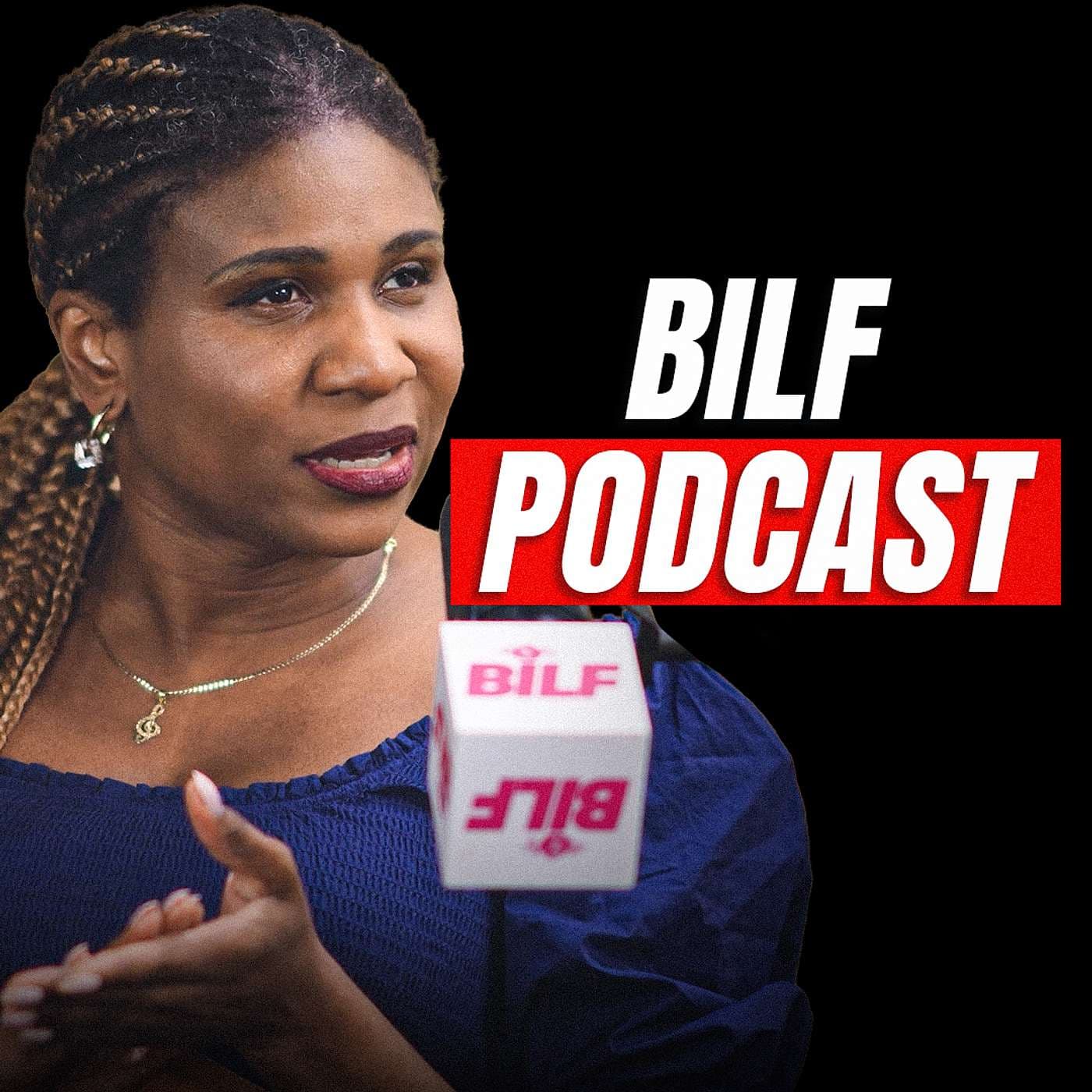
In short
Lachi discusses her blind Nigerian-American journey from shame and isolation to confidence, arguing “it wasn’t my condition, it was the conditioning,” and how she fights “inspiration porn” through entertainment, fashion, and industry inclusion.
Guest background
Lachi is a blind Nigerian-American Grammy-nominated best-selling artist/CEO. She grew up in a large Catholic family in the U.S., felt shy and ashamed, had neurodivergences, turned to piano and writing, and later became a “social butterfly.” She runs Ramped (disability culture/inclusion consultancy) and Glam Canes (blinged canes).
Key claims
Disability identity should not require masking; talent-first representation matters more than pity. Entertainment and fashion can destigmatize blindness faster than lectures.
Notable examples
She produces an autism/neurodivergence-centered album with Chris Redding; uses screen-reader/keyboard navigation for blind music production; brings ASL to the Grammys red carpet; and sells customizable glam canes (including pride and color sets).
Written by AI. May contain mistakes. Listen to the episode to check what was said.
Chapters
Tap a time to open that second in VOLachi's Journey: Embracing Blindness and Music
0:40 to 2:48
Lachi discusses her experiences growing up blind and how music became her refuge.
“Like, what is going on in my life right now?”
Overcoming Challenges and Embracing Uniqueness
2:48 to 4:16
A conversation about how unique challenges can lead to personal growth and empowerment.
“You know, the way that you put it, just it's so eloquent because, you know, recently I started talking about my father dying when I was really little.”
Navigating Fashion and Identity as a Blind Artist
4:16 to 7:40
Lachi shares how she navigates fashion and her identity in the music industry.
“You're in a music industry, you know, and I know you're like you do stuff with Afrobeats as well.”
The Importance of Representation in Music
7:40 to 11:05
Lachi talks about her Grammy nomination and the significance of representation in the music industry.
“So when I was really young, my mom got me a cane.”
Producing Music Without Vision
11:05 to 14:00
Discussion on the techniques Lachi uses to produce music despite being blind.
“So as CEO of Ramped, which I know we're going to touch on, we do a lot of work with the Recording Academy who runs the Grammys.”
Navigating Technology Without Vision
14:00 to 15:10
Learn how technology can be adapted for those without sight and the community support available.
“Everything to be able to navigate the screen without having to use your eyeballs to navigate the screen.”
Disability Representation in Music
15:10 to 17:12
Explore the perception of disabled artists in the music industry and the push for recognition beyond inspiration.
“When a blind artist succeeds, the industry tends to fame it as inspiring rather than talented.”
The Impact of Disability on Art
17:12 to 19:16
Discuss how lived experiences of disability influence artistic expression and authenticity.
“So I'm gonna have a little fun with you.”
The Importance of Humor in Advocacy
19:16 to 21:29
Understand the role of humor in addressing disability and making conversations more accessible.
“So I had forgot to bring my book because I wanted to show it off.”
CEO Mindset and Leadership with Disabilities
21:30 to 24:20
Learn about leading with authenticity and the importance of vulnerability in leadership roles.
“And so hence the humor, hence the fashion, hence the music.”
Show all 15 chapters
Breaking Down Masking in the Workplace
24:20 to 28:02
Delve into the concept of masking in the workplace and how to foster open conversations about disabilities.
“So when I had better sight, I called myself sighted passing because I was doing everything I could to not appear to have vision loss.”
The Evolution of Social Awareness
28:02 to 29:26
Explore how perceptions of social conditions have changed over time.
“Like I don't necessarily, I don't need coffee.”
Updates on Lachi's Projects
29:27 to 30:59
Learn about Lachi's ongoing projects, including her Grammy-related initiatives.
“I mean, you've really done so many wonderful things.”
The Power of Community in Self-Acceptance
31:00 to 33:44
Discover how community support plays a role in embracing one's identity.
“I mean, you're doing, if people want to find you, where would they find you?”
Unmasking Your True Self
33:44 to 34:35
Embrace your true self and refuse to be defined by disabilities.
“So you can start to feel an acceptance for you of that thing inside you.”
Transcript
Automatic transcript. May contain errors.0:00Like, I feel like nothing's off limits. Like, say whatever. So let's go back to the beginning.
0:04Lachi:Kind of rejected the blindness of it all. I felt a lot of shame. Yeah. So I say it wasn't the condition, but the conditioning. Because I was different, I didn't really have that many friends growing up. Right. So I turned to music.
0:20Lachi:Once you accept it, then you can eventually begin to embrace it. Once you embrace it, then you can eventually begin to celebrate it. And once you start celebrating it, that is when you are now a beacon for someone else.
0:35Welcome back to the Bill Fod, where authenticity trumps authority. I am here with a Grammy-nominated, best-selling, blind Nigerian-American, a CEO twice. Like, what is going on in my life right now? Who is this lady? I am so excited to welcome Lachi to the Bill Fod. Come on, girl. Give it up for her. I'm so excited.
1:01Lachi:Welcome. Hey, I'm so excited to be here. This is going to be a blast. Let's go. I love I already love you already. Your energy is infectious. I love it. I'm so I'm just going to do I'm just let's go. Let's do it. I feel like nothing's off limits. I could say whatever. Throw it on the table. If you don't like it, just be like Ryan answering. Look, this New York. I got you. I got you. I got you. I know my mom's from New York. My whole family. I got you. All right. So let's go back to the beginning. Now, you were born in Nigeria. My parents were born in Nigeria. I was born here. So what was that like growing up as a blind woman?
1:37What is that like?
1:39Lachi:So first of all, I was the sixth of seven kids. So my parents were Catholic. You know how it is. And so we had a big household. And my parents just didn't have time for all that. So I definitely was not coddled. And I think that that was a really good thing. I was just out there messing around with other kids and stuff like that. Now, because I was different, I didn't really have that many friends growing up. So I turned to music, I turned to the piano, I'd play songs, I'd write poems and stuff like that. And it would help me understand the world around me. And really, the world understand me.
2:14Lachi:And so it really was like a cultivator for my love for music. But yeah, I mean, I kind of rejected sort of the blindness of it all. I mean, I felt a lot of shame. Yeah. And I was super shy because I was blind. And I also had neurodivergences. But then, you know, today, I'm not shy at all, right? I'm super butterfly, social butterfly, super successful, but I'm still blind and neurodivergent. Right. So the blindness and neurodivergence obviously wasn't the issue. So I say it wasn't the condition, but the conditioning. I love that. You know, the way that you put it, just it's so eloquent because, you know, recently I started talking about my father dying when I was really little.
2:55I was six years old. My father died. So immediately that makes you different immediately. And I don't think that I really ever realized how different I was because my mom was the same as your family. Like we ain't got time for this. Like it happened. Like I'm sorry that your dad died. I'm really sorry, Mara. But like we need to move forward. And this could never be a crutch in your life. and you can never use it as a reason why you can't do something. But in fact, you use it as your superpower to become who you want to be. Right.
3:22Lachi:I feel like we all have to navigate the world differently. Right. And we all have things that we're born with or that come into our lives that make us unique, but also that make us have to build our own problem-solving skills, our own shortcuts, our own ways that we have to do things. Sometimes we have to overcompensate for things and we don't realize it. And then once we accommodate for those things, then we're just on top. And so I think a lot of these differences that we have, these uniquenesses that make life more difficult, that make barriers more prominent, are actually what help us be the best thing we are.
3:57I love that. I always say it's my imperfections that make me perfect. That my imperfections are perfect. Literally though. Perfectly imperfect. But that's so literal.
4:07Lachi:Because if you were quote unquote perfect, then you would have nothing to improve. you'd have no drive you'd have no determination and so it is those things that make us fucking oops sorry i love that word what do you mean that's my favorite i already i love you done i already love it i'm so glad that you know but your kid is in the audience here he has he has an airpod and he hears it all the time okay gotcha you're good you're good you're good he's used to it but you know it's funny because with all that being said you're in a visual industry sure so how How does that like circumvent? You're in a music industry, you know, and I know you're like you do stuff with Afrobeats as well.
4:46Right. And you're doing like, how does that even like go together? Yeah.
4:51Lachi:So the entertainment industry and I focus primarily on entertainment, whether it's music, fashion, storytelling, et cetera, et cetera. Because I feel like that is the quickest way to people's hearts. If you want to showcase to them, hey, let's break down the stigmas of blindness. Let's break down the stigmas of disability. Well, if you sit there and teach someone, they get bored. If you slap someone's hand, they get like, who are you? Right? And so why don't we have some jokes? Why don't we do some dances? Why don't we sing some songs and get people feeling good after they leave? And that's going to be entertainment.
5:27Lachi:And so in entertainment, you want to be the most entertaining. Like, I just love commanding a room. I love walking into a room and just being the it. Right? And so, yeah, I do that. Part of my advocacy is the fashion, is the look, is like the whole kind of get up so that people can just, even if I don't say a word, they can look at me and go like, oh, wow, the idea of blindness is already being destigmatized for me. Yeah, absolutely. Because, I mean, I'm looking at you and I'm thinking, well, if she's blind, how does she know that her gold shoes go with her gold hair? You have gold jewelry on.
6:03I'm thinking the same thing.
6:05Lachi:And the belt, girl. We got the whole thing. I mean, you're a force. As soon as you walk in, not to mention your braids have like spots of like golden, you know, it's golden, which goes with your gold. This is insane to me. But how do you like as far as being blind, navigate fashion? Because you look amazing. Thank you. Well, I can't take the fullest of credit. So first of all, the beat face is actually my partner who's back there somewhere. Shout out to Arthur. So Arthur beats my face to all hell. And actually, we go viral for the makeup on Reddit. makeup yeah yeah yeah i mean you're beautiful i don't think you really need makeup honestly you're beautiful you are beautiful thank you it's actually not a lot it's not a lot of makeup so we kind of just do a very light face um this is the day face uh but we go and arthur learned how to do my makeup off of reddit and so now we kind of blow up on reddit and when people see us walking down the street they'll chase us and be like lachi and i'm like do you know me from my music and they're like you do music I just know you from the makeup like here's my card that's so funny um but yeah no we so that and then of course you know I always want to look good I work with different stylists and different designers and this and that shout out to Afua who's one of my main designers um and we just make sure that I stay top to bottom and then if I have something that I like so like these shoes or I have my seven inches um if I like a heel I'll buy like 10 of them yeah because it's so important i like a platform i okay a big yeah i can't do like the you know flat it has to be a platform otherwise i'm uncomfortable especially in new york forget it yes i can't do first of all i can't do like a well i like a stiletto i do like a stiletto as long as there's a platform as long as there's a little bit right at the bottom right and i'm short so i need the lift but it's uncomfortable for me if not so yeah i have platform every every shoe i own as far as like nice ones or platforms yes period though because hello i already love you already i can't yet oh well while we're still talking about fashion let me grab this little guy right here oh yes let's add oh yes let's okay you already i think you should just take over the show you could be the host today i'm just sit back and you listen you want a boss you'd like to follow yeah um i was like this all the time you are hilarious i can't because i'm like okay bill okay somebody had to come at y 'all and change that f to follow that is exactly what happened it came from my girlfriends actually they were like oh really they call me mara because you know from new york they're like mara you're like a milf and my other girlfriend's like no she's like a bilf boss i'd like to you know yeah and then my other girlfriend was like come on she has to be a little bit more professional boss i'd like to follow okay sure sure but we know what it really is anyway this is fierce i mean yeah so fierce thing you got these are the glam canes um and i have like a million of these i have one for like every color in the alphabet i have a red white and blue one I have like a pride one that has all sorts of colors.
9:03Lachi:And I mean, come on, look. So when I was really young, my mom got me a cane. I was like eight or nine or whatever. And she was like, you know, it was the plain Jane white cane. Right. And I did not want to use it. I had much better vision then. And so I was like, no, I'm not using a cane. I already have to wear these like goggle glasses. I already have to sit in the front. Like, I don't want all this other stuff. So I threw my cane away. Stop. And my mom, but then I needed a cane though. Like, you know what I'm saying? Like, I'm just like. Let me just accessorize this. Yeah, exactly. Because like, I'm not trying to walk into lockers and think they're a classroom.
9:34Lachi:So I need to get this figured out. So later in life, as I really started to find success in the music industry and get confident, I started using my cane just so I could do my job better, just so I could navigate better. Right. And then my personality built up. I'm wearing these gala gowns. And I was like, well, if this is going to be an extension of me, then I am going to have to have it literally be like, you know what I mean? like this is like my style i love bling the blingy or the bling right like hello absolutely stunning isn't it cute um and then uh what was the last thing i was gonna say so um now we sell them oh you do yeah they're at glam canes.com and listen we have young girls young guys swifties out here with these canes we have bay hivers out here with these canes people going on first dates going to graduations we've even expanded from blind canes to like walkers and quad canes so we have like old ladies are older late older season debutantes yes exactly out here looking gorgeous and feeling really good and really combating their own erasure like standing in front of and celebrating all parts of themselves and not wanting to not be seen but actually wanting to be i love that so they don't have no one has to feel the need to shrink themselves if they have a disability but now you i love that i love the whole concept yes you embrace it you bling it out and you call it a day.
10:56And if anyone has something to say, whatever.
10:57Lachi:Then whatever. It's like, if you've got a problem with it, bring your bling your thing out. Yeah, who cares? Whatever it is. But let's talk about this Grammy. I mean, that's not a little thing. Like I kind of just perused over it. Grammy nominated. That's a big, big, big deal. Talk about it. Tell me a little bit about it. So as CEO of Ramped, which I know we're going to touch on, we do a lot of work with the Recording Academy who runs the Grammys. And so one of the big things that I, because, you know, as a young musician, I had always looked at the TV and said, I want to be up there. I want to do that.
11:29Lachi:That should be us on that stage. But I just never had anybody on the top of my vision board that matched my trifecta, right? Like woman of color with a disability. And so it was like my goal in life to really get folks that look like me or have my story into those rooms and onto those stages. So through Ramped, we really partnered with the Grammys and started doing things. And through that partnership, I started meeting some really amazing people with and without neurodivergences and disabilities and stuff. And so I was like, I want to get on all of your projects. I want to produce them. I want to write with you folks, all these new friends I was making.
12:07Lachi:So I came together with this artist named Chris Redding, who is neurodivergent and celebrates his son's autism and things like that. And so we came together and we created this very beautiful new age, sort of new wave, beautiful music that celebrated just the journey through neurodivergence and the different ways we think, love and heal. And, you know, he's a black dude, right? So he's bringing some soul to it. And you don't really see some soul in new age, right? And so people really resonated with it. I got a bunch of different artists and musicians with autism onto the album. And so it was this really big, beautiful project of a bunch of different artists with different neurodivergences celebrating ourselves.
12:53Lachi:I love that. But the music was also very good. Like it wasn't like, oh, come check us out. I get it. You know what I mean? Oh yeah, like I get it. It's not like a charity case. It was skill first. This is really people with talent. This is like talent first, everything else. Talent first. Like I can't do the pity stuff, the charity stuff. No, keep your money to yourself unless you're buying a ticket. it baby so um we put it out there i produced it so i was kind of the producer on it and sort of the executive producer like how how is that something that you can do honest question oh oh you mean like as a person who's blind yeah how are you like the the different because right and i don't know because i'm not a recording artist but i see them and i see people in there and they're moving like the the equalizer they're moving this button they're moving that like how How is that a challenge?
13:39It can be. Or you probably just know it now.
13:42Lachi:I just know how to navigate around. I have like a very teeny minuscule bit of vision if needed. But I don't really, it's not enough to really be competitive. So we can use everything from magnifiers to screen readers to keyboard shortcuts. Everything to be able to navigate the screen without having to use your eyeballs to navigate the screen. it does take a little longer for to get some things done which is something that we're working on with different audio technology designers but like let's say for instance if you have something that is at 2db and you want it to be at 4db if you have vision sure you can take the slider right right but if but if for whatever reason you don't have vision you can navigate using your screen reader to that area and then it'll tell you it's two and then you just hit the up arrow key two times or whatever.
14:36Lachi:And now you're at four. So there's always when there is a will, there is a way. And so there's a really robust, like blind production, DJs, et cetera, community that give each other tips and shortcuts on how to make some of these things. And I'm sure with like technology, everything is kind of, you know, everything is always changing technology, AI. I'm sure everything will start to evolve to where it is a lot more user friendly too. Yes. And, and we're partnering with some of these folks on, you know, doing a lot of the user testing and doing some of the co-design. That, no, that's amazing. So here's what I really want to push you on.
15:10When a blind artist succeeds, the industry tends to fame it as inspiring rather than talented. And you kind of touched on it. I mean, not kind of, you have touched on it. I mean, do you think that the industry is more accepting and becoming more diverse as far as people with disabilities? Or do you think they're showcasing disability first and then?
15:29Lachi:um so i hate or hate's a strong word we don't hate in here but i very truly deeply dislike what i call inspiration porn right inspiration porn trauma porn all of that kind of stuff because at the end of the day everybody has something i love i already i just love you everything you're saying resonates no i'm not even kidding like i'm just putting my cards down because it like what you're saying is so true i resonate with everything you're saying well Well, who wants to be like pitted as an object of pity? Nobody. Right. So I know that through our work with Ramped, we're doing a lot of, one of our big slogans is we want to create a music industry where no one has to mask.
16:09Lachi:Right. And we want to let folks know that like disability is not just wheelchairs and walkers and canes, right? Disability is super large umbrella. It can be everything from tinnitus to anxiety to ADHD to, you know, having a temporary situation. So everybody has some form of disability identity and like understands what disability is. And so when we really kind of tap into what that identity is, when we see it out on the street, we recognize, oh, that's a human. I'm a human. They're navigating differently than I am. But that doesn't mean that they are an object to make me feel better about myself.
16:45Lachi:And so that's one of the big things Ramp is trying to do. We're trying to go, hey, artists or producers or agents or managers are like A &Rs. anywhere you work in the industry, if you have some kind of neurodivergence, difference, chronic condition, you are welcome here at Ramped, but honestly in the music industry, period, without having to feel othered, without having to feel pitied, without having to feel pathologized and being celebrated for your work. I love that. I love. All right. So I'm gonna have a little fun with you. So you're gonna tell me true or false. All right. The music industry is more accessible today than it was 10 years ago.
17:22True or false?
17:23Lachi:I believe it's true. I believe it's true. Disabled artists have to be twice as good to get half the recognition. We got to be 10 times as good to get the percent. Pity plays a bigger role in disability representation than people really want to admit. Pity plays a huge role and it really, really shouldn't. It's kind of nasty, y 'all. Get over it. Nobody wants to be pitied, duh. Yeah, nobody does. Nobody, nobody, nobody. You can separate an artist's disability from their art. You can, but I have to say it all depends. Like, I feel like if you have a disability, whether it's depression, whether it's anxiety, that comes into your music.
18:05Lachi:Like, you don't necessarily have to be like, I have anxiety. Like, that's also kind of cool. I mean, don't you? Let's go. But I'm also saying, like, if you have anxiety or if you have to navigate the world differently, that's going to your lived experience is going to come through in your art. And these days, artists are very four dimensional. Like you don't just listen to an artist for their song, you listen to an artist, and then you watch their tick tock. And then you're like, who are they dating, and stuff like that. And so their lived experience becomes part of their art. And if disability is part of your lived experience, I don't know that you should have to divorce it.
18:36Lachi:We only divorce it because we're so forced to mask and forced to pretend to be quote normal. yeah but if we didn't have to do that and people got to live freely in their lived experience i think we would get so so much more art so much deeper stories and so much more beautiful authenticity in this world i i would agree with that so i'm going to switch gears for a second and talk about your ceo mindset let's go i mean because you're a ceo you're running i mean you're making music running companies this is like i mean you're a bilf you're a real bilf you're writing books i mean how about your books let's talk a little bit about your okay advocating publicly I mean, there is nothing you don't do.
19:12Lachi:There is nothing I don't do except for sleep. So I had forgot to bring my book because I wanted to show it off. But humble brag. We stopped by Barnes and Nobles, which is down the street. And so we picked one up. I love it. I love it. Don't humbly brag. Say this word. This is it's in Barnes and Nobles. It's in Barnes and Nobles, y 'all. It was so fun because we go in. We go into a Barnes and Nobles. We're kind of wandering around and we're like, where is the social section? and we go and we see this and it was just so beautiful and it was like prominently like just out there and the beauty of this is you can actually I don't know if you can touch this they can there's braille on the letters so it's very fun um but yeah I mean I wanted to a write so like I said before everybody's masking and we're masking because we don't know how to talk about stuff right because we're afraid of being pathologized and so I wanted to really write it in a way that people would want to hear it, right?
20:09Lachi:So this book, I Identify as Blind, it takes my story and the stories of other sort of celebrities, public figures, politicians, anyone who would say yes to me interviewing them and celebrates our stories, just navigating success in different industries, entertainment, music, et cetera. Also, it's a very humorous book. We get into the artistic past. We talk about pop culture And it's just a really fun way for people to be introduced to disability identity, neurodivergence, how to take your chronic condition and feel empowered. And this is not really meant to be like educational. It's meant to be just a fun pop culture book for you to figure out how to talk about it and for you to learn some really, really cool stories along the way.
20:56Yeah, and if you can't have fun while doing it, I mean, if you can't have some kind of sense of humor, then what are we doing?
21:01Lachi:Then what are we doing? Like what? I mean, we got invited to this banquet called life. Let's have fun. Yeah. I mean, I agree with you. And we spend so much time focusing on the negative and focusing on being politically correct and all the things that don't matter. When in reality, I mean, if you're not laughing and smiling, what are we doing? Yeah. I feel like the best way people learn stuff is when they learn them in a good mood. Absolutely. Yeah, of course. Because you retain it better. Because you retain it better and you want to feel good. And then you recall things that made you feel good.
21:32Lachi:And so hence the humor, hence the fashion, hence the music. Tell me about your CEO mindset and what you're doing, because I know you're running companies. Yeah, yeah, yeah. Well, we talked a little bit about Glam Canes. And then, of course, I run Team Lachi, which is my team of I think there's about five of us on our team. Everyone has disabilities on my team as part of the disability community. So we run a tight ship. But if you're going to say what is your CEO job. It is with Ramped. So Ramped stands for Recording Artists and Music Professionals with Disabilities. We're a consultancy and training firm on disability culture and inclusion within the music industry.
Read the full transcript
22:07Lachi:We do partnerships with some of the biggest music firms in the world, everywhere from, again, the Recording Academy, which runs the Grammys, Live Nation. We've done some consultancies with CMAs, Spotify, Tidal, you name it. But on the flip side, we're also a global network of creatives, executives, and entertainers, et cetera, who identify with disability, neurodivergence, chronic conditions, et cetera. We come together for networking, other opportunities, and we just make sure that the integration of disability is real so that folks who are professionals with disabilities recognize that they are music industry professionals and that music industry professionals recognize that they also have disability identity and that this is one whole big soup so that we can all really just stop masking.
22:58Lachi:One of the big things that ramped one of our big accomplishments is that we're the ones that bring the ASL to the red carpet for the Grammys to really showcase a that disability culture, you know, tens of millions of people tune in to the Grammys every year. So we really want to have that silent, rich front and center to showcase that access. But we make sure that on the flip side and in the background that we're also getting folks with who are deaf or with disabilities onto these music industry boards into these music industry jobs. So everywhere from the mail room to the boardroom to the green room, right?
23:32Lachi:So like right before they perform, we want them on stages as well. This is the work we're doing in the industry and we're seeing results. We're seeing folks get onto these industry boards, whether it's from the Folk Alliance, whether it's women in music, whether it's this and that, and we're global. So we've got members in Europe and we've got members in MENA, like in the Middle East. And so we are really expanding this idea and meeting folks in the industry and in a very superficial industry, right? Meeting folks in that industry where they are at because it is run by professionals for professionals.
24:09I love that. When you say masking, will you just go a little bit deeper?
24:12Lachi:So masking is when you hide, camouflage, or downplay either your neurodivergence disability or your condition in order to either fit in or for the comfort of others, etc. Essentially passing. So when I had better sight, I called myself sighted passing because I was doing everything I could to not appear to have vision loss. A lot of folks with neurodivergence, everything from ADHD or, you know, autism or anything like that, do everything they can to blend in masks and hide it. A lot of people with chronic conditions who are like in their nine to five workplace will do everything to hide their condition and they won't ask for accommodation.
24:55Lachi:They'll do this. And, you know, if you have a non-apparent condition and you're doing this to maybe like get ahead, get a raise, not be seen as a burden. Right. But then when you get ahead and you get that raise, now you're kind of screwed because now you have more responsibility, more pressure, more work. And at what point are you going to have to say, guys, let's have a discussion? And one of the things I love to do because we have our different power groups and all that. And I love to express to my other leader friends, don't be afraid to openly talk to your teams about what you're going through, whether you have OCD or whatever.
25:36Lachi:Allow them to feel comfortable potentially opening themselves up as well, because you will get a better team. You will get somebody who's not afraid to share ideas that would have never come into that room and part of that melting pot to make the even bigger and better idea if everyone is so afraid to step forward. So I always encourage folks at the top to take the mask off for their team so that that team feel comfortable taking their mask off as well. Yeah, I mean, that's what leadership is all about is showing vulnerability. You know, for a very long time, I battle anxiety, like really bad, panic, full, you know.
26:10And for a long time, you're absolutely right. I'd mask it or overcompensate. And then the minute I finally started to publicly speak about my battle with anxiety, all of a sudden, you know, you start to realize that it's not just you in the room, number one. And a lot of people are dealing with it in the room. Maybe not as chronic, but it opens up a whole world. And you're right. Once you start letting those guards down, your team performs better. Vulnerability shows through. Authenticity comes to the surface. And you have a more cohesive environment. Period. Absolutely. I'm so happy that you brought that up.
26:43It does exist. And I think now more than ever, people are starting to realize, let's stop. And I love how you call it masking. Let's stop faking it. Let's come to who we are, our authentic self and not lightly authentic. Like I want to be this person, but really be this person. Be the person. Just take all the stuff off. Like I don't give a shit. I do have anxiety. I talk about it all the time. I have it. I don't let it control me, but it doesn't control me. I'll still get on the plane. I hate flying and other things, but you know, it's learning how to deal with it and not letting the disability or, you know, well, it's a lifelong lived experience.
27:18Lachi:I mean, it's just part of who you are. It's a natural part of your body and mind as you try to navigate society. Yeah. And there's nothing wrong with it. And I even wanted to offer you, take it or leave it, but I would want to offer you to maybe not see it as a battle. Yeah, I don't think it's a battle. I don't think it's a battle. I think it's a superpower for me. Right. I really do. I think having anxiety has really, first of all, I think most people that have anxiety, they have this like super heightened awareness, you know, and the way someone once explained it to me is like the most intelligent people have anxiety and it's okay to embrace it.
27:53Lachi:It's okay to embrace. I have, I have diagnosed general anxiety disorder and it really, it gives me compassion. It gives me, and half the time it's excitement. Social awareness. Yeah. Excitement and social awareness. Social awareness and just a bite. Like I don't necessarily, I don't need coffee. I got me. Yeah. It's so true. I don't drink coffee. It's so true. I don't drink coffee. I'm enough. I'm enough. Yeah. Right. I do drink coffee though. I don't drink coffee. I don't really like the taste, but I, um, yeah, I agree. I mean, I, I, yes, it's, it's a battle. I think an internal battle more than a battle itself, you know, that battle when I'm getting on the plane and I'm like, Oh, I don't want to do it or something like that.
28:29More than I think more now than ever before, people are more open to talking about it. For so long, we lived taboo about it. And I remember like, I've always had anxiety as long as I can remember. We just didn't label it that.
28:41Lachi:Right. We didn't. Now we have the words. Now we have so many words, which is so like, I think neurodivergent, that's why I love to say it, because we didn't have that. Like the idea of being neurodiverse. We also like the word disability was like so frowned on. You can't say it. Never. Now we're all just saying it. And in fact, the disability community prefers it over like differently abled or like handy capable or special needs. I like to say I have special needs, but they're in the bedroom. There you go. There you go. But really, we're just saying disability. We're saying neurodivergence. We're saying all of the different conditions because we're talking about it.
29:19Lachi:And we're learning that community is one of the biggest solutions, that the biggest issue was the isolation. It's so true. So what's next for you? I mean, you've really done so many wonderful things. What's next? What's not next? Right? So for Ramped, we're continuing to build. We're continuing to grow. So this year we were able to get a deaf journalist onto the, into the media center for the Grammys. So that deaf journalist was just among all the other journalists being part of that press conference. So we were really, really excited to get Mel Myra up there partnering with some big deaf outlets.
29:59Lachi:Lachi, me, myself as an artist, I'm working on this massive children's pop album. So kids pop. So kids and family music. And so I've teamed up with some Grammy nominated and Grammy winning producers who also identify with having chronic conditions. And we're bringing on a ton of Grammy winning and, you know, Emmy winning and Tony winning and like Brit Award winning artists and musicians with different conditions. So this is turning into this huge project. It's called Magnificent. It's going to come out in July. So y 'all should go keep an ear out for that. on the book side, the audiobook, which has become a bestseller on Libro and is just won a Kirkus award.
30:41Lachi:We are really pushing this book. So please stay tuned for all the tour dates. It's going to be at Lachimusic.com. And we're just we're going, we're going, we're going. So definitely stay tuned on all those tour dates. And like I said, Glam Canes is blowing up. We've expanded to all sorts the canes. And yeah, I don't know. Arthur, did I miss anything? I mean, you're doing, if people want to find you, where would they find you? People can find us at L-A-C-H-I-M-U-S-I-C. You'll find our music. We do sort of little viral hits every once in a while of me walking around the streets with a glam cane and stopping traffic, which I really ought to stop doing, but whatever.
31:26Lachi:You can also check us out on, yeah, the website. You can check ramped out at rampd.org, glam canes at glam canes.com. We also run a PBS series called, a PBS American master series called Renegades, where we celebrate heroes and American heroes with disabilities who are unsung. And then you can find us on Reddit, where we go viral for the makeup. Love it. I love that. I love how you just threw that in there too. I mean, leave this audience with something that you probably never told anybody, but you want to share in a positive way to inspire someone that might be listening that is embarrassed or they don't, or they're still masking.
32:06So give me something.
32:08Lachi:Wow. Not to put you on the spot. No pressure. No pressure. I'm just, I'm so like open about everything. I'm trying to be like, what have I not shared? Or something you want to say or whatever, even if you shared it, but just something important to you that you want to let the audience know that about masking and being your authentic self. Yeah. I feel like one of the big things that I want to say is that, you know, when I listen, let me just calm down and stop thinking so hard.
32:48Lachi:I didn't used to always be like this. I didn't used to always be a social butterfly. I was very, very shy. Very, there was a lot of shame there and I had no one to talk to. And I often get the question of, well, how did you just pivot? How did you just turn? Like you're telling me that if I have a disability and I don't know how to disclose or if I'm neurodivergent and I don't know how to get started on this journey, how do I do that? And my answer is always going to be community. So even if that means just going online, finding a few influencers to follow to start, being a part of whatever their sort of community is, if it means reading a couple of books and finding a couple of thought leaders, if it means joining a forum and just being a lurker for a while, get yourself comfortable with watching other people, seeing the lingo they use, seeing the culture of it so that you can start to feel an empowerment.
33:47So you can start to feel an acceptance for you of that thing inside
33:53Lachi:you. Because once you accept it, then you can eventually begin to embrace it. Once you embrace it, then you can eventually begin to celebrate it. And once you start celebrating it, that is when you are now a beacon for someone else. That was beautiful. That was absolutely beautiful. I mean, today's conversation just reminded me that, you know, you don't need visibility to be seen. In fact, you know, it's about refusing to be invisible as opposed to being visible. And Latchie's journey is absolutely incredible. And if you learn nothing today, I mean, hands down, she has shown that it doesn't, your disabilities don't define you.
34:30And you can absolutely do anything in this world that you want as long as you stop masking and be your authentic self. And once you embrace who you are, you know, inward and outward, the world is really unstoppable. Yeah. So my quest today or what I'd like to throw out there is that if you are battling or struggling with your inner self and who you want to be, take the mask off. Unmask yourself. Nobody is going to judge you. I promise you nobody's going to do that. That's the challenge. If you like today's episode, go ahead, click the subscribe. You know what? If you didn't like it, unsubscribe, whatever.
35:01Do something. Refer. I love that. But refer a friend. If you love this conversation, stay tuned. There are more episodes. But thank you, girl. You are amazing. Thank you. Absolutely amazing. Thank you for sharing your story, your time with me today. Absolutely incredible.
35:17Lachi:Thank you, girl.
From the publisher
What if the thing the world told you was your limitation… was actually your greatest power?
In this episode of BILF, Lachi—GRAMMY-nominated artist, cultural architect, and CEO—shares how she transformed adversity into influence and identity into impact.
Blind since childhood, Lachi didn’t just navigate the world differently—she chose to redefine it. From music to activism, from vulnerability to leadership, this conversation dives deep into what it really means to own your story in a world that tries to label you.
We talk about:
– Turning “difference” into power
– Why blindness was never the real obstacle
– The hidden strength behind vulnerability
– Building confidence and finding your voice
– Using entertainment to break stigmas and shift culture
This isn’t just an episode — it’s a perspective shift.
If you’ve ever felt underestimated, unseen, or boxed in… this one is for you.
🎧 Watch now and rethink what’s possible.
If you haven't already... subscribe to the channel here:
https://www.youtube.com/@UCYLvhwzAObRJHngDq0usF6g
00:00 – 00:35 – Intro
00:35 – 03:00 – Growing Up Blind & Nigerian American — Family, Shame & Finding Music
03:00 – 07:00 – "It Wasn't the Condition, But the "Conditioning"—Overcoming Shame & Neurodivergence
07:00 – 12:00 – Breaking Into Music — From Piano to Grammy Nominations
12:00 – 17:00 – Advocacy & Building RAMPD — Fighting for Disability Inclusion in the Music Industry
17:00 – 22:00 – Glam Canes: Turning a Walking Cane Into a Fashion Statement & Business
22:00 – 27:00 – Disability Visibility in Media & The PBS Renegades Series
27:00 – 31:00 – What's Next — Children's Album "Magnificent," Book Tour & Glam Canes Expansion
31:00–34:15 – Final Message—Accept, Embrace, Celebrate & Become a Beacon for Others
34:15 – 35:17 – Outro
Get Connected:
Follow Mara Dorne → @maradorne
Follow Lachi → @lachimusic
Follow the Podcast → @bilfpod