
 Ask ChatGPT


- Podcasts
- Bloomberg Businessweek
- Special Episode: Bobby Jain on Why He Chose Millennium Again
 Bloomberg Businessweek
13 Nov 2026 · 1h 23m · 34 chapters
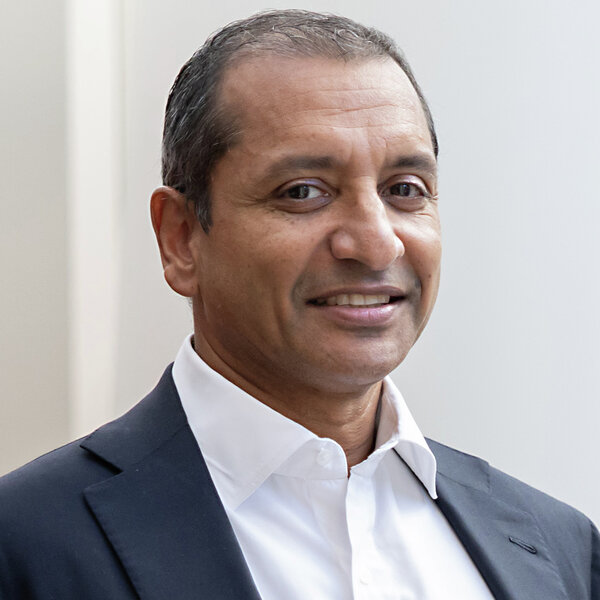
Special Episode: Bobby Jain on Why He Chose Millennium Again
In short
Bobby Jain, CEO/CIO of multi-strategy hedge fund Jain Global, explains why he chose to partner with Millennium Management and how that deal changes Jain Global’s structure, strategy, and talent model. He also discusses hedge fund industry evolution, building a multi-strategy firm from scratch, and what it takes to generate durable Sharpe-ratio performance.
Guests
Bobby Jain (guest). Background: grew up in Queens; studied government at Cornell; started in options trading; worked at O’Connor prop trading; joined Credit Suisse Financial Products in 1996 doing index arbitrage (“white paint division”); later joined Millennium after the Volcker Rule; helped build multi-strategy capabilities and talent development; launched Jain Global on July 1, 2024; previously left Millennium a little over three years ago.
Key claims
- Multi-strategy scale and “emergent properties of scale” matter more than starting small.
- Investors often pay for expensive, scarce alpha; Jain Global aims for bond-like volatility with equity-like returns.
- The Millennium partnership accelerates AI-enabled trading resources and reduces Jain Global’s time-to-next-stage.
- A single sophisticated investor can be better than many investors with mismatched goals.
Notable examples
- Volcker Rule as the catalyst for moving from banks to hedge funds.
- Jain Global’s launch: trading across ~50 markets immediately; first month only ~20% of capital deployed; one month down ~1.2%.
- Deal rationale: AI access and efficiency; he cites CDS improving to ~0.4x (in his terms).
Written by AI. May contain mistakes.
Chapters
2:26
Bobby's Journey in Finance
Bobby Jain shares his path in finance and the motivations behind launching his hedge fund.
“He recently struck a partnership with Millennium Management, one of the biggest hedge funds around.”
3:18
Bobby's Early Life and Influences
Bobby discusses his upbringing in Queens and family influences on his career.
“Before we get into more serious stuff, your deal, your strategy, I want to go right back to the start.”
4:37
Entering the Finance World
Bobby recounts his entry into finance, including his early experiences in trading.
“We were Bobby, Vinny, Sal, and Sue, the great American family in the middle of Queens.”
5:40
Career Development at Credit Suisse
Bobby details his tenure at Credit Suisse and the evolution of his trading strategies.
“So out of college and somewhere along the way, markets clearly became the thing that grabbed you.”
8:06
Transition to Millennium and Hedge Funds
Bobby explains his move to Millennium and insights on the hedge fund industry.
“I mean, that was a great time in the markets.”
10:12
Lessons Learned from Experience
Bobby shares key lessons from his extensive career in finance and trading.
“Although it became a little difficult for prop traders to transition into buy side or hedge fund.”
14:00
Understanding the Convertible Bond Market
Learn about the dynamics of the convertible bond market and its intersections with other markets.
“Convertible bond market was between the credit market, the ball market, and the equity market.”
14:48
Building a Hedge Fund from Scratch
Discover the challenges and strategies involved in launching a hedge fund from the ground up.
“And the launch was very unusual, even by hedge fund standards.”
17:48
The Importance of Strategy and Team
Explore the significance of a well-structured strategy and a reliable team in hedge fund success.
“with all the bathrooms and the kitchens in it.”
19:12
Investor Perspectives and Building Trust
Learn how to gain investor confidence and the unique challenges faced by new hedge funds.
“Now, I wish I had spun out of a business with 200 people and 20 years of IP or something like that and then you have that.”
Show all 34 chapters
22:40
The Journey of a Hedge Fund: Lessons Learned
Reflect on the key lessons learned from launching and operating a hedge fund in a competitive market.
“Let's go to your analogy on building a house with all the bathrooms from day one.”
24:47
Challenges in Fund Deployment and Management
Understand the complexities of fund deployment and the critical role of risk management.
“I reported you generated about$1.8 billion in P &L during two years, roughly two years.”
28:00
Navigating Non-Competes and Capital Deployment Challenges
Learn about the complexities of non-competes and the challenges of capital allocation in the hedge fund industry.
“So these non-competes, two-year non-competes, that's hard for a starting business.”
33:59
Insights on the Hedge Fund Industry and Millennium Partnership
Explore the evolving hedge fund landscape and the strategic partnership with Millennium.
“I'm Nishant Kumar, and you are listening to a special conversation with Jan Global founder, Bobby Jan.”
42:04
Industry Trends and Consolidation
Explore the evolving dynamics of the industry and the trend towards consolidation.
“In the next 40 years, does that number go to 80 ,000 or 800?”
43:18
The Evolution of Expertise in Finance
Discuss how the evolving financial landscape requires a new understanding of expertise.
“And so I think what people are going to realize is that their expertise often is in the CIO.”
45:14
Changes in Daily Operations Post-Deal
How the new structure and capital have altered day-to-day operations and hiring.
“You know, and the, and, you know, we have a very collaborative environment.”
47:23
Risk Allocation and Collaboration
Understanding risk allocation and the importance of collaboration in finance.
“But me running a book wouldn't, you know, me running one of 90 books doesn't do anyone any good.”
49:22
Talent Development in Hedge Funds
The approach to developing talent within the hedge fund industry.
“And so if people want autonomy, then they can live wherever they want.”
54:50
Identifying Exceptional Traders
Insights into what makes a trader exceptional in the hedge fund industry.
“Let's get back to that conversation now.”
56:00
Understanding Risk and Trader Ideals
Learn about the importance of risk management and the traits of ideal traders.
“And what's easy to figure out is how they think about the why, why they're doing this, why they're in the industry, why the money exists.”
59:15
Hedge Fund Industry Insights
Explore the evolving landscape of the hedge fund industry and consolidation trends.
“And obviously, you are a big thinker, and you have lots of interesting ideas on the industry.”
1:02:33
Comparing Multi-Strategy and Single-Manager Funds
Discover the advantages of multi-strategy hedge funds over single-manager funds.
“I do think, yeah, I do think those are overcomable.”
1:06:18
Leverage and Market Stability
Understand the role of leverage in hedge funds and its impact on market stability.
“But the core satellite model was a very difficult model to persist over time.”
1:10:00
Market Stability and Capital
Learn about the importance of capital stability for market dynamics.
“Meaning, yeah, if everyone had, let's say everyone had one month capital, suddenly the investors may say, hey, I'm nervous and starts leaving.”
1:10:28
AI's Impact on Hedge Funds
Explore how AI is changing the hedge fund landscape and its implications.
“An interview cannot be complete these days without talking about AI.”
1:12:41
External Allocations in Finance
Understand the rise of external allocation and its significance in capital raising.
“That's a high overhead that people are going to have to figure out.”
1:16:38
Investor Expectations and Lockups
Discuss the implications of longer lockups and complex fee structures for investors.
“And you have also hired someone to do that business.”
1:19:03
The Quest for Alternatives to Fixed Income
Delve into the challenges and opportunities in finding alternatives to fixed income investments.
“What have you learned about how allocators think about hedge funds?”
1:21:16
Philanthropy and Education Initiatives
Learn about innovative philanthropic efforts and educational projects in hedge fund communities.
“Do you use it on the alternative to fixed income or would I rather use it on the alternative to equity and buy venture and growth equity?”
1:23:58
The Future of Arts and Education
Explore how technology, including AI, is influencing education and the arts.
1:24:09
The Impact of AI on Art and Education
Explore how AI influences art and the importance of liberal arts in education.
“And on education, anything else that you're trying or you want to try?”
1:27:27
Bobby Jain's Reading Habits and Relaxation
Learn about Bobby Jain's love for reading and how he balances work and family.
“You picked that skill or the love for reading from your mother.”
1:29:32
Future Aspirations and Industry Standards
Bobby discusses his aspirations for the next decade and industry standards.
“what I want to be known for in the next 10 years is developing that next generation of talent.”

Ask about this episode
Get the gist, explore an idea or ask about something said.
 Claude
On Bloomberg Businessweek, what are the key points of this episode?
Searching your listeningTranscript
Automatic transcript. May contain errors.
0:00Bobby Jain: This holiday season, don't miss your chance to turn just looking into just bought it. Make it easy for your customers to say yes on the spot. PayPal Checkout is a trusted conversion engine fueled by 400 million active PayPal and Venmo accounts. And when you add Pay Later, you can turn holiday shoppers into regulars. 96 % of Pay Later shoppers are repeat users. So if you give them Pay Later flexibility now, it could help earn their loyalty all year long. PayPal is built for all business. Get started at paypal.com slash business. PayPal data, eight markets, March 2025 to February 2026. Repeat users defined as more than one pay later purchase in the past year.
0:41Bobby Jain: For big business, AI opened up a world of promise, but that world of promise turned into a world of pain. Cost spiraling, data trapped, security and governance risks multiplying, and ROI out of reach. That's why enterprises turn to Boomi to connect data, apps, and AI, helping them operate securely, efficiently, and at scale. Boomi turns a world of AI pain into a world of AI gain. As Boomi says, we got you. Head to boomi.com. That's B-O-O-M-I dot com. Small businesses are the pulse of every community. They bring people together, create opportunities, and drive growth. Chase for Business helps business owners like you with personalized guidance and convenient digital tools all in one place.
1:26Bobby Jain: With that guidance and your determination, you can take your business farther and help build a brighter future for your community. Learn more at chase.com slash business. Chase for business. Make more of what's yours. The Chase Mobile app is available for select mobile devices. Message and data rates may apply. JPMorgan Chase Bank, N.A. Member FDIC. Copyright 2026. JPMorgan Chase and Company.
1:52Bloomberg Audio Studios, podcasts, radio, news.
2:04Bobby Jain: Hello and welcome. I'm Nishant Kumar and I write about hedge funds for Bloomberg. Today I'm joined by Bobby Jain, CEO and CIO of multi-strategy hedge fund Jain Global. Bobby has been at the center of some of the biggest shifts in modern finance from Credit Swiss to Millennium and then to building Jan Global from scratch. He recently struck a partnership with Millennium Management, one of the biggest hedge funds around. Today, we will talk about that deal, what it means for Jan Global and where the industry is heading. We will also get to know Bobby a little bit better.
2:47Nishant Kumar: The reason it took me 30 years to launch a hedge fund is I could never convince myself that the world needed another hedge fund. And at 55, I could spend my time CIOing, not CEOing. And that's what I want to do. In that 40 years, we've generated 8 ,000 hedge funds or some number like this. You know, in the next 40 years, does that number go to 80 ,000 or 800? What I want to be known for in the next 10 years is developing that next generation talent. And I want to make the partnership with Millennium be a standard for the industry.
3:28Bobby Jain: Bobby, great to have you here. Thanks very much. Before we get into more serious stuff, your deal, your strategy, I want to go right back to the start. You grew up in Queens, studied government at Cornell, and started your trading career in options. None of that feels to me like a straight line. So tell us about your beginning.
3:56Nishant Kumar: So my parents were in the first generation after the Immigration Act of 65. They were considered themselves pioneers. We were completely grown-up integrated American names. I grew up in Queens in a working class neighborhood, all cops and firemen. You had to really integrate. And that was the mission. My dad was very conservative, not a borrowing family, earn some cash, then buy something. My mom was a big reader. That's what I got my love of reading. So a great, you know, a great American story in a way. And we means you and your brother. Me and my brother. My brother's in the business too. We were Bobby, Vinny, Sal, and Sue, the great American family in the middle of Queens.
4:42Nishant Kumar: Your parents had no finance background. No, not really. My mom was an accountant. My dad was an engineer. My dad, you know, back then, people wanted you to become a doctor, lawyer, engineer. That was the normal thing. My parents didn't think that way. My dad said, go be an entrepreneur. He said, you know, he said, you're here, you're in America. This is the land of opportunity. Start your own business. And so that was it. I went, unusually, I went into liberal arts. I did politics, history, English. I was a numbers guy, but I did that, which was unusual for an Indian family at the time. I don't think it was any brilliance.
5:20Nishant Kumar: I think the most driven kids back then were going into finance. I was a good student. I was big in student organizations. I ran a big business in college. And the most competitive field, in a way, was actually, interestingly, the prop trading shops. And I ended up at a firm called O 'Connor, which was the original prop trading shop in a way. And that's how I started. It was just campus recruiting.
5:41Bobby Jain: So out of college and somewhere along the way, markets clearly became the thing that grabbed you. Before you tell us what pulled you towards finance, describe yourself as this 20-year-old something living the American dream.
5:57Nishant Kumar: I was in sports. I played basketball, soccer, football, high school, all the American sports. and you know when I was 17 I went to Hunter High School in the city they had a program where senior year instead of taking classes you could work at a stockbroker and that was you could work and I worked at a stockbroker and that was during the 87 crash and so I really learned there obviously interest in finance I must have had it already but when you see people lose their savings in a day you really realize you're managing people's money You know, this is actual people's money. This isn't a video game.
6:34Nishant Kumar: And that was attractive. And then, yeah, at the time, as I said, you know, the choices were go to the big bank investment banking programs.
6:43Bobby Jain: Yeah.
6:44Nishant Kumar: You know, which that was the thing. You work 100 hours a week and you do it and you grind your way up. And that was a great career. And then the trading guys, O 'Connor was, you walk in the room and they're like, what's 49 times 28? And I'm like 1372. You know, Mets play the Yankees in the World Series. What are the chances the Mets win in four? You say one out of 16, and suddenly they start asking you a bunch more questions. What would you do if you bought a straddle or a strangle? And I didn't know what a straddle or a strangle was, but you figured it out. And that's how I ended up on the floor of the American Stock Exchange.
7:14Bobby Jain: Take us through your career from banking to hedge fund. How did it evolve?
7:20Nishant Kumar: Well, so I got to Credit Suisse. Really, it was Credit Suisse Financial Products in 1996, which was sort of the hot derivatives shop at the time. And I was the guy doing index arbitrage. And they called it the white paint division. And they said, I don't know how you make money selling white paint, but go ahead and try it. And so we started, I started, the first arbitrage was taking technologists and paying them like traders. The second was collecting lots of data. And the third was using the data. And so we went from buying stocks, selling futures, to maybe we can buy stocks and sell 50, you know, Not buy all 500 stocks, but buy 50 stocks.
7:58Nishant Kumar: And then can we do stocks versus stocks? And next thing you know, started doing all over the world, and it became a giant business, really a multi-hundred million dollar business in a few years. And that was a great time. I mean, that was a great time in the markets. Young people, I think it happens now too, by the way, but young people got a lot of opportunity back then. The markets were a little easier. Decimalization came about right then. And then the Volker Rule came. And the Volker Rule came, and this is much later now, 20 years later, we were running a big thriving business. The Volker Rule came, and Volker Rule kicked in in 15, and you had to make a decision.
8:38Nishant Kumar: Were you going to start your own? And I joined Millennium, and I was thrilled to do it, and I'm thrilled I did it. How did that happen? I think I'd known of Millennium, obviously. I had known Izzy for a long time. And when the Volker Rule came, it was a natural transition for the people from the banks to move to the hedge funds. And I think it was a time when the hedge fund industry really took, this multi-strategy hedge fund industry really took off because the bank competitors were disappearing.
9:13Bobby Jain: Yeah.
9:13Nishant Kumar: Yeah.
9:14Bobby Jain: Do you see Multistrat as like a version of the prop shops that you worked at?
9:19Nishant Kumar: Yeah, I think so. I think the prop shop, the unique characteristic was you were in the talent development business. That's the business. So you have 50 ,000 reviews of all the people in the bank, if the bank is structured that way. And you have bank analysts that want to become PMs. You have bank traders that want to become PMs. And so you're trying to figure out how to take these people that are doing something similar and adapt them to this business. And the business is, you know, I remember a lot of firms at the time even were saying, come here and if you don't make money, I'll fire you. And I would say to people, if you don't make money, I'll fire me.
9:59Nishant Kumar: Because my literal job is to figure out if there's a market opportunity. I think everyone in the prop desk enjoyed those cultures, enjoyed that time. But obviously the rules changed and the markets changed. And so it moved over to the hedge funds.
10:14Bobby Jain: Yeah. Although it became a little difficult for prop traders to transition into buy side or hedge fund.
10:21Nishant Kumar: I didn't feel that. I mean, you know, Credit Suisse actually generated a lot of big proprietary trading desks and businesses. And I think actually probably two of the top 15, maybe three of the top 15, 20 hedge funds came out of CS. I agree with the point that if you were a bank that had a highly integrated capital stack, if it had abundance of capital, let's say, maybe you had to do it. Credit Suits, we didn't have an abundance of capital.
10:48Bobby Jain: The fact that you can trade when you want to at prop desks, but at hedge funds, you have the capital and you have to deploy. I agree with that point.
10:57Nishant Kumar: And I think the multi-manager business has tried to solve that very acutely in a way that at the PM level, at a multi-manager, you have the ability to range your capital up or down. And that's a very – I agree with your point. The variable capital is a very important asset in a business. And if somebody gives you a billion dollars and they want 12 percent, you owe them$120 million. That's it. There's no place to hide from that. If there's a time when there's literally nothing going on in the world, then you have to tell your investors there's literally nothing going on in the world. But the variable capital in a multi-strategy hedge fund with enough scale, that is actually a major portion of the game.
11:39Nishant Kumar: I agree 100%. And a lot of the strategies don't work in a constant capital arena. But the prop desk was harder in one way in that the banks were 20x leverage. The hedge funds are six, seven, eight times leverage. 20x leverage means you have to manage your risk. You know, there's no way you can say, hey, maybe I'll hold it, maybe I'll buy more. You had to get into this, as we call it, trading negative gamma to your P &L. You had to deal with risk because the banks were levered. And so I think the banks taught risk management well. But in fairness, every bank might have been different.
12:12Bobby Jain: Yeah. You spent two decades at Great Swiss and then seven years at Millennium. What stuck with you? Some of the learning points that you have with you today, which helps you in your day.
12:25Nishant Kumar: I mean, the first learning I had was actually being on the floor of the exchange. You realize there's someone staring at you who's selling what you're buying. And you realize everyone has different constraints. And there are a lot of people that are using the markets for different reasons. For insurance, for liquidity. They need capital. And so I learned the same thing at the beginning when I started trading at Credit Suisse. you realize that there's all kinds of non-economic players. And so trying to figure out if you could provide a service to help those people achieve their goals, you can get paid for that service.
13:00Nishant Kumar: And that service is generally risk capital. Second thing is clearly the value of data and technology. And I think probably when I was in my 20s and started trading, three people and a Bloomberg could make you some good work. I think in the last 10, 15 years, that's not a thing you know you need the person you need the team and you need the capital and you need the the platform around you to make money and that's been a big advent of these businesses so the second thing is technology and platform and third is this is a lifelong learning business you know there are not that many things that we do today that we could make money the same way five years ago and so you have to be keep pushing and this isn't um this isn't a a fund-to-funds allocated business.
13:46Nishant Kumar: You have to be in the markets all the time. You have to see what's going on. You have to make the connections. And a big part of what I did, certainly at the beginning of my career, was find the seams between market. Convertible bond market was between the credit market, the ball market, and the equity market. The index R market was between the stock market and the futures market. And so if you could find those seams where you have different people with different constraints, There's lots of money there. So, yeah, I think. And then last thing I'll say is scale. You know, one thing I learned over the years, which I wouldn't have guessed at the beginning, is quantity has its own quality.
14:26Nishant Kumar: You know, there's a scale. I call it emergent properties of scale. Things start to happen. And that's something that you won't know until you get up to that level. And so I think you can't underestimate scale.
14:38Bobby Jain: At some point, you went from inside working for large firms to build one for yourself. And the launch was very unusual, even by hedge fund standards. Some compared it to landing on the moon. Normally, people start, when they start hedge fund, they start with like Toyotas. You started with Rolls-Royce. What did you want to build?
15:07Nishant Kumar: So first of all, in my opinion, I start with the premise that making money is hard. And these durable, long-term financial institutions, not that many. If you can count them in our business on two hands, that would be a lot. And let's say we can get the two hands. When I say this, there are plenty of great financial investing organizations. I'm talking about market neutral, coal mining, blocking and tackling every day, day in, day out. And to do that, it's just not that easy. You have to build it properly. You have to build it from scratch. And so I had the chance to build it with a modern infrastructure, a modern culture, modern business mix.
15:49Nishant Kumar: And so I started saying, if I'm going to do this and build an enduring institution, I have one chance to get this right. Which actually, to your point, has never really happened before. Even the great hedge funds, they started small, took years to get the bigger. And that's great. It's a great American dream. But you make some compromises along the way. And fine, in the 90s and 2000s, maybe you could do it. It is very, very hard to start with one product and then go on and start many products. And I just want to walk you through it. Because what happens is, and everyone who does this knows it, is you start one product.
16:25Nishant Kumar: And three, four years later, you start another product. Fine. You start in equities. Then you say, hey, I'm going to do quant. Okay. Now, your whole machinery isn't set up for that. Yeah. You over-optimize for the certain problem because it's not easy enough to even do that. If you happen to land on heads a few times in a row because that thing works, now you go into quant. The people you're hiring are diversifiers. They're not there to do it. It takes you a long time to do it. If it doesn't work, your investors say, what are you doing? Even if your own product doesn't work, they say, why are you focused?
16:57Nishant Kumar: The instability of that to get from one product to two and two products to three and three products to four is very difficult. and forever you're a core satellite business. People say, well, this is your core in that satellite. And it's hard to shake that. So I wanted to shake that. I had a modern business mix 30 years ago when a lot of the great hedge funds started, 30, 40 years ago. You wouldn't have commodities in the middle of your business. You wouldn't have credit in the middle of your business. You wouldn't have Asia in the middle of your business. For me, those businesses are roughly half our PMs and a third of our capital.
17:28Nishant Kumar: And so that gives you a diversification that's hard to get. In our first two years, we had one month where we were down more than 1%. A lot of funds had, I mean, that's partly because I had to play defense as your new fund, and partly because we had the diversification. Most funds had four or five months where they lost. It wasn't the easiest time in the last two years. So I built it this way, everything all at once, because you have one chance of building a home with all the bathrooms and the kitchens in it. And if you don't take that chance, you're starting to build afterwards. And by the way, it worked.
18:01I remember we started the firm July 1st, 2024, and you flip a switch, and you're like, suddenly you're trading in 50 markets.
18:14Nishant Kumar: And you're like, whoa. And then you're waiting at the end of the day that all those trades booked, and they booked. But yeah, I did it that way because I felt like you have to go for optimal to have any chance of competing in the long run. And I think if you don't do that, you can leave it to luck and maybe it happens and maybe you land on heads and thousands of hedge fund starts. But if you're starting a hedge fund, you're saying, I want this to work. This is the way to do it.
18:39Bobby Jain: Describe like the day one or first week where you had to take care of even switching on the light versus you used to work at a firm where this was someone else's problem.
18:49Nishant Kumar: What was it like? You know, it's interesting. One of the biggest people in the industry said to me, you're going to underestimate the benefit in starting from scratch. and they say legacy people and legacy infrastructure and legacy processes and legacy technology. I was fortunate to have great partners with me that helped build the business. So day one, day one. See, what you have to do to make this enduring is you have to create Sharpe Ratio. That's the business you're in. Now, I wish I had spun out of a business with 200 people and 20 years of IP or something like that and then you have that.
19:22Nishant Kumar: I didn't have that. I had me and some people that I knew that would join and so I, to generate the Sharpe ratio, you have to create diversity. That's the way to do it. That's the mechanism into which to do it. So then we said, let's do it all at once. I had to bring on a bunch of entrepreneurs with me. So I had someone who had built a multi-billion dollar hedge fund before to help me build it. I had the chief risk officer I've worked with for 25 years and then I brought six entrepreneurs with me. So we're doing it and you're in autopilot mode. You're doing it. You're doing it. And so now you have to put together the talent.
19:59Nishant Kumar: You have to put together the capital. And you have to put together the processes. And you're doing it. And you have a deadline. And we're launching July 1, 2024.
20:11Nishant Kumar: And just like everything else, you will it into existence. And it comes together. It comes together. And then when you flip the switch, what goes through your mind is that thing about, is all this going to work?
20:22Bobby Jain: How did you convince your investors to back you? Because it was a unique experiment.
20:29Nishant Kumar: Yeah, I think that, I think from the investor lens and, you know, I sit on the boards of some of the big investors in the world. They feel acutely the amount of options that they have. And one option is that they put, you know, they construct their own multi-strategy firm. I'm going to take one equity firm and one, you know, quant firm and one. And that's, you know, that's great and it's good. and I applaud everyone trying to do that, but you lose a whole thing of moving the capital around. And so they're saying, if I can get it all in one place and get that option as well, I'd love to do it. There's not that many vehicles to do it and those vehicles are not always open.
21:10Nishant Kumar: And so having the ambition to do it, having the experience to do it, importantly, having the capital to do it. One of the questions that comes up to me is the chicken and the egg. You know, what comes first? Do you raise the capital first or do you raise or do you build everything first? And I can assure you there's no chicken and egg. There's only a chicken. You have to build everything first. You have to hire, you know, you have to hire 200 people. You know, before anyone even starts the operational due diligence process, they have to see that you can hit the button. They want to read your prime brokerage agreements.
21:49Nishant Kumar: They want to do the whole thing and then you can go raise the money. Why did I have the confidence in it? I'd known many of the investors for a long time. I know this industry, and I think people realize this is the way to do it. There's a high barrier to entry to do it. I'm not sure how many more of these funds are going to be able to launch again. Maybe with AI, maybe it lowers the barrier to entry. So we started an institutional size, institutional quality that allowed the talent to come in. The partners I had were people that I'd known for a long time. Again, the ambition, the experience. And then the capital, we raised a substantial sum of money, but a reasonable sum in the context of the industry in a way.
22:32Nishant Kumar: And you remember, like I said, we had one month where we lost more than 1%. And that was 1.2 % or something like that.
22:42Bobby Jain: Let's go to your analogy on building a house with all the bathrooms from day one. In England, people start with a flat, and then they upgrade a two-bedroom house, then a bigger house, and then they downgrade. That's the life cycle. It seems like most of the hedge fund industry, like players are like that.
23:05Nishant Kumar: Yeah, totally.
23:05Bobby Jain: So you did not believe in that.
23:07Nishant Kumar: So this path dependency is what you're describing. And so let's say you started 1 ,000 hedge funds 10 years from now. Now, if everything was just 50-50, after one year, you'd have 500. After two years, you'd have 250. After three years, you'd have 125. So 125 hedge funds are going to have a three-year track record. That's good. And then that guy builds his one flat into its two flats and four flats and eight flats. That's a thing, but that's not predetermined. If you're 52 years old and you're saying, hey, I've been doing this thing for 30 years, I know how this is supposed to be built. I know the people.
23:42Nishant Kumar: I know the investors. I know what the business is. I know where the money at least can be generated, where there's service to be provided, where there's capital supply imbalances. And then do it that way. If I had to do it again, I would only do it that way. Because I think this, you know, I see single manager funds trying to become multi-manager funds. That's very difficult. I don't mind. If a firm wants to be a single manager fund forever, that's okay. But a big part of our business is when there's more opportunities somewhere else, you have to move the capital. That's the thing. That's a big part of it.
24:17Nishant Kumar: If you're in a single-manager fund, not only do you have nowhere to move the capital to, but if your product isn't that well, you're tempted, as you alluded to earlier, you're tempted to keep the capital in that asset class because you're saying my investor has asked me to invest this thing. And so that's a very dangerous game. And that's why the single strategy, I'm talking about the market neutral world, the single strategy market neutral world has not endured as long as the multi-strategy world. And when you see the firms that have done it, they've gone to multi-strategy. They got there pretty early.
24:48Nishant Kumar: And I think you have to do it that way.
24:51Bobby Jain: Yeah. So you proved your model. I reported you generated about$1.8 billion in P &L during two years, roughly two years. Was I close? in my reporting. I'm joking. Like, I know you can't talk about it. But what does it take to generate that level of profit in today's, like, ferociously competitive world?
25:17Nishant Kumar: Yeah, you know, but it's interesting. So, yeah, what was interesting about the reporting to me was that the first month we started, we'd only called about 20 % of the capital. And suddenly, we thought we're doing a good job. We got everything. We were in 50 markets. We're trading. We made gross returns. We made a 40 % gross return in those two years, and yet someone's saying, hey, their net return is smaller than someone who's been 37 years in the business. I'm like, wow. How does anyone think that you're going to generate net returns? You have to understand there is a ramp period to this. Ramp on the capital.
25:52Nishant Kumar: Ramp on the people. Ramp on the biggest thing, and we'll talk about it as a non-competes. So we started these businesses. we were able to attract very competitive people. I mean, people that really saw, and think about it, the people that joined us were people that had some vision, that are saying, hey, I'm gonna grow with this firm. And so we were able to do it across all these markets. And yeah, when we started, we were hoping to generate roughly the numbers you're talking about in the first couple of years, and we actually did it. Is that a surprise? Not really, but it's a little bit of a surprise.
26:27Nishant Kumar: You don't always say you're gonna do something and then it actually happens.
26:30Bobby Jain: What did work during two years that you were really proud about?
26:37Nishant Kumar: You know, okay. First thing is you flip the machines and it all works. Second thing is we created a core competency in getting people up and running. You know, there were lots of people that started on a Monday and started trading on a Monday afternoon. So you have a purpose-built system. And I must say that it was powerful to be able to do things, to have a whole organization that's purpose-built and everyone started at the same time. You know, so everyone's on the same. You don't have everyone in different gears. I think we moved capital around well and I think we managed the risk well. I think we, I would say it was not an easy time during Liberation Day, through the Iran war.
27:14Nishant Kumar: There was lots of things. And so I would say I'm probably proudest on the risk management. You know, this business is not about only like results. It's about the path. I feel like we built a machine that had the ability to actually get to that next stage of being one of the top financial hedge funds, let's call it, in the world. Yeah.
27:37Bobby Jain: What was the hardest part?
27:40Nishant Kumar: Well, the hardest part was two things. Well, I would say the hardest part was clearly having to fund everything off your own balance sheet before you started. The second hardest part, I mean, it's not hard, but I was talking to someone yesterday who I started talking to before we started trading. And he still hasn't started. So these non-competes, two-year non-competes, that's hard for a starting business. It's fine. It's it. You figure it out. You get through it. We were able to start early enough that we were able to get 45 PMs to start day one. But the non-competes, it's interesting. Some industries don't have non-competes.
28:22Nishant Kumar: Some cities, some states don't have non-competes. Our industry has non-competes. And it's a feature of the industry. I'm not complaining about it. So I would say that was, I would say building it was hard, of course. Raising the money is hard, of course. And then the deployment. You know, the deployment just takes time. You know, the biggest challenge that people don't know is that when you start, let's say you start everyone equal weighted. So now the business over time, you're going to give more capital to the people that are successful and you have higher conviction in. But two years is not a long time.
29:06Nishant Kumar: So what we have is we have, like our first year, we had 20 % of our PMs make 53 % of our revenues. And most firms at 20 % of the PMs make 80 % of the revenues. And so in a way, that's a very good thing. And another way, it's just because I didn't have the conviction to give the best people more capital. Okay, so then this year it's higher. It's 20, 60 something, I think, 62, 64. And it will go higher. Another way to look at it is our median Sharpe ratio across our PMs and our average Sharpe ratio. You actually want that number to be as high as possible. That shows you that you're doing a good job of capital allocation.
29:48Nishant Kumar: Mine's actually not that wide because, again, it takes time to forget the data to say, hey, and to get through the cycles. You know, you start a strategy. You really want to live three years before you can live through enough cycles to say I have the conviction. It just takes that long to start one of these strategies and to go through it. And when people say they want a three-year track record, it literally takes three years. And so that's been the biggest challenge is just time. And now, frankly, I think it took us about 20 months to get mature. After about 20 months, I felt like actually I got through most of that.
30:24Nishant Kumar: And so that's on the cost side. But it's really on the deployment side. The deployment side is the biggest challenge in launching these businesses. and there's no good way around it. There's no good way. If you're starting a hedge fund, how are you going to get through that deployment cycle? You could just wing it, you know, and start, raise a bunch of money and then just put it to work. But if you're going to do it properly and you're doing it for duration, you have to phase it in over time and that's difficult.
30:52Bobby Jain: Still ahead, we continue my conversation with Bobby Jan, founder of Jane Global on the evolving hedge fund industry. I'm Nishant Kumar. This is Bloomberg.
31:30Bobby Jain: holiday shoppers into regulars. 96 % of Paylater shoppers are repeat users. So if you give them Paylater flexibility now, it could help earn their loyalty all year long. PayPal is built for all business. Get started at paypal.com slash business. PayPal data, eight markets, March 2025 to February 2026. Repeat users defined as more than one Paylater purchase in the past year. Running a small business takes everything you've got. But with Chase for Business, you're not alone. They bring together local support and a broad range of resources to more than 7 million customers. With a deep understanding of your day-to-day needs, they provide products and guidance built to help you thrive.
32:12Bobby Jain: Right now, earn$500 when you open a new Chase Business Complete Checking account for new business checking customers with qualifying activities. Offer expires January 21, 1st, 2027. Chase Business Complete Checking has the flexible tools you need to accept payments, make deposits, and manage your finances with confidence. Learn more at chase.com slash podcast biz offer. Chase, make more of what's yours. Fees may apply to Chase Business Complete Checking Accounts. The$500 offer is available for new business checking accounts with qualifying activities through 1-21-2027. Eligibility and qualification requirements must be met.
32:50Bobby Jain: Additional restrictions may apply. Please speak with a business banker for more information. JPMorgan Chase Bank, N.A., member FDIC. For big business, AI opened up a world of promise, but that world of promise turned into a world of pain. Cost spiraling, data scattered across disconnected systems, security and governance increasingly complex, AI initiatives struggling to scale, and ROI that remains frustratingly out of reach. The challenge isn't AI itself, it's having the infrastructure AI needs to succeed, which is right where Boomi says we got you. Tens of thousands of enterprises trust Boomi to connect data, applications, processes, and AI.
33:29Nishant Kumar: With Boomi, businesses can eliminate silos, automate workflows, strengthen governance, and create the foundation AI needs to perform at scale.
33:38Bobby Jain: The result? Faster innovation, more efficiency, better business outcomes. Boomi turns a world of AI pain into a world of AI gain. As Boomi says, we got you. Head to boomi.com to learn more. That's B-O-O-M-I.com.
33:59Bobby Jain: I'm Nishant Kumar, and you are listening to a special conversation with Jan Global founder, Bobby Jan. Let's get back to that conversation now.
34:11Bobby Jain: Let's talk about investors a little bit. Zooming out, obviously, the multistrat model has generated enormous profits. Investors want them. We can see in the growth of the assets of multistrats. But the cost is too high for investors. Is there a better way somehow to structure this model so that investors could get a little bit more?
34:42Nishant Kumar: So my view is in the alpha generating industry, let's say the Sharpe ratio greater than three industry, something like that. It's a very scarce industry. And that industry is more private than public. The biggest players in that industry are trading with their own money. And if your Sharper ratio is high enough and your scale is high enough, eventually you're going to generate more money than you can possibly open up to outside investors. So that's the backdrop of this. And so I think it just is what it is, that it's an expensive industry, that talent, water finds its level. And I would say that the investors in this industry tend to be made up of the most sophisticated investors.
35:31Nishant Kumar: And so if you can generate – listen, the dream on the planet Earth is to generate equity-like returns and bond-like volatility. If you can at least have a track record of bond-like volatility and a business strategy of bond-like volatility – bonds also move, by the way. It's not like you've legislated that. But if – I call it you're using the leverage to hedge, not using the leverage to amplify. If you're doing that, then the bond-like volatility, whether you can make equity-like returns or semi-equity-like returns, that's a very powerful investment proposition.
36:09Bobby Jain: Let's get back to the core of this discussion, turn to Millennium partnership, which caught a lot of people's attention. How did the deal come about? What was the catalyst?
36:25Nishant Kumar: Yeah, so I think, so I left Millennium now probably three, a little over three years ago. I was in the trenches with a lot of the people at Millennium for a long period of time. I know them for many years, friends, colleagues, and I stayed in touch with many of them. And one day at dinner, I think it's fair to say Millennium didn't realize the breadth of activities we had. And really, the returns on deployed capital that we had, you know, again, if you read the press, maybe you'd look and focus on the net return. But actually, the return on deployed capital. And like I said, after about 20 months, the costs equalized and deployment equalized.
37:07Nishant Kumar: And we were on offense in a way. And I had mentioned that I was going to go out and start raising money for the second phase of our development, you know, after we got to the 20 months. And we started talking and said, maybe there's an ability to do this together, you know, and to work together. And I hadn't been thinking about it. I'm not sure they'd been thinking about it. And then, you know, obviously there was a question. I mean, the first question in my mind was why maybe I'll just take, you know, an SMA or whatever you call it, you know, on top of the capital. And then I just realized how much more efficient it was to do it all at once and do it properly from the beginning.
37:45Bobby Jain: To me and to a lot of people outside, it feels like a circle back. Can you take us through your thinking that why you did that? Yeah.
37:55Nishant Kumar: So the first question is, what are you trying to get? And so let's say you're trying to get capital, right? So I'm not just trying to get capital. I'm trying to figure out how do I put myself in the best position to win? And when I looked at Millennium, actually, even over the last three years, I see how important AI has been to their business. And suddenly I say, geez, if I could have access to that data, that technology, their resources, their expertise, suddenly I'm going to catapult my business, not only for the capital, but for all that building that I would have to do. People say three to five years.
38:32Nishant Kumar: I don't think it's three. I think it's five years plus, I think. And what I started realizing is that there, you know, I was at five, six billion dollars. You know, when getting to the next stage or even the next stage, next stage, I'm still subscale. You know, and this is a scale business. And this is and, you know, and people say AI, maybe it somehow democratizes or something. I don't see it. I don't see it. You know, you see it in these in these big anthropics and all that. The amount of money they're spending. You see it in the big trading companies. the amount of money they're spending, I don't see it as a democratization.
39:07Nishant Kumar: I see this as a big investment game, and I think that's changed in the last three years. And so for me, this accelerates not only the time, but the probability of success. In trading terms, my CDS went from X to like 0.4X. And that was very powerful in the scope of a minute, in the scope of doing this deal. And by the way, I see it now. I mean, we've only been together a short while, and it's powerful. It's powerful. You know, the heft of millennium on the capital side, but the resources, the AI tools, I'm, you know, I'm quite excited by it. And for me, personally, now I'm not 52, I'm 55. And at 55, I could spend my time CIOing, not CEOing.
39:55Nishant Kumar: And that's what I want to do for the next, you know, 20 years of my time. I would say another point is one thing I learned is if you have a diversified strategy, we generated about a three and a half sharp in our period. If you have a diversified strategy, having a diversified investor base is not as important. I grew up in the prop desk for 20 years. In the prop desk, you had one highly intelligent, highly sophisticated, highly aligned investor. You clearly understood the optimization function. That actually has a lot of benefits to it. And having a diversified investor base is great. And these are great investors.
40:33Nishant Kumar: But having dozens of investors having different goals, different time horizons. And so having one sophisticated investor has many advantages. And I realize that once you're running it high enough sharp, having that diversified investor base isn't as important.
40:48Bobby Jain: Yeah. This is exactly the opposite of what we are always told, that having more is better than one. Even in your portfolio, you diversify your team, you diversify. But this is a completely different.
41:03Nishant Kumar: Yeah. Now, so if you think about it one notch deeper, Millennium has a diversified investor base. And Millennium is in a position to grow. We're aligned on that. They have their model clearly works. It's worked for a long period of time. They've just raised a lot of money. And I'm thinking the overhead that it's costing me to spend going out and raising all this money. You know, the reason it took me 30 years to launch a hedge fund is I could never convince myself that the world needed another hedge fund. I don't feel the negatives for having one investor, especially when that investor has an incredible capital base and incredible capital structure.
41:43Nishant Kumar: But I agree with your point. But the industry is changing, too. I do think that this industry, the hedge fund industry, is round numbers 40 years old. 1986, barely would have known a hedge fund. And in that 40 years, we've generated 8 ,000 hedge funds or some number like this. In the next 40 years, does that number go to 80 ,000 or 800? I don't know. Me, go in 800s. Feels like that. Go in that direction because there are, you know, having two heads of marketing doesn't really make sense. You know, having two groups of people flying around the world doing pitches doesn't make sense for anybody.
42:25Nishant Kumar: You know, and if you sit at any of the big allocators, they would rather consolidate their partnerships. They would rather have fewer, more substantial relationships. So this is the trend of the business. Having said that, if you could start a business from scratch with seven businesses at once, with the talent, and now you're just having someone else putting gas in your tank, I think it's a pretty good business.
42:50Bobby Jain: Would you advise anyone to follow your paths?
42:53Nishant Kumar: Yes. Yes. I think in a couple of years, people are going to look back at this and say this is the evolution of the industry. Just like every other industry. This is a young industry. You know, the reason this industry doesn't feel as young is because we live it in, we marked a minute. You know, so every day is not a day. It's, you know, however many minutes it is. And so I think what people are going to realize is that their expertise often is in the CIO. Right. And so if you consolidate the CEO and get more people into CIOing, I think that's better for everybody in the industry.
43:34Bobby Jain: Yeah. So this deal also changes the kind of, first of all, how should one think about Jane Global now? Part of Millennium, unit of Millennium, SMA of Millennium?
43:46Nishant Kumar: So this is a new structure. And I would say that Millennium has been an innovator in structures. I think it's probably the only firm that could have pulled off a deal like this. I think it has the ability to manage complexity like this. So we are a separate business. We have we file our own 13 F's. We have our own wallet. We have our own trading. And so we're I view it as we're a separate business with a common investor base. We have information barriers actually between the two firms. And so that's that's the way it is. And frankly, I feel broadly the same as I did before, except some of those 30 minute meetings I was doing, you know, my day was broken into 30 minute blocks.
44:33Nishant Kumar: Now it's broken up into hour blocks, hour and a half blocks, because and that's what it takes to make money. You know, now I'm starting to feel like, hey, let's try to go actually figure out how this AI thing is. It's not filtering through the stock market. Everyone can figure that out. How's it filtering through the credit markets, how it's figuring to the rates markets, you know, and how it's figured, how it's falling through. the world, this is, there are, you know, there are going to be, data is going to provide different types of information and leveraging that data is going to be a topic and you need people on top of these big institutions thinking that way.
45:06Bobby Jain: How has your day-to-day, like, timetable has changed in this new structure versus previous
45:13Nishant Kumar: Yeah, I think it's this point. I think it's, now, I would say that we've, you know, we had a big talent pipeline that prior to the deal that this gave us the capital to execute on um and so we've hired um um we've hired you know more than 20 pms in the last since the deal inception which is multiples higher than we had been hiring prior to that because we didn't have the capital behind us and uh and so i'm spending a lot of time on growing that platform and and the the message of small town feel big town resources is resonating. You know, and the, and, you know, we have a very collaborative environment.
45:56Nishant Kumar: And so, and that's resonating. A lot of the people that we're hiring are coming from collaborative environments. And what do they want? They want to get paid transparently, fairly, and competitively. But they want to be in an environment where they feel like one plus one equals three. You know, and so that's a topic. But so, so hiring's probably taking up more of my time. The investor side's obviously taking up less of my time. building the business is taking up less of my time. And then working with the portfolio managers and working on where the next opportunities are is taking up a lot more of my time.
46:32Bobby Jain: Are you personally taking risk or allocating risk at all?
46:36Nishant Kumar: I would say, yeah, I would say, you know, this word of allocating risk makes it feel like you're giving the risk to someone. And when I say collaborative, I mean a couple of things. I mean people collaborating with each other. I mean people collaborating with the risk department. The risk department I view as a portfolio construction department, helping people construct portfolios that they have, that we call it all-weather portfolios, conducting premortems. What could go wrong? Let's try to deal with it now. And then collaborating with me and the other CIOs. And so I view it when we lose money at something, we lost the money.
47:09Nishant Kumar: I'm in it with them. And so I view that as taking risk. I view myself as running a hedge fund, not allocating capital. Like these are all positions that I feel like are my positions in a way. And I'm doing it with the PM. So I feel like I'm taking risk. But me running a book wouldn't, you know, me running one of 90 books doesn't do anyone any good.
47:31Bobby Jain: Yeah. The deal also changes the kind of talent you attract. What type of PMs are looking to be hired by you?
47:41Nishant Kumar: Yeah.
47:41Bobby Jain: Or you are looking to hire?
47:42Nishant Kumar: Yeah, so I think our sweetest spot is in this talent acceleration game. That's where people that want – now, obviously, we have all levels, and that could be any age. But people that want a more collaborative environment is a thing. And I'm not commenting on any other firms, but at least that's part of our routine. People that want to feel like their partners, their bosses, in a way, are in the trenches with them. and people that can see the benefit in leveraging all the resources is actually the type of person. I would say there are a lot of talent creators in this business, a lot of people that are hiring 21-year-olds and competing.
48:26Nishant Kumar: And there are a lot of talent acquirers in this business. And the talent accelerators, we call it talent developers, that's a harder skill. You have to do things for that. You need people around that can actually do that. I call it, at the minimum, a personal board of directors for all these people and try to figure out how to get them to the next day. And it's not a trivial topic. Like this, you know, you said earlier, are there enough people being developed in this business? I think there are enough people getting to the point where they're good traders, getting to the point where they're good capital allocators, where they know how to build good teams.
49:01Nishant Kumar: There's a whole process around that, whether they can manage risk. How do they trade when they start losing money? How do they trade in a stop-loss environment? Those are all skills that are not particularly intuitive. And that's the difference between people being 8x producers and 2x producers. And so some firms, the product is autonomy. It's a great product. And so if people want autonomy, then they can live wherever they want. They can do it. And we can offer autonomy. autonomy is actually not that difficult a product to offer. But if you want to give collaboration, you have to then make sure that all the people there interact with each other.
49:47Nishant Kumar: You have to think about the negative externalities or positive externalities of every person, every strategy. But I view it as, let's say a PM starts with a sharp ratio. I'm just going to use one. I'm just using one. So my job is to make that 20 % higher. That's my job. And so how do I do it? Give them a risk framework that matters. Give them the rules, tools. Give them advice. And if I get invited to so many things a month, a year. And so when we're involved in a new trade or a new trade is coming, I just point myself to all those events, all those dinners, all those conferences to try to figure out if I can learn and give these guys, bring information back to them.
50:31Nishant Kumar: to give them a perspective on what's going on in the market. And so that's what the job of the – now, not everyone looks at it that way. People are saying, hey, that person's Lionel Messi. My job is to get him on the field, maybe get him a good pair of sneakers and let him go. I don't really – I think the markets are too hard. And I just don't think that that's the game anymore of, hey, this individual is somehow – of course you need that too. But that plus the extra 20 % is the difference. then this is a business around that last 5, 10, 20%. That business, that's the difference between staying in a trade and staying out of a trade.
51:06Nishant Kumar: It's always that last few percent is what keeps you, has earned you the right to stay in the trade, that you can make back the money when it comes back.
51:19Bobby Jain: Still ahead, we continue my conversation with Bobby Jan, founder of Jane Global, on the evolving hedge fund industry. I'm Nishant Kumar. This is Bloomberg.
51:57Bobby Jain: built to help you thrive. Right now, earn$500 when you open a new Chase Business Complete Checking account for new business checking customers with qualifying activities. Offer expires January 21st, 2027. Chase Business Complete Checking has the flexible tools you need to accept payments, make deposits, and manage your finances with confidence. Learn more at chase.com slash podcast biz offer. Chase, make more of what's yours. Fees may apply to Chase business complete checking accounts. The$500 offer is available for new business checking accounts with qualifying activities through 1-21-2027. Eligibility and qualification requirements must be met.
52:35Bobby Jain: Additional restrictions may apply. Please speak with a business banker for more information. JPMorgan Chase Bank, N.A., member FDIC. For big business, AI opened up a world of promise, but that world of promise turned into a world of pain. Cost spiraling, data scattered across disconnected systems, security and governance increasingly complex, AI initiatives struggling to scale, and ROI that remains frustratingly out of reach. The challenge isn't AI itself, it's having the infrastructure AI needs to succeed, which is right where Boomi says we got you. Tens of thousands of enterprises trust Boomi to connect data, applications, processes, and AI.
53:15Nishant Kumar: With Boomi, businesses can eliminate silos, automate workflows, strengthen governance, and create the foundation AI needs to perform at scale.
53:24Bobby Jain: The result? Faster innovation, more efficiency, better business outcomes. Boomi turns a world of AI pain into a world of AI gain. As Boomi says, we got you. Head to boomi.com to learn more.
53:38Nishant Kumar: That's B-O-O-M-I dot com. If you listen to financial news, you know a lot of time is spent thinking about what's next, the next opportunity, the next investment, the next move. But sometimes what matters most is being ready for what you never saw coming. A storm damages a second home. A pipe bursts above a collection you spent decades building. An unexpected loss puts a growing business on pause. Those are the days no one sees coming.
54:05Bobby Jain: But for more than 75 years, Cincinnati Insurance has been ready when they do. With deep expertise, coverage for businesses, homes, valuables, and more, Cincinnati Insurance works with independent agents who take the time to understand what matters to you. Together, they help protect more than what you own. They help protect what you're building toward. And when a bad day does come, Cincinnati Insurance has real people there to help make things right. Because planning for the future isn't only about knowing what's next, it's about making sure you're ready for what you can't predict. Let Cincinnati insurance make your bad day better.
54:41Bobby Jain: Find an independent agent at CINFIN.com.
54:49Bobby Jain: I'm Nishant Kumar, and you are listening to a special conversation with Jan Global founder Bobby Jan. Let's get back to that conversation now. What signals tell you that someone can become that exceptional trader? like starting with$500 million, but seeing that potential that actually this person can scale up to billion, $2 billion. I think that's the... I don't know.
55:18Nishant Kumar: So, by the way, in my opinion, there are some many strategies that can't necessarily scale to that size. The business unit there have can't do that. And that's fine. You know, like it doesn't need to, you know, in a strategy like ours, diversification has its own benefits, too. So not everyone, it's not a, hey, I'm going to hire 100 and hopefully three of them are like pulling the whole thing. It's more like everyone's in this together and everyone's pulling the same. Of course, you'll have some normal distribution of results. How do you know ahead of time? It's what's easy to know is how people think about risk.
55:59Nishant Kumar: That's easy to know. And what's easy to figure out is how they think about the why, why they're doing this, why they're in the industry, why the money exists. And the people that understand, let's say, our role in the financial system. I had someone who comes to me and says, I kind of like to buy Micron and buy Hynex. And you're asking me to buy Micron and sell Hynex. And I said, I don't disagree with you. I think that's a great idea. It's just that our investors are giving that money to buy Micron and buy Hynex to someone else. And they're asking us to buy Micron and sell Hynex. That's our business.
56:38Nishant Kumar: And so as I describe, we run stop losses. And people say, well, why do you run stop losses? Is that a good idea? I say, in our business, we're passing the netting risk on to the investors. The investor says, how do you want me to manage the netting risk? So if you want me to manage the netting risk, you have to put stop losses in to control that the netting risk doesn't get out of hand. So the people that understand that, and some people think, hey, what a great idea. That's the way I think about the world anyways. They're going to thrive in this model. The people are saying, geez, I can't believe you do it that way.
57:11Nishant Kumar: I wouldn't do it that way. They're not going to thrive in that model. That's actually pretty easy to figure out. It's also easy to figure out. I'm easy. I'm not saying easy in some weird way. It's also possible to figure out, is there an opportunity in that market? Is there an opportunity? And opportunity tends to be that there's some edge that's being attributed to the marketplace. If you can do that, then you can figure out the people. If they're aligned with you, then you can do it. How often, you know, I wish I was 100 % successful. I'm not 100 % successful, but I try to get as close as possible.
57:44Bobby Jain: Describe your ideal trader, like someone who you will hire.
57:49Nishant Kumar: Yeah, I would say, you know, ideal is all the normal stuff. But the biggest thing is an understanding of risk. I think that's really the topic. You know, finding people that can tell you that this stock is better than this stock or cheaper or more. That's an easier skill set than saying I can construct that in a portfolio and weather all the storms that come at that stock and try to hedge out all the things. So portfolio construction, risk management, people that think in those terms are very powerful. Very powerful. I don't want to say they're rare, but they're rarer. It is fun. The fun part of the job is, hey, I went to that investor day, and I like this company, or I like this strategy, or look, I found this piece of research that's really interesting, and I want to put it in the model.
58:36Nishant Kumar: The hard part of the business is risk. As he likes to say, everyone can buy, not everyone can sell. And so that's it. And risk management is about the premortem, constructing a portfolio. that's even moderately fun. The hard part is in the mortem, you actually have to do something. You have to deal with it. Not everyone wants to do that. And not everyone likes to sell things that they like. And sometimes, you know, the markets have gotten crowded. They've gotten lumpy. And you have to deal with the problems. And so that's the ideal thing. I think there are more people than you think.
59:14Bobby Jain: Let's switch gears here. And obviously, you are a big thinker, and you have lots of interesting ideas on the industry. and you have a career tracking a lot of these changes in the industry. If we zoom out, where is the hedge fund industry heading, you think?
59:32Nishant Kumar: So I think there's two topics. One is the identity that I was talking about. People are going to have to say, you come to here if this. My son just went through the college process. And you see, you would think you go visit these colleges, it's all the same thing. It really is not the same thing. You know, these colleges actually have distinct identities, even though they all have thousands of kids running around. It's distinct. And these hedge funds, it is such a young industry that some of them have distinctiveness and some of them kind of blend into like me too. And I don't think that me too is going to work because it's a game where the largest win.
1:00:08Nishant Kumar: And the second thing is the consolidation. I think that it's going to feel harder and harder.
1:00:16Bobby Jain: What is the shape of this consolidation? Because when I look at you starting and having 65 portfolio managers, that's one form of consolidation. I mean, all these 65 managers may have gone out and launched 65 hedge funds. Like a millennium having more than 340. That's like 340 hedge funds. That's already a consolidation in a way. But are you saying that maybe one firm buying another, like a typical M &A situation?
1:00:44Nishant Kumar: Yeah, I think so. I think that one of the reasons that hedge funds have not been able to coalesce is culture, let's say. And I think I wouldn't be surprised if an equity fund merges with a quant fund merges with a – like the benefits of synergy are so big that I could see that happening. I sort of alluded to it earlier that I don't think that that many firms are set up to be the consolidator. So I think those firms may continue to do it. I agree with your point that there has been a big consolidation already, in a way, in these multi-manager firms have become that. So that's already part of it.
1:01:25Nishant Kumar: I do think that the hedge fund industry, by the way, has a very – everything we're talking about is sort of the market neutrally type hedge fund world. There is a whole other world of not market neutral. High conviction, highly concentrated, highly structured sometimes. times that's a that's a perfectly viable business and that will continue i i it's a good question as to how it's going to evolve are there going to be some consolidators that are doing it are people going to consolidate or are people just going to die off yeah you know it's going to be one of those um i think you're going to get all of those in fact i think you're going to get more of the um what exactly is the competitive advantage you have yeah yeah and deals like
1:02:08Bobby Jain: yours, do you think it will happen more often? Because this is not hiring someone or absorbing like a$500 million hedge fund. It's like a sizable running business, profitable business, at least on the P &L side. Are you expecting more deals like this?
1:02:27Nishant Kumar: You know, talking from, not like I'm not doing it, but you know, talking about, yes, I do think that. I think that.
1:02:33Bobby Jain: Because in your case, it's easier. Millennium need you, right? You are part of million. So it makes it so easy. I agree with you. I agree with you.
1:02:39Nishant Kumar: The cultural issues. I do think, yeah, I do think those are overcomable. I think for sophisticated institutions, they can actually do it.
1:02:50Bobby Jain: Let's discuss a little bit this multi-strat versus other hedge funds. What are the areas where multi-strats are doing a far, far better job, which is not obvious, obviously better risk management, higher shop, blah, blah, blah, versus the single managers that people should pay attention, which is sustainable.
1:03:09Nishant Kumar: So businesses that are episodic do much better in multi-stret hedge funds. So let's say you're a commodity business and you make all your trading inside the, you know, the weather changing cycle or the hurricane season, or that's when the capital is necessary. And there's plenty of capital for the commodity market in normal markets, but if suddenly there's giant hurricanes, you need a lot more capital. So let's say you're doing that, and so 80 % of the year you're doing barely nothing, and then those 20 % of the year you're doing 4X, which you normally would normally even do. That works in a multi-strap.
1:03:52Nishant Kumar: It's hard to be in a single manager fund doing that. So any business where you have a variability capital is a good thing. Any business where you need a large investment that's a that's a business that works in a multi-strategy and then finally what works better in a single strategy is highly concentrated positions why is that because the founder of the firm is the one taking the position it's not the founder of the firm saying some other person's taking the position that's highly concentrated highly liquid that's hard you know so if you're going to do highly concentrated highly liquid you You know, being in a single manager fund is much better.
1:04:24Nishant Kumar: But if you're going to do something that's, you know, relatively diversified, the quant guys, there's a 50 % chance today the quant guy is a long apple. There's a 50 % chance the fundamental guy is a short apple. That netting, in a regular hedge fund, the quant manager is holding capital against apple, and the fundamental manager is holding capital against short apple. So the investor is holding two units of capital, when in a multistrat, there's no unit of capital. That's a big difference. That's a giant difference. And so anything that's diversified, you're already starting with a cost of capital that's way higher.
1:05:00Nishant Kumar: And I learned business. Whoever has the lowest cost of capital wins. So I think that that's what I'm talking about, the benefits of scale.
1:05:09Bobby Jain: What is the way for the smaller hedge funds to survive? One is concentration. Exactly. There are so many equity long shot macro hedge funds in the world. Is it over for them?
1:05:20Nishant Kumar: So the SMA market is where these smaller people are managing money. And that's become, we've done a couple of SMAs over the years for niche managers that we think could do something that we can't. So there is a whole marketplace of these managers. If we give them an SMA, we actually get that netting benefit. So that is the way that those smaller managers can exist. That is a way to do it. I think there are exceptional people. There are people in niche fields. There are people that don't like, can't conform to the risk model, nor do they think it's a good idea. And they want to mix in a little more concentration and a little more illiquidity.
1:06:04Nishant Kumar: And they don't fit into this model. But we're talking about the scale business. The scale business, if you think about the large hedge funds 20 years ago, 30 years ago, 40 years ago, they're actually changed. You know, there are actually a lot of hedge funds that were big hedge funds that their business model didn't really, you know, a lot of them were single manager hedge funds that also had other supporting characters. But the core satellite model was a very difficult model to persist over time. You know, there were models that were mixing sort of multi-strat and equity beta in one package. It's hard.
1:06:42Nishant Kumar: So you have some great hedge funds now that are very highly unlevered. So fine, you can run that play too. That's a good play. Some people say, hey, I'm nervous about leverage. We think about leverage as hedging. We think about it. If someone has one share of Amazon, the beauty is they have no leverage. The bad news is they're not hedged.
1:07:06Bobby Jain: Leverage is an interesting point. You have lived through 1987, 1997, 2000, 2008, 2020. Behind every crisis, there is leverage. So why investors should not be concerned about that?
1:07:22Nishant Kumar: No, no. I think leverage is clearly a concern in this business. And I think that if you have to use leverage, these firms are the most responsible users. They have created very robust capital structures. which is, by the way, good for market stability. The more stable the capital structure, the more important for market stability. They have incredibly sophisticated relationships with their prime brokers. They have incredibly sophisticated capital structures beyond the prime brokers. And so I think from the point of view of are they over levered, I think you would have seen it in the last 25, 30 years in these great hedge funds now that they would have felt it.
1:08:03And, you know, I don't think you've really felt it.
1:08:08Nishant Kumar: You know, I think people have learned. You know, certainly people learned in 98. You know, that was the advent of, like, the prime brokerage business becoming much more sophisticated. I think people definitely learned in a way. You know, liquidity plus concentration, you know, plus size in a way are things that you can't put all together. You know, we call it liquidity, concentration, and leverage are things you can't put together. And, yeah, are we going to hit speed bumps every so often where there's too much leverage trying to leave at the same time? Sure. I do think that as firms are differentiating, one of the ways they're differentiating is on their risk philosophy.
1:08:47Nishant Kumar: You know, some firms are when things start widening, let's buy more. You know, right? Some of the capital providers are saying, call me within 48 hours, I'll get you capital to put in more capital so that you could be the beneficiary of that. Other people are saying, as things go wrong, we want you to cut the position. So actually, there's a pretty healthy diversity in the markets now that I think is more healthy. It's healthy.
1:09:15Bobby Jain: And it happened in 2020. A lot of hedge funds raised billions of dollars within 24 hours. Exactly. Right.
1:09:22Nishant Kumar: Right. And that happened. And, you know, by the way, in 2020, in March, you could see the difference in performance was striking. You know, some funds didn't lose much at all and some lost a lot. And you could also see the difference in behavior. If you look at the 13F filings in Q1 2020, some firms cut nearly nothing at all and some firms cut a tremendous amount of risk. So, you know, people it's these firms have different behavior tendencies, behavioral tendencies. I think it's going to start playing out in the identities.
1:09:53Bobby Jain: Yeah. Do you think this longer locked up capital is helping that?
1:09:59Nishant Kumar: Helping in a good way. Yeah. Meaning, yeah, if everyone had, let's say everyone had one month capital, suddenly the investors may say, hey, I'm nervous and starts leaving. And then you get these, you know, like the 87 portfolio insurance, this thing. If people at least have the capital, right? So at least the capital is stable. Right now, that's a big stability point for the market. I think the markets are much more stable in the last 10 years because of this capital stability.
1:10:28Bobby Jain: An interview cannot be complete these days without talking about AI. Obviously, we don't want to spend too much time on it, but a little bit. Can technology somehow shift this balance between the large and not so large? And how do you expect AI to change the way hedge funds operate over time?
1:10:46Nishant Kumar: Yeah, I'll say three points. So first of all, we hit it very well. Lucky that when we started the AI coding revolution started. So we required many fewer coders to start our hedge fund. And that was a huge that was that was a big enablement in how the hedge fund actually worked so well is that we could we could hire fewer people have less overhead, less overhead in terms of management and communication and more doing. with the ai agents um second thing is the question is over time does it therefore lower the barriers to entry or increase the barriers to entry i'm i'm uh at least for the foreseeable future i think it's going to increase the barriers to entry the amount of compute power the amount you know right now there are uh i'm not saying we're struggling but it's hard to even get compute power you know what i mean like there's there's a line up the block and the uh the anthropics and all that are going to pay more for compute uh it's then uh then you can pay in a way and so it's very competitive and obviously the big providers want to go to their best clients or their biggest clients and so i think it's a major uh barrier entry that's evolving that the skill and usage of ai is going to increase.
1:12:08Nishant Kumar: I also, I mentioned earlier, but just to repeat it, that the ability for the AI to parse through complex systems and to get answers out of them, I think Palantir's built a gigantic company on that logic. And that same happening in the AI for regular companies going into regular products. And so I think that it's just like everything else in the world, Scales become a benefit, and AI is going to accelerate that benefit. Dealing with the regulatory issues is going to be another topic. That's a high overhead that people are going to have to figure out. Having real strategic partnerships with these AI vendors, I guess, that's another topic.
1:12:55Nishant Kumar: So I think AI is going to fuel the consolidation.
1:13:00Bobby Jain: What does it do to alpha then? If the top firms have these sophisticated tools and the same tool is available to everyone, does it decay alpha faster?
1:13:11Nishant Kumar: I don't know. You know, the thing that we, I would say of all the lessons I've learned in the markets, we have our own Jevons paradox that the narrower the spreads get and the more participants, the more the volumes get. And the more the volumes get, you know, for a viable functioning market, you want volatility, you want volumes, and you want a diversity of players. You have that now. And so this is going to make more of those things happen. Could it be that in some time everybody agrees that IBM is worth$84.26 today? Yeah, and then the volatility diminishes to zero and everyone's like, okay, that's like the price of, you know, soybean, price of coffee or something or whatever.
1:13:56Nishant Kumar: The price of a Starbucks coffee is just set and then that's enough. I don't think so. I don't think so. There's so many, there's so much variability in the assumptions made.
1:14:06Bobby Jain: Another big change is the rise of external allocation and cement that you touched upon. Let's spend some time on this. You know, why has this trend taken a hold in such a strong way? It seems that the only way to raise significant amount of capital these days is through SMS.
1:14:26Nishant Kumar: So I think that the there's two. So, first of all, one reason is that everyone has their own optimization function. People want to have their own business. They want their own culture. Some people want to run a product side by side. I want to run a long only product next to this. Some people are in a niche product. So that's what I call the supply side issues. The demand side issues are that I would say three. One is that you have large capital providers that have excellent, both on what we call the allocator side and on the hedge fund side, that have the ability to do the SMAs. You know, the technology is making that easier.
1:15:09Nishant Kumar: Secondly is the barrier to sending money to an offshore fund location and then when you want it back, you have to redeem and go through that whole process or have the money in your control over time, which an SMA does, for the capital provider is a very comfortable topic. And third is the topic I mentioned earlier, which is the cost of capital is much lower. The cost of capital is much lower if this manager is long IBM and I'm short IBM and I can net them and not have to hold two units of capital. That's a very powerful thing for everybody. And so I think that's come about recently. And it's a viable structure.
1:15:53Nishant Kumar: I think investing in existing hedge funds without that, without the capital efficiency, makes no sense, certainly for the hedge funds. And I think the allocators are saying it's how many relationships do I really want? This business of I'm going to have a whole bunch of small hedge funds and maybe they get bigger, that's a difficult game. So they're saying we'll leave that to you guys. I do think that Millennium has been one of the more sophisticated players in this market for a while. And I think this industry, just like the rest of it, will industrialize as it's another source of talent and capital and will reach its own equilibrium.
1:16:38Bobby Jain: Yeah. And you have also hired someone to do that business. And we're going to get into that business for the same reasons.
1:16:42Nishant Kumar: Yeah.
1:16:43Bobby Jain: How big is the ambition on that side?
1:16:46Nishant Kumar: I think that this industry is a bit mom and pop in a way. And I think I want to figure out a way that we could actually somehow add value to these managers beyond capital. And so if we can do that and I can convince myself that the managers we're investing in, we're actually providing a service and making it better, then I could think it could be pretty industrial size.
1:17:10Bobby Jain: Yeah. At the same time, investors are being asked for longer lockups, sometimes very complex fee structures. if you are, and by you means the industry, not you yourself, asking investors to give more, what should they expect?
1:17:28Nishant Kumar: Yeah, I think if the investor is investing in someone that's in the IP business, then it just is that way, that IP is longer than a capital structure that could leave in a year or two. So these funds need capital structures. You know, maybe over time they evolve into much more complex capital structures or corporate capital structures, you know, like the ongoing concerns. But right now we're in this LPGP structure. And to create the LPGP structure and you want to create, you know, these firms, these big ones, have thousands of people, you know, and lots and lots of IP and multi-year commitments to data centers and processing.
1:18:06Nishant Kumar: And it just really doesn't make sense for anybody, including, by the way, the regulators, to have this on short capital structures. For new firms, I also think that if they want to compete, they don't need to be at the high end of it, but they have to be at normal ends of lockups so that the talent is saying, hey, you can only get your investors to date you. You couldn't get them to marry you. I'm not going to do that. And so suddenly your talent quotient goes down. Talent wants to see that you're actually in business. So I think this is a feature of this business. There's a hedge fund market in Brazil, for example, where the bulk of it is monthly liquidity.
1:18:48Nishant Kumar: And I don't think that's a good idea for that industry. I think it's better for everybody to encourage the funds to think longer term, to actually build IP. I think it's better for the society, really.
1:19:02Bobby Jain: Finally, you sit on the boards of two leading academic institutions, which gives you a very unique perspective, I guess, from that angle. What have you learned about how allocators think about hedge funds? What is the current thing?
1:19:18Nishant Kumar: Yeah, the question on the planet Earth is how do I get an alternative to fixed income? That's the hard part. See, alternative to equities, we figured out. private equity, venture capital, growth equity, and then within equities, international equity. So that whole world, and let's say the broad, if you've been managing money for the last 45 years and been successful, your strategy has been put as much as I can into equities, but don't put too much into equities because when the drawdowns happen, you can't jeopardize your institution. And especially if your institution is dependent on those assets, you have to be very careful.
1:19:57Nishant Kumar: So that comes into some variety of 60%, 65 % equities and 35%, 40 % fixed income. Now, fixed income is not that safe either, you know, as we can all see now. And so if you can create an alternative to fixed income, which means broadly sharp ratio, vol control, then that business has a huge addressable market. And, you know, what has happened in that business? To get that alternative to fixed income, you have two basic industries that are formed. You have the private credit industry, which is a great industry. A little bit characterized by, it's a younger industry even, you know, 15, 20 years. A lot of growth in lending and not full growth yet in getting the money back.
1:20:46Nishant Kumar: So we'll see how that all works. We're getting to that stage of it now. And then you have the multi-manager industry or the hedge fund industry, the market neutral hedge fund industry. which really isn't that gigantic a market when you think about the amount of money in pension funds and endowments and foundations and sovereign wealth funds. But those are the big alternatives to fixed income. The last round of alternatives to fixed income was real estate, infrastructure funds. But people have liquidity budgets. So now they have liquidity budgets. You have liquidity budgets. Do you use it on the alternative to fixed income or would I rather use it on the alternative to equity and buy venture and growth equity?
1:21:22Nishant Kumar: A lot of people want to do it there. So then they don't have the illiquidity budget to use in the alternative to fixed income. And so then, you know, the multi-strat and private credit a little bit.
1:21:33Bobby Jain: Yeah. Do you think, do you get a sense that capacity is becoming the biggest challenge for investors? And especially more of it is kept by hedge funds for themselves and for partners and employees. Yeah.
1:21:51Nishant Kumar: What's your thoughts on that? Yeah, I think capacity is the issue. You know, I think if you took the alpha pool and you said how much of it is effectively privatized, you know, in the prop shops and plus the share of the main funds that are, you know, employees and principals, the actual amount available to investors in that alpha pool is not growing that fast. You know, maybe not growing at all. And so that is the constraint.
1:22:19Bobby Jain: Let's step away from markets a little bit and philanthropy and education, two of your passions and passions for many other hedge fund titans. Talk about your efforts in those areas.
1:22:32Nishant Kumar: Yeah, so I've been working on trying to use financial techniques into the market, into the social causes. We spent a lot of effort and have thousands of kids trying to turn the student loan market into student equity by income sharing agreements. That was a big project. We spent a lot of effort on social wealth funds, citizen dividends. We set up a big program in Brazil. We set up lots of pilots around the world around how to create ownership societies. You know, and you hear you hear outposts of it, which wasn't me, baby bonds, Trump accounts, you know, trying to get everyone into an ownership culture society, given the benefits of citizenship via some kind of dividend.
1:23:17Nishant Kumar: That's been a big project. You know, one of the projects that I haven't had time to do. I was heavily involved in the charter school movement. Yeah. And I helped co-found a charter school 23 years ago. And I've been on the board of charter school organizations. And I want to start charter prisons, you know, private not-for-profit prisons and do the same thing and get private money and private energy and private philanthropy into the prison system. And I think people having access to the prison system will give them a new form, just like education did. You know, when you got a lot of big people to look at how we were educating people, I think we made somewhat of a difference.
1:23:57Nishant Kumar: It's still early. um now um my wife is involved in the arts and uh we are working on uh how the arts are going to change in in you know partly because of ai you know when the camera came up in 1850 you know the whole arts world changed yeah you know and uh now ai could be one of those moments how's the art we're going to change we're helping trying to fund that with uh younger artists and so so So that's, yeah, philanthropy's been a big part of my life.
1:24:25Bobby Jain: Yeah. And on education, anything else that you're trying or you want to try?
1:24:31Nishant Kumar: Yeah, I think in education, my view is it's great that we've done this STEM focus for the last many years. And also, I think the universities have done a pre-professional focus. Lots of business schools, lots of people. Like I said, when I was growing up, it was like become a doctor. and now it's, you know, get into business or some other thing. I think we've missed the liberal arts. You know, I think the technology behind driverless cars is going to prove to be easier than the sociology behind driverless cars. You know, I think the, you know, the AI, how it integrates into society, what the tradeoffs are, those are real deep questions that you can get better answers from books written thousands of years ago.
1:25:23Nishant Kumar: So I think you need both. I think we've de-emphasized the liberal arts. But I do think the American education system is an excellent, incredible system. I think that there are multiple ways to win. I think there are people that are working on getting their 1600s in the SATs and studying 14 hours a day, and some people that are learning leadership and EQ by playing sports, and other people are doing lots of extracurriculars or music or philanthropy. And I think it's plenty of ways to win. I see it in the education system at the younger. I see it in the college system. And I think a lot of countries have, for all the right reasons, maybe over-focused, in my opinion, on STEM.
1:26:06And a little bit, I think these other skill sets are equally as valuable.
1:26:10Bobby Jain: In this world dominated by AI and people not hiring younger people, what's your advice to students? That's my advice right there.
1:26:24Nishant Kumar: It sounds trite now, but you're trying to learn flexibility. If you're trying to learn how to think, to me, it's about reading the great books. It's understanding what is, because underneath all this, we're still going to have humans. You know, and and there's a lot of, you know, I call it try to I say to my children, try to see the world in color TV, not black and white. You know, try to see it. The more you experience, the more you watch, the more you read, you're going to learn more. So I think I know I'm like skating the wrong way here and maybe my kids are going to listen to this someday.
1:27:01Nishant Kumar: But but like reading is a very is a very helpful topic. I do think that STEM is critically important. And I think we're producing a lot of people for that. And that's a whole topic. And I think I see it. It's harder to get people to go into the liberal arts.
1:27:17Bobby Jain: Yeah, this is a very good spot to move to a rapid fire. Of course, you are known as a big reader. You picked that skill or the love for reading from your mother. What are the few things that you have read recently that impressed you?
1:27:36Nishant Kumar: I've been on the hunt for the great American novel. And clearly the greatest American novel to me is Moby Dick. But the great American novel is really, neither a novel nor American, is actually, in my opinion, Democracy in America by Tocqueville, which was written by a 30-year-old French aristocrat. And I just finished it. And it's an incredibly modern view of America written 200 years ago. when you are not running your firm how do you relax i would say i have three teenagers so that that you can you could take that relaxation any way you want but i um no i play plenty of sports and uh and i um and i read you know i can easily spend 15 20 hours a weekend reading yeah i mean work reading as well as uh fun reading but um i would say uh you know my kids uh maybe i'll give They have a little – my kids, we had a new game, I guess, you get on the Internet where they do this – my kids broadly think I'm an accountant.
1:28:40Nishant Kumar: You know, I go to work. Not that there's anything wrong with accountants, but, you know, go to work every day. And suddenly there's this game where they say, you know, how many haircuts were made in America last year? And, you know, you can do the math. And I'm pretty good at it. You know, and so they're like, the first time in my life I've impressed my kids. But on the other hand, when we do the crossword, somehow these kids now can do the crossword in some absurd amount of time. Yeah. So, yeah, anyways, we play some games too.
1:29:06Bobby Jain: So let's end with the longest time horizon. Ten years from now, what would have to be true for you to say, we got this exactly right?
1:29:17Nishant Kumar: Yeah, so first, I'm proud of where we got to today. In three years, we got to 450 people. Very good, sharp ratios, returns on capital, and operating in all the markets around the world. what I want to be known for in the next 10 years is developing that next generation of talent. You know, that talent accelerator is a function. I think I've been known for it in the past and I want to keep doing that. I think we're set up to do that. I'm thrilled with the people that we have. I'm thrilled with the people we're adding. And I want to make the partnership with Millennium be a standard for the industry.
1:29:55Bobby Jain: Bobby, that's a great place to end. we have covered a lot from Queens through Credit Suisse and Millennium to Building Giant Global and this next chapter thank you for being so open with us the partnership where the industry is going thanks for all your thoughts and thanks to everyone for listening I'm Nishant Kumar for Bloomberg
1:30:39Bobby Jain: If you listen to Financial News, you know a lot of time is spent thinking about what's next. The next opportunity. The next investment. The next move. But sometimes what matters most is being ready for what you never saw coming. For more than 75 years, Cincinnati Insurance has worked with independent agents to help protect businesses, homes, valuables, and more. Because planning for the future isn't only about knowing what's next. It's about making sure you're ready for what you can't predict. Let Cincinnati Insurance make your bad day better. Find an independent agent at CINFIN.com. Quick question for you.
1:31:18Bobby Jain: How much of your day is spent typing? Email, Slack, notes, prompts to chat GPT? Whisperflow is a voice-to-text app. Instead of typing, you talk and it types for you in any app on your Mac, Windows, iPhone, or Android. It takes out the ums, fixes the typos, and the result sounds like you wrote it, four times faster than typing. So the email that used to take two minutes now takes 30 seconds. Whisperflow is free. Download it at whisperflow.ai. That's W-I-S-P-R flow dot A-I. For big business, AI opened up a world of promise, but that world of promise turned into a world of pain. Cost spiraling, data trapped, security and governance risks multiplying, and ROI out of reach.
1:32:00Bobby Jain: That's why enterprises turned to Boomi to connect data, apps, and AI, helping them operate securely, efficiently, and at scale. Boomi turns a world of AI pain into a world of AI gain. As Boomi says, we got you. Head to boomi.com. That's B-O-O-M-I dot com.
From the publisher
Bobby Jain, the CEO and CIO of Jain Global, has spent much of his career inside some of the biggest names in finance from Credit Suisse to Millennium before striking out to build his own hedge fund. Now, he has gone back into a partnership with Millennium and says his decision signals where hedge funds are heading.
In an exclusive interview with Bloomberg's Nishant Kumar, Jain explains what was he trying to build and why scale matters more than ever. He talks about how AI could accelerate consolidation, the math behind multistrategy hedge fund giants and the fees they charge, the rise of SMAs, the fierce war for talent and his ideal trader. Jain also discusses his childhood in Queens, his love of reading and what he wants to build over the next decade.
See omnystudio.com/listener for privacy information.
More from Bloomberg Businessweek
All episodesWe use cookies.They keep VO running smoothly and help us improve it. Privacy policy