
 Ask ChatGPT

- Podcasts
- Bloomberg Tech
- Weekend Listen: Power On Talks Apple's Software Problem With Joanna Stern
 Bloomberg Tech
21 Nov 2026 · 57m · 24 chapters
Weekend Listen: Power On Talks Apple's Software Problem With Joanna Stern
In short
Power On discusses Apple’s 2026 tech direction, focusing on (1) whether Apple can match frontier AI leaders, (2) Siri/Apple Intelligence performance and why it’s lagging, (3) implications for Apple’s hardware roadmap, and (4) the iPhone Duo’s early software/hardware state, including new face unlock behavior.
Guests
Mark Gurman (Bloomberg’s Apple reporter; host) and Joanna Stern (longtime tech reviewer; author of I Am Not a Robot; head of her company New Things).
Key claims
Apple is not a “frontier lab” AI leader and has been delayed by Siri AI failures and infrastructure rebuilds. Siri’s biggest problems are “basics” like voice recognition, dictation, device targeting (“Siri” triggering the wrong device), and reliability. Apple’s AI approach is constrained by earlier missteps (Apple Intelligence 1.0/Siri AI 2024 issues) and reliance on Google-backed components. Siri problems are delaying products like HomeView, AirPods with cameras, and smart glasses app-intents.
Notable examples
Siri misidentifying a user’s spouse; HomeView/Siri reliability issues; iPhone Duo iOS 27.3 beta 2 adding Face Unlock (requires recent Touch ID/passcode); iPhone Duo software bugs (crashes, black screen reply); iPhone Duo hardware complaints (cracked screens, rear camera failure).
Written by AI. May contain mistakes.
Chapters
2:19
NVIDIA's Leadership Situation
Discussion on the implications of Jensen's situation at NVIDIA.
“We're honored to have her here today to talk about Apple's 2026, the iPhone Duo, Craig Federighi, of course, AI, how Apple software is doing, and the new face unlock features for the iPhone Duo.”
3:16
Cultural Implications at Apple
Exploring the cultural factors that differentiate Apple from NVIDIA.
“It's funny that you started by asking me if I was a robot because I wrote a piece for my newsletter last Friday where I said none of this would happen if the CEO of NVIDIA was a robot because robots don't have genitals.”
4:50
Tim Cook's Leadership Transition
Analyzing Tim Cook's focus and potential succession at Apple.
“We can have a deep discussion of if Apple's a leading AI company.”
5:50
Johnny Sruji's Role and Future
Discussion on Johnny Sruji’s influence within Apple and potential moves.
“I mean, corporate governance is a thing because at any company, people don't always follow the rules.”
8:14
AI Industry Dynamics
Examining Apple's position in the evolving AI landscape.
“But I want to say one more thing, Kyrus.”
14:54
Apple's Position in the AI Landscape
Discussion about Apple's role in AI and the company's strategic decisions.
“I think they think, hey, we can play in AI and we are going to have AI offerings, but we do not want to be a frontier lab.”
16:50
Siri's Development and Challenges
An overview of Siri's development history and the challenges Apple faces.
“They didn't see ChatGPT, AI, these LLMs coming in a million years.”
19:08
User Experiences with Siri AI
Personal anecdotes and user experiences regarding Siri AI's performance.
“So you have a Gemini underpinning now for Apple Intelligence, parts of it.”
21:09
Technical Limitations of Siri
Exploring the technical limitations of Siri and how they affect usability.
“it's towards the end of the video, is one, normal voice recognition, right?”
23:01
Comparing AI Capabilities
Comparing Apple's Siri to other current AI platforms and their capabilities.
“But every other company is nailing this.”
Show all 24 chapters
26:30
Future of Siri and AI at Apple
Speculating about the future of Siri and Apple's approach to AI development.
“You can add your iMessage on your Mac at least at some point.”
28:00
Siri's Current Limitations and Future Prospects
Discussion on Siri's performance issues and potential for improvement.
“Which is what I showed in the HomeView review twice.”
29:50
AI's Impact on Apple's Product Development
Exploration of how AI limitations hinder Apple's hardware innovations.
“But you don't, I mean do you, are you focused on breaking news still?”
31:04
Challenges with HomeView and Smart Glasses
Analysis of smart devices like HomeView and their dependency on Siri AI.
“There have been many people who said Apple doesn't need to be at the frontier of AI because they're a hardware company, right?”
33:58
Revolutionary Hardware Announcements from Apple
Review of recent hardware announcements and their implications.
“Now, if you remember when Apple announced Siri at WWDC 2024, it was on-screen awareness.”
36:10
User Experience with the iPhone Duo
In-depth review of the iPhone Duo and its features from user perspectives.
“It said that the camera had a foreign camera part.”
38:04
Software Updates and Feature Enhancements
Discussion on recent software updates and their effects on device performance.
“I don't know anyone who's been able to get one otherwise.”
42:01
Face Unlock and Apple's Software Iteration
Learn about Apple's new Face Unlock feature and the rapid software development process.
“But the face unlock Apple's using for the home view because it doesn't have a depth sensor could be good enough in some use cases.”
44:20
Apple Duo and User Experience
Discussion on the user experience of the Apple iPhone Duo and its accessories.
“Because there's the technical and the pricing.”
46:06
Video Podcasts and New Features
Updates on video podcasts and new features in Apple's software.
“Oh, and you know you can't find them anymore.”
46:45
Interviewing Apple Executives
Insights from the host's experience interviewing Apple's Craig Federighi.
“Is that you can set it that when you close the screen, when you're in the tablet screen, you close it to phone screen, it will lock the phone.”
48:43
Evaluating Apple's Software Challenges
Evaluating the issues surrounding Apple's software and organizational structure.
“We've, I don't know, I need to go look at the archives.”
56:07
Apple's Software Challenges in the AI Era
Discussing the adjustments Apple must make to stay relevant in the AI landscape.
“And I think that might be an adjustment from the Apple masses that we kind of have to get used to, right?”
58:14
Closing Remarks and Future Insights
Mark and Joanna reflect on the discussion and highlight subscription options.
“Sure, is Gemini shoved in some places you don't want?”

Ask about this episode
Get the gist, explore an idea or ask about something said.
 Claude
On Bloomberg Tech, what are the key points of this episode?
Searching your listeningTranscript
Automatic transcript. May contain errors.
0:00As industries evolve faster than ever, companies need an environment that accelerates strategic growth, and Michigan delivers on that promise. From emerging startups to global enterprises, Michigan offers what executives value most, a resilient, innovative ecosystem, diverse communities that attract top talent, and a quality of life that supports work-life balance. With our unified Team Michigan approach, businesses scale faster and compete at the highest level. Michigan, pure opportunity. Seize your opportunity at michiganbusiness.org. For big business, AI opened up a world of promise, but that world of promise turned into a world of pain.
0:37Cost spiraling, data trapped, security and governance risks multiplying, and ROI out of reach. That's why enterprises turned to Boomi to connect data, apps, and AI, helping them operate securely, efficiently, and at scale. Boomi turns a world of AI pain into a world of AI gain. As Boomi says, we got you. Head to boomi.com. That's B-O-O-M-I dot com. Being a small business owner isn't just a career, it's a calling. Chase for Business knows how much heart and effort go into building something of your own. Manage all your business finances, from banking to payments to credit cards, all in one place with Chase's digital tools.
1:17Plus, access online resources designed to help your business thrive. Learn more at chase.com slash business. Chase for business. Make more of what's yours. The Chase mobile app is available for select mobile devices. Message and data rates may apply. JPMorgan Chase Bank N.A. Member FDIC. Copyright 2026. JPMorgan Chase and Company. Bloomberg Audio Studios. Podcasts. Radio. News. I don't hear his name being floated for the NVIDIA CEO. Yeah, I wonder why. Yeah. I think it's more likely to be you or I. Yeah. Let's do it together. Yes. I think co-CEOs. Has that worked before? Co-CEOs always works. Yes.
1:58Definitely at Apple.
2:04I'm Mark Gurman. Welcome to the Power On Podcast. We talk about Apple and consumer tech. I'm so excited that today we have Joanna Stern, the author of the book, I Am Not a Robot, and of course, head of her new company, New Things, a longtime reviewer at several publications. We're honored to have her here today to talk about Apple's 2026, the iPhone Duo, Craig Federighi, of course, AI, how Apple software is doing, and the new face unlock features for the iPhone Duo. And we have some interesting thoughts on if what happened to Jensen at NVIDIA could ever happen at Apple. Joanna Stern, thank you so much for coming.
2:43I really appreciate it. This is very exciting for me. Mark Gurman, this is very exciting for me. Remember you back in the day at Engadget, The Verge. Now you've got your new thing called New Things. New Things. You've got your book. You are not a robot, right? It's debatable. It's debatable. Well, I guess we'll find out over the next hour if you're a robot or not. So we've got a lot to talk about. and we'd be remiss if we didn't start with NVIDIA. And yes, I do have an Apple connection for NVIDIA, but let's just take a step back. This whole NVIDIA thing, this Jensen situation, do you think this would ever happen at Apple?
3:17It's funny that you started by asking me if I was a robot because I wrote a piece for my newsletter last Friday where I said none of this would happen if the CEO of NVIDIA was a robot because robots don't have genitals. I mean, that is a good point. It's a good take, right? It is a good take. I really can't argue with that, but I do think it goes deeper. You know, I think there's a cultural thing. I mean, you look at Steve Jobs, you look at Jensen. They were both founders, Elon Musk, founder, CEO, and everyone I talked to. And of course, they would say this. But the remark is, you know, Steve Jobs was above that.
3:50The culture he set at Apple was above that. That is something that Steve Jobs would never do. That's a thing that Tim Cook would never do. That's a thing that John Ternus would never do. But to say that what happened to Jensen or what Jensen decided to do on his own doesn't happen at Apple, it's completely false. It hasn't happened to the CEO. But this, people have called it a honeypot, right? One of the situations with the person who may or may not be a spy. He's had these affairs, these outside relationships from his marriage while being the CEO. This has happened to other senior executives at Apple.
4:29They want to get close with some of these executives to brain drain them, so to speak, to get information of what they're working on and bring it back to China. There have been numerous times where Apple has caught people literally with internal materials getting on planes to China. A lot of this hasn't been reported, but the reality here is that this is just broader than the Jensen situation. I would say that's probably very true of, at least right now, all of the Frontier Labs and any of the leading AI companies. We can have a deep discussion of if Apple's a leading AI company. And I think we know where that falls on that.
5:02But I think the ultimate honeypot is the top of the company, right? Like that is bingo, you've won. But other people, even in lower level, low rank and file jobs, can have great sensitive information. In fact, Mark, I would guess that that is something you know very well because you're so deeply sourced and you know how to get great information out of people around companies. So I think you're absolutely right. Are people at Apple targets? Yes. Are people at Apple above human nature? Going back to my thing about robots? No, they're not, right? That's true. Maybe Tim Cook, because he does seem kind of robotic, I will be honest with you.
5:38Look, I don't think Tim Cook has had any affairs with people within his company. I don't have any reporting on that, but it's just like a feeling that I get about Tim Cook. But I'm sure there have been other Apple executives. Every level below the CEO. As any company, right? I mean, corporate governance is a thing because at any company, people don't always follow the rules. And Apple is just lucky that they've done a good job, A, covering it up, and B, they've done a good job making sure that it hasn't brought the entire company down like we're seeing happen with NVIDIA live right now. But another thing to talk about is who is going to be the successor to Jensen at NVIDIA.
6:17And there was some reporting over the weekend that, you know, Jensen wants to come back to NVIDIA. Flash for you, it's not up to him. It's also not up to Donald Trump. I thought it's up to the what is it up to like 100 ,000 people who signed the petition or whatever. Right. I mean, they don't realize that even if it's 100 million people who signed the petition. Welcome to America. It's up to the it's up to it's yeah. Welcome to America. It's up to the board. He broke the rules multiple times. And the second NVIDIA puts a press release out that Jensen is back in charge of NVIDIA. You're going to see four more stories in Bloomberg, New York Times, Financial Times, you name it, with other people coming out with all the ridiculous things that Jensen has done.
6:59And he'll be back out of his job. And this is not a back and forth that the board is going to want to engage in. So I'm highly confident they'll find someone from the outside. One name that has come up a bunch is Johnny Sruji. I tweeted last week, I forget the number, but I basically said I would bet an insane number of GPUs and an insane number of Mac studios. I kind of just like found the top priced products at NVIDIA and Apple, you know, completely soup these up that Tim Cook will not be the next CEO of NVIDIA. That was so ridiculous. I think it came up on CNBC and a few reporters on Threads and X were talking about this.
7:36it's just it's illogical if he wanted to be the ceo of a company he would still be the ceo of apple and we can get into the ceo transition i think this is going to sound odd but i think it was a both perfectly timed and also premature if that makes sense right i think tim cook realized that this is a younger person's game we're in a new era i think he realized that he did not see this ai thing coming and he really put apple in a horrible position because of that and we needed some, you know, fresh life in the company. And John Ternus was there waiting in the wings. He was ready for a bigger role.
8:12Maybe not ready to be the CEO of Apple, but he'll get there in the next 6 to 12 to 18 months. But back to Sruji. But I want to say one more thing, Kyrus. I do think this has to do with the Jensen thing. I've been thinking about it. Tell me. Tim Cook has spent so much of his time in his power of Apple as CEO, and especially during the Trump administration, focused on policy and directing the company to steer through the right and the left, whether it was Biden and Trump. And he spent a lot of time focused on that. And I think he also realized this is not always the best use of the case of the CEO or talents of the CEO, right?
8:51It's his best use of his talents because that is what he was. I mean, he's just he's an incredible dealer. He's incredible at managing the operations. That is Tim Cook, right? And so I think you're right. He sees the future needs more of a product focus, whether, you know, that was definitely always turn us to ever. But I think he also realized, I've spent a lot of time doing this kind of work. And I think if you look at what Jensen has been spending a lot of his time doing, it's a lot of that, too. He became a political operator, spending a lot of time in the world and the orbit of President Trump.
9:26and on the global stage. And so it gets to, I think, the heart of the question of in this moment of huge innovation in AI and devices, where's the CEO's time spent best? I agree with you. But on this transition specifically, there could have been other ways to do it and hit those points. He could have stayed CEO and overseen sales, finances, the government stuff, and then made turn as chief product officer. But I think there was more to it. And this comes back to the NVIDIA. I think he was tired. Yeah, probably. He's older. He's older, 66. I mean, you watch back from when he became CEO to now, the job wore on him.
10:05Job wore on him like it does on a president. Yeah. Except maybe the current president. But the reality is that Apple had a Johnny Sruji problem back in 2025. I reported this last year. Sruji was fed up. He was kind of over it. He wasn't checked out, but he wanted to do something new. And so he was having conversations with these bigger companies, NVIDIA being one of them, loose conversations. And he came to Tim Cook and he told him that he doesn't want to do this anymore. He is looking for something new to sink his teeth in one more thing before he retires. And one thing Struji would have probably happily done was become the CEO of Apple, right?
10:49He was done just running the chip segment. They had gotten through the modems. They had gotten through a lot of the display technologies they were doing. They had gotten through a lot of the intense wireless technologies, the Mac transition from Intel, all big things. There's not another big pillar, another next thing for him to do at Apple in terms of all the in-house silicon stuff. They've now hit all the major categories. There's nothing left. So they needed to keep Sruji around because it would tank the stock. He's so key. If you look at what Apple's differentiators at this point are, it's the internal components.
11:22So Tim Cook had a problem and he needed to give Sruji a bigger role. He was never going to be the CEO because Apple thinks in these long term periods. And Ternus was the only one who could be CEO for 15, 20 years. He's 51. In 15 years, he'll be Tim Cook's age, believe it or not. When Tim Cook became CEO, Ternus was in his early to mid 30s. Right. It's pretty wild. Yeah. Yeah. So what do you do? You put Sruji in charge of all hardware. Yeah. That was a role that his predecessor, Bob Mansfield, had. Mansfield was in charge of the internal technologies and the hardware engineering. So you give Sruji the chief hardware officer role.
12:06You make him the number two and you make Ternus the number one as CEO and Cook moves up, down, however you want to call it, to executive chairman. And so I think this NVIDIA situation, everyone's known NVIDIA's needed a succession plan for a while now. Jensen, I don't think, wanted to be the CEO long term. I think he wanted to move up to an exec chairman type of role, to your point. So Suruji was clearly in the mix there. And the big question now, is he in the mix again? Names I've heard is the number two at Broadcom, the COO. We've loosely heard about Rene Haas, the CEO of ARM, who used to work at NVIDIA.
12:44Do you think Sruji would consider leaving this new chief hardware officer role to become the CEO of NVIDIA? Probably. Right? Yeah. I mean, who wouldn't consider it? You know, first of all, any good person considers the opportunities. Right. You always consider the opportunities. You always take the meeting. Right. So, and given that I didn't know full extent of your background on him, but there's history there. There is. Yeah. I think he will heavily consider it. I think ultimately him and NVIDIA will both go in a different direction. I think at this point the situation with NVIDIA is twofold.
13:27On one hand, you're going to have to reorganize one of the biggest businesses in the world that operated as a family business. You're going to have to, A, turn it into a corporation. And on the other hand, you're going to have to deal with the whole White House and government situation for at least the next two years. And Sruji, as the number two at Apple, now overseeing this big product pipeline, why would you do that to yourself? it doesn't feel like at this point the NVIDIA job is the one to take. Whereas a year ago, that seemed interesting to work side by side with Jensen. Unless you think that there's something bigger at play here and you look at the outside and you look at all this excitement happening in the AI industry and that your company can be at the center of it.
14:15I don't know.
14:22Your business operates under pressure and you need control over your data. But IBM research shows only 9 % of companies have real oversight of their technology. IBM's open hybrid cloud approach is designed to give you visibility with built-in governance tools, data sovereignty, and compliance reporting. It's another way IBM helps you stay in control of your data. Let's create smarter business. IBM. Visit ibm.com to learn more.
14:53Well, let's then talk about the AI industry, right? Is Apple the center of AI? Not that I see. What do you think? They seem to think they are. I don't know. I think they think, hey, we can play in AI and we are going to have AI offerings, but we do not want to be a frontier lab. And why don't they want to be a frontier lab? Well, look at the mess of the frontier labs, but also like that's not our energy. That like Apple. I mean, maybe I've read some of your reporting. Well, they tried and failed. Right. Maybe there's some opportunity from them to think of Apple again as an enterprise player, as a cloud player.
15:31But it doesn't seem like that's where we have seen Apple over the last 10 years. And certainly it feels like to me, if you were going to do that, you would have done this hopefully five years ago. Now, exactly where you say that Tim Cook didn't see that coming. He got cooked. Yeah, sure. On that. He, Apple today says whatever is convenient for their capabilities, right? It's very convenient for them to say, we never engaged in search, we don't have to engage in AI. Saying you're not going to engage in AI because you're not going to engage in search is like saying you're not going to engage in building your own processors because you used to use Intel, right?
16:06It doesn't make any sense fundamentally. But also, look, and also you've heard this from every executive and you've seen them try to say it at every press event for the last five years, which is Apple's had AI. Every part of our products have machine learning and all of the iPhone operating system and all of our ways that we work through the operating systems across our devices use advanced machine learning. And there's all this advanced machine learning and AI at the hardware level. So we could get into the definition of what is AI. But I think when you think about frontier labs and companies that are powering this entire AI revolution, Apple is not one of them.
16:45I think they're. And I don't think, at least right now in their position, they don't want to be one. Well, I think they say they don't want to be one because they're not capable of being one, at least with the existing infrastructure. They didn't see ChatGPT, AI, these LLMs coming in a million years. They had a guy, John Gianandrea, who they were paying$25 million a year, who was this big superstar at Google. And his one job was to ensure that you could A, fix Siri and B, not miss the next step in AI. And that's exactly what they did. And that's why he's no longer employed at Apple or anywhere else for that matter.
17:20It was a huge embarrassment. You know, I don't hear his name being floated for the NVIDIA CEA. Yeah, I wonder why. Yeah. I think it's more likely to be you or I. Yeah. Let's do it together. Yes. I think co-CEOs. Has that worked before? Co-CEOs always works. Yes. Definitely at Apple. Yes. So they try to hire the who's who of LLM researchers. They try to build a big Apple Foundation Models organization. And what that resulted in was twofold. Apple Intelligence 1.0 in 2024 and the Siri AI that they introduced in 2024. The first version of Siri AI, they didn't call it then, in 2024, never shipped.
17:59Yep. Right? It shipped two years and changed later. The first version of Apple Intelligence that shipped in 2024 was an absolute disaster, right? Your phone overheated from Genmojis. The summaries didn't work. One time there was a summary. The summaries consistently told me I had a husband. So there you go. For anyone that's listening, I don't have a husband. I have a wife. So that was my great experience. The famous one, Luigi Maggioni shot himself. Yeah. Right. That was the big one that got people talking. And now even today, they have a message in the settings panel that says like these summaries may not be accurate.
18:33So thank you, JG, for that one. See, I'd like to thank my wife. I think that her being my husband really. I remember when you when you talked about that one, that was a pretty bad one, too. I feel like everyone has their own personal story of how Apple Intelligence and Siri has failed them. But Apple has tried this comeback, right? They put Craig Federighi in charge of AI and Siri. They hired a few new people from the outside. But they've completely pushed out of this arms race for LLMs. And they've tried to cover this up. But they've got Gemini. Like, they've talked about it, but they don't really talk about the details, right?
19:08So you have a Gemini underpinning now for Apple Intelligence, parts of it. And for Siri AI, the Apple Foundation models have been rebuilt with that core from Google, which in itself is embarrassing, but they had no choice. Yeah. So that brings me to my question. How is Siri AI going for you, Joanna? So I have been thinking about this because on one very basic level, I just want to say it's not going well. But I think, like, we have to take a step back in this year of the Siri journey and what came in iOS 27. And I think I in my home view review, which has kind of got taken on its life of its own over the weekend.
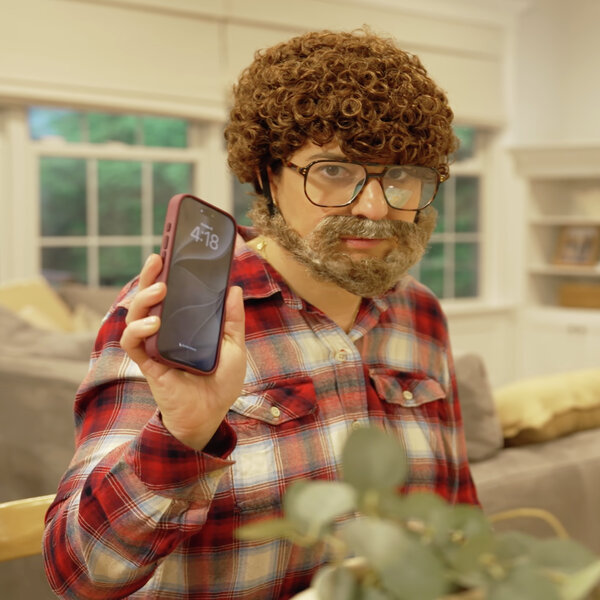
19:46I don't know. Why is that? Because I had a terrible experience with Siri. Well, you also did something cool and you reenacted. Oh, yes. I don't know if it went viral because I reenacted being the Apple dad. I should have just brought my costume here and you could have interviewed me as the Apple dad. I'm sorry. I didn't think of that. I know this. So we should say that it probably went viral for two reasons. And you put a hole in your table. Yes. I would say yes. First reason it went viral is I finally became a man. And so I was able to be a male tech reviewer. And then two, I had a lot of pain points with Siri, a lot of them.
20:20And I think that what I really came to in that is that Apple has made good strides this year in what Siri can do. And that is in large credit to the partnership that they're doing with Google, private cloud compute, all of those things. I find on my phone, and we should debate this, that there are now things I ask Siri to do, Siri AI, because I know it's going to be the fastest way to do something. That said, there are still so many Siri basics that might not have to do anything with Siri AI that get in the way of that experience. And I think it was never clearer than when I was using that HomeView because it is a voice-first device.
21:01You cannot type to it. It is across the room. and they're trying to do so many things with that device, right? So I think the very basics that I show in this little clip that went viral, it's towards the end of the video, is one, normal voice recognition, right? My son asks it a question. It completely botches it. Fine. Let's say that my son didn't speak so clearly. I see people saying that on Twitter. Don't blame your kid. Blame Apple. Totally. But what I didn't show there was the number of issues I had. We didn't catch every voice recognition issue I've had this week. I can go back and I can show many more.
21:37We all know the voice recognition on iPhones right now is not where it needs to be. Dictation is terrible. Dictation is terrible. I texted my wife from the car this morning. It was not even like it was not legible. It was not what. And so compare that to what you get from Whisperflow, what you get from Google, what you get from all these other companies right now. And these are big. That's sort of the basics. So I'm talking about AI as like, you know, I want to talk about like sort of the large language model capabilities and what you can do is one thing in this circle over here. And then you've got these sort of basics that are the entryway into doing those things.
22:09So voice recognition is one of them. Siri recognition. The fact that Apple has, you and I know it really well, how many Apple devices do we have? Everyone, it's going off right now. All of them going off, not being able to know which one is which. Why can't you say Siri on my iPhone? Why can't you say Siri on my HomeView? Why is it that it can't pick the device that you're speaking into or closest to? Why is it I'm talking to my phone right here and then it triggers my HomePod mini two rooms away? In my bathroom every night, Mark. Every night, I would say, Siri, set the alarm. I don't want to say it on your podcast because now everyone's alarms are going to be set for 7 a.m., right?
22:50Why is the one in my bathroom going off? Because Apple has no idea what the hell it's doing in AI. They never have. And it's a joke. And that's just like, that's an engineering problem. Yes. But every other company is nailing this. ChatGPT, Muse, Claude, they are coming out with new stuff on a weekly, if not more frequent basis that works. But I'm going to challenge you there on the fact that Apple has the baggage of a lot more time. Right. ChatGPT is relatively new. Muse is brand new. Claude is new. Right. These are these are platforms where they don't have the hardware infrastructure that we all have.
23:29Now they're going to have it soon. Right. And so when I get my new little Muse speaker, I get my new chat TVT speaker. It'll know I'm talking to it because I don't have all of those devices around. So like, let's give a little bit of a level playing field there. I don't know if that's the right word. But I think when we just talk about the baggage that Siri has, and I think that's why I got like, I was excited about this new Siri. In my iOS 27 video this year, I was like, I held up a sign that said, Siri's finally good or Siri no longer sucks. Well, I would say Siri finally does what it was supposed to do 15 years ago.
24:03Or it was actually only does what it was supposed to do two years ago when they promised it at that 2024 WWDC. But it doesn't even do that, for instance. Which is the personal context, right? Well, first of all, I ask myself, how useful is the personal context? Right. How many how often am I trying to go back and look? What was the podcast my wife sent me 30 days ago? What did my friend Joseph text me? What was the picture from Tom? Right. That aside, I'll give you a quick example. So I took a leap of faith. OK, the other day I was going to meet someone somewhere. And so they sent me the link to Apple Maps.
24:39and I said, okay, let's meet at 4 p.m. And so I said, okay, Siri, add this to my calendar. I'm sorry, but I expected Siri to add to my calendar meeting with contact name at the time at the location. No. It asked me what I want to call the meeting. It asked me what time do I want the meeting to be at. I totally know that. It's like the PC commercial. Right. Remember the Windows Vista? Yes. Yeah. Allow? Allow? Yeah. Well, that's what I know that experience very well. And so I figured, OK, fine, I'll give it that. And then it makes the calendar appointment. Do you think the location that was sent to me and is in the screen, if we're talking about the onscreen awareness, was added?
25:21Absolutely not. And so, you know, I'm off. I'm off Siri right now. I'm open AI-ing my phone. No, I understand that. And I think, look, there are some things, and I think this is where the moat that Apple had is that they have access to this content. Messages for me. My whole life is in messages, right? Group, family, text, everyone I work with. Messages is just like a treasure trove of information. And I talked a lot about in the book about how AI is only going to be as good as the data it has in our lives. And that's a huge part of where Apple can come in. So sometimes, to your point, I'll say like, oh, you know, where's the address of this company?
26:00They must have texted it to me. Can you look through? And it will find it. Other times I'll do that same one and it doesn't find it, right? And that goes to the reliability, which I made this argument in the HomeView. It's just, it's unreliable. But everyone has this data now too, right? True. Everyone else has caught up. You know, the personal context was the big differentiator for Apple for a couple months because Claude Duet, Muse, ChatGPT, Dots, they all have this now. You can plug in your iCloud. You can plug in your Gmail. You can add your iMessage on your Mac at least at some point. No, I know.
26:34They'll probably sync to the phone. Instinct is a huge... Instinct is all powered through iMessage, which I love. Right. So this advantage that Apple had or advantage that Apple had, it's already gone. It's true. I've been living on all these behind-the-scenes AI agents now for a few weeks. I'm trying to throw myself into it to really understand. Same. And I felt Apple was three years behind. Now I feel like they're five plus years behind because I have my agents running around, whether it's in GrokBot, whether it's in Dots, Muse, wherever, doing everything I need to do on my behalf so I can focus on what's important for me and my work.
27:03I'm with you. I mean, look, and I actually I think I cut it from the end of the review, but I had that point. I was like I was actually going to concentrate on that being the criticism of Siri in the end of this review, that everyone else is these advanced agents. But I couldn't even get to that point in the review because I was so focused on getting these basics to work. And so I think it's things like voice recognition that completely hold up massive parts of the population. Like what I think what really struck a nerve with my review is like I and my frustration shows through. Right. I like to scream into the couch and I'm like looking out the window, just pondering life.
27:38People, people don't go to those extremes, but people that use Siri feel that way. They wonder why it just can't listen or work. Right. And so I think it's voice recognition, all of these devices going off, the waiting situation. I don't know what's going on there. So that has been really bad. And it feels like it's gotten a lot worse. I mean, if you remember in the WWDC video, the wait times for results was pretty awful. It has gotten worse and elongated. Nothing gets done. It reminds me. But sometimes it stops. It just stops. Which is what I showed in the HomeView review twice. It just does the ding, ding, you know, the little sound.
28:15And then it just it goes. It cancels out. And I actually I've asked Apple this and we didn't really get an answer. But sometimes I think that is because I have other devices. And is Siri just not sure which device is handling the request? And then they all sort of like just wonder and they're all like kind of like, no, that Siri is going to handle it. No, no, that Siri is going to handle it. And then no one handles it. They just rebuilt Siri. They did the underlying infrastructure. it's the whole new underpinnings to enable Siri AI after the botched version of Siri AI two years ago they've solved a little bit but it feels like they have to start all over again and now you're hearing Mike Rockwell the guy who built the Vision Pro and rebuilt Siri AI and got it into a better place than it was before now he doesn't want to necessarily work there long term he's talking about leaving next year he's talking about moving to another role next year and so you're going to see a Siri leadership vacuum I think What?
29:12I want to ask you this. Maybe you've heard this or maybe you have thoughts on this, but maybe they should just abandon Siri. And just go all in on third party plugins? No, they make something new. Start fresh. Yeah, start fresh. I agree with you. And I think it was stupid that they kept the Siri AI name. Maybe they recognize that maybe there was a chance this was not going to work. And so they don't want to use whatever cool name they've come up with in their marketing department for the next thing for when they really have to do that. Maybe they're working on that behind the scenes. anyone from Apple listening to this, if you are working on a brand new voice assistant AI system behind the scenes I'm right here.
29:49I'm right here though. She's here. But you don't, I mean do you, are you focused on breaking news still? Not really, but you know we could be. Come to us both. Yeah, come to us both. There's no reason. We can collab. Yeah, there's no reason. But I think that look, I think it's just there's I really thought this was the moment that they could turn it. And I think these basics, I say them as basics because I do think that's what we're talking about here, right? I wasn't complaining about on the HomePod that it couldn't, or on the HomeView that it couldn't put my thing in my calendar, or it couldn't, you know, find some deep text messages from three years ago and source that information, or do a multi-step process, which it can do sometimes when it gets it right.
30:32I wasn't complaining about those things. I was complaining about these fundamentals that I just need Siri to answer questions and get things done. And it doesn't. And it doesn't. And so it might just need to be a blank slate. It might need to just be like, you know, I just believe we're going to keep hearing that. And I also think Apple's clearly, we can talk about, you know, some of the news that's come out recently and just software updates and it being a lot more fast. Like I think it was the 27.3 release that included the vertical tabs in the Duo. I want to get to that in a minute. But there is a key thing we need to address here about the AI situation.
31:06There have been many people who said Apple doesn't need to be at the frontier of AI because they're a hardware company, right? They're not a software company. A, that's BS because everyone needs to be an AI company now. I don't care if you're a bank. I don't care if you're a restaurant. I don't care if you're a tech company. I don't care if you're a car company. Media company. Media company. Everyone is an AI company now. Just like everyone was an internet company before. That's right. The Siri problems, the AI problems at Apple are preventing the company from doing cool new hardware businesses.
31:40The HomeView, it's, I think, a cool product, but it does not work because the software is a mishmash of four different Apple operating systems and Siri AI doesn't work. Fine. Two years late because they needed to wait for at least this foundation to be available. Imagine what the capabilities of this product would have been and what the reviews of this product would have been two years ago, two years before Siri AI. It would have been a nightmare. So HomeView delayed two years because of AI. AirPods with camera sensors that could see the world around you, those were supposed to be out two months ago.
32:14Why are they not out? Why are they coming out a year from now? Because Siri AI. Okay? And there's countless examples of this. I do want to also just back. I totally agree with you. And we should talk about AI hardware because I have a lot of thoughts on it. But if they had released two years ago a HomeView with a screen that just did music and basics, like music, alarms, give me – I'm a HomeKit person. So just all the home controls. I would have actually said it was a great product. Well, because we wouldn't have the drawbacks. Exactly. Yeah, I drawbacks. So if you think about – and I tried to be fair in this review.
32:49My first half of the review is it recognizes people in my family. It does a good job of cooking and some of the basics, right? When you put the CRAI part of that in there and you start making those promises, that's where it really fails. And I should say I had a lot of issues with some of the smart home stuff because it wouldn't open my garage door, which we've solved now because Apple has an update coming next month to open my garage door. It's very nice of them. See? Yeah. You're getting the Walt Mossberg treatment now. I am. I've got the impact. Yes. And so, you know, I think everyone will thank me when their HomeView can open their garage.
33:22if it really solved world problems. My garage works through a third-party app. It's called Aladdin Connect. So if you're going to enable Aladdin Connect Apple, that would be great. Have them work with HomeKit, have them do a third-party CarPlay app that could work. That would be nice. Doubt it. Craig, please. But AirPods with cameras delayed over a year because of this. And it's the general theme. The tabletop robot, that could have been out sooner, but they're running into software issues there. But the biggest product that keeps getting pushed back has been the smart glasses. Because the smart glasses are built around Siri AI.
33:54And the main use cases for the smart glasses are around app plugins, app integrations. Apple calls them app intents. Now, if you remember when Apple announced Siri at WWDC 2024, it was on-screen awareness. It was the personal context were the two main things everyone talked about. But the third thing was app intents. Having precise control over your applications. Open a photo, rotate a photo, text it to Joanna. Okay? That is not coming out until next year for third-party apps. And that is going to be the core feature at the heart of these Siri glasses. And so Siri AI App Intense can work. They could be in a good place.
34:26But you've seen all the plugins now that all the competitors have. So there is a lot of work that needs to be done to get these out the door. And the goal, I read your reporting over the weekend, is sort of like being able to ask for an Uber, be able to make that reservation, be able to, I don't know, do anything that you sort of would want a third-party app to integrate in and you'd be able to use your voice prompt in Siri as the connector to all of those. Yeah, Slack my producer that Joanna's here. Open table, order some pastries for me and Joanna. Sorry, we didn't do that. Yeah, where's that?
35:02You could be running. I've got this water. There you go. Starbucks or Siri, ask Starbucks to prepare my sugar-free non-fat milk vanilla latte half-calf. You know what? And I'm a big meta glasses user, right? I never want to do that through my metaglasses. It's fair. You know? Well, there's not much else that you're going to be able to do in the Apple glasses, so you may start thinking about moving towards that. But I do use the metaglasses here and there for sort of the visual intelligence, right, asking for something. I want to then now talk to my muse sometimes through that. So to me, it kind of goes back to the same issue we're seeing with the HomeView, which is you need this as a platform throughout all of these other devices and as that main trusted AI agent.
35:48And if Apple's not going to deliver it to me there, OK, then I'll get it through ChatGPT and Dot or I'll get it through Meta and Muse and I'll get it through Instinct. And maybe they'll just decide we'll open that up.
36:04let's talk about something more positive now and that is the hardware so i would say that apple has done three big hardware course reversals three major hardware announcements this fall one is the home view we've already went through that um two is the touch macbook pro and three is the iphone duo let's start with the iphone duo we're both on our duos i freaking love the duo i'm living on it unfortunately it's making me use my phone more i agree but this thing is absolutely amazing the hardware is phenomenal um there have been cracks for some people some people have had physical camera issues including friends of mine in fact i had one friend uh their father bought one they have the screen crack so i can confirm personally uh sent me a photo um and then another friend who uh got the phone the same day as i did at the apple store his rear camera didn't work That's the one I hadn't heard.
36:59Yeah, the rear camera didn't work. It said that the camera had a foreign camera part. There's a new softer algorithm now that if it senses you put in a BS part from wherever, from the black market, into a phone as a replace it, it doesn't work. It locks it. Love my friend. He does not know how to replace this camera. Yeah, yeah, obviously. It wasn't him. Right. Neither here nor there. This thing is incredible. And what were some of your takeaways? Well, okay. Okay. I am – it's three weeks now since the review. It's probably like tomorrow will be three to four weeks since I've got the review unit.
37:36And it is still my main phone, which is never – not never, but not always the case, right? Is that the review unit? This is the review unit. They can't hear us through that, right? We should probably stop the podcast. Yeah. No, and – well, this is where it brings me is that I want to now buy the phone, right? Now I have to wait till January. When do I have to wait till now? So the way to get one at this point is AI bought and let it alert you immediately and then run to the online store. I don't know anyone who's been able to get one otherwise. And we're talking about a few units a week per store at this point.
38:12And I've been watching one of those site trackers really. Anyway, and I was pretty mixed on it when I first got it. I mean, first of all, there's just a lot of things you get used to. Some things I'm still not happy and have not gotten used to fully. Like the volume buttons just drive me crazy all the time. I don't know where they're going to be. But I have gotten used to the wait. I've somewhat gotten used to no face ID. And we should talk about that because there's news about that. Look, the apps situation for me is actually the reason. So there's some apps that I still don't have that are like I'm just waiting every day.
38:51If you work for Google and you have any proximity to the Gmail team, I'm going to look straight in the eye. Go tell them to release their apps for the Duo. Just go right now. But like some apps like Frame.io, I spend a lot of time in Frame.io looking at our videos, reviewing videos. It's just an amazing experience on here. And I don't want to go back to my normal iPhone. And I don't use my iPad Pro really anymore. Same. And I wasn't an iPad person. Yeah. So at night I'm reading on here and I'm doing all my video work and all of that. And so I'm fully bought in now. It's my do-it-all machine. I love it.
39:28The bigger screen has been amazing for video. The split screen, I wish you had the ability to do more controls, like put something a third of the way and put something, you know, the other 66%. But the half and half has been nice. I think they'll improve that in the future. Clearly the app situation is moving very quickly. Very quickly. And I'm so happy with the product. And I think that shows like I stuck, you know, in my review and I've said in my duo review, I just shoot that software section three times because the apps were coming so quickly even before the embargo period. And Frame.io was one of the ones that kept breaking.
40:02And I'm like so happy I stuck it out just to see how that one would get because it is complete. It really like changes my whole workflow and how I review videos. Well, the software has been super buggy out of the gate. The 27.2 was horrible. Things would crash. There were lots of bugs. I had this bug where you would get a text message and you pull down a reply. It's just a black screen. But the 27.3 beta one, that feels like the first real release for the iPhone duo. I'm on that now, too. But I feel like the I call it the overlapping menus. Like there are just every where you look, there's going to be an overlapping menu.
40:35And you're like, oh, crap, I now need to either close that app because it's a bug. I need to open up the screen to get to that menu. That's true. I've noticed that. But let's talk about Touch ID and Face ID. Let's talk about it. Now, a lot of reviewers complained about Touch ID because I think people were super used to Face ID. I am one of those. Right. But I remember back with the iPhone X, there were a lot of people who were like, I don't want Face ID. I love Touch ID. It works so perfectly. And I'm already using Touch ID on my Mac. A lot of people were using Touch ID on some of their non-pro iPads.
41:08Use it on my Mac keyboard for my display. I love Touch ID. I've had no problem with it. I've had multiple fingers to Touch ID on the iPhone Duo and it's been great. But a few months ago, this was way before the Home View was announced. And I think that this was way before the iPhone Duo was even announced. I had put out Power On saying that I don't think this Touch ID iPhone Duo thing is long term. Because we all knew there would be no Face ID. I had known that the main feature of the Home View was you can attach different faces to it to access your personal content. And so I go up to it. It shows my messages, my calendar.
41:47My wife goes up to it. It shows her stuff. And I said to myself, you know, this face recognition thing, that's an AI problem. And you need the depth sensor to just get the most accurate privacy-centric face unlock, banking standard, financial standards. But the face unlock Apple's using for the home view because it doesn't have a depth sensor could be good enough in some use cases. And so sure enough, 27.3 beta 2 introduces face unlock. Here we are. So how does this work? It works exactly like you're saying. Basically uses the camera and you have to, there's parameters, you know, around the security.
42:19You've had to have unlocked your phone. I think it's like within the first, like last 45 minutes or something. So it knows it's you, right? You've needed to unlock with a different form of verification, mostly touch ID or passcode. Touch ID or screen pin, yeah, within the last period. And then it can use your face and exactly kind of like the home view. But what I find really interesting here, and I think just goes to show what I was saying before about like the rapid iteration of what I think we're seeing more now of software development. And I really do think this is a turning thing under Turnus.
42:47Yes, he's trying to move faster. You see it. Like we saw it with the vertical tabs and... Do you like those? I do. Okay, I'm going to try it. But also I want... Joanna can do it, I can do it. I also want them to move the address bar to the bottom. On the open view? On the duo. But on the open view. Because you can have it on the closed view, and I just moved it to the closed view to the bottom, But now I'm going to do the vertical tabs. Thank you. But what I think Apple will never say we saw the criticism and we changed. No, this was the whole time. This was the plan the whole time. Sure. But during the review and I had it in my in my review, as Apple said, they wanted the experience, they said, to be the same on the outside screen and on the inside screen.
43:32That is not the case now with this camera. So per your reporting, they're looking into doing Face ID on the outside. Yes. They absolutely seem to be wanting to do that on the outside, but they're not going to do it on the inside. There's no way. It's too thin. It's too thin. Now, why do you still need Face ID even after this? Because there are a few restrictions. Sure. This new Face Unlock, it doesn't work for Apple Pay and it doesn't work for opening your passwords. Yeah. And probably some password protected apps and such. Advanced device protection and things like that. So you're still going to want Face ID.
44:07And literally this month, like right as we speak, they are locking in the iPhone Duo 2 if it's still going to come out at the end of 2027. And they want to get Face ID in there. I'm sure they do. I'm sure they will. And well, we'll see. We'll see. Because there's the technical and the pricing. There's the cost. And so I think it's a toss up. But it'll be on the Duo 2 or the Duo 3 because that is their number one priority. But if you think about the hardware issues that they have to fix here, and it's so easy, like, it's just such, it is a really great first generation Apple product, but it is a first generation product.
44:42And it's just like the weight of it, the face ID of it, the buttons, like those are things that just feel like, okay, they'll be fixed in two. Yeah, look, I'll be honest with you. I don't care. I love the iPhone Duo and I'm not going to hide it. And this is coming from the guy who will take every opportunity to bash the Vision Pro. And other Apple products. So you can believe me. This thing is phenomenal. But you're going to love it next year and you're going to get the new one. Of course I am. Right. So? I'm just saying I'm sold on the iPhone Duo 1. But you know the things that you would want for the second one.
45:11Well, the camera. Yeah. The cameras too. There's a lot to be desired there. Yes. Telephoto. The weight is fine. Oh, I haven't made a call play actually. Yeah. Because the first case I used with the iPhone Duo was this folio case. and I put out a tweet. Oh, I love the kickstand case. Yeah, I put out a tweet saying this thing was terrible and I'm going to the polycarbonate case and I used the polycarbonate case for a couple of weeks and then I said to myself, you know, let me try again. Okay, this folio is fantastic. It protects the front. It opens and unlocks the phone, unlocks the phone like an iPad smart cover and the kickstand has been amazing for watching video and this flap, it really has a great magnet in it and I think it's an awesome case.
45:53If you're already paying$2 ,000 for the phone, you can afford$130 folio case. So the price is a non-issue. But I think we agree that in all of the devices they sold this year, they should have included the Apple cloth. With the Duo? Yeah, with the Duo. Oh, and you know you can't find them anymore. Yeah, you can't find them. And they needed to include it with the MacBook Pro Pro LED. Oh my God, 100%. It's insane. One other thing on 27.3, obviously it has the health app that was in beta one. They're putting video podcasts in the Apple TV now, and the app is part of 27.3. Will I watch this one there?
46:23uh you know what we are working on that so we are trying to get video podcasts uh are you sure apple doesn't have like an instant ban mark german honestly i think i'm shadow banned i think my podcast is shadow banned i'm sure they would deny that and maybe it's not but that's just my little conspiracy theory um so you can watch the video on youtube for now but and um sorry you were going an actual oh yes but the big one that i'm excited about do you want to say it or i will say no go Is that you can set it that when you close the screen, when you're in the tablet screen, you close it to phone screen, it will lock the phone.
46:57But I don't need that. You don't like that? No, no. I like it. I don't need it because I have the folio. Oh, yeah, because you have the folio. That's right. That's right. Right. And so I've been doing no folio for a little bit. Yeah. How is it going, rocking that thing with no... I haven't dropped it yet. Please don't. I dropped it once. What do you do if you destroy a review unit? You send it back and you buy your own. And they don't get mad at you? Well, they're not going to get mad at you. No, I mean, I think... For me, they would make a whole case out of it. I have broken many review units over the years.
47:25I'm sure you have. I mean, how many years has it been, right? It's been a lot of years. I'm pretty famous for breaking or losing things. I lost the original HomePod in an Uber before the review. Why did you have a HomePod? Oh, because you were transporting it. I was going from a shoot that I had. And I remember the shoot. And I remember the video so well. We were shooting in a... What was the name of the theater? Anyway, we're shooting in a theater. We rented the theater to do the shoot to see how the sound performance, the audio. And I was going home from that and I left it in a car, in an Uber.
47:57You're like the guy who lost the iPhone prototype. Yeah, except we never got it back and it didn't get into the wrong hands. Yeah. Huh.
48:11Your business operates under pressure and you need control over your data. but IBM research shows only 9 % of companies have real oversight of their technology. IBM's open hybrid cloud approach is designed to give you visibility with built-in governance tools, data sovereignty, and compliance reporting. It's another way IBM helps you stay in control of your data. Let's create smarter business. IBM. Visit ibm.com to learn more.
48:42You have had the great privilege to be the person who has interviewed Apple Senior VP of Software Engineering, Craig Federighi, more than anyone else on the planet publicly. Is this true? I probably think that's probably true. We've, I don't know, I need to go look at the archives. But when I was at the journal, I talked to Craig a lot, especially in the earlier years around new product releases, privacy or security stuff that he was really interested in, that I was really interested in. And then I like to say that, you know, we've followed each other on the Siri journey and that I've had, you know, each of the markers, a conversation with him.
49:22So a lot to talk about with him. You had the CSAM. You had the ATT, the app tracking. See, you even know. I'm like, I'm trying to remember, but you've been through the archives. This is your job. Yeah, no. I was in the first row when you did the interview with Craig and Greg Joswiak in Laguna, the montage, where you brought them a bunch of cables. Yep. And they kept those cables, right? I'm sure they kept those cables, yeah. Yeah, they like their cables. Yeah. I'm a MagSafe guy. What are you? I believe I bought those cables at a CVS for them. So, yeah. Well, the whole point was there. We didn't know we would get the USB-C iPhone, which we knew we were going to get.
49:58Well, that was a big news item. That was the news item. He said, you know, we have to, you know, we don't like it, but we have to go with regulators and laws in the countries we operate in. So we're going to have to do it. I'm not going to tell you when, but it was the following generation. Anyways. Yeah, I mean, in hindsight, thank God they were all made to do that. Anyway, yeah. Does Apple have a Craig Federighi problem? Like a software? A software problem. I have thoughts, but I want to hear you first. Look, I think that, and you understand this better than me, but I think that one of the, I don't know if it's a Craig Federighi problem.
50:33I actually, I really don't know enough about how Apple operates to know if it's a single person's problem. I have thought that a lot of these problems have been an operational problem, a corporate structure problem. A lot of it is. So you've had the AI issues, right, which were not totally under his purview for a while. He is not responsible, I would say, for the origin story of Apple missing AI. I think he is actually the he's not the savior because Siri is not great. Yeah. But he took a hard problem and he bulldozed Apple through it. Yeah. And they are in a much better place than they were two years ago.
51:14So I think just you and you can answer this from a corporate structure, but I at least knew that part was not under him. Then we have the design of Apple problem and we have the the famous liquid glass problem, which I don't know whose fault that really was. See, I'm going to disagree with you here. I don't think there was a liquid glass problem. I think it was a creation from some people who were pushed by Apple, maybe, to go down this angle because Apple was upset that Alan Dye left for their biggest competitor. That's my theory. At least some people. There was also some finger pointing at Alan Dye that liquid glass was not a huge success.
51:59People were angry and some of that. No one's talking about it now. Nobody's talking about it now, but they've done a lot in the last software in iOS 27 to pull back on that. The story goes that a lot of the stuff they have in Liquid Glass right now were things they wanted in the first iteration of Liquid Glass, but there was a lot of engineering that needed to happen. For instance, the slider, that's a tough problem, right? That is something that the design organization probably wanted to do, but the slider couldn't have been implemented for engineering reasons. And to your point, it is deeper than Craig because it is an infrastructure problem.
52:30Right. Apple is built around the fall cycle. They are built around, they could call it A, B, C, D, E, G, F. Those are the different codenames for the different releases throughout the year that are timed to different parts of the calendar. And it's like moving a gigantic cruise ship or rebuilding an airplane in the air to move those things around. Which is why if they really decided to start working on this face unlock for the iPhone Duo a few weeks ago, which I don't think they did, but that would be very impressive and show a big change. This is one of the things Ternus wants to change. And I think we're seeing that play out.
53:04And so I think now the question is, is in the past, did Craig and the direction from Tim Cook and from the entire C-suite board or leadership team, what they call it there, prevent some of this? Right. And were they stuck in these longer periods of needing to do development, which has always been the case? Heard that for years from many product managers and people involved in software releases there. And was it the structure of the company, right? Was it these disparate teams, whether it be design, whether it be AI? And so now are we getting back to a better structure that they can be more nimble and catch some of these things?
53:44I think so. And again, this is just one of these things that were set up 20 years ago around the original iPhone and they just remain that way until now because they felt no reason to change it. But I also yeah. And I think like this year, this like I said this at the end of my Home View review, it is the story, it seems to me, of great hardware with software that's catching up. Well, that's that's why I ask about Craig Federighi, right? There are people who have concerns about the roadmapping, thinking about things 12 to 18 months out versus three to four years out, like you're seeing from hardware.
54:14There are concerns about the way Federighi, you know, comes across as being the smartest person in the room, operating the whiteboard, making the final decision and not really allowing, you know, different opinions in and sort of shooting those down. So I guess you take the good with the bad. and we'll see what John Ternus does. I reported very recently they had a closed door notable meeting about Apple's AI progress a few weeks ago where Ternus was just pushing the idea that Apple needs to move faster, move quicker and do bigger things. And one of the things they want is an AI agent. I'd be shocked if they get it done anytime soon.
54:53We'll see. I'm hopeful before end of 2027, but that would be very necessary to get really on track. But I think also there's, look, we are in the very right to criticize this company, right? And that's our jobs. It's to critique and to... With balance. With balance. I love the iPhone duo. But it is about us to report what we see and what we... And you have a different reporting angle because you really talk to a lot of people within the company and have a lot of insight into what's coming and what's not working and all of that. I see it a lot. Everything I do is through the product angle. And so when I sit with some of these executives, I'm very focused on the product.
55:31And why is this like this? How does this work? Why is this not better? Right. Famously, I very much looked him in the eye and said, why is Siri not better? You are one of the richest companies in the world. Why is Siri not better? And you could really see when you put him on his toes. Yeah. But I think at this moment right now, we hear a lot about, like me and you, we talked about the sloppiness in the Duo software. A lot of the reviews talked about that. We talked about the sloppiness in the HomeView software. Yet on some level, and they're very quick to react in a way that they haven't been in many years to fix those things, to do these quick cycles.
56:07And I think that might be an adjustment from the Apple masses that we kind of have to get used to, right? It's not a Samsung thing. I don't really know the right equivalent, but that pace is going to change. And when there are problems, they're going to be very quick to fix them. And that's what I'm getting into in my Power On column this weekend, right? The speed that they need to move at to meet this AI era, it's going to have to change or they are going to just be left behind, especially as now these AI companies are going to combine models at the frontier with cool hardware. But also we have to think about, and it kind of goes back to our conversation as a good place to end, on the Siri stuff.
56:45A company that is this old and has this many devices, a billion plus devices out there, with many people who don't use half of these things. And I've talked to Craig about this at a point. How do we get it right for both of them? How do we move really fast on that end? I mean, the Duo is obviously an early adopter product right now, but shocked at how many people that I'm like, oh, wow, you want that product? It's amazing. Yeah. But so I think just to get back to that, like, they've got to balance that. And so I don't envy that position, too, because you've got an install base that just needs to have the normal things work right.
57:21And you can't rapidly, rapidly increase and push on features, which I think they do a pretty good job of. But you've got to rapidly, rapidly fix the problems. At what point do you start over on the OS, right? Remember iOS was a reboot. It was a completely new operating system for the mobile era, right? Yep. You're kind of getting towards the need to have a brand new OS for the AI era. The app paradigm is going to slowly, if not quickly, dissipate. The way people interact is going to change. And the worst thing Apple could do is just layer on top of layer AI versus starting from scratch. Although I just was having this conversation with Samir, who heads up Android for Google, and I asked him the same question.
58:02And I don't think they think they need to do that either. Well, they've done a good job sort of rebuilding the plane in the air. Exactly. And I don't think Apple has shown an ability to mesh things as well as Google has. But maybe that's a model, right? If you look at what Google's done. Sure, is Gemini shoved in some places you don't want? Maybe. But whether you're talking to Gemini or you're tapping on apps, you can do both of those things. And you can do that at a really good level with Android. Yes. Joanna, this was amazing. Thank you so much. Mark, always a pleasure. Thank you. Appreciate it.
58:41For more from Mark, subscribe to the Power On newsletter at Bloomberg.com forward slash Power On. and follow at Mark Gurman on all social platforms. Power On is a production of Bloomberg Podcasts. Our show is produced by Alexis Haught and Keshav Pandya. Our supervising producer is Magnus Henriksen. Audio engineering by Blake Maples. Original music is by Taka Yasuzawa and Alex Zegura. Our video editor is Bobby Krause. Our executive producer is Amy Keene. And Cheryl Brumley is our head of podcasts. Special thanks to Nick Turner and Tom Giles. Thank you for listening.
59:24As industries evolve faster than ever, companies need an environment that accelerates strategic growth, and Michigan delivers on that promise. From emerging startups to global enterprises, Michigan offers what executives value most, a resilient, innovative ecosystem, diverse communities that attract top talent, and a quality of life that supports work-life balance. With our unified Team Michigan approach, businesses scale faster and compete at the highest level. Michigan, pure opportunity. Seize your opportunity at michiganbusiness.org. This message comes from Edward Jones, where they believe rich is about more than saving and investing.
1:00:01It's also taking care of what gives your life meaning. That's why your dedicated financial advisor meets you where you are, with personalized financial strategies that help protect what matters so you can preserve your progress while creating a path forward. The key to being rich is knowing what counts. Edward Jones, member SIPC. If you listen to financial news, you know a lot of time is spent thinking about what's next. The next opportunity, the next investment, the next move. But sometimes what matters most is being ready for what you never saw coming. For more than 75 years, Cincinnati Insurance has worked with independent agents to help protect businesses, homes, valuables, and more.
1:00:42Because planning for the future isn't only about knowing what's next. It's about making sure you're ready for what you can't predict. Let Cincinnati insurance make your bad day better. Find an independent agent at CINFIN.com.
From the publisher
In this episode of Power On, Mark Gurman is joined by technology journalist and reviewer Joanna Stern of The New Things and NBC News for a critical look at Apple’s software leadership and its struggles to compete in artificial intelligence. They discuss whether software chief Craig Federighi’s management style and Apple’s rigid development processes are holding the company back, why Siri continues to fail at basic tasks and whether Apple needs to start over with a new AI assistant. They also examine how Apple’s AI shortcomings have delayed major hardware products, including smart glasses and camera-equipped AirPods. Plus, their experiences with the iPhone Duo, its new face-unlock feature, Joanna’s frustrated HomeView review and whether Apple’s Johny Srouji could be a candidate to lead Nvidia following its leadership crisis.
Have a question for Mark? Email us at [email protected] or join the Power On Discord
See omnystudio.com/listener for privacy information.
More from Bloomberg Tech
All episodesWe use cookies.They keep VO running smoothly and help us improve it. Privacy policy