

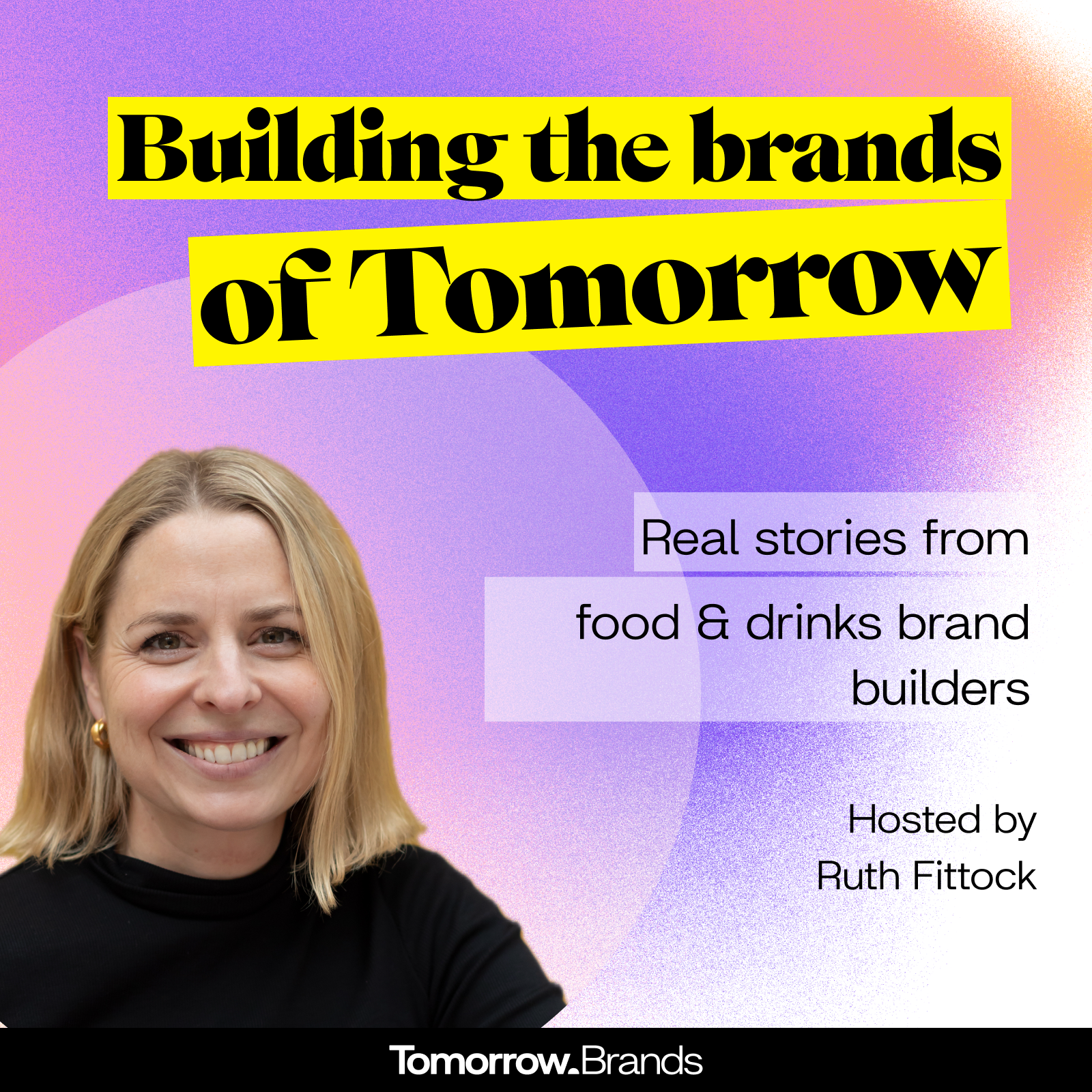
 Building the Brands of Tomorrow
11 Nov 2026 · 35m


 Add vo to ChatGPT or Claude to ask about everything you hear
vo listened to this episode to put together the overview and transcript, so there may be the odd mistake.
Thea Green, founder of Nails.INC, explains how she built a UK nail brand from a US-inspired concept, why product (not just services) drove the business, how she used trend-spotting from magazine work, what it took to expand into the US, and what the 2024 sale to Pacific World felt like. She also discusses innovation, collaborations, and her proudest launch, It’s Topless.
Thea Green studied fashion at London College of Fashion, worked at Tatler magazine (early 20s), then left to open nail bars in the UK in 1999. She later sold Nails.INC to US-based Pacific World Corporation (deal announced Oct 2024). She’s now an investor.
Magazines trained her to spot customer trends; first-time founders must work with limited “toolkits”; nail bars needed branded product because margins come from product; US expansion requires a tailwind and shelf-space strategy; true innovation is part art/part science; exits are exhausting but the “journey” is the real payoff.
US nail bars were convenient but unbranded; Nails.INC launched with product and branded “coffee-shop” experience; wacky collab with Velveeta cheese (viral TV exposure) helped retailers; It’s Topless is a one-bottle polish without base/top coat and includes a treatment element; US expansion in 2014 after UK success and pop-ups; earlier near-exit when a major retailer offered to take over product.
0:14Hello and welcome to the Tomorrow Browns podcast, where we explore what it takes to build a brand of tomorrow. I'm your host, Ruth Vitok, and today's guest is Thea Green, founder of Nails Inc. In 1999, Thea was in her early 20s, effing at Tatler in a job a million girls would have killed for. She left it to open nail bars in a country where most women only got their nails done once on their wedding day. She had no business background, no contacts. More than two decades later, she sold Nails Inc. to US-based Pacific World Corporation. We talk about why magazines turned out to be the best training she could have had, what British founders need before they take on the US, what an exit actually feels like, and how a cheese-centered collaboration opened doors that a glamorous celebrity partnership might not have.
0:53Let's get into it. we'd love to hear more about you and your background and where you were before the brand
1:01Thea Green: yeah I started the business when I was quite a baby I was in my early 20s but before then I studied fashion at London College of Fashion and then worked in magazines so I was at Tatler magazine for a couple of years before I started the business lovely and tell us about the story behind Nails Inc so I believe you spotted a gap in New York while you were traveling for work exactly how did that go from a light bulb into something real I think the naivety of you right but I was in my early 20s, ukiing magazines, I had a US American boss and it was like 1999 so I guess all things US were really trending here.
1:36Thea Green: It really felt like the US was ahead of us in so many ways from fashion to lifestyle to even the kind of coffee cup culture because that was the same sort of timing that all the coffee shops came over and so yeah inspired by multiple trips to the US it was quite commonplace people to get their nails done weekly but it was quite scruffy, it was upstairs and it wasn't a particularly nice environment but it was very convenient on every street corner and there was no brand or product so the sort of basis of the idea was from the US but it was then how you would like really zoop that up and brand it and take inspiration from what else was being imported to like the coffee shops that were so branded that arrived here it felt like if you were exporting that idea it needed to have a more stylish approach to it so So it was a kind of combination of my fashion world and what was happening in the nail bars over there.
2:25And you mentioned you were young. You didn't have a business background at the time. What did the people around you think when you said, I'm leaving fashion behind and I'm starting this?
2:33Thea Green: It's funny, isn't it? Because it's so Devil Wears Prada working in magazines, right? So it is the job every girl has dreamed of. I think back then we were constantly like gifted samples and products and I absolutely loved it. But I was concerned that it was a sort of bizarre lifestyle working in fashion where it was incredibly glamorous and all sorts of wonderful freebies and lovely lifestyle. But it was never actually going to pay well enough to actually support a life in London. Never mind your next stage of your life in terms of like having a family and all those other things. So I think I had bigger ambition.
3:06Thea Green: I think financially I wanted to earn more money more than anything. I think that's where coming up with a business idea was it. and I think what you learn in magazines is you're inspired and looking at trends all the time so we were always trying to be ahead on what to recommend to customers and Tatler in particular was travel, restaurants, food, lifestyle, clothing, beauty. I was in the fashion department but the magazine was small and you worked across all the areas coming up with trends. Everyone worked on all the sort of restaurant guides and other things so I think you were used to spotting a gap And I didn't realize, I guess I didn't really realize when I did that, that wasn't something that just, I know you do it as well, Ruth, but everything becomes an inspiration.
3:46Thea Green: And I think you're designed that way. And I didn't really realize that magazine was this amazing training ground for teaching you to, you start to see these little sparkles and how two or three sparkles could make up something that could be a trend. and reading the market in that way and finding the passion for innovation and what's next and just being obsessed with the customer and I think magazines weirdly is probably one of the best I imagine like that or the marketing ad agency is where you hone those skills and I guess I thought I was learning to be a journalist and a stylist but I think I was learning to spot what the customer wants but yeah I think a million girls would kill for this job it was so tatler so I think a million people they were all like you're crazy this is the most amazing place and I'd always wanted to work in that environment.
4:30Thea Green: So it was a bit of a change. Yeah. What do you, how, this is a very leading question, but obviously coming with no business background, that question around naivety versus experience, where do you stand on that, especially now 20 plus years into this journey? Yes. So I think you have to just work with the toolkit you've got. So all I had was ambition and naivety. I didn't have experience. And so today, if I was doing something again, you would have your contact list you would have what's worked for you before you've got in my case you've got good retailer landscape knowledge you've got good manufacturing knowledge I just didn't have anything so I think all I had was yeah like grit and determination and naivety was a was an important part because it meant that I think particularly because no one had ever opened nail bars in the UK, when we were selling it into investors or later retailers, if they didn't get it, I would leave the meeting genuinely.
5:28Thea Green: It's so crazy now. And I just think, I just have to go again. They just don't get it. They just don't understand it. I'll just contact them again and explain it again because they just don't understand what a nail bar is. And part of that was true. People didn't really understand the concept of having 90s, early 2000s. No one had beauty services done in the middle of a department store. It wasn't a thing. And so I guess there was so much resistance in terms of this isn't a thing. But I remember leaving every meeting thinking, oh, I'll just have to explain it to them again. What a bore that they didn't understand it.
5:57Thea Green: And that's the naivety. Whereas now you'd go, that buyer is not buying this product. We need to go back in six months or a year's time with a different plan and a different approach. Whereas I'd just be knocking back on the door a couple of weeks later going, oh, I think I need to explain this to you in a slightly different way so you understand it. Come and see the one that we have. So I think it was actually really quite helpful. But I think you just have to work with whatever you've got. If you're a first time founder, you've never done it before. What are you going to do? You can't get the experience.
6:26Thea Green: You can talk to lots of people, but you just think I'm always just trying to work with whatever I've got tools wise and make the best of it. And, you know, step by step. You started the nail bars and the product line at the same time. Is that right? Same time. So that's almost two different businesses at once. Why was the product always part of the plan? Because in the US, those nail bars, they didn't have a brand. Yeah, so they run on very different economics in the fact that I think everything in those nail bars in the US is low cost. So from the low wages, low rent, often there's temporary rents and then you go to one on a street and then they'll give you a card saying, oh, we're moving to X.
7:06Thea Green: And so they take on these kind of short, very short term leases. And we just weren't trying to deliver that. We were trying to create a brand, an experience, really change. You know, women in the UK were getting their nails done never or once for their wedding. So it needed to be visually so much more appealing to that. It needed to have the kind of coffee shop branded experience. And so we needed product. But also in terms of looking at the numbers early on, business plan one, the margin was always going to come from the product. Service is a tough game, whatever service you're in. And so I would always compare nail bars to restaurants.
7:42Thea Green: It's staffing it at the right time. Customer flow is very concentrated at certain times before work, after work, lunchtime. There's lulls in both amounts of time. You can't get anybody to work for two hours. They need to work a longer shift. And so it was always about making sure everybody left that store with a product because in beauty, the margin is all in the product. So it was almost like a kind of mass sampling exercise, the nail bars for the brand. It was a marketing exercise. It needed to wash its face and the product needed to explode. You mentioned trends and how your time at magazine helped you spot those.
8:18What does creating trends look like inside the business?
8:22Thea Green: Yeah. So it's a mixture of as we've grown and become more sophisticated, there is more access. We were talking before, more access to retailer data, other competitors' data, trend forecasting. and that's grown and grown and particularly since exit grown more and more it's funny though because I personally don't find that much magic in that data in most cases it's really good to see what's working but it's usually if everyone's turning right the opportunity is usually over to the left but the data supports at least everyone's doing this so we can't wade in there too we need to go elsewhere. I think true innovation is still hard to train people on or roll out.
9:04Thea Green: It's, and I know you're obsessed by it too. I think there's just people that can do that and people that can't. And I think it's a bit like a sport. You can just either read and see the gaps and go, oh, it's logical that I remember when all the GLP One stuff came out really early on, I said to our owners really early on, you need to be all over because they have a hair brand. You need to be all over hair loss. You just need to be all over it. And there was no data to support the fact that hair loss, but you could see people on social starting to talk about their hair being an issue and there was no one speaking.
9:36Thea Green: So I think it's to them, I think it's sometimes going, because this has happened, I think this will happen. You're trying to always predict it. You don't get it right all the time, right? But it's a bit of an art as well as a science. There are things you can go to. You can obviously shop around and stare at the shelf and look at for the gaps and I do all of those things but I think the best ideas will come when you're on holiday or going for a walk they're not really very scientific for me anyway has there been a decision or something you followed early on that looked questionable at the time but has turned out to be a really good idea in terms of a product idea yeah or like a direction for the brand or a partnership yeah I think we did some pretty wacky collaborations we've worked with magnet at McDonald's.
10:22Thea Green: Velveeta cheese was the wackiest one. And that came, Velveeta cheese came from Alison Broad, which was our US PR agency at the time. And they, Velveeta is not like a household name in the UK, is it? But it is in the US. And they just were convinced it would go completely viral. It would get TV coverage. And it did. I think it got every single daytime TV show. It would be your dream list of where you would want to do it. And whilst I wish it was about a Cornell Zinc product rather than the Velveeta cheese. It was amazing exposure. And what happened on the back of that, I remember we'd been talking to various US retailers, but not closing one of them that we were trying to close at the time.
10:59Thea Green: And then they immediately email you going, I've just seen this everywhere. Can we get it? Can we put it on the website? And by the way, let's engage in the conversation that we had been chasing them on. So I think it's those, I think it's sometimes it's a bit like TikTok today. I think it's like, why are you doing it? Are you doing TikTok because you really want it to be a profitable channel like in beauty it's not for most of the brands I talk to or are you doing it because it's actually where Ulta and Target are currently looking in terms of where brand growth is and I think that's the thing is sometimes it's some I think we're all obsessed by our numbers and sometimes it's you can do things that are actually going to drive the number but a bit later if because if it gets you the target buyer interested in you it's going to drive a much bigger number than some of your other ideas but it's not quite linear it's like this needs to happen and that needs to happen and so I think that's there's some of the decisions that you don't know that one's going to be the one that perks the interest it could have been a Victoria Beckham glamorous collaboration that perked the interest but instead it was the Velveeta cheese crazy one because it was on every tv show you couldn't escape it right and that's what you need with the buyers is you need them they can't escape your brand you're just hitting them in every direction because they're seeing thousands of brands all the time.
12:11Yeah you've just you've recently launched It's Topless it's now the fastest growing product in the category I believe.
12:18Thea Green: Yeah. What's the launch you're most proud of and what do you think you've brought to it from everything you've learned over your time at Nelsink? I love It's Topless because It's Topless is again just focused on customer because it's the first ever nail polish where you don't need a base coat or a top coat and it also has treatment element to it. So I think it's a risky thing for a brand to do because mainly brands would be trying to sell you a base coat, a color and a top coat. But on the back of it, we took a big bet, which is people would buy multiple versions of its topless color and they'd buy into colors that they already had.
12:50Thea Green: Let's just say you're a classic red customer and you don't need to buy a red again. You will buy its topless because you now don't need to do all the steps. So that was quite a leap of faith, but it worked for the brand. But I just love things that make customers' lives easier and are fun to use. And so for me, that is a product that I use all the time because it's just really simple it's easier and you'll get a longer lasting manicure from a three-step system for sure but you'll get a much more convenient very good close to excellent manicure from one bottle and it's topless and sometimes very good is actually much more helpful because it's faster and excellent sometimes you just don't have time for so you you feel like you're failing it so I just love making products easier for customers we've talked a bit about the US so you launched in the US in 2014 which was about 15 years in.
13:40Was that, were you being patient up until that point? Did it take that long to feel ready? What made that timing right?
13:47Thea Green: We had done lots of pop-ups. So I think the different environment then, it was department stores. So prior to that, we'd worked in Saks and Henry Bendell and Barneys and done all these sort of pop-ups for the brand. But that was when we went really live in terms of mass distribution in the US. If I was doing it again, I'd go so much quicker. You can expand across the US. But I think it's just the initial cash outlay sometimes of the US. And there is a nervousness in the US, which is if you haven't built the brand there, and I still think it today, you've got two options, haven't you? You either spend a huge amount of money on marketing and you're a startup and you can't, or you've got to do something else that just really guarantees you that shelf space.
14:30Thea Green: So I think it's quite, you've got to, if you haven't built the brand, you've got to spend a lot of time on marketing. and how do you grow the brand in a sort of sensible way, which is I think what we did. We grew it in a way that was demand for it. Because when you're on the shelf, if you're going to mass places like Target and Walmart, we were chatting about it earlier, you've got such intense targets that you have to hit every week. And if you're an unknown brand, why will a customer use you or switch to you? In the UK, we had become a household brand, but in the US, we just weren't. I don't think it's easy to, although we've had great success in the US, I still think the US is a really difficult market.
15:04Thea Green: land because it requires just huge geography and big budgets or you've got to come out with a way of doing something else and that's one of the reasons we did so many collabs you know it's a really affordable way to do marketing i've heard that it's easier to get on shelf in the us because there tends to be more space harder to stay on shelf because it's harder to stand out because yeah it's just even when you go into a us drugstore or supermarket or anywhere the choice at every single fixture compared to here. Enormous. Enormous. I've been like, have decision paralysis trying to buy a bottle of water because there's like 400 different types.
15:41Thea Green: And you're like, oh. I did that recently with cereal bars or protein bars. I then got myself into a kind of, oh, I now need to find the highest number of the protein because there were so many options. And I'm sure in the UK, you would literally just see one that looked high and just grab it because there'd be two or three brands. But I then got, and then there was one with fiber in as well. And I was like, oh, I need to do all of these elements. Yeah. Collagen, creatine, all of it. Was there anything that surprised you about the differences between US consumers and UK consumers? I think for us, we were lucky that the same products sold well.
16:10Thea Green: We've rarely had a launch that worked in one market and not the other. It tends to be sometimes things launch at different timings across the markets. But I think the overall product, I would go a good product is a good product. If it's a really great product, it's going to sell in multiple markets. I think that's a good go forward lesson for us. If you have something that's working in one retailer but not everywhere, it's probably just not a great product. It probably means that one retailer gave it better space or opportunity. Or it could be that it is a great product and all the other retailers have put it on the bottom shelf or it's only on dot com and you can't find it.
16:40Thea Green: So I think actually from a consumer point of view, it's been quite similar for us product wise. I think it's what sold well has sold well. I think doing business in the US in our categories is slower because in the UK, in the UK, they have many more updates like Boots and Superdrug will have multiple updates a year. Target and Walmart and some other categories were an only update once a year. So the positive of that is you've definitely got a year on shelf. The negative is you can't make any changes. You have a few SKUs that are at the tail end of your sales and you can't edit. I think it's really quite, I think it makes you feel under pressure that you can't change something for a year.
17:16Thea Green: So I think the retailers operate slightly differently that way. But the consumer for us has been quite similar in terms of what's sold well. What would you tell a British founder who's thinking about launching in the US? I love the US business. I think for all the reasons we know, it's 10x the UK, such a huge sizable market. It's phenomenal. The positivity and the celebration of success is unrivaled. Amazing. So I would say absolutely. I would just say, you just need to just so know that you've got the gap. I don't think it works unless you've got something, you need a major tailwind. So I go, it's either that you're launching in the category that is just so hot right now or with an ingredient that's so hot or you've got a retailer that you know a retailer or if it's your own.com but something that means that people are ready to switch so it could be that you're the cleanest version there's never been a clean opportunity in this category before and you're bringing in that which means the retailer is going to give you great space because they also want to move their category forward I think it's really hard to do things without a tailwind and I think the tailwind could be just where you're positioned there but If you could have a great positioning, whether it's on your own dot com or in retail, as well as you're in some kind of upward trajectory of a category, I think that makes it much easier.
18:36Thea Green: I think you need to be part of something that is already growing where customers are looking for the spaces. So let's talk about the exit. You mentioned it briefly. The acquisition was announced in October 2024. How long had that conversation been going on? It was close to a year, I think, from start to end. It's a kind of grueling process. And yeah, the company that bought us were based in LA. So I think all of us just suffered from time zone sleep deprivation for sure. And it goes on for quite a while and you're under huge pressure in your business in terms of every day has to be a good day.
19:08Thea Green: Every day. Everything has to be great all the time. So that's a bit nutty because I'd already matured through my business to go, it does a little bit of that sometimes. And as long as the end result by quarter or the year is great. Whereas this feels like the pressure and your foot is on the gas all the time. Meanwhile, great for the business. And yeah, I think it's, yeah, it's a long process usually for most people. What were you looking for in a buyer? So we were very focused on someone in the US because that's where all the growth was coming. So from a valuation point of view, but also from where the business needed support, like boots on the ground in the US.
19:45Thea Green: So a US buyer for sure. And then someone with category knowledge. So the company that bought us Pacific World have got good category knowledge in our categories. They've worked in nail in particular for a long time. Was there a point earlier in the journey where you could have sold and didn't? And if so, are you glad you waited? Yes. Yeah, a major retailer offered in quite an arrogant way, but basically years earlier had said, why don't you run the nail bars, Thea, and I'll take this product stuff off your hands. And I guess I think I switched off early on in the meeting because I thought, OK, I like you and here looking at the numbers.
20:20Thea Green: And I know that the business and the success in the business is all about product. The nail bars at this point had actually become more and more complicated. Costs had gone up more and more and it was really quite a challenging business. I think if that, I think maybe if I'd had more experience, I would have, you know, flipped that conversation in a way of, you know, if there's a deal, I think now I'd go, someone's that hungry for you, there's a deal to be done. And I think instead I went, oh, this is too early to be exiting product. We've still got plenty more growth to do on product. but it's a funny one because that number is a lower number but it would come earlier and so I guess again is that the right number that you then take that number and do the next thing with because Nails Inc took a very long time to build so I don't know I don't have any regrets about it but I would now be able to look back on that and go there was a deal to be done that you didn't really push forward with yeah what did the exit feel like emotionally because I've had conversations and I've been on the inside of a brand getting acquired and it can feel different to what you may expect.
21:24Thea Green: Yes, I think it's something usually found as a, I think in all cases, you're a willing seller, right? You're not in the position to be selling to a company and valuing your business if you're not feeling like you're at the point to sell it for whatever reason. And so what's bizarre is normally when you want something, you do have that sort of celebration moment afterwards. And I think maybe because deal processes take a long time and it's just so detailed and data rooms and presentations and I think you end up quite exhausted but I think I think you work out it's the journey that is the fun bit and I think that's the weird thing about founders is when it's done it's a bit like oh now what I'm I think that the yeah the I heard someone saying it really the other day it's not the it's not the happiness of pursuit it's the pursuit of happiness I think that's the way around it is the pursuit right it's the constant you've been battered over your head and it feels like you can't possibly get up and do this thing again and then you rise up and do it and you end up having something great comes from the disaster and so I think that's the bit that you realize it was it sounds so naff but you realize it was the journey and not the end goal and that's quite a weird yeah moment of reckoning albeit you sell you put some money in the bank and that's all a positive thing and hopefully helps your family's life in a different way but I do think so much of it is the desire to slightly do the the really difficult every day weird it's like an addiction it's just am I speaking to the converted yeah it's so ridiculous as I say it I think oh good god there must be so many easy options you get a dip it's the high highs and the low lows and it's the constant and it didn't kill you you can do it you can and you get so good at managing stress don't you I think I'm now I'm almost calmer in the most stressful situation than I am in just like a little small thing could actually irritate me.
23:18Thea Green: But huge problems, I'm very chilled in. You just get really good at managing volume and stress. It's that growth mindset, isn't it? When you find yourself thinking, what can I learn from this immediately? Yeah, exactly. Exactly. It's so addictive. It's so mad. It's an entrepreneur that want to do this with their lives. someone said to me the other day in terms of what you'll do next and a founder was like I'm never doing anything next and I actually think that question is if you had just given birth to twins would you would you have another baby straight afterwards and I was like oh really because for me I was like I wasn't offended at all when anyone ever said it to me it was a funny one it's like okay then you don't want to go again and I potentially do at some point so that's quite funny because for me I'm like it's exciting to think about it I have heard it compared to child birth before and it's that thing of you sort of forget don't you you forget the worst you forget another person said to me yesterday they were like you always forget the worst bits and you do otherwise there would be no second time founders and there would be no families with more than one child so you have to forget you have to forget so you're now an investor as well as a founder when did that shift happen is it something you've always wanted to do yes definitely and I think for For me, it's just I've had a great address book of brilliant founders and it's exciting to be part of the next thing.
24:39Thea Green: And I think part of selling the business is also thinking broader. For my own development, I want to think broader than just beauty or just Nails Inc or our brands. I want to think wider. And I just said earlier, I love seeing what else is going on in the market and what else is trending. What does it feel like being on the other side of the table now? And does it make you more sympathetic to your own investors that you had at Nails Inc or sympathetic to founders? Yes, yes. Yes. Again, I think if you were doing that again, second time around, you would do things slightly differently. I would only ever want to have great empathy with the founders that I've invested in.
25:11Thea Green: And I think the reality is you invest in five things and three might really work and one might completely not work. And one could be the roaring success. And I think some people I speak to that do this angel investing, they actually come out of the whole thing clean and they break even. I don't know that this is a ticket to actually, I'm sure you've been through it, Ruth. I don't know if it's a ticket to actually making big dollars. I think when you want to make big dollars, you need to own more equity and have your own business. Or frankly, just trade it on the stock market. It's probably a quicker way.
25:41Thea Green: I think it's probably about the passion for other founders and other categories in business. I think there's probably some softer reasons to do it rather than just a pure money game. I must be really naive because I'm still convinced some of mine are going to fund my retirement. If you invest in the categories you know, you're probably damn right. because actually I didn't really invest in many beauty ones. Luna Daily is my only beauty one. So maybe that is also the other thing is I don't have the category knowledge, which is what I like learning, but I'm not an expert. Whereas you're such an expert in your category.
26:12Thea Green: So if you've invested in those, then I would imagine you're pretty good. Just going off pure gut instinct though. Yeah. Mine have all been good and they're great businesses and I have no issues with any of mine. They're all great. I just speak to too many founders that say the reality is you don't invest in five out of five. that will fly. But, you know, I'd like to be the exception to that rule. Let's do it. You've got some great founders. You've got some great brands. So you mentioned Luna Daily. That's a fabulous brand. XOXO Soda. Yeah. .bubble tea, who I actually saw at lunch and thought they're one to watch and they just launched Nitsu, haven't they?
26:47So great, great brand. Better Menopause. Is there a common thread between them?
26:54Thea Green: I think for me, it's founder excellence. That's my only common thread. I just, I think it's all about an amazing founder. That's what I would say in all of those. They're all strong founders. Debbie Better Menopause is a serial founder. So she's done it multiple times. I think Katie Luna Daly is just so inspiring as a founder. She's just phenomenal. So good. I almost think Luna Daly could become 101 other things and I just back her. I just think she's brilliant. She's great. I bumped into her actually the other night, but yeah, she's great. And yeah, I think it's, yeah, it's just, and same with, I think brilliant team.
27:25Thea Green: I XOXO, I don't know the team as well. I think that's more because of the sort of poppy phenomenon. And maybe that's something that I was just like, this category feels exciting. But yeah, I think there's some, they're all great. I couldn't tell you who's the winner and the loser in that group yet. I think hopefully they'll all just be winners. I think they could be. You've got some good, there you go again. I'm feeling very bullish on yours and mine at the moment. Good, let's keep that. Let the kids all manifest. Let's manifest it. We'll check in five years and see. That's the other issue though, is it's not quick.
27:55Thea Green: it's not quick it ties up some of your cash and it's not quick I think that's the reality it's going to take some time how hands-on are you do you write the check and step back did you act as an advisor to some of these brands as well a mix across the board but I've been pretty full-time busy in the world of Nails Inc so I think that's I haven't pretended to be a super active investor that will change in time but I think at the moment this is full-time full-time world but at the end of a call for a contact or a help or a piece of advice or another data point so for sure if a founder comes knocking as i'm sure they do in your linkedin dms sending you their pideck what's the best piece of advice you can give if they want someone like you on their cap table i just think get to the point really quickly i just think the decks are super long and i've got a full-time job and i find i really just don't enjoy reading decks from other brands that go on 50 pages i have just no desire honestly think if you can do it in three slides it's perfect i'm so much more like just get to the point and then we can go we have to get on a call or a teams really quickly anyway so i think numbers brand why and that's probably enough for me that's i i think i i find that that i honestly i just can't get to the end of half the decks i received that's just so long and the numbers are often a bit of an afterthought at the end or sometimes the deck that you get doesn't include any numbers because people want to do that with you on a call i find that really irritating i don't understand why i don't understand anything about your business i haven't seen any number they might just give you the total market but not their numbers yeah I think that's an odd I would just never do a finance never do an investor debt without numbers being like the main driver as well as the why where do you stand on numbers between realistic and ambitious but pragmatic and ambitious because I prefer pragmatic but also obviously ambition is a great thing but I feel like sometimes when you see some numbers or the addressable market and they've gone for a completely different, they've blown out the category.
29:50And you just think anyone looking at this who works in the industry knows that's not realistic.
29:55Thea Green: I think most of the numbers I see are too ambitious. And I guess it is the reality if you've got first-time founders that they actually are, they probably believe it. They're not trying to pull the wool over your eyes. They genuinely think that is going to be the size of their business. And I guess that's why we all, and I benefited from it too, you all benefit from some experience on your board as a mentor, as an advisor, as a friend. helping you go it's not realistic you haven't got the marketing spend to get that level of the adjustable market it's just not going to happen I think you want to look at the numbers and if the numbers aren't right and you take them down to where you think is accurate if you believe in the founders that can still work because I think they probably are being naive rather than deliberate it's never great if the business has been around for a while and it's done three years of sort of steady growth and then you're expecting the following year to go bananas because like that that's sort of why why would that happen but you don't like looking at anything too steady either do you like too small and too steady you go this they're playing it really safe they're not going to go big you're writing relatively small checks in these businesses you've got a very small piece of equity it doesn't really work if it's not going to be a bigger number and then the other thing I always worry about is I look at brands and just think they're going to just do so many raises that I might actually disappear off the cap table.
31:11Thea Green: That's the concern. You're just going to get diluted in all the following rounds. Looking back on your entire journey over the last 20 or so years, what's the biggest mistake you made that you'd never make again? Or lesson learnt, best lesson learnt, more positive spin on that question? I think thinking that one thing is going to get you all the attention that you need. I think that kind of all in on a celebrity, limited influencers, I just think you have to just have all the touch points done. And sometimes I think you spend, especially when you're a small company, you spend a lot of money on one thing and you don't really have the rest of the budget to do on amplifying and everything else.
31:54Thea Green: So I think I have a couple of those in my cupboard where maybe the one thing was good, potentially but you didn't have enough to to yeah like I said to amplify it and take it to the stage of where everyone would see it and so it's a slightly it's then not the smartest spend I think so often when we've had those mad moments it's been so organic it's been so organic I think whenever we've been on really tight budgets we've done our best creative we've done some really nice creative and really strong launches on big budgets too like amazing and topless had a different level a budget and I think it was our best by far but sometimes your best is when you're up against it and that's when you start asking for help as well you pull everyone in and go this is our challenge this is where we need to be this is the amount of budget we've got and everyone is firing to make it work and you get everyone bought in yeah I leave the exercise going I don't know if it's always about big budgets it can be it's one way to do it but it's I would go back to it's being innovative it's being creative, it's using that spend.
32:57Thea Green: It's so hard to predict going viral, but it's getting yourself viral in some way. I completely agree with that. I find constriction around budget actually very helpful in terms of, to your point, thinking of the details and the little touch points. Focus is the might. And often sometimes it's the tiny little things that can end up catching because, what's that expression? Necessity is the mother of all invention. exactly it is very true very true i'm gonna do some quick fire questions now as we're coming to the end biggest misconception about the beauty industry from the outside i just think that it's undervalued it's seen as fluff and it's everyone's using multiple beauty products every day it's like it is a commodity in so many ways yeah one brand not yours that you think is doing it right at the moment a perfect head i think he's doing a great job underrated skill in building a consumer brand?
33:49Staying power, just sticking out.
33:52Thea Green: One thing you'll never compromise on? Product quality and customer together. It's like day one. There's just no point. If you don't know who your customer is and you don't have the right product quality and they're combined, they're super interlinked. If you weren't running Nails Inc, you would be? Running my next business, whatever that is, doing something else. Looking for the next big thing. And finally, a question we ask every guest, in your opinion what makes a brand of tomorrow i think again something that you think has the longevity i think it's so easy just to like flow into the market quickly and do and see the trend and just do something in and out i think you've got to look at it and go it's got legs for long term we can you know so it could be range or different i don't make you up you launch something initially for kids and you can launch the men's equivalent later it's got to have that sort of spider of all the different places you can go to because the market will also change.
34:46Thea Green: So I think you need to start off with, although it's lovely to have a hero product, I think you've got to go. There's expanses, there's places we can take it. Thanks so much for coming on, Thea. Thank you. Hope you enjoyed this episode of the Tomorrow Brands podcast. If you did, I'd love it if you could rate or leave a quick review. It really helps other people find the show. And if you're curious for more, check out the other episodes. We've had some brilliant founders and operators share their stories. Thanks for listening and see you next time. Bye.
"If everyone's turning right, the opportunity is usually over to the left."
What do you do when you have the job a million girls would kill for? If you're Thea Green, you quit it to open nail bars in a country where nobody got their nails done.
In 1999, trips to the US for Tatler showed Thea a world of weekly manicures in scruffy upstairs salons with no brand and no product. She had no business experience and plenty of naivety. She saw how branded coffee shops were landing in the UK and wondered what nails would look like with the same treatment. More than two decades later, Nails.INC has been a UK household name, built a US business, and was acquired by Pacific World in 2024.
In this episode, we cover:
Magazines as a founder training ground: why years of trend-spotting at Tatler turned out to be the best business education Thea could have had
Naivety as a superpower: selling a concept no investor or buyer understood, and why she kept going back until they did
Nail bars as a sampling exercise: why the service side had to wash its face, and the product had to explode
Go left when everyone goes right: where trend data helps, where it doesn't, and why the best ideas come on a walk
The Velveeta effect: how a cheese-scented collab landed on every daytime TV show and finally got a hesitant US retailer to call
Cracking the US: why you need a tailwind, what a once-a-year range review really means, and why a good product sells in both markets
The exit, and the offer she turned down: what she wanted in a buyer, and what the finish line actually feels like
Life on the other side of the table: angel investing, backing founders over categories, and the three-slide pitch deck
Plus Thea on the most underrated skill in brand building, and her answer to the question we ask every guest: what makes a brand of tomorrow?
If you're a first-time founder with more ambition than experience, or you're eyeing the US, press play.



Scan the code with your iPhone camera
Listen in the app.