Ask ChatGPT
 Business Movers
19 Jun 2025 · 37m · 13 chapters
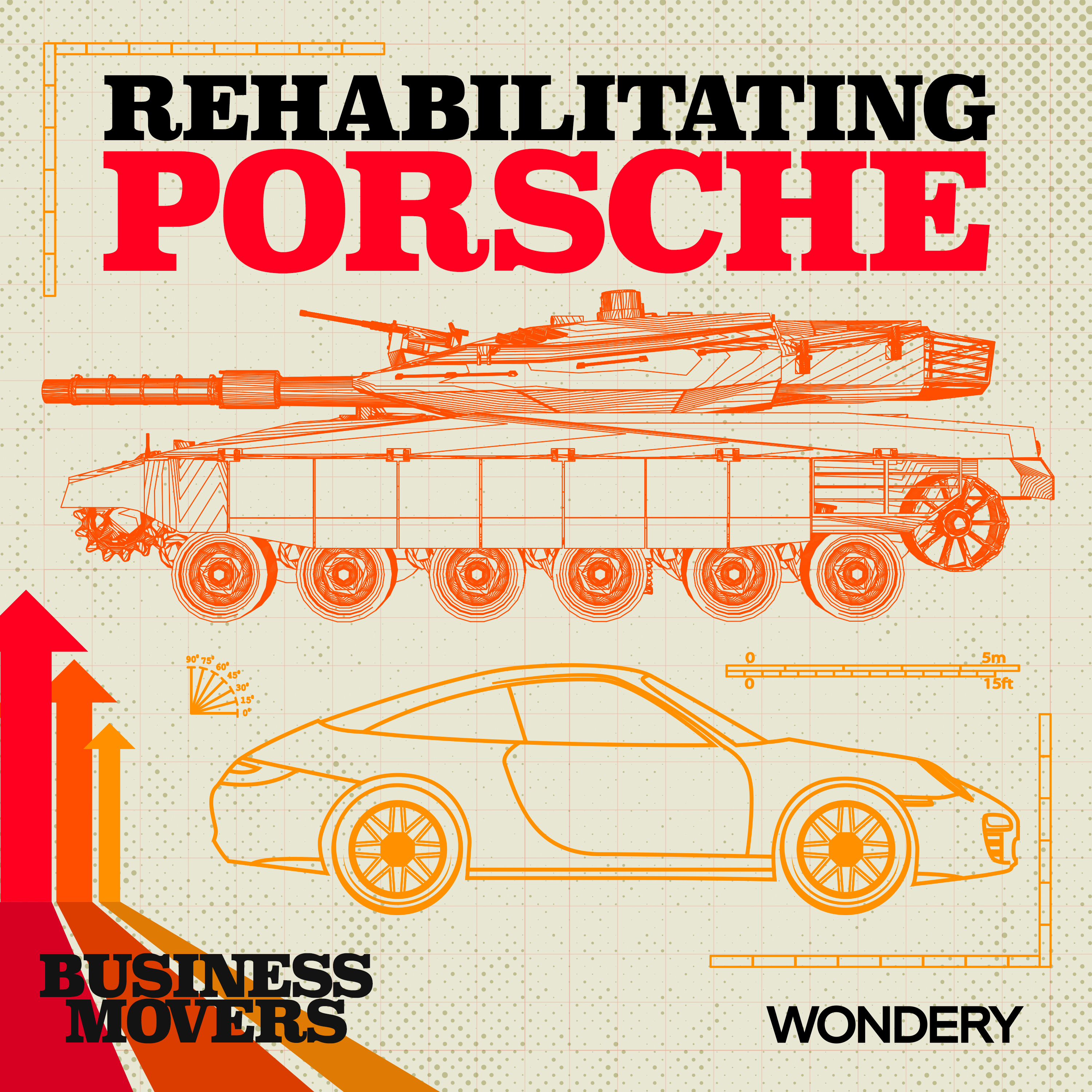
The episode examines Porsche’s Nazi-era legacy—how Jewish co-founder Adolf Rosenberger (Alan Robert) was pushed out, how Ferdinand Porsche and Anton Piëch pursued Nazi contracts (including the Volkswagen project), and how forced labor and anti-Semitic persecution shaped the companies that later became modern Porsche.
David de Jong, finance and business journalist and author of Nazi Billionaires. He researched family-owned companies’ Nazi ties for years (including work for Bloomberg, then moving to Berlin).
Porsche’s wealth and brand foundations were tied to Third Reich opportunism; there was little post-war remorse or transparency; Porsche’s leadership continued with former Nazis (including Ferry Porsche’s Waffen-SS ties and SS associates in boardrooms); consumers should demand historical transparency.
Rosenberger’s 1935 Gestapo imprisonment and later U.S. flight; a post-war lawsuit and settlement (about $150,000/day plus a free car); Volkswagen factory labor exploitation (including sub-camps) and 12–20 million deported forced laborers; other German firms (e.g., BMW, Siemens, Krupp) using concentration-camp satellite labor.
Written by AI. May contain mistakes.
Learn about Alan Robert's return to Porsche and his quest for justice after losing his stake due to the Nazi regime.
“It's 1948 at the Reuter Metalworks in Stuttgart, West Germany.”
David de Jong discusses the lack of remorse among German businesses for their Nazi affiliations.
“You're a finance and business journalist, but what made you decide to go back more than 80 years to write about Adolf Hitler's Germany for your book, Nazi Billionaires?”
Examine Ferdinand Porsche's career before Hitler and his relationship with the Nazi regime.
“want to commit to that, if they don't want to submit to radical transparency, they should rename these institutions.”
Explore the relationship between Ferdinand Porsche and Hitler, focusing on how Porsche capitalized on the political climate to save his firm.
“the porsche car design firm is in dire straits it has been burning money on car designs which aren't functional, which aren't selling.”
Discuss the Volkswagen factory's transformation during WWII and the horrific labor conditions faced by workers.
“Henry Ford was a virulent anti-Semite and idealized Hitler, as did Hitler idealized Henry Ford.”
Examine how various German companies collaborated with the Nazi regime for labor exploitation.
“It was the reliance on force and slave labor.”
Learn about the ousting of co-founder Adolf Rosenberger due to his Jewish heritage and the implications of this decision.
“I can imagine that for at least some business owners in Germany, that the reliance on this forced labor or slave labor is at best unsavory.”
Discuss the lack of formal acknowledgment from Porsche regarding its actions during the Nazi era and the company's historical ties.
“Now, fast forward to 2025, and there's actually going to be a study published on the life of Adolf Rosenberger, financed by Porsche, but initiated by the heirs of Adolf Rosenberger.”
Analyze how Porsche's focus shifted post-war and whether this helped divert attention from its past.
“I mean, the Porsche car design firm, as it existed between 1930 and 1949, it focused on producing various car designs.”
Learn about the historical context of Porsche's origins during the Nazi era and its lingering effects on the company today.
“I mean, they went public, they went to the stock market in September 2022.”
Explore the responsibilities of consumers when engaging with brands tied to dark historical events.
“Today's consumers aren't really expected to read FEC disclosures that reveal that there might be further discussion or risk in a company's Nazi past.”
Discuss the moral dilemmas faced by business leaders and the importance of prioritizing humanity over profit.
“It is obvious that Ferdinand Porsche was facing an existential decision, a bottom line question.”
Discusses the transformative power of stories and their impact on perception.
“You feel like you have no idea where you are.”

Get the gist, explore an idea or ask about something said.
 Claude
On Business Movers, what are the key points of this episode?
Searching your listeningAutomatic transcript. May contain errors.
0:15It's 1948 at the Reuter Metalworks in Stuttgart, West Germany. 48-year-old Alan Robert walks through the factory floor, his eyes drawn to a partly-built sports car being worked on by a one-armed man wearing grease-stained coveralls. Alan can't help but wonder whether this man lost his arm in the war. The worker certainly wouldn't be the only soldier who returned with life-changing injuries. But not wanting to bring up that subject, Alan calls out his real purpose. Hey, excuse me, I'm looking for Fairy Portia. The worker nods in the direction of a doorway. Alan walks over to the door, knocks, and opens it.
0:53Behind a desk in a simple office is Fairy Portia, the managing director of his family business. He barely looks a day older than the last time Allen saw him, although that was many years ago. In 1931, Allen Robert was known as Adolf Rosenberger, and he'd invested in his friend Ferdinand Porsche's new car design business. But after Adolf Hitler came to power, Rosenberger was squeezed out of the company due to his Jewish faith. He's now an American citizen with a new name, and today marks the first time he's returned to Porsche since fleeing Germany in 1935. Ferry rises from his seat and offers his hand.
1:29Adolf, it's been a long time. It's Alan. I'm Alan Robert now. Of course. How are things in America? Good, good. I live in California with my wife, Anne. She worked at Porsche too, I believe? Yeah, she was also forced to leave Germany. Ferry shakes his head. A Nazi regime forced so many Germans to do horrible things. Well, was it forced? Or did Germans willingly go along with it? Because it wasn't Hitler who made me give up my stake in Porsche. You were paid at the time. Three thousand marks? My shares were worth at least ten times that. Alan glares at Ferry. The Ferry returns the stare without flinching.
2:06It's as though the two men are sizing each other up. Eventually, Ferry breaks the silence. Well, why exactly did you want to see me today? I'd like fair restitution. Ah, I see. And what would you consider to be fair restitution? I'd like my place back at Porsche, on the same terms as when I left. But you resigned voluntarily. Oh, you know as well as I do I had no choice in the matter. Now it's time to make up for it. I want my stake in the company back, and I'd like to represent Porsche in America. Oh, would you look around you? We're sharing a factory. We're barely keeping our heads above order.
2:39We're in no state to start operations in America. Look, Ferry, I have little sympathy for Porsche's current trouble. As far as I'm concerned, the situation you're in is entirely self-inflicted. But I believe there is still opportunity, and I want a piece of it. Ferry stands and then opens the door. Okay, Alan, I'm sure you understand that I'm going to need to take advice on this. Alan rises and heads for the door, but as he passes Ferry, he stops. You know, Ferry, your father and I were once very close. I'll never get that back, but I can get back what the Nazis stole from me. You chose to be complicit.
3:15Now, choose to be compassionate.
3:21After failing to reach a compromise, Alan Robert sued Porsche in an attempt to regain his pre-war stake in the company. But after the case dragged on for two years, Alan decided to settle. He received the equivalent of$150 ,000 a day and a free car. And with that, the court decided that Alan Robert had finally been compensated for his mistreatment during Porsche's Nazi era. but it was a phenomenally cheap payoff for a company that was growing fast into a major player in the sports car market.
3:54This message is brought to you by Apple Card. Ah, fall. That cozy season where we swap the swimwear for sweaters and sunnies for scarves. But before the Halloween decorations are put away or Thanksgiving table has been set, There's already holly jolly music playing in the grocery store reminding you that the year is coming to a close. Time to kick end of year into high gear. When you use Apple Card with Apple Pay, you earn 2 % daily cash back on all purchases including food, decorations, gifts, and more. Get a head start on your end of year purchases. Apply for your Apple Card in the Wallet app on your iPhone today and start using it right away with Apple Pay.
4:39Subject to credit approval, Apple Card is issued by Goldman Sachs Bank USA, Salt Lake City Branch. Terms and more at AppleCard.com. Football is back, and PrizePix is bringing out their best offer yet. New users who sign up will get$150 in lineups if you win your first$5 lineup. That's right. If you win your first$5 lineup, you'll get$150 in lineups. On PrizePix, you simply pick two to six players, pick more or less on their stat projections, and submit your lineup. Then, sweat it out as you watch your picks play out live. It's the best way to get more locked in on game day. Make all the picks you want this football season, all in the same app.
5:23And now, PrizePix is available nationwide. So what are you waiting for? Lock in for kickoff, because everyone and everything is on PrizePix. What you want? Download the PrizePix app today and use code WONDERY. That's code WONDERY to get$150 instantly in lineups if you win your first$5 lineup. PrizePix, run your game. Must be present in certain states. Visit prizepix.com for restrictions and details.
5:54From Wondery, I'm Lindsey Graham, and this is Business Members.
6:17In the 21st century, the Porsche brand is synonymous with high-performance luxury sports cars, and its iconic vehicles are famous around the globe. Its legendary 911 has endured for decades a testament to the car's timeless design and ability to evolve to meet new trends, it's still as popular as ever. In 2024, the 911 helped to drive Porsche to revenue of more than$40 billion. But Porsche did not always focus on high-end sports cars. It was founded in 1931 as a design consultancy with an interest in creating a mass-market car for the people, and the driving force behind it was the talented engineer Ferdinand Porsche.
6:56Ferdinand's ambitions to redefine the European car industry was shared by Nazi leader Adolf Hitler, and together they worked up a concept for the Volkswagen, or people's car. But Ferdinand's partnership with Hitler left a stain on Porsche's reputation. During the war, tens of thousands of laborers were compelled to work at the Porsche workshop and Volkswagen factory, and many died thanks to the horrendous living and working conditions. And even before the war, one of the company's first investors was forced out thanks to Germany's anti-Semitic policies. Commercial director Adolf Rosenberger was a skilled financier who kept Porsche afloat in its early years.
7:35But Rosenberger was forced to quit on the same day that Hitler was appointed chancellor. Two years later, he sold his share in Porsche to Ferdinand and his son Ferry. but despite the company's rapid growth under his leadership, Rosenberg received no more than he'd originally put in four years earlier. Later, in 1935, Rosenberger was imprisoned by the Gestapo and held in captivity for more than three weeks. Ferry Porsche later claimed that his father had secured Rosenberger's release, although it's likely it was someone else within Porsche who pulled a few strings. Regardless, after his release, Rosenberger then fled Germany and lived briefly in France and Switzerland.
8:14before settling in the USA and changing his name. After the war, Rosenberger, now Alan Robert, tried to reclaim his stake in Porsche, but Ferry delayed, evading the issue, and even made veiled anti-Semitic inferences that Alan was interested only in profiting from Porsche's misfortune. Ultimately, both parties settled, and Ferry went on to successfully resurrect Porsche from the ashes of World War II. He set the company down a new path and transformed it into a luxury sports car manufacturer we know today. But Ferry's treatment of Porsche's Jewish co-founder suggests that the poisonous beliefs of the Nazi regime ran deep, and it's a troubled legacy that the company is still wrestling with today.
8:55Here to talk about the impact of Nazi policies on Porsche and other German companies is David de Jong, author of Nazi Billionaires.
9:06David de Jong: David de Jong, thank you for speaking with me today on Business Movers. With pleasure, Lindsay. Thank you for having me. You're a finance and business journalist, but what made you decide to go back more than 80 years to write about Adolf Hitler's Germany for your book, Nazi Billionaires? I was a reporter with Bloomberg News in New York, and back in 2011, I started researching family-owned companies, family offices, companies that weren't listed on the stock exchange, but they were exclusively owned by families. And I was actually hired by Bloomberg to investigate North American business families.
9:42But because I'm Dutch originally, they soon asked me, oh, can you also cover the Germanic-speaking countries like Switzerland, Austria, Germany? So what I would do is I would spend a month a year in the Bloomberg bureaus in those countries like Germany, like Switzerland, like Austria. And the stories I would come back with were always a mix of the financial, the historical, and the business side of things. And what really struck me in my reporting was that business families that control companies like BMW or Porsche or other major global consumer brands would celebrate their fathers and grandfathers for their business successes, but would leave out any trace of their mass war crimes, their Nazi affiliations, after they had prepared to have reckoned with these crimes.
10:34So I thought it was such a whitewash, such a brazen obfuscation of history that I wanted to shine a light on that. And that's why I ended up leaving Bloomberg, moving from New York to Berlin and spending four years on the research and writing of what ultimately became Nazi billionaires.
10:50David de Jong: During your time researching these companies and their founders, what was perhaps the most shocking or emotionally difficult discovery you made while preparing for your book? I think it was broadly the fact that there was no remorse whatsoever for the crimes that they had participated in, whether that was, you know, the mass exploitation of men, women and children as forced and slave laborers in their factories or mines in Nazi Germany, whether it was the wholesale robbery of Jewish owned businesses or of expropriated businesses in German or Nazi occupied territory. or their participation, their mass participation in arms production.
11:34It was really this kind of complete lack of reflection post-war, but solely on their own survival, you know, at whatever costs.
11:43David de Jong: I might be jumping to the end here a bit, but let me ask you what you think remorse might look like for these companies. I think it's very hard to demand something from private companies, right? Whether privately owned or even, you know, companies that are listed on a stock exchange. Um, so what I argue for in the book is a bare minimum, which is radical transparency, which is transparency with regards to history. So that consumers know what products they're spending their money on and where the money ends up because these families maintain, you know, massive global charitable foundations, media prizes, academic chairs, museums, corporate headquarters in the names of their fathers and grandfathers.
12:30were successful in business, but were also Nazi war criminals. And I think these companies and these families should be transparent about both because you only learn something from history by showing the good and the bad. And if you only show the good, it's just a whitewash. And if they don't want to commit to that, if they don't want to submit to radical transparency, they should rename these institutions.
12:53David de Jong: Let's turn our attention to Ferdinand Porsche and where he stood in the auto industry before Hitler rose to power in 1933. He began as an auto engineer, but what was his standing in the industry at large? He was seen as somebody who was very difficult to work with, but also a genius. Somebody who kind of this erratic, you know, genius engineer would spend massive budgets, would get into work conflicts, would get fired, and then basically redo it all over again. So he was employed at Daimler. He was employed at Maybach, now known as this massive luxury car, but he was employed at various massive car companies or massive for that time, right?
13:39And we're talking the 1920s here. Until the start of the Great Depression, he struck out on his own together with his business partner, Adolf Rosenberger, who was the commercial director, a jewish man and also a car designer as well as very non-porsche's son-in-law anton piech who is a a lawyer and was the legal counsel of the enterprise and that's how the porsche car design firm started in stuttgart in 1930 and you know by the time 1933 comes around the porsche car design firm is in dire straits it has been burning money on car designs which aren't functional, which aren't selling. You know, it's the tail end of the Great Depression.
14:21Germany is in huge economic and financial turmoil, as is, for that part, the rest of the world, climbing out of the Great Depression. So Ferdinand Porsche sees an opportunity when Hitler sees his power in Germany, and he capitalizes on that.
14:38David de Jong: Let's investigate this relationship between Ferdinand and Hitler. You say that Ferdinand saw an opportunity and capitalized on it. Was he presented with the opportunity for the Volkswagen by Hitler, or did he pursue it? It was a bit of both, actually. He pursued it. He wrote a letter to Hitler very shortly after he seized power in January of 1933, saying that his engineering skills and prowess was at Hitler's disposal. And so he lobbies quite staunchly also through his contacts in the car industry to get a role with Hitler, whatever that might be, right? abstract at that point. But then a year later, Hitler says there needs to be a car produced for the people, right?
15:21Which is the literal translation of Volkswagen, a car for the people. And Ferdinand Porsche puts together a 30 page proposal in which he outlines the idea for the Volkswagen, which is not an original idea, was actually fought up by a Jewish engineer called Joseph Gantz, who, of course, does not have any shot at work in Nazi Germany or having his design ideas go into production. But Fernand Porsche actually manages to get through to Hitler and gets tasked with producing the Volkswagen.
15:57David de Jong: Was this relationship, do you think, purely transactional? Was it a way to save the company or was there more ideological alignment? It was primarily a way for Ferdinand Porsche to design cars. Yes, he ended up saving the Porsche car design firm by getting the Volkswagen tender. But his main goal was to get a car designed on the most massive scale as possible, which actually only happens after World War II with regards to Volkswagen, even though the Nazis plow tens of millions of Reichs. marks into the project. So now in World War II, the Volkswagen factory that was ultimately built was based on a facility in Dearborn, Michigan, the Ford plant.
16:45David de Jong: That relationship between Ford and Hitler was more ideologically aligned. Is that correct? That is absolutely correct. Henry Ford was a virulent anti-Semite and idealized Hitler, as did Hitler idealized Henry Ford. And it was actually through Ford that Hitler got the idea of building the largest factory in the world for the Volkswagen car which ended up being in the heart of Germany and Fernand Porsche and his son-in-law Anton Piech were put in charge of running the factory but it ended up producing very little Volkswagen cars during World War II only 500 which ironically all went to the Nazi elite, men like Hitler, Goebbels, Himmler, Goering, the Nazi top and their acolytes, because the Volkswagen factory was soon retooled as a mass weapons factory where tens of thousands of men, women, and children were exploited as forced enslaved laborers.
17:45It had sub-concentration camps on the factory premises. So it really became kind of a weapon slaughterhouse by lack of another description. It was really the plant that Fernand Porsche and his son-in-law oversaw in the heart of Germany was really one of the worst-run places in terms of labor conditions and how many people, the thousands that ended up dying there.
18:09David de Jong: But Porsche and the Volkswagen factory that was Rutul for wartime use, this was not unique for the time in Germany. What other companies might have thrived under the Nazi regime? No, it certainly wasn't unique. It was a very, very widespread phenomenon. And so you had various collaborations between German companies and Nazi concentration camps. For example, BMW, Siemens, Groep and various other major German companies that struck deals with the Nazis in order to get cheap or free labor and had concentration camps built, so-called satellite concentration camps built on their factory premises. and exploit concentration camp captives and other slave laborers under the worst imaginable circumstances in their factories and mines.
19:07David de Jong: Now, all over the world, industry was retooling to meet their country's wartime efforts. But in Germany, how would you characterize the difference? Is it the reliance on this slave labor? It was. It was the reliance on force and slave labor. Of course, all able-bodied men were on the front lines, whether in Eastern Europe, whether in Western Europe, Southern Europe. And the way to fill in that labor gap was to initiate the largest coerced labor program the world has seen to date. And, you know, you have an approximate 12 to 20 million Europeans that ended up being arrested and deported to be put to work under horrific circumstances in German factories and mines.
19:53And of those 12 to 20 million, an approximate 2 million died as forced or slave laborers. Now, the distinction between forced and slave laborers is that forced laborers were involuntary laborers, but they got paid much less than their German counterparts, obviously. enslaved laborers like concentration camp captives or prisoners of war did not receive any kind of remuneration for the work that they did a dark night a quiet house but inside danger was lurking oh not really we have xfinity shield so we're not worried what if protecting your home devices could be drama free xfinity imagine that restrictions apply not available in all areas With the Spark Cash Plus card from Capital One, you earn unlimited 2 % cash back on every purchase.
20:44And you get big purchasing power, so your business can spend more and earn more. Steven, Brandon, and Bruno, the business owners of SandCloud, reinvested their 2 % cash back to help build the company's retail presence. Capital One. What's in your wallet? Find out more at CapitalOne.com slash Spark Cash Plus. Terms apply.
21:19David de Jong: I can imagine that for at least some business owners in Germany, that the reliance on this forced labor or slave labor is at best unsavory. What happened to businesses that didn't go along with the new regime? There's very, very, very, very few businesses that did not go along. If you talk about the major companies, there is no one which did not go along. Yeah, there isn't really anybody that didn't get along, which is why, you know, many decades later, there was a huge mass settlement by most of German business. 6 ,500 companies signed up to it to remunerate surviving forced and slave laborers from having been exploited in German factories and mines.
22:02But, you know, I get this question very often, but there wasn't really any company that didn't use any kind of form of forced and slave labor.
22:11David de Jong: Now, you mentioned earlier that one of the, I suppose, the founding partners of Porsche was Adolf Rosenberger, and he was a Jewish man and forced out of Porsche. Did he receive any compensation for his role in founding Porsche? He did not, no. Adolf Rosenberger was a co-founder of Porsche. In 1930, he received 10 % of the shares in the Porsche car design firm. When he was pushed out in 1935 for being a Jew, he received a nominal value of his shares from 1930, which means that he did not receive any money for it, or he received the same amount for it five years later, even though the profits, even though the Porsche car design had become much more valuable because it had received the design of the Volkswagen.
22:59And it was now, you know, having gone from the dire straits of the 1933, it was now a profitable enterprise. And, you know, out of Rosenberger was received a pittance, did not receive a fair market value amount for the shares that he owned.
23:15David de Jong: I wonder if you can help me understand this situation, or at least the details of it. I would imagine that if you start a company with someone, you trust them, you like them, you expect them to work with you well into the future. But then to be confronted with a situation in which you must fire them, or even just metaphorically disappear them from your company, must be incredibly difficult. Do you know much about this decision that Ferdinand Porsche made? Yeah, he seemed to have no qualms about it, nor did his son-in-law, Anton Pierre, about pushing out Adolf Rosenberger for being a Jew from the Porsche car design firm.
23:53There are letters that Anton Piech, who was this, you know, combative legal counsel to Adolf Rosenberger, where, you know, Adolf Rosenberger tried to get another role with Porsche or tried to stay on the good side. But yeah, it was clear that they wanted nothing to do with him because the fact that he was Jewish made him a pariah for the Porsche car design firm under Hitler's regime. So Adolf Rosenberger ended up initially fleeing to Paris and then actually immigrating to the United States and settling in Los Angeles. And he was subsequently erased from Porsche history. Now, fast forward to 2025, and there's actually going to be a study published on the life of Adolf Rosenberger, financed by Porsche, but initiated by the heirs of Adolf Rosenberger.
24:41Title is called Driven Out. and it's a 700 page biography of Adolf Rosenberger and his life. And yeah, it's coming out in September, 2025. It will also be available in English. So it's a major triumph of, you know, having Adolf Rosenberger's story, pivotal story in one of the world's largest car brands, you know, being rewritten back into history as it were.
25:07David de Jong: I think that's an encouraging development, but it prompts me to ask, How else has the Porsche company ever formally acknowledged or taken responsibility for its actions in history during the Nazi era? It hasn't. It hasn't. What I've noticed in my reporting about Porsche is that the brand has to be protected at all costs. So there's little to none acknowledgement about the role that Ferdinand Porsche and Anton Pierre played during the Third Reich as exploiting tens of thousands of forced enslaved laborers, ousting their Jewish business partner for being a Jew. Ferry Porsche, the son of Ferdinand Porsche, who ends up making Porsche a global car brand after World War II, is actually an ideological Nazi who signs up as a Waffen -SS officer, which was the paramilitary branch of the Nazi party, and surrounds himself in the Porsche boardroom with former high-ranking SS officers in the 1950s and 60s.
26:12So there was even a post-war continuation of former Nazis, of old Nazis. You know, some of them had perpetrated mass war crimes of the worst kinds imaginable, whose sentences were commuted after the war and who could return to a cozy job at Porsche.
26:31David de Jong: Speaking of Ferdinand's son, Ferry, he took the company in a completely different direction than his father by focusing on sports cars. And that's the modern ideal of Porsche we have today. I'm wondering if you think that that shift, that break between the Volkswagen and the Porsche sports car, helped the company divert attention from its past. That's a good question. I mean, the Porsche car design firm, as it existed between 1930 and 1949, it focused on producing various car designs. The Volkswagen was one of them, right? But the Volkswagen was kind of a standalone project. It was a state project in a way.
27:14It was financed by the state. It was subsidized by the state. It wasn't a private enterprise project, even though it was done by a private car design firm. And Ferry Porsche indeed takes it into an entirely different direction by focusing on one sports car, the Porsche, and making that the sole brand. So in a way, the Porsche car design firm, which initially takes on all these kinds of car designs, is basically folded into one Porsche sports company and focuses solely on sports cars. And the U.S. is actually, you know, their biggest market right from the early 1950s. And they find a lot of clients there.
27:53David de Jong: Do you think that the legacy of Porsche's wartime conduct has shaped the modern brand in any way? That's a good question. I mean, they went public, they went to the stock market in September 2022. And what they had to put in as a caveat in the SEC document, the Securities and Exchange Commission document, which every company that has to go public in the United States has to file, that could be revelations regarding the period 1933 to 1945 that might adversely affect the stock price. So in a way, they always have this kind of shadow of the past looming over it. But they've been so successful in kind of pacifying the subject.
28:36You know, they're one of the most profitable car companies in the world, right? The Porsche-Pierre dynasty, which really, truly laid the basis of their foundation of their wealth during the Third Reich, you know, doesn't only oversee Porsche and Volkswagen, but also Seat, Skoda. Bentley, Lamborghini, and numerous other car and motor brands, right? I mean, they really oversee one of the largest car conglomerates in the world, which by the way, is not doing great because the German economy is not doing great. And there's fear of Volkswagen having to, Volkswagen factories having to close. And it's a big economic debate in Germany and in Europe, larger.
29:18But yeah, in a way, you would say Porsche does everything to not get its dark history, its dark roots, very Porsche's, you know, SS past, very non-Porteous, brutal Nazi past, Anton Pierre's brutal Nazi past on display. I mean, if you go to the Porsche Museum in Stuttgart, there are hardly any mentions of it. And I think now that this Adolf Rosenberger study will be published in September 2025, you know, there will be hopefully more room to discuss also the dark pages of Porsche's history.
30:02There are books that change how you see the world. And there are books that change how you see yourself. In a new podcast series, A Great Book with Barack Obama, President Obama sits down with a series of surprising and sharp guests to explore six books that have shaped his life and perspective on the world. From Song of Solomon and the Fire Next Time to All the Pretty Horses and Gilead, the president is joined by guests like Tom Hanks and Ta-Nehisi Coates to reflect on how these timeless stories shaped his thinking on everything from fatherhood to leadership and discover together what they tell us about the world we live in and the world we want to create.
30:45Audible subscribers can listen to all episodes of A Great Book with Barack Obama ad-free right now. Plus, access each audiobook discussed in the series. Download the Audible app today.
31:01Inside a dive bar kitchen in upstate New York, the owner cracks open a box and discovers her chicken order misdelivered. All she has to work with are wings. So with a little culinary genius and a dash of luck, the buffalo wing is born. Well, so the story goes, that game day staple has humble origins, but its popularity gave rise to two empires, Buffalo Wild Wings and Wingstop. Hey, I'm David Brown, the host of the podcast Business Wars. Every season, we bring you the true stories behind the companies that shape our world, their rivalries, their reinventions, and their spectacular rises and falls.
31:33Buffalo Wild Wings built a sports bar empire. Wingstop went the opposite direction, focusing on getting wings out the door. For years, Buffalo Wild Wings was the undisputed king, but when Americans started ordering in instead of going out, Wingstop was ready to tear down its rival. Make sure to follow Business Wars wherever you get your podcasts. Audible subscribers can binge all episodes of Business Wars early and ad-free right now. Join Audible in the Audible app or by subscribing on Apple Podcasts.
32:14David de Jong: Today's consumers aren't really expected to read FEC disclosures that reveal that there might be further discussion or risk in a company's Nazi past. So what responsibilities do today's consumers have when engaging with brands that might have such dark historical roots? That's a very good question. I mean, it's difficult, right? Because if you have to look up every product you consume, where does it end, right? Where do you draw the line? But I think consumers should be mindful about where their money ends up. You know, it could turn into dividends of the Porsche-Pierre family and go towards maintaining the Ferry Porsche Foundation.
32:57foundation named after a former SS officer, you know, who surrounded himself with SS men who, you know, said vitriolic, anti-Semitic things about Adolf Rosenberger in his 1970s autobiography, you know, who was a Nazi through and through. So it is a little bit, particularly if you buy a Porsche, you're splurging. So if you're going to spend so much money on a car, you want to know a little bit about its history and also the family that owns it, I would say. And same goes for, you know, they also own Audi, right? They own Volkswagen, they own Bentley, they own Lamborghini. I mean, these are all major brands that people read up a little bit on the history and be like, am I comfortable that my money ends up with a family like that?
33:45That's a question that consumers should ask for themselves, that consumers should investigate. Be a little bit mindful about where your money ends up.
33:53David de Jong: This also prompts a conversation about the separation between, I guess, the product and the producer. It's even more of a discussion perhaps in pop music, for instance. Certain artists have been canceled for abhorrent behavior, but their music is still good. So how do you separate admiration for Porsche's engineering from its critique of its origins? That's difficult. I think one should look at the current conduct of a company. The past is the past. You can't change that, right? But how does a company deal with its past? Is it transparent about its past? Is it acknowledging its past? Is it making an honest effort through moral reckoning?
34:31These are major questions that people should ask, right? And if the answer is no, you should think twice. because one of the things that investors asked when the Porsche car firm was going public in 2022 was, you know, if you're going to lie about your history, are you also going to lie about your numbers, right? Which prompted them to really clean house quite quickly and settle with the Rosenberger heirs for this kind of moral settlement because the financial settlement had already happened in 1950 between Adolf Rosenberger and the Porsche car design firm. but a moral settlement that allowed Adolf Rosenberger to be rewritten back into Porsche history.
35:13So if you're going to lie about your history, are you also going to lie about your numbers? I think it's a very fair question that investors ask, but consumers can ask the same thing. If you're going to lie about your history, are you also going to lie about how good your car is, right?
35:27David de Jong: In this conversation, it's easy for me to imagine a counter-argument being, why can't we just let the past be the past? When will enough be enough? Is reparations ever going to be sufficient? But in our talk here, it occurs to me that in your view, we shouldn't be talking about when is enough, when we can end, when we haven't really even started. So what I'd like to know is what you hope your readers take away from your book and learning about Porsche's origins within the broader context of Nazi Germany. I mean, I think, first of all, you know, it's not about, I would never argue for any kind of boycott.
36:05I think for me, personal freedom and personal choice are really the biggest freedoms that we have in the world, right? And I'm also not arguing for more money to be paid. But what my book does argue for is a moral reckoning, is historical transparency. And I think the lesson that, you know, that readers can take away from the Porsche history is that contrary to all the other families I write about in my book, is that the Porsche Pierre family really did lay the foundation of their wealth during the Third Reich because of the Nazi regime. All these other families I write about were already very wealthy when Hitler seized power and they just increased their wealth.
36:46But it is, you know, says something about opportunism, right? About expanding your bottom line at all costs, at the severe detriment of your business partner of the lives and livelihood of tens of thousands of people that were men women and children that were exploited in the volkswagen factory and also hundreds actually that were exploited by the porsche car design firm in stuttgart separately under the guise of fernand porsche or even in their own household where they had slave laborers so you know it is about the grayscale it is about you know how does criminality in business devolve right it starts with hitler promising to jumpstart the german economy where you know he says we're going to initiate the largest rearmament program that the world has ever seen which he also delivers on that promise now rearmament itself wasn't criminal right it was forbidden under the treaty of versailles but it wasn't criminal but then you know it starts with mass weapons production then it devolves into the ousting of jewish business partners like adolf rosenberger taking away their shares and then it devolves as persecution ramps up in the second half of the 1930s into outright theft and robbery of jewish business families of any kind of asset whether that's shares or, you know, real estate, art, you name it, which is a practice that also continues in German occupied territories across Europe during World War II.
38:18But then, of course, with the absolute low point being the mass exploitation of tens of millions in forced and slave labor in German factories and mines. So it is really kind of the moral deval, the moral regression that businesses participate in, not only Nazi Germany, right? I mean, we have seen it historically and we see it in contemporary events in many countries. But that's really, I would say, be cognizant of history and the role that business plays in it. You know, I would say that that's very important.
38:50David de Jong: It is obvious that Ferdinand Porsche was facing an existential decision, a bottom line question. He would be far better off if he aligned himself with Hitler and perhaps fell into this moral devolution you just described. For business leaders listening to this now, let's hope that they never have to make such a decision in their lifetimes. But there will always be choices between the bottom line and something else less tangible. How should our listeners make those choices? they should make those choices with humanity in mind and not with the bottom line in mind but that is you know the thing about capitalism in the sense is that it's amoral right i mean money flows where it flows and you know the bottom line of any business is profit so it is very hard to keep humanity in mind when it comes to making money but this is the eternal conundrum for business leaders business owners, is to how to engage in practices ethically, both in doing your business domestically and abroad, how to do right by your customers, do right by your clients.
40:03These are moral conundrums that one has to answer for themselves every day on a daily basis, on an hourly basis often. But yeah, I would say keep humanity and honesty in mind with regards to your business affairs.
40:15David de Jong: David de Jong, thank you for talking with me today on Business Movers. I enjoyed it. Thank you, Lindsay. That was my conversation with David de Jong. His book, Nazi Billionaires, is available now.
40:28From Wondery, this is the final episode of our series on Porsche. On the next season of Business Movers, after almost a century of controlling the telecommunications industry in the United States, AT &T's dominance is threatened by new competition. It's a challenge that AT &T has weathered before, but this time is different because the political climate has changed and the power brokers in Washington, D.C. no longer have AT &T's back.
40:57If you'd like to learn more about Porsche, we recommend Porsche, The Man and His Cars by Richard von Frankenberg, Nazi Billionaires by today's guest, David de Jong, and We at Porsche by Ferry Porsche. A quick note about our dramatizations. In most cases, we can't know everything that happened, but all our reenactments are based on historical research. Business Movers is hosted, edited, and executive produced by me, Lindsay Graham, for Airship. Audio editing by Mohamed Shazid. Sound design by Molly Bach. Our supervising sound designer is Matthew Filler. Music by Thrum. This episode is written and researched by Cody Hoffmacher.
41:31Coordinating producer, Jake Sampson. Senior producer, Scott Reeves. Executive producers are William Simpson for Airship and Aaron O 'Flaherty. Jenny Lauer-Beckman and Marshall Louis for Wondery.
41:46You stepped out for your morning jog. Except it's not your usual morning jog. You started listening to an epic sci-fi book on Audible. Thirty chapters later, you've accidentally run a half marathon. You lost track of how far you've run, somewhere just past the city limits. You can't stop. You have to find out what happens next. Then it's over. The universe seems bigger. You feel different. You feel like you have no idea where you are. Audible. Stories that speak to you.
Journalist and author David de Jong explores the impact of the Nazi regime on German businesses and how Ferry Porsche resurrected his father’s legacy from the ruins of defeat.
Be the first to know about Wondery’s newest podcasts, curated recommendations, and more! Sign up now at https://wondery.fm/wonderynewsletter
Listen to Business Movers on the Wondery App or wherever you get your podcasts. Experience all episodes ad-free and be the first to binge the newest season. Unlock exclusive early access by joining Wondery+ in the Wondery App, Apple Podcasts or Spotify. Start your free trial today by visiting https://wondery.com/links/business-movers/ now.
See Privacy Policy at https://art19.com/privacy and California Privacy Notice at https://art19.com/privacy#do-not-sell-my-info.