 Ask ChatGPT

Porsche’s evolution from the 356 successor to the 911, then the 1973 oil crisis and internal power struggle over fuel efficiency vs brand identity, culminating in the 917 Le Mans turnaround and later 924/928 strategy debates.
No podcast guests appear in the transcript; it’s dramatized historical reenactment featuring Ferry Porsche and executives/engineers (Ernst Fuhrmann, Bootsy/ Ferdinand Alexander Porsche, Jo Sifford, John Weyer, Hans Hermann, Richard Atwood, John Wolfe).
The 911’s survival depended on Ferry overriding Fuhrmann’s push to cancel it; oil embargo and efficiency standards nearly crippled Porsche and forced diversification (924 water-cooled front-engine; 928 front-engine V8). The 917 failed at Le Mans in 1969 due to aerodynamic instability and driver terror, then won in 1970 after wind-tunnel-driven redesign into the 917K.
Peugeot’s legal demand to rename “901” to “911”; 1970 Le Mans win by Hermann/Atwood; 1974 Porsche sales down ~25%; 911 sales recovering 1978–81 while 928 sold half as well.
Written by AI. May contain mistakes.
Ferry discusses the impact of the oil embargo on Porsche's future.
“The now 64-year-old Ferry unlocks the door and rushes to pick up the phone.”
The development and design process of the iconic Porsche 911.
“From Wondery, I'm Lindsey Graham, and this is Business Movers.”
Ferry's strategic decision-making during the Porsche 911's naming and pricing challenges.
“and had been driven there by the groundbreaking car taking shape before them.”
Learn why the Porsche 901 was renamed to the 911 due to trademark issues.
“or Ferry could bite the bullet, write off the cost of the already printed publicity materials, and rename the 901 globally.”
Discover the reasons behind the disappointing initial sales of the Porsche 911.
“Ferry returned to Stuttgart and waited for customers to place their orders.”
Explore how the Porsche 912 was created to bridge the price gap for buyers.
“But despite introducing the cheaper 9-12, sales of the 9-11 continued to grow at a steady rate.”
Understand how changes in motorsport regulations opened new opportunities for Porsche.
“But at the end of the 1960s, motorsport regulations changed.”
Learn about the difficulties faced during the development of the Porsche 917.
“By the early 2000s, college admissions in America were more competitive than ever.”
Follow the intense testing phase of the Porsche 917 and its initial performance feedback.
“It's spring 1969 at the Porsche Test Track in Weissach, West Germany, six years after the debut of the 911.”
Examine the significance of the 917 for Porsche's ambitions at Le Mans.
“But if he was to stand any chance of claiming motorsport's greatest prize, the 917 required urgent and extensive work.”
Learn about the disastrous 1969 Le Mans race for Porsche's new 917 model.
“it seemed that Ferrari and Ford bosses had no reason to be worried about Porsche's new race car.”
Discover how Porsche revamped the 917 with expert help to improve its racing capabilities.
“and British racing driver John Wolfe entered privately using a 917 he'd purchased from the factory.”
Witness Porsche's triumphant win at the 1970 24 Hours of Le Mans with the 917.
“Following the fatal crash of the previous year's opening lap, the race began with all drivers already strapped into their cars on the grid.”
Learn how Ferry Porsche utilized motorsport for marketing and faced external challenges.
“For Ferry, watching from the pits, it was the realization of a long-held dream, and it cemented his company's place among the legends of motorsport.”
Explore how Porsche navigated the oil crisis and the development of new models.
“You started listening to an epic sci-fi book on Audible.”
Understand Ferry Porsche's impact and the enduring legacy of the 911.
“Today, the Porsche 911 remains in production, more than 60 years after its debut, and more than one million had been sold around the globe.”

Get the gist, explore an idea or ask about something said.
 Claude
On Business Movers, what are the key points of this episode?
Searching your listeningAutomatic transcript. May contain errors.
0:15It's October 20th, 1973, at Ferry Porsche's Country House in Zellamze, Austria. The now 64-year-old Ferry unlocks the door and rushes to pick up the phone. But just as he gets there, it stops ringing. Ferry curses under his breath, drops the keys on a side table, and then kicks off his boots. Last year, Ferry stepped back from day-to-day management of Porsche and moved into a role that's more advisory than operational. And that means he's free to spend long vacations in the Alps, wandering the hills around his luxurious estate. as Ferry pours himself a drink. The phone begins to ring again, and this time, Ferry is quick enough to grab the receiver.
0:56Ferry, Porsche here. Ferry, it's Ernst. Ernst Fuhrman is Ferry's successor as Porsche's chief executive. Oh, Ernst, you just caught me. I've been out in the hills, enjoying the fresh air. I know. I've been trying to reach you all morning. Why, is there a problem? You heard the latest out of the Middle East? Two weeks ago, a coalition of Arab countries invaded Israel. Ever since, soldiers on both sides have been fighting for control of Israel's border regions. Barry takes a seat. No, I've been out since dawn. What's happened? The Arabs have announced an oil embargo. They're completely cutting off shipments to the U.S.
1:31Oh, I heard that yesterday. It's only Libya, though. No, not anymore. The whole Arab world has joined in. But why? Retaliation. The Americans sent aid and weapons to Israel, so the Arabs are trying to hit them where it hurts, at the gas pumps. All right. Well, I'll keep an eye on the situation. I think we need to do a little more than watch and wait. We need to be proactive. Our cars are famous for many things, but fuel efficiency isn't one of them. Well, it hasn't even been 24 hours. I don't think we need to send in the cavalry just yet. Ferry, I'm not so sure. Even if the Arabs back down, people are going to panic buy, and prices are sure to rock it.
2:09If people have to pay more for gas, even for just a few days, they're going to remember it. And the next time they buy a car, they'll factor in fuel efficiency. This could have a real long-term impact on us. Well, I mean, if you think so. Do you have a plan? Yeah, push the efficiency program. Explore leaner mixtures. Well, we can't compromise on performance, though. That's why our customers pay a premium. That's right. But maybe our definition of performance needs adjusting. Speed with efficiency. Responsible sportiness. Oh, come on, Ernst. We didn't win Le Mans only to reposition ourselves as the responsible sports car.
2:44Well, Ferry, I just don't think we should underestimate the threat this oil situation is going to pose. I don't know. I mean, Porsche has weathered way worse storms than this. Trust me, the brand is strong enough. Despite Ferry Porsche's confidence, the Yom Kippur War did have a major impact on Porsche's fortunes. The Arab oil embargo continued for five months, affecting almost every aspect of daily life in America and Western Europe, including crippling the sales of Porsche's gas-guzzling sports cars. Eventually, the gravity of the situation would dawn on Ferry. He'd spent almost three decades rebuilding Porsche after one war, and now another conflict threatened to undo it all.
3:28Confidence. It's listening to your gut. It's moving forward even when the path ahead is unclear. For nearly 160 years, Pacific Life has helped people keep their promises, building confidence for generations. Whether you're confident in your financial future or just beginning to envision it, we're here to help. Ask a financial professional how. Pacific Life, the power of a promise. Pacific Life Insurance Company, Omaha, Nebraska. And in New York, Pacific Life and Annuity, Phoenix, Arizona. Football is back and PrizePix is bringing out their best offer yet. New users who sign up will get$150 in lineups if you win your first$5 lineup.
4:09That's right. If you win your first$5 lineup, you'll get$150 in lineups. On PrizePix, you simply pick two to six players, pick more or less on their stat projections, and submit your lineup. Then sweat it out as you watch your picks play out live. It's the best way to get more locked in on game day. Make all the picks you want this football season all in the same app. And now, PrizePix is available nationwide. So what are you waiting for? Lock in for kickoff because everyone and everything is on PrizePix. What you want? Download the PrizePix app today and use code WONDERY. That's code WONDERY to get$150 instantly in lineups if you win your first$5 lineup.
4:52PrizePix, run your game. Must be present in certain states. Visit PrizePix.com for restrictions and details.
5:03From Wondery, I'm Lindsey Graham, and this is Business Movers.
5:27By the middle of the 1950s, Porsche had risen from the ashes of World War II. Driven by spectacular performances on the racetrack, the company that Ferry Porsche inherited from his father was now unrecognizable from its original iteration. Ferdinand Porsche had founded a design consultancy best known for its mass-market Volkswagen. But under his son Ferry, Porsche morphed into a prestigious manufacturer of sports cars. The Nimbo 356 was the core of the Porsche range, with thousands of cars a year rolling out of the factory in Stuttgart. But the 356 was rooted in the pre-war Volkswagen design conceived by Ferdinand.
6:05Its potential for further development had reached a limit, and Porsche's rivals weren't standing still. In Britain, Jaguar and Aston Martin were producing increasingly sophisticated sports cars. In Italy, Ferrari was determined to keep its reputation as the king of the racetrack, and in America, Chevrolet's increasingly popular Corvette was poaching sales from Porsche. To maintain his company's edge, Ferry knew that Porsche needed more than just another evolution of the 356. It needed a completely new car. So Ferry envisioned a successor that still retained the core principles that made the 356 so well-loved.
6:42He wanted Porsche's next sports car to feature a lightweight chassis, an air-cooled rear engine, and exceptional handling. But he also wanted the new design to be a significant leap forward in performance and comfort. Work on this ambitious project began in 1957, but progress was slow, held back by Ferry's exacting standards. He was only prepared to sign off on a new design if he was convinced it was a true step forward. This new project was also the beginning of a new era in the family business. Ten years earlier, Ferry's concept for the 356 had taken the company in a different direction to the one plotted by his father.
7:20And now, the 356 successor would be led by Ferry's son, Ferdinand Alexander Porsche, known to all as Bootsy. And the design that Bootsy came up with would define the Porsche brand for decades to come. This is the fourth episode in our four-part series on Porsche, the checkered flag.
7:44It's early 1963 in the Porsche factory in Stuttgart, West Germany, five years after Porsche designers began to work on a successor to the 356. In a quiet design studio, a full-size clay model of a sports car sits under bright spotlights. 54-year-old fairy Porsche circles the model slowly. He runs a hand over the flank, his expression intensely focused. His 27-year-old son, Bootsi, the lead designer of the new car, follows close behind. Ferry then stops at the rear quarter, examining the roofline as it sweeps down toward the tail. This C-pillar, it looks thick. What about rearward visibility? Structure's needed there to meet safety standards, but we've tested the sight lines extensively.
8:27It doesn't interfere. Ferry nods slightly, then moves to the front fender, where it blends into the hood. The headlights are higher. Yeah, that's to meet regulations, too. The Americans demand a minimum height, but we integrated them into the fender shape. I think you'll agree it maintains the Porsche look. Yeah, it does, but the curves are complex, more so than the 356. Are our suppliers confident they can manage this within budget? They think so. We've reviewed the molds with them, and they're sure it's achievable. Ferry continues his slow walk around the clay model. It's also larger than the 356, a longer wheelbase.
9:02The new six-cylinder adds weight to the rear. How's that affect stability? The balance is good. We've got a completely new rear suspension to compensate. Early tests show it handles very well, very precise, more neutral than the 356. I guess road testing will be the true judge. These rear seats, a sports car with room for four? Two plus two, really. The rear seats are for occasional use only. It's a concession to practicality. The focus remains entirely on the driver. Ferry completes his circle, standing back to take in the whole shape. He looks at the model, then at his son. Well, there seems to be an awful lot of compromise in this car.
9:38Changes to meet regulation, to broaden its appeal. You know, I wouldn't call it compromise. I call it improvement. Reacting to what the modern driver wants, staying ahead of the curve. Ferry looks at his son, and for the first time since entering the studio, he smiles. Butzi has just said exactly what he wanted to hear. Well, good, because that's what Porsche is all about, Butzi. You know, when your grandfather was released from prison in 47, The first thing he did when he got home was review my design for the Cisitalia race car. And he said something I've never forgotten. He said, had I been here, I'd have gone about it exactly the same way.
10:15You've told me that story plenty of times. Well, Butzi, I'd have gone about this car in exactly the same way you have. It's a good design. It's very good. Ferry puts his hand on Butzi's shoulder. I can see that the future of this company is in good hands. Butzi Porsche allowed himself a quiet breath of relief. Without his father's approval, the project designated as Type 901 would never enter production. But Ferry's words marked more than just the acceptance of a design. It signified Ferry's confidence that the next generation would lead Porsche into a new, more modern era, and had been driven there by the groundbreaking car taking shape before them.
10:58After ferry Porsche eventually greenlit a successor to the 356, the new Porsche moved rapidly toward production. The next step was to create a 901 prototype, and engineers finalized the complex specifications for the entirely new chassis. It featured a longer wheelbase than the 356 for improved stability and more interior space. The suspension was also a completely new design, and central to the car was also a brand-new, air-cooled, 2-liter engine that produced significantly more power than the old 356. Encasing it all was a new body shape that had been crafted by Ferry's son, Butzi. The sleek design had more pronounced fenders, a wider rear end to hold the larger engine, and sharper, more muscular body lines in comparison to the bubble-like 356.
11:45But Ferry knew that the new body panels would be more complicated to make, and that meant production costs could spiral out of control. To make sure that the new bodywork didn't drain company resources, Ferry took control of its production. Ever since Porsche had relocated back to Stuttgart in November 1950, Ferry had outsourced the building of Porsche's body panels to Reuter Metalworks, a company that shared the same factory floor. Two years later, when Porsche moved into its own purpose-built factory, Ferry deliberately purchased land that neighboring Reuter for ease of assembly. Now Ferry decided to formalize the two companies' close relationship by purchasing Reuter outright.
12:24Acquiring the metalworks was costly, the modern equivalent of more than$12 million, but Ferry thought it was a price worth paying. Vertical integration with a key supplier safeguarded the production of what Ferry had already decided would be the 901's primary selling point, its iconic shape. Ferry was soon proven right. In September 1963, he unveiled the prototype Porsche at the Frankfurt Motor Show, and the 901 was the biggest story of the event. Industry experts and members of the public alike raved about Porsche's modern new look. And over the next year, Porsche engineers produced more than 80 901s for road and track testing, and several of the new cars were displayed at the Paris Motor Show in October of 1964.
13:06By then, the Porsche factory was ready to begin churning out its first customer cars, and the Paris Motor Show marked the moment when orders would be open to the public. But thanks to a rival brand, the official launch in Paris hit a bump in the road. Ferry received a legal notice from French manufacturer Peugeot ordering Porsche to stop using the name 901. Peugeot's family cars were known as the 204 and the 404, and to protect its brand from copycats, Peugeot had the exclusive right in France to three-number car names with a zero in the middle. Peugeot's stance posed a significant problem for Porsche.
13:43Its factories were about to commence production using parts branded with the 901 name. The 901 sales and marketing materials had already been designed and printed. So Ferry could ignore Peugeot's legal threats and continue production. He could launch the 901 in France with a different name to what it was known by in the rest of the world, or Ferry could bite the bullet, write off the cost of the already printed publicity materials, and rename the 901 globally. In the end, Ferry decided that the prudent thing was to give in. He knew that a legal battle with Peugeot could overshadow the launch of his new car, so he made a simple change to the new car's designation.
14:20The zero was replaced with a one, and the Porsche 901 became the Porsche 911. And following the now-renamed 911's positive reception from industry experts, Ferry returned to Stuttgart and waited for customers to place their orders. But despite garnering plenty of headlines at the Frankfurt and Paris trade shows, initial sales were disappointing, and it had nothing to do with the car's name. The primary obstacle was price. The new 911 carried a list price that would be well over$60 ,000 today, around one-third higher than the cost of the old 356. For loyal Porsche buyers who cherished the 356 partly for its relative affordability within the sports car market, the 911 price announcement came as a shock.
15:05But just as with the legal threat from Peugeot, Ferry acted quickly and decisively. Porsche couldn't afford for its new flagship model to fail. But slashing the 911's price wasn't feasible either. Instead, Ferry came up with a radical solution, a bridging model. In April 1965, only six months after the 911 launched at the Paris Motor Show, Porsche unveiled another new car. The 912 was essentially a combination of the 911 and the old 356. Externally, it was almost identical to the 911. It featured the same modern, desirable body shape and advanced chassis. But under the hood, the 912 contained the well-proven, less complex, and significantly cheaper 1.6-liter engine from the 356, and that allowed Porsche to offer the 912 at a price point much closer to that of the old 356.
15:58It was a delicate balancing act. Ferry wanted to win over buyers who couldn't afford the 911, but without cannibalizing sales that would otherwise have gone to the more expensive model. And when the sales figures came in, Ferry breathed a sigh of relief. In 1966, the first full year of production, sales of the 9-12 were double those of the 911. But despite introducing the cheaper 9-12, sales of the 9-11 continued to grow at a steady rate. The 912 had not stolen many customers who'd otherwise have bought a 911. It attracted new buyers to the Porsche brand for the first time. So with the success of the 912, Ferry decided to further widen the range.
16:39In 1966, Porsche launched the high-performance 911S with a 158-horsepower engine, and with more power behind it, the 911S scored two overall victories in the prestigious Monte Carlo Rally. In 1967, Porsche added the option of a 911 convertible with a built-in stainless steel roll bar to protect the occupants. And in 1968, the 2-liter 911T succeeded the 912 as a cheaper, entry-level model to the 911 range. Together, these derivatives of the 911 expanded the car's reach by appealing to wider markets, and the results spoke for themselves. By the end of 1968, annual sales of the 911 range breached$10 ,000 for the first time, and soon ferries spotted yet another opportunity to push them even higher.
17:27For years, Porsche had leaned on motorsport success as part of its marketing strategy. But at the end of the 1960s, motorsport regulations changed. Previously, the top classes in endurance races, like the 24 Hours of Le Mans, required a manufacturer to produce at least 50 copies of a car to be able to race it. But now, they reduced the production requirement to just 25 vehicles. That drastically lowered the cost of developing a super high-performance race car that would compete for the checkered flag at the most prestigious races. And for Porsche, the timing of these new rules was perfect. Over the past four years, Ferry Porsche had introduced a new flagship model, leading his company into a new era with an expanded range.
18:11But now that the 911 was firmly established as Porsche's core product, Ferry could indulge his passion for speed once again. His attention would shift from the road to the racetrack in a quest to claim the grandest title in motorsport, the 24 Hours of Le Mans. A dark night, a quiet house, but inside, danger was lurking. Oh, not really. We have Xfinity Shield, so we're not worried. What if protecting your home and devices could be drama-free? Xfinity. Imagine that. Restrictions apply. Not available in all areas. By the early 2000s, college admissions in America were more competitive than ever. For students and their parents, it was an ordeal to be endured.
18:53But for college counselor Rick Singer, it was a chance to get rich. Exploiting the desperation of his clients, he invented what he called the side door, a new way into elite schools for those wealthy enough to pay the entry fee. Hi, I'm Lindsey Graham, host of the podcast American Scandal. We bring to life some of the biggest controversies in U.S. history, presidential lies, environmental disasters, corporate fraud. In our latest series, a college counselor mounts an audacious scheme to get his wealthy clients into the universities of their choice. He thinks he's found a way to rig the system until an unrelated FBI investigation inadvertently exposes the largest college admissions fraud in American history.
19:33Follow American Scandal wherever you get your podcasts. Audible subscribers can binge all episodes of American Scandal early and ad-free right now. Join Audible and the Audible app or by subscribing on Apple Podcasts.
19:59It's spring 1969 at the Porsche Test Track in Weissach, West Germany, six years after the debut of the 911. Ferry Porsche stands stone-faced at the edge of the tarmac as a race car slows to a stop, its path weaving as it decelerates. The flat body has been designed to cut through the air with minimum resistance. And under the hood, there's a 4.5-liter engine double the size of anything that Porsche has made before. Ferry is hoping that this Porsche 917 will lead the way at the 24 Hours of Le Mans, but judging by its performance today, that is still a long way off. The race car's gull-wing door opens, and Yo Sifford climbs out.
20:38Yo's renowned for his speed and bravery on the racetrack, but even his knuckles are white as he hops out of the car. Yo takes off his helmet. The ferry holds up a stopwatch. 0.1 of a second faster over those laps, Yo. Well, getting better then. Still not quick enough. If we're going to challenge at Le Mans, we need to be five seconds quicker. Well, that's not going to happen with this car. Is the grip still bad? It's terrifying. The engine pulls like a train and has incredible power, but the car wants to fly at high speed. Not drive, fly. Well, describe it for me. Does the front end go light? Is it a gradual lift or does it like snap?
21:12Does it happen before the rear moves? We need detail for the engineers. Well, it wanders first. The steering loses all connection it feels, like driving on ice. And then you hit a seam in the track, even a small gust of wind, and it darts. I'm fighting it constantly, sawing at the wheel just to keep it pointed relatively straight. There's no finesse to it. What about under braking? What's it like from maximum speed into the S's? Well, that's a lottery. Sometimes it squats and breaks true if the surface is perfect. Other times it weaves and threatens to spin out. I have to be so good on the pedal.
21:43I have to brake earlier than I need to, really, because I don't trust what it'll do next. I just don't feel like I can push any harder. Ferrari and Ford don't have these issues. Their drivers attack the circuit. Yeah, I know. They look stable. They're predictable. Driving a Porsche, man, it's like wrestling a monster. Ferry stares hard at the 917. Well, this isn't acceptable, yo. We didn't invest$30 million to build a car that frightens our best driver. I think it needs fundamental changes to the aerodynamics. Much more downward force. Something to pin it to the road. Well, then we'll find it.
22:16There's no point in having 12 cylinders of power if the man behind the wheel can't unleash it. Ferry Porsche remained trackside long after Jo Sifford had left. The test driver's blunt assessment laid bare the enormous challenge ahead. Ferry had envisioned the 917 as the car that would win Le Mans and seal Porsche's reputation as one of the world's premier car brands. But if he was to stand any chance of claiming motorsport's greatest prize, the 917 required urgent and extensive work.
22:50Over the last nine years, Porsche cars had finished top of their class 14 times at Le Mans. But Porsche was a long way off of finishing first overall. The race for the checkered flag had been dominated by just two other manufacturers, and Ferrari and Ford had no intention of allowing Porsche to muscle in on their action. But after underwhelming initial tests on the 917, it seemed that Ferrari and Ford bosses had no reason to be worried about Porsche's new race car. Under ferry Porsche's direction, his specialist engineers had designed a car built around an air-cooled flat 12 engine. This power plant was essentially two engines from the 911 bolted together.
23:29It had initially displaced four and a half liters and produced more than 500 horsepower and it was all housed in an advanced ultralight space frame chassis that used expensive materials like magnesium and titanium to save every possible ounce, no matter the cost. But the 917 was the first time the Porsche engineers had designed such a powerful race car, and it soon became clear that there were severe flaws in its design. The 917 suffered from terrific aerodynamic instability when speeds approached 200 miles per hour. Experienced test drivers like Formula One veteran Jo Sifford reported that it felt too light and wandered unpredictably on the track.
24:08It was dangerously susceptible to crosswinds or bumps on the track's surface, and it demanded immense skill just to keep pointing straight. But despite these fundamental problems in the 917's design, Porsche went ahead and debuted the new car at the 1969 24 Hours of Le Mans. The Porsche team entered two 917s, and British racing driver John Wolfe entered privately using a 917 he'd purchased from the factory. But none of these three 917s finished the race. The two official cars suffered mechanical malfunctions brought on by the 917's unstable handling, but that was nothing compared to the fate of the independent entry.
24:46At the race's traditional standing start, competitors ran to their vehicles, jumped in, and raced away from the line while simultaneously buckling their seatbelts. But John Wolfe failed to fasten the restraints of his 917 correctly as he aggressively raced for position on the first lap. And just minutes into the race, Wolf lost control of his car and crashed into the barriers. His seatbelts failed, Wolf was flung from the wreckage, and he died before he reached the hospital. This tragic event forced Ferry to realize the Porsche was too inexperienced. It was out of its depth, competing against the more established names in motorsport.
25:23But he wasn't about to write off the modern equivalent of$70 million that he'd spent developing the 917. Instead, Ferry decided to spend more buying the experience that Porsche was lacking. By late 1969, Ferry had reached out to John Weier, a British racing engineer. Under Weier's guidance, Ford had won four consecutive 24 Hours of Le Mans races, including the tragic 1969 race. But Weier saw a spark of potential in Porsche's new design, and for the 1970 season, he agreed that his team would switch to the 917. Over the following winter, Weyer and his team worked non-stop with Porsche engineers.
26:03They ran the 917 in a cutting-edge wind tunnel that Ferry had built at Porsche's test track in Visock. There, Weyer's expertise in high-speed aerodynamics helped the Porsche engineers to understand and respond to the readouts from the wind tunnel and to refine the design to improve the car's handling at high speed. With WIRE's expert feedback, Porsche's engineers revised the 917 design to better suit the racetrack, and the result, the 917K, was 28 inches shorter than the initial version and featured a shorter, upswept tail. These changes sacrificed a fraction of the car's top speed, but the payoff was significantly greater downforce and a more stable drive.
26:45So after months of long days and late nights, Porsche was ready to unveil the redeveloped 917 at the 1970 24 Hours of Le Mans. Following the fatal crash of the previous year's opening lap, the race began with all drivers already strapped into their cars on the grid. And the honor of waving the green flag was given to Ferry to mark 20 years since Porsche's first entry. And when he got the race started, the cars got off without incident. and at the end of the first lap, Ferry was delighted to see that the first three cars were all Porsche 917s. Over the next 24 hours, the drivers and their cars had to navigate the 8-mile circuit amid heavy rain and treacherous driving conditions.
27:27It was the worst kind of weather for a vehicle that was unstable at high speed. But thanks to the hard work of Porsche engineers and John Weyer, the 917 was now one of the best handling cars in the race, even in the wet. Throughout the night and into the next morning, the 917 streaked ahead of the field. And at 4 p.m., when the checkered flag fell, the 917, driven by Hans Hermann and Richard Atwood, took the win. Another 917 finished second, and the nearest Ferrari was 30 laps back. It had taken 20 years of effort, but Porsche had finally won the 24 Hours of Le Mans. For Ferry, watching from the pits, it was the realization of a long-held dream, and it cemented his company's place among the legends of motorsport.
28:12But Ferry didn't just want to win at Le Mans for the glory. Ever since Porsche had first entered the famous 24-hour race, Ferry had used motorsport as a marketing tool. He knew that success on the racetrack translated into greater sales of Porsche's road cars, and he was confident that taking first overall at Le Mans would give Porsche its biggest boost yet. He was right. Sales of the 911 range rose from$28 ,000 in 1970 to$32 ,000 in 71, and helped by a second successive Le Mans victory that same year, 911 sales increased again to more than$38 ,000 in 1972. By the end of that year, Ferry felt he had little more to achieve.
28:53He'd steered Porsche onto the road to prosperity with the enormously successful 911 sports car range. He put Porsche's name in the record books with a spectacular duo of victories at Le Mans. And now, at the age of 63, Ferry decided to step back from the business. In a large-scale restructuring, Ferry became chairman of a newly created supervisory board. Taking Ferry's place as chief executive was former Porsche engineer Ernst Fuhrman, but he soon faced a baptism of fire. Because in October 1973, a coalition of Arab nations invaded Israel. Although the Yom Kippur War was over within three weeks, the fallout lasted much longer.
29:33The Arab states put pressure on Israel's allies by announcing an oil embargo to any country that had backed Israel in the war. And among the nations affected was Porsche's home country, West Germany, and its biggest export market, the USA. Ernst Fuhrmann had taken over a thriving company with a successful core product line and popular brand. But no business was immune to outside events. Porsche had been taken to the brink of destruction in World War II. And now, less than three decades later, war in the Middle East would bring Porsche's growth to a sudden halt. When that happened, Ferry Porsche would find it harder than he expected to relinquish the driver's seat.
30:29Jonathan Bailey as Dracula, Ella Purnell as Mina Harker, and an A-list cast, including Maggie Gyllenhaal as Van Helsing, Amy Le Wood as Lucy, David Johnson as Dr. Seward, and many more. When Mina's fiancée Jonathan Harker vanishes in Transylvania, Mina pieces together letters, diary entries, and chilling testimony to hunt the predator stalking those she loves, only to discover Dracula's already hunting her. Audible's Dracula invites you to welcome literature's most shadowy figure into your home. Listen to the new audiobook adaptation of Bram Stoker's Dracula only on Audible. You stepped out for your morning jog.
31:18Except it's not your usual morning jog. You started listening to an epic sci-fi book on Audible. 30 chapters later, you've accidentally run a half marathon. You lost track of how far you've run, somewhere just past the city limits. You can't stop. You have to find out what happens next. Then it's over. The universe seems bigger. You feel different. You feel like you have no idea where you are. Audible. Stories that speak to you.
31:59It's April 1974 at the Porsche Research Facility in Weissach, West Germany, six months after a global oil crisis began. An air-cooled engine from a Porsche 911 idles on a dynamometer. Engineers and coveralls monitor it closely, noting down numbers on clipboards. Peering over their shoulders is Ferry Porsche, now supervisory chairman of the company. Today he's been called into the research labs by Ernst Furman, Ferry's successor as chief executive. Ferry turns to Ernst with a wide smile on his face. Well, would you listen to that? Best sound in the world. All six cylinders working in unison. You know I agree.
32:36I'm an engine man myself, but Ferry, we can't allow our emotions to override common sense. Ferry turns to Ernst, his brow furrowed. What do you mean? Ernst places a piece of paper on a nearby console. Well, these are the latest projections. We're up against it, especially in America. Gas prices? Partly. Gas prices are stabilizing, but the new efficiency standards aren't going away. I thought the engineers had a solution. They do, but it adds weight, complexity, and cost. It saps performance. We're fighting against the fundamental nature of the design now. Ferry, maybe it's time to pull the plug.
33:12Move on to a new model. You want to cancel the 9-11. Well, I think we should consider it, yeah. Ferry shakes his head vigorously. No, no, no. Customers still want it. But for how much longer? I mean, look at the investment curve. The resources we're going to have to pour into keeping the 911 viable could be better used developing something new. We even have a successor waiting in the wings. What, the front engine car? Yeah, the front engine. I don't know what you have against it. It's been engineered from the start to be more fuel efficient. It's the logical evolution of the Porsche brand. No, no, the 911 is the Porsche brand.
33:45We can't drop it. I think we have to. The longer we cling on to the 911, the more it'll become a millstone around our neck. It'll drag us right down. We need to get something in its place. A clean brake. A car for the modern world and modern regulations. You know, I think you need to stop obsessing over the regulations. You forget what this company is. You forget its history. Well, I respectfully disagree. Porsche has always been about building cars for the world as it is, not as it was. You knew that with the 356. It carried the Porsche brand for years. but when the time came, you replaced the 356 with the 911.
34:19I'm wondering what's different this time. Ferry raises his chin defiantly. I'm not having this discussion because the 911 is going to stay. Find the engineering solutions. Make it compliant. Make it better because we're not going to cut out the heart of Porsche. Ferry Porsche overruled his chief executive and kept the 911 alive for the moment. But the fight to save the car he believed embodied Porsche's soul was far from over. Ever since it was founded, Porsche had been on the cutting edge of the automotive industry. But now Ferry had staked the company's identity on sticking with a tried and tested favorite, and this choice would set the stage for years of internal debate.
35:02During the five months that oil-producing countries in the Middle East restricted exports, America and its allies struggled to cope. Gas stations often ran dry, and when word got around that they'd been restocked, long lines formed at the pumps. In the U.S., national speed limits were restricted to 55 miles per hour to improve fuel efficiency. And in West Germany, Italy, and Switzerland, civilians were banned from driving on Sundays. The oil crisis inevitably dented confidence in the auto industry, and it had a major impact on Porsche's bottom line, too. Sales dropped nearly 25 percent in 1974, and they didn't bounce back in 75.
35:42With a surplus of stock on hand, Porsche slash production, and the factory lay silent for days at a time. In contrast, the design department, though, remained busier than ever. Ernst Fuhrmann had Porsche's engineers work overtime to adapt the 911's air-cooled engine to meet tightening global emissions and noise regulations. But despite Ferry's strongly held opinion that the 911 would ride out the oil crisis, Ernst wasn't willing to stake everything on the continued success of the 911 range. So while work did continue to make the 911 more fuel-efficient, Ernst ordered a second set of engineers to create a new range of vehicles.
36:21The first car in Porsche's new range launched two years later in 1976, and it was a radical departure from the past. The 924 was an entry-level sports car with a more efficient, water-cooled, two-liter engine, and unlike any Porsche developed before, it had its engine mounted at the front of the chassis. Not everyone was a fan of the new design, but during its first full year of production, Porsche sold three times more 924s than they did 911s. And the following year, the next car in the new range was ready. In May 1977, the Porsche 928 entered production. Like the 924, the 928 had a water-cooled engine mounted at the front.
37:03But unlike the 924, The 928 was powered by a high-performance 4.5-liter V8. It was by no means a fuel-efficient vehicle. Instead, it was aimed at the same luxury sports car market as the 911. And this competition between the 928 and 911 sparked a battle over the future direction of the company. On one side, Chief Executive Ernst Fuhrman pushed for the 911 to be phased out. On the other side, Supervisory Chairman Ferry felt that the 928 was a change for change's sake. He argued that the iconic 911 should be retained as the heart of the Porsche brand. So with Ernst and Ferry at a deadlock, the deciding vote was cast by Porsche's customers, and they quickly made their feelings clear.
37:47Despite rising gas prices and new fuel efficiency regulations, demand for the 911 recovered. Sales increased 10 % a year between 1978 and 1981. But the other car in comparison failed to achieve its targets. the 928 was outsold by the 911 by a factor of 2 to 1. So with the 928 failing to prove a hit, and criticism being leveled at Porsche's long-term strategy, Ernst Fuhrman resigned as chief executive, and his successor immediately quashed any remaining debate over the future of the 911. He declared that the 911 is the company, a belief that Ferry had stood by all along. Today, the Porsche 911 remains in production, more than 60 years after its debut, and more than one million had been sold around the globe.
38:35Its greatest champion, Ferry Porsche, died in 1998 at the age of 88. A year later, the 911 was ranked the fifth most important car of the 20th century by industry experts. But Porsche also had a hand in the car that finished one place higher, the Volkswagen Beetle. Back in the 1930s, Ferry's father Ferdinand was an engineering genius who fell into the orbit of the brutal and murderous Nazi regime. And aside from Ferdinand, the company's early fate was guided by many hands, its talented engineers and designers, its Jewish co-founder Adolf Rosenberger, and the thousands of forced laborers who were compelled to work for Porsche and Volkswagen during the war.
39:14And by 1945, Porsche was tainted by association to Adolf Hitler and the Nazis, but one man did more than any other to ensure that it survived and thrived in the post-war world. Ferry Porsche took the wheel at a time of crisis and steered Porsche down a new path, building it into one of the most coveted and adored car brands in the world. But there was one common thread between Ferry's sports car and Ferdinand's mass-market people's car, an uncompromising commitment to excellence.
39:46From Wondery, this is episode four of Rehabilitating Porsche for Business Movers. On the next episode, journalist and author David de Jong explores the impact of the Nazi regime on German businesses, and how Ferry Porsche resurrected his father's legacy from the shame and ruins of German defeat.
40:10If you'd like to learn more about Porsche, we recommend Porsche, The Man and His Cars by Richard von Frankenberg, Nazi Billionaires by David de Jong, and We at Porsche by Ferry Porsche. A quick note about our dramatizations. In most cases, we can't know everything that happened, but all our reenactments are based on historical research. Business Movers is hosted, edited, and executive produced by me, Lindsey Graham, for Airship. Audio editing by Mohamed Shazid. Sound design by Molly Bach. Our supervising sound designer is Matthew Filler. Music by Thrum. This episode is written and researched by Cody Hoffmuck.
40:44Senior producer, Scott Reeves. Executive producers are William Simpson for Airship and Aaron O 'Flaherty. Jenny Lauer-Beckman and Marshall Louis for Wondery.
40:59There are books that change how you see the world. And there are books that change how you see yourself. In a new podcast series, A Great Book with Barack Obama, President Obama sits down with a series of surprising and sharp guests to explore six books that have shaped his life and perspective on the world. From Song of Solomon and The Fire Next Time, to all the pretty horses in Gilead. The president is joined by guests like Tom Hanks and Ta-Nehisi Coates to reflect on how these timeless stories shaped his thinking on everything from fatherhood to leadership, and discover together what they tell us about the world we live in and the world we want to create.
41:43Audible subscribers can listen to all episodes of A Great Book with Barack Obama ad-free right now. Plus access each audiobook discussed in the series. Download the Audible app today.
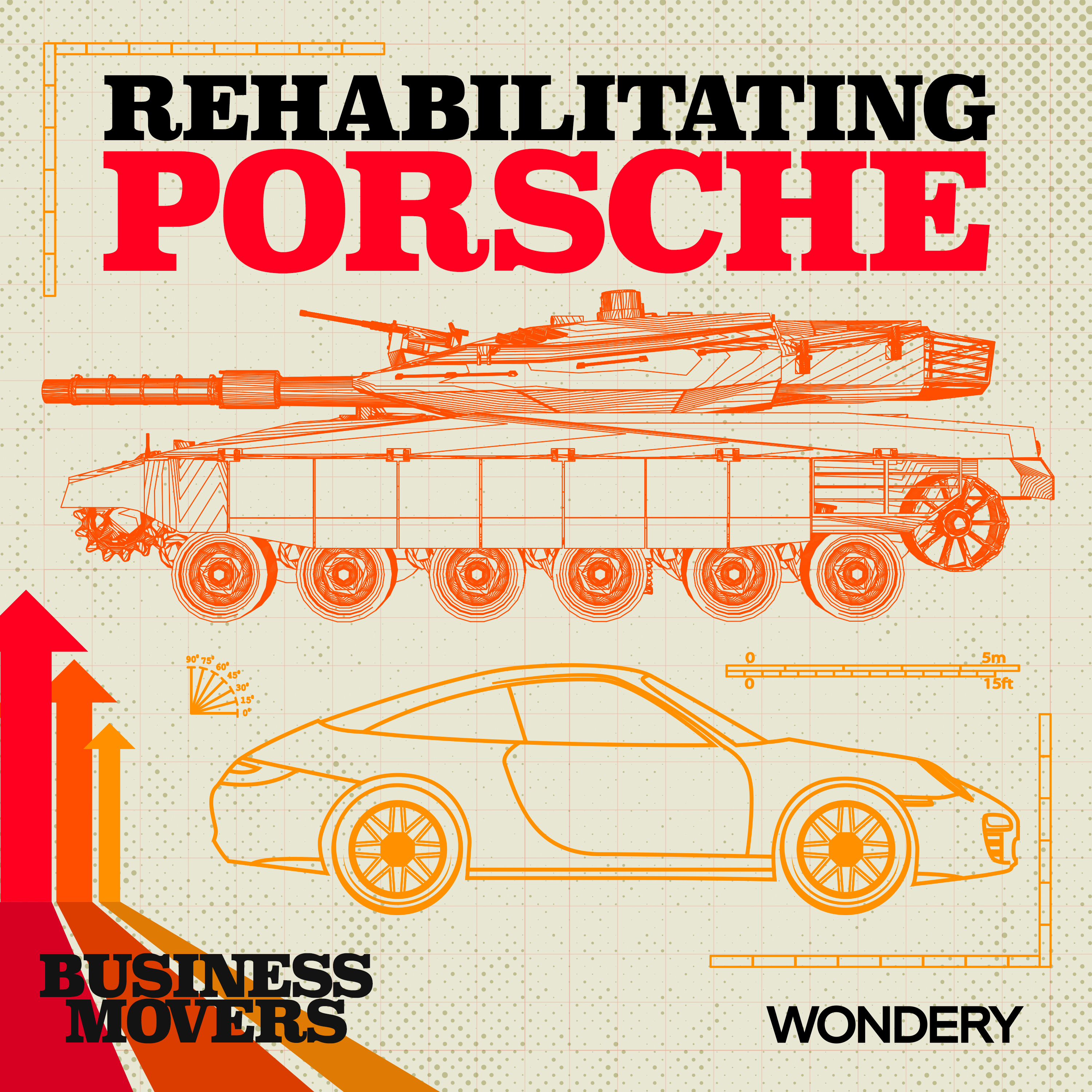
Porsche enters a golden age of its history with the launch of an iconic car and victory on the racetrack. But when world events turn car buyers’ attention to fuel efficiency, Ferry Porsche faces an internal battle over the future direction of the company.
Be the first to know about Wondery’s newest podcasts, curated recommendations, and more! Sign up now at https://wondery.fm/wonderynewsletter
Listen to Business Movers on the Wondery App or wherever you get your podcasts. Experience all episodes ad-free and be the first to binge the newest season. Unlock exclusive early access by joining Wondery+ in the Wondery App, Apple Podcasts or Spotify. Start your free trial today by visiting https://wondery.com/links/business-movers/ now.
See Privacy Policy at https://art19.com/privacy and California Privacy Notice at https://art19.com/privacy#do-not-sell-my-info.