
In short
Best-of episode on habit formation and behavior change, framed as identifying the specific obstacle to change (impulsivity, procrastination, forgetting, laziness, low confidence, and conformity) and using targeted behavioral “design” rather than one-size-fits-all motivation.
Guests
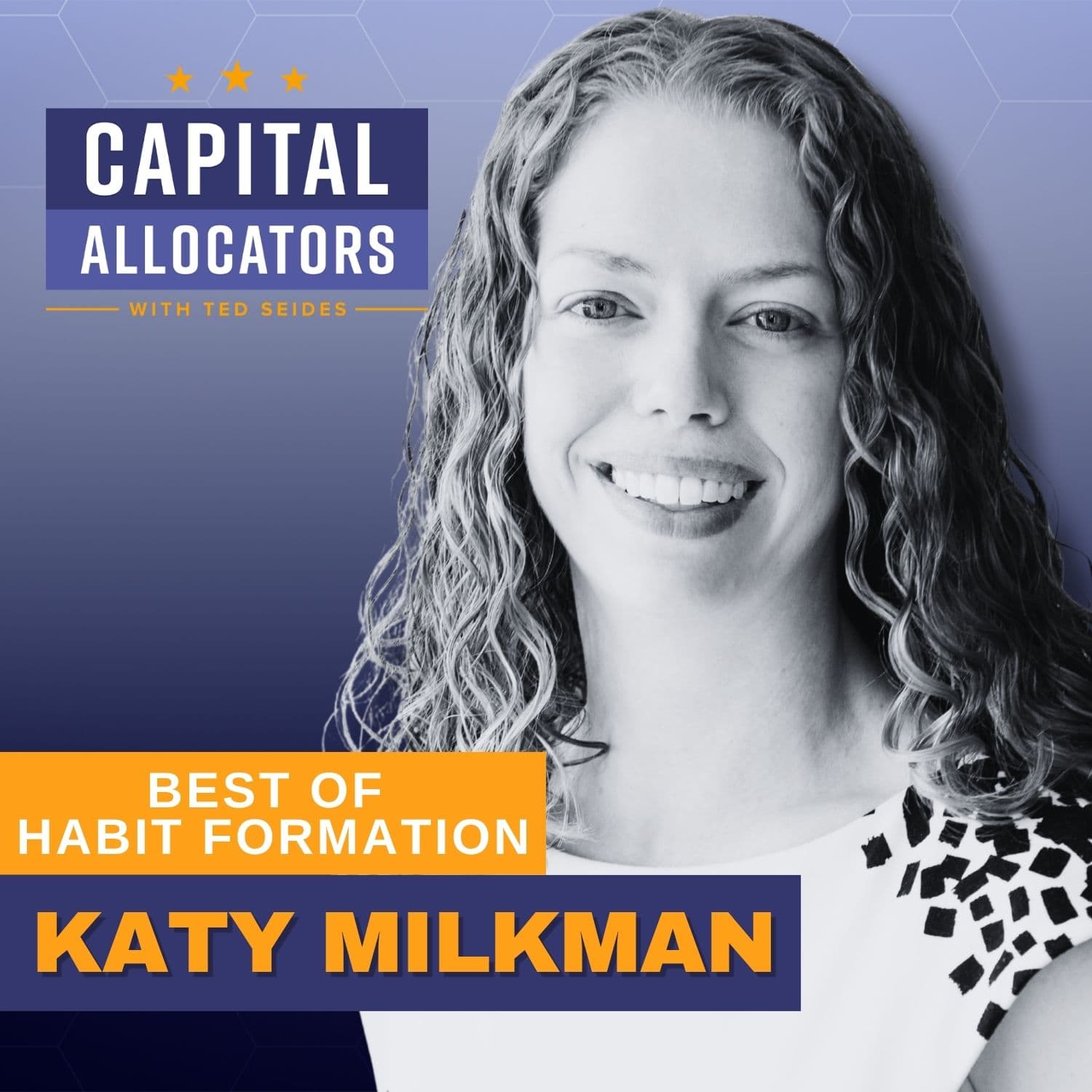
Katie Milkman, a behavioral scientist and author (How to Change). Background: studied operations research/financial engineering as an undergrad; PhD in computer science and business; became an assistant professor at Wharton; research in behavioral economics/behavior change; previously focused on “me-search” before formal research. Also referenced: James Clear (Atomic Habits) as a prior interview in the series.
Key claims
New beginnings (“fresh start” moments like New Year’s, birthdays, spring) boost goal initiation; but disruptions can hurt when things are going well. Change is chronic—no silver bullet; success comes from consistent tools. Confidence can be increased by having underconfident people coach others.
Notable examples
“Temptation bundling” (exercise paired with audiobooks/fast-paced fiction). Fresh-start effect: inviting retirement savings after a birthday yields ~30% more savings vs equal delays. Baseball study on “fresh start” from cross-league trades: helps after poor performance, hurts after strong performance. Commitment devices: locked savings accounts increase savings ~80%. Advice-to-others study: ~2,000 high school students mentoring peers improved grades by about one point on a 50–100 scale.
Written by AI. May contain mistakes. Listen to the episode to check what was said.
Chapters
Tap a time to open that second in VOCapital Allocators University Introduction
0:46 to 1:46
Overview of the Capital Allocators University and its curriculum.
“This week's Summer Series concludes with a twofer on habits.”
Capital Allocators University Introduction
2:08 to 3:16
Overview of the Capital Allocators University and its curriculum.
“Most AI tools today are very good at sounding right.”
Katy Milkman's Research Journey
5:07 to 8:00
Katy Milkman discusses her academic journey and the development of her research on change.
“We hope you've enjoyed this summer exploration and improving the investment process with some of the best conversations over the past nine years.”
Temptation Bundling Explained
8:01 to 10:54
Milkman shares her personal experience with temptation bundling and its effects on behavior change.
“I just couldn't believe how large the effects were of those small decisions.”
Insights from 'How to Change'
11:27 to 14:00
Overview of key principles from Milkman's book on behavior change.
“So all of this research turns to research, and you've just come out with this wonderful book, How to Change.”
Understanding Barriers to Change
14:00 to 14:40
Explore the barriers to personal change including laziness, confidence, and conformity.
“From the laziness chapter, I turn to confidence because another barrier to change is believing that we can.”
The Role of Fresh Starts
14:40 to 16:40
Learn how fresh starts, like New Year's, influence behavior change and goal setting.
“And finally, the last chapter isn't really about a barrier so much as the important question of how do we keep at it?”
Impact of Fresh Start Dates
16:40 to 19:00
Discover research showing that fresh start dates can significantly boost motivation and savings.
“And the new me doesn't have that baggage.”
Disruption and Habit Maintenance
19:00 to 21:35
Understand how disruptions can negatively affect good habits, especially during transitions.
“and trying to maintain good habits on the other side of that?”
Confidence as a Barrier
21:35 to 24:30
Discuss the role of confidence in pursuing goals and the challenges it poses.
“You know, I had James Clear on earlier in the year, a couple of years after Atomic Habits came out.”
Show all 28 chapters
Building Confidence Through Mentorship
24:30 to 28:00
Learn how mentoring others can enhance self-confidence and improve performance.
“When you hire five people, it jumps out at you that, wow, they all look the same.”
The Power of Mentorship in Education
28:00 to 29:02
Learn how giving advice to others can boost confidence and improve performance.
“And we didn't turn C students into valedictorians, but what we'd done was move them up about one point on a 50 to 100 scale, and it was significant with 10 minutes of just asking them to be a mentor or a coach.”
The Impact of Roommate Influence on Performance
29:02 to 30:24
Discover how our peers can significantly affect our academic and personal outcomes.
“Let's turn to conformity, which is sort of another interesting way of thinking about an obstacle in behavior change.”
Conformity: A Double-Edged Sword
30:24 to 32:25
Examine how conformity can be both beneficial and detrimental in various contexts.
“So watching this roommate you ended up with who's so talented hit the books and see, oh, they don't go out to parties on Wednesday nights.”
Understanding Procrastination and Impulsivity
32:25 to 33:34
Explore the psychological barriers that lead to procrastination and impulsive behavior.
“And that's really the way I write about it in the book as it can be an asset if you harness it correctly, but it also can be a barrier.”
Commitment Devices as Solutions for Procrastination
33:34 to 36:48
Learn how commitment devices can help overcome procrastination and improve savings.
“It's sort of like what happens due to impulsivity is that we put things off that we should be doing because I can always get to it tomorrow.”
Laziness and the Power of Defaults
36:48 to 39:52
Understand how defaults and habits can influence our decisions and behaviors.
“Odysseus or Ulysses, whichever you prefer to call him.”
Making Lasting Change: Strategies for Success
39:52 to 42:00
Discuss strategies for ensuring that behavioral changes are sustainable over time.
“What did the research show in and around laziness?”
The Science of Habit Formation
42:00 to 46:04
Learn about the complexities of creating and sustaining lasting habits.
“sort of a burst of energy for as little as a month or two can create a habit that is sticky enough to last.”
Strategies for Effective Habit Change
46:04 to 48:20
Explore practical strategies that enhance behavioral change and habit formation.
“I mean, it was just part of the reason I wrote the book because I felt like, wow, I actually feel like there is really a lot of accumulated science here that can be helpful to people.”
Surprising Findings on Habit Routines
48:20 to 51:16
Discover unexpected insights from research on flexibility in habit formation.
“What are some of the things that surprise you going in?”
Introduction to Choiceology Podcast
51:16 to 53:24
Get an overview of the Choiceology podcast and its focus on behavioral biases.
“And that turned out to be really important to repetition and to durability.”
Lessons from Podcasting and Closing Thoughts
53:24 to 56:00
Reflect on the evolution of the podcasting process and key personal insights.
“What have you learned and changed about how you've gone about the podcast?”
Influential Figures in Katy's Career
56:00 to 57:00
Katy discusses the mentors who shaped her professional path.
“But it irritates me when other people waste time, given how precious that resource is.”
Lessons from a Mistaken Career Choice
57:00 to 58:20
Katy reflects on her summer in investment banking and what she learned.
“I spent a summer as an investment banker at Goldman Sachs in college thinking maybe that's the career I wanted to have.”
Core Values from Parents
58:20 to 59:00
Katy shares the important life lesson taught by her parents.
“their business and surrounded by really brilliant people.”
Perspective on Life's Pressures
59:00 to 1:00:10
Katy discusses the importance of perspective in decision-making.
“What life lesson have you learned that you wish you knew a lot earlier in your life?”
Closing Insights and Gratitude
1:00:10 to 1:00:25
Katy and the host reflect on the conversation and express thanks.
“I've got a checklist of things I need to now go figure out.”
Transcript
Automatic transcript. May contain errors.0:06I'm Ted Seides, and this is Capital Allocators. For the second year, our summer series will share some of the best episodes of the past, curated from our favorites and yours. You can pull down many of the great ones on our Spotify playlists. This series pushes them to your regular listening feed. Our 2026 Summer Series focuses on improving the investment process. Over the next six weeks, we'll share 10 gems from interdisciplinary skill sets that will help you level up your investing across decision making, interviewing, storytelling, negotiations, and habit formation. This week's Summer Series concludes with a twofer on habits.
0:52There may be no better way to improve the investment process than to understand what it takes to improve ourselves. And we've got two of the best, James Clear and Katie Milkman, experts and authors of the wildly bestselling books, Atomic Habits and How to Change. Before we get to the interview, we're excited to introduce the next chapter of Capital Allocators University, an online on-demand curriculum with an annual in-person gathering for investment professionals committed to continuous learning. One of the great ironies of investing is that the skills that matter most over a long career are often the ones least formally taught.
1:30Things like decision-making, communication, leadership, time management, interviewing, and building relationships. That's why we've evolved Capital Allocators University into an online, on-demand experience, making those lessons accessible to investment professionals everywhere. The best careers don't compound through knowledge alone. They compound through knowledge and relationships. If you'd like to explore the curriculum or someone on your team comes to mind, visit the link in our show notes or the university page on our website. Thanks so much for spreading the word about the next chapter of Capital Allocators University.
2:04Capital Allocators is brought to you by AlphaSense. Here's something for you. Most AI tools today are very good at sounding right. But can you actually trace it back to a filing, transcript, or specific passage that drove the answer? Or are you just trusting the confidence of the output? For allocators, that's not a minor concern. A missed filing, incorrect source, or context that gets lost somewhere in a retrieval chain aren't edge cases. They're how decisions go wrong. AlphaSense is the AI platform built specifically for this. They own the content, over 500 million curated documents from broker research and expert transcripts to filings and earnings calls.
2:53And they own the retrieval layer on top of it. That means every answer can link back to an exact verifiable source. Because the answer is only as good as what's underneath it. And with AlphaSense, you know exactly what that is. See it for yourself. Try a free trial at alpha-sense.com slash capital. That's alpha-sense.com with a hyphen in the middle slash capital. Capital Allocators is also brought to you by Intap DealCloud. The best investment teams don't just find good deals. They have a process, a way of screening opportunities, qualifying LPs, managing relationships, and moving quickly when conviction is high.
3:39Intap DealCloud with Celeste brings that process to every interaction instantly. Celeste is the expert AI coworker built into DealCloud, running your firm's playbooks across every deal, relationship, and decision so your team can pursue more opportunities, act with greater confidence, and execute at a pace that was once impossible. Learn more at intap.com slash capital allocators. Capital Allocators is also brought to you by Admired Leadership. Back in April on episode 497, I sat down with Randall Stutman, the executive coach behind Admired Leadership, who's advised more than 500 CEOs, including some of the most respected names in asset management.
4:30Randall introduced me to Alex, an AI leadership coach's team built on 40 years of proprietary research into what the best leaders actually do. For investment professionals, that means your entire team gets on-demand coaching grounded in the behaviors that drive results and build the kind of followership that retains your top talent. We use Alex, and our team at Capital Allocators swears by it. Try Alex for yourself at the link in our show notes, tryalex.admiredleadership.com. Please enjoy my conversations with James Clear and Katie Milkman, both from 2021. We hope you've enjoyed this summer exploration and improving the investment process with some of the best conversations over the past nine years.
5:23Katie, thanks so much for joining me. Thanks so much for having me. I'd love to just start with how someone goes about on a path to academic research and studying change. Well, my road was very winding, so I'm not sure I'm the example of how one goes about this, but I went about it as an engineer, actually. As an undergraduate, I studied operations research and financial engineering, and then I decided to get a PhD in computer science and business, again, an engineering school that was granting the degree. And studying change was nowhere near my mind. And I had to take a graduate sequence in microeconomics to get my degree.
6:07And while I was in that class, I had sort of a revelation. The course was introducing all your classic economic concepts, but then it also blended in some of the new theories that were coming out of this new growing field of behavioral economics, which acknowledged that people are imperfect decision makers that were impulsive and overweight. present utility or present value and underweight the long-term rewards of our actions, for instance. And so all of these problems that are systematic with the way we make decisions were part of the class. And it just clicked for me. I loved it. I thought, oh my gosh, this is a perfect description of me, my life, everyone I know.
6:48It's fascinating. And once I understood that there were these mistakes people made, I started seeing opportunities in my own life to try to correct them. I started actually doing work on change initially just as a program of me search rather than research. Why can't I get myself to go to the gym? Why can't I get myself to do my problem sets at the end of a long day? Oh, here's an idea. And then it would grow into a research project. So I pivoted. And then it really all clicked for me. Actually, when I was an assistant professor at Wharton, I'd been doing research on behavioral science. A little bit of it was this change-oriented work due to my me-search interests, but it was all over the place.
7:29And I went to a seminar presentation over at the medical school at the University of Pennsylvania, and I saw this graph. There probably aren't that many people who can say their lives were changed by a graph, but my life was changed by a graph. And it was a graph showing the percentage of premature deaths in the U.S. that are due to different causes. And the largest wedge in that graph was 40 percent due to behaviors that we could change. So decisions about things like eating, drinking, smoking, vehicle safety. I just couldn't believe how large the effects were of those small decisions. The way that they accumulated was it was vastly larger than I would have expected, an order of magnitude.
8:12And that moment really changed my focus. I realized, OK, the stuff that I've been doing sort of as a hobby for fun, this me search on behavior change, if I really focus on this, there's a huge opportunity here to have a big social impact. Because if we can figure out what it takes to help people make better decisions around their health, and then, of course, you can extrapolate to other domains like their financial decisions and their decisions about their education and happiness, the accumulation is clearly much larger than I appreciated. So that's when I became really focused on behavior change.
8:45And that's what I've been really studying ever since. What was the first insight you got before you started diving in from your me-search? I love that term. The first insight from my me-search had to do with the struggle I had as a graduate student. When I was in an intense engineering program, I had to take economics classes and computer science classes and all these problem sets. and I would come home exhausted from listening to the lectures that I had to attend. And I needed to get to my work. I needed to do my problem sets and write code. But I also needed exercise because that was the only thing, frankly, that kept me sane was to be in good shape and moving.
9:28And I couldn't motivate myself to do either. I'd come home and all I wanted to do was curl up on the couch with a juicy page turner or binge watch TV. And I couldn't figure out how do I resolve this problem. I'm not getting any of the things done I needed to get done. And I came up with a solution. I call it now temptation bundling, and I've studied it in me search research. And the idea was I just only allowed myself to enjoy those temptations, those entertainment temptations when I was exercising at the gym. I actually did it with audio books because I found the sensory input from TV was a little too much for my puny little brain at the end of a long day.
10:02But I'd go the gym. I'd listen to the latest in my James Patterson novel or sometimes it's Harry Potter or Hunger Games, Twilight. Pick your lowbrow fiction that's fast paced. I couldn't wait to get there. I'd come home, rush to the gym to find out what happened next. Time would fly while I was at the gym. I didn't even notice it was passing. So I got a great workout and I came home and I was ready to get my work done and my grades improved, my happiness improved. It was fabulous. And I realized, OK, what had happened there was I had recognized the challenge of getting myself to do the things that were good for me in the long term required me to find a way to make them instantly gratifying, make them rewarding in the short term, or else I would never motivate myself to do it.
10:46And so I recognized that barrier. I found an engineered solution. And for me, it was a huge, huge gain. And temptation bundling, of course, I have since realized and recognized can help with lots of things, not just getting you to the gym, but you can use temptation bundling as a lure or a hook to get you to do things like studying by only allowing yourself to pick up your favorite coffee drink or other snack on your way to hit the books or only letting yourself listen to your favorite podcast while doing household chores or cooking a fresh meal for your family. There's all different ways that I've found a temptation bundle that can make it exciting and fun in the moment to do the thing that's good for you in the long run.
11:27So all of this research turns to research, and you've just come out with this wonderful book, How to Change. Why don't we frame this by having you kind of take me through the highlight outline of the book, and then we can dive in. Well, the book is organized around a key principle that I've come to believe is the most important insight from all of the research I've done on behavior change. And that is that in order to successfully achieve change, we first have to understand what is the specific obstacle that we're up against in a given situation. The situation I just described where I was having trouble getting to the gym, my obstacle was impulsivity.
12:04It wasn't tempting to go to the gym. It was tempting to sit on the couch. And so I didn't have the willpower to actually get myself off the couch and to the gym, and I needed to make it tempting to exercise. So that's one example of a barrier. It's really different if the barrier is, say, forgetting. You can't remember to take your medication, and that's the reason you're not doing it. You need a totally different kind of solution. And I've seen that too often organizations and individuals that are trying to change don't recognize the importance of figuring out what obstacle they're up against.
12:36They instead just look for sort of a shiny, nice-sounding solution, a one-size-fits-all, like let's set big audacious goals or visualize success, and that'll get us there. But if you don't take account of what is actually blocking change, what are the barriers, you can't use the best scientific principles to solve the problem. So the book is organized around these different problems. So the first chapter is about the getting started problem, which is just how do you get yourself over the hump from saying, yeah, someday I'd like to, to actually taking action or being ready to take action. I start with the getting started problem.
13:09Then I pivot to impulsivity, which is essentially temptation, the challenge that we overweight things that are good for us in the short term and underweight the value we'll get in the long run. The next chapter is about procrastination, which is very closely related to impulsivity. From there, I turn to the forgetting problem, which I could probably just as easily have termed flake out. what's salient, what comes to mind, whether or not we can keep it top of mind when it needs to be, which I actually think people underappreciate the importance of and can be really valuable to get that right. From there, I turn to the challenge of laziness, which I actually would argue is a good design feature for the human mind, that we prefer the path of least resistance.
13:54We generally look for the easy way out. It makes a lot of sense. It's very efficient. And yet it creates challenges when we want to change. So laziness is a big one. From the laziness chapter, I turn to confidence because another barrier to change is believing that we can. So figuring out how to make sure we have the confidence and the self-efficacy, to put it in the term a psychologist would use, Albin Dura's word, to actually pursue change is really important. And then from there, I turn to conformity. And this is where the social comes in. Who are your peers? Are they obstructing change? Are they supporting change?
14:34Are they showing you the way? Are they showing you that it's impossible? So conformity is a really important barrier and sometimes solution to change. And finally, the last chapter isn't really about a barrier so much as the important question of how do we keep at it? How do we maintain change and change in the long run? There's a lot to unpack. And I think we should start at the top. And then maybe I'll just pick out a few. And particularly, we can keep going back and forth on this personal behavior change and some of it relating to the financial markets and investing. So getting started, obviously, what comes to mind are New Year's resolutions or goal setting or whatever it is.
15:14So what is it that helps people get started when they're trying to make change happen? Well, first, I love that you said what comes to mind is New Year's resolutions, because Because that small insight that New Year's resolutions are sort of a special moment is actually what got me going on research on getting started. So I was giving a talk at Google about some of my work on how we could nudge people to make better financial decisions, better decisions about their health. And I got this question that was so, I thought, important and unstudied as far as I could tell, which was, OK, Katie, we're convinced that we should be using these tools and tactics to change our employees' behaviors.
15:53They'll be more productive and healthier and more excited. But is there some ideal time to provide them with these opportunities? Is there some ideal time to give them a nudge? And I have the same insight that you just mentioned. New Year's resolutions. I know New Year's is a thing. Forty percent of Americans make resolutions. Something's going on there. There's something about that timing. But what it led me and my collaborators to realize when we started thinking carefully about this question and this problem is that New Year's is actually just one moment that has a feature that's really important.
16:26And it's shared by all these other moments. And that feature is that it feels like a new beginning. It essentially marks a chapter break in the way we think about time. And when we encounter a new beginning in life, we feel like whatever happened in the last chapter, well, that was the old me. And this is the new me. And the new me doesn't have that baggage. The new me can do it. you know, last year I didn't make good investment decisions or last year I didn't quit smoking. Whatever the failings I had last year, I feel like that's old news and the new me can do it. And I'm also more likely to step back and think big picture about my goals at these moments that feel like chapter breaks in life.
17:04So what we've found in our research is that New Year's is just one example. There are lots of other dates ranging from the start of a new week or a new month to the celebration of a birthday or even a holiday that's associated with a fresh start. It can even be something like the start of spring. There are all of these moments that feel like chapter breaks. And of course, you can get to real chapter breaks that aren't just psychological and see even bigger effects, like you move to a new home or you end up with a new job, you become a parent. Those moments also demarcate time for us and change our motivation.
17:38So we've seen this both descriptively when we just analyze data. We see that people set goals more at these dates. They go to the gym more frequently around these fresh start dates. They're more likely to search the term diet on Google around these dates. And we can use it as a nudge or a lever when we encourage people, for instance, to start saving in a 401k plan who aren't yet saving. And we invite them to begin saving at a future date. If we say, do you want to start saving on your birthday or after your next birthday, that turns out to lead to about 30 % more savings in the next eight months than inviting someone to start saving at an equal time delay.
18:18So if your birthday is in three months, we flip a coin, randomly assign you to either get invited to save after your birthday or in three months. So identical offers, but one calls to mind this fresh start date, and that one that calls to mind the fresh start date leads to more savings. So these are all different ways that we've seen we can use time and time markers to create a sense of a new beginning and motivate people to change at those moments. So on the other hand, as you think about this, like let's say you have a good habit formation, you can imagine you're in a great workout regimen and then you go on vacation and it breaks it.
18:56How do you think about the other side of that, of these periods of times that come up that are disruptive and trying to maintain good habits on the other side of that? Yeah, I love that you asked that because there's this ugly underbelly of the fresh start effect, as we call it, which is that disruption is good when things are not going well. Disruption is good when you have a new goal you need to get motivated to start. But when things are going well, disruptions are harmful. And there's this wonderful study that my former student, Heng Shen Dai, who's now a UCLA professor, did as her dissertation project.
19:30She and I had done this work I just described on the fresh start effect together, and she wanted to explore whether it might be a double-edged sword. We had an intuition and some early data suggesting that it might be harmful. And it made total sense theoretically, but she wanted to collect real data on it. So she ran some experiments showing this, but my favorite study is one that she ran looking at baseball players. She looked at baseball players who were either traded across leagues in the middle of the season or were traded within leagues in the middle of the season and compared what happened to those players depending on whether they'd been performing really well earlier in the season or really poorly.
20:08And the reason she compared players who were traded across versus within leagues is one gets more of a fresh start than the other with that change. When you're traded within league, your season-to-date statistics just keep on trucking. They keep on tracking. But if you're traded across leagues, you get a fresh start, a clean slate. They wipe that off and you have to start from zero with your batting average and so on. So a bigger fresh start. And what she found is that for people who were traded across leagues and are getting this bigger fresh start compared to people traded within leagues, there was a bigger boost if you'd had a rough season in terms of performance.
20:46So you get a little benefit from the fresh start either way. It might just be regression to the mean. But where you can see something real is it's a bigger effect when you're traded across leagues with this fresh start. But the ugly part is if you were doing really well, you were an above average performer and you get traded across leagues and have to start from scratch. Now you get a bump down. So it's harmful because you lose that traction, you lose that momentum. And so there's other ways that this has been looked at as well, but I just love that illustration. And it does highlight that we have to be really conscious when things are going well of what may disrupt us, whether it's a vacation, a reset in the way our performance is being tracked at work because we have monthly sales records, for instance, whatever it is that could disrupt our flow and our success that can be harmful.
21:31And if we can plan for it and try to figure out how to avoid the disruption, that may be beneficial. So I love the way you frame this book. You know, I had James Clear on earlier in the year, a couple of years after Atomic Habits came out. And a lot of his prescription was, okay, thanks, Katie Blake. We now know when to start. And he said, okay, we're going to make it easy. We're going to do these couple of things. You walk through the other side, which as you mentioned, all these obstacles and how to get past the obstacles. And I'd love to just pick apart a few of them. And I want to start with confidence.
22:00So why don't you first describe, you did a little bit earlier, but what is it that is the obstacle that confidence creates in trying to make change happen? Yeah, it's funny. And I have to say, by the way, that it was a little bizarre as a behavioral scientist to write a chapter about boosting confidence because we spend a lot of our time. One of the things I teach all my Wharton students is we're all overconfident. We all think we're above average and it's really harmful. And so it is peculiar to be focused on it. But of course, while it's harmful to be overconfident in many contexts, if you're trying to pursue goals and you don't believe you can, you don't get as far.
22:36And in fact, overconfidence, while I would never prescribe it, but it does have some advantages for goal pursuit. And you can see why it might even be that we ended up with that trait in the first place, that it might get you up in the morning. So it was funny to write this chapter. And it was funny, actually, the first piece of email I got complaining about my book was from a scientist friend who studies overconfidence who was like, are you sure you should have had a chapter that was telling people to be more overconfident? And he was right. I tried to walk the line and said, yes, I agree. People are generally overconfident.
23:11That's bad. However, this book is about what are the things we can do when we see a barrier? And one barrier is sometimes people just don't believe they have what it takes. And so they won't put in the effort. They won't lean in. And I have to note, I just said lean in. I wasn't really meaning to harkage that, but maybe it was subconscious. It is the case that women and minorities, the circumstances they face, confidence tends to be a bigger issue for those subpopulations. And so I think it was particularly important to me. I've sometimes studied bias when I'm not studying behavior change. It was important to me to have something in the book that I also felt would particularly benefit those groups.
23:55So what are the mechanisms that you'd want to put in place? You could take that as an example of, say, people are interested in making sure they have a more diverse workforce. How do you go about getting past that confidence obstacle? Well, there's really different answers for the organization that wants to hire a more diverse workforce and for the individual who is trying to pursue their own goals and is facing a world where they are hearing negative stereotypes and need to step up to the plate in spite of all the negative feedback that they might get. I'll tell you one study. We found that if you hire in sets, like you hire five people at a time instead of one person at a time, people choose to hire more diverse groups because diversity is not a property of an individual, but it is of a group.
24:45And if you value diversity, even if you're trying hard to take it into account and you want to work towards a more diverse goal, when you're hiring singletons one at a time, you may one at a time hire hire people who all look the same. When you hire five people, it jumps out at you that, wow, they all look the same. This is not OK. And so you're more likely to hire diverse groups when you hire in sets than in singletons. When I focus on the barrier of self-efficacy or self-confidence, it's more thinking about how can we equip the individual who wants to achieve more and has been facing feedback that makes them underconfident or a world that makes them underconfident what can be done to address that specific issue.
25:29So what can we do as individuals? So my favorite insight in the chapter comes from research that was done by Lauren Eskris-Winkler, who's about to be a new professor at the Kellogg School of Management at Northwestern. And she had this really brilliant insight when she was studying people and trying to figure out what separated high achievers from low achievers and doing all these interviews. And what she was really startled to discover was that even low achievers had a lot of great insights about how to be more successful. So salespeople who were struggling, students who were struggling, they weren't quite as clueless as she had envisioned.
26:11And she felt that one of the big barriers, though, was they lacked confidence in their abilities. And this seemed like it was a big blockade. She noticed that over and over again, they were being given advice when someone heard that they were struggling. Someone sort of put their arm around them and give them a bunch of advice. Here's my tips on how to get better. That was actually really quite discouraging to have everyone you meet doling out their two cents as if you had no insight into your own condition and how to get better. And she wondered, what if we flip the script? If confidence is actually part of the problem, what if instead of putting our arm around someone's shoulder and coaching them, we actually asked them to coach someone else?
Read the full transcript
26:51What if we asked people who weren't achieving as much as they'd like to for advice on how to get better on achieving their own goal and to give it to someone else? And she thought a few things might happen here. One is it might boost your confidence. That was sort of the biggest thing, right? It puts you on a pedestal. You're a role model now. I'm telling you, I believe in you. You're so great that I want you coaching someone else. But she thought that would work in coordination with a couple other things. One is it might lead people to introspect a bit more about what could work for them as they're trying to dredge up insights about what advice to offer.
27:24And then it would feel hypocritical to coach someone to behave in a certain way and not behave that way yourself. So she's run a number of random assignment trials, and one of them we ran together. Looking at this, my favorite one was a study with high school students, about 2 ,000 of them where we randomly assigned half of the students to give advice to their peers at the beginning of the second semester on how to be more effective in their study strategies. So we said, we want you to give some coaching to younger peers who are below you in school. How do you think they can study more effectively?
27:56And they spent about 10 minutes answering questionnaires to give advice. And then we had a control group that didn't go through this exercise. And we looked at the students' grades at the end of the third quarter, and we found that the students had significantly improved their grades who had been prompted to give advice in two areas, math, which was one of the areas we originally said we'd look at, and also in the class they told us they most wanted to improve in. And we didn't turn C students into valedictorians, but what we'd done was move them up about one point on a 50 to 100 scale, and it was significant with 10 minutes of just asking them to be a mentor or a coach.
28:33So I think the insight at the heart of this is when we give advice to others, when we are put in the position of mentors, it has all sorts of benefits, including boosting our confidence. And this is, I think there's a reason that programs like Alcoholics Anonymous not only give you a sponsor, but turn you into a sponsor when trying to help you stay sober. Because by being in that role model mode, you actually benefit immensely. That's just one insight. There are others, but I think that's my favorite. Let's turn to conformity, which is sort of another interesting way of thinking about an obstacle in behavior change.
29:10Conformity is so interesting. And one of my favorite studies that illustrates this, which I talk about in the book, was done by UCSD economist Scott Carell. And he was interested in what the effect is of the roommate you're randomly assigned to live with your freshman year in college. And he actually got data from his alma mater, the Air Force Academy, to see whether or not the roommate you're randomly assigned changes your grades. And he found that your roommate assignment does matter for your own performance, that being assigned a roommate who did better on the verbal SATs lifts you up and assigned to a roommate who did worse pushes you down.
29:49So that advice you got from your parents growing up to hang out with the right crowd, it does matter. The people we're surrounded by influence all sorts of our decisions. By the way, they influence our interest in saving for retirement. They influence our interest in becoming an athlete or not. So they change us in all sorts of ways. One of the most potent ways is by showing us what's possible and giving us a sense of what we're capable of. So when we see other people who resemble us achieving more, we think, oh, that's doable. And also we may pick up insights about actually how to achieve. So watching this roommate you ended up with who's so talented hit the books and see, oh, they don't go out to parties on Wednesday nights.
30:33And that seems to turn out well for them. It can be that you realize, oh, I can emulate that. One of the things that I've studied that I find really interesting, though, is that people don't always pick up as much as they could from the people who surround them to get better at doing whatever it is they want to do. So we did this study where we encouraged some people to deliberately copy and paste a strategy that was working for someone who had a similar goal. And that actually improved outcomes for these people. So it suggests that while we just naturally, maybe through osmosis or observation, we see plenty of things rubbing off from the people around us, there's an opportunity to do even more and use conformity actually to be an asset by being really conscious of who are the people in my social network who are achieving at this level and what are they doing?
31:25and let me do it too. I'm really curious how this plays out in settings where they're either zero-sum games or it's not just a positive for everyone. So study habits, everybody could have better grades, but in investing, you could think if someone has a novel strategy and other people start copying it, it may not last. So how do you think about where conformity in those situations sort of is beneficial and where it might not be? Such a great question. It's so interesting. It certainly seems like in that context, right, you're going to get benefits if you're a fast mover on conformity, right? If you follow the herd quickly enough.
32:04But you're right that if you wait too long and you conform slowly, then there's likely to be little benefit left. And perhaps, you know, you'll even get stuck holding the holding the stock that was a bubble, right? and you bought it at the high. Oops. I'm just thinking about GameStop. So it's a challenge for sure. And I think this is a really interesting thing about conformity is that just like fresh starts, there's pros and cons. It's like a double-edged sword. And that's really the way I write about it in the book as it can be an asset if you harness it correctly, but it also can be a barrier.
32:41It's hard to know what to say in terms of how do you detect when it will be one or the other? Like, how do you know? And it probably I feel like if I were a mathematician right now, I would try to write a model of what fraction of other people need to have already taken this action before it ceases to be advisable for you to follow. And you could sort of imagine trying to figure out the moment when it tips and you wouldn't want to be conforming because now in a zero sum game, you're actually losing out. But I guess like short of having a precise answer. I think the best answer is the faster you jump on the bandwagon, the better.
33:18And if you feel that you're late, maybe it's not actually going to be useful to do it at all in a zero-sum context. So I guess that leads us right into procrastination. So even in that situation, when we know that's the outcome, what are the things that prevent us from jumping on that bandwagon early? Yeah, procrastination is such an interesting barrier to change. And it relates closely to impulsivity. It's sort of like what happens due to impulsivity is that we put things off that we should be doing because I can always get to it tomorrow. But today I have something that's more instantly gratifying.
33:51What I think is really interesting about procrastination is that the best solution seems to be a solution that we're really used to having other people impose on us, but uncomfortable imposing on ourselves. So let me explain what I mean by that. It's common for the world, or I'll say policymakers, teachers, parents, to set up rules and regulations and systems that help us avoid procrastinating or making impulsive decisions. So things like deadlines in school for your assignments instead of everything you have to do for a class all being due at the end of the semester at the same time, help us not procrastinate.
34:29And we're very used to that. Speed limits help us make the right choice in a situation where our impulses would lead us astray. We're used to being fined for bad behavior or having rules imposed on us by other people, but we're not so used to imposing them on ourselves. And the best scientifically proven solution I've seen for procrastination, for a lot of willpower problems, is actually constraining ourselves using what economists call commitment devices or tools that prevent us from making decisions, from procrastinating, from making choices that will be bad in the long run and impose some sort of penalty on us, in fact, if we do.
35:10So my favorite example of this is a study of people who are customers at Green Bank, which is a bank in the Philippines. And the challenge there was that lots of people had leaky savings. They wanted to save more, but a festival, a birthday comes up and the money comes right back out. And the experiment that I find so interesting about commitment devices, about procrastinating to actually build that nest egg, said, what if we basically make it impossible for you to take money out of your account? What if we offer you a locked account where you can put money in, but you can't take money out until you've reached a predetermined savings goal or a predetermined date?
35:49And, of course, there was a lot of skepticism. And will anyone want such an account? So this experiment was run where half of the customers in the population were just offered a standard savings account with a standard interest rate. And the other half were also offered that standard account or this commitment account, which had exactly the same interest rate as the standard account, but these restrictions on access to your funds. So an economist would say no one should want that. It's a worse account. But actually, about 30 % of people offered this account took it. And if you look at the two groups, the one that was offered the account and the one that wasn't, regardless of whether people use the account, they saved 80 percent more.
36:29So those 30 percent who said, yeah, I'm going to put some money in the account, they saved so much more than 100 percent. If you look at 100 percent of the people, there's an 80 percent increase in savings. So this is a really powerful tool. Finding ways to bind our hands is the story of Ulysses in the Odyssey, right? Right. Odysseus or Ulysses, whichever you prefer to call him. The story of binding his hands to the mast is the original story of a commitment device to avoid the temptation of shipwreck on an island occupied by sirens who sing sweet songs to lure sailors closer by where they'll inevitably die amid the rocks.
37:05It's a really powerful solution, but one that people tend to underuse and underappreciate. So we have a great corollary of that in our world with locked up funds. You think about private equity funds and venture capital funds. If the benefit is so large, even though you're tying your own hands, are there situations where people are willing to pay for that benefit? You can imagine a situation where even though I could say, well, I'm restricting my options, that should be worse for me to be in this locked account. If I do it, I'm going to have so much more money that I should be willing to pay something for it.
37:39And I'm kind of getting at, is there a corollary with higher fees in certain structures that people generally tend to want liquidity? They tend to want their money. They tend to want to pay less. What have you seen in terms of the costs of that lockup? That's a great question. there are websites that make money by selling you commitment devices and their cash commitment devices where you pay the website to take your money take your credit card information assign a referee and find out what your goal is and that referee reports to the site on whether or not you've achieved your goal and the site sends your money away to a charity of your choice and they have charities you might hate.
38:25So they choose contentious charities on either side, like NRA and gun control charities, right? And you pick your poison and they take a little cut of that. And so people pay fees to have these websites take money away from them if they fail to achieve their goal. So I'd say that's sort of one way of paying in a sense for, it's not exactly for less liquidity, but it's paying to be fined. In the work I did actually about temptation bundling, we offered people who wanted to exercise more the opportunity to pay us to take their own iPod and lock it in a monitored locker at the gym so they could only access it when they were exercising.
39:03So again, paying us for less freedoms. And more than 60 % of people in our study, a self-selected group, right? These are people looking for ways to exercise more, but more than 60 % said, that sounds like a great service, sign me up. And my recollection is actually one person offered us$100 and I think we offered her the service. So the median willingness to pay was order of magnitude, maybe$7 for a month of locked iPod at the gym. So maybe about what you'd pay for a locker actually. But there does seem to be some appetite for these kinds of constraints. So I've always been curious about laziness as an obstacle and really laziness and inertia in the sense that it's so much easier to do what we're in the habit of already doing.
39:52What did the research show in and around laziness? There's sort of two big buckets for the laziness work that I find interesting. And the first is on the power of defaults, which I think is a really well-studied and fairly well-known topic, but it relates to laziness. And it's so important, which is that whenever there is an option that will take effect automatically if I don't do anything, it's dramatically more likely that people will follow that path. So if I'm defaulted into saving in a 401k when I sign up with a new employer, if I'm defaulted into being an organ donor by my country's government, but I can easily opt out, if I am defaulted as a doctor into prescribing generic versions of drugs rather than brand name drugs, you see this huge increase at the rate in which I do these things.
40:45relative to if the default is flipped. So these are enormous effects. Some of the biggest effects in behavioral science, even though it's normally a simple matter of like filling out a form or checking a box somewhere to get out of it, we take the path of least resistance. And so that actually means that choosing defaults wisely is a way we can set ourselves up for success in all different paths of life and all different domains. So that's the first thing about laziness. And that's the easy one. Like when it's a one-time decision and you can set a good default, it's great. The problem is that a lot of things don't lend themselves to defaults.
41:21And that's where I think habit becomes really important because a habit is essentially the default mode we're in for repeated behavior. It's what we go to on autopilot without thinking a lot about it. And so there's a big opportunity to leverage laziness to improve our outcomes once we recognize that by being really deliberate about the habits we form. And there is research suggesting that is possible, that by constructing habits through cue-based routines that are repeated in sort of consistent environments and consistent ways at fairly consistent times, and then where we reward ourselves in some way each time we enact the behavior, doing that with sort of a burst of energy for as little as a month or two can create a habit that is sticky enough to last.
42:11And that's been written about a lot before. The Power of Habit is a great book on this. I think Atomic Habits does a really nice job treating the literature on how habits are formed as well. But it is a potent tool in our arsenal when we face laziness to try to figure out, okay, How do we make it either we make it the path of least resistance, either through default or through building a habit deliberately to do this thing that's in our long term best interest? We always run into these situations where you've started at a fresh start and you've considered these things and then, you know, whatever it is, losing weight, a better diet.
42:46It just kind of dies down. So you mentioned this up front and I know you closed the book with this idea of like, how do you make these changes last? I think this is the most important question. How do we make change last? And if I've spent the last 20 years studying change, I think I'll spend the next 40 years, hopefully, I hope to have a good long life and a good long academic career, learning more about this because I think we've only scratched the surface. But I will say for a while when I was doing this work, I had a fantasy that I have since abandoned. And the fantasy was that there was sort of a silver bullet, a solution, a set of techniques or tactics that if we just focused on for a short period of time, that then forever after you could have created change.
43:34and I no longer believe that. What I have found in my research and so many others have found too is that it's really about consistency and treating these obstacles as chronic rather than temporary. And I had this wonderful conversation with a collaborator and friend, Kevin Volpe, who's a medical doctor who studies behavioral economics. And I think he said it really beautifully when he pointed out that when we're treating a patient who comes in and, say, has diabetes, we don't expect to sort of put them on insulin for a month and then take them off and have them be cured. We know that it's chronic and that they'll need for the rest of their life to use the strategy, in that case insulin, to solve the problem.
44:19But we think about behavior change differently somehow. We expect to find these solutions where it's sort of one and done. And in reality, that is not true. In reality, all of these obstacles that I've described, they're features of human nature, and they are chronic. They're with us for our whole lives. It sounds very pessimistic, as I say it, but I actually, I don't have a pessimistic outlook on it at all, because I think once you learn these insights and figure out what works for you, continuing to do it shouldn't be so hard. For instance, temptation bundling is a joy for me. It hasn't been hard to keep doing that my whole life, to keep linking things I love with workouts and having a good time when I'm at the gym.
44:57That's not a challenge. It's just, I don't think that I should stop doing it because now I've built my gym habit and I'll just go get on the treadmill and I'll, a minute in time we'll fly and I'll do it every day without that hook. I recognize I need the crutch. I need the strategy. And so I think that's the right way to think about change is that we need to build up a set of tools and strategies that help us get where we want to be and that use the best science available to do that, but don't expect it to be, I tried it for a month or I used it for a little while and now I don't need it anymore.
45:28It's rather continual. If becoming a mentor or coach helps you achieve your goals more, don't do it for a month. Keep mentoring and coaching other people. I have an advice club of other female professors with similar career goals, for instance, and we coach each other regularly when one of us, a new opportunity comes up and we're not sure how to handle it. We reach out to the rest and we get benefits from social insights, but we also get benefits from coaching each other. And that's not going anywhere. I plan to do that forever and it continues to help me. So we can just keep doing these things instead of expecting them to be quick fixes.
46:04So in addition to your own temptation bundling and your advice group, I'm curious, as you've read this book and done the research, what other of these strategies that you've espoused have you actually put into work in your life? Oh my gosh, so many of them. And it makes my life so much better. I mean, it was just part of the reason I wrote the book because I felt like, wow, I actually feel like there is really a lot of accumulated science here that can be helpful to people. One thing I do a lot is copy and paste. So I mentioned this benefit of emulating other people. My friend, Angela Duckworth, who's a brilliant psychologist at the University of Pennsylvania, we co-direct a center on behavior change for good.
46:48We spend a lot of time working together. And one of the things when we first became friends, we both noticed we were doing is we'd we'd see something that the other person was doing that was really smart and useful that we weren't doing. And we would just say, oh, my gosh, I have to start doing that. Like, I noticed she would always when she was walking across campus between meetings, she always had a call scheduled for that time slot. So she was getting work done while she was commuting. And I was like, that is so smart. You get another 30 or 45 minutes of meetings into your day and you can be done that much earlier and have more time for relaxation in the evening or just get more work done net net.
47:23So I started copying and pasting that. And she noticed that there were certain kinds of emails I get over and over again. All professors get, you know, like, can I work in your research lab? Are you taking graduate students? And then I had prefab templates that I would cut and paste and literally copy in. And she was like, oh, my God, I haven't done that. I rewrite a new email every time I get this message three times a week. I can't believe it. So, you know, we're just like copying each other. And I realized I should do that more deliberately, more often with more people. So I definitely use the emulation method a lot.
47:53And I absolutely surround myself with people who I look up to and who I see as sort of just better than I am in general at achieving whatever it is I'm trying to achieve. Those are the kinds of friends I love having, the kinds of people I love working with. They stretch me to be better. They show me what's possible. And so I do think that socially there's a lot of ways that I use these techniques that I hadn't mentioned. Of all the research you've done, you know, you start with hypothesis, you do all this testing. What are some of the things that surprise you going in? My most surprising finding had to do with habits.
48:30And it had to do with a long-held belief that, well-supported belief based on a lot of correlational data, that if you want to form a habit, the best thing you can do is have an incredibly strict, systematic routine. And I thought that sounds right, right? The same time and place every day for this behavior, and that's how we build something that's sticky. So I did this experiment with Google with a collaborator, John Beshears of Harvard Business School and a few other folks who were involved as well. We convinced them to let us run this experiment with about 2 ,500 of their employees to try to help them build lasting exercise habits.
49:13And we ran a program for a month. And then the question was, how durable would the change in their exercise habits be after that program ended? And I've already caveated a lot. A lot of it's going to disappear, but some of it will stick for at least a little while when you try to build habit. OK, so we tried two different versions of the program. One version was based on this model we had in mind that consistency is key. So we rewarded people and encouraged them to exercise at the same time every day when they went to the gym. And we got people to make their gym visits so that there were 85 % of those gym visits that they made during the course of this program were in the same two-hour interval when we sent them a reminder to go and so on.
49:55The other group also told us an ideal time that they like to go to the gym, and we reminded them to go at that time. But we encouraged them to mix up their routine more so that sometimes they went at that ideal time and sometimes they went at other times. And this group, about half of their workouts were in that consistent window. So we've got 85 % in one group going in a consistent time, 50 % in the other. And then the question was, we have two groups. They're going at the same frequency, but in different ways. One is more rigid in their routines. The other is more flexible. Whose patterns will last longer?
50:28So the month of encouragement ends. And we look and we were startled to find that the rigidity was harmful. What we found is that that group, they went ever so slightly more often. They did sort of form a habit around going at that magic time a little bit more often than the group that had a more flexible schedule. But if they didn't make it at their usual time, they didn't go at all. So it was 7 a.m. or bust, say. Whereas the flexible group, they went ever so slightly less at 7 a.m. than that rigid group. But if they didn't make it at 7, then they'd go at noon. And if they didn't make it at noon, they'd go at 5.
51:05So they had backup plans. And they, instead of forming a if-only routine, they'd formed a no-matter-what routine. They'd become more flexible and consistent in their behaviors. And that turned out to be really important to repetition and to durability. So that was a really surprising finding to me. it went against what I thought I knew about the way habits form, because we do know it's important to have sort of some degree of consistency and cue and reward. But what we learned is you can overdo it and that it is important that you be flexible and recognize life is full of curveballs and you have to be able to pivot when you get those.
51:39Now, I want to ask you a couple of closing questions. But before that, I'd love to talk a little bit about your podcast. Why don't you describe sort of what choiceology is and we'll go from there. Yeah. Thank you for giving me the chance to talk about it. Choiceology has been such a fun project for me. I've been hosting this podcast that's sponsored by Charles Schwab for almost three years now. I can't believe that's true. We only put out about 12 episodes a year. We have two short seasons. And each episode is built around a behavioral bias that has been well studied and that can be a barrier for investors to make good decisions.
52:15So things like loss aversion or outcome bias, like overweighting the outcome and underweighting the process that leads to that outcome. So we'll tell a story that helps illustrate the bias. It's a story-based podcast, something from history or interview with an athlete who had an interesting experience that illustrates it. And then I elaborate on the science and the bias in particular and interview a expert from my field who studied the topic to talk about why does it arise? What's the research show on it? And how can we try to dodge this particular bullet? So it's really fun. Each episode's about 35 minutes just right for a commute.
52:56And it's been one of the neatest things I've ever done. It taught me a lot about storytelling, which was really helpful. The book, some of the stories actually ended up in the book because we've done episodes on topics like habit and actually the power of advice giving, which we felt was pretty relevant actually to anyone who's thinking about how to be more successful with their finances. And it's just been really successful. I had no idea that, anyway, you know, podcasting is a big market. So there's a lot of listeners out there and it's really fun to hear from them and hear how it's helping them make better decisions.
53:24What have you learned and changed about how you've gone about the podcast? When I first started doing it, I didn't prepare for interviews, which is sort of embarrassing and pathetic. I don't know why. What was I thinking? The first season was with Dan Heath, who's fantastic. And then he moved on to doing other things, and I got invited to take over. And he's not a scientist. He's a writer. The first season, the science interviews were very short, like three minutes at the end where an expert would sort of elaborate. So when I started going into it, I was insistent that I was going to do the interviews with the scientists.
53:57It used to be that like a podcast producer actually did them and they just stuck them at the end. But I was like, these are my friends and my peers. I'm certainly doing this. And I thought, OK, if it's going to be a three minute snippet where they just explain what the bias is, I don't need to prepare for that. I'll just say like, explain hindsight bias. What is it? But what I then realized is that I wanted to know a lot more than just what is the bias. And I wanted to have a conversation. And it slowly evolved to be a much larger portion of the show from three minutes to maybe 10, 15 sometimes, you know, like Danny Kahneman's episodes longer.
54:32And I had started out not needing to prepare. And then once the podcast format changed, I was like, wow, I really need to write down a set of great questions and have a plan, which is funny. There's a chapter in my book that talks about the importance of planning that I was doing it so poorly. But that was a big change in the formula and the format and a big learning for me is how important that was to making sure the podcast went really well. Okay, well, Katie, before I let you go, I need to ask you a set of closing questions. So what's your favorite hobby or activity outside of work and family?
55:07I love exercise, as you probably gathered a little bit earlier. I was an avid tennis player when I was young. I played Division I tennis. And it's part of me, that need for physical exertion and activity. It feels great. And hiking is this wonderful way to get it in, but in a beautiful environment without any stress or competition. I love being out in nature and breathing the fresh air and feeling my heart rate increase. And so it's just one of my favorite things to do. What's your most important daily habit? I was going to say exercise. eyes, which probably is, but that's a little boring in addition to the hiking answer right after it.
55:44But does toothbrushing qualify? That's a really important. I really care about my dental hygiene. All right. What's your biggest pet peeve? I don't love it when other people are inconsiderate about time. So that's probably my biggest pet peeve. I probably should be a little bit more generous because lots of people don't know what different careers alike or how crazy life can be. But it irritates me when other people waste time, given how precious that resource is. Which two people have had the biggest impact on your professional life? My dissertation advisor, Max Bazerman. He's a professor at Harvard Business School and a brilliant scholar of behavioral science and negotiations.
56:26And I think the second would probably be Richard Thaler, who wrote the book nudge and also won a Nobel Prize in economics. And his thinking about the way we can create change, every environment is shaping our decisions and that we can use nudges and tools of choice architecture by reshaping environments, reshaping choice contexts. We can help people change for the better. That's completely shaped my worldview. And then he's also been a supportive mentor. What's the biggest mistake you've made and What did you learn from it? The biggest mistake I've made, this is going to be funny for this group.
57:04I spent a summer as an investment banker at Goldman Sachs in college thinking maybe that's the career I wanted to have. And I guess the biggest mistake was that is not the career that I was destined to have. It was the wrong fit for me. I actually, I think I was pretty good at it. You know, I got the offer at the end of the summer and I could have seen a future. And there were many things I liked about investment banking. But it was a mistake in that it wasn't what I am best suited to. I love my career as a researcher. I could have spent that summer and that time exploring science. And so the big thing I learned from it was what I care about in a career and what wasn't a fit for me.
57:41The things I loved were that it was fast-paced. It felt high impact. I was around really smart people. I loved those things, right? The deals I was working on ended up in the Wall Street Journal. That was cool. I felt like I was at the top of the world. And there were lots of resources. So I loved all those things. I didn't like that someone else was in charge of what I was thinking about all day. I did not like not being in control of my schedule and my time. And I wanted to own my thoughts. And so that's what drove me towards academia. So I found this blend where I could have the fast-paced, high impact in a business school environment where I'm working with big organizations doing studies that would maybe change the way they manage and execute.
58:22their business and surrounded by really brilliant people. But I got to wake up in the morning and define what were the questions I asked. What teaching from your parents has most stayed with you? Probably that you want to do unto others as you'd have them do unto you, right? And I think we've all learned that from our parents, but it was very sticky for my parents. They really emphasize the importance of treating other people well. I don't think I always live up to it. And certainly, I'm sure someone out there could complain, really, Katie, you really think you do unto others as you'd have them do unto you?
58:59But I do think that's maybe the most important life lesson I've ever learned. And I try to live up to it. Here's the last one for you, Katie. What life lesson have you learned that you wish you knew a lot earlier in your life? This is funny because I study decisions. I would say it's that most things matter a lot less than you think they do in that moment, right? So this is like a focusing illusion, an error that we make where that exam, that tennis match, that presentation, that book launch, it feels like the end of the world if everything doesn't go perfectly. And I have slowly learned a bit more perspective that those aren't the things that truly matter.
59:40There are a few big decisions in life you want to get right, like your spouse and probably your career. So there are a few big things, but a lot of the things that loom large and that feel so important really don't matter that much. And even these things, you know, the little things that accumulate is what I study. So I do think the little things that accumulate matter. It's more those moments that feel high pressure and high stakes. And like the world will end if you don't nail it, that I wish I could tell my younger self to relax a little bit and let go. They'll be OK. Katie, this has been so insightful.
1:00:14I've got a checklist of things I need to now go figure out. Thanks so much for taking the time to come on the show. Thank you so much for having me. This was really fun. Thanks for listening to the show. If you like what you heard, hop on our website at capitalallocators.com, where you can access past shows, join our mailing list, and sign up for premium content. Have a good one and see you next time. All opinions expressed by TED and podcast guests are solely their own opinions and do not reflect the opinion of capital allocators or their firms. This podcast is for informational purposes only and should not be relied upon as a basis for investment decisions.
1:00:50Clients of capital allocators or podcast guests may maintain positions and securities discussed on this podcast.
From the publisher
This week's Summer Series concludes with a two-fer on habits. There may be no better way to improve the investment process than to understand what it takes to improve ourselves. We've got two of the best – James Clear and Katy Milkman, experts and authors of wildly bestselling books Atomic Habits and How to Change.
Please enjoy my conversations with James Clear and Katy Milkman, both from 2021.
We hope you've enjoyed this summer exploration in improving the investment process with some of the best conversations over the last nine years.
Learn more about Capital Allocators University.
Try ALEX by Admired Leadership.
Learn More
Follow Ted on Twitter at @tseides or LinkedIn
Subscribe to the mailing list
Access Transcript with Premium Membership
Editing and post-production work for this episode was provided by The Podcast Consultant (https://thepodcastconsultant.com)