
 Ask ChatGPT


 CFO THOUGHT LEADER
26 Jul 2026 · 58m · 20 chapters
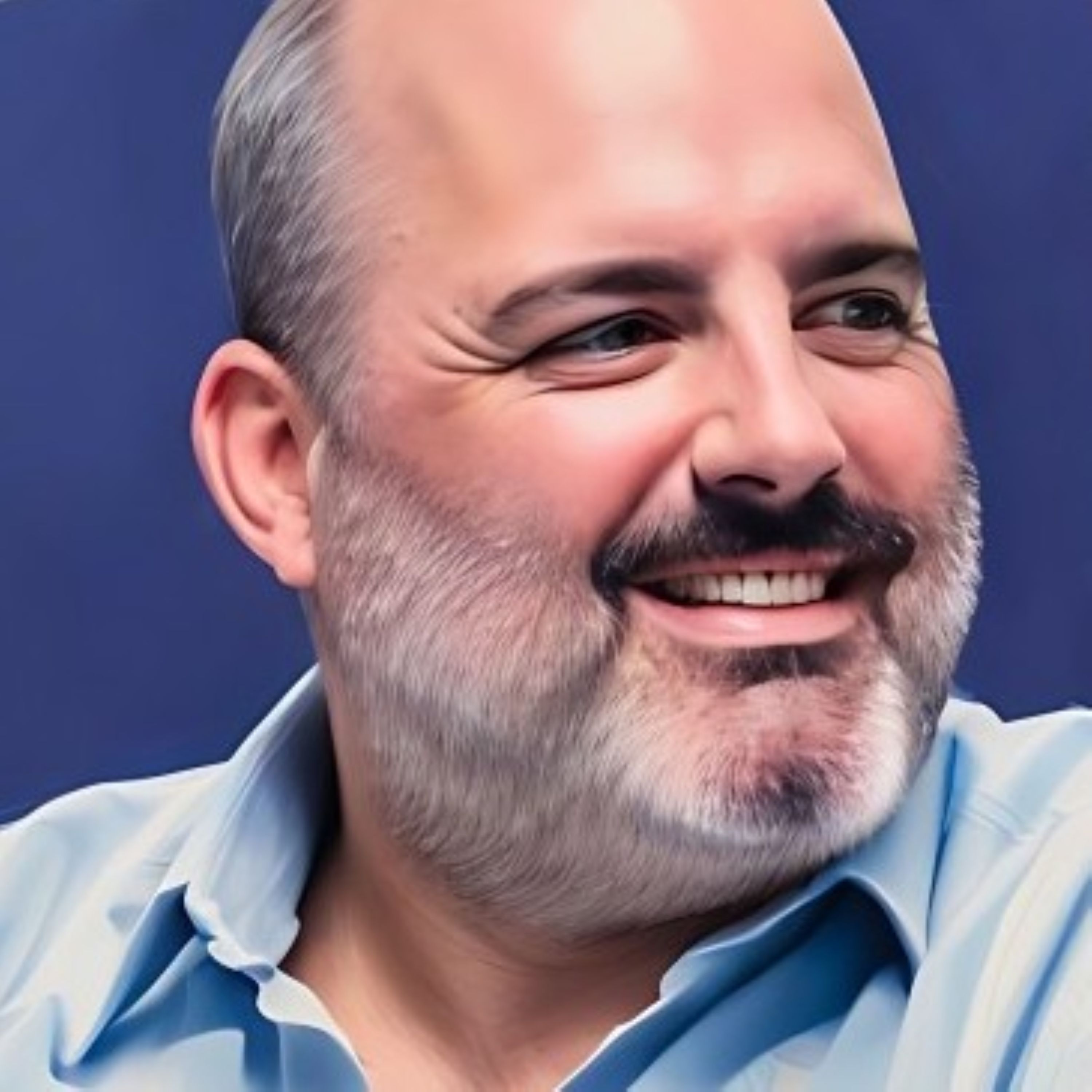
CleanSpark’s shift from bitcoin mining infrastructure to AI data centers, and how CFOs should preserve “optionality” while using AI to improve finance execution under Sarbanes-Oxley constraints.
Gary Vecchiarelli is CFO (and later president) of CleanSpark. His career spans public accounting (Arthur Andersen/CPA path), pharmaceuticals, gaming (Galaxy Gaming, Golden Entertainment), and now bitcoin mining/data centers. He joined CleanSpark in 2021; he previously helped fix public-company back-office issues (including SOX material weakness) and managed capital markets experience.
CFOs should “see around corners” using AI as a consult/sanity-check tool, not full automation. Capital allocation should control dilution; debt is often cheaper than equity when equity is undervalued. Preserve optionality to avoid being “out of choices” when markets change. AI can reduce close time by about a day, but compliance requires manual oversight.
A painful ATM-driven equity decision in a bear market (issuing stock at ~$2.50) to fund land/power that later became valuable. A $6.6B 20-year triple-net lease to build AI data centers (175MW chips; 250MW site; ~$10–12M per MW infrastructure; South Georgia cooling needs).
Written by AI. May contain mistakes.
Discussion on how AI influences goal setting and strategic planning for CFOs.
“But AI is helping us think about things that maybe we didn't think about.”
Gary shares his background and the experiences that shaped him into a finance leader.
“As finance leaders know, revenue operations is no longer just a sales conversation, especially when the quote, contract, and invoice somehow tell three different stories.”
Gary reflects on how his high school business teacher inspired his interest in finance.
“Gary's career spans public accounting, pharmaceuticals, gaming, and now Bitcoin mining, giving him a front row seat to businesses with very different operating models.”
Discussion on Gary's early jobs and how they led him to a career in accounting.
“And boxes of annual reports would show up in my house.”
Gary discusses his experiences in public accounting and how they prepared him for a CFO role.
“but annual reports used to be a lot of pomp and circumstance and glossy folders and binders.”
Exploration of Gary's move from public accounting to corporate finance and his first CFO role.
“because really there was no cloud back then.”
Gary shares insights from his experience as CFO in the gaming industry and the challenges faced.
“And my experience really led me to being set above everyone else because no one else had internships, let alone jobs for years.”
Gary discusses the importance of mentorship and key lessons learned throughout his career.
“Unfortunately, McGladry wasn't very happy about that.”
Gary elaborates on his experiences with capital markets and the SEC during his career.
“You just don't have, middle market companies just don't have the same resources that Fortune 500 have.”
Explore the challenges and risks of transitioning from auditor to CFO in the gaming industry.
“but then there was this other more senior role inside the gaming industry.”
Understand the importance of risk management and decision-making in CFO positions.
“And the only way that I could move up was to train my replacement.”
Learn about the significant risks taken in the CFO career path and their outcomes.
“I can only be grateful that, you know, someone had set me on this path.”
Discover how CleanSpark shifted focus from energy to AI data centers and its implications.
“Because if you don't have land and power, you can't power the chips.”
Learn how Cleanspark decides on capital investments for infrastructure and the complexities involved.
“to require, can you share with us how you decide how much and where to invest next?”
Discover how AI is enhancing efficiency within finance teams and its practical applications.
“What would you tell us about how AI's impact on your finance team and the work it does?”
Understand the strategic role of ATM instruments in capital raising for growth.
“We are up to what we like to refer to as our finance strategic moment.”
Learn about the difficulties Bitcoin companies face in raising capital and strategic decisions made by CFOs.
“You can leak into it over days, weeks, months, whatever.”
Gary reflects on the lessons learned and challenges faced as a CFO, including regulatory risks.
“Great, great, great insight there for us.”
Discover how building relationships can enhance professional success and support career growth.
“Like we're having a problem making payroll.”
Explore how the CFO can influence company strategy and execution.
“in our company, driven by me as the CFO.”

Get the gist, explore an idea or ask about something said.
 Claude
On CFO THOUGHT LEADER, what are the key points of this episode?
Searching your listeningAutomatic transcript. May contain errors.
0:00Support for CFO Thought Leader comes from OneStream, Trusted Data, Faster Decisions, and Salesforce. Explore new research on the future of finance and AI at Salesforce.com slash CFO Report.
0:17Gary Vecchiarelli: Hello, this is Shane Hostetter, CFO C'mores, and you are listening to the CFO Thought Leader podcast. This is episode 1201. But AI is helping us think about things that maybe we didn't think about. And I believe that one of my jobs as CFO is to be able to see around corners. And so if I've built in my model of AI all the transaction we've done and it's helped me do the goal setting and strategic planning and budgeting. And I say, hey, look, I'm looking at this transaction and here's the specifics and here's my opinion. What do you think about it? They'll say, OK, but what about this over here?
0:56This conflicts with this goal or the timing of this. You need to consider this. And it's like, oh, it really it's almost like having a best friend you can bounce ideas off of. I found that to be extremely useful. Right. And and it's a bit of a sanity check. And so I think that stepping back, the point is, is we're doing less delegation to AI right now and really using AI to consult unless we're having to do very, very tactical, tedious tasks. And I think that's just only going to evolve. Hi, it's Jack. On today's show, we speak with Gary Vicarelli, CFO of CleanSpark.
1:37There's a temptation in finance to think capital is simply available or unavailable. Gary's experience suggests a more demanding question. How many choices have you created before the market changes its mind? For CFOs, optionality isn't just a financing concept. It's the product of execution, credible numbers, operational follow-through, and the discipline to prepare before money is needed. That matters even more when markets are fickle, and the easiest source of capital may also be the most expensive. In our conversation, Gary explains how one painful financing decision reshaped his view of the CFO's role.
2:22and why preserving choices can become a strategic advantage. Our talk begins after this.
2:33As finance leaders know, revenue operations is no longer just a sales conversation, especially when the quote, contract, and invoice somehow tell three different stories. Agent Force Revenue Management brings pricing, quoting, contracting, and billing together on one agentic revenue platform With a single source of commercial truth, proven workflows, and built-in governance It gives people and AI agents the context to make smarter deals across every channel The result? Finance spends less time playing revenue detective And what your business sells is exactly what it invoices. Learn more about Agent Force Revenue Management at salesforce.com slash CFO.
3:28That's salesforce.com slash CFO.
3:39Hello. CFO Gary Veccarelli is with us. Gary's career spans public accounting, pharmaceuticals, gaming, and now Bitcoin mining, giving him a front row seat to businesses with very different operating models. After finance leadership roles at Galaxy Gaming, Golden Entertainment, and Inletrex, he joined CleanSpark, where he now serves as both president and CFO. Gary, welcome. Thanks for having me, Jack. Good to see you. So, Gary, as you might know, we begin always asking the guests to look back and give some thought to what you think those experiences were that helped develop you as a finance leader.
4:25What would those be? Well, very few people know this story, but I think it all dates back to high school. um you know i had a a business teacher who was also the uh head football coach in the bay area and i went to a catholic school and they were a big football powerhouse and she was very well respected guy and he would give me his uh day old investor business daily news papers and this is when stock prices were uh infractions right and uh and so i would i was really enamored by wall street and stocks and uh so he he kind of fostered this real interest in the capital markets and wall street and um through that relationship uh he uh i remember he had said that at one point he said you know uh you know you've made it when you rang the bell on wall street and uh that kind of just really sat with me for decades and i'm happy to say i actually rang the bell for the first time here um over a year ago at nasdaq and that was that was a huge huge thing my family uh had known that story for a long time and uh um fulfilled that goal but you know talking to him i learned about the cfo role and to be honest i really didn't know what the cfo did um but i would order annual reports from a service that the wall street journal had called the public registrant annual report service back then you'd fax in this form and you'd you'd chuck off all of the the companies that you'd want to get information from.
6:02And boxes of annual reports would show up in my house. And I don't know if the viewers are old enough to remember, but annual reports used to be a lot of pomp and circumstance and glossy folders and binders. And it would have the Form 10K in there and a letter from the chairman or the CEO, but also talk about products and have pictures of what's going on in the ground. This is really, you know, right when websites were really starting to get started. Now you can find all that information on the web. But I would take these and I'd read financial statements. I didn't really know what I was looking at, but I was enamored by the idea of these CFOs who were financially responsible for the company and dealing with Wall Street.
6:42And so that's what really kind of set the interest. And I then got a job and I worked under someone who was previously a CPA. And he was a family entertainment center. So think of like a Chuck E. Cheese equivalent. And he worked for Arthur Anderson. And I just learned a lot about being a CPA and how it's the language of business. And you can learn how decisions would actually translate to dollars on profit and loss statements and balance sheets. And so I was inspired to look at CPAs, the CPA route. And I had a friend who referred me to a job in a regional top 15 firm in the Bay Area. And during college, this is like mid-90s, late 90s.
7:28and it was an IT position. And it was perfect because I could work 20 hours a week and I would do IT because I was good at computers. But this is back when you would do backups on your computers, right? Like I don't know if you remember zip drives and jazz drives, right? You have to back up your computer and external drive because really there was no cloud back then. And I was helping printer jams, install computers, all that type of stuff. And when the partners found out I was an accounting student, they started giving me a lot of billable work. and so right from the ground you know during college it was almost like a permanent internship where i started learning my debits and credits and working with entrepreneurs doing basic level bookkeeping like that's just ground level accounting and held that job through graduation i graduated san jay state in 2001 and uh you know accounting really wasn't sexy then right i actually wanted to go on management information service uh systems mis was impacted so accounting was the was the next best thing i'm like okay i'll buy into this you know accounting's language of business and so i um uh got into accounting and it was a big six firms back then right now it's four but they're big six firms and not many people went in accounting so i was heavily recruited by all of the firms, not just the big six, but the mid-tier firms.
8:50And my experience really led me to being set above everyone else because no one else had internships, let alone jobs for years. I mean, I was with the company, the firm probably like five or six years. And so I decided to stay with that firm and I joined and then got the opportunity to move to Las Vegas because real estate was just too expensive then in California. And then I joined what was then called McGladry in Pullen. now it's rsm is in is the new iteration of that firm um so i decided to go a little bit bigger from regional uh move strictly into audit because previously i was doing a little bit of everything heavy tax but a little bit of everything and public account it set off my public accounting career because i was working with these entrepreneurs now granted it was closely held businesses that was mainly the bread and butter here in las vegas but i really enjoyed working alongside the CFOs and CEOs and on the audit side.
9:49Granted, we weren't working alongside them up front before transactions were consummated, but after the fact, I really got insights as to why they did transactions, what it took place to get it done. And I was able just to have a bunch of case studies in my head about options for different transactions. From there, that led me to being recruited by BDO, which was one of McGladry's top competitors because BDO wanted to enter the market. So I helped them open the office. Unfortunately, McGladry wasn't very happy about that. But a number of us went over, established the firm, and now BDO is the second largest actually in Las Vegas.
10:29And during that time period, I took on one of the largest clients on the West Coast for BDO, which is a very large timeshare company. And that's when I really started to get capital markets experience because they had some public debt. and that was just a behemoth of a client much more than i'd ever dealt with before and it's this path isn't what's typical right usually universities push students towards big forward big firms and then as people progress into careers they might go downstream and work with smaller clients to where ultimately they might end up opening up their own shop or being a partner in a in a in a small firm dealing with closely held companies and they bring that big four pedigree, I went upstream, which was like completely opposite.
11:11And I'll be honest, I never thought I would work in SEC. In fact, it was in my head, SEC work was just too risky. Um, but I, I ultimately had to figure it out over time. You have to walk the path to know the path. Sometimes, um, I had to, I had to figure out that if I want to get a capital markets, they're going to have to get in the, you know, the SEC game. And so, um, so that was just super valuable experience. I had some great mentors along the way and then, uh, got married and, um, it was working a lot of hours in public accounting, uh, cause I had a real drive and decided to take a jump to a pharmaceutical company.
11:46Um, that didn't last very long cause I was traveling way more than I expected. So it was kind of the opposite being in the newlywed, right? You know, working a lot of hours, but versus traveling. So it's almost the same thing. And, um, was there for a short stint. And then I got my first CFO job for an OTC company called Galaxy Gaming. and that was a super unique experience. We can get into that at some point, but I really cut my teeth on an illiquid stock that was in a heavily regulated environment that is casino gaming and it had revenue of less than$10 million but it was recurring revenue, high margin, very nimble company, but they had some major challenges not just on the regulatory and compliance front but also on the financial front because they just had this piece of toxic debt that was just really starving them so it helped get them through that and i think because of the work i did there i got recruited by golden entertainment a man named blake sartini came after me and decided to bring me in as the number two to a cfo that was an investment banker previously worked with and they had just gone public and so they had a lot of back house problems like most middle market companies do, right?
12:59You just don't have, middle market companies just don't have the same resources that Fortune 500 have. Middle market companies are focused on growing the business and sometimes the back of house suffers. And when they're a public company, that's really tough because you end up having things like a material weakness, right? On a Surveillance-Oxley 404B audit. So they had a material weakness. They'd just become public. I don't think they exactly knew what they were getting into. So they brought me in. I helped clean all that up. It was a great opportunity for me because I worked with this investment banking CFO who it was his first CFO job, but was a very good deal maker.
13:34And so we learned from each other. And it was, as the CEO put, he goes, you know, like we have the A team here. So that was great experience for a couple years. We did a number of M &A and financing transactions. Can I stop you there? I want to, Yeah, I just think it's very interesting as you described it. Again, these accounting houses that you were part of for a number of years, and then you did step into industry, first in the pharmaceutical company, but then there was this other more senior role inside the gaming industry. You had a bigger appetite for risk, perhaps? I mean, when you stepped into the CFO role at that gaming company, how big was it?
14:16Did you say$10 million? It was$10 million revenue, like$30 million market cap. Yeah, so this is still fighting the uphill battle in so many ways. But you had that mindset already. You had already dealt and audited books or what have you for so many businessmen. You were now one of them. No? What do you think? Yeah. No, I mean, I haven't thought about it like that. But I'll tell you, I think that it absolutely was a risk, right? Because when you make a jump from being... There's certain risks you accept when you're an auditor. And I wasn't an audit partner. I got to audit manager at the firm. So technically, I wasn't personally liable.
14:58But whenever you're a CPA, everything's at risk in an attestation world. But when you make the jump to CFO, particularly in the wake of Sarbanes-Oxley, the CFO is the one that's signing the certification on annual and quarterly statements. My personal net worth and my personal house is at risk now. And that was something I took very seriously when getting into that. I mean, I had people I've worked with previously that I talked about because I was very enamored, again, by public markets. And there were people I worked with earlier. It's like, oh, you just got to be careful of the risk, right? And maybe they had PTSD from early in their career or they'd had associates they worked with that got sued over time.
15:40And granted, the whole industry's moved more towards compliance, which is great because I think the heavy compliance and regulation now keeps most people out of trouble if you follow it. Whereas beforehand, like, you know, in the 80s and 90s, maybe it was a little bit more of a Wild West. We saw this happen with Anderson, right? With Anderson, they had independence issues because Enron was paying so much in fees to Anderson Consulting. It dwarfed the$10 million in fees that they paid in the audit. Paying so much in consulting fees that that almost drove business decisions on the audit side and in apparent independence.
16:16So it's kind of like, ah, well, okay, we're not going to push on that. And we saw how that all played out. So I think that the industry around it has evolved and it made me more comfortable with the risk. And frankly, I think as a professional, you have to be confident that you're going to make the right decisions and you have the integrity to make the right decisions. So even if I were to go in a bad situation, which I never was, where there was a lot of fraud or legal stuff going on, right? Like I got to know as an individual that I'm going to make sure that I make the best decision for me professionally as a fiduciary.
16:47And that's something that you have to understand before you even sign that job offer for really any financial position, whether it's private or public. Was there ever a time you thought, maybe I can just jump back in to accounting? Let me go back to the accounting house. Yeah, there sure is. I think, you know, being on this side, you're dealing with various types of technical abilities. And a lot of times there's, when you build out a big team, there's maybe some people that aren't as motivated as I am. and that can be a little tough because in public accounting everyone grinds everyone works the hours everyone stays until the you know late at night until the partner leaves the partner's the first one to leave and so there's a there's real drive and really worked with very smart people everywhere in public accounting and it's not to say that you know throughout the rest of my career didn't work with smart people but some people just wanted to check out at five o 'clock and they were okay with the same position always and doing the same thing over and over again but i think that what was ingrained very early on in my career, and maybe it's part of being a CPA is continual improvement and continual education.
17:56And so I was always pushing the line on what I could do and I could do more. And the only way that I could move up was to train my replacement. That's kind of the CPA model. And, um, I brought that to, to industry as well. So, so yeah, there were times it's just like, maybe I should just jump back in because I missed, you know, maybe some of the technical challenges but i quickly learned to accept that you know being a cfo and working on the private on on the public or private side um actually in-house had its own unique set of challenges and i really embraced it and and frankly like the job that i have now i'm gonna ask jack like it's the best job i've ever had and i hope it's my last job i never i never thought that i would be in one place forever because you don't see people working places 20 30 years anymore like they did like you know our parents and grandparents did and um but but this one encompasses so much i i get way more exposure as a cfo and doing things like this doing a podcast with find people like you or um uh you know dealing directly with capital markets or dealing with public relations and communities i mean something i never thought of before and it's just such a more well-rounded experience than i ever thought of i mean it's it's fantastic and all those experiences really kind of led me to this point.
19:10So I'm, I'm nothing but grateful for all the positive and, and even, you know, challenging learning instances I had over the career. Having, um, shared with us, uh, a number of career leaps, can you identify for us what was maybe the, the biggest career risk you chose to take along the way biggest career curious um yeah it was um so after i left golden entertainment i joined a small startup uh pre-revenue medical device company called imitrex and and this one um you know sometimes when you're when you go for an opportunity there's a struggle between your head and your heart and i think my heart convinced my head on this one uh it was a medical device company that was producing a CT scanner that can help detect heart disease.
20:06And an interesting story here, going back to what I told you about the ANA reports that I would order, I came across a company called Imatron. And Imatron had a technology in the 90s called the Ultrafast Electron Beam Scanner that would do a 4D model of the heart, the fourth dimension being time, that could determine if there's calcium in the heart, which is a predeterminate for heart disease and heart attacks. And so I personally invested in the company and I have a lot of money, but like$1 ,500 or whatever. And I was all over the message boards about this. Like I was a big fan brand of stock.
20:40Well, stock really didn't go anywhere. They got bought out by GE. GE shelved the technology because it actually threatened the CT technology that you see today. And I got referred into the job by some prior colleagues of mine. And I find out this is version two of imitron so my heart is saying wow you were really into this you really believe this because i have hearts in my family so it hit home with me you want to take a company ipo their plans to go ipo they really need your help because they don't have one of financial it's all phd physicists doctors like this can really work and to me that was a huge risk and um it was a really tough time because COVID came and, uh, I had to push, um, being a good fiduciary.
21:27I know the right thing to do was to, was for the executives to take a significant pay cut to make sure that we could keep jobs and ensure that not other, other people wouldn't be furloughed or laid off. And so I, I, I forced a 30 % pay cut on everyone and the CEO was all about it. There were some other C-levels that weren't such fans, but we had to do it. And that really put a hurt on my family financially. Um, eventually ended up leaving on my own accord because there was, uh, just started to fall apart. And, and, uh, uh, you know, that business was just very, very, uh, capital intensive. And, uh, there was a battle brewing with the litigation for a potential hostile takeover.
22:07And I just, you know, it was above my ability. I just saw the writing on the wall. Um, but where, where there's failure, um, There's learning and opportunity opened up. And I had walked from that and I said, you know, I have a job lined up, but I have a really good network. And that's something we should talk about at some point in time, the power of people connections and knowing people and relationships and business. And because of my relationships, I ended up getting a few offers, one of which was Klinsberg. And now it led me to the best job ever. So I can't really complain about how I got here.
22:41I can only be grateful that, you know, someone had set me on this path. Well, that's a great overview for us, both the highs, the lows, sometimes what happens along the way. You arrived at CleanSpark in the CFO office in 2021, and in 2025, you added the title president. Just to point out to our CFO folks, that means to me you can speak more broadly about the business and interface with more stakeholders, which many CFOs are doing as well, I guess, today. but let's take a step back tell us about clean spark what type of business caught your attention what kind of opportunity did you know got on your radar and you said yes i want to be part of this so uh so clean spark originally was an energy company and so they uh had microgrids and solar arrays and and it's basically a local distribution of of of power and um and a year before i had joined they got into the bitcoin mining business when uh the co-founders went to go consult on an energy deal and as a bitcoin miner wanted to reduce their power consumption and uh and increase their margin and they walked with the co-founders walked away saying we should buy this and get in this business because they're energy guys and it's a whole lot easier for energy guys to learn bitcoin the bitcoin guys learn energy and so they were operating Bitcoin and, and, you know, Bitcoin was really exploding at the time.
24:10And when I did the interview, believe it or not, because I was well-networked primarily in this mid cap, you know, the small cap micro cap area, I'd actually talked to a few of their competitors earlier, but I was so loyal to Immatrex at the time. I'm like, no, no, no, I can't do it. But now I took a fresh look at it and CleanSpark just happened to be in the backyard here in Las Vegas. And Las Vegas is a small community. They knew my reputation and we had a conversation. We just hit it off. And I, maybe it was a little bold, but I looked the CEO in the face in the first interview and I said, why are you even in this microgrid business?
24:48It's low margin, high working capital needs, and you have this huge margin business over here in Bitcoin mining. It doesn't make sense. And he said, yeah, you're right. Like we should, we should exit it. and so they brought me on board and um helped them clean clean up uh um some of the challenges they had i ended up being a cleanup master i think in my post public accounting world because it seems like everywhere i went had uh accounting issues or finance issues and process and systems issues so i had to take care of that first but ultimately you know within a year i helped them exit the microgrid business and really doubled down on Bitcoin mining.
25:29And so what happened was we went out and we had acquired a large amount of land and power. And this ends up being a little serendipitous because where we sit today, the company actually just last week had announced a transformative transaction where we're now getting AI data centers. And Bitcoin mines are century data centers, very rudimentary data center. AI data centers are just a completely different world. There's a whole lot more complexity and technical aspect to it. But at the end of the day, as fiduciaries, we saw that Bitcoin mining economics were extremely tough, and we weren't getting the multiple our shareholders wanted.
26:10And the best way to monetize that power in megawatts was to move towards data centers. And we saw some of our peers doing that and their multiples and market caps had exploded. And so we signed a$6.6 billion deal last week with a high investment grade global technology company that you would probably recognize the name, but unfortunately we can't disclose it, for a 20 -year triple net lease for a data center. So we're going to take one of our largest Bitcoin mines that's currently energized, and we're going to build a data center next to this mine that's going to produce over$300 million a year of NOI that's nearly 100 % margin go directly to the bottom line.
26:53When I joined, the market cap was$400 million of this company. So this is a monumental event for this company. Took a lot of work to get at this point. It's not going to be the last one. We have a lot of land and power, which has made us very attractive in this AI boom. I mean, I've seen DC on TV all day, and I don't know, I can't count how many times they're talking about power in data centers and how front and center it is and how important it is. Because if you don't have land and power, you can't power the chips. You can't power the chips means no one can use AI in their businesses to forward their businesses.
27:28so um so this company is really well positioned all because of bitcoin mining and and now we're doing i wouldn't say we're doing a pivot we're really growing into data centers but and that's where we're going to allocate most for our capital but um we're really excited that um that i've seen this evolution of the company now and we're we're growing i mean we're four billion dollar market as we sit here today uh which is 10x when i join it it's just it's and and i still think we're significantly undervalued. So we've got a whole lot more room to run. Can you maybe help us, I mean, just the amount of dollars being invested or that this is going to require, can you share with us how you decide how much and where to invest next?
28:13Yeah, that's a great question. So to give you an idea about the scale here, right? when we're building infrastructure it's about 10 to 12 million dollars a megawatt and so this deal we just signed is for 175 megawatt what they call critical IT it's a 250 megawatt site so there's 250 megawatts being energized provide the site but there's 175 megawatts of chips that are going to be delivered the difference between the 250 and the 175 75, so 75 megawatts, is the amount of power that goes towards cooling. Because these chips have so much power running through them, they produce as a byproduct heat.
28:59So you need to be able to cool them, particularly when it's 100 degrees outside. And this location's in South Georgia. It can get really hot in the summertime. So you got to fire up the HVAC systems and coolers to make sure that the chips don't melt, basically. Right? So anyways, you have 175 megawatts that's going to cost 10 to 12 million dollars a megawatt. That's about a$2 billion build just to build the infrastructure. And what's crazy about this is that our tenants and all hyperscalers, the chips and equipment that they put in there is three times that. So it's about 30 plus million dollars per megawatt in addition to the infrastructure we're building.
29:41Now, we don't take on the$30 million number. We take on the$10,$12 million number. But that means we've got to go out and we've got to raise$2 billion and a$3 billion,$4 billion market cap. And what the market is right now is debt financing. This is essentially real estate 101. It's just big numbers and a lot of technical complexities in the actual build. And so for us, it's making sure that we take advantage of the capital markets to ensure that we strike the right balance between debt and equity and making sure that we're hitting targeted internal rates of return. And right now, like we're able to get, you know, 90 to 95 % loan to cost, meaning of that$2 billion, we could probably borrow, we can most likely borrow most of it.
30:28Now, historically, it hasn't been that. It's been like 75 to 85%. And if it's one rule that I've learned as CFO is if the money's there, take it. because the market can be real fickle and it might not be the next day. So for us, the high yield market and the bond market is very attractive right now. And that's one of the areas that we're going to end up tapping. But yeah, so capital allocation is super important. How you go about determining what instruments to finance your growth initiatives is super important because at the end of the day, and it's something I learned at Galaxy Gaming, in an illiquid environment, right?
31:09Like the CEO owns 60 % and he was very stingy with the equity. And as much as I said, no, you got to get equity out, do a deal. Like I get it. I get it now. Like it's kind of, you see the light as a CFO on how important it is to control dilution because it's too easy just to go out and raise equity and take that capital. Sure, we can take that capital and we can go deploy it and earn a healthy return on it. But equity is typically going to be your most expensive cost of capital, particularly if you feel you're undervalued. And so that's why as a CFO, my job right now is to make sure that we're controlling the dilutive strategy as much as possible.
31:45And that's why we're leaning more towards debt because the equity is not properly valued. So if I have the choice between taking, you know, paper that's six and a half, 7 % versus equity, that my cost of capital could be somewhere in the 20s. Like it's a no-brainer. But that's just something we keep in mind when kind of playing with toggles on the allocation. That's kind of a neat sort of trade-off. we like to talk about trade-offs because they kind of reveal something about the realm or the industry businesses are part of. Frequently with finance leaders, we're often talking about growth, the trade-off between growth and efficiency.
32:25What's the trade-off here? That's a good question. um well the trade-off for our new you know this new venture again the data centers is um is is is really kind of what we're doing with bitcoin mining right because we've invested so much in bitcoin mining but the economics are not very good right bitcoin price is down we're like 66 000 now the high was 125 it's a very capital intensive business very competitive it's open source you could see at any point in time how many bitcoin miners are on the network and you can easily figure out what your share or what your what your um what your profits are um fortunately we had one of the most efficient fleets in the world because of our scale we're able to continue to mine profitably even on very you know low bitcoin prices and very razor thin margins but to us that you know the trade-off is what we built and versus what as fiduciaries the right thing to do is and, um, and make sure we can manage risk around that.
33:26Because one thing I've learned being the capital markets is you see a lot of guys come and go, uh, especially in the micro cap land where they have a really good narrative and they have a really good story and institutions, they want to hear that story, but they also want to underwrite the fundamentals of a business and, and the actual management team. Um, when it's a small company, micro cap company, it's a lot of retail, it's a lot of faith-based, you know, they really want to believe even the story, which means that there's a lot of unscrupulous types that could take advantage of people like that.
33:55And I just worry that in this day and age with AI, and we've seen it in Bitcoin, I've seen it, believe it or not, in AI, of some bad actors that come in to think that there's easy money. And I think that the trade-off is making sure that we're not getting in bed with those type of actors and making sure that we're de-risking our business as much as possible. And that's something that we think we've done with this lease, right? We've gone high investment grade, meaning that they high, extremely high probability based on what the credit rating bureau say of them paying their bills, right? So we have confidence here.
34:29We don't have collection risk. It's a triple net. So all costs pass through to the tenant and we don't have to operate the data center. And so we don't have risk of having our people not or our team not live up to the specifics of a service level agreement. We'll probably get there at some point in time, but for us right now, like the triple net made most sense. So to us, you know, this pivot, if you will, is super important. And we've got to make sure that when we're entering this new phase that we're not accepting too much risk. Around here, we like to say that we like to crawl, walk, run in a lot of what we do.
35:12We definitely went probably right to the walk phase with a$6.6 billion lease. We feel pretty comfortable in the trade-offs, at least on a risk-adjusted basis. What would you tell us about how AI's impact on your finance team and the work it does? What's changing? So AI is definitely making us more efficient, right? Like there's a bunch of use cases I can go through. And it's funny because I was really in a chat GPT and then I realized that other AIs do different things better. um like for example copilot's great with like the microsoft i'm a big microsoft guy right personally personally and so microsoft outlook is like known for having a really bad search function but copilot is amazing because i get hundreds of emails a day and have basically non-stop meetings and if i'm trying to remember who i met with in january and i only know certain specifics i could tell it ai and say help me recall this and provide the context of what led up to that relationship and the last thing we talked about and it will give it to me i'm like oh yeah it's john smith from goldman sachs and this was the last thing we said and here's what he said so now i can pick it up uh it's kind of equivalent to what salespeople put in crms but i don't have like it's hard to do a crm as a as a finance person i mean i'll spend half my day inputting um you know the results of conversations so that that's one thing that's made me a whole lot more efficient because in this, when you sit in the chair, there's a lot of people that you meet and you have a lot of conversations, um, over a period of time.
36:52And sometimes remembering it's just really tough. Um, we are investigating ways to, uh, at least on the finance and accounting side, there's two sides. We'll talk about finance slash FP &A and accounting. Um, to me, yes, I'm a CPA accounting is in my roots. I think that accounting is sometimes something that CFOs who don't have a traditional accounting background don't necessarily always respect. They think that it's just an overhead and just an expense for which it is. But to me, if you don't have really good systems and processes and people in place for accounting, it's really hard for you to do the FP &A properly because otherwise you're doing a lot of ad hoc reporting.
37:32And so we've built here at CleanSpark exactly the type of environment that I want and need as a CFO to make sure I have trust in the numbers that we get. And I have the numbers at my fingertips. And if I want information, I don't need to spend a day and a half manually going through and finding that. Now, in building that system, we have to navigate being a public company, which includes the rules of Sarbanes-Oxley and balancing internal controls and speed versus quality. and when it comes to sarbanes oxley you know it's all about quality financial reporting and so we probably have a whole lot more people processing systems than uh than a company that's a private company just because we have to meet these certain standards we're on documentation whatnot and the reason why i say that is if we implement ai in the closing or analysis or anything that helps us derive the numbers that end up in our financial statements that get published to the public, we have to significantly change our internal controls to the point where almost we have to re-perform the work.
38:36And so the audit side, the compliance side has not caught up, I think, to AI yet because as we know, AI is not 100%. It's maybe 80, 85%. And on certain financial computations, you still have to go through and there still needs to be a significant manual component to it. But I still think that you're saving 10 to 20 % time using that. So maybe AI doesn't, you can't rely on AI to actually close the books for you, but it might help you store or identify some anomalies in a GL ledger activity or something like that. So I'll tell you that we're just very tactically using AI for tasks rather than entire projects right now because of the compliance requirements around Sarbanes-Oxley.
39:18And I know the entire industry, an industry meaning auditors and PCOB trying to figure out what's appropriate for companies to do and what they can rely on. But we are finding it adding efficiencies. In fact, our team with the use of AI has really reduced our clothes by about a day just because it makes them more efficient. Things that would take them an hour and a half to do, they can now do in 10 minutes. And those minutes really add up to a full day close. On the finance side, we're doing much more analysis. I think that what's great about it is we're all very smart people. we're very experienced professionals, but AI is helping us think about things that maybe we didn't think about.
40:05And I believe that one of my jobs at CFO is to be able to see around corners. And so if I've built in my model of AI, all the transaction we've done, and it's helped me do the goal setting and strategic planning and budgeting, and I say, hey, look, I'm looking at this transaction and here's the specifics and here's my opinion. What do you think about it? You'll say, okay, but what about this over here? This conflicts with this goal or the timing of this, you need to consider this. And it's like, oh, it really, it's almost like having a best friend you can bounce ideas off of. I found that to be extremely useful, right?
40:39And it's a bit of a sanity check. And so I think that stepping back, the point is, is we're doing less delegation to AI right now and really using AI to consult unless we're having to do very, very tactical, tedious tasks. And I think that's just only going to evolve as time goes on. Well, thank you for that great overview and discussion around AI. We are up to what we like to refer to as our finance strategic moment. And again, this is just a moment of insight or something that you've explored in the past that reveals how finance can play a strategic role in business. What comes to mind? so i mentioned that we had a big growth phase um and when we were in mining where we acquired a lot of land and power and during that time frame virtually the only source of capital for us was an instrument called the atm it's called at the market so a public company can file ms3 and have this shelf filing to where, let's say, the company approves up to$500 million that it can just sell stock in the market at whatever the market price is, rather than doing like a registered deal like an S1 where it's like, oh, we're going to raise a billion dollars all at once.
42:01You can leak into it over days, weeks, months, whatever. And the ATM was very powerful. It was almost like a drug because it's like an ATM machine almost, right? You called the broker and say, here's our limit orders. I want to sell$5 million today. And it ends up in our account two days later. Now it's T plus one, but back then it was T plus two. And it was super easy because we were large enough to recall Wixie status. So the paperwork was super easy to file with the SEC. And the entire industry used the ATMs and built, I mean, that was the source of growth capital. this was a time when you know Bitcoin companies you know during the Biden administration they were very anti-cryptocurrency and so it was really hard for Bitcoin companies to get loans let alone have a bank account right like we even had challenges on the treasury side but if we were to get a loan it'd be like 15 18 percent like double digits and it was just too expensive the economics didn't work so issuing equity on the ATM was really the only availability of of capital for us and it was really tough because sometimes we were issuing equity at 15 18 dollars and there was a point in time and and this is what triggered my thought is we had to make the decision whether we take an opportunity in what was a bear market at the time and issue stock at two dollars and 50 cents i was really painful and as much as i wanted to hold on and say no we're staring at this opportunity in the face that would really what we thought provide be very accretive to our shareholders.
43:43And that was, that to me was a defining moment because not that we had to do it, we wanted to do it. And it all came out because that, you know, those dollars that we deployed ended up being some of the land and power that we have today that we're going to convert to billions of dollars of value to shareholders for land and power. So it really ultimately end up paying out. But the learning instance for me there was, I never wanted to be in a position in a company to where we had no options. And we kind of joke about it internally, because if you listen to any of the calls we talk about, I say optionality and options all the time.
44:20And I really pride, you know, I'm very proud of the fact that we have optionality, because now we've grown the company to where we have the ATM as an option, but it's not the best option right now. We have the high yield we talked about. We can do converts, which are equity linked. We have a very large Bitcoin now. We're one of the top 10 holders of Bitcoin. It's almost a billion dollars that I can borrow against in a Bitcoin back line of credit for non-dilutive capital because our cost of capital on equity side is too high. And so I think that bringing it back to strategic, where a CFO can really be powerful in a company is to partner with the other departments and operations to make sure that you focus on execution.
45:05Because it's not just a raise money, spend money. That's not just a CFO job. We got to be able to see around corners. And if I can motivate the operations team to execute, because I know if we execute, we will produce this amount of revenue, this amount of EBITDA based on market multiples. We can get this. then I'm going to be able to do this type of transaction, this transaction, and then it branches off to all these options. That, to me, is super important. I don't think a lot of CFOs are either seen that way in some organizations. They're just seen as, oh, he's the guy that always says no. We've got to figure out a way to get him to say yes in spending money or whatever.
45:42Or the CFO themselves don't get out and talk to the guys on the ground to make sure that we're optimizing the business as much as possible. But to me, I think the CFO plays a huge role in helping set that strategic direction and emphasizing how important it is to execute and what good execution means and how that can open up more opportunity for a company.
46:05What is a forward finance organization? Finance leaders are under pressure to move faster, adopt AI, and guide decisions across the business. But here's what most people miss AI doesn't create value on its own You need the right operating model behind it That's what Ford Finance is It's the blueprint for building trusted data with finance and IT actually aligned And AI working right where decisions are made OneStream brings this to life As the AI operating system for modern finance It's all in one platform. Your financial and operational data in one place with purpose-built AI embedded across planning, close reporting and analysis.
46:59The result? Faster decisions, less busy work, stronger governance and more value from AI. Explore the Forward Finance Blueprint at onestream.com forward finance. and see how to turn AI ambition into real business value. Visit us at onestream.com slash forward finance. That's onestream.com slash forward finance.
47:33Great, great, great insight there for us. Thank you for that. We're going to move to what we refer to as the mentoring round. We're going to ask you to look back again. And Gary, we're wondering about, and we already touched on this, but I think it's a really interesting chapter. When you stepped into the CFO role for the first time, you know, what is it that you wish someone told you? And again, you had observed CFOs. You had been in many different types of businesses. What is it that you wish you knew before you accepted that title?
48:12oh god you know that's a tough one um i really believe that sometimes you got to walk the path to know the path right uh fortunately when i when i stepped in a clean spark role i knew the path a whole lot more but that first role i think um i i wish i would have known more about regulatory and compliance and uh legal risk um i wish i would have known more about that i mean i got a good education in litigation. I mean, I guess you know you've made it when you're deposed, right? Fortunately, we won that lawsuit. But look, I hate paying legal bills on litigation, particularly if it could be avoided.
48:56But I think a CFO, that's the biggest thing, right? Because I understand compliance risk and regulatory and the rules you need to navigate in and GAAP and PCOB requirements, right? And SEC requirements and all of that. But no one can really prepare you for how your decisions can ultimately result in someone going like, aha, I got you. There's an opportunity for me here to sue you. and especially from a shareholder perspective, I mean, we're seeing some things going on now with Grant Cardone and how he wants his, you know, there's some class action lawsuits and he's trying to expose them for being a bit of ambulance chasers and, you know, really put the hurt on small businesses and investors where it's not really warranted.
49:44It's a cruel world out there and it's, you know, there's activist investors. there's just there's just a lot as as i was just very naive going and being a cfo to where you have to be on the defensive it's not always like hey let's have a goal and go raise capital and change the world with our product or service that's what everyone's ideological about right like like wow that that's that's great that's what everyone wants to do the good side of business but i think that as cfo you you need to be very defensive both individually particularly since you have real skin in the game and personal liability and for the sake of your shareholders.
50:22And that I was not prepared for. Great. We always like to ask our guests to reflect a little on the personal side for us. What's something maybe your colleagues might not know about you? Something from your past, a pursuit, an interest that you had? wow um let's see here so work is a lot of what defines me um and so you know that translates into personal side i'm still really into you know stocks and uh um investing um i guess the one random thought uh is that i collect stretched pennies that's a little weird right uh so so you go to disneyland and you'll see the stretch penny machine and you used to put in a penny and then it would come out.
51:10So, you know, I collect stretch pennies. And I collect baseball cards. I've gotten recently into baseball cards. So it's a form of investing. It's a little nostalgic for me as a kid. But, you know, I think, you know, bring it back to the career on a personal note. I'm very fortunate to have a very wide network. And it's one of the, I think, things that I'm known for is being very resourceful, knowing a lot of people. and um these days you know i could pick up the phone and get free advice and consult from a number of people and it and i don't think a lot of people can say that because oftentimes when people think networking it's oh who can i call for something that i can ask for right and most people don't tap their network until they actually need it and it's usually when they need a job and i've seen many people come like hey man i haven't talked in two years but you know how you doing oh yeah, well, by the way, I got laid off or, you know, I'm looking for a job.
52:07Can you help me? And people only put out their hand and they never offer help. And to me, I think that's the wrong way to go about it. Usually when I'm meeting people, I ask what I can do for that, right? There are people that will come to me or just tell me, hey, look, I'm out looking. I'm like, great. I'll take your resume. I don't have anything. I'll take your resume and I'll pass it along. Just by saying that, people remember that, right? The fact they're willing to keep your eye open. And granted, I play recruiter in my second life sometimes because I'm always matchmaking. I got a good friend at an electric company and they just needed a controller and I opened it up to my network and I just love helping people.
52:41And if I ever need a favor, like I call them, ask them, not that I'd be egregious or anything, but need advice or reference to one of their people. Like now you have the symbiotic relationship and I developed that over time. And I think by being good to people has really bode well for me because that opens up doors and business is really more about relationships in my opinion than what you know and um and people want to do business with people that they enjoy they respect and they trust and you know you opened up by saying how you know i worked in public accounting and pharmaceuticals and gaming and you know medical advice now like bitcoin and data centers like there's not common threads there and i'm okay with that right like to me i'm a uh uh you know public accounting i i was trained to go in and learn the high risk areas very quickly so i feel very comfortable in almost any industry i just have to believe in the product or service that we're selling but um but what's important here is that you know when when you're you're you're entering a new phase right and you're bringing those relationships with you they'll make you just execute that much better i mean i'm fortunate to have multiple people on my staff now that followed me from from other interactions i hadn't from them previously either they worked on my teams previously or i met and networked with them and that's a huge compliment because some of these guys i'm like hey i'm at this company it's a bitcoin thing i don't know if you know anything about bitcoin this is what we're doing they're like yeah sign me up i'm like well wait a minute don't you want to hear about it?
54:20Let me make you feel good. Like we do have cash. Like we're having a problem making payroll. Like, no, we're like, I trust you. Like, if you tell me it's a good opportunity, I want to come with you. That's like super humbling as a professional to be in that position. So the takeaway there is relationships are extremely important and, um, and, and they, they take a long time to foster. Gary, uh, we have time to just ask you to finally look ahead for us. And we're wondering what your priorities are for the coming year as CFO? So, um, I think the overarching theme now is that we're going to help, I'm going to help take the company to the next level.
55:02We're going to be raising a lot of capital. Um, I'll probably be raising more capital in the next six to 12 months than most CFOs do in their entire career, which is mind blowing. I never thought it'd be at this stance. And I can only do it because of the groundwork, the people process systems and the team that I put in place years ago. Now I can reap those rewards because I can rely on the basics getting done and having information at my fingertips to go ahead and move the needle on a capital markets basis. so for for me it's all about raising capital and allocating capital and making sure that we're steering the company in the right direction um you know recently uh we had the entire leadership team read a book called measure what matters by john doer and it's a great book it talks about some okrs which is objective key result it's a form of goal setting we've implemented that in our company, driven by me as the CFO.
56:06So talking about how the CFO can really help on execution of strategy, that's a non-financial thing that I'm doing that's ultimately going to help the financial side of the business. And I look forward to seeing that whole process play out and see the execution because that whole business cycle is going to come around. We're going to execute, which is going to bring in results. Those results are going to bring in financial opportunity for us, which is going to allow us to make decisions to then go ahead and repeat the cycle. It's going to be a super busy year for us. Definitely watch us. I believe we're significantly undervalued.
56:45We're half the multiple of what the next valued peer is, and we have just as much, if not more, land and power coming online. Nothing but opportunity, and we look forward to a follow-up conversation. We do, too. Gary Veccarelli, thank you for joining us on CFO Thought Leader. Thank you, Jack.
57:18Hello, we're benchmarking the CFO path. Join 500 finance leaders helping define how today's CFOs rise and lead. If you're a CFO or senior finance executive, contribute your experience. It takes just a few minutes and you'll receive early access to the findings. Visit cfothoughtleader.com slash benchmarking.
In high school, Gary Vecchiarelli received day-old copies of Investor’s Business Daily from a business teacher. Stock prices still appeared in fractions, and the teacher told him that he would know he had made it when he rang the bell on Wall Street.
Vecchiarelli tells us that the remark stayed with him for decades. He later rang the Nasdaq bell—an experience made more meaningful because his family knew the story. Long before that moment, however, he had begun ordering boxes of annual reports and reading financial statements he did not yet fully understand. He was drawn to CFOs who carried financial responsibility while dealing with Wall Street.
That early interest eventually became a career defined by complex businesses and difficult financing choices. At CleanSpark, Vecchiarelli recalls confronting one such decision during a Bitcoin bear market. Debt was prohibitively expensive, and an at-the-market equity program was effectively the company’s only source of growth capital.
According to Vecchiarelli, CleanSpark faced an opportunity that required issuing shares at approximately $2.50. The decision was painful, but the capital funded land and power that the company now expects to convert into billions of dollars of shareholder value.
The experience gave Vecchiarelli a lasting appreciation for “optionality.” He tells us that CleanSpark can now consider high-yield debt, convertible securities, equity, and borrowing against its Bitcoin holdings. That range matters because, as he puts it, markets can be “real fickle.”
For Vecchiarelli, strategic finance is not simply raising and spending money. It means connecting execution, valuation, and capital so that today’s difficult decision creates more choices tomorrow.


