
 Ask ChatGPT


 CFO THOUGHT LEADER
5 Aug 2026 · 43m · 24 chapters
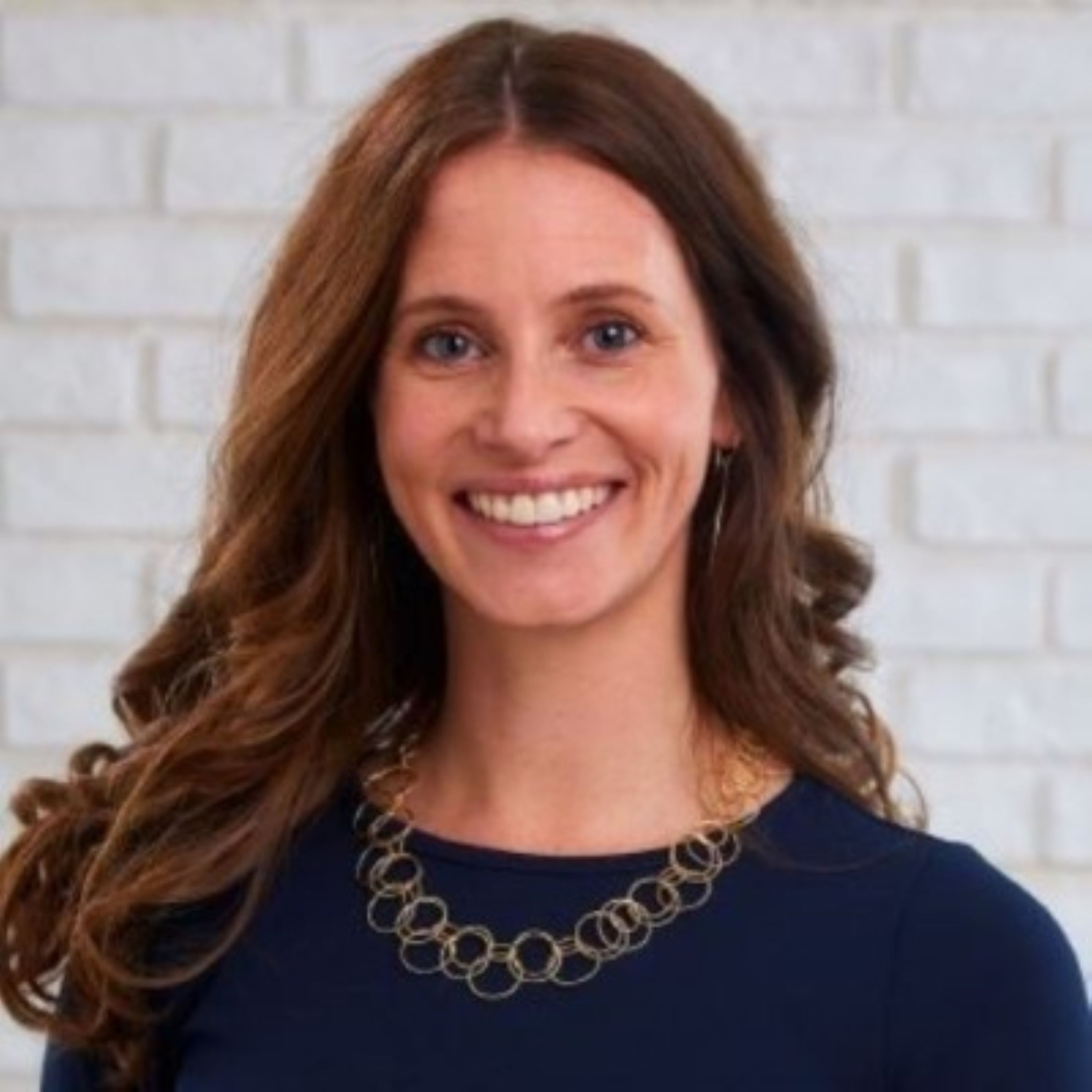
How CFOs can make strategy and financial decisions under disruption, and how AI and data visibility are being operationalized in finance software. The episode also covers Laura Miller’s career path and what Strata Decision Technology does for healthcare, higher education, and financial institutions.
Laura Miller is CFO of Strata Decision Technology. She started at PwC (including a junior stint in Geneva, Switzerland working on U.S. GAAP CPA-related work), then moved to Starwood Hotels for SOX-era finance/control roles, later worked in private equity as a global controller (Stats, LLC in Chicago, serving sports companies), and held CFO-track roles at a Berkshire Hathaway-owned company (Pampered Chef), including navigating the 2020 pandemic while pregnant.
AI adoption must deliver measurable ROI; finance should allocate resources after strategic planning and track outcomes via dashboards; Strata’s AI “intelligence layer” changes product roadmaps and speeds decisions.
Pampered Chef’s shift to daily forecasting and planning for scenarios from zero to quadruple demand; Strata’s 2,300-organization benchmarking and AI-enabled natural-language decision support; expanding platform usage via new modules, added users from acquisitions, and cloud conversions.
Written by AI. May contain mistakes.
Laura Miller shares insights from her start at PwC and its impact.
“As you saw, I started my career at PricewaterhouseCoopers.”
Laura Miller is introduced as the CFO of Strata Decision Technology.
“AI is changing the finance function, but how much business value is it actually delivering?”
Laura discusses her journey from PwC to Strata Decision Technology.
“Today, as CFO of Strata Decision Technology, she's helping healthcare organizations make better financial and operational decisions while driving AI adoption, continuous improvement, and enterprise execution.”
Laura reflects on her learning experiences and leadership development.
“So, Laura, we were going to serve up the question we always do.”
Laura describes the challenges and growth from working in Switzerland.
“I'm fortunate to not only have done that in Phoenix with them, but I also went overseas and worked for them in Geneva, Switzerland.”
Laura shares her thoughts on moving from PwC to Starwood Hotels.
“And worked for about a year after and then kind of felt like, hey, I just had this huge experience.”
Laura discusses her aspirations and experiences while at Starwood.
“I still go to Switzerland often and love it.”
Laura elaborates on her role and responsibilities in general management.
“And so my North Starwood was continuing to learn and grow and move around the organization and be a part of the broader Starwood community.”
Learn about the unique finance culture at Starwood and its operational structure.
“strategic brands, just everything about it.”
Discover Laura's journey from FP&A to a global controller role in private equity.
“Well, tell us, continue down the path for us.”
Understand how Laura discovered her passion for leadership and team development.
“I think initially I had a lot of bumps and bruises learning.”
Hear about Laura's clear path to the CFO position and her strategic moves.
“At Starwood, the CFO is a mythical, wonderful human being.”
Learn about Strata's services and how it helps complex industries.
“and, you know, help us for listeners new to Strata.”
Explore the customer needs driving Strata's momentum and data intelligence.
“So the direction and what's feeding the organization is our longstanding history with these customers and the data that we utilize underneath.”
Find out how Strata generates revenue and allocates resources effectively.
“But generally, it's a SaaS software business.”
Discover how AI is being integrated into Strata's healthcare solutions.
Explore how AI is creating value for Strata's healthcare customers.
“and we're watching those outcomes followed by anytime they go astray, how do we solve for that that through problem solving or continuous improvement.”
Discover the three ways Strata utilizes AI in its operations and products.
“We think of AI within Strata in three different ways.”
Learn how AI has changed decision-making processes and product roadmaps.
“You know, how is it influencing decision making?”
Understand the complexities of integrating a new business post-acquisition.
“We would have probably kept with modules and things like this, which we're still doing and are very important at the broader storyline.”
Hear about Laura's pivotal moments transitioning into the CFO role during the pandemic.
“We'd love to hear a finance strategic moment from you.”
Laura shares insights on navigating career transitions and mentorship.
“It seems like you've landed places and stayed.”
Discover Laura's personal interests and her future priorities as CFO.
“I'd like to ask a question on the personal end of things.”
Learn about the initiative to benchmark the CFO role and its leadership.

Get the gist, explore an idea or ask about something said.
 Claude
On CFO THOUGHT LEADER, what are the key points of this episode?
Searching your listeningAutomatic transcript. May contain errors.
0:00Support for CFO Thought Leader comes from OneStream, Trusted Data, Faster Decisions, and Salesforce. Explore new research on the future of finance and AI at Salesforce.com slash CFO Report. Hello, this is Andre Mansell, CFO of Neum, and you're listening to the CFO Thought Leader podcast. This is episode 1203.
0:30Laura Miller: A few of your previous guests have mentioned being as part of Big Four and starting their careers there. As you saw, I started my career at PricewaterhouseCoopers. Cannot underscore the value of that start in coming out of the university and starting with them to learn everything between work ethics, culture, feedback. Everything that the Big Four provides to start an accounting or finance career. I'm fortunate to not only have done that in Phoenix with them, but I also went overseas and worked for them in Geneva, Switzerland. And so early in my career to have that type of exposure and being able to say yes to experiences like that, certainly pivotal to learn and see the world from a different point of view.
1:14Hi, it's Jack. On today's show, we speak with Laura Miller, CFO of Strata Decision Technology. Finance leaders spend a lot of time preparing, building forecasts, testing assumptions, and planning for what might happen next. But some of the most consequential leadership moments arrive without a playbook. The assumptions disappear, the forecast changes by the day, and the question becomes less about whether you predicted the disruption and more about how quickly you can help the business respond. Today's CFOs face that tension constantly, whether the disruption comes from markets, supply chains, or AI.
2:01So what preparation actually matters when none of the conditions match the plan? Laura Miller offers an instructive answer, and it begins where her own preparation ended. Our talk with CFO Laura Miller begins after this. AI is changing the finance function, but how much business value is it actually delivering? According to new research from Salesforce, 90 % of finance leaders using AI report a positive return on investment. And as AI agents enter the picture, finance leaders are seeing opportunities to improve productivity, reduce costs, and strengthen forecasting. But there's another side to the story.
2:53CFOs are also confronting growing revenue complexity with more subscription, consumption-based, and hybrid business models to manage. And that raises an important question. How can finance leaders gain the visibility they need to make better decisions while putting AI to work? Salesforce explores these challenges and the opportunities ahead in its latest CFO research. Discover what finance leaders are saying about AI, revenue complexity, and the evolving CFO role. Visit salesforce.com slash CFO report. That's salesforce.com slash CFO report.
3:37Hello, CFO Laura Miller is with us. Laura's career has taken her from coordinating complex global audits at PwC to regional FP &A roles in property finance at Starwood Hotels to driving operational transformation under private equity ownership at Stats, LLC. Today, as CFO of Strata Decision Technology, she's helping healthcare organizations make better financial and operational decisions while driving AI adoption, continuous improvement, and enterprise execution. Laura, welcome.
4:17Laura Miller: Thanks for having me. Hi, Jeff. So, Laura, we were going to serve up the question we always do. Take a look back for us. Share with us, you know, try to identify those experiences you feel that you learned from and you can bring forward and developed you into a leader. What would those be? Sure. I've heard, as you mentioned, a few of your previous guests have mentioned being as part of Big Four and starting their careers there. As you saw, I started my career at PricewaterhouseCoopers. Cannot underscore the value of that start in coming out of the university and starting with them to learn everything between work ethics, culture, feedback, just everything that the Big Four provides to start an accounting or finance career.
5:05Laura Miller: I'm fortunate to not only have done that in Phoenix with them, but I also went overseas and worked for them in Geneva, Switzerland. And so early in my career to have that type of exposure and being able to say yes to experiences like that, certainly pivotal to learn and see the world from a different point of view. Amazing. Can I just ask, how did that come about? Did a partner come in one day and recommend you or, you know, say, hey, I have something I want you to think about? Kind of. More so, I went to the partner asking for, I wanted to learn a second language. And so I was inquiring if the firm would pay or reimburse if I went to, at the time I was in Phoenix, Arizona State, and got a degree in Spanish or learned Spanish.
5:49Laura Miller: And they said, what's the real goal here? If it's to learn another language, what if we just sent you to another country and taught you a language? Really? Okay. And six weeks later, I was in Geneva, Switzerland and learning French quickly with a one-on-one tutor. Before all these young folks joined PwC to go abroad, how many years had you been part of the organization when you... Only a few. I was pretty junior, so very early in my career. So I think I was maybe second, third year or something like that before I think even the first promotion. So how challenging was that environment once you got over there?
6:26I'm sure you did your best to learn the language, but how challenging was it when you arrived?
6:32Laura Miller: Numerous things makes it challenging, both personally and professionally. I moved by myself into Geneva, Switzerland, and it was obviously the language choices and learning is difficult. But also there's a great international community. PwC had many expatriates there, a lot of people to learn from. The primary thesis was U.S. Gap accountants. It was studying for my CPA at the time. So we were working with U.S. Gap customers in the area. And so utilizing a lot of the same skillset. I had the same customer that I had in Phoenix, was also in Switzerland. So there's some familiarity there, great networking.
7:08Laura Miller: So while daunting, I had already moved also. I grew up in Wisconsin and moved to Phoenix. I was familiar with big moves. And so something I took on with joy and clearly a memorable two years and certainly difficult. Can I ask, how long were you with PwC then? And did that type of experience keep you there perhaps longer? I was with QWC about five years, and I would say it tends to have the adverse effect. I came back after two years, moved back to the United States for one year again with the same customer. And the working style is very, very different between the two markets. And so you sort of learn this approach of, wow, you can do the same type of work in a different way, in a different manner, different hours.
7:54Laura Miller: And worked for about a year after and then kind of felt like, hey, I just had this huge experience. I've opened my eyes to I had traveled quite a bit at that point. I'm ready to take on more big experiences versus going back to the customer I was at. Before you left, you tend to have to catch back up because people haven't seen you for two years. They're wondering, oh, you know, what has she been up to? It actually slows your growth down at the firm, at least at the time. This is obviously decades ago. But at the time, it was, okay, you're now kind of behind your peers that stayed in that office for all that time.
8:24Laura Miller: So you haven't been keeping up with that same network and showing your experiences to the managers and partners. Again, I was very junior in my career. So for me, it was not an accelerator with the firm, but certainly an experience that helped accelerate my career. But no regrets there. You wouldn't have done it differently. No way. I love it. I still go to Switzerland often and love it. And what I experience is the best part of my time at PwC. So you begin thinking, I'm going to step into industry. What's your next, you know, what are you thinking at the time? What was your preference, if you can recall?
9:00Laura Miller: Well, as I mentioned, as living in a central place like Switzerland, you're able to travel very easily around Europe, Northern Africa, etc. et cetera. So I already had a taste for travel, excitement in travel, and Starwood Financial offices are at the time in Phoenix, very close to the PwC offices. I knew quite a few people that worked there and it was, they had a natural stepping stone role for me. I hadn't, as you mentioned, worked in experience at this or in industry at this point. So they had a SOX PMO type office startup. Again, my career started at the beginning of SOX. So a lot of, you know, I was highly involved with control, development, testing, et cetera, because junior people were just as experienced as partners at the time because we were all sort of learning this new law together.
9:47Laura Miller: And so when I started at Starwood, I took that experience, parlayed it into the SOX PMO, individual contributor role, which helped me get into the door, but do a very similar role auditing the financial offices internally. Yeah. And it's an interesting time. The financial crisis has, it maybe is in the rear view a year or so, but you're changing jobs at a time where the economy is still a little on the mend. What is it, what's your North Star now? More FP &A experience? What is it that you're trying to sink your teeth into? You know, at that time when I joined Starwood, I had such an admiration for the brands that they owned and served and developed and the people that work there, I really thought I would serve my whole career at Starwood Hotels.
10:33Laura Miller: And so my North Starwood was continuing to learn and grow and move around the organization and be a part of the broader Starwood community. The corporate offices themselves were on the East Coast, but the financial corporate offices were in Phoenix. So learning as much as I could, but I paused for a bit to think if I'm going to spend my career at Starwood Hotels, I may want to go work in a hotel for a second and go understand our actual business. The problem is a lot of people become too senior to move into a hotel environment or too specific skill set, too niche to be in a broad role in a hotel.
11:09Laura Miller: So for me, I was able to take that and decide if I'm going to spend my whole time in career or career at Starwood, I'll go to a hotel. And I actually went to a hotel that was right across the street from the corporate office, the Westin-Kirland. And so I was able to also take that relationship and build a bridge and be that tester. If there's new software, new pilots that the corporate office wanted to try at hotels, I was across the street and had that relationship. And so a really large hotel, the Westin-Kirland, was a great stepping stone for me into even more industry. Can I ask, did the corporate office recommend this to you or you came to them and said, I think this would be great to do for a while.
11:51Laura Miller: My memory doesn't serve me exactly how it came up, but my gap is I was continuing to look to, you know, actually, now that you mention it, the biggest thing was I had not led people. And I went to the hotels and my boss looking for, I have not hired, I have not terminated, I have not, I have coached in PwC, but as it goes with these consulting roles, there's an HR team or a people leadership team that's making those hiring final decisions. And I wanted to build and lead a team and build my experience and learn about hotels. And so I think it was a joint conversation that led me to then joining where there was an open role right across the street.
12:29Huh, really interesting. I don't know how many people would do that after leaving PwC to, and again, it's a very different world, much more, it sounds like you went into a general management position of some kind.
12:45Laura Miller: That's correct. It was interesting reflecting on my career prepping. I was thinking about how early in my career I was able to be in this generalist role as an assistant director of finance, which eventually develops into a director of finance. But essentially, you're the lead finance person at a property that's hundreds of millions of dollars of revenue. These are not small properties. These are, you know, a half dozen restaurants, a spa, golf facilities, really complex environments. And you are not only the most senior financial person, but you're learning executive team relationships, operations.
13:15Laura Miller: working with cross-functional type partners. Up until then, I'd only worked with finance folks. I'd only talked to other people that was similar backgrounds. Talking with the lead of food and beverage was a totally new experience for me. And so I really enjoyed moving into operations and having that more executive role, even though, of course, there's many, many teams more senior than me at the corporate offices and at ownership levels. So you mentioned a five-year investment at Pricewaterhouse. This is a seven-year investment at Starwoods. Starwoods. So obviously you were developed quite a bit along the way.
13:47You enjoyed some advancement, but wise investment. How do you look back at it?
13:54Laura Miller: Absolutely. I loved working for Starwood. As I mentioned earlier, I would have spent my whole career with Starwood. I loved talented people, strategic brands, just everything about it. As you mentioned, I moved around quite a bit, both physically and within roles. I had great networks within it and so wouldn't trade it for anything, I oftentimes think about going back into hospitality and into that environment. I just love the idea of serving others, learning cultures, traveling. It kind of brings everything to the table. Having spent that time there, are you aware of whether Starwood's finance organization, whether it's how it partners with the business or just some other cultural aspects that that company might have, you know, compared to some of your peers who grew up in other finance organizations?
14:46What might have set it apart one way or the other?
14:50Laura Miller: Well, it is an interesting structure because it can depend on the hotel and the operational structure on the ownership. So some of the hotels are owned by Starwood. The hotels I worked at were owned by other companies. So we have ownership groups on top of the Starwood management teams. And so I think it's unique in that way that you have that exposure to boards and ownership, much like private equity and much like I have with some of the owners I've worked with since then. So I learned that experience in a very different way that I'm not sure you have working in an operations that's all owned by one central ownership company.
15:26Laura Miller: And I think they continue to stay in touch with the brands. I mean, at the time, Starwood obviously does not exist anymore as a standalone company, but they also had pride in always owning one of every type of brands. So they understood what they were asking of their ownerships and making sure that they had that relationship back into the hotels and not only being a managed brand, but also owning some of the brands. Well, tell us, continue down the path for us. And I know you step into the world of private equity. And what are you up to? Right. So I transitioned. I did take a step into FP &A at Starwood.
16:01Laura Miller: It was sort of the last role I took there. And then I made the move into private equity. It's funny. The FP &A role was probably not the most suited for me. Great for me to learn the background of FP &A and a great step in the long term scheme of a career. Not my favorite job. Very individual contributor, very minutiae reporting, great, very important role. But for me, I'm far more of a people leader and a builder and operational person. So it was a great stepping stone to then discovering a job that I also loved. I moved into a global controller role after that, and it felt a little bit more like home.
16:40Laura Miller: When I moved back into that type of role, that was very cross-functional, very operational. This was at Stats, was my next job in Chicago. I remember every day saying, I just love this job. because it felt so much more in tune with my natural desires or talents. And that role was a global controller role with a private equity ownership in Chicago and serves sports companies. Also a very interesting business to be a part of, very similar to Starwood in that it's a great clientele, great business, and really interesting that I find passion around. So as a people leader, I'm curious. I mean, when did you, did you know this all along or did you discover at Starwood, you know, that role I enjoyed, this one not so much.
17:28That role involved me helping others advance and leading them. No, something to that effect or how do you discover that about yourself?
17:38Laura Miller: Yeah, that's right. I think initially I had a lot of bumps and bruises learning. I think about the team I first lied at, the West St. Kirling, often and fondly. But certainly some missteps and got some great coaching there. And it takes time to develop that skill, but it's so rewarding. And what I also learned is you continue to grow. It's very different. That first job, I had a team of leaders or a team of individuals. And then you evolve into your leading leaders who are leading others. And that in and of itself is a very different people leader role. So you're trying to teach others to lead others or disseminate information and build a bigger team.
18:13Laura Miller: So that role at Stats was the first time I had that, where it was really people leading other people and a much larger team, much more global. We had entities kind of everywhere in the world. And that challenge and the international aspect of different types of cultures. When I worked, I didn't mention it, but I did work in Hawaii for a bit with Starwood. And there we had unions, cultural differences, Japanese ownership groups. And so learning all these different working styles, again, kind of naturally through my career, I never pursued it. It's just sort of the things I said yes to had that type of angle.
18:48Laura Miller: And so when I arrived at stats, I had all different types of background experiences to draw upon. And I loved watching the development. There's so many people that when I first met them were comfortable in their role, liked their role and thought like, that's it. I need to stay in this job for eternity. and working with them, we found ways, you know, you can keep advancing or find a way to do it either as a working parent or in a, you know, you're not sure of your skill set. So how can we develop it? And seeing people's careers blossom because you've kind of helped navigate that with them is so rewarding.
19:21Is it at stats where perhaps the CFO role begins to come into focus, meaning you think the path is clear to you now. I need to get a few more notches, but I can see it. I can see it. Is that right? Yeah.
19:41Laura Miller: At Starwood, the CFO is a mythical, wonderful human being. That's 10 roles different than I am, and I see him and love him, but no even thought of that connection. But arriving at stats, and my boss was the CFO, And again, a great relationship, a lot to learn from him. But all of a sudden I thought, OK, with a little bit of time and focus and maybe some expanded responsibilities, I see that I could do that. I want to do that job. And in fact, it's not it's not too long. You do make another job hop and you go in not as a CFO, but very senior. And it's only a matter of time. How's that? Is there an abbreviated version?
20:20Laura Miller: Exactly. I moved to a Berkshire Hathaway owned company. And at the time there was a strategy that the CFO and CEO were likely moving forward in the next 18 months. And so I came in with the understanding that that role would be available in the short-ish future, which is why I proactively left stats to move to the next role, just knowing that that path was there. And at a Berkshire Hathaway company, there was a lot of attractive features to it. And I got to work under brilliant leaders in that organization. So moved over there with a clear path to the CFO seat and an expanded role. That's when I also had accounting and FP &A at that point.
20:57Yeah, yeah. At that Berkshire Hathaway company as well, you invested four years in the CFO office. You were there. So wonderful. So I thank you for allowing us to go back in time with you. This is where we want to find out about Strata. and, you know, help us for listeners new to Strata. What does this company provide? What does it serve or whom does it serve? And where is the opportunity?
21:28Laura Miller: That's right. So Strata Decision Technology, we serve highly complex industries. We don't serve everyone. We're in specific markets. You mentioned healthcare at the opening. We also serve higher education and financial institutions. So complex industries, highly regulated. We have over 2 ,300 organizations, and we are a software platform that services the CFO office as well as the broader executive team and operational leaders within these organizations make strategic decisions and financial decisions. We bring financial data, operational data, strategic data all into one platform amongst many modules.
22:05Laura Miller: So there'll be modules such as budgeting, forecasting, planning, workforce management, all these tools, cost accounting, which is really important that the leaders utilize this platform to make strategic decisions every day. Help us understand which customer need is perhaps creating the most momentum here for this business? The most momentum. So today we serve quite a bit of healthcare customers where the underlying thesis is around the cost accounting, the planning, the reporting, et cetera. The momentum is 30 years of data intelligence, 30 years of experience and nomenclature and standardization of the data across all of our 2300 organizations.
22:48Laura Miller: So we do benchmarking and comparative analytics across the industry. So we're well positioned for the direction we're headed with our new product, which is an intelligence layer that sits on top of this driven by artificial intelligence. So you're able to use natural language to be able to understand your business and what's happening in it real time and as quickly as possible to make the best decision. So the direction and what's feeding the organization is our longstanding history with these customers and the data that we utilize underneath. So just from the larger sort of ecosystem here, just to step back in history, and I know this is before your arrival, but Strata is owned by Roper, and Roper bought Strata and Centellus and put them together.
23:43And so how is that combination sort of shaping the business today? And what benefits might still be emerging?
23:54Laura Miller: And just to clarify, Roper bought them. Those two events were pretty far apart. Those are not simultaneous events. So Bots Strata, years later, Bots and Tell Us merged the two companies. The benefits that are happening, number one, we continue to be the market leader in the industries that we serve and really trying to bring together the intelligence of the two organizations. With Centellus came also two new industries. So we had, Strata had not been in financial institutions or higher education prior to that. That came with the Centellus acquisition or combination. So previously it was healthcare focused and now it expands even broader into these highly regulated complex environments.
24:33Laura Miller: So it's the first major change, but then beyond that, bringing together the knowledge, the data behind what's happening and the broader infrastructure to continue to be experts in the markets that we serve. So I'd like to ask you to help us understand how Strata makes money today. Which part of the revenue model best explains the business or would be easy for us to grasp? Sure. It's a software platform. So it's a recurring revenue through a software SaaS model. With services as well, we have implementation services, staff augmentation services, and things like that. But generally, it's a SaaS software business.
25:16Can you tell us what, just as far as when you want to get, you see early signals sometimes. Which early signals best show whether customers are adopting, renewing, or expanding their use of the platform, I guess? Sure.
25:37Laura Miller: There's a few for those types of decisions that you're talking about. So expanding their usage, we have many, many modules. So adding on modules is a great example. Adding on users as they acquire, it's not uncommon for acquisitions to happen in this space. So as hospitals acquire other hospitals, bringing more of them onto our platforms, going deeper into our platforms, converting to cloud platforms. These are all examples of further usage and adoption of our platform. You know, early signals I'm looking for as well is new customers. It's less and less common for us to have new customers because of our footprint.
26:14Laura Miller: But nonetheless, new customer acquisition is something we're always looking for. the expansion of the customers we have, the renewals, as you mentioned, the renewal metrics that go along with these contracts and how we think about the term length of those. Do they co-term with other add-ons they had also bought previously and they're investing further into our platform implementation timeline? We watch that metric quite a bit. So how quickly are they up and using our platform and our software? That's a really important thing to be looking for. Can you reveal to us maybe when it comes to resource allocation, how finance helps the organization make those types of decisions?
26:53Laura Miller: For sure. This is a bit of what I was kind of thinking for the later story, but... She's referring to the finance strategic moment, but we'll let her delve into it. Sure, just setting the general framework, I would say finance doing resource allocation really comes off of the heels of strategic planning. And so number one, I think finance or some of these more neutral organizations within an organization, within a business unit within an organization, helping provide strategic processes to make strategic decisions to understand where our priorities, how do we want to think about the business growth and development, and then making sure we're allocating resources both dollars and people accordingly.
27:38Laura Miller: So not making those decisions at budget, but making strategic decisions for the organization and making sure that dollars follow and are invested in the places where we want to spend our time and money and resources. We call this, you know, that continued value creation. After that, it becomes making sure we're measuring those areas that that money is actually where people are going in and delivering outcomes and then making sure we've got dashboards and we're watching those outcomes followed by anytime they go astray, how do we solve for that that through problem solving or continuous improvement.
28:08Laura Miller: So I think finance plays a role in many of those areas of the strategic platform. I want to touch on AI with you. And what we'd love to understand is how AI is perhaps already creating value for Strata's healthcare customers. Can you help us understand? Sure. We think of AI within Strata in three different ways. So we have our development. So the clear usage within coding and development of our products. And the second prong is internal usage. So how do our teams utilize it across the whole organization? And then the third prong is once the product is in the customer's hands, how are they interacting with the product that then interacts with AI?
28:53Laura Miller: So we have three different ways that we're sort of monitoring both AI usage, costs, et cetera. So how is it playing into the acceleration within our customer usage and our products, number one, our ability to deliver products and create products, financial decision intelligence being the largest of the one that is coming this year, is all done with the assistance of AI and AI coding in that first prong. It is a product in and of itself that also relies on AI and the underlying data infrastructure that we've created. So the customers then interact with AI through a few different products that we have out in the marketplace.
29:32Laura Miller: And then finally, the tools that we use internally, many, many different ways that we're finding benefits, but we have enterprise-wide applications and licensing for all coworkers. So everyone is having different types of training. We're meeting people where they're at, helping them develop the skills and having an AI-first mindset across all of the organization, not just if you sit in a certain seat. If not for AI, the organization may have made decisions, taken a different path? You know, how is it influencing decision making? And we know it's automating, it's accelerating things, but when it comes to, has it changed decisions yet?
30:14Laura Miller: Yeah, I definitely think the product roadmap has changed, both in the outcome of what we're able to deliver and the speed we're able to deliver, but what is being prioritized and what our customers are asking for. I feel strongly both as a buyer and someone that sells software that the vendor that's currently trusted and utilized, I'm looking to them to develop more AI. So, for example, if I use a software to route AP and accounts payable and code invoices and things like that, I don't want to put AI on top of that. I want that vendor to develop AI solutions within their platform. And so I do believe that that has changed the way we think about incumbent software.
30:53Laura Miller: So we are an incumbent software that is developing AI to make the capabilities of our software even better for our customers. And that, I think, has changed our product roadmap accordingly. So we're really thinking about how can we answer the questions our customers want, solve for them some of these AI needs and wants, as we're already a trusted partner that's embedded in so many of their financial systems and processes. So we're well positioned to help develop that. So your initial question of how has that changed, I don't know that this intelligent layer would have been even on our roadmap before AI.
31:26Laura Miller: We would have probably kept with modules and things like this, which we're still doing and are very important at the broader storyline. But I think this is changing the way software is being utilized and how we're thinking about development. So that and then internally, to your point, decisions are faster. We're getting more accurate data. The way we're thinking about structuring our internal data. We're removing low value add work and taking that towards more automation and things that create more value across both personal goals and personal fulfillment as well as decision making within the organization.
31:59Is it what's proving harder, integrating the businesses or simplifying sort of the combined experience for your customers?
32:08Laura Miller: It's an interesting question. We didn't mention this, but Strata has a business combination that happened in July. So it's certainly top of mind as far as the complexity of integrating a business that's a few weeks into purchase. So that has been complicated. And generally, we've got a good process and playbook for integration. But I would say continuing to simplify and making sure that it's always a priority for us, for our customers, and making sure that the message is clear, the tools are clear, the sales cycle is clear. So top of mind always is making it as streamlined and as easy for our customers as possible.
32:41Laura Miller: And I think our integration playbook, as you mentioned a little bit earlier, the Centella Strata integration was quite large. It was really, really a big combination. So having done that in the rear view mirror, our competence in that space is pretty strong. We'd love to hear a finance strategic moment from you. What comes to mind? Sure. I think strategically, when I look back on my career, one of the most pivotal moments was when I did get the call to become a CFO. So I knew I was going to be stepping into the CFO role as well as a new CEO at Pampered Chef when I was there at Berkshire Hathaway.
33:16Laura Miller: This was, I found out about it late 2019, early 2020, that the transition was going to happen in April. For what it's worth, I was also pregnant at the time with my second child. And so knowing I was taking on a lot, I was going to have a baby and be a new CFO. My husband and I decided, yeah, we got this. Let's do it. And we made the decision to move forward. and then obviously quick after a pandemic came. And so in April, I made the transition into CFO of 2020 right as the height of it. The new executive team never even worked in the building together, although we're all local. We immediately were remote and learning our new styles with a new CEO, a new CFO, and a whole new executive team.
33:57Laura Miller: And I would say the strategic pivotal moment there was just weathering the pandemic storm. As a reminder, Pemper Chef sells retail products through individual consultants. So consultants can do this from home. They can share parties online. They provide kitchen equipment. So Pamperchef was very well positioned for the pandemic. Everyone was buying kitchen equipment, finding ways to make money. It tends to be reverse relationship with the, you know, with economics of the country. And so it was a great time for Pamper Chef. And that summer of 2020 was quite a boom for the company. We had a really nice summer.
34:33Laura Miller: And so with that becomes quite a bit of challenges as a new CFO, both in a working capital perspective, supply chain perspective, understanding forecasting. And I did also have that baby in June. So it was quite a bit to step into and think about what is the strategic balance here of capitalizing on our positioning as much as we can while also making sure we, you know, supply chain from all different areas of the world. We're able to keep up on our demand. Do we have a, at the time we had a rolling forecast and we had to quickly pivot into a daily forecast and understanding the demands and what would happen and what are all the scenarios.
35:08Laura Miller: Like everyone, we were also thinking, will we be, what was the term that was used back then? when you were a required business. It was if you... How quick we forget. Yeah. Essential. And so for us, we were running the numbers. One of the very first tasks I had as CFO was, if we're not an essential business to keep our warehouse open, what do we do? What's the plan? And so we're planning for anything from zero to quadruple. And so luckily we were on the end of positivity in that first year, But really understanding all the different things that happened at that time and navigating a pandemic personally was the fastest crash course into being a CFO.
35:52Laura Miller: And by the way, as a reminder, as we talked about, I spent 16, 18 months prepping and planning to be a CFO. And none of the things that I prepped for were my biggest challenges once I stepped into the role. It was all these things that we hadn't even thought about and considered. And I learned a lot about back orders and stop sales and when we should keep taking orders and when we should stop taking orders and how to just, as I mentioned, capitalize on the opportunity while not tipping a business over into its all currency.
36:24What is a forward finance organization? Finance leaders are under pressure to move faster, adopt AI, and guide decisions across the business. But here's what most people miss. AI doesn't create value on its own. You need the right operating model behind it. That's what Ford Finance is. It's the blueprint for building trusted data with finance and IT actually aligned. And AI working right where decisions are made. OneStream brings this to life. As the AI operating system for modern finance, it's all in one platform. Your financial and operational data in one place with purpose-built AI embedded across planning, close reporting, and analysis.
37:17The result? Faster decisions, less busy work, stronger governance, and more value from AI. Explore the Forward Finance Blueprint at onestream.com. slash forward finance. And see how to turn AI ambition into real business value. Visit us at onestream.com slash forward finance. That's onestream.com slash forward finance. When you do make a transition, are you more thoughtful? It seems like you've landed places and stayed. What can you tell us about that? What did you do? Do diligence? You talked to your mentors. Tell us something about making the right choices.
38:08Laura Miller: Yes, an insightful question. It's really hard. I definitely have tried to follow areas that I am passionate about and companies that I can connect into. And that's a theme throughout the cultures that stand behind these companies, the people that work there. That is a thread that happens through. I really enjoyed every company I've been at, which is why I've been able to stay for so long, but not too long. As you've noticed, there's this tipping point where I do want to go explore and continue to have new verticals, new industries, new geographical locations. But it is hard. And I will say I was surprised at how much harder it gets as you go in your career.
38:43Laura Miller: Well, there's not a shortage of CFO opportunities. the types of opportunities and ensuring that you land in a place that has strong ownerships, has growth potential, has a great team. All of the things you're looking for in a company is really hard in the interview processes and the recruitment, et cetera, is very, very complex at the senior levels. And I don't think it's really talked about. It goes from being posted on a job board to a networking situation that is quite hard to navigate and to make sure that you're finding a good spot. But to go back to your question, there are certainly people I draw upon as mentors or relationships I've developed through the years to, especially at the ownership level, reference about the owners.
39:23Laura Miller: Every owner is so different, especially with the CFO role, how they interact. And I want to make sure I'm in a place that I'm respected and that we have growth potential and that we're a mutually trusted relationship. And that has been difficult, but something I've taken pride in taking my time. To your point, there's been times where I've looked for a long period, year plus, to be sure it's the right spot in the next move. And that has been fruitful. And also, if it wasn't, I would give the advice of if it's not the spot, it is okay to move on. It's worked for me that I haven't done that. But if it wasn't the right fit, or for some reason I missed something in the interview process, I would certainly not be shy to move to the something else.
39:59Laura Miller: There's so many great opportunities and companies to work for in this world. I'd like to ask a question on the personal end of things. What's something that most people don't know about you. After they hear this podcast, they're going to know a lot more about you. But what's something, an interest that you had, a pursuit earlier in life, perhaps doesn't have to be of the moment? Sure. I mean, lots of people don't know I was stung by a scorpion once, but I don't think that's what you mean necessarily. Sort of, I do, though. Where did that happen? I was in a mailbox in Phoenix. I put my hand in to get my mail and I got stung by a scorpion.
40:34Laura Miller: The good news is the smaller, the better, or I'm sorry, the larger, the better in that case, because the older ones are a little more accurate in there. Would you here's a question I'd love to know. Would you and you you have young kids now, young children, family members, your husband, would you guys live overseas again? I mean, would you would you is that in your future? Oh, gosh, I would love to. I would love to. There's very few places in the world I want. I love to just experience other cultures. So I hope so someday. I don't know that we would do it soon-ish with the aged children that we have, but nonetheless, I hope maybe a few weeks at a time or maybe some type of secondment or a way that we could do a flex.
41:13Laura Miller: But yeah, certainly someday I would expect to. Okay. Well, we're up to our final question, which is to ask you to look forward finally. And we'd like to know your priorities as a CFO for the coming 12 months. What would your priorities be? Sure. I think like many CFOs right now, continuing to dive into AI, be it for me, the costing side. So the token usage, the metrics and monitoring, how do we continue to explore AI and enable it while not spending millions and millions more than we have in the past, making sure that there's value being created with it. that's a top priority for me, continuing to be strategic in our product development and how we're going to market with some of these critically important products that we're bringing out.
41:54Laura Miller: Those are the two major areas of focus for us at Strata. Laura Miller, thank you for joining us on CFO Thought Leader. Thanks, Jack.
42:21Hello, we're benchmarking the CFO path. Join 500 finance leaders helping define how today's CFOs rise and lead. If you're a CFO or senior finance executive, contribute your experience. It takes just a few minutes and you'll receive early access to the findings. visit cfothoughtleader.com slash benchmarking.
In April 2020, Laura Miller stepped into her first CFO role at Pampered Chef. According to Miller, she was pregnant with her second child, working with a new CEO and joining an executive team that had never worked together in the building before the pandemic sent everyone home.
Demand was anything but predictable. Miller tells us that Pampered Chef’s independent consultants could hold parties online while consumers, confined to their homes, purchased kitchen equipment and looked for ways to earn money. That summer brought a business boom—and immediate pressure on working capital, supply chains and forecasting.
Miller says the company quickly replaced its rolling forecast with a daily forecast. One of her first CFO assignments was determining what would happen if the warehouse could not remain open as an essential business. Finance modeled scenarios “from zero to quadruple” while weighing when to continue accepting orders, when to stop, and how to manage back orders without overwhelming the business.
The professional challenge unfolded alongside a personal one: Miller tells us that she had her baby in June. Navigating both made the period “the fastest crash course into being a CFO.”
The experience also overturned much of her preparation. Miller says she had spent “16, 18 months prepping and planning to be a CFO,” yet none of the issues she had anticipated became her greatest challenges after taking the role.
Her lesson emerges from that collision between preparation and reality: the CFO’s work is not simply executing a carefully developed plan. Sometimes it means rebuilding the forecast daily, considering outcomes at opposite extremes and learning the role while the conditions surrounding it continue to change.


