
 Ask ChatGPT


 CFO THOUGHT LEADER
12 Aug 2026 · 49m · 25 chapters
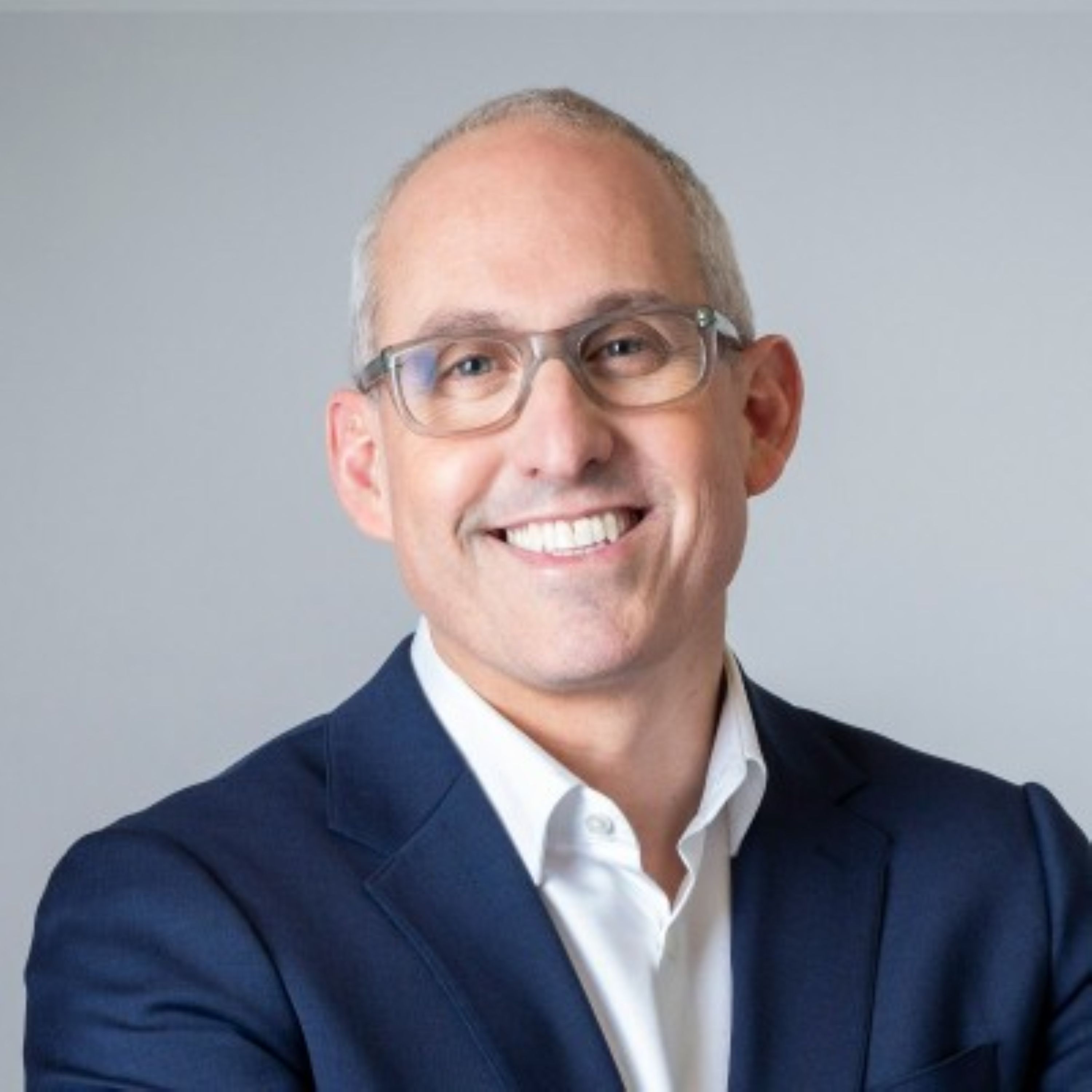
Matt Ostrower, CFO of Link Logistics, discusses how finance and AI should improve decision-making in a data-intensive real estate business—moving from spreadsheets to real-time dashboards and predictive analytics, plus the human change management required. He also recounts a crisis-driven strategic finance moment: at Site Centers/DDR, separating assets into a liquidating pool for public markets and creating a “remainco” future-growth company.
Matt Ostrower, CFO at Link Logistics (joined 2019). Background includes real estate economics and investing roles: community development/affordable housing, grad school in real estate finance/investing, 15–20 years in real estate securities (equity research/investment banking), CFO roles at Equity One and Site Centers, and later moving with Blackstone to the private side.
AI doesn’t replace human judgment; models must be explainable and trusted. Centralize definitions for widely used metrics/alerts to avoid dashboard proliferation. Democratized AI should expand “circumference,” not just automate.
Leasing pipeline signals (call/broker contact to signing) and FieldIQ for real-time property-manager customer/expense insights; using improved CapEx/vacant-space-prep data to reduce vacant days by ~a month.
Written by AI. May contain mistakes.
Discussing innovative strategies in real estate decision-making.
“That was something nobody had really done in that way before.”
Exploring the importance of data and AI in finance decisions.
“But having better information doesn't guarantee that people will use it or trust it.”
Matt Ostrower shares his diverse career path leading to CFO.
“Matt's career has taken him deep into the economics of commercial real estate, including CFO roles at Equity One and site centers before joining Link Logistics in 2019.”
Matt discusses his transition and thoughts on being a CFO.
“So, Matt, we always begin by asking our guests to look back for us.”
The importance of strategic thinking and innovation in finance.
“I did two different public CFO jobs for a period of time.”
Matt shares insights on leadership and making tough decisions.
“Do you approach them differently today than when you first arrived?”
Exploring how management approaches evolve over time.
“Just would love to just explore this a little further with you, this notion of your approach to leading people and what's changed over time.”
Explore how management roles evolve, focusing on delegation and empowerment.
“Hoarding responsibility and doing as much of it as humanly possible to prove your worth to the organization.”
Learn about Link Logistics, its operations in warehousing, and market opportunities.
“We do have a few more, perhaps career related questions for you a little later.”
Understand the evolution of industrial real estate due to e-commerce.
“That is using our scale to develop better data-driven insights, better decisions than anybody else in the entire real estate industry, right?”
Discover the unique approach Blackstone takes to investing and building businesses.
“As a CFO of a Blackstone-owned business, I have to believe your peers will often ask you, gee, what does that mean exactly?”
Examine how revenue is generated through customer leases and market demand.
“Help us understand perhaps that the economics of link logistics, what really drives revenue across the portfolio?”
Learn how Link Logistics utilizes real-time data to inform strategic decisions.
“With that span of customers, and I think you called it a gamut, which signals, operating signals, tell you the earliest how the business is performing?”
Understand the hurdles of integrating predictive analytics in real estate.
“good example, a couple of good examples of real-time indicators that, you know, up until recently have been a very hard thing for companies to have.”
Learn how the asymmetry in data expectations affects business decision-making.
“And the first time I find that the computer generated a wrong rent, well, the whole model is garbage and I'm not going to use it, right?”
Discover how improved data handling can enhance business processes and efficiency.
“One of the problems that you flagged that might be unknown to many of us outside the realm.”
Explore how data analysis helps identify and address inefficiencies in real estate management.
“that's an example of a domain of data that many, many companies have an enormous difficulty getting their hands around, organizing it, getting high-quality numbers.”
Understand the difficulties of getting teams to adopt new technology and data strategies.
“How is that changing decisions, not just reporting, but how is it impacting decision making?”
Learn about the risks and benefits of centralizing AI and data reporting tools.
“And what goes wrong when you decentralize too far?”
Hear a personal account of making strategic finance decisions during a crisis.
“And Matt, this might have happened any time in your career.”
Gain insights on career paths in finance and the evolving role of technology.
Learn about the non-linear journey to becoming a CFO and the importance of mentorship.
“where would they find the skills to do what you do?”
Discover personal anecdotes from Matt's journey, including his unique experiences in China.
“We know you've been there, seven-year, 10-year, CFO tenure at Link Logistics.”
Explore how podcasts serve as a valuable resource for learning in today's world.
“Is there something that perhaps has influenced your thinking along the way, or maybe it's something you escape with?”
Understand the key priorities and strategies for CFOs in the next 12 months.
“We are up to our final question where we ask you to look forward finally.”

Get the gist, explore an idea or ask about something said.
 Claude
On CFO THOUGHT LEADER, what are the key points of this episode?
Searching your listeningAutomatic transcript. May contain errors.
0:00Support for CFO Thought Leader comes from OneStream, Trusted Data, Faster Decisions, and Salesforce. Explore new research on the future of finance and AI at Salesforce.com slash CFO Report. This is episode 1205. Hello, this is Alex Chun, CFO of Neogoth, and you are listening to the CFO Thought Leader podcast.
0:28Matt Ostrower: And the answer we came up with was to really separate the portfolio, create a liquidating pool of assets for the public markets to trade, and to have a go forward, kind of a remain co, a future company that was set up for much more growth. That was something nobody had really done in that way before. It was totally innovative. It was really hard in a way to make that decision when you're trying to figure out how to get a mall reopened. But we all were able to kind of pull back. We forced ourselves to pull back and make that. And we really had no idea because it hadn't been done a million times.
0:57Matt Ostrower: We had no idea how the markets, the public markets were going to receive that decision. It turns out they loved it and we got all kinds of positive press for it. But I can tell you I had sleepless nights for months before then, right? Just worried about how this was going to be perceived. And if it wasn't accepted, you know, it was a really, you know, an existential question for us. So really, and of course, it had implications for our people and downsizing the company. It had implications for our lenders. It had implications for equity holders. So this is as big as it got. And I feel real pride in having made a really hard decision that ended up being the right thing that really set, you know, we were able to realize value in one place and really set a company up for growth in another.
1:35Matt Ostrower: And the company has done really well from there. Hi, it's Jack. On today's show, we speak with Matt Ostrower, CFO of Link Logistics.
1:49CFOs have spent years building better dashboards, cleaner data, and faster reporting. But having better information doesn't guarantee that people will use it or trust it. That tension becomes even sharper with AI. Except that our own judgment is sometimes wrong. Yet expect a computer-generated answer to be perfect before we give it any value. So perhaps the real challenge isn't the model. It's helping people understand what the model can and cannot do. Matt Ostrower offers an interesting perspective on that shift. Technology doesn't replace human judgment. Used well, it can challenge that judgment and make it better.
2:36But getting there requires more than technology. Our talk with CFO Matt Ostrower begins after this.
2:48AI is changing the finance function. But how much business value is it actually delivering? According to new research from Salesforce, 90 % of finance leaders using AI report a positive return on investment. And as AI agents enter the picture, finance leaders are seeing opportunities to improve productivity, reduce costs, and strengthen forecasting. But there's another side to the story. CFOs are also confronting growing revenue complexity with more subscription, consumption-based, and hybrid business models to manage. And that raises an important question. How can finance leaders gain the visibility they need to make better decisions while putting AI to work?
3:38Salesforce explores these challenges and the opportunities ahead in its latest CFO research. Discover what finance leaders are saying about AI, revenue complexity, and the evolving CFO role. Visit salesforce.com slash CFO report. That's salesforce.com slash CFO report.
4:04Hello, CFO Matt Ostrower is with us. Matt's career has taken him deep into the economics of commercial real estate, including CFO roles at Equity One and site centers before joining Link Logistics in 2019. Today, he's helping lead a logistics real estate platform of remarkable scale already, where finance increasingly intersects with data, technology, and AI. We'll explore the experiences that shape Matt's thinking and how better information is changing the way decisions get made. Matt, welcome. Thank you. It's great to be here. So, Matt, we always begin by asking our guests to look back for us.
4:52And we're, of course, interested in those experiences you feel prepared you for this role, the CFO role. Sure.
5:01Matt Ostrower: Yeah, I mean, it's a long history now, I regret to say. Yeah, look, I would say I've had a relatively circuitous background as it relates to your traditional CFO. I've done some non-traditional things. But I think there's some things that kind of tie all of my experiences together when you look at it as an overview. One is a passion for cities, real estate architecture, kind of the built environment was there from when I was a very young person. I had books on my shelf about how the pyramids were made, right? This is stuff that was always interesting to me as a child. So definitely a passion for that, a passion for doing things differently and innovating and kind of being on the cutting edge of how things are done.
5:46Matt Ostrower: And then really a passion for finance and real estate investing overall. Those are things that have kind of been there from the very, very beginning. So I started, you know, in community development, but I was working on affordable housing. I then went to grad school in real estate, in finance and investing. very shortly thereafter and went and launched myself into a career in the real estate securities industry, right, where I was looking at real estate, looking at real estate companies, but also involved in that very dynamic world of investing all day long, looking at how stocks behave. And I really developed an understanding of what investors really need for an investment to be successful in their eyes.
6:27Matt Ostrower: So definitely got, you know, all sides of it from that perspective. So I went from investing in those stocks to reporting on those stocks at an equity research and investment bank. Did that for quite a long time. And really all throughout, I was meeting with hundreds of companies, hundreds of management teams, learning about how the business works, how things are done. And after, you know, 15, 20 years of doing that, I decided it was time to stop observing and time to start doing some of that. So I kind of switched sides and moved into the corporate world, having a chance to start working on building and being a part of building my own enterprise and doing that, running those businesses that I had been observing and critiquing for so long.
7:10Matt Ostrower: And that kind of brings us to the current state. I did a public CFO. I did two different public CFO jobs for a period of time. And then I've had the opportunity, a great opportunity, to move with Blackstone onto the private side as well. So if you kind of look at it in total, those things tie it together. And I've had just been incredibly lucky to see all these different facets of the real estate industry. It's really been a pretty amazing experience for me. We always like to sort of zero in on those segues. You mentioned entering industry. Did you immediately step into a CFO role or which door did you come through?
7:47Matt Ostrower: Yes, I did immediately step into a CFO role. But I have to say, you know, after my first two or three years of meeting with public companies and understanding how they work, it became pretty clear to me that that's something I'd like to do someday. So while I did kind of I was very, very fortunate and my career is a lot about being in the right place at the right time. Sure, doing all that work you need to do to take advantage of that. You earn your luck. But I did have quite a bit of luck. So I was very fortunate to leave the banking world and go right into a CFO job. But I will say it's something I had been working on for probably a good decade, decade and a half before I was actually handed that opportunity, before I was able to find a job doing that.
8:30Matt Ostrower: So something I had contemplated, been doing a lot of networking and discussing with, you know, hundreds of people before I was able to make that transition. Nevertheless, there must have been some belief that you had about the CFO role that you've now changed quite a bit. Can you share what was your thinking arriving there? You had observed chief financial officers for years, but there's something that perhaps you've changed over time as a CFO. Sure. I mean, I thought at the beginning, you know, when one takes on a huge responsibility like that, at least from my perspective, job one was make sure you don't mess it up.
9:10Matt Ostrower: And so my first CFO job, I often say, was just a kind of a perfect first CFO job, an amazing portfolio, an amazing management team, an amazing operating system that I inherited. You would have had to try to kind of mess that up. What I brought to the table was really looking at a company that had been following a very traditional path and saying, hey, how do we do something different here? right? I understood and always understood what the investors want. And I've always been very focused on real estate strategy. So to me, what a really powerful public company CFO does is not just, hey, here are the financial statements, here are all the numbers, and know those inside and out.
9:53Matt Ostrower: In a capital-intensive business like real estate, you have to have a CFO that has a really strategic mindset, that's thinking through, what are we doing for the next five years, and why does that work for investors? I've always had a passion for understanding that, for explaining that, for analyzing that. And at Equity One, in my first job, I had the opportunity to really bring that into practice, right? And so I came in. I was a partner with an amazing CEO there, David Lukes, who gave me my shot. And he was also very interested in kind of breaking the mold and doing something different. And so we really, we rebranded the company and we rebuilt the business plan.
10:29Matt Ostrower: And we really focused it more from a traditional acquisition strategy into doing some really complicated but very, very high value redevelopments in urban cores where we already had assets. So it was an example of he had an idea in his head of, I want to do this. I think I can make money. And it was me helping to translate that strategy to the public investing world so that it would be successful for the stock and for the investors. And it worked really, really well. Shortly after implementing that strategy, the stock had done incredibly well. and we were able to sell the company for a really, really strong premium.
11:01Perhaps it's that individual you just mentioned, but who most changed how you approach difficult decisions? Do you approach them differently today than when you first arrived?
11:13Matt Ostrower: Yes. I mean, to be totally frank, that I think is the biggest maturity curve that I've faced as a manager. I think most people face that. And the quality of one's management, I think, is directly correlated to one's willingness to be self-conscious about, ooh, I'm avoiding a hard decision, right? And there have been various moments along the way. I would actually rewind back to my investment banking days on the hard decisions as a manager front. One of the jobs that I had was working in London as an associate director of research. My job was managing a very, very large pool of staff there. It was at a time when European trading and investing had been going down.
11:52Matt Ostrower: There was a lot of uncertainty and we had to downsize the department, right? That decision was not mine. That decision was brought to me by the firm as a whole. But how we did that, what kind of difficult decisions, people who I really, really enjoyed personally and I thought were talented, but strategically just didn't fit into the future state, having those hard conversations, making those decisions about, okay, we have a window now to make some hard decisions. We only want to do this once and we want to do them the right way because if we don't, then we're going to do them four more times, right, and inflict that on the whole organization.
12:25Matt Ostrower: So being willing to be decisive, being willing to be dispassioned about those decisions, really objective, self-critical about what I had done well and not done well in developing some of those people and accept that responsibility and then make the hard decisions about how we want to craft that department going forward. I think that was an incredible, and I had a great boss there, his name is Rupert Jones, who really held us to task and made sure that we were disciplined in that decision. I learned an enormous amount from him. And that was really a turning point in my career. And from that point forward, deciding on people, deciding on how to staff and strategize an organization, you know, you kind of say, OK, what are the hard decisions I'm going to make here?
13:02Matt Ostrower: And the difference between good and excellent is making a few hard decisions and making a lot of hard decisions and being really, really decisive and very clear minded and objective about those decisions. Just would love to just explore this a little further with you, this notion of your approach to leading people and what's changed over time. And it sounds like understanding certain decisions may seem easy at the time, but you really have to apply greater thought to them because there could be a greater cost later when you have to let good people go if you're not really thinking through. What other lesson, though, when it comes to leading people?
13:40Matt Ostrower: Yeah. So, I mean, point I made before is look out five years and say, where do we want to be? What's the environment going to be? What do we want to plan for? Where do we want to be in five years strategically, tactically, and make those decisions? I think the other huge, you know, people decisions evolution that I've had, again, I think very normal for managers. You know, my early career was defined by how much can I do, right? All the doing. How many spreadsheets can I run? How many stocks can I analyze? Hoarding responsibility and doing as much of it as humanly possible to prove your worth to the organization.
14:13Matt Ostrower: And ironically, I think as you mature in an organization and you move up that management curve, you do less of that, right? The less you actually do all day long and the more you manage, the better you are as an individual. You have to find some balance, always a willingness to get your hands dirty. But really, for me, it's been this realization that finding people who are more talented and smarter than I am and surrounding myself with as many of them as possible and empowering them, supporting them, giving the resources they need, being a trusted advisor rather than just a direct top-down boss.
14:47Matt Ostrower: Doing all those things is really, the more senior you get, the more it's determined by how well you've done that. Talent selection, delegation, prioritization, helping people with all those tasks. That, I think, from a management perspective, is incredibly important. And then, of course, as I started with, keeping that strategic direction and the plan in mind at all times, right? There's got to be a view of where we're going to be in five years. There's got to be a plan for how we're going to get there. And you got to get everyone, keep everyone marching along towards that plan. Well, that's great insight there for us.
15:20Thank you for that. We do have a few more, perhaps career related questions for you a little later. But right now, we'd like to find out about Link Logistics. And really, for someone who might not know Link Logistics, what business are you in? Who are your customers? and where is the opportunity here today?
15:40Matt Ostrower: Sure. You know, like any business, we can take something very simple and make it sound very complicated. But to boil this down, we are an owner and operator of warehouses all across the United States, right? We're the second largest owner and operator of those warehouses in the U.S. We operate in both United States and Canada. We're a North American-based platform. and our job is to own and operate those, which means two things, right? It means knowing which of them to buy and sell, right? And that involves that whole investment process, including financing, right? What's the optimal way to finance this?
16:18Matt Ostrower: And then how do you squeeze the most cash flow as possible out of those assets as long as you own them, right? And really the reason why I met link was Blackstone was building. They wanted it to be, you know, it's their biggest portfolio company, the biggest real estate asset manager in the world, and the biggest economy in the world. Our goal was to take this scale to build something very special, to really build the company of the future and to build a company that is adapted for the kind of disruption that we think is coming, both to industrial real estate and to real estate as a whole. And those two disruptions, the first one is the industrial real estate, which is for decades, it didn't really matter that much where you owned a warehouse.
17:06Matt Ostrower: People took trucks and they moved things around. This was the days before e-commerce. But what Link was built for was for the disruption brought by e-commerce and all the ripple effects that has on the distribution process. In a nutshell, it meant that all of a sudden it really mattered where you owned real estate. You needed to be near people, near rooftops, oceans of human beings was where the value in industrial real estate was going. Blackstone, we saw that coming. And that was the entire investment thesis. And that was a very new thing for the last, you know, 10 or 15 years ago, it didn't exist, right?
17:43Matt Ostrower: Blackstone really made a bet on that particular thing. And it was our job at Link to help them execute and find, it's not a straightforward thing, finding exactly the most valuable locations you can find in a world where the value of location is very, very quickly evolving. So see where the puck is going and be there way ahead of everybody else. Buy that location before others discover that it's a great location and accumulate as much of that kind of stuff as you can. So that was disruption one. That's what we focus on one. And then focus on two is the disruption that's coming to real estate overall.
18:13Matt Ostrower: And that's really core to our strategy. That is using our scale to develop better data-driven insights, better decisions than anybody else in the entire real estate industry, right? We have access to enormous amounts of data because of our size. We have access to dollars to build systems and platforms because of the wonderful sponsorship we have at Blackstone and their willingness to think very long-term about these things. And so we're combining those two things to equip our people, and our people really are our most important asset, to equip our people all across the firm to make the best decisions they possibly can.
18:49Matt Ostrower: But that meant really, really reinventing how real estate works. The days of just emails flying around everywhere, notepads, Excel spreadsheets. We went on Excel extermination campaign. We really had to change the traditional functioning of a large real estate company like ours. That's been incredibly exciting. We're still in that evolution. I think we are years ahead of almost all of our competitors. And we've got a very clear view of where this is all going and how we're going to get there. And with Blackstone sponsorship, our combined leadership, I think we really have a good chance of getting there.
19:22Matt Ostrower: But there's real disruption coming there. So Link is really based on this change in consumption patterns and distribution and change in how real estate works. We really built a company around those two things. As a CFO of a Blackstone-owned business, I have to believe your peers will often ask you, gee, what does that mean exactly? Meaning, what's the way that Blackstone's known to invest and build businesses? What's the Blackstone way? Sure. It's funny. I thought of myself in the public markets, I was interacting with hundreds, thousands of these really sophisticated investors. And I really thought, and that's an investor relations job.
20:08Matt Ostrower: You have to talk to those people, satisfy them. And I thought that was going to be the peak of the intellectual challenge. And then I met our sponsors at Blackstone and I learned, wow, there's another level here, right? I would just say they're the smartest people in the business. They have incredibly high expectations, that aspiration for us to be the best real estate company ever created. Sure, that was us as a management team at a portfolio company, but man, they were with us every step of the way. And they toggle, they can take a short-term view where they have to, but in a company of the scale of ours, which is always really in some fashion or form going to be part of the Blackstone family and a part of the Blackstone enterprise, they're taking an incredibly long-term view on the business.
20:55Matt Ostrower: And that's an advantage they have over the public markets where, you know, the investors are looking at every penny of earnings every single quarter and saying, hey, why is that a penny lower, right? We can invest tens, if not hundreds of millions of dollars in building platforms because we do have some luxury of time here. We have a sponsor that really does want to think longer term about that. That's really, I mean, I'm a huge passionate supporter of the public markets. So it took a lot to get me to leave the public markets to come over to the private side. But it was that mindset and the scale of this opportunity and the ambition that they and the team had that really kind of sealed the deal for me and made me want to make the change.
21:33Help us understand perhaps that the economics of link logistics, what really drives revenue across the portfolio?
21:44Matt Ostrower: Yeah, revenues, like for almost any company, revenues are driven by our customers, right? In our case, revenues come in the form of rent, which are produced by contractual agreements we have, leases, with our customers. We call our tenants customers at length because we want to think of them that way. We have to understand what real estate they're going to be willing to pay the highest price for, what real estate they are going to value the most. And while that might sound simple, right? I mean, it's just a box, right? How complicated could this be? We really think of ourselves as a proxy for the entire U.S.
22:21Matt Ostrower: economy. We have, you know, thousands upon thousands of customers, and they represent everything from an Amazon or even the U.S. government all the way to a mom-pop contractor building air conditioning units, you know, in a very small space for building houses. So you can imagine the gamut of those things. we have to understand what all those customers want and where they're going to want to be located because our portfolio, we can buy or sell it any day that we want to, right? And so we're always making sure we've paid the right price for things. We've financed it the right way. But most importantly, we own a product that's going to have the most dramatic increase in value over time, particularly through that revenue growth, right?
23:03Matt Ostrower: So we're in the business of predicting what customers are going to be willing to pay for over time and trying to pick those locations where the growth in value is going up the highest. With that span of customers, and I think you called it a gamut, which signals, operating signals, tell you the earliest how the business is performing? Yeah, well, and this is one of my favorite questions, right? You know, in the traditional real estate business, you'd get results once a month if you're lucky, oftentimes once a quarter from your accounting team. You know, be a bunch of people with their green eye shades on assembling all these numbers over the course of weeks.
23:45Matt Ostrower: And then they would hand you this report and it tells you what happened. Right. It's entirely backward looking. Right. And the challenge of data and scale and the platform that we've built is to not be hidebound by looking backwards all the time. is to have first and foremost a real-time indicator and then even better to be building predictive analytics off of those real-time indicators to know where's the puck moving, what's coming in the future. And that's really what I've spent a huge part of my time at Link doing, building this platform that allows us to build more and more tools that allow us to do those things.
24:22Matt Ostrower: So a couple of examples of real-time indicators and we can talk later about some of the predictive analytics that we're doing, but real-time indicators for us. One, the most obvious is looking at our leasing pipeline, right? Not just did a deal get signed, but when did the customer call us or the broker call us or we reached out to them? All the way from that very, very first point of contact all the way through to lease signing. We have thousands and thousands of leases that we do. We can look and see what those signals, what those different steps teach us. If they take longer, if they take shorter, if there's more negotiation, less negotiation.
24:57Matt Ostrower: So we have, using the platform that we've built, we can see real-time how many customers are in negotiations, where they are in that state. That allows us to have a much better idea of how we're going to do, how many leases we're going to sign. But it also starts to be an indicator of where are rents likely to go up the most, where are they likely to go down the most, right? So we have these dashboards now. I talked about the Excel extermination campaign. We have these dashboards now that allow us to see real-time what's going on all across the company. That required changing how people worked.
25:25Matt Ostrower: Huge challenges there, but we got that done. And we have a lot of real window into real-time activity in leasing. Another great example is a tool we built called FieldIQ, which allows our people real-time, you know, our property managers, this is not on the revenue side, this is on the expense side, and on the day-to-day operations side, our property managers go talk to customers all day long, right? That's their job is customer service, customer interaction. For many years, they would do that and we would ask them once a month, what's going on? We'd have them fill out a survey. Well, now we have a real-time tool that allows us, you know, they go have a conversation.
25:58Matt Ostrower: They're telling us real-time what's going on with that customer. Do they want more space? Are they in distress? Is there something going on in their business? And we're accumulating all those data points real-time and trying to, you know, we're coming up with more and more ways to feed those back both to our leasing teams, but to our executive team, even off to Blackstone, because some of those will become indicators for what's going on in the industry as a whole. So that's a good example, a couple of good examples of real-time indicators that, you know, up until recently have been a very hard thing for companies to have.
26:26We've been, I was reviewing some of your posts on LinkedIn, which I found interesting. And one of them, you talked about how predictive analytics is perhaps the hardest phase. What makes that leap so difficult?
26:43Matt Ostrower: Yeah, it's one of my favorite topics. it's definitely the biggest challenge I think all of us real estate companies are going to have. It's really teaching people how to use predictive analytics, right? Real estate is not a place where we've had formal predictions. We've done this business the same way, not we, I think, collectively as an industry. We've done this business the same way for 50, 60 years. Very little has changed. And that means individuals sit there with whatever information they glean over the course of the day And up here, they make a decision. They try to be objective. They try to gather as much information and process as much information.
27:18Matt Ostrower: And they do that, right? And they're making de facto, they're making, should I lease this space for this amount? Well, that's a decision about whether rents are about to go up or go down, right? And so you're de facto making those predictive decisions when you're making those decisions. People do that in their head, and they've gained a certain amount of comfort about doing that in their head. Of course, what we know is that they're wrong all the time, and that's okay, right? All we want to do is shrink the amount of wrongness that we have. When you go out and you say to somebody, hey, here's our model estimate of what rent you should charge, they go from having a level of expectation about their own numbers, which they know are wrong from time to time, to, oh, a computer computed this, therefore it needs to be exactly right for it to have any value for me whatsoever.
28:03Matt Ostrower: And the first time I find that the computer generated a wrong rent, well, the whole model is garbage and I'm not going to use it, right? It's a very common, there's asymmetry between what we expect of ourselves and what we expect of quantified, you know, machine learning based data. There's this asymmetry. It exists all across business. It exists all across humanity. Helping people to get comfortable with that and say, look, we're not telling you it's right to the right penny. We're saying, wow, if that number is much, much higher than the number you're thinking about charging, double click on that estimate and see where it came from and understand why your number might be lower than that number.
28:41Matt Ostrower: Maybe you learn something that says, okay, I might not go up as high as the model says, but I'm going to push a little harder than I might have before, right? That's an example of how you use these predictive type numbers. And it's just this incredibly long-term change management exercise we as businesses all have to go through. people are coming from a very, very, you know, a very different place and we're trying to get them to a different place and it just takes evolution. And we've made a lot of mistakes along the way, but we're also having a lot of successes. It's an incredibly gratifying voyage for somebody like me who believes in the way those models can help us as humans become better and better and better.
29:15Matt Ostrower: We're not replacing people. We're just making them better, right? We're turbocharging people's brains. That's the goal. One of the problems that you flagged that might be unknown to many of us outside the realm. You've described using data to flag problems like slow, vacant space preparation. Can you illustrate that for us? Where is that approach? And what is this approach now that you're able to create some value from helping address? Sure. Yeah. I mean, then this exists. This is not just link. It's all companies. It's all real estate companies. And it goes into the corporate, broader corporate world as well.
29:54Matt Ostrower: The more you know about what your business is doing all day long, the better decisions you can make. You can catch things earlier. You can find out where there's a process problem, right? And that's this data journey that we've been on. And we can talk about all the steps you have to take before you get to this fun, interesting stuff. I call that eating your spinach. But once you get to that place where you can actually have the data and analyze it, you can reach some interesting conclusions. So the example you point to is one where, and this is a classic example, So, CapEx data, the money you spend improving buildings, which includes vacant space prep, that's an example of a domain of data that many, many companies have an enormous difficulty getting their hands around, organizing it, getting high-quality numbers.
30:37Matt Ostrower: There's all these different people producing it. Their job is to go improve space, not get numbers into a system. We recognized that was a problem and an opportunity, and we spent a couple of years really improving that domain of data, and we could talk about the process changes that were required. But once we did that, we were able to really get a sense for, okay, you know, from a time a tenant leaves a space to when a new customer occupies that space, there are dozens of steps along the way. And we asked ourselves, and of course, that vacancy, every day that space is vacant, that's money, it's perishable inventory.
31:12Matt Ostrower: We're never going to see it again. So getting that down. And people think of that time period as just, well, I couldn't find a tenant. But there are all these things that have to happen before you can even go look for a tenant, including this vacant space prep, right? And so we started looking at all those steps because now we have the data, the steps that people take along the way. We can chart their process. And we said, holy smokes, there's a lot of inefficiency here. No one was doing anything malicious. No one was being lazy. We just saw, oh, the contracting process is taking a little too long here.
31:40Matt Ostrower: We're encumbering our people with a bunch of bureaucracy. Whatever it was, we looked at each step and said, wow, how many days should this be? How many days is it? And at the end of the day, we're able to cut, you know, we're on the journey now, but our goal is to cut the number of vacant days down by a month or so, right? And when you multiply that across our 400 plus million square feet of space, the vacancy we have there, that's just, you know, it's millions upon millions of dollars of revenue that we otherwise would just be giving up every day and maybe not even knowing about it. So as you've been describing to us, you've moved from spreadsheets to dashboards towards AI driven alerts now.
32:17How is that changing decisions, not just reporting, but how is it impacting decision making? Sure.
32:25Matt Ostrower: I mean, this is a real, you know, it's one thing, what I've learned the hard way, right, is just providing tech and sending an email out to everyone saying, hey, it's available. Congratulations, go use it, right? That's not how humans work, right? So we have these capabilities. The challenge and the tech, you know, the data is very hard. The tech, I don't want to diminish. I mean, we have a lot of really, really smart tech people who make it look easy. but, you know, it's a more limited task you have to do to design that tech. That's a fairly doable thing. So hard data because it's all about process.
32:58Matt Ostrower: The tech is, you know, a more limited exercise but difficult in its own way. And then the really hard part is once you've done the data and you've got the tech to use it, getting people to use the tech, all that change management, right? So, you know, I would say that I think my view and I think the view of our senior team and hopefully the view of everyone across the organization is they have more and better information to use every single day. And I think you can come up with dozens, maybe hundreds of examples across the firm of we're on the margin, we're making better decisions, reducing that downtime, maybe getting a higher rent, maybe making a better decision about where to buy an asset.
33:33Matt Ostrower: They're very hard things to quantify, but these things do start to add up. And I think our sponsor really sees that and feels like we've made a lot of progress. But the journey we're on is changing this human behavior. And that's a battle. It's a process every single day. we take it really, really seriously. You have to take people along for the ride, reach them where they are, talk to them about how they do the job today, how we think they could do the job in the future, why it's in their interest to do that, why it's a better job to have. And it's just every day is more and more of that work.
34:02Matt Ostrower: So we've made a lot of progress. You know, we are still in the early innings of this. I think the opportunities are mind-blowing of things we could do, but we've really got to work on taking the people along for the journey. That's the real, that's the thing that takes the longest. Now, I think you've been clear also in the past, you've argued that democratized AI doesn't mean everyone should build their own reporting. And what goes wrong when you decentralize too far? Can you illustrate it for us? And where does centralization maybe still win? you know sure i mean it's got to be somewhere in between we've learned that over and over again before ai we were doing this with dashboards right because power bi well it's not the easiest thing in the world to use people can learn how to do it and once we had our we had a couple of our data domains done and we were kind of like okay everyone have at it we realized that we had this proliferation of dashboards people were defining terms differently they didn't know what they were calculating so you can imagine that taught us a lot of lessons about some controls you need to have around this stuff, particularly things that are going to be used by lots of people.
35:09Matt Ostrower: So in the world of AI, you know, I think there's this perception that, oh, I can just get on cursor, design an app, and then have hundreds of people use it tomorrow, right? Well, that's not how it works, right? If you want to, you know, kind of productionalize something the way we describe it, goes from Matt Ostra, or he's designing an app, which I've done a little bit of my own, do something on my desktop, to now I want my entire team to be able to use it. it's got to be productionalized. The tech has to get involved and work on it again. And that can be a couple months of investment and it can be some money.
35:39Matt Ostrower: It's a lot less expensive and a lot less long than it used to be, but it has to be done. So really to me, the criteria that you want to use here is, are a lot of people going to be using this? And is there sensitivity around the definitions of the terms, right, that we're using in these tools, the alerts that are being sent out, the dashboards that are being created? You've got to make sure that when we say revenue and you go type in revenue and pull down a variable that says revenue, you're pulling down the right variable. So anything that is really lots of people, we're using an enterprise level team on, we're allocating resources and people.
36:13Matt Ostrower: And we're saying, look, we'll do whatever you want, just involve us in the process. Maybe you can develop that prototype first, and then we'll go productionalize it for you. We'll work with you along the way. And I find that people, you know, there's a temptation to set up all these hard and fast rules. I find that people get the picture very, very quickly. Once you provide them with resources to help them on this stuff, once you say we should centralize this, that's an area where I think people do buy in pretty quickly. You find the people who go rogue now and again, but that's the exception, not the rule.
36:41Excellent. Well, thank you. Some great insights for us along the way there. We are up to what we like to refer to as our finance strategic moment. And Matt, this might have happened any time in your career. Frankly, we're looking for a good story about how finance can play a strategic role. What comes to mind when we ask for a finance strategic moment?
37:03Matt Ostrower: Sure. I mean, for me, some of the best strategic moments are in crisis, right? You know, don't waste a good crisis comes to mind. But, you know, and what I think is so interesting about the crisis-driven nature of this stuff is when you're in a crisis, sometimes you're tempted to do what's expedient, right? Just get through the crisis. But can you really use that as a moment to really rethink the future of your company and ask those hard questions and make those hard decisions that might not have to be made. So the example I would give, I was at Site Centers, which was, we had rebranded it from DDR.
37:38Matt Ostrower: It was a power center company. It still exists today. It's gradually selling down its assets. These power centers are these big box retail assets that were out of favor when we first joined. It was a company that was in some distress. We joined it as a management team to fix it. We had fixed some things, but really two things happened shortly after we got there. One was the fear around what the internet would do to retail real estate. While it was a known thing for a decade beforehand, it hit, right? And it started affecting stock prices, bond prices, everything. And we were in a type of asset that was just not perceived to be well positioned in that environment.
38:16Matt Ostrower: So we saw our equity valuation go down. And then the second was we had a big portfolio of assets in Puerto Rico, and Hurricane Maria came and hit a Puerto Rico. And that portfolio had been something investors had been asking questions about. It wasn't a gating issue for them. But man, once Hurricane Maria hit and they were out of commission for months, it became kind of almost a toxic portfolio for us. And so the question was, what are you going to do about this? And how do you just get through this crisis, particularly the Maria one, but also this low stock valuation? And how do you come out the other side positioned for growth, right?
38:52Matt Ostrower: And so, and I'll give huge kudos to people I was working with, my head of capital markets, Connor Fennerty, and the CEO, David Lukes, at the time, we kind of sat around the table and said, what's a good strategic answer to this? And the answer we came up with was to really separate the portfolio, create a liquidating pool of assets for the public markets to trade, and to have a go forward, kind of a remain co, a future company that was set up for much more growth. That was something nobody had really done in that way before. It was totally innovative. It was really hard in a way to make that decision when you're trying to figure out how to get a mall reopened.
39:25Matt Ostrower: But we all were able to kind of pull back. We forced ourselves to pull back and make that. And we really had no idea because it hadn't been done a million times. We had no idea how the markets, the public markets were going to receive that decision. It turns out they loved it and we got all kinds of positive press for it. But I can tell you, I had sleepless nights for months before then, right? Just worried about how this was going to be perceived. And if it wasn't accepted, you know, it was a really, you know, an existential question for us. So really, and of course, it meant it had implications for our people and downsizing the company, it had implications for our lenders, it had implications for our equity holders.
39:59Matt Ostrower: So this is as big as it got. And I feel real pride in having made a really hard decision that ended up being the right thing that really set, you know, we were able to realize value in one place and really set a company up for growth in another. and the company has done really well from there.
40:16What is a forward finance organization? Finance leaders are under pressure to move faster, adopt AI, and guide decisions across the business. But here's what most people miss. AI doesn't create value on its own. You need the right operating model behind it. That's what forward finance is. It's the blueprint for building trusted data with finance and IT actually aligned and AI working right where decisions are made. OneStream brings this to life. As the AI operating system for modern finance, it's all in one platform. Your financial and operational data in one place with purpose-built AI embedded across planning, close reporting and analysis.
41:09The result? Faster decisions, less busy work, stronger governance, and more value from AI. Explore the Forward Finance Blueprint at onestream.com forwardfinance. And see how to turn AI ambition into real business value. Visit us at onestream.com forwardfinance. finance. That's onestream.com slash forward finance.
41:44I wonder whether as you look back and for young people graduating today, is the path that you took, is that if they were interested in finance and real estate, would you recommend the same path that you took or what would you, where would they find the skills to do what you do?
42:04Matt Ostrower: Sure. One, certainly my path has been like the Mississippi River, so it's been fairly circuitous. So if you have being a CFO in mind, there are probably more efficient ways than what I did to get there. So, you know, being self-reflective there. But is the path that I took still available to people? You know, you hear me being very proactive and positive about the implications that data and AI and tech can have for our business. but you know there's some hype here that i don't really buy into right and i i'm on the front lines of how do we implement this stuff and reduce costs it's not doing that right i mean there will be some opportunities to lower costs what this really is about for the good companies is you take a person and you give them 40 analysts all named claude and you expand the circumference of what they can do right um and and that's what we're seeing over and over again this is not about lower headcount This is about empowering people, letting them do more, be more innovative, make more change in the organization.
43:00Matt Ostrower: That's what's going to separate the winners from the losers. If we just go into automation land, we're going to be in trouble. So long way of saying, I don't think all those junior level roles are going away. I think you need to be really leaning into AI and explaining how you're going to use AI to expand your circumference in a more junior type role. But the idea of going and working early days at an investment bank, and they can be fun, they can be hard. But man, what you learn, the basic training that I got there was unbelievable. Working for a mutual fund, analyzing these stocks. You just see the swath of how the business works.
43:34Matt Ostrower: Meet with all these senior people. I couldn't recommend that more for people. And I absolutely think it's going to still be available for a long time to come. So yeah, I think my path is fairly replicable, maybe a little bit less efficient than you want. But man, has it been fun. And I've learned, you know, as somebody who's intellectually curious, the amount I've learned, the number of people, mentors you're talking about that I've been exposed to, it's just been incredible. And I don't think that option is now closed off for young people. Matt, we always like to ask our guests before we go to reflect a little on the personal side for us.
44:03We know you've been there, seven-year, 10-year, CFO tenure at Link Logistics. But what is it that maybe your colleagues might not know about you? Something from your past, an interest that you have, a pursuit, some milestone from your past?
44:18Matt Ostrower: I mean, I do think my colleagues see me as a somewhat iconoclastic CFO, right? I'm more interested in seeing Broadway shows than I am in seeing, you know, a baseball game. So that's iconoclastic. But people know that. I make that quite clear in our conversations. But my kind of intellectual curiosity and willingness to kind of do different stuff, I spent a year in China back in my very, very early days when I was in college. And this was back way before now where it was, you know, bicycles and dirt roads and real extreme poverty. I spent a year learning there, learning the language, learning the culture.
44:52Matt Ostrower: People ask, why did you go there? I still can't really explain why I did it. It was just like, let's go have an adventure and do something that everyone would think of as really weird. So I went and did that. And I think that kind of decision-making still kind of punctuates my career where it's like, let's just try something totally different here, right? But I don't think a lot of people know that about my tenure there. I try not to tell them because then they try to speak Chinese to me because a lot of people can speak Chinese now. And my Chinese is terrible. So I try to hide that most of the time.
45:17What about a book or a resource for us? Is there something that perhaps has influenced your thinking along the way, or maybe it's something you escape with? And when I say a resource, maybe it's something streaming rather than a book on a shelf.
45:30Matt Ostrower: Yeah, you know, I do. I read some stuff. I find that after the first 10 or 15 pages of most of these business books, I've kind of gotten the sense. And I don't think there are these incredible revelations that I've gotten that way. I'm a very extroverted, interactive person. And so I do find the podcast conversation method where I can almost feel like I'm there has been very helpful. And so, you know, I listen to a bunch of these things. I just kind of see what comes up on my feed. And, you know, on these topics that are emerging, that are also emergent in terms of being really important, I find that, you know, that is an incredible resource that didn't used to exist.
46:06Matt Ostrower: You know, it's not just watching NBC Nightly News anymore when I was growing up. It's hundreds of different resources and different podcasters out there that have something to say. And you can fast forward and skip over things. So I do a lot of that. I've learned a lot from that venue, particularly about the kind of the disruption that we're facing from technology today. That's where I spend a huge amount of my time. And I read the journal and a lot of other publications. But those podcasts have been great. Yeah, wonderful. Thank you for that. We are up to our final question where we ask you to look forward finally.
46:36What we want to know is what are your priorities for the coming 12 months as a CFO? What would those be?
46:43Matt Ostrower: Sure. You know, we are, I think the most important one is the insights-driven strategy that I talked about, right? It's, you know, something happened three, four months ago, really the release of Claude Enterprise, I think was a huge catalyst. But all of a sudden, we went from this conceptual idea of AI to, wow, if you have your data house together, which we do after many years of working, there's a lot of stuff you can do differently, right? And so my main priorities in the business are helping to infuse this all throughout the organization. That is not a tech undertaking. It is a process. It's an operational process reinvention undertaking.
47:23Matt Ostrower: The way you need to do this, we have a lot of bottom-up efforts. We've got people running around all over the company, helping train people, helping find little projects here and there. But the really transformational stuff, the way that we'll make this company truly AI native is going to be to look at dozens of these end-to-end processes and say two things. How can AI make them more efficient, do them with less resources or do them faster? But more important than that, going back to our strategy, is how do we glean by involving tech here, by involving the AI, how do we glean more insights in every step of the way so we can do better things as a company, make better investment decisions, leasing decisions, operate the assets so you maximize cash flow.
48:05Matt Ostrower: So people want to go to automation, but that insights piece, you have to keep coming back to that. So that is really a huge part of my focus over the next couple of years. Matt Osterauer, thank you for joining us on CFO Thought Leader. Thank you, sir. It's been great talking.
48:34Hello, we're benchmarking the CFO path. Join 500 finance leaders helping define how today's CFOs rise and lead. If you're a CFO or senior finance executive, contribute your experience. It takes just a few minutes and you'll receive early access to the findings. visit cfothoughtleader.com benchmarking
Matt Ostrower remembers losing sleep over a decision that carried consequences for employees, lenders, and shareholders.
At Site Centers, Ostrower tells us, the management team was confronting two challenges. Investor fears about the internet’s impact on retail real estate were depressing stock and bond valuations. Then Hurricane Maria struck Puerto Rico, leaving a portfolio of company assets out of commission for months.
The immediate pressure was to reopen properties and navigate the crisis. But Ostrower says the team forced itself to “pull back” and consider how the company could emerge positioned for growth.
Working with CEO David Lukes and capital markets leader Conor Fennerty, Ostrower says the team developed an answer that had not been executed repeatedly elsewhere: Separate the portfolio, create a liquid pool of assets for public-market investors, and establish a remaining company positioned for greater growth.
Because the approach was untested, Ostrower says the team had no certainty about how investors would respond. “I had sleepless nights for months,” he tells us, describing the market’s acceptance as an “existential question” for the company.
According to Ostrower, investors ultimately embraced the decision, and the strategy received positive press. He says it allowed the company to realize value in one place while setting up another company for growth.
For Ostrower, some of finance’s strongest strategic moments emerge during crises, when leaders are tempted to pursue whatever is most expedient. His experience suggests another possibility: Use the pressure to step back, ask harder questions, and make the decision that addresses not only the immediate disruption but also the company that must exist afterward.


