
 Ask ChatGPT


 CFO THOUGHT LEADER
26 Aug 2026 · 33m · 21 chapters
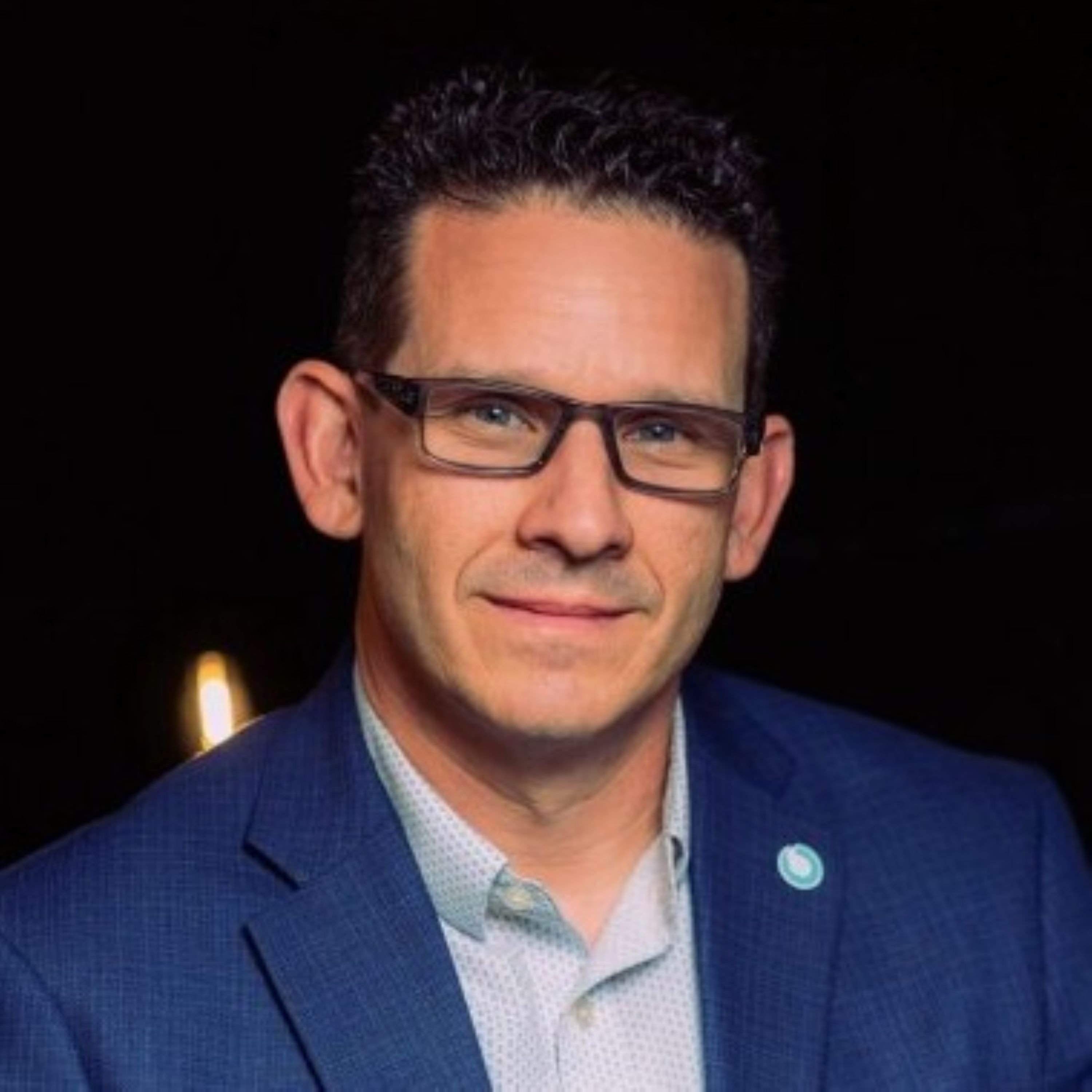
Ross Grainger, CFO of Nasuni, discusses building confidence and leadership as a CFO, how AI changes finance work (more analysis, not faster close yet), and how to measure ROI for AI and new platform offerings. He also covers pricing strategy, customer health/renewals, and Nasuni’s unstructured data platform for enterprise AI.
Ross began in public accounting, ran a Mako auto body franchise (learning “act like an owner”), built FP&A/finance ops for a healthcare software company and helped drive an acquisition, then served six years as CFO of an AI recruiting software business. He joined Nasuni at launch; previously Paradox was acquired by Workday (2025).
AI in finance is currently slowing teams slightly because it enables deeper questions; finance must streamline tools and reduce silos. Storage value is measurable, but internal AI ROI measurement is unresolved.
Board-driven pricing overhaul at a prior company (22–23% average ACV increase vs a 7% plan); AI planning model built in Claude; customer renewal signals include utilization/ticketing and over/under capacity.
Written by AI. May contain mistakes.
Ross Grainger shares insights on building confidence for board meetings.
“To have that confidence, to say the things that you truly believe in because what you say matters and it needs to come across with confidence and you need to have a larger voice in the room.”
Ross discusses his diverse career path leading to finance leadership.
“Ross began in public accounting, then stepped outside the traditional finance path to spend four years owning a Mako franchise.”
Ross reflects on mentorship experiences that shaped his finance perspective.
“So, Ross, take a look back for us and identify some of those experiences you feel prepared you for a finance leadership role.”
Ross describes his transition to the CFO role and the learning process.
“And you would stay on there for a number of years?”
Ross explains how confidence impacted his leadership during fundraising.
“To have that confidence to say the things that you truly believe in because what you say matters and it needs to come across with confidence and you need to have a larger voice in the room.”
Ross introduces Nasuni's platform and its relevance for enterprises.
“So they had access to information that an outside party would not.”
Ross shares insights on customer metrics and health for renewals.
“Yeah, Vista Equity Partners came in with a majority investment in 2024.”
Learn about the importance of customer health metrics in renewals.
“There's quite a few, both financial metrics and some of the non-financial things.”
Explore how to decide on investments in new capabilities and services.
“Well, as Nasuni expands beyond storage, how do you decide which new capabilities deserve investment?”
Discuss the challenges to management's assumptions regarding product uptake.
“of what is the ROI if we're going to go build this?”
Understand the value AI brings to customers and its applications.
“Are we stuck in, say, the traditional model of when our customers buy, or can we actually influence the timing that our customers can buy?”
Analyze the current state of AI in finance and its challenges.
“Where is AI moved beyond, you know, automation or making work faster?”
Speculate on how finance organizations might evolve with AI.
“Are you likely to organize finance differently in the coming months or years, you know, in response to the how AI is being used?”
Discuss the unresolved issues around measuring AI implementations.
“expanding beyond storage and then providing the economics of new AI offerings, you know, one against the other.”
Learn about the blueprint for modern finance with AI integration.
“But our customers measuring the success of their AI implementations, no one has that figured out yet.”
Reflect on a pivotal pricing model change in a previous company.
“We're hoping you'll look back in time and share with us a sort of a insightful moment that you experienced or a breakthrough moment.”
Discuss mentoring insights relevant for new CFOs and personal reflections.
“We're going to move to what we refer to as our mentoring round.”
Discover how endurance sports principles apply to business leadership.
“only goes back a few years i started as a road biker as a kid um and i did triathlons from the time I was 10 until about 15.”
Learn about the book 'Storytelling with Data' and its impact on presentations.
“something they, uh, you know, a big one for mountain biking?”
Explore the importance of simplifying data to enhance storytelling.
“Charlie, you weren't aware of when it came to storytelling and data?”
Understand the key priorities for Ross Granger as CFO of Nasuni.
“to find out what works, both in finance and across the organization.”

Get the gist, explore an idea or ask about something said.
 Claude
On CFO THOUGHT LEADER, what are the key points of this episode?
Searching your listeningAutomatic transcript. May contain errors.
0:00CFO THOUGHT LEADER: Support for CFO THOUGHT LEADER comes from Salesforce. Unify selling and billing for a seamless customer experience. And one stream, trusted data, faster decisions. Hello, this is Samantha Greenberg, CFO of AlphaSense, and you are listening to the CFO THOUGHT LEADER podcast. This is episode 1209.
0:30One, I needed to have confidence. I had a very good friend on the executive team with me and she pulled me aside before going into a board meeting one time and she said, Ross, I really need you to be the person in this board meeting that you are when we are in our executive team. To have that confidence, to say the things that you truly believe in because what you say matters and it needs to come across with confidence and you need to have a larger voice in the room. So she helped me grow in the confidence that I needed to handle a boardroom. Throughout my journey at Paradox, I was there for two different rounds of fundraising and in our second round, we brought on 14 investors.
1:15So we had quite a few voices in the room and it took a little bit more confidence to deal with the number of investors in that boardroom.
1:27CFO THOUGHT LEADER: Hi, it's Jack. On today's show, we speak with Ross Granger, CFO of Nasuni. There's an interesting tension emerging around AI and finance. We keep hearing about speed and efficiency. But what if, at least for now, AI actually causes finance teams to spend more time on certain things? Not because the technology isn't working, but because it suddenly allows us to ask questions and explore analyses we couldn't realistically pursue before. That creates a different challenge for CFOs. Individual productivity is one thing. Transforming the performance of an entire finance organization is another. Ross Granger has been thinking about that distinction and about what has to happen before finance really gets to the other side of the AI investment curve.
2:29CFO THOUGHT LEADER: Our talk with Ross Granger begins after this. As finance leaders know, revenue operations is no longer just a sales conversation, especially when the quote, contract, and invoice somehow tell three different stories. Agent Force Revenue Management brings pricing, quoting, contracting, and billing together on one agentic revenue platform with a single source of commercial truth, proven workflows, and built-in governance. It gives people and AI agents the context to make smarter deals across every channel. The result? Finance spends less time playing revenue detective. And what your business sells is exactly what it invoices.
3:22CFO THOUGHT LEADER: Learn more about Agent Force Revenue Management at salesforce.com slash CFO. That's salesforce.com slash CFO.
3:46CFO THOUGHT LEADER: Hello, CFO Ross Granger is with us. Ross began in public accounting, then stepped outside the traditional finance path to spend four years owning a Mako franchise. He later built FP &A and finance operations for a healthcare software company, helping guide acquisitions in a private equity sale. before spending six years as CFO of an AI recruiting software business. Now, at Nasuni, he's helping shape the next chapter of a cloud software company, expanding into data intelligence and AI. Ross, welcome. Thanks, Jack. It's great to be here. So, Ross, take a look back for us and identify some of those experiences you feel prepared you for a finance leadership role.
4:39What do you think? I think one of the most impactful parts of my career was the non-traditional piece where I stepped outside of finance and I owned and operated the Mako auto patent body franchise. And in that role, I learned that you have to act like an owner. You have to do those things that maybe somebody else isn't willing to do. In that case, it meant sometimes cleaning toilets, sometimes learning how to paint cars, sometimes learning how to weld and do body work. but the next step of that was also even if you can do all those things and you should be comfortable doing all of those things you shouldn't do those things forever because it takes you away from
5:18CFO THOUGHT LEADER: where you can provide the most value to a company you know were you focused on finance even within that role i mean or could you have gone a number of different directions still yeah in that role I could have gone any number of directions. I was doing outside sales. I was doing customer service directly. I mean, I did it all for a shop of 14 people in total, but I did everything that it took to run that shop. I did find out that, you know, selling auto body services was probably not my thing long-term. And I did enjoy, you know, accounting and finance and wanted to get back into that role. so help us uh narrow the lens then which uh experience perhaps most changed how you you view finance i think is a culmination of a lot of experiences one of the things that i learned how finance can influence a business more was when i was at um the health care it company or health care software company and I had been brought in as a controller and the CFO above me left.
6:30And we were going through the hiring process to replace the person above me. And of course I threw my hat in the ring because I'd had quite a bit of experience and had wanted to become a CFO at that point. And the person that they hired is an amazing CFO who had a very different background from me. And what I learned is the lens that he brought to the business, not just the debits and credits, not just the spreadsheets and the accounting system, but how finance can truly shape the direction of a company and influence the rest of the leaders within the company to think more strategically, think about the impact of their decisions on the overall finances of the company in order to continue growing.
7:15So I ended up being extremely happy that they hired somebody else and not me, especially somebody that had a completely different background from me to help me see the other side of the ledger.
7:28CFO THOUGHT LEADER: Well, that's great. And you would stay on there for a number of years? I did. I stayed on for another two and a half years, ultimately playing a big part in the sale to the PE company before being picked up in my first role as a CFO in the AI startup. So great, great mentorship during that two and a half years. Again, you step into a CFO role when you exit. So clearly that was accelerated learning, let's say. Very much so. I think I could have made the leap to CFO had they put me direct in that role, but I think it would have taken me a long time to be comfortable. And having somebody that was willing to train me and with those different experiences really helped me get to my end goal of being a CFO much faster.
8:18CFO THOUGHT LEADER: so tell us about becoming a leader then and you know six years at paradox was it i mean how did that that's a that's an investment and how did that change you as a leader i think a couple of things one i needed to have confidence i had a very good friend on the executive team with me and she pulled me aside before going into a board meeting one time and she said ross i really need you to be the person in this board meeting that you are when we are in our executive team. To have that confidence to say the things that you truly believe in because what you say matters and it needs to come across with confidence and you need to have a larger voice in the room.
9:04So she helped me grow in the confidence that I needed to handle a boardroom. Throughout my journey at Paradox, I was there for two different rounds of fundraising. And in our second round, we brought on 14 investors. So we had quite a few voices in the room. And it took a little bit more confidence to deal with the number of investors in that order. paradox we sold to workday in 2025 and so i started putting my name out there with recruiters because i knew i wanted to do something else and i had the benefit of having a successful outcome so i had a decent amount of inbound interest and i interviewed with over 30 companies uh through that journey i found that i really liked vista equity partners and i had an interview with a different portfolio company, decided I liked Vista, but didn't like that portfolio company as much.
10:00So then when Nasuni opened up, I was on board from the beginning, knowing who the backers were, and then really hit it off with the CEO and found that she was somebody that I very much wanted to work for and continue learning from.
10:13CFO THOUGHT LEADER: Can you spotlight for us just some of the early details around how Workday became interested and the discussions took off? Yeah, absolutely. So we brought Workday in as an investor on our cap table when we did our Series C at the end of 21. We had two other strategics that we brought on board as investors. We did that on purpose to let them have a quarterly view of our business and continue seeing our growth journey, as well as they were a significant partner for us. So they had access to information that an outside party would not. And then the conversation developed. We talked a few times, and then things got serious at the end of last year.
10:59CFO THOUGHT LEADER: All right. Well, we might have a few more questions related to your journey into the CFO realm. But right now, let's find out about Nasuni, this company, this opportunity. you saw. For someone new to Nasuni, what does the platform provide? Who needs it? And where is the opportunity? Yeah, Nasuni is the leading unstructured data platform for enterprises where file data is mission critical for people and AI. We help manage, protect, and activate unstructured, so think file data, for large enterprises and AI that supports them. And one of the things that really attracted me to Nasuni is in this age of AI, things that I started to see last year and have become more apparent this year is that having data clean, organized, permission aware is very important for the success of any enterprise level AI implementation because data really drives the success of your AI tools.
12:02CFO THOUGHT LEADER: You know, just looking back a little bit at the history, wondering if you can just shed some light on for us. I mean, there was a Nasuni's 2024 majority investment. What did that make possible that wasn't practical before? Can you share that chapter with us? Yeah, Vista Equity Partners came in with a majority investment in 2024. And I think it brought the next level of professionalism and growth to Nasuni. Nasuni started in 2009, had multiple kind of growth journeys along the way. but this really helped professionalize how we thought about the future both in the products that we brought to market for our customers as well as the professionalism of the accounting finance organization and and really thinking about what the long-term growth trajectory of the company could be.
12:55CFO THOUGHT LEADER: Thinking about this revenue model I'm wondering where do customers you know Are customers paying for, is it capacity? Is it expansion? Or is it additional services? Which driver matters most? So it is a subscription model. And our core is primarily based on the storage, the amount of storage that you need. But we do have additional products. As our company has moved from a product to a platform company with additional products to help those customers get the value from their data in using their AI tools. We're launching a product, AI Activate, later this year. We've previewed it as part of our brand change.
13:41But it's moving just from purely storing their data to helping companies get that activation out of it to use it for future benefit.
13:51CFO THOUGHT LEADER: Tell us about your lines of sight into the business. what early signals, and I imagine this is renewals and what have you, but tell us about your lines of sight, what you're looking at. What are those metrics? There's quite a few, both financial metrics and some of the non-financial things. So customer health is important. We do have, it's a detailed customer health model just to understand their utilization, how many tickets they're putting in. But especially as we look at the upcoming renewals, we want to make sure the customers are happy with the platform that we're providing to set a good foundation for the renewal.
14:29We're also looking at how much capacity they're using. Are they over or under what they've purchased? And what does that look like as we're coming into a renewal? As well as what are those opportunities that they could take advantage of the additional products and services that we offer on top of the core platform that we may see other customers in their same industry being able to take advantage of to accelerate their business.
14:53CFO THOUGHT LEADER: Well, as Nasuni expands beyond storage, how do you decide which new capabilities deserve investment? That is really hard because we're trying to predict the future, right? So I rely heavily on our product teams to gather information from our prospects and our customers to help put together the ideas on what our customers are truly asking for. And then we have to build the financial models behind that to say, okay, with the things that we know, those being what our customers asking for, maybe what other like products are out there, what that demand could be, what we could charge for it, and then really try and build that model of what is the ROI if we're going to go build this?
15:38Are we potentially going to go buy it? We had an acquisition earlier this year because we saw that we needed to provide additional services. but doing that build by decision and ensuring that we have the right ROI there is no shortage of good ideas and wants from our customers so weeding down to those that are the most viable that can provide ROI and continue to keep our customers happy is how we're going to pick which ones we do invest in
16:10CFO THOUGHT LEADER: During the time you've been there has there been any evidence that's come forward to challenge some of management's original assumptions? There are always areas to challenge management's assumptions. I haven't seen yet any of the major assumptions be challenged, but there's always things about uptake on a particular product. How fast will our customers accept it? How much can we change buying decisions and buying behaviors? Are we stuck in, say, the traditional model of when our customers buy, or can we actually influence the timing that our customers can buy? And that just changes some of our go-to-market strategies, potentially where we invest in events, in sales teams, versus sequencing other things.
17:04CFO THOUGHT LEADER: I want to talk to you a little bit about AI. We're wondering, where is AI? where do you see it really creating real customer value today? Where is that happening? So our customers are finding value in AI by understanding the history of their file data and how things have changed over time. So think of an AEC company, an architecture company. Maybe they had a drawing that went through 17 different iterations. Later, a building fails, something in that building fails, and they want to look back through their data to say at which point in the file drawings did we make the change that ultimately failed so that we can predict the future to make sure that we don't have those same failures later.
17:54CFO THOUGHT LEADER: Yeah, very interesting. What about inside finance? Where is AI moved beyond, you know, automation or making work faster? I don't know if we're all the way there yet. to be quite honest. I think we're still in a little bit of what that J curve is expected to be, where in some ways, I think utilizing AI tools directly in finance is slowing us down slightly. And the reason I say it's slowing us down slightly is because we can do so much more, get in depth in our analysis way more than we could have in the past. We are attempting to do things that we never would have thought of before. I built a high level model in Claude as we were thinking about our high-level planning for next year.
18:41And I just, I wouldn't have had that tool available in the past. So I'm spending more time with that. And I think we'll need to streamline those tools, all the things that my team is creating, the things that I'm creating, so that we get to providing benefit across the function rather than in individual silos. I, as an individual, can be way more effective, but that doesn't mean my whole team is closing the books faster yet. we're on the path there and I see the light, but I don't have the system in place yet to make that kind of end-to-end accounting and finance process faster than it was before.
19:18But we're on the way
19:21CFO THOUGHT LEADER: there. Are you likely to organize finance differently in the coming months or years, you know, in response to the how AI is being used? And again, you were talking about those silos to to get rid of those silos and have people share more widely. I do expect the changes to happen in accounting and finance. I don't know what they'll be. You know, I've got some ideas on where I think it's going. I think teams will need to be more technical in nature. I think that they will have a broader view into the business, but I don't know what that means. Am I going to have an accounts payable person or team, or will I have somebody that is embedded with our procurement team for engineering that is running financial operations but looks different than the AP person of today?
20:17CFO THOUGHT LEADER: So I was thinking there are sort of two challenges here, expanding beyond storage and then providing the economics of new AI offerings, you know, one against the other. these two challenges. Which part remains, in your mind, the least resolved here? Definitely the AI piece of it. I think it's just so new for companies in terms of how do they deploy, how do they implement, and how do they measure their own internal ROI that it's just, it is unresolved today. I think understanding the value of storage is fairly simple. If we can do it better and cheaper than others and make that data more accessible, then that's kind of resolved in how you measure it.
21:11But our customers measuring the success of their AI implementations, no one has that figured out yet.
21:21CFO THOUGHT LEADER: What is a forward finance organization? Finance leaders are under pressure to move faster, adopt AI, and guide decisions across the business. But here's what most people miss. AI doesn't create value on its own. You need the right operating model behind it. That's what Ford Finance is. It's the blueprint for building trusted data with finance and IT actually aligned. And AI working right where decisions are made. OneStream brings this to life. As the AI operating system for modern finance, it's all in one platform. Your financial and operational data in one place with purpose-built AI embedded across planning, close reporting, and analysis.
22:15CFO THOUGHT LEADER: The result? Faster decisions, less busy work, stronger governance, and more value from AI. Explore the Forward Finance Blueprint at onestream.com. slash forward finance. And see how to turn AI ambition into real business value. Visit us at onestream.com slash forward finance. That's onestream.com slash forward finance. We are up to what we like to refer to as our finance strategic moment question. We're hoping you'll look back in time and share with us a sort of a insightful moment that you experienced or a breakthrough moment. What comes to mind when we ask for a finance strategic moment? Yeah, this takes me back a number of years now to our prior company.
23:14And we were challenged by our board to reevaluate our pricing model, both the total value that we were charging our customers, as well as the way that we were charging them. And we, as a leadership team, put together a plan. We put together a plan that we felt would net a 7 % increase. Keep in mind, this company had been around for almost 10 years and had never done a price increase in those 10 years. The board said, no thanks, that's not enough. You haven't done a price increase in almost 10 years. We need to rethink the art of the possible here. And so I took a significant role in that overall project with our team to design and then implement what turned out to be a 22 to 23 % increase in our average ACV with our customers through changing both the drivers of what we were charging for and then lifting the price.
24:12that took a cross-functional team to understand where our customers were getting value, where the pushback would be from customers when we told them their price was changing. And we had this very broad range of what our customers were being charged. And so we were trying to get a little bit more consistency on that as well. So some customers would be impacted 5%, others would be impacted 70%. So trying to take that whole picture, put guardrails around what we wanted to bring our prices up for our customers and develop the escalation paths for our customer success team in order to handle the objections, to talk to the customers, to explain the additional value that they were getting from the product and all the changes that had happened in the product over the 10 years that they had it without seeing a price increase.
25:01and it was a massive project. It took us about a year and a half to complete the whole thing, but we hit our targets after being challenged by the board. And it was an area that finance really took the lead in pushing the rest of the teams, but it took every part of the company to implement it appropriately.
25:22CFO THOUGHT LEADER: Great, great share for us. Thank you for that. We're going to move to what we refer to as our mentoring round. We're going to ask you to look back again. I think we're interested in that first 90 days that you were a CFO, and this was, I guess, during your paradox time. The first 60 days you stepped into that role, you had observed CFOs up to that point many times. You were familiar with the role, but there must have been something you wish someone had told you about as you got into it. I had a good mentor that let me try on the role at my prior company. So stepping in, I felt like I was prepared.
26:05I think what I wish somebody would have told me was sometimes the loneliness that you feel as a CFO. While you do have peers, there's nobody else in the organization as a CFO that has a responsibility to the board and the investors and to the CEO in the same way as any other role. And so while you do have friends, you do have some peers in title, they are not the same as the CFO. You just have a different level of responsibility than the rest of the C-suite.
26:48CFO THOUGHT LEADER: We also like our guest to reflect a little on the personal side with us, Ross. something your colleagues might not know about you. You've only been there eight months, so there must be lots of things, but something from your past, an interest that you have, something you pursued, a milestone way back when, don't know. Anything? On the personal front, one of the things I'm most proud of in the more recent history was completing the Leadville Trail 100 mountain bike race. It's a 100-mile mountain bike ride in Leadville, Colorado. Um, it was actually 105 miles with, I think it was 12 ,000 feet of quieting.
27:25Um, took me 10 and a half hours, did that in 2023. But if I step back even further, um, one of the things that not everybody knows about me was I was both a cheerleader in high school and college. And then I was my college's mascot, my senior year of school. So I was Louis the lumberjack.
27:44CFO THOUGHT LEADER: uh did uh did that entail a uh a two-headed axe that you carried about or what i did we had a foam axe they wouldn't give me a real axe i also had a chainsaw that i got to carry around but it didn't have a chain on it um so it made the noise but uh but no danger to the kids as they were running around how long have you been mountain biking how long does that go back mountain biking only goes back a few years i started as a road biker as a kid um and i did triathlons from the time I was 10 until about 15. And then I picked it back up again in my twenties. Uh, but knees and hips no longer allow me to run.
28:18So I've switched to just cycling and I never really enjoyed swimming. I did it as part of getting through the triathlon. Uh, but endurance sports actually find has a strong correlation to business. And I really enjoy the planning that it takes to complete a 10 hour race. The delayed gratification, you have to train for months to get there. You have to incorporate all of the elements, including nutrition, stretching, strength training, getting enough sleep, and trying to find the balance of training that I find fits really well with managing a finance team. You're training all year long in order to close the books, in order to have a expectations.
29:04Um, and those things take a while to get there and you need all the things to go right. You know, your nutrition is your inputs. You need the right amount of rest. You need, um, all, all of those elements in order to, to have a strong business, uh, especially as a finance leader.
29:18CFO THOUGHT LEADER: Is the Colorado event, is that something on a lot of mountain bikers radar? Is that something they, uh, you know, a big one for mountain biking? Yeah. For that type of mountain biking. It's not, um, technical, uh, in terms of crazy, like jumping off rocks and things, it's much more of an endurance, uh, endurance one, but many mountain bikers do know that, uh, that race. Great. Great. Uh, I'm learning a lot there. The, the, uh, in terms of providing us with a book selection or a resource, something you found interesting, something that's influenced your thinking, something you've maybe escaped with.
29:56CFO THOUGHT LEADER: So we're not choosy here, but anything you can recommend to us? Yeah, actually, I do have a couple of books behind me that I recommend. One of my favorites on that shelf is Storytelling with Data. It really helps me. I think about it all the time when I'm trying to present something. I want to get the data into a way that the person consuming it can understand it and take action from it. And some of it is simple design elements and some of it gets into a little bit more detail. But I strongly recommend that one for anyone that is doing presentations. I recommend it to marketing teams that are presenting any financial data.
30:37It's just a really great book.
30:43CFO THOUGHT LEADER: And again, what you shared with us, is there something you didn't necessarily, Charlie, you weren't aware of when it came to storytelling and data? I mean, what allowed the light bulb to go off for you? Was it really just simplifying? It allowed you to understand storytelling needed to be simplified and data needed to sort of get in the same lane? Simplified, I think one of the things I did not earlier in my career take advantage of is the value of white space. You know, I felt like trying to put as much out there as possible to fill all the space to tell the story. And what I found, especially with the help of this book, is actually reduce the amount of information that you're sharing to make sure you're highlighting those things that are really important.
31:31You can always provide additional data, additional backup, but in your main presentation view, utilize the white space.
31:40CFO THOUGHT LEADER: Yep, great, great advice. Okay, well, we're up to our final question and this is where we're going to ask you for your priorities for the coming 12 months as CFO of Nasuni? What would those priorities be? Get out of the bottom of the J-curve in the AI investment. We're trying all these experiments to find out what works, both in finance and across the organization. But measuring the ROI on our internal AI investments, helping support our sales team on the growth as we move from a product to a platform company and leveraging all of the additional products and services that we have. If I can do those two things as a finance leader, I think we will be a successful company.
32:27CFO THOUGHT LEADER: Ross Granger, thank you for joining us on CFO Thought Leader. Thank you.
32:44CFO THOUGHT LEADER: Hello, we're benchmarking the CFO path. Join 500 finance leaders helping define how today's CFOs rise and lead. If you're a CFO or senior finance executive, contribute your experience. It takes just a few minutes and you'll receive early access to the findings. Visit cfothoughtleader.com slash benchmarking.
33:13Thank you.
Ross Grainger remembers an early chapter of his career when finance was only one part of the job.
After stepping outside a traditional finance path to own and operate a Mako auto-body franchise, Grainger tells us he learned what it meant to “act like an owner.” That sometimes meant cleaning toilets, learning to paint cars, welding, doing body work, handling customer service, and making outside sales calls. But the experience also taught him another lesson: even if a leader can do everything, “you shouldn’t do those things forever” if they pull you away from where you can provide the most value.
That owner’s mindset later followed Grainger back into finance. At a healthcare software company, he tells us he was passed over for a CFO role he wanted. The executive hired instead brought a different perspective—one that showed Grainger how finance could move beyond “the debits and credits” and help shape company direction. Grainger says he ultimately became “extremely happy” they hired someone else because the experience accelerated his development.
Years later, that broader view surfaced again when Grainger helped lead a pricing overhaul at a prior company. According to Grainger, management initially proposed a 7% increase after nearly 10 years without one. Challenged by the board to reconsider “the art of the possible,” the team ultimately achieved a 22% to 23% increase in average ACV.
For Grainger, finance leadership repeatedly returns to the same idea: understand where value is created, and focus your effort there.


