
 Ask ChatGPT


 CFO THOUGHT LEADER
2 Sep 2026 · 40m · 18 chapters
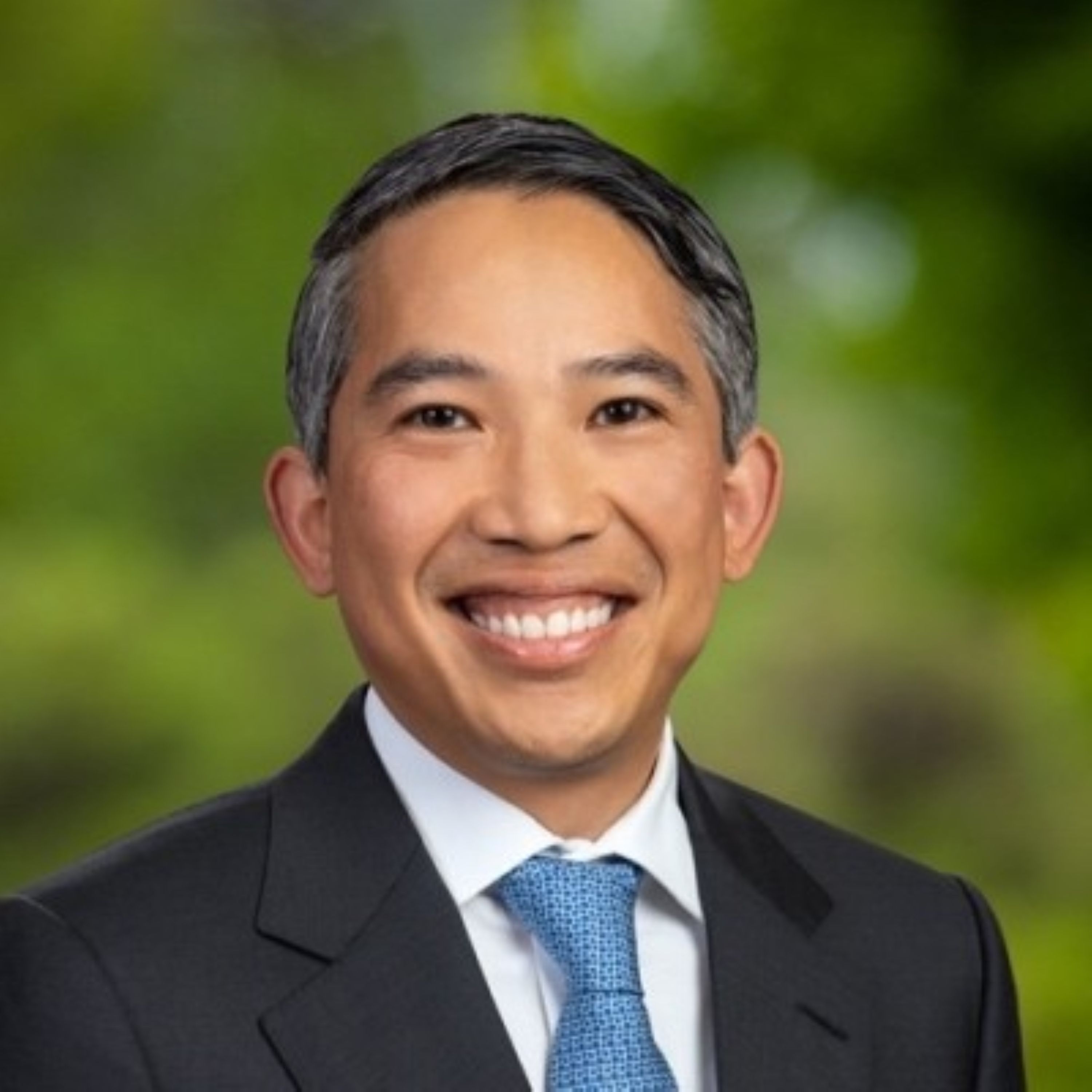
Episode 1211 features CFO Jonathan Ma of Sutter Health. Topic: how finance leaders balance “means and will” to fund mission-driven growth amid rising costs, complex reimbursement, and early-stage AI adoption.
Ma spent nearly 15 years at Morgan Stanley (analyst to executive director), then moved into healthcare, leading strategic finance and treasury at Sutter Health before becoming CFO. Sutter Health overview: Northern California not-for-profit system with nearly 30 hospitals, several hundred clinics, ~7,000–8,000 aligned physicians, serving ~3.5 million people annually.
use good times to make hard choices so capacity remains for future challenges; AI value is measurable via clinician time saved and improved decision support, without sacrificing decision quality.
quantifying hours saved from an AI/“Bridge” partnership; issuing $1.3B taxable bonds for capital spending (refinancing plus new money) to support projects like a new Silicon Valley hospital; forecasting relies on leading indicators such as patient volumes and capacity, with reimbursement shaped by regulatory changes.
Written by AI. May contain mistakes.
Discussing the efforts to save clinician time and improve patient care.
“and those hours and that time can hopefully be channeled back either into patient care or making sure that our clinicians have the right balance and allowing us to avoid additional burnout.”
Exploring the role of AI in finance and its effects on decision-making.
“According to new research from Salesforce, 90 % of finance leaders using AI report a positive return on investment.”
Jonathan shares his experiences and lessons learned at Morgan Stanley.
“Great to be here and appreciate you having me today.”
Discussing how trust and leadership evolved during Jonathan's career.
“I find it interesting the way you explained how you were able to communicate with clients, you revealed that you were capable of communicating complex concepts.”
Jonathan reflects on his move from banking to the nonprofit healthcare sector.
“And I guess I think of it again as a continuum and accumulation over time.”
Discussing how mentorship influenced Jonathan's career choices.
“And it's been a little bit of a shift kind of from investment banking, but one that I've really appreciated.”
Learn about Jonathan Ma's path to becoming CFO at Sutter Health.
“And it was one Saturday I was actually at home visiting my parents in Nebraska.”
Understand the mission and scale of Sutter Health's operations.
“For listeners now who might be new to Sutter Health, not familiar, what care does it provide?”
Explore how Sutter Health's nonprofit model influences capital priorities.
“So what I communicate often to our teams and our colleagues is that as a not-for-profit, every dollar that we save and every dollar that we earn, we reinvest back into our communities.”
Discover the differences in revenue generation at Sutter Health.
“So there's, you know, typically people who have their healthcare services paid for by whether that's Medicare or Medi-Cal or commercial payers.”
Learn about the difficulties in forecasting healthcare financials.
“Is there a signal that maybe in some of the other areas that's challenging, that it's the hardest to read when I mentioned cure mix and available capacity, compare that to patient volume?”
Understand Sutter's approach to issuing bonds for capital projects.
“And we wonder why was that the right financing choice?”
Examine how AI is being integrated into Sutter Health's operations.
“And we're really seeing value in that area and many other areas across the organization.”
Discover the key factors influencing Sutter's growth and sustainability.
“and also have visibility for our teams into how we can have actionable insights going forward.”
Learn about the role of value-based care in shaping healthcare's future.
“So I know I referenced value-based care earlier in our conversation.”
Discover insights on how finance leaders balance sustainability and business needs.
“We are up to what we like to refer to as our finance strategic moment question.”
Hear Jonathan Ma's reflections on his early days as a CFO and support received.
“We are going to jump to what we refer to as our mentoring round, and we're going to ask you to look back in time now to your first 90 days in the CFO role.”
Explore Jonathan's priorities for the next year as CFO of Sutter Health.
“Even COVID now seems like, at least to me, seems like it could be very far removed.”

Get the gist, explore an idea or ask about something said.
 Claude
On CFO THOUGHT LEADER, what are the key points of this episode?
Searching your listeningAutomatic transcript. May contain errors.
0:00Support for CFO Thought Leader comes from OneStream, Trusted Data, Faster Decisions, and Salesforce. Explore new research on the future of finance and AI at Salesforce.com slash CFO Report.
0:16Jonathan Ma: Hello, this is Amy Wang, CFO of Procurify, and you are listening to the CFO Thought Leadership Podcast. This is episode 1211. You know, we're still relatively in early stages and still learning, but I think if taking kind of ambient listening as an example and the hours that our clinicians can potentially save from using a tool, in our case, it's our partnership with the bridge. and those hours and that time can hopefully be channeled back either into patient care or making sure that our clinicians have the right balance and allowing us to avoid additional burnout. So the value in that, we're quantifying internally on kind of the hours saved, perhaps additional care that's delivered, and we're really seeing value in that area and many other areas across the organization.
1:17Hi, it's Jack. On today's show, we speak with Jonathan Ma, CFO of Sutter Health.
1:27Finance leaders are often asked to find the means for what an organization has already decided it wants to do. But the harder question may be whether the organization is willing to make difficult choices when conditions are still favorable. It's a tension between ambition and preparedness, between funding growth today and preserving the capacity to respond tomorrow. That tension becomes even sharper inside a mission-driven organization. Virtual discipline is not separate from the mission. It helps sustain it. The question is, will an organization act while it still has both the means and the will?
2:11Our talk with CFO Jonathan Ma begins after this. AI is changing the finance function, but how much business value is it actually delivering? According to new research from Salesforce, 90 % of finance leaders using AI report a positive return on investment. And as AI agents enter the picture, finance leaders are seeing opportunities to improve productivity, reduce costs, and strengthen forecasting. But there's another side to the story. CFOs are also confronting growing revenue complexity with more subscription, consumption-based, and hybrid business models to manage. And that raises an important question.
3:00How can finance leaders gain the visibility they need to make better decisions while putting AI to work? Salesforce explores these challenges and the opportunities ahead in its latest CFO research. Discover what finance leaders are saying about AI, revenue complexity, and the evolving CFO role. Visit salesforce.com slash CFO report. That's salesforce.com slash CFO report.
3:37Hello, CFO Jonathan Ma is with us. Jonathan spent nearly 15 years at Morgan Stanley, where he rose from analyst to executive director. He then crossed from banking into health care, joining Sutter Health to lead strategic finance and treasury before stepping into the CFO role. Today he's helping a major nonprofit health system fund an ambitious expansion while navigating rising costs, complex payment models, and the practical demands of AI. Jonathan, welcome. Well, thanks, Jack. Great to be here and appreciate you having me today. So, Jonathan, take a look back 15 years. That's quite a tenure at Morgan Stanley.
4:25Take us back in time, though, and share with us where you gained the experience. Yeah, I guess as I'm looking back on it, I just feel really fortunate that I was able to have great mentors along the way. I will admit, and maybe a lot of people looking back on their college years will think there was a part where I kind of ended up at a place like Morgan Stanley out of circumstance. It was, I've majored in economics in college and knew I was interested in a role in finance and kind of along the way had, was fortunate to receive this offer from the Morgan Stanley Healthcare Group and really had a chance to work under a couple of extraordinary leaders, both in San Francisco and New York.
5:13um you know people who uh really shaped how i uh try to build teams and try to lead and also take uh my work seriously but perhaps not take myself too seriously and that last part is not necessarily about um uh you know kind of trying to be the jokester or anything really more about curiosity not taking yourself so seriously so that um you're unable to ask a question in a room or admit that you don't know the answer. I think that I'm really proud of the ethics that Morgan Stanley really instilled in their people and their teams and the shared purpose. And overall, kind of had a really good financial foundation, I think, from there, learning how to communicate financial concepts to clients, kind of the fundamentals of financial modeling and and accounting, and then eventually trying to learn how to grow businesses within healthcare.
6:16So it was a great background, a great lead-in to eventually joining Sutter Health. But of course, I had a tremendous amount to learn once I stepped into my role joining here at the organization, and I'm still learning every day. I find it interesting the way you explained how you were able to communicate with clients, you revealed that you were capable of communicating complex concepts. When was it that someone began to trust your judgment? You know, that's different from technical knowledge, but when is it when they said, yes, Jonathan can handle this? And that's about judgment, making the right decisions on your own sometimes.
7:03Yeah, I will say that, I mean, it's a great question because I just talked about leaders that I worked for that really gave me a chance and helped mentor me. I should also just share that appreciation for clients or those on what we would say on the other side that took a chance on me too. I think about earlier in my career, I worked with also some really remarkable CFOs and treasurers that did give me that chance that gave me maybe the space to go back to the concept of curiosity and asking questions. people who accepted the fact that I might not have all the answers, but that I was willing to work hard, that I had the right values and ethics, and that I was willing to look out for their best interests.
7:58So I don't know if it was, I do think of one client in particular that I would say, especially took, I feel appreciative that they took a chance on me. But I don't know if it was just kind of a light switch. which I kind of think of it as a progression that over time, incrementally, you earn the credibility, you earn the trust. And then ultimately, that leads to clients being willing to trust your judgment and have you be in an advisor role. what about and i'm curious how many years into your career at morgan stanley were you when you maybe first realized others trusted you to lead yeah i think it was uh i kind of think it happened along different times and again i guess i go back to how um there were just moments uh that, you know, you were able, that I was able to lead and to contribute.
8:59And I guess I think of it again as a continuum and accumulation over time. I think there was a chance for me to lead, even when I was a young analyst, you know, for, you know, to mentor summer interns or people who were coming in behind me, all the way to eventually having the opportunity to lead, you know, an entire project, entire finance. and present before boards of directors. So over time, I think that's a great thing about kind of a company like Morgan Stanley or an investment banking or consulting track is that over time, there will always be encouragement for you to learn, to have structured opportunities to step up.
9:48And I think that's what's really let me or prepared me in some ways for the role I'm in now. Yeah, I wonder, as you look back, if there was a belief about finance leadership that over time you sort of outgrew during your banking years. So near the end of your tenure there, you looked at leadership perhaps quite a bit different from what you did perhaps your first three years. Well, maybe I'll connect that a little bit to eventually pivoting a little bit into leadership at Sutter Health, where being in New York City in an investment bank, as grateful as I am for that experience, it is a lot of people that are there at the bank came up through very similar circumstances, either through school or study finance and economics.
10:44kind of being in New York is also kind of a very great formative experience, but also it's, you know, it's the finance industry in New York. Moving to an organization like Sutter Health, where the path to success and kind of the mission orientation is somewhat a little different, you know, that kind of has challenged me as a leader to kind of expand, to challenge myself to view circumstances through different lenses, to kind of understand the multifaceted ways that success can be defined, how we have to think about our partners in a much more broader way, many more stakeholders. So that's been a great, I've really enjoyed that part of growth and becoming a leader.
11:36And it's been a little bit of a shift kind of from investment banking, but one that I've really appreciated. You mentioned, I think, that the sort of the health care opportunity within banking came your way fairly early. You can give us a sense of the timing maybe, but why was that? I mean, if it was the energy practice that came, I mean, was it random or was it something you had already signaled, you know, health care is where I'd like to be? uh you know sometimes i think we always like to think that we have as someone who's a natural planner i would always like to probably say that uh i uh had kind of uh that i i had some role in that as an architect in an architect way but it really is one of those uh kind of circumstances that i was assigned to a health care group my first year in college out of college and um and And again, was just fortunate to work under leaders that were really committed to teaching me about the healthcare industry and growing as a leader.
12:44So that is one where, you know, kind of probably either a work or life philosophy, you just never know where life and career might take you. And that's where I feel really grateful that that's what eventually led me to Sutter Health as well. Yeah, we're interested, of course, when you do decide to join industry, why Sutter Health? And perhaps there were relationships there and you were familiar with this business. But one would think along the way there were other opportunities and they just didn't get on your radar or were not for you. Why this one? Why was this yes? So there were a couple of things I actually still distinctly remember when it was actually my, I go back to the leader I worked for at Morgan Stanley, who was a great coach, a great, you know, just a great leader to learn from.
13:40He was the one who actually encouraged me to pursue the opportunity at Sutter Health. And probably to this day, I've actually not exactly asked him kind of why he felt so moved to call me to pursue this opportunity. And because we had been working together, as you said, for 15 years, we've had a great working relationship, had a lot of success working on interesting projects. And it was one Saturday I was actually at home visiting my parents in Nebraska. and my boss at Morgan Stanley called me and said, hey, there's this organization where the treasurer is retiring. I think you should really pursue this opportunity.
14:19It would be a great next step for you. I was in New York at the time. He knew that I could be interested in moving back to California at some point. So I guess I connect that back to, obviously Sutter Health is an incredible organization. I knew of the mission. I knew some of the people that were there, but the actual motivation to apply for the job originally was the seed was planted actually by my current boss then, who I consider a coach and a mentor. And I'm just grateful that he saw something in me that at the time I hadn't even considered for myself. So this is a good segue for us. For listeners now who might be new to Sutter Health, not familiar, what care does it provide?
15:10Who does it serve? And where is the opportunity? How's that? Sure. That's okay. So Sutter Health, we're a not-for-profit healthcare system based in Northern California. We have nearly 30 hospitals and several hundred clinics, aligned physicians, numbering about 7 ,000, 8 ,000, depending on kind of what you include. serve primary care, specialty care. We have ambulatory surgery centers, home health. Generally, we're roughly about the 10th, 11th largest health system in the United States. We serve about three and a half million people annually. It's a mission-driven organization. We've been experiencing a lot of growth over the past few years and continuing to, you know, try and make our communities healthier and also looking out for our people.
16:10Our mission is caring for patients first and people always. So we're continuing to think about that every day, and it's always top of mind when I go to work every morning. So just looking at some of the headlines over the last 12 months, Sutter more than doubled capital investment in 2025. How does its nonprofit model shape those priorities when it comes to capital investment? Yeah. So what I communicate often to our teams and our colleagues is that as a not-for-profit, every dollar that we save and every dollar that we earn, we reinvest back into our communities. I have to acknowledge that Sutter Health is an organization that's grown up by a lot of other medical groups or kind of local hospitals that have, in some cases, served their communities for over 100 years.
17:09So these are deep, storied organizations and clinicians that have been committed to the health care of Northern California for a very long time, and we take that mission seriously. We do also have to balance that with financial sustainability. So my job as the chief financial officer is to balance the growth, balance the expenses and overall our margins so that we can generate enough sustainability to continue to reinvest, build new clinics, build new hospitals and continue to care for the people that we live with and our neighbors. So this is a really, you know, I view it as a complex revenue model.
17:55And I'm wondering if you could for us in plain terms, how do patient service and premium revenue work differently at Sutter? Sure. So, you know, overall in the healthcare industry, as many people might be aware, there's generally a shift to value-based care. So there's, you know, typically people who have their healthcare services paid for by whether that's Medicare or Medi-Cal or commercial payers. And that typically shifts up depending on your insurance plan in that patient service, if you're looking at our financial statements. Premium revenues are generally related to our own health plan. It's Sutter Health Plan.
18:49We have about 100 ,000 members here in Northern California. And so if we are the plan provider, not just providing the services, meaning physician services, if we're actually the insurance company as well, that will show up in premium revenues as an example. So we always like to understand the leader's visibility into the business, and we're wondering what gives you the sort of the earliest read on your revenues, whether it's patient volume, care mix, or availability capacity, I guess. Yeah, it's a combination of all those factors. So typically, I look almost every day at our leading indicators, to your point about the volumes that we're seeing in our hospitals and clinics or how much capacity we have.
19:48And typically, that will translate into kind of where we might see the revenue forecast for the rest of the month. You know, being in healthcare, there's also a lot of volatility in any given month. So sometimes there are regulatory changes, sometimes there are, you know, at different times of the year, we might encounter different kind of revenue ups and downs. So we take that into account as well in our forecasting, but generally we look at patient volumes as a leading indicator for our revenues. Yeah. Is there a signal that maybe in some of the other areas that's challenging, that it's the hardest to read when I mentioned cure mix and available capacity, compare that to patient volume?
20:39Yeah, I guess just maybe even stepping back a little bit hard, you know, what's hard to read sometimes in health care is just the ongoing regulatory changes. you know we you know trying to navigate the best we can in a complex environment at both the federal and the state level and you know that will kind of impact every single year kind of how we forecast our financials and how we look to prepare for the months ahead again our our commitment is to be financially sustainable so we can keep reinvesting but that sustainability is important and heavily impacted ultimately by the regulatory environment.
21:19So trying to strike that right balance at any given time is always a top priority for me and also our team. Wanted to take a look maybe inside the decision-making mindset. Sutter issued$1.3 billion in taxable bonds as capital spending accelerated. it. And we wonder why was that the right financing choice? Sure. So part of that is a combination of both refinancing of existing debt, as well as some incremental new money. But just like other not-for-profit healthcare systems, we and just companies at large, we constantly look at our long-range forecast and balance funding our capital plan from a combination of debt, cash and cash flow as well.
22:11Just like, you know, for those of us who are in the market for a new house, we balance when to get a mortgage and at what rate and how much. So we constantly look at that balance as well and look at our industry benchmarks, what's prudent, what do we have capacity for? And this was a time that we had planned to go back to the debt market so we can fund a lot of the important capital projects that we have going on in our footprint, including a new hospital in Silicon Valley. So we're really proud that that project is on our way. It's going to take many years to construct, and we've been thoughtful about how to finance a project like that.
22:53And part of it will be funded by debt if needed. we uh we're looking forward to touching on ai with you and sutter uses ai from what i understand in documentation diagnosis and patient access we wonder where the value is becoming you know finally measurable if it is yeah i'd say it's still um you know we're still relatively in early stages and still learning, but I think if taking kind of ambient listening as an example, and the hours that our clinicians can potentially save from using a tool, in our case, it's our partnership with the bridge, and those hours and that time can hopefully be channeled back either into patient care or making sure that our clinicians have the right balance and allowing us to avoid additional burnout.
23:53So the value in that, we're quantifying internally on kind of the hours saved, perhaps additional care that's delivered. And we're really seeing value in that area and many other areas across the organization. In our conversations with finance leaders, we've seen AI in the finance function accomplishing speed, visibility, and improving decision quality, we wonder, I would imagine it's speed first, then visibility. I don't know if you look at the world the same way, but we're wondering where AI has been most impactful in that finance function. I would say, again, early innings, but speed in the sense of helping our colleagues accomplish tasks more efficiently, but hopefully not at the expense of the other kind of factors you outlined.
24:52And I heard decision quality as one. And I don't think we want to compromise, at least on our team, that quality just for the sake of speed. So I think we're also trying to, as we're utilizing new tools and learning about what's available, we're in the middle of implementing a new ERP system in the next year or so. I think we're trying to be very intentional about building the right systems, leveraging AI, but also doing it in a way that makes sure that our quality is delivered on all fronts as well. What are you asking that application vendor about AI? What is it that you're kicking the tires when it comes to their AI enhanced functionality?
25:43Some of it's of little value, no doubt to you. Others, parts of it might, you guys might be able to leverage, unlike other companies. I don't know, but I'm curious what that conversation sounds like when you're doing the back and forth and trying to understand whether this is the right platform for you. Yeah, I mean, I think AI is integral to all of the discussions right now. In this specific example, we're rolling out our platform with Workday in the next 12 to 18 months. And I think just the amount of data in a complex healthcare organization like ours, whether that's in an area like supply chain or financial analytics, AI could add tremendous value in helping us sort through all of the complex data that we have so that we can help make the right decisions.
26:42and also have visibility for our teams into how we can have actionable insights going forward. So I actually think that there will be tremendous value as we're rolling out that platform. We always like to understand better some of the trade-offs that are out there that the business makes as it grows. But as Sutter expands, what's hardest to forecast? Is it reimbursement? Is it labor? Is it construction costs? Can you reflect a little on that for us? Yeah, I hope it's not too much of a cop-out. I mean, in a way, it's all of those factors. We're actually right in the middle of our refresh of our long-range forecast.
27:29But I guess I will try and maybe narrow it down a little bit. I would say a reimbursement is is one that we're really trying to focus on. We want to make healthcare more affordable. And we know that with the demographic changes in the country and, of course, our state and communities, combined with all the inflationary pressures, reimbursement will be key. But then how do we also manage that reimbursement environment with changing the way that care needs to be delivered? So I know I referenced value-based care earlier in our conversation. That will also be core to not only Sutter Health's moves in the future, but also our healthcare industry as a whole.
28:14It's just we'll need to continue to be a very important part of how we're delivering value to our communities and our patients and making sure that we use changes in the reimbursement realm to really effectuate change. in transformation in healthcare. Great. Thank you for that. Nice overview for us. We are up to what we like to refer to as our finance strategic moment question. And again, this might have happened anytime during the course of your career, but we're looking for a moment of insight or an experience that you had that reveals how finance plays a strategic role. What would you come, What would you share with us?
28:59Yeah, I was reflecting on this, and I'm sure a lot of finance leaders are constantly trying to strike that right balance between, of course, sustainability and also acknowledging the real business needs that we have across the organization. and how can our colleagues grow in an environment of also limited resources while making sure that we're managing all the risks. So I will have to borrow a little bit from kind of a CFO leader that I followed for a long time, Ruth Porat. She was the CFO of Morgan Stanley when I was working there, eventually became CFO of Google. And I listened to a talk that she gave a long time ago And the concept that she introduced, I think about all the time in my role.
29:52She talked about how she constantly tries to make sure we balance the means with the will, meaning as a leader, trying to communicate with our teams that all too often, once an organization has the will, they no longer have the means. So use the good and the stable times to make sure that you're taking a really hard look on pushing yourselves as an organization to make hard decisions if you need to, so that you can always prepare for the times that could be more challenging. So when I'm communicating with my teams and also especially with my colleagues that are outside of finance and ones that I'm in service to, to enable patient care and also growth, how do we also make sure that we balance the will with the means and get that alignment across the organization to understand a lot of the decisions we're making, whether that's even a budget, is hopefully not just a finance exercise.
30:54It's also shared accountability across the organization as we're trying to make decisions together and forward as an aligned organization.
31:06What is a forward finance organization? Finance leaders are under pressure to move faster, adopt AI, and guide decisions across the business. But here's what most people miss. AI doesn't create value on its own You need the right operating model behind it That's what Ford Finance is It's the blueprint for building trusted data With finance and IT actually aligned And AI working right where decisions are made OneStream brings this to life As the AI operating system for modern finance It's all in one platform Your financial and operational data in one place with purpose-built AI embedded across planning, close reporting, and analysis.
32:00The result? Faster decisions, less busy work, stronger governance, and more value from AI. Explore the Forward Finance Blueprint at onestream.com slash forwardfinance. and see how to turn AI ambition into real business value. Visit us at onestream.com slash forward finance. That's onestream.com slash forward finance.
32:35We are going to jump to what we refer to as our mentoring round, and we're going to ask you to look back in time now to your first 90 days in the CFO role. Now, we know you were at Sutter Health for a number of years prior and understood the role that you were taking on, but still there must have been something when you finally accept the appointment, step into the role, and you scratch your head and said, I didn't expect this. There's some part of it that even surprised you. What was that? I think it would be how willing others were, how ready and willing and able others were there to support me in the new role.
33:20And I think many of us often approach our roles with trying to do all we can before we ask for help. I know often I've heard others talk about some finance leaders being like the duck above the water, trying to look like it's smooth sailing above the water, but underneath you're paddling as fast as you can. So it's probably what surprised me was that how well, how open people were to helping, lending support, being an advocate, as long as if you just asked. Everybody's so busy. They may not know that you have a question or that you think that there's a gap. So I guess it's just a reminder to use your voice and speak up and really rely on your colleagues and other leaders at any time.
34:17Well, you've been on the operations side now for some years. Do you wish you got there sooner? 15 years in banking would have been 12 would have been enough i don't know but what do you do you ever look back in time and think you might do things a little differently you know i i usually don't i i just just as a matter of principle i always um kind of think kind of think things happen for a reason um but i uh so i'm grateful for kind of the full time that i had at morgan Stanley and I just, I truly believe that eventually it led me kind of to where I am today. Jonathan, we'd always like to ask our guests to reflect a little on the personal side.
34:59For us, your colleagues clearly know you pretty well. So I don't know if you can come up with something they may not know about you, but is there an interest from your past to pursue something on the, beyond the professional world that most people might not know about you? One I shared recently with my colleagues is that I was on a game show when I was in sixth grade. Not Jeopardy. We had a CFO we spoke to just yesterday. It wasn't Jeopardy. It was not Jeopardy. He's trying to get on Jeopardy. I'll clear that out. That shall remain nameless or else it could show up on a Google search. What part of life were you?
35:39Was it college years? No, it was in sixth grade. Okay. What about a book or a resource for us? It doesn't have to be a business book. I don't know, something that interests you or a resource even, whether it's something streaming. Yeah. I actually just recently reread Too Big to Fail. I actually moved to New York in September of 2008. So when I first moved there, I actually and saw the financial industry go through all the challenges it was going through,
36:16that I didn't think that I would probably have much of a long career in finance and thought for a long time that there was a possibility that a lot of banks could go under. So it was actually just an interesting kind of reflection again on, it seems so far away now, I guess now it's almost 20 years ago, But I think that there's still a lot of, it's always good to be reminded of more challenging times in our economy and to think through, again, how do we prepare and how do we make sure that the organizations and teams are working with our resilient. it. Even COVID now seems like, at least to me, seems like it could be very far removed.
36:57And yet, we just need to also constantly remind ourselves that something could be around the corner. I think that's probably our job as finance leaders is to maybe worry about everything. But it's also important just to be, I guess, again, while we have the means, have the will to think through all of those scenarios and prepare for any possibility. Yeah, nice reflection for us. Thank you. We are up to our final question where we're going to ask you to look forward finally. And we're interested in your priorities for the coming 12 months as a CFO. What would those priorities be? So I think, you know, I have my priorities related to our strategy as well as kind of our financial targets.
37:45But I think I constantly go back to making sure my team is aligned, feels that we have high levels of trust, that we have shared purpose. I have internally at Sutter, and again, I have to really credit our CEO, Warner Thomas, on being this mentor and being this leader about constantly putting our people first and establishing what we call internally and operating rhythm? How often are we meeting with our colleagues and teammates? Are we making sure we're being clear with what the priorities are? Are we building our teams? Are we developing leaders? Have we thought about succession planning? For me, that's a constant priority.
38:30So I guess to answer your question, I think about it a lot. And in the months ahead, that will continue to be top of mind for me. Jonathan Ma, thank you for joining us on CFO Thought Leader. Thank you, Jack.
39:09Hello, we're benchmarking the CFO path. Join 500 finance leaders helping define how today's CFOs rise and lead. If you're a CFO or senior finance executive, contribute your experience. It takes just a few minutes and you'll receive early access to the findings. Visit cfothoughtleader.com slash benchmarking.
39:39Thank you.
Jonathan Ma recalls being at his parents’ home in Nebraska one Saturday when his Morgan Stanley boss called with advice: pursue an opportunity at Sutter Health. After nearly 15 years, the mentor believed the retiring treasurer’s position could be Ma’s next step.
Ma tells us he had not considered the opportunity. Although he knew Sutter Health’s mission and some of its people, he says the call “planted” the seed. His mentor had seen something in him that he had not yet recognized.
That moment echoed the way Ma describes his development at Morgan Stanley. He credits leaders in San Francisco and New York with teaching him to take his work seriously without taking himself too seriously. According to Ma, that meant remaining curious, asking questions, and admitting when he did not know an answer.
Ma says trust arrived gradually rather than through a breakthrough. Clients gave him room to learn because they saw that he would work hard, uphold values and ethics, and protect their interests. He moved from mentoring interns to leading financings and presenting before boards.
At Sutter Health, Ma applies that same emphasis on trust. He tells us finance must balance growth, expenses, and margins so the not-for-profit system can continue reinvesting in its communities. Budgets, he says, should represent shared accountability across the organization rather than a finance exercise.
For Ma, leadership emerges incrementally: through questions asked, credibility earned, support accepted, and difficult decisions made while an organization still possesses both “the means” and “the will.”


