
In short
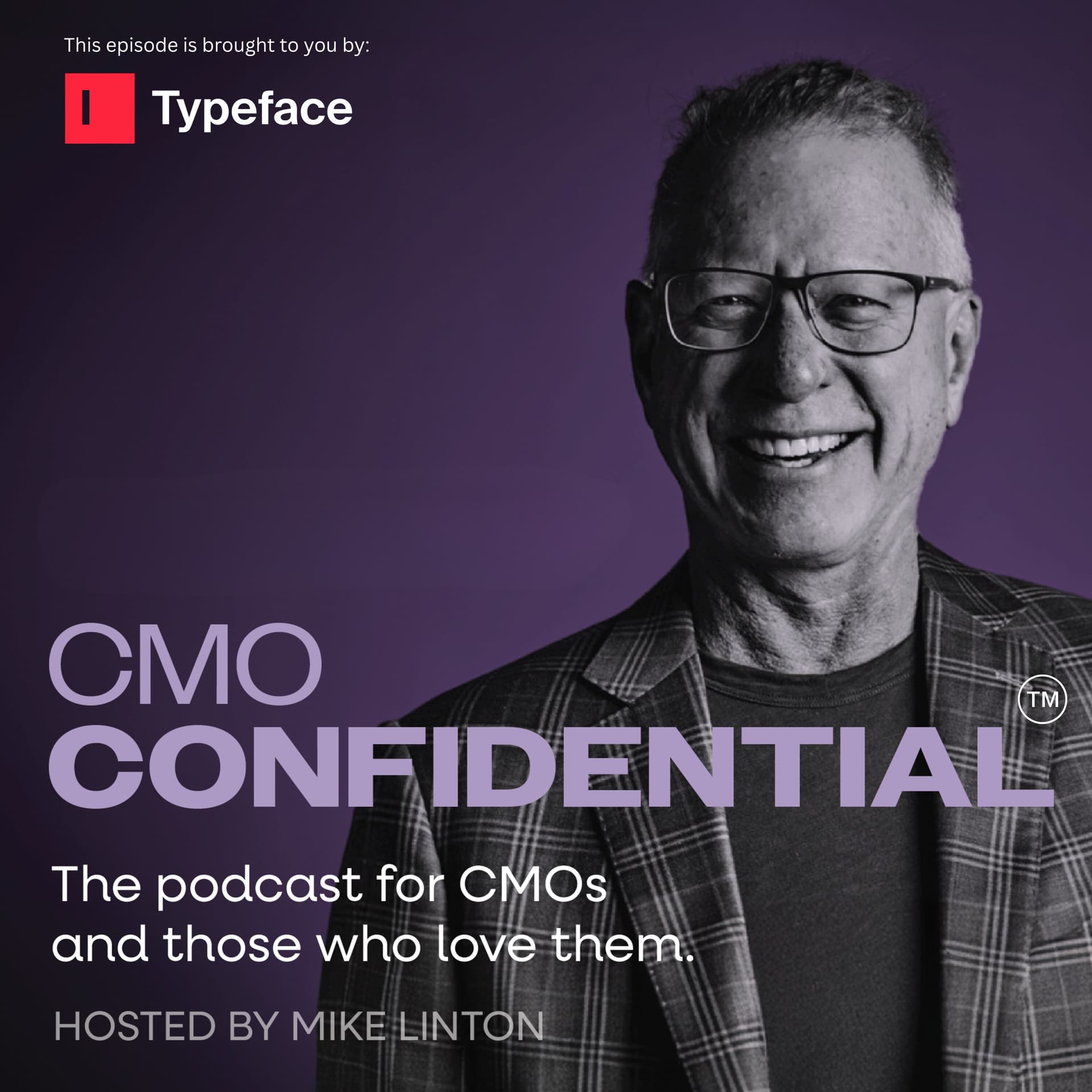
CMO Confidential: Episode Summary
Episode Title AI Is Smashing the Marketing Funnel & It Might Crush CMO's in the Process | Mike Walrath | Yext
Episode Description In this episode, host Mike Linton interviews Mike Walrath, Chairman and CEO of Yext, Inc., discussing the collapse of the traditional marketing funnel and the implications of AI on marketing strategies. The conversation highlights the need for CMOs to adapt to an evolving landscape where consumer interactions are increasingly mediated by AI.
---
Key Topics Discussed
- The Collapse of the Marketing Funnel
- Traditional Funnel Structure: Historically, the marketing approach relied on a funnel model comprising awareness, consideration, conversion, and loyalty.
- Current Shift: Walrath claims the funnel is "dead," as AI technologies change the dynamics of consumer discovery and purchasing.
- Zero-Click Discovery: Consumers are increasingly engaging with AI for product recommendations, reducing the need for direct website traffic.
- Influence of AI on Marketing
- Data Utilization: The conversation emphasizes how AI consumes data and the diminished control marketers have over messaging.
- Outsourcing Consideration: Consumers are outsourcing their consideration processes to AI, which can provide recommendations based on extensive data.
- Marketing to Bots: Marketers need to adapt their strategies to influence AI agents rather than just human consumers.
- Brand Strategy and Data Management
- Importance of Brand: Despite AI's influence, the role of strong branding remains critical for CMOs to succeed.
- Data Over Content: Future marketing strategies must prioritize structured data that AI can consume rapidly, in contrast to traditional content-heavy approaches.
- Citations and Data Management: Maintaining clean, structured first-party data is crucial for improving visibility in AI-generated recommendations.
- Organizational Changes for CMOs
- Need for Data Expertise: CMOs must become well-versed in data management and analytics to navigate the new marketing landscape.
- Investments in Infrastructure: Companies need to invest in the necessary systems and personnel to adapt to the rapidly changing market dynamics.
---
Key Takeaways
- Adaptability: CMOs must adapt to a reality where AI influences consumer behavior and decision-making processes.
- Branding Remains Crucial: Strong brand presence is essential, even as the means of interaction change.
- Focus on Structured Data: Optimizing how data is presented and ensuring it is easily consumable by AI will be vital for future marketing success.
- Continuous Learning: Marketers must continuously educate themselves about emerging AI tools and best practices to stay competitive.
---
Final Thoughts The episode underscores the transformative impact of AI on marketing strategies and the critical need for CMOs to evolve their roles. By focusing on data-driven insights and maintaining a strong brand identity, marketers can navigate the complexities of the AI-driven marketplace effectively.
---
About the Hosts
- Mike Linton: Former Chief Marketing Officer of Best Buy, eBay, Farmers Insurance, and Ancestry.
- Mike Walrath: Chairman and CEO of Yext, Inc., and founder of WGI Group.
Call to Action Tune in to new episodes every Tuesday on platforms such as YouTube, Apple, and Spotify. If you find the insights shared in this episode valuable, consider liking, subscribing, and sharing with your team.
Written by AI. May contain mistakes. Listen to the episode to check what was said.
Transcript
Automatic transcript. May contain errors.0:00The CMO Confidential Podcast is a proud member of the I Hear Everything Podcast Network. Looking to launch or scale your podcast? I Hear Everything delivers podcast production, growth, and monetization solutions that transform your words into profit. Ready to give your brand a voice? Then visit IHearEverything.com. Welcome to CMO Confidential, the podcast that takes you inside the drama, decisions, and choices that go with being the head of marketing. Hosted by five-time CMO Mike Linton. Typeface helps the world's biggest brands move from business brief to fully personalized campaigns in hours, not months, with its agentic AI marketing platform.
0:48They are the first enterprise platform with agentic AI marketing workflows designed to instantly automate work that used to take weeks. With Typeface, one campaign scales into thousands of personalized experiences across ads, email, and video while staying true to your brand. The company's AI-native platform integrates seamlessly into your MarTech stack and marketing workflows and includes enterprise-grade security. Adweek named Typeface AI Company of the Year. Time Magazine featured them as a best invention, and Fast Company called them the next big thing in tech. See how major brands like Asics and Microsoft are transforming marketing with Typeface.
1:37Learn more at typeface.ai.com. Welcome marketers, advertisers, and those who love them to Chief Marketing Officer Confidential. CMO Confidential is a program that takes you inside the drama, the decisions, and the politics that go with being the head of marketing at any company in what is one of the most scrutinized jobs in the executive suite. I'm Mike Linton, the former chief marketing officer at Best Buy, eBay, Farmers Insurance, and Ancestry.com, here today with my guest, Mike Walroth. Today's topic, AI is smashing the marketing funnel, and it might crush CMOs as well. Now, Mike is the chairman and CEO of Yaxx, a digital knowledge management platform that helps businesses control how their information appears across platforms, and the founder of venture firm, the WGI Group.
2:33Previously, he was the CEO of Right Media and worked at Yahoo and DoubleClip. So full disclosure, my marketing team and I had a strong relationship with Yax while I was at Farmers Insurance. So I've watched the company move through a lot of times. Welcome, Mike. Great to be here. Thanks for having me, Mike. I actually think full disclosure would also include the fact that I think you lent us one of your offspring for a few years, didn't you? I did. I did. My daughter worked at Yax for a while. I wasn't operational when she was there, but I've heard nothing but great things about her. Oh, that's good.
3:10I will make sure she hears this. Hey, so let's go right to the main topic. Give us the cliff notes on your view of the collapse of the funnel and what it's doing to customer and consumer discovery and the purchase cycle. Yeah, sure. So again, thanks for having me. It's great to be here. And hopefully I can live up to that theme or that title. So, you know, I think maybe we start with like, you know, you said it really well, the funnel is dead. The way we have been trained, you know, I've been working in marketing since the late 90s, all digital marketing. And, you know, one of the things that's been constant is that the way we think about the awareness, consideration, conversion, and loyalty funnel has been has been consistent our tactics have changed but that there's been a tremendous consistency there and i think one of the things that we're coming to terms with now or beginning to come as marketers beginning to come to terms with is that it's over right it's not going to well it's the funnel's been in existence since you know oh yeah before we were born absolutely yeah the first thing i learned was like here's how you talk to marketers and you know what we're talking to them about our awareness and consideration, right?
4:27That was, we're selling, you know, basically brand advertising. And, and, and so, you know, it was, I mean, it was literally one in the one-on-one documents in 1999 when I started working there. And I think, you know, we've been able to rely on it. And I think we have to come to terms with the fact that like, it's, it's not going to work the way that it, it has historically worked. And, and, you know, And that may not be the most sort of disruptive thing that we're going to see with this shift. Tell us more, because is this a total collapse? And the idea that you would move consumers down the awareness, consideration, purchase, repurchase, and you could throw trial in there if you were a consumer goods.
5:14Sure, yeah. Tell us in your mind, how is this collapsing? Take a look at it from the side. You used to have this perfect triangle funnel. And now what do you have in it? Yeah, so let me, maybe I can throw in a couple more inflammatory statements and then try to stitch them together. Yeah, knock yourself out. We love inflammatory statements. Into a quilt that makes some sense. So the funnel you've known your whole career is over, right? There's no more winning interest in getting attention to the consumer on the website. We're moving to zero click, and we have to talk about what zero click means.
5:45Put a pin in that one. The second massively disruptive thing that I think marketers need to understand is that AI creates the first environment in which you're not going to be in control of your advertising copy and message anymore. You will not be able to decide what your ad copy is. I think this is a shocking development for people who that's the one thing you've always been able to control. right um and and i think if you apply those two things to and maybe the best way to think about this is to use an example so historically if i take a brand take a great brand like land rover right and uh and if i were the cmo of land rover for the last 15 years you know i can think in terms of obviously my brand and the critical importance of my brain but i and actually i think this is one of the things that's not going to change right is that great cmos are still going to have to be great branders.
6:40They're still going to have to think about how do I build a brand and what is the message and all those important things. And I think some people who have incentive want you to believe that that part is going away. And I just don't think that part's going away. I agree with you. But can I go back before you go on the journey? What is in place of the funnel? Is it chaos? Is it? No, no, no. Yeah. Tell us what they used to have this funnel. Everyone understood the funnel, even consumers understood the funnel. What is now in place? So let's think about it. Let's use Land Rover as an example. So Land Rover, I drive an old Defender.
7:22They have a new Defender. It's an amazing automobile. I don't own one. I might own one. I have a 1993 Defender. I love driving it in the summertime in the Northeast. But if I'm Land Rover, what I want to do is I want to sell my new Defender. And I'm thinking about that in terms of a funnel. And I think that funnel starts with a consumer question. right so i think there's the you know obviously there's the awareness piece of this and i i think the big b capital brand piece of that stays the same but when it comes to uh discovery consideration conversion if i'm land rover you know i've i've been thinking a lot about how does the consumer first find my uh find my find my brand and and let's just assume for the that a lot of that starts on Google historically, right?
8:14So for the last 15 years, user, you know, I go to Google and I search for either Land Rover Defender, and I go probably directly to Land Rover site, right? Or a dealership or a dealer site or something like that. If what I do is a different search, and I say 10 best, you know, what's the best SUV as that's also a daily driver? What's the best Land Rover thinks about the funnel historically is I need to win the attention of the consumer. I need them to come visit my proprietary first party content. And I'm going to take them through the consideration to conversion to loyalty part of that funnel, primarily through direct interaction with that consumer.
9:02Right. And, you know, this is why like things like sponsored search and organic search have been so important in the marketing funnel, because it's how do I win the attention of the consumer? And the assumption there has always been the best way to get the attention of the consumer is to have them on your website. Right. They know the brand, you get them to the website, they're in the funnel, you can pull them down. Yeah. So today, what we hear about is, you know, everyone's talking about zero click, right? Zero click. and I think in a lot of cases we say zero click and I'm not sure people are fully grokking what that means right and so let me give you a different example of how I think this is shifting so I went to Chachi BT the other day I could have gone to grok I could have gone to Gemini I could have gone to perplexity I could have gone to any number of these things and I and I and I and this is what I did instead of a you know best SUV that's a daily driver and I can take off-road is I said I've been driving a Tesla Model S for the last 10 years.
10:03I am considering something else and I'd like to consider an SUV. Something fun to drive, but that I can also take on the beach and whatever else. That's my query. So that is a very different query than best SUV daily driver. Exactly. The next part is really critical. So the next part is ask me as many questions as you need to, to understand what I'm looking for. Right. So I get a series of clarifying questions from ChatGPT. What do you like about the Model S? Is it the quiet? Is it the power? Is it the cabin? Is it the nav screen? Is it the integrated Google, you know, blah, blah, blah. Right.
10:43It asked me five or six questions. Then it says, okay, I'm ready to make a recommendation. It then thinks for seven minutes. Seven minutes. Wow. Seven minutes. Yeah. And it's telling me researching, thinking, it's telling me what it's doing, right? After seven minutes, I go make a cup of coffee, I come back. And what I have is a full presentation on six or seven different models of SUV that I, knowing everything it knows about me, which is by the way, far more than the questions that I answered, we'll get to that memory. It's now made a recommendation and it's recommended the Land Rover, it's recommended an Escalade, it's recommended four other things that I would, that I might like, right?
11:26So the entire sort of awareness and consideration part of the funnel has now been compressed into the AI experience, right? Well, and personalized. And the other thing, the whole personalized at speed while you drink coffee at your house. We are taking a short break from our discussion for a word from our sponsor, Typeface.
11:55To orchestrate workflows across channels, meet ArcGents, your AI teammates handling complexity, so you can focus on what matters. All with a reimagined workspace where you and AI create as one. Spaces works the way you do. Create anything, from documents to videos to entire campaigns, at scale. Our agents help you craft campaign storyboards, powered by your brand hub, giving you the perfect starting point. transform one asset into countless variations for every audience and market.
12:36Join industry leaders already reimagining their content lifecycle with Typeface. Welcome to Marketing's Next Chapter, where every story finds its voice.
12:50exactly so so what i've been given is what i would have gotten five years ago if i assigned the task to an administrative assistant who's known me for 10 or 15 years knows everything about me and went off and spent days doing that research and came back and basically said look i think this is the car or these are the cars you should consider right so i've gone through basically awareness consideration, right? What we'd like to think is that the next, as marketers, I think the easiest way for us to think is, okay, now I'm going to win the click. Now I'm going to win the traffic, right? And so what's going to happen next is they're going to come to my website.
13:33And I think in some cases today, that is what's going to happen next, right? So they didn't come to my website after a singular search because I had done a great job with SEO and I was at the top of the page. But maybe after what amounts to six, seven, eight queries and a whole lot of research. No, I win the AI bake-off and what are they going to do with me now? So I'm number one in the AI bake-off. What happens? Yeah. So in today's paradigm, what will happen is it will present me the research and then it will ask me another question. And this is something that you're going to see is it's going to ask me another question and it's going to say, what do you think about these?
14:14Are there any of these that you'd like more information on? Right. And at some point in that process today, they're, they are going to invite me to go visit the, maybe it's the, maybe it's the defender page. Maybe it's the, the, the homepage, you know, they're going to send me somewhere by the way, or they'll send you to a dealer. Yeah. I think they'll send a dealer to me. Oh, interesting. So this is what I think happens next, right? And we're now in the world of prognosticating, which means I can look like a fool. But the way that when you talk about funnel compression, the way that that funnel is going to change for market and that the problem the CMO is going to have to deal with is that I'm not controlling this conversation as much as I have historically.
15:01My agent is controlling this conversation and they're doing it with a tremendous amount of context. And they know more about me than the marketer does, but they also know more about the marketer than I do. Right. And so the way that I think that evolves, and this isn't happening today, but it won't be very far away, is I'll say, hey, I think this defender looks great. Is there a dealership near me? And you know what my AI is going to tell me? Yeah, there's a dealership five miles away, but you don't have to go there. I can send the car to you? I think it's super interesting. So I want to write the CMO into the story because implicit in the discussion we just had, and I know we're prognosticating, because the brand is powerful enough that you're going to recognize it and you have enough presence in the entire space that AI finds you.
15:59So those are two marketing things. You know, to be you have to have a brand power you have to be around so they uh you know we did a whole show called is your next best customer an ai bot but then what is the marketer's job next yeah well so so so if you think about it like if you're the cmo of land rover again like you know and you you can kind of bake the end state of your job so there's all the art and all the science that goes into being a CMO, right? But I think the end state is going to boil down to some key metrics like test drives, like units sold, like visits to dealership, right? Because at the end of the day, those are the first pieces of the conversion part of this, right?
16:43So we like to simplify it and say it's awareness, consideration, conversion, and loyalty. But we all know like with a considered purchase like a car, like the conversion phase has multiple steps, you know, visit the dealership. I might come back later for a test drive, right? Then I negotiate, right? Then I might buy, right? And so the role the CMO ultimately plays in this process is, I think, across that entire spectrum, defining where are the value points, what are the things we need to understand, right? And how do we make sure that when the question gets asked and the complexity of that question is going through the roof, that we have the best chance of being the answer to the question?
17:28And it says consideration is obliterated in the funnel because you're going to get to the consumer answer without the consumer having to do that much work. Yeah, the consumer is outsourcing the consideration. Yeah, it's outsourcing the entire consideration in the funnel to AI. and it's also actually going to outsource maybe a lot of the negotiation in there um and yeah so so so here's so so take it to the second part right which is you know we've always used i think advertising as a way to ensure that we're part of the consideration set so so there's a reason why paid search is, is, you know, close to 40 % of all advertising, right?
18:17It's because we have, we have enough understanding of the intent of the consumer that we can basically buy our way in front of the consumer at the moment when they're in the consideration phase, right? It's the most powerful advertising medium we've ever seen. And what we get to do in that case is it's very expensive, but we get to put ourselves in front of the consumer with our key message at the most critical moment. Take that, wrap it in TNT and blow it up because that's not the way it's going to work in the future. The way it's going to work in the future is marketers have to become influence marketers.
18:51We have to figure out because we're no longer, now we will be able to buy our way in, right, as marketers. But the way we buy our way in is going to be totally different. And the most important difference is going to be that we can no longer control the message. So in essence, are you saying we're going to be marketing to bots, basically? Do I need to call John Connor? We're marketing to people which are basically being front-ended by bots. And I think this is the part that, so it's a very hot space right now, the whole like, I'm going to be your AI SEO engine. Right. And I'm going to reverse engineer everything for you.
19:30Yeah. And here's the good news and the bad news about that. That's a really important thing for marketers to figure out. But the way that it's being done generally today is so limited that it's going to be virtually useless. Right. And the reason why is memory. Right. Tell me more. Yeah. So, you know, Google has no, traditional search has no memory about me to speak of, right? Every search is Greenfield, right? All it has is the context in the query, right? And we all grew it, you know, you and I, we grew up learning how to speak search, right? So we grew up learning to say, you don't ask, hey, I'm really hungry for lunch and I think I'd like a burger, right?
20:13We learned to speak search. Yeah. near me, 33435. Yeah, right. Our children and their children aren't going to talk this way. They're just going to talk and speak English, right. And what that means, you know, that combined with the fact that these AI experiences are storing everything, they have so much context that, you know, whether I tell them to remember or not, that, you know, they do look, I talked to I talk to my AI like it's in the room. Yeah. Well, I'm going to save my, I know at the end you asked for a story, so I'm going to tell you a story at the end. Yeah, save it. Don't jump the queue on that.
20:52No, no, I'm going to save it, but it comes back to this point. So I think that the key point here is that we're used to marketing to intent-based queries, and the intent is now hidden in the context and in the memory. And so it makes the marketing challenge much harder because what I have to do is I have to anticipate what are the key sort of things. So like my AI knows that I own a Defender, right? I feel like Land Rover should send me a polo shirt. They should, yeah. I'm totally available for that as well. Totally, totally. Maybe the polo shirt or a Defender. Yeah, Defender if it's possible.
21:34I'm open. Yeah, I mean, it's crazy that one hasn't arrived in my driveway yet, right? But I think that this is the thing is that the visibility of the sort of the intent is going to be more hidden. So what does that ultimately mean for the marketer is that two things become really, really important. The first thing is like branding is more important than ever. Yeah. Right, because behind that AI and that agent is a consumer. And what you do to establish that your brand is superior or your brand attributes match that target consumer is going to be much more important when you no longer have the sort of referral-based sort of system to get them to...
22:22Well, look, if you don't have the brand, you're not in this game. No, no, you're out of the game if you don't have the brand. You're out of the game. So you hear way too much of this like, oh, no, CMO has to be a scientist and a scientist only. You know, that's bullshit, for lack of a better word, because the brand becomes ever more important in this. And is the brand for the bot and the consumer or just the consumer? So I think it's both, but in a different way, right? So at the end of the day, you know, judgment lives with the consumer. Now, maybe we get to a world of AGI and super intelligence where like we start trusting the bots to have judgment.
23:03Like you could imagine a world in a sci fi universe where I just say, look, go buy me a new car. You know everything about me. You know what I like you can you have all the information just go buy me a new car. I want it delivered to my house next Tuesday. right i leave it to you ai bot to make that decision that then then you really there is no funnel anymore right and and at that point it is how do i establish brand to a to a bot right but if but but by the way if it's agi if it's super intelligence then then you do it the same way you do it with humans right only you find the channels right or when you ask the question you know i want i want to buy a mercedes or something pick the best one for me you are actually controlling the brand when you ask your AGI to do it.
23:49So is this actually destroying the CMO job or is it changing it to the extent where instead of managing the funnel, I'm managing the brand and the customer expectation and interface? No, it's, it's, I think it's massively expanding the value of the CMO position, but the CMO has to change the way that they think. And they have to be, I think that the definition of the CMO unicorn is going to change. And so you're going to need either the new CMO unicorn is going to be an incredible brand marketer who knows how to create brands and knows how to create that magic and understands that there are still going to be marketing mediums where you have to create that magic without a lot of the tools that used to have 10 years ago yeah you have all these new tools but they're not as clear you know you don't have tv working like it used to use for sure you have attention spans that are short sure um so the the brand brand building is harder i think the advertising surfaces for brand building are obviously going to in a i mean you think about the the implications of a zero click world for we already talked about it for Land Rover, but for any publisher, it's, it has, you know, there's panic in the publishing, you know, uh, world now because, because, you know, if you're, if those clicks are to your content and your content is ad monetized, if the, if the content is being brought to the consumer instead of the consumer being brought to the content, what happens is the, the advertising services that you have to brand yourself change.
25:31And so, but you know, we're going to have live Live sports, things like that are going to benefit hugely from this because there are going to be places where you can establish brand. But we haven't gotten to the second part, right? And this is the huge shift, is that if you're going to be a unicorn CMO in this world, you have to understand the power of the brand and you have to be really creative about how you do it. But you do also have to become a scientist, right? Because at the heart of the mechanism of influencing the bots is understanding that bots don't consume content. They consume data.
26:08Right. And every piece of content you've ever created has to become consumable data. Give me an example of taking a piece of what you would call traditional content. Yeah, sure. Turning it into data. I'll give you a better one. So let's stick with Land Rover. right? I'm going to get that defender. So Land Rover has an extraordinarily beautiful website, right? It has been designed down to the pixel to represent that brand and the quality of those products and the attributes of that brand. It has amazing complexity to it. It has drop-down boxes. It has images. It has all these things, right? And they've spent, I don't know, tens of millions, maybe hundreds of millions of dollars on creating that digital experience of their brand, right?
26:58For human beings, right? But if you take all the structured data, which is all the core data, this is the location of the dealership. This is the inventory that we have. This is the, you know, this is the resale value of the car. Here's the MPV, here's all the specifications, here's the engine, here's every piece of structured data from that website, right? I mean, that website is a beast. Every time a consumer visits that website or a bot visits that website, they're sucking down huge amounts of images and drop-down boxes, and they're navigating. It's very, very sort of heavy. You take all the structured data of that website, and you put it into a structured data file, and it's hundreds of kilobytes.
27:50right right it's it's it's less than the than the smallest image on your iphone right and so so what we're going to have to do as marketers we're going to have to figure out how do the ai experiences want to consume our data because what they don't want to do is visit our website suck down all that image sorry they don't care about the images they might go get an image off the website but they don't want to be constantly consuming it right and so they can't evaluate an image so no but they can go get a reference image right they can go get a link they can go get a url and so so you still are going to need these surfaces you're still going to need your your experience for the consumer because some consumers are going to want to go touch it and feel it and like you know virtually look at the pictures look at the you know design their own all those all those experiences are all going to have to exist.
28:44But like, what is the state of the consumer when they arrive at those experiences is going to be much further along the funnel. And so therefore your job as a CMO is making sure that every piece of data about your business is in a form that it can be distributed and consumed by AI answer engines. And so that means I have to re-engineer everything so the bot can pick it up at speed versus make you what I hear you saying is don't make the bots work. You can't make the bots work. No, because because if if your competition and you have to understand at a really granular level, what is your competition doing?
29:27Because because, you know, we're seeing we're seeing this evolve, right? Like there's a huge debate, which I think is a worthless debate over is AEO or GEO different than SEO? Here's here's the you know, here's the thing that most people don't want to say out loud is that the CMO has largely not given a shit about SEO, you know, AIO or geo historically, because, because it's wonky and it's, it's, it's, you know, like understanding citations, understanding how, you know, other websites impact my ability to be visible, understanding how I rank, like all that stuff. It's been this sort of like the, you know, Now the guys down in the basement figure that stuff out, right?
30:07If you're a C, I think the future CMO can no longer have the luxury of having a group of people in the basement figuring that stuff out because like whether it's SEO or it's GEO or it's AEO or any other three lever acronym that we want to come up with. If you miss that, you are going to be so competitively disadvantaged that it'll be hard to recover. Hey, how do you know mathematically or when you're looking at your stuff, even if you're really good at it. How do you know you're doing it right? Yeah, well, there are signals, right? So we released a piece of research today. This is literally did this this morning.
Read the full transcript
30:48We examined over 6.8 million citations for AI answers. It's the largest citation study ever done. I can't imagine that there's ever been a larger one. And what it tells you is when the AI engine is answering a question, what is the reference material that it's using for the consideration portion? Right. And by the way, let me just throw kerosene on the fire here. So one of the worst pieces of advice that marketers have been getting is, hey, you have to cultivate your Reddit experience because Reddit is huge from a citation standpoint for these AI engines. Right. It is huge. It is not. It is demonstrably false.
31:40Tell me more. So what people have done, I think, largely is they've conflated training with inference, Right. So so so Reddit is is an unbelievable corpus of training data for large language models. Right. It's just this this huge pool of natural language and using it to teach, you know, probabilistic large language models. you know, the probability of the next word is incredibly valuable, right? What it is not is a place where there's lots of authoritative structured information, right? And so it turns out that when you ask really generalized questions, then you, without context, without memory, without local, you know, without the complexity of like locality, you do get Reddit citations.
32:30Yeah. But that's not how consumers behave. Consumers, every question asked of every answer engine has memory, has context and has local implications to it. Right. Even if it's not a localized query. Right. Even if it's like, hey, what's better, Pepsi or Coke? Right. Like that, you'll get a different answer if you ask that question 100 ,000 times in Atlanta versus 100 ,000 times in Michigan. Yeah, or purchase New York for sure.
33:25In this case, this leans towards more localized. So listing citations are incredibly important. They're more important than ever because, and by the way, we don't have to guess about this because the AI will tell you exactly what the citations that used are. And your first party websites and information are the key citations for the answers that AI gives, which means that those things have to be cultivated. right because if if those things aren't not only are they aren't they have to be high quality but they also have to be distributed in a way that they're easily consumed by the AIO so if they're if they're and by the way this whole notion so there are a bunch of these crazy notions out there one is that you have to go on to reddit and you have to talk about your brand on reddit all the time and that's how you create citations that matter for AIO that's a complete falsehood that's that's misconstrued against the importance of reddit data from a training standpoint which by the way, they're not, they're stopping to do that now too.
34:21So I would expect Reddit will build their own answer engine and, and behind that answer engine for that particular answer engine, those citations will be very important. But only in that, inside that walled garden, that's a whole other topic of where. And then by definition, this says you've got to cultivate this constantly. Constantly. Like constantly because, you know, rather than focus on Reddit, which a lot of times it's going to do its own thing anyways. yeah um your first party positionings you have to attend them like a garden every day is what absolutely yeah and you you and it's a and it's an arms race because what you can no longer do i'll give you a hopefully a simple example if i'm if i'm land rover i can no longer you know just just post on the home page of my website hey we're doing our december drive event right like Everyone has a December drive.
35:15I don't actually know if Land Rover does that, but like you hear, you know, we're so attuned to the TV commercials. Oh, I'm so attuned to the Toyota Cellathon. Totally. Yeah. And so historically, because you're relying on traffic to that page, the way you distribute that information is you just put it on the page. Right. But that's not going to work in this new paradigm because what you're going to have to be doing is finding ways to deliver that information to all of the endpoints regularly. And this is where people talk about chunking. They talk about the importance of chunking up the content and delivering it so that it's sort of...
35:53Digestible. They love recency. They love new information. They love how they come up with the answer to the question. And it's going to just change all the time. And so you're going to have to make as a marketer, you're just going to have to make huge investments in your in your understanding of the fact that every piece of content you've ever created and will ever create has to be converted into data. Hey, so when when you look at all this, what are the biggest mistakes boards and CEOs along with their CMOs are making in the space right now? they're under they're just under invested in the core infrastructure that allows you to to mobilize the answers to the so so so let me i'll give you yeah give me the when you say core infrastructure does that mean i don't have the people i don't have the data i don't have the systems all of those things right so so we we and and this is because we've had 15 years of there's only one discovery engine that matters.
37:00Yes. So we've been lulled into this unbelievable reliance on Google search as the one discovery engine that matters. And now we have this explosively fragmenting world. And every one of these discovery engines is going to work differently based on the data they're using to train, the data they're using for citations, and what they know about the consumer. And so the example that I think is probably maybe brings this to a, brings us to life a little bit is, is that, you know, the, I'm trying to think like the question, I want to answer the question you asked me. The question was like, what are they underinvested in?
37:39Yeah. People, systems, data. All of it. Right. Well, where should I go first? Well, without the people, you're not going to get the right systems and data. Right. So we've, we've gotten into a world where we've basically said, you know, we rely on the traffic to come to us. Right. And first thing we have to do is we have to understand that the traffic is not going to come to us anymore. All of your metrics around website traffic and referrals, that's all going away. So I need people to think this through. And let me do a follow-on too, which is there's all these models out there, right? There's chat GPT, there's Copilot, there's Anthropic, there's Claude, there's Gemini, blah, blah, blah.
38:19Should I go after all of them or should I just go after a couple of them? No, you're going to have to go after all of them. And this is why it's going to be so complicated, because, you know, if you think about like, what's the material that that meta is going to rely on? You know, again, we talked about citations and citations is a wonky concept that not everybody gets, but it ultimately comes down to like, what is the material that the AI answer engine relies on to give the answer to the question? So if you think about meta, like what logically is the material that meta is going to rely heavily on?
38:51It's going to be things like Facebook posts and Instagram posts. And so social in general is going to be really, really important in the world of meta, right? In the world of TikTok, right? If TikTok builds an answer engine, then what's going to be really important are your TikTok posts, right? Which look like content, but are actually full of data as well, right? When you look at OpenAI today, what's really important are first-party websites and listings information, right? And basically the replicates of your data that tell the system that these are really important things. Apple will rely heavily on the data that's on the iPhone, right?
39:30Whatever they, whoever they wind up using or build their own large language model provider. And so the difference between the world we've been living in and the world we're about to go live in is that as a marketer, if you don't have a way to store all this content as data and then a way to distribute all this stuff, because there is no more, there's one place that matters. That's gone and dead and not coming back because of memory. I like this because it says to marketers, hey, giddy up. It's a land grab. It's giddy up. It's a land grab everywhere. Get the people and boomer sooner, go get the land.
40:10Think about a restaurant. And again, I could do this all day long with examples. You think about a restaurant operator who has menu data. It's not enough just to have menu data. You have to then present that menu data in all its different forms. So I need to have a menu. I need to have a vegan menu. I need to have a keto menu. I need to have a carnivore menu, right? That's like four different ways that I'm taking that structured data and I'm presenting it, pushing it out into the world so that when, you know, the AI knows that I am going to lean towards keto or carnivore, right? So they're going to basically, they're not going to ask me, they're just going to say, oh, these restaurants have a keto or carnivore menu.
40:49Here's what I'm going to recommend to you. Expand that by a million different permutations. And like every CMO, either better be a data expert or better elevate the hell out of the data expert on their team. All right. So giddy up out there, all you marketers. I think that's a great way to get to our traditional last question. It's a two-parter. You could pick one or both. I think you've already lobbied for the funniest story. Funniest story you can tell on the air. Yeah. More practical advice we haven't discussed yet. So it's a twofer. And I wouldn't say this is necessarily a funny story unless you think of me being embarrassed as funny.
41:27Oh, we'll let our listeners decide. Yeah, it's not, I don't want to set expectations. It's not a really a funny story, but it goes with the advice. So here's the advice. If you're not thinking deeply, deeply, deeply, deeply as a marketer about memory and context and how it impacts the way that consumers are going to discover your products through AI answer engines, you are massively behind the curve. Right. So that's that that is the first and most important thing that you need to figure out is how do I get my data into a place where I can think about presenting for every permutation of a question tied back to memory and context that's invisible to me.
42:09Right. And the answer to that is you have to be comprehensive as hell. Right. Because they're not going to pass it through. They're not going to tell you what it is. That's their proprietary information. And so the story is, I was trying to explain this to a group of non-marketing folks at a dinner. And we were talking about, like, how did these AI answer engines work? And why is this so important? And I said, look, like, you know, I talk to my chat GPT in voice mode when I'm in the car. And I ask it all sorts of things, right? Because sometimes I'm interested in saying about, like, all sorts of topics.
42:42Sure. And I don't tell it what to remember about me. And so I said, but let's see what it remembers about me. And so I popped it on the table. I put it in voice mode and I say, hey, what do you know about me? And like it was one of those moments where like I knew it was going to say, well, you're the CEO of Yext and you love golf and you like to fish. And like those were like sort of the first three things that came out. And then it like but then it just kept going. Right. And there was a moment where I was like, holy shit, like I need to turn this thing off. Right. Like there's eight people sitting around this table.
43:14I don't know all of them that well. and I don't feel like you're holding back the one thing it said that I'm not going to tell you that yeah it didn't actually you know the funny thing I mean that's why it's not really a funny story like the funny story is it said something that was super embarrassing the the funny part of this tell us you're among 150 it was it was it was how quickly I shut that thing down when I realized that I had no idea what it was going to say because I've been talking to this thing for two years and it knows things about me that I don't even know it knows about me and like I just didn't particularly want, you know, my shopping history or, you know, things like that coming out.
43:50And so I, you know, I would have just dumped it in a bucket in a glass of water if I had to, to shut it down once I realized, you know, how long this diatribe of everything I knew about me was going to be. But I think that's the part that like, you know, so it ties back to the advice. Marketers have to understand that we've only scratched the surface of where that's coming. And like, you know, this is your sort of warning saying, get your data in order now. All right. So I think that's a great way to end the show. Don't let your chat GPT talk unsupervised to a room. Be careful what you ask. Yeah.
44:24Thank you, Mike. And thanks to everyone for listening to CMO Confidential. If you're enjoying the show, please like, share and subscribe. New episodes drop every Tuesday on Apple, YouTube and Spotify. and our catalog gives you access to nearly 150 shows, including is your next best customer an AI bot, Colonel Mustard in the study with the job spec, using AI for anticipation versus reaction, and why can, can't. Hey, all you marketers, stay safe out there. This is Mike Linton signing off for CMO Confidential. Legacy marketing tools weren't built for AI. Typeface is the first multimodal platform where agentic workflows handle everything from brainstorming to launch across every channel and customer touchpoint.
45:13Their AI native design transforms manual marketing tasks into automated workflows that create personalized text, imagery, and video at enterprise scale. Typefaces AI integrates with existing MarTech stacks through APIs and native connections. So you keep your processes while gaining AI superpowers and enterprise-grade security. See how brands like ASICS and Microsoft accelerate innovation and transform a single idea into thousands of personalized on-brand experiences instantly. Ready to see what marketing looks like when AI handles the heavy lifting? Learn more at typeface.ai slash CMO.
From the publisher
A CMO Confidential Interview with Mike Walrath, Chairman and CEO of Yext, Inc., formerly CEO of Right Media, and SVP at Yahoo! Mike discusses what he believes is the collapse of the marketing funnel, the need to understand how AI consumes data while judgement stays with consumers, and how an "influence marketing" mindset is emerging. Key topics include: why CMOs will need to be both great brand strategists as well as scientists, the need to constantly distribute information and "tend it like a garden," and why Reddit is great for training AI, but not as important in building brand influence. Tune in to hear a story about why you shouldn't let ChatGPT talk in an unsupervised forum and why Land Rover should send me a polo shirt.
This week, Mike Linton sits down with Mike Walrath, Chairman & CEO of @yext (and founder of WGI Group), to unpack why the classic awareness–consideration–conversion funnel is collapsing—and what CMOs must do next. From zero-click discovery and AI agents “front-ending” consumers to why structured first-party data now beats pretty websites, Walrath maps the new rules for brand, distribution, and measurement in an AI-led marketplace.
We cover: how consideration gets outsourced to AI, why marketers will “market to agents” (without controlling the ad copy), the coming arms race in citations and data distribution, and what organizational fixes boards and CMOs should make now. If you own brand, growth, or P&L accountability, this is a playbook for the next chapter.
**Sponsor — @typefaceai
Typeface helps the world’s biggest brands move from brief to fully personalized campaigns in hours, not months. With its agentic AI marketing platform, one idea scales into thousands of on-brand variations across ads, email, and video—integrated with your MarTech stack and secured for the enterprise. See how brands like ASICS and Microsoft are transforming marketing: typeface.ai/cmo.
Highlights
* Why “zero-click” compresses awareness and consideration inside AI experiences—and how to win the AI bake-off.
* The end of marketer-controlled ad copy; influence shifts to data quality, recency, and distribution.
* Memory and context change everything: agents know the consumer—and your brand—better than you think.
* Brand matters more, not less; without brand salience you won’t make the answer set.
* From content to data: make every spec, price, menu, inventory, policy, and promo machine-readable and syndicated.
* Citations, not vibes: first-party sites and listings dominate AI references; keep them fresh and authoritative.
* Org design: hire the data athletes, upgrade infrastructure, and instrument real conversion milestones (tests, visits, units).
New episodes every Tuesday on YouTube, Apple, and Spotify. If you find this useful, please like, subscribe, and share with your team.
**Guests**
Mike Walrath — Chairman & CEO, Yext; Founder, WGI Group.
Host: Mike Linton — former CMO of Best Buy, eBay, Farmers Insurance; former CRO, Ancestry.
CMO Confidential,marketing,CMO,chief marketing officer,AI marketing,agentic AI,marketing funnel,zero click,search,SEO,GenAI,LLM,brand strategy,performance marketing,Yext,Mike Walrath,Mike Linton,customer journey,personalization,content at scale,structured data,citations,data strategy,MarTech,go to market,GTM,board strategy,enterprise marketing,retail,automotive marketing,restaurants,media,advertising,Typeface sponsor,Typeface AI,typeface.ai/cmo
See Privacy Policy at https://art19.com/privacy and California Privacy Notice at https://art19.com/privacy#do-not-sell-my-info.