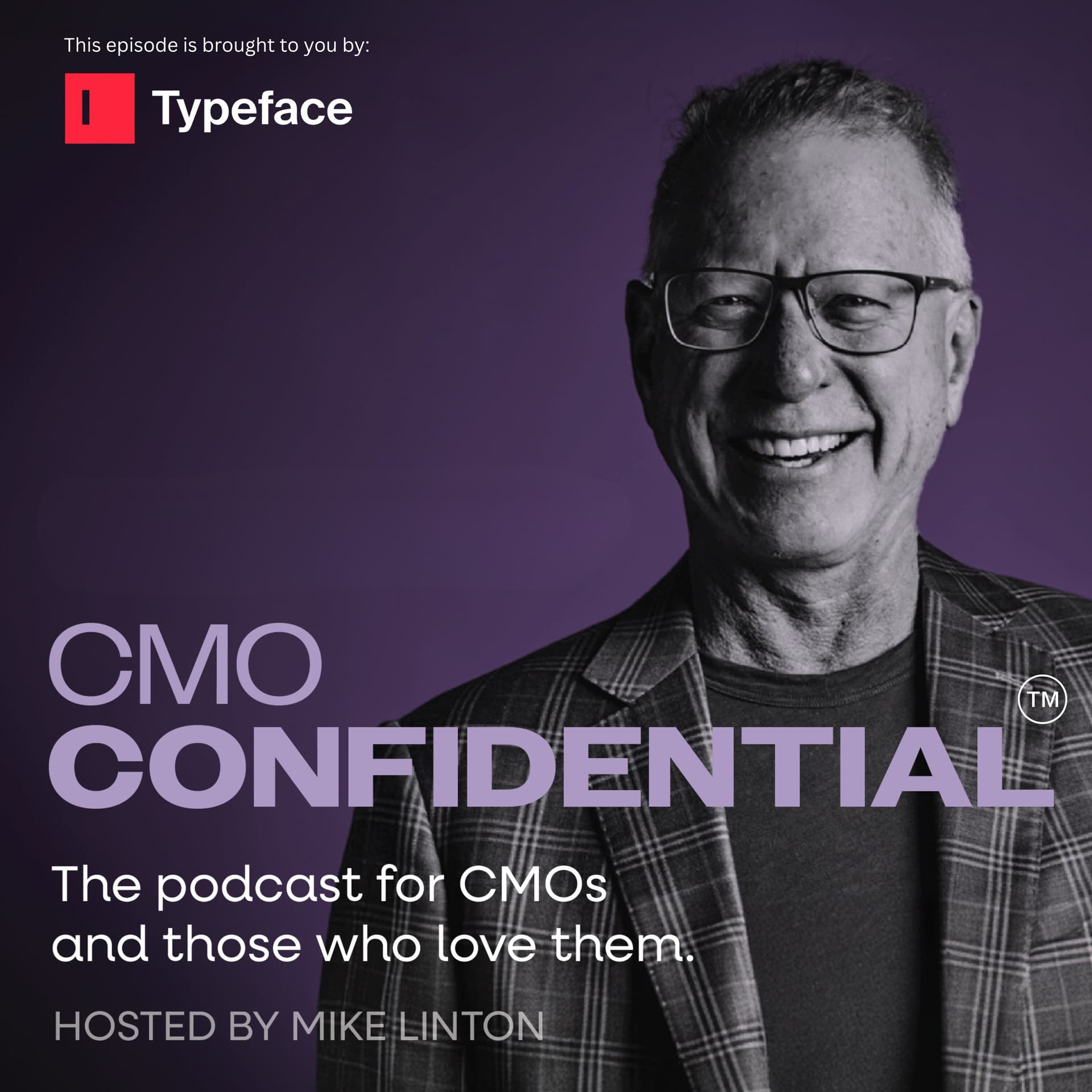

In short
CMO Confidential: Episode Summary
Podcast Overview Title: CMO Confidential Host: Mike Linton Guest: Evan Wittenberg, Chief People Officer at VuMedi Description: This episode explores the intersection of marketing and human resources (HR) through the eyes of Evan Wittenberg, a seasoned Chief People Officer with extensive experience in both HR and leadership development. The discussion covers the challenges faced by HR in the modern workplace, the impact of AI on entry-level jobs, and the relationship between HR and marketing.
---
Key Themes and Highlights
Introduction to Evan Wittenberg
- Background: Evan has served as CPO for multiple companies including VuMedi, Ancestry, and Box, and has experience in leadership development at Google and Wharton.
- Current Role: Focused on navigating the complexities of HR in a rapidly changing work environment.
The Evolution of HR
- Increased Complexity: HR has faced heightened challenges over the last five years, including:
- The pandemic
- Remote and hybrid work
- Diversity, Equity, and Inclusion (DEI) initiatives
- Increased employee burnout and mental health crises
Relationship Between HR and Marketing
- Shared Challenges: Both functions face scrutiny and have to justify their decisions amidst competing opinions from various stakeholders.
- Collaboration vs. Ownership: There’s a debate on whether HR should own cross-functional crises or act as a coordinator.
Key Issues in HR and Marketing
- DEI Initiatives:
- Continues to be essential despite backlash against its terminology.
- Companies must ensure a sense of belonging and fairness to retain talent.
- AI's Impact:
- AI threatens traditional entry-level roles, making it harder for new hires to gain experience.
- Concerns over the loss of mentorship and apprenticeship opportunities in a hybrid work environment.
Insights on Leadership and Team Dynamics
- HR's Perspective on Marketing:
- Importance of integrating HR in marketing discussions (i.e., having dedicated HR partners).
- Marketing is viewed as both a service and a key business driver; strong collaboration between functions is critical.
Candidate Evaluation and Interview Insights
- What HR Looks For:
- Learning Agility: Candidates should demonstrate an ability to adapt and learn new skills.
- AI Familiarity: Knowledge of AI tools and their applications in marketing.
- Collaboration Skills: Ability to work effectively within teams, especially in cross-functional settings.
- Questions Candidates Should Ask:
- Inquiring about role expectations and responsibilities.
- Asking about company culture and decision-making processes.
- Probing for clarity on the importance of the role being filled.
Practical Advice for Career Advancement
- Job Focus: Excelling in the current role is more beneficial than prematurely seeking promotions.
- Cultural Fit: Candidates should assess whether the company's environment aligns with their values and work styles.
Anecdote from SNL
- Evan shares a humorous story from his time as a page at Saturday Night Live, showcasing the chaotic nature of live television and the importance of teamwork in high-pressure situations.
---
Conclusion Evan Wittenberg's insights reveal the interconnectedness of HR and marketing in navigating today's complex business landscape. The episode underscores the necessity for collaboration between these functions to address the evolving challenges posed by technology and workforce dynamics. Both HR and marketing must remain adaptable and focused on delivering value to the organization while fostering an inclusive environment for all employees.
---
Key Takeaways
- The roles of HR and marketing have become increasingly complex and intertwined.
- AI poses challenges for entry-level training and mentorship opportunities.
- Clear communication and collaboration between HR and marketing are essential for solving business challenges.
- Candidates should focus on excelling in their current roles while seeking a cultural fit in potential employers.
---
For further exploration of these topics, listen to the full episode on [Spotify](#), [Apple Podcasts](#), or [YouTube](#).
Written by AI. May contain mistakes. Listen to the episode to check what was said.
Transcript
Automatic transcript. May contain errors.0:00The CMO Confidential Podcast is a proud member of the I Hear Everything Podcast Network. Looking to launch or scale your podcast? I Hear Everything delivers podcast production, growth, and monetization solutions that transform your words into profit. Ready to give your brand a voice? Then visit IHearEverything.com. Welcome to CMO Confidential, the podcast that takes you inside the drama, decisions, and choices that go with being the head of marketing. Hosted by five-time CMO Mike Linton. Typeface helps the world's biggest brands move from business brief to fully personalized campaigns in hours, not months, with its agentic AI marketing platform.
0:48They are the first enterprise platform with agentic AI marketing workflows designed to instantly automate work that used to take weeks. With Typeface, one campaign scales into thousands of personalized experiences across ads, email, and video while staying true to your brand. The company's AI-native platform integrates seamlessly into your MarTech stack and marketing workflows and includes enterprise-grade security. Adweek named Typeface AI Company of the Year. Time Magazine featured them as a best invention, and Fast Company called them the next big thing in tech. See how major brands like ASICS and Microsoft are transforming marketing with Typeface.
1:37Learn more at typeface.ai.com. Welcome marketers, advertisers, and those who love them to Chief Marketing Officer Confidential. CMO Confidential is a show that takes you inside the drama, the decisions, and the politics that go with being the head of marketing at any company in what is one of the most scrutinized jobs in the executive suite. I'm Mike Linton, the former chief marketing officer of Best Buy, eBay, Farmers Insurance, and Ancestry.com. I'm here today with my guest, Evan Wittenberg. Today's topic, what HR really thinks about marketing. Now, Evan is a four-time chief people officer who recently started as the chief people officer, or CPO, as ViewMedi, the largest peer-to-peer medical knowledge sharing platform in the world.
2:30Previously, he served as a CPO at Pivot Bio, Ancestry, and Box, which he helped take public in 2015. He was also the chief town officer for Hewlett Packard. Earlier in his career, he headed leadership development at Google, and he ran the leadership development program at Wharton. This is a very long intro, but it's worth it. Stick with me. One of his earliest jobs was working for Saturday Night Live, and I know there are some great stories from that. Now, full disclosure, Evan and I worked together at Ancestry, and I found him to be really a great HR leader. I mean, with all that experience, what would you expect?
3:11So welcome, Evan. Well, thank you, Mike. It's a pleasure to be here. And let's be honest, I helped hire you at Ancestry and then had the pleasure of working with you there for quite a while. So it's my pleasure to be here for sure. We'll talk about that and mistakes HR people have. So let's start with an overview of really the whole function. I mean, I will say, I think over the last five years, it's been one of the hardest functions to lead probably in the world. There's so much going on. COVID, remote work, DEI, then no DEI, quiet, quitting, politics into the workplace, return from work, AI reducing jobs and more.
3:51Tell us what it's like to be in the seat. I can't because now I'm too depressed by that list you just took it off. Yes, we'll go to the dentist for an uplift after this. Well, look, I mean, for years, early in my career, it was said, you know, HR needs a seat at the table, right? Meaning the executive table. I don't think that's a question anymore. And it hasn't been for a while. But once you're at the big kid table, then you have to deal with the big problems, right? And so that's been the experience. Certainly, a lot of colleagues have burned out over the last couple of years dealing with pretty much intractable problems, right?
4:25These were not, did not start as business problems, right? dealing with a pandemic was not on anybody's menu of here's a business problem that is owned by a specific function um and so the chief people officer role um has always been a little bit of a grab bag uh hopefully a strategic one but over the last couple years has taken on a whole bunch of curveballs because there's nowhere else really for those things to sit in organizational life and And I remember specifically at Ancestry, it was late February. Was it 2019 or 2020 when COVID started? It was late February. 20, February 20, yeah. Yeah, and I remember sending a text to our CEO.
5:06She was traveling and saying, hey, I think I should send an email to the company about this coronavirus thing. And she's like, really, why? And I said, I'm hearing people are worried about it, and I don't think it's a thing. But, you know, they should just know that we're thinking about it so they don't have to worry about it. And she's like, oh, OK. And so I sent the first email to the company like late February, privately saying to myself, we're never going to wear masks. We're never going to shut down, of course. And then by the time it got to early March, right, everything, the world changed.
5:33So we've been dealing with all of that and lots of other things for quite a while now. And all this stuff, almost all of it, as in my little opening question, has gone to the HR table. Is that the right place for it in your mind? So yes and no. I mean, I think it's got to go somewhere. So what function do those big strategic issues sit in? I will say for COVID, for example, I sent an email to the executive team and said, hey, I'm going to be running lead on this COVID thing for now, but I'm happy to hand it off to anybody if you don't think I'm the right place for it. And everybody was more than happy to say, no, no, that's good.
6:14I did not fight you for that. You did not. I noticed that. In fact, I even supported you then. You did. And I appreciated it. And I also remembered you didn't volunteer. So, you know, I think if things are primarily issues dealing with the talent in a company or location, et cetera, they tend to fall into the people space. I don't think that's necessarily true. And I love when things like that are owned by a business leader as well, because I think it shows good coordination and collaboration across the exec team. But many of these things have fallen into the chief people officer's lap. And I remember watching this particular kind of run through, but then also the whole HR thing, where I was thinking the HR job has become a lot like the marketing job where the HR folks or chief people officers are in charge of it, but everyone has an opinion and there isn't a right answer.
7:15And I thought this job is morphed into a lot like the CMO job. What do you think about that? I think that's right. I think certainly true for HR function, right? Everybody's been hired. They might have been fired or fired somebody. They've been managed. They might have managed somebody. So everybody thinks they know the space. Nobody's going to go to the general counsel and say, you should do your legal briefs in a different way. And nobody's going to go to the head of engineering and say, I don't like the way you're coding. But the people space, similar to the marketing space, I think, right?
7:47Everybody's seen an ad. Everybody watches TV. Like everybody thinks they have an opinion. Oh, yeah. They're consumers, so they know marketing. Yeah. And I actually, one of the companies I was at as a chief people officer, I came back to my desk, you know, one day and there was the head of engineering kind of sitting over the shoulder of my head of total rewards kind of yelling at him. And I said, I pulled him aside. I said, what are you doing? He's like, well, I don't like the way he calculates equity. So I'm trying to give him a better way. And I said, come here, come here. And I pulled him into a side room and I said, what would you do if you went back to the engineering area?
8:19And I was sitting over the shoulder of one of your engineers saying, that code doesn't look right. He's like, I would kick you the hell out. And I said, exactly. Goodbye. And he got the point and walked away. Right. I mean, I'm a New Yorker. I can figuratively punch people in the nose if I need to. I almost never do. And that was the only time I ever have in a professional environment. But it's like, hey, get back to your space. Right. We all have our areas. And it is also as COVID and return to work and remote and everything kind of took over. There was actually even no real data in the marketplace.
8:54It was all new creative, which is a lot like marketing. So I put you in the seat and then you can look, what's coming down the road? How are things going to shake out over the next couple of years? Is it going to continue this way or are we going back to a little more stability? or does AI just create a whole new set of CPO challenges? Let's take a short break to hear from our sponsor, Typeface.
9:26To orchestrate workflows across channels, meet ArcGents, your AI teammates handling complexity so you can focus on what matters. All within a reimagined workspace where you and AI create as one. Spaces works the way you do. Create anything from documents to videos to entire campaigns at scale. Our agents help you craft campaign storyboards powered by your brand hub, giving you the perfect starting point. Transform one asset into countless variations for every audience and market.
10:07it. Join industry leaders already reimagining their content lifecycle with Typeface. Welcome to marketing's next chapter, where every story finds its voice.
10:20Now back to our discussion with Evan Wittenberg. I think yes, yes, yes, yes to your four questions. So look, there's a couple of major shifts or movements that are going on, as you're well aware. The first one you mentioned earlier, DEI, right? There's an attack against DEI. All the corporate programs seem to be going away. I have a view on that, which is that whatever you call it, the reasons, the fundamental reasons why all of these DEI efforts were created in the first place was because there is inequity in the workplace in lots of ways. And so whether you make the DEI programs go away or not, you have to address that, right?
11:05Every employee needs to, it needs to be true that everyone feels valued, that everyone feels a sense of belonging, and that everyone can do great work and have an impact that gets recognized. Those are the fundamental things that every employee needs to work and stay at a company. And if those are not true, or if they are not true for certain parts of your population, you're going to have a problem, right? You're going to have a talent problem, or you're going to have a decision making problem where you don't have enough diversity of ideas. So I firmly believe that while you make, you know, the words or the letters DEI may be going away or under attack, the fundamental problem that those efforts we're trying to solve still has to be worked on and still is not true.
11:48We still don't have pay parity in companies for men and women, for example. There's just a lot of areas that we're not there yet, and they're going to need to continue. So that's one. I think on the AI front, what's interesting there, and, you know, AI is amazing. I mean, I use it every day. I think what I'm most concerned about there is not the computer apocalypse where it takes over and decides we're not needed anymore. I'm more concerned about the fact that what it does best today, at least, is a lot of the work that typically entry-level jobs do in order to build experience and learn about the function.
12:23So if you take my function, a talent acquisition coordinator, a recruiting coordinator, or an HR coordinator, that's an entry level job to get somebody smart into a function to start learning what it means to be a professional in that function. Nobody among my peers yet has figured out that I'm aware of, how do you get that same experience so you can start to build a professional career if you're jumping over that full set of work? right and so if we can empower people to do all that stuff and we don't need an hr coordinator anymore you're not going to enter as an hr manager you don't have the experience or even an hr generalist and so that's the trick i think a lot of us are trying to figure out how do you look and that is happening in marketing as well you're blowing up a huge amount of the entry-level jobs and in marketing and agencies and not only will you not learn the function you won't learn corporations.
13:17That's right. And so you will be, you will be, you know, really poorly trained to operate in all the skills required in a company. So that, what else, what else? Let's put those two, let's put two trends together. The work from home trend. I'm sitting in my house, luckily at Vumetti. We are in the office three days a week, Monday, Wednesday, Friday. But since we're, we're recording on a Tuesday, I'm here at home. If you have people who don't have the entry level jobs to get experience in. And there's not, it's really hard to get mentorship when you're not in a shared space and you can't pull somebody aside after a meeting immediately and say, hey, what you just did, that was great, or that didn't work.
13:57And so you don't have the mentorship slash apprenticeship that's always been important in almost every role because people aren't co-located as much as they used to be in the workplace. And you have AI taking away some of the entry level you know, work that somebody would have learned from by working with others on it and getting feedback that those are, those are two trends that is a bit of a train wreck for creating professionals down the line and we'll figure it out. I have no doubt that we'll figure it out. I just don't know that anybody has yet. I agree. I think that is, is really a, a, you could have a whole lost generation here in the skillset building.
14:35And that will be, I think, really challenging for a lot of folks from a career standpoint, but also hiring managers. Hey, let me flip over to every company always says people are our most important asset. I've never been with a company that didn't say something like that. But it's clear a lot of them don't really believe it. How do you function in that kind of space where people say they're our most important asset, but then clearly they're not. And then how should people figure out if it really is, if companies really care about people when they're interviewing or looking, especially at the start of their career?
15:19Yeah. So I'm fortunate at this point in my career where I can choose for companies that that's really true. Although earlier in my career, I may have been in some that that wasn't true. Look, I think people's BS antenna are very well tuned. And if you tell people something's true, but their lived experience is different, they know. There's no pulling the wool over the eyes of employees. And so I think there's a couple of things. I already told you how people need to feel in the company, right? Feel valued, feel a sense of belonging, and be able to have an impact that gets recognized. If those are true, then typically it's an environment that values its people.
15:58Where it sometimes gets tricky is I've worked with managers who thinks their job is to make their team member happy and do what's right for the person. That's not correct, actually. And I'll tell you why in a second. That's wrong for the person, actually. Yes. And then I've been at many companies and most companies are built so that you make decisions only based on what the company needs. And that's not right either. And nobody wants to work at those companies, obviously. And what I tell my people teams is like HR Nirvana is finding a solution that works for both the person and the company, not one or the other.
16:31Because every time you find a solution that works for only one or the other, you're suboptimizing. And so if we continually have the goal being how do we help our people be great and get what they need to be engaged, et cetera, but in a way that helps the company succeed, because frankly, if there's no company, none of us have jobs anyway, then I think that's pretty much the right tuning. And, you know, you know, again, you know, if you're in a company that's trying to do that, you may not know only from your own personal experience, but you can see it in the world, right? Are people moving internally?
17:02Is there internal mobility? Are people being rewarded for things they do? Are the same two people always being rewarded? Or do a lot of people get rewarded if they do well, right? Is it fair? Is it equal opportunity within the company to do like this cool assignment came up? Can I do that? Or does this other person always get that role? And if so, why? There may be a good reason. Maybe they're demonstrating our values and getting stuff done. But, you know, people know if that's going on. Got it. Let's flip over into marketing now. And we talked earlier about how HR and marketing are what I'm going to call inconsistent functions, meaning their remit can vary significantly from one company to the next.
17:47If so, so let's just we'll put on the oven hat. If there's one to two ways to encapsulate how HR actually sees marketing or three ways, what would those be? Yeah, so I think the first is sees it as a similar function in terms of it's almost a grab bag, depending on the company. right? I mean, marketers need such a range of skills from deep data to, you know, artistic, creative, and everything in between. I think that people function is similar, like you need to figure out in many jobs, like you need to know real estate, through talent, through, you know, compensation and total rewards equity. So, so similar to that.
18:36I think, you know, I never thought of marketing as a service organization per se. I always think of it more as part of the business, but I think some people think of marketing that way, right? And that's similar to the people function as well, right? The people function actually is a service. We're trying to help the business succeed and do what's right for the business. And so in that way, you have many stakeholders who are solving for different things and you have to somehow make them all happy or at least not too strongly disappointed. That's a similar approach. And then finally, I think marketers understand that their job is to help the business succeed.
19:16And the best people leaders understand the same thing. The worst people leaders think their job is to do what HR does, and they don't connect it to business success or business outcomes that are needed. I say the best marketers understand their job is to make the company win. And some marketers think they're just supposed to do the marketing functions and don't connect it to the bigger picture of the business. Yeah. I hear you saying, look, you have to drive the business. You can't just do marketing. And I've always said, look, marketing is a business driver, but that driving is in service to the company, not in service to the marketing measures.
19:50So, and I think, I think that's what you're saying about, about HR as well. And I'll use another example, Mike, if you don't mind. But, you know, I've been at every company I've been at does an employee engagement survey. But somebody needs to ask, why? Why do we do it? If we just do it because everybody does it, that's not a reason to do it, right? If we do it because we're actually going to take the results and drive meaningful change for the people in the company to get better business results, that's a great reason to do it. But don't do a survey and then don't do anything with the results or don't even tell people what the results were, which I've seen before, too.
20:27If you're going to do it, don't do it because everybody else does it. Do it because it's driving a business outcome. And we should always ask those first principle questions about everything we do in the people function, in the marketing function, and frankly, in every function in the company. And also, a lot of people do it for the score. And the score is something that is important for the survey, but it's really the actions that come out of the survey. That's right. What makes the company better that matters. But you can see an awful lot of people stop at the score. That's right. totally um hey so um you've been in a lot of situations where you can see that the company dynamics from a different seat than the marketing department and also back to the last uh question we just had you got to hire the right kind of marketing person if they think it's a service versus a business driver um share some of your observations on how the best marketing departments work in interface with their company?
21:27Like best practices and Hall of Fame worst practices. I know you're a Yankee fan, so you'll spark the Hall of Fame thing. Well, let's see. So one of the reasons I liked working with you so much, and you were such a great hire for us at Ancestry, was you had that demonstrated skill set across that range from deep data to the creative side, right? And that's, that's rare, but that's, that's how you show up. And I can't remember if you yourself have a math degree, but I know your parents are involved in math. You're just deep in the numbers you always have been, that's always there, but you can also lean into the brand and the creative side.
22:10So having that range of skillset and experience and knowledge, I think really allows for somebody to do that broadband of, of stuff, right? And it's, I think it's the same on the people side, right? People leaders need to be deep in analytics and data now as well. I think the best marketers in my experience, and you were one of them for sure. By the way, we love having you on the show, Evan. Yeah, yeah. Let me keep talking about how great you are, Mike. They can come to the executive table. They can clearly state a problem. They can clearly state the data behind both the problem and why it informs a solution.
22:54And then they can clearly state a solution that they think will address the problem for the business. That, by the way, I don't think that's unique to marketing. I think that's good for any leader at that senior table. But it's especially important for marketing, which some leaders in my past life have seen from other functions have seen as a little bit squishy. And so to make sure it's not squishy, you have to show up the same way that the business shows up to that table. Here's the problem. Here's my analysis of the data behind it and why the problem is true. Here's some data that shows what a possible solution would be.
23:26Here's a solution and here's how we might implement it. That thinking pattern has not always been kind of tied with some of the seemingly softer functions like people or marketing. And I think the best marketers absolutely show up like the best business leaders because they are and can have that conversation very smoothly across all those different pieces. And I want to tie this back to the point we were talking about earlier, which is in a function where everybody has an opinion, if you can't put the problem out clearly, whether it's in HR or marketing, they are giving you to an answer of what they think is the problem, which may or may not be the problem, which can send you down a rabbit hole in both the functions we're talking about.
24:14Absolutely true. So let's flip over. Said another way, Mike, the burden of proof is higher for our functions. Oh, that is really a good line. I like that. I think that's right. And also, if you don't have the burden of proof, I like how you put that. Your answer comes even under more, the burden of proof of the problem, your answer comes under more scrutiny. That's right. Hey, so, you know, should a marketing department have a dedicated HR resource supporting it or not? Well, I think my model at some kind of reasonable scale is that every function should have a dedicated people team resource. In my experience, it typically is a people partner, sometimes called HRBPs, but because I don't call it HR, I call it people partners.
25:02every org should have a people partner associated with it. And smaller companies like mine, that person will do multiple leaders and multiple functions. But having somebody who's quote unquote embedded, who's attending the staff meetings of the leader of that function, who's driving the calibration sessions for performance reasons, who really understands the issues involved and the org design and can help the leader with that, I think it's critical. and then the centralized people function supports that person. The way I like to say it is like, we'll create in a centralized way programs that work for 80 % of the company and then each function needs to tweak it about 20 % and usually that's done with the people partner who's kind of embedded in the function.
25:47And I have to say, I think this is a super important distinction you're making, which is if I'm hiring some specialist into my group like market research or something, a lot of times the traditional recruiting paths won't work. And you want your HRBP or your PP or whatever you want to call them to be, to understand that right away versus just give you the, all right, this is what we always do. We always run ads here or we do it this way. And so I think that is a super important thing, which brings me a little bit to recruiting and I want to flip the recruiting thing. You've already talked about what you look for in senior executives.
26:32What questions should CMOs or marketers expect to get from folks like you when they're running the panel? I mean, you've been at some great places that HR is looking for when the marketer comes through. Yeah. Well, the first thing I think is consistent with any role, right? So HR is probably not doing the deep dive into the specific marketing skill set. Let's just be clear, right? There's other people who are more expert in that. So the general things that I look for of everybody to hire senior or kind of mid-career or more junior is learning agility. So can you demonstrate to me not that, and I've actually had a senior executive do that, that I hired and came in and said, oh, here's a folder.
Read the full transcript
27:20I'm like, what is that? This was years ago before. What is that? Oh, that's my five best presentations from my last five companies. I was like, uh-oh, we have made a serious error. Like, I didn't hire you to do the same thing you did before. I hired you to leverage that great experience to do what makes sense for us at this unique period of time, with this unique product, with this unique set of employees. and this unique customer set. So can you learn? Can you learn? Do you have high learning agility? It's always been important. Certainly important now with all the AI stuff going on. Like it's a whole new set of things you need to figure out.
27:55And so that's number one always. And that gets harder to measure as you get more senior, to be honest, because once you're so expert in something, most people don't put themselves in that beginner's mindset again. And so I'll ask questions about like, Tell me about the last skill that you learned. Right. And, you know, somebody might say and somebody else might say, oh, you know, my wife and I just took a ballroom dancing and I terrible at it. But we laugh and I step on her feet and it's right. Just are you willing to be a beginner again in something is often a proxy for that? So that's one. Two is anybody's going to ask about AI these days.
28:32Yeah, because every company is either trying to transform or they're late to transform or they already are fully integrated. but somewhere on that spectrum. And you wouldn't want to hire somebody today that has no idea how to start, thinks it's scary, or has never even played around with it. So in my view, and I'm not an expert in this area, but in my view, most of my learning has come just from playing around, right? You figure out what prompts work because you try hundreds of things and you get closer and closer. You can read about it. Ethan Mollick has a great book about AI that I've read that's super helpful as a beginning.
29:05But there are really, at the end of the day, you got to use it. And so I don't want to hire somebody who's going to do all that primary learning on me. You want them to run. Yeah, not deep expertise, maybe depending on the role, but at least a the vocabulary, right, at least a bit of experience of playing around. And then we can teach them however we want to for our specific use cases, etc. And then the last thing that I want for every from every role and certainly from marketing is demonstrated ability to collaborate and collaborate sounds nice like oh I can work with you I can call you because nobody says I'm a terrible club I started collaborating but you know there are people who are great at getting stuff done but they do it kind of through and around and over people instead of with people and so you're trying to find out who are the people actually get together and say you know I sought out that difficult conversation with that person in that other org that I knew didn't agree with me.
30:08And I actually, instead of avoiding the pain, I went for it. And together we worked it through, and it was hard, and I didn't get it all the way I wanted to. But when we came to present the solution, they were on board, and it actually made implementation much easier, or something like that, right? And so can you demonstrate that you've been collaborative, not in a happy Hallmark card way, but actually doing the hard work and going through the friction and the heat of getting a better outcome because you work with parties that may have a different thing they're solving for or may have a different point of view.
30:40Let me flip this over and say, okay, now you're coming in as the candidate and you want to know if the company is really telling the truth in the job spec. A lot of marketers get in jobs where the company will say, hey, you're going to be in charge of this. And then when you get in, you realize there's an awful lot of voters of something you're in charge in. What questions should marketers ask to determine their fit, decision-making rights, and is the job spec real? Yeah, I guess it depends on if you're the first one in that role or not, but I would ask things like, tell me about a time when this role has failed, right?
31:22Why are you hiring this job? What problem are you solving by hiring this job and try to see is the thinking pattern open to whatever you're going to bring to the table in that new role? Or do they pretty much, you know, hiring somebody to do a set of work, but not to think it through and present different outcomes than the company might have gotten to before you were there. So that's probably one. I think you can also present a scenario if you've experienced one at your last company where it didn't work and say, Hey, what, Hey, here's this, how would we work through that? You know, if they say, Oh, you just get to decide, I think you can raise an eyebrow and kind of say, well, come on.
32:03Right. And, and dig deeper in that. So like work the problem in real time, uh, with, with whoever you're interviewing with and, and then make sure that you talk to cross-functional decision makers in the hiring process, not just the marketing stack, right? Because they may say all the right things and think you're great and feel all the right things. But if they don't actually, if they aren't able to get it done, let's say you're hiring for a role that's beneath the CMO and the CMO is great, but they can't actually get stuff done, you're going to be frustrated by proxy, right? And so make sure you have some of those cross-functional conversations in the hiring process, or at least ask for them.
32:41And if they say no, then that's also telling. Interesting. Any other tips you would give either side of the interview on this before we move to our traditional last question? I think, you know, there's, there's some fun questions. Like if you don't hire me, what will you do? Right. If, if you don't fill this role, what will you do is interesting because it, it, if they haven't thought that through and they can't articulate why this role is important to the company, probably that says something about how they're going to value you once you're there. So I would ask some version of that. And then I always ask candidates.
33:18So I think candidates could ask the company, too. Like, you know, what environment do people who work here typically succeed in? Because it's a kind of corner way to get into what is the environment here and can I see myself in it? And, you know, I'll just use you brought up sports. I'll use a sports analogy. I was always the kid that the coach who said, you know, I failed at something. and the coach said, wow, you know, you tried really hard and you can get it next time, you know, good on you. Yeah, that sucked, but you can get it next time. I thrived in those environments. The coach who said, you're all worthless and weak, never worked for me.
33:51I don't know if it worked for anybody, but it didn't work for me, right? And so I don't want to go to the, you're all worthless and weak environment, because I won't be happy even if I succeed. I want to go to the, yeah, you can try hard and fail and we'll give you another shot. And you can't fail the same way multiple times because we're a performance culture. You can't strike out every time. That's right. But we're going to be supportive because your job is to do hard things and we know it's not always going to work. And so we're going to support you when you don't get it done the right way the first time.
34:20And we'll support you to make sure it works next time. Thank you for that. I think this is a good way to bring us to our last traditional question. It's a two-parter. Funniest story you can tell on the air and or practical advice for our listeners we haven't discussed yet. But you can take one or both of these, but you must take at least one. Okay, maybe I'll do both. I don't know if it's the funniest story I could tell on the air. It may be a highly entertaining story I can tell on the air. We'll go with that. So you mentioned I worked at Saturday Night Live. So I was my second job out of college, a year out of college.
34:54I was a page at NBC and interviewed for and got the sweet Saturday Night Live page job. And so it was the beginning of the season 18. It's 1992. It's September. And it's the first show of the season. And it's my first show ever. And the pages sit at a desk right outside of Studio 8H. And at that time in the world, Woody Allen was in trouble for, I guess, dating his adopted daughter, Soon-Yi. and and just so everybody knows what what is the job of a page oh all kinds of stuff i greeted uh shinede o 'connor when she was the musical guest in the basement of the building the guests come in a weird way took her up in the elevator and then i had to uh take her back out after she ripped up the picture of the pope that year for example right you just make everything work and do whatever they tell you and yeah a lot of it is not is is interesting but maybe not always easy.
35:56So back to the story, Woody Allen. Yeah, back to the story. So Woody Allen's not on the show, but he's in trouble. And so the opening sketch is going to be about Woody Allen and Dana Carvey is playing Woody Allen. And Joe Dixow, the stage manager, had this funny thing where he would yell out, five minutes to air. And then it was like, one minute, 30 seconds, 20 seconds. Oh, my God, he would say. And then and so he always did this and it was very entertaining. And this time, I mean, I didn't know this because it was the first time I had ever heard it. I heard it on the dress rehearsal that night, I guess, but the live shows come, right?
36:32So they do a show at 7.30 that they tape, and then the live show is at 11.30. And what I never knew before working there is the reason the actors keep looking at the cue cards, which I always thought was very unprofessional when I used to watch it, is because they rewrite the whole show between the end of the first show, which is two hours long and the starting show at 1130, which is an hour and a half long with the best material, but they rewrite it. So you have to look at the cue cards anyway. Um, so I'm sitting there and I hear Joe yelling out for the live show. Where's Rob? Okay. So Joe always yells, that's no big deal.
37:07One minute. Where's Rob 30 seconds. Where's Rob? And I'm like, oh, this seems like a problem. So I get up to go look for Rob. Rob is Rob Schneider. I think it's the second or third year on the show. And I'm like, where is Rob? And I peek into a makeup room that's not that far from the entrance to Studio HH. And he's sitting in there talking to the one of the makeup people. The speaker in the makeup room was out or something. Yeah. It wasn't working. And so I'm like, Rob, you're on now. And he's like, oh, my God. He goes running through the studio. He couldn't go through the main doors. He had to go like the back way.
37:40and if you watch the first episode of season 18 of SNL, you can watch it on Peacock Online. Luckily, it was Dana Carvey because he comes out from a movie theater with Sun Yi, except there's no Sun Yi. He's just out there by himself talking and gesticulating and he managed to hold about 22 seconds of airtime by himself and he finally says, and I don't even know where Sun Yi is and Rob ran out dressed as Sun Yi. So you can imagine this picture of him running S and a wig through the studio, screaming, knocking people out of the way. And I like to think I had a little something to do with making sure he wasn't - Save the opening of the show.
38:19And you, I mean - And we all got to experience Lorne Michaels ripping him some new body parts out in public soon after that, because you just didn't do that, obviously. Obviously. So you said you might have practical advice too. Yeah, so, you know, and I think this depends on where you are in your career. But I have hired people at many levels who have come to various roles who have come in and they clearly want the next roll up or two rolls up. And I've seen people spend a lot of time and energy and start doing meetings and trying to get to that next roll up. And it is the number one failure mode that I've seen in my career, whether you're right out of college or pretty senior.
39:04The advice is do the job you were hired for. do it 120 % and you're going to get massive opportunities inside the company for other things. But the people who don't do their main job well, never get other opportunities. And so spending all that energy, thinking about what's next, instead of how do I really show people this, I'm awesome at this is just a waste. And it's a pretty common mistake that I've seen people make. And I think it's worth sharing. Thank you. I think that is a great way to end the show. Thanks, Evan, for being on the show. And thanks to everyone for listening to CMO Confidential.
39:42Look for more of our shows on Spotify, Apple, YouTube, and the I Hear Everything Network, which include It's a Bird, It's a Plane, Holy Shit, It's AI, Parts 1 and 2. Is your next best customer an AI bot? The top five mistakes CEOs make when hiring a CMO and synthetic influencers. Should brands do it themselves? Hey, all you marketers, stay safe out there. This is Mike Linton signing off for CMO Confidential. Legacy marketing tools weren't built for AI. Typeface is the first multimodal platform where agentic workflows handle everything from brainstorming to launch across every channel and customer touchpoint.
40:29Their AI native design transforms manual marketing tasks into automated workflows that create personalized text, imagery, and video at enterprise scale. Typefaces AI integrates with existing MarTech stacks through APIs and native connections. So you keep your processes while gaining AI superpowers and enterprise-grade security. See how brands like ASICS and Microsoft accelerate innovation and transform a single idea into thousands of personalized on-brand experiences instantly. Ready to see what marketing looks like when AI handles the heavy lifting? Learn more at typeface.ai.com.
From the publisher
A CMO Confidential Interview with Evan Wittenberg, Chief People Officer of VuMedi formerly CPO of Ancestry and Box, Google's Head of Leadership Development, and a Saturday Night Live Page. Evan discusses why HR has become a much tougher position over the last 5 years, AI's negative impact on leadership development, and the similarities between marketing and HR. Key topics include: his belief that every function should have a dedicated people partner; why "the burden of proof" is often higher for marketers; why he always interviews for "learning agility;" and why "doing the job you are hired for is better for your career than trying for "the next job." Tune in to hear questions marketers should ask in an interview and a great behind the scenes story from SNL Season 18.
**What HR Really Thinks About Marketing — Evan Wittenberg (CPO) on CMO Confidential**
Four-time Chief People Officer Evan Wittenberg sits down with host Mike Linton to unpack the real relationship between HR and Marketing: decision rights, how DEI evolves, AI’s impact on entry-level careers, why hybrid work threatens apprenticeship, and what great CMOs do differently at the exec table. Evan also shares hiring signals (what CPOs look for now), the right way to use engagement surveys, and a live-from-8H SNL story you won’t forget.
**Guest:** Evan Wittenberg — CPO (VuMedi; ex-Box, Ancestry, Pivot Bio; Google/Wharton leadership)
**Host:** Mike Linton — former CMO (Best Buy, eBay, Farmers), CRO (Ancestry)
**Chapters**
00:00 – Welcome + sponsor message (Typeface)
02:00 – Evan’s background and today’s HR reality
03:30 – “Seat at the table” meets burnout and intractable problems
04:40 – Inside the COVID pivot: who owned it and why HR took point
06:10 – Should HR own cross-functional crises? Coordination vs. ownership
07:10 – HR ↔ Marketing parallels: everyone has an opinion, few have the brief
09:00 – Sponsor break (Typeface)
10:00 – DEI after the backlash: belonging, equity, and business need
11:30 – Pay parity and what still isn’t fixed
12:00 – AI’s real risk: erasing entry-level ladders and craft-building
13:30 – Hybrid work, lost apprenticeship, and how leaders must respond
15:10 – “People are our #1 asset” (or not): how to actually tell
16:10 – HR nirvana: solutions that serve both the company and the person
18:00 – How HR sees Marketing: service vs. business driver
21:10 – What great CMOs do: range (data ↔ creative) and business framing
22:40 – At the exec table: problem → data → options → choice → execution
24:20 – The higher burden of proof for HR and Marketing
24:40 – Should Marketing have a dedicated HR/People partner?
26:10 – What CPOs now screen for: learning agility
28:00 – AI fluency: no tourists, hands-on only
29:10 – Real collaboration vs. heroics and end-runs
30:40 – Due diligence for candidates: decision rights & cross-functional buy-in
33:00 – Extra interview questions worth asking (on both sides)
34:10 – SNL cold open rescue: the Rob Schneider story
38:30 – Career advice: do the job you have at 120%
40:00 – Sponsor close + sign-off
CMO Confidential, Mike Linton, Evan Wittenberg, Chief People Officer, CPO, HR strategy, Marketing leadership, DEI, diversity equity inclusion, belonging, employee engagement, pay parity, hybrid work, return to office, mentorship, apprenticeship, AI in HR, AI in marketing, entry-level jobs, recruiting, learning agility, collaboration, decision rights, org design, people partner, HRBP, Box, Ancestry, Pivot Bio, Vmed, Google leadership, Wharton, SNL story, Rob Schneider, executive team, business outcomes, brand vs performance, Typeface, marketing operations, C-suite leadership, career advice
See Privacy Policy at https://art19.com/privacy and California Privacy Notice at https://art19.com/privacy#do-not-sell-my-info.